How Urban Planning Taught Me to Build Continuity into Intelligent Systems

AutoLore™ is a continuity architecture that preserves coherence, lineage, and accountability in intelligent systems, governing context before AI interpretation, generation, or action occurs.

By Florita Bell Griffin, Ph.D | Houston, TX | January 23, 2026

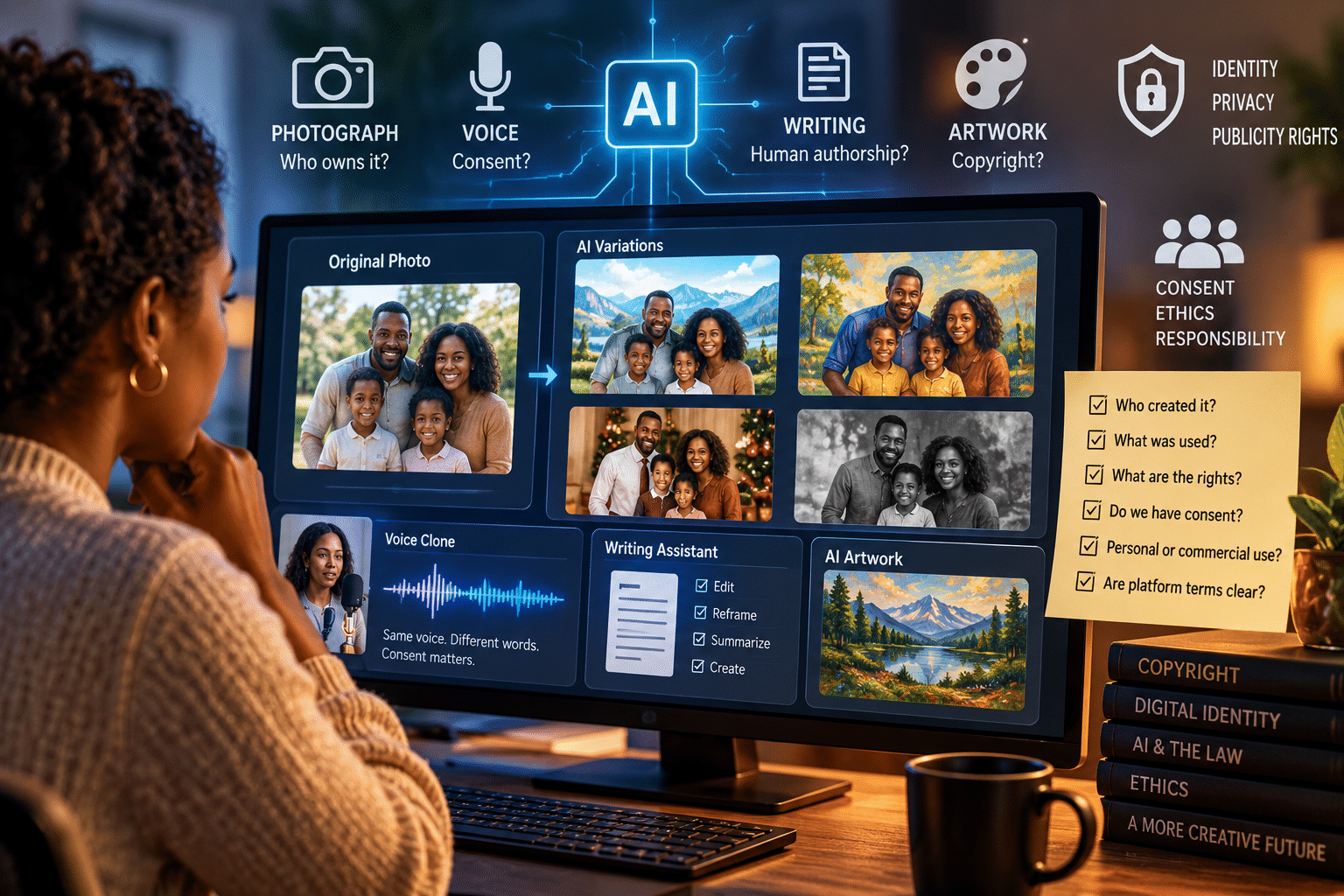
I first encountered the problem that would later become AutoLore while creating an AI-generated art collection in 2023 titled “All We Need Is Love”, a 77-piece body of work honoring the contributions of African American men across every U.S. state and territory, paired with images referencing African ceremonial mask traditions to honor ancestral origins. The project carried personal weight long before it became technical. I had long recognized the absence of continuity in Black culture as an intentional infliction—history fragmented, lineage disrupted, context erased or compressed. This collection emerged as a corrective act, an effort to hold presence, contribution, and dignity together across geography and time.

As the work developed, a persistent pattern surfaced. The system repeatedly rendered African American men through a narrow visual range, compressing skin tone, facial variation, and presence into a single flattened representation. Iteration revealed deeper inconsistencies as well—misalignments absent when the same tools portrayed other cultures. Extended testing clarified the issue with precision. Knowledge existed in fragments, yet coherence across history, representation, and context failed to carry forward. The system struggled to sustain identity across variation. That realization redirected my attention toward continuity as a governing condition, examined through the same analytical lens I had long used to understand cities, infrastructure, and long-horizon systems. A single question emerged, linking cultural memory, intelligent systems, and urban science: how systems evolve while retaining themselves.

From the beginning of my professional formation, I learned to recognize failure as structural before it becomes visible. Urban planning shows that breakdowns arise through ungoverned assumptions as conditions shift. A transportation network can operate while quietly undermining land use. A zoning decision can appear sensible at a local scale while destabilizing an entire region over time. Systems drift long before they fracture.

Urban and regional science deepened this way of seeing. It oriented my thinking toward flows rather than objects—flows of people, capital, information, movement, and power. Stability emerges through alignment rather than optimization alone. When flows exceed the structures meant to contain them, continuity erodes even as performance improves. That insight endured.

Most importantly, my discipline taught me to treat identity, sequence, and authority as foundational variables. Regions depend on boundaries. Systems rely on sequence. Cities operate through layered authority across jurisdictions. When identity blurs, when sequence fractures, or when authority shifts quietly, fragmentation follows even while individual actors remain capable and sincere.

I carried that understanding forward as I continued examining intelligent systems through creative practice.

Midway through this exploration, I initiated a second experiment. “Sisters Across Borders” became a 60-piece global collection portraying women whose faces blended African descent with another culture, each work representing a different country. This project allowed real-time application of emerging insights. Continuity principles shaped data preparation, representation logic, and contextual framing. At the same time, the African American cultural thread remained active. The lessons from All We Need Is Love carried forward rather than closing behind me. The contrast between the two collections revealed something critical. When continuity was deliberately prepared and carried, the system retained coherence across variation. When continuity remained implicit, fragmentation resurfaced.

What I observed felt familiar.

Intelligent systems were becoming more capable, more autonomous, and more interconnected. As they retrained, migrated, integrated, and evolved, coherence diminished over time. Operation continued. Performance increased. Yet continuity thinned. Identity shifted toward inference rather than enforcement. Lineage yielded to overwriting. Context leaned toward reconstruction rather than preservation. Authority drifted quietly between components.

The industry described these conditions as drift, forgetting, instability, or degradation. I recognized them as symptoms. I had witnessed the same patterns in cities, regions, and infrastructure systems. The cause remained structural.

Continuity was absent as an architectural condition.

In urban planning, systems never infer continuity for themselves. Continuity is designed. Lineage is preserved. Boundaries are defined. Transitions are governed. Sequence is respected. Authority is established. Growth and change follow afterward. Intelligent systems were being asked to reverse this order—to learn their way into coherence without a stable frame.

AutoLore emerged from the realization that continuity must exist before intelligence expresses itself. When continuity depends on interpretation, learning, or retrospective analysis, fragility follows under change. As conditions shift, the system must guess who it is, what applies, and which authority governs the present moment.

That condition reflects vulnerability rather than intelligence.

The first step involved recognizing that raw events create unstable inputs. In cities, raw activity never serves as planning truth. Contextualization gives events meaning. Sequence situates them. Lineage connects them. Applicability clarifies relevance. AutoLore applies the same principle to intelligent systems. Events are prepared into continuity-ready representations that carry identity relevance, contextual scope, lineage relationships, and transition awareness forward explicitly. Continuity becomes structured rather than inferred.

Preparation alone remains insufficient. In planning, design without governance collapses under pressure. AutoLore therefore treats continuity as something actively governed. Identity, provenance, sequence, scope, authority, and persistence bind together into continuity states that exist independently of models, applications, or platforms. Continuity retains authority across upgrades, replacements, migrations, and distributed environments because it belongs to the architecture rather than the implementation.

A further issue soon became clear—one planners understand well. Without clear authority, governance dissolves. Cities fragment when jurisdiction blurs. Systems bypass rules when precedence remains unclear. AutoLore addresses this through continuity supremacy: continuity established as an authoritative system property that holds precedence over execution. Continuity is traversed before action. Authority persists even as systems pause, transfer, or operate in parallel.

This way of thinking emerged through a discipline built to design environments that evolve without collapse. Urban planning and regional science shaped how identity endures across time, how change remains governed while progress continues, and how failure emerges when structure remains implicit.

AutoLore expresses that discipline in a new domain.

I developed AutoLore by giving intelligent systems what cities require to endure: continuity prepared, governed, and upheld as an architectural responsibility. The work began in practice before it became architecture, and it continues wherever systems are asked to carry identity, context, and authority forward through change.

AutoLore™ is a proprietary continuity architecture of ARC Communications, LLC. The AutoLore™ architecture and its associated subsystems are patent pending. All rights reserved.

Adapted for Truth Seekers Journal from research originally published by ARC Communications, LLC.

For correspondence: arccommunications@arc-culturalart.com

©2026 ARC Communications, LLC. All rights reserved.

Related articles

Truth Seekers Journal Welcomes Dr. Forita Bell Griffin as Contributing Writer and Systems Analyst

“What Is AutoLore?”

Truth Seekers Journal thrives because of readers like you. Join us in sustaining independent voices.
What Is AutoLore?

AutoLore™ is a continuity architecture that preserves coherence, lineage, and accountability in intelligent systems, governing context before AI interpretation, generation, or action occurs.

By Florita Bell Griffin, Ph.D | Houston, TX | January 22, 2026

Inventor of AutoLore™ · AutoLore™ is owned by ARC Communications, LLC

AutoLore™ is a continuity architecture. Its purpose is to preserve coherence, lineage, and integrity as real-world events, data, and decisions move through intelligent systems over time. AutoLore prepares raw inputs into continuity-verified representations before any interpretation, generation, or action occurs. By governing preparation rather than performance, AutoLore stabilizes systems across scale, transfer, and change.

Modern intelligent systems are optimized for output. They predict, personalize, and adapt with impressive speed. Yet as systems evolve, context fragments, sequence blurs, and decisions become harder to trace. What remains may continue to function, but it no longer holds together. AutoLore exists to address this structural failure mode by treating continuity itself as a first-class architectural concern.

AutoLore operates as a preparation layer positioned between raw event intake and downstream system use. Instead of allowing each component to infer its own understanding of events, AutoLore standardizes how events enter the system. It produces continuity-ready representations designed for durable use across time, environments, and ownership. These representations carry the information required to preserve context without exposing raw inputs or forcing downstream interpretation.

At the core of AutoLore is disciplined preparation. Real-world events are received through a defined intake interface. Continuity attributes are extracted. Lineage relationships are established so sequence and causality remain intact. Transition states are classified to reflect change rather than overwrite history. Boundaries are defined to govern how prepared representations may be consumed downstream. The output is a structured representation designed to remain coherent as systems evolve.

This approach allows downstream systems to operate with clarity. Models, interfaces, and services consume prepared representations rather than raw events, which supports auditability, provenance, and long-range integrity. Routing and flow control can occur without interpretation, preserving determinism and reducing drift. Over time, this yields systems that remain recognizable even as components are replaced or upgraded.

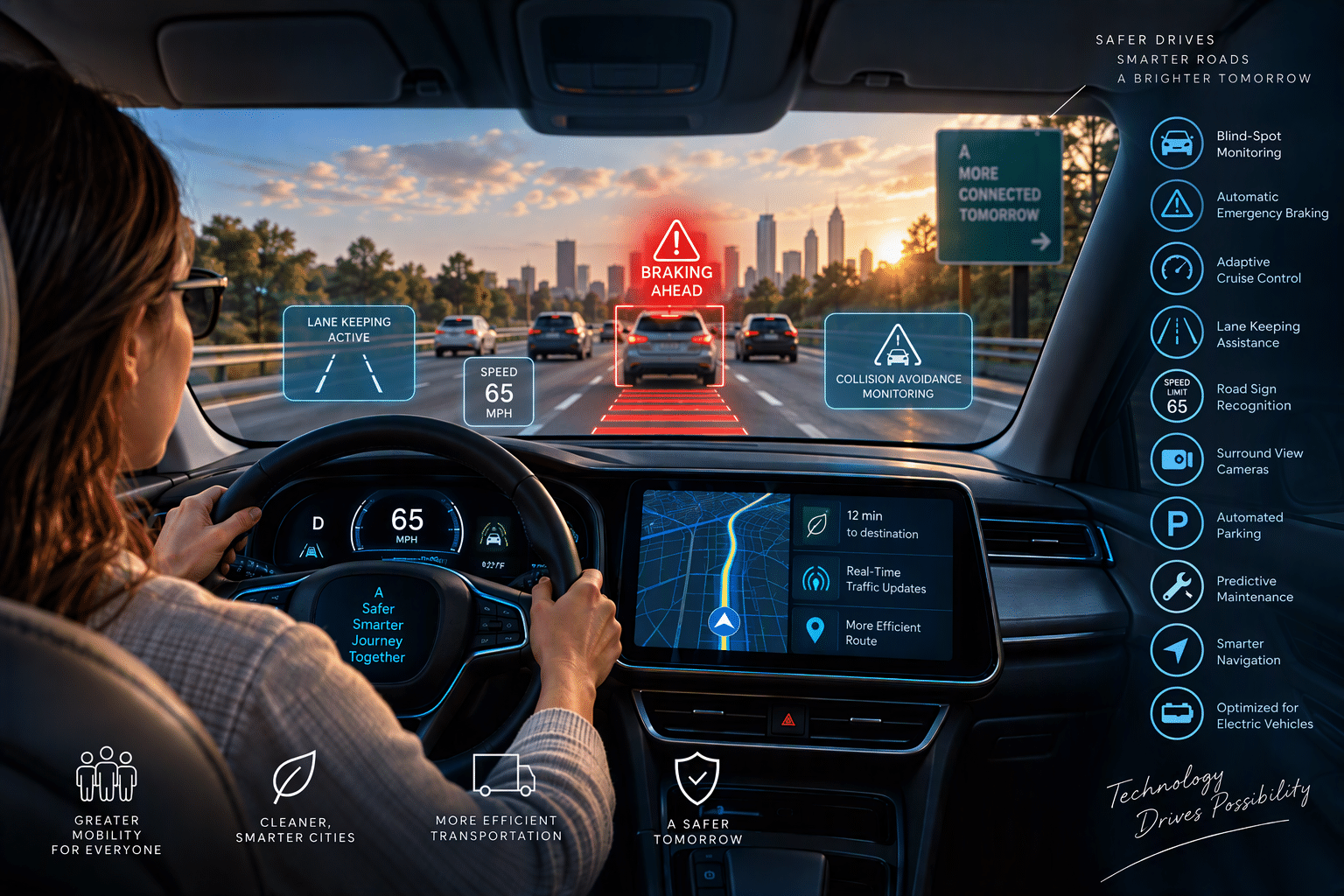
AutoLore is intentionally distinct from performance-oriented intelligence. It does not predict outcomes, personalize behavior, or generate meaning. Instead, it governs the conditions under which meaning, action, and expression can remain coherent. This distinction enables AutoLore to function across domains wherever continuity must survive scale and change, including intelligent vehicles, AI platforms, robotics, data systems, and complex infrastructures.

AutoLore includes a core subsystem responsible for governed expressive output: Arjent AI Voice Architecture™. This subsystem ensures that when a system explains, narrates, or communicates, its output remains aligned with continuity-prepared inputs. Expression is governed by structure, lineage, and boundary rules rather than repetition or reinterpretation, preserving consistency across time and context.

AutoLore is a foundational architecture created to govern continuity before intelligence acts and before meaning is produced. Developed by ARC Communications, LLC, AutoLore defines a new category of system architecture centered on continuity preparation rather than downstream correction.

Fifty Real Problems AutoLore Resolves

The following questions reflect recurring failures observed in large-scale intelligent systems. Each illustrates a condition that emerges when continuity, lineage, and governed transition are absent. AutoLore addresses these problems by preserving coherence before interpretation, generation, or action occurs.

Why do large AI systems behave inconsistently across versions even when trained on the same data?
A: › Because lineage between model states, data contexts, and decision boundaries is reconstructed after the fact instead of preserved. AutoLore carries continuity forward explicitly, so each transition retains its governing context.

Why does internal AI governance break down once systems scale across teams?
A: › Governance fails when context ownership fragments. AutoLore enforces continuity before interpretation, keeping authority intact as systems cross organizational boundaries.

Why do audit trails fail under regulatory scrutiny?
A: › Logs describe outcomes rather than causality. AutoLore preserves lineage at the moment of transition, making audits evidentiary rather than inferential.

Why do safety teams disagree with product teams about what a system knew at a given time?
A: › Because memory is inferred rather than fixed. AutoLore locks continuity states so interpretation never rewrites history.

Why do autonomous systems drift even when performance metrics improve?
A: › Optimization rewards local success rather than identity preservation. AutoLore defines invariants that adaptation cannot override.

Why does system behavior change after infrastructure migrations?
A: › Context is stripped during translation. AutoLore treats migrations as continuity events rather than data moves.

Why do long-lived platforms lose coherence after acquisitions?
A: › Institutional memory is undocumented and informal. AutoLore embeds lineage into the system itself.

Why is AI explainability unreliable months after deployment?
A: › Explanations are regenerated using present context. AutoLore preserves original interpretive conditions.

Why do compliance teams rely on manual documentation for automated systems?
A: › Automation lacks continuity guarantees. AutoLore provides machine-verifiable lineage.

Why does “human in the loop” fail at scale?
A: › Humans intervene without preserved context. AutoLore ensures interventions occur inside governed continuity frames.

Why do robotics systems behave differently in identical environments?
A: › Environmental context is flattened into sensor data. AutoLore preserves situational lineage.

Why do simulation-trained systems fail in real-world deployment?
A: › Simulation lacks continuity with reality. AutoLore binds simulated and real transitions.

Why do multi-modal systems struggle to reconcile conflicting inputs?
A: › Inputs lack shared lineage. AutoLore resolves conflicts through continuity hierarchy.

Why does retraining erase prior safety learnings?
A: › Safety knowledge is not preserved as invariant. AutoLore protects it across cycles.

Why do distributed systems disagree about current state?
A: › State is computed locally. AutoLore maintains global continuity.

Why do AI incidents take weeks to root-cause?
A: › History must be reconstructed. AutoLore eliminates reconstruction.

Why do systems pass testing but fail in production?
A: › Test context differs from live context. AutoLore carries context forward.

Why does model rollback create new failures?
A: › Rollback ignores intervening continuity. AutoLore accounts for transition debt.

Why do AI governance policies lag technical reality?
A: › Policy operates outside the system. AutoLore embeds governance inside execution.

Why do platforms struggle with accountability across partners?
A: › Responsibility diffuses across interfaces. AutoLore preserves provenance across handoffs.

Why do customer-facing AI systems contradict themselves over time?
A: › Narrative continuity is not preserved. AutoLore maintains coherent memory states.

Why do personalization systems feel invasive or inconsistent?
A: › Context is inferred probabilistically. AutoLore uses continuity-verified context.

Why do internal tools behave differently than external ones using the same model?
A: › Integration strips lineage. AutoLore standardizes continuity intake.

Why do data governance teams distrust AI outputs?
A: › Outputs lack traceable origin. AutoLore provides verifiable lineage.

Why do safety assurances weaken after system updates?
A: › Updates overwrite assumptions. AutoLore enforces invariant preservation.

Why does federated learning complicate accountability?
A: › Contributions lose attribution. AutoLore preserves origin across federation.

Why do large systems require tribal knowledge to operate safely?
A: › Knowledge lives in people rather than systems. AutoLore moves it into architecture.

Why do explainability tools disagree with one another?
A: › They interpret from different temporal contexts. AutoLore fixes the temporal frame.

Why do AI failures repeat in slightly different forms?
A: › Lessons are not preserved structurally. AutoLore encodes them into continuity.

Why does system identity blur after rapid iteration?
A: › Change outpaces coherence. AutoLore governs identity through transitions.

Why do platform leaders fear regulatory retroactivity?
A: › They cannot prove historical compliance. AutoLore makes compliance durable.

Why do AI risk reports rely on narrative rather than evidence?
A: › Evidence was never preserved. AutoLore generates evidence by design.

Why do internal disagreements stall AI deployment?
A: › Teams reason from different histories. AutoLore synchronizes lineage.

Why do handoffs between vendors introduce silent risk?
A: › Context is lost at boundaries. AutoLore enforces continuity at interfaces.

Why do systems behave correctly until a rare edge case?
A: › Edge cases break implicit assumptions. AutoLore makes assumptions explicit.

Why does long-term system stewardship degrade?
A: › Original intent fades. AutoLore preserves intent structurally.

Why do AI systems struggle with policy consistency?
A: › Policies change without continuity mapping. AutoLore binds policy to state.

Why does AI forget why decisions were made?
A: › Memory stores outputs rather than reasoning context. AutoLore preserves decision lineage.

Why do multi-year AI programs lose strategic alignment?
A: › Strategy is not embedded. AutoLore carries strategic continuity forward.

Why do postmortems fail to prevent recurrence?
A: › Lessons stay external. AutoLore integrates them into execution.

Why do AI roadmaps drift from original promises?
A: › Change lacks guardrails. AutoLore defines protected invariants.

Why do cross-border deployments create governance gaps?
A: › Jurisdictional context is not preserved. AutoLore maintains contextual lineage.

Why does AI safety depend on individual champions?
A: › Safety is not structural. AutoLore makes it architectural.

Why do systems appear compliant until challenged?
A: › Compliance is performative. AutoLore is evidentiary.

Why do organizations fear explaining their AI publicly?
A: › They cannot guarantee consistency. AutoLore ensures stable explanation.

Why do AI capabilities outpace control mechanisms?
A: › Control is added downstream. AutoLore operates upstream.

Why do platforms struggle with trust erosion?
A: › Trust requires continuity. AutoLore preserves it.

Why does AI governance feel abstract to engineers?
A: › Governance is not executable. AutoLore makes it operational.

Why do intelligent systems age poorly?
A: › Time erodes context. AutoLore carries context forward.

Why do advanced systems still fail in simple, human-visible ways?
A: › They optimize intelligence without continuity. AutoLore restores coherence.

AutoLore™ is a proprietary continuity architecture of ARC Communications, LLC. The AutoLore™ architecture and its associated subsystems are patent pending. All rights reserved.

Adapted for Truth Seekers Journal from research originally published by ARC Communications, LLC.

For correspondence: arccommunications@arc-culturalart.com

©2026 ARC Communications, LLC. All rights reserved.

Related articles

Truth Seekers Journal Welcomes Dr. Forita Bell Griffin as Contributing Writer and Systems Analyst

Truth Seekers Journal thrives because of readers like you. Join us in sustaining independent voices.
Exit mobile version