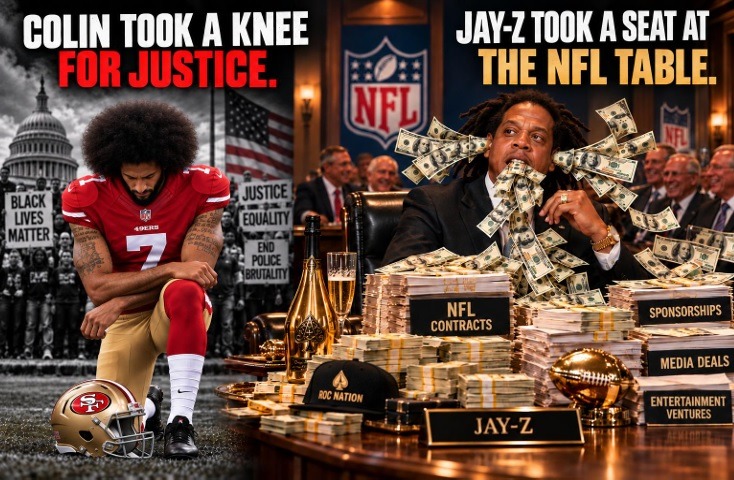
What Are You Willing to Lose for Justice?
By Lola Renegade | Atlanta, GA | September 24, 2026
I recently had the opportunity to meet Colin Kaepernick at his book signing in Atlanta, Georgia.
Afterward, I read his book overnight, The Perilous Fight, a must read. I came away quite
impressed by this young man because he demonstrates something increasingly rare in America,
especially Black America: he was willing to lose something for what he believed.
And lose he did. Colin lost the career he had spent most of his life preparing for and potentially
millions of dollars in future earnings. He endured ridicule, death threats, political attacks and
accusations that he hated the very country he was challenging to live up to its professed ideals.
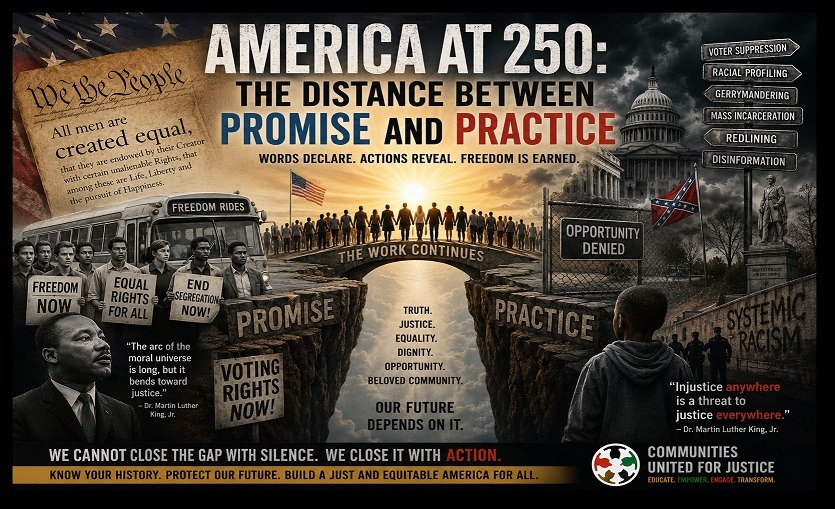
Colin wasn’t protesting America because he hated America. He was demanding that America
confront the killing and mistreatment of Black people and the enormous distance between this
nation’s promise of liberty and justice for all and the lived reality of too many of its citizens.
Ten years ago, he peacefully lowered himself onto one knee, and America lost its damn mind.
Racist white America, and the coloreds who love them, always lose their effing minds when the
subject comes up that everyone deserves to be treated as human beings with equal rights and
opportunities.
Years later, however, the question that troubles me isn’t merely what America did to Colin
Kaepernick. It is what some Black people with the illusion of power failed to do afterward. Too
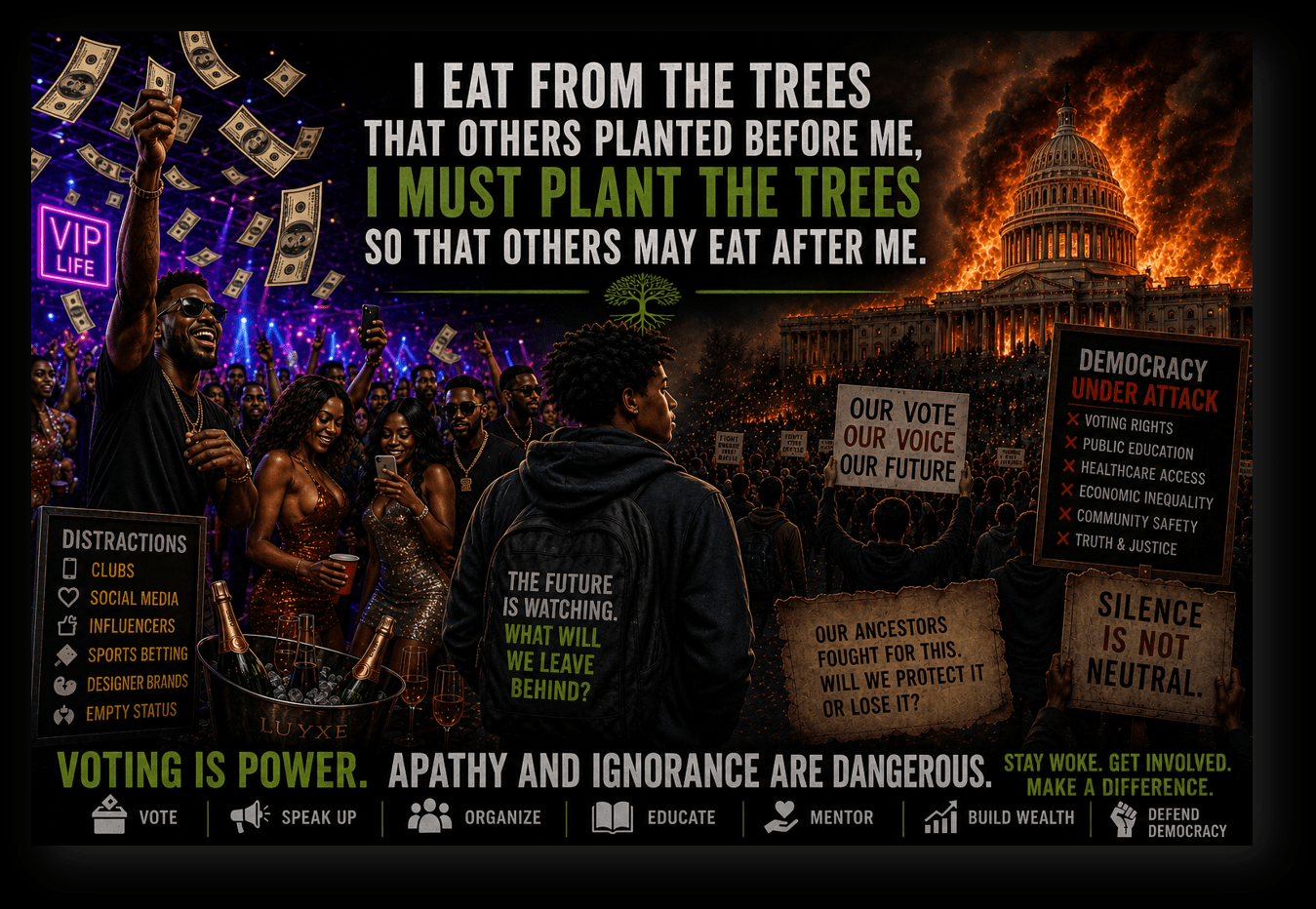
many discovered that their access, influence, and even their voices could be bought cheaply, and apparently with change left over. They had wealth without independence, proximity without courage, and seats at tables where they mistook being welcomed to drink glasses of expensive liquor for actually possessing power. The cost of this liquor is nothing compared to the return for selling out Black people and our culture.
At times, their willingness to accommodate the very structures Colin challenged makes D. W. Griffith’s movie, The Birth of a Nation, seem less like a century-old piece of racist propaganda and more like an audition script they were handed and willingly performed. Colin’s sacrifice exposed an uncomfortable truth: there is a profound difference between having money, having access, and having the courage to exercise power when exercising it might actually cost you something.
But what should we expect from some who sold crack in the Black community, destroying
children, youth and families, a pure sense of consciousness? Not hardly.
In 2019, Jay-Z’s Roc Nation entered into a partnership with the NFL (National Football League)
involving entertainment and the league’s Inspire Change social-justice initiative. When the
inevitable question arose about Colin Kaepernick, Jay-Z argued that we had moved beyond
kneeling and needed actionable change.
That statement has bothered me ever since. How in the hell do we get “past kneeling” while the
man who took the knee is still paying the price for taking it? How do we get “past kneeling”
when people of color are dying in ICE custody, families torn apart in massive deportations,
700,000 and counting Black women who have lost their careers when Donald Trump and his
Project 2025 kakistocracy took office, white immigrants being flown in from South Africa to
take up residency in America while people of color are forcibly sent to unfamiliar countries?
Who created the urgency that made all this supposed action necessary? Who forced professional
football, and America, to confront a conversation it desperately wanted to avoid? Colin did.
If Jay-Z had any sensitivity or clout with the NFL, he would have demanded Colin’s career back.
But those of us who have seen this syndicated movie before know that the League was simply
looking for an influential Black face – someone who could effectively lead a minstrel show.
Someone who would willingly run into the white masters’ burning houses to save the furniture.
We still don’t know what Jay-Z and Roc Nation were paid to take that seat at the NFL table. The
financial terms of the deal were never publicly disclosed. But we certainly know what Colin
Kaepernick paid for taking a knee.
That is the contradiction I cannot ignore. Colin Kaepernick took a knee for justice; Jay-Z took a
seat at the NFL’s collection of racists white billionaires’ table. One challenged institutional power and accepted the consequences. The other chose to work with institutional power and told us it was time for actionable change. We are still waiting for that change but won’t hold our breath.
If only Black people would stop holding up these vacuous buffoons as though they are some
semblance of Dr. Martin Luther King, Jr., Ida B. Wells, Malcolm X, Stokley Carmichael, Fannie
Lou Hamer, and those of that ilk.
Forty Million Dollar Slaves
William C. Rhoden warned us about this contradiction years ago in Forty Million Dollar Slaves
The Rise, Fall, and Redemption of the Black Athlete. We can also add the cockroaches in the
other entertainment industries – the Stephen character in Django Unchained. One of Rhoden’s
most important concepts is wealth without control. A Black athlete (entertainer) can earn $40
million, $100 million or $300 million. He can even be a billionaire. He can buy mansions,
Bentleys, private jets, jewelry and virtually every luxury imaginable. But who owns them? Who
controls the league, negotiates the television contracts and writes the rules? Who decides who
gets hired, who gets fired and who gets another opportunity?
More importantly, what happens when the highly compensated Black athlete stops entertaining
the institution and starts challenging it?
Colin gave us the answer. So did Curt Flood, Mahmoud Abdul-Rauf, Muhammad Ali, and others.
Suddenly the multimillion-dollar athlete discovers exactly where the real power remains. That is
why Rhoden’s thesis remains so important. Wealth is not necessarily power; access is not
ownership; proximity is not control; representation is not liberation. And having a seat at
somebody else’s table does not mean you own the damn table.
To Jay-Z and the rest of you Step-and-Fetchit Black folks, a golden shackle is still a shackle.
Where Were the Rest of the Players?
There is another uncomfortable question Black America should ask: Where were Colin’s fellow
NFL, NBA (National Basketball Association), and other professional sports players? The NFL
player workforce was predominantly Black—roughly two-thirds of the league around the time
Colin began his protest. The NBA is 80% Black. To be fair, Colin was not entirely alone. Eric
Reid knelt beside him. Brandon Marshall knelt. Arian Foster, Kenny Stills and others
participated in protests, while some players raised fists or demonstrated in other ways. Their
courage deserves acknowledgment.
But they represented only a fraction of professional leagues overwhelmingly powered by Black
athletic talent. Many others remained standing and many remained silent. Contemporary
accounts indicated that some players who sympathized with Colin feared the consequences of
joining him.
Afraid of what? Losing a contract, playing time, an endorsement, an owner’s approval or the
adoration of fans? Afraid the less-than average white women would no longer want them? If
some of the wealthiest and most physically powerful Black men in America believed peacefully
joining another Black man in protest could jeopardize their livelihoods, then Rhoden’s argument
about wealth without control becomes painfully real.
The NFL could depend upon Black bodies on Sunday afternoon, but could those Black men
safely exercise their consciences, if they were in possession of one? Colin became the face of the
protest, absorbed the hatred, became the political target and ultimately lost his NFL career while
the machine kept humming.
And Where Are We Ten Years Later?
The rest of Black America doesn’t escape this examination either. We kept watching. We bought
jerseys, purchased season tickets, paid for sports packages, tailgating at games, watched the
commercials and held Super Bowl parties. We continued financing the machine that hates us
even while debating what had happened to the man who challenged it. Self-hatred is real.
Perhaps Colin’s protest remains uncomfortable because it exposes not merely the courage, or
lack thereof, of professional football. It exposes ours.
It is easy to admire courage from the safety of your living room and backyard, or with a bunch of
family and friends over eating chicken wings and drinking liquor. It is considerably harder to
stand beside the courageous person while the stones are still flying. That is the difference
between admiration and solidarity: admiration applauds the person taking the risk; solidarity
takes the risk with him/her.
When Equality Feels Like Oppression
There is an observation frequently made about privilege: when people become accustomed to
privilege, equality can feel like oppression. Equality isn’t actually oppressing anyone; it is simply
removing an advantage someone has become accustomed to possessing simply because of the
color of their white skin. When someone accustomed to having the entire table is finally asked to
share it, sharing can feel like loss. When someone accustomed to always being heard is finally
required to listen, listening can feel like silencing.
The same dynamic becomes visible when an institution accustomed to Black athletes and their
minstrel shows entertaining white America encounters a Black athlete demanding that America
listen to him. The Black football player is celebrated when he runs, cheered when he catches,
rewarded when he tackles and marketed when he entertains. But what happens when he thinks?
What happens when he speaks? What happens when he says, “I am not merely your
entertainment. I am a citizen. I possess a conscience, and I will use my platform to demand that
this country live up to its promises”?
Suddenly protest becomes disrespect, patriotism requires silence, and the multimillion-dollar
Black athletes discovers the limits of their perceived power.
Don’t forget, America had the felonious (p)Resident of the White House screaming, “Get that
son-of-a-bitch off the field.” Donald Trump, someone who has proven to be even God’s reject,
someone who checks every page in the DSM (Diagnostic and Statistical Manual of Mental
Disorders).
And then, there was that empty-headed Carolyn Bryant, look-alike (woman who lied
on Emmett Till) Fox News host, Laura Ingraham, yelling at LeBron James to, “shut up and
dribble” when he made political comments. These are the types of women who have resigned
themselves to existing to gain favor and power with racist white men, especially if they are
considered powerful. They are plain and simple unconscionable semen receptacles.
Stephen and the Seduction of Proximity
Which brings me to an intentionally uncomfortable metaphor: Stephen, the fictional character
from Quentin Tarantino’s Django Unchained.
Stephen is disturbing because he represents something larger than himself. He is enslaved, yet he
has achieved unusual proximity to the master. He understands the plantation, its hierarchy and
where the power resides. Rather than using that proximity to undermine the system, he becomes
deeply invested in protecting the hierarchy that gives him elevated status within it.
That is the metaphor. I am asking whether Black America sometimes produces modern versions
of the dilemma Stephen represents: What happens when proximity to power becomes more
valuable than solidarity with those without it? What happens when being invited into the house
becomes more important than remembering the people still outside? What happens when access
itself starts masquerading as liberation?
So, Stephen—I mean, Jay-Z—where are those actionable actions now?
Support open, independent journalism. Your contribution helps us tell the stories that matter most.