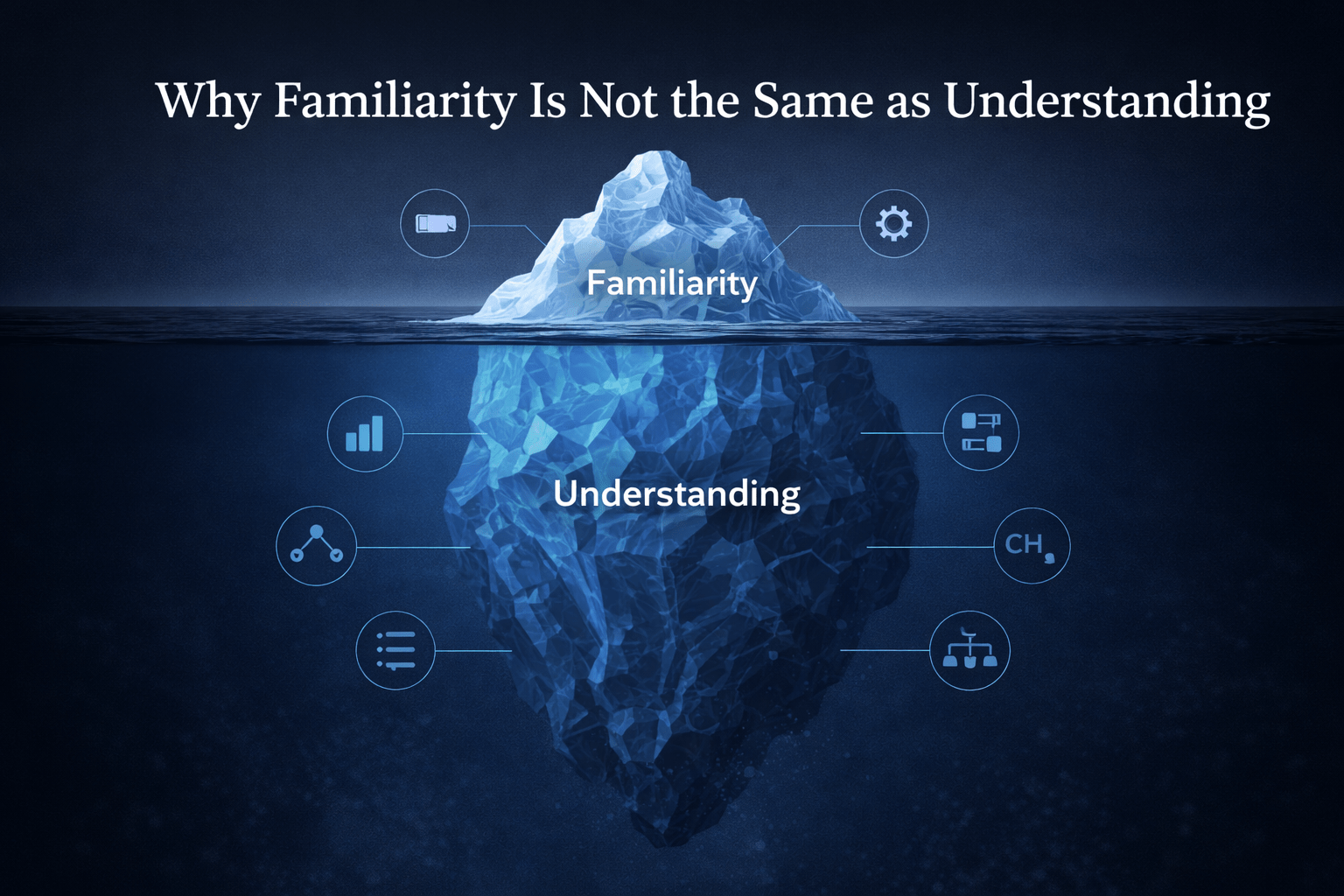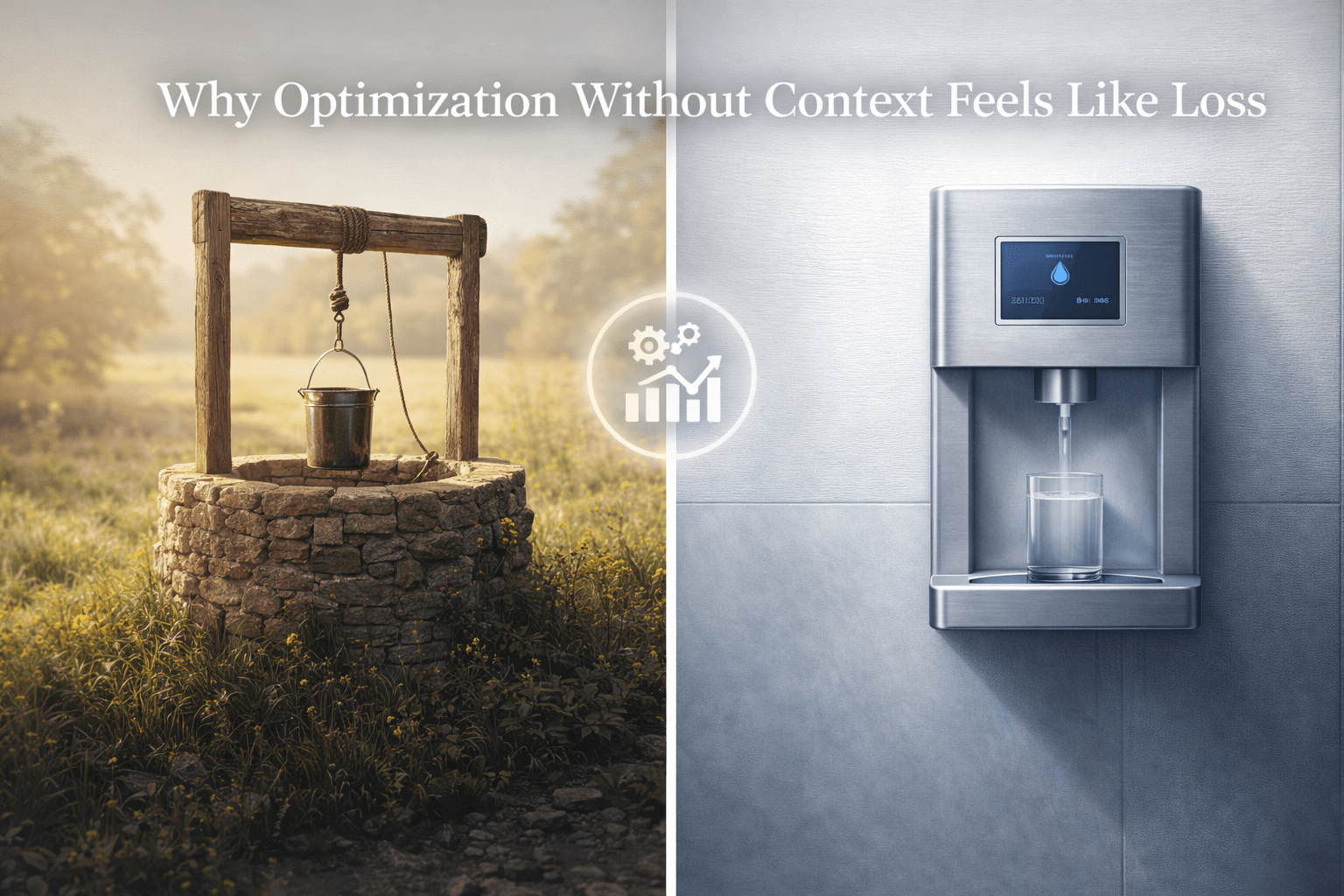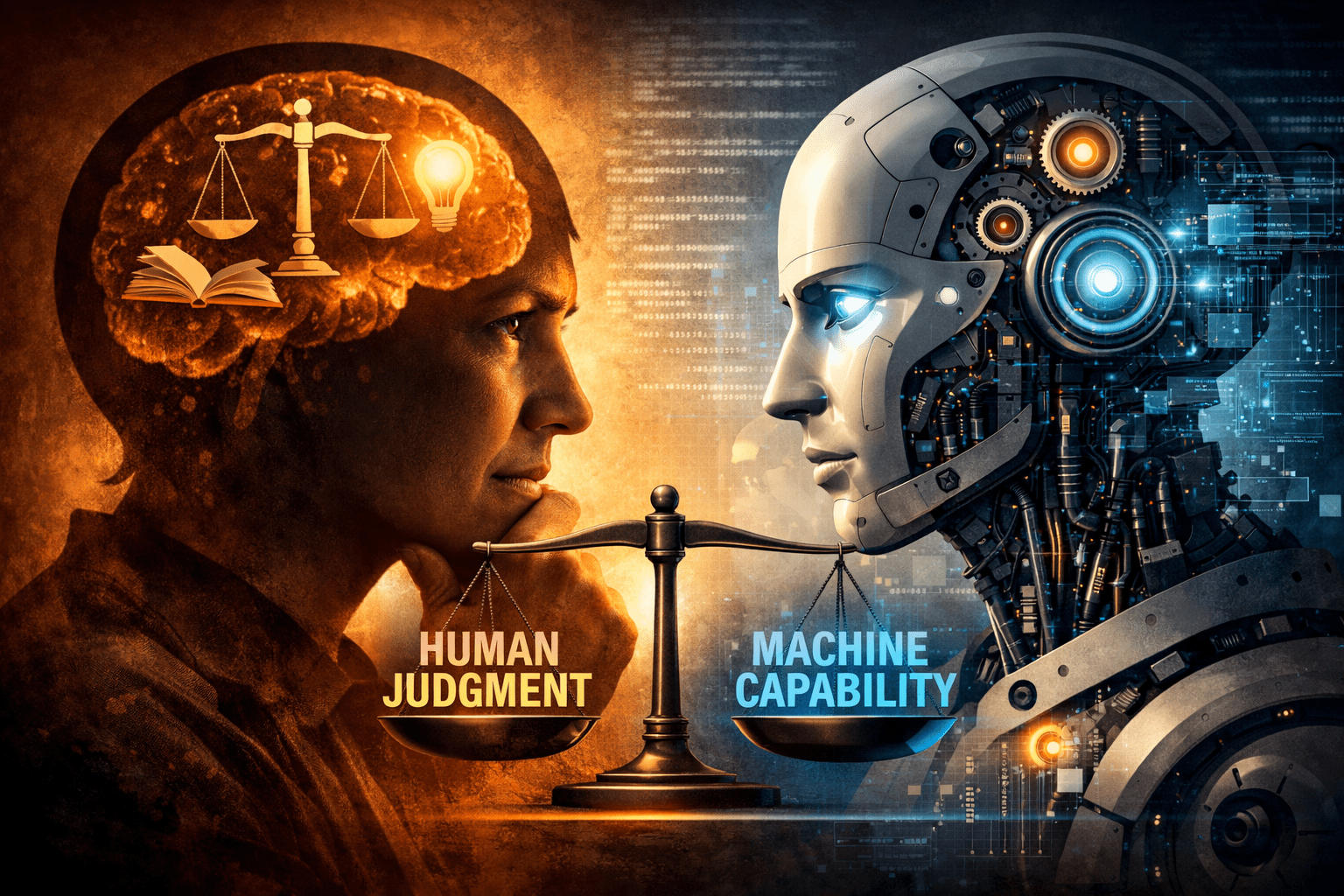
Change Feels Different When You Remember Before

A powerful exploration of how memory reshapes our experience of change, revealing why transitions feel different across a lifetime and what continuity truly requires

By Florita Bell Griffin, Ph.D | Houston, TX | February 24, 2026

Change does not register the same way across a lifetime. Early change often feels expansive. It carries promise. It suggests possibility without cost. Later change feels heavier, not because it is unwelcome, but because it arrives with memory. People who have lived long enough do not encounter change as an isolated event. They encounter it as a comparison.

Remembering before alters perception. It introduces contrast. It reveals patterns that are invisible to those experiencing a transition for the first time. When change appears, experienced observers do not ask only whether it works. They ask what it replaces, what it disrupts, and what it quietly removes.

This difference in perception is frequently misunderstood. Caution is misread as reluctance. Questions are mistaken for resistance. In reality, remembering before expands the frame through which change is evaluated. It adds sequence to the present moment.

Earlier in life, change often arrives without consequence. Decisions are reversible. Systems are forgiving. Mistakes carry limited cost. Over time, people experience transitions that do not resolve cleanly. They witness reforms that solve one problem while creating another. They observe innovations that optimize performance while thinning trust. Memory accumulates evidence, and evidence reshapes expectation.

Consider an organization that announces a major restructuring intended to improve agility. Roles are consolidated. Reporting lines flatten. Decision-making accelerates. On paper, the model appears modern and efficient. Employees who have lived through previous restructurings respond differently than those encountering their first. They remember how similar changes once redistributed power, narrowed career paths, or increased workload without acknowledgment. They listen closely not to the promise, but to what remains unsaid. Change feels different when it carries precedent.

The same dynamic appears in technology adoption. A new platform promises simplification. Workflows unify. Communication becomes seamless. Those who remember earlier systems recognize familiar claims. They recall how previous tools increased visibility while reducing clarity. They remember the effort required to adapt when documentation lagged behind implementation. Their response is not opposition. It is contextual awareness.

Memory does not slow change. It thickens it. It forces change to account for what came before. People who remember before are sensitive to loss disguised as progress. They notice when continuity breaks quietly. They recognize when systems reset without explanation, leaving users to reconstruct meaning on their own.

This sensitivity becomes more pronounced as the pace of change accelerates. Speed compresses evaluation time. It rewards immediacy over reflection. For those with memory, speed amplifies risk. Rapid change leaves fewer opportunities to integrate learning. It reduces space for adjustment. It assumes that alignment will emerge organically, rather than being designed.

When systems dismiss this concern, they create fractures. People comply outwardly while disengaging inwardly. They adapt behavior while withholding trust. They follow instructions while questioning intent. Over time, this erodes cohesion more effectively than overt resistance ever could.

Memory also reshapes how people assess claims of inevitability. When change is framed as unavoidable, those who remember before recall alternatives that once existed. They recognize paths that were not taken. They understand that inevitability is often a narrative constructed after decisions have already been made. This awareness does not prevent change, but it alters how legitimacy is judged.

Consider a public policy shift justified through data projections and economic modeling. Targets are clear. Outcomes are forecasted. Those with long-standing community experience recall previous policies introduced with similar confidence. They remember unintended consequences that emerged years later. They ask different questions because they have witnessed the lag between implementation and impact. Change feels different when consequences have already been lived.

Systems that ignore this perspective misinterpret memory as bias. They frame lived experience as anecdotal rather than informational. In doing so, they discard a source of intelligence that could stabilize transition. Memory carries signals about second-order effects, delayed responses, and cumulative impact. When excluded, systems repeat errors they believe are new.

This is not an argument for preserving the past unchanged. It is an argument for integrating memory into motion. Change that acknowledges what came before gains legitimacy. It becomes inhabitable rather than imposed. People are more willing to move when they can see how continuity is preserved.

Change that arrives without reference to before feels extractive. It takes familiarity without replacing meaning. It demands adjustment without offering orientation. Over time, this creates fatigue that is misdiagnosed as apathy.

Those who remember before are not anchored to the past. They are anchored to coherence. They understand that progress without memory produces repetition rather than advancement. Their perspective offers calibration, not obstruction.

As intelligent systems increasingly shape how change is designed and deployed, memory becomes a critical variable. Systems that treat memory as noise will continue to move quickly while destabilizing trust. Systems that treat memory as structure gain the ability to change without fragmenting those inside them.

Change feels different when you remember before because memory reveals what change alone cannot. It exposes continuity gaps. It highlights consequences that have not yet surfaced. It insists that movement make sense across time.

This distinction determines whether change becomes something people inhabit, or something they simply endure.

© 2026 Truth Seekers Journal. Published with permission from the author. All rights reserved.

Truth Seekers Journal thrives because of readers like you. Join us in sustaining independent voices.

You Are Already Updated

By Florita Bell Griffin, Ph.D | Houston, TX | February 16, 2026

Many conversations about technology assume that relevance expires. New tools arrive, language shifts, and interfaces change, carrying with them an unspoken suggestion that those who hesitate have fallen behind. The pressure rarely appears as accusation. It appears as tone. It suggests urgency. It frames adaptation as a race rather than a process of alignment.

Yet most people who have lived long enough know this framing is incomplete. They have adapted repeatedly. They have learned new systems, new rules, new expectations, and new ways of working. What they resist is not learning. What they resist is the implication that value resets each time a tool changes.

The idea that a person must be “updated” misunderstands how human capability actually develops. People do not version themselves the way software does. They accumulate judgment. They refine intuition. They recognize patterns faster because they have seen them before in different forms. Their relevance does not come from novelty. It comes from continuity.

Technology often overlooks this distinction. It treats readiness as proximity to the newest interface rather than depth of understanding. It rewards fluency with tools over fluency with consequence. In doing so, it creates a false gap between innovation and experience, as if the two were competing forces rather than complementary ones.

Consider a workplace that introduces a new collaboration platform intended to modernize communication. The interface is intuitive. Features are robust. Younger employees adopt it quickly. Senior staff follow, but with hesitation that is often misread as resistance. In reality, they are assessing fit. They are evaluating how the platform shapes decision-making, accountability, and signal clarity. They recognize that faster communication can amplify confusion as easily as it amplifies coordination. Their pause is not a failure to update. It is an evaluation of alignment.

The same pattern appears in professional development. Training programs increasingly focus on teaching the latest tools while bypassing the reasoning that governs their use. Participants learn where to click, but not when to question. They acquire capability without orientation. Those with experience sense the imbalance immediately. They understand that tools do not determine outcomes alone. Judgment does.

Experience functions as an internal update mechanism. It integrates new information into an existing structure of understanding. When a person encounters a new system, they do not start from zero. They compare it to what they have already seen. They test its claims against prior outcomes. They notice where promises exceed reality. This is not reluctance. It is calibration.

When systems fail to recognize this, they misinterpret caution as obsolescence. They label discernment as delay. Over time, this erodes confidence on both sides. Experienced individuals feel underestimated. Systems lose access to stabilizing insight. The result is not innovation moving faster, but innovation moving with less guidance.

This dynamic becomes more pronounced as technology begins to influence not just how work is done, but how value is measured. Algorithms rank performance. Dashboards summarize contribution. Metrics become proxies for meaning. People who have spent decades understanding nuance recognize the limits immediately. They know that what matters most often appears at the edges of measurement, not at the center.

Consider a performance system that evaluates success through narrowly defined indicators. Targets are clear. Tracking is precise. Reviews become more efficient. Yet employees who understand the broader mission notice distortions. Effort shifts toward what is visible rather than what is necessary. Long-term health is traded for short-term optimization. The system rewards activity, while experience recognizes consequence.

In these moments, the idea that someone must “catch up” becomes misplaced. The individual is already operating with a richer dataset. They see second-order effects. They anticipate unintended outcomes. They understand how systems behave under stress because they have witnessed it before. Their value lies not in speed of adoption, but in stability of judgment.

Continuity explains why this matters. A person carries forward learning from past transitions into present ones. They do not require reinvention to remain relevant. They require systems that can recognize and integrate what they already bring. When technology treats experience as outdated, it severs itself from accumulated insight. When it treats experience as current, it gains resilience.

This does not mean rejecting change or privileging familiarity. It means acknowledging that adaptation does not erase what came before. A person who has navigated multiple eras of technology holds a map of how tools reshape behavior, incentives, and identity. That map remains valuable regardless of interface.

Over time, systems that ignore this reality produce predictable outcomes. Participation narrows to those who move fastest rather than those who understand most deeply. Decision-making skews toward immediacy. Errors repeat because lessons are not carried forward. Innovation continues, but its foundations weaken.

Systems that recognize people as already updated behave differently. They assume competence rather than deficiency. They invite judgment rather than compliance. They provide context alongside capability. In doing so, they unlock a form of intelligence that cannot be generated through novelty alone.

Being updated is not about mastering the newest tool. It is about remaining coherent as tools change. People who have lived long enough to recognize this are not behind. They are already operating with an internal system that has been refined through time.

The challenge for technology is not how to accelerate adoption. It is how to meet people where their experience already resides.

© 2026 Truth Seekers Journal. Published with permission from the author. All rights reserved.

Truth Seekers Journal thrives because of readers like you. Join us in sustaining independent voices.

Why Speed Feels Like Progress Even When It Isn’t

By Florita Bell Griffin, Ph.D. | Houston, TX | February 9, 2026

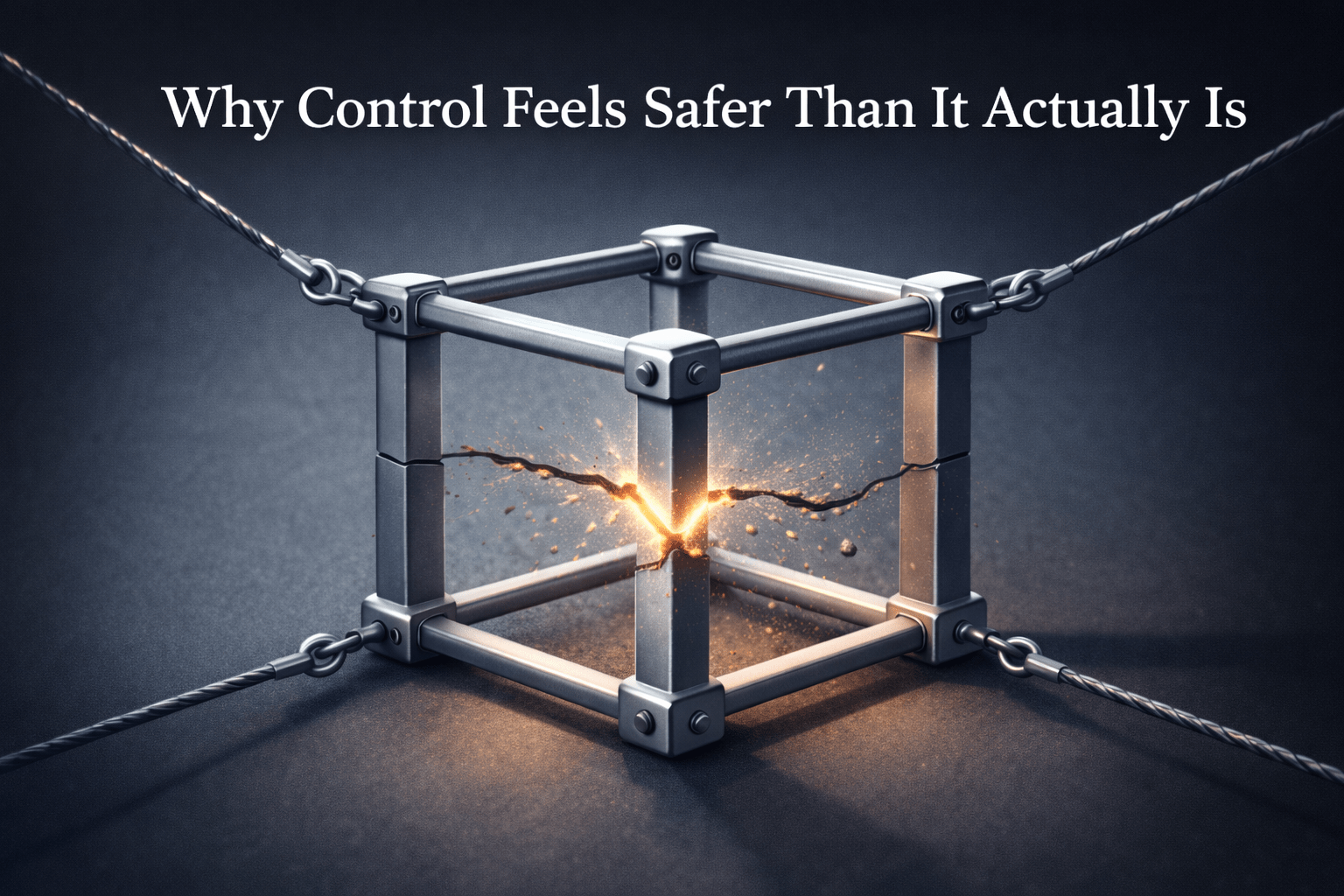
Control is often mistaken for stability. When systems behave predictably, when rules are clear, and when outcomes can be enforced, it feels as though risk has been reduced. Control offers reassurance. It creates the impression that uncertainty has been managed. Yet control and stability are not the same thing.

Control narrows possibility. Stability absorbs variation. Systems that rely heavily on control may appear orderly, but they often become brittle. They perform well under expected conditions while struggling when reality deviates. Over time, what felt safe begins to feel fragile.

This distinction becomes visible after people have lived through enough disruptions to recognize patterns. They have seen tightly controlled systems fail suddenly. They have watched rules multiply as exceptions increase. They understand that control does not eliminate uncertainty. It merely postpones its appearance.

Early in a system’s life, control can be effective. Scope is limited. Conditions are known. Decisions are centralized. As systems grow, however, complexity increases. Dependencies multiply. External forces exert pressure. Control mechanisms that once worked begin to strain. More rules are added. More monitoring is introduced. More enforcement is required. The system becomes harder to manage precisely because it is being managed too tightly.

Consider an organization that responds to inconsistency by adding layers of approval. Processes become standardized. Authority is clarified. Deviations are reduced. Initially, performance improves. Errors decline. Yet over time, decision-making slows. People stop exercising judgment. When unexpected situations arise, the organization struggles to respond because adaptation has been trained out of the system. Control has replaced learning.

The same pattern appears in technology. Systems designed to minimize error often rely on rigid constraints. Inputs are tightly validated. Outputs are strictly governed. Behavior is limited to predefined pathways. Under normal conditions, the system performs reliably. Under novel conditions, it fails abruptly. Control has reduced variability, but it has also reduced resilience.

People with experience recognize this tension instinctively. They have learned that safety does not come from eliminating uncertainty, but from being able to respond to it. They understand that systems must be able to bend without breaking. Control that prevents deviation may look strong, but it often hides weakness.

Control also changes how responsibility is distributed. In highly controlled systems, accountability shifts upward. Decisions are made by those who design the rules rather than those closest to the situation. Over time, this disconnect grows. People stop feeling responsible for outcomes because they no longer feel empowered to influence them. Compliance replaces ownership.

This dynamic creates a false sense of security. Metrics improve. Variance decreases. Reports look clean. Yet the system’s capacity to absorb surprise diminishes. When disruption arrives, it overwhelms structures that have been optimized for predictability rather than adaptability.

Consider a public system that enforces strict eligibility criteria to ensure fairness. Rules are clear. Decisions are consistent. Processing is efficient. Yet individuals with complex circumstances fall through gaps. Exceptions are difficult to accommodate. Appeals are slow. The system appears fair, but it struggles to respond humanely to reality. Control has simplified administration while complicating lived experience.

Control feels safer because it creates clarity. It reduces ambiguity. It promises order. What it cannot do is prepare a system for conditions it has never encountered. Stability requires something different. It requires the ability to integrate new information, revise assumptions, and respond proportionally to change.

Systems that achieve stability do so by maintaining internal coherence rather than external enforcement. They preserve context. They allow for judgment. They recognize that variation carries information. Instead of suppressing deviation, they learn from it. Stability emerges from alignment, not constraint.

This distinction matters as systems become increasingly automated. Automated control scales easily. Rules can be enforced instantly and uniformly. Yet automation also amplifies brittleness. When systems operate at speed without interpretive capacity, errors propagate quickly. Control becomes amplification rather than protection.

People who sense this are often labeled cautious or resistant. In reality, they are responding to experience. They have seen control mechanisms fail quietly before collapsing dramatically. They understand that systems designed only to prevent deviation eventually lose the ability to respond intelligently.

Stability requires continuity across change. It depends on the system’s ability to remember why rules exist, not just enforce them. It relies on preserving relationships between intent, action, and outcome. Control alone cannot do this.

When systems mistake control for safety, they optimize for the wrong condition. They reduce visible risk while increasing hidden vulnerability. They feel secure until they are tested. When they are tested, they fail in ways that surprise those who trusted them most.

True safety comes from systems that remain intelligible as they evolve. Systems that can explain their own behavior. Systems that can adapt without losing coherence. These systems may appear less controlled on the surface, but they endure because they remain aligned with reality.

Control will always have a role. It defines boundaries. It establishes norms. It protects against known threats. Stability, however, emerges from something deeper. It arises when systems are designed to carry meaning forward as conditions change.

When control is mistaken for safety, systems grow rigid. When stability is designed intentionally, systems remain alive.

© 2026 Truth Seekers Journal. Published with permission from the author. All rights reserved.

Why Experience Changes How Intelligent Systems Are Understood

By Florita Bell Griffin, Ph.D | Houston, TX | February 2, 2026

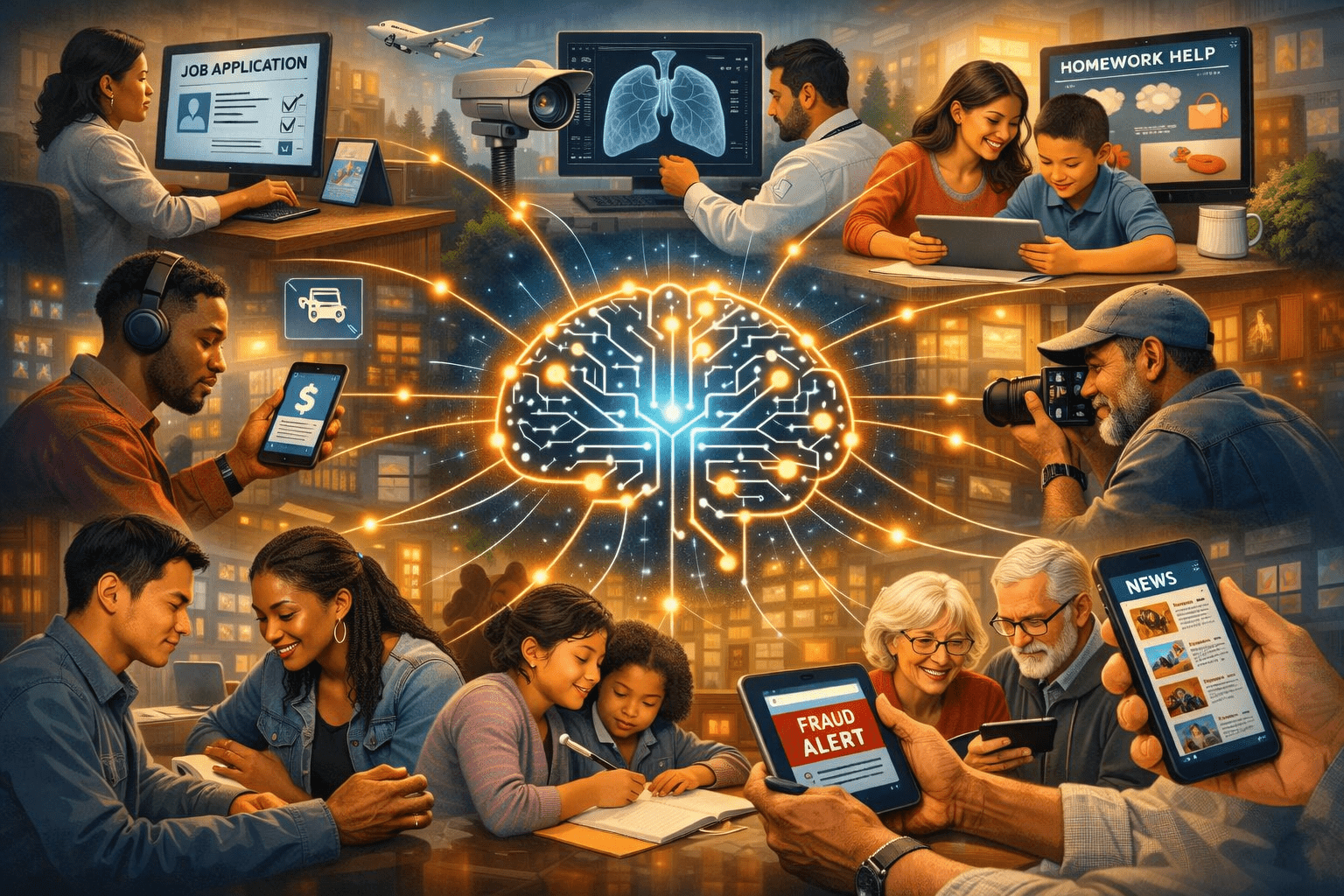
Intelligent systems increasingly shape how decisions are made, services are delivered, and information is interpreted. They operate quietly in the background of everyday life, accelerating processes and producing outcomes that appear efficient, consistent, and rational. From recommendation engines to automated decision systems, from workplace platforms to public services, these technologies now mediate much of daily experience. For many people, they function well enough to feel familiar and even helpful. For others, something feels harder to grasp. The difference is rarely intelligence or adaptability. It is experience.

People who have lived through multiple waves of technological change tend to recognize patterns that are less visible to those encountering intelligent systems for the first time. They have watched tools evolve into platforms, platforms become infrastructures, and infrastructures quietly reshape behavior. They recognize when speed begins to replace understanding, when efficiency displaces judgment, and when systems continue functioning while becoming harder to explain. This is not nostalgia or resistance to innovation. It is pattern recognition formed through time and exposure to how systems behave once they scale.

Experience changes how intelligent systems are understood because it provides context across transitions. Those who have watched systems grow, automate, and optimize know that improvement rarely arrives without tradeoffs. They have seen organizations become faster while becoming less responsive, platforms grow more capable while becoming harder to question, and institutions optimize performance while drifting from their original purpose. These shifts are rarely dramatic at first. They appear as small changes in process, tone, or explanation. Over time, they accumulate. Experience allows people to sense that accumulation before it becomes visible in outcomes or failures.

Much public discussion about technology focuses on capability: what systems can do, how quickly they operate, and how broadly they scale. Far less attention is paid to how systems hold together as they change. As automation increases, explanations thin. Decisions arrive without narrative. Processes update without context. For people with experience, this creates a specific kind of disorientation. Systems still work, but they no longer explain themselves in ways that align with lived understanding. The gap is subtle, but it is felt.

This gap is where many everyday frustrations originate. People feel rushed without feeling supported. They are asked to comply with processes they no longer recognize. They receive outcomes without clarity about how those outcomes were produced. Even when metrics suggest improvement, something feels off. These reactions are often mischaracterized as discomfort with technology or an inability to keep up. In reality, they reflect a loss of continuity between past understanding and present operation.

The patterns behind this loss do not appear all at once. They surface in different forms, often separately at first. Speed creates the impression of progress even when direction is unclear. Optimization improves performance while eroding meaning. Compliance replaces alignment as systems scale. Control feels safe until it produces fragility. Systems grow quiet right before they break. Each of these dynamics shows up in ordinary settings: at work, in public services, in education, in healthcare, and across digital platforms people rely on every day. None of them require technical expertise to recognize. They require experience.

What experience provides is not cynicism, but calibration. It alters how people interpret signals. It teaches them to notice when silence replaces feedback, when efficiency replaces care, and when rules substitute for understanding. It allows them to distinguish between systems that are improving and systems that are merely accelerating. This perspective does not come from rejecting technology. It comes from living with it long enough to see how intentions shift as systems optimize and scale.

The articles that follow explore these dynamics one at a time, not as abstract theories, but as recognizable features of modern systems. Each piece examines a single pattern in depth, tracing how it emerges, why it feels familiar, and what it reveals about the way intelligent systems evolve. Together, they form a broader examination of how understanding changes as systems grow more automated, more efficient, and more opaque.

This work matters because intelligent systems increasingly influence decisions that affect people’s lives, often without offering visibility into how those decisions are made. Understanding how these systems behave over time is no longer a technical concern reserved for specialists. It is a civic and personal one. People do not need to know how to build these systems to feel their effects. They do need language to interpret what they are experiencing and to recognize when surface improvement masks deeper misalignment.

Experience plays a central role in that interpretation. It equips people to ask better questions, to notice when systems stop explaining themselves, and to recognize when progress is measured narrowly while meaning thins. It reveals when systems optimize for performance at the expense of coherence and when efficiency replaces purpose. These insights are rarely taught. They are accumulated.

In an age defined by intelligent systems, understanding no longer comes only from learning how a system works at a moment in time. It comes from recognizing how systems change, what they preserve, and what they leave behind. Experience supplies that perspective. It allows people to remain oriented even as interfaces shift, rules update, and automation expands.

Experience does not make people anti-technology. It makes them attentive to structure, intent, and consequence. It sharpens awareness of how systems behave when speed, scale, and optimization outpace explanation. In a world increasingly shaped by intelligent systems, that awareness is not a liability. It is a form of literacy.

© 2026 Truth Seekers Journal. Published with permission from the author. All rights reserved.

Support open, independent journalism—your contribution helps us tell the stories that matter most.

From D.C. to Dubai: The Rise of a Global AI Governance Leader

Aliyana Isom is named Global Lead for Security Professionals in AI Governance by WiAIG, marking a milestone in ethical, secure, and inclusive global AI leadership.

By Milton Kirby | Washington, D.C. | January 28, 2026

At 10:00 a.m. Tuesday morning at Dulles International Airport, Aliyana Isom boarded a plane bound for Dubai. The destination is more than a city. It’s a signal. In a matter of hours, she will moderate a global leadership panel at the January 31, 2026 Corporate Women Summit, bringing culture, accountability, and governance into a room where decisions ripple across borders.

That flight marks a milestone. Isom has been named Global Lead for Security Professionals in AI Governance by Women in AI Governance (WiAIG) a role that places her at the center of one of the most consequential conversations shaping technology’s future.

A Role That Signals Trust

This trust underpins WiAIG’s appointment. Their decision recognizes more than résumé lines: it’s confidence in Isom’s ability to translate risk into policy, and policy into practice. As Global Lead, she will grow and support a worldwide community of security practitioners working to ensure AI systems are built and governed with trust at their core.

Security professionals are essential to AI governance because artificial intelligence systems must protect confidentiality, preserve integrity, and remain resilient from design through deployment. Isom’s mandate is to align security risk management with ethical, legal, and operational frameworks so organizations can adopt AI responsibly without sacrificing public trust.

Roots and Resolve

Isom’s path to global leadership is grounded in service and systems. A proud U.S. Air Force veteran and former Senior Cybersecurity Program Manager at Nike, she has spent her career navigating invisible infrastructures that shape real lives.

“I realized it when I saw how invisible systems could directly affect real people’s lives,” Isom says. “Someone had to be accountable for that power.”

Working close to innovation clarified the stakes. “AI can scale harm quickly if governance isn’t built in from the start,” she explains. Mentors trusted her with complexity. Communities reminded her that her voice mattered even when she was the only one in the room.

Making Sense of AI Governance

At its core, AI governance is a framework of policies, procedures, and ethical standards that ensure AI is developed and used responsibly. It addresses bias, privacy, security threats, and accountability—balancing innovation with safety.

Trust, Isom argues, comes from controls, transparency, and accountability especially when systems fail. Governance is not about slowing innovation; it is about building guardrails early so damage does not have to be repaired later..

Representation and Responsibility

Stepping into this role as a Black woman in tech governance carries weight and purpose. “My presence expands what leadership can look like in these spaces,” Isom says. From her community, she carries resilience, discernment, and an awareness that decisions made in global rooms affect people far beyond those in the room.

To young women watching, her message is direct: “You do not need permission to lead. Preparation and competence will open doors.”

Dubai: Leadership in Action

In Dubai, Isom will moderate a session at the Corporate Women Summit from 11:15 a.m. to 12:00 p.m. titled “From the Office Cubicle to Navigating Foreign Territories.” The panel explores what it takes to succeed in a new country, including understanding cultural nuances and building networks from scratch.

She will guide a conversation with Tatjana Markovic, Paulina Mercader, Sophie McBaiden, and Donna Forte-Regis, leaders whose experiences navigating unfamiliar systems mirror the same challenges facing global AI governance.

Cross-cultural leadership, Isom notes, requires the same discipline as governing artificial intelligence: the ability to assess risk in unfamiliar environments, build trust across differences, and design systems that remain accountable even when contexts change.

“The practitioners who are responsible when theory meets reality are often missing from global conversations,” Isom says. In Dubai, she brings those voices forward, grounding dialogue in outcomes rather than abstraction.

The Vision Ahead

Looking ahead, Isom is focused on building a safer AI future, stronger global standards, inclusive leadership pipelines, and systems that protect communities rather than exploit them.

“Responsible AI must be explainable, auditable, and challengeable,” she says. “Innovation can move fast, but trust has to move faster.”

As the plane descends and the heat of Dubai rises, Isom’s journey comes into focus. This is more than her career advancing; it is about bringing accountability and purpose to the forefront of global technology leadership.

This article was first published in The Truth Seekers Journal.

Related articles

How Urban Planning Taught Me to Build Continuity into Intelligent Systems

What is Autolore?

Truth Seekers Journal Welcomes Dr. Florita Bell Griffin as Contributing Writer and Systems Analyst

The Future Works Here: ICRA 2025 Highlights Robotics Jobs and Education

Truth Seekers Journal thrives because of readers like you. Join us in sustaining independent voices.

How Urban Planning Taught Me to Build Continuity into Intelligent Systems

AutoLore™ is a continuity architecture that preserves coherence, lineage, and accountability in intelligent systems, governing context before AI interpretation, generation, or action occurs.

By Florita Bell Griffin, Ph.D | Houston, TX | January 23, 2026

I first encountered the problem that would later become AutoLore while creating an AI-generated art collection in 2023 titled “All We Need Is Love”, a 77-piece body of work honoring the contributions of African American men across every U.S. state and territory, paired with images referencing African ceremonial mask traditions to honor ancestral origins. The project carried personal weight long before it became technical. I had long recognized the absence of continuity in Black culture as an intentional infliction—history fragmented, lineage disrupted, context erased or compressed. This collection emerged as a corrective act, an effort to hold presence, contribution, and dignity together across geography and time.

As the work developed, a persistent pattern surfaced. The system repeatedly rendered African American men through a narrow visual range, compressing skin tone, facial variation, and presence into a single flattened representation. Iteration revealed deeper inconsistencies as well—misalignments absent when the same tools portrayed other cultures. Extended testing clarified the issue with precision. Knowledge existed in fragments, yet coherence across history, representation, and context failed to carry forward. The system struggled to sustain identity across variation. That realization redirected my attention toward continuity as a governing condition, examined through the same analytical lens I had long used to understand cities, infrastructure, and long-horizon systems. A single question emerged, linking cultural memory, intelligent systems, and urban science: how systems evolve while retaining themselves.

From the beginning of my professional formation, I learned to recognize failure as structural before it becomes visible. Urban planning shows that breakdowns arise through ungoverned assumptions as conditions shift. A transportation network can operate while quietly undermining land use. A zoning decision can appear sensible at a local scale while destabilizing an entire region over time. Systems drift long before they fracture.

Urban and regional science deepened this way of seeing. It oriented my thinking toward flows rather than objects—flows of people, capital, information, movement, and power. Stability emerges through alignment rather than optimization alone. When flows exceed the structures meant to contain them, continuity erodes even as performance improves. That insight endured.

Most importantly, my discipline taught me to treat identity, sequence, and authority as foundational variables. Regions depend on boundaries. Systems rely on sequence. Cities operate through layered authority across jurisdictions. When identity blurs, when sequence fractures, or when authority shifts quietly, fragmentation follows even while individual actors remain capable and sincere.

I carried that understanding forward as I continued examining intelligent systems through creative practice.

Midway through this exploration, I initiated a second experiment. “Sisters Across Borders” became a 60-piece global collection portraying women whose faces blended African descent with another culture, each work representing a different country. This project allowed real-time application of emerging insights. Continuity principles shaped data preparation, representation logic, and contextual framing. At the same time, the African American cultural thread remained active. The lessons from All We Need Is Love carried forward rather than closing behind me. The contrast between the two collections revealed something critical. When continuity was deliberately prepared and carried, the system retained coherence across variation. When continuity remained implicit, fragmentation resurfaced.

What I observed felt familiar.

Intelligent systems were becoming more capable, more autonomous, and more interconnected. As they retrained, migrated, integrated, and evolved, coherence diminished over time. Operation continued. Performance increased. Yet continuity thinned. Identity shifted toward inference rather than enforcement. Lineage yielded to overwriting. Context leaned toward reconstruction rather than preservation. Authority drifted quietly between components.

The industry described these conditions as drift, forgetting, instability, or degradation. I recognized them as symptoms. I had witnessed the same patterns in cities, regions, and infrastructure systems. The cause remained structural.

Continuity was absent as an architectural condition.

In urban planning, systems never infer continuity for themselves. Continuity is designed. Lineage is preserved. Boundaries are defined. Transitions are governed. Sequence is respected. Authority is established. Growth and change follow afterward. Intelligent systems were being asked to reverse this order—to learn their way into coherence without a stable frame.

AutoLore emerged from the realization that continuity must exist before intelligence expresses itself. When continuity depends on interpretation, learning, or retrospective analysis, fragility follows under change. As conditions shift, the system must guess who it is, what applies, and which authority governs the present moment.

That condition reflects vulnerability rather than intelligence.

The first step involved recognizing that raw events create unstable inputs. In cities, raw activity never serves as planning truth. Contextualization gives events meaning. Sequence situates them. Lineage connects them. Applicability clarifies relevance. AutoLore applies the same principle to intelligent systems. Events are prepared into continuity-ready representations that carry identity relevance, contextual scope, lineage relationships, and transition awareness forward explicitly. Continuity becomes structured rather than inferred.

Preparation alone remains insufficient. In planning, design without governance collapses under pressure. AutoLore therefore treats continuity as something actively governed. Identity, provenance, sequence, scope, authority, and persistence bind together into continuity states that exist independently of models, applications, or platforms. Continuity retains authority across upgrades, replacements, migrations, and distributed environments because it belongs to the architecture rather than the implementation.

A further issue soon became clear—one planners understand well. Without clear authority, governance dissolves. Cities fragment when jurisdiction blurs. Systems bypass rules when precedence remains unclear. AutoLore addresses this through continuity supremacy: continuity established as an authoritative system property that holds precedence over execution. Continuity is traversed before action. Authority persists even as systems pause, transfer, or operate in parallel.

This way of thinking emerged through a discipline built to design environments that evolve without collapse. Urban planning and regional science shaped how identity endures across time, how change remains governed while progress continues, and how failure emerges when structure remains implicit.

AutoLore expresses that discipline in a new domain.

I developed AutoLore by giving intelligent systems what cities require to endure: continuity prepared, governed, and upheld as an architectural responsibility. The work began in practice before it became architecture, and it continues wherever systems are asked to carry identity, context, and authority forward through change.

AutoLore™ is a proprietary continuity architecture of ARC Communications, LLC. The AutoLore™ architecture and its associated subsystems are patent pending. All rights reserved.

Adapted for Truth Seekers Journal from research originally published by ARC Communications, LLC.

For correspondence: arccommunications@arc-culturalart.com

©2026 ARC Communications, LLC. All rights reserved.

Related articles

Truth Seekers Journal Welcomes Dr. Forita Bell Griffin as Contributing Writer and Systems Analyst

“What Is AutoLore?”

Truth Seekers Journal thrives because of readers like you. Join us in sustaining independent voices.

What Is AutoLore?

AutoLore™ is a continuity architecture that preserves coherence, lineage, and accountability in intelligent systems, governing context before AI interpretation, generation, or action occurs.

By Florita Bell Griffin, Ph.D | Houston, TX | January 22, 2026

Inventor of AutoLore™ · AutoLore™ is owned by ARC Communications, LLC

AutoLore™ is a continuity architecture. Its purpose is to preserve coherence, lineage, and integrity as real-world events, data, and decisions move through intelligent systems over time. AutoLore prepares raw inputs into continuity-verified representations before any interpretation, generation, or action occurs. By governing preparation rather than performance, AutoLore stabilizes systems across scale, transfer, and change.

Modern intelligent systems are optimized for output. They predict, personalize, and adapt with impressive speed. Yet as systems evolve, context fragments, sequence blurs, and decisions become harder to trace. What remains may continue to function, but it no longer holds together. AutoLore exists to address this structural failure mode by treating continuity itself as a first-class architectural concern.

AutoLore operates as a preparation layer positioned between raw event intake and downstream system use. Instead of allowing each component to infer its own understanding of events, AutoLore standardizes how events enter the system. It produces continuity-ready representations designed for durable use across time, environments, and ownership. These representations carry the information required to preserve context without exposing raw inputs or forcing downstream interpretation.

At the core of AutoLore is disciplined preparation. Real-world events are received through a defined intake interface. Continuity attributes are extracted. Lineage relationships are established so sequence and causality remain intact. Transition states are classified to reflect change rather than overwrite history. Boundaries are defined to govern how prepared representations may be consumed downstream. The output is a structured representation designed to remain coherent as systems evolve.

This approach allows downstream systems to operate with clarity. Models, interfaces, and services consume prepared representations rather than raw events, which supports auditability, provenance, and long-range integrity. Routing and flow control can occur without interpretation, preserving determinism and reducing drift. Over time, this yields systems that remain recognizable even as components are replaced or upgraded.

AutoLore is intentionally distinct from performance-oriented intelligence. It does not predict outcomes, personalize behavior, or generate meaning. Instead, it governs the conditions under which meaning, action, and expression can remain coherent. This distinction enables AutoLore to function across domains wherever continuity must survive scale and change, including intelligent vehicles, AI platforms, robotics, data systems, and complex infrastructures.

AutoLore includes a core subsystem responsible for governed expressive output: Arjent AI Voice Architecture™. This subsystem ensures that when a system explains, narrates, or communicates, its output remains aligned with continuity-prepared inputs. Expression is governed by structure, lineage, and boundary rules rather than repetition or reinterpretation, preserving consistency across time and context.

AutoLore is a foundational architecture created to govern continuity before intelligence acts and before meaning is produced. Developed by ARC Communications, LLC, AutoLore defines a new category of system architecture centered on continuity preparation rather than downstream correction.

Fifty Real Problems AutoLore Resolves

The following questions reflect recurring failures observed in large-scale intelligent systems. Each illustrates a condition that emerges when continuity, lineage, and governed transition are absent. AutoLore addresses these problems by preserving coherence before interpretation, generation, or action occurs.

Why do large AI systems behave inconsistently across versions even when trained on the same data?
A: › Because lineage between model states, data contexts, and decision boundaries is reconstructed after the fact instead of preserved. AutoLore carries continuity forward explicitly, so each transition retains its governing context.

Why does internal AI governance break down once systems scale across teams?
A: › Governance fails when context ownership fragments. AutoLore enforces continuity before interpretation, keeping authority intact as systems cross organizational boundaries.

Why do audit trails fail under regulatory scrutiny?
A: › Logs describe outcomes rather than causality. AutoLore preserves lineage at the moment of transition, making audits evidentiary rather than inferential.

Why do safety teams disagree with product teams about what a system knew at a given time?
A: › Because memory is inferred rather than fixed. AutoLore locks continuity states so interpretation never rewrites history.

Why do autonomous systems drift even when performance metrics improve?
A: › Optimization rewards local success rather than identity preservation. AutoLore defines invariants that adaptation cannot override.

Why does system behavior change after infrastructure migrations?
A: › Context is stripped during translation. AutoLore treats migrations as continuity events rather than data moves.

Why do long-lived platforms lose coherence after acquisitions?
A: › Institutional memory is undocumented and informal. AutoLore embeds lineage into the system itself.

Why is AI explainability unreliable months after deployment?
A: › Explanations are regenerated using present context. AutoLore preserves original interpretive conditions.

Why do compliance teams rely on manual documentation for automated systems?
A: › Automation lacks continuity guarantees. AutoLore provides machine-verifiable lineage.

Why does “human in the loop” fail at scale?
A: › Humans intervene without preserved context. AutoLore ensures interventions occur inside governed continuity frames.

Why do robotics systems behave differently in identical environments?
A: › Environmental context is flattened into sensor data. AutoLore preserves situational lineage.

Why do simulation-trained systems fail in real-world deployment?
A: › Simulation lacks continuity with reality. AutoLore binds simulated and real transitions.

Why do multi-modal systems struggle to reconcile conflicting inputs?
A: › Inputs lack shared lineage. AutoLore resolves conflicts through continuity hierarchy.

Why does retraining erase prior safety learnings?
A: › Safety knowledge is not preserved as invariant. AutoLore protects it across cycles.

Why do distributed systems disagree about current state?
A: › State is computed locally. AutoLore maintains global continuity.

Why do AI incidents take weeks to root-cause?
A: › History must be reconstructed. AutoLore eliminates reconstruction.

Why do systems pass testing but fail in production?
A: › Test context differs from live context. AutoLore carries context forward.

Why does model rollback create new failures?
A: › Rollback ignores intervening continuity. AutoLore accounts for transition debt.

Why do AI governance policies lag technical reality?
A: › Policy operates outside the system. AutoLore embeds governance inside execution.

Why do platforms struggle with accountability across partners?
A: › Responsibility diffuses across interfaces. AutoLore preserves provenance across handoffs.

Why do customer-facing AI systems contradict themselves over time?
A: › Narrative continuity is not preserved. AutoLore maintains coherent memory states.

Why do personalization systems feel invasive or inconsistent?
A: › Context is inferred probabilistically. AutoLore uses continuity-verified context.

Why do internal tools behave differently than external ones using the same model?
A: › Integration strips lineage. AutoLore standardizes continuity intake.

Why do data governance teams distrust AI outputs?
A: › Outputs lack traceable origin. AutoLore provides verifiable lineage.

Why do safety assurances weaken after system updates?
A: › Updates overwrite assumptions. AutoLore enforces invariant preservation.

Why does federated learning complicate accountability?
A: › Contributions lose attribution. AutoLore preserves origin across federation.

Why do large systems require tribal knowledge to operate safely?
A: › Knowledge lives in people rather than systems. AutoLore moves it into architecture.

Why do explainability tools disagree with one another?
A: › They interpret from different temporal contexts. AutoLore fixes the temporal frame.

Why do AI failures repeat in slightly different forms?
A: › Lessons are not preserved structurally. AutoLore encodes them into continuity.

Why does system identity blur after rapid iteration?
A: › Change outpaces coherence. AutoLore governs identity through transitions.

Why do platform leaders fear regulatory retroactivity?
A: › They cannot prove historical compliance. AutoLore makes compliance durable.

Why do AI risk reports rely on narrative rather than evidence?
A: › Evidence was never preserved. AutoLore generates evidence by design.

Why do internal disagreements stall AI deployment?
A: › Teams reason from different histories. AutoLore synchronizes lineage.

Why do handoffs between vendors introduce silent risk?
A: › Context is lost at boundaries. AutoLore enforces continuity at interfaces.

Why do systems behave correctly until a rare edge case?
A: › Edge cases break implicit assumptions. AutoLore makes assumptions explicit.

Why does long-term system stewardship degrade?
A: › Original intent fades. AutoLore preserves intent structurally.

Why do AI systems struggle with policy consistency?
A: › Policies change without continuity mapping. AutoLore binds policy to state.

Why does AI forget why decisions were made?
A: › Memory stores outputs rather than reasoning context. AutoLore preserves decision lineage.

Why do multi-year AI programs lose strategic alignment?
A: › Strategy is not embedded. AutoLore carries strategic continuity forward.

Why do postmortems fail to prevent recurrence?
A: › Lessons stay external. AutoLore integrates them into execution.

Why do AI roadmaps drift from original promises?
A: › Change lacks guardrails. AutoLore defines protected invariants.

Why do cross-border deployments create governance gaps?
A: › Jurisdictional context is not preserved. AutoLore maintains contextual lineage.

Why does AI safety depend on individual champions?
A: › Safety is not structural. AutoLore makes it architectural.

Why do systems appear compliant until challenged?
A: › Compliance is performative. AutoLore is evidentiary.

Why do organizations fear explaining their AI publicly?
A: › They cannot guarantee consistency. AutoLore ensures stable explanation.

Why do AI capabilities outpace control mechanisms?
A: › Control is added downstream. AutoLore operates upstream.

Why do platforms struggle with trust erosion?
A: › Trust requires continuity. AutoLore preserves it.

Why does AI governance feel abstract to engineers?
A: › Governance is not executable. AutoLore makes it operational.

Why do intelligent systems age poorly?
A: › Time erodes context. AutoLore carries context forward.

Why do advanced systems still fail in simple, human-visible ways?
A: › They optimize intelligence without continuity. AutoLore restores coherence.

AutoLore™ is a proprietary continuity architecture of ARC Communications, LLC. The AutoLore™ architecture and its associated subsystems are patent pending. All rights reserved.

Adapted for Truth Seekers Journal from research originally published by ARC Communications, LLC.

For correspondence: arccommunications@arc-culturalart.com

©2026 ARC Communications, LLC. All rights reserved.

Related articles

Truth Seekers Journal Welcomes Dr. Forita Bell Griffin as Contributing Writer and Systems Analyst

Truth Seekers Journal thrives because of readers like you. Join us in sustaining independent voices.

Truth Seekers Journal Welcomes Dr. Florita Bell Griffin as Contributing Writer and Systems Analyst

Truth Seekers Journal welcomes Dr. Florita Bell Griffin, inventor of AutoLore™, whose work on continuity and governance explores how truth and context are preserved across intelligent systems.

By Milton Kirby | Atlanta, GA | January 22, 2026

Truth Seekers Journal (TSJ) is proud to welcome Dr. Florita Bell Griffin as a contributing writer and systems analyst. Her work sits at the intersection of continuity, governance, and intelligent systems—core concerns that mirror TSJ’s mission to preserve truth, lineage, and coherence across generations.

Dr. Griffin is the inventor of AutoLore™, a continuity architecture designed to protect context and integrity as information moves through complex systems. Rather than optimizing for speed or output alone, her research focuses on preparation—how raw events, data, and decisions are stabilized before interpretation or action. The result is a framework that resists drift, fragmentation, and the quiet loss of lineage that often occurs as systems scale and change.

What makes her perspective especially timely is its reach beyond technology. Dr. Griffin’s work examines how continuity breaks down in institutions, communities, and narratives—and how governance structures can be designed to preserve meaning over time. In an era where information moves faster than memory, her insights help explain why systems may continue to function while no longer holding together.

Her voice strengthens TSJ’s editorial mandate: to examine how truth is preserved, how systems fail, and how continuity can be protected in a rapidly changing world. We are honored to bring her perspective to our readers.

Related articles

“What Is AutoLore?”

Truth Seekers Journal thrives because of readers like you. Join us in sustaining independent voices.

The Future Works Here: ICRA 2025 Highlights Robotics Jobs and Education

ICRA 2025 in Atlanta broke records and barriers, featuring lifelike humanoids, art-powered robotics, and global tech leaders pushing the field into the future.


By Milton Kirby | Atlanta, GA | May 27, 2025

The 2025 IEEE International Conference on Robotics and Automation (ICRA 2025) concluded on May 23, following a week of groundbreaking research, dazzling robot demonstrations, and global collaboration. Hosted in Atlanta’s Georgia World Congress Center, this year’s ICRA was the largest in the event’s history, drawing more than 7,000 participants, 141 exhibitors, and hundreds of educational institutions and tech companies from around the world.

Organized by the IEEE Robotics and Automation Society, ICRA is recognized as the world’s premier robotics event. It combines academic research, industrial innovation, and community networking to explore how robots are shaping our world today—and what’s coming next.

Hands-On with the Future: Robots Take Center Stage

The exhibition floor at ICRA 2025 transformed into a living showcase of tomorrow’s technology. Spanning 235,000 square feet, it buzzed with live demonstrations of cutting-edge robots—from lifelike humanoids to four-legged machines designed for rescue, research, and even barista work.

Boston Dynamics drew a steady crowd with its agile quadruped robot, Spot. Measuring approximately 43 inches long and weighing 72 pounds, Spot is already being utilized in industries such as power generation, petroleum, and pet food manufacturing. At ICRA, Spot wowed attendees by navigating around obstacles, self-correcting after falls, and showcasing its ability to operate independently. It charges itself, re-routes when paths are blocked, and carries up to 14 kilograms of custom equipment. With more than 1,500 Spots already in the field, the robot’s user-friendly interface and powerful API make it ideal for hazardous inspections and industrial monitoring.

Unitree’s G1 humanoid robots also made headlines. These compact androids, standing 52 inches tall and weighing 77 pounds (including their battery), mimic the structure of a human body—complete with a head, torso, rotating arms, elbows, wrists, fingers, and legs with hip, knee, and ankle joints. The units even wore shoes for their performance. In a playful yet impressive demonstration, two G1s donned boxing gloves and engaged in a mock match, reacting to punches and showcasing their ability to regain balance after being hit. With approximately two hours of battery life and an AI-driven control system, the G1 demonstrated just how close humanoid robots are to mastering complex, real-world movements.

Nearby, Rainbow Robotics of South Korea showcased its RB-Y1 humanoid platform. This research-friendly bot features multiple control options, including a joystick, VR headset, and master arm system. The company also introduced a Mecanum Wheel System for 360-degree movement in tight spaces. RB-Y1 has already attracted users from top institutions, including MIT, UC Berkeley, Georgia Tech, and the University of Washington. Its flexible software development kit (SDK) enables researchers to tailor the robot for AI projects by utilizing grippers, LiDAR, and IMUs. Rainbow’s exhibit, supported by its US subsidiary in Chicago, reinforced the company’s growing global presence.

The MAB Honey Badger team returned with their latest version of a rugged quadruped robot: the HB4.0. Developed over nearly a decade, this legged robot has been field-tested in challenging environments and is now being deployed by customers for real-world applications. Designed for durability and agility, the Honey Badger is built to navigate rugged terrain where wheels and tracks fail.

On the more delightful side of robotics, Artly AI presented its Barista Bot, built not just to serve coffee but to do it with craftsmanship. Using deep learning and imitation-based training, Artly’s robots learn directly from human baristas. They recognize tools, follow quality checks at each brewing step, and produce consistently perfect drinks. The bots can be bought for $80,000 or leased starting at $2,650 per month. Artly’s mission isn’t to replace human baristas—but to honor and preserve the fine art of coffee-making, bringing café-quality service to airports, malls, and workplaces.

The exhibition area also featured The Gecko, a robot named for its sticky-footed namesake. With specialized grip pads and adaptive gait, The Gecko is designed for wall and pipe inspections, particularly in environments that are hazardous or difficult for humans to access. Its unique ability to navigate vertical or irregular surfaces has made it a favorite among research teams focused on infrastructure monitoring and maintenance.

Altogether, ICRA 2025’s exhibition floor was more than a tech showcase—it was a window into a world where robots not only support human work but do so with agility, precision, and even a touch of personality.

Where Arts and Engineering Meet

ICRA 2025 didn’t just showcase technology—it celebrated creativity. The growing “Arts in Robotics” program provided a unique perspective on how machines and art intersect. From choreography to sculpture and painting to costume design, the fusion of expression and engineering is redefining what robots can do.

This year’s events included live performances, juried art sessions, and workshops exploring motion planning in dance, haptics in clothing, and other related topics. It’s part of a larger trend: using robots not just as tools but as partners in human expression.

Powered by People: Global Collaboration and Education

ICRA 2025 featured over 2,000 paper presentations across 24 tracks, along with plenary talks and 52 keynote sessions. The conference also included workshops on robot ethics, robotics in Africa, and undergraduate education. Satellite conferences around the globe allowed remote participation, making this the most inclusive ICRA yet.

Top schools from around the world were well-represented. Gabrielle Madison says, “The A. James Clark School of Engineering of the University of Maryland (CSE) is a great place to get graduate engineering degrees in robotics.  Our graduate engineering programs are run in conjunction with the nationally recognized Maryland Robotics Center.”

The CSE offers a Graduate Certificate in Engineering program in Robotics, which can be completed in as little as two years. The certificate credit can be applied to a Master of Engineering degree.

Graduates of the program have been placed in jobs such as software developer, robotics operator, sales engineer, robotics engineer, electrical maintenance engineer, process engineer and machine learning specialist. Some of their top student employers have included Accenture, Cognizant Technology Solutions, the US Department of Defense, H-Tech Engineers, Infosys Ltd., Naval Air Systems Command, Raytheon, and the US Navy.

Networking groups like Black in Robotics, LatinX in Robotics, and Queer in Robotics held events to strengthen community and inclusion in the field.

Jobs, Automation, and the Road Ahead

As robotics continues to advance, it brings both opportunity and disruption. According to the World Economic Forum, while 85 million jobs may be displaced by automation by 2025, 97 million new ones could emerge—if workers can reskill. McKinsey estimates that 375 million workers may need to change careers by 2030.

The robotics industry is expected to reach $73 billion globally by 2029. In the US, jobs for robotics engineers are projected to grow by 3.3% over the next decade, with thousands of new roles across fields.

Industries driving this growth include:

  • Manufacturing: Cobots are speeding up assembly lines.
  • Healthcare: Robots assist in surgery and elder care.
  • Logistics: Autonomous bots are transforming warehouses.
  • Aerospace & Defense: Drones and robotic suits are under development.
  • Agriculture: Robots help with planting, sorting, and packaging.

Top careers in robotics include:

  • Robotics Engineer – $95,300/year
  • Software Developer (Robotics) – $122,386/year
  • Electromechanical Technician – $76,543/year
  • AI Specialist – $101,428/year

Educational paths range from two-year associate degrees for technicians to master’s programs for advanced engineers. Bootcamps and certifications also offer fast-track options for those entering the field.

Robotics Replacing the “Three Ds”

Many robots are now being used to take over jobs that are dull, dirty, or dangerous—reducing risks and improving productivity. Tasks such as bomb disposal, sewer inspections, and repetitive factory work are increasingly being handled by machines. A fourth “D” often added is “Dear”—jobs that are simply too expensive when done by humans.

Still, jobs that require emotional intelligence, creativity, and complex decision-making—such as those of teachers or therapists—remain less likely to be automated.

Looking Ahead

The energy at ICRA 2025 was electric. The blend of technical innovation, artistic collaboration, and career development made it a must-attend event for anyone in the robotics field.

Next year’s ICRA conference will take place in Vienna, Austria, from June 1 to 5, 2026. If this year was any sign, the future of robotics is not only bright—it’s inclusive, expressive, and globally connected.

Please consider supporting open, independent journalism – no contribution is too small!

15 Small Steps, Big Impact: How You Can Help the Planet

Protect the planet with 15 simple tips—from reducing plastic and food waste to conserving energy and water—that make eco-friendly living easy and impactful every day.

By Milton Kirby | Atlanta, GA | April 29, 2025

You don’t have to be a scientist or activist to make a difference. Protecting the environment can start with small, everyday choices. Here are 15 easy and impactful steps you can take to help protect the planet:


1. Switch to a Reusable Water Bottle

Using a reusable water bottle helps reduce plastic waste, conserves energy and water used in production, and limits harmful emissions from transporting single-use plastic bottles around the world.

2. Don’t Always Preheat the Oven

Unless you’re baking, many dishes don’t need a preheated oven. Skipping preheating saves up to 20% of energy and reduces unnecessary strain on your home’s power usage.

3. Use LED Bulbs Instead of Incandescent

LED light bulbs use up to 80% less energy, last longer, and provide the same brightness. Turning off lights when you leave a room boosts your energy savings.

4. Unplug Devices When Not in Use

Electronics continue drawing power when plugged in, even if turned off. Unplugging or using a power strip helps eliminate phantom energy waste and lowers your monthly electric bill.

5. Buy Household Staples in Bulk

Purchasing items like soap, rice, and pasta in bulk reduces plastic and cardboard waste. It also cuts energy used in packaging and transportation, making it better for the planet.

6. Run Full Loads in Your Machines

Only run your dishwasher or washing machine when they’re full. Scraping plates instead of rinsing also saves water, energy, and time while keeping your kitchen efficient and eco-friendly.

7. Use Safer, Non-Toxic Cleaners

Choose green-certified or homemade cleaners using baking soda and vinegar. These reduce indoor air pollution, are safer for your family, and limit chemical runoff into soil and water systems.

8. Cut Down on Food Waste

Plan meals, store food correctly, and use leftovers. Americans waste about a pound of food per person daily. Reducing waste saves money and decreases landfill methane emissions.

9. Cook More Efficiently

Match your pan to the burner size and use lids—a small pan on a large burner wastes over 40% of heat. Lids cut cooking time and energy use.

10. Always Bring Reusable Grocery Bags

Reusable bags can replace hundreds or thousands of plastic ones over time. Leave a few in your car or bag so you’re never without one at the store.

11. Recycle Paper and Cardboard

Recycling saves trees, water, and energy while lowering greenhouse gas emissions. In 2019, the U.S. landfilled over 60 million tons of paper. Do your part to reverse that trend.

12. Compost What You Can

Food scraps, leaves, coffee grounds, and newspapers can all be composted. Composting reduces landfill waste, enriches soil naturally, and lowers emissions from organic materials that would otherwise rot.

13. Choose Laptops Over Desktops

Laptops use about 80% less electricity than desktop computers. Their energy-efficient design makes them a more intelligent choice when upgrading your tech or setting up a home workspace.

14. Reduce Idling in Your Vehicle

Turn off your engine if parked for more than a minute. Reducing idling saves fuel, lowers emissions, and helps fight climate change by improving air quality and efficiency.

15. Conserve Water at Home

Fix leaks, shorten showers, and turn off taps when brushing. Conserving water helps protect groundwater, save energy, and maintain healthier ecosystems for wildlife and future generations.

Exit mobile version