
 truthseekersjournal
Dear Shadow Ball: Any thoughts on why Jackie Robinson was first to break the major league’s color barrier and not Satchel Paige. Paige was a pitcher while Robinson was a 1st baseman. – David Nivens, parts unknown
Dear David, Great question! Thank you so much for breaking the ice in both categories. You were the first to answer my question and the first to pose a question to me. Hopefully, moving forward, folks will follow your lead.
Now, this question could take a book to answer, and, in fact, books have been written about the broader subject: Was Jack Robinson the best choice to integrate the game, and, if not, who else would have been a better choice? In the interest of column space, I am going to limit my answer to your parameters, why Jack Robinson and not Satchel Paige. Both of whom played for the Kansas City Monarchs in 1945.
Let us look first at Satchel Paige: he was one of the best pitchers in Negro League history and, arguably, in all of baseball history. He also, even at this stage of his career, was the most marketable name in the Negro Leagues. Satchel Paige ranks 1st in career Negro League strikeouts, 1st in ERA+, 2nd in shutouts, and 3rd in wins. This is the entire case for Paige, and it very well could have been enough had the game integrated earlier. However, by the time Branch Rickey invited Jack Robinson to a meeting in Brooklyn in August 1945, Satchel Paige was, at least, 38 years old. More importantly, Paige was coming off a less-than-stellar 1945 season in which he achieved a 4-4 record with a 4.05 E.R.A. He was the fourth-best pitcher on the Monarchs that year, and among pitchers with as many innings pitched as he did, only two hurlers had a worse ERA.
As for Jack Robinson, at 26, while he was a tad old for a prospect, he was on the cusp of his prime if he were to have one. The biggest question facing Robinson at the start of the ’45 season was in what sport his prime was to be in. He had not played much baseball at any level since leaving UCLA in 1941. Based on his athleticism, the Kansas City Monarchs, of the Negro National League, invited him for a tryout in the Spring of 1945. He not only made the team, but he was arguably the best player in the 1945 Negro American League! No one who batted as often or more than he did topped him in batting average, on base%, slugging, OPS, OPS+ … he led the league in 2Bs, HRs, extra base hits, was 2nd in steals, and 3rd in RBIs.
… and then there were the intangibles – intelligent, articulate, non-smoker, non-drinker, graduated high school, junior college, and had studied at UCLA, was a wartime 1st Lieutenant in the U.S. Army with an honorable discharge. While both he and Paige had competed in integrated competition, Robinson had a long history of integrated scenarios in Pasadena, UCLA, and the service.
Thus, given the choice between Paige & Robinson, I strongly agree with Rickey’s decision. Jack Robinson was the right person for this assignment.
Last week’s Shadow Ball Significa question: What was the name of Atlanta’s most prolific franchise (in terms of years in the league) in the Negro Leagues?
Since no one provided the correct answer last week, I would like to keep that question active until it is answered. This column depends on interaction. So, please try again.
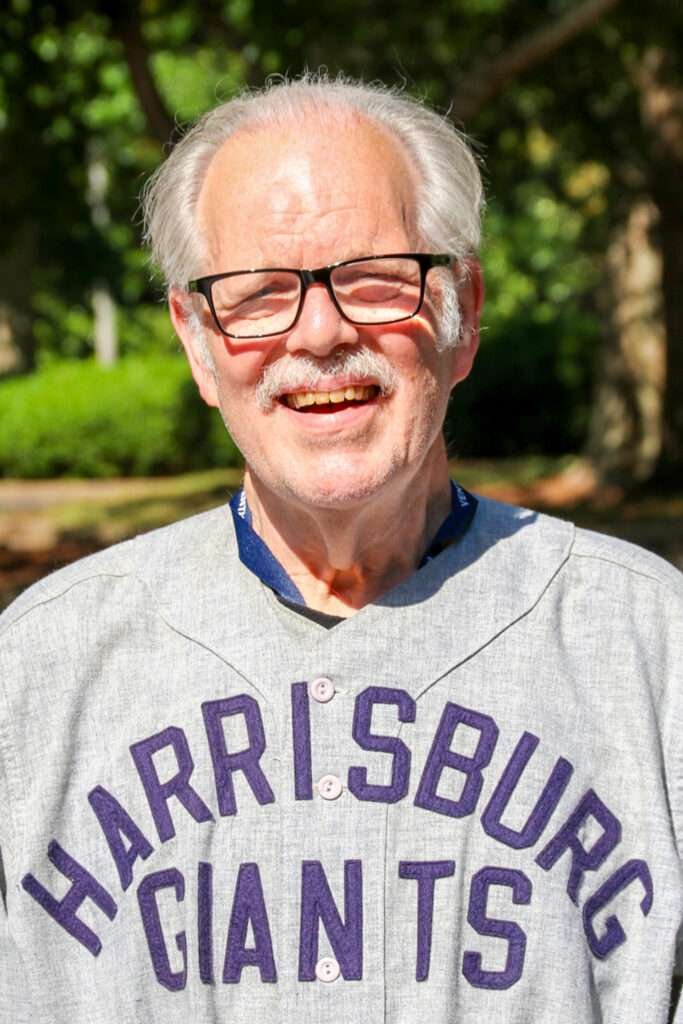
Ted Knorr is a Negro League baseball historian, a longtime member of the Society for American Baseball Research’s Negro League Committee, and founder of the Jerry Malloy Negro League Conference and several local Negro League Commemorative Nights in central Pennsylvania. You can send questions for Knorr on Negro League topics, as well as your answers to the week’s Significa question to shadowball@truthseekersjournal.com or Shadow Ball, 3904 N Druid Hills Rd, Ste 179, Decatur, GA 30033
Please consider supporting open, independent journalism – no contribution is too small!




Very informative article!!
Thank you!
Thank you so much for reading and sharing your appreciation!
We’re honored to spotlight the legacy of the Negro Leagues and the powerful stories that continue to shape our understanding of history, resilience, and excellence. Stay tuned for more Shadow Ball features — and feel free to share your reflections or favorite moments. We love hearing from our readers!
Of course, if you know the answer to the Significa question, please send that to us too!
Hallelujah!
Thank you, Cynthia, and my editor, for posting responses to my article!!! Mail is always welcome … now that the ice is broken let me see if I can put you to work. Cynthia? Is there any question on the Negro Leagues – its history, its players, any question that you had no one to ask before? Please ask … my column depends on reader questions … reader questions are the spark the next weeks column. So, I appreciate – very much – your nice complement and look forward to a follow up on some curiosity, topic, question, that you have always wanted to know about Negro League baseball. I will do my best to answer it or find someone who can.
Respectfully, Ted