By Milton Kirby | Decatur, GA | December 9, 2025
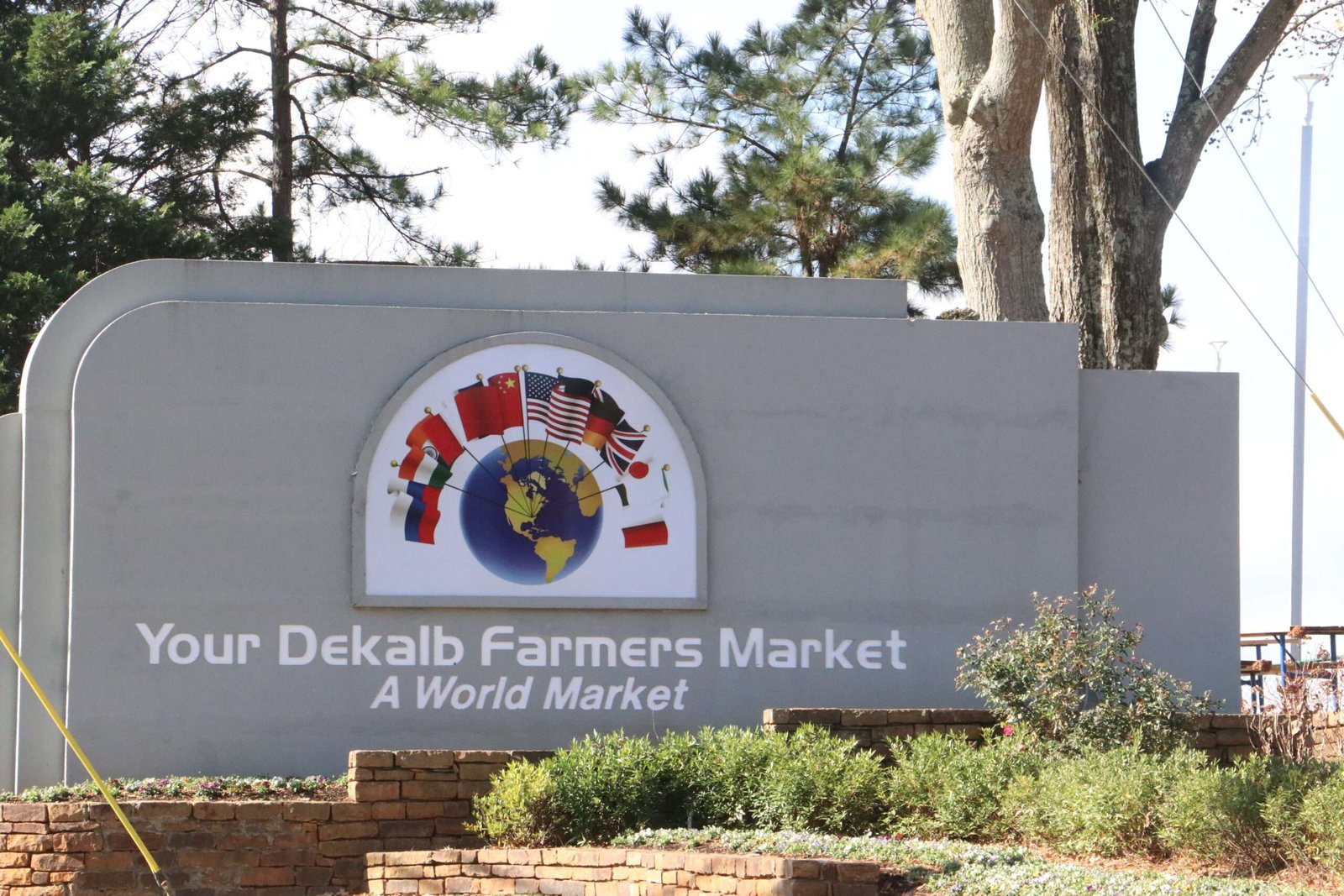
Walk up to the entrance of Your DeKalb Farmers Market on East Ponce de Leon Avenue, and the first thing you notice is the sky of flags. From one end of the roofline to the other, 184 national flags ripple above the parking lot, turning a simple grocery trip into a small United Nations of food and people.
Inside, more flags hang over the produce tables, seafood counters, and aisles of spices and grains. For many metro Atlanta families, spotting the flag of their home country is the start of a familiar routine: a deep breath, a smile, and a walk toward the foods that taste like home.
This is the heart of Your DeKalb Farmers Market — a place where global identity, fresh food, and community all meet under one roof.
A Market That Belongs to Its Neighbors
The story of this “world market” begins in 1977, when Rhode Island native and retail veteran Robert W. Blazer opened a small, 7,500-square-foot produce stand in Decatur.
Before he opened his first location on Medlock Road, Blazer went door to door in the surrounding neighborhood and asked residents a simple question: would you like to have a farmers market here? When they said yes, he dedicated the business to them and chose a name that still appears on the brown facade today: Your DeKalb Farmers Market.
His goal, as he later wrote, was not to build a chain of stores, but to create a direct, affordable source of high-quality fresh food that truly served the community.
Nine years after that first stand, the market moved to its current home at 3000 East Ponce de Leon Avenue in Decatur, where it has grown into a massive indoor marketplace now known across the region.
Flags as a Map of the World
The 184 flags above the building are not decoration. They are a map.
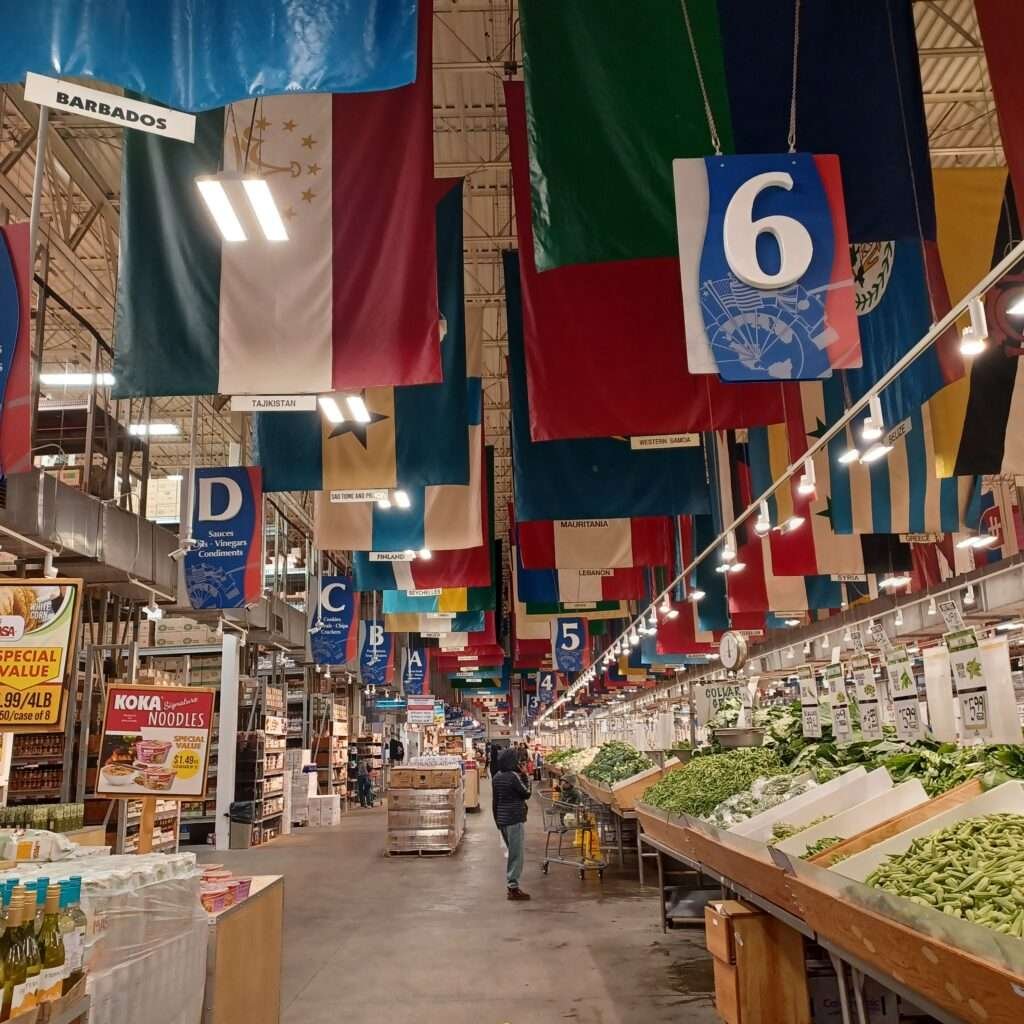
Each one represents a country connected to the market’s shelves, staff, or shoppers. For customers, a flag can be a guidepost: a hint that somewhere inside they will find the cassava, plantains, injera flour, curry pastes, teas, or spices that match their home cooking.
For employees, the flags reflect the market’s workforce — a staff drawn from more than 40 countries, speaking around 50 different languages and dialects. On the sales floor, name tags often list both a worker’s country of origin and the languages they speak, helping shoppers connect in their own tongue and feel at ease.
The flags also send a message to new visitors who may be walking in for the first time. They say: whoever you are, whatever you eat, you can find a piece of yourself here. And if you are curious, you can also discover somebody else’s culture in the next aisle over.
From 7,500 Square Feet to a True World Market
Your DeKalb Farmers Market now covers well over 100,000 square feet and operates seven days a week, 9 a.m. to 9 p.m.
What began as a simple produce stand has grown into a complex, 24-hour operation that includes:
- A sprawling retail floor for everyday shoppers
- A busy business services department for restaurants, caterers, and other stores
- Large adjacent warehouses and ripening rooms
- A wholesale shipping operation that moves produce across the United States
Behind the scenes, roughly half of the building and half of the employees work out of public view. Trucks arrive around the clock. Cold rooms are checked and re-checked. Bananas, plantains, avocados, papayas, tomatoes, and pears are ripened in controlled rooms built with engineering precision.
Blazer’s background in mechanical engineering and discount retail helped him design and build much of the facility himself — with a focus on efficiency, temperature control, and food safety from the ground up.
World Direct: From Farm to Market
The market’s mission is not limited to what happens in Decatur.
Under its “World Direct” registered trademark, Your DeKalb Farmers Market grows, packs, and ships produce from farms in Mexico, Central America, and South America directly to wholesale receivers across the United States. The company prides itself on working directly with farmers, helping them do what they love while building a stable market for their crops.
The market is also known in the produce industry for maintaining one of the best credit ratings available and for operating as a debt-free company — paying for what it buys with its own money and focusing on long-term strength instead of short-term debt.
Blazer’s son Daniel, who speaks Spanish fluently, heads up much of the international growing and shipping program. His work extends the reach of DeKalb’s “world market” far beyond Georgia.
Departments that Circle the Globe
Walk the aisles of Your DeKalb Farmers Market and each department feels like a different chapter in a global cookbook.
Produce: The Heart of the Market
This is where it all began in 1977 and remains the beating heart of the business. Fresh fruits and vegetables arrive several times a week, often directly from growers. The market arranges its own transportation to keep produce moving quickly from field to shelf.
Organic options line up beside conventional items, many of them certified to USDA standards and the standards of their countries of origin. Shoppers can buy familiar staples or explore lesser-known greens, roots, tropical fruits, and herbs, many labeled with their home countries and uses.
Cold-pressed juices made on site — from organic kale, beets, carrots, ginger, apples, pears, and more — offer a quick way to drink those nutrients, using slower juicing methods that protect vitamins and enzymes.
Seafood: From Scottish Lochs to Georgia Kitchens
The seafood department stretches across a long wall of ice and glass, with more than 450 varieties of whole fish, fillets, and shellfish. Live Maine lobsters, Dungeness crabs, and live catfish swim in tanks, turning shopping into a field trip for children.
The selection includes premium Lochlander Scottish salmon, raised in the cold lochs of the Scottish Highlands and Islands under sustainable practices and praised by chefs for its firmness and flavor. Customers can have their fish cleaned and filleted while they wait, then carry it a few aisles over to pick up global seasonings and sauces to match.
Bakery: Real People, Real Dough
In the bakery, real people make more than 150 varieties of breads, bagels, muffins, pastries, and cakes from scratch every day. Many items use organic flours, organic butter, and cage-free eggs. Recipes are built around whole grains, nuts, dried fruits, and natural sweeteners rather than high-fructose corn syrup.
For shoppers with special diets, there is a wide selection of dairy-free baked goods made without milk or eggs, along with items made with gluten-free ingredients (prepared in a shared kitchen), and sprouted-grain breads that treat grain more like a vegetable for digestion and nutrition.
Coffee, Tea, and Nut Butters
The coffee stand roasts and grinds more than 30 varieties of Arabica beans, including Fair Trade Ethiopian coffees from the Yirgacheffe region, Colombian, Kenyan, Guatemalan, Sumatra, Costa Rican, Jamaican, and others. Decaffeinated coffees are processed through the Swiss Water method, which uses water instead of chemicals to remove caffeine while preserving flavor.
Next to the coffee you can watch fresh nut butters being ground — organic peanut butter, almond butter, and cashew butter — made to order from nuts roasted in the market.
Chinese green teas, black teas, and delicate white teas share shelf space with herbal blends, giving health-minded shoppers a second home in this corner of the store.
Flowers and Gifts
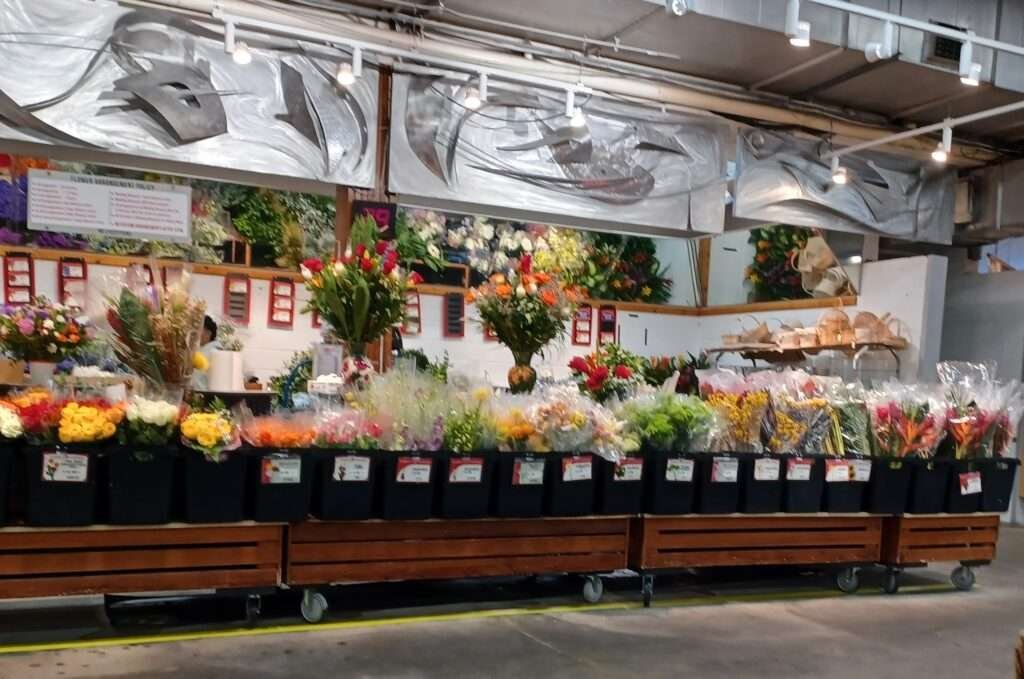
The flower department brings in stems and plants from Europe, Asia, Central America, Hawaii, and the continental United States. Staff create custom arrangements for weddings, holidays, and special occasions and even fill vases and fruit baskets to order. During Valentine’s season, the market sells thousands of dozens of roses.
International Groceries and Specialties
Beyond the fresh departments, the center aisles hold dried fruits from Thailand, Turkish roasted nuts, olive oils from Greece and Spain, coconut water from Sri Lanka, specialty sauces like coconut curry simmering sauces, and Stonewall Kitchen condiments and curds for home cooks who like to experiment.
Shoppers can find gluten-free flours, sprouted ancient grains, sea salts, international pastas, zero-calorie noodles, organic snacks, and a long list of pantry staples that rarely appear together in one store.
The wine and beer section offers more than 700 wines and 500 beers, arranged by geography and type. Many bottles carry ratings from respected wine publications, giving shoppers a reference point as they choose; staff stand ready to talk through regions, grapes, and food pairings.
Serving Families and Businesses
Your DeKalb Farmers Market is more than a place for home cooks. Its business services department opens at 8 a.m. to serve restaurants, caterers, wholesale food distributors, and other retail stores. Once a commercial account is set up, clients can order in bulk, call ahead, and pick up loads packed and processed for them.
This dual mission — retail and wholesale — is part of what keeps the operation humming 24 hours a day. Workers on overlapping shifts receive shipments, process meats and seafood, bake, pack, and stock the floor before most shoppers arrive.
Safety and Air You Can Feel
During the COVID-19 pandemic, the market put in extensive health and safety measures to protect staff and shoppers. Employees working with customers wore gloves and masks; markers on the floor kept customers spaced out; carts and baskets were pressure-washed with bleach.
One feature that stands out is the building’s air-washer system, designed to keep the interior at about 62 degrees with roughly 65 percent relative humidity. All of the air in the production and selling areas cycles through the system roughly every 10 minutes, washing out pollen and particles while constantly adding outside air. Higher humidity makes it harder for certain viruses to travel as easily, and those lessons have carried forward into daily operations.
Even as crowds have shifted and weekends sometimes feel less packed than they once did, the market has stayed focused on keeping shelves stocked and shoppers safe.
A Family Effort and a Bigger “Game”
Blazer, now decades into this work, often says the market is about more than selling groceries. He has long been interested in how people work together — in families, on teams, and across cultures.
His wife, Barbara, joined the business in 1987, bringing her own experience as a successful salon owner with demanding clients. She has helped shape product selection, recipes, and operations, and she speaks openly about the way the market’s “people work” tools have helped employees understand themselves, their children, and their partners at home.
Many of those lessons formed the basis for internal booklets Blazer and his team have shared through the years — reflections on what they believe people have in common and how organizations can move beyond fear and greed to cooperation.
Today, the family’s goal is to keep the market strong and independent long after its founder is gone. The company’s debt-free structure and steady reinvestment in facilities and people are designed to make that happen.
Flags for the Future
On any given day, the parking lot at Your DeKalb Farmers Market still tells its own story. A full lot often means a holiday is coming or bad weather is on the way. Shoppers roll out carts stacked with greens, fish, spices, breads, wine, coffee, and flowers — enough to fill Sunday dinners, family cookouts, Eid tables, Diwali feasts, or Lunar New Year banquets.
Above them, 184 flags wave in the Georgia wind.
They remind Atlanta that this is more than a grocery store. It is a world market rooted in Decatur, built on fresh food, fair dealing, and the belief that people from every corner of the globe can work — and eat — side by side.
Truth Seekers Journal thrives because of readers like you. Join us in sustaining independent voices.