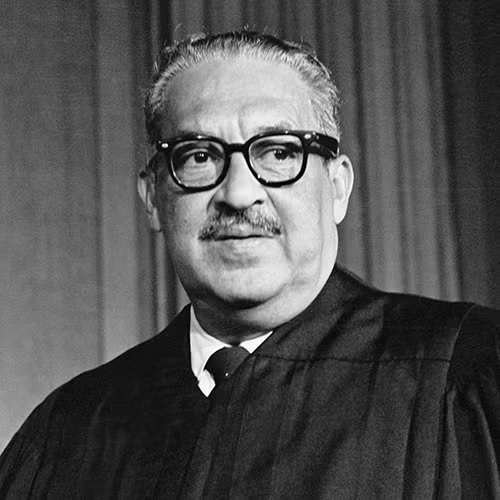
Florita Bell Griffin, Ph.D.
By Florita Bell Griffin, Ph.D | Houston, TX | February 24, 2026
Change does not register the same way across a lifetime. Early change often feels expansive. It carries promise. It suggests possibility without cost. Later change feels heavier, not because it is unwelcome, but because it arrives with memory. People who have lived long enough do not encounter change as an isolated event. They encounter it as a comparison.
Remembering before alters perception. It introduces contrast. It reveals patterns that are invisible to those experiencing a transition for the first time. When change appears, experienced observers do not ask only whether it works. They ask what it replaces, what it disrupts, and what it quietly removes.
This difference in perception is frequently misunderstood. Caution is misread as reluctance. Questions are mistaken for resistance. In reality, remembering before expands the frame through which change is evaluated. It adds sequence to the present moment.
Earlier in life, change often arrives without consequence. Decisions are reversible. Systems are forgiving. Mistakes carry limited cost. Over time, people experience transitions that do not resolve cleanly. They witness reforms that solve one problem while creating another. They observe innovations that optimize performance while thinning trust. Memory accumulates evidence, and evidence reshapes expectation.
Consider an organization that announces a major restructuring intended to improve agility. Roles are consolidated. Reporting lines flatten. Decision-making accelerates. On paper, the model appears modern and efficient. Employees who have lived through previous restructurings respond differently than those encountering their first. They remember how similar changes once redistributed power, narrowed career paths, or increased workload without acknowledgment. They listen closely not to the promise, but to what remains unsaid. Change feels different when it carries precedent.
The same dynamic appears in technology adoption. A new platform promises simplification. Workflows unify. Communication becomes seamless. Those who remember earlier systems recognize familiar claims. They recall how previous tools increased visibility while reducing clarity. They remember the effort required to adapt when documentation lagged behind implementation. Their response is not opposition. It is contextual awareness.
Memory does not slow change. It thickens it. It forces change to account for what came before. People who remember before are sensitive to loss disguised as progress. They notice when continuity breaks quietly. They recognize when systems reset without explanation, leaving users to reconstruct meaning on their own.
This sensitivity becomes more pronounced as the pace of change accelerates. Speed compresses evaluation time. It rewards immediacy over reflection. For those with memory, speed amplifies risk. Rapid change leaves fewer opportunities to integrate learning. It reduces space for adjustment. It assumes that alignment will emerge organically, rather than being designed.
When systems dismiss this concern, they create fractures. People comply outwardly while disengaging inwardly. They adapt behavior while withholding trust. They follow instructions while questioning intent. Over time, this erodes cohesion more effectively than overt resistance ever could.
Memory also reshapes how people assess claims of inevitability. When change is framed as unavoidable, those who remember before recall alternatives that once existed. They recognize paths that were not taken. They understand that inevitability is often a narrative constructed after decisions have already been made. This awareness does not prevent change, but it alters how legitimacy is judged.
Consider a public policy shift justified through data projections and economic modeling. Targets are clear. Outcomes are forecasted. Those with long-standing community experience recall previous policies introduced with similar confidence. They remember unintended consequences that emerged years later. They ask different questions because they have witnessed the lag between implementation and impact. Change feels different when consequences have already been lived.
Systems that ignore this perspective misinterpret memory as bias. They frame lived experience as anecdotal rather than informational. In doing so, they discard a source of intelligence that could stabilize transition. Memory carries signals about second-order effects, delayed responses, and cumulative impact. When excluded, systems repeat errors they believe are new.
This is not an argument for preserving the past unchanged. It is an argument for integrating memory into motion. Change that acknowledges what came before gains legitimacy. It becomes inhabitable rather than imposed. People are more willing to move when they can see how continuity is preserved.
Change that arrives without reference to before feels extractive. It takes familiarity without replacing meaning. It demands adjustment without offering orientation. Over time, this creates fatigue that is misdiagnosed as apathy.
Those who remember before are not anchored to the past. They are anchored to coherence. They understand that progress without memory produces repetition rather than advancement. Their perspective offers calibration, not obstruction.
As intelligent systems increasingly shape how change is designed and deployed, memory becomes a critical variable. Systems that treat memory as noise will continue to move quickly while destabilizing trust. Systems that treat memory as structure gain the ability to change without fragmenting those inside them.
Change feels different when you remember before because memory reveals what change alone cannot. It exposes continuity gaps. It highlights consequences that have not yet surfaced. It insists that movement make sense across time.
This distinction determines whether change becomes something people inhabit, or something they simply endure.
© 2026 Truth Seekers Journal. Published with permission from the author. All rights reserved.
Truth Seekers Journal thrives because of readers like you. Join us in sustaining independent voices.