
 Ted Knorr
April 28, 2026
This column exists for only one purpose; that is to answer your questions on Negro League baseball history. To that end, I need your help … if you are reading this column and enjoy it and want it to continue and you do not already know everything about Negro League history … then please submit a question on any aspect of Negro League history. Your questions are the lifeblood of Shadow Ball—they shape where we go next … players, teams, events, and more – and, in so doing, you will direct where this column goes moving forward. Your participation is important and appreciated. The very existence of this column depends on you. Submit your questions to shadowball@truthseekersjournal.com.
Freddie Oliver of McKeesport, PA, posed the following question for me this week: who were the best umpires in the Negro Leagues?
Not sure I am qualified to rank ‘em but after Rube Foster’s decision to hire Black umpires in 1923 they enjoyed just over three decades of excellent arbitrating with just as many complaints as umpires come to expect. I will briefly mention three of the Men in Blue that serve to bookend both the history of the Negro Leagues and the legacy of African American umpires in Black Baseball.
W.W. “Billy” Donaldson
Billy Donaldson was the quiet architect of Negro League umpiring professionalism. When Rube Foster decided in 1923 that Black umpires should call Black baseball, Donaldson was one of the first men he trusted. He worked with a calm, deliberate style — never rushed, never rattled — and players respected him because he respected the game. Donaldson helped establish the standards that would guide the leagues for decades: crisp signals, firm control, and a sense that the umpire was part of the game’s dignity. His name does not ring out like the stars he officiated, but the league’s stability in its early years owes much to him. Donaldson officiated in two East-West Classics in 1936 and 1937.
Bert Gholston
Bert Gholston was the steady hand beside Donaldson, a man whose reputation rested on consistency. He was not flashy, and he did not need to be. Gholston worked some of the most heated games of the 1920s and ’30s, and he did it with a temperament that players trusted. He was the umpire who kept arguments from becoming brawls, who could defuse a dugout with a look, who understood that the best umpires are remembered not for their calls but for their control. Gholston helped give the Negro National League its backbone during years when the league’s survival depended on professionalism. Gholston worked well into the 40s. In 1923 he debuted with Donaldson as part of the Negro National League’s first all‑Black umpiring crew.
Bob Motley
Bob Motley brought a sense of theater to the Negro Leagues, but it was never empty showmanship — it was authority earned the hard way. A Marine who survived the Battle of Okinawa returned home with a presence that players felt the moment he stepped on the field. Motley called games in the Negro American League’s final years, working All‑Star contests and barnstorming tours with the same crisp mechanics and booming voice. He understood that the umpire’s job was to keep the game honest, and he did it with flair, humor, and absolute command. When the leagues faded, he became their great storyteller, carrying the memory of Monarchs, Grays, and Crawfords into the 21st century. Motley worked at least three East-West Classics. Often called the “last surviving Negro League umpire.” Mr. Motley passed away in 2017.
All three of these umpires – the Alpha’s Donaldson & Gholston and the Omega Motley – do indeed bookend Negro League history. All three received votes in an ongoing poll – the 42 for ’21 poll – of Negro League fans, researchers, writers, artists, collectors, historians, and students. Donaldson and Gholston finished tied for 115th among 154 players and personages considered in the poll. Bob Motley, more current, finished tied for 42nd.
Other noteworthy umpires include former players such as Oscar Charleston, Bullet Rogan, Mule Stuttle, Phil Cockrell, and Hurley McNair. Veteran arbiters like Fred McGreary and Virgil Bluett, each of whom worked a dozen East-West Classics or fabled legends like Jacob Francis, who performed in the 1885 New York State League, and is considered the earliest Black umpire in an otherwise White professional league. The National Baseball Hall of Fame is very much behind in terms of inducting Negro League players and managers; I wonder if they could find room for one of these competent umpires?
Last week’s Shadowball Significa Question of the Week went unanswered: What feared slugger was the first to hit a home run in a Negro League East-West Classic? The Classic was the official name of the Negro League All Star game. None of my readers produced George “Mule” Suttles who took Sam Streeter to the upper deck in the 4th inning of the initial Negro League All Star game in 1934.
The Shadowball Significa Question of the Week: Seven players have appeared in both a Negro League East-West Classic and a National League/American League All Star game, six of them have been inducted in the Baseball Hall of Fame. Name the 7th who is not inducted? Send your answer and any comments on the Negro Leagues to shadowball@truthseekersjournal.com or Shadow Ball, 3904 N Druid Hills Rd, Ste 179, Decatur, GA 30033
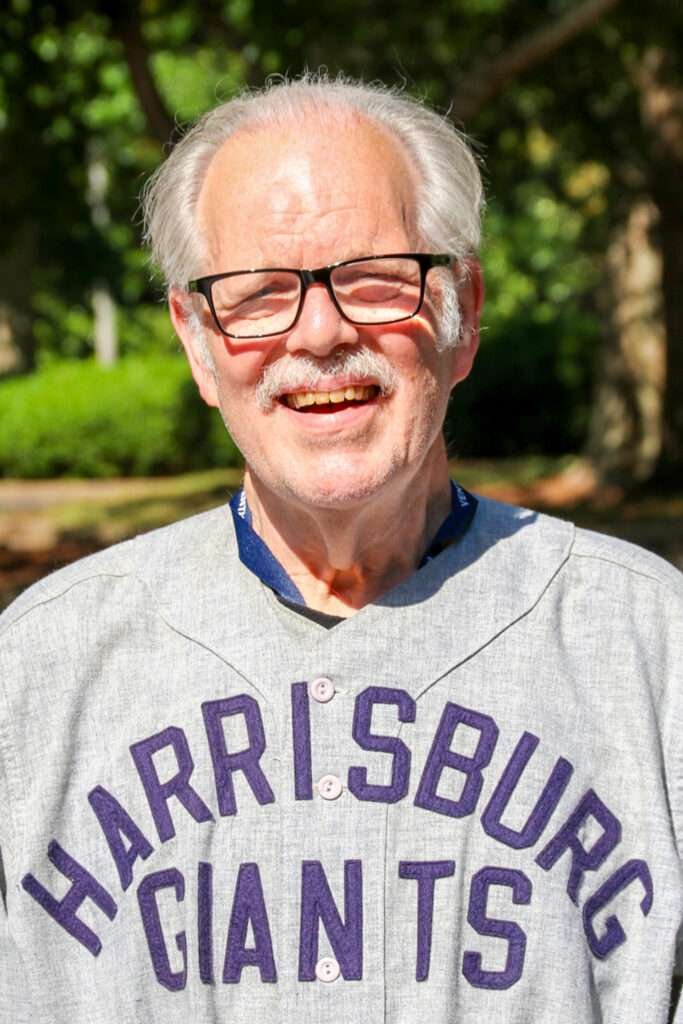
Ted Knorr is a respected Negro League baseball historian, a longtime member of the Society for American Baseball Research’s Negro League Committee, and the founder of the Jerry Malloy Negro League Conference as well as several Negro League Commemorative Nights in central Pennsylvania.
Beyond his research and organizing work, Ted is frequently invited to speak at sporting events, community programs, family gatherings, and educational forums, where he brings Negro League history to life. His deep knowledge of the players, teams, and cultural impact of Black baseball has made him a trusted voice for audiences who want to understand the legacy and significance of the Negro Leagues.
Support open, independent journalism—your contribution helps us tell the stories that matter most.

 Milton Kirby



Keep up the great work, Ted!