
Truth Seekers Journal Opinion | December 18, 2025
Michael Jordan has won championships in packed arenas, in boardrooms, and now—quietly—in a federal courthouse.
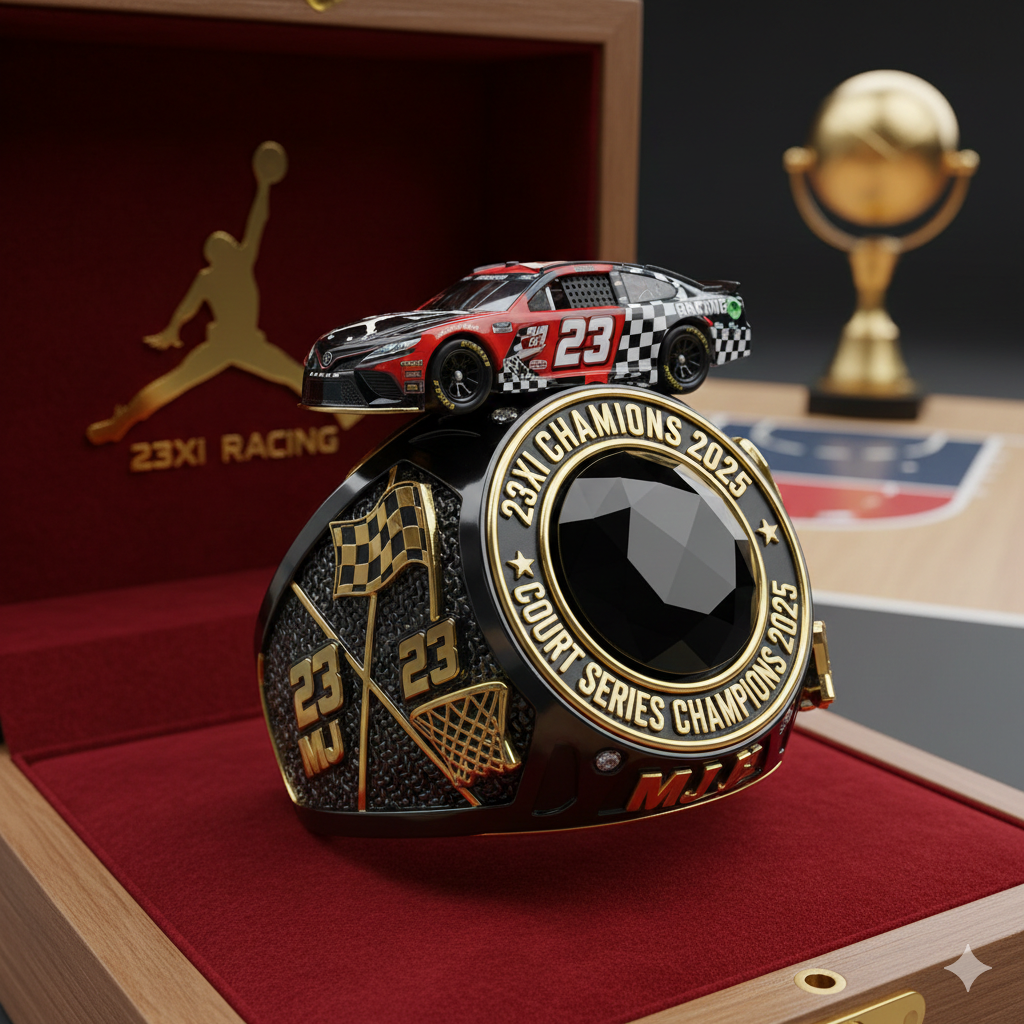
The Dec. 11 settlement between NASCAR, 23XI Racing, and Front Row Motorsports didn’t come with confetti or a trophy presentation. But make no mistake: this was another ring. And like many of Jordan’s biggest wins, it came from knowing when to press—and when to take the points and walk away.
The public story is stability. NASCAR’s joint statement leaned hard on words like “growth,” “alignment,” and “the future of the sport.” The headline change was the introduction of evergreen charters, a long-sought concession that turns teams from renters into something much closer to franchise owners.
The quieter story is what didn’t happen.
Because this case settled, NASCAR did not have to answer—under a jury verdict—for how much money it may have kept from teams over the past several years. And that may be the most expensive silence in the garage.
During the trial, sworn testimony put real numbers on what team owners have whispered for years. An economist testified that NASCAR owed the plaintiffs roughly $364.7 million in damages. More striking, he estimated that chartered teams as a whole were underpaid by more than $1 billion from 2021 to 2024 based on comparative revenue models used in other major motorsports and professional leagues.
A verdict doesn’t just award damages. It creates a public record. It creates precedent. And it invites follow-on lawsuits.
By settling, NASCAR capped its legal exposure and sealed off discovery that might have gone even deeper into revenue allocation, internal strategy, and contingency planning. The confidential settlement check—whatever the number—may end up being a bargain compared to what a full verdict could have exposed.
This is where the “Another Ring” framing really matters.
Jordan didn’t need to win by knockout. He needed to change the geometry of the court.
By forcing NASCAR to the table and extracting evergreen charters, Jordan and his partners permanently increased the value of every chartered team. That alone is a long-game victory worth far more than a one-time damages award. Team valuations rise. Financing gets easier. Sponsors gain confidence. And ownership groups now hold an asset NASCAR can’t casually claw back.
But the settlement also allowed NASCAR to keep one advantage: opacity.
No public verdict means no court-ordered accounting of exactly how much revenue teams should have received, how internal distribution decisions were justified, or how much leverage NASCAR exercised behind closed doors. The sport avoided a public spreadsheet moment—one where every team owner, sponsor, and potential investor could point to a judge’s findings and say, this is what the teams were denied.
From NASCAR’s perspective, that matters. Revenue sharing is the third rail of sports governance. Once a court defines it, control shifts fast.
From the teams’ perspective, the question now becomes strategic, not legal: how much money remains shielded by the absence of a verdict?
The new charter structure creates leverage for future negotiations, but it does not automatically rebalance every dollar flowing through the sport. International media rights. Intellectual property. Digital and data revenue. Those streams are growing, and the settlement language suggests progress—but not full transparency.
Jordan’s win, then, is both decisive and incomplete.
He secured permanence where there was uncertainty. He forced governance changes where there was unilateral control. And he reminded NASCAR that “take-it-or-leave-it” only works until someone powerful enough refuses.
But by settling, NASCAR avoided the kind of judicial reckoning that could have reset revenue sharing overnight. The sport lives to negotiate another day—and that means the real financial fight may not be over. It’s just been postponed.
That may be the final lesson of this case.
Championships aren’t always about domination. Sometimes they’re about leverage, timing, and knowing which battles to end before the clock hits zero. Jordan didn’t just win another ring. He changed the rules of the game—and left open the question of how much more value teams are still chasing.
In NASCAR, that’s a quiet kind of victory. And for now, a very expensive kind of peace.
Well said. Good lesson for a novice or an experienced athlete or business owner who knows their worth and understands the game. It is the long game strategy that positions you for the champion ring—not in a “W” in the victory column for a game or two!