
By Milton Kirby | Atlanta, GA | January 11, 2026
The Atlanta Falcons began 2026 by making one of the most consequential leadership moves in franchise history a decision that signaled both a search for stability and the end of one of the NFL’s rare examples of Black executive leadership.
On Saturday, the organization hired former quarterback Matt Ryan as President of Football just days after dismissing head coach Raheem Morris and general manager Terry Fontenot. The move reset the franchise’s football hierarchy while simultaneously eliminating the league’s only remaining Black head coach–general manager partnership. This move also carried a deeper, more complicated weight.
Announced by owner Arthur Blank, the decision immediately reshaped power inside Flowery Branch. Ryan, the most accomplished player in franchise history, now oversees all football operations and reports directly to Blank, while working alongside team president and CEO Greg Beadles to align football and business priorities.
The move followed a turbulent week that underscored Atlanta’s urgency to escape a cycle of mediocrity and raised harder questions about patience, progress, and who is afforded time to build at the highest levels of the league.
An abrupt ending to a rare pairing
The Falcons fired Morris and Fontenot on January 4 after a second consecutive 8–9 season. The decision came one week after Atlanta closed the year with a win over rival New Orleans, finishing stronger than expected and showing measurable defensive progress.

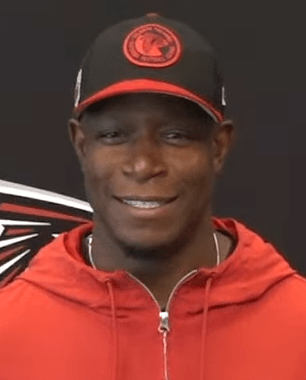
Morris, who previously served as Atlanta’s interim head coach in 2020, completed two full seasons at the helm from 2024 to 2025. Fontenot, hired in 2021, became one of the NFL’s few Black general managers and the longest-tenured of that group during his six-year run.
Together, Morris and Fontenot represented the league’s only Black head coach–general manager tandem a symbolic milestone in a league where such pairings remain exceptionally rare. Their dismissal ended that distinction that proved as fragile as it was meaningful, even as the team showed signs of forward movement.
Atlanta’s postseason drought now stands at eight years, dating back to the 2017 season the final playoff appearance of the Matt Ryan era under center.
Black Leadership in the NFL
Despite a player base that is roughly 70 percent Black, leadership representation at the NFL’s highest levels has remained limited. Entering the 2025 season, only three Black head coaches led teams, alongside a small number of Black general managers league wide. Prior to their dismissal, the Falcons were the only franchise pairing a Black head coach with a Black general manager a combination that remains rare in a league that has repeatedly acknowledged challenges in creating sustained pathways to executive leadership.
Progress without payoff
Measured strictly by wins and losses, Morris’s tenure mirrored the Falcons’ recent pattern of frustrating near-misses. His two seasons ended with identical 8–9 records, falling short of the playoffs in a competitive NFC South.
Yet context complicates the narrative. Morris inherited a defense that ranked near the bottom of the league in 2024. By 2025, Atlanta surged into the NFL’s top three in sacks and set a new franchise record with 57, one of the league’s most dramatic year-over-year defensive turnarounds.

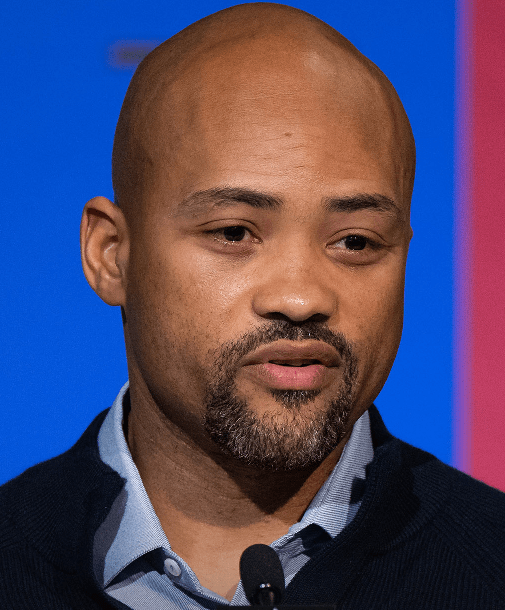
Under Fontenot, the Falcons also assembled a young and highly regarded core. Draft picks such as Bijan Robinson, Drake London, and Kyle Pitts became offensive centerpieces, while recent additions like Xavier Watts, Jalon Walker, and James Pearce Jr. were viewed internally as long-term building blocks.
Still, results lagged behind expectations. Fontenot, who signed a six-year contract in 2021, is owed one remaining year. Morris, hired as head coach in 2024, signed a five-year contract, according to a January 27, 2024 report by USA Today Sports, leaving three years remaining on his deal.
The contrast between measurable improvement and organizational impatience reflects a broader league pattern, where Black head coaches and executives are often afforded less time to see long-term plans through even when progress is evident but incomplete.
Enter Matt Ryan — from franchise face to football boss
Blank’s answer to stagnation was bold and deeply personal. Ryan, the former league MVP and face of the franchise for 14 seasons, now occupies a role newly created within the organization.
“Throughout his remarkable 14-year career in Atlanta, Matt’s leadership, attention to detail, knowledge of the game and unrelenting drive to win made him the most successful player in our franchise’s history,” Blank said in a statement. “I am confident those same qualities will be a tremendous benefit to our organization as he steps into this new role.”
Ryan accepted the position early Saturday morning and immediately joined the search for the team’s next head coach and general manager. Both hires will report directly to him.


Ryan steps into the position not as a repudiation of the previous regime, but as the owner’s bet that cultural continuity and institutional trust can succeed where repeated resets have not.
A resume unmatched in Falcons history
Ryan’s credentials inside the building are undeniable. Drafted third overall in 2008 out of Boston College, he became the most productive quarterback the franchise has ever known.
He led Atlanta to five playoff appearances, two NFC Championship Games, and one Super Bowl. His 2016 season remains the gold standard: first-team All-Pro honors, NFL MVP, and Offensive Player of the Year while guiding the Falcons to their second NFC title.
Ryan holds nearly every major passing record in franchise history, including career yards (59,735), touchdowns (367), completions, attempts, passer rating, and 300-yard games. From 2011 to 2020, he posted 10 consecutive 4,000-yard seasons and finished his Falcons career with a 120–102 regular-season record.
For many fans, he remains the embodiment of stability during an otherwise turbulent half-century of Falcons football.
A franchise defined by turnover
That instability is not anecdotal it is structural. Since joining the NFL in 1966, the Falcons have employed 18 head coaches, including five interims. Only two Dan Reeves in 1998 and Dan Quinn in 2016 reached the Super Bowl. Mike Smith remains the winningest coach in team history, yet even his tenure ended without a championship.
Morris’s dismissal places him among a long list of leaders who showed promise but fell short of delivering sustained success. Ryan now inherits not just a roster, but a legacy of resets.
The search ahead and immediate questions
As of January 11, Ryan is leading interviews for the vacant head coach and general manager positions. Early candidates include Klint Kubiak, Anthony Weaver, Aden Durde, and Kevin Stefanski.
The inclusion of Kevin Stefanski has raised eyebrows. Stefanski was fired by the Cleveland Browns on January 5 after consecutive losing seasons and a 5–12 finish in 2025 despite earlier Coach of the Year honors.
The Browns’ decision to move on while retaining their general manager highlights a broader league tension: success windows close quickly, and past accolades offer limited insulation.
For Ryan, the challenge is immediate and unforgiving. He must identify leaders who can win quickly without repeating the organizational whiplash that has defined the franchise.
Beyond wins and losses
Ryan’s impact in Atlanta has never been limited to the field. In 2020, he and his wife, Sarah, launched ATL: Advance The Lives, raising more than $1.3 million to combat systemic barriers facing Black youth. His community work earned him the Falcons’ Walter Payton Man of the Year nomination in 2016.
Those values accountability, stability, long-term investment are themes Ryan emphasized during his final CBS broadcast.
“We want to be in the mix, in the playoffs,” he said. “It’s been too long. Football is about the people. The building is about the people.”
A defining gamble
The Falcons’ decision to place football operations in the hands of a franchise icon is both risky and revealing. Ryan brings credibility, institutional knowledge, and the trust of ownership. What he does not bring is prior front-office experience, a gap the organization believes leadership, perspective, and discipline can overcome.
Yet the move also leaves behind an unresolved question. In choosing stability, the Falcons closed the book on one of the NFL’s rare Black leadership partnerships not after collapse, but after incremental progress that fell just short of the postseason.
Whether that choice reflects urgency, impatience, or the league’s enduring unevenness in who is granted time to build may ultimately matter as much as who leads the next era.
But the move also leaves an unresolved question hanging over the franchise:
What does progress look like when the league’s rare Black leadership partnerships are given so little time to grow?
Atlanta chose stability but in doing so, it closed the door on a pairing that represented something larger than wins and losses. Whether Ryan can deliver the success that eluded Morris and Fontenot will define the next era of Falcons football. Whether the league can sustain meaningful pathways for Black leadership remains a larger test still.
Truth Seekers Journal thrives because of readers like you. Join us in sustaining independent voices.