
By Milton Kirby | Atlanta, GA | April 21, 2026
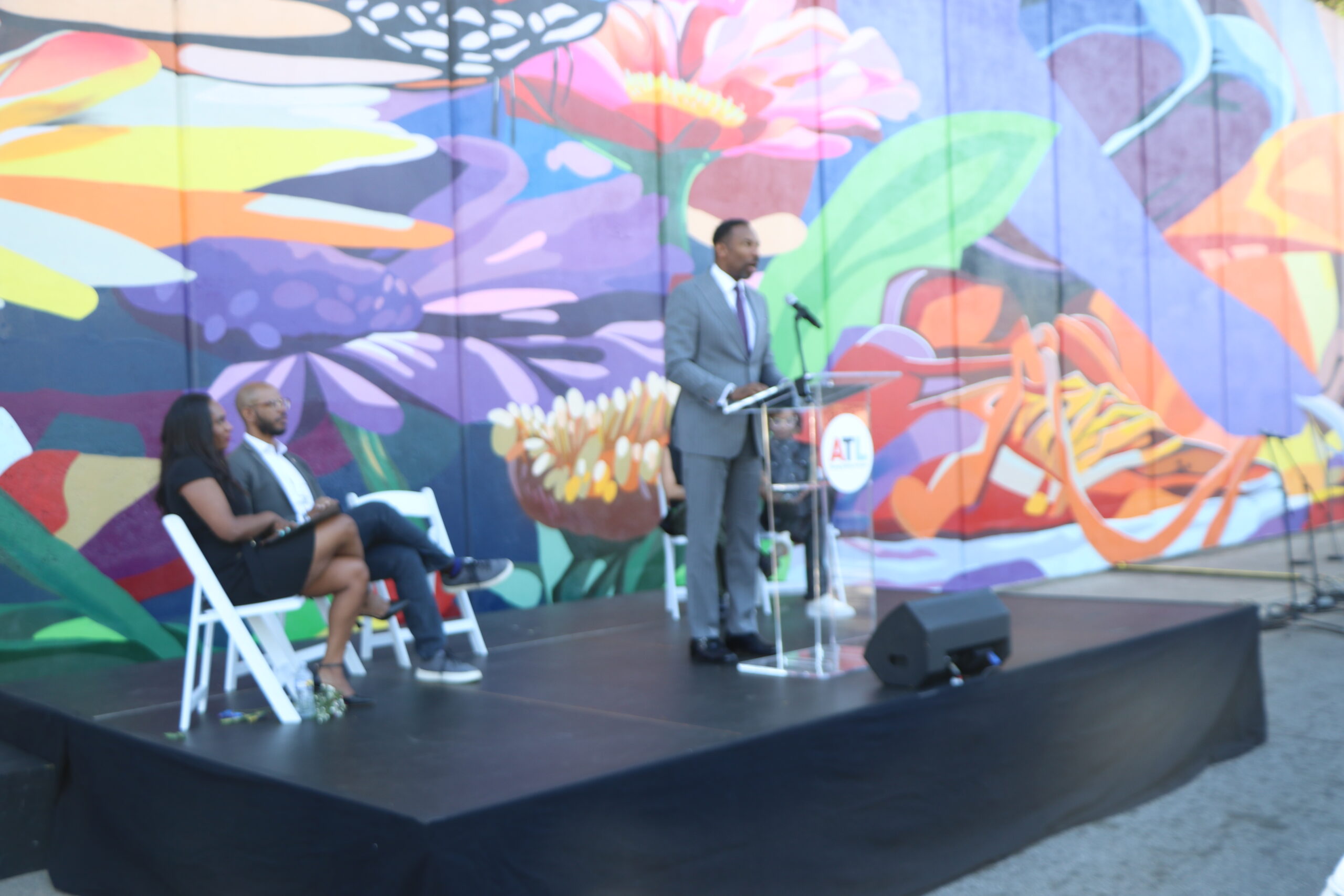
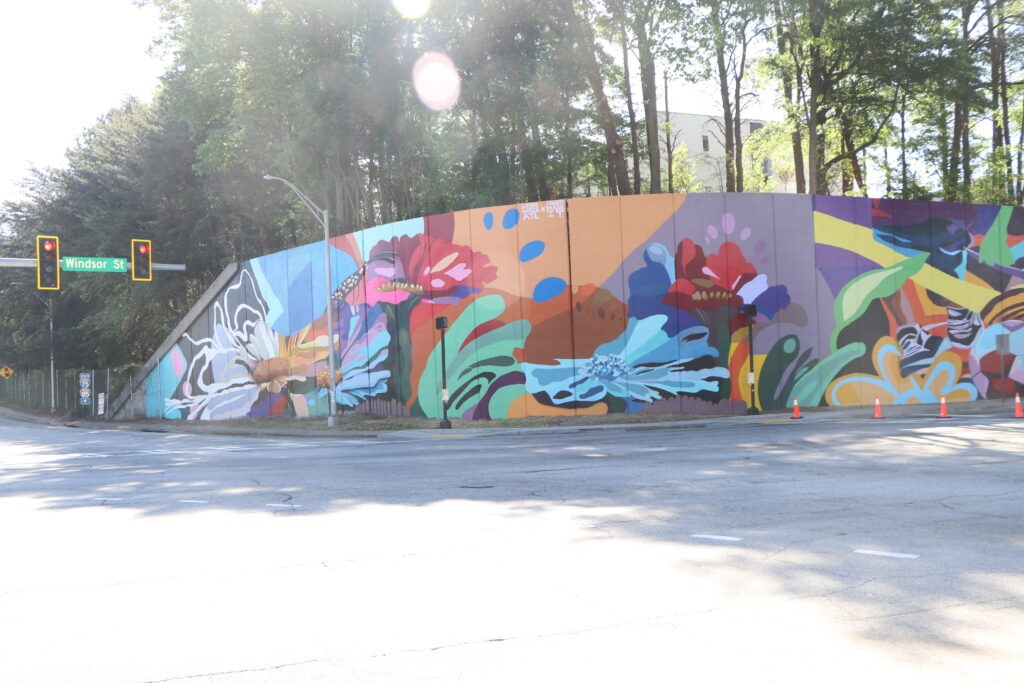
The sun hadn’t quite decided what kind of day it wanted to be. On one side of the retaining wall, warmth. On the other, a stubborn chill that clung to jackets and fingertips. But even in that cold pocket of Windsor and Rawson, the mural behind us radiated its own heat, a 10,000‑square‑foot pulse of color, care, and community.
Mechanicsville has seen its share of seasons. Some harsh. Some hopeful. But on this morning, as neighbors, artists, city leaders, and children gathered at the foot of a seen and unseen wall, the neighborhood felt like it was stepping into a new chapter. It was painted in over 100 colors and more than 800 spray cans, but rooted in something older, deeper, and already alive.
“Murals aren’t just nice because they look nice,” said Adriane Jefferson, Executive Director of the Mayor’s Office of Cultural Affairs. “They’re absolutely necessary.”
She wasn’t talking about beautification. She was talking about story, the kind that lives in a community long before a ribbon is cut.
And that’s the truth of Wild Seed, Wild Flower: it didn’t arrive to make Mechanicsville beautiful. It arrived to reflect the beauty that was already here.
A Wall That Needed a Story
Councilmember Jason Dozier spoke like a man standing in his own living room.
“Welcome to my home community of Mechanicsville,” he said, and the crowd answered with warmth.
He told the story of the “big A wall,” a massive, weathered stretch of concrete that residents passed daily, often with frustration. A wall that collected graffiti, grime, and the weight of being overlooked. A wall that sat beneath new rapid housing units, beneath the Beacon at Melody, beneath the quiet resilience of people rebuilding their lives.

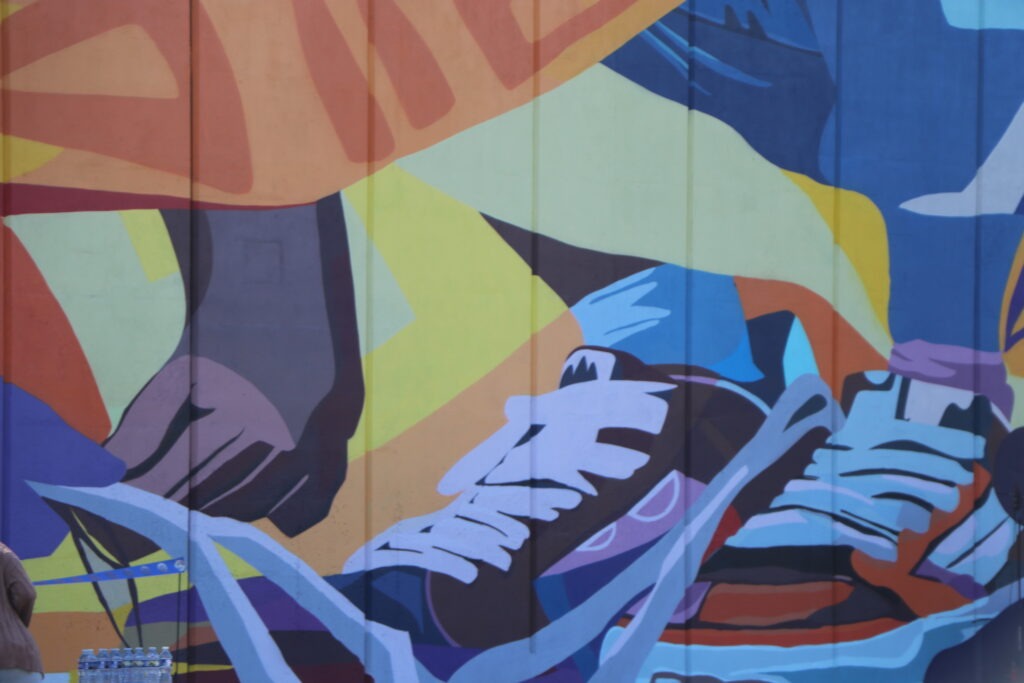
Dozier remembered telling the administration early on: We’ve got to do something about this wall.
And in that moment, you could feel the neighborhood nodding with him. Because every community has a wall like that — a place that holds the memory of what hasn’t yet changed.
But now, that same wall holds a child tying someone else’s shoe while tying their own — a gesture Mayor Andre Dickens interpreted as a symbol of Atlanta itself:
Helping others while helping ourselves.
Growing together.
A group project.
Art as Infrastructure, Art as Home
Mayor Dickens spoke about infrastructure, not the kind marked by orange cones and jackhammers, but the kind that shapes how a city feels.
“People are seeing these murals,” he said. “You’re seeing the social and artistic infrastructure that resonates with our emotions and our love of the city.”
It’s rare to hear a mayor talk about art with that kind of clarity. But in Atlanta, public art has long been a civic language. From Maynard Jackson to today, artists have been treated not as accessories to city life, but as partners in shaping it.
And this mural, the largest of the ten commissioned for the Bridges, Tunnels, and Walls program, stands as a testament to that partnership.
The Immigrant Who Helped Atlanta See Itself
When Monica Campana, co‑founder and executive director of Living Walls, stepped to the mic, she brought the story full circle.
She came to Atlanta in 2007 as an immigrant from Peru.
She founded Living Walls in 2010.
And she learned quickly that public art was the most democratic, accessible, and empowering way to claim space in a city.
“Public art made me feel like my voice mattered,” she said.
It made her feel seen.
It made Atlanta feel like home.
And then she said something that stayed with me long after the speeches ended:
“This mural is a love letter to Atlanta.”
A love letter written by artists from New Orleans, New York, Greece, Iran, Eritrea, Italy, Puerto Rico, Colombia, Peru, and Atlanta itself.
A global chorus painting a local truth.
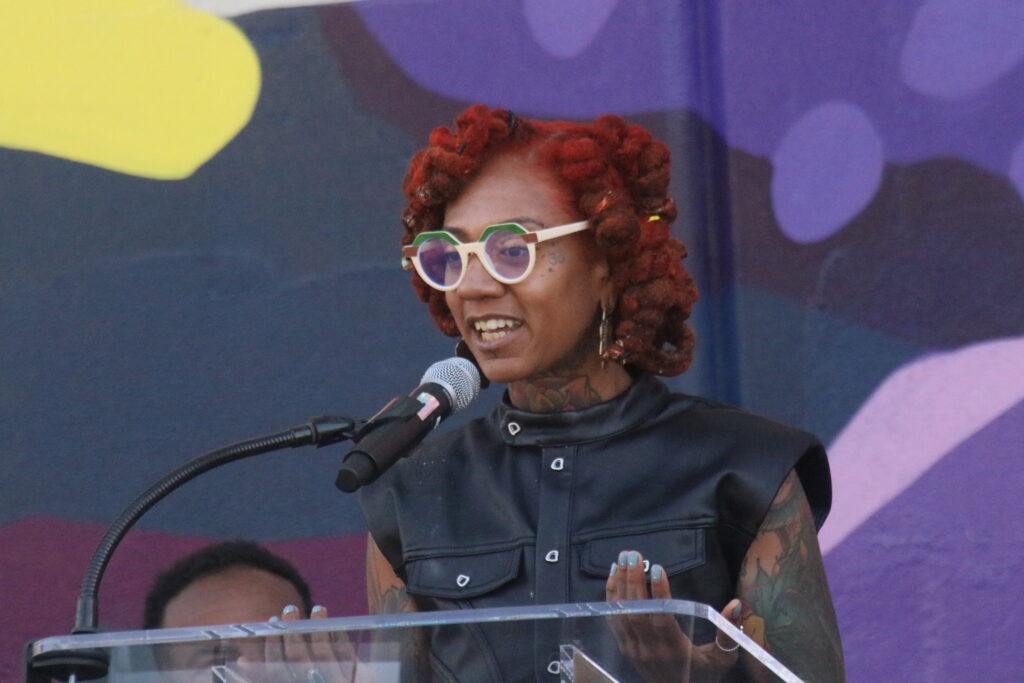
The Artist Who Saw God in Mechanicsville
When lead artist Charity Hamidullah spoke, the ceremony shifted.
Her voice carried something tender, something spiritual.
She talked about seeing children at the Dunbar Center — chalk on their hands, creativity in their eyes.
She talked about seeing God’s creativity in the neighborhood.
She talked about communities tying each other’s shoes, lifting each other up, dancing in harmony.
“This wall is just a mirror,” she said.
A mirror of Mechanicsville.
A mirror of Pittsburgh.
A mirror of South Downtown and Castleberry Hill.
A mirror of every place where people have survived, created, and loved each other through change.
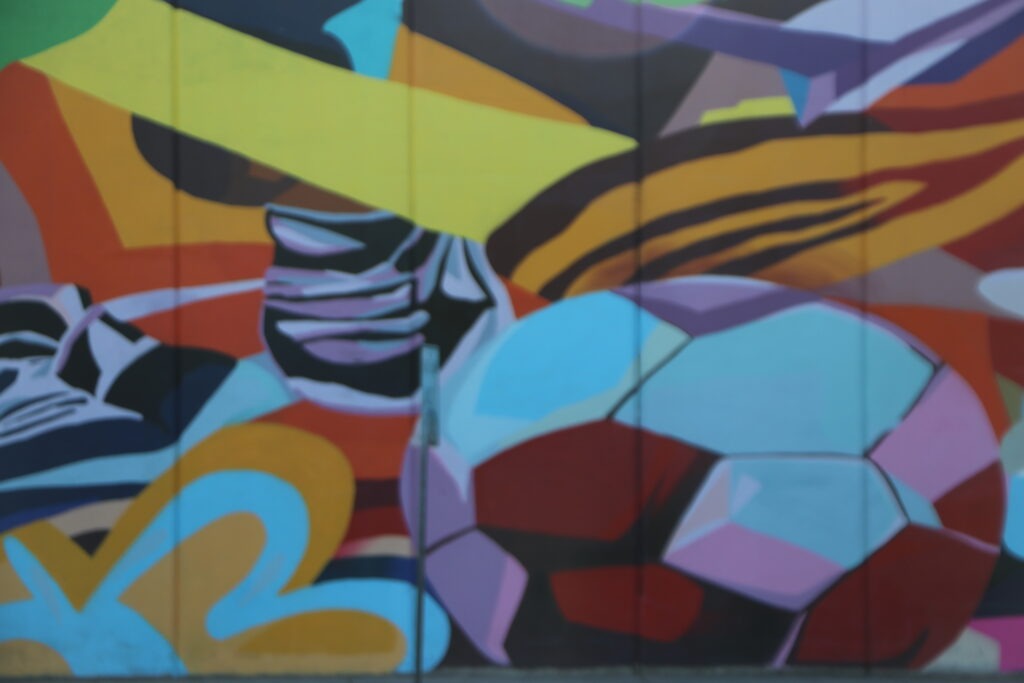
Yes, the mural was created ahead of the World Cup.
Yes, the world will see it.
But Charity reminded us of the deeper truth:
“This community has been beautiful for a very long time.”
The mural didn’t create that beauty.
It simply made it impossible to ignore.
A Wildflower That Will Keep Spreading
When the ribbon was finally cut, the crowd pressed forward — neighbors, artists, city staff, children, elders.
People touched the wall.
People took photos.
People lingered.
And in that lingering, you could feel something growing.
Wildflowers don’t bloom because someone is watching.
They bloom because the soil is ready.
Mechanicsville was ready.
This mural — this wild seed — will keep spreading. Not because of the World Cup.
Not because of the cameras.
But because the community it reflects has been blooming all along.
And now, the city has a wall that tells the truth.
Related articles
Atlanta Marks Major Housing Milestone with Opening of The Beacon at Cooper Street
Atlanta Launches Human Rights Plan Ahead of 2026 FIFA World Cup
City of Atlanta Launches ATL BIZ: New Platform Set to Simplify Permits, Taxes, and Payments Services
City Leaders Help Atlantans Start Fresh at Justice Fair
Atlanta Pauses Construction for Fourth of July, Ramps Up FIFA World Cup Prep
Truth Seekers Journal thrives because of readers like you. Join us in sustaining independent voices.