Shadow Ball: Learning More About Negro League History

January 13, 2026

Dear Shadow Ball: I have a question about Negro League stats being entered into the Major League Baseball record book. It is my understanding that in 1969 four pro leagues’ records, in addition to the American and National Leagues, were entered into the record book. Were the Negro Leagues considered at that time by the committee and rejected, or were they completely ignored or overlooked (and we had to wait 50+ years for it to finally happen)?
Chris Hansen, Ogden, Utah

 … this column exists for only one purpose and that is to answer your questions on Negro League baseball history. To that end, I need your help … if you are reading this column and enjoy it and want it to continue and you don’t already know everything about Negro League history … then please submit a question on any aspect of Negro League history. Your questions are the lifeblood of Shadow Ball—they shape where we go next.

 – players, teams, events, and more – and, in so doing, you will direct where this column goes moving forward. Your participation is important and appreciated. The very existence of this column depends on you. Submit your questions to shadowball@truthseekersjournal.com.

Dear Chris: I happen to know the answer to that question very well. On July 1, 2017, at the 47th annual convention of the Society for American Baseball Research (SABR) in New York City, I had the opportunity to pose that very question to two men who knew the subject as well as anyone alive: John Thorn, Major League Baseball’s Official Historian, and David Neft, the driving force behind the 1969 Macmillan Baseball Encyclopedia. Neft was in the room in 1969 when MLB’s Special Baseball Records Committee (SBRC) designated six professional leagues — the National League, American League, Players League, Federal League, American Association, and Union Association — as “major.”

Both Thorn and Neft welcomed questions from the audience, and asking mine was one of the principal reasons I attended SABR 47. When my turn came, I asked: “Did the Special Baseball Records Committee consider, at all, the Negro Leagues to be a Major League?” Thorn answered immediately — exactly as I expected — with a single word: “No.” Both men then expanded on the criteria the SBRC used in 1969, and why the Negro Leagues were not even discussed. (If interested the Q & A occurs at the 47:32 point in this mp3 SABR47-David_Neft-John_Thorn-Baseball_Records_Cmte.mp3 | Powered by Box and lasts about three minutes. If you have time the hour-long conversation between Thorn & Neft is well worth the listen) Years later, Neft told The Ringer: “The one thing that I am absolutely certain about is that there never was any SBRC discussion about treating the Negro Leagues as major leagues.” Major League Baseball itself confirmed this in its December 16, 2020 press release announcing the elevation of seven Negro Leagues to Major League status: “It is MLB’s view that the Committee’s 1969 omission of the Negro Leagues from consideration was clearly an error that demands today’s designation.”

In short: The Negro Leagues were not rejected in 1969 — they were ignored. This was before Robert Peterson’s seminal Only the Ball Was White (1970), before SABR’s Negro Leagues Committee (1971), and before the sustained scholarly work that finally brought the Negro Leagues into proper historical focus. On December 16, 2020, MLB corrected that omission by recognizing seven Negro Leagues as Major: Negro National League I, Eastern Colored League, American Negro League, East West League, Negro Southern League, Negro National League II, and the Negro American League.

Last week’s Shadow Ball Significa question Who was the last surviving Atlanta Black Crackers player?
Answer: Dr. Leslie Heaphy of Canton, OH, nailed it — Red Moore. Moore also led the franchise in career batting average, walks, and sacrifice flies. Born and died in Atlanta.

The Shadow Ball Significa Question of the Week: Which Negro League team introduced night baseball five years before Major League Baseball adopted it?

Ted Knorr

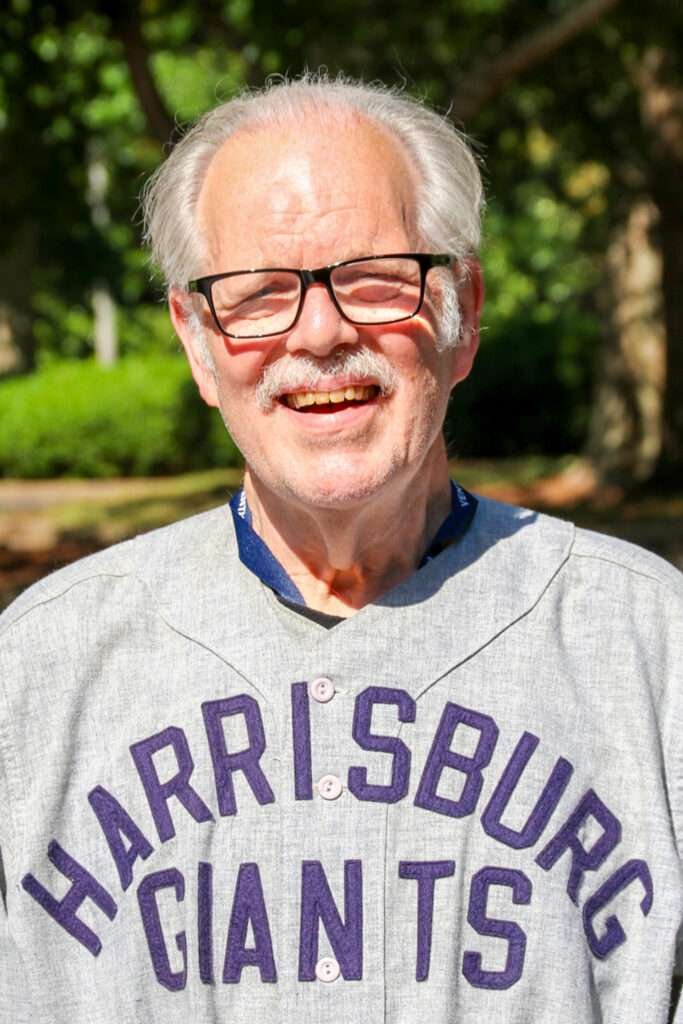
Ted Knorr is a Negro League baseball historian, longtime member of the Society for American Baseball Research’s Negro League Committee, and founder of the Jerry Malloy Negro League Conference and several local Negro League Commemorative Nights in central Pennsylvania. You can send questions for Knorr on Negro League topics as well as your answers to the week’s Significa question to  shadowball@truthseekersjournal.com or Shadow Ball, 3904 N Druid Hills Rd, Ste 179, Decatur, GA 30033

Support open, independent journalism—your contribution helps us tell the stories that matter most.

Shadow Ball: Learning More About Negro League History

December 23, 2025

Dear Shadow Ball: What pitcher holds the Negro League record for most inning pitched?

Mick Kolb, York, PA.

Dear Mick:  My go to source for such questions is Seamheads Negro League Database. The leader in innings pitched in that database is Cannonball Dick Redding (2,334 innings over 26 years). This total includes games in the Negro Leagues plus Cuba, the Florida Winter Hotel League, and games versus minor and major league teams. Limiting the view, as your question does, to Negro League games only sent me to a different source – mlb.com. Since May 2024, Negro League statistics are now included on that site. To interpret and compile innings pitched, I turned to Tom Thress, President, Retrosheet, who informed me that Willie Foster (with 1,521 innings) leads all pitchers in total innings pitched in major Negro League games.

Last week’s Shadow Ball Significa question – Who was the first African American signed to a contract by the Boston Red Sox organization? For the 2nd week in a row, Will Clark, Hackensack, NJ, smacks one of my hanging curves over the fence … dodging my reach for a Pumpsie Green – who, in 1959, was the first African-American to play for the Boston Red Sox –   answer he kept his focus on 1950 and offered Piper Davis which is correct. Unfortunately, Piper never got the call to come to Fenway.

The Shadow Ball Significa Question of the Week: Who was the last surviving Atlanta Black Crackers player? Here is a clue for you to keep from going down a rabbit hole – this player was born and died in Atlanta.

Ted Knorr

Ted Knorr is a Negro League baseball historian, longtime member of the Society for American Baseball Research’s Negro League Committee, and founder of the Jerry Malloy Negro League Conference and several local Negro League Commemorative Nights in central Pennsylvania. You can send questions for Knorr on Negro League topics as well as your answers to the week’s Significa question to  shadowball@truthseekersjournal.com or Shadowball, 3904 N Druid Hills Rd, Ste 179, Decatur, GA 30033

Support open, independent journalism—your contribution helps us tell the stories that matter most.
Shadow Ball: Learning More About Negro League History

Dear Shadow Ball: Which team was the best in the history of the Negro Leagues? Coach Al Davis, Rensselaer, NY.

Dear Al: I will answer your inquiry from two perspectives – franchise history and single season.

BEST CAREER BODY OF WORK – Of 142 franchises listed in the Seamheads Negro League Database, these three on display below are clearly the best in Negro League history.

                                                W        L        %         RSg     RAg    Series/Pennants/HoFers         

Homestead Grays                   1047    575    .645        6.4       4.7       3      9        16

Kansas City Monarchs            1378   830 .624    5.6       4.2       2     10       15

Chicago American Giants       1562 1326    .541         4.9       4.6       2      6         16

The categories above are Wins, Losses, Winning Percentage, Runs Scored per game, Runs Allowed per game, World Series won, Pennants won, and Hall of Famers on team’s roster over the years. Eight separate categories and, as indicated in bold, all eight categories found one of these three franchises at the top. Given Homestead had the best winning percentage, margin of victory, World Series titles, number of Hall of Famers and was 2nd to KC in pennants, the Homestead Grays nose out the Monarchs for the all-time top spot.

BEST SEASON – With only one season instead of 37 years (in the case of the Chicago American Giants) to inspect the differences in greatness between various annual league champions becomes more difficult and less defensible as an opinion. Nonetheless, the show must go on. I found 49 pennant winners in the Seamheads database … which I further reduced by eliminating World Series losers, teams demonstrably worse than other teams in a given season, removing duplicate franchise representatives leaving reducing to less than ten before finally, listing the below three teams as the three best:

W   L     %       RSg     RAg    Hall of Famers           

1943 Homestead Grays          82-26 .759     7.4      4.1         6

1929 Kansas City Monarchs   65-17 .793     6.8       3.7         3

1925 Hilldale Daisies             58-21 .734      6.3       4.4         3

Among teams not making the cut were the 1920 Chicago American Giants, 1928-1931 St Louis Stars, 1932-36 Pittsburgh Crawfords, 1945 Cleveland Buckeyes, 1946 Newark Eagles as well as other Grays & Monarchs teams.

This, in the end, I found the Homestead Grays the best franchise and the 1943 Grays as the best team.

Last week’s Shadow Ball Significa question Last issue’s question was intended to be tricky. What Georgia native struck the initial home run by an African American in Yankee Stadium? I hoped to induce a quick “Josh Gibson” from a few early entrants banking on Gibson’s pre-eminent status as a Georgia native and as a legendary home run hitter. Alas, I couldn’t get that knuckler past Will Clark, Hackensack, NJ, who correctly posted the pride of Kingston, Georgia, Rap Dixon as the slugger who on July 5, 1930 in his first at bat in the House that Ruth built changed the name to the House that Dixon rehabbed with a 1st inning round tripper. Congrats Will!

The Shadow Ball Significa Question of the Week: Who was the first African American signed to a contract by the Boston Red Sox organization?

Ted Knorr

Ted Knorr is a Negro League baseball historian, longtime member of the Society for American Baseball Research’s Negro League Committee, and founder of the Jerry Malloy Negro League Conference and several local Negro League Commemorative Nights in central Pennsylvania. You can send questions for Knorr on Negro League topics as well as your answers to the week’s Significa question to  shadowball@truthseekersjournal.com or Shadow Ball, 3904 N Druid Hills Rd, Ste 179, Decatur, GA 30033

Support open, independent journalism—your contribution helps us tell the stories that matter most.

SHADOW BALL: Learning More About Negro League History

Dear Shadow Ball: I have a feeling that I am going to learn some things. Is third baseman Judy Johnson (a 1975 Hall of Fame inductee) a male or female? David Nivens, parts unknown … I should note that Mr. Nivens has supplied two questions thus far and I very much appreciate both … this column exists for only one purpose and that is to answer your questions on Negro League baseball history. To that end, I need your help … if you are reading this column and enjoy it and want it to continue and you don’t already know everything about Negro League history … then please submit a question on any aspect of Negro League history.

 – players, teams, events, and more – Your questions are the lifeblood of Shadow Ball—they shape where we go next. Your participation is important and appreciated. Submit your questions to shadowball@truthseekersjournal.com.

Dear David: I have a feeling that I am going to learn some things also. Judy Johnson, like Dolly King, Connie Johnson, Bunny Downs, Bonnie Serrell, Beverly Boanes and Judy Gans, was very much a man. All these fellows were Negro League baseball players. William Julius Johnson was nicknamed “Judy” due to a resemblance to another player with that nickname – “Judy.” Why that player, Robert Edward Gans, was called “Judy” is a question for another day when I figure it out.

Last week’s Shadow Ball Significa question What was the name of Atlanta’s most prolific franchise (in terms of years in the league) in the Negro Leagues? Since this question has stood unanswered for a month, I am going to provide the answer – the Atlanta Black Crackers.

The Atlanta Black Crackers were founded in 1919 as the Atlanta Cubs and lasted, active most years, until their demise in 1943. They were members of the Negro Southern League, later the Negro American League and played as an independent. They never won a pennant.

The Shadow Ball Significa Question of the Week: What Georgia native was the first African American to hit a home run in Yankee Stadium?

Ted Knorr

Ted Knorr is a Negro League baseball historian, longtime member of the Society for American Baseball Research’s Negro League Committee, and founder of the Jerry Malloy Negro League Conference and several local Negro League Commemorative Nights in central Pennsylvania. You can send questions for Knorr on Negro League topics as well as your answers to the week’s Significa question to  shadowball@truthseekersjournal.com or Shadow Ball, 3904 N Druid Hills Rd, Ste 179, Decatur, GA 30033

Please consider supporting open, independent journalism – no contribution is too small!

SHADOW BALL: Learning More About Negro League History

Dear Shadow Ball: Any thoughts on why Jackie Robinson was first to break the major league’s color barrier and not Satchel Paige. Paige was a pitcher while Robinson was a 1st baseman. – David Nivens, parts unknown

Dear David, Great question! Thank you so much for breaking the ice in both categories. You were the first to answer my question and the first to pose a question to me. Hopefully, moving forward, folks will follow your lead.

Now, this question could take a book to answer, and, in fact, books have been written about the broader subject: Was Jack Robinson the best choice to integrate the game, and, if not, who else would have been a better choice? In the interest of column space, I am going to limit my answer to your parameters, why Jack Robinson and not Satchel Paige. Both of whom played for the Kansas City Monarchs in 1945.

 Let us look first at Satchel Paige: he was one of the best pitchers in Negro League history and, arguably, in all of baseball history. He also, even at this stage of his career, was the most marketable name in the Negro Leagues. Satchel Paige ranks 1st in career Negro League strikeouts, 1st in ERA+, 2nd in shutouts, and 3rd in wins. This is the entire case for Paige, and it very well could have been enough had the game integrated earlier. However, by the time Branch Rickey invited Jack Robinson to a meeting in Brooklyn in August 1945, Satchel Paige was, at least, 38 years old. More importantly, Paige was coming off a less-than-stellar 1945 season in which he achieved a 4-4 record with a 4.05 E.R.A. He was the fourth-best pitcher on the Monarchs that year, and among pitchers with as many innings pitched as he did, only two hurlers had a worse ERA.

 As for Jack Robinson, at 26, while he was a tad old for a prospect, he was on the cusp of his prime if he were to have one. The biggest question facing Robinson at the start of the ’45 season was in what sport his prime was to be in. He had not played much baseball at any level since leaving UCLA in 1941. Based on his athleticism, the Kansas City Monarchs, of the Negro National League, invited him for a tryout in the Spring of 1945. He not only made the team, but he was arguably the best player in the 1945 Negro American League! No one who batted as often or more than he did topped him in batting average, on base%, slugging, OPS, OPS+ … he led the league in 2Bs, HRs, extra base hits, was 2nd in steals, and 3rd in RBIs.

 … and then there were the intangibles – intelligent, articulate, non-smoker, non-drinker, graduated high school, junior college, and had studied at UCLA, was a wartime 1st Lieutenant in the U.S. Army with an honorable discharge. While both he and Paige had competed in integrated competition, Robinson had a long history of integrated scenarios in Pasadena, UCLA, and the service.

 Thus, given the choice between Paige & Robinson, I strongly agree with Rickey’s decision. Jack Robinson was the right person for this assignment.

 Last week’s Shadow Ball Significa question: What was the name of Atlanta’s most prolific franchise (in terms of years in the league) in the Negro Leagues?      

Since no one provided the correct answer last week, I would like to keep that question active until it is answered. This column depends on interaction. So, please try again.

Ted Knorr

Ted Knorr is a Negro League baseball historian, a longtime member of the Society for American Baseball Research’s Negro League Committee, and founder of the Jerry Malloy Negro League Conference and several local Negro League Commemorative Nights in central Pennsylvania. You can send questions for Knorr on Negro League topics, as well as your answers to the week’s Significa question to shadowball@truthseekersjournal.com or Shadow Ball, 3904 N Druid Hills Rd, Ste 179, Decatur, GA 30033

Please consider supporting open, independent journalism – no contribution is too small!

Shadow Ball: Learning More About Negro League History

Dear Shadow Ball: How many players have been inducted into the National Baseball Hall of Fame in Cooperstown, NY, based on their play in the Negro Leagues? – Curious Curt, International Falls, MN

Dear Curious Curt: Thanks for that question … there are 28 players, listed below with position and year inducted), inducted into the Hall of Fame based on their performance in the Negro Leagues.

Satchel Paige, P, 1971             Ray Dandridge, 3b, 1987                   Andy Cooper, p, 2006

Josh Gibson, c, 1972               Leon Day, 1995                                  Pete Hill, of, 2006

Buck Leonard, 1b, 1972         Willie Foster. P, 1996                          Biz Mackey, c, 2006

Monte Irvin, OF, 1973            Willie Wells, ss, 1997                          Jose Mendez, p, 2006

Cool Papa Bell, OF, 1974       Bullet Joe Rogan, p, 1998                   Louis Santop, c, 2006

Judy Johnson, 3b, 1975          Mule Suttles, 1b, 2006                        Smokey Joe Williams, p, 1999

Oscar Charleston, OF, 1976    Turkey Stearnes, of, 2000                   Ben Taylor, ib, 2006

Martin Dihigo, 2b, 1977         John Henry Lloyd, ss, 1977                Cristobal Torriente, of, 2006

John Henry Lloyd, ss, 1977    Hilton Smith, p, 2001                         Jud Wilson, 3b, 2006

Ray Brown, p, 2006

The real question, for me at least, is “are 28 Negro League player inductees sufficient to accurately  tell the story of Negro League baseball in the first half of the twentieth century?” To answer that we need to add some context.

CONTEXTUAL BACKGROUND

  1. On December 16, 2020, Major League Baseball announced that it was correcting a longtime oversight in the game’s history by officially recognizing seven specific Negro Leagues operating between 1920-1948  as  “Major Leagues”.
  2. Since April 15, 1947 (the day Major League Baseball integrated)  42% of all Hall of Fame players debuting have been players of color (i.e., would have been Negro Leaguers prior to that date)l
  3. In his 1994 baseball documentary, Ken Burns states that Black baseball stars defeated White Major League stars at least 309(70%)  times in 438 games … this, of course, is “oral history” but all 7 compilations of games between “so called” Negro League and “so called” Major League teams give the Negro Leaguers the edge with an average winning percentage of 58%.
  4. Many Major League baseball players had been effusive in their assessment and praise of Negro League players prior to the integration of the game including Hall of Famers Ty Cobb, Babe Ruth, Honus Wagner, John McGraw, Joe  DiMaggio, Dizzy Dean, Bob Feller, Charlie Gehringer, Rogers Hornsby, and Leo Durocher.
  5. (This would be interesting but not probative but for the above four bullets) Between 1920-1948 the slash lines for both the two Major Leagues and the seven Negro Leagues are virtually identical. A slash line includes batting average, on base percentage, and slugging percentage. The seven Negro Leagues slash line was  .272, .335, .376 while the two Major Leagues (AL & NL) was  .276, .340, .389.
  6. It must be noted that – while there are 28 players in the Hall for play in the Negro Leagues – there are 125 players in the Hall who earned induction for play in the Major Leagues during baseball’s segregated era prior to 1947.

Given the above bullet points I hope it is obvious to all of us that the current ratio of Major League Hall of Famers prior to 1947 to Negro League Hall of Famers from that same period does not match the record, opinion and honors captured in the above bullets. Clearly, 28 does not do a good job of educating the public. How many Negro Leaguers should there be inducted in Cooperstown? I will close by sharing my opinion and will defend it later in this series if reader interest warrants. In my opinion there should be somewhere between 60 to 80 Negro League players inducted into the National Baseball Hall of Fame in Cooperstown.

Last week’s Shadowball Significa Question

“Who was the first 20th century player to break the color barrier and get into the major leagues, two bonus questions, what year, what team? A third bonus question, how long did he play in the majors? David Nivens, parts unknown, provided the following: When I was kid, my baseball coach told me that Jackie Robinson was the first black player to enter the Major Leagues in 1947 with the Brooklyn Dodgers. He played 10 years in the Major Leagues. Thank you, David I very much appreciated your participation, and your including your father’s assistance; my dad provided me that same information when I was a kid.

The Shadowball Significa Question of the Week

What was the name of Atlanta’s most prolific franchise (in terms of years in the league) in the Negro Leagues?

Ted Knorr

Ted Knorr is a Negro Leagues history expert and longtime SABR member, known for his trivia wins and founding the Jerry Malloy Conference and Commemorative Nights. You can send questions to shadowball@truthseekersjournal.com or Shadow Ball, 3904 N Druid Hills Rd, Ste 179, Decatur, GA 30033

Please consider supporting open, independent journalism – no contribution is too small!

Shadow Ball: Learning More About Negro League History

Dear Shadow Ball: I am 63 years old and Black. I have only heard snippets about the Negro Leagues during my lifetime. I now have an interest in educating myself about the leagues. How do you suggest that I start — I imagine reading your column is one place and I will read your column and engage, but I want to really dig in deep. 

Secondly, are any of the players still alive? Ready to Dig in Deep – Ansonville, NC

Dear Ready to Dig in Deep: Thanks very much for that question and your imagination is in keeping with my expectations and intent for this column. I hope that questions like yours and future inquiries submitted  by others allow me to “really dig in deep” and permit me to educate readers about the rich history of the Negro Leagues. I expect from time to time I may recommend books, articles or websites that further serve to provide that education about the other half of Major League baseball.

With regard to your second question, some background is necessary. On December 16, 2020, Major League Baseball declared seven specific Negro Leagues and time spans as Major Leagues. I will limit my answer to  those leagues. They are as follows:

Negro National League I    1920-1931

Eastern Colored League    1923-1928

American Negro League    1929

East-West League               1932

Negro Southern League    1932

Negro National League II   1933-1948

Negro American League    1937-1948

Sadly, at the time of that 2020 announcement, only three players survived. Since then, Willie Mays has passed on leaving only Reverend William Greason, 101, who pitched for the Birmingham Black Barons in 1948 and Ronald Teasley, 98, who played outfield for the 1948 New York Cubans still alive. So only two – Greason & Teasley remain from those Negro Leagues designated as a Major League. Just to be clear, the Negro American League continued on, no longer recognized as major, until 1961. A couple dozen or more of those players are still with us and continue to share rich stories with us.

The Shadowball Significa Question of the Week

“Who was the first 20th century player to break the color barrier and get into the major leagues, two bonus questions, what year, what team? A third bonus question, how long did he play in the majors?

Ted Knorr

Ted Knorr is a Negro Leagues history expert and longtime SABR member, known for his trivia wins and founding the Jerry Malloy Conference and Commemorative Nights. You can send questions to shadowball@truthseekersjournal.com or Shadow Ball, 3904 N Druid Hills Rd, Ste 179, Decatur, GA 30033

Please consider supporting open, independent journalism – no contribution is too small!

Exit mobile version