How Super Bowl Quarterbacks Jalen Hurts, Patrick Mahomes Prove Diversity Matters On And Off The Field

The article discusses the significance of diversity in the NFL, highlighting the historic achievement of Black quarterbacks Patrick Mahomes and Jalen Hurts leading their teams to the Super Bowl. It reflects on the discrimination faced by past players like Jimmy Raye and emphasizes the importance of diversity for success in sports and society.


By A.R. Shaw | Atlanta, GA | January 27, 2025

What would the Super Bowl be without diversity?

Imagine if Kansas City Chiefs’ Patrick Mahomes and Philadelphia Eagles’ Jalen Hurts were labeled “DEI hires,” a term used by some political figures and organizations to undermine the true achievements of embracing diversity. 

Mahomes and Hurts prove how much diversity matters by leading their teams back to the Super Bowl, establishing a rematch of the only two Black quarterbacks to face-off in the big game. 

Courtesy NFL – Jalen Hurts

But there was a time in sports when Black quarterbacks were not provided equal opportunities to lead on the professional level. 

Two years ago when Mahomes and Hurts led their teams to the 2023 Super Bowl in Arizona, former Michigan State University quarterback Jimmy Raye made the trip to witness history and premiere the NFL-produced film, “The Indelible Legacy of Jimmy Raye.”

Raised in Fayetteville, North Carolina during the height of segregation in the 1950s and ’60s, Raye became a standout quarterback in high school and went on to become one of the first Black players to start at the position for a Division 1 college football. 

In 1966, Raye became the first Black starting quarterback at Michigan State University. He was also the first Black quarterback from the South to win a national title. Although Raye proved that he could play quarterback on the highest level in college, he was not given the opportunity to play the position in the NFL. Instead, he was converted to defensive back where he would endure a career-ending injury. 

Raye faced the discrimination that prevented numerous Black quarterbacks from gaining opportunities at the professional level.  

Courtesy NFL – Patrick Mahomes

The implementation of discriminatory practices in pro football began after Fritz Pollard became the first Black NFL quarterback in 1923 for the Hammond Pros. In 1933, league owners agreed to ban Black players from leading as  quarterbacks. The following year, there were no Black players in the NFL for the first time in its 14-year history. The ban on Black quarterbacks lasted until 1946.

But while the ban was lifted in the 1940s, there were very few starting Black quarterbacks as the league gained more exposure during the 1960s. Raye never got the opportunity to prove himself at quarterback as he did at Michigan State University, but he cheered on other Black quarterbacks who excelled in the 1970s and ’80s such as Joe Gilliam, James Harris, Warren Moon, and Randall Cunningham.

Doug Williams would make history in 1987 by becoming the first Black quarterback to win a Super Bowl. In 2014, Russell Wilson became the second Black quarterback to win the big game. 

“When Doug Williams won the MVP in the Super Bowl, I was thrilled,” Raye shared with me during the week of the 2023 Super Bowl. “And when Tony Dungy and Lovie Smith coached against each other as the first two Black head coaches in the Super Bowl, we were making progress. And then as the numbers increased with the number of Black quarterbacks in the league, it was inevitable that we would get two starting in the Super Bowl. And the same thing would be true if coaches were given the opportunity. Not denied. Given the opportunity for a more level playing field in the National Football League.”

Creating a level playing field was the objective of diversity, equality, and inclusion from sports to business and political sectors. It attempted to provide space for candidates of diverse backgrounds to be given opportunities that were historically denied. The new administration’s attack on diversity initiatives has also led to several corporate entities following suit. However, an attack on diversity is an attack on the fabric of true American values of equality. It’s a bold attempt to stand on the wrong side of history. 

In an alternate time period, Mahomes and Hurts would have never gotten a chance to lead their teams to the Super Bowl. However, we are all in danger of entering a time period when qualified candidates could face legalized discrimination because “DEI” has been shifted into a negative term. But diversity leads to overall success. 

The World Economic Forum’s report “Diversity, Equity, and Inclusion 4.0” revealed that companies with diverse employees have “up to 20% higher rate of innovation and 19% higher innovation revenues.”

In sports, the impact of diversity continues to serve as a key example of its overall success. 

I spoke with Hurts during the 2023 Super Bowl who shared his thoughts on the importance of being a part of history. 

“It’s a historic moment,” Hurts shared with me. “To everyone who laid the foundation before me, it’s transcending. Something so historic, it’s a big deal because no one is used to it. It’s good to be an encouragement to anyone watching, knowing it can be done. I think it’s an opportunity to honor all of the Black quarterbacks before me. It’s encouraging to the future. There are a lot of kids who have aspirations to play the position. People may tell them that they can’t do it, but they can. If you’re determined to do something, nothing worthy having comes easy. Believe in yourself and keep fighting.”

In two weeks, Hurts and Mahomes will prove, again, the power of diversity. We can only hope political leaders will take heed as the fight for equality continues.

Martin Luther King, Jr. African-American Rodeo of Champions Thrills Denver Audience

The Martin Luther King, Jr. African-American Rodeo of Champions took place on January 20, 2025, in Denver, celebrating Black Western culture. The event, organized by BPIR, showcased impressive rodeo performances before over 6,000 spectators and awarded scholarships to students, honoring the legacy of Black cowboys and cowgirls in American history.


By Milton Kirby | Denver, CO | January 23, 2025

The spirit of the Wild West came alive at the Martin Luther King, Jr. African-American Rodeo of Champions, held on January 20, 2025, at Denver’s historic Coliseum. Organized by the Bill Pickett Invitational Rodeo (BPIR) in conjunction with the National Western Stock Show, the event celebrated the rich heritage of Black cowboys and cowgirls while showcasing their extraordinary talent in the rodeo arena.

The inaugural Bill Pickett Invitational Rodeo started in 1984 in Denver, CO, was inspired by the vision of its creator, Lu Vason, who drew upon his experience at Wyoming’s renowned Cheyenne Frontier Days. Vason’s quest to honor the legacy of Black cowboys led him to the Black American West Museum of History in Denver, where he discovered the story of Bill Pickett, a legendary cowboy and rodeo innovator. Today, the BPIR stands as a testament to that legacy, drawing thousands of attendees annually.

More than 6,000 spectators packed the Historic Denver Coliseum this year to witness thrilling competitions and celebrate Black Western culture. Distinguished guests included U.S. Representative Jason Crow, Colorado State Senate President James Coleman, Senator Tony Exum, and Representative Dr. Vern Howard, Chairman of the Dr. Martin Luther King Jr. Holiday Commission.

The rodeo featured a lineup of electrifying events, with standout performances from top competitors:

Courtesy – BPIR – Kevin Carmon
  • Ranch Bronc Riding: Marcus Verser (Spencer, OK) took first place with a 70-point ride.
  • Steer Wrestling: Kevin Carmon (Beaumont, TX) secured victory with an impressive 3.66-second run.
  • Team Roping: Ashton Semien (Beaumont, TX) and Isaac King (Natchez, MS) led the field with a 13.56-second time.
  • Ladies Steer Undecorating: Niya Bryant (Huntsville, TX) dominated the event with a 2.01-second run.
  • Tie-Down Roping: Richard Coleman (Wharton, TX) claimed the title with an 8.78-second performance.
  • Ladies Breakaway Roping: Niya Bryant (Huntsville, TX) added another win with a 3.68-second run.
  • Ladies Barrel Racing: Paris Wilburd (Cabot, AR) dazzled the audience with a 15.132-second time.
  • Jr Barrel Racing: Josephine Gajewski (Billings, MT) earned first place with a time of 16.197 seconds.
  • Pee Wee Barrels: Kendall Henderson (Beggs, OK) thrilled fans with a 17.091-second performance.
  • Bull Riding: Anthony Smith Jr. (Houston, TX) delivered an electrifying 84-point ride.

In addition to the action-packed competition, the BPIR Foundation awarded scholarships, fee grants, and book stipends to six deserving students, supporting their academic and rodeo aspirations:

  • Jordyn Love (Lu Vason Founder Scholarship): A sophomore at Fort Valley State University majoring in Animal Science with a 4.0 GPA in the honors program.
  • Savannah Roberts (Lu Vason Founder Scholarship): A senior at Colorado Virtual Academy, set to study Animal Science and Agricultural Business at South Plains College.
  • Haley Mason (Denver Regional Scholarship): An aspiring nursing student accepted at Chamberlain University and an active BPIR member.
  • Asha Gidden (Book Scholarship): A graduating senior planning to pursue Environmental Engineering and Microbiology at an HBCU.
  • Sedgwick Haynes Memorial Calf Roping Fee Grants: Awarded to Lindon Demery and Jermaine Walker, Jr.
Courtesy BPIR – Valeria Howard-Cunningham & Haley Mason

The Martin Luther King, Jr. African-American Rodeo of Champions is more than just a celebration of rodeo skills—it’s a cultural cornerstone that honors the significant contributions of Black cowboys and cowgirls to the history of the American West. This annual gathering continues to inspire new generations while fostering appreciation for the enduring traditions of the Black Western community.

Related articles

Bill Pickett Invitational Rodeo Names 2025 Champions After a Year of Grow and New Partnerships and a Powerful Legacy

Bill Pickett Invitational Rodeo National Finals Nominated for USA TODAY’s Best Rodeo Award

Bill Pickett Invitational Rodeo Celebrates 40 Years of Tradition and Excellence

The Man with the Camera

Horace Henry, an unexpected photographer, captured pivotal moments at Dr. Martin Luther King Jr.’s first memorial service, leading to his book “One Day in January.” Despite initial setbacks, his photographs are now part of the Smithsonian’s collection, reflecting his passion and perseverance in both photography and music throughout his career.


A Conversation with Horace Henry – Author of One Day In January

By Milton Kirby | Atlanta, GA | January 20, 2025

When Horace Henry talks about that fateful day, his eyes light up, and a warm smile spreads across his face. “It was divine intervention,” he says. Horace had never even considered photography until his brother, Dillard Henry, then serving in the U.S. Air Force in Vietnam, sent him a camera. That single act set the stage for a remarkable journey.

Photo by Milton Kirby

Horace was a music major at Clark College (now Clark Atlanta University) with no plans to pursue photography. But once the Yashica camera arrived, he began carrying it everywhere. Soon, he became known across campus as “The Man with the Camera.”

A Day That Changed Everything

Horace vividly recalls January 15, 1969, the day he attended Dr. Martin Luther King Jr.’s first memorial service at Ebenezer Baptist Church in Atlanta. Armed with his camera and two rolls of film, he set out with a group of friends. Upon arrival, Horace found himself separated from his companions and unexpectedly guided by an older woman to the front of the church. There, he captured history in the making among seasoned journalists and photographers.

“I took two rolls of film—48 exposures—and when the film was developed, I had 43 good shots,” he recounts. For a beginner photographer, it was an extraordinary feat. Horace preserved those negatives, which would later form the foundation of his book, One Day in January: A Collection of Images Taken at Dr. King’s First Memorial Service.


From Palmetto to the Smithsonian

Horace grew up in Palmetto, Georgia, a small town in Fulton County. His family rarely ventured into Atlanta, which felt like worlds away. Despite a modest upbringing, Horace’s determination propelled him into extraordinary opportunities.

In 2011, after publishing his book, Horace contacted the Smithsonian Institution, hoping to donate his collection. Initially met with polite rejection, he persisted, emphasizing that he possessed original negatives of the service. This time, the Smithsonian listened. Dr. Jacquelyn Days Serwer, Chief Curator of the National Museum of African American History and Culture, travelled to Atlanta, GA and personally inspected his photographs.

She told him, “Mr. Henry, the Smithsonian would love to have these photographs.” Today, his images are part of the museum’s permanent collection, preserving a pivotal moment in history.


A Career Beyond the Lens

Photography wasn’t Horace’s only passion. He was also a talented musician, performing with The Chapparrals, a popular band in the 1970s. They shared stages with Sly & The Family Stone, The Hues Corporation, Marvin Gaye, The Ohio Players, and Mandrill, touring iconic venues like Radio City Music Hall.

Still, photography remained a constant in his life. He honed his skills through correspondence courses with the New York Institute of Photography and the Seattle FilmWorks Home Study Course. Still, it was hands-on practice—and many mistakes—that shaped his expertise.


Moments That Mattered

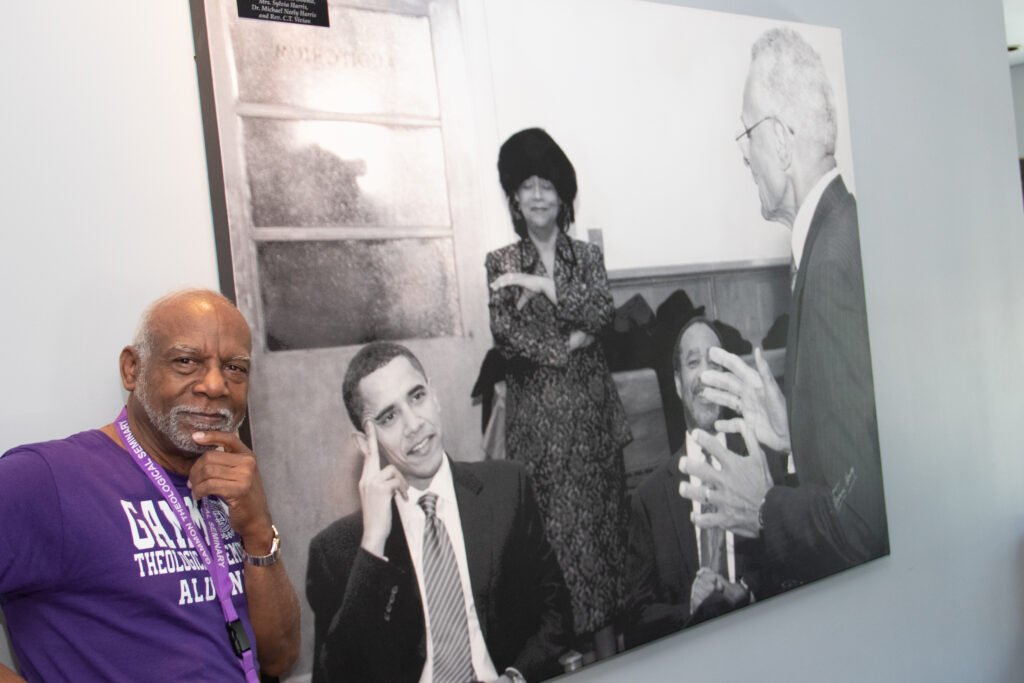
One of Horace’s most cherished photographs captures C.T. Vivian speaking to a young Senator Barack Obama before he became President. The image at Wheat Street Baptist Church represents the trust and access Horace earned over decades of work.

Photo by Milton Kirby – Horace Henry with his photo of C T Vivian advising Barack Obama located at Pascal’s Atlanta

“I felt an incredible sense of honor to be chosen to document that moment,” he recalls.

When asked how he determines what to photograph, Horace emphasizes respect and intuition. “I never photograph people eating with their eyes closed or in unflattering poses,” he says.


Reflections and Legacy

Looking back, Horace credits much of his success to his ability to adapt. Whether directing civil rights leaders for a photo or navigating a music career, his focus was always on capturing moments with integrity.

As for his future, Horace remains committed to telling stories through his lens. “My job as a photographer is to place the piece in front of the audience and allow them to interpret it in their own way.”

From humble beginnings to Smithsonian recognition, Horace Henry’s journey is a testament to the passion, perseverance, and the power of a single photograph to change the world.

Mr. Henry’s original collection can be seen at the Smithsonian National Museum of African American History and Culture at:  One day in January: a collection of images taken at Dr. King’s first memorial service / Horace Henry | Smithsonian Institution

Mr. Henry’s book “One Day in January” – A Collection of Images Taken at Dr. King’s First Memorial Service can be found at: “ONE DAY IN JANUARY” by BY: HORACE HENRY | Blurb Books.

January 15, 1929: A King Was Born

Today marks the anniversary of Dr. Martin Luther King Jr.’s birth. Celebrated for his transformative role in the Civil Rights Movement, he advocated nonviolent resistance, leading notable actions that resulted in significant legislative reforms and enduring social change.


By Milton Kirby | Atlanta, GA   January 15, 2025

Today marks the anniversary of the birth of Dr. Martin Luther King Jr., one of the most transformative figures in American history. Born Michael Luther King on January 15, 1929, in Atlanta, Georgia, he later adopted the name Martin, aligning with his lifelong mission inspired by faith and justice.

Early Life and Education

From a young age, Martin Luther King Jr. displayed remarkable intellect and drive. Skipping the 9th and 12th grades, he entered Morehouse College at just 15 years old and earned a bachelor’s degree in sociology by 19. Despite his precocious achievements, his life was not without hardship. At the age of 12, devastated by the death of his grandmother, he leaped from a second-story window in despair. Thankfully, he survived the fall, and this moment became part of the complex journey that shaped his character and resilience. This event is often mentioned to highlight the emotional struggles he faced in his early years before becoming the renowned leader of the Civil Rights Movement.

Path to Leadership

King’s upbringing in a deeply religious family, with his father and grandfather serving as Baptist ministers, instilled in him a sense of justice and faith. He was exposed to the inequities of segregation from a young age and was taught the value of standing up against injustice.

Martin Luther King Jr. became involved in the Civil Rights Movement through a combination of personal conviction, religious leadership, and circumstances that thrust him into the forefront of the struggle for racial equality.

His academic journey further shaped his thinking. While studying at Morehouse College, Crozer Theological Seminary, and Boston University, he encountered writings on nonviolence, particularly those of Mahatma Gandhi, which deeply influenced his philosophy of peaceful resistance.

In 1954, at the age of 25, King became the pastor of Dexter Avenue Baptist Church in Montgomery, Alabama. It was here that he stepped into the national spotlight, leading the Montgomery Bus Boycott after Rosa Parks’ arrest in 1955. Parks was arrested for refusing to give up her seat on the bus to a white passenger.

Courtesy – The National Civil Rights Museum

King was chosen as the leader and spokesperson for the newly formed Montgomery Improvement Association due to his strong oratory skills, respected position in the community, and relatively new arrival in Montgomery, which allowed him to avoid being tainted by local political divisions.

The boycott lasted over a year and ended with a Supreme Court decision declaring segregation on public buses unconstitutional. This success brought King national recognition as a leader of the Civil Rights Movement.

The Civil Rights Movement

In 1957, King co-founded the Southern Christian Leadership Conference (SCLC), amplifying his efforts to challenge racial injustice across the South. Through campaigns in Birmingham, Selma, and beyond, King’s nonviolent approach achieved significant victories, including the Civil Rights Act of 1964 and the Voting Rights Act of 1965.

King’s commitment to nonviolent resistance as a means of achieving social and political change was central to his leadership. He believed that love, justice, and moral authority could overcome hate and injustice.

King played pivotal roles in key events, such as the March on Washington in 1963, where he delivered his iconic “I Have a Dream” speech, and the Selma to Montgomery marches in 1965, which led to the passage of the Voting Rights Act.

King’s leadership in the Civil Rights Movement was marked by his ability to inspire and mobilize people through his powerful speeches and unwavering commitment to justice. His efforts led to significant legislative and social changes, including the Civil Rights Act of 1964 and the Voting Rights Act of 1965.

Photo by Milton Kirby – The Lorraine Motel

Dr. Martin Luther King Jr. was assassinated on April 4, 1968, in Memphis, Tennessee. He was shot while standing on the balcony of the Lorraine Motel, where he was staying during a visit to support striking sanitation workers. The tragic event occurred just as King was leading efforts for economic justice and workers’ rights. His death sparked widespread mourning and further galvanized the Civil Rights Movement.

A Legacy Memorialized

The quest to make Martin Luther King Jr.’s birthday a national holiday was primarily championed by Coretta Scott King, Martin Luther King Jr.’s widow, along with other civil rights leaders and activists. After her husband’s assassination in 1968, Coretta Scott King worked tirelessly to ensure that his legacy and contributions to civil rights were officially recognized by the federal government.

In 1979, she and other advocates began a campaign to establish a national holiday in honor of King. This effort gained widespread support over the years, and it was introduced in Congress by Rep. John Conyers and Senator Edward Kennedy.

It wasn’t until 1983 that President Ronald Reagan signed the legislation into law, officially designating Martin Luther King Jr. Day as a national holiday, which was first observed on January 20, 1986. However, it wasn’t immediately recognized by all states; it took several years for all states to adopt the holiday, with South Carolina being the last to officially recognize it in 2000.

Courtesy National Civil Rights Museum – Jesse Jackson, Martin Luther King, Jr. & Ralph David Abernathy

Family and Legacy

Dr. Martin Luther King Jr. and his wife, Coretta Scott King, had four children:

Yolanda Denise King (1955–2007) – The eldest child, Yolanda was an actress, public speaker, and advocate for social justice.

Martin Luther King III (born 1957) – The eldest son, Martin Luther King III is an activist and community leader, having served as president of the Southern Christian Leadership Conference (SCLC).

Dexter Scott King (1961 – 2024) – The second son, Dexter was an activist and former president of the King Center, an organization dedicated to promoting the principles of nonviolence and advancing civil rights.

Bernice Albertine King (born 1963) – The youngest child, Bernice is an ordained minister and has been a prominent advocate for social justice and human rights. She is currently the CEO of the King Center.

The King Papers Project

During his lifetime, King wrote numerous letters, speeches and sermons. These documents are infamously called “The King Papers.”

The King Papers Project was initiated by the King Center and the Stanford University King Institute, and its goal is to publish a complete and accessible record of Dr. King’s life and contributions.

The project includes several volumes that span Dr. King’s life, beginning from his early years as a student and continuing through his leadership in the civil rights movement and his tragic assassination in 1968. These volumes contain not only his most famous speeches and writings but also personal correspondence, planning documents, and writings that provide insight into his thinking and strategic approach to issues like racism, social justice, and nonviolence.

In addition to the printed volumes, the King Papers also include digitized materials, which are available for public access and research. This collection is invaluable for scholars, educators, and anyone interested in understanding the full scope of Dr. King’s thoughts, actions, and impact on the civil rights movement and beyond.

Exploring His Life and Work

The story of Dr. King’s life can be found and studied a number of museums around the country including but not limited to:

1. The National Civil Rights Museum (Memphis, Tennessee)

  • The National Civil Rights Museum is located at the Lorraine Motel, where Dr. King was assassinated in 1968. The museum offers an extensive collection of artifacts, exhibits, and multimedia presentations documenting the American civil rights movement, including a significant focus on Dr. King’s leadership. Visitors can see items related to his life and activism, including his famous speeches and personal items.

2. The King Center (Atlanta, Georgia)

  • The Martin Luther King Jr. National Historical Park in Atlanta includes the King Center, which was founded by Dr. King’s widow, Coretta Scott King. The King Center houses exhibits about Dr. King’s life, his philosophy of nonviolence, and the broader civil rights movement. The Ebenezer Baptist Church, where Dr. King preached, is also part of the park, and the Freedom Hall within the King Center contains artifacts such as his Nobel Peace Prize.

2. The National Center for Civil and Human Rights (Atlanta, Georgia)

  • The National Center for Civil and Human Rights isone of the most magnificent places to not just learn about the Civil Rights Movement but to actually experience it yourself. Sit at the lunch counter exhibit and see, hear and feel what you may have experienced if you had been a protestor at one of the many sit-ins throughout the South. This museum is home to some of the most dramatic, sobering, and incredibly realistic exhibits on the Civil Rights Era.

3. The Smithsonian National Museum of African American History and Culture (Washington, D.C.)

  • The National Museum of African American History and Culture at the Smithsonian features extensive exhibits on Dr. Martin Luther King Jr. and the civil rights movement. Items from his life, including his Bible, robes, and other personal artifacts, are displayed. His leadership and influence in the movement are detailed through interactive exhibits and multimedia presentations.

4. The Civil Rights Memorial Center (Montgomery, Alabama)

  • The Civil Rights Memorial Center, operated by the Southern Poverty Law Center, commemorates the lives of individuals who died during the Civil Rights Movement, including Dr. King. The Civil Rights Memorial, designed by architect Maya Lin, features a reflective surface inscribed with the names of martyrs, including Dr. King. The museum has exhibits on King’s life, his commitment to nonviolence, and his impact on civil rights.

5. The Alabama State Capitol (Montgomery, Alabama)

  • While not a traditional museum, the Alabama State Capitol is historically significant in the context of the civil rights movement. It was the site of the Selma to Montgomery marches, and there are exhibits within the Capitol and nearby museums that reflect on Dr. King’s leadership during this pivotal moment in history.

6. The Library of Congress (Washington, D.C.)

  • The Library of Congress holds a large collection of materials related to Dr. Martin Luther King Jr., including manuscripts, letters, and papers. The library often showcases exhibitions about his life and work, and many of his speeches and writings are accessible through their online archives.

7. The Detroit Historical Museum (Detroit, Michigan)                                        

  • The Detroit Historical Museum features exhibits about the history of the Civil Rights Movement, including a section dedicated to Dr. Martin Luther King Jr. and his connection to the struggles for equality in Detroit and the broader U.S.

8. The Boston University Mugar Memorial Library (Boston, Massachusetts)

  • The Boston University Mugar Memorial Library holds the Martin Luther King Jr. Papers Project archives. This extensive collection includes Dr. King’s writings, speeches, and letters, which are essential resources for understanding his thoughts.

As we commemorate the life of Dr. Martin Luther King Jr. on what would have been his 96th birthday, his message of love, equality, and nonviolent resistance remains as relevant as ever.

President Biden marks historic 40th Black female judge confirmed to federal bench

President Biden’s historic 40th Black female judge, Tiffany Rene Johnson, was confirmed to the federal bench, tying the record for most Black lifetime judges confirmed during a presidency.

By Gerren Keith Gaynor – TheGrio | December 10, 2024

President Joe Biden marked yet another historic moment for his administration in his final days in office on Monday when the U.S. Senate confirmed his 40th Black female judge to the federal bench.

As part of an effort to seat as many federal judges before President-elect Donald Trump returns to the White House on Jan. 20, the Senate confirmed Tiffany Rene Johnson to serve on the Northern District of Georgia. Judge Johnson is only the third Black woman to serve a lifetime appointment on the court. Johnson’s confirmation also ties the record for the most Black lifetime judges (62) confirmed during a presidency. 

According to data tracked by The Leadership Conference on Civil and Human Rights, President Biden’s appointment of 62 Black lifetime judges is the highest in a single term. During his one term in office, President Jimmy Carter appointed 37 Black lifetime judges, as did President Bill Clinton during his first term. Over the course of their two terms in office, President Barack Obama and Clinton each appointed 62 Black judges.

During his first term, President Trump appointed only two Black women out of 234 judges to the federal bench, which is less than 1% of his appointments. Trump nominated no Black judges to federal circuit courts.

Since taking office, President Biden has vowed to reshape the federal judiciary to reflect America’s diversity. His most historic and notable appointment was Justice Ketanji Brown Jackson, who was confirmed as the first Black woman to serve on the U.S. Supreme Court in April 2022. 

Courtesy Supreme Court Ketanji Brown Jackson

Biden has appointed several “first” Black judges across the nation’s district courts and courts of appeals, including Tiffany Cunningham, the first Black judge to serve on the U.S. Court of Appeals for the Federal Circuit; Dana Douglas, the first Black woman to serve on the U.S. Court of Appeals for the Fifth Circuit; and Jerry Edwards, Jr., the first Black judge to serve on U.S. District Court for the Western District of Louisiana.

In addition to this record appointment, the Leadership Conference also noted that among President Biden’s Black female judicial selections, more than half of them bring what advocates celebrate as important professional experiences to the federal bench as former civil rights lawyers and public defenders.

The steady appointments from President Biden (and confirmations by the Senate) are seen as necessary in his final 41 days in the Oval Office, not only to fulfill his goal of transforming the federal judiciary but also to preserve his legislative legacy. Many of his policies — and those enacted by President Trump in his second term — could be challenged in the courts in the coming months and years. The ideological bent of federal judges will undoubtedly have major implications.

Harrisburg Historian Fights to Secure Negro League Star H. Rap Dixon’s Place in Hall of Fame

Ted Knorr advocates for Hebert Alphonso “Rap” Dixon’s induction, citing decades of research and contributions to Negro League baseball, despite being overlooked for the National Baseball Hall of Fame.

By Milton Kirby | Atlanta, GA – December 8, 2024

Ted Knorr, a passionate baseball historian from Harrisburg, PA, has made it his mission to secure the rightful recognition of Negro League legend Hebert Alphonso “Rap” Dixon in the National Baseball Hall of Fame. Knorr, a fixture in the Negro League baseball history community, delivered an inspiring presentation in June to the Kingston Woman’s History Club (KWHC). It was his third appearance before the organization.

Knorr’s address centered on Dixon, a trailblazing outfielder whose name resonates in the archives of Negro League baseball. Despite being named to the prestigious Negro League Centennial Team in 2018, Dixon remains the only position player from that roster yet to be inducted into the Hall of Fame.

A Historian’s Mission

Knorr’s journey with baseball history began with tales shared by his father about Pittsburgh Negro League greats like Satchel Paige and Josh Gibson. His fascination deepened after joining the Society for American Baseball Research in 1979 and its Negro League Research Committee in 1984. This passion eventually led him to Dixon, who played for the Harrisburg Giants.

Photo By Milton Kirby – Ted Knorr

Discovering that Dixon’s team had played at Rossmere Base Ball Park—on the very site of his high school in Lancaster—sparked a 36-year odyssey of research for Knorr. He’s since emerged as one of the foremost advocates for Dixon’s enshrinement in Cooperstown, building a case rooted in decades of meticulous study.

The Push for Cooperstown

Dixon, born September 15, 1902, in Kingston, Georgia. He lived a life shaped by both talent and struggle. The son of John and Rose Goodwin Dixon, his family relocated to Steelton, Pennsylvania, when he was a child. Dixon went on to have a remarkable career in the Negro Leagues. Dixon’s name became synonymous with speed, power, and skill in the outfield.

Knorr highlighted Dixon’s contributions to baseball during his presentation. He urged the KWHC audience to join the push for his induction. Ann Bridges-Jones, a former KWHC president, has been instrumental in amplifying Knorr’s efforts. She collaborated with him to create permanent exhibits honoring Dixon’s legacy at the club’s museums.

“The Hall of Fame is incomplete without Rap Dixon,” Knorr argued, emphasizing the glaring oversight.

A Timely Effort

The National Baseball Hall of Fame evaluates Negro League players alongside Classic Baseball Era candidates, focusing on contributions before 1980. The Classic Baseball Era Committee, which meets every three years, convening today, offered a critical window for Dixon’s consideration. The National Baseball Hall of Fame and Museum announced on November 11, 2024, an eight-person ballot that will be considered today by its Classic Baseball Era Committee for Hall of Fame election for the Class of 2025. That ballot failed yet again to include Dixon as a candidate.

Knorr’s campaign reminds the baseball world of the enduring need to honor players who were denied equal opportunities during their lifetimes. “We owe it to players like Dixon to ensure their stories are preserved and celebrated,” he said.

Keeping History Alive

The Kingston Woman’s History Club, which hosted Knorr, maintains two local museums: the Kingston History Museum and the Confederate Memorial Museum. These institutions, open on weekends, provide insight into the region’s post-Civil War life and Civil War artifacts, respectively.

Knorr’s advocacy bridges the worlds of local history and national recognition. Through his dedication, he hopes to immortalize Dixon’s contributions and inspire future generations to uncover and honor the unsung heroes of baseball.

The Classic Baseball Era Committee will announce live the results of their deliberations on MLB Network’s “MLB Tonight” at 6:30 p.m. CT on Sunday, Dec. 8. Knorr’s efforts stand as a powerful reminder that history’s legends deserve their place in the spotlight.

In addition to any electees who emerge from the 2025 Baseball Writers’ Association of America election, which will be announced on January 21, 2025, the candidate who receives votes on 75 percent of the committee’s ballots will be elected to the National Baseball Hall of Fame and inducted in Cooperstown on July 27, 2025

Managers, umpires, executives, and players who have been retired for more than 15 seasons can all be considered for Hall of Fame status through the Era Committee procedure, of which the Classic Baseball Era Committee is one of three groups.

Video Courtesy of BCH Production

Related articles

Baseball Historian Ted Knorr Brings Negro League Legacy to Life in new TSJ Column “Shadow Ball”

Why Rap Dixon Belongs in Cooperstown with the Legends

Negro League Conference Unveils More History and Takes on Future Challenges

From Exclusion to Excellence: The Birth of Negro League Baseball

Shadow Ball: Learning More About Negro League History

Willie Mays, Baseball Legend and Hall of Famer, Passes Away at 93

Loretta Green, 89, Wears Her Poll Tax Certificate as a Badge of Perseverance

Loretta Green’s Story: At 89, Loretta Green has been voting since 1960 and has a poll tax exemption certificate, symbolizing her resilience in the fight for voting rights, which she continues to advocate for today.

By Milton Kirby – Atlanta, GA – November 6, 2024

At 89 years old, Loretta Green, originally from Mobile, Alabama, and now an Atlanta resident has been casting her ballot since 1960—and she has a poll tax exemption certificate to prove it. For Green, this certificate is more than a document; it’s a testament to the resilience of voting rights. She knocked on doors this Election Day, rallying support for Vice President Kamala Harris and encouraging registered voters to make their voices heard.

Green’s journey in voter advocacy spans decades, rooted in a history of discrimination and unyielding perseverance. After the Civil War and throughout Reconstruction, Southern states enacted laws designed to curtail the voting rights of newly freed Black citizens. Chief among these barriers was the poll tax—a fee that, though small, effectively barred countless Black and poor White citizens from the ballot box.

The tax, ranging from $1 to $2 (roughly $20 to $40 today), was required annually, and voters often had to show proof of past payments to remain eligible. This and other discriminatory tactics sought to undermine the Fifteenth Amendment’s promise of voting rights, carefully crafted to avoid federal intervention while systematically disenfranchising African Americans.

This unjust barrier persisted until the mid-20th century when the civil rights movement brought national attention to voting rights. Although the Supreme Court initially upheld poll taxes in Breedlove v. Suttles in 1937, the tide turned with ratifying the 24th Amendment in 1964, which abolished poll taxes in federal elections. Two years later, the Supreme Court further ruled in Harper v. Virginia Board of Elections that poll taxes in all elections, state and local, were unconstitutional—ushering in an era of more inclusive democracy.

Ms. Green has attended countless voter rallies over the years, proudly displaying her poll tax exemption certificate as a reminder of past obstacles and the progress achieved. For Green, this certificate is a powerful symbol of the struggle and the triumph in the long fight for equal voting rights. She continues to inspire her community this Election Day, sharing her story as a reminder of the sacrifices made to secure the right to vote for all Americans.

Tina Charles Makes WNBA History in Record-Breaking 2024 Season

By Milton Kirby – Atlanta, GA – September 21, 2024

Tina Charles, one of the WNBA’s most iconic players, continues to add to her illustrious career during a historic 2024 season. Charles, who made her debut in 2010 as the first overall draft pick by the Connecticut Sun, was unanimously named Rookie of the Year in her debut season. Since then, she has etched her name in the league’s record books, with her most recent accomplishments coming during a season filled with remarkable milestones.

Photo Dale Zanine NBAE Getty Images

After a 12-year journey through the league, Charles joined the Atlanta Dream as a free agent in February 2024, following stints with the Connecticut Sun (2010–13), New York Liberty (2014–19), Washington Mystics (2021), Phoenix Mercury (2022), and Seattle Storm (2022). Her move to Atlanta has been marked by a string of firsts for both her and the franchise, cementing her status as one of the greatest to ever play the game.

On September 19, 2024, during a game against her former team, the New York Liberty, Charles became the WNBA’s all-time leader in total rebounds and double-doubles. Heading into the game, she needed just two rebounds to tie Sylvia Fowles’ record of 4,006. In just over three minutes into the first quarter, Charles grabbed her third rebound, passing Fowles and making history. “I can’t take this moment without mentioning Sylvia Fowles and what she’s meant to my career,” Charles said. “The heights she reached. The great person she is. It’s pretty special, full circle for me.”  

Photo Pepper Robinson NBAE Getty Images

The historic night didn’t stop there. Later in the game, Charles notched her 194th career double-double, surpassing Fowles for the most in WNBA history.

Charles’s six seasons with the New York Liberty added special significance to her achievements, as she was inducted into the New York City Basketball Hall of Fame on September 19, 2024.

In August 2024, Charles also moved into second place on the WNBA’s all-time scoring list, passing the legendary Tina Thompson. Charles accomplished this feat on August 21, when she converted a layup against the Phoenix Mercury. Just days earlier, on August 16, she had recorded her 3,000th career field goal in a game against the Seattle Storm, where she scored the game-winning shot, capping off a 16-point performance.

Charles’ contributions to the Atlanta Dream have also been groundbreaking. She set a new franchise record for double-doubles in a single season, surpassing Érika de Souza’s record of 18, and became the first Dream player to record over 500 points and 300 rebounds in a single season.

The 2012 WNBA MVP, Charles has been named to nine All-WNBA First- and Second-Teams, earned eight All-Star selections, and was part of four All-Defensive Teams. Internationally, she represented the U.S. in three Olympic Games, winning gold medals in 2012, 2016, and 2021.

Photo by Bruce Bennett Getty Images

With over 7,000 career points and 4,000 rebounds, Charles is the only player in WNBA history to reach both milestones, a testament to her all-around excellence. Although she sits behind only Diana Taurasi in career points, with Taurasi’s record at 10,500 points, Charles’ legacy as one of the game’s all-time greats is firmly solidified.

As the 2024 season concludes, Tina Charles continues to shine, leaving an indelible mark on the league and inspiring generations of players to come.

Kamala Harris and Donald Trump Face Off in Fiery Presidential Debate

Vice President Kamala Harris and former President Donald Trump clashed in a heated debate, highlighting their differing visions for America’s future, with Harris emphasizing her plans for economic recovery and social policy.

By Milton Kirby – Philadelphia, PA – September 11, 2024

With just 56 days remaining before the November 5, 2024, election, Vice President Kamala Harris and former President Donald Trump clashed in what is expected to be their only face-to-face debate of the 2024 campaign season. The debate, held in Philadelphia, was a heated exchange filled with policy proposals, personal jabs, and contentious moments that highlighted their starkly different visions for America’s future.

The debate quickly turned combative, with Trump repeating false claims about the 2020 election results, immigration, and abortion. Harris, in contrast, appeared calm and composed, emphasizing her plans for economic recovery, and social policy.

Regarding immigration, Harris pointed out that the former President killed a bipartisan immigration legislation that would have provided needed resources at the border and more restrictive border and immigration policies by personally calling on several members of Congress.

At the onset, Harris said, “You are going to hear from the same old tired playbook, a bunch of lies, grievances, and name-calling. What you are going to hear tonight is a detailed and dangerous plan called Project 2025 that the former president intends on implementing if he gets elected again. I believe very strongly that the American people want a president who understands the importance of bringing us together. We have so much more in common than what separates us. I pledge to you to be a President for all Americans.”

For his part, Mr. Trump said, “Number one, I have nothing to do with it as you know, and she knows better than anyone, I have nothing to do with Project 2025. That’s out there, I haven’t read it, I don’t want to read it purposely, I am not going to read it. This is a group of people that got together. They came up with some ideas, I guess some good, some bad, but it makes no difference. I have nothing to do with it; everybody knows that I am an open book. Everybody knows what I am going to do; I will cut taxes substantially and create a great economy like I did before.”

Policy Proposals and Clashes

During the debate, Harris outlined her policy priorities, including tax breaks for small businesses and parents and a proposal for a first-time homebuyer credit to assist with down payments. Repeatedly declaring, “I have a plan,” Harris sought to contrast her approach with Trump, who referred to his own agenda as having “concepts of a plan,” particularly when questioned about replacing the Affordable Care Act.

Harris’s stance on energy policy also came under scrutiny, with the Vice President explaining her moderated position on fracking, stating, “My position is that we have got to invest in diverse sources of energy, so we reduce our reliance on foreign oil.”

Trump, meanwhile, sidestepped a direct question about whether he wanted Ukraine to win its war against Russia, instead pivoting to criticize Harris’s policy shifts and accusing her of adopting his own political philosophy. “Everything that she believed three years ago and four years ago is out the window—she’s gone to my philosophy now,” Trump claimed while warning that Harris’s election would mean “the end of our country” and labeling her a “Marxist.”

Personal Attacks and Heated Exchanges

The debate also saw Harris directly attack Trump, accusing him of being a poor businessman who inherited $400 million “on a silver platter and then filed for bankruptcy six times” and highlighting that he was “fired by 81 million people” in the 2020 election. Harris took aim at the enthusiasm of Trump’s supporters, quipping that attendees at his rallies “leave early out of exhaustion and boredom.”

Trump, not one to shy away from personal attacks, responded with a quip reminiscent of Harris’s famous line from the 2020 vice-presidential debate, “Wait a minute, I’m talking now if you don’t mind. Please.”

Contentious Moments on Afghanistan and Democracy

The debate also revisited the chaotic U.S. withdrawal from Afghanistan. When asked whether she bore any responsibility for the manner of the withdrawal, Harris defended the decision to pull out, stating, “I agreed with President Biden’s decision to pull out of Afghanistan. Four presidents said they would, and Joe Biden did.” However, she did not directly address whether she felt accountable for the 13 U.S. service members killed in a terrorist attack during the withdrawal nor for the U.S. equipment left behind. Harris noted that the Trump administration had previously negotiated a weak deal with the terrorist organization the Taliban circumventing the Afghanistan government.

Trump seized on the issue, criticizing the withdrawal as “disastrous” and blaming the Biden administration for the chaos and loss of American lives. He also reiterated his longstanding claim that he is not a threat to democracy, stating, “They talk about democracy—I’m a threat to democracy. They’re the threat to democracy with the fake Russia, Russia, Russia investigation that went nowhere.”

Looking Ahead to November 5

With the November 5 election approaching, the debate underscored the high stakes of the 2024 race and the deep divisions within the electorate. As the only direct confrontation between the two candidates, it provided voters with a rare opportunity to see Harris and Trump challenge each other on stage and articulate their contrasting visions for the country’s future.

The outcome of this heated exchange and its impact on the election will unfold in the coming weeks as both campaigns make their final push toward Election Day.

Click here to check your voter registration status.

James Earl Jones, Iconic Voice of Film and Stage Passes Away at 93

James Earl Jones passed away on September 9, 2024, at 93, leaving behind a legacy of iconic roles, including Darth Vader and Mufasa, and a voice that defined a generation of cinema and theater

By Milton Kirby – Pawling, NY – September 10, 2024

James Earl Jones, the actor whose voice was known around the world, went silent on Monday, September 9, 2024 he was 93.

Over a career spanning more than six decades, Jones became a towering figure in American entertainment. He starred in an array of memorable films, including Coming to America, Field of Dreams, Star Wars: Return of the Jedi, Clear and Present Danger, Claudine, and The Hunt for Red October. He was widely celebrated for his versatility and talent, described as “one of America’s most distinguished and versatile” actors, and often hailed as “one of the greatest actors in American history.”

Jones amassed nearly 200 screen credits throughout his prolific career and received numerous awards and honors. He won three Tony Awards, two Primetime Emmy Awards, a Daytime Emmy, and a Grammy Award. Jones was inducted into the American Theater Hall of Fame in 1985 and was honored with the National Medal of Arts in 1992, the Kennedy Center Honor in 2002, the Screen Actors Guild Life Achievement Award in 2009, and an Honorary Academy Award in 2011.

Jones’s distinctive, commanding voice has resonated across generations and continents. To Star Wars fans, he will forever be remembered as the voice of Darth Vader, and to millions of children, he is Mufasa, the wise lion king from Disney’s The Lion King.

He achieved the rare distinction of an EGOT, winning an Emmy, Grammy, Oscar, and Tony—though his Academy Award was honorary. His Grammy came in 1977 for a spoken-word recording “Great American Documents,” adding another dimension to his multifaceted career.

Jones made his Broadway debut in 1958 in the play Sunrise at Campobello at the Cort Theatre, which has since been renamed in his honor as the James Earl Jones Theatre. Originally built by John Cort, a former vaudeville performer turned theatrical manager, the theatre became part of the Shubert Organization in 1927. It stands today as a testament to Jones’s enduring legacy in the world of theater.

James Earl Jones visits for the first time the theatre that bears his name in 2022

At the time of his passing, Mr. Jones resided in Pawling, New York, where he lived quietly in the later years of his life.

Jones leaves behind a legacy not only of memorable performances and iconic roles but also of a voice that, for many, defined a generation of cinema and theater. He will be deeply missed but remembered for his monumental contributions to the arts.

Decatur Unveils Statue of Civil Rights Icon John Lewis

Decatur, GA Unveils New Statue Honoring Civil Rights Legend John Lewis: A new monument dedicated to John Robert Lewis has been unveiled in Decatur Square, celebrating his extraordinary journey and lasting impact on civil rights.

Decatur, GA – August 28, 2024

On Saturday, August 24, a very large crowd witnessed the Decatur Square unveiling of a new statue honoring civil rights legend John Robert Lewis. This monument, crafted by renowned artist Basil Watson, replaces the Confederate obelisk that was removed from the square in 2020.   

Organizations such as the Beacon Hill Black Alliance for Human Rights and Hate Free Decatur had been advocating for the removal of the monument since the fatal 2017 white nationalist rally in Charlottesville, Virginia.

This monument was part of a broader national trend where such structures became focal points for demonstrations against police brutality and racial injustice, especially after George Floyd’s death in May of 2020 at the hands of Minneapolis police officer, Derek Chauvin who now serving a twenty-one year prison sentence . Consequently, the city of Decatur requested a Georgia judge to mandate the monument’s removal, citing frequent vandalism and graffiti that had turned it into a public safety concern.

The new statue in Decatur Square is a tribute to John Lewis, the “Conscience of Congress,” celebrating his extraordinary journey and his lasting change in pursuing civil rights.

The statue pays tribute to Lewis’ enduring legacy of seeking “good trouble” and his lifelong dedication to freedom, justice, and equality. The unveiling ceremony was marked by speeches from prominent figures, including Georgia’s US Senator Reverend Raphael Warnock, Congresswoman Nikema Williams, civil rights activist Xernona Clayton, and Ambassador Andrew Young. Dr. Rashad Richey, an award-winning talk radio personality, was master of ceremony for the event.

L to R DeKalb County Georgia CEO, Michael Thurmond, US Congressman, Sanford Bishop, US Senator, Reverend Raphael Warnock, US Congresswoman, Nikema Williams

The monument resulted from four years of planning by the John Lewis Commemorative Task Force, which conducted a global search to find the right artist. Watson’s design reflects Lewis’ significant role in the civil rights movement, symbolizing his profound impact on the pursuit of equality.

John Lewis, born to Alabama sharecroppers, faced the harsh realities of segregation in the Jim Crow South. Inspired by figures such as Rosa Parks and Martin Luther King Jr., he rose to prominence through his courageous activism. Notably, on Bloody Sunday, March 7, 1965, Lewis just twenty-five years old, played a pivotal role in the Selma to Montgomery marches, where he sustained a skull fracture during a brutal confrontation with law enforcement.

Despite these challenges, Lewis remained steadfast in his advocacy for civil rights, serving diligently in the U.S. Congress for Georgia’s 5th congressional district from 1987 until his death in 2020. His leadership extended beyond the Selma marches, encompassing participation in the Nashville sit-ins, the Freedom Rides, and the 1963 March on Washington. Lewis was a crucial figure in the Student Nonviolent Coordinating Committee (SNCC) and one of the historic march’s “Big Six” organizers.

Unidentified audience listening to the speakers

Lewis’s legacy is a testament to his perseverance and unwavering commitment to justice. His humble beginnings did not hint at the global impact he would achieve, yet his efforts have inspired countless individuals to confront and overcome adversity. In recognition of his contributions, President Barack Obama, the first African American President, awarded him the Presidential Medal of Freedom, signing a commemorative photo with the words: “Because of you, John. Barack Obama.”

To check your voter registration or register to vote

More video highlights from the unveiling.

Beverly H. Burkes, Mayor – Clarkston, GA

Leslie McFarland

Belinda Robinson

Priscilla

Paster Jamal Bryant

Kai Williamson: Revolutionizing Interior Design with Elegance and Impact

Kai Williamson, founder of Studio 7 Design Group, revolutionizes luxury interior design with her innovative approach, creating “livable luxury” spaces for high-profile clients, while also dedicating herself to community service.

Atlanta, GA – August 27, 2024

When discussing the elite echelons of interior design, one name emerges with undeniable prominence: Kai Williamson.  She has made an immeasurable impact on the luxury interior design landscape, her work reflecting the same grandeur and innovation as the towering residences and buildings she has helped to design or transform.

Photo by Milton Kirby – Kai Williamson

As the principal of Studio 7 Design Group, a firm she founded in 2014, Williamson has carved out a niche in the world of high-end interiors. The firm’s ethos revolves around creating “livable luxury,” a concept that seamlessly merges aesthetic appeal with practical functionality. This philosophy has enabled Studio 7 to cater to a diverse clientele, from celebrities to corporate executives, ensuring each space is both beautiful and practical.

Williamson’s rise in the design world has been nothing short of remarkable. Her firm has experienced consistent growth year-over-year, a feat made even more impressive considering the challenges posed by the pandemic. This success can be attributed to Williamson’s innovative approach and strong client relationships, primarily fueled by referrals. Studio 7’s portfolio is a testament to its success, featuring high-profile residential and commercial projects across major cities including Atlanta, Los Angeles, Nashville, San Francisco, New York, and Miami.

The impact of Williamson’s work extends beyond the confines of her design projects. She has garnered significant media attention, appearing on HGTV’s Luxe for Less, the Essence Festival, and being featured in prestigious publications such as Forbes, Architectural Digest, Black Enterprise, Georgia Tech Alumni Magazine, Atlanta Journal-Constitution, Atlanta Business Chronicle, Deadline, and others.

Her ability to captivate and influence through design is matched by her dedication to community service. Williamson’s commitment to community service is a cornerstone of her personal and professional life. For over two decades, she has been a staunch advocate for out-of-school, disconnected youth in metropolitan Atlanta. Her past leadership as Executive Director of Youth Enhancement Services, Inc. (YES) and her current role as Chair of the Board of Directors highlight her dedication to empowering the next generation. This commitment reflects Williamson’s belief in giving back and using her success to create meaningful change.

For more information about Kai Williamson and Studio 7 Design Group, visit their website.

Atlanta Prepares for the 15th Annual BronzeLens Film Festival: A Sneaker Ball & Global Film Showcase Awaits

BronzeLens Film Festival 2024: Atlanta’s premier event for filmmakers of color, featuring 150+ films, workshops, and the Inaugural BronzeLens Filmmakers Ball, celebrating diversity and excellence in the film industry.

Atlanta, GA – July 15, 2024

The BronzeLens Film Festival (BLFF) is gearing up for its highly anticipated 15th annual event, which will take place from August 21-25, 2024, in Atlanta, GA. Known for showcasing the work of filmmakers of color, this year’s festival promises to continue its tradition of excellence while introducing exciting new elements.

Kathleen Bertran, Executive Producer

Over the course of the five-day festival, BLFF will present nearly 150 films, including features, shorts, documentaries, international films, music videos, dance videos, and student films. These screenings will occur at the Tara Atlanta, 2345 Cheshire Bridge Road NE. In addition to the diverse array of films, the festival will offer more than twenty workshops and panel discussions designed to educate, inspire, and entertain attendees.

A new highlight of this year’s festival is the Inaugural BronzeLens Filmmakers Ball, dubbed the “Sneaker Ball.” Hosted by the Mayor’s Office of Film Entertainment & Nightlife, this festive event will debut at Atlanta City Hall on Saturday, August 24. This lively celebration honors the Atlanta and Georgia film community, featuring music, dancing, and a unique atmosphere that blends formal and casual elements.

Kathleen Bertrand, Executive Producer of BLFF, reflects on the festival’s evolution, “Each year we have been able to say that these films are the best we have ever seen. With stars like Jamie Foxx, Ben Crump, Jamie Lee Curtis, and Morris Chestnut as producers or executive producers, the quality of our selections is outstanding.”

When asked what goes into having a great film festival? “Having a talented and remarkable team is factor one, people that are dedicated and passionate about the work that we do. Factor two is having great films; we get submissions from all over the world because we appeal to stories created by and for people of color. We had films submitted from 59 countries. The decision to have a film at the festival gets harder each year because they all score so highly. Factor three is having great workshops. We have always strived to have activities, including workshops and panel discussions, that would educate, enlighten and also entertain. We have always known that we have to grow our film community.”

Bertrand also noted that the festival’s format has adapted due to external factors. “The pandemic led us to develop a virtual component, which has been running for three years now. This virtual aspect has broadened our reach, allowing us to showcase films globally.”

One significant change this year is the move of the Women’s Super Stars Honors Gala to March, a result of last year’s strikes. This adjustment elevated the gala to a standalone event highlighting women’s achievement. The change also paved the way for the new Filmmakers Ball. Both changes help to celebrate the film community in a fresh and engaging way.

The festival will culminate with the BronzeLens Awards Show at the Ray Charles Performing Arts Center on the campus of Morehouse College. The center, named after the iconic musician and located at 900 West End Ave SW, features the 650-seat Emma and Joe Adams Concert Hall, among other state-of-the-art facilities.

Since its inception in 2009, the BronzeLens Film Festival has become a vital platform for filmmakers of color and has significantly contributed to Atlanta’s reputation as a thriving hub for the film industry. The festival’s impact is evident with accolades such as being named one of Film Freeway’s Top 100 Best Reviewed Festivals and receiving the Best Showcase for New Filmmakers award from Atlanta Magazine in 2018.

Please visit the BronzeLens Film Festival website for more details about its mission and upcoming events or to register for the Fifteenth Anniversary edition.

Vice President Kamala Harris Picks Minnesota Governor Tim Walz for running mate

Vice President Kamala Harris announces Minnesota Governor Tim Walz as her running mate, marking a historic moment in the 2024 presidential election and setting the stage for a campaign tour across the Midwest.

Atlanta, GA – August 7, 2024

Vice President Kamala Harris made a historic announcement Tuesday, naming Minnesota Governor Tim Walz as her choice as her choice for running mate. The statement was made during a high-energy campaign rally at the Temple University basketball arena in Philadelphia, where Harris and Walz addressed a capacity crowd of approximately 10,000 supporters.

Vice President Kamala Harris & Governor Tim Walz

Standing alongside Walz, Harris declared, “I stand before you today to proudly announce I am now officially the Democratic nominee for President of the United States. And so now, we have some work to do. We have to move to the general election and win that.”

Walz, who is 60 years old, has been serving as the 41st Governor of Minnesota since 2018. His background is diverse and includes notable achievements such as introducing statewide free school meals, protecting reproductive rights, expanding voting rights, making significant strides toward Minnesota’s goal of achieving 100% clean electricity by 2040, implementing tax cuts for the middle class, and expanding paid leave for workers.

After graduating from Chadron State College with a degree in social science in 1989, he spent a year teaching English and American history at a high school in China. He then returned to the U.S. to serve full-time in the Army National Guard and took on a high school teaching and coaching position. Walz met his future wife, Gwen Whipple, also a teacher, while teaching, and the couple moved to Mankato in 1996. In Mankato, Walz helped coach the Mankato West High School football team to its first state championship and was the faculty advisor for the Gay-Straight Alliance.

His military career is noteworthy; he served 24 years in the Army National Guard, retiring as a Command Sergeant Major in 2005. He transitioned to a political career when his students encouraged him to run for political office. Walz said, “his students saw in him what he was trying to instill in them.” He was elected to the U.S. House of Representatives for Minnesota’s First Congressional District in 2006. Walz was re-elected five times, serving the district until he assumed the governorship in 2018.

The selection of Walz as Harris’s running mate is seen as a strategic move to bolster Democratic support in key Midwestern states. Harris and Walz are scheduled to embark on a campaign tour across the Midwest, starting Wednesday in Wisconsin and moving to Michigan. This tour aims to rally younger, diverse, and labor-friendly voters crucial to President Joe Biden’s 2020 victory. However, recent tensions over Biden’s handling of the Israel-Hamas conflict have led to some divisions among these voter groups, particularly in Michigan.

The rally in Philadelphia and a previous one in Georgia underscore Harris’s ability to attract large crowds and energize her base. Yet, her upcoming challenge will be to address pressing national and international issues, including economic uncertainties and potential geopolitical conflicts, as evidenced by a recent stock market decline and rising concerns about the Middle East.

Walz’s selection is also seen as a strategic choice for Harris, hoping his appeal will help secure critical Midwestern states such as Minnesota, Michigan, Ohio, and Wisconsin.

Josh Shapiro, Pennsylvania governor

Pennsylvania’s governor, Josh Shapiro, one of the individuals previously considered for the running mate slot, spoke at Tuesday’s rally, expressing his support for Harris and Walz. “I love being your governor,” Shapiro said. “I am going to be working my tail off to make sure we make Kamala Harris and Tim Walz the next leaders of the United States of America.” He also praised Philadelphia as an ideal location to launch their campaign, calling it the city of brotherly love and sisterly affection and the birthplace of real freedom.”

As Harris and Walz prepare for the next phase of their campaign, their focus will be on unifying the Democratic base and addressing the concerns of a diverse electorate, all while navigating the complexities of a challenging political landscape. Harris said, “Our campaign, this campaign, is a fight for the future. We fight for affordable health care, we fight for a future with affordable housing, affordable childcare, and paid leave. We fight for a broad-based economy where every American has the opportunity to own a home, start a business, and build wealth. We fight for a future where we bring down prices that are still too high and lower the cost of living for American families so that they have a chance not to just get by, but to get ahead.”

Interview with a King

Interview With A King: A 3D animated short film honoring Dr. Martin Luther King, Jr.’s legacy, featuring expert voice portrayals, historical accuracy, and a powerful message of equality and justice.

Atlanta, GA – July 6, 2024

“Interview With A King” is a remarkable 3D animated short film of nearly 38 minutes that masterfully embodies the essence and sagacity of Dr. Martin Luther King, Jr. using an enthralling interview encounter. This revolutionary creation seamlessly combines artificial intelligence (AI) character customization and animation software alongside expert voice portrayals, resulting in the vivid portrayal of a sophisticated representation of Dr. King from 1968.

Director, Barrye L. Price at the Charlotte Black Film Festival

The film’s screenplay, penned in 2018 by Major General Barrye L. Price, Ph.D., U.S. Army Retired, a distinguished King historian with over 30 years of expertise, brings historical accuracy and authenticity to the film. General Price has delivered over 300 speeches on Dr. King’s life and legacy and joins forces with Florita Bell Griffin, Ph.D., to direct and produce the film. They combine their expertise and creative vision to deliver a powerful and meaningful cinematic experience.

The filmmakers of “Interview With A King” made a conscious decision not to create an exact likeness of Dr. King for the film. Instead, they aimed to authentically capture the essence of his character and personality through animation. This unique approach, while ensuring a respectful and legal portrayal, pays homage to his iconic achievements and legacy, creating a powerful and compelling tribute to Dr. King.

While “Interview With A King” touches upon significant moments such as the Montgomery Bus Boycott and the March on Washington, it also delves into lesser-known aspects, revealing personal anecdotes and hidden struggles that shaped Dr. King’s remarkable journey. The film offers a profound understanding of his ideals, challenges, and the lasting impact of his tireless activism.

L to R: Aliyana S., Carolyn T. attendees at the Charlotte Black Film Festival both said “they learned new information from Interview With a King

As a timely reminder of the ongoing struggle for equality and justice, “Interview With A King” showcases Dr. King’s unwavering belief in nonviolence and his commitment to peaceful protest. Through its compelling narrative, accomplished voice acting, emotionally resonant music, and the steadfast commitment of ARC Communications’ talented creative team, the film inspires audiences to contemplate the strides achieved and the ongoing efforts needed to confront systemic racism and discrimination.

At the heart of “Interview With A King” is the voice of Dr. Martin Luther King, Jr., portrayed by the talented Dr. Stephon Ferguson, a professional Dr. King voice performer. Dr. Ferguson’s remarkable ability to embody Dr. King’s tone, speech patterns, forceful remarks, and passionate delivery ensures that viewers hear the essence of Dr. King’s powerful message as if spoken by the man himself. This adds an extra layer of authenticity and resonance to the film, enhancing the overall viewer experience.

To date, the film has won the following awards:

The Indie FEST Film Awards 2024 – Bronze Award Best Animation

Documentaries Without Borders International Film Festival – Award Winner

Festigious Los Angeles – Monthly Film Competition – Award Winner March 2024

Festigious Los Angeles – Monthly Film Competition – Best Inspirational Film March 2024

Top Shorts – Award Winner 2024

Best Shorts – Award Winner 2024

Top Shorts Film Festival March 2024 – Best Animation

Austin Lift Off Film Festival –

Religion Faith International Film Festival 2024 – Award Winner

OZ Indie Film Festival 2024 – Award Winner

Veteran newscaster Lauren Coleman portrays Dr. King’s animated interviewer. Coleman’s background as a newscaster lends authenticity and believability to her performance, as she captures the tone, rhythm, and nuances of a professional journalist interviewing Dr. King. This gives the animated film more depth and authenticity, improving the entire spectator experience.

The music for the movie, which Rodney Stith wrote and performed with his band Prolific Soul Music, is a potent accompaniment to the images by evoking the fervor and struggles of the civil rights movement. Stith’s soulful voice conveys the liberation and empowerment anthems “Free At Last” and “Let It Go” with authenticity, bridging the past and present while highlighting the challenges that African Americans faced then and now. The music promotes equality, freedom, and the ongoing fight for justice.

Prepare yourself for a transformative journey with “Interview With A King,” where history, animation, and remarkable performances merge to create a profound, immersive experience. Witness Dr. Martin Luther King, Jr.’s essence come to life and let his messages resonate deeply within you.

History Made as Lorraine Cochran-Johnson Becomes DeKalb County’s First African American Woman CEO

Lorraine Cochran-Johnson Makes History as DeKalb County’s First African American Female CEO. She secured 60% of the vote, promising to tackle the county’s housing crisis, address gun violence, and empower youth through progressive policies and inclusive leadership.


By Milton Kirby | Atlanta, GA – June 19, 2024

In a landmark electoral victory, Lorraine Cochran-Johnson has been elected as the Chief Executive Officer of DeKalb County, Georgia, becoming the first African American woman to hold this position in the county’s history. With 100% of precincts reporting, Cochran-Johnson secured 25,608 votes, or 60% of the vote, surpassing her opponent, former commissioner Larry John, who received 17,104 votes, or 40%.

DeKalb County, the third largest in Georgia with a population of 710,000, has seen a historic moment unfold as Cochran-Johnson steps into leadership. She follows in the footsteps of Liane Levitan, the county’s first female CEO who served two terms.

A native of Greenville, Alabama, Cochran-Johnson joined the DeKalb County Board of Commissioners in 2018, representing Super District 7.

Throughout her campaign, Cochran-Johnson emphasized a platform centered on change, accountability, and innovation. Key issues in her agenda included tackling DeKalb’s housing crisis, addressing gun violence, empowering youth, and supporting small businesses. Her victory marks a significant shift towards progressive policies and inclusive leadership in the county.

Cochran-Johnson’s win comes as she prepares to succeed Michael Thurman, who served two terms as CEO of DeKalb County. While the election results are yet to be formally certified by election officials, her decisive lead points to a clear mandate from the electorate for new directions in county governance.

Lorraine Cochran-Johnson, a native of Greenville, Alabama, has been a dedicated resident of DeKalb County, Georgia, for 22 years. She holds a B.S. in Political Science and Criminal Justice, an M.S. in Administration of Criminal Justice from Troy University, and an M.P.A. in Public Administration with a concentration in Economic Development and Grant Writing from Auburn University. Additionally, she has a business certificate from Harvard University.

With over two decades of experience in print media and mass communications, Lorraine is a seasoned grant writer who has secured millions in funding for state and local entities. As a parent, she has served as P.T.A. president for multiple schools, securing over $200,000 for school revitalization and donating $250,000 for COVID-19 relief. She supports initiatives in economic development, education, public safety, and homeownership.

Professionally, Lorraine has held significant roles at Creative Loafing Newspaper, founded Salons Unlimited Magazine, and was a founding member of United Front Media. She also served as General Manager of the Atlanta Daily World Newspaper and Associate Publisher of Who’s Who In Black Atlanta.

Lorraine is married to retired USAF Pilot Lt. Colonel William H. Johnson, III, she is a proud mother, community advocate, and dedicated public servant committed to improving her community and the world through selfless service.

As she assumes office, all eyes are on Cochran-Johnson to deliver on her promises and navigate the challenges facing DeKalb County.

Exit mobile version