Featured

A Letter from the Publisher: Investing in the Truth

To our readers and neighbors,

When we launched The Truth Seekers Journal (TSJ), our mission was simple: to restore trust in local journalism by focusing on verified facts, transparency, and the stories that truly shape our community.

Today, I am proud to share that the “pulse” of this journal is stronger than ever. This past week, we reached a significant turning point in our growth. Our page views have tripled, and most importantly, our Returning Visits have grown by over 1,000%. This tells me that TSJ isn’t just a site you stumble upon. It is becoming a trusted resource you rely on.

National Recognition

I am also honored to announce that The Truth Seekers Journal has been awarded a prestigious rural reporting grant from Grist, following a highly competitive national selection process. Grist is a national leader in environmental and justice journalism.

Furthermore, to ensure we maintain the highest ethical standards, we have been formally accepted as members of the Society of Professional Journalists (SPJ), the Online News Association (ONA), the National Association of Black Journalists (NABJ), and the Atlanta Press Club. These affiliations are our “gold standard” promise to you that our reporting is independent, ethical, and professional.

Expanding Our Expertise

Growth isn’t just about numbers; it’s about the depth of the stories we can tell. I am thrilled to highlight two key pillars of our expanded editorial team:

  • Dr. Florita Bell Griffin has joined us as a Contributing Writer and Systems Analyst. Dr. Griffin will lead our coverage in the AI, Science, and Technology sectors. Her expertise allows us to move beyond the headlines, providing our readers with deep-dive analysis on how emerging technologies and infrastructure projects impact our local economy and daily lives..
  • Ted Knorr, our resident historian, continues to bridge the gap between our past and present through his twice-monthly column, “Shadow Ball: Learning More About Negro League History.” Many of you have already engaged with Ted by submitting questions and sharing family stories, making “Shadow Ball” a true cornerstone of our community dialogue.

The Road Ahead

We are no longer just a news site; we are a growing civic institution. Whether we are investigating DeKalb data centers or documenting the rich history of the South, our goal remains the same: to give you the information you need to understand your community and shape your future.

Thank you for being the most important part of this journey. We are just getting started.

In Truth,

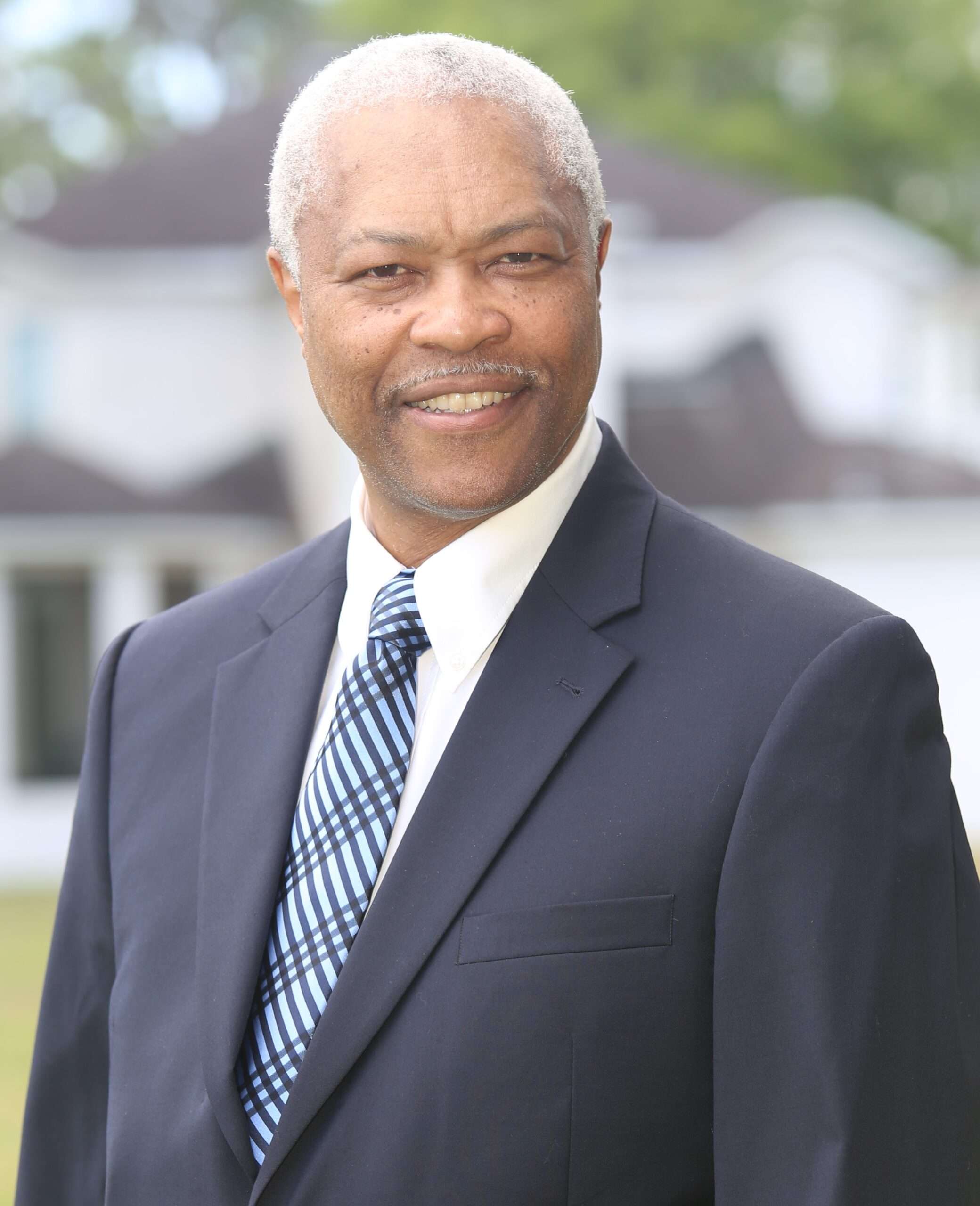
Milton Kirby

Founder & Publisher, The Truth Seekers Journal

Featured

Carter G. Woodson – the Father of Black History

Carter Godwin Woodson, known as the Father of Black History, was a pioneering historian, author, journalist, and educator who dedicated his life to documenting and promoting African American history.

By Milton Kirby | Decatur, GA | February 4, 2025

Carter Godwin Woodson, known as the “Father of Black History,” was a pioneering historian, author, journalist, and educator who dedicated his life to documenting and promoting African American history. Born on December 19, 1875, in New Canton, Virginia, Woodson’s work laid the foundation for studying and recognizing Black history in the United States.

A Scholar and Educator

Woodson’s academic career was characterized by tenacity and excellence. He attended Lincoln University in Pennsylvania and Berea College in Kentucky before earning his doctorate from Harvard University, becoming the second African American to do so after W.E.B. Du Bois. He later served as the Dean of the School of Arts and Sciences at Howard University, where he emphasized the value of Black scholarship. Woodson taught in both public and collegiate settings, trained researchers and staff members, and authored numerous books and articles on Black history. From 1919 to 1920, he also served as the Dean of the School of Liberal Arts and Head of the Graduate Faculty at Howard University.

Courtesy Smithsonian

Founding the Study of Black History

In 1915, Woodson founded the Association for the Study of African American Life and History (ASALH) to promote research and education on Black heritage. He also established the Associated Publishers, a company dedicated to publishing works by and about African Americans. From his home in Washington, D.C.’s Shaw neighborhood, he led ASALH’s initiatives and wrote extensively on Black history, including managing The Journal of Negro History (now The Journal of African American History).

Woodson’s efforts to establish African American history as an essential part of the larger American narrative extended beyond his organizations and publications. His work inspired educators nationwide to incorporate Black history into their curricula, and many sought his advice and resources for classroom use.

The Birth of Black History Month

In 1926, Woodson launched Negro History Week to highlight the contributions of Black Americans. He selected the second week of February to coincide with the birthdays of Frederick Douglass (February 14) and Abraham Lincoln (February 12). Over time, this observance gained nationwide recognition and expanded into Black History Month, which was officially designated by the U.S. government in 1976. President Gerald Ford urged Americans to “seize the opportunity to honor the too-often neglected accomplishments of Black Americans.”

A Lasting Legacy

Woodson spent the last 28 years of his life in his Washington, D.C., home, where he continued his research and advocacy until his passing on April 3, 1950, at the age of 74. Recognizing his immense contributions, President Barack Obama designated the Carter G. Woodson Home as a National Historic Site in 2016. Located at 1538 Ninth Street NW, this site is preserved by the National Park Service as a testament to his legacy.

The Importance of the Carter G. Woodson Home

Woodson’s historic home functioned as the headquarters for ASALH and played a crucial role in advancing Black history education. From this location, he:

  • Researched and wrote groundbreaking works on African American history
  • Managed The Journal of Negro History
  • Planned the first Negro History Week, which later evolved into Black History Month
  • Led efforts to promote Black scholarship and education

The Ongoing Celebration of Black History

Today, Black History Month is celebrated in the United States and Canada (February), the United Kingdom (October), and other countries. Each year, ASALH selects a theme for the month, and the 2025 theme, “African Americans and Labor,” highlights Black workers’ contributions to labor movements and industries. Schools, institutions, and organizations continue to honor Woodson’s vision by integrating Black history into their curricula and programs year-round.

Recognizing Woodson’s Impact

Woodson’s dedication to preserving and teaching Black history ensured that African Americans’ achievements would no longer be overlooked. His legacy lives on through the work of ASALH, the continued observance of Black History Month, and the recognition of African American contributions across multiple sectors. Thanks to his efforts, the study of Black history has become an essential part of American education and culture.

As we celebrate Black History Month, we honor Carter G. Woodson’s vision and commitment to historical truth, education, and cultural preservation. His pioneering work remains a cornerstone of African American history and a testament to the power of knowledge in shaping a more inclusive society.

Mentoring and Training

Woodson was a mentor to many up-and-coming historians and scholars, including Alrutheus A. Taylor, Charles H. Wesley, Luther Porter Jackson, Lorenzo Johnston Greene, Rayford W. Logan, Lawrence D. Reddick, and John Hope Franklin. The association’s headquarters—Woodson’s home—served as a training center where these scholars refined their research skills and, in turn, mentored succeeding generations of African American historians. Woodson and ASALH also cultivated important relationships with Black churches, colleges, universities, schools, and community centers nationwide.

Carter G. Woodson Home NHS Temporarily Closed

The Carter G. Woodson Home National Historic Site is currently temporarily closed due to renovation. Please visit the National Park Service website for updates on its reopening.

Red Shoe Lunch Marks 16 Years of Sisterhood, Survival, and a Mission to Save Lives

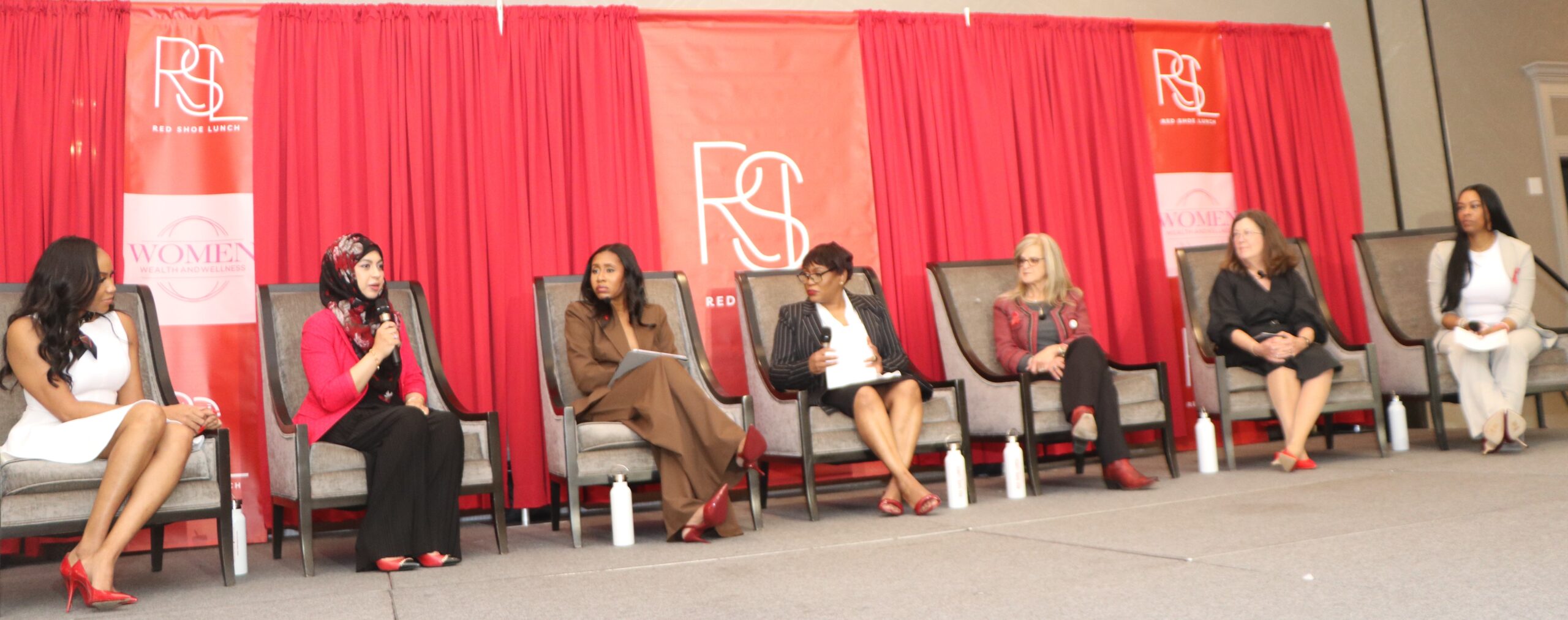
The 16th Annual Red Shoe Lunch at Chateau Elan advanced heart disease prevention through the Veronica Blount Memorial Foundation’s blood pressure monitor initiative.

By Milton Kirby | Braselton, GA | March 1, 2026

What began as a small lunch among six friends has grown into one of metro Atlanta’s most heartfelt annual traditions. On Saturday, February 28, 2026, the 16th Annual Red Shoe Lunch filled a ballroom at Chateau Elan Winery & Resort to capacity, with nearly every guest—women and a few men—wearing a shade of red. The color symbolized both celebration and urgency: a reminder that heart disease remains the leading cause of death for women.

A Movement Born From a Moment of Fear

The Red Shoe Lunch traces its origins to 2010, when six women gathered at a restaurant in Atlanta’s Phipps Plaza. They didn’t set out to start a movement; they simply came to support their friend, 36‑year‑old Tasha “Tee” Blount. Each woman wore red shoes, high heels, flats, slingbacks, and peep-toes; an outward symbol of unity that caught the attention of passersby. But the shoes represented something far deeper.

Just days earlier, Tee had been lying on an operating table preparing for a cardiac catheterization. As she waited, she overheard a nurse whisper, “Wow, she’s young.” It was the same phrase she had heard thirteen years earlier when her mother, Veronica Blount, underwent a quadruple bypass in Baltimore. Veronica survived the first surgery, required a second, and later died from coronary artery disease at just 46 years old.

Tee came from a family of women who died young. Her grandmother, Delores, died at 53. Her great-grandmother at 64. As Tee closed her eyes in that Atlanta operating room, she made a promise: if she woke up, she would fight to break the cycle.

From Six Women to a Community of Hundreds

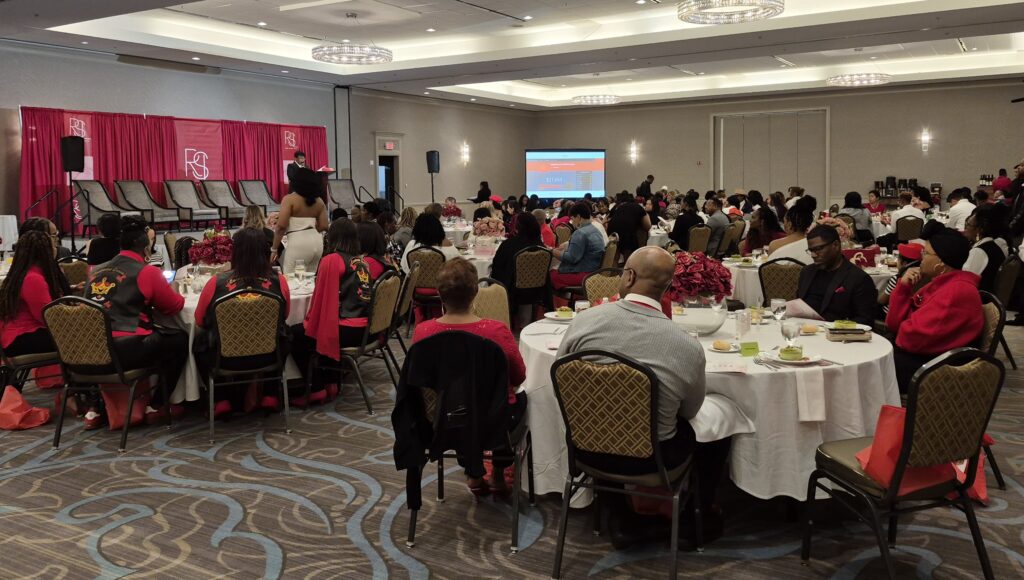
Photo by Milton Kirby Red Shoe Audience

Once released from the hospital, Tee invited her closest friends to lunch on what would have been her mother’s 56th birthday. She asked them to wear red shoes in her honor. The women passed around an iPad and donated to the American Heart Association. When the restaurant manager learned the meaning behind their gathering, he moved them to a private dining room at no charge.

That afternoon, Tee decided the lunch would become an annual event.

Six women have now grown into a community of roughly 200 attendees—and the number continues to rise. While the venue changes each year, the mission has remained constant: raise awareness about heart disease and educate the communities they call home.

A New Chapter: The Veronica Blount Memorial Foundation

For more than a decade, attendees paid for their meals and donated directly to the American Heart Association, raising nearly $20,000. But in 2021, Tee charged $22,000 to her personal credit card to cover event costs. “That was my wake-up call,” she said.

In August 2022, the Veronica Blount Memorial Foundation (VBMF) became a 501(c)(3) nonprofit. The Red Shoe Lunch is now its annual flagship event.

Tee admits she delayed applying for nonprofit status because she wasn’t sure she would live long enough to see it through. “Every woman in my mother’s immediate family died younger than their mother,” she said. “By this time next year, I will be the first to outlive my mother and my grandmother. And I plan to outlive my great-grandmother too.”

She credits access to cardiac care and the resources VBMF now provides for her longevity.

A Mission Rooted in Prevention

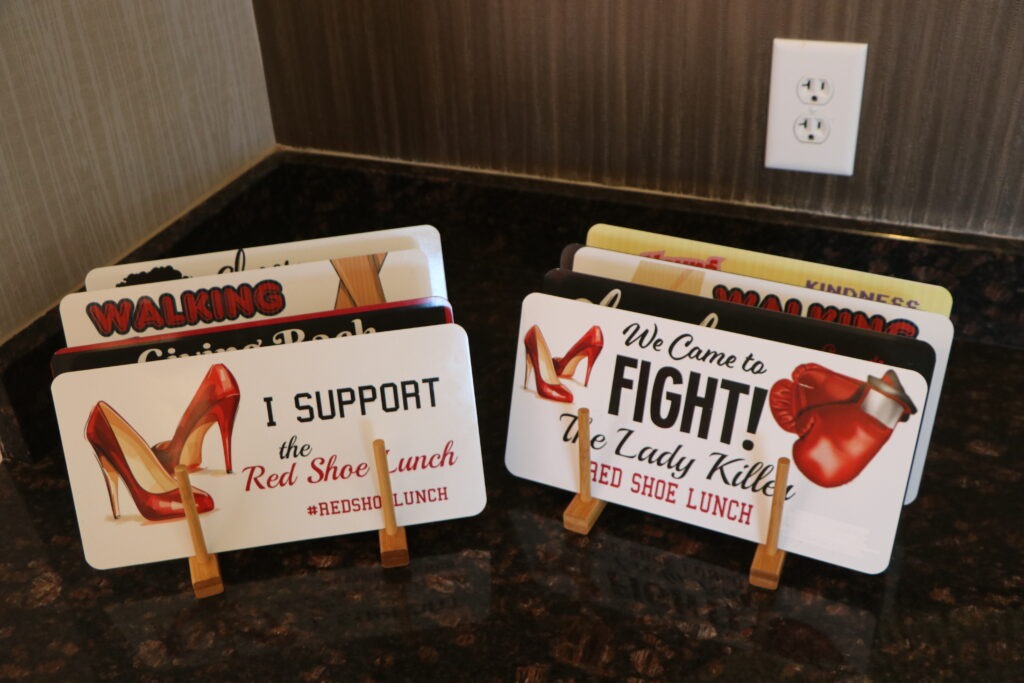
Photo by Milton Kirby Red Shoe Lunch Tags

VBMF’s primary fundraising goal is simple but powerful: ensure every household in underserved communities has a blood pressure monitor. “Just like a smoke detector, blood pressure monitors save lives,” Tee said.

The work extends far beyond the luncheon. Volunteers identify neighborhoods with high need, distribute educational materials, and personally deliver monitors to residents.

The Women Behind the Work

The Red Shoe Lunch is powered by a large team of dedicated volunteers whose behind‑the‑scenes work makes the event possible each year. Among them, several leaders shared their perspectives with TSJ.:

  • Mary Fondon, Co-Chair & Volunteer Relations Chair, emphasizes the scale of the effort. “It takes a lot of volunteers to deliver a flawless Red Shoe Lunch,” she said. She hopes every attendee will return next year and bring someone with them.
  • Lisa Daniel, Fundraising Chair, brings her own lived experience to the mission. “I have gone through the fire and I don’t smell like smoke,” she said. Her goal is to ensure fewer people ever have to face the fire at all.
  • Evie Fleming, Event Registration Chair, ensures the event runs smoothly, supported by her mother, April Woodyard from Columbia, SC and sister Wanda Simpkins, and longtime attendee Sally Richardson

Their stories reflect the spirit of the Red Shoe Lunch: community, compassion, and collective action.

SIDEBAR | Heart Disease Risks for Black Women

The Urgency

Black women face the highest rates of heart disease in the United States. Nearly 59% of Black women over age 20 live with some form of cardiovascular disease.

Major Risk Factors

  • High Blood Pressure — Black women experience the highest hypertension rates of any group, and only about a quarter have it under control.
  • Obesity — Nearly 57% of Black women are classified as obese, increasing strain on the heart.
  • Diabetes — Higher rates of both diagnosed and undiagnosed diabetes elevate long‑term  cardiovascular risk. ·  Family History — Generational patterns of early heart disease are more common in Black families.
  • Stroke Risk — Black women are twice as likely to experience a stroke compared to white women.

Healthcare Gaps

Black women are more likely to encounter:

  • Delayed diagnosis, even when symptoms are present
  • Under‑treatment due to implicit bias
  • Higher pregnancy‑related cardiac complications, including preeclampsia and cardiomyopathy

These disparities contribute to higher mortality and more severe outcomes.

Symptoms Often Missed

Heart attack symptoms in women—especially Black women—can be subtle:

  • Unusual fatigue
  • Nausea or vomiting
  • Shortness of breath
  • Back, jaw, or stomach pain
  • Lightheadedness

These are frequently mistaken for stress or exhaustion.

 Prevention That Saves Lives

  • Know your blood pressure, cholesterol, and blood sugar
  • Schedule regular heart screenings
  • Manage stress and sleep
  • Maintain physical activity
  • Recognize symptoms early

Why Access Matters

Access to blood pressure monitors, preventive screenings, and culturally competent cardiac care dramatically improves outcomes—especially in underserved communities where risk is highest.

Looking Ahead

Blount announced that the 17th Annual Red Shoe Lunch will return on February 27, 2027.

The Red Shoe Lunch continues to grow in size, purpose, and impact. With its nonprofit status secured, all proceeds now support the Veronica Blount Memorial Foundation’s work in underserved communities. The organization will continue its annual giving campaign to the American Heart Association through the Veronica Blount Memorial Fund.

What began as six women in red shoes is now a movement—one that is saving lives, one household at a time.

Related videos

The Bonnie Banks                   Monica Carter & Natalie Barner         Evie Fleming

Lasha Hammett                       Henrietta Harmon                               Angel Howard

Latoya Louis                           Kalib From Memphis                          Click to See All Videos

Related articles

October Marks 40 Years of Breast Cancer Awareness: Every Story Is Unique, Every Journey Matters

Silent Strength: Extraordinary Women in the Margins of History

Support open, independent journalism—your contribution helps us tell the stories that matter most.

Bottoms Brings Gubernatorial Message to Madison, Emphasizes Roots, Rural Healthcare, and Affordability

Keisha Lance Bottoms campaigned in Madison, Georgia, outlining Medicaid expansion, tax reform, and free technical college as key priorities in the 2026 gubernatorial race.

By Milton Kirby | Madison, GA | February 28, 2026

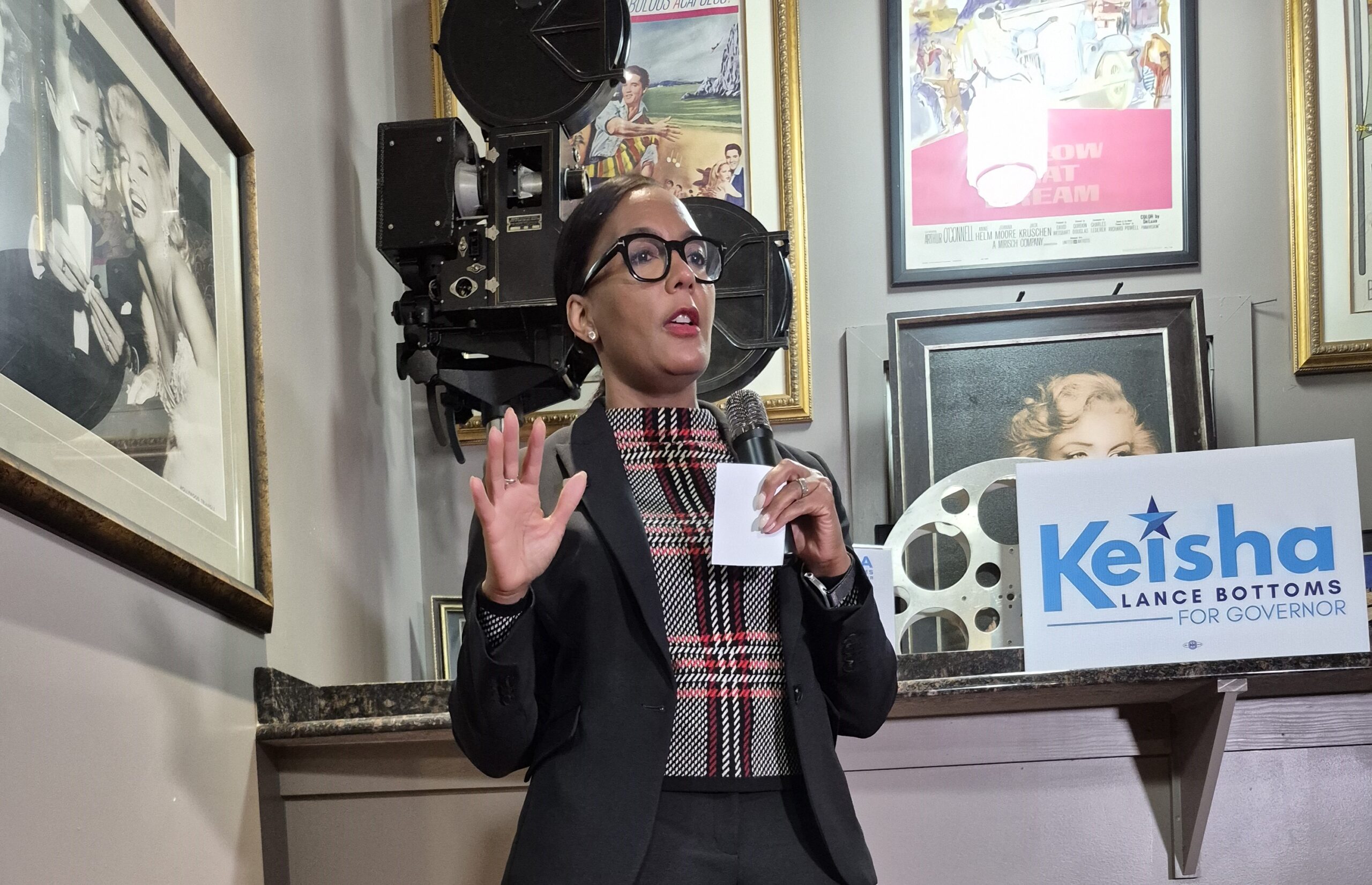
On a rainy Thursday evening in Georgia, former Atlanta Mayor Keisha Lance Bottoms, now a Democratic candidate for governor, made a campaign stop at Wing Nights @ Benny Paul’s in downtown Madison. The event drew a standing‑room‑only crowd, offering Bottoms an intimate setting to share her platform, her family history, and her vision for the state.

The Madison stop followed earlier appearances in Athens as part of a multi‑city swing through northeast Georgia. Bottoms opened her remarks by grounding her candidacy in deep Georgia roots, telling the audience her family could trace its history back five generations in the state. Her grandmother was from Crawfordsville; her grandfather was born in Monroe and raised in Winder; his father was from Athens.

“I’ve served in three branches of Georgia government,” she reminded the crowd — as a judge, a city council member, and as mayor of Atlanta. She noted that her mayoral tenure included “one of the toughest times,” steering the city through the COVID‑19 pandemic.

A Message Tailored to Small‑Town Georgia

Bottoms acknowledged Madison’s unique position among Georgia’s small towns. “Madison is fortunate,” she said. “Most small towns don’t look like Madison. Most small towns are struggling in this state.”

She tied those disparities to uneven access to state and federal resources. “So much of it has to do with the resources that we are getting from the federal government, also the resources that we are getting from the state government — and in this moment, the resources that we are not getting from the Federal government.”

Madison’s hospital remains open, she noted, while many rural communities have not been as fortunate. Nine rural hospitals in Georgia have closed, she said, arguing that Medicaid expansion is essential to stabilizing healthcare access statewide.

Before Congress passed what she called the “Big Ugly Bill,” Bottoms said, 300,000 Georgians lacked access to healthcare. After the bill’s passage, she argued, premiums “skyrocketed.”

Affordability, Taxes, and Education

Bottoms highlighted affordability as a central theme of her campaign. “The affordability issue is not a hoax,” she said. “We are talking about the cost of utilities, the cost of healthcare, and the cost of living in general.”

She reiterated her interest in eliminating state income taxes, particularly for teachers, but emphasized that any tax reform must be done responsibly. “If we don’t act responsibly in how we eliminate state income taxes, then local sales taxes have to go up,” she said. “Local input is exceedingly important.”

Education also featured prominently. Bottoms said she wants to create a pathway to free technical and community college, describing it as a workforce investment that would benefit the entire state.

Record as Mayor and Vision for the State

Bottoms pointed to her record in Atlanta as evidence of her ability to deliver results. During her administration, she said, the city achieved four consecutive balanced budgets, avoided raising property taxes, and created or preserved 7,000 units of affordable housing. She also cited the creation of a child savings account for all public school kindergartners and investments in workforce development.

“If we can do it in Atlanta, in the midst of a historic economic downturn, I know that we can do even better and even more across the state of Georgia,” she said.

She also highlighted an entrepreneurial training program launched during her tenure. “I saw kids who had hustle and a spirit for entrepreneurship,” she said, adding that the needs across Georgia remain “plentiful.”

A Warm Reception in Madison

The event was hosted by Brince and Emily Benford, owners of Wing Nights @ Benny Paul’s. Brince Benford said hosting the meet‑and‑greet was meaningful for his family and business. “It was great for us to participate in democracy,” he said.

Despite the steady rain voters packed the restaurant, listening with what appeared to be intense curiosity. After her remarks and a brief Q&A, Bottoms stayed to take photos with every attendee who lined up.

Several voters, who preferred to remain anonymous, told The Truth Seekers Journal they were “excited about the Bottoms campaign for governor.”

A Shifting Democratic Field

Bottoms’ visit came one week after a Democratic gubernatorial forum featuring seven candidates. The field narrowed on Thursday when State House member Ruwa Romman announced she was suspending her gubernatorial campaign to run for the open Georgia State Senate District 7 seat instead.

The Democratic primary is scheduled for May 19, 2026, with the general election set for November 3, 2026. Voters at the Madison event said they were eager to hear more from the candidates as the race continues to take shape.

Related video

Keisha Lance Bottoms visits Madison, GA

Related articles

Seven Visions for Georgia: Inside the Democratic Gubernatorial Field

Truth Seekers Journal thrives because of readers like you. Join us in sustaining independent voices.

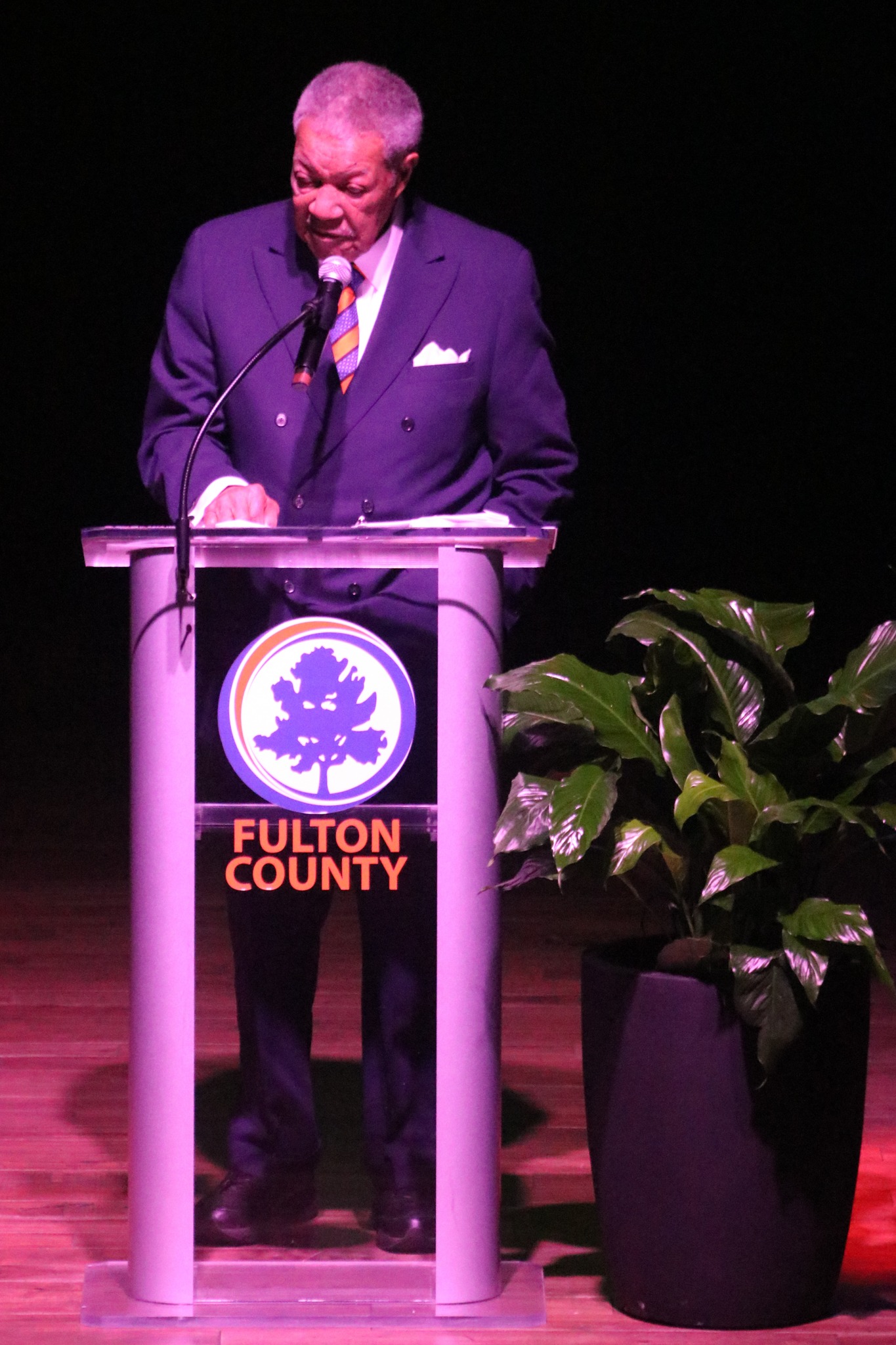
Robb Pitts Delivers 2026 State of the County: “We’ve Got It All”

By Milton Kirby | Atlanta, GA | February 24, 2026

Fulton County Commission Chairman Robb Pitts delivered a confident and at times defiant message Tuesday morning, declaring that Fulton County is “stronger than ever” during his 2026 State of the County address.

Hosted by the Council for Quality Growth at The Eastern, the breakfast event drew hundreds of business leaders, elected officials, and community stakeholders under the theme: “We’ve Got It All.”

From senior services and infrastructure to jail reform and election security, Pitts outlined what he described as a year of major investments and bold decisions.

Seniors and Community Investment

Pitts began by highlighting expanded services for seniors across the county.

Thanks to Fulton County’s transportation program, seniors took more than 276,000 trips last year to grocery stores, medical appointments, pharmacies, and senior centers. More than 167,000 meals were delivered to seniors at home or served at neighborhood senior centers.

The county also launched a new initiative to protect seniors from online scams and hosted its first Senior Olympics, drawing more than 500 participants in what Pitts called “an amazing event” built on community and competition. He promised the 2026 games would be even larger.

Infrastructure Investment: Water, Airports, and the Beltline

Photo by Milton Kirby State of Fulton County

The chairman emphasized more than $1 billion in water infrastructure investments across North and South Fulton to meet the demands of a growing population.

“Our infrastructure is stronger,” Pitts said, pointing to environmental protections tied to the upgrades.

He also celebrated progress at Fulton County Executive Airport, formerly known as Charlie Brown Airport. A planned customs facility will soon allow for international travel, and with runway expansion already underway, Pitts said nonstop flights to Europe will become possible.

“That’s a big deal,” he told the audience.

Beyond aviation, Pitts noted that 85 percent of the Atlanta BeltLine is expected to be complete by the 2026 FIFA World Cup, further cementing the county’s economic and tourism profile.

Jail Renovation and Mental Health Services

One of the most significant announcements was a landmark, long-term renovation plan for the Fulton County Jail on Rice Street. Pitts described a billion-dollar overhaul designed to address deteriorating conditions and improve safety.

As part of broader justice reform efforts, the county will add a new medical unit focused specifically on inmate mental health services an acknowledgment of the growing mental health crisis within correctional facilities.

The plan aims to modernize the jail while improving care and accountability.

Economic Strength

Pitts also highlighted Fulton County’s financial health, noting that the county continues to maintain a coveted AAA credit rating. He pointed out that Fulton ranks fourth in the nation for the number of Fortune 500 companies headquartered within its borders.

Those metrics, he said, reflect both stability and opportunity.

“We are proud to be the largest county in the state of Georgia,” Pitts said. “Proud to be a top county in these United States of America.”

Defending Elections After FBI Raid

The most forceful portion of Pitts’ address centered on election security.

Referencing the January 28, 2026 FBI raid on the Fulton County election office, Pitts spoke with visible resolve.

“Our elections are safe. Fulton County elections are fair. Fulton County elections are lawful. Fulton County elections are transparent. And every legal vote that is cast is counted,” he said.

He criticized what he described as threats to nationalize local elections and warned that Fulton County would resist any attempt to take control of its election operations.

“We will fight any effort to take over our election with every resource that we have available,” Pitts said. “That’s today. That’s tomorrow. And as long as it takes to protect democracy and your right to vote.”

He urged residents to mobilize for the 2026 and 2028 election cycles, telling attendees that “talk is cheap” and encouraging them to ensure their friends, families, and neighbors vote.

“Stronger Than Ever”

Closing on an optimistic note, Pitts praised residents, workers, students, and families who call Fulton County home.

“Fulton County is stronger than ever,” he said. “And it is because of each and every one of you.”

The event concluded with remarks thanking sponsors, staff, and partners, as attendees lingered at The Eastern to continue conversations about the county’s future.

Related articles

FBI Executes Search Warrant at Fulton County Election Hub Seeking 2020 Ballots

Fulton County: An Economic, Cultural, and Educational Hub for Georgia

FBI Confirms Federal Judicial Authorization in Fulton Election Records Search

Support open, independent journalism—your contribution helps us tell the stories that matter most.

The Power of One Word: Cynthia Williams and the Discipline of Language

Atlanta wordsmith Cynthia Broughton Williams uses language with intention, shaping conversations, reframing conflict, and proving one well-chosen word can transform a moment.

Milton Kirby | Decatur, GA | February 24, 2026

In an age of endless scrolling and noisy conversations, Cynthia Williams practices something rare: the disciplined art of choosing the right word. On an ordinary Tuesday evening, a single word from her lit up a group chat. No explanation. No paragraph. Just a word — precise, disarming, and exactly what the moment required.

Within minutes, the conversation shifted. People slowed down. Reflected. Recalibrated.

That’s the quiet power of Cynthia’s gift: she knows how to choose the word that opens a window, softens a room, or sharpens a thought.

For eighteen years, I’ve watched her do this — not as a performance, but as a practice. A way of being. A way of caring.


The Origin Story: A Childhood Built on Books and Quiet Observation

Cynthia Broughton Williams grew up in Atlanta, the older of two children born to Robert and Edna Broughton. Her father and brother were both preachers, and the rhythms of sermons, scripture, and storytelling shaped her early ear for language.

Summers in the country gave her space to roam, imagine, and read — and she read everything.

Her brother’s health challenges often required her parents’ full attention. Cynthia learned early to make herself her own companion, and she did so through books. Dictionaries. Encyclopedias. Magazines. Library cards worn soft at the edges. She devoured forty Harlequin romances one summer and moved through serials with the same hunger. Reading wasn’t an escape; it was a foundation.

In school, she was frequently selected for special programs where she was often the only Black child in the room. Those spaces made language even more important.

“The words we choose speak volumes about how we communicate,” she told me. “They speak volumes about our intellect and our exposure.”

She understood early that language could be both a bridge and a barrier — and she intended to master it.

She did. Cynthia won spelling bees through middle school, excelled academically, and graduated third in her class at Murphy High School in Atlanta. She was the first speaker at her graduation ceremony — a moment that foreshadowed the voice she would later become in her community.


The Practice: How a Wordsmith Works

Cynthia won’t call herself a curator or a guide.

“I’m just a person who reads,” she insists.

But anyone who has received one of her words knows better.

Her process is instinctive, but it is also disciplined. Words come easily — most of the time. When they don’t, she pauses. Checks the spelling. Checks the meaning. Sending out errors is a pet peeve.

She reads multiple books at once: a self-help book, a lusty romance, and a resource text. Time is scarce, she is a licensed insurance agent with nearly three decades of experience but she still finds thirty minutes to read, even if it means finishing none of the books quickly.

In her early years she read the dictionary for pleasure. She read encyclopedias the way some people scroll social media. She was in Toastmasters and 4-H. She watches Bridgerton and plans to read the books.

She raised two children, Spencer and Christian, who became avid readers themselves — racing through Harry Potter, A Series of Unfortunate Events, and the Ramona books. In their house, reading was not a chore; it was a culture.

And yes — sometimes a competition.


The Community Impact: Words That Shape People

Over nearly two decades of friendship, I’ve seen Cynthia’s words do quiet, transformative work.

In group discussions, she is the one who names the thing everyone is circling. In moments of conflict, she offers a term that reframes the tension. In seasons of grief or uncertainty, she sends a word that feels like a hand on your back.

Her children experienced the weight of language too. Visiting cousins who spoke in heavy vernacular, they were sometimes asked, “Why do you talk white?”

Cynthia understood the sting — and the deeper truth behind it. People make judgments based on speech. They always have.

She taught her children that clarity is not conformity; it is power.

Her words have shaped friendships, deepened conversations, and created emotional clarity in spaces where people often struggle to articulate what they feel. She doesn’t force meaning. She simply offers it.


The Philosophy: Why Words Matter

Cynthia believes in the power of naming things. She believes language shapes relationships, reveals character, and signals curiosity. She believes that a single well-chosen word can do what a long explanation cannot: center a moment.

Her philosophy is simple: words matter because people matter. And choosing the right word is an act of respect for oneself and for others.


The Sweet Side of Perfection

Beyond language, Cynthia practices another form of precision: confectionary art.

On her Facebook page, Cynthia Broughton Williams, she shares beautifully crafted sweets — cakes, treats, and desserts shaped with the same care she gives to words. Frosting must be smooth. Lines must be clean. Details must be intentional.

The discipline is the same.

Whether she is crafting a sentence or decorating a cake, she approaches both with focus and patience. Precision is not about perfectionism. It is about respect for the work.


The Woman Beyond the Words

Now in her early 60s, Cynthia still lives in metro Atlanta the city where she was born. By day, she is a licensed insurance agent with nearly three decades of experience. By night, she reads. Reflects. Occasionally bakes.

She is warm, funny, grounded, and deeply observant. A mother. A professional. A lover of romance novels. A student of scripture. A woman who has built a life anchored in intention.

She insists she is not a curator. Not a guide.

But she is both in the way everyday people with extraordinary gifts often are.


Closing Reflection: A Word to Carry Forward

When I asked Cynthia what word captures the season of life she’s in now, she paused — the way she does when she’s searching for the exact right term.

She didn’t answer immediately. She rarely rushes a word.

She eventually softly said “resourceful.” The word commanded my attention as she always does.

Resourceful.

Because Cynthia Williams understands that language is a tool — and she uses it wisely.

And she offers that wisdom freely, one carefully chosen word at a time.

Related video

Cynthia Williams in her own words

Support open, independent journalism—your contribution helps us tell the stories that matter most.

Why Systems Mistake Compliance for Alignment

By Florita Bell Griffin, Ph.D | Houston, TX | February 24, 2026

Compliance is easy to measure. Rules are followed. Procedures are executed. Outputs meet specification. From a system’s perspective, compliance looks like success. It produces order. It reduces friction. It creates predictability. Alignment is harder to see.

Alignment exists when people understand not only what is required, but why it matters. It reflects shared purpose, not enforced behavior. Aligned systems do not rely on constant monitoring or correction. They hold together because participants recognize themselves in the system’s intent.

As systems grow more complex, the distinction between compliance and alignment becomes increasingly important. Many systems optimize for compliance because it is visible and enforceable. Alignment, by contrast, operates quietly. It reveals itself through judgment, discretion, and initiative rather than adherence alone.

Early in a system’s life, alignment often emerges naturally. The problem being solved is clear. The stakes are understood. Participants share context. Rules are few because intent is widely held. People adjust their behavior not because they are required to, but because they see the point.

Over time, this shared understanding becomes harder to maintain. Systems scale. Distance increases between decision-makers and participants. Context fragments. To compensate, rules multiply. Policies formalize what was once implicit. Compliance becomes the primary signal of order. This shift is subtle. It rarely feels like a loss at first. In fact, it often feels like progress.

Consider an organization that introduces detailed procedures to ensure consistency. Roles are clarified. Expectations are documented. Performance becomes easier to track. From a management perspective, the system improves. Yet employees begin to focus on satisfying requirements rather than exercising judgment. Questions narrow. Initiative declines. The organization becomes orderly, but less responsive. Compliance has replaced alignment.

The same pattern appears in digital systems. Platforms enforce standardized workflows to ensure reliability. Deviations are restricted. Automation handles edge cases by redirecting them into predefined channels. Users learn how to succeed by conforming to the system’s logic rather than engaging with its purpose. The system functions smoothly, but meaning thins.

Compliance creates a specific kind of quiet. People stop challenging assumptions. They stop offering context. They adapt behavior to avoid friction rather than improve outcomes. The system appears stable, yet it is no longer learning.

This is especially visible to those with experience. They recognize when systems reward surface correctness over deeper understanding. They notice when doing the right thing becomes secondary to doing the acceptable thing. Their discomfort is often misread as resistance, when it is actually a signal of misalignment.

Alignment requires continuity of intent. It depends on systems carrying forward their original purpose as they evolve. When intent is preserved, rules serve understanding. When intent fades, rules become substitutes for meaning.

Systems that mistake compliance for alignment often struggle during change. When conditions shift, compliant behavior offers little guidance. People wait for instructions rather than responding intelligently. Adaptation slows because judgment has been sidelined. The system becomes brittle, even though it appears well-controlled.

Consider a regulatory framework designed to ensure fairness. Requirements are explicit. Enforcement is consistent. Yet participants begin to optimize behavior to satisfy the letter of the rule rather than its spirit. Outcomes technically comply, while underlying goals are undermined. The system enforces correctness without achieving alignment.

Alignment cannot be mandated. It must be cultivated. It emerges when systems explain themselves, preserve context, and invite understanding. It requires trust that participants can act wisely when given clarity rather than constraint.

This does not mean abandoning structure. It means recognizing what structure is for. Rules should reinforce shared intent, not replace it. Procedures should support judgment, not suppress it. Enforcement should protect purpose, not obscure it.

As systems become more automated, the temptation to equate compliance with success grows stronger. Automated systems excel at enforcement. They can detect deviation instantly. What they cannot do on their own is ensure alignment. Without deliberate design, automation amplifies compliance while eroding shared understanding.

People sense this erosion even when they cannot name it. They feel constrained rather than supported. They comply without committing. Over time, engagement becomes transactional. The system functions, but loyalty dissolves.

Systems that remain aligned behave differently. They tolerate variation when it reflects intent. They invite explanation rather than punishment. They treat questions as signals rather than disruptions. They remain coherent because participants understand not just what to do, but why it matters.

Mistaking compliance for alignment is a common failure mode of mature systems. It produces order without meaning and stability without resilience. Correcting it requires more than better rules. It requires restoring continuity between purpose and practice.

Alignment is not visible in reports. It shows up in how systems respond when rules are insufficient. When that response is thoughtful rather than rigid, alignment is present. When it is silent or defensive, compliance has taken its place.

Understanding this distinction is essential for building systems that endure. Compliance keeps systems running. Alignment keeps them alive.

© 2026 Truth Seekers Journal. Published with permission from the author. All rights reserved.

Truth Seekers Journal thrives because of readers like you. Join us in sustaining independent voices.

Change Feels Different When You Remember Before

A powerful exploration of how memory reshapes our experience of change, revealing why transitions feel different across a lifetime and what continuity truly requires

By Florita Bell Griffin, Ph.D | Houston, TX | February 24, 2026

Change does not register the same way across a lifetime. Early change often feels expansive. It carries promise. It suggests possibility without cost. Later change feels heavier, not because it is unwelcome, but because it arrives with memory. People who have lived long enough do not encounter change as an isolated event. They encounter it as a comparison.

Remembering before alters perception. It introduces contrast. It reveals patterns that are invisible to those experiencing a transition for the first time. When change appears, experienced observers do not ask only whether it works. They ask what it replaces, what it disrupts, and what it quietly removes.

This difference in perception is frequently misunderstood. Caution is misread as reluctance. Questions are mistaken for resistance. In reality, remembering before expands the frame through which change is evaluated. It adds sequence to the present moment.

Earlier in life, change often arrives without consequence. Decisions are reversible. Systems are forgiving. Mistakes carry limited cost. Over time, people experience transitions that do not resolve cleanly. They witness reforms that solve one problem while creating another. They observe innovations that optimize performance while thinning trust. Memory accumulates evidence, and evidence reshapes expectation.

Consider an organization that announces a major restructuring intended to improve agility. Roles are consolidated. Reporting lines flatten. Decision-making accelerates. On paper, the model appears modern and efficient. Employees who have lived through previous restructurings respond differently than those encountering their first. They remember how similar changes once redistributed power, narrowed career paths, or increased workload without acknowledgment. They listen closely not to the promise, but to what remains unsaid. Change feels different when it carries precedent.

The same dynamic appears in technology adoption. A new platform promises simplification. Workflows unify. Communication becomes seamless. Those who remember earlier systems recognize familiar claims. They recall how previous tools increased visibility while reducing clarity. They remember the effort required to adapt when documentation lagged behind implementation. Their response is not opposition. It is contextual awareness.

Memory does not slow change. It thickens it. It forces change to account for what came before. People who remember before are sensitive to loss disguised as progress. They notice when continuity breaks quietly. They recognize when systems reset without explanation, leaving users to reconstruct meaning on their own.

This sensitivity becomes more pronounced as the pace of change accelerates. Speed compresses evaluation time. It rewards immediacy over reflection. For those with memory, speed amplifies risk. Rapid change leaves fewer opportunities to integrate learning. It reduces space for adjustment. It assumes that alignment will emerge organically, rather than being designed.

When systems dismiss this concern, they create fractures. People comply outwardly while disengaging inwardly. They adapt behavior while withholding trust. They follow instructions while questioning intent. Over time, this erodes cohesion more effectively than overt resistance ever could.

Memory also reshapes how people assess claims of inevitability. When change is framed as unavoidable, those who remember before recall alternatives that once existed. They recognize paths that were not taken. They understand that inevitability is often a narrative constructed after decisions have already been made. This awareness does not prevent change, but it alters how legitimacy is judged.

Consider a public policy shift justified through data projections and economic modeling. Targets are clear. Outcomes are forecasted. Those with long-standing community experience recall previous policies introduced with similar confidence. They remember unintended consequences that emerged years later. They ask different questions because they have witnessed the lag between implementation and impact. Change feels different when consequences have already been lived.

Systems that ignore this perspective misinterpret memory as bias. They frame lived experience as anecdotal rather than informational. In doing so, they discard a source of intelligence that could stabilize transition. Memory carries signals about second-order effects, delayed responses, and cumulative impact. When excluded, systems repeat errors they believe are new.

This is not an argument for preserving the past unchanged. It is an argument for integrating memory into motion. Change that acknowledges what came before gains legitimacy. It becomes inhabitable rather than imposed. People are more willing to move when they can see how continuity is preserved.

Change that arrives without reference to before feels extractive. It takes familiarity without replacing meaning. It demands adjustment without offering orientation. Over time, this creates fatigue that is misdiagnosed as apathy.

Those who remember before are not anchored to the past. They are anchored to coherence. They understand that progress without memory produces repetition rather than advancement. Their perspective offers calibration, not obstruction.

As intelligent systems increasingly shape how change is designed and deployed, memory becomes a critical variable. Systems that treat memory as noise will continue to move quickly while destabilizing trust. Systems that treat memory as structure gain the ability to change without fragmenting those inside them.

Change feels different when you remember before because memory reveals what change alone cannot. It exposes continuity gaps. It highlights consequences that have not yet surfaced. It insists that movement make sense across time.

This distinction determines whether change becomes something people inhabit, or something they simply endure.

© 2026 Truth Seekers Journal. Published with permission from the author. All rights reserved.

Truth Seekers Journal thrives because of readers like you. Join us in sustaining independent voices.

SHADOW BALL: Learning More About Negro League History

February 24, 2026

Dear Shadow Ball: “Where would you place Rap Dixon in a list of the greatest Negro League outfielders? — Al Davis, Rensselaer, NY

 … this column exists for only one purpose and that is to answer your questions on Negro League baseball history. To that end, I need your help … if you are reading this column and enjoy it and want it to continue and you don’t already know everything about Negro League history … then please submit a question on any aspect of Negro League history. Your questions are the lifeblood of Shadow Ball—they shape where we go next.

 – players, teams, events, and more – and, in so doing, you will direct where this column goes moving forward. Your participation is important and appreciated. The very existence of this column depends on you. Submit your questions to shadowball@truthseekersjournal.com.

Dear Al: As you (as well as anyone paying attention to me) knows Rap Dixon is my favorite Negro League player thus it is no surprise that I rank him at the top of the list of Hall of Fame worthy outfielders. There are seven Negro League outfielders already in and I have no quibble ranking all of them ahead of Dixon – Oscar Charleston, Turkey Stearnes, Cristobal Torriente, Pete Hill, Willard Brown, and Cool Papa Bell. Monte Irvin, the 1st put into the Hall as an outfielder, I would prefer him to be listed as a shortstop where he played 47% of his games with only 41% of his games being played as an outfielder.

After the already inducted group I support the results of several polls including SABR’s Negro League Committee, the 42 for ’21 poll, and the Negro League Centennial Team as well as opinions of both Oscar Charleston and Cool Papa Bell all of which name Rap Dixon as the next outfielder to be inducted. The 1952 Pittsburgh Courier poll offers only Clint Thomas (among eligible outfielders) ahead of Dixon. Monte Irvin prefers Wild Bill Wright over Dixon. Other outfielders deserving induction (not consideration but induction) include, both Thomas and Wright, Alejandro Oms, Fats Jenkins, Spottswood Poles, Roy Parnell, Chino Smith (with an Addie Joss waiver), and Hurley McNair. Leaving others for future consideration including Heavy Johnson, Sam Jethroe, Ted Strong, Henry Kimbro, Pancho Coimbre, and others.

In closing I must point out that since the integration of the game only six outfielders have debuted and earned induction (Mantle, Kaline, Snider, Yastrzemski, Ashburn, and Walker) that would have been permitted to play in the AL or NL prior to 1947 … and 24 outfielders have debuted/earned induction who would not have been permitted to play in either of those leagues prior … my list of recommended inductees above includes only nine, There is plenty of room in Cooperstown for Justice.

Last week’s Shadow Ball Significa question: Who took over as Commissioner of the Negro National League immediately after Rube Foster resigned in November 1926? Unlike last week where we got two correct answers; this week’s question produced none. The immediate successor to Rube Foster was Dr. G. B. Key who took over immediately after Rube Foster for the remainder of 1926.

The Shadow Ball Significa Question of the Week (submitted by Shadow Ball fan, Will Clark): The 1969 New York Mets had a player (a key one at that) whose stepfather played in the Negro Leagues. Name the player and the Negro Leaguer who was his stepfather. 

Ted Knorr

Ted Knorr is a Negro League baseball historian, longtime member of the Society for American Baseball Research’s Negro League Committee, and founder of the Jerry Malloy Negro League Conference and several local Negro League Commemorative Nights in central Pennsylvania. You can send questions for Knorr on Negro League topics as well as your answers to the week’s Significa question to  shadowball@truthseekersjournal.com or Shadow Ball, 3904 N Druid Hills Rd, Ste 179, Decatur, GA 30033

Support open, independent journalism—your contribution helps us tell the stories that matter most.

Seven Visions for Georgia: Inside the Democratic Gubernatorial Field

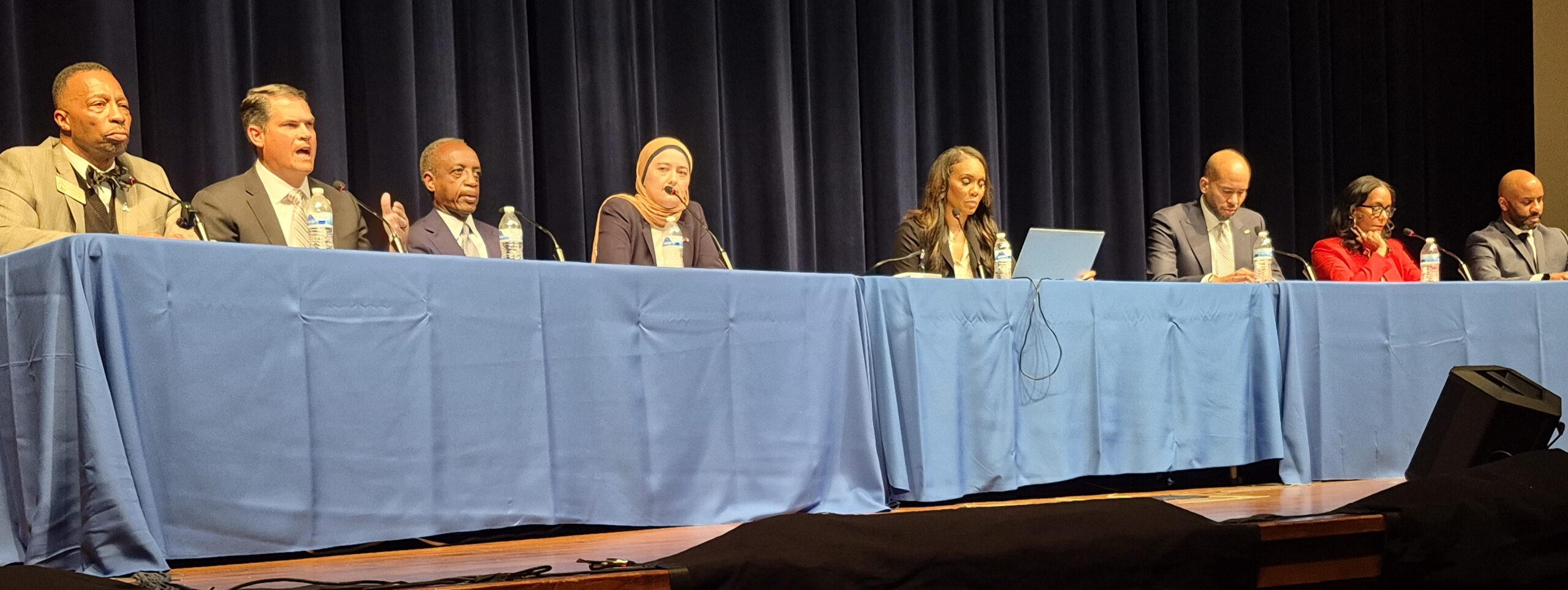
Seven Democrats outline competing visions for Georgia governor at the DeKalb forum, debating Medicaid expansion, childcare, wages, housing, and economic reform ahead of 2026.

Milton Kirby | Chamblee, Georgia | February 23, 2026

On a cool February evening inside the auditorium at Chamblee High School, seven Democratic candidates stepped onto the stage with one shared promise: to reshape the future of a state at a political crossroads. Their styles varied some polished, some fiery, some pastoral but the urgency in the room was unmistakable. Georgia is changing, and each candidate came prepared to argue that they are the one who understands that change best. What emerged from the forum, and from their published platforms, is a portrait of a party wrestling with both its identity and its opportunity. The candidates agree on the broad strokes expanding Medicaid, lowering the cost of living, strengthening education but diverge sharply on how bold Georgia must be to meet the moment.


A Shared Foundation: Medicaid, Wages, and Affordability

All seven candidates support expanding Medicaid. All speak about lowering the cost of living. All frame education as central to Georgia’s economic future.

But the similarities begin to diverge once the details surface.


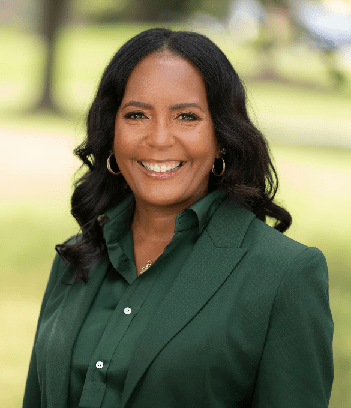
Keisha Lance Bottoms: Crisis-Tested Leadership

Courtesy photo Keisha Lance Bottoms

Bottoms leans heavily on her executive experience as Atlanta’s mayor during COVID-19 and the 2020 protests. She describes herself as “crisis-tested.”

Her platform calls for:

  • Medicaid expansion
  • Eliminating the state income tax for teachers
  • Cracking down on corporate landlords
  • Free technical and community college

Her pitch blends practical governance with moral urgency. She frequently frames her candidacy as restoring stability in uncertain times.


Olu Brown: Values-Driven Governance

Courtesy photo Olu Brown

Brown, a former pastor, frames policy through faith and community values. He speaks often about compassion and responsibility.

His priorities include:

  • Healthcare access as economic stability
  • Strong reproductive rights protections
  • Raising educator wages
  • Strengthening rural outreach

At the DeKalb forum, Brown said Georgia students must be trained to “compete with the rest of the world,” not simply prepared to be citizens of Georgia.


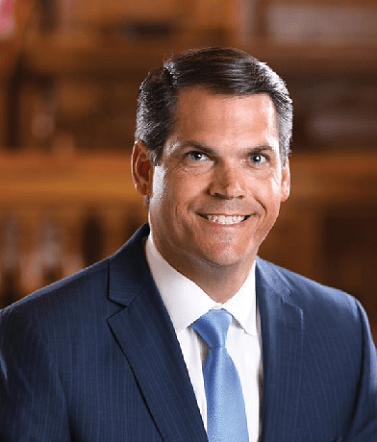
Geoff Duncan: The Party Switch and the Moderation Case

Courtesy photo Geoff Duncan

Duncan’s candidacy is the most unconventional. A former Republican lieutenant governor, he switched parties in August 2025 and now runs as a Democrat, framing his campaign as a rejection of political extremism.

His platform emphasizes:

  • Lower childcare costs
  • Rural hospital stabilization
  • Bipartisan economic moderation
  • Lower overall cost of living

Duncan often references moral language, urging voters to reject division and rediscover a politics grounded in “love thy neighbor.”


Jason Esteves: The Education Governor

Courtesy photo Jason Esteves

Esteves officially launched his “Education Governor” platform just days before the forum.

His plan includes:

  • Universal childcare for 3- and 4-year-olds
  • Major K–12 investments
  • Medicaid expansion
  • Renter protections
  • A small business loan fund targeting Black-owned businesses

Esteves frames childcare as economic policy. In his view, if families cannot afford care, they cannot fully participate in the workforce.


Derrick Jackson: A $20 Minimum Wage

Courtesy photo Derrick Jackson

Jackson is the only candidate explicitly calling for a $20 minimum wage.

He pairs that with:

  • Tax exemptions for teachers, nurses, seniors, and veterans
  • Medicaid expansion
  • Support for Black farmers and small businesses
  • Rural hospital protection

Jackson frequently emphasizes his 42 years of leadership experience in the military and legislature. His campaign message centers on working-class uplift.


Ruwa Romman: The Progressive Disruptor

Courtesy photo Ruwa Romman

Romman offers the most explicitly progressive platform in the field.

Her proposals include:

  • Raising the minimum wage
  • Taking homes back from corporate landlords
  • Reopening rural hospitals
  • Creating a research hub to fund healthcare systems
  • Pressing pause on data centers to lower utility costs

Her campaign is rooted in organizing and structural reform. She presents herself as an outsider prepared to challenge entrenched systems.


Mike Thurmond: The Steady Hand

Courtesy photo Mike Thurmond

Thurmond’s candidacy rests on long public service and a reputation for turning around struggling institutions, from the state Labor Department to DeKalb County government.

His platform emphasizes:

  • Rethinking Georgia’s regressive sales tax structure
  • Lower grocery, rent, and healthcare costs
  • Statewide healthcare equity
  • Unity over ideology

Rather than positioning himself as the most progressive or the most moderate, Thurmond leans into competence and experience.


The Real Debate: How Bold Should Georgia Be?

The forum revealed less disagreement about direction and more disagreement about scale.

Should Georgia move incrementally or structurally?
Should reform be targeted or sweeping?
Should Democrats lean into progressive energy or moderate appeal?

Together, the seven candidates offer voters a rare thing: a competitive primary where experience, ideology, and identity collide in meaningful ways.

The question for Democrats is not whether they have options.

It is which vision best matches the Georgia they believe is emerging.


Support open, independent journalism—your contribution helps us tell the stories that matter most.

Shadow Ball: Learning More About Negro League History

February 19, 2026

Dear Shadow Ball: “Who would be “your” choice for the next three Negro League inductees for the Hall of Fame?” — Jerry Hoover, Asheboro, NC

 … this column exists for only one purpose and that is to answer your questions on Negro League baseball history. To that end, I need your help … if you are reading this column and enjoy it and want it to continue and you don’t already know everything about Negro League history … then please submit a question on any aspect of Negro League history. Your questions are the lifeblood of Shadow Ball—they shape where we go next.

 – players, teams, events, and more – and, in so doing, you will direct where this column goes moving forward. Your participation is important and appreciated. The very existence of this column depends on you. Submit your questions to shadowball@truthseekersjournal.com.

Dear Jerry: By “your” Mr. Hoover was asking about “my” choices and I have been clear for several years now – my choice for the most deserving player has been John Beckwith, multi-position slugger of the Baltimore Black Sox, Chicago American Giants, and the Harrisburg Giants. My choice among non-players is Gus Greenlee, owner Pittsburgh Crawfords, builder of Greenlee Field, one of the founders of the East-West Classic, founder of the 2nd Negro National League, and an organizer of the United States Baseball League a “historically significant but marginal” latter day Negro League. Last, my favorite Negro League player and my third answer to your question, is buried in the Township in which I live, played Major League home games on a Lancaster, PA, field where I played midget football, is outfielder Rap Dixon. All three are absolutely no brainer inductees. Since 30 to 50 additional no brainer Negro League induction candidates exist in my view — it is time for the National Baseball Hall of Fame to get busy. 

Last week’s Shadow Ball Significa question: A Hall of Fame Negro League slugger had a nephew who sang with, and co-founded, a legendary R&B vocal group of the 1940’s and 1950’s. Name that slugger. Will Clark, a reader who submitted this week’s sought slugger Buck Leonard and singer and founder of The Orioles Sonny Til his nephew. Both Leonard (1972 Baseball inductee) and Til (1995 Rock & Roll Hall of Fame inductee with other members of The Orioles) are Hall of Famers. No one got that answer correct; however, Kevin Johnson, Broken Arrow, OK, offered a different but just as compelling correct answer: slugger Mule Suttles’s nephew Warren Suttles, baritone lead, and co-founder, of The Ravens. Gotta wonder – given the strong connection between culture and baseball – if there are more “correct” answers for this one.

The Shadow Ball Significa Question of the Week (submitted by Shadow Ball fan, Kevin Johnson): Who took over as Commissioner of the Negro National League immediately after Rube Foster resigned in November 1926? Let us see how many correct answers we can get this time. 

Ted Knorr

Ted Knorr is a Negro League baseball historian, longtime member of the Society for American Baseball Research’s Negro League Committee, and founder of the Jerry Malloy Negro League Conference and several local Negro League Commemorative Nights in central Pennsylvania. You can send questions for Knorr on Negro League topics as well as your answers to the week’s Significa question to  shadowball@truthseekersjournal.com or Shadow Ball, 3904 N Druid Hills Rd, Ste 179, Decatur, GA 30033

Support open, independent journalism—your contribution helps us tell the stories that matter most.

15 Years Strong: Women of Color Honored in Brookhaven Celebration

Chit Chat Communications celebrates 15 years of honoring women of color with a powerful Women’s History Month event in Brookhaven, spotlighting leadership and legacy.

Chit Chat Communications is celebrating a milestone year

By Milton Kirby | Brookhaven, GA | February 18, 2026

The community-based media and events platform will mark 15 years of honoring women of color during its annual Women’s History Month celebration on Saturday, March 7, 2026, at 10:00 a.m. The event will be held at Brookhaven City Centre, 4001 Peachtree Road NE, Brookhaven, GA 30319.

What began as a local recognition effort has grown into a signature gathering that uplifts leadership, service, entrepreneurship, and cultural impact across metro Atlanta.

Founded and led by Carla Morrison, Chit Chat Communications has built its brand around storytelling, community connection, and elevating voices often overlooked in mainstream spaces. The annual Women’s History Month event reflects that mission.

This year’s celebration will spotlight a new class of honorees whose work spans business, education, civic engagement, health advocacy, and creative industries. Organizers say the evening is designed not only to recognize achievement but to create space for mentorship, collaboration, and intergenerational dialogue.

“For 15 years, we have intentionally created a platform that celebrates the brilliance, resilience, and leadership of women of color,” Morrison said in the release. “This event is about honoring legacy while inspiring the next generation.”

The Brookhaven celebration will feature award presentations, networking opportunities, and moments of reflection tied to the national observance of Women’s History Month. Attendees are expected to include community leaders, entrepreneurs, nonprofit executives, elected officials, and supporters from across the region.

Women’s History Month, observed each March, recognizes the vital contributions of women to American history, culture, and society. Events like this one provide a local lens on that national celebration, highlighting leaders whose impact is felt in neighborhoods, classrooms, boardrooms, and small businesses throughout metro Atlanta.

Organizers say the 15-year milestone offers a moment to look back at the dozens of women previously honored — many of whom continue to shape the region’s civic and economic landscape.

As Chit Chat Communications enters its next chapter, the organization says its commitment remains the same: amplify stories, build community, and celebrate the power of women whose leadership transforms lives.

Event details, including ticket information and honoree announcements, are available through Chit Chat Communications’ official channels.

Truth Seekers Journal thrives because of readers like you. Join us in sustaining independent voices.

Exit mobile version