Fulton County Chairman Robb Pitts will deliver the 2026 State of the County Address February 24 at The Eastern, outlining priorities, projects, and economic outlook.
By Milton Kirby | Atlanta, GA | February 18, 2026
Fulton County Chairman Robb Pitts will deliver the 2026 State of Fulton County Address next week before an audience of business and civic leaders. The annual breakfast program will take place Tuesday, February 24, from 8:00 to 10:30 a.m. at The Eastern, with more than 400 elected officials, business leaders, county staff, residents, and regional partners expected to attend.
The event is hosted by the Council for Quality Growth in partnership with Fulton County Government. This year’s State of Fulton is presented by Amazon, Develop Fulton, and the Fulton-DeKalb Hospital Authority.
Pitts’ address will highlight achievements and major projects from the past two years while outlining his priorities and vision for 2026. This will be his fifth State of the County address since becoming chairman in 2017, and his second of the current term.
A veteran public servant, Pitts previously served 13 years on the Fulton County Commission and 20 years on the Atlanta City Council. His tenure has spanned periods of rapid population growth, economic expansion, and significant infrastructure investment across the county.
Michael Paris, President and CEO of the Council for Quality Growth, said Fulton County continues to play a central role in the region’s economic strength. “Fulton County remains a driving force in our region’s economic vitality,” Paris said. “We value our strong partnership with Fulton County and look forward to Chairman Pitts’ insights on the county’s priorities and the path ahead for its communities.”
The program will also include remarks from 2026 Council Chair Gerald McDowell, Executive Director of the ATL Airport Community Improvement Districts, and Fulton County Commissioner Bob Ellis.
Presenting sponsors will offer updates as well. Scheduled speakers include Terreta Rodgers of Amazon’s Georgia Region; Sarah-Elizabeth Langford; and Jevon Gibson.
Danny Johnson, Managing Director of the Natural Resources Department at the Atlanta Regional Commission, will provide an update on behalf of the Metropolitan North Georgia Water Planning District, offering insight into water resources and regional planning initiatives.
The Council for Quality Growth’s State of the County and Agency Series includes similar annual events across eight metro Atlanta counties and two major agencies, including MARTA and the Atlanta BeltLine. The series is designed to connect the business community with local government leadership and provide a forward-looking assessment of policy, infrastructure, and development priorities.
5 Things to Know About Robb Pitts
1. Longest‑Serving Metro Atlanta Public Official Pitts has held elected office for more than four decades, including 20 years on the Atlanta City Council and over a decade on the Fulton County Commission.
2. Current Chairman Since 2017 He was elected Fulton County Chairman at the end of 2017 and has since led the county through major growth, infrastructure expansion, and regional coordination.
3. Champion of Economic Development Pitts has been a key figure in strengthening Fulton’s role as the economic engine of Georgia, working closely with business, civic, and regional partners.
4. Advocate for Modernized County Services Under his leadership, Fulton has invested in public safety, justice system improvements, health services, and major capital projects.
5. Regional Voice on Policy and Infrastructure Pitts is a consistent presence in regional planning conversations, collaborating with agencies such as the Atlanta Regional Commission, MARTA, and the ATL Airport CIDs.
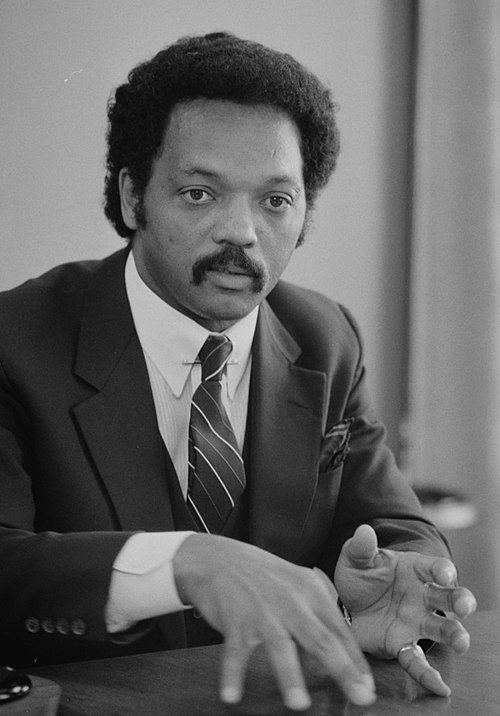
Rev. Jesse Jackson, civil rights icon and presidential candidate, dies at 84, leaving a legacy of justice, hope, HBCU pride, and athlete equity reform.
By Milton Kirby | Atlanta, GA | February 17, 2026
The Rev. Jesse Jackson, a towering figure in the modern Civil Rights Movement and two‑time presidential candidate who reshaped American politics, has died at the age of 84. Jackson passed away peacefully at his home in Chicago, surrounded by family, according to his daughter Santita Jackson. The family has not released a cause of death, though Jackson publicly disclosed in 2017 that he had been battling Parkinson’s disease.
Born Jesse Louis Burns on October 8, 1941, in Greenville, South Carolina, Jackson later adopted the surname of his stepfather, Charles Henry Jackson, at age 15. From humble beginnings in the segregated South, he rose to become one of the most recognizable moral voices in America.
A graduate of North Carolina A&T State University, Jackson returned to his alma mater as commencement speaker in May 1984, just months after mounting a historic presidential campaign that energized millions. I was among the graduating seniors that day, watching him fuse faith, politics, and possibility in a message that was not simply celebratory but urgent and instructive. His words carried the cadence of a movement and the clarity of a mandate.
Jackson stood beside Martin Luther King Jr. at the Lorraine Motel in Memphis when King was assassinated in 1968. In the aftermath, he carried forward the unfinished work of economic justice, voting rights, and dignity for the poor. Through Operation PUSH (People United to Save Humanity) and later the Rainbow Coalition now the Rainbow/PUSH Coalition Jackson pressured corporations to open their boardrooms to minorities and women and demanded that public policy reflect the needs of the marginalized.
His fiery oratory and signature phrases “Keep Hope Alive” and “I Am Somebody” became rallying cries. For many young Americans watching from public housing and underfunded schools, his presidential campaigns in 1984 and 1988 signaled that national leadership was within reach. His efforts helped widen the political pathway later walked by Barack Obama and other leaders of a new generation.
Jackson’s influence extended far beyond electoral politics. Decades before today’s debates over athlete compensation, he questioned the economic structure of college sports, criticizing universities for generating millions from football and basketball programs while players many of them young Black men saw none of the revenue beyond scholarships. His argument, once controversial, laid intellectual groundwork for what would later become Name, Image, and Likeness (NIL) reforms, allowing college athletes to profit from their own brands.
On the global stage, Jackson negotiated the release of hostages abroad, including Americans held in Syria and Cuba, and engaged world leaders in diplomatic efforts rooted in human rights. His ministry blended spiritual conviction with political activism, bringing poetry and prophetic power into the public square.
U.S. Senator Raphael Warnock said, “America has lost one of its great moral voices… As a kid growing up in public housing while watching him run for President, Rev. Jesse Jackson gave me a glimpse of what is possible and taught me to say, ‘I am somebody!’”
Tributes echoed across political and generational lines. President Donald Trump called him “a force of nature like few others before him.” Al Sharpton described him as his mentor and “a movement unto himself.” Bernice King posted a photo of Jackson beside her father with the words, “Both now ancestors.”
Jackson’s life was not without controversy. He publicly acknowledged fathering a child outside his marriage, a revelation that tested his public image. Yet even amid personal trials, he remained a relentless advocate for justice.
He is survived by his wife of 64 years, Jacqueline Brown, and their five children: Santita, Jesse Jr., Jonathan, Yusef, and Jacqueline.
From Greenville to Memphis, from Chicago to Greensboro, Jesse Jackson spent more than half a century urging America to expand its moral imagination. He did not simply preach hope. He organized it. He demanded it. And for more than fifty years, he kept it alive.
Support open, independent journalism—your contribution helps us tell the stories that matter most.
Sonny Hill — known as “Sunshine” — is a Christian romance writer and poet whose vivid storytelling explores mental health, purpose, redemption, and second chances for women of color. Her novels and poetry blend faith, emotional intimacy, and cinematic imagery inspired by nature, music, and lived experience.
By Milton Kirby | Truth Seekers Journal | Artist Profiles Series
Some writers tell stories. Sonny Hill creates emotional sanctuaries.
Her friends call her “Sunshine,” and the name fits not because she is relentlessly cheerful, but because she brings light into places where many women have been taught to dim their own. Through Christian romance and poetry, Sonny writes about mental health, purpose, redemption, and second chances with a tenderness that feels like prayer and a boldness that feels like truth.
Her work is known for its vivid imagery scenes so textured and alive that readers often say they can “see the movie” as they turn the page. Her male characters are the kind of men women whisper about with a mix of longing and disbelief: supportive, emotionally present, willing to grow. Some are reformed “bad boys” who discover the discipline of monogamy; others are steady men who simply didn’t see her coming the woman who awakens a capacity for unconditional love they didn’t know they possessed. Female readers often close her books with the same refrain: “I want a love like that.”
“I always live in a romantic world,” Sonny says — not as escapism, but as intention. For her, romance is not fantasy. It is faith-filled possibility.
Sonny’s creative well runs deep.
“My inspiration comes from God, nature, music, and an overactive imagination mixed with a melancholy personality that replenishes my counselor’s pockets,” she says with a smile. She laughs easily, but she does not hide the truth: mental health is not a theme she writes about from a distance. It is a lived reality, a calling, and a form of advocacy. Her stories are not escapism they are emotional restoration.
Growing up, she heard the old saying that a person is lucky to have a few good friends. Sonny considers herself blessed with many. Their laughter, their sisterhood, and their unwavering support fuel her female protagonists. She writes women who are layered, imperfect, and deeply human women who readers across generations and cultures can recognize in themselves.
Her journey as a writer began with a moment that sounds like fiction but is entirely true. She was on vacation, relaxing on the beach, when a stranger “a goddess of a man,” she recalls approached her and asked if she wanted to go for a jog. Without hesitation or fear, she said yes. He was dark‑skinned, sculpted, and unforgettable. The encounter stayed with her, and when she returned home, she wrote a poem about it. Then another. And another. A writer was born.
“I like to write books with multigenerational themes so that every woman can identify with them,” Sonny explains.
Sonny sees the world with a kind of spiritual x‑ray vision. Nature is not just scenery to her it is metaphor, message, and muse. She notices what others overlook: the curve of a branch, the way light lands on water, the quiet dignity of a stranger’s posture. She carries her phone everywhere, jotting down impressions, overheard lines, and fleeting images that later become prose. Her imagination is not a place she visits; it is a place she lives.
She is also a dreamer in the truest sense. Sonny believes extraordinary men still exist — men who can meet the emotional depth she writes about, men who can love with intention and courage. Her novels reflect that faith. Her published works include An Artist in the Basement, Falling for the Shoemaker, Walking Into Love, and Spared. Her poetry collections, Rhythmic Revelations and The Grammar of Love, showcase her lyrical gift and her ability to translate emotion into music on the page.
“As a writer, I am always looking for stories in the smallest of things,” she says.
And she is not done dreaming. Sonny hopes to see one of her books adapted into a film a natural evolution for a writer whose scenes already unfold cinematically. When she talks about her work, the passion is unmistakable. She writes not just to entertain, but to heal, to uplift, and to remind women especially women of color that they are worthy of love that is patient, generous, and transformative.
Sunshine is more than a nickname. It is her ministry.
Where to Find Her Work
Sonny Hill’s books are available on her official website: Her novels and poetry collections are also available on Amazon.
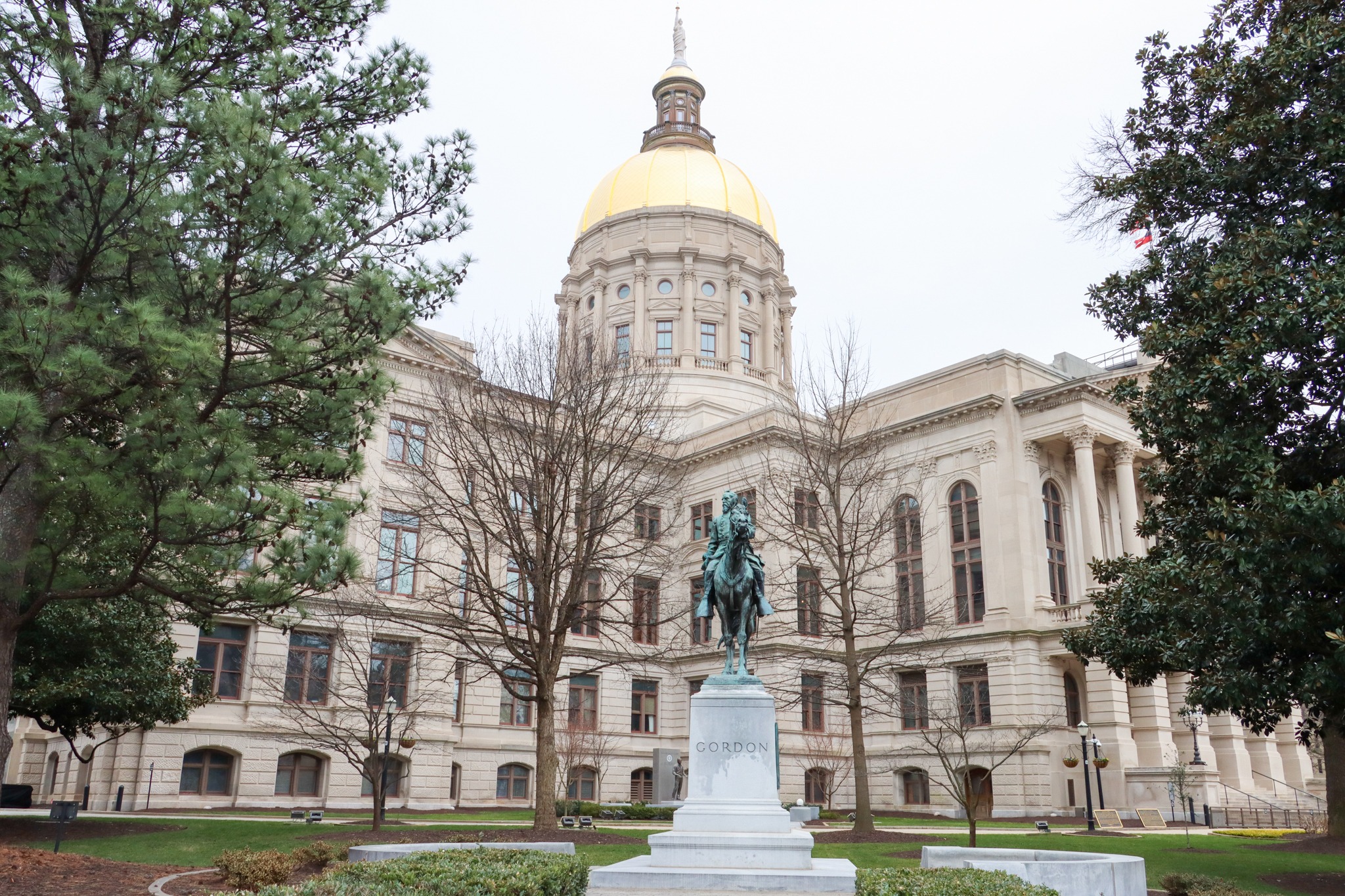
With Crossover Day approaching and the legislative calendar tightening, Georgia lawmakers accelerated activity beneath the Gold Dome last week, advancing a slate of tax, education, and regulatory reform bills that are shaping the policy direction of the 2026 session.
The flurry of movement includes sweeping income tax proposals, early literacy initiatives, and structural changes to how state agencies interpret and implement Georgia law.
Tax Cut Proposals Move at Unusual Speed
Two major tax cut bills—Senate Bill 476 and Senate Bill 477—introduced just last week by Senate Appropriations Chair Blake Tillery, advanced rapidly through the Senate. The Senate Finance Committee approved both measures Tuesday, and the full Senate passed them Thursday.
SB 476, titled the Income Tax Reduction Act of 2026, would effectively eliminate the first $50,000 of taxable income for single filers and $100,000 for joint filers. The measure proposes offsetting revenue losses by phasing out corporate tax credits by 2032.
SB 477 would gradually reduce Georgia’s personal income tax rate to 3.99% by 2028.
The House is pursuing its own tax reduction path. House Bill 880, introduced by Rep. Shaw Blackmon, also aims to lower the income tax rate to 3.99% and would allow a portion of undesignated surplus funds to be used for tax relief. After carrying over from the 2025 session, HB 880 cleared the House Ways and Means Committee this week.
Blackmon is also sponsoring House Bill 1116, which received its first hearing. The proposal would authorize local governments and school systems to exempt homesteads from property taxes by shifting to local sales taxes instead. The bill includes caps on revenue growth from non-exempt properties and makes technical adjustments to education funding formulas and tax digest procedures.
Early Literacy Gains Momentum
Education policy is also advancing. Both chambers now have versions of the Georgia Early Literacy Act of 2026—House Bill 1193, sponsored by Rep. Chris Erwin, and Senate Bill 459, sponsored by Sen. Billy Hickman.
The House version passed out of committee Thursday. Both proposals would fund K–3 literacy coaches through Georgia’s education formula and require kindergarten attendance before first grade. Supporters say the measures are designed to strengthen foundational reading skills and improve long-term academic outcomes.
Charter School Infrastructure and Regulatory Reform
Companion bills—Senate Bill 498 and House Bill 1253would establish a Georgia Charter School Facilities Authority. The authority would provide revolving loans and public financing assistance for charter school construction and renovation projects.
Meanwhile, regulatory reform efforts are advancing. House Bill 1247, the Georgia Bureaucratic Deference Elimination Act, would end “Chevron-style” judicial deference at the state level by directing courts not to automatically defer to agency interpretations of Georgia law.
Another measure, House Bill 903, sponsored by Rep. Alan Powell, passed the House this week. The bill would expand the scope of Georgia’s Administrative Procedure Act, increasing transparency and oversight across the executive branch. HB 903 now heads to the Senate Judiciary Committee.
SIDEBAR: What Is Crossover Day?
Crossover Day is one of the most important deadlines in the Georgia General Assembly’s 40-day legislative session. It marks the point—typically Day 28—when a bill must pass out of its chamber of origin to remain viable for the year.
Why It Matters
A House bill must pass the House by Crossover Day to be considered by the Senate.
A Senate bill must pass the Senate to move to the House.
Bills that fail to “cross over” are effectively sidelined unless revived through procedural maneuvers or attached to other legislation.
What Happens on Crossover Day
Lawmakers often work late into the night.
Floor calendars are packed with high-profile and time-sensitive bills.
Leadership prioritizes measures with broad support or strategic importance.
Controversial bills sometimes move quickly, while others stall by design.
Why It Shapes the Session
Crossover Day forces legislators to make strategic choices:
Which bills advance
Which bills die quietly
Which issues will define the remainder of the session
For reporters and the public, it marks a clear dividing line between early-session positioning and late-session negotiation. After Crossover Day, attention shifts to reconciliation, amendments, and final passage before Sine Die.
A Compressed Timeline
With a shorter week ahead and Crossover Day looming, lawmakers are expected to intensify debate and floor action. Measures that do not pass at least one chamber by the deadline face a steeper path forward this session. As Georgia’s 2026 legislative agenda takes shape, TSJ will continue tracking the fiscal impact, education implications, and regulatory shifts emerging from the Gold Dome.
No contribution is too small. Support us today and help keep truth accessible for all.
By Florita Bell Griffin, Ph.D | Houston, TX | February 16, 2026
Many conversations about technology assume that relevance expires. New tools arrive, language shifts, and interfaces change, carrying with them an unspoken suggestion that those who hesitate have fallen behind. The pressure rarely appears as accusation. It appears as tone. It suggests urgency. It frames adaptation as a race rather than a process of alignment.
Yet most people who have lived long enough know this framing is incomplete. They have adapted repeatedly. They have learned new systems, new rules, new expectations, and new ways of working. What they resist is not learning. What they resist is the implication that value resets each time a tool changes.
The idea that a person must be “updated” misunderstands how human capability actually develops. People do not version themselves the way software does. They accumulate judgment. They refine intuition. They recognize patterns faster because they have seen them before in different forms. Their relevance does not come from novelty. It comes from continuity.
Technology often overlooks this distinction. It treats readiness as proximity to the newest interface rather than depth of understanding. It rewards fluency with tools over fluency with consequence. In doing so, it creates a false gap between innovation and experience, as if the two were competing forces rather than complementary ones.
Consider a workplace that introduces a new collaboration platform intended to modernize communication. The interface is intuitive. Features are robust. Younger employees adopt it quickly. Senior staff follow, but with hesitation that is often misread as resistance. In reality, they are assessing fit. They are evaluating how the platform shapes decision-making, accountability, and signal clarity. They recognize that faster communication can amplify confusion as easily as it amplifies coordination. Their pause is not a failure to update. It is an evaluation of alignment.
The same pattern appears in professional development. Training programs increasingly focus on teaching the latest tools while bypassing the reasoning that governs their use. Participants learn where to click, but not when to question. They acquire capability without orientation. Those with experience sense the imbalance immediately. They understand that tools do not determine outcomes alone. Judgment does.
Experience functions as an internal update mechanism. It integrates new information into an existing structure of understanding. When a person encounters a new system, they do not start from zero. They compare it to what they have already seen. They test its claims against prior outcomes. They notice where promises exceed reality. This is not reluctance. It is calibration.
When systems fail to recognize this, they misinterpret caution as obsolescence. They label discernment as delay. Over time, this erodes confidence on both sides. Experienced individuals feel underestimated. Systems lose access to stabilizing insight. The result is not innovation moving faster, but innovation moving with less guidance.
This dynamic becomes more pronounced as technology begins to influence not just how work is done, but how value is measured. Algorithms rank performance. Dashboards summarize contribution. Metrics become proxies for meaning. People who have spent decades understanding nuance recognize the limits immediately. They know that what matters most often appears at the edges of measurement, not at the center.
Consider a performance system that evaluates success through narrowly defined indicators. Targets are clear. Tracking is precise. Reviews become more efficient. Yet employees who understand the broader mission notice distortions. Effort shifts toward what is visible rather than what is necessary. Long-term health is traded for short-term optimization. The system rewards activity, while experience recognizes consequence.
In these moments, the idea that someone must “catch up” becomes misplaced. The individual is already operating with a richer dataset. They see second-order effects. They anticipate unintended outcomes. They understand how systems behave under stress because they have witnessed it before. Their value lies not in speed of adoption, but in stability of judgment.
Continuity explains why this matters. A person carries forward learning from past transitions into present ones. They do not require reinvention to remain relevant. They require systems that can recognize and integrate what they already bring. When technology treats experience as outdated, it severs itself from accumulated insight. When it treats experience as current, it gains resilience.
This does not mean rejecting change or privileging familiarity. It means acknowledging that adaptation does not erase what came before. A person who has navigated multiple eras of technology holds a map of how tools reshape behavior, incentives, and identity. That map remains valuable regardless of interface.
Over time, systems that ignore this reality produce predictable outcomes. Participation narrows to those who move fastest rather than those who understand most deeply. Decision-making skews toward immediacy. Errors repeat because lessons are not carried forward. Innovation continues, but its foundations weaken.
Systems that recognize people as already updated behave differently. They assume competence rather than deficiency. They invite judgment rather than compliance. They provide context alongside capability. In doing so, they unlock a form of intelligence that cannot be generated through novelty alone.
Being updated is not about mastering the newest tool. It is about remaining coherent as tools change. People who have lived long enough to recognize this are not behind. They are already operating with an internal system that has been refined through time.
The challenge for technology is not how to accelerate adoption. It is how to meet people where their experience already resides.
Atlanta Jazz Festival 2026 returns to Piedmont Park May 23–25 with Kamasi Washington, The Roots, Esperanza Spalding and more in a free Memorial Day celebration
By Milton Kirby | Atlanta, GA | February 15, 2026
One of the nation’s largest free jazz festivals is set to return to the city’s heart this Memorial Day Weekend. The 49th Annual Atlanta Jazz Festival will take place May 23–25 at Piedmont Park, bringing three days of music, culture, and community to Midtown.
Presented by Design Essentials and powered by Bank of America, the festival runs from 11 a.m. to 11 p.m. daily, with live performances scheduled from 1 p.m. until 11 p.m.
“We have a fabulous lineup of musicians performing at the 49th Annual Atlanta Jazz Festival,” said Adriane Jefferson, Executive Director of the Mayor’s Office of Cultural Affairs. She noted that this year’s roster blends national and local talent across traditional, contemporary, hip-hop, R&B, soul, funk, and modern jazz.
The weekend opens Saturday with Buddy Red at 1 p.m., followed by aja monet, Nate Smith, Christian McBride & Ursa Major, and a 9 p.m. headlining performance by Kamasi Washington.
Sunday’s lineup features Cleveland P. Jones, the Myron McKinley Trio, Donnie – The Colored Section, Esperanza Spalding, and a highly anticipated 9 p.m. set from The Roots.
The festival closes Monday with Cody Matlock, Nicole Zuraitis, Destin Conrad, Butcher Brown, and Grammy-winning artist PJ Morton at 9 p.m.
Atlanta Mayor Andre Dickens shared a special video message welcoming residents and visitors to the annual celebration.
New Partners, Same Tradition
Now entering its 49th year, the festival marks a new chapter with Sol Fusion serving as Festival Manager and Next Level Events leading artist booking and management. Organizers say the partnerships aim to elevate the festival’s production and reach.
Cornell McBride, CEO of Design Essentials, said supporting the festival reflects the company’s deep ties to Atlanta. “We don’t just know hair — we know our community,” he said, emphasizing the brand’s connection to the city’s culture and creativity.
Bank of America Atlanta President Al McRae echoed the importance of the arts in strengthening communities and celebrating Atlanta’s musical legacy.
What Festivalgoers Can Expect
Admission is free and open to the public.
Families can visit the Publix KidZone, a space designed for children with interactive activities and games. A wide range of food vendors will offer everything from barbecue and gyros to Caribbean cuisine, while local artisans will sell art, clothing, jewelry, and official festival merchandise.
Organizers remind attendees that grilling, pets, tent staking, and glass containers are not permitted in the festival area.
VIP lounge experiences are available for those seeking premium seating and amenities. Details can be found at atljazzfest.com.
Presented by the City of Atlanta’s Mayor’s Office of Cultural Affairs, the Atlanta Jazz Festival continues its mission to educate and entertain diverse audiences while nurturing the next generation of jazz musicians.
As the festival approaches its 50th year milestone, Memorial Day Weekend in Atlanta once again promises the rhythm, soul, and unmistakable energy that have defined this event for nearly five decades.
From inside federal court, TSJ reports judge keeps Uncle Nearest in receivership, sets March 5 deadline amid $164M debt concerns and affiliate scrutiny.
After a marathon six-hour hearing, Judge Atchley orders supplemental briefing on missing records and “commingled” funds.
By Milton Kirby | Knoxville, TN | February 15, 2026
“The status quo shall remain unchanged,” the court wrote. “The Receiver continues to possess all the powers granted to him … and the receivership retains its original scope.”
In plain terms: the court‑appointed receiver remains in complete operational control of the company while the judge evaluates the evidence presented during Monday’s hearing.
Federal Judge Charles E. Atchley Jr. kept the Uncle Nearest receivership firmly in place Monday after a six‑hour hearing that among other issues, revisited questions about the company’s finances, governance, and record‑keeping. From my seat inside the courtroom, it was clear the judge saw enough unresolved issues to maintain full federal control while he reviews the new testimony and evidence.
Collins Challenges the Receiver
Much of Monday’s questioning was led by Michael Collins, attorney for Uncle Nearest. His direct examination of Receiver Phillip G. Young, Jr. focused sharply on three themes:
Whether the Receiver and his consultants were effectively managing the company
Whether the Receiver had been transparent about the company’s solvency
Whether the receivership itself was harming the brand’s operations
Collins pressed witnesses on financial assumptions, operational decisions, and communications with vendors. The strategy was clear: challenge the narrative that Uncle Nearest is irreversibly insolvent and question whether the Receiver’s management has improved or worsened the situation.
Anthony Severini’s Testimony
One of the most striking moments came during testimony from Anthony Severini, CFO of Global Genesis the company responsible for processing Uncle Nearest’s payroll.
Severini testified that Global Genesis believed in the Weavers and the long‑term viability of Uncle Nearest. Because of that trust, Global had processed payroll and extended 60‑day payment terms prior to the receivership, applying payments to the oldest outstanding invoices.
According to Severini, after the Receiver was appointed, he was told that pre‑receivership debts would effectively be stayed and that future payroll processing would be paid when due. He said the Receiver offered no assurances about prior balances.
Severini further testified that during an early conversation, the Receiver indicated he planned to sell the company by the end of 2025. He also said the Receiver described himself as “right‑sizing the ship” and suggested control would eventually return to company leadership.
In one of the more serious allegations presented in open court, Severini stated that the Receiver “lied” to him about the company’s financial condition. He testified that he did not learn of significant cash‑flow concerns on the part of the Receiver until January 2026.
These statements were presented as part of Uncle Nearest’s broader argument that the Receiver’s communications and management decisions have contributed to instability.
Notably, neither the Receiver’s attorney nor counsel for Farm Credit Mid‑America chose to cross‑examine Severini, leaving his testimony including his statement that the Receiver “lied” to him unrebutted in the record.
The Receiver’s Position
The Receiver, by contrast, has asserted that Uncle Nearest faces approximately $164 million in debt, missing documentation, and troubling intercompany transfers — including funds that flowed through Grant Sidney Inc.
The court has not ruled on the truth of these competing characterizations. Instead, Judge Atchley ordered supplemental briefing focused specifically on “new evidence and testimony” introduced at the hearing, including issues involving erased records, fund transfers, and solvency.
The “Affiliated Seven” and Scope Expansion
The hearing was also intended to address whether seven related entities including Humble Baron should be brought under receivership control.
Time constraints prevented full oral argument. The judge directed attorneys to address “flow of funds” and “commingling” concerns in written briefs due:
February 26, 2026 — Supplemental briefs
March 5, 2026 — Responses
After March 5, the court is expected to issue a decision on whether the receivership:
Continues
Expands
Or is terminated
The Funding Variable
The ruling also preserves a key condition tied to emergency financing.
Creditor Farm Credit Mid‑America has indicated it would provide $2.5 million in funding only if the Receiver remains in control. By maintaining the current structure, the judge ensures that option remains available while the dispute unfolds.
What Was Clear in the Room
From inside the courtroom, one thing was evident: this case is no longer just about numbers on a balance sheet.
It is about credibility of leadership, of management, of financial reporting, and of the receivership process itself.
Judge Atchley did not telegraph a decision. Instead, he signaled caution.
For now, the Receiver stays. The founders wait. And the future of one of the nation’s most prominent Black‑owned spirits brands remains under federal court supervision.
Once the March 5 filings land, Judge Atchley will decide whether to maintain the status quo, widen the receivership’s reach, or return control to the founders. TSJ will continue monitoring the docket and reporting developments from Knoxville.
“The status quo remains unchanged while the Court evaluates competing claims over solvency, transparency, and control.”
DeKalb County invests $1.2 million in a 400-bed emergency shelter on Gresham Road, launching a 90-day stabilization model to address homelessness.
By Milton Kirby | Decatur, GA | February 13, 2026
DeKalb County has committed $1.2 million to launch what leaders call a first-of-its-kind, 400-bed emergency shelter aimed at providing immediate safety and a clear pathway to housing for residents experiencing homelessness.
The new 90-day emergency shelter, located at 2582 Gresham Road, will be operated by Frontline Response, a nonprofit with years of experience serving individuals facing housing instability. County officials say the facility is part of a broader housing strategy centered on dignity, coordination, and long-term solutions.
“This investment reflects our belief that housing stability is fundamental to the health and well-being of our entire community,” said Lorraine Cochran-Johnson, Chief Executive Officer of DeKalb County. “By pairing emergency shelter with comprehensive services and strong partners like Frontline, we are creating real opportunities for people to stabilize, rebuild, and move forward.”
A Three-Phase Model
County leaders describe the shelter as more than a place to sleep. The program follows a coordinated three-phase approach designed to move individuals from crisis to stability.
Outreach and Rescue County outreach teams will engage individuals living in encampments and public spaces. Teams will provide food, immediate assistance, and connections to services. The initiative also supports coordinated cleanups of encampments on public property, with an emphasis on communication and care.
Emergency Shelter with Wraparound Services The 400-bed facility will offer temporary housing along with wraparound services. These include medical and dental care, behavioral and mental health services, substance use support, job readiness training, and access to other critical resources needed for stabilization.
90-Day Stabilization and Transition Support Residents will receive three meals a day, access to showers and laundry facilities, behavioral health services, and intensive case management. The 90-day model is designed to prepare individuals for placement into transitional or long-term housing.
“This shelter is designed to be a bridge, not a destination,” said Dr. Alan Ferguson, DeKalb County’s Chief Housing Officer. “Our goal is to meet immediate needs while actively working toward permanent solutions.”
County officials point to transitional housing efforts such as the 500 Park Place initiative, which helps families move from extended-stay motels into stable housing, as part of that broader continuum of care.
Terry Tucker, Director at Frontline Response, said the goal is to meet people where they are.
“This shelter allows us to provide safety, structure, and services in one place, helping individuals regain stability and take the next steps toward housing and independence,” Tucker said.
The $1.2 million investment was approved by the DeKalb County Board of Commissioners as part of a comprehensive housing strategy that prioritizes affordable housing development, emergency shelter, and transitional housing solutions countywide.
For more information, residents can contact Frontline Response at 404-817-3502.
A federal judge heard testimony on whether the Uncle Nearest receivership should continue, weighing claims of insolvency against arguments that court control has slowed recovery.
By Milton Kirby | Knoxville, TN | February 10, 2026
On a cold Monday morning in February, the future of a nationally watched American whiskey brand was argued not through press releases or filings, but inside a quiet federal courtroom in Knoxville, where tone, preparation, and credibility carried as much weight as any document.
At 10:00 a.m., the question before U.S. District Judge Charles E. Atchley Jr. was deceptively simple: should the court-ordered receivership overseeing Uncle Nearest Premium Whiskey continue, or had it outlived its purpose?
What unfolded during several hours of testimony revealed a case less about a single balance sheet and more about control, delay, and whether a receivership meant to stabilize a company had instead become a constraint on its recovery.
A Courtroom Prepared for Conflict
Entry into the courtroom underscored the seriousness of the proceeding. All electronic devices were barred entirely collected in secured bins at the security checkpoint. Even attorneys granted special permission were required to keep phones powered off. The rule was absolute, creating a room focused entirely on testimony, documents, and the judge’s questions.
The courtroom itself had been configured in advance for a document-heavy hearing. Multiple viewing screens lined the walls. Counsel tables formed an L-shaped arrangement, with the receiver and his attorney seated directly before the judge and attorneys for Farm Credit Mid-America positioned against the wall to the receiver’s left.
By 9:15 a.m., Farm Credit’s legal team was the first to arrive, carrying boxes of documents and thick binders that would later populate the screens. Attorneys for Uncle Nearest arrived shortly afterward, carrying only backpacks. As the gallery filled, suited observers took seats on both sides of the aisle, some exchanging brief greetings the attorneys also greeted each other across party lines, suggesting professional familiarity despite opposing positions.
Photo by Milton Kirby – Uncle Nearest Flight
The Case Against the Receivership
Attorneys for Uncle Nearest opened by challenging the effectiveness of the receivership itself. They argued that the company’s financial decline coincided not with internal mismanagement, but with the filing of Farm Credit’s lawsuit in July 2025 and the subsequent appointment of a receiver the following month.
Central to that argument was market data. Counsel pointed to Nielsen reporting showing that Uncle Nearest outperformed the broader spirits market from January through July 2025. After the lawsuit was announced and the receivership imposed, they argued, the brand underperformed the market through January 2026—by double-digit percentages, in some months approaching 27 percent.
The receiver, Phillip G. Young Jr., was called as the first witness. Under questioning, he maintained that Uncle Nearest was cash-flow negative, insolvent, and unable to meet obligations as they became due. He testified that his mandate was not to grow the business but to stabilize it, preserve lender interests, and explore a potential sale.
Attorneys for Uncle Nearest countered that stabilization had come at the cost of operational paralysis. They argued that decision-making which once took minutes began to stretch into weeks after the receiver’s appointment, undermining sales execution and marketing strategy.
Operational Friction Under Oath
That theme was reinforced by testimony from Katherine Jerkins, the company’s Chief Business Officer. Jerkins testified that prior to the receivership, management decisions including promotions and pricing could be made in as little as 20 minutes. Afterward, decisions requiring receiver approval could take up to 30 days.
She pointed specifically to Limited Time Offers, a sales tool she described as critical to the brand’s momentum. According to her testimony, delays in approval rendered those programs ineffective, contributing to declining sales.
Independent third-party witnesses echoed concerns about disruption. Daniel Romano of Romano Beverage, a major distributor, testified that his company had sold the first case of Uncle Nearest whiskey and maintained a long-standing relationship with the brand. He emphasized the importance of founder Fawn Weaver’s personal presence, testifying that events featuring Weaver routinely sold out and that she remained central to the brand’s identity.
Anthony Severini, CFO of Global Genesis, testified that his firm continued processing Uncle Nearest payroll prior to the receivership based on trust in management and extended payment terms. He testified that after the receiver’s appointment, he was instructed that prior obligations would be stayed, with assurances only for future payroll. Severini further testified that he was not informed of the company’s cash-flow problems until January 2026.
Data, Doubt, and Credibility
The hearing also turned on competing interpretations of financial data. Kevin Laurin of NewPoint Advisors testified regarding documents submitted to the receiver but struggled under questioning to clearly explain how those materials captured the company’s financial condition.
Economist David Ozgo, president of Advocacy Analytics, testified in support of the Nielsen data relied upon by Uncle Nearest. Ozgo described Nielsen as a reliable industry benchmark covering roughly 40 percent of the spirits market, primarily national brands. While conceding that independent sellers were underrepresented, he testified that volume trends among large and small sellers generally move together. Under cross-examination, Ozgo acknowledged that he was compensated for his testimony.
At several points during testimony, Judge Atchley leaned forward in his chair, closely tracking witness responses and attorney questioning.
The Founder Takes the Stand
Photo by Milton Kirby – Uncle Nearest Street View
The final witness for Uncle Nearest was founder and CEO Fawn Weaver. Early in her testimony, Judge Atchley admonished Weaver for addressing the court directly, instructing her to wait for questions and respond only through counsel.
Weaver testified that management had begun cutting expenses prior to the receivership, reducing costs by approximately 40 percent. She further testified that the company paid $7.5 million in debt service to Farm Credit during 2025 before the receiver’s appointment.
Weaver described herself as the public face of the brand, testifying that her travel was frequently offset by paid speaking engagements and appearances. She asserted that the company’s consumer base is uniquely loyal, recounting that after the receivership was confirmed, she urged supporters on social media to purchase remaining inventory—and that they did.
She testified that with control returned, she could reengage that base and restore momentum. Weaver asked the court to return operational control to management while leaving the receiver in an oversight role, stating that consumers “still believe in me” and that she could rebuild the company.
Sidebar | Who Testified — and Why It Mattered
Phillip G. Young Jr. — Court-Appointed Receiver Young testified that Uncle Nearest was insolvent, cash-flow negative, and unable to meet financial obligations as they became due. He emphasized that his mandate was not to grow the business but to stabilize it, preserve lender interests, and explore a potential sale—framing the receivership as protective rather than operational.
Katherine Jerkins — Chief Business Officer, Uncle Nearest Jerkins testified that decision-making slowed sharply after the receiver’s appointment. She said actions that once took minutes could take weeks, weakening sales execution. Her testimony focused on the disruption of Limited Time Offers, which she described as key to prior growth.
Daniel Romano — Romano Beverage (Chicago) Romano testified that his company sold the first case of Uncle Nearest whiskey and has maintained a long-standing distributor relationship. He emphasized founder Fawn Weaver’s role as the face of the brand, stating that events featuring Weaver routinely sold out.
Anthony Severini — CFO, Global Genesis Severini testified that his firm continued processing payroll before the receivership based on trust in management and extended payment terms. He stated that after the receiver’s appointment, prior obligations were stayed, assurances applied only to future payroll, and that he was not informed of cash-flow problems until January 2026.
Kevin Laurin — NewPoint Advisors Corporation Laurin testified about financial documents prepared for the receiver. Under questioning, he struggled to clearly explain how certain materials reflected the company’s financial condition, drawing scrutiny to the data relied upon during the receivership.
David Ozgo — President, Advocacy Analytics Ozgo testified that Nielsen market data used by Uncle Nearest was valid and widely relied upon in the spirits industry. He stated that the brand outperformed the market prior to the receivership. Under cross-examination, he acknowledged being compensated for his testimony and that Nielsen does not fully capture independent sellers.
Fawn Weaver — Founder and CEO, Uncle Nearest Weaver testified that management reduced expenses by roughly 40 percent before the receiver’s appointment and that $7.5 million in debt service was paid in 2025. She argued that her leadership and consumer loyalty are central to the brand’s success and asked the court to return control to management with the receiver in an oversight role.
No Ruling Yet
After hearing testimony, Judge Atchley offered an opportunity for additional evidence, then made clear that all existing orders would remain in effect. He directed the parties to submit briefs outlining what they believed should happen next and stated that he would rule after reviewing those submissions.
The hearing ended without a decision but not without signals. What the court ultimately decides may turn less on any single metric than on whether continued control by a receiver is stabilizing Uncle Nearest or quietly constraining the very recovery it was meant to protect.
By Florita Bell Griffin, Ph.D. | Houston, TX | February 9, 2026
Control is often mistaken for stability. When systems behave predictably, when rules are clear, and when outcomes can be enforced, it feels as though risk has been reduced. Control offers reassurance. It creates the impression that uncertainty has been managed. Yet control and stability are not the same thing.
Control narrows possibility. Stability absorbs variation. Systems that rely heavily on control may appear orderly, but they often become brittle. They perform well under expected conditions while struggling when reality deviates. Over time, what felt safe begins to feel fragile.
This distinction becomes visible after people have lived through enough disruptions to recognize patterns. They have seen tightly controlled systems fail suddenly. They have watched rules multiply as exceptions increase. They understand that control does not eliminate uncertainty. It merely postpones its appearance.
Early in a system’s life, control can be effective. Scope is limited. Conditions are known. Decisions are centralized. As systems grow, however, complexity increases. Dependencies multiply. External forces exert pressure. Control mechanisms that once worked begin to strain. More rules are added. More monitoring is introduced. More enforcement is required. The system becomes harder to manage precisely because it is being managed too tightly.
Consider an organization that responds to inconsistency by adding layers of approval. Processes become standardized. Authority is clarified. Deviations are reduced. Initially, performance improves. Errors decline. Yet over time, decision-making slows. People stop exercising judgment. When unexpected situations arise, the organization struggles to respond because adaptation has been trained out of the system. Control has replaced learning.
The same pattern appears in technology. Systems designed to minimize error often rely on rigid constraints. Inputs are tightly validated. Outputs are strictly governed. Behavior is limited to predefined pathways. Under normal conditions, the system performs reliably. Under novel conditions, it fails abruptly. Control has reduced variability, but it has also reduced resilience.
People with experience recognize this tension instinctively. They have learned that safety does not come from eliminating uncertainty, but from being able to respond to it. They understand that systems must be able to bend without breaking. Control that prevents deviation may look strong, but it often hides weakness.
Control also changes how responsibility is distributed. In highly controlled systems, accountability shifts upward. Decisions are made by those who design the rules rather than those closest to the situation. Over time, this disconnect grows. People stop feeling responsible for outcomes because they no longer feel empowered to influence them. Compliance replaces ownership.
This dynamic creates a false sense of security. Metrics improve. Variance decreases. Reports look clean. Yet the system’s capacity to absorb surprise diminishes. When disruption arrives, it overwhelms structures that have been optimized for predictability rather than adaptability.
Consider a public system that enforces strict eligibility criteria to ensure fairness. Rules are clear. Decisions are consistent. Processing is efficient. Yet individuals with complex circumstances fall through gaps. Exceptions are difficult to accommodate. Appeals are slow. The system appears fair, but it struggles to respond humanely to reality. Control has simplified administration while complicating lived experience.
Control feels safer because it creates clarity. It reduces ambiguity. It promises order. What it cannot do is prepare a system for conditions it has never encountered. Stability requires something different. It requires the ability to integrate new information, revise assumptions, and respond proportionally to change.
Systems that achieve stability do so by maintaining internal coherence rather than external enforcement. They preserve context. They allow for judgment. They recognize that variation carries information. Instead of suppressing deviation, they learn from it. Stability emerges from alignment, not constraint.
This distinction matters as systems become increasingly automated. Automated control scales easily. Rules can be enforced instantly and uniformly. Yet automation also amplifies brittleness. When systems operate at speed without interpretive capacity, errors propagate quickly. Control becomes amplification rather than protection.
People who sense this are often labeled cautious or resistant. In reality, they are responding to experience. They have seen control mechanisms fail quietly before collapsing dramatically. They understand that systems designed only to prevent deviation eventually lose the ability to respond intelligently.
Stability requires continuity across change. It depends on the system’s ability to remember why rules exist, not just enforce them. It relies on preserving relationships between intent, action, and outcome. Control alone cannot do this.
When systems mistake control for safety, they optimize for the wrong condition. They reduce visible risk while increasing hidden vulnerability. They feel secure until they are tested. When they are tested, they fail in ways that surprise those who trusted them most.
True safety comes from systems that remain intelligible as they evolve. Systems that can explain their own behavior. Systems that can adapt without losing coherence. These systems may appear less controlled on the surface, but they endure because they remain aligned with reality.
Control will always have a role. It defines boundaries. It establishes norms. It protects against known threats. Stability, however, emerges from something deeper. It arises when systems are designed to carry meaning forward as conditions change.
When control is mistaken for safety, systems grow rigid. When stability is designed intentionally, systems remain alive.