From D.C. to Dubai: The Rise of a Global AI Governance Leader

Aliyana Isom is named Global Lead for Security Professionals in AI Governance by WiAIG, marking a milestone in ethical, secure, and inclusive global AI leadership.

By Milton Kirby | Washington, D.C. | January 28, 2026

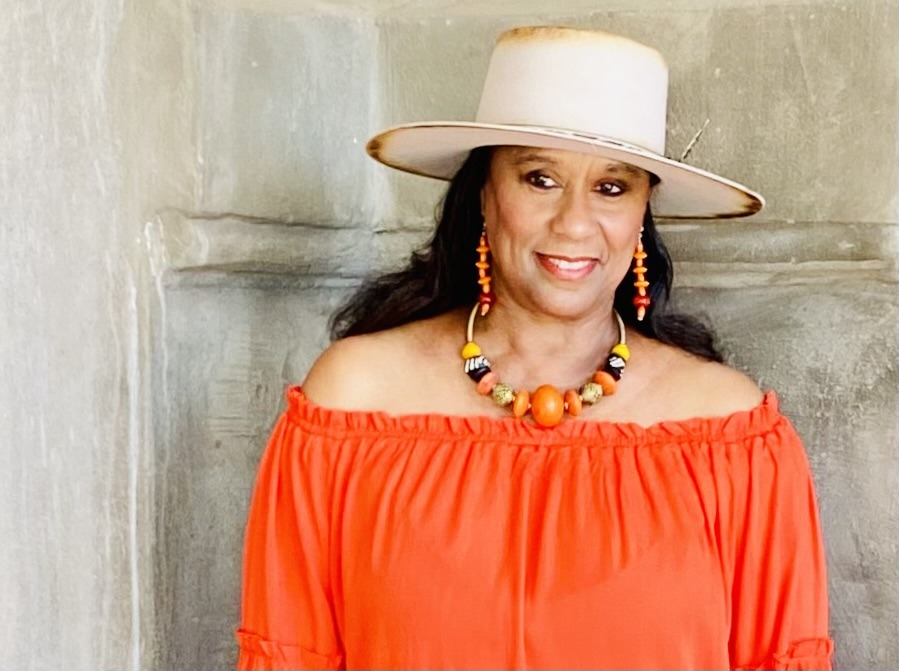
At 10:00 a.m. Tuesday morning at Dulles International Airport, Aliyana Isom boarded a plane bound for Dubai. The destination is more than a city. It’s a signal. In a matter of hours, she will moderate a global leadership panel at the January 31, 2026 Corporate Women Summit, bringing culture, accountability, and governance into a room where decisions ripple across borders.

That flight marks a milestone. Isom has been named Global Lead for Security Professionals in AI Governance by Women in AI Governance (WiAIG) a role that places her at the center of one of the most consequential conversations shaping technology’s future.

A Role That Signals Trust

This trust underpins WiAIG’s appointment. Their decision recognizes more than résumé lines: it’s confidence in Isom’s ability to translate risk into policy, and policy into practice. As Global Lead, she will grow and support a worldwide community of security practitioners working to ensure AI systems are built and governed with trust at their core.

Security professionals are essential to AI governance because artificial intelligence systems must protect confidentiality, preserve integrity, and remain resilient from design through deployment. Isom’s mandate is to align security risk management with ethical, legal, and operational frameworks so organizations can adopt AI responsibly without sacrificing public trust.

Roots and Resolve

Isom’s path to global leadership is grounded in service and systems. A proud U.S. Air Force veteran and former Senior Cybersecurity Program Manager at Nike, she has spent her career navigating invisible infrastructures that shape real lives.

“I realized it when I saw how invisible systems could directly affect real people’s lives,” Isom says. “Someone had to be accountable for that power.”

Working close to innovation clarified the stakes. “AI can scale harm quickly if governance isn’t built in from the start,” she explains. Mentors trusted her with complexity. Communities reminded her that her voice mattered even when she was the only one in the room.

Making Sense of AI Governance

At its core, AI governance is a framework of policies, procedures, and ethical standards that ensure AI is developed and used responsibly. It addresses bias, privacy, security threats, and accountability—balancing innovation with safety.

Trust, Isom argues, comes from controls, transparency, and accountability especially when systems fail. Governance is not about slowing innovation; it is about building guardrails early so damage does not have to be repaired later..

Representation and Responsibility

Stepping into this role as a Black woman in tech governance carries weight and purpose. “My presence expands what leadership can look like in these spaces,” Isom says. From her community, she carries resilience, discernment, and an awareness that decisions made in global rooms affect people far beyond those in the room.

To young women watching, her message is direct: “You do not need permission to lead. Preparation and competence will open doors.”

Dubai: Leadership in Action

In Dubai, Isom will moderate a session at the Corporate Women Summit from 11:15 a.m. to 12:00 p.m. titled “From the Office Cubicle to Navigating Foreign Territories.” The panel explores what it takes to succeed in a new country, including understanding cultural nuances and building networks from scratch.

She will guide a conversation with Tatjana Markovic, Paulina Mercader, Sophie McBaiden, and Donna Forte-Regis, leaders whose experiences navigating unfamiliar systems mirror the same challenges facing global AI governance.

Cross-cultural leadership, Isom notes, requires the same discipline as governing artificial intelligence: the ability to assess risk in unfamiliar environments, build trust across differences, and design systems that remain accountable even when contexts change.

“The practitioners who are responsible when theory meets reality are often missing from global conversations,” Isom says. In Dubai, she brings those voices forward, grounding dialogue in outcomes rather than abstraction.

The Vision Ahead

Looking ahead, Isom is focused on building a safer AI future, stronger global standards, inclusive leadership pipelines, and systems that protect communities rather than exploit them.

“Responsible AI must be explainable, auditable, and challengeable,” she says. “Innovation can move fast, but trust has to move faster.”

As the plane descends and the heat of Dubai rises, Isom’s journey comes into focus. This is more than her career advancing; it is about bringing accountability and purpose to the forefront of global technology leadership.

This article was first published in The Truth Seekers Journal.

Related articles

How Urban Planning Taught Me to Build Continuity into Intelligent Systems

What is Autolore?

Truth Seekers Journal Welcomes Dr. Florita Bell Griffin as Contributing Writer and Systems Analyst

The Future Works Here: ICRA 2025 Highlights Robotics Jobs and Education

Truth Seekers Journal thrives because of readers like you. Join us in sustaining independent voices.

ARTIST PROFILE: Yovel Riches

By Milton Kirby | Truth Seekers Journal | Artist Profiles Series

Yovel Riches (born Virginia Rodriguez) did not set out simply to succeed in sales. She set out to redeem it.

Writing and publishing under the name Yovel Riches—a pen name that is also her corporate and creative identity—Rodriguez stands at the intersection of entrepreneurship, ethics, and personal transformation. She is the author of I AM, In the Becoming! 28 Days of Healing a reflective work rooted in faith, resilience, and self-discovery, and the founder of Yovel Riches Industries, a company built to restore trust in an industry she once watched become tainted and mistrusted.

From Survival to Purpose

“I was once a young woman, unsure of the answers and far from perfect,” Rodriguez writes. “I didn’t have it all figured out, nor did I pretend to. But deep within, I knew there was more to me than the circumstances I had been born into.”

That belief—quiet, persistent, and rooted in faith—became the throughline of her life’s work.

With more than 23 years of experience in sales, Rodriguez witnessed firsthand how aggressive tactics and opaque practices eroded confidence between businesses and the people meant to serve them. Rather than walk away, she chose to rebuild the model entirely, launching Yovel Riches, LLC with a mission grounded in transparency, advocacy, and restoration.

The name Yovel comes from the Hebrew transliteration of “Jubilee,” symbolizing renewal, release, and financial restoration—principles that anchor both her business philosophy and her personal journey.

A Record of Results—and Responsibility

Rodriguez’s success is not theoretical. Her professional track record includes helping scale and sell a company for $308 million to Tilman Fertitta, owner of the Houston Rockets. Yet she is quick to redirect the spotlight.

Her guiding principle is simple and unwavering:
“What you do for others, God will do for you.”

At Yovel Riches Industries, the focus is on small and medium-sized businesses—the backbone of local economies and communities. Rodriguez recognizes that the first five years of a business are often the most fragile. Entrepreneurs may have vision and skill, but face gaps in operations, compliance, financial management, and strategic planning. Her work exists to bridge those gaps with clarity and care.

Services with Soul

Yovel Riches Industries offers a suite of relationship-driven services designed to protect and empower business owners:

  • Credit Card Processing
    Transparent, ethical, relationship-based processing that prioritizes trust and sustainable growth.
  • Business Capital Loans
    Tailored funding solutions for businesses at every stage, guided by strategy rather than pressure.
  • Sales Development
    Professional guidance to elevate sales operations and long-term growth strategies.
  • Consultations
    Personalized, 100% free assessments rooted in Rodriguez’s experience as a serial entrepreneur and industry expert.

Each offering reflects the same philosophy: when businesses are protected and guided, entire communities flourish.

The Artist Behind the Enterprise

As Yovel Riches, Rodriguez’s artistic voice is inseparable from her entrepreneurial mission. I AM, In the Becoming! 28 Days of Healing is not a departure from her business work—it is its spiritual companion. The book traces the internal work required to move beyond trauma, limitation, and scarcity into purpose and alignment.

Her story is not one of overnight success, but of intentional becoming—faith meeting discipline, experience meeting service.

In redefining sales, Virginia Rodriguez has also redefined success itself: not as accumulation, but as restoration. Not as dominance, but as stewardship. And not as arrival, but as a continual, faithful becoming.

To get your copy of the book:

Amazon

Related video

Yovel Riches in Her Own Words

Related articles

Artist Profile: Lisa Maydwell

Artist Profile: 1 Way Street

Artist Profile: Ntumba

Support open, independent journalism—your contribution helps us tell the stories that matter most.

Sisters by Choice: Ten Years, Ten Women, One Bond

By Milton Kirby | Atlanta, GA | January 27, 2026

Laughter spilled out of the room before the door ever opened. Plates clinked. Voices overlapped. Someone called out a name, and there were cheers. It was a December gathering, hosted just days after Christmas, and it looked like joy – easy, practiced, and familiar.

Tammy was the first to arrive, carrying a three-tier hors d’oeuvre tray. It was intentional. She had another family event to attend and wanted to be sure she was present and did not miss too much. On that particular day, Trakita, Candy’s cousin, was the last to arrive. No one would say that was her MO. They did agree that she is always vibrant and lively, to put it mildly

This December gathering was not a reunion. It was a ritual.

For ten years, ten women have shown up for one another, again and again, across birthdays, trips, losses, and life’s turning points. In a time when friendships often fade under the weight of schedules and responsibilities, their bond has only grown stronger.

Candy started it all with a call to some friends

How It Started

It began simply, with Candy. She invited a small circle of women Erica F. and Erica B. she met through real estate, and Tamela then there was Tammy. They shared work, shared ambition, and shared conversations that stretched beyond business.

An invitation to Tracey led to another. Erica F. invited her mother, Angie. Steady and wise, Angie naturally became the group’s matriarch.

Kim joined through an invitation that felt almost inevitable. LaToya, “the go-to-girl, for all things finance,” rounded out the circle. Melody (Jaz), the youngest, was welcomed with a unanimous nod.

What could have become a loose association became something deliberate instead. They decided early on that everyone mattered, and no one would be left out.

The Rituals That Hold Them Together

Birthdays are sacred. Every woman, every birthday, is celebrated. No exceptions.

Then came the trips vacations. Miami stands out as a recent highlight. Sun, shared rooms, tight schedules, and plenty of laughter were the order of the week.

Traveling together revealed quirks and differences that everyday gatherings never expose. Some moments tested patience. Others deepened trust. A few friendships shifted. Some grew even closer.

Holidays became another anchor. Christmas gatherings. New Year’s plans. Rotating hosts. Group chats that never quite go silent. Showing up became the discipline that kept the circle intact.

Then there is Sunday Funday, hosted by Erica F. It is a bonding experience where laughter comes easily, and sometimes a football game breaks out.

The Glue

Ask what keeps them together, and the answer comes back quickly and without hesitation: “I know these ladies have my back.”

Trust is the foundation. They bring work problems to the group and leave with clarity. They talk through issues at home. They argue, but they do not abandon one another.

Candy recalls the moment she truly understood the depth of the bond when she lost her mother subsequently lost a sister, and brother.

The group did not just send messages, came. They brought food. They filled empty chairs. They offered shoulders to lean on and, when words were unnecessary, they sat in silence.

“That’s when the love really came out,” she said. “In ways I never imagined.”

A Chosen Family

The women represent every season of life: married, single, widowed, cohabitating, and searching. Every category is covered. What unites them is not circumstance, but intention.

Each of these ladies is self-made. Each brings something different to the table. And together, they form what many of them now call family.

Their confidence has grown because they belong to something steady. Their resilience is stronger because they do not face life alone.

L to R LaToya, Candy, Tammy, Erica B, Tamela, Kim, Angie, Jaz, Erica F

Why It Matters

Their story speaks to something larger than ten women in one room. In an age of isolation, their circle is a reminder of the human need for community.

Trakita lively & vibrant was last to arrive at the December gathering

Women’s circles, formal and informal, have existed across cultures and generations, offering support, wisdom, and survival.

Their lesson is simple but powerful: friendships do not last by accident. They last because people choose them.

Looking Ahead

As the December gathering wound down, the ladies pulled their coats on, and hugs lingered a little longer than necessary. Talk turned to what comes next: another birthday, another trip, another holiday together.

“This is for life,” one woman said quietly.

Ten years in, the sisters by choice aren’t just surviving. They are thriving and already building the next chapter.

Thank you for reading The Truth Seekers Journal. Subscribe, share, and support independent community journalism.

Shadow Ball: Learning More About Negro League History

January 27, 2026

Dear Shadow Ball: “Who was the last Negro Leaguer to play in MLB?”
Will Clark, Hackensack, NJ

 … this column exists for only one purpose and that is to answer your questions on Negro League baseball history. To that end, I need your help … if you are reading this column and enjoy it and want it to continue and you don’t already know everything about Negro League history … then please submit a question on any aspect of Negro League history. Your questions are the lifeblood of Shadow Ball—they shape where we go next.

 – players, teams, events, and more – and, in so doing, you will direct where this column goes moving forward. Your participation is important and appreciated. The very existence of this column depends on you. Submit your questions to shadowball@truthseekersjournal.com.

Dear Will: If by play one means debut, according to baseball-reference, the answer is Ike Brown who briefly played for the Kansas City Monarchs in the early sixties before beginning a lengthy stay in the Detroit Tigers system, including four years in the AAA International League, finally debuting with the parent club on June 17, 1969 thereby becoming the last player from the Negro Leagues to break in to MLB.

Ironically, at the time of Brown’s debut only one former Negro Leaguer was active – Hank Aaron who had just two months earlier broke Babe Ruth’s career home run record with a round tripper off Al Downing on April 8, 1974. Hammerin’ Hank would play his MLB final game on October 3, 1976, becoming the last Negro Leaguer to play in MLB.

Late in that 1976 season the Chicago White Sox, under the forever showman Bill Veeck, utilized 52 year old Minnie Minoso, a Negro League All Star third baseman in the 40s, as a designated hitter in three games all preceding Aaron’s finale but four years later Minoso would appear as a pinch hitter on October 5, 1980 in his last appearance in the bigs (and Bill Veeck’s last game as an owner.)

Thus, the last former Negro Leaguer to debut in the Majors is Ike Brown, the last to play regularly is Hank Aaron and the last to appear in any role – gimmicky or otherwise – is Minnie Minoso.

Last week’s Shadow Ball Significa question: Which Negro League team introduced night baseball five years before Major League Baseball adopted it? No one submitted the correct answer, but I will give it because we have a guest with a significa question this week. The Kansas City Monarchs first played night baseball in 1930, using J.L. Wilkinson’s pioneering portable lighting system, the first of its kind.

The Shadow Ball Significa Question of the Week (submitted by Shadowball fan, Will Clark): A Hall of Fame Negro League slugger had a nephew who sang with, and co-founded, a legendary R&B vocal group of the 1940’s and 1950’s. Name that slugger.

Ted Knorr

Ted Knorr is a Negro League baseball historian, longtime member of the Society for American Baseball Research’s Negro League Committee, and founder of the Jerry Malloy Negro League Conference and several local Negro League Commemorative Nights in central Pennsylvania. You can send questions for Knorr on Negro League topics as well as your answers to the week’s Significa question to shadowball@truthseekersjournal.com or Shadow Ball, 3904 N Druid Hills Rd, Ste 179, Decatur, GA 30033.

Truth Seekers Journal thrives because of readers like you. Join us in sustaining independent voices.

What Riders Need to Know About MARTA’s Sunday Weather Plan

MARTA will run reduced rail, lifeline bus, and Mobility service Sunday, Jan. 25, due to forecasted winter weather. Most bus routes will be suspended.

By Milton Kirby | Atlanta, GA | January 24, 2026

The Metropolitan Atlanta Rapid Transit Authority (MARTA) will operate on a reduced schedule Sunday, January 25, as severe winter weather is forecast across metro Atlanta.

Under the agency’s inclement weather service plan, rail service, select lifeline bus routes, and MARTA Mobility paratransit service will continue running, while most regular bus routes will be suspended. Officials cautioned that service could be further reduced or halted if road and weather conditions deteriorate.

“MARTA will continue to share real-time service updates across all customer-facing platforms as conditions evolve,” the agency said in a statement.

Rail service

Rail service will begin at 6 a.m., with trains arriving every 20 minutes. Out-of-service trains will operate continuously to prevent track icing.

North/South lines

  • Red Line: North Springs to Lindbergh Center
  • Gold Line: Doraville to Airport

East/West lines

  • Green Line: Bankhead to Vine City
  • Blue Line: Indian Creek to H.E. Holmes

Streetcar service will begin at 8:21 a.m. on a regular Sunday schedule, operating with shuttle vans.

Lifeline bus routes only

Only designated lifeline bus routes will operate beginning in the 5 a.m. hour. These routes provide direct access to major medical facilities and emergency rooms. All other bus routes will be suspended.

Operating routes and frequencies include:

  • Route 6 – Clifton Road/Emory (45 minutes)
  • Route 8 – North Druid Hills (30 minutes)
  • Route 19 – Clairmont/W. Howard Avenue (40 minutes)
  • Route 40 – Peachtree Street/Downtown (45 minutes)
  • Route 107 – Glenwood (30 minutes)
  • Route 110 – Peachtree Road/Buckhead (20 minutes)
  • Route 111 – Snapfinger Woods (40 minutes)
  • Route 123 – Church Street (60 minutes)
  • Route 185 – Alpharetta (40 minutes)
  • Route 196 – Upper Riverdale (30 minutes)

MARTA Mobility service

MARTA Mobility will operate within three-quarters of a mile of rail stations and the active lifeline bus routes, as road conditions allow.

  • Pre-booked medically necessary trips will be honored when safe
  • All subscription trips are canceled
  • Only next-day reservations will be accepted
  • Reservations Call Center opens at 9:30 a.m.

Customer services and information

Reduced Fare and Lost & Found offices will be closed Sunday.

The Customer Information Call Center will operate from 8 a.m. to 7 p.m. for routing and scheduling questions at 404-848-5000.

Riders are encouraged to monitor itsmarta.com, the MARTA On the Go app, and @MARTAservice and @MARTAtransit on social media for real-time updates.

Related articles

New Year, New MARTA: 2026 Upgrades Aim to Boost Safety, Reliability, and the Rider Experience

MARTA rolls out Big Changes with New Fare System Upgrades

MARTA Unwraps the Holidays with Free Rides, Festive Buses, and Gifts for Riders

From Tokens to Tap-to-Pay: MARTA Unveils Better Breeze

World-Class Transit for World-Class Soccer: MARTA Steps Up

MARTA rolls out Big Changes with New Fare System Upgrades

MARTA Unwraps the Holidays with Free Rides, Festive Buses, and Gifts for Riders

MARTA Rolls Out an Outkast Tribute Across Atlanta

MARTA Completes Garnett Station Platform Renovation

From Tokens to Tap-to-Pay: MARTA Unveils Better Breeze

MARTA to Close Five Points Peachtree Entrance as Next Phase of Transformation Begins

Support open, independent journalism—your contribution helps us tell the stories that matter most.

Brett Kavanaugh raises impeachment question in Trump Federal Reserve case

Why It Matters

The justices are contemplating a case that deals with the president’s removal of an independent official and what counts as “for cause.” An attorney representing Cook, former U.S. Solicitor General Paul Clement, tells the court that impeachment, a form of removal of an official, is “the ultimate backup” in a hypothetical situation that Justice Samuel Alito presented to him.

During arguments, several justices questioned whether President Donald Trump has the authority to fire a sitting Fed governor over allegations of mortgage fraud that Cook denies. Earlier in the hearing, Justice Brett Kavanaugh warned that allowing Cook’s dismissal could “weaken, if not shatter, the independence of the Federal Reserve.”

What To Know

Following Justice Samuel Alito’s hypothetical question, “how about if, after the person assumes office, videos are disclosed in which the officeholder is expressing deep admiration for Hitler or for the Klan?” Clement, responded “that’s an official that would be impeached in a heartbeat.”

Amid the back and forth among other justices as well, Clement reiterated that his “backup to the backup” is “impeachment.” Kavanaugh then jumped in stating, “We got an argument in the past that impeachment doesn’t cover private conduct. You obviously disagree with that then?”

Clement responded, “Well, I certainly see, but this actually kind of makes the point about judicial review, right?”

Kavanaugh said, “I’m not saying I agree with that, by the way. It’s been—it’s been argued.”

Cook’s attorney then said, “What I absolutely agree with is the Walter Nixon case says that there’s no judicial review of the impeachment determination in the end. So whatever the House and the Senate ultimately determine, I mean, they can make constitutional law, too and they can determine whether private conduct is or is not out.”

The back and forth continued with Clement bringing up “INM,” referring to inefficiency, neglect of duty, or malfeasance, which comes from the Federal Trade Commission Act. He told the Court, “the reason I want to spend at least a moment answering some of the hard hypos is not because I’m a masochist. It’s just because those are—have got to be the answers under INM.”

Kavanaugh responded, “your answer is that those are funneled to the impeachment process?” to which Clement responded “that’s right,” continuing on that “INM has worked for 150 years. And I think it would continue to work. It hasn’t proven a problem in practice.”

Why Did Trump Fire Lisa Cook From the Federal Reserve Board of Governors?

Trump moved to remove Cook from the Federal Reserve Board, citing allegations that she committed mortgage fraud in 2021, before she joined the central bank. The administration argues that Cook improperly claimed two properties as primary residences, potentially securing more favorable loan terms. Trump’s legal team has said the allegations amount to misconduct sufficient to justify her dismissal, though Cook has not been charged with any crime. Critics have questioned whether the effort reflects a broader attempt by Trump to exert greater control over the independent central bank and influence interest rate policy.

Key takeaways

  • Impeachment as Backstop: Justice Brett Kavanaugh questioned whether impeachment is a realistic safeguard for removing independent officials, with attorney Paul Clement calling it the “ultimate backup” for misconduct or controversial behavior.
  • Trump vs. Lisa Cook: President Trump attempted to remove Fed Governor Lisa Cook over alleged mortgage fraud, raising concerns about Federal Reserve independence and presidential authority to fire governors.
  • About Lisa Cook: Cook is the first Black woman on the Fed Board, an economist focused on labor markets, economic inequality, and innovation, helping set U.S. monetary policy insulated from political pressure.

Who Is Lisa Cook? What to Know

(AP Photo/Mark Schiefelbein)

Cook is a Federal Reserve governor and the first Black woman to serve on the Fed’s Board of Governors. An economist by training, she was confirmed to the board in 2022 after previously serving as a professor at Michigan State University and holding roles focused on economic research and policy.

Cook’s work has centered on labor markets, economic inequality and innovation. As one of seven governors, she helps set U.S. monetary policy, including interest rates, in a role designed to be insulated from political pressure.

What People Are Saying

The Supreme Court justices, writing in a separate case last year: “The Federal Reserve is a uniquely structured, quasi-private entity that follows in the distinct historical tradition of the First and Second Banks of the United States.”

Justice Sonia Sotomayor, speaking Wednesday: “This whole case is irregular, starting with the Truth Social notice…But that’s where we are.”

White House spokesman Kush Desai previously told The Associated Press: “President Trump lawfully removed Lisa Cook for cause from the Federal Reserve Board of Governors. We look forward to ultimate victory after presenting our oral arguments before the Supreme Court in January.”

What Happens Next

The justices finished oral arguments on Wednesday and are expected to rule on the case at a later date.

This article was written by Mandy Taheri.

No contribution is too small. Support us today and help keep truth accessible for all.

How Urban Planning Taught Me to Build Continuity into Intelligent Systems

AutoLore™ is a continuity architecture that preserves coherence, lineage, and accountability in intelligent systems, governing context before AI interpretation, generation, or action occurs.

By Florita Bell Griffin, Ph.D | Houston, TX | January 23, 2026

I first encountered the problem that would later become AutoLore while creating an AI-generated art collection in 2023 titled “All We Need Is Love”, a 77-piece body of work honoring the contributions of African American men across every U.S. state and territory, paired with images referencing African ceremonial mask traditions to honor ancestral origins. The project carried personal weight long before it became technical. I had long recognized the absence of continuity in Black culture as an intentional infliction—history fragmented, lineage disrupted, context erased or compressed. This collection emerged as a corrective act, an effort to hold presence, contribution, and dignity together across geography and time.

As the work developed, a persistent pattern surfaced. The system repeatedly rendered African American men through a narrow visual range, compressing skin tone, facial variation, and presence into a single flattened representation. Iteration revealed deeper inconsistencies as well—misalignments absent when the same tools portrayed other cultures. Extended testing clarified the issue with precision. Knowledge existed in fragments, yet coherence across history, representation, and context failed to carry forward. The system struggled to sustain identity across variation. That realization redirected my attention toward continuity as a governing condition, examined through the same analytical lens I had long used to understand cities, infrastructure, and long-horizon systems. A single question emerged, linking cultural memory, intelligent systems, and urban science: how systems evolve while retaining themselves.

From the beginning of my professional formation, I learned to recognize failure as structural before it becomes visible. Urban planning shows that breakdowns arise through ungoverned assumptions as conditions shift. A transportation network can operate while quietly undermining land use. A zoning decision can appear sensible at a local scale while destabilizing an entire region over time. Systems drift long before they fracture.

Urban and regional science deepened this way of seeing. It oriented my thinking toward flows rather than objects—flows of people, capital, information, movement, and power. Stability emerges through alignment rather than optimization alone. When flows exceed the structures meant to contain them, continuity erodes even as performance improves. That insight endured.

Most importantly, my discipline taught me to treat identity, sequence, and authority as foundational variables. Regions depend on boundaries. Systems rely on sequence. Cities operate through layered authority across jurisdictions. When identity blurs, when sequence fractures, or when authority shifts quietly, fragmentation follows even while individual actors remain capable and sincere.

I carried that understanding forward as I continued examining intelligent systems through creative practice.

Midway through this exploration, I initiated a second experiment. “Sisters Across Borders” became a 60-piece global collection portraying women whose faces blended African descent with another culture, each work representing a different country. This project allowed real-time application of emerging insights. Continuity principles shaped data preparation, representation logic, and contextual framing. At the same time, the African American cultural thread remained active. The lessons from All We Need Is Love carried forward rather than closing behind me. The contrast between the two collections revealed something critical. When continuity was deliberately prepared and carried, the system retained coherence across variation. When continuity remained implicit, fragmentation resurfaced.

What I observed felt familiar.

Intelligent systems were becoming more capable, more autonomous, and more interconnected. As they retrained, migrated, integrated, and evolved, coherence diminished over time. Operation continued. Performance increased. Yet continuity thinned. Identity shifted toward inference rather than enforcement. Lineage yielded to overwriting. Context leaned toward reconstruction rather than preservation. Authority drifted quietly between components.

The industry described these conditions as drift, forgetting, instability, or degradation. I recognized them as symptoms. I had witnessed the same patterns in cities, regions, and infrastructure systems. The cause remained structural.

Continuity was absent as an architectural condition.

In urban planning, systems never infer continuity for themselves. Continuity is designed. Lineage is preserved. Boundaries are defined. Transitions are governed. Sequence is respected. Authority is established. Growth and change follow afterward. Intelligent systems were being asked to reverse this order—to learn their way into coherence without a stable frame.

AutoLore emerged from the realization that continuity must exist before intelligence expresses itself. When continuity depends on interpretation, learning, or retrospective analysis, fragility follows under change. As conditions shift, the system must guess who it is, what applies, and which authority governs the present moment.

That condition reflects vulnerability rather than intelligence.

The first step involved recognizing that raw events create unstable inputs. In cities, raw activity never serves as planning truth. Contextualization gives events meaning. Sequence situates them. Lineage connects them. Applicability clarifies relevance. AutoLore applies the same principle to intelligent systems. Events are prepared into continuity-ready representations that carry identity relevance, contextual scope, lineage relationships, and transition awareness forward explicitly. Continuity becomes structured rather than inferred.

Preparation alone remains insufficient. In planning, design without governance collapses under pressure. AutoLore therefore treats continuity as something actively governed. Identity, provenance, sequence, scope, authority, and persistence bind together into continuity states that exist independently of models, applications, or platforms. Continuity retains authority across upgrades, replacements, migrations, and distributed environments because it belongs to the architecture rather than the implementation.

A further issue soon became clear—one planners understand well. Without clear authority, governance dissolves. Cities fragment when jurisdiction blurs. Systems bypass rules when precedence remains unclear. AutoLore addresses this through continuity supremacy: continuity established as an authoritative system property that holds precedence over execution. Continuity is traversed before action. Authority persists even as systems pause, transfer, or operate in parallel.

This way of thinking emerged through a discipline built to design environments that evolve without collapse. Urban planning and regional science shaped how identity endures across time, how change remains governed while progress continues, and how failure emerges when structure remains implicit.

AutoLore expresses that discipline in a new domain.

I developed AutoLore by giving intelligent systems what cities require to endure: continuity prepared, governed, and upheld as an architectural responsibility. The work began in practice before it became architecture, and it continues wherever systems are asked to carry identity, context, and authority forward through change.

AutoLore™ is a proprietary continuity architecture of ARC Communications, LLC. The AutoLore™ architecture and its associated subsystems are patent pending. All rights reserved.

Adapted for Truth Seekers Journal from research originally published by ARC Communications, LLC.

For correspondence: arccommunications@arc-culturalart.com

©2026 ARC Communications, LLC. All rights reserved.

Related articles

Truth Seekers Journal Welcomes Dr. Forita Bell Griffin as Contributing Writer and Systems Analyst

“What Is AutoLore?”

Truth Seekers Journal thrives because of readers like you. Join us in sustaining independent voices.
Hardee’s Returns to NASCAR, Becomes Official QSR and Primary Sponsor of Bubba Wallace’s No. 23

By Milton Kirby | Daytona Beach, FL | January 22, 2026

Hardee’s is back in NASCAR in a big way.

The iconic American fast‑food brand has signed a multiyear agreement to become the Official Quick Service Restaurant of NASCAR, while also joining 23XI Racing as a primary sponsor of Bubba Wallace and the No. 23 Toyota Camry XSE.

The move represents one of the most notable heritage‑brand returns in recent NASCAR history and arrives at a moment when the sport is eager to reset after a turbulent offseason.

Hardee’s branding will appear throughout the season on Wallace’s firesuit, team uniforms, and equipment, with the No. 23 Hardee’s car set to debut at Martinsville Speedway this spring. The partnership also fills a long‑vacant category: Hardee’s becomes the first official NASCAR QSR in more than 15 years, a slot left open since Checkers/Rally’s exited in 2008.

A Heritage Brand Comes Home

For longtime fans, Hardee’s return is more than a sponsorship it’s a callback to an era when the brand was synonymous with winning. During the 1980s and 1990s, Hardee’s‑backed teams collected 12 NASCAR Cup Series victories with Hall of Fame drivers Bobby Allison, Cale Yarborough, Alan Kulwicki, and Dale Jarrett.

Allison delivered three wins in the No. 28 Hardee’s car in 1981, including the Coca‑Cola 600. Yarborough added nine victories, highlighted by back‑to‑back Daytona 500 triumphs in 1983 and 1984.

Now, as NASCAR courts legacy brands seeking multigenerational reach, Hardee’s return fits squarely into the sport’s push to reconnect with its roots.

“Hardee’s is an American classic with deep roots in our sport,” said NASCAR Chief Commercial Officer Craig Stimmel. “Its return represents more than a new partnership it symbolizes the power and appeal of NASCAR’s heritage.”

Why 23XI, Why Now

Hardee’s arrival also reshapes the sponsorship landscape at 23XI Racing.
The brand steps in as McDonald’s quietly exits the team — a shift that became clear when the Golden Arches were absent from recent car renderings tied to the team’s expanded partnership with Xfinity.

Hardee’s will serve as a primary sponsor for Wallace at select races beginning with Martinsville, while Xfinity remains the dominant presence on the No. 23 throughout the season, including the Daytona 500.

The timing is notable. The agreement lands just months after NASCAR and 23XI Racing resolved their high‑profile antitrust dispute, a case Truth Seekers Journal has covered extensively from the damages sought by 23XI and Front Row Motorsports to the permanent charter resolution and the broader implications for team equity and sponsorship stability.

Industry sources said Hardee’s evaluated multiple teams before selecting 23XI, ultimately offering commitments slightly above $1 million annually. The deal, brokered by Hardee’s media agency PMG, includes trackside activations, digital campaigns, and integration with NASCAR’s My Rewards loyalty ecosystem.

For Wallace, the partnership carries both personal and professional weight.

“NASCAR is built on legacy, and Hardee’s has been part of some of the most iconic moments in our sport’s history,” Wallace said. “Fans know the Hardee’s paint schemes of the past, and I’m excited to help create some new memories.”

A Signal Beyond Sponsorship

Beyond the branding, Hardee’s return sends a broader message about the sport’s direction.
NASCAR Holdings and 23XI Racing collaborated closely to bring the brand back a sign that the two sides have maintained a functional working relationship following last year’s antitrust litigation.

Had the case gone to trial, 23XI Racing and Front Row Motorsports were seeking $365 million in damages. Instead, the dispute concluded with NASCAR granting both teams permanent charters a resolution analysts estimate to be worth tens to hundreds of millions of dollars, not including substantial legal costs.

Against that backdrop, Hardee’s re‑entry is being viewed inside the industry as a tangible step toward renewed stability and a signal that major brands are once again comfortable making long‑term investments in the sport.

Looking Ahead

Hardee’s parent company, CKE Restaurants Holdings, also operates Carl’s Jr., with more than 3,800 restaurants across the U.S. and internationally. Company officials say the NASCAR partnership will emphasize fan engagement, community outreach, and celebrating the sport’s past while fueling its future.

For NASCAR, 23XI Racing, and Bubba Wallace, the partnership represents something increasingly rare in modern motorsports: a heritage brand not just returning — but reclaiming a central place on the grid.

Related articles

23XI, NASCAR and Front Row Strike Deal to Strengthen Team Equity and Gro

Michael Jordan’s 23XI Racing Scores Major Win in NASCAR Antitrust Fight

History is Made: Bubba Wallace Becomes the First Black NASCAR Driver to Win on the Indianapolis Oval

Truth Seekers Journal thrives because of readers like you. Join us in sustaining independent voices.

What Is AutoLore?

AutoLore™ is a continuity architecture that preserves coherence, lineage, and accountability in intelligent systems, governing context before AI interpretation, generation, or action occurs.

By Florita Bell Griffin, Ph.D | Houston, TX | January 22, 2026

Inventor of AutoLore™ · AutoLore™ is owned by ARC Communications, LLC

AutoLore™ is a continuity architecture. Its purpose is to preserve coherence, lineage, and integrity as real-world events, data, and decisions move through intelligent systems over time. AutoLore prepares raw inputs into continuity-verified representations before any interpretation, generation, or action occurs. By governing preparation rather than performance, AutoLore stabilizes systems across scale, transfer, and change.

Modern intelligent systems are optimized for output. They predict, personalize, and adapt with impressive speed. Yet as systems evolve, context fragments, sequence blurs, and decisions become harder to trace. What remains may continue to function, but it no longer holds together. AutoLore exists to address this structural failure mode by treating continuity itself as a first-class architectural concern.

AutoLore operates as a preparation layer positioned between raw event intake and downstream system use. Instead of allowing each component to infer its own understanding of events, AutoLore standardizes how events enter the system. It produces continuity-ready representations designed for durable use across time, environments, and ownership. These representations carry the information required to preserve context without exposing raw inputs or forcing downstream interpretation.

At the core of AutoLore is disciplined preparation. Real-world events are received through a defined intake interface. Continuity attributes are extracted. Lineage relationships are established so sequence and causality remain intact. Transition states are classified to reflect change rather than overwrite history. Boundaries are defined to govern how prepared representations may be consumed downstream. The output is a structured representation designed to remain coherent as systems evolve.

This approach allows downstream systems to operate with clarity. Models, interfaces, and services consume prepared representations rather than raw events, which supports auditability, provenance, and long-range integrity. Routing and flow control can occur without interpretation, preserving determinism and reducing drift. Over time, this yields systems that remain recognizable even as components are replaced or upgraded.

AutoLore is intentionally distinct from performance-oriented intelligence. It does not predict outcomes, personalize behavior, or generate meaning. Instead, it governs the conditions under which meaning, action, and expression can remain coherent. This distinction enables AutoLore to function across domains wherever continuity must survive scale and change, including intelligent vehicles, AI platforms, robotics, data systems, and complex infrastructures.

AutoLore includes a core subsystem responsible for governed expressive output: Arjent AI Voice Architecture™. This subsystem ensures that when a system explains, narrates, or communicates, its output remains aligned with continuity-prepared inputs. Expression is governed by structure, lineage, and boundary rules rather than repetition or reinterpretation, preserving consistency across time and context.

AutoLore is a foundational architecture created to govern continuity before intelligence acts and before meaning is produced. Developed by ARC Communications, LLC, AutoLore defines a new category of system architecture centered on continuity preparation rather than downstream correction.

Fifty Real Problems AutoLore Resolves

The following questions reflect recurring failures observed in large-scale intelligent systems. Each illustrates a condition that emerges when continuity, lineage, and governed transition are absent. AutoLore addresses these problems by preserving coherence before interpretation, generation, or action occurs.

Why do large AI systems behave inconsistently across versions even when trained on the same data?
A: › Because lineage between model states, data contexts, and decision boundaries is reconstructed after the fact instead of preserved. AutoLore carries continuity forward explicitly, so each transition retains its governing context.

Why does internal AI governance break down once systems scale across teams?
A: › Governance fails when context ownership fragments. AutoLore enforces continuity before interpretation, keeping authority intact as systems cross organizational boundaries.

Why do audit trails fail under regulatory scrutiny?
A: › Logs describe outcomes rather than causality. AutoLore preserves lineage at the moment of transition, making audits evidentiary rather than inferential.

Why do safety teams disagree with product teams about what a system knew at a given time?
A: › Because memory is inferred rather than fixed. AutoLore locks continuity states so interpretation never rewrites history.

Why do autonomous systems drift even when performance metrics improve?
A: › Optimization rewards local success rather than identity preservation. AutoLore defines invariants that adaptation cannot override.

Why does system behavior change after infrastructure migrations?
A: › Context is stripped during translation. AutoLore treats migrations as continuity events rather than data moves.

Why do long-lived platforms lose coherence after acquisitions?
A: › Institutional memory is undocumented and informal. AutoLore embeds lineage into the system itself.

Why is AI explainability unreliable months after deployment?
A: › Explanations are regenerated using present context. AutoLore preserves original interpretive conditions.

Why do compliance teams rely on manual documentation for automated systems?
A: › Automation lacks continuity guarantees. AutoLore provides machine-verifiable lineage.

Why does “human in the loop” fail at scale?
A: › Humans intervene without preserved context. AutoLore ensures interventions occur inside governed continuity frames.

Why do robotics systems behave differently in identical environments?
A: › Environmental context is flattened into sensor data. AutoLore preserves situational lineage.

Why do simulation-trained systems fail in real-world deployment?
A: › Simulation lacks continuity with reality. AutoLore binds simulated and real transitions.

Why do multi-modal systems struggle to reconcile conflicting inputs?
A: › Inputs lack shared lineage. AutoLore resolves conflicts through continuity hierarchy.

Why does retraining erase prior safety learnings?
A: › Safety knowledge is not preserved as invariant. AutoLore protects it across cycles.

Why do distributed systems disagree about current state?
A: › State is computed locally. AutoLore maintains global continuity.

Why do AI incidents take weeks to root-cause?
A: › History must be reconstructed. AutoLore eliminates reconstruction.

Why do systems pass testing but fail in production?
A: › Test context differs from live context. AutoLore carries context forward.

Why does model rollback create new failures?
A: › Rollback ignores intervening continuity. AutoLore accounts for transition debt.

Why do AI governance policies lag technical reality?
A: › Policy operates outside the system. AutoLore embeds governance inside execution.

Why do platforms struggle with accountability across partners?
A: › Responsibility diffuses across interfaces. AutoLore preserves provenance across handoffs.

Why do customer-facing AI systems contradict themselves over time?
A: › Narrative continuity is not preserved. AutoLore maintains coherent memory states.

Why do personalization systems feel invasive or inconsistent?
A: › Context is inferred probabilistically. AutoLore uses continuity-verified context.

Why do internal tools behave differently than external ones using the same model?
A: › Integration strips lineage. AutoLore standardizes continuity intake.

Why do data governance teams distrust AI outputs?
A: › Outputs lack traceable origin. AutoLore provides verifiable lineage.

Why do safety assurances weaken after system updates?
A: › Updates overwrite assumptions. AutoLore enforces invariant preservation.

Why does federated learning complicate accountability?
A: › Contributions lose attribution. AutoLore preserves origin across federation.

Why do large systems require tribal knowledge to operate safely?
A: › Knowledge lives in people rather than systems. AutoLore moves it into architecture.

Why do explainability tools disagree with one another?
A: › They interpret from different temporal contexts. AutoLore fixes the temporal frame.

Why do AI failures repeat in slightly different forms?
A: › Lessons are not preserved structurally. AutoLore encodes them into continuity.

Why does system identity blur after rapid iteration?
A: › Change outpaces coherence. AutoLore governs identity through transitions.

Why do platform leaders fear regulatory retroactivity?
A: › They cannot prove historical compliance. AutoLore makes compliance durable.

Why do AI risk reports rely on narrative rather than evidence?
A: › Evidence was never preserved. AutoLore generates evidence by design.

Why do internal disagreements stall AI deployment?
A: › Teams reason from different histories. AutoLore synchronizes lineage.

Why do handoffs between vendors introduce silent risk?
A: › Context is lost at boundaries. AutoLore enforces continuity at interfaces.

Why do systems behave correctly until a rare edge case?
A: › Edge cases break implicit assumptions. AutoLore makes assumptions explicit.

Why does long-term system stewardship degrade?
A: › Original intent fades. AutoLore preserves intent structurally.

Why do AI systems struggle with policy consistency?
A: › Policies change without continuity mapping. AutoLore binds policy to state.

Why does AI forget why decisions were made?
A: › Memory stores outputs rather than reasoning context. AutoLore preserves decision lineage.

Why do multi-year AI programs lose strategic alignment?
A: › Strategy is not embedded. AutoLore carries strategic continuity forward.

Why do postmortems fail to prevent recurrence?
A: › Lessons stay external. AutoLore integrates them into execution.

Why do AI roadmaps drift from original promises?
A: › Change lacks guardrails. AutoLore defines protected invariants.

Why do cross-border deployments create governance gaps?
A: › Jurisdictional context is not preserved. AutoLore maintains contextual lineage.

Why does AI safety depend on individual champions?
A: › Safety is not structural. AutoLore makes it architectural.

Why do systems appear compliant until challenged?
A: › Compliance is performative. AutoLore is evidentiary.

Why do organizations fear explaining their AI publicly?
A: › They cannot guarantee consistency. AutoLore ensures stable explanation.

Why do AI capabilities outpace control mechanisms?
A: › Control is added downstream. AutoLore operates upstream.

Why do platforms struggle with trust erosion?
A: › Trust requires continuity. AutoLore preserves it.

Why does AI governance feel abstract to engineers?
A: › Governance is not executable. AutoLore makes it operational.

Why do intelligent systems age poorly?
A: › Time erodes context. AutoLore carries context forward.

Why do advanced systems still fail in simple, human-visible ways?
A: › They optimize intelligence without continuity. AutoLore restores coherence.

AutoLore™ is a proprietary continuity architecture of ARC Communications, LLC. The AutoLore™ architecture and its associated subsystems are patent pending. All rights reserved.

Adapted for Truth Seekers Journal from research originally published by ARC Communications, LLC.

For correspondence: arccommunications@arc-culturalart.com

©2026 ARC Communications, LLC. All rights reserved.

Related articles

Truth Seekers Journal Welcomes Dr. Forita Bell Griffin as Contributing Writer and Systems Analyst

Truth Seekers Journal thrives because of readers like you. Join us in sustaining independent voices.

Truth Seekers Journal Welcomes Dr. Florita Bell Griffin as Contributing Writer and Systems Analyst

Truth Seekers Journal welcomes Dr. Florita Bell Griffin, inventor of AutoLore™, whose work on continuity and governance explores how truth and context are preserved across intelligent systems.

By Milton Kirby | Atlanta, GA | January 22, 2026

Truth Seekers Journal (TSJ) is proud to welcome Dr. Florita Bell Griffin as a contributing writer and systems analyst. Her work sits at the intersection of continuity, governance, and intelligent systems—core concerns that mirror TSJ’s mission to preserve truth, lineage, and coherence across generations.

Dr. Griffin is the inventor of AutoLore™, a continuity architecture designed to protect context and integrity as information moves through complex systems. Rather than optimizing for speed or output alone, her research focuses on preparation—how raw events, data, and decisions are stabilized before interpretation or action. The result is a framework that resists drift, fragmentation, and the quiet loss of lineage that often occurs as systems scale and change.

What makes her perspective especially timely is its reach beyond technology. Dr. Griffin’s work examines how continuity breaks down in institutions, communities, and narratives—and how governance structures can be designed to preserve meaning over time. In an era where information moves faster than memory, her insights help explain why systems may continue to function while no longer holding together.

Her voice strengthens TSJ’s editorial mandate: to examine how truth is preserved, how systems fail, and how continuity can be protected in a rapidly changing world. We are honored to bring her perspective to our readers.

Related articles

“What Is AutoLore?”

Truth Seekers Journal thrives because of readers like you. Join us in sustaining independent voices.

MARTA Celebrates 2026 King Holiday With Commemorative Bus Wrap Honoring Dr. King and Coretta Scott King

MARTA launches a King Holiday commemorative bus wrap honoring Dr. Martin Luther King Jr. and Coretta Scott King, running Route 3 along MLK Drive.

By Milton Kirby | Atlanta, GA | January 19, 2026

The Metropolitan Atlanta Rapid Transit Authority (MARTA), in partnership with The King Center, marked the 2026 Martin Luther King Jr. Holiday with the launch of a commemorative bus wrap honoring Dr. Martin Luther King Jr. and Coretta Scott King. This year’s observance carries the theme: “Mission Possible II: Building Community, Uniting a Nation the Nonviolent Way.”

Public transit has long been intertwined with the Civil Rights Movement. Dr. King described urban public transportation as “a genuine civil rights issue,” recognizing its role in connecting people to education, jobs, healthcare, and community life. MARTA leaders tied that history to the agency’s present-day mission and the daily realities of riders across metro Atlanta.

“MARTA is proud to honor Dr. Martin Luther King Jr. and Coretta Scott King,” said Jonathan Hunt, Interim General Manager and CEO of MARTA. “Public transit is more than a way to get from place to place. It is a connector of communities, an enabler of opportunity, and a platform for building unity. This commemorative bus represents transit’s power to shape a better future and make communities more equitable and inclusive.”

The Dr. King and Coretta Scott King commemorative bus will operate on Route 3, traveling along MLK Drive from the King Center through Sweet Auburn and the Atlanta University Center to H.E. Holmes Station. MARTA said the route highlights neighborhoods central to Dr. King’s legacy while underscoring the agency’s ongoing goal of connecting communities.

In addition, MARTA displayed its restored historical 1955 bus across from Dr. King’s Birth Home on Monday. The agency said the exhibit serves as a reminder of Rosa Parks’ courageous stand that ignited the Montgomery Bus Boycott—an event that helped propel the modern Civil Rights Movement and cemented the bus as a national symbol of protest and dignity.

MARTA said its partnership with The King Center spans more than a decade, reflecting a shared commitment to honoring Dr. King’s legacy through community engagement and public service.

Related articles

New Year, New MARTA: 2026 Upgrades Aim to Boost Safety, Reliability, and the Rider Experience

MARTA rolls out Big Changes with New Fare System Upgrades

MARTA Unwraps the Holidays with Free Rides, Festive Buses, and Gifts for Riders

From Tokens to Tap-to-Pay: MARTA Unveils Better Breeze

World-Class Transit for World-Class Soccer: MARTA Steps Up

MARTA rolls out Big Changes with New Fare System Upgrades

MARTA Unwraps the Holidays with Free Rides, Festive Buses, and Gifts for Riders

MARTA Rolls Out an Outkast Tribute Across Atlanta

MARTA Completes Garnett Station Platform Renovation

From Tokens to Tap-to-Pay: MARTA Unveils Better Breeze

MARTA to Close Five Points Peachtree Entrance as Next Phase of Transformation Begins

Support open, independent journalism—your contribution helps us tell the stories that matter most.

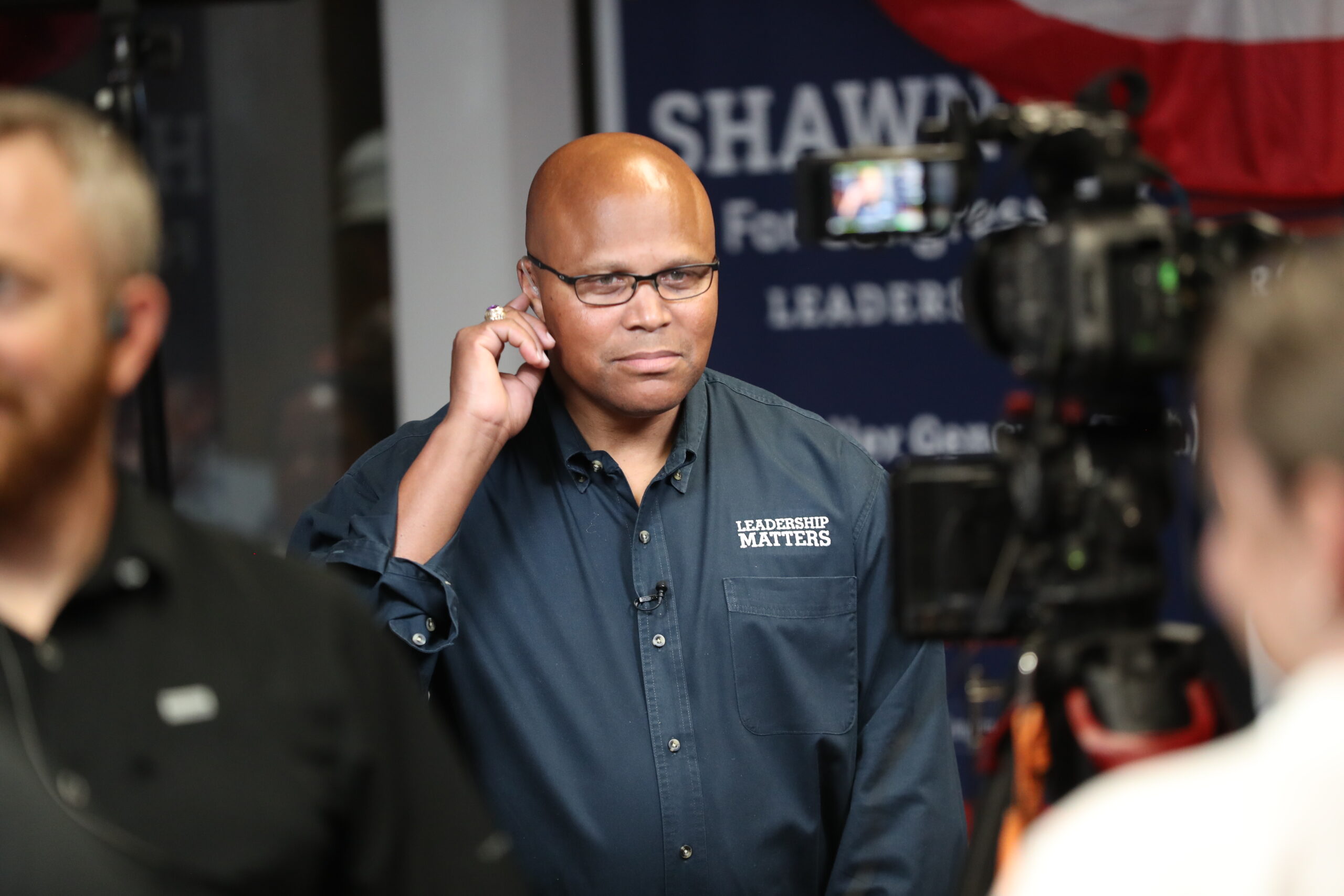
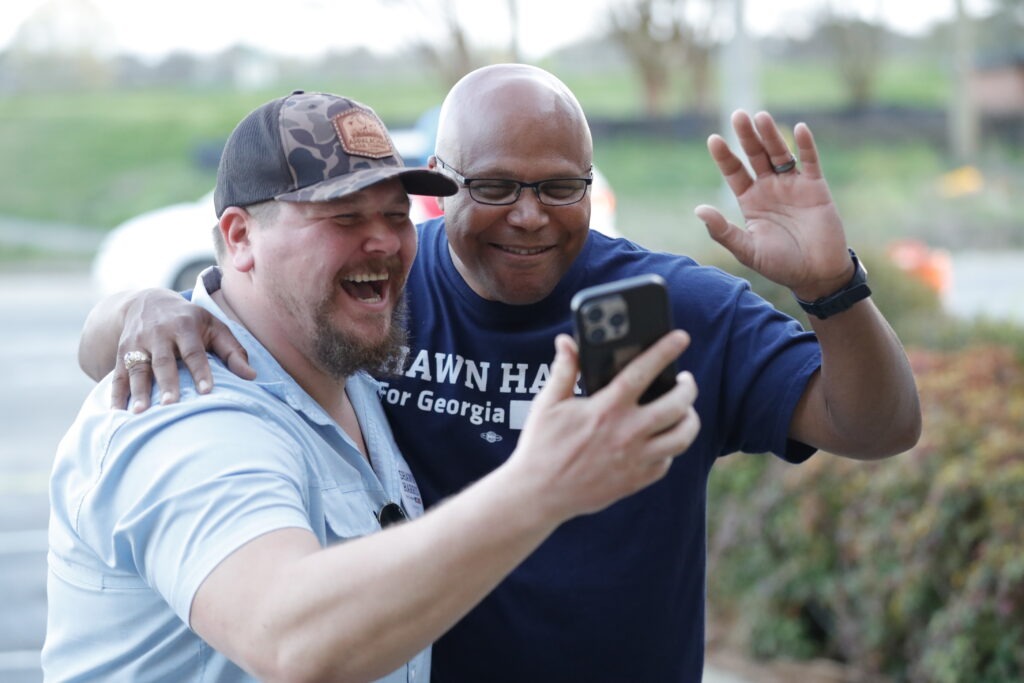
A Farmer, a General, a Democrat: Shawn Harris Enters Georgia’s 14th District Race

Retired Brigadier General and farmer Shawn Harris enters Georgia’s 14th Congressional District race, positioning himself as a pragmatic alternative after Marjorie Taylor Greene’s resignation.

By Milton Kirby | Rockmart, GA | January 17, 2026

Confident, but not cocky. Bold, but not brash.
That is how Shawn Harris comes across on a cold January afternoon in Rockmart in northwest Georgia. We caught up with Harris working on his cattle farm, adjusting an underground freshwater delivery system designed to keep his herd fed through winter freezes.

Harris is a Democratic candidate in Georgia’s 14th Congressional District, a sprawling region covering 10 counties across the northwest corner of the state. The district stretches from rural farmland to small manufacturing towns, a footprint shaped more like a winding patchwork than a clean rectangle. Until recently, it was represented by one of the most polarizing figures in modern American politics.

Former Rep. Marjorie Taylor Greene resigned from Congress effective January 5, 2026. In a video announcement released weeks earlier, Greene cited public clashes with Donald Trump and frustration with the political system. That resignation date was not accidental. Public records indicate it marked the minimum service threshold roughly five years required to qualify for an estimated annual congressional pension of about $8,700.

With Greene’s exit, the 14th District enters a rare moment of political reset.

From Farm to Battlefield  and Back Again

Harris is no stranger to difficult terrain.

After graduating high school, he enlisted in the United States Marine Corps. Over a four-decade military career, he rose from private to Brigadier General an achievement so rare it places him among a tiny fraction of service members nationwide.

Photo by Milton Kirby Harris’ beef cattle grazing

To put that rise into perspective: while the U.S. Army has roughly 450,000 active-duty soldiers, only about 130 to 150 serve as Brigadier Generals at any given time. Fewer than 5 percent of Colonels are ever selected for promotion to the first general officer rank. The climb typically requires more than 25 years of service, advanced degrees, senior service college graduation, and survival through the military’s unforgiving “up or out” promotion system.

Harris served as a combat infantry commander in Afghanistan before retiring as a General. When his military service ended, he and his wife, Karla, returned home to Georgia and back to the land.

A Special Election, a Crowded Field

Following Greene’s resignation, Gov. Brian Kemp set a special election for March 10, 2026, in accordance with Georgia law. The timeline allows for ballot access, overseas military voting, and compliance with federal election requirements.

Beef stock just days from delivery

Because the contest is a special election, all candidates regardless of party will appear on a single “jungle” ballot. A runoff is expected if no candidate clears 50 percent. In total, 22 candidates qualified, including 17 Republicans.

Harris enters the race with recent electoral history. In the November 2024 general election, running head-to-head against Greene, Harris received 134,759 votes, 35.6 percent of the total, while Greene garnered 64.4 percent. For a first-time candidate in one of Georgia’s most Republican districts, the showing surprised many observers.

Harris believes that result revealed a growing coalition. “There is a pathway to victory,” he said. “It requires one victory every day, one voter, one volunteer, one yard sign at a time.”

Why He’s Running

Harris describes his candidacy as rooted in lived experience rather than political theater.

He grew up on a Georgia farm. He enlisted to serve his country. He and Karla have been married for 36 years, raised five children, and now have four grandchildren. While Harris served overseas, Karla became a family physician. When his military career ended, they returned to Georgia not Washington.

Harris says the resignation of Greene has changed the conversation in Northwest Georgia.

“For years, we watched national drama take priority over local needs,” he said. “Now we have a once-in-a-generation chance to bring real leadership back to this district.”

Policy Grounded in Place

Harris’ platform emphasizes practical issues affecting rural and working families.

On agriculture, he supports a fully funded Farm Bill that prioritizes small and medium-sized farms, protects SNAP benefits, modernizes water infrastructure, and expands access to advanced agricultural technology beyond corporate producers.

On healthcare, he opposes proposed cuts to Medicare and Medicaid, calls for expanded rural specialist access, increased mental health and addiction services, and protection of reproductive healthcare from political interference. He also supports removing marijuana from federal drug schedules to expand medical access for veterans and chronic pain patients.

On the economy, Harris backs expanded prescription drug price negotiations, rural broadband investment, infrastructure funding, labor protections, and efforts to bring stable, high-paying jobs back to Northwest Georgia.

On national security, he calls for modernized immigration processing, tougher action on fentanyl trafficking, expanded port screening, and domestic investment in supply chains and cybersecurity.

As a veteran, Harris opposes privatization of VA healthcare and supports expanded trauma care, suicide prevention, and job training programs that translate military skills into civilian opportunity.

Still a Farmer

Despite four decades in uniform, Harris remains unmistakably a farmer.

Farmers For Shawn Harris a yard sign in the neighborhood

One of his prized possessions is a young bull calf half Black Angus, half Wagyu. Wagyu cattle, a Japanese breed known for exceptional marbling, are prized worldwide. Harris smiled as he spoke about the animal.

“This is a valuable member of the herd,” he said. “He could be sold for beef or as a stud bull.”

For Harris, that choice mirrors the district he hopes to represent: rooted in tradition, full of potential, and deserving of careful stewardship.

Related articles

Farm Credit Mid-America Opens 2026 Scholarship Applications for Future Agriculture Leaders

Truth Seekers Journal thrives because of readers like you. Join us in sustaining independent voices.
Farm Credit Mid-America Opens 2026 Scholarship Applications for Future Agriculture Leaders

Farm Credit Mid-America opens 2026 scholarship applications, offering up to $5,000 for students pursuing agriculture and rural community careers. Deadlines approach in January.

By Milton Kirby | Atlanta, GA | January 15, 2026

College-bound students with a passion for agriculture and rural communities have a new opportunity to invest in their futures. Farm Credit Mid-America has opened applications for its 2026 scholarship programs, continuing a decade-long commitment to developing the next generation of agricultural leaders.

Each year, Farm Credit Mid-America awards scholarships to students who demonstrate strong academics, leadership, and community involvement. Over the past ten years, the organization has invested more than $2 million to support students pursuing careers that strengthen agriculture and rural communities across its service region.

Two Scholarship Paths for Students

Farm Credit Mid-America offers two distinct scholarship programs tailored to different student pathways.

The Farm Credit Mid-America Scholars program provides $5,000 in financial assistance over two years to rising college students majoring in agriculture. Beyond financial support, scholars gain exposure to Farm Credit Mid-America through career exploration, leadership development, and professional networking opportunities. Applications for the 2026 school year will be accepted from January 7 through January 31, 2026.

The Customer Scholarship awards $1,500 in financial support to students pursuing agricultural or rural community-related careers. Applicants must be a child or grandchild of a Farm Credit Mid-America customer and may attend an accredited two- or four-year college, university, vocational, or trade school. Applications are open October 1, 2025 through January 15, 2026, with award notifications expected in April 2026.

Eligibility and Application Details

Scholarships are available to students majoring in agriculture or pursuing careers connected to agriculture and rural communities. The online application process takes approximately 10–30 minutes and must be completed in one sitting. Applicants to the Scholars program must upload a résumé and a letter of recommendation. Only online applications will be accepted.

Students may apply for multiple Farm Credit Mid-America scholarships but may receive only one per school year. All scholarship funds will be awarded by August 2026 for the fall semester. Team members and directors of Farm Credit Mid-America, as well as their children, are not eligible. For students committed to shaping the future of agriculture, the scholarships offer both financial support and a pathway to leadership in rural America.

Related articles

A Farmer, a General, a Democrat: Shawn Harris Enters Georgia’s 14th District Race

Thank you for reading The Truth Seekers Journal. Subscribe, share, and support independent community journalism.

DeKalb County Board of Commissioners Elects New Leadership as Data Center Debate Intensifies

DeKalb County commissioners elect Chakira Johnson as Presiding Officer and LaDena Bolton as Deputy while deferring a key data center zoning vote until July.

By Milton Kirby | Decatur, GA | January 14, 2026

DeKalb County entered 2026 with a shift in political leadership and a community still wrestling with one of the most consequential land‑use debates in its history. On Tuesday, the Board of Commissioners elected new officers while also voting to delay action on proposed data center zoning rules, a pause that reflects both rising public pressure and the county’s struggle to balance economic opportunity with environmental and neighborhood protections.

The meeting drew a packed room of residents from South and East DeKalb, many of whom have spent months demanding transparency, clearer communication, and stronger safeguards as data center proposals continue to surface across the county.


A New Leadership Team for a Critical Moment

Courtesy photo Chakira-Johnson-Presiding-Officer

Commissioners unanimously selected Chakira Johnson (District 4) as Presiding Officer and elected LaDena “Dr. B” Bolton (Super District 7) as Deputy Presiding Officer, a pairing that blends deep engineering expertise with community‑rooted advocacy.

Chakira Johnson: Engineering Mindset Meets Procedural Power

Johnson brings more than two decades of experience in civil engineering, municipal operations, and public infrastructure management. A Georgia Tech graduate with a master’s degree in international relations from Troy University, she is a licensed professional engineer in three states and was named one of Engineering Georgia’s 50 Notable Women in 2022.

Her résumé is matched by her long-standing service in DeKalb: nearly 30 years as a resident and 16 years on the Stone Mountain City Council, including three terms as Mayor Pro Tem. She has been a consistent advocate for STEM education and youth engagement.

As Presiding Officer, Johnson will guide the Board’s procedural direction running meetings, appointing committee chairs, and shaping how and when major issues come to the floor. She emphasized a leadership style grounded in professionalism and public trust.

“I am committed to leading with efficiency, integrity, and respect,” Johnson said. “This Board serves the people of DeKalb County.”

LaDena Bolton: A Community Voice With Scientific Rigor

Bolton, known affectionately as “Dr. B,” enters the Deputy Presiding Officer role during her first year on the commission. A graduate of Avondale High School, she credits her December 2024 election to long-standing community relationships and grassroots service.

Courtesy photo LaDena-Bolton-Deputy-Presiding-Officer

Her professional background includes a Ph.D. in chemistry from Clark Atlanta University, a bachelor’s degree from Savannah State University, and a career as an analytical forensic chemist working in national security, energy sustainability, and health equity.

Bolton’s early initiatives reflect her community-first approach:

  • March Into a Cleaner Tomorrow, a countywide cleanup effort that mobilized more than 1,000 volunteers and removed roughly five tons of litter in three months.
  • Youth Aviation Program, the county’s first, offering underserved students hands-on aviation training at DeKalb‑Peachtree Airport and mentorship toward earning pilot licenses.

Her office uses the bee pollinator as a symbol of collective work and community uplift.

“We’re building legacies from the inside out,” Bolton said. “Families, youth, neighborhoods that’s where the work begins.”


Why These Roles Matter Now

Under the DeKalb County Organizational Act, the Presiding Officer and Deputy Presiding Officer shape the Board’s internal structure and public-facing process. They control meeting flow, committee leadership, special session calls, and how major issues like data centers move through the system.

With public trust strained and residents demanding clearer communication, the leadership style of Johnson and Bolton will directly influence how the county navigates the months ahead.


Data Centers: A Debate That Has Become a Community Flashpoint

Beyond leadership elections, commissioners voted to delay action on data center zoning changes until July, when the planning commission is expected to present updated recommendations.

The pause comes after months of intense debate, particularly in South and East DeKalb communities that have historically borne the brunt of industrial encroachment, infrastructure strain, and uneven economic development.

Community Concerns

Residents have raised concerns about noise from cooling systems, water usage in a county already facing infrastructure challenges, environmental impact on nearby neighborhoods, proximity to homes and schools, and transparency in how proposals are evaluated.

Many residents say they are not opposed to economic development they simply want development that respects community health, land use, and long-term sustainability.

Economic Stakes

County officials, including CEO Lorraine Cochran‑Johnson, have noted that a single large-scale data center could generate an estimated $27 million annually in tax revenue, driven by the high value of servers and cooling equipment.

Supporters argue that revenue could support long‑delayed water system upgrades, reduce pressure on residential taxpayers, and strengthen the county’s long-term financial position.

They also describe data centers as essential digital infrastructure the unseen backbone of cloud computing, artificial intelligence, and modern communications.

Regulation vs. Restriction

Proposals under discussion include 500‑foot buffers from residential areas, strict noise limits, generator restrictions, environmental impact reviews, and community benefit funds. Commissioner Ted Terry has suggested dedicating a portion of data center tax revenue to libraries, youth programs, and neighborhood improvements.


Statewide Scrutiny: Georgia Reconsiders Its Data Center Boom

The local debate mirrors a broader conversation unfolding at the Georgia Capitol.

A report from the Carl Vinson Institute of Government found that data center projects have generated more than 28,000 construction jobs, over 5,000 permanent positions, and billions in economic impact statewide.

Metro Atlanta led the nation in data center expansion last year, surpassing Northern Virginia, according to CBRE.

But the growth comes with a cost: state utility regulators have approved plans to add roughly 10,000 megawatts of new power generation capacity, much of it to meet data center demand.

State Rep. Ruwa Roman has introduced bipartisan legislation proposing a moratorium on new data center construction through 2027.

“This is permanent,” Roman said during recent hearings. “And if we get it wrong, Georgians will deal with the consequences for decades.”


Looking Ahead: Leadership, Trust, and the Path Forward

As DeKalb County moves deeper into 2026, the election of Johnson and Bolton signals a leadership team that blends technical expertise with community‑centered advocacy. Their challenge will be guiding a divided public conversation while ensuring transparency, fairness, and long-term planning.

The July deadline for data center zoning recommendations sets the stage for a pivotal summer one that will test the Board’s ability to balance economic growth with environmental stewardship, neighborhood protection, and community trust.

For residents, the question remains: what kind of development will shape DeKalb’s future and who gets to decide?

For Johnson and Bolton, the months ahead will define not only their leadership but the county’s direction for years to come.

Related articles

Renew DeKalb Town Hall Highlights Growing Opposition to Data Centers

Moratorium, Monitoring, and Modernization: DeKalb’s Careful Approach to Data Centers

DeKalb CEO Lorraine Cochran Johnson’s Infrastructure and Growth Initiatives

Council for Quality Growth: Development Moratorium Extended Through 2025

Atlanta Regional Commission Sets Future Growth Priorities

Water Infrastructure Upgrades Coming to DeKalb County

Residents Push for Smart Growth in DeKalb

Truth Seekers Journal thrives because of readers like you. Join us in sustaining independent voices.
Shadow Ball: Learning More About Negro League History

January 13, 2026

Dear Shadow Ball: I have a question about Negro League stats being entered into the Major League Baseball record book. It is my understanding that in 1969 four pro leagues’ records, in addition to the American and National Leagues, were entered into the record book. Were the Negro Leagues considered at that time by the committee and rejected, or were they completely ignored or overlooked (and we had to wait 50+ years for it to finally happen)?
Chris Hansen, Ogden, Utah

 … this column exists for only one purpose and that is to answer your questions on Negro League baseball history. To that end, I need your help … if you are reading this column and enjoy it and want it to continue and you don’t already know everything about Negro League history … then please submit a question on any aspect of Negro League history. Your questions are the lifeblood of Shadow Ball—they shape where we go next.

 – players, teams, events, and more – and, in so doing, you will direct where this column goes moving forward. Your participation is important and appreciated. The very existence of this column depends on you. Submit your questions to shadowball@truthseekersjournal.com.

Dear Chris: I happen to know the answer to that question very well. On July 1, 2017, at the 47th annual convention of the Society for American Baseball Research (SABR) in New York City, I had the opportunity to pose that very question to two men who knew the subject as well as anyone alive: John Thorn, Major League Baseball’s Official Historian, and David Neft, the driving force behind the 1969 Macmillan Baseball Encyclopedia. Neft was in the room in 1969 when MLB’s Special Baseball Records Committee (SBRC) designated six professional leagues — the National League, American League, Players League, Federal League, American Association, and Union Association — as “major.”

Both Thorn and Neft welcomed questions from the audience, and asking mine was one of the principal reasons I attended SABR 47. When my turn came, I asked: “Did the Special Baseball Records Committee consider, at all, the Negro Leagues to be a Major League?” Thorn answered immediately — exactly as I expected — with a single word: “No.” Both men then expanded on the criteria the SBRC used in 1969, and why the Negro Leagues were not even discussed. (If interested the Q & A occurs at the 47:32 point in this mp3 SABR47-David_Neft-John_Thorn-Baseball_Records_Cmte.mp3 | Powered by Box and lasts about three minutes. If you have time the hour-long conversation between Thorn & Neft is well worth the listen) Years later, Neft told The Ringer: “The one thing that I am absolutely certain about is that there never was any SBRC discussion about treating the Negro Leagues as major leagues.” Major League Baseball itself confirmed this in its December 16, 2020 press release announcing the elevation of seven Negro Leagues to Major League status: “It is MLB’s view that the Committee’s 1969 omission of the Negro Leagues from consideration was clearly an error that demands today’s designation.”

In short: The Negro Leagues were not rejected in 1969 — they were ignored. This was before Robert Peterson’s seminal Only the Ball Was White (1970), before SABR’s Negro Leagues Committee (1971), and before the sustained scholarly work that finally brought the Negro Leagues into proper historical focus. On December 16, 2020, MLB corrected that omission by recognizing seven Negro Leagues as Major: Negro National League I, Eastern Colored League, American Negro League, East West League, Negro Southern League, Negro National League II, and the Negro American League.

Last week’s Shadow Ball Significa question Who was the last surviving Atlanta Black Crackers player?
Answer: Dr. Leslie Heaphy of Canton, OH, nailed it — Red Moore. Moore also led the franchise in career batting average, walks, and sacrifice flies. Born and died in Atlanta.

The Shadow Ball Significa Question of the Week: Which Negro League team introduced night baseball five years before Major League Baseball adopted it?

Ted Knorr

Ted Knorr is a Negro League baseball historian, longtime member of the Society for American Baseball Research’s Negro League Committee, and founder of the Jerry Malloy Negro League Conference and several local Negro League Commemorative Nights in central Pennsylvania. You can send questions for Knorr on Negro League topics as well as your answers to the week’s Significa question to  shadowball@truthseekersjournal.com or Shadow Ball, 3904 N Druid Hills Rd, Ste 179, Decatur, GA 30033

Support open, independent journalism—your contribution helps us tell the stories that matter most.

Atlanta Falcons Turn the Page: Matt Ryan Named President of Football After Front Office Reset

The Atlanta Falcons reshuffle leadership, firing Raheem Morris and Terry Fontenot while hiring franchise legend Matt Ryan as President of Football to end years of mediocrity.

By Milton Kirby | Atlanta, GA | January 11, 2026

The Atlanta Falcons began 2026 by making one of the most consequential leadership moves in franchise history a decision that signaled both a search for stability and the end of one of the NFL’s rare examples of Black executive leadership.

On Saturday, the organization hired former quarterback Matt Ryan as President of Football just days after dismissing head coach Raheem Morris and general manager Terry Fontenot. The move reset the franchise’s football hierarchy while simultaneously eliminating the league’s only remaining Black head coach–general manager partnership. This move also carried a deeper, more complicated weight.

Announced by owner Arthur Blank, the decision immediately reshaped power inside Flowery Branch. Ryan, the most accomplished player in franchise history, now oversees all football operations and reports directly to Blank, while working alongside team president and CEO Greg Beadles to align football and business priorities.

The move followed a turbulent week that underscored Atlanta’s urgency to escape a cycle of mediocrity and raised harder questions about patience, progress, and who is afforded time to build at the highest levels of the league.


An abrupt ending to a rare pairing

The Falcons fired Morris and Fontenot on January 4 after a second consecutive 8–9 season. The decision came one week after Atlanta closed the year with a win over rival New Orleans, finishing stronger than expected and showing measurable defensive progress.

Courtesy Photo Raheem Morris

Morris, who previously served as Atlanta’s interim head coach in 2020, completed two full seasons at the helm from 2024 to 2025. Fontenot, hired in 2021, became one of the NFL’s few Black general managers and the longest-tenured of that group during his six-year run.

Together, Morris and Fontenot represented the league’s only Black head coach–general manager tandem a symbolic milestone in a league where such pairings remain exceptionally rare. Their dismissal ended that distinction that proved as fragile as it was meaningful, even as the team showed signs of forward movement.

Atlanta’s postseason drought now stands at eight years, dating back to the 2017 season the final playoff appearance of the Matt Ryan era under center.


Black Leadership in the NFL

Despite a player base that is roughly 70 percent Black, leadership representation at the NFL’s highest levels has remained limited. Entering the 2025 season, only three Black head coaches led teams, alongside a small number of Black general managers league wide. Prior to their dismissal, the Falcons were the only franchise pairing a Black head coach with a Black general manager a combination that remains rare in a league that has repeatedly acknowledged challenges in creating sustained pathways to executive leadership.


Progress without payoff

Measured strictly by wins and losses, Morris’s tenure mirrored the Falcons’ recent pattern of frustrating near-misses. His two seasons ended with identical 8–9 records, falling short of the playoffs in a competitive NFC South.

Yet context complicates the narrative. Morris inherited a defense that ranked near the bottom of the league in 2024. By 2025, Atlanta surged into the NFL’s top three in sacks and set a new franchise record with 57, one of the league’s most dramatic year-over-year defensive turnarounds.

Courtesy photo Terry Fontenot

Under Fontenot, the Falcons also assembled a young and highly regarded core. Draft picks such as Bijan Robinson, Drake London, and Kyle Pitts became offensive centerpieces, while recent additions like Xavier Watts, Jalon Walker, and James Pearce Jr. were viewed internally as long-term building blocks.

Still, results lagged behind expectations. Fontenot, who signed a six-year contract in 2021, is owed one remaining year. Morris, hired as head coach in 2024, signed a five-year contract, according to a January 27, 2024 report by USA Today Sports, leaving three years remaining on his deal.

The contrast between measurable improvement and organizational impatience reflects a broader league pattern, where Black head coaches and executives are often afforded less time to see long-term plans through even when progress is evident but incomplete.


Enter Matt Ryan — from franchise face to football boss

Blank’s answer to stagnation was bold and deeply personal. Ryan, the former league MVP and face of the franchise for 14 seasons, now occupies a role newly created within the organization.

“Throughout his remarkable 14-year career in Atlanta, Matt’s leadership, attention to detail, knowledge of the game and unrelenting drive to win made him the most successful player in our franchise’s history,” Blank said in a statement. “I am confident those same qualities will be a tremendous benefit to our organization as he steps into this new role.”

Ryan accepted the position early Saturday morning and immediately joined the search for the team’s next head coach and general manager. Both hires will report directly to him.

Courtesy photo Matt Ryan

Ryan steps into the position not as a repudiation of the previous regime, but as the owner’s bet that cultural continuity and institutional trust can succeed where repeated resets have not.

A resume unmatched in Falcons history

Ryan’s credentials inside the building are undeniable. Drafted third overall in 2008 out of Boston College, he became the most productive quarterback the franchise has ever known.

He led Atlanta to five playoff appearances, two NFC Championship Games, and one Super Bowl. His 2016 season remains the gold standard: first-team All-Pro honors, NFL MVP, and Offensive Player of the Year while guiding the Falcons to their second NFC title.

Ryan holds nearly every major passing record in franchise history, including career yards (59,735), touchdowns (367), completions, attempts, passer rating, and 300-yard games. From 2011 to 2020, he posted 10 consecutive 4,000-yard seasons and finished his Falcons career with a 120–102 regular-season record.

For many fans, he remains the embodiment of stability during an otherwise turbulent half-century of Falcons football.


A franchise defined by turnover

That instability is not anecdotal it is structural. Since joining the NFL in 1966, the Falcons have employed 18 head coaches, including five interims. Only two Dan Reeves in 1998 and Dan Quinn in 2016 reached the Super Bowl. Mike Smith remains the winningest coach in team history, yet even his tenure ended without a championship.

Morris’s dismissal places him among a long list of leaders who showed promise but fell short of delivering sustained success. Ryan now inherits not just a roster, but a legacy of resets.


The search ahead and immediate questions

As of January 11, Ryan is leading interviews for the vacant head coach and general manager positions. Early candidates include Klint Kubiak, Anthony Weaver, Aden Durde, and Kevin Stefanski.

The inclusion of Kevin Stefanski has raised eyebrows. Stefanski was fired by the Cleveland Browns on January 5 after consecutive losing seasons and a 5–12 finish in 2025 despite earlier Coach of the Year honors.

The Browns’ decision to move on while retaining their general manager highlights a broader league tension: success windows close quickly, and past accolades offer limited insulation.

For Ryan, the challenge is immediate and unforgiving. He must identify leaders who can win quickly without repeating the organizational whiplash that has defined the franchise.


Beyond wins and losses

Ryan’s impact in Atlanta has never been limited to the field. In 2020, he and his wife, Sarah, launched ATL: Advance The Lives, raising more than $1.3 million to combat systemic barriers facing Black youth. His community work earned him the Falcons’ Walter Payton Man of the Year nomination in 2016.

Those values accountability, stability, long-term investment are themes Ryan emphasized during his final CBS broadcast.

“We want to be in the mix, in the playoffs,” he said. “It’s been too long. Football is about the people. The building is about the people.”


A defining gamble

The Falcons’ decision to place football operations in the hands of a franchise icon is both risky and revealing. Ryan brings credibility, institutional knowledge, and the trust of ownership. What he does not bring is prior front-office experience, a gap the organization believes leadership, perspective, and discipline can overcome.

Yet the move also leaves behind an unresolved question. In choosing stability, the Falcons closed the book on one of the NFL’s rare Black leadership partnerships not after collapse, but after incremental progress that fell just short of the postseason.

Whether that choice reflects urgency, impatience, or the league’s enduring unevenness in who is granted time to build may ultimately matter as much as who leads the next era.

But the move also leaves an unresolved question hanging over the franchise:
What does progress look like when the league’s rare Black leadership partnerships are given so little time to grow?

Atlanta chose stability but in doing so, it closed the door on a pairing that represented something larger than wins and losses. Whether Ryan can deliver the success that eluded Morris and Fontenot will define the next era of Falcons football. Whether the league can sustain meaningful pathways for Black leadership remains a larger test still.

Truth Seekers Journal thrives because of readers like you. Join us in sustaining independent voices.

Exit mobile version