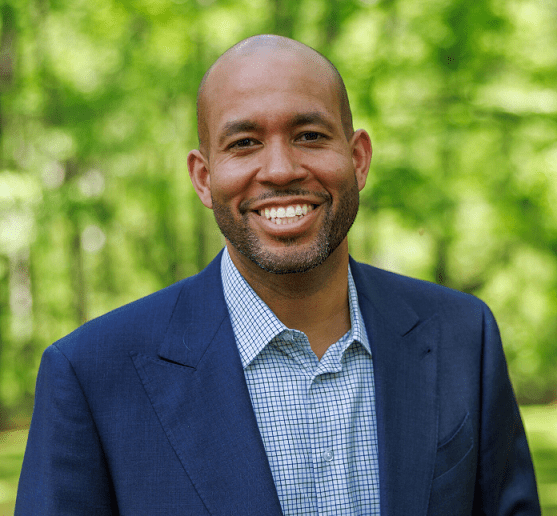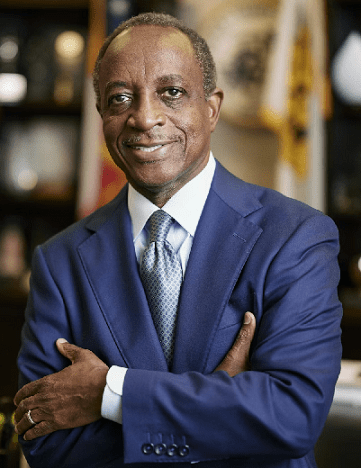
Atlanta’s mayors and church leaders rally at Big Bethel AME, vowing to defend diversity, equity, and inclusion programs amid Trump’s federal funding threats.
By Milton Kirby | Atlanta, GA | November 1, 2025
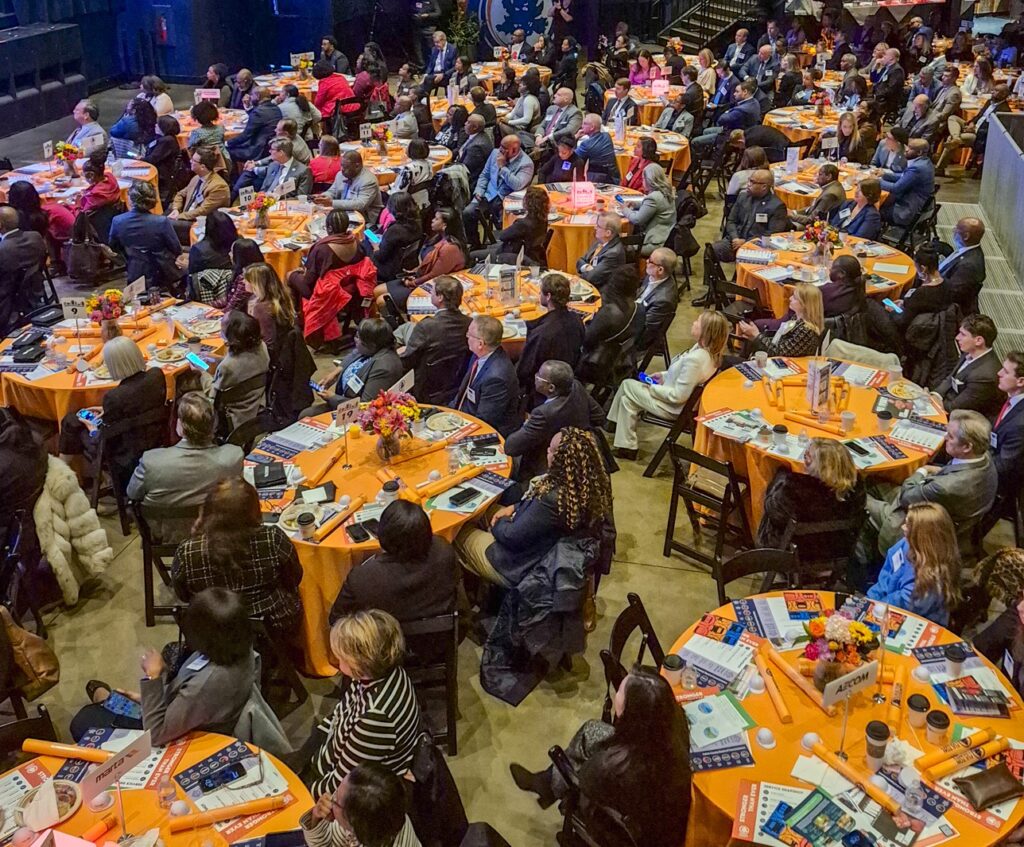
On a cool Friday morning inside Big Bethel AME Church, sunlight poured through stained glass where freedom once found its voice. From that pulpit — the same one that carried Dr. King’s thunder and John Lewis’s call for good trouble — came a new rallying cry:
“The soul of Atlanta is not for sale.”
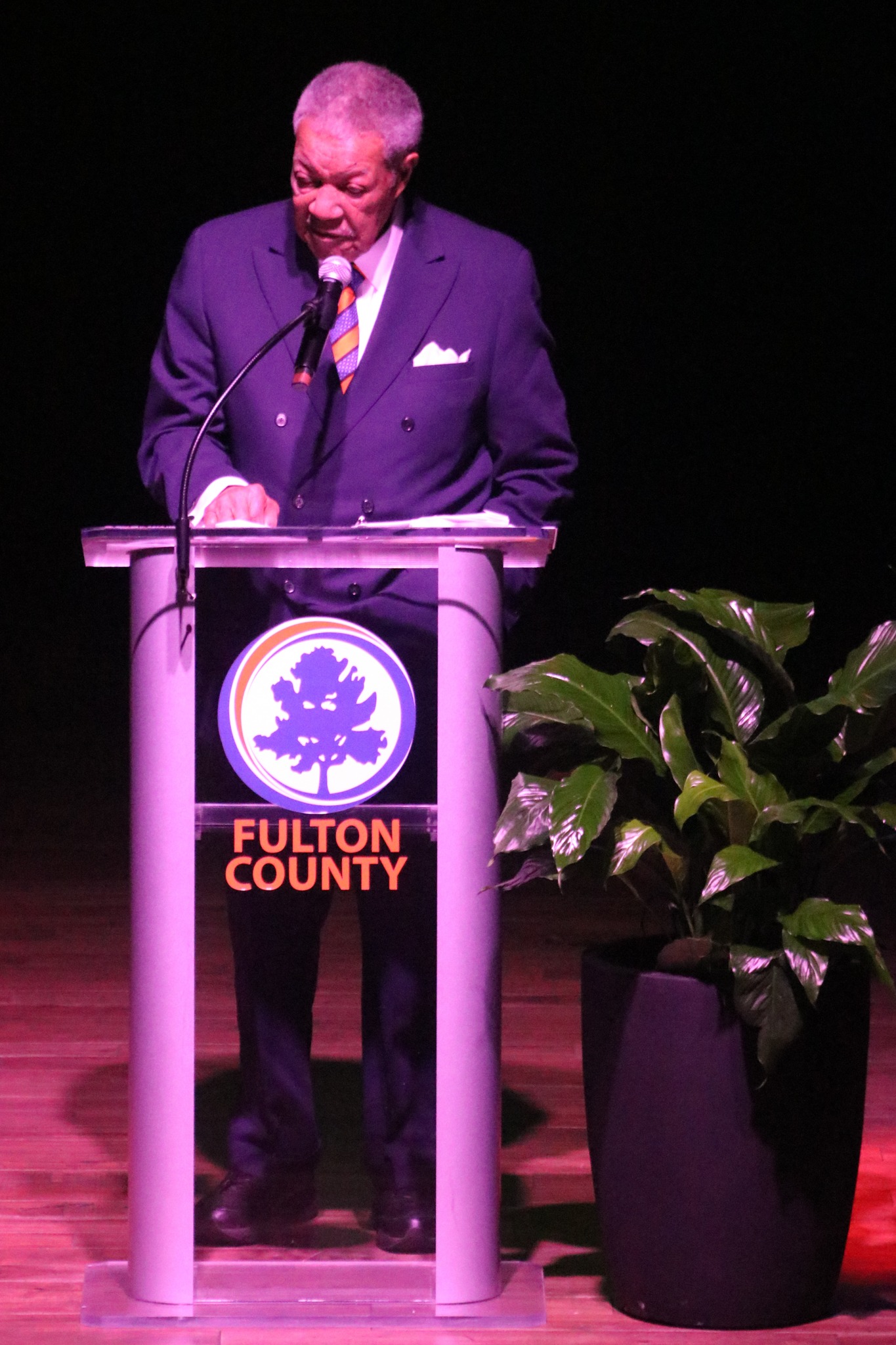
Mayor Andre Dickens stood with nearly every living Black mayor in city history — Andrew Young, Shirley Franklin, Bill Campbell, Kasim Reed — and Valerie Jackson, wife of the late Mayor Maynard Jackson. Together they filled the sanctuary with memory, defiance, and faith.
A City That Won’t Bow
They came to answer a challenge from Washington — a Trump administration order threatening to choke off federal dollars from cities that keep diversity, equity, and inclusion (DEI) programs alive.
Billions for housing, airport work, and BeltLine projects hang in the balance. But the crowd at Big Bethel didn’t come to talk fear. They came to talk faith.
“We are gathered here to rekindle the spirit of our city — to remind one another that courage, unity, and truth still live within us,” said former councilman Jabari Simama, now helping to lead the new Soul of Atlanta Coalition. “Our mission today is clear: to bring people together, share knowledge, and demonstrate that when we act with purpose and faith, we can change the course of our community. We can push back against forces that seek to divide, distract, and destroy us.”
“Atlanta was built by people who refused to dream small. We will never deny the values that have not only made this city great, but made it just.”
A Legacy Worth More Than Money
Atlanta has already paid a price for its convictions — forfeiting $37.5 million in airport funds this summer rather than gut its minority-contracting program.
“Our soul is not for sale,” declared Elder Toni Belin Ingram of the AME Church, her voice rising over the applause.
Big Bethel AME Church
Mayor Dickens called the fight what it is: another Goliath moment. “Goliath doesn’t stand a chance in Atlanta,” he said. “We’ve slayed bears. We’ve slayed lions. Been there. Done that. Got the notes. Got the t-shirt and some of the scars.”
His office later said the city is still reviewing the legal path forward, but his tone in the church left little doubt: the mayor intends to stand firm.
Where the Story Began
Valerie Jackson
It was Maynard Jackson — Atlanta’s first Black mayor — who planted the seed of economic fairness back in the 1970s. His Equal Business Opportunity program forced open the door for Black-owned firms to compete for city contracts. Washington noticed — and copied it.
“This is where it all began,” said Ambassador Andrew Young, looking over the packed pews. “These ideas didn’t come from Washington to us. They came from us to Washington.”
Valerie Jackson smiled softly at the mention of her husband’s name.
“Maynard’s policies of inclusion became a model for the nation,” she said. “We will not allow the principles of fairness and justice to be rolled back.”
A Coalition of Courage
From Shirley Franklin to Kasim Reed, the lineup at Big Bethel looked like a living timeline of Atlanta’s Black leadership. Pastor Jonathan C. Augustine — or “Pastor Jay” — reminded everyone why they were there.
“Your presence here says we know what’s happening,” he said. “An autocratic leader is targeting blue cities led by Black mayors. And yet here we stand.”
The new Soul of Atlanta Coalition plans to spend the next year gathering stories, uplifting minority-owned businesses, and organizing pushback against attacks on DEI and affirmative-action programs.
Standing in the Gap
Even as City Hall weighs its legal moves, Dickens said the work of serving people continues — especially with the federal shutdown straining families.
“We’re spending time feeding the least, the last, the lost,” he said.
The Atlanta Community Food Bank has launched a $5 million emergency plan to replace lost SNAP benefits, aiming to distribute six million pounds of food in four weeks through 700 local partners.
“In tough times,” Dickens said, “we see the true spirit of Atlanta — compassion, connection, and courage.”
By Stacy M. Brown | Black Press USA Senior National Correspondent
There are moments in history when a single act of generosity reveals the moral decay of an entire nation. MacKenzie Scott’s $38 million gift to Alabama State University, the largest in its 158-year history, is such a moment. It is not merely a financial transaction, nor the casual benevolence of the wealthy. It is a moral indictment against a society that has grown indifferent to the suffering of its Black citizens, against a government that starves their schools, and against a class of newly rich who have forgotten the communal obligations of success.
Dr. Quinton T. Ross Jr., the university’s president, called it a defining moment for Alabama State, and indeed it is. His words ring with the gratitude of those who have built excellence in the face of deprivation. “Ms. Scott’s generosity affirms Alabama State University’s reputation as a catalyst for excellence and innovation in higher education,” he said. But her act is more than affirmation. It is a resurrection, and a call to remember that Black institutions remain the crucibles of America’s moral and intellectual power. In recent weeks, Scott has dispersed her fortune with quiet conviction. Seventy million to the United Negro College Fund to strengthen endowments across thirty-seven member schools; sixty-three million to Morgan State University, her second gift to that campus in less than five years; and one hundred and one million combined to Morgan State and the University of Maryland Eastern Shore in a span of days.
Her giving, unshackled by stipulations or vanity, stands in luminous contrast to an era defined by greed and indifference. The plutocracy that dominates modern life often extracts from the many to enrich the few. Scott reverses that equation. She does not donate to dominate. She gives to repair. Her wealth, born of corporate conquest, has become the instrument of restoration. It stands as a redemption, perhaps, of what that very system has broken. One cannot ignore the symbolism of her actions. At a time when the federal government withholds support from historically Black institutions, when affirmative action has been dismantled, and when diversity programs are vilified, a white woman from the highest ranks of privilege has become the single most consistent benefactor of Black education in the nation. It is as though she has seen, from her rarefied vantage point, what America refuses to see: that the progress of its Black citizens is not a charity, but the measure of its own civilization.
Scott’s philanthropy, then, is not simply about money. It is about memory. The moral memory of a nation that has forgotten the debt it owes to those it once enslaved and now ignores. In her giving, she restores something elemental, the belief that one’s prosperity is meaningless if it does not lift others. W.E.B. Du Bois wrote of the “double consciousness” that afflicts the Negro in America, the struggle to see oneself through the eyes of a world that despises you. Today, the irony is reversed. America must learn to see itself through the eyes of those it has wronged. MacKenzie Scott, for all her privilege, seems to have glimpsed that truth. She gives the impression that she has looked into the soul of the republic and found it wanting.
Her actions do not absolve the sins of this nation. They reveal them. And in revealing them, they offer a path, not of atonement, but of accountability. For every dollar she gives to rebuild a school, there are a thousand more that others with power might give but will not. One woman has chosen conscience over complacency. The question that remains is whether the rest of America—Black and white alike—will choose to follow her example or remain comfortable in the quiet decay of its own moral poverty.
MARTA completes Garnett Station’s $5 million platform renovation, restoring full Red and Gold Line service and advancing its billion-dollar station modernization program across Atlanta.
By Milton Kirby | Atlanta, GA | October 29, 2025
After six weeks of construction, MARTA has officially reopened Garnett Station to full Red and Gold Line service, marking the completion of a major platform renovation that blends safety, efficiency, and forward-looking design.
The temporary “skip stop,” a strategic decision during which trains bypassed the downtown station, proved to be a well-thought-out move—saving an estimated four months of construction time and $5 million in project costs.
“By limiting service during construction, we were able to accelerate the timeline and ensure safety for both riders and workers,” MARTA officials said.
Restoring and Reinventing a 44-Year-Old Station
Built in 1981, Garnett Station has long served as a southern gateway to downtown Atlanta. The renovation replaced the station’s original 44-year-old pavers—a vital structural refresh handled by a team of experienced contractors, including Carroll Daniel Construction, C.D. Moody Construction Company, H&M Restoration Service, Level Construction Services, Schindler Elevator Corporation, SRC Ventures, and Williams Tile & Marble Company.
Work on the lower concourse was also completed ahead of schedule, setting the stage for continued improvements on the upper concourse, where crews are applying graffiti-resistant coatings, replacing windscreens, and performing deep cleaning and pressure washing.
Importantly, train service is no longer impacted, allowing riders to once again board and exit at Garnett while remaining improvements continue behind the scenes.
A New Vision for the Plaza
MARTA, in partnership with the Atlanta Downtown Improvement District and the Project for Public Spaces, is not just transforming the station’s large concrete plaza, but also inviting the community to be part of this change. The goal is to create a vibrant public space that promotes connection, accessibility, and civic pride—especially as Atlanta prepares for the 2026 FIFA World Cup.
The redesign aims to reimagine Garnett’s urban footprint, turning a utilitarian space into a place where art, culture, and transportation meet.
Part of a Billion-Dollar Revitalization Effort
The Garnett Station work is one piece of MARTA’s broader $1 billion Station Rehabilitation Program, which spans all 38 rail stations across the system. The initiative focuses on modernizing infrastructure, improving safety and accessibility, and enhancing the aesthetic experience for the hundreds of thousands of daily MARTA riders.
With Garnett Station’s platform now complete, MARTA’s leadership says it’s another step toward delivering on the agency’s promise of a safer, cleaner, and more connected transit experience for Atlanta residents and visitors alike. This project is not just about infrastructure but about enhancing the daily lives of our community.
The Metropolitan Atlanta Rapid Transit Authority (MARTA) is opening its doors to job seekers this fall, with a large-scale hiring event scheduled for Thursday, Nov. 6, 2025, from 1 p.m. to 4 p.m. at MARTA Headquarters, 2424 Piedmont Road NE, across from Lindbergh Center Station.
The agency is recruiting for a range of critical positions that keep Atlanta moving — including rail and bus operators, journeyman bus technicians, railcar mechanics, track mechanics, track maintainers, and hostler junior apprentices.
Qualified applicants can earn sign-on bonuses for select roles, including CDL Bus Operators (with passenger endorsement), Journeyman Bus Technicians, and Track Maintainers.
Requirements and Opportunities
MARTA is seeking both full-time and part-time operators who are 21 years or older, hold a high school diploma or equivalent, and have a current Class C license. All operator candidates must pass a physical exam, ability test, and drug and alcohol screening.
For Journeyman Bus Technicians, applicants must be 18 years or older, possess a Class C license, and have completed training in automotive, transit bus, diesel, or maintenance programs—or have at least three years of comparable experience.
Getting There
MARTA encourages candidates to ride transit to the event, which will be held directly across from Lindbergh Center Station for easy access.
Those who drive can park in the Sydney Marcus parking deck but must park only in MARTA-designated areas. Parking in the wrong section could result in additional fees.
Dress to Impress
Business casual or professional dress is required, and candidates should bring updated resumes and proof of required credentials.
Interested applicants can explore upcoming career fairs and other job opportunities by visiting itsmarta.com.
A federal judge sides with Michael Jordan’s 23XI Racing in its antitrust lawsuit, dismissing NASCAR’s “cartel” counterclaim and reshaping the sport’s power balance ahead of trial.
By Milton Kirby | Charlotte, NC | October 29, 2025
A Legal Showdown in Charlotte
Michael Jordan’s racing team, 23XI Racing, and Front Row Motorsports have not only made headlines on the track but also in federal court. On October 28, 2025, they scored a major victory when U.S. District Judge Kenneth Bell dismissed NASCAR’s counterclaim accusing them of operating as a cartel.
The ruling marks a turning point in one of the most significant legal battles in modern motorsports. What began as a disagreement over how NASCAR governs its teams has evolved into a test of how much control a sports sanctioning body should hold over its competitors.
Background: Why the Teams Sued NASCAR
The lawsuit was filed in October 2024 by 23XI Racing — co-owned by Michael Jordan and Denny Hamlin — and Front Row Motorsports, owned by Bob Jenkins. Their claim: NASCAR’s charter system and business practices create an illegal monopoly.
Under that charter system, each Cup Series team holds a “charter” guaranteeing entry in every race and a share of revenue. The teams allege that NASCAR uses the system to limit competition, suppress team values, and maintain full control over television and sponsorship income.
Out of 15 Cup Series organizations, only two — 23XI and Front Row — refused to sign the new 2025 charter agreement after two years of tense negotiations. They called the deal “take-it-or-leave-it,” claiming it stripped teams of long-term equity.
The lawsuit names NASCAR Holdings, Inc. and CEO Jim France as defendants, accusing them of violating federal antitrust laws by dictating terms that block other sanctioning bodies or rival leagues from competing in top-tier stock-car racing.
NASCAR Fights Back — and Loses
In March 2025, NASCAR countersued. Its attorneys claimed that Curtis Polk — Jordan’s longtime business manager and co-owner of 23XI — coordinated with other teams to pressure NASCAR for a better charter deal.
NASCAR’s counterclaim described the teams as an “illegal cartel” that allegedly:
Boycotted meetings of the Team Owners Council,
Tried to interfere with NASCAR’s ongoing media-rights negotiations, and
Refused to negotiate individually.
The sanctioning body argued that this group behavior harmed competition and violated the Sherman Antitrust Act.
But Judge Bell didn’t see it that way. In his October 28 order, he granted summary judgment in favor of the teams, effectively tossing NASCAR’s counterclaim.
He wrote that NASCAR failed to show any “unreasonable restraint of trade” and that the meeting boycott “appeared to have little impact on the competitive landscape.” In other words, while the teams’ joint stance may have frustrated NASCAR, it did not harm competition itself — the key legal test for any antitrust violation.
Even if NASCAR experienced economic loss, the court said, that isn’t the same as harm to the marketplace.
What the Dismissal Means
By removing the “cartel” accusation, Judge Bell has simplified the case heading to trial. The focus now returns to the original question: Does NASCAR’s business model violate antitrust law?
For 23XI and Front Row, this is a big win. It clears away a major distraction and gives their attorneys — led by veteran sports lawyer Jeffrey Kessler — a cleaner path to argue that NASCAR’s charter system is anti-competitive.
“This ruling only reaffirms my clients’ unwavering pursuit of a more fair and equitable sport,” Kessler said after the decision.
NASCAR’s legal team struck a different tone, saying it “respects the court’s decision, though we respectfully disagree with its reasoning,” and indicated it may appeal the dismissal.
The Charter System at the Center of It All
Created in 2016, NASCAR’s charter system was meant to give teams stability — a guarantee that, like franchises in the NFL or NBA, they could count on starting spots and predictable income.
But the plaintiffs argue that NASCAR turned that system into a control mechanism. Charters can be revoked or limited in transferability, giving the sanctioning body final say over who can buy, sell, or race.
Teams say this suppresses their market value and leaves them dependent on NASCAR’s approval for everything from sponsorships to media exposure. Without reforms, they claim, no independent racing team can ever build the long-term wealth enjoyed by teams in other professional sports.
That imbalance is magnified by the way charters are distributed. Under the new 2025 charter agreement, most teams are limited to a maximum of three charters. However, powerhouse organizations like Hendrick Motorsports and Joe Gibbs Racing were grandfathered in and allowed to keep four.
According to Jayski’s NASCAR Silly Season Site and RacingNews.co, this exception allows Hendrick to continue fielding four chartered cars — the No. 5, No. 9, No. 24, and No. 48 entries — while new or expanding teams are capped. That rule not only preserves historical dominance but also illustrates the inequity newer teams like 23XI are fighting to change.
Inside the Courtroom: Key Legal Milestones
The Original Complaint (October 2024) – Filed in Charlotte’s federal court, the complaint alleged that NASCAR controls nearly every aspect of top-tier stock-car racing, from event scheduling to licensing and broadcast rights.
Preliminary Injunction (December 2024) – Judge Bell temporarily allowed 23XI and Front Row to operate under existing charters while litigation continued.
Fourth Circuit Appeal (June 2025) – An appellate panel vacated an earlier injunction, emphasizing the need for a full trial on the merits.
Counterclaim Dismissed (October 2025) – The most recent order, striking down NASCAR’s accusation of cartel behavior.
The case is now scheduled for trial on December 1, 2025, in Charlotte, North Carolina. Both sides have agreed to strict pre-trial conduct rules to keep the proceedings civil — including bans on referencing unrelated controversies like former NASCAR CEO Brian France’s 2018 resignation.
The Bigger Legal Questions
The trial will revolve around several key issues:
Market Definition: Are we talking about “top-tier stock-car racing” (the Cup Series alone) or the entire motorsports industry? The smaller the defined market, the stronger the monopoly claim.
Competition vs. Competitor Harm: Antitrust law protects the market, not individual companies. The teams must prove NASCAR’s structure hurts competition itself — for example, by preventing new entrants or suppressing fair prices.
Revenue and Negotiation Power: Who should control the billions generated by television rights, sponsorships, and licensing? Teams say NASCAR hoards too much of that revenue and dictates how it’s divided.
Statute of Limitations: NASCAR argues that some alleged conduct happened more than four years ago and falls outside the antitrust window.
How the court answers those questions could reshape not only NASCAR’s future but also the economics of all U.S. motorsports.
What’s at Stake
If 23XI and Front Row win, the case could force NASCAR to overhaul its entire charter and revenue model. That might include:
Allowing greater transfer rights for team charters,
Sharing a larger portion of media and sponsorship revenue, and
Giving teams a stronger voice in governance.
For NASCAR, losing could mean ceding some of the control it has exercised since its founding in 1948.
Even a negotiated settlement — which remains possible — might compel NASCAR to rewrite its agreements in ways that permanently rebalance power between teams and the league.
Cultural and Business Impact
Beyond the courtroom, this case carries symbolic weight. Michael Jordan’s entry into NASCAR was already historic: a Black majority owner stepping into a sport long criticized for its lack of diversity.
Now, his team is challenging the structure of the very organization he joined. It’s not just about money — it’s about transparency, fairness, and inclusion in a sport trying to modernize its image.
Business outlets like Sports Business Journal and The Athletic note that Jordan’s leadership brings credibility and global attention to a sport seeking new fans. This lawsuit, though risky, positions him as both a competitor and a reformer.
For many team owners, the outcome will determine whether NASCAR evolves into a franchise-style league with shared prosperity — or remains a top-down entity where teams compete for limited leverage.
The Road Ahead
The December 1 trial will likely stretch into early 2026. Legal experts expect fireworks: expert testimony on sports economics, closed-door contract disclosures, and possibly new revelations about NASCAR’s internal decision-making.
Both sides continue mediation talks, but after this week’s ruling, 23XI and Front Row hold the momentum.
Whatever the verdict, this case is already changing the conversation around how America’s biggest racing league does business.
Dear Shadow Ball: How many players have been inducted into the National Baseball Hall of Fame in Cooperstown, NY, based on their play in the Negro Leagues? – Curious Curt, International Falls, MN
Dear Curious Curt: Thanks for that question … there are 28 players, listed below with position and year inducted), inducted into the Hall of Fame based on their performance in the Negro Leagues.
Satchel Paige, P, 1971 Ray Dandridge, 3b, 1987 Andy Cooper, p, 2006
Josh Gibson, c, 1972 Leon Day, 1995 Pete Hill, of, 2006
Oscar Charleston, OF, 1976 Turkey Stearnes, of, 2000 Ben Taylor, ib, 2006
Martin Dihigo, 2b, 1977 John Henry Lloyd, ss, 1977 Cristobal Torriente, of, 2006
John Henry Lloyd, ss, 1977 Hilton Smith, p, 2001 Jud Wilson, 3b, 2006
Ray Brown, p, 2006
The real question, for me at least, is “are 28 Negro League player inductees sufficient to accurately tell the story of Negro League baseball in the first half of the twentieth century?” To answer that we need to add some context.
CONTEXTUAL BACKGROUND
On December 16, 2020, Major League Baseball announced that it was correcting a longtime oversight in the game’s history by officially recognizing seven specific Negro Leagues operating between 1920-1948 as “Major Leagues”.
Since April 15, 1947 (the day Major League Baseball integrated) 42% of all Hall of Fame players debuting have been players of color (i.e., would have been Negro Leaguers prior to that date)l
In his 1994 baseball documentary, Ken Burns states that Black baseball stars defeated White Major League stars at least 309(70%) times in 438 games … this, of course, is “oral history” but all 7 compilations of games between “so called” Negro League and “so called” Major League teams give the Negro Leaguers the edge with an average winning percentage of 58%.
Many Major League baseball players had been effusive in their assessment and praise of Negro League players prior to the integration of the game including Hall of Famers Ty Cobb, Babe Ruth, Honus Wagner, John McGraw, Joe DiMaggio, Dizzy Dean, Bob Feller, Charlie Gehringer, Rogers Hornsby, and Leo Durocher.
(This would be interesting but not probative but for the above four bullets) Between 1920-1948 the slash lines for both the two Major Leagues and the seven Negro Leagues are virtually identical. A slash line includes batting average, on base percentage, and slugging percentage. The seven Negro Leagues slash line was .272, .335, .376 while the two Major Leagues (AL & NL) was .276, .340, .389.
It must be noted that – while there are 28 players in the Hall for play in the Negro Leagues – there are 125 players in the Hall who earned induction for play in the Major Leagues during baseball’s segregated era prior to 1947.
Given the above bullet points I hope it is obvious to all of us that the current ratio of Major League Hall of Famers prior to 1947 to Negro League Hall of Famers from that same period does not match the record, opinion and honors captured in the above bullets. Clearly, 28 does not do a good job of educating the public. How many Negro Leaguers should there be inducted in Cooperstown? I will close by sharing my opinion and will defend it later in this series if reader interest warrants. In my opinion there should be somewhere between 60 to 80 Negro League players inducted into the National Baseball Hall of Fame in Cooperstown.
Last week’s Shadowball Significa Question
“Who was the first 20th century player to break the color barrier and get into the major leagues, two bonus questions, what year, what team? A third bonus question, how long did he play in the majors? David Nivens, parts unknown, provided the following: When I was kid, my baseball coach told me that Jackie Robinson was the first black player to enter the Major Leagues in 1947 with the Brooklyn Dodgers. He played 10 years in the Major Leagues. Thank you, David I very much appreciated your participation, and your including your father’s assistance; my dad provided me that same information when I was a kid.
The Shadowball Significa Question of the Week
What was the name of Atlanta’s most prolific franchise (in terms of years in the league) in the Negro Leagues?
Ted Knorr
Ted Knorr is a Negro Leagues history expert and longtime SABR member, known for his trivia wins and founding the Jerry Malloy Conference and Commemorative Nights. You can send questions to shadowball@truthseekersjournal.com or Shadow Ball, 3904 N Druid Hills Rd, Ste 179, Decatur, GA 30033
Please consider supporting open, independent journalism – no contribution is too small!
MARTA launches the “Better Breeze” upgrade, a modern contactless fare collection system arriving by spring 2026, bringing faster gates, tap-to-pay options, and enhanced rider security.
By Milton Kirby | Atlanta, GA | October 28, 2025
The next time you step onto MARTA, you may notice something new — and brighter. The Metropolitan Atlanta Rapid Transit Authority has begun replacing its entire fare collection system, marking one of the agency’s biggest technology upgrades in nearly two decades.
MARTA began installing new fare equipment at Lindbergh Center Station Sept. 22 and at Doraville Oct. 8. The installation of new contactless payment terminals on buses began in mid-September. The installation of new equipment will continue systemwide in phases until the customer transition period next April.
The project will continue in phases through spring 2026, when riders will officially transition to the Better Breeze system.
A System Built for the Future “It’s great to keep fares unchanged for years, but not an entire fare collection system,” said MARTA Interim General Manager and CEO Jonathan Hunt. Hunt called the upgrade essential to preparing for a “once-in-a-generation” year ahead, with new trains, a redesigned bus network, on-demand zones, and a refreshed mobile app launching before Atlanta hosts the 2026 World Cup.
Leadership from MARTA and INIT, the Better Breeze system developer and installer (L to R: Rhonda Allen, MARTA Deputy General Manager; Jonathan Hunt, MARTA Interim General Manager & CEO; Jennifer Ide, Chair, MARTA Board of Directors; Carl Commons, INIT CEO; Steven Parker, MARTA Chief of Staff).
MARTA’s Breeze system first launched in 2006, replacing tokens and paper transfers. While the Breeze name will remain, everything else — from faregates to the mobile app — will be rebuilt.
Tap, Go, and Keep Moving The Better Breeze system introduces open payment technology. Riders can simply tap their credit or debit card, smartphone, or digital wallet to pay the same $2.50 fare. The upgrade also includes new orange Breeze cards, improved vending machines, and a redesigned mobile app where users will create new accounts to purchase fares.
For MARTA Mobility and reduced-fare customers, the agency will offer both physical and digital options. Transition details will be announced early next year.
High-Tech Security, Lower Downtime MARTA’s installation partner, INIT, says each faregate unit can run 10,000 hours without service failure. The new gates are more tamper-resistant, remotely monitored, and designed to reduce fare evasion. “This is about transforming the rider experience and making transit more connected,” said Carl Commons, INIT’s CEO.
The technology is already used in cities including Houston, Seattle, Nashville, Grand Rapids, Honolulu, Los Angeles, and San Diego.
No Fare Increase — Just Faster Rides MARTA confirmed there will be no fare increase with the Better Breeze rollout. The systemwide modernization will take place in stages, ensuring riders can still access all rail stations during construction. Riders are advised to follow posted signs at stations to avoid closed faregates while new units are installed.
Better Breeze Card – Courtesy MARTA
From Tokens to Tap-to-Pay When MARTA began in 1971, bus rides cost just 15 cents. In 2006, the original Breeze card introduced Atlanta riders to smart-card technology. Nearly 20 years later, MARTA is once again reinventing how Atlanta moves — one tap at a time.
By the Numbers – MARTA Fare Facts
15 cents: Original MARTA fare in 1971
$2.50: Current one-way fare (unchanged for 14 years)
10,000 hours: Estimated operating time per faregate without service failure
2026: Target year for Better Breeze systemwide launch
20 years: Time since the original Breeze system debuted
Millions of low-income Americans could lose food assistance as SNAP benefits halt November 1 amid a prolonged government shutdown, leaving families and food banks bracing for crisis.
By Milton Kirby | Atlanta, GA | October 27, 2025
As the federal shutdown stretches into its fourth week, the U.S. Department of Agriculture has confirmed that no Supplemental Nutrition Assistance Program (SNAP) benefits will be issued on November 1 — potentially cutting off aid to more than 42 million Americans who rely on the program to feed their families.
On Monday, the USDA posted a stark message on its website: “Bottom line, the well has run dry.” According to the agency, Senate gridlock over federal spending has left SNAP — once known as food stamps — without the funds to continue into the new month.
Photo by Milton Kirby
The USDA’s statement comes amid partisan tension in Congress. The agency said that Senate Democrats have now voted 12 times against proposed measures to fund SNAP, citing disagreements over other spending priorities. Without a resolution, the department warned, “there will be no benefits issued November 1.”
Millions at Risk
The impact of this funding lapse is enormous. SNAP currently provides monthly food assistance to roughly one in eight Americans — including working parents, seniors, and people with disabilities. The separate Women, Infants, and Children (WIC) program, serving more than 7 million low-income mothers and babies, is also poised to run out of money.
While EBT cards will still function for now, only unused balances from prior months will remain available after November 1. USDA has clarified that these balances will roll over, but no new November benefits will be issued.
Adding to the strain, the USDA has said it will not reimburse states that use their own funds to keep SNAP benefits flowing during the shutdown. That decision leaves governors and local agencies scrambling to fill the gap.
Food Banks Brace for Surge
Across the nation, food banks are preparing for a potential surge in demand. “Food banks are already squeezed by federal funding cuts,” said George Matysik, executive director of the Share Food Program in Philadelphia. “If SNAP goes dark, we’ll see lines wrap around the block.”
Photo by Milton Kirby
The New Disabled South, a Georgia-based advocacy group, has begun offering small emergency grants — $100 for individuals and $250 for families — to help SNAP recipients cover basic needs. But even that organization is warning participants that accepting cash could affect other benefits such as Medicaid or Social Security.
A Divided Washington
The USDA said in an internal memo earlier this month that it would not tap its $5 billion contingency fund, explaining that the reserve is reserved for natural disasters, not shutdowns. That decision — combined with congressional inaction — has deepened frustration across party lines.
“It’s abysmal that we live in such a moment,” said Dom Kelly, founder of New Disabled South. “A government shutdown should not mean that people have to choose between paying rent and feeding their families.”
The shutdown, which began October 1 after lawmakers failed to agree on a 2026 federal budget, is now among the longest in U.S. history, trailing only the 35-day standoff of 2018–2019.
What SNAP Recipients Can Do
SNAP and WIC recipients are urged to contact their state agencies immediately for local assistance and to verify whether their states are releasing temporary emergency benefits. In some states, officials are exploring emergency appropriations or public-private partnerships with community food banks. Others are directing residents to faith-based and nonprofit food programs.
The USDA emphasized that while its mission is to “increase food security and reduce hunger in partnership with cooperating organizations,” it cannot operate without congressional funding.
For now, the agency’s message is clear: without a deal, millions of American households could see their food budgets vanish overnight.
Please consider supporting open, independent journalism – no contribution is too small!
ATLANTA — On Saturday, October 18, hundreds of seniors filled the Wolf Creek Amphitheater for a joyful and determined attempt to set a new Guinness World Record. The goal: the largest senior health awareness fitness class ever organized.
Led by energetic fitness coach DaShaun Johnson, the crowd stretched, stepped, and moved in sync for nearly an hour. The effort came just 83 participants shy of setting a new global mark, but the day was far from a loss.
“What we did here today was bigger than any record,” Johnson said. “We moved together — as one community — and that’s what this is all about.”
The event, presented by the City of South Fulton in partnership with The Guru of Abs, drew seniors, caregivers, and family members from across metro Atlanta. Volunteers, sponsors, and local wellness organizations filled the amphitheater with energy, resources, and encouragement.
A Day of Movement and Motivation
The day began with warm ups and motivational music before Johnson led a full-body session designed to be inclusive for all mobility levels. From chair-based stretches to low-impact cardio, participants showed that age is no barrier to movement.
“While we did not break the Guinness record, to see all of these seniors here investing in their health is truly amazing,” said Leslie McGuffie, Chief Operating Officer of Axxess Benefit Consultants.
Many seniors said they came not for a record, but for connection.
“It feels good to know we’re part of something that celebrates us,” said participant Margaret Allen of East Point. “You’re never too old to take care of yourself.”
Why Senior Fitness Matters
According to the Centers for Disease Control and Prevention (CDC), adults aged 65 and older need at least 150 minutes of moderate physical activity each week, along with muscle-strengthening exercises twice a week. Regular activity helps reduce the risk of chronic diseases such as diabetes, heart disease, and certain cancers.
The popular SilverSneakers program, which provides free gym access for many older adults through Medicare, reports that consistent exercise improves balance, boosts mood, and reduces falls — the leading cause of injury among seniors.
“Events like this do more than raise awareness,” said wellness coordinator Tasha Greene. “They remind our elders that they are seen, valued, and capable.”
Building a Culture of Wellness
Organizers say the near-record turnout has inspired plans for a larger attempt next year. The City of South Fulton plans to continue promoting senior wellness programs throughout 2026, including walking clubs, nutrition workshops, and free exercise classes.
“We may have missed the record this time,” Johnson said with a smile, “but next year, we’ll make sure the world knows Atlanta’s seniors are unstoppable.”
No matter your age, the fitness journey can continue. With proper guidance and a consistent regimen, movement at any stage of life can improve health outcomes and quality of living.
Senior Fitness by the Numbers
150 minutes of weekly activity recommended for adults 65+.
28% of adults over 65 are inactive, per CDC.
25% reduction in risk of early death for active seniors.
40% fewer falls reported among seniors who exercise regularly.
The Power of Community Wellness
Social engagement improves mental health and reduces isolation.
Group exercise increases consistency and motivation.
Community-based programs can improve local health outcomes by up to 20%, according to public health studies.
Atlanta’s explosive growth is slowing after decades of expansion, as families move to surrounding suburbs for space and affordability while the city grows denser and pricier.
By Krystal Nurse | General Assignment Reporter | October 20, 2025
Quinn Arnau was thoughtful in his decision to plant his roots in the Atlanta metro area 20 years ago. He sought a space with an up-and-coming airport, major corporations’ headquarters and room to breathe.
“I feel like Atlanta is a cool place to live,” Arnau, president of the Atlanta Realtors Association, told Straight Arrow News. “It’s seen as an alternative to some of the larger cities like Chicago, Los Angeles and New York.”
He isn’t the only one who feels this way. Atlanta has grown steadily for the past two decades. But as that sought-after available space becomes harder to find, the boomtown’s growth is slowing.
Between 1990 and 2025, Atlanta’s population grew an average of 2.2% every five years, according to an SAN analysis of data from the Atlanta Regional Commission, a regional planning organization that tracks trends for the city and surrounding counties. The city’s most rapid growth occurred from 2015 to 2020, during which the number of residents increased by 15.5%, or 67,015 people. The city is no stranger to population losses, as its worst was by 4.84% from 2000 to 2005, when it lost 20,163 residents.
Ann Carpenter, head of research and analytics at the commission, told SAN her team reviews results of the decennial census and then uses information about new homes being built to calculate a weighted population change.
On an annual basis, the growth looks more incremental. Data from the Census Bureau’s annual population estimates showed that Atlanta’s growth slowed from 1.5% between 2021 and 2022 to 1.3% from 2023 to 2024.
John Floresta, chief strategy and accountability officer at the Cobb County School District, which serves 100,000-plus students in the Atlanta metro, told SAN that he believes the stalled national birth rate is the cause. According to the Federal Reserve Bank of St. Louis, the national rate has been falling since 2007 with a small spike in 2021.
“Over the course of the last five years or so, we have seen a stable birth rate across the county,” he said.
Yet even as the birth rate has held steady, school enrollment has decreased in Cobb County. The number of incoming kindergarteners has dropped from 7,720 students six years ago to 6,803 as of March 6, according to Georgia Department of Education enrollment data.
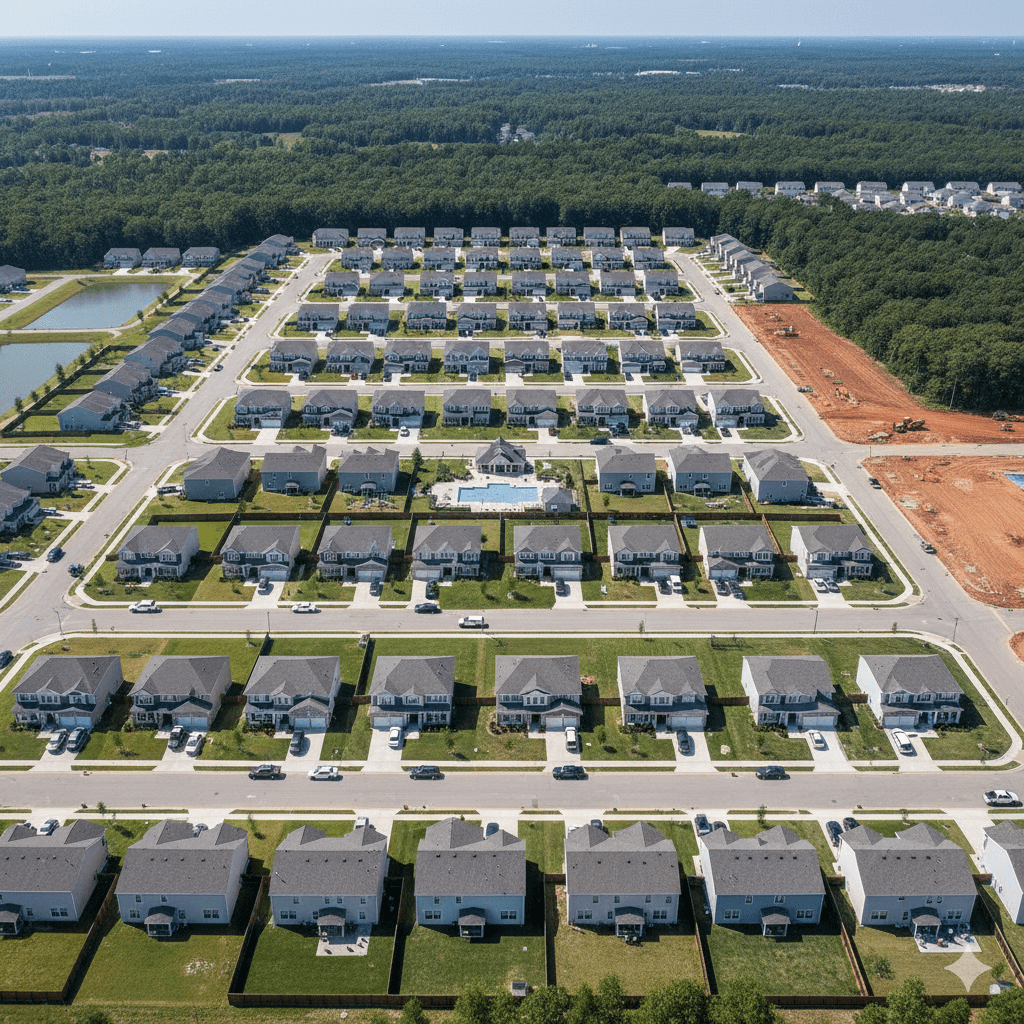
Despite it, people have relocated from the city’s confines to the suburbs where they can access more land for as much, sometimes less, than what they pay in Atlanta. The movement hit cities across the nation for decades. This urban flight proliferated during the COVID-19 pandemic, as places like Atlanta accepted more multifamily developments to accommodate a rising population, pushing single-family homes to the suburbs.
What’s led to the growth?
Lloyd Potter, professor of sociology and demography at the University of Texas at San Antonio, told SAN that cities often see more people move in when a transportation system is built. That happened in places like Knoxville, Tennessee, Dallas and Houston.
Atlanta followed a relatively steady growth after the 1990s, mimicking the expansion of major companies like Delta Air Lines, UPS, Coca-Cola Company and Equifax. The region became a great place to work: The Atlanta-Sandy Springs-Roswell region had an unemployment rate of 4.9% in 1990 and 3.4% in 2024, according to data from the Bureau of Labor Statistics.
Since 1990, the region has added a net of 45,827 employees. The largest addition was in 2021 when 146,300 people joined the region’s workforce — a rebound after the area saw 142,000 people lose their jobs during the COVID-19 pandemic.
Still, the promise of good jobs helps keep the region humming. At Cobb County schools, Floresta said the district has worked with several businesses to embed staff at Career Innovation and Technology Academy, a magnet high school that focuses on providing students hands-on learning experiences and career opportunities. Through the academy, Floresta said students graduate trained in their industries and could be hired quicker than others.
“Employers are confident that they’re hiring a skilled employee when a graduate walks in their door,” he said.
He added families are noticing the options suburban school districts like Cobb County offer and are either moving to those counties or sending their kids to the districts.
Suburbs enjoy the constraints of Atlanta
Floresta, like Arnau, moved to the Atlanta area nearly 25 years ago. He chose a home in Cobb County, which was growing slowly, starting in the parts neighboring Atlanta.
Soon enough, that development extended up to the city of Marietta, then to the town of East Cobb, over to the city of Kennesaw and down the county’s western side.
That’s evident in the sprawl of building permits the Atlanta Regional Commission has tracked. Its map revealed that single-family housing building permits in 2024 clustered in Forsyth, Gwinnett, Hall and Jackson counties.
Those new homes are likely being filled with younger families, Arnau said.
According to the commission’s yearly population report, the Atlanta Metro’s population grew by 26.3% from 1970 to 1980 and by 34.9% from 1980 to 1990. Gwinnett County experienced the largest jump, exploding from 72,349 residents in 1970 to just over 1 million as of this year.
The commission uses an 11-county region in the population estimates over the Census Bureau’s 29-county metro.
Arnau has noticed a trend of younger people moving out of the city of Atlanta to take advantage of the space a home in the suburbs can offer for their budgets.
“We have a lot of people looking for a large flat backyard,” Arnau said, “and I’m not sure how Atlanta is perceived from the outside, but once you get especially north of the city, there are creeks and rivers and hills and things everywhere.”
The lack of open space in Atlanta has, however, made way for multifamily buildings such as apartments, condominiums and townhomes. The city has approved nearly nine times more multifamily permits than it did for single-family homes in 2024, according to the Atlanta Regional Commission.
It’s the only area in the region with such a large discrepancy between the housing types.
“Some of those rentals are coming at the expense of would-be development for single-family homes,” Arnau said.
Throughout the region, home sales aren’t closing as quickly as they once did, Arnau told SAN. As a result, Arnau deems the area part of a “neutral” real estate market, which means neither buyers nor sellers have an advantage. This has allowed homeowners to stay put for longer as their homes build equity.
And that, in turn, promotes smaller towns to build their own downtown or city center areas to entice people to stay, Arnau said. That’s happened in Alpharetta, where in 2015, leaders created a downtown master plan to address Fulton County’s 365,000-resident increase between 1970 and 2015.
Growth in Atlanta hasn’t stopped. It’s only slowed after years of explosive growth that has become the expectation: People are still moving in and calling it home.
“The future is bright,” Arnau said. “Atlanta will continue to keep growing and we’ll see people continue to want to live here.”
Tristan Peterson (Creative Director) and Devin Pavlou (Digital Producer) contributed to this report.
Please consider supporting open, independent journalism – no contribution is too small!