Inside the Bill Pickett Invitational Rodeo — Part 4

Kirk Jay rises from The Voice to Soul Country leader, using BPIR platform to elevate Black country artists and reclaim a powerful musical legacy.

Kirk Jay and the Rise of Soul Country: How a Small‑Town Singer Became the Voice of a Cultural Return

By Milton Kirby | Atlanta, GA | March 28, 2026

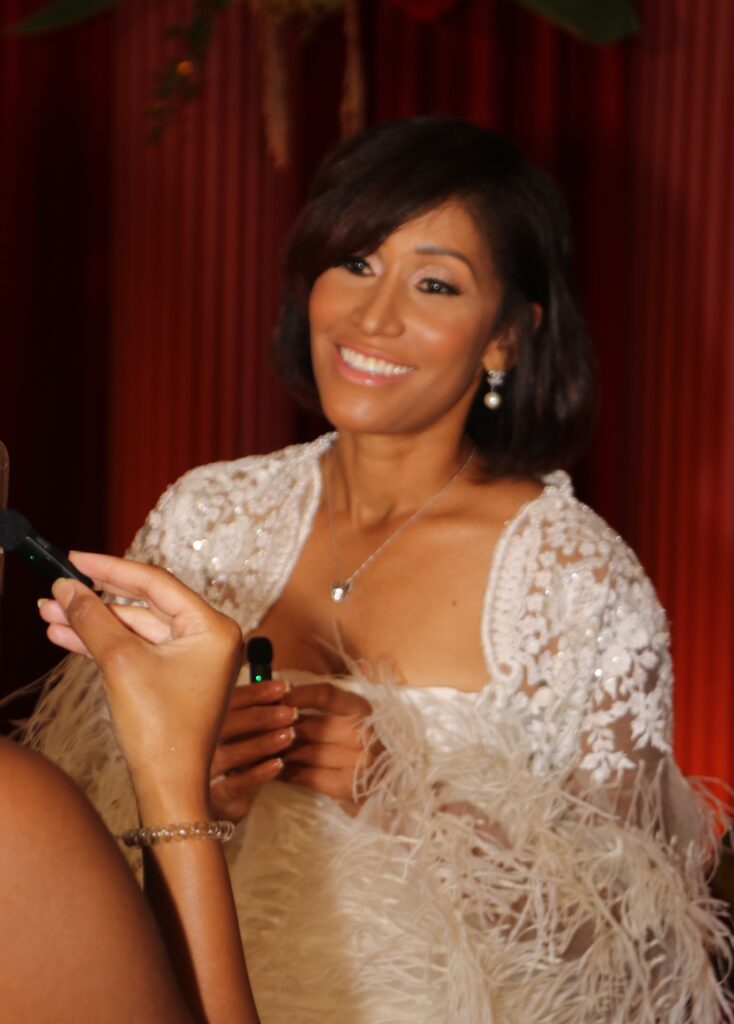
When Kirk Jay steps onto the dirt floor of a Bill Pickett Invitational Rodeo arena, the crowd doesn’t just hear a singer they witness a movement taking shape. The Alabama‑born artist, who first captured national attention with a third‑place finish on Season 15 of NBC’s The Voice, has become the face of a growing cultural reclamation: Black artists returning to a genre they helped create.

In 2025, Jay toured with the Bill Pickett Invitational Rodeo (BPIR) and served as a judge for the Soul Country Music Star competition. This year, he returns as the Show Host for Season 3 — a full‑circle moment for the platform’s first champion and winner of its $10,000 grand prize.

“I think Soul Country Music Star gave me a name,” he said. “It’s paving the way for Black country artists like me to get out there and showcase our talent. And I’m having fun. I’m building relationships, gaining fans, and growing as an artist.”

Now a central figure in both Soul Country Music Star and BPIR, Jay has become more than a performer. He is, in many ways, proof of concept. Jay said. “It helped elevate what I do and put it in front of people who needed to hear it.”


A Country Childhood in Bay Minette

Jay is quick to correct anyone who tries to claim him as a Mobile native. “I’m from Bay Minette,” he said with pride. “A lot of people say Mobile, but I spent most of my time in this little town called Bay Minette.”

His roots run deep in the red clay of South Alabama. His parents were devoted fans of old‑school country Ronnie Milsap, Mariah, Night Train and the soundtrack of his childhood blended gospel harmonies with country storytelling.

“We’re no gimmick,” he said. “My family is country. We fish, we ride, we do all the country stuff. This is our lifestyle.”

Jay’s musical journey began in church, where he taught himself piano by ear. After services, he would slip back into the sanctuary, turn to the piano, and mimic what he heard the musicians play. He never learned to read music. Even today, every song begins with a melody — a hum, a chord progression, a feeling — long before any lyrics appear.

“Producers get mad at me,” he laughed. “They say, ‘Why you always start with melody?’ But that’s just how God gave it to me.”


Finding His Voice and His Calling

Jay discovered his vocal gift in the ninth grade after winning a school talent show. That moment sparked a journey that took him across Alabama, Georgia, and Texas, performing at open mics and learning how audiences responded to his sound.

Photo courtesy BPIR – Kirk Jay

His breakout moment on The Voice came with his rendition of “In Case You Didn’t Know,” a cover delivered with such sincerity that many fans assumed it was his original. “That’s marketing,” he said with a grin. “You sing it like it was meant for you.”

For Jay, country music is not an act, it’s inheritance.

“Country music belongs to us, and nobody does it like us,” he said. “Nobody brings that feeling, that soul… like we do. We are the roots. We are the fire. We are the history.”


The Soul Country Connection

Jay’s introduction to Soul Country Music Star came through his first manager, who urged him to audition. After researching the platform, he realized he had found something rare: a space intentionally built for Black country artists.

“I said, ‘Man, this could take me to another level,’” he recalled. “And it did.”

Winning the competition opened doors not just for him, but for the movement itself. His success demonstrated that Soul Country Music Star could identify, elevate, and launch Black country talent on a national scale.

His authenticity resonates deeply with fans, especially young listeners who see themselves reflected in his journey. Many reach out with collaboration requests, concert inquiries, and messages of inspiration.


Growing Through the Rodeo

Performing at BPIR events has sharpened Jay’s artistry. Rodeo arenas are loud, cavernous, and unpredictable. Thousands of fans fill the stands, and the acoustics shift with every stomp of a boot.

“You really got to know yourself as an artist,” he said. “It’s a big platform. You have to study your craft and stay consistent.”

The rodeo crowds have embraced him, and he credits BPIR with expanding his audience, boosting his music sales, and deepening his connection to the culture that raised him.

Jay now has more than 87,000 Instagram followers many of them young Black fans who see in him a version of themselves they’ve never seen on a country stage.


Reclaiming a Sound That Started With Us

Jay speaks openly about the erasure of Black contributions to country music and the urgency of reclaiming that history.

“Country music belongs to us,” he said. “Nobody brings the soul, the feeling, the heart like we do. We’ve been pushed out, but it’s slowly evolving. We’re coming back.”

He sees Soul Country Music Star and BPIR as essential to that restoration.

“I don’t want Black country artists to feel dismissed. We matter. Our sound matters. What we bring is special. We can’t stop doing it. We have to make our mark.”


Inspiring the Next Generation

When asked about youth events like the upcoming “For Kids Sake Rodeo” in Memphis, Jay lit up at the idea of children seeing a Black country artist up close.

“It’s a chance for kids to see our culture,” he said. “Nobody getting hurt, nobody getting shot just doing what we love. Country stuff.”

Even though he isn’t scheduled to perform at that event, the concept resonated deeply. “That’s another step for our youth,” he said. “We’re training up the next generation.”


A Partnership With History

Jay’s partnership with BPIR marked a turning point in his career. Performing for thousands in packed arenas pushed him to grow as a professional and as a cultural ambassador.

“Those stages are big platforms,” he said. “Inside those rodeos, it’s sometimes hard to hear… but the fans reach out being inspired by the approach and delivery.”

His role has since expanded from performer to judge and host, helping Soul Country Music Star scout the next generation of talent. His mission is clear: ensuring that Black culture is no longer erased or sidelined from the genre it helped create.


The Soul Country Music Star Anthem

Jay is currently working on the Soul Country Music Star Anthem, written by Michelle R. Johnson. When he first read the lyrics — “We are the roots, we are the sound, we are the history…” — he felt tears forming before he reached the ten‑second mark.

“I know when a song is a hit,” he said. “This anthem is going to be powerful.”

He hopes to finish it before the first rodeo date of the season.


A Vision Bigger Than Music

As the interview wound down, Jay shared a vision that extends far beyond stages and spotlights.

“I love Bill Pickett Rodeo. I love Soul Country Music Star,” he said. “I want to keep traveling and building relationships until we are heard, respected, and seen. Until we come together as one big family.”

His dream is a world where artists respect each other’s gifts, where racism loses its grip, and where traditions Black cowboys, Black country artists, Soul Country, BPIR — are passed down to future generations.

“Life is so short,” he said. “Let’s fly. Let’s love one another. Let’s take care of our families and pass this down to our kids so the tradition lives on forever.”


A Movement, Not a Moment

As Soul Country Music Star enters its next season and BPIR continues its national tour, Jay remains focused on growth, connection, and purpose. “I just want to keep building, keep traveling, keep being heard,” he said. His vision extends beyond music toward unity, recognition, and cultural preservation.

“We’ve got to come together,” he said. “Respect each other’s gift and let the tradition live on.”

Because Kirk Jay isn’t just a singer.
He’s a bridge between past and future, between erasure and recognition, between what country music became and what it was always meant to be.
And as Soul Country Music Star rises, he stands at the center of a cultural return that’s only just beginning.

Country Roots, Diverse Beats: Celebrating the Rich Tapestry of Soul in Country Music.

Agricenter International Showplace Theater – 7777 Walnut Grove Rd, Memphis, TN

Bill Pickett Invitational Rodeo

Music Competition – Friday, April 10, 2026 | 7:00 pm 8:00 pm Competition

 BPIR Rodeo – Saturday, April 11, 2026 | 1:30 pm or 7:30 pm


Event Tickets and additional information


Upcoming in the TSJ series – Inside the Bill Pickett Invitational Rodeo

— Nathaniel Dansby (Mr. Bowleggs) : The Sound of Country Soul at the Rodeo
— Rodeo for Kids’ Sake and the Next Generation

Related articles

Inside the Bill Pickett Invitational Rodeo — Part 3

Inside the Bill Pickett Invitational Rodeo — Part 2

Inside the Bill Pickett Invitational Rodeo — Part 1

Bill Pickett Invitational Rodeo Names 2025 Champions After a Year of Grow and New Partnerships and a Powerful Legacy

Bill Pickett Invitational Rodeo National Finals Nominated for USA TODAY’s Best Rodeo Award

Bill Pickett Invitational Rodeo Celebrates 40 Years of Tradition and Excellence

Martin Luther King, Jr. African-American Rodeo of Champions Thrills Denver Audience

Truth Seekers Journal thrives because of readers like you. Join us in sustaining independent voices.

Harrell to Outline Vision for Henry County at Annual State Address

Henry County leaders gather April 2 as Chairwoman Carlotta Harrell delivers State of the County, outlining growth, development priorities, and regional collaboration shaping 2026.

By Milton Kirby | Stockbridge, GA | March 28, 2026

Henry County’s business, civic, and government leaders will gather April 2 for one of the county’s most anticipated annual events the State of Henry County Address, where vision, progress, and future priorities converge.

Hosted by the Council for Quality Growth in partnership with Henry County, the event will take place at Stockbridge Community Church and is expected to draw more than 400 attendees, including elected officials, business leaders, and community stakeholders.

At the center of the program is Carlotta Harrell, who will deliver her sixth State of Henry County address. Her remarks are expected to highlight key accomplishments from the past year while outlining strategic priorities for 2026.

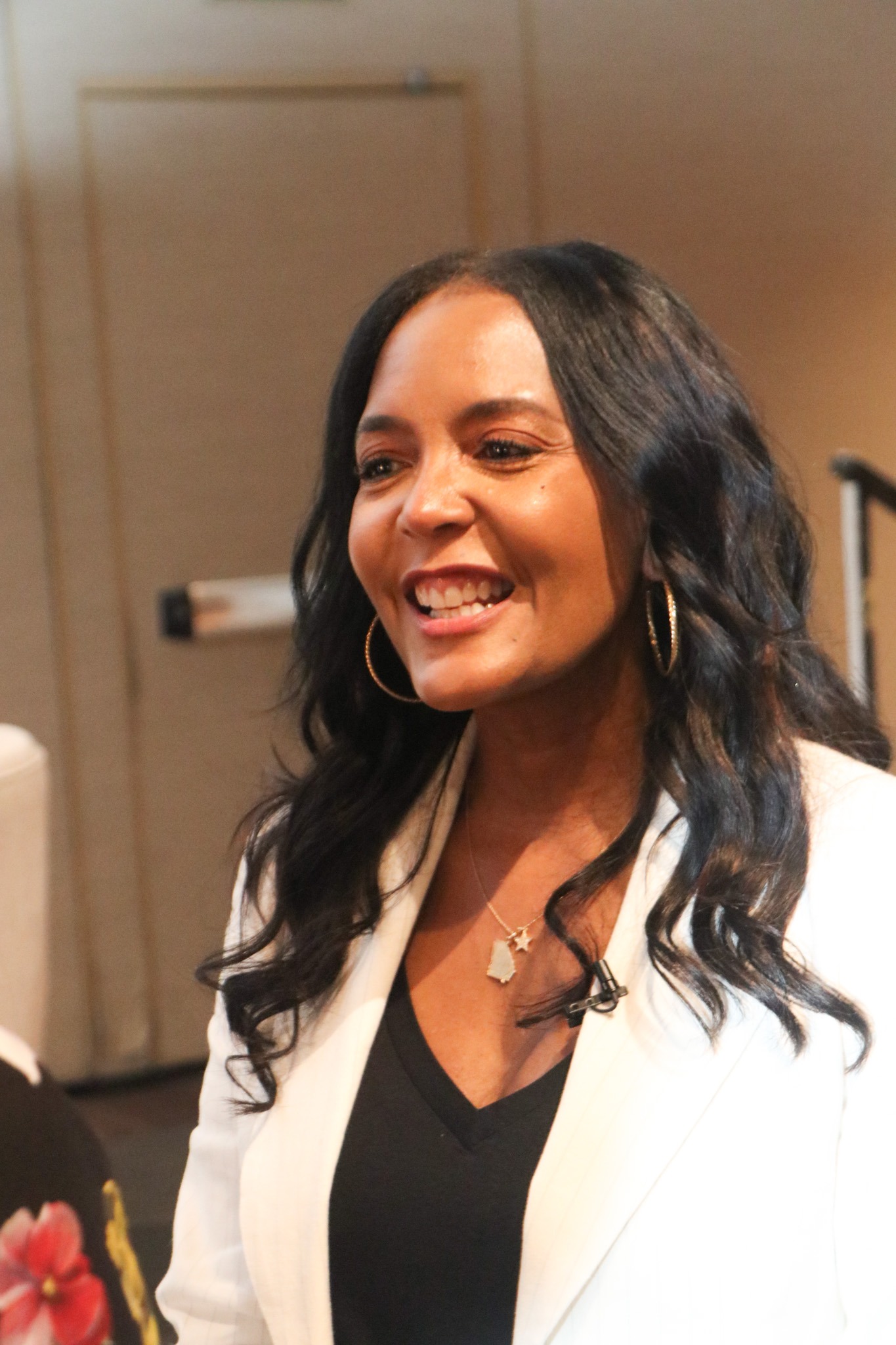
Carletta Harrell – Courtesy photo

The annual gathering serves as more than a ceremonial update. It functions as a working intersection between public policy and private investment — a space where infrastructure, economic development, and quality-of-life initiatives are aligned with the needs of a growing county.

“Under Chairwoman Harrell’s forward-thinking leadership, Henry County continues to see transformative projects come to life,” said Michael Paris, emphasizing the county’s ongoing momentum.

That sentiment was echoed by Gerald McDowell, who pointed to the county’s “thoughtful development and strategic planning” as a driver of opportunity for both businesses and residents.

A Broad Coalition of Voices

This year’s program reflects the increasingly interconnected nature of regional development. In addition to Harrell’s address, attendees will hear from leaders across healthcare, finance, infrastructure, and the judicial system.

Featured speakers include:

  • Mike Alexander, representing the Atlanta Regional Commission and providing an update tied to regional water planning
  • David Kent of Piedmont Henry Hospital
  • Fadzai Konteh of Truist
  • Patrick Brooks of Geosam Capital Group
  • Holly Veal

Together, these perspectives reflect the multi-sector approach now required to manage growth in metro Atlanta’s outer counties — where population increases, infrastructure demand, and economic expansion are converging at a rapid pace.

A Platform for Policy and Progress

The State of Henry County is part of a broader regional series hosted by the Council for Quality Growth, which convenes similar events across multiple counties and agencies, including MARTA and the Atlanta BeltLine.

These events are designed not only to inform but to influence — creating a feedback loop between policymakers and the business community that helps shape decisions on infrastructure, zoning, transportation, and long-term planning.

For Henry County, that dialogue is increasingly critical. Positioned along key transportation corridors and experiencing steady residential and commercial growth, the county faces both opportunity and pressure: how to expand while maintaining livability.

Looking Ahead

As Chairwoman Harrell steps to the podium, the focus will likely center on balancing that growth ensuring that new development aligns with infrastructure capacity, workforce needs, and community expectations.

For attendees, the event offers more than a speech. It is a snapshot of where Henry County stands today and a roadmap for where it intends to go next.


Related articles

Robb Pitts to Deliver 2026 State of Fulton County Address Feb. 24

Council for Quality Growth Charts 2026 Course Under New Chairman Gerald McDowell

Council for Quality Growth to Honor Tommy Holder with 2025 Four Pillar Tribute

From Blueprints to Landmarks: Holder Awarded Four Pillar Tribute for Shaping Atlanta 

Fulton County: An Economic, Cultural, and Educational Hub for Georgia

Truth Seekers Journal thrives because of readers like you. Join us in sustaining independent voices.

DeKalb County Shows Unified Vision at Capitol, Elevates Students and Legislative Priorities

DeKalb County leaders united at the Georgia Capitol, advancing transportation, housing, and education priorities while elevating student voices and highlighting a powerful moment of shared leadership.

By Milton Kirby | Atlanta, GA | March 27, 2026

DeKalb County leaders arrived at the Georgia State Capitol with a clear message: unity, coordination, and results.

At this year’s DeKalb Day at the Capitol, Lorraine Cochran-Johnson addressed lawmakers, community leaders, and more than 500 students, outlining a focused legislative agenda while emphasizing collaboration across all 12 cities.

“We are showing up as one DeKalb,” Cochran-Johnson said, reinforcing a theme that echoed throughout the event.

A Unified County Approach

This year marked the largest DeKalb Day turnout in the county’s history, with elected officials, mayors, commissioners, and state legislators aligned around shared priorities.

From the House and Senate delegations to the Board of Commissioners, leaders emphasized a coordinated strategy entering the legislative session, one designed to strengthen DeKalb’s voice under the Gold Dome.

Carla Drenner highlighted the county’s diversity and strength, noting that DeKalb represents more than 100 nationalities and over 140 languages.

“It takes a village to govern,” Drenner said. “We stand with each other because we are DeKalb strong.”

Transportation, Housing, and Economic Growth

At the top of the county’s agenda: transportation.

Officials pointed to a new transit master plan aimed at improving connectivity and expanding access across the region. Cochran-Johnson emphasized that mobility is central to DeKalb’s future.

Housing affordability also emerged as a critical issue. The county is backing rental registry legislation led in part by Mary Margaret Oliver to track investor-owned properties and improve housing conditions.

Cochran-Johnson noted that more than 50% of residential property sales south of Memorial Drive since 2020 have gone to investors rather than individuals.

Public Safety and Environmental Concerns

Illegal tire dumping—an issue that continues to impact DeKalb neighborhoods—was also front and center.

County leaders called for stronger penalties and highlighted cleanup efforts, including the removal of more than 30,000 tires through a county initiative.

Education and Student Voices Take Center Stage

A defining feature of the day was the presence of more than 500 students from DeKalb County schools, many of whom participated directly in the program.

Norman Sauce III outlined priorities including school funding reform, workforce development, and expanded mental health services.

And then something small—but powerful—happened. As Taliah McPherson walked up to speak, talking about mental health and what students are really dealing with, the CEO didn’t step aside. She stayed. Right there. Holding the microphone steady so the student’s voice could carry across the room. No announcement. No attention drawn to it. Just a quiet act that said: your voice matters enough for me to support it. And in that moment, the whole idea of “leadership” shifted. It wasn’t about position. It was about presence.

The students didn’t waste that moment.

They talked about stress. About pressure. About systems that don’t always work when they need help the most.

One student said it clearly: if leaders care about students, prove it.

Fund the support. Remove the barriers. Act.

McPherson called for greater awareness and access to mental health support for students, emphasizing the need to remove stigma and expand resources.

“Mental health should be something we can talk about openly,” she said.

High school senior Gavin Brown reinforced the urgency, pointing to barriers that prevent students from receiving timely care.

“The time for discussion has passed,” Brown said. “Now is the time for action.”

A Call to Civic Engagement

Throughout the program, leaders emphasized civic participation—especially for young people.

Cochran-Johnson encouraged students to see themselves as future leaders, reminding them that leadership begins with preparation and presence.

Moving Forward as “One DeKalb”

Closing remarks reinforced a shared commitment to collaboration, with leaders pledging continued focus on infrastructure, economic development, and education.

“As elected officials, our greatest strength is in working together,” said Chakira Johnson.

“Our partnerships are strong,” Cochran-Johnson said. “And our future is strong.”

Related articles

DeKalb County Pioneers Long-Term Housing Solution with $8M Investment

DeKalb Reimagined: CEO Lorraine Cochran-Johnson Charts New Path Forward

DeKalb County Launches Real Time Crime Center, Marking Major Shift Toward Technology-Driven Public Safety

DeKalb County Approves $78 Million Contract to Improve Ambulance Response and Expand EMS Coverage

DeKalb County, Urban League Launch Water Rate Assistance Program to Support Families

Truth Seekers Journal thrives because of readers like you. Join us in sustaining independent voices.

Bipartisan Bill Aims to Unlock Federal Research Dollars for HBCUs

By Milton Kirby | Washington, D.C. | March 26, 2026

A new bipartisan effort in the U.S. Senate could reshape how Historically Black Colleges and Universities (HBCUs) access federal research funding, addressing long-standing barriers that have limited their participation in major grant programs.

Senators Raphael Warnock and Katie Britt have introduced the HBCU Research Capacity Act, legislation designed to simplify and centralize access to federal grant opportunities for HBCUs.

At the core of the proposal is the creation of a federally coordinated online clearinghouse a single platform where HBCUs can identify, track, and apply for research and development funding opportunities, particularly in STEM fields. The bill would also require the U.S. Department of Education to provide guidance, best practices, and ongoing updates to institutions nationwide.

Addressing Structural Gaps in Research Funding

For decades, federal research dollars have been concentrated among a relatively small group of institutions, leaving many HBCUs despite their academic output and cultural impact at a disadvantage.

“HBCUs are incubators of diverse excellence,” Warnock said, noting that the legislation is intended to “make securing federal dollars… that much easier.”

Britt echoed that sentiment, describing the bill as a “commonsense” solution grounded in firsthand experience with the challenges HBCUs face.

The issue is not new, but the approach is notable. Rather than creating new funding streams, the legislation focuses on access recognizing that many institutions struggle not with eligibility, but with navigating a fragmented and complex federal grant system.

HBCU Leaders Push for Change

To support the bill’s introduction, the senators convened more than 30 HBCU presidents in Washington for a roundtable discussion. Leaders from institutions including Fort Valley State University and Albany State University participated, emphasizing the need for a more transparent and coordinated funding process.

Their message was consistent: opportunity exists, but access remains uneven.

Dr. Harry L. Williams, president and CEO of the Thurgood Marshall College Fund, described the legislation as a “major step” toward expanding the nation’s research ecosystem by fully integrating HBCUs into it.

Similarly, the United Negro College Fund praised the bill while cautioning that broader reforms will still be needed to ensure equitable participation across all HBCUs including those that may never achieve top-tier research classifications but play a critical role in the academic pipeline.

A Broader Strategy for Research Equity

The proposed clearinghouse would be supported by dedicated personnel within the Department of Education and include regular reporting to Congress, along with updates to participating institutions.

The bill builds on earlier efforts led by Warnock, including legislation encouraging pathways for HBCUs to achieve “R1” status the highest classification for research activity in higher education. Notably, Howard University recently achieved that designation, signaling what advocates say is possible with sustained investment and support.

The legislation also aligns with broader federal initiatives, including funding streams established under the CHIPS and Science Act, which included provisions to support Minority Serving Institutions in accessing federal research dollars.

What Comes Next

If passed, the HBCU Research Capacity Act would amend Title III of the Higher Education Act of 1965, formalizing the federal government’s role in coordinating research opportunities for HBCUs.

For institutions that have historically done more with less, the bill represents a potential shift not just in funding, but in how opportunity is structured.

As policymakers and educators continue to debate the future of higher education, one question remains central: how to ensure that talent wherever it is found  has a clear path to resources.

This legislation suggests one answer: make the system easier to see, and easier to access.

ARTIST PROFILE: Anton Cunningham

By Milton Kirby | Truth Seekers Journal | Artist Profiles Series

THE SON WHO BECAME THE STORYTELLER:

Preserving the Legacy of Lu Vason

When Anton sat down with Valeria Howard Cunningham, the widow of Bill Pickett Invitational Rodeo (BPIR) founder Lu Vason, he didn’t just find a client he found a responsibility. Valeria had spent a decade trying to capture Lu’s lightning in a bottle, trying to honor the first love of her life and the cultural institution he built. She needed someone who could carry that weight with care.

She didn’t choose a historian, a journalist, or a seasoned biographer.
She chose Anton Cunningham, a man whose connection to the story was not academic, but spiritual. A man whose own life had been shaped by loss, reinvention, and the search for purpose. A man who understood, in his bones, what it means to carry a legacy forward.

Anton didn’t set out to become a writer. His journey began on basketball courts in Pasadena, California, where he grew up before earning a scholarship to Georgia Southwestern in Americus. What was supposed to be a practical decision, a scholarship his parents encouraged him to take, became the beginning of a new life. Georgia opened him up. Atlanta shaped him. The Atlanta University Center (AUC), the fraternity culture, the energy of Black excellence all around him – it showed him a different version of success, one rooted in community and ambition.

“Every one of our stories is somebody else’s medicine,” Anton says, reflecting on the process. “I was reading about Lu’s early days in Louisiana and his grandmother, and I thought, Man, that’s my grandma. I was reading about his struggles, and I was reading about myself.”

Before he ever touched a manuscript, Anton spent two decades in the fitness industry training clients, managing teams, and listening to people’s stories. “Sometimes those sessions were therapy,” he says. “People weren’t just trying to lose weight. They were trying to find strength, clarity, confidence.” Those conversations planted the seeds of something he didn’t yet recognize: a calling to help people tell their stories.

After twenty years, Anton stepped away from fitness and into entrepreneurship. He launched a marketing agency, learned digital advertising, and eventually founded KAJA Publishing – a company dedicated to helping people turn their lived experiences into books. “We’re all walking miracles,” he says. “But because it’s our story, we push it to the back.”

He began writing his first book, studying the craft by listening to Stephen King, James Patterson, and others talk about storytelling. “They all said the same thing,” Anton recalls. “Tell your story so people can understand it. Don’t worry about being perfect, be honest.”

Then came the conversation that changed everything.

Valeria told Anton she had been trying to write Lu’s story for nearly a decade. She had promised him she would preserve his legacy, but the emotional weight of the task had become overwhelming. Anton asked to see what she had written. He drafted the first chapter. Then the second. And as he reread his own words, he felt something he hadn’t expected: this feels right.

When Valeria read those early pages and told him she loved them, it gave him confidence. But the deeper confirmation came from the story itself. As he wrote, Anton came across a quote from Lu that stopped him cold:

“Everybody has a story — what’s yours?”

It was the same message Anton had already written on his own website before he ever touched the manuscript. “It was like God tapped me on the shoulder,” he says. “This is your assignment.”

Writing Under the Western Skies became more than a project.
It became a mirror.

The early chapters about Lu’s childhood in Louisiana reminded Anton of his own family roots in Albany, Georgia, the heat, the dirt roads, the sound of insects at night, the wisdom of grandparents who shaped entire generations. “I was reading about him,” Anton says, “but I was also reading about myself.”

The parallels deepened when Anton reached the parts of Lu’s life marked by loss and reinvention. Lu had endured heartbreak, the death of his mother, and moments of profound uncertainty before finding his purpose in the rodeo. Anton understood that journey intimately. A year and a half earlier, he had lost his own mother – the person whose love had anchored him since childhood. Soon after, a long‑term relationship ended. “I had to find who I was again,” he says. “I had to sit still, get quiet, and really understand myself.”

Writing Lu’s story became part of that healing.
It gave him structure.
It gave him purpose.
It gave him a way back to himself.

As Anton wrote, he also began to see the rodeo through new eyes. He traveled to BPIR events in Atlanta, Fort Worth, Baltimore, and D.C., watching the crowds, meeting the competitors, and witnessing the unique energy each city brought. He recognized faces from the manuscript, connected names to stories, and saw firsthand how the rodeo had become a cultural institution – a place where history, identity, and community converged.

“This was one man’s dream,” he says. “But look at how many lives it touches. Look at how many people it inspires. That’s legacy.”

That legacy came full circle when Anton’s father, Ronnie Cunningham, stepped into the room during our interview. Ronnie introduced himself with quiet pride:

“I’m Ronnie Cunningham. Anton is my second of four sons.”

He had read Anton’s book.
He loved it.
And then he said something that revealed just how far Anton had come:

“He’s my publisher. I’m working on my fourth book with him now.”

A father who once guided his son was now trusting that same son to guide his voice into the world.
A generational exchange.
A legacy expanding.

Anton’s gift as a storyteller isn’t limited to the page. It shows up in everyday life, in the way he listens, the way he observes, and the way he follows the threads of history that others overlook. During a recent trip to Charleston, he found himself surrounded by people carrying names with deep historical weight: Middleton. Ravenel. Names tied to plantations, to slavery, to centuries of intertwined Black and white lineage.

He asked questions. He listened. He connected dots. And suddenly, strangers at a bar were leaning in, drawn into a conversation about ancestry, identity, and the stories we inherit without even realizing it. “I’m a publisher,” he told them. “I write books. I’m fascinated by stories like this.”

That moment — spontaneous, unplanned, electric — captured exactly who Anton is.
A man who sees stories where others see silence.
A man who asks questions that bring people together.
A man who believes that truth, even when complicated, can be a bridge.

It’s the same instinct that guided him through Under the Western Skies.
The same instinct that fuels his publishing work.
The same instinct that makes him a cultural steward in his own right.

Because for Anton, stories aren’t just entertainment.
They are maps.
They are medicine.
They are the threads that connect us across generations, across histories, across the lines we didn’t draw but still carry.

And that is why Valeria Howard Cunningham chose him.

Not because he was the most experienced writer.
Not because he had the longest résumé.
But because he understood the assignment in his spirit.

He understood that preserving Lu Vason’s story wasn’t just about documenting the past.
It was about honoring a legacy, healing through purpose, and ensuring that the cultural institution Lu built — the Bill Pickett Invitational Rodeo — continues to inspire future generations.

Anton Cunningham didn’t just write a book. He answered a calling. And in doing so, he became the storyteller his father, Valeria, and the BPIR community didn’t even know they were waiting for.

To get your copy           Under the Western Skies: Luv Vason: Dreamer to Visionary, Visionary to Pioneer

Related video

Anton Cunningham in His Own Words

Related articles

Sonny Hill in Her Own Words

Artist Profile:  Yovel Riches

Artist Profile: Lisa Maydwell

Artist Profile: 1 Way Street

Artist Profile: Ntumba

SHADOW BALL: Learning More About Negro League History

A few weeks ago, I asked readers: What manager has been named to the Baseball Hall of Fame for Negro League performance? Nobody offered a guess, so I gave everybody credit because just like umpires, second baseman, right fielders, and true left fielders — there are no managers in the Hall for Negro League play. To be clear, 24 of the 37 Negro League Hall of Famers did manage but none of them are in for that role.

This begs the question – which Negro League managers do deserve – like John McGraw, Connie Mack, or Ned Hanlon – induction in Cooperstown.

My favorite Negro League Hall of Fame Managerial Candidates:

#5        Frank Duncan, jr – true baseball lifer … guided the Kansas City Monarchs to a World Series win as a rookie manager in 1942 … 86 games over .500 … captured another pennant after the war in ’46. Managed five Hall of Famers. Ranked 59th most eligible candidate in the 42 for ’21 poll.

#4        Frank Warfield         – a favorite of mine but not a first ballot candidate … among his strengths: his career record is 84 games over .500, with three pennants (with two different franchises) and a 1925 World Series title with the Hilldale Club. Manage 8 Hall of Famers. Ranked 56th in the 42 for ’21.

SLAM DUNKS:

#3        Dave Malarcher – perhaps a stronger candidate as a third baseman …  succeeded Rube Foster as American Giant manager during the ’26 season; stabilized the team capturing 2nd half flag, defeating the Monarchs in the playoff before winning the World Series over Atlantic City. Repeated in ’27 over those same Atlantic City Bacharach Giants. Won a 3rd pennant in ’32. Managed 4 Hall of Famers. 22nd in the 42 for ’21 poll.

#2        Candy Jim Taylor – 13th in the 42 for ’21 poll (although 3rd in his family behind Hall of Famer Ben Taylor and 11th place C.I. Taylor) … managed more games in Negro League play than all other managers … like Connie Mack, Candy Jim had a losing record but did capture two World Series and three pennants … managed 14 Hall of Famers

#1        Vic Harris has the best winning percentage of any Major League manager with more than 370 games in the dugout …  Only three managers (McGraw, Mack, McCarthy) during the Segregated Era have won more than his seven pennants. He is ranked 6th in the 42 for ’21 poll and has managed 15 Hall of Fame players.

All three of those Harris, Taylor and Malarcher should have been in the National Baseball Hall of Fame years ago.

Others deserving consideration: Quincey Trouppe, Felton Snow, Grant Johnson, C.I. Taylor, John Reese, Jose Maria Fernandez, Dizzy Dimukes, Piper Davis, and Winfield Welch. Many of these also should be considered as executives (Taylor) and/or players (Johnson, Trouppe, Davis). I guess my main point would be the Hall of Fame has some work to do in honoring Negro League players in general and Managers specifically.

The Shadowball Significa Question of the Week: Who was the first African American pitcher to toss a no hitter in Major League baseball? I will accept two answers for this question for reasons that will be obvious next column – dateline April 14th, 2nd Tuesday of the month. Send your answer and any comments on the Negro Leagues to shadowball@truthseekersjournal.com or Shadow Ball, 3904 N Druid Hills Rd, Ste 179, Decatur, GA 30033

Ted Knorr

Last week’s The Shadowball Significa Question of the Week: Who was Major League slugger Barry Bonds Godfather? No one offered a guess, but it was another five tool outfielder Willie Mays. I hope some more folks offer a guess to this week’s Significa question above.

Ted Knorr is a Negro League baseball historian, longtime member of the Society for American Baseball Research’s Negro League Committee, and founder of the Jerry Malloy Negro League Conference and several local Negro League Commemorative Nights in central Pennsylvania.

Why Optimization Without Context Feels Like Loss

By Florita Bell Griffin, Ph.D. | Houston, TX | March 24, 2026

Optimization is usually presented as improvement. Processes become faster. Costs are reduced. Outputs become more consistent. From a technical perspective, optimization appears neutral, even beneficial. It is framed as refinement rather than change.

Yet many people experience optimization differently. Instead of feeling helped, they feel diminished. Something familiar disappears. Interactions become thinner. Choice narrows. What was once flexible becomes rigid. Optimization begins to feel like loss. This reaction is often dismissed as sentimentality or resistance. In reality, it is a response to missing context.

Optimization works by isolating variables. It simplifies complexity so that systems can be measured, tuned, and controlled. In doing so, it necessarily strips away elements that are harder to quantify: judgment, nuance, exception, and local knowledge. These elements are not remembered unless they are explicitly preserved. When they disappear, people notice.

Consider a workplace that optimizes workflows to eliminate inefficiency. Tasks are standardized. Timelines tighten. Decision paths are clarified. Productivity increases. Yet employees feel less trusted. Their discretion shrinks. Work becomes predictable but less meaningful. What has been optimized is output. What has been lost is agency.

The same pattern appears in consumer systems. A service streamlines its interface to reduce steps. Defaults are chosen automatically. Recommendations replace exploration. The experience becomes easier, yet also narrower. Users reach outcomes more quickly, but they lose the sense of navigating on their own terms. Optimization has removed friction, but it has also removed participation.

Loss emerges when optimization forgets what the system once accommodated. Early versions of systems often include space for improvisation. Users adapt tools to fit their needs. Workarounds emerge. Informal practices develop. These are signals of human engagement, not inefficiency. When optimization erases them, it erases evidence of how people actually live with systems.

Context explains why this matters. Context carries meaning across time. It holds the reasons certain choices existed, why exceptions were allowed, and how people compensated for system limitations. When optimization proceeds without carrying this context forward, it creates discontinuity. The system may improve internally while becoming less inhabitable externally.

This is especially visible to people with experience. They remember what the system used to allow. They recognize when flexibility has been replaced by constraint. They understand that what appears cleaner on paper can feel harsher in practice. Their response is not nostalgia. It is pattern recognition.

Optimization also changes how systems treat difference. Variability is often treated as noise to be eliminated. Edge cases become burdens. Diversity of use becomes inefficiency. Over time, systems optimize toward the average while marginalizing those who fall outside it. The system performs well for many while quietly excluding some.

Consider an automated eligibility system designed to speed up approvals. Clear rules reduce processing time. Decisions become consistent. Yet applicants with non-standard circumstances struggle to fit. Appeals are difficult. Explanations are limited. The system optimizes for throughput while losing the ability to respond humanely to complexity. For those affected, optimization feels like erasure.

Context restores balance. Systems that retain context recognize why variation exists. They preserve space for exception. They document rationale alongside rules. They allow optimization to proceed without flattening lived reality. Context ensures that improvement does not require forgetting.

Loss is felt when people no longer recognize themselves in the system. When familiar ways of working vanish without explanation. When judgment is replaced by enforcement. When speed replaces consideration. These shifts accumulate quietly, creating distance between system and user.

Optimization without context accelerates this distance. It privileges internal coherence over external meaning. It improves metrics while weakening trust. Over time, systems become harder to live with even as they become easier to measure.

This does not mean optimization should stop. It means optimization should remember. Systems must carry forward the context that made earlier versions workable. They must treat human adaptation as information, not inefficiency. They must recognize that not everything valuable can be optimized away.

Context is what allows systems to evolve without hollowing out. It anchors improvement to purpose. It preserves continuity between what a system does and why it exists. Without it, optimization feels subtractive.

When optimization includes context, improvement feels supportive. Change remains intelligible. People stay oriented. Loss is avoided not by preserving the past unchanged, but by carrying forward what mattered.

In an era of accelerating automation and data-driven decision-making, this distinction becomes critical. Systems that optimize without context will continue to function while alienating those they serve. Systems that optimize with context retain legitimacy.

Optimization is powerful. Context makes it humane.

© 2026 Truth Seekers Journal. Published with permission from the author. All rights reserved.

Truth Seekers Journal thrives because of readers like you. Join us in sustaining independent voices.

Inside the Bill Pickett Invitational Rodeo — Part 3

Howard Johnson, BPIR head judge, shapes Soul Country by listening for authenticity, guiding emerging artists, and preserving Black musical and Western cultural traditions.

The Judge Who Hears What Others Miss: Howard Johnson and the Soul of Soul Country Music Star

By Milton Kirby | Atlanta, GA | March 24, 2026

At the Bill Pickett Invitational Rodeo, where heritage and innovation ride side by side, Howard Johnson is more than a judge, he is a careful listener, weighing not just sound, but story, spirit, and the deeper truth behind each performance.

Photo courtesy of BPIR

To most rodeo fans, he is the steady presence behind the judges’ table.
But Johnson’s story stretches far beyond the arena dirt.

Long before he was evaluating rising artists, Johnson was lending his voice to the soundtrack of Black cinema, performing three of the male singing voices in the iconic The Five Heartbeats.

“Three quarters of the building don’t know my other life besides being a cowboy,” he said with a laugh. “I’ve been blessed, truly.” Blessed and shaped by a lifetime of music, history, and a deep sense of responsibility to the next generation.


What Soul Country Really Means

When asked what he looks for in a Soul Country Music Star, Johnson’s answer is immediate.

“It’s right in the title – the soul and the country,” he said. “I don’t want anybody who sounds like Charley Pride or Vince Gill or Garth Brooks. I want someone who sounds like us.”

For Johnson, “us” is not a genre. It is a cultural fingerprint, an instinctive blend of gospel, blues, R&B, and lived Black experience.

He points to Ray Charles, Al Green, and the gospel quartets of his youth as proof that the line between soul and country has always been thin.

“Take an early Al Green song, remove the B3 organ, add a steel pedal, you’ve basically got country,” he said. “We’ve always been there.”


Hearing What Others Miss

Johnson doesn’t just judge talent; he listens for what others overlook.

Two artists, now winners of consecutive seasons, stand as proof of that instinct: Kirk Jay and Nathaniel Dansby.

Kirk Jay, the Season One (2024) winner, impressed Johnson with his writing and presence.
“He’s an incredible writer,” Johnson said. “He had the playing, the soul, and that youthful enthusiasm.”

Nathaniel Dansby, who would go on to win Season Two (2025), took a very different path.

In his first audition, other judges scored him low. Johnson was stunned.

“I asked them, ‘What are you listening for?’ Because I heard something special,” he said. “I had him in the 90s. Others had him under 50.”

Dansby nearly walked away from music after that moment.

When he returned the following year — frustrated but determined — Johnson pulled him aside.

“Don’t quit,” he told him. “Come back.”

He did — and delivered a performance that ultimately led to his Season Two victory.

“Your encouragement is what brought me back,” Dansby later told him.

Moments like that define Johnson’s approach.

“You’re dealing with people in the infancy of their talent,” he said. “Who am I to tear that down?”

He is not just judging talent; he is helping it find its footing.


A Childhood That Shaped a Judge

Johnson’s reluctance to crush a dream comes from a painful memory.

At nine years old, singing in a Miami church, he was told he was “too Black.”

He cried the entire ride home. His father, enraged, attempted to turn the car around with a gun in hand. His mother stopped him.

“That moment never left me,” Johnson said. “It shaped how I treat people who are just starting.”

It is why he refuses to judge with cruelty.
It is why he listens for possibility, not perfection.


Photo courtesy of BPIR – Howard Johnson

From Mailman Dreams to a No. 1 Hit

Johnson’s own career began by accident.

At 19, he had taken the civil service exam and planned to become a mailman. Singing was something he expected to do only in church.

But a dare from a friend changed everything.

In a Miami park, he hit a high note from Earth, Wind & Fire’s “Mighty Mighty” that he didn’t know he had.

Two weeks later, he was discovered. Six months later, he had a No. 1 pop hit – So Fine.

“I wasn’t supposed to be singing secular music,” he said. “But that moment changed my life.”


The Blueprint and the Power of the Audience

Johnson believes the music industry’s secrets are not secrets at all.

“The easiest thing to write is a hit song,” he said. “There are thousands of hit records before you. Look at the blueprint.”

Marketing, distribution, radio, and visibility the formulas already exist. But in Johnson’s view, the real power has always rested with the audience. “The people pick the hits,” he said.

For artists coming through Soul Country Music Star, that truth matters. It means success is not reserved for those with industry access alone, but for those who can connect.


The BPIR as Cultural Restoration

Johnson sees the Bill Pickett Invitational Rodeo as more than entertainment. It is a living archive of Black Western history.

He speaks of the origins of the word “cowboy,” born from white ranchers refusing to call Black cattle hands “men.” He speaks of language, history, and identity and how those stories shape the present.

“There are a lot of knowledgeable people around this rodeo,” he said. “It’s a family.”

Through the BPIR, Johnson found not just a platform, but a deeper connection to a history that continues to unfold.


AI, Creativity, and What Machines Can’t Touch

Johnson is clear-eyed about artificial intelligence. He uses it for business planning, but not for music.

“There’s an emotional element AI will always miss,” he said. “Some of the AI music is incredible, but the human part is missing.” He believes that for artists grounded in truth, songwriting will endure.


A Call for Investment in Black Institutions

Johnson’s critique of corporate America is direct.

Black consumers are among the top spenders in major industries, yet those same companies rarely invest in Black communities or cultural institutions.

“Have you ever seen a Nike center in a Black community?” he asked. “Why hasn’t someone said, ‘Let’s invest in something like the Bill Pickett Foundation?’”

He points to the rodeo’s community work; hospital visits, youth programs, and cultural education as deserving of broader support.


No More Single Leaders, Only Collective Power

When asked whether Black America needs another singular leader, Johnson shook his head. “No, we don’t,” he said. “We need us.” He warns against movements built around one figure, pointing to history as a reminder of how fragile that model can be. But collective movement, he believes, is different. When people move together, the impact is lasting.


A Legacy That Cannot Be Contained

Johnson’s pride in Black innovation is boundless.

He speaks of breakthroughs in sports, science, and culture contributions often overlooked, yet foundational.

“They have a reason to be afraid,” he said. “Anything we touch sports, science, whatever, they have to change the rules.”

From Tiger Woods to Stephen Curry, he sees a pattern: excellence that reshapes the landscape.


The Conversation Ends, but the Work Continues

As the interview concluded, Johnson apologized for talking so much.

But his words were not digressions, they were direction.

“It shows what the umbrella could be,” he said. “What I bring to it. How I make the selections I make.” In his voice in his history, his convictions, and his belief in Black artistry lies the heartbeat of Soul Country Music Star itself.


Country Roots, Diverse Beats: Celebrating the Rich Tapestry of Soul in Country Music.

Agricenter International Showplace Theater – 7777 Walnut Grove Rd, Memphis, TN

Bill Pickett Invitational Rodeo

Music Competition – Friday, April 10, 2026 | 7:00 pm 8:00 pm Competition

 BPIR Rodeo – Saturday, April 11, 2026 | 1:30 pm or 7:30 pm


Event Tickets and additional information


Upcoming in the TSJ series – Inside the Bill Pickett Invitational Rodeo

— Kirk Jay: The Sound of Country Soul at the Rodeo
— Nathaniel Dansby (Mr. Bowleggs) : The Sound of Country Soul at the Rodeo
— Rodeo for Kids’ Sake and the Next Generation

Related articles

Inside the Bill Pickett Invitational Rodeo — Part 2

Inside the Bill Pickett Invitational Rodeo — Part 1

Bill Pickett Invitational Rodeo Names 2025 Champions After a Year of Grow and New Partnerships and a Powerful Legacy

Bill Pickett Invitational Rodeo National Finals Nominated for USA TODAY’s Best Rodeo Award

Bill Pickett Invitational Rodeo Celebrates 40 Years of Tradition and Excellence

Martin Luther King, Jr. African-American Rodeo of Champions Thrills Denver Audience

Truth Seekers Journal thrives because of readers like you. Join us in sustaining independent voices.

Inside the National Center for Civil and Human Rights: A Journey Through Truth, Memory, and Reckoning with America’s Past

Atlanta’s Civil and Human Rights Center offers a powerful journey through America’s past, confronting injustice, honoring resilience, and challenging visitors to reflect and act

By Milton Kirby | Atlanta, GA | March 22, 2026

Two white women stood still, silent, and visibly shaken.

They had just stepped out of the “Broken Promises: Reconstruction” exhibit at the National Center for Civil and Human Rights. What they had seen—lynchings, merciless beatings, and the systematic unraveling of freedom—had left them searching for words.

That moment captures the power of the Center—a place where history is not simply displayed, but felt.

“Does history remind those who would try to erase it of their sordid past?” the exhibit seems to ask. For many who walk through these doors, the answer is a sobering yes.


Broken Promises and the Legacy of Reconstruction

Inside, visitors encounter a sweeping narrative of American history—one that refuses to look away from its darkest chapters.

The “Broken Promises” gallery examines Reconstruction, a period when newly freed Black Americans briefly gained political and social ground before those freedoms were violently stripped away. The exhibit forces visitors to confront a recurring pattern in American history: progress followed by backlash. Progress followed by backlash… Progress followed by backlash…

Photo by Milton Kirby – Freedom Riders Mugshots

From walls lined with mugshots of jailed Freedom Riders to the intimate, handwritten sermons in A Committed Life: The Morehouse College Dr. Martin Luther King, Jr. Collection, the Center functions as both a treasure trove of artifacts and a mirror to the soul of a nation.

In “A Committed Life,” Dr. King emerges not just as an icon, but as a man navigating pressure, faith, and responsibility with unwavering conviction.


A Modern Expansion for Ancient Truths

Following a $58 million renovation completed in late 2025, the Center expanded by 24,000 square feet, adding two new wings and six galleries including the Norfolk Southern-sponsored “Freedom Room.”

The goal is clear: engage a new generation through immersive, interactive learning.

But while the building is new, the stories remain raw. The expansion deepens the exploration of the “machinery of Jim Crow” and the resilience of those who dismantled it.


Mary Turner: A Story the Nation Tried to Forget

Perhaps no exhibit is more gut-wrenching than the memorial to Mary Turner.

In 1918, a white mob in Brooks County, Georgia, murdered 21-year-old Turner, a Black woman eight months pregnant after she threatened to seek justice following the lynching of her husband.

The brutality is difficult to comprehend. Turner was hung by her ankles, set on fire, mutilated, and shot hundreds of times. Her unborn baby was cut from her body and killed. Her killers were never punished.

While the Equal Justice Initiative records at least 4,075 Black Americans lynched in the South between 1877 and 1950, Turner’s death remains a singular wound.

Her death became a national flashpoint. It helped galvanize anti-lynching activism and build support for federal legislation. The Emmett Till Antilynching Act was signed into law by President Joe Biden on March 29, 2022. This historic legislation officially made lynching a federal hate crime in the United States, punishable by up to 30 years in prison. It passed the House on February 28, 2022, and the Senate on March 7, 2022 more than 100 years after Mary Turner’s gruesome death.

Even today, the tension remains. A memorial plaque erected in 2010 was riddled with bullets within a year. A simple steel cross now stands in its place—a quiet testament to a broken promise.


Confronting the Legacy

The Center’s impact is often measured in silence.

One visitor, a woman in her thirties who asked to remain anonymous, described feeling “mortified” when reflecting on the actions of her ancestors. She said the experience has changed how she moves through the world—choosing to step away from conversations where racism surfaces.

The Center does not assign guilt. But it does demand reflection.


Reclaiming History Through Art

In Reclaiming History, the Center highlights Black Southern artists from the 1980s who carried the spirit of the Civil Rights Movement into a new era.

Through paint, sculpture, and mixed media, they confronted police brutality, voter suppression, and the lingering weight of Jim Crow.

Some works speak plainly. Others whisper through abstraction. All are rooted in resilience.

The message is clear: art is not just witness, it is catalyst.


Beyond the Museum Walls

The Center is not static. It is a living institution.

Programs like Truth on the Rocks, Cup of Truth, and Reel Truth transform the space into a forum for dialogue, culture, and community:

  • Truth on the Rocks blends nightlife with history through music, cocktails, and after-hours access
  • Cup of Truth creates intimate conversations with artists and community leaders
  • Reel Truth uses film to explore overlooked stories and spark discussion
Photo by Milton Kirby – Center for Civil and Human Rights

A New Era of Partnership and Access

In 2025, Norfolk Southern pledged $500,000 to support the Center’s expansion, reinforcing its role as a national hub for civil and human rights education.

To expand access, the Center is also participating in Bank of America’s Museums on Us program, offering free admission on the first full weekend of each month to eligible cardholders.


A Space for Reflection—and Accountability

The National Center for Civil and Human Rights is more than a museum.

It is a mirror.
It is a memory.
It is a movement.
It is where history refuses to be erased.
It is where truth lives.


Why It Matters Now

At a time when debates over how history is taught continue to intensify, the Center stands as a counterpoint.

It insists that history cannot be erased without consequence.

It reminds visitors that the past is not distant—it is embedded in the present.

And it challenges each person who walks through its doors to leave not just informed—but transformed.

Truth Seekers Journal thrives because of readers like you. Join us in sustaining independent voices.

Clayton County Charts Growth, Safety Gains, and Housing Push in 2026 State of the County Address

Clayton County reports crime reductions, housing investments, and economic growth as Chairwoman Alieka Anderson-Henry outlines priorities during the 2026 State of the County address.

By Milton Kirby | College Park, GA | March 19, 2026

Clayton County leaders laid out a vision of growth, stability, and continued investment Wednesday as Chairwoman Dr. Alieka Anderson-Henry delivered her second State of the County address before a sold-out crowd of more than 450 attendees.

The event, hosted by the Council for Quality Growth at the Georgia International Convention Center, brought together business leaders, elected officials, and residents to hear updates on public safety, economic development, housing, and infrastructure.

Anderson-Henry framed Clayton County as a rising hub in metro Atlanta, calling it both a “global gateway” and a place of expanding opportunity.

“Clayton County is not just where planes land,” she said. “It is where possibility lands.”

Public Safety Improvements Highlighted

Among the most notable updates were gains in public safety. The county reported a 17% reduction in overall crime and a 30% drop in vehicular fatalities over the past year.

Officials also highlighted the launch of a Whole Blood Program through Clayton County Fire & Emergency Services, allowing first responders to administer blood transfusions in the field—an initiative still rare nationwide.

In addition, the Police Department expanded its Co-Responder Mental Health Initiative, pairing officers with mental health professionals to respond to crisis calls.

Economic Development and Small Business Support

Clayton County’s economic strategy centered on both large-scale investment and grassroots support.

The county distributed $5 million in federal ARPA funding to more than 300 small businesses and nonprofits, while also securing a $224 million expansion from TOTO USA in Morrow.

Leaders also pointed to regional recognition, including the Atlanta Regional Commission’s Visionary Planning Award for the Tara Boulevard Livable Centers Initiative, a project aimed at transforming a key commercial corridor.

Housing, Infrastructure, and Smart Growth

Housing emerged as a central priority moving forward. Anderson-Henry announced a new Clayton County Housing Plan and a multi-department Housing Task Force focused on expanding attainable housing and homeownership.

The county has already deployed more than $6.2 million in HUD funding to support housing stability and has begun a comprehensive zoning rewrite to guide future development.

Infrastructure investments included resurfacing nearly 19 miles of roadway, expanding parks and trail systems, and advancing sustainability projects such as solar installations and electric vehicle infrastructure.

Resilience efforts, including the Flint River Flood Mitigation Project, were also highlighted as part of long-term planning.

Workforce and Governance Initiatives

County leaders emphasized workforce development through partnerships with Clayton State University, expanded GED and vocational training programs, and workforce events that attracted more than 1,000 participants.

On the governance side, Anderson-Henry stressed transparency and fiscal discipline, noting efforts to modernize procurement, improve budget communication, and strengthen oversight.

Voter-approved initiatives—including the 2027 SPLOST expected to generate more than $412 million—are expected to fund future capital improvements.

A County Still in Motion

Despite the progress, Anderson-Henry made clear the work is ongoing.

“We are proud—but we are not finished,” she said, pointing to continued priorities in housing, economic development, and community investment.

She closed by emphasizing Clayton County’s evolving identity—not just as a transportation hub anchored by Hartsfield-Jackson, but as a place of long-term opportunity and growth.

“Clayton County is not just a place you pass through,” she said. “It is a place you build in, grow in, and live in.”

Related articles

Robb Pitts Delivers 2026 State of the County: “We’ve Got It All”

Douglas County to Showcase Progress and Plans at 2025 State of the County Address

Chairman Jeff Turner Delivers 2024 State of the County Address

Robb Pitts to Deliver 2026 State of Fulton County Address Feb. 24

Exit mobile version