
By Florita Bell Griffin | Houston, TX | July 14, 2026
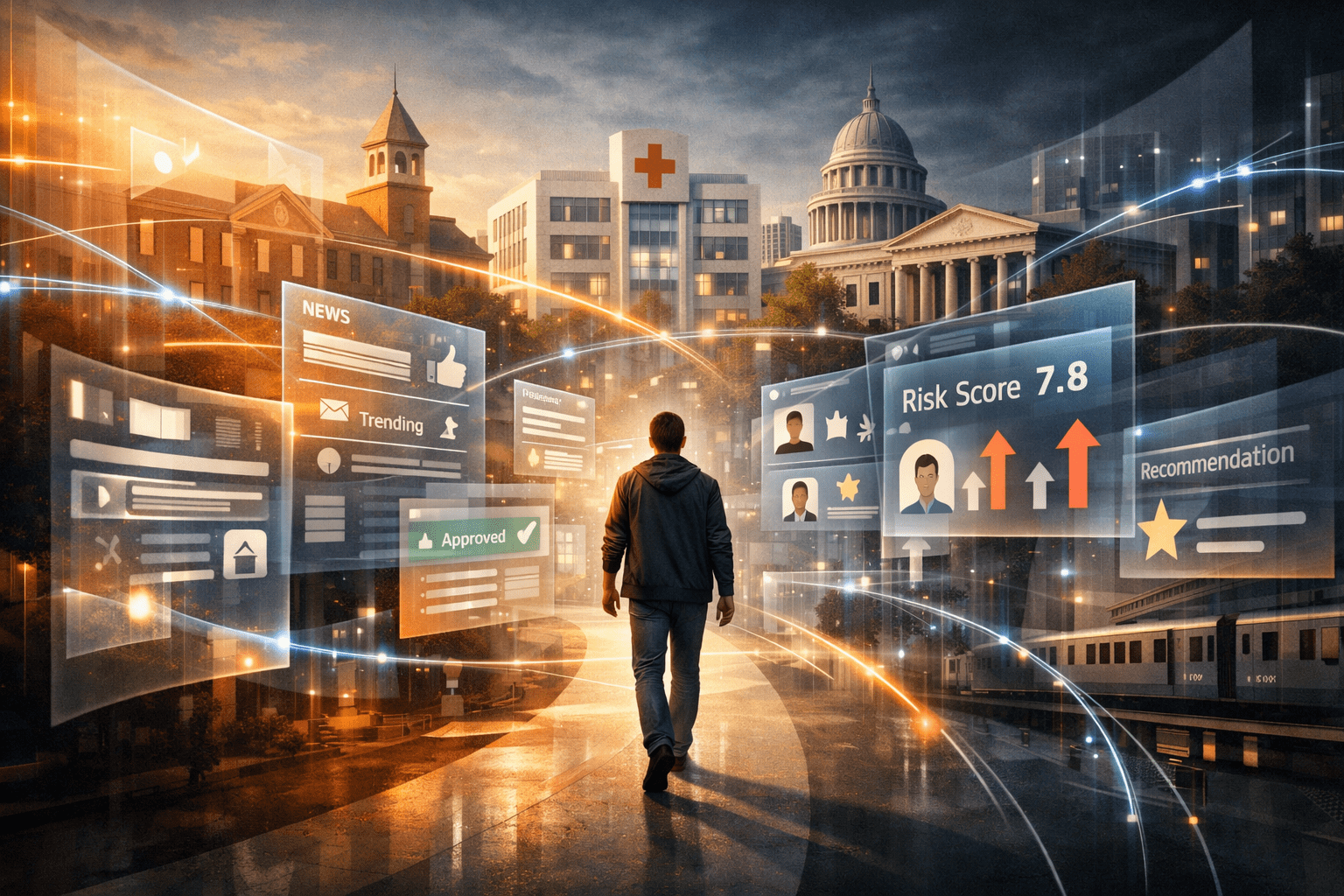
rtificial intelligence is now entering public life at a depth that makes broad civic understanding necessary. For several years, AI was discussed mainly as a technical field, a business opportunity, or a future-oriented innovation story. Today it is something larger. It is increasingly part of the systems through which people receive information, apply for services, encounter recommendations, complete financial transactions, communicate with institutions, and move through everyday routines. That shift means AI is no longer only a topic for engineers, executives, or policymakers. It is a public issue, and citizens need a clear understanding of what is changing around them.
The phrase public good matters here because AI is affecting the shared conditions of social life. It influences how information circulates, how resources are prioritized, how institutions make decisions, and how individuals are seen by the systems they depend on. Once a technology begins to shape those underlying conditions, public understanding becomes essential. A society cannot responsibly govern what large numbers of people do understand. It cannot protect fairness, accountability, or human dignity if major systems are changing faster than the public’s ability to interpret them.
One reason clear understanding is so important is that AI often arrives under the language of convenience. It is introduced as something that will save time, reduce complexity, personalize services, improve efficiency, and remove friction from daily tasks. In many cases, those promises are genuine. AI can help summarize information, detect patterns, support administrative work, improve customer service, assist with logistics, flag anomalies, and make certain systems more responsive. People and institutions do benefit from tools that help them manage complexity in a demanding world.
At the same time, convenience can hide significance. A system that seems to help a user find something faster may also be shaping what is considered relevant. A system that appears to offer support may also be narrowing the range of options a person sees. A system that feels neutral may be carrying assumptions, priorities, and optimization goals that remain invisible to the public. This is why citizens need more than excitement or fear. They need clarity. They need to understand that AI is altering decision environments, not merely adding digital assistance.
That distinction is central to the public good. In democratic life, people need sufficient visibility into the systems that affect them. They need to know when information is being filtered, when recommendations are being personalized, when rankings are being influenced by behavioral data, and when machine-generated outputs are helping shape institutional decisions. Without that visibility, people begin to live inside systems they rely on but do understand. That is a dangerous condition for any society, because trust without understanding can be easily exploited.
Trust is one of the key issues in the AI era. Modern life already depends heavily on digital systems. People trust platforms to display information, banks to detect suspicious activity, schools to manage learning tools, healthcare networks to process records, transportation systems to guide movement, and government-facing systems to handle applications and communication. As AI becomes more integrated into these structures, that trust is being extended toward systems that do more than transmit information. They interpret it. They sort it. They rank it. They frame what appears first and what fades into the background.
This matters because interpretation is a form of power. A system that decides what is most relevant, what counts as risk, what deserves escalation, or what should be recommended is influencing the shape of human decision-making. The public still sees a screen, a portal, a service, or a result. Underneath, however, the environment is being organized by predictive logic. If citizens do understand that shift, then public discussion remains too shallow. People may debate whether AI is useful while missing the more serious fact that it is helping structure the conditions under which they think and choose.
A clear understanding is also necessary because AI often appears more reliable than it truly is. Many systems speak in polished language, respond instantly, and produce outputs that feel coherent and assured. This creates a natural tendency to trust them. Human beings often associate fluency with competence and speed with authority. Yet a confident answer can still be incomplete, biased, poorly sourced, or contextually wrong. Citizens therefore need a stronger public literacy that allows them to distinguish between persuasive presentation and justified reliability. Without that distinction, AI can accumulate influence simply because it sounds sure of itself.
The public good requires more than personal caution. It requires shared standards. Citizens need to be able to ask common questions about systems that increasingly affect everyone. How are these tools being used in schools, hospitals, banks, workplaces, courts, agencies, and public-facing services? What rights do people have when automated systems influence outcomes? Where does human review remain essential? What kinds of explanation should be required? How should recourse work when AI-assisted processes create confusion or harm? These are civic questions, and they belong in public discourse.
Education is one place where this need becomes especially clear. If young people are growing up with AI-assisted learning tools, generated explanations, predictive recommendations, and algorithmically shaped information streams, then they need more than technical familiarity. They need civic understanding. They need to know how systems influence what they see, how outputs are produced, how errors can occur, and why independent judgment still matters. A society that teaches students how to use AI without teaching them how to think about AI is leaving them underprepared for the world they are entering.
The same is true for adults. Many citizens now interact with AI in subtle ways through work platforms, search systems, online retail, digital entertainment, financial tools, and institutional portals. Often they are using the system before they have developed language to describe what it is doing. That gap between experience and understanding is exactly why public education around AI matters. Citizens do need to know every technical detail of machine learning in order to participate meaningfully in the discussion. They do need to understand how influence works, how opacity can hide power, and why convenience should never replace accountability.
The public good is also at stake because AI can widen inequalities if it is deployed carelessly. Systems trained on narrow histories or tuned toward blunt performance goals can reproduce distorted patterns across hiring, lending, policing, healthcare access, education, and public services. Even where intent is good, poor design or weak oversight can create uneven consequences. Citizens need to understand that technology does stand outside existing social conditions. It enters them. It can reinforce them, challenge them, or reorganize them, depending on how it is governed.
This is why the conversation about AI must remain larger than market enthusiasm. Innovation is important. Technical progress is real. Economic opportunity is part of the picture. But the public good requires a broader lens. It asks whether AI is strengthening human judgment or quietly displacing it. It asks whether institutions are using these systems responsibly. It asks whether people still have meaningful ways to question, appeal, or understand decisions that affect their lives. It asks whether public life is becoming more legible or more opaque as machine systems gain influence.
A healthy society does reject advanced tools. It develops the civic capacity to govern them wisely. That means citizens need plain language explanations, stronger digital literacy, institutional transparency, and a public culture that treats AI as a matter of shared responsibility rather than passive consumer adaptation. The future of AI will be shaped by designers, companies, regulators, and institutions, but it will also be shaped by whether the public understands enough to ask serious questions and demand serious answers.
AI is already becoming part of the infrastructure of modern life. That alone makes clear understanding a public necessity. Citizens need it because trust is being reorganized, decisions are being mediated in new ways, and power is moving into systems that often operate quietly. The public good depends on whether people can see that change clearly enough to respond with intelligence, caution, and civic seriousness. That is why AI must be understood beyond hype, beyond fear, and beyond novelty. It must be understood as a force shaping the common world citizens share.
© 2026 Truth Seekers Journal. Published with permission from the author. All rights reserved.
Support open, independent journalism. Your contribution helps us tell the stories that matter most.

