
By Milton Kirby | Atlanta, GA | December 14, 2025
For nearly half a century, the Atlanta Civic Center stood as one of the city’s most important cultural crossroads — a place where Broadway met ballet, punk rock met opera, and civic life met national television. Built in 1967 and officially closed in 2014, the venue played an outsized role in shaping Atlanta’s artistic identity during a period of explosive growth and transformation.
Now, more than a decade after its final curtain call, the Civic Center site is entering a new chapter. As of December 9, 2025, a multi-phase redevelopment led by Atlanta Housing is underway, with plans to honor the site’s legacy while addressing one of Atlanta’s most urgent modern needs: housing.
But the story of the Civic Center did not begin in 1967. Long before the first spotlight was raised, this land carried a deeper history — one marked by destruction, resilience, and displacement.
Before the Spotlight: The Land Beneath the Civic Center
The ground beneath the Atlanta Civic Center has been asked to start over more than once.
In 1917, the Great Atlanta Fire tore through this area, destroying more than 1,900 buildings and displacing over 10,000 residents. From the ashes emerged Buttermilk Bottom — a working-class, majority-Black neighborhood that took root in what is now considered Midtown and the Old Fourth Ward.
Buttermilk Bottom was not vacant land waiting for redevelopment. It was a living community defined by churches, extended families, small businesses, music, and culture. Residents built full lives there despite persistent neglect, as city investment flowed elsewhere.
By the mid-20th century, the neighborhood was labeled a “slum” by city leaders and the local press. In 1963, then-Mayor Ivan Allen Jr. unveiled plans to redevelop Buttermilk Bottom using federal urban renewal bonds. Homes were demolished. Businesses were shuttered. A school was closed. Families were forced to move.
Rather than replacing the neighborhood with new public housing, the city cleared the land for a civic complex — an auditorium and exhibition hall designed to project Atlanta’s modern image to the nation. When the Atlanta Civic Center opened in 1967, Buttermilk Bottom was gone. The area was rechristened Bedford Pine.
Protests against the destruction of the neighborhood coincided with national unrest following the assassination of Dr. Martin Luther King Jr. in 1968, underscoring the racial and economic tensions embedded in Atlanta’s redevelopment choices.The Civic Center rose as a symbol of progress — but one built atop displacement.
A Pattern Beyond One Site
The clearance of Buttermilk Bottom was not an isolated decision. During the same era, Atlanta pursued similar urban renewal projects across the city, particularly in working-class and Black neighborhoods.
Just south of downtown, the Washington-Rawson neighborhood — once a thriving in-town community — was carved apart by expressway construction and demolition. Part of the land was designated for public housing. Another section was set aside for Atlanta–Fulton County Stadium, completed in 1965 as the city sought national recognition and a Major League Baseball franchise.
For many residents, the promise was familiar: progress, opportunity, renewal. The result was often the same — displacement without replacement. Together, these projects revealed a redevelopment philosophy that prioritized national visibility over neighborhood stability.
Against this backdrop, the Civic Center took shape — both a cultural achievement and a reminder of the costs of progress.
A City Builds a Cultural Anchor
When the Atlanta Civic Center opened in 1967, Atlanta was positioning itself as the cultural and commercial capital of the New South. City leaders envisioned a modern performance venue capable of hosting national touring productions, large civic gatherings, and televised events.
With a seating capacity of approximately 4,600, the Civic Center was the largest performance stage in the Southeast at the time. Designed to replace the aging Municipal Auditorium, it quickly became a centerpiece of Atlanta’s arts and entertainment ecosystem.
For audiences, the Civic Center symbolized access — a place where Atlanta could experience world-class performances without leaving home.
Broadway Comes to Atlanta
Throughout the 1970s, 1980s, and 1990s, the Civic Center became synonymous with Broadway in Atlanta. National and regional touring productions regularly filled its stage, bringing marquee shows to audiences who might not otherwise travel to New York.
Productions such as Two Gentlemen of Verona (1974), George M! (1981), and The Wizard of Oz during its 1999 national tour helped cultivate Atlanta’s theatergoing audience and cemented the city’s reputation as a serious stop on the national touring circuit.
For decades, the Civic Center functioned as a cultural bridge — connecting Atlanta’s growing metropolitan population with the broader world of American theater.
A Home for High Culture
In its early decades, the Civic Center also played a critical role in Atlanta’s classical arts scene. Beginning in 1969, the Atlanta Symphony Orchestra, along with opera and ballet companies, used the space for major performances.
Before newer, specialized venues emerged, the Civic Center was where many Atlantans first encountered large-scale orchestral music, opera, and ballet. These performances helped establish Atlanta as a city capable of supporting both popular entertainment and high culture — a dual identity that still defines the region.
Television Lights and National Exposure
From 2011 to 2015, the Civic Center reached millions of living rooms as the filming location for Family Feud during Steve Harvey’s tenure as host.
The show’s presence quietly reinforced Atlanta’s growing role in television production, years before the city’s reputation as “Hollywood of the South” fully took hold. The venue also hosted graduations, political rallies, church services, and mayoral inaugurations, strengthening its role as both a cultural and civic gathering place.
SciTrek and a Generation of Curiosity
One of the Civic Center’s most distinctive chapters began in 1988, when SciTrek, an interactive science museum, moved in. For 16 years, until 2004, SciTrek welcomed thousands of schoolchildren from across Georgia.
For many Atlantans who came of age in the 1990s, SciTrek was their first exposure to science beyond the classroom — another reminder of the Civic Center’s adaptability and reach.
From Symphony to Punk Rock
As Atlanta’s music scene diversified, so did the Civic Center’s bookings. In later years, the venue hosted pop-punk bands like All Time Low, punk icons Dropkick Murphys and Rancid, and local artists including Hoodrich Savo and Ms. Honesty.
From opera to punk, the Civic Center became known for its range — a venue willing to host contrasting worlds under one roof.
Why the Curtain Fell
Despite its cultural importance, the Civic Center struggled to remain viable in the 21st century. Operating costs increasingly outweighed revenue. Built in 1967, the facility lacked the amenities and technology expected by modern touring productions.
A $2 million renovation in 2001 offered only temporary relief. As newer venues such as State Farm Arena and Mercedes-Benz Stadium opened, fewer major acts chose the Civic Center.
By 2014, declining bookings made continued operation difficult to justify. The Civic Center officially closed in October of that year, ending a 47-year run.
A Sale, a Promise, and a New Vision
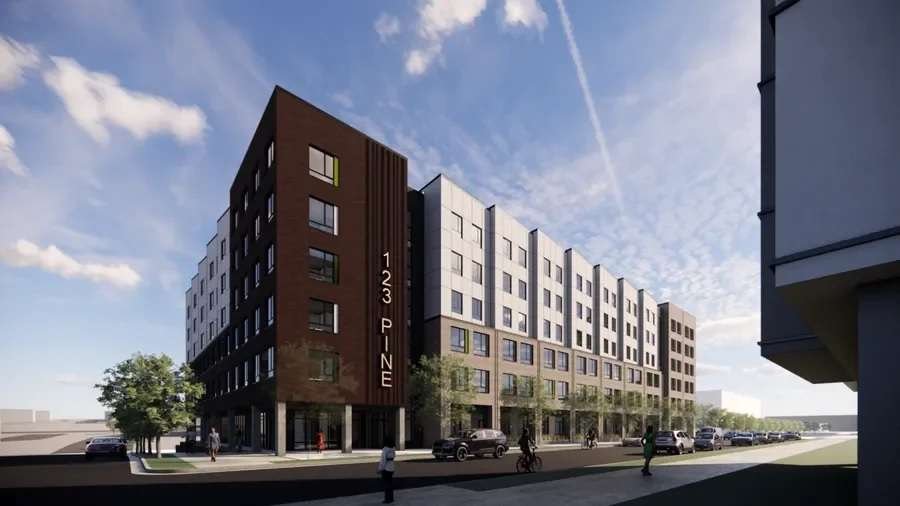
In 2017, the City of Atlanta sold the 19-acre Civic Center property to the Atlanta Housing Authority for just over $30 million. In December 2025, officials broke ground on a multi-phase redevelopment that will ultimately include approximately 1,500 housing units, 38 percent of which will be affordable.
The first phase is a $60 million project delivering 148 apartments for low-income seniors, scheduled for completion in 2027. Plans for the broader site include retail, office, community, and cultural spaces, a hotel, a grocery store, a public plaza, and the possible creation of an arts-centered high school.
Speaking at the groundbreaking, Mayor Andre Dickens reflected not only as the city’s leader, but as someone personally shaped by the Civic Center. He recalled seeing OutKast perform on its stage and later returning to the same space for his own graduation — moments that captured how the venue functioned as both a cultural launchpad and a civic gathering place.
“This is sacred ground, sacred work,” Dickens said. “We made a promise to the people of Atlanta to make this a city where everyone can live, grow, and retire with dignity — a city of opportunity for all — and we intend to keep it that way.”
Once a site of graduations, concerts, church services, and inaugurations, the Civic Center is now part of what city leaders describe as a return to purpose — a future shaped by memory as much as by momentum.
A Legacy That Still Echoes
The Atlanta Civic Center’s story is not simply one of closure, but of evolution. For nearly five decades, it reflected Atlanta’s ambitions, creativity, and contradictions.
From Broadway classics to punk rock anthems, from symphonies to science exhibits, and from civic ceremonies to game-show lights, the Civic Center captured the full spectrum of Atlanta life — even as it stood on land shaped by loss and resilience.
As cranes rise where spotlights once shone, the Civic Center’s physical form may fade, but its meaning deepens. It becomes part of a larger story — of a city continually remaking itself, learning, and, perhaps this time, remembering who was here before.
Related video
Related articles
Mayor Dickens Names New Housing Leadership Team to Drive Atlanta’s Affordable Housing Vision
Dickens, Invest Atlanta Board Advance Affordable Housing Push Amid National Crisis
No contribution is too small. Support us today and help keep truth accessible for all.