
By Milton Kirby | Atlanta, GA | June 17, 2026
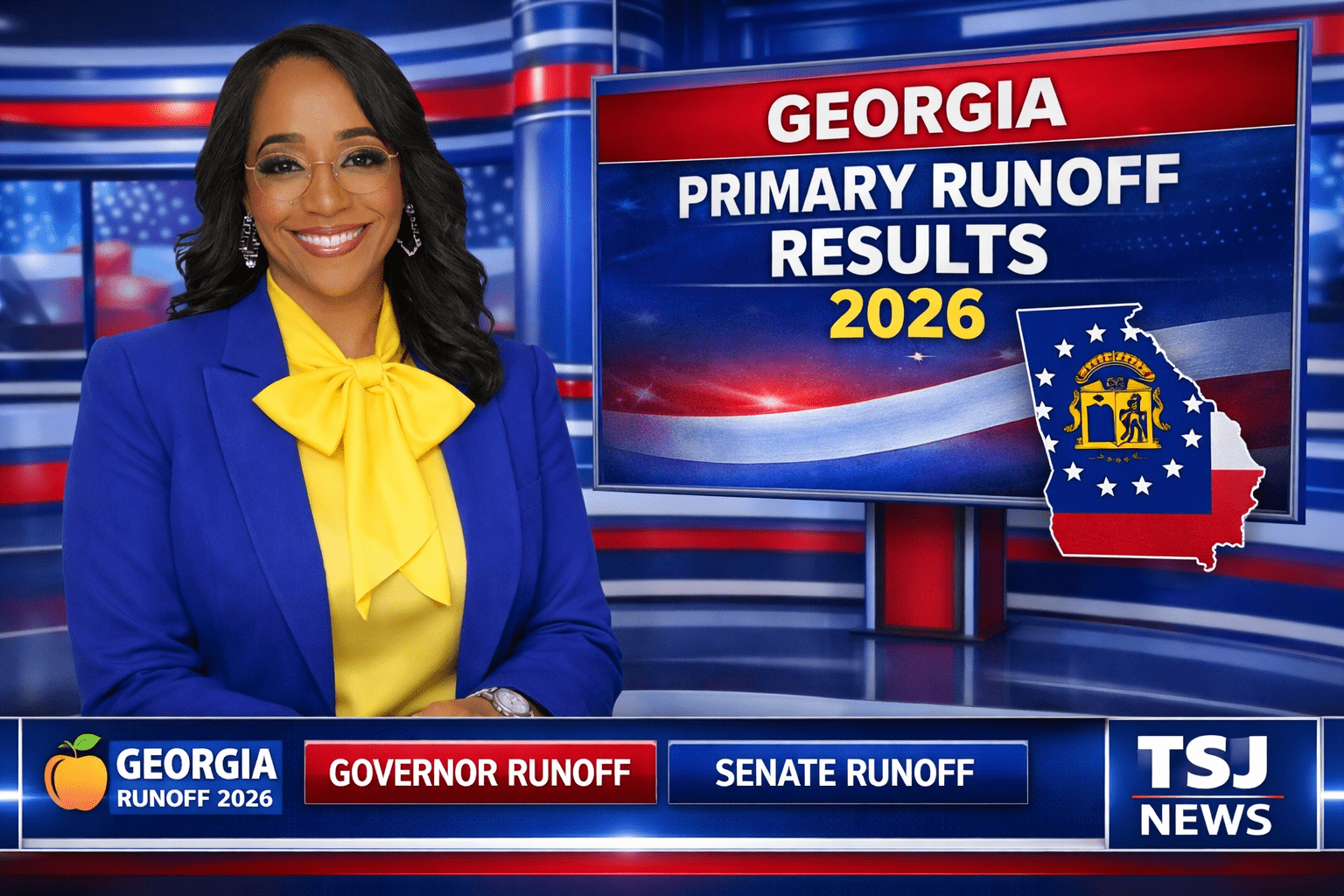
Georgia voters delivered a series of political surprises Tuesday night, reshaping the state’s political landscape and setting up high-profile contests that will dominate the November ballot.
Billionaire healthcare executive Rick Jackson defeated Lt. Gov. Burt Jones in the Republican gubernatorial runoff, while Congressman Mike Collins secured the Republican nomination for U.S. Senate. In Fulton County, former Commissioner Mo Ivory unseated longtime Chairman Robb Pitts in a result that could significantly alter the direction of government in Georgia’s largest county.
The outcomes signal a changing political environment, with outsiders and challengers scoring major victories against better-known opponents and incumbents.
Rick Jackson Scores Stunning Upset


The night’s biggest statewide surprise came in the Republican race for governor, where Jackson defeated Jones despite entering the race as a political newcomer.
Jackson reportedly spent more than $100 million of his own money during the campaign, helping fuel one of the most expensive gubernatorial primary contests in Georgia history. His victory came against a candidate who entered the runoff with endorsements from both President Donald Trump and Gov. Brian Kemp.
Jackson built his campaign around his personal story, describing himself as a businessman who rose from poverty to build a successful healthcare staffing company. His message resonated with Republican voters seeking a candidate from outside traditional political circles.
The victory sets up a November showdown with former Atlanta Mayor Keisha Lance Bottoms, who secured the Democratic nomination earlier this year.
Bottoms is seeking to become Georgia’s first woman governor and the first African American woman elected governor in the state’s history.
The two candidates are expected to offer sharply different visions on healthcare, education, economic development, public safety, and the future direction of state government.
Major Leadership Change Coming to Fulton County
While the governor’s race drew statewide attention, one of the most consequential local results occurred in Fulton County.
Former Commissioner Mo Ivory defeated incumbent Chairman Robb Pitts in the Democratic runoff for Fulton County Commission Chair, ending the tenure of one of metro Atlanta’s most recognizable local political leaders.
The result marks a significant shift for Georgia’s largest county and signals what many observers view as a generational change in leadership.
Ivory and Pitts were once political allies. Pitts supported Ivory during her successful 2024 campaign for the Fulton County Commission. However, the relationship deteriorated as the two clashed over property tax increases, budget priorities, program funding, and broader policy issues throughout 2025.
Earlier this year, Ivory resigned from her District 4 commission seat to pursue the chairmanship.
Her victory is expected to have implications beyond the chairman’s office. Several commissioners either lost reelection bids, sought higher office, or left their positions during this election cycle. As a result, the Fulton County Board of Commissioners is expected to include at least four new members next year.
“Based upon what they have said, significant changes may be in store,” Pitts said following the election.
Ivory now advances to face Republican Eric Tatum in November. Given Fulton County’s Democratic voting history, she enters the general election as the favorite.
Senate Race Draws National Attention


In the Republican runoff for U.S. Senate, Congressman Mike Collins defeated former football coach Derek Dooley by a margin of approximately 55.5 percent to 44.5 percent.
The contest became a closely watched battle within the Republican Party. Trump endorsed Collins during the final days of the campaign, while Kemp supported Dooley.
Collins’ victory is being viewed by many political observers as a win for the party’s populist wing and sets the stage for a high-profile general election contest against Democratic incumbent Jon Ossoff.
National political strategists have identified Georgia as one of the key battleground states in the fight for control of the U.S. Senate.
Ossoff quickly turned his attention to the general election, criticizing Collins in a statement released after the results became clear. Republicans, meanwhile, are expected to focus their campaign on border security, inflation, economic issues, and support for President Trump’s agenda.
The Senate race is expected to attract millions of dollars in campaign spending and substantial national media attention over the coming months.
Looking Ahead
With the primary season largely complete, Georgia voters now have a clearer picture of the choices they will face in November.
At the top of the ballot, Bottoms and Jackson will compete to succeed term-limited Gov. Brian Kemp. In the Senate race, Ossoff will seek another term while facing a challenge from Collins.
Closer to home, Fulton County voters will decide whether Ivory’s victory in the Democratic runoff will translate into a new era of county leadership.
Taken together, Tuesday night’s results demonstrated that Georgia voters remain willing to challenge political expectations. The campaigns that emerge over the next several months will help determine not only the future of Georgia, but potentially the balance of political power nationwide.
More June 16th Runoff Election Results
Truth Seekers Journal thrives because of readers like you. Join us in sustaining independent voices.