Milton Kirby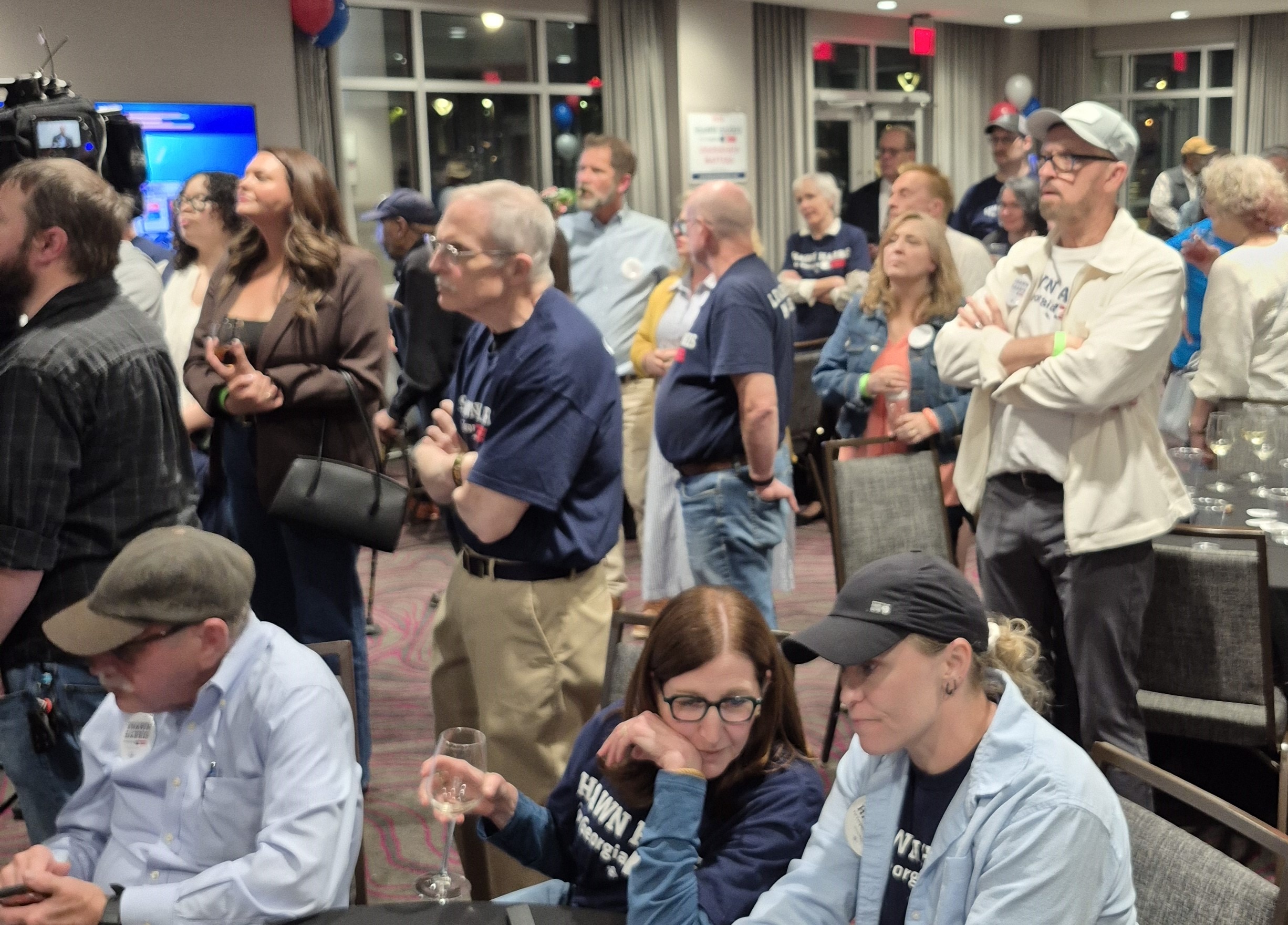
By Milton Kirby | Rome, GA | April 8, 2026
The room was loud. The streets were quiet. And somewhere between the two, the truth of this election began to take shape.
When The Truth Seekers Journal arrived just after 6:00 p.m. at the Courtyard by Marriott Rome Riverwalk, the Harris campaign’s election night gathering was already underway. Inside, the mood was upbeat, almost celebratory. Supporters filled the space. Staff moved with purpose. Cameras from regional and national outlets lined the room.
It did not feel like a campaign bracing for defeat.
It felt like one expecting to compete.
That sense of optimism extended beyond the crowd. Harris’ campaign communications manager, a commuter from Indiana balancing the demands of political work with planning a wedding and searching for a home, spoke candidly about the moment. It was a reminder that behind every campaign are real people — building lives while trying to shape the direction of a district.
But step outside, and the tone shifted.
A short walk toward Broad Street revealed a different kind of energy. Parking spaces were filled, but foot traffic was sparse. The usual buzz of a downtown evening felt muted. Conversations were harder to find and when they did come, they carried a different weight.
One voter visiting from Woodstock, GA did not hesitate when asked about the direction of the country.
“Not good,” he said plainly.
Pressed further, he pointed to rising costs and what he described as a lack of moral leadership. His frustration echoed a familiar theme in conservative-leaning areas where economic pressure and cultural concerns often intersect.
Outside a small convenience store, another conversation revealed a different kind of distance from the political moment. Language barriers limited engagement, but the takeaway was just as telling: uncertainty. When asked about the direction of the country or even basic economic markers like gas prices, responses were hesitant, fragmented — a reminder that not all voters experience politics in the same way, or with the same level of access.
At a nearby restaurant, the conversations grew more layered — and more personal.
Patrons spoke openly about national issues, including U.S. involvement overseas, frustration with political leadership, and the feeling that neither party fully addressed their concerns. One voter described deep concern about American foreign policy, particularly in the Middle East, while still expressing a measure of trust in Democratic candidate Shawn Harris over his opponent.
Others reflected on community identity – describing Rome as a place where faith, family, and familiarity still shape daily life. Politics, in these conversations, was not abstract. It was tied to values, relationships, and lived experience.

By the time the race was called, the numbers brought clarity, but not simplicity.
According to Georgia Secretary of State official election results, Republican candidate Clay Fuller secured victory with 72,304 votes, while Democrat Shawn Harris received 57,030. The margin was decisive, but the context told a deeper story. In a district previously carried by Donald Trump by nearly 37 points, the narrower gap signaled movement — even in defeat.
Back inside the Marriott, that perspective defined the night.
Moments after networks called the race, Harris entered the room to sustained applause. Supporters rose to their feet. There was no visible deflation — only determination.
“We didn’t win here tonight,” Harris told the crowd. “But we did.”
He pointed to the nearly $2 million spent by Republicans and national attention brought into the race, arguing that such investment in a traditionally “ruby red” district reflected a changing political landscape.
“The Republican Party should never have to spend that kind of money here,” he said. “That tells you things are changing in northwest Georgia.”
Harris emphasized that the campaign’s work would continue immediately, framing the result not as an endpoint, but as momentum heading into November.
“This is not about me,” he added. “This is about the people here – working families trying to make ends meet.”
He also struck a conciliatory tone toward his opponent, acknowledging the result as fair and signaling a willingness to move forward without dispute.
The night, in many ways, became a study in contrast.
Inside: energy, belief, and a narrative of progress.
Outside: skepticism, frustration, and quieter conviction.
Between them sat the reality of Rome in a district where political identity is not fixed, but layered. Where some voters feel deeply engaged, others feel disconnected, and many are navigating both at once.
The result belonged to Clay Fuller.
But the story of the night — and perhaps of the district — remains unfinished.
Related articles
New Leadership on the Menu: Harris Campaign Brings Focus to Hiram Voters
Runoff Set to Decide Who Replaces Marjorie Taylor Greene in Georgia’s 14th Congressional District
A Farmer, a General, a Democrat: Shawn Harris Enters Georgia’s 14th District Race
Support open, independent journalism—your contribution helps us tell the stories that matter most.