Milton Kirby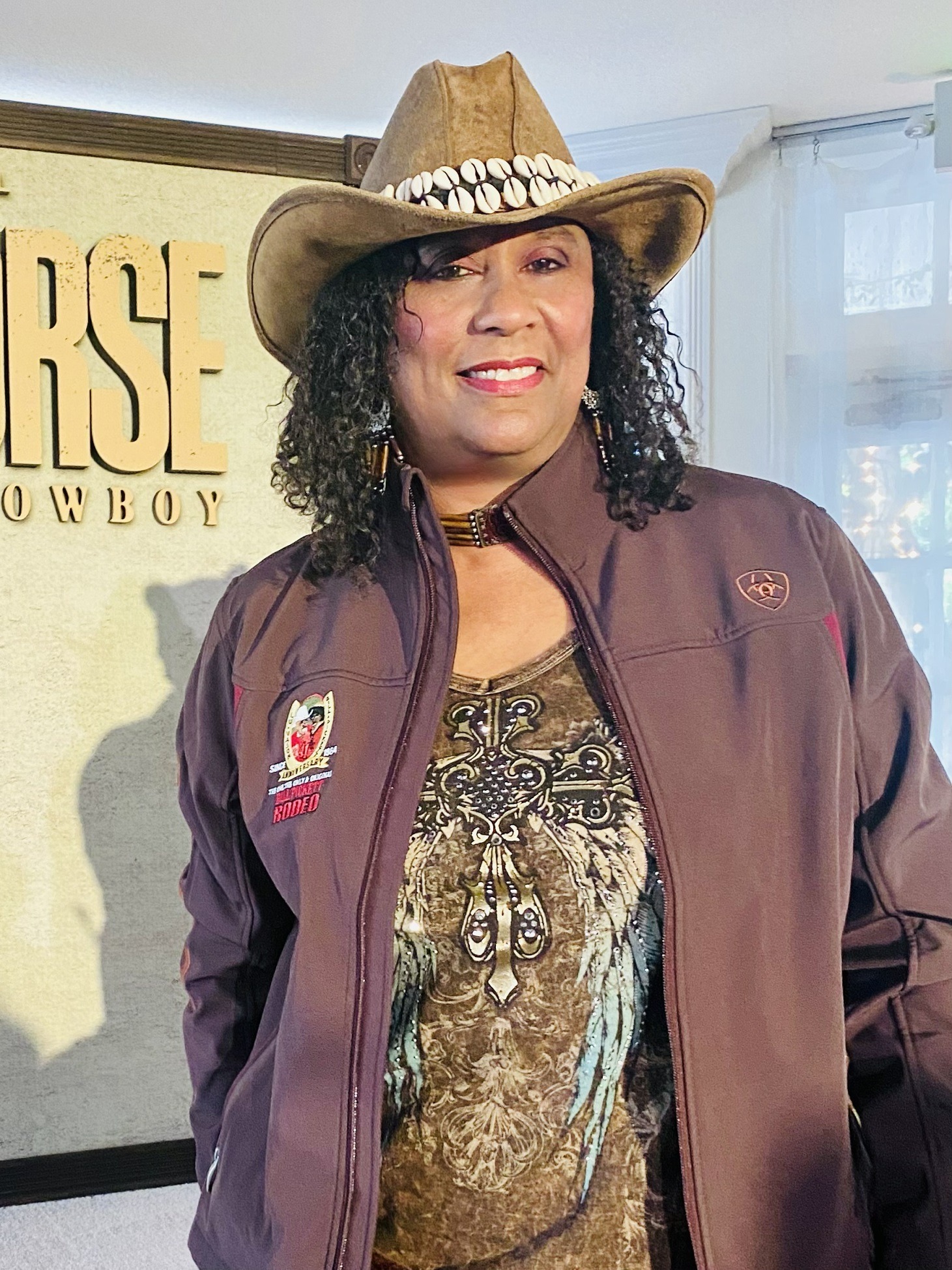
THE ARCHITECT OF SOUL COUNTRY MUSIC STAR
How Margo Wade‑LaDrew Helped Reimagine the Black West
By Milton Kirby | Atlanta, GA| March 17, 2026
When cable technician Shannon Whitaker stepped into Margo Wade‑LaDrew’s living room in Inglewood, California he didn’t pause for the television or the equipment he’d come to repair. His eyes locked onto a jacket draped across a chair, unmistakably embroidered with the crest of the Bill Pickett Invitational Rodeo.
“I went when I was nine,” he said, suddenly grinning like a child. He was forty‑eight now. The memory had lived inside him for nearly four decades.
Moments like this follow Margo everywhere. They are reminders — unplanned, unscripted of the cultural force she has helped shape. For nearly thirty years, she has been one of the quiet architects behind the Bill Pickett Invitational Rodeo (BPIR), the nation’s only touring Black rodeo association and the spiritual home of Black Western culture. And in recent years, she has become the visionary behind its newest cultural branch: Soul Country Music Star, a platform designed to restore Black presence in a genre Black people helped create.
To understand how she arrived here at the intersection of rodeo, music, fashion, philanthropy, and cultural preservation you have to start long before the arena lights, long before the crowds, long before the sound of a banjo or the thunder of hooves.
You have to start in Richmond, Virginia.
A Childhood of Work and Responsibility
Born in 1961, Margo Wade grew up in a household shaped by both love and hardship. When she was twelve, her mother began cycling in and out of hospitals with schizophrenia. The responsibility of raising two younger brothers fell to Margo and her sister while their father worked long hours to keep the family afloat.
“I’ve worked all my life,” she says, not as complaint but as fact.
By fourteen, she had a job in a Richmond hospital. By ten, she had already been knocking on doors selling flower seeds and Christmas cards. She didn’t know it then, but she was learning the skills that would define her adult life: how to connect with people, how to read a room, how to sell, and how to build trust.
Her first dream was to become a flight attendant. But life had other plans — plans that would take her into the heart of Black beauty culture, Black media, and eventually, Black Western history.
The Black Institutions That Formed Her
In her twenties, Margo entered the beauty industry, modeling in Richmond before moving to Chicago then the epicenter of Black haircare. She worked temp jobs until she landed at Johnson Publishing Company, the powerhouse behind Ebony and Jet. There, she became a merchandiser, then a sales rep, then a national sales manager.
Johnson Publishing didn’t outsource creativity. They held internal think tanks where Black professionals brainstormed campaigns, promotions, and strategies. It was a training ground in cultural authorship a place where Black people shaped how Black people were seen.
From there, she moved through World of Curls, Dark & Lovely, Magic Shave, Bronner Brothers — a constellation of Black-owned companies that defined Black aesthetics for generations. She learned event planning, sponsorships, branding, and community outreach. She learned how to build programs from scratch.
And then she stepped into the NAACP Image Awards, where she wrote her first bid for services without ever having written one before and won. For six years, she helped produce one of the most important cultural events in Black America.
She didn’t know it yet, but all of this was preparing her for the moment she would walk into the Burbank Equestrian Center in 1996 and see something that would change her life.
The Revelation: Discovering Black Cowboys
She had gone to volunteer for a friend. She expected a community event. She did not expect to see Black cowboys and cowgirls — not in California, not in the 1990s, not in a world where Westerns had erased them.
“I had never seen Black cowboys before,” she says. “I didn’t even know there was a traveling Black rodeo.”
The Bill Pickett Invitational Rodeo was celebrating its tenth anniversary that year. Founded by promoter Lu Vason in 1984, it was the first and only touring Black rodeo in the country. It had been built from scratch, city by city, without internet, without mainstream support, without recognition.
Margo was stunned. She was also hooked.
When her friend left for a job at BET, she asked Margo and another colleague to take over her role. They didn’t know rodeo culture. They didn’t know sponsorship strategy for Western sports. They didn’t know the logistics of animals, arenas, or ticketing.
But they learned. And Margo stayed.
For the next twenty years, she worked alongside Lu Vason, traveling from city to city, counting tickets in hotel rooms until 3 a.m., building relationships with cowboys, cowgirls, families, and communities. She watched the rodeo grow from a grassroots operation into a cultural institution.
And she watched Lu a legendary Black music promoter tie entertainment to the rodeo because he understood something essential: Black people would come for the culture, not just the competition.
That insight would later become the seed of Soul Country Music Star.
Sidebar – What Is Soul Country Music?
Soul Country Music, as envisioned through the Bill Pickett Invitational Rodeo’s Soul Country Music Star competition, blends the storytelling structure of country music with the emotional force, vocal texture, and lived experience long rooted in Black musical traditions. The concept pushes back against the narrow way country music has often been marketed and remembered. It creates room for artists who may sound country, soul, gospel, blues, or genre-crossing, but who still carry the themes of struggle, family, faith, place, love, and resilience that define country storytelling. For Margo Wade-LaDrew, the idea is not about inventing something new from scratch. It is about naming, elevating, and investing in a tradition that has always existed.
The Leadership Era: Black Women Take the Reins
When Lu Vason became ill in the early 2010s, his wife, Valeria Howard Vason, began traveling more, learning the books, the logistics, the operations. When Lu passed in 2015, she stepped fully into leadership becoming the first Black woman to run a national rodeo.
Margo became her right hand.
Together, they modernized the organization:
- expanded the tour
- secured major sponsors
- built the BPIR Foundation
- created grant programs
- partnered with Crown Royal, Toyota
- brought BPIR to television for the first time in 2021
- returned to Fort Worth’s historic Cowtown Coliseum
- grew the Fort Worth stop to ten sold‑out performances
- became Hollywood’s go‑to rodeo for authenticity
They did all this with a tiny staff. No salaries for leadership. No corporate infrastructure. Just commitment, cross‑training, and a belief that the rodeo mattered.
And then came the idea Margo had been carrying for a decade.
The Birth of Soul Country Music Star
For years, Margo had watched Black country artists show up at BPIR with guitars in hand, hoping for a chance to perform. They had no platform. No industry support. No place to belong.
She and her husband, Lawrence LeDrew, talked often about creating something for them — a showcase, a competition, a cultural home.
After Lu’s passing, she kept bringing it up.
Finally, Valeria said, “Stop talking about it and just do it.”
And she did.
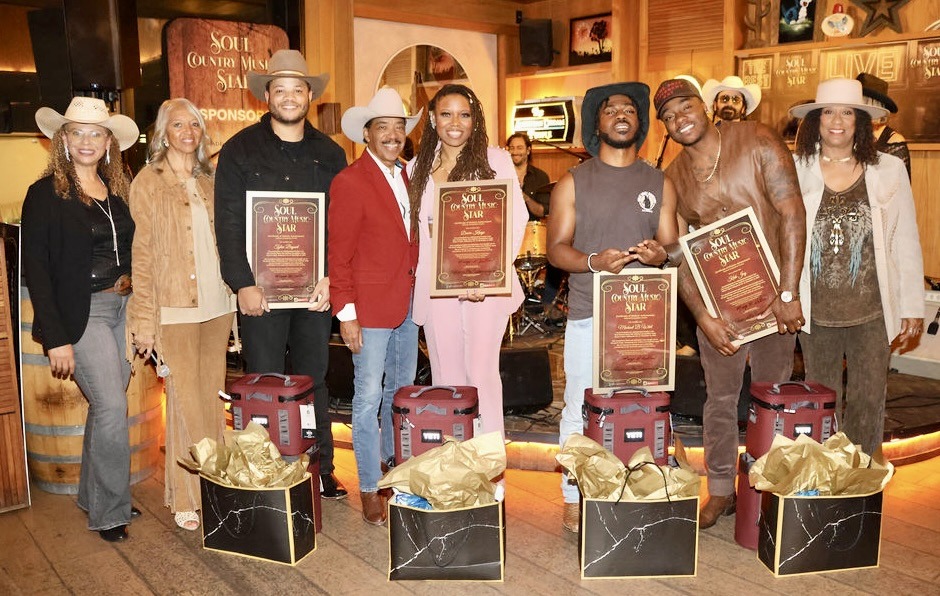
In June 2024, during BPIR’s 40th anniversary, Soul Country Music Star launched. It was a tribute to Lu Vason’s entertainment legacy, to Valeria’s belief in the idea, and to the artists who had been waiting for a door to open.
The program quickly grew:
- 60–70 artists have come through
- six finalists per city
- two winners so far
- $10,000 prize
- winners travel with the rodeo
- artists perform halftime and pre‑show
- BPIR promotes their music
- artists sell merch at the rodeo
- mentorship in branding, booking, and performance
Suddenly, the world was paying attention to Black country music. Soul Country Music Star was no longer a niche idea it was part of a national cultural moment.
The Cultural Lineage: Restoring What Was Always Ours
Margo is clear about the history:
- The banjo is African.
- The harmonica was central to early Black country and blues.
- DeFord Bailey was the first Black star of the Grand Ole Opry — and they hid his race.
- Linda Martell was the first commercially successful Black female country artist — and the industry pushed her out.
- Charley Pride broke barriers but was treated as an exception.
- Ray Charles reshaped country music by adding soul.
“Country music is ours,” she says. “We’ve always been there.”
Soul Country Music Star is not a novelty. It is a restoration.
The Rodeo as a Cultural Homeplace
Ask Margo why BPIR matters, and she won’t talk about prize money or logistics. She’ll talk about:
- the seven‑year‑old boy who whispered, “I see Black cowboys”
- the woman who begged for tickets with a childhood photo
- the families who plan reunions around the rodeo
- the fourth and fifth generation children growing up in the stands
- the music, the clowns, the announcers, the rope tricks
- Howard Johnson singing Lift Every Voice in the dirt
- the Black flag flying beside the American flag
BPIR is a place where Black people see themselves — past, present, and future.
The Legacy She Wants to Leave
When asked what she wants future generations to remember, Margo doesn’t hesitate.
“That the Bill Pickett Invitational Rodeo cared,” she says. “That we opened doors. That we loved our community enough to keep going.”
She wants BPIR in museums. She wants the traveling museum to become permanent. She wants the documentary finished. She wants the nighttime drama about a Black family running a rodeo to be televised.
And she wants The Greatest Show on Dirt — the story of BPIR — on the big screen.
She has already begun the work.
A Cultural Architect for the Next Generation
Margo Wade‑LaDrew’s life is a blueprint of Black cultural stewardship:
- a childhood of responsibility
- a career in Black-owned institutions
- two decades shaping the rodeo under Lu Vason
- a leadership era defined by Black women
- a foundation built on grants, scholarships, and community
- a music platform restoring Black country’s rightful place
- a commitment to legacy, memory, and cultural truth
She is not simply preserving history. She is expanding it.
And somewhere in Inglewood, California, cable technician Shannon Whitaker is telling someone about the day he walked into a house, saw a jacket, and remembered the first time he saw a Black cowboy. That is the legacy she is building — one memory at a time.
Country Roots, Diverse Beats: Celebrating the Rich Tapestry of Soul in Country Music.
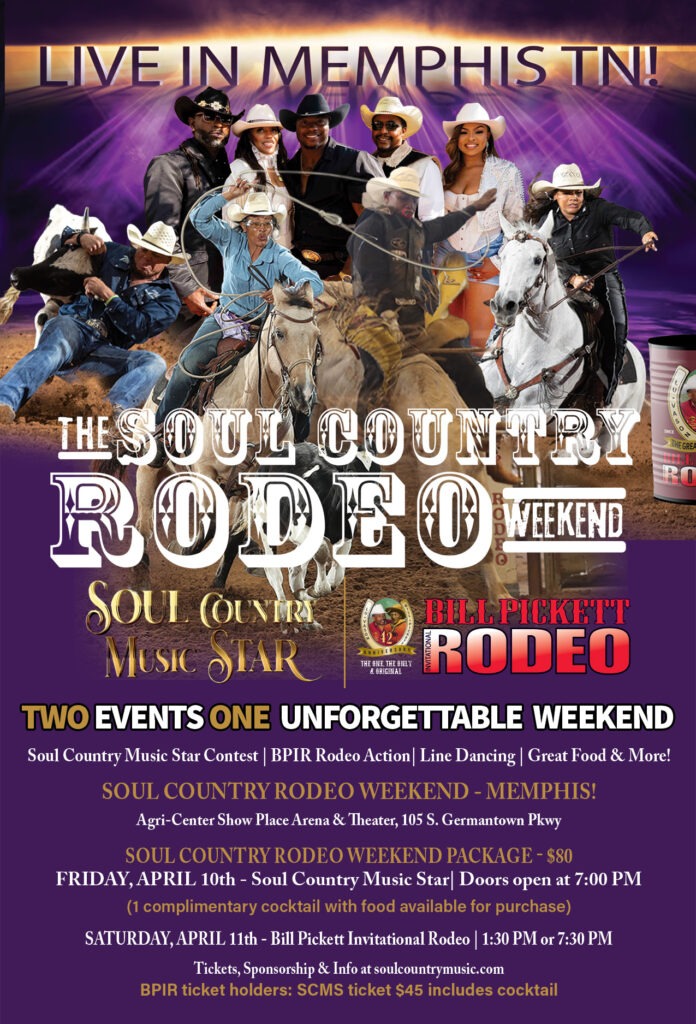
Agricenter International Showplace Theater – 7777 Walnut Grove Rd, Memphis, TN
Bill Pickett Invitational Rodeo
Music Competition – Friday, April 10, 2026 | 7:00 pm 8:00 pm Competition
BPIR Rodeo – Saturday, April 11, 2026 | 1:30 pm or 7:30 pm
Event Tickets and additional information
Upcoming in the TSJ series – Inside the Bill Pickett Invitational Rodeo
Part 3 — Kirk Jay: The Sound of Country Soul at the Rodeo
Part 4 — Nathaniel Dansby (Mr. Bowleggs) : The Sound of Country Soul at the Rodeo
Part 5 — Rodeo for Kids’ Sake and the Next Generation
Related articles
Inside the Bill Pickett Invitational Rodeo — Part 1
Bill Pickett Invitational Rodeo National Finals Nominated for USA TODAY’s Best Rodeo Award
Bill Pickett Invitational Rodeo Celebrates 40 Years of Tradition and Excellence
Martin Luther King, Jr. African-American Rodeo of Champions Thrills Denver Audience
Truth Seekers Journal thrives because of readers like you. Join us in sustaining independent voices.

 Ted Knorr