
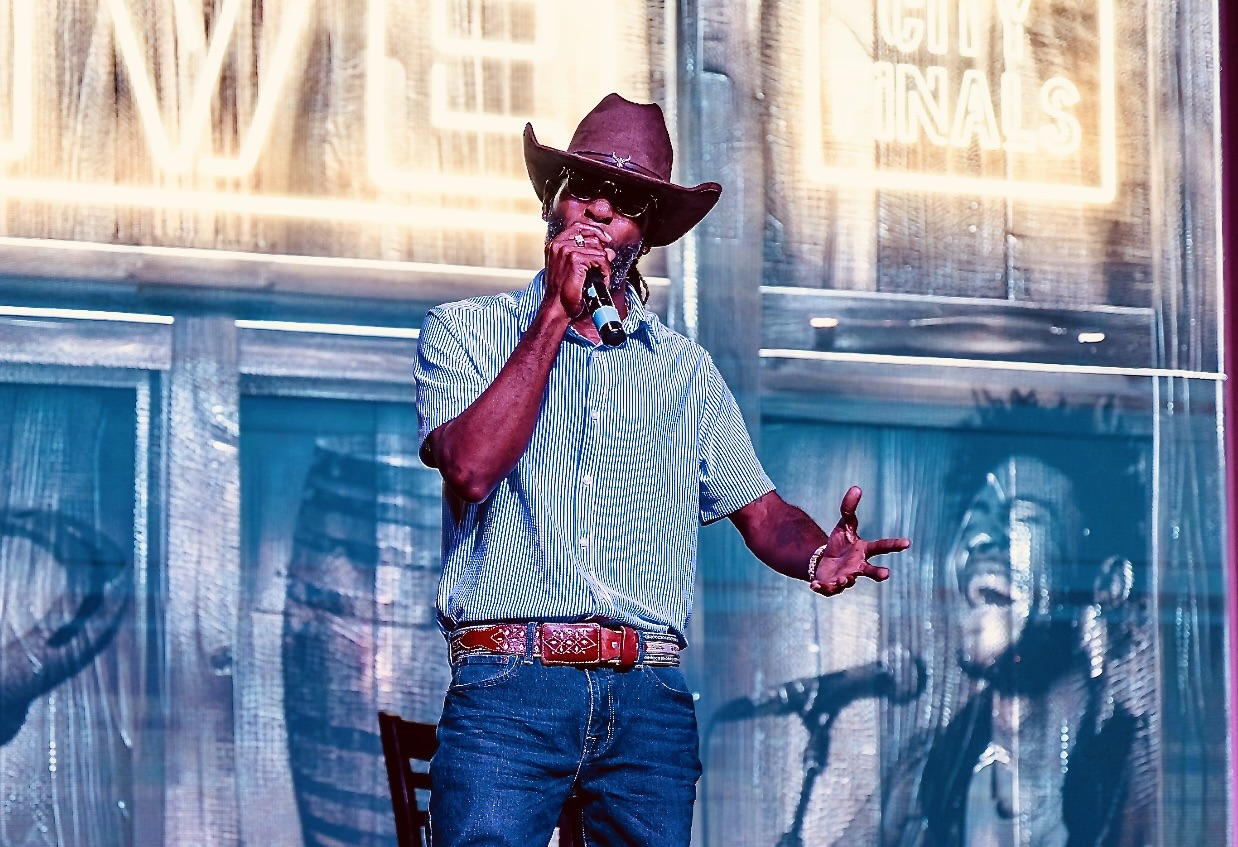
Nathaniel “Mr. Bowleggs” Dansby Reclaims the Roots of Country Music
By Milton Kirby | Atlanta, GA | April 6, 2026
Nathaniel Dansby’s journey into Soul Country began long before he stepped onto a stage. Long before he became “Mr. Bowleggs,” the rising force who fought his way from third place to champion of the Soul Country Music Star (SCMS) competition, he was simply a boy in a crowded Alabama home—one of six children raised in a family where music wasn’t a hobby. It was a mandate.
“We were kind of like the Jackson 5,” he said with a grin. “We got our tail whooped if we didn’t stay in the room and practice until we perfected it.”
Under the strict but loving guidance of his mother, Dansby began singing at age three. By five, he was performing publicly with his siblings as The Little Gospel Wonders, carrying harmonies from church revivals to community gatherings across Alexander City. His mother saw something in him early, something she named out loud.

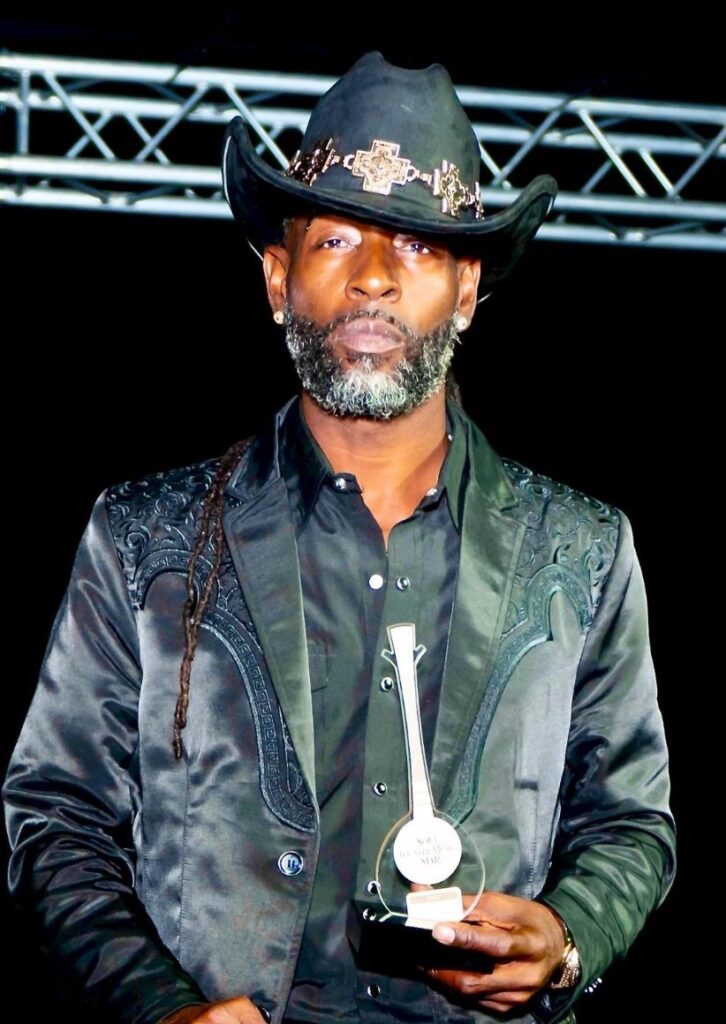
“My mom told me, ‘Nate, you’re my special child,’” he said. “I lost her in 1998, but I still hear her voice. Before I entered this competition, she came to me and said, ‘Hey, you got it. You’re a winner.’ I had to give it my all because I had that confirmation.”
Her belief became the quiet engine behind his reinvention, heartbreak, and eventual triumph.
A Calling, Not a Career
Dansby doesn’t describe music as a profession. He calls it a calling—one shaped by faith, family, and a desire to give people something real.
“I don’t want to create music just for now,” he said. “I want it to last forever.”
That spiritual grounding shapes not only how he sings, but why he sings. His mission is simple: to give people hope, to make them feel something, and to create music that outlives him.
Finding Country and Finding Himself
Country music was not always part of Dansby’s plan. After years rooted in gospel and R&B, he began singing country music about seven years ago. What started as a new direction quickly became something deeper, something that felt like home.
“I never thought in a million years I’d be singing country,” he said. “But it fits my heart.”
Country music offered him something the other genres didn’t: a place where storytelling, vulnerability, and emotional clarity mattered more than vocal gymnastics.
“Country music is a story. It’s life. I want people to see what I’m singing about.”
Rickey Davis Scott the musician and cultural historian and Soul Country Music Star judge —puts it plainly:
“The history of country music… it’s all from us. From the banjo in South Africa to the rhythms that shaped Hank Williams. Black artists aren’t new to country—we’re the architects.”
Season One: The Third Place Finisher Who Refused to Quit
Dansby’s first appearance on the SCMS stage didn’t end in victory — in fact, he didn’t even make it to the top two. He finished third at the Atlanta regional competition in Season One. The placement stung, not because he expected an easy win, but because he knew he hadn’t yet shown the fullness of who he could be. “I thought, ‘I’m good, I got this,’” he admitted. “But I didn’t. I wasn’t prepared.”
Scott remembers it clearly.
“He went up there and sang R&B,” Scott said. “He didn’t know the country lyrics, the catalog, the tradition. The voice was there, but the identity wasn’t activated yet.”
The crowd loved him.
The judges didn’t.
And he felt the sting.
But he didn’t quit.
“It taught me to give everything—my pain, my soul—because if people can’t feel it, there’s no point.”

The Transformation
After Season One, Dansby went to work.
He studied country music intentionally, the artists, the phrasing, the emotional truth‑telling that defines the genre. He learned to sing country, not imitate it.
“He’d come to me talking about songs he heard on the radio,” Scott said. “That’s when I knew he was embracing the culture, not just the sound.”
Dansby became, in his own words, a musical chameleon, able to shift between genres without losing himself.
“I realized the only thing stopping me was me.”
Season Two: The Redemption and the Crown
When Dansby returned for Season Two, he wasn’t the same artist who had finished third the year before. He came back humble, focused, and prepared—determined not to repeat the mistakes of his first run.
He was grounded.
Focused.
Present.
“I wanted to give everything in my soul so people could feel it,” he said.
And they did.
This time, he didn’t just advance, he dominated. Dansby won the Atlanta regional competition, earning his place on the national stage in Hollywood. And when he stepped into that spotlight, he delivered the performance of his life.
He killed it.
The festival crowd loved him.
And the judges felt what they hadn’t felt before: a fully realized Soul Country artist.
When his name was called as the Season Two national winner, the room erupted. The man who once doubted whether he belonged in country music had now proven himself at the highest level.
“Going to LA showed me I belonged,” he said. “It showed me I could stand with anybody.”
Now, with a potential 2026 tour with the Bill Pickett Invitational Rodeo (BPIR) on the horizon, Dansby returns to the national spotlight not as a newcomer, but as a contender—sharpened, seasoned, and ready for whatever comes next.
“It was the greatest feeling of my life,” he said. “I’ve never felt anything like it.”
“I want to leave my footprint in the sand. I want people to say, ‘He was here, and he’s here to stay.’”
A Performer Driven by Connection
On stage, Dansby doesn’t perform to the audience, he performs with them.
He describes entering a “zone,” where the goal is not perfection but impact. Whether through clapping, movement, or quiet attention, he looks for signs that the audience feels the music.
“That connection fuels me,” he said. “It turns each song into a shared experience.”
The Cultural Weight of Soul Country
To understand Dansby’s rise, you have to understand the movement behind him.
Soul Country Music Star is not just a talent competition—it is a cultural restoration. A reclamation of a musical tradition whose roots are Black, Southern, rural, and deeply African.
“We’re creative people,” Scott said. “Everything the world loves—we created. Country music is no different.”
Dansby is part of that reclamation—a living reminder of what was lost, and what is returning.
BPIR: The Cultural Homecoming
The Bill Pickett Invitational Rodeo—the nation’s oldest Black rodeo—has become a proving ground for Soul Country artists. It is where Black audiences show up early, buy tickets, buy merch, and support their own.
“It’s a blessing to the people,” Dansby said. “That’s what excites me most—connecting with them.”
Scott sees BPIR as a cultural anchor.
“It’s a community” he said. It’s a place where our artists can be embraced without running away from their own people.”
The Duet the World Is Waiting For
Dansby and fellow Soul Country artist Kirk Jay have been discussing a duet—a collaboration both artists believe could be a defining moment for the genre.
Dansby says the contrast in their vocal styles is what makes the idea so powerful.
“When we finally record it, it’s going to be something special,” he said.
Scott agrees.
“Two Black men in country, both with powerhouse voices—that’s rare. That’s history.”
A Legacy in the Sand
At 43, Dansby sees his career not as a late start, but as a divine timeline.
He wants his music to be evergreen.
He wants his story to inspire.
He wants his children—and the world—to know that anything is possible.
“I want to leave my footprint in the sand,” he said. “I want people to say, ‘He was here, and he’s here to stay.’”
As “Mr. Bowleggs” continues his ascent, he carries Alexander City, The Little Gospel Wonders, and the full weight of Soul Country’s rebirth with him—proving that the soul of country music has always been right where it started: in the heart.

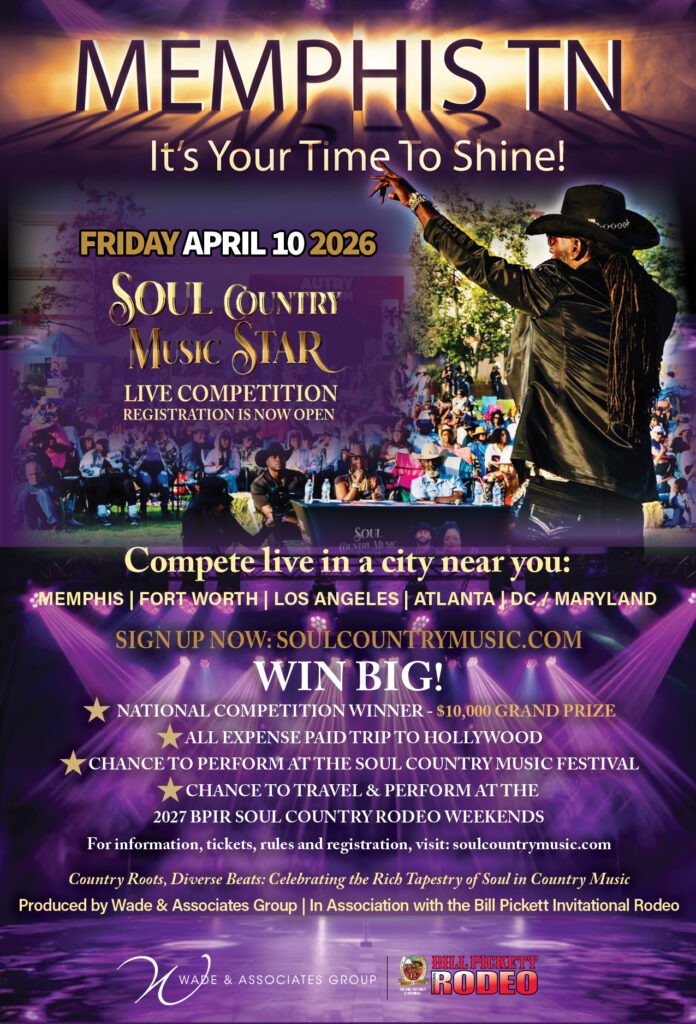
Country Roots, Diverse Beats: Celebrating the Rich Tapestry of Soul in Country Music.
Agricenter International Showplace Theater – 7777 Walnut Grove Rd, Memphis, TN 38120
Agricenter International Showplace Arena – 105 Germantown Parkway, Cordova, TN 38018
Bill Pickett Invitational Rodeo
Rodeo for Kidz Sake – Friday, April 10, 2026 | 10:00am
Music Competition – Friday, April 10, 2026 | Doors open 7:00pm Competition 8:00pm
BPIR Rodeo – Saturday, April 11, 2026 | 1:30 pm or 7:30 pm
Event Tickets and additional information
Upcoming in the TSJ series – Inside the Bill Pickett Invitational Rodeo
— Rodeo for Kids’ Sake and the Next Generation
Related articles
Inside the Bill Pickett Invitational Rodeo — Part 7
Inside the Bill Pickett Invitational Rodeo — Part 6
Inside the Bill Pickett Invitational Rodeo — Part 4
Inside the Bill Pickett Invitational Rodeo — Part 3
Inside the Bill Pickett Invitational Rodeo — Part 2
Inside the Bill Pickett Invitational Rodeo — Part 1
Truth Seekers Journal thrives because of readers like you. Join us in sustaining independent voices.