
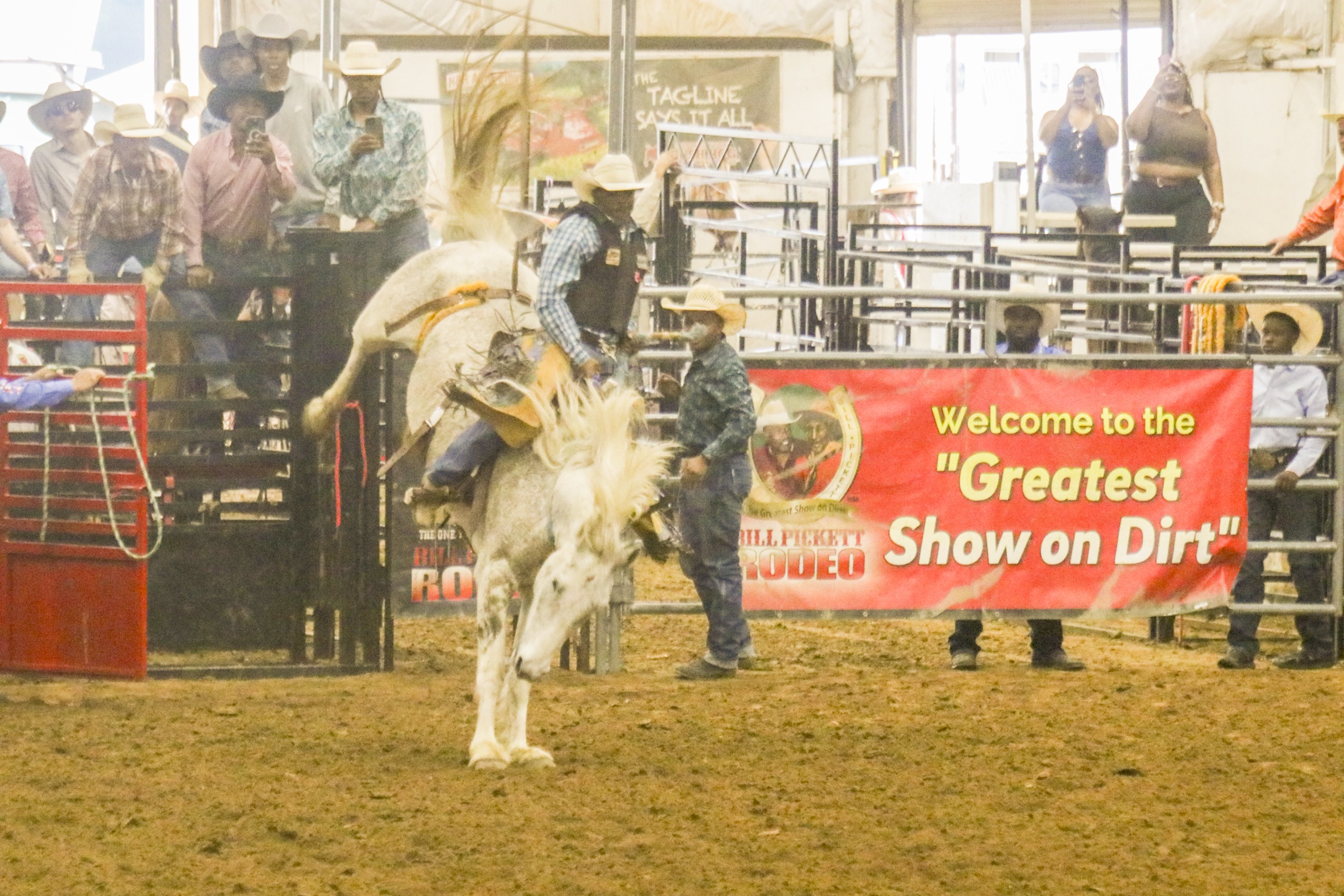
More Than a Rodeo: Inside the Enduring Legacy of the Bill Pickett Invitational Rodeo
By Milton Kirby | Atlanta, GA | May 18, 2026
There are stories we tell, and then there are stories we inherit. The Bill Pickett Invitational Rodeo (BPIR) is both. It is an enduring institution, a cultural archive, a family reunion, and a proving ground stitched together by memory, muscle, and music. Over the course of this series, I have walked the dirt, listened to the voices, watched the riders, and felt the pulse of a tradition that refuses to fade. What began as an attempt to document a rodeo became something far deeper, a journey into a tradition that continues to evolve.
The BPIR is not simply an event. It is a record of who we are, who we’ve been, and who we’re becoming. And as this chapter closes, another one opens, a road that leads from Memphis to Los Angeles, where the Soul Country Music Star National Champion will be crowned at the Soul Country Music Festival. But before we get there, we must return to the ground beneath our boots, because that is where it all begins.
I. The Rodeo That Became a Record of Us
Every rodeo has its own rhythm, but the Bill Pickett Invitational Rodeo has a heartbeat. It beats in the laughter of children seeing a horse for the first time. It beats in the confidence of champion riders who carry decades of history in their posture. It beats in the music, the dust, the hoofbeats, and the voices that echo across the arena.
When I arrived in Memphis, I expected a show. What I found was a community, a village built on heritage, discipline, and joy. As I wrote in my field notes, “A great rodeo doesn’t just happen. It’s built piece by piece, decision by decision, tradition by tradition.”
“It begins with the land beneath your boots and ends with the people who carry the tradition forward.”
Memphis, with its perfect dirt and perfect energy, became the lens through which the entire BPIR experience came into focus.
II. Bill Pickett’s Enduring Shadow
To understand the significance of the BPIR, you first have to understand the man whose name stands above the arena gates. Bill Pickett was more than a cowboy. He was an innovator, a showman, and a cultural force. His technique, bulldogging known now as Steer Wrestling, changed rodeo forever. His daring athleticism eventually earned him national recognition and a place among the legends of the Wild West.
His presence changed the way America saw Black cowboys, even when America tried not to see them at all.
But what struck me most over the course of this series is not how often Pickett’s name is spoken. It is how deeply his spirit is lived. The BPIR does not treat him as a relic. It treats him as a foundation.
His influence is not a statue or a plaque. It is the confidence of a Pee Wee rider gripping the reins. It is the precision of a champion entering the chute. It is the courage of a bullfighter stepping between danger and safety. It is the music of Soul Country Music Star artists reclaiming a sound that has always been theirs.
Bill Pickett is not remembered at the BPIR.
He is embodied.
III. The Stewardship of Valeria Howard Cunningham

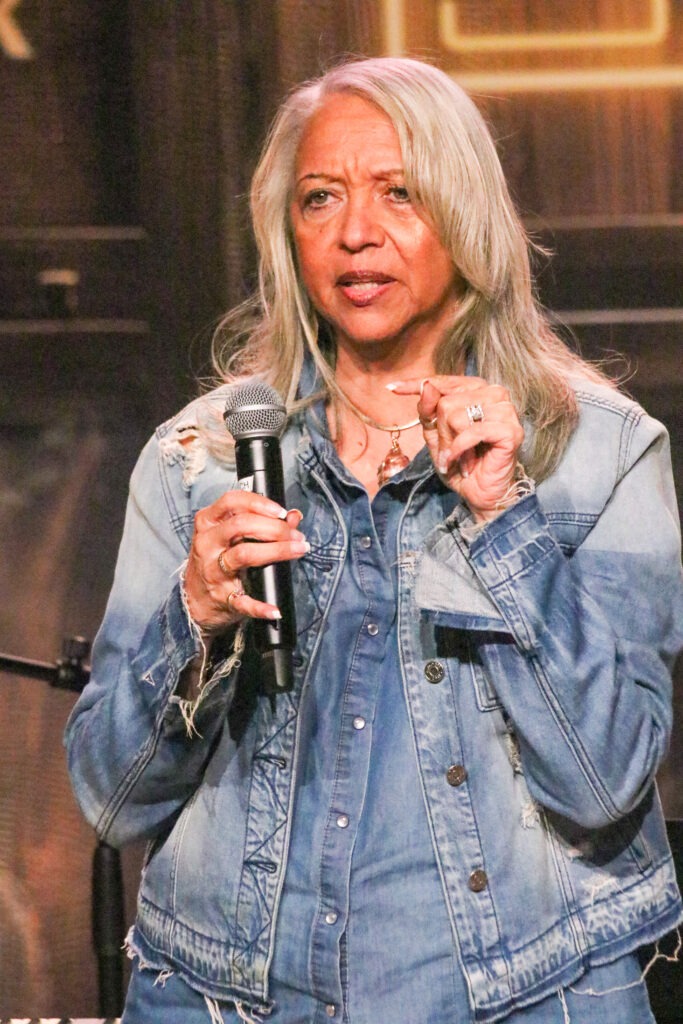
Founded in 1984 by the late Lu Vason, the rodeo was created not only to showcase Black rodeo talent, but to reclaim historical visibility for Black Western culture itself.
“At the time, Black cowboys remained largely invisible in mainstream rodeo, even though historians estimate they made up nearly one in four working cowboys in the late 19th century.”
Vason saw both the absence and the opportunity. What he built became far more than a single event.
Every enduring tradition needs a steward, someone who understands the weight of history and the necessity of evolution. For the BPIR, that steward is Valeria Howard Cunningham, Producer and CEO.
For more than four decades, the BPIR has grown into the nation’s longest running Black owned touring rodeo association, introducing generations of children to rodeo culture while creating a national gathering place rooted in heritage, competition, education, and celebration.
Valeria’s gift is balance. She protects the heritage while opening the door to the future.
Under her guidance, the BPIR has remained rooted in tradition while embracing new cultural expressions. She has preserved the Lu Vason vision without freezing it in time. She has expanded the rodeo’s reach, deepened its cultural footprint, and ensured that every stop, from Memphis to Los Angeles, carries the same intentionality, extending the BPIR’s presence into community spaces through education, outreach, and engagement.
Valeria understands something essential:
A tradition that refuses to evolve becomes a museum.
A tradition that evolves with integrity becomes a force.
The BPIR has become something larger than sport.
IV. More Than Competition
Spend enough time around the BPIR, whether in Memphis, Atlanta, or Upper Marlboro, and you begin to realize that the rodeo itself is only part of the experience. Yes, there are champions. There are bronc riders, steer wrestlers, barrel racers, bull riders, team ropers and Pee Wee competitors stepping nervously into the arena dirt for the first time.
But surrounding the competition is something larger: a traveling city of culture and community that recreates itself at every stop on the tour.
In Memphis, that ecosystem unfolded across the Agricenter grounds just as vividly as it had in Atlanta and Upper Marlboro. Food vendors sent familiar aromas drifting through the air. Families browsed apparel booths and handcrafted merchandise. Music floated between events. Children wove through crowds dressed in boots, fringe, denim, and cowboy hats, the same joyful choreography I’ve seen repeat itself city after city.
The atmosphere is always the same blend: part sporting event, part family reunion, part cultural festival. People do not come only to watch. They come to reconnect. Again and again, conversations return to memory.
Parents talk about attending the rodeo as children themselves. Grandparents introduce grandchildren to traditions they hope will outlive them. Old friends reunite beside arena rails. Riders greet former competitors like extended family.
What stands out most, no matter the city, is how deeply the rodeo lives inside people’s personal histories. For many families, the BPIR is not an occasional attraction. It is an annual tradition woven into the rhythm of life itself.

V. “For Kidz Sake” and the Power of Representation
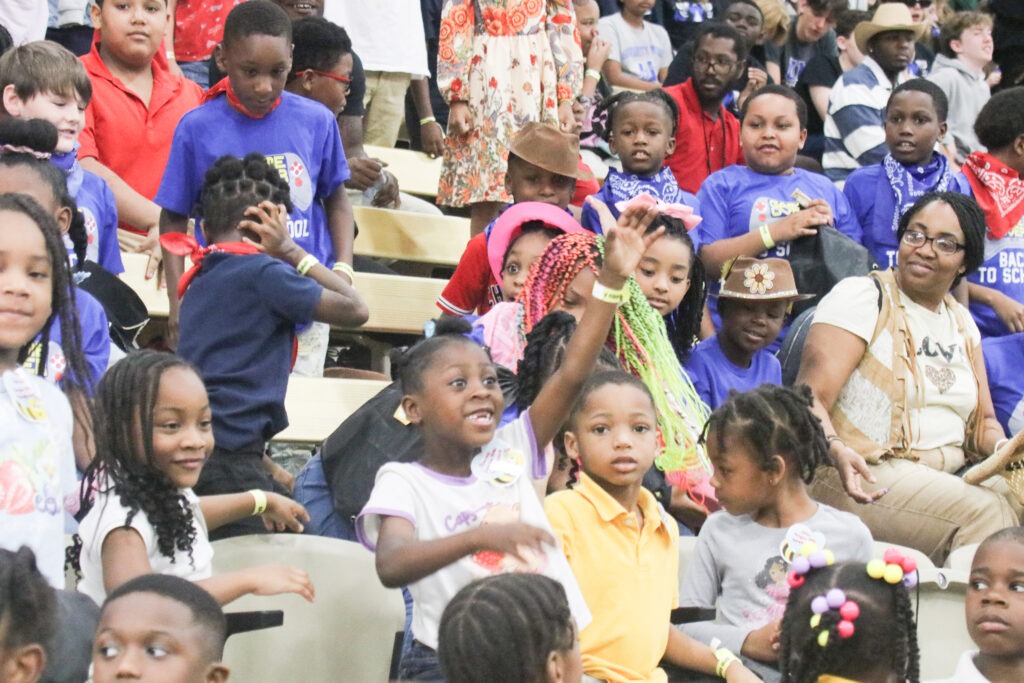
Perhaps nowhere is the BPIR’s cultural mission more visible than during the “For Kidz Sake” rodeo program.
On Friday morning in Memphis, more than 4,000 children filled the arena. Some had never attended a rodeo before. Some had never touched a horse. Many were encountering the history of Black cowboys for the first time. But inside the arena, history stopped feeling distant. It became visible.
Children watched riders who looked like them compete with confidence and skill. They learned about horsemanship, agriculture, discipline, and Western heritage. They laughed, pointed, cheered, danced and asked questions.
Most importantly, they saw themselves reflected in the tradition. Representation is often discussed in abstract political language. At the BPIR, it felt tangible.
A child watching a Black cowboy ride into the arena is not simply watching entertainment. They are witnessing possibility.
That may be one of the rodeo’s greatest forms of cultural preservation: not simply remembering the past, but making sure the next generation can imagine themselves inside the future.
VI. The Dirt Matters
One of the most unexpected lessons of the series came from something most spectators never think about: the dirt itself.
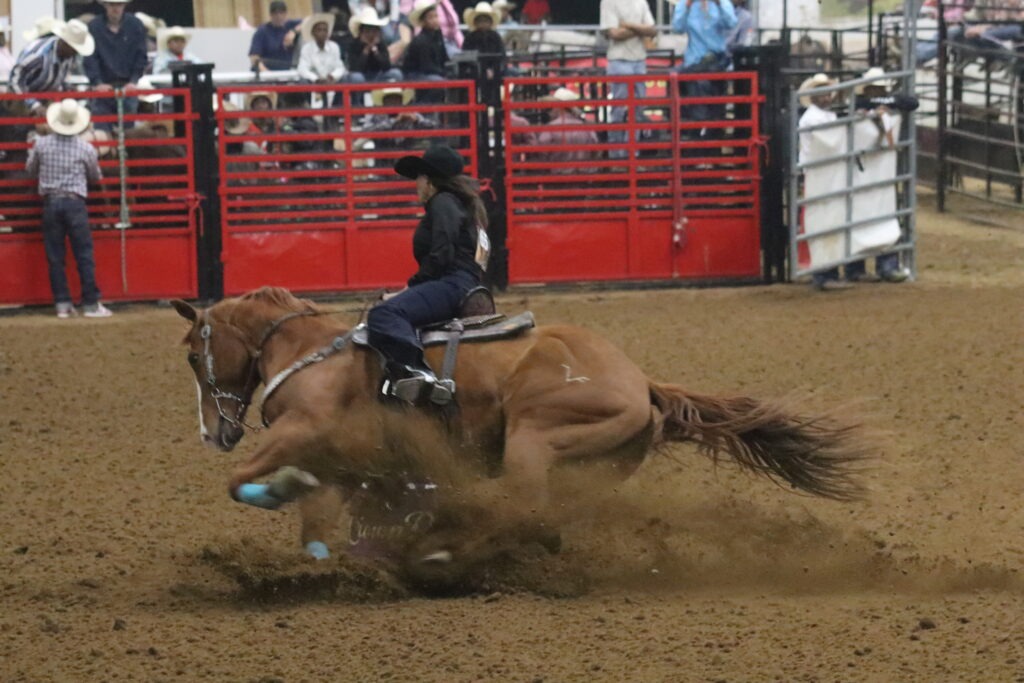
Champion rider Tim Walker explained it beside the Memphis arena rail with the seriousness of a craftsman discussing tools. Proper rodeo dirt matters.
“Too dry, and it becomes dangerous. Too slick, and horses or riders can lose footing. Proper moisture and texture help animals turn, stop, and run safely while giving competitors confidence beneath their boots.”
Until that moment, dirt had seemed incidental.
Instead, it revealed itself as foundational.
That realization became symbolic of the BPIR itself.
Much of what makes the rodeo work happens quietly beneath the surface.
The labor.
The planning.
The preparation.
The mentorship.
The institutional memory.
Like the arena dirt, those invisible layers support everything above them.
VII. The Guardians: Bullfighters and Barrelmen
That same principle applies to another group often overlooked by casual fans: the rodeo clowns, barrel men, and bullfighters.
Their role combines athleticism, timing, courage, and instinct.

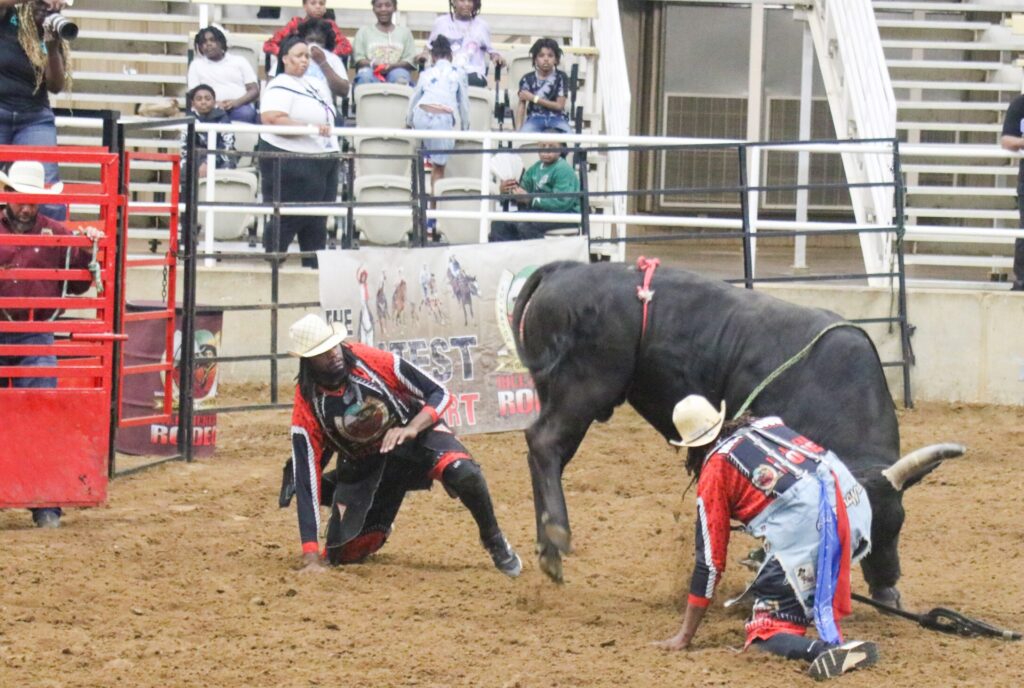
“Their work is not just theatrical. It is tactical.”
Historically, rodeo clowns began primarily as entertainers. But as bull riding evolved into one of rodeo’s most dangerous events, their responsibilities transformed into something far more serious.
Today’s bullfighters routinely place themselves between riders and charging bulls, protecting competitors during the most dangerous seconds after a fall.
At the BPIR, their presence carries additional historical significance.
According to Valeria Howard Cunningham, BPIR became the first, and remains the only, traveling Black owned rodeo to feature professional arena entertainers.
Even within rodeo culture, representation matters.
The BPIR’s commitment to visibility extends beyond champions and headliners. It includes the workers, performers, and protectors whose contributions are often forgotten yet are essential to the show itself.
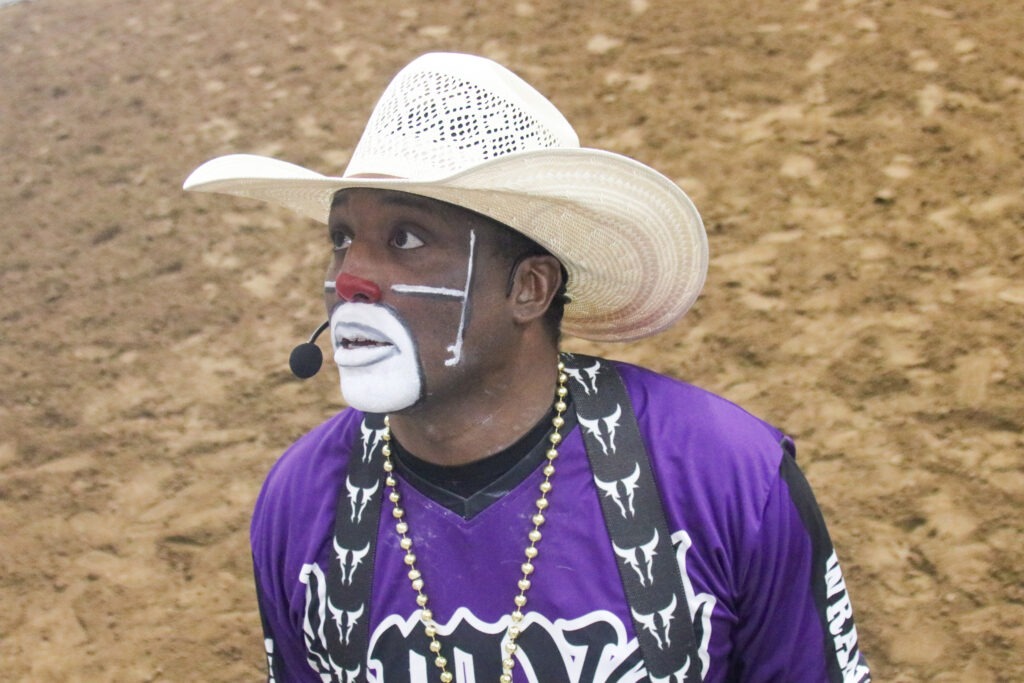
Every role matters inside the arena. That truth mirrors the larger BPIR experience.
VIII. The Cultural Evolution: Soul Country Music Star
One of the most powerful evolutions under Valeria’s leadership is the integration of Soul Country Music Star, a showcase that blends Black country artistry with the rodeo’s vibrant atmosphere.
“It wasn’t an add on. It was a natural extension of the culture BPIR has always celebrated.”
Black country music is not new. It is foundational. It is lineage. It is the sound of migration, resilience, and rural memory. The Soul Country Music Star competition does not introduce something foreign to the rodeo; it reveals something that has always been there.
In Memphis, the artists brought grit, melody, and storytelling that echoed the same themes the rodeo embodies: resilience, heritage, and pride. Their performances were not intermissions. They were continuations, another expression of who we are.
The competition itself has also become a reflection of perseverance and artistic growth. Season One elevated Kirk Jay to the national spotlight, while Season Two crowned Nathaniel “Mr. Bow Leggs” Dansby, whose journey embodied the resilience celebrated throughout the BPIR itself.
Dansby did not win during the competition’s inaugural season. Instead, he returned. He refined his craft, sharpened his stage presence, and continued building his connection with audiences across the BPIR tour before emerging as the Season Two champion.
That reality speaks to the depth of talent within Soul Country Music Star. The difference between winning and not winning often has less to do with ability than timing, growth, and the simple fact that only one artist can ultimately claim the title each season.
Like the rodeo itself, the competition rewards endurance as much as talent.
IX. The Road to Los Angeles: Crowning the Soul Country Music Star National Champion
And now, the road leads west.
After traveling city to city alongside the Bill Pickett Invitational Rodeo, the Soul Country Music Star competition will arrive in Los Angeles in October, where one artist will be crowned the National Champion at the Soul Country Music Finals and Festival.
But the journey to Los Angeles has never been only about winning.
Over the course of the season, these artists have performed in rodeo arenas, clubs, theaters, and community spaces filled with audiences who understand the culture they carry. They have traveled long hours between cities, performed night after night, and learned how to connect not only through talent, but through storytelling, authenticity, and resilience.
Like the riders inside the arena, they have had to earn every moment.
Some arrived with polished voices. Others grew stronger with every performance. Some learned how to command a crowd for the first time. Others discovered that the competition was pushing them beyond music into something more personal: confidence, identity, and purpose.
That evolution may be the real story of Soul Country Music Star.

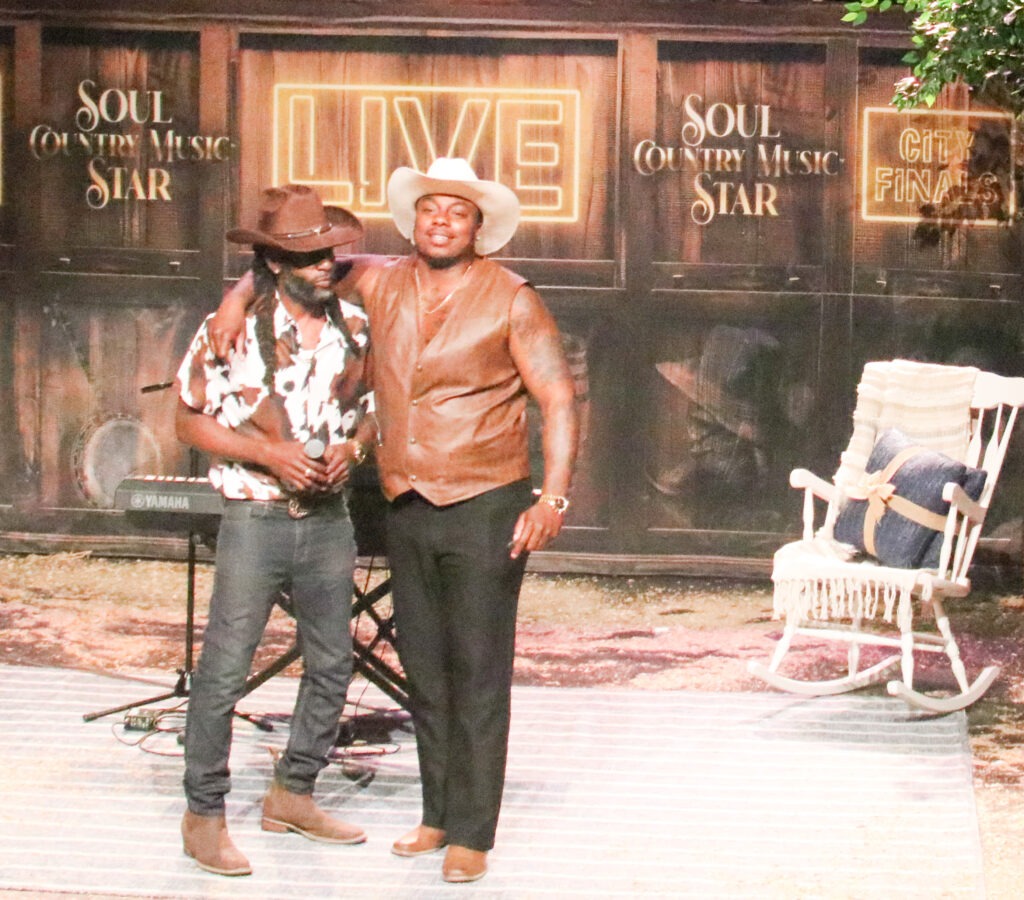
The competition has become more than a showcase for emerging Black country artists. It has become a space where artists reconnect with a musical tradition that has always belonged to them, even when history and the industry often failed to acknowledge it.
When that journey reaches its final stage in Los Angeles, the crowning of the National Champion will celebrate more than a single performance. It will honor the artists, histories, and cultural influences that helped shape country music long before many of those contributions were fully recognized.
And while one artist will leave Los Angeles with the title, the larger story will continue long after the competition ends.
Because what Soul Country Music Star is building, much like the BPIR itself, is not simply entertainment.
It is visibility.
It is opportunity.
It is cultural continuity carried forward by a new generation.
Los Angeles is not the end of the road.
It is the beginning of the next chapter.
X. Closing: What the Dirt Remembers
When the last rider leaves the arena and the dust settles, the dirt tells the story.
“It holds the hoofprints of bulls and horses.
It holds the footprints of Pee Wee riders and champions.”
It holds the echoes of children cheering, families laughing, and communities gathering.
It holds the legacy of Bill Pickett and the vision of those who carry his name forward.
The greatest show on dirt is not just a rodeo.
It is a cultural inheritance.
A record carried across generations.
A celebration of who we are and who we’re becoming.
The Bill Pickett Invitational Rodeo is not preserving a dead past. It is shaping the future in real time.
The road ahead will carry that legacy even further as the BPIR and SCMS seasons continue toward two major championship moments celebrating the future of Black rodeo and Soul Country music culture.
In September, the BPIR National Finals will bring top competitors from across the tour to Upper Marlboro, Maryland, where riders will compete for championship titles, prize money, trophy saddles, and honors recognizing excellence throughout the season.
Then, in October, in Los Angeles, regional competition winners from across the country will gather for the Soul Country Music Star National Finals and Music Festival, competing for the national title, $10,000 in cash and prizes, and the opportunity to tour with the BPIR during the 2027 season.
Together, these events represent more than championship weekends. They reflect a growing movement rooted in heritage, resilience, fellowship, visibility, and the next generation carrying these traditions forward.
And as I close this series, what has stood out most throughout this reporting process is how deeply the rodeo remains embedded in people’s memories, the way families organize reunions around it, the way generations return year after year, and the way even a single image, jacket, or song can reopen memories decades later.
That kind of cultural continuity is rare.
And it deserves to be documented with care.
When I began this series, I believed I was covering a rodeo.
What I found instead was an enduring institution built on resilience, creativity, family, and cultural inheritance.
More than anything else, I found evidence that this tradition continues to grow, not as a memory, but as a living force being carried into the future.
Milton Kirby
Truth Seekers Journal
Related articles
Inside the Bill Pickett Invitational Rodeo — Part 6
Inside the Bill Pickett Invitational Rodeo — Part 5
Inside the Bill Pickett Invitational Rodeo — Part 4
Inside the Bill Pickett Invitational Rodeo — Part 3
Inside the Bill Pickett Invitational Rodeo — Part 2
Inside the Bill Pickett Invitational Rodeo — Part 1
Bill Pickett Invitational Rodeo National Finals Nominated for USA TODAY’s Best Rodeo Award
Bill Pickett Invitational Rodeo Celebrates 40 Years of Tradition and Excellence
Martin Luther King, Jr. African-American Rodeo of Champions Thrills Denver Audience
Truth Seekers Journal thrives because of readers like you. Join us in sustaining independent voices.