Milton Kirby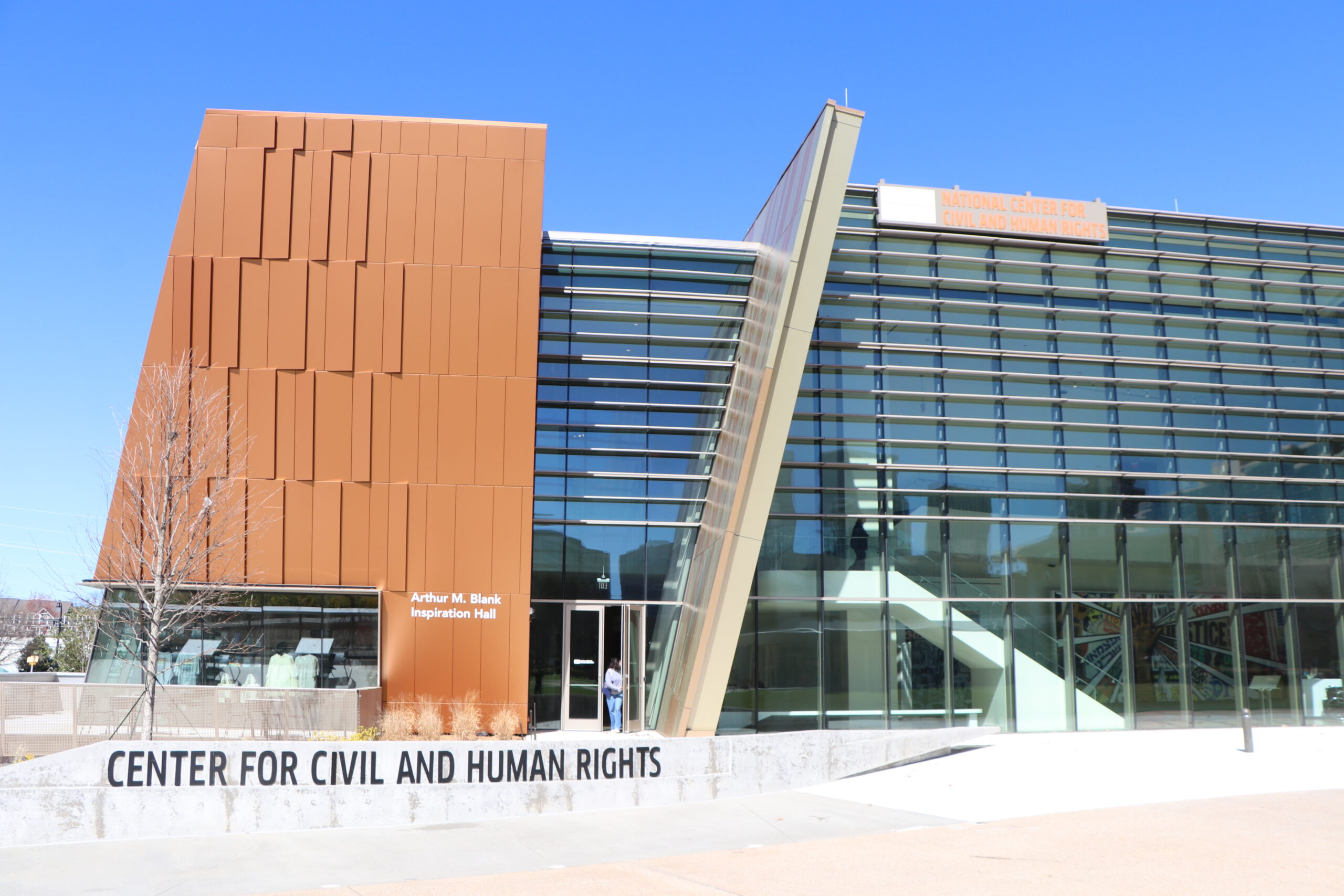
By Milton Kirby | Atlanta, GA | March 22, 2026
Two white women stood still, silent, and visibly shaken.
They had just stepped out of the “Broken Promises: Reconstruction” exhibit at the National Center for Civil and Human Rights. What they had seen—lynchings, merciless beatings, and the systematic unraveling of freedom—had left them searching for words.
That moment captures the power of the Center—a place where history is not simply displayed, but felt.
“Does history remind those who would try to erase it of their sordid past?” the exhibit seems to ask. For many who walk through these doors, the answer is a sobering yes.
Broken Promises and the Legacy of Reconstruction
Inside, visitors encounter a sweeping narrative of American history—one that refuses to look away from its darkest chapters.
The “Broken Promises” gallery examines Reconstruction, a period when newly freed Black Americans briefly gained political and social ground before those freedoms were violently stripped away. The exhibit forces visitors to confront a recurring pattern in American history: progress followed by backlash. Progress followed by backlash… Progress followed by backlash…
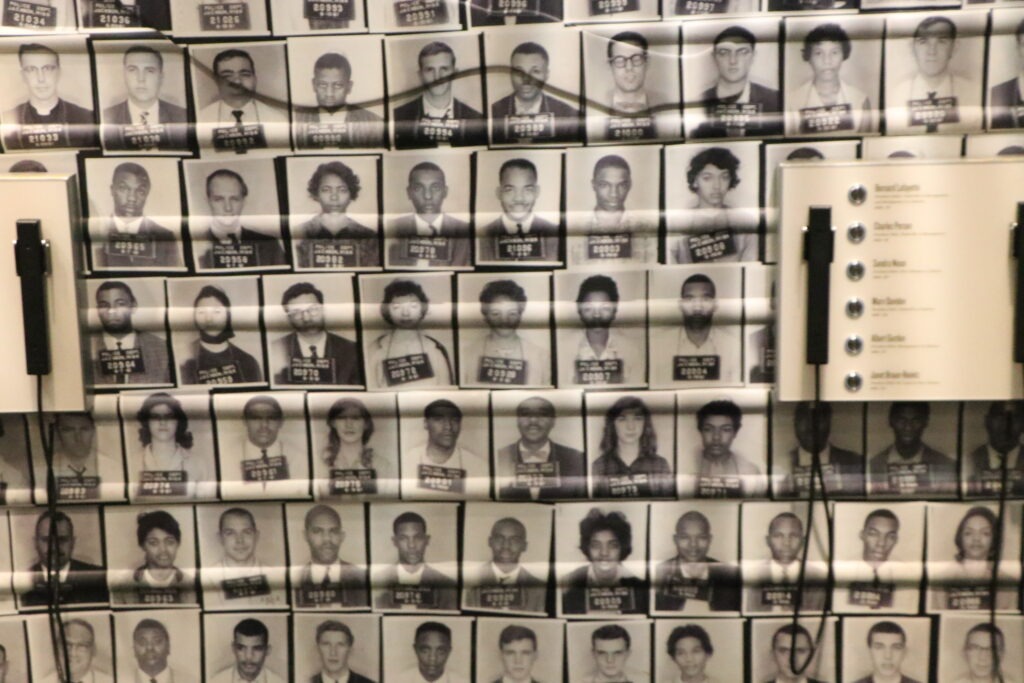
From walls lined with mugshots of jailed Freedom Riders to the intimate, handwritten sermons in A Committed Life: The Morehouse College Dr. Martin Luther King, Jr. Collection, the Center functions as both a treasure trove of artifacts and a mirror to the soul of a nation.
In “A Committed Life,” Dr. King emerges not just as an icon, but as a man navigating pressure, faith, and responsibility with unwavering conviction.
A Modern Expansion for Ancient Truths
Following a $58 million renovation completed in late 2025, the Center expanded by 24,000 square feet, adding two new wings and six galleries including the Norfolk Southern-sponsored “Freedom Room.”
The goal is clear: engage a new generation through immersive, interactive learning.
But while the building is new, the stories remain raw. The expansion deepens the exploration of the “machinery of Jim Crow” and the resilience of those who dismantled it.
Mary Turner: A Story the Nation Tried to Forget
Perhaps no exhibit is more gut-wrenching than the memorial to Mary Turner.
In 1918, a white mob in Brooks County, Georgia, murdered 21-year-old Turner, a Black woman eight months pregnant after she threatened to seek justice following the lynching of her husband.
The brutality is difficult to comprehend. Turner was hung by her ankles, set on fire, mutilated, and shot hundreds of times. Her unborn baby was cut from her body and killed. Her killers were never punished.
While the Equal Justice Initiative records at least 4,075 Black Americans lynched in the South between 1877 and 1950, Turner’s death remains a singular wound.
Her death became a national flashpoint. It helped galvanize anti-lynching activism and build support for federal legislation. The Emmett Till Antilynching Act was signed into law by President Joe Biden on March 29, 2022. This historic legislation officially made lynching a federal hate crime in the United States, punishable by up to 30 years in prison. It passed the House on February 28, 2022, and the Senate on March 7, 2022 more than 100 years after Mary Turner’s gruesome death.
Even today, the tension remains. A memorial plaque erected in 2010 was riddled with bullets within a year. A simple steel cross now stands in its place—a quiet testament to a broken promise.
Confronting the Legacy
The Center’s impact is often measured in silence.
One visitor, a woman in her thirties who asked to remain anonymous, described feeling “mortified” when reflecting on the actions of her ancestors. She said the experience has changed how she moves through the world—choosing to step away from conversations where racism surfaces.
The Center does not assign guilt. But it does demand reflection.
Reclaiming History Through Art
In Reclaiming History, the Center highlights Black Southern artists from the 1980s who carried the spirit of the Civil Rights Movement into a new era.
Through paint, sculpture, and mixed media, they confronted police brutality, voter suppression, and the lingering weight of Jim Crow.
Some works speak plainly. Others whisper through abstraction. All are rooted in resilience.
The message is clear: art is not just witness, it is catalyst.
Beyond the Museum Walls
The Center is not static. It is a living institution.
Programs like Truth on the Rocks, Cup of Truth, and Reel Truth transform the space into a forum for dialogue, culture, and community:
- Truth on the Rocks blends nightlife with history through music, cocktails, and after-hours access
- Cup of Truth creates intimate conversations with artists and community leaders
- Reel Truth uses film to explore overlooked stories and spark discussion
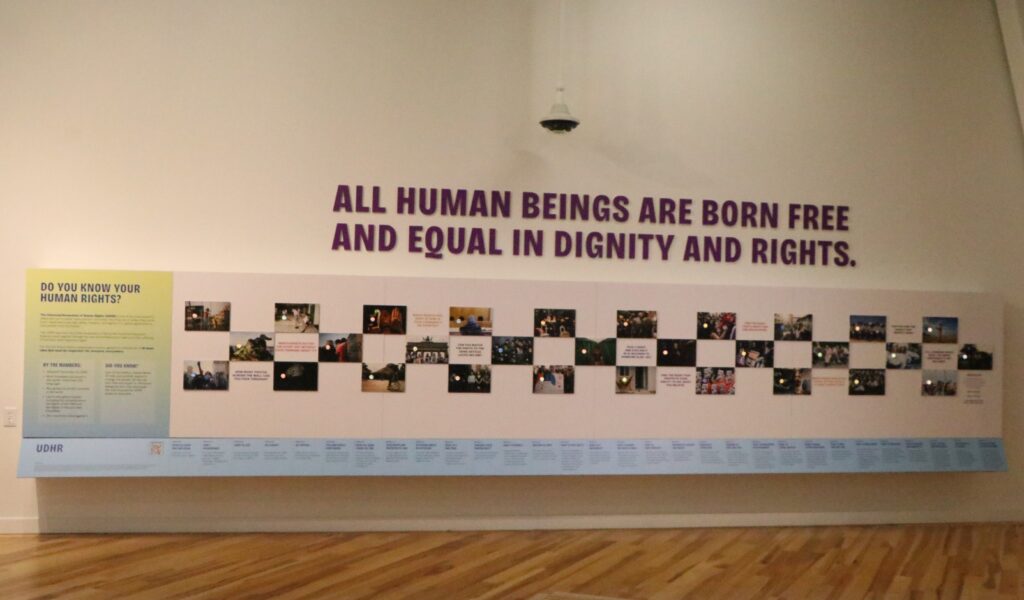
A New Era of Partnership and Access
In 2025, Norfolk Southern pledged $500,000 to support the Center’s expansion, reinforcing its role as a national hub for civil and human rights education.
To expand access, the Center is also participating in Bank of America’s Museums on Us program, offering free admission on the first full weekend of each month to eligible cardholders.
A Space for Reflection—and Accountability
The National Center for Civil and Human Rights is more than a museum.
It is a mirror.
It is a memory.
It is a movement.
It is where history refuses to be erased.
It is where truth lives.
Why It Matters Now
At a time when debates over how history is taught continue to intensify, the Center stands as a counterpoint.
It insists that history cannot be erased without consequence.
It reminds visitors that the past is not distant—it is embedded in the present.
And it challenges each person who walks through its doors to leave not just informed—but transformed.
Truth Seekers Journal thrives because of readers like you. Join us in sustaining independent voices.