
By Milton Kirby | Atlanta, GA | August 22, 2026
Opening night of the BronzeLens Film Festival belonged to Patrick Kelly.
Hours before Love, Patrick: Nothing is Impossible was scheduled to make its world premiere, however, co-director Ryon Horne was worried.
His phone had been buzzing with messages from people telling him they could not make it.
After helping bring the story of the Mississippi-born fashion designer to the screen, Horne found himself confronting one of a filmmaker’s most basic opening-night fears.
Would anybody show up?
“I don’t even know how to explain it,” Horne said later. “You get nervous about these things, because, like, is anybody going to come?”
He got his answer when he arrived at the Tara Atlanta Theatre.
The house was packed.
“And then when you come, you realize the most important people in your life that needed to support this film on this day are here,” Horne said.
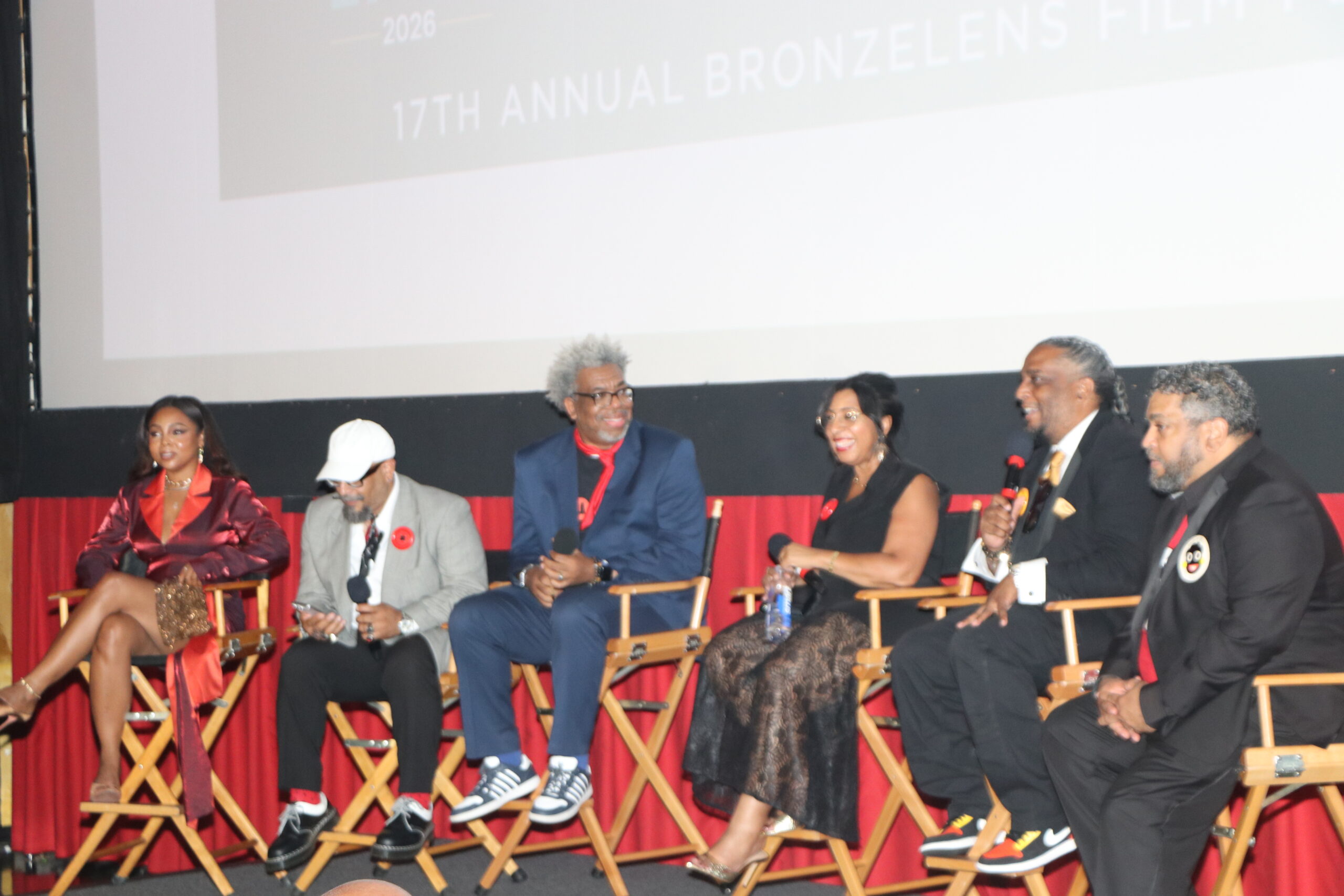
They came for opening night of the 17th annual BronzeLens Film Festival and the world premiere of Love, Patrick: Nothing is Impossible, a documentary about a Black designer from Mississippi whose journey took him from the American South to the highest levels of Paris fashion. BronzeLens listed the film as its 6:45 p.m. opening-night world premiere. (BronzeLens Atlanta Film Festival, Inc)
Before the film began, BronzeLens founder and executive producer Kathleen Bertrand welcomed the audience and introduced Jason Gregory, interim director of programming.
Festival organizers had encouraged opening-night guests to arrive “Runway Ready,” and many accepted the invitation. Before the theater lights dimmed, the Tara lobby had become a fashion showcase of its own, a fitting prelude to a film about a designer who believed clothes should bring joy.
But by the time the film ended and the conversation inside the theater began, opening night had become about something larger than a movie premiere.
It was about remembering Patrick Kelly.
And for some people in the audience, it was about discovering him for the first time.
From Mississippi to Paris
Patrick Kelly grew up in Mississippi surrounded by women who helped shape both his personality and his fashion.
His grandmother, Ethel Rainey, was especially influential.
She gave him old copies of Vogue and Harper’s Bazaar when he was a child. She took him to Black Baptist church, where Kelly noticed the women dressed from head to toe in their Sunday best.
Even one of Kelly’s most recognizable design signatures had roots in his Mississippi childhood.
His grandmother mended his shirts with mismatched buttons.
Years later, colorful buttons would become unmistakably Patrick Kelly. (Philadelphia Museum of Art)
Kelly moved to Atlanta in 1974, where he volunteered to design window displays for Yves Saint Laurent Rive Gauche. Atlanta became another stop on a journey that eventually took him to New York and then Paris. (Philadelphia Museum of Art)
New York proved difficult.
Paris changed everything.
Kelly moved to France in late 1979. His skinny, body-conscious dresses decorated with colorful buttons eventually attracted the attention of French Elle, which featured his first commercial collection in February 1985. (Philadelphia Museum of Art)
His designs were bold, playful and unmistakably his.
Buttons became a signature.
So did bright colors, bows, body-hugging dresses and humor.
But there was something else.
Kelly wanted his clothes worn by real people.
The Philadelphia Museum of Art’s Patrick Kelly retrospective says he wanted women of all ages to love their bodies and created designs that celebrated different shapes and sizes. His own “Love List” explicitly included women across body types. (Philadelphia Museum of Art)
That philosophy was visible in the documentary.
Kelly’s runways featured Black models and women whose bodies did not always conform to the narrow image traditionally associated with high fashion.
He was not merely putting Black models on a runway.
He was putting a broader vision of Black beauty there.
Then came history.
In 1988, Kelly became thefirst American and first Black designer voted into the prestigious Chambre Syndicale du Prêt-à-Porter des Couturiers et des Créateurs de Mode. His admission was sponsored by Pierre Bergé, cofounder of Yves Saint Laurent, and designer Sonia Rykiel. (Philadelphia Museum of Art)
For a Black man from Mississippi, it was an extraordinary ascent.
It was also painfully brief.
Kelly died in Paris on Jan. 1, 1990, from AIDS. He was 35. (Philadelphia Museum of Art)
More than three decades later, his clothes remain in museum collections and have been the subject of major exhibitions. (Philadelphia Museum of Art)
Yet his name is unfamiliar to many Americans.
That contradiction sits near the heart of Love, Patrick.
“I Had No Knowledge of Patrick Kelly”
Stephanie Proctor Johnson, an executive producer of the documentary and operations manager for the Horne Brothers, made a striking admission after the premiere.
“I had no knowledge of Patrick Kelly,” she said.
Johnson said she first learned about him when the film project came to the Horne Brothers.
Even after becoming involved, she said the filmmaking team had to learn the magnitude of what Kelly had accomplished.
“I don’t think as a designer, none of us realized the essence of what he had done,” she said.
That experience was reflected in the audience.
Some people at the Tara knew Kelly’s story.
Yolanda Durbin was one of them.
Durbin attended fashion school after Kelly’s death and remembers professors discussing him.
“I’m glad he is getting the notoriety that he deserves,” she said.
Others were meeting Patrick Kelly for the first time.
That raises an uncomfortable question.
How does an American designer become the first American and first Black designer voted into one of the most important organizations in French fashion, attract international attention and work with some of the world’s most recognizable models, yet become unfamiliar to another generation?
Love, Patrick does not merely celebrate Kelly’s success.
It attempts to put his name back into circulation.
Bringing Patrick Kelly’s Story to the Screen
The Patrick Kelly project had been developing for years.
Johnson said executive producers Ray Cornelius and Jessica Manning met with Ryon Horne in early 2025. By that summer, the larger Horne Brothers team had committed to the production.
The filmmakers traveled to Paris, following Kelly’s path and speaking with people connected to his life and work.
The project also had an important connection to Kelly himself through Bjorn Guil Amelan, Kelly’s former life and business partner. The Philadelphia Museum of Art identifies Amelan and Bill T. Jones as the donors behind a promised gift of approximately 80 Kelly ensembles featured in its Runway of Love retrospective. (Philadelphia Museum of Art)
Making the documentary required the kind of resourcefulness familiar to independent filmmakers.
“We did it on a bootstrap,” Johnson said.
For Latrisha Horne, Ryon’s wife, the project meant watching a familiar transformation at home.
When Ryon becomes immersed in a film, she said, he goes into “work mode.”
“He works in the studio and we may not see him months at a time because he’s so dedicated to the project,” she said.
Latrisha traveled to Paris during production and, for the first time, watched her husband working on location.
“I was like a little kid,” she recalled.
Now that the film has premiered, she wants its reach to grow.
“It needs to get on Netflix or a streaming platform so that more people can be exposed,” she said. “It needs to be seen by so many people.”
The Smile
For all the history contained in the documentary, one characteristic of Patrick Kelly repeatedly commanded attention.
His smile.
It turns out the smile was also part of his design philosophy.
Kelly often expressed a simple goal: he wanted his clothes to make people smile. (Philadelphia Museum of Art)
His life was hardly free from struggle.
Kelly grew up in Mississippi during the 1950s and 1960s. He later navigated race as a Black man in the international fashion industry. His career required leaving the United States before he found his greatest professional success.
And his life ended during the devastation of the AIDS epidemic.
Yet on screen, Kelly repeatedly smiled.
Johnson noticed it.
So did Dr. Courtney A. Hammonds, who participated in the documentary.
Kelly’s personality, Johnson said, seemed “contagious.”
She remembered another sentiment expressed by Kelly in the film:
“I just want to have fun.”
The joy was reflected in his clothes.
Kelly used bright colors, buttons, bows and humor. He brought his Southern roots into Paris fashion and mixed them with influences from Black culture, fashion history and the club scenes of New York and Paris. (Philadelphia Museum of Art)
Hammonds saw something larger in Kelly’s smile.
“The smile can transcend everything,” Hammonds said.
More Than a Documentary
For Hammonds, Love, Patrick is ultimately about storytelling.
Hammonds credited the Horne Brothers, Manning, Cornelius and the larger production team with bringing together people who could contribute different pieces to Kelly’s story.
But Hammonds also challenged the audience to think about what happens after a story has been recovered.
“We can excavate a story, but now it’s up to the next generation to do something with that,” Hammonds said.
That may be one of the central questions Love, Patrick leaves behind.
What do people do once they know?
Hammonds believes Kelly’s story can resonate even with people who had never heard his name.
He was a Southerner.
He came from a small Mississippi city.
And he reached one of the biggest stages imaginable in his profession.
“We have a cousin in Vicksburg,” Hammonds said. “We have a cousin in Alabama. We have a cousin in Atlanta.”
Kelly’s journey, in that sense, becomes more than fashion history.
It becomes a story about possibility.
Hammonds suggested there is still much more for audiences to discover.
“Patrick Kelly is more than a monolith,” Hammonds said. “He’s really an encyclopedia that’s yet to be read.”
Why BronzeLens Matters
That story found an appropriate stage at BronzeLens.
Founded in 2009, the nonprofit festival is dedicated to promoting Atlanta as a film center for people of color, showcasing films created by people of color and providing networking opportunities to develop future filmmakers. BronzeLens is also an Oscar-qualifying festival in the short-film category. (BronzeLens Atlanta Film Festival, Inc)
Atlanta-based filmmaker Adelin Gasana sees the festival as more than a screening opportunity.
Gasana, whose documentary Brannu was also screening during the festival, said this is his third year participating in BronzeLens. He said the experience has helped him learn about film marketing, meet people and see strong independent films.
That kind of infrastructure matters at a time when independent filmmakers increasingly must find creative ways to finance, market and distribute their work.
Gasana particularly welcomed BronzeLens’ expanded emphasis on Georgia filmmakers this year.
For him, local filmmaking does not necessarily mean telling small stories.
His own documentary examines land, agriculture, development pressure and questions about what happens when competing visions of progress collide.
Love, Patrick likewise stretches far beyond Atlanta.
But its connections to the city run deep.
Kelly spent formative years here before Paris. The Horne Brothers are Atlanta filmmakers. And now Atlanta has hosted the documentary’s world premiere.
The result is a story that can travel internationally while remaining rooted in the South.
“Nothing Is Impossible”
The title of the documentary carries its own story.
Patrick Kelly is buried at Père Lachaise Cemetery in Paris.
Inscribed on his headstone are three words:
“Nothing Is Impossible.” (Philadelphia Museum of Art)
More than three decades after Kelly’s death, those words have become part of the title of a film carrying his story to another generation.
And the Tara premiere is intended to be a beginning rather than an ending.
Johnson said the filmmakers plan to take Love, Patrick to additional festivals and screenings, including Charleston, Orlando and Washington, D.C.
But two planned stops carry particular significance.
Vicksburg.
And Jackson State University.
The boy who left Mississippi and eventually conquered Paris is being carried home on film.
For Ryon Horne, that journey began with the uncertainty of whether anyone would show up for the world premiere.
They did.
The Tara was full.
But filling a theater for one night is different from restoring someone’s place in history.
The filmmakers understand that.
So did people leaving the theater.
Cynthia Sumpter was among those who heard the call to carry Kelly’s story beyond BronzeLens.
Asked what she planned to do with what she had just learned, Sumpter didn’t offer a grand strategy.
She thought about the people she knew.
Then she decided where she would begin.
“First, I’m going to contact my sister,” she said.
For a film trying to put Patrick Kelly’s name back into the world, perhaps that is exactly how it starts.
Related articles
Truth Seekers Journal thrives because of readers like you. Join us in sustaining independent voices.
Thanks for introducing Patrick Kelly to me! Great read. And, indeed, nothing is impossible. Scripture reminds us that all things are possible through Jesus Christ Jesus.