
By Milton Kirby | Atlanta, GA | November 21, 2026
After months of construction, testing and customer patience, the Metropolitan Atlanta Rapid Transit Authority (MARTA) has completed one of the largest fare collection modernization projects in its history, bringing new fare gates and ticket vending machines online across its entire heavy rail system.
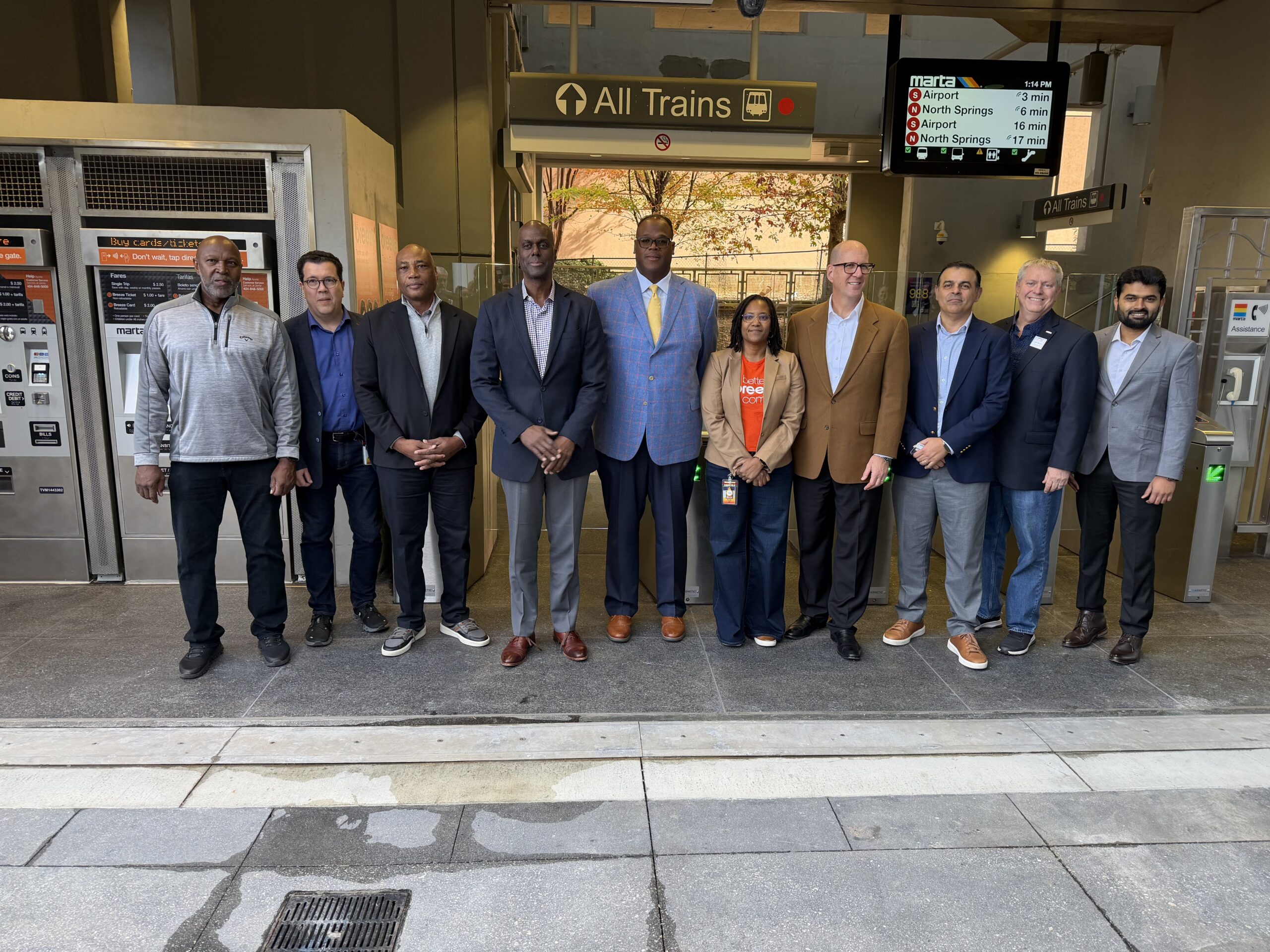
MARTA officials joined fare technology provider INIT at Dunwoody Station on November 20 to celebrate the completion of the Better Breeze fare system upgrade, marked by a ribbon-cutting ceremony at the final station to receive the new equipment.
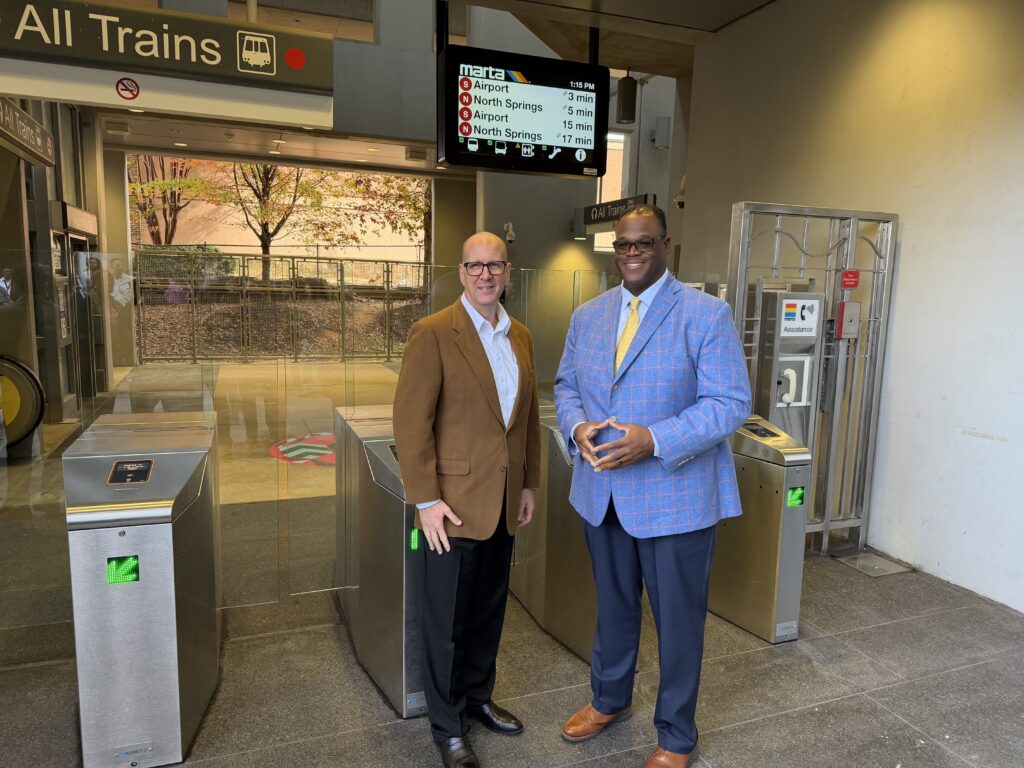
The project includes 450 modern fare gates and 249 ticket vending machines across MARTA’s 38 rail stations, allowing riders to tap contactless credit cards, debit cards and mobile wallets directly at station entrances.
For MARTA General Manager and CEO Jonathan Hunt, the milestone represents more than the completion of a construction project.
“MARTA aspires to be among the very best in the nation in everything that we do,” Hunt said. “And today we can say that we have one of the best fare payment systems in the entire nation.”
A Long Road to Completion
The modernization effort was not without challenges.
Passengers endured months of construction zones, temporary barriers and fare gates that remained open while crews completed installation and testing. Some equipment remained under construction beyond the originally anticipated May launch period.
Hunt pushed back against characterizations of the construction schedule as simply a series of delays, emphasizing the difficulty of upgrading an operating transit system while maintaining passenger access.
MARTA spent approximately 10 months conducting construction with fare gates open, he explained.
“We’ve asked our customers to bear with us through construction barricades and station upgrades, and today we get to share the long-term benefit of that patience,” Hunt said in MARTA’s announcement. “Breeze is now a modern, frictionless payment system that meets our riders right where they are.”
For Hunt, the ultimate goal is to make the daily transit experience easier.
“What it really means beyond that, looking forward, is a frictionless experience for our customer,” he said.

Security Improvements Follow Fare Gate Damage
The rollout also brought unexpected challenges.
Some newly installed fare gates were damaged when individuals attempted to force their way through the barriers without paying. More than 100 people have reportedly been arrested in connection with incidents involving damaged fare gates.
Hunt said MARTA adjusted the equipment’s design after glass panels shattered during some of those incidents, replacing the original two-panel configuration with a single, thicker glass panel intended to better withstand forced entry.
He also warned that the consequences of damaging the equipment far outweigh the cost of a transit fare.
“Breaking those fare gates is a felony given the value of the equipment that’s been installed,” Hunt said. “It is not worth it. The $2.50 is not worth it.”
The financial consequences extend beyond the individuals accused of damaging the equipment.
MARTA Police Chief Scott Kreher previously estimated that replacing both glass panels on a damaged fare gate costs approximately $3,000. However, the total amount MARTA has spent replacing damaged panels since installation began has not been established in the publicly available records reviewed by The Truth Seekers Journal.
The agency has indicated that it is pursuing reimbursement from individuals accused of damaging the gates.
The new fare gates are designed to be more resistant to tampering and capable of remote monitoring and adjustments. MARTA expects the technology to help reduce fare evasion while improving reliability and passenger movement through stations.
The agency is also preparing to install magnetic locks on emergency exit gates to discourage passengers from bypassing fare collection.
New Payment Options for Riders
The Better Breeze system introduces several customer-focused improvements.
Riders can now pay fares directly with supported contactless bank cards or mobile wallets, rather than purchasing a separate transit card.
Passengers who prefer traditional fare media can continue purchasing and reloading Breeze cards at the new ticket vending machines. Multi-day and monthly pass options remain available.
MARTA has also introduced a new Breeze mobile application that allows customers to manage their cards, stored value and fare products from their smartphones.
Carl Commons, CEO of INIT, described completion of the rail installation phase as an important accomplishment for both organizations.
“Completing the faregate and ticket vending machine installations across MARTA’s rail system is an important milestone for the Better Breeze project,” Commons said.
“This achievement reflects the dedication and collaboration of both teams and our shared commitment to making public transportation easier and more convenient for riders.”
More Improvements Still Ahead
Although the rail station portion of the project is complete, MARTA’s broader fare collection modernization program continues.
New fare validators have been installed throughout MARTA’s fixed-route bus and Mobility paratransit fleets.
Platform validators and ticket vending machines have also been installed on the Atlanta Streetcar, although those devices have not yet entered operation.
Installations at Bus Rapid Transit stations are expected to be completed soon.
MARTA is also preparing to introduce a Breeze Retail network across metropolitan Atlanta, allowing customers to purchase and reload fare cards at participating neighborhood retail locations.
The retail expansion could be particularly useful for passengers who live farther from rail stations or prefer to manage their transit accounts without making a separate trip to a MARTA facility.
New Railcars Approaching the Finish Line
The completion of the fare gate project comes as MARTA prepares another highly anticipated upgrade: the introduction of its new CQ400 railcars.
Hunt said the trains have undergone extensive testing under the oversight of the Georgia Department of Transportation (GDOT) and the Federal Transit Administration (FTA).
“So we went through an extensive amount of rigorous testing with oversight from GDOT and the FTA, as well as they should,” Hunt said.
“It’s many, many hours, thousands of hours of burn-in and testing miles that had to go into effect before we got to this point.”
The testing process is intended to ensure that the new equipment meets required safety and operational standards before entering passenger service.
Although MARTA is approaching the final stages of approval, Hunt declined to announce a date for the new trains’ introduction.
“We’re very close to the end, but we don’t have a particular date that we’re going to announce right now,” he said.
The CQ400 railcars represent another major component of MARTA’s effort to modernize its aging infrastructure and improve the passenger experience.
A Milestone, but the Real Test Is Ahead
The completion of MARTA’s rail fare collection modernization marks a significant achievement, but the long-term success of the investment will ultimately depend on how well the new technology performs under everyday conditions.
For passengers, the most visible improvements may be faster station entry, more convenient payment options and fewer equipment problems.
For MARTA, the challenge will be maintaining the new equipment, preventing additional damage and completing the remaining phases of the modernization program.
The agency must also demonstrate that its investments deliver measurable improvements in reliability, security and customer satisfaction.
“Today represents a significant step towards implementing our vision to lead the nation in transit customer experience, operations, and innovation,” Hunt said.
With the rail fare collection upgrade completed and new trains approaching service, MARTA is entering another chapter of its modernization efforts.
For the thousands of passengers who depend on public transportation throughout metropolitan Atlanta, the ultimate measure of success will not be the number of new fare gates installed or the technology behind them.
It will be whether those investments make the daily commute safer, easier and more dependable.
Support open, independent journalism. Your contribution helps us tell the stories that matter most.