Charlie Kirk shooting suspect arrested in Utah; political motive suspected. Governor Cox, Trump, and FBI cite targeted attack amid rising U.S. political violence.
By Eric Tucker, Alanna Durkin Richer, Jesse Bedayn & Hannah Schoenbaum | Associated Press | September 12, 2025
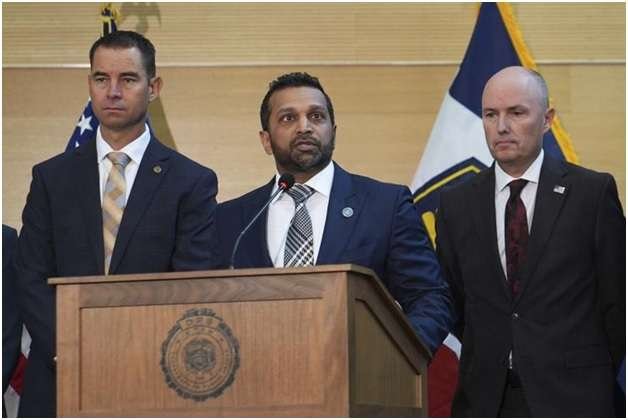
The man accused in the Charlie Kirk assassination had earlier expressed to family his opposition to the viewpoints of the conservative activist, the authorities said Friday in announcing an arrest in a targeted killing that raised fresh alarms about political violence in the United States.
Tyler Robinson, 22, had become “more political” in the run-up to the shooting and had indicated to a family friend afterward that he was responsible, Utah Gov. Spencer Cox said. Cox also cited as key pieces of evidence engravings on bullets found in a rifle believed used in the attack as well as chatting app messages attributed to the shooting suspect that a roommate shared with law enforcement.
Cox, a Republican, called Kirk’s killing an “attack on the American experiment,” and he urged a new generation to “choose a different path.”
Robinson is believed to have acted alone, and the investigation is ongoing, Cox said.
Robinson’s arrest early Friday morning was disclosed by President Donald Trump, who said in a Fox News Channel interview that, “With a high degree of certainty, we have him.”
Calls to telephone numbers listed for Robinson in public records rang unanswered.
News of the arrest came hours after the FBI and state officials had pleaded for public help by releasing additional photographs of the suspect, a move that seemed to indicate that law enforcement was uncertain of the person’s whereabouts.
Kirk was killed by a single shot in what police said was a targeted attack and Utah’s governor called a political assassination. Kirk co-founded the nonprofit political organization Turning Point USA, based in Arizona.
Authorities recovered a high-powered, bolt-action rifle near the scene of the shooting and had said the shooter jumped off a roof and vanished into the nearby woods afterward.
Kirk had been speaking at a debate hosted by Turning Point at Utah Valley University at the time of Wednesday’s shooting. He was taken to a local hospital and was pronounced dead hours later.
“He wanted to help young people, and he didn’t deserve this,” Trump said Friday. “He was really a good person.”
Federal investigators and state officials on Thursday had released photos and a video of the person they believe is responsible. Kirk was shot as he spoke to a crowd gathered in a courtyard at the university in Orem.
More than 7,000 leads and tips had poured in, officials said. Authorities have yet to cite a motive in the killing, the latest act of political violence to convulse the United States.
Grisly video shared online
The attack, carried out in broad daylight as Kirk spoke about social issues, was captured on grisly videos that spread on social media.
The videos show Kirk, who was influential in rallying young Republican voters, speaking into a handheld microphone when suddenly a shot rings out. Kirk reaches up with his right hand as blood gushes from the left side of his neck. Stunned spectators gasp and scream before people start running away.
The shooter, who investigators believe blended into the campus crowd because of a college-age appearance, fired one shot from the rooftop, according to authorities. Video released Thursday showed the person then walking through the grass and across the street before disappearing.
“I can tell you this was a targeted event,” said Robert Bohls, the top FBI agent in Salt Lake City.
Trump, who was joined by Democrats in condemning the violence, said he would award Kirk the Presidential Medal of Freedom, the highest civilian honor in the U.S. Vice President JD Vance and his wife, Usha, visited with Kirk’s family Thursday in Salt Lake City. Vance posted a remembrance on X chronicling their friendship, dating back to initial messages in 2017, through Vance’s Senate run and the 2024 election.
“So much of the success we’ve had in this administration traces directly to Charlie’s ability to organize and convene,” Vance wrote. “He didn’t just help us win in 2024, he helped us staff the entire government.”
Kirk’s casket was flown aboard Air Force Two from Utah to Phoenix, where his nonprofit political youth organization is based. Trump told reporters he plans to attend Kirk’s funeral. Details have not been announced.
Kirk was taking questions about gun violence
Kirk was a conservative provocateur who became a powerful political force among young Republicans and was a fixture on college campuses, where he invited sometimes-vehement debate on social issues.
One such provocative exchange played out immediately before the shooting as Kirk was taking questions from an audience member about gun violence.
The debate hosted by Turning Point at the Sorensen Center on campus was billed as the first stop on Kirk’s “American Comeback Tour.”
The event generated a polarizing campus reaction. An online petition calling for university administrators to bar Kirk from appearing received nearly 1,000 signatures. The university issued a statement last week citing First Amendment rights and affirming its “commitment to free speech, intellectual inquiry and constructive dialogue.”
Last week, Kirk posted on X images of news clips showing his visit was sparking controversy. He wrote, “What’s going on in Utah?”
Attendees barricaded themselves in classrooms
Some attendees who bolted after the gunshot rushed into two classrooms full of students. They used tables to barricade the door and to shield themselves in the corners. Someone grabbed an electric pencil sharpener and wrapped the cord tightly around the door handle, then tied the sharpener to a chair leg.
On campus Thursday, the canopy stamped with the slogan Kirk commonly used at his events — “PROVE ME WRONG” — stood, disheveled.
Meanwhile, the shooting continued to draw bipartisan condemnation as Democratic officials joined Trump and other Republican allies of Kirk in decrying the attack, which unfolded during a spike of political violence that has touched a range of ideologies and representatives of both major political parties.
Please consider supporting open, independent journalism – no contribution is too small!
DeKalb CEO Lorraine Cochran-Johnson launches sweeping government overhaul, unveiling 266 reforms from a landmark review to boost efficiency, transparency, and service delivery across county operations.
By Milton Kirby | Decatur, GA | September 10, 2025
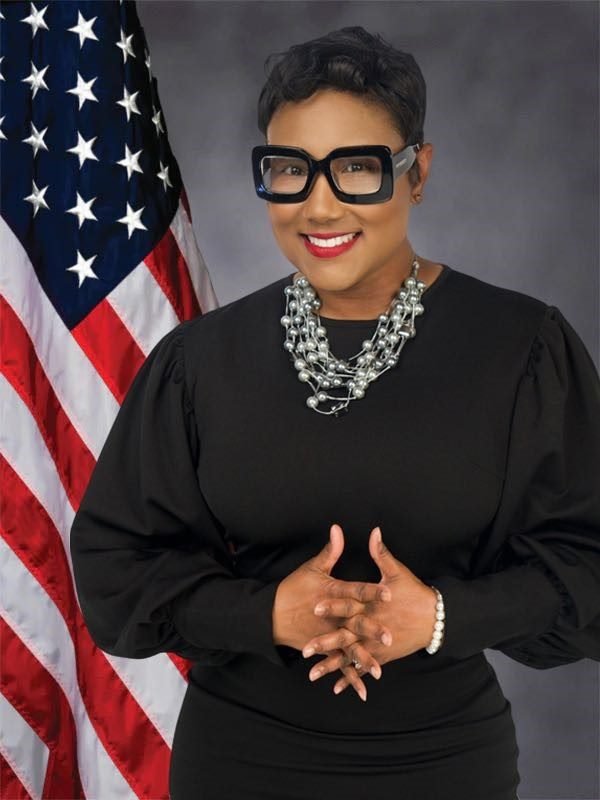
DeKalb County CEO Lorraine Cochran-Johnson has unveiled a wide-ranging government reform plan following the release of a landmark organizational assessment conducted by independent consulting firm Mauldin & Jenkins.
The evaluation, commissioned as part of her transition strategy, reviewed 18 county departments and produced 266 actionable recommendations to modernize operations, increase efficiency, and strengthen accountability.
Lorraine Cochran-Johnson
“As I shared in my first budget proposal, this assessment was never about pointing fingers, it was about building a stronger foundation for DeKalb’s future,” Cochran-Johnson said. “With this report, we now have a clear, data-informed roadmap to reimagine how we serve, how we lead, and how we grow.”
The recommendations call for improvements in leadership alignment, service delivery, process modernization, technology integration, workflow optimization, and risk management. To ensure follow-through, the CEO’s office will appoint a Change Manager tasked with coordinating efforts, tracking progress, and reporting updates to the Board of Commissioners and the public.
“This is a pivotal moment for DeKalb County,” Cochran-Johnson added. “We now have the blueprint and the will. What comes next is execution—and that will require focus, discipline, and collaboration at every level of government.”
County officials say implementation will begin immediately, with the goal of building a more transparent and responsive government that can better serve DeKalb’s nearly 800,000 residents.
Truth Seekers Journal thrives because of readers like you. Join us in sustaining independent voices.
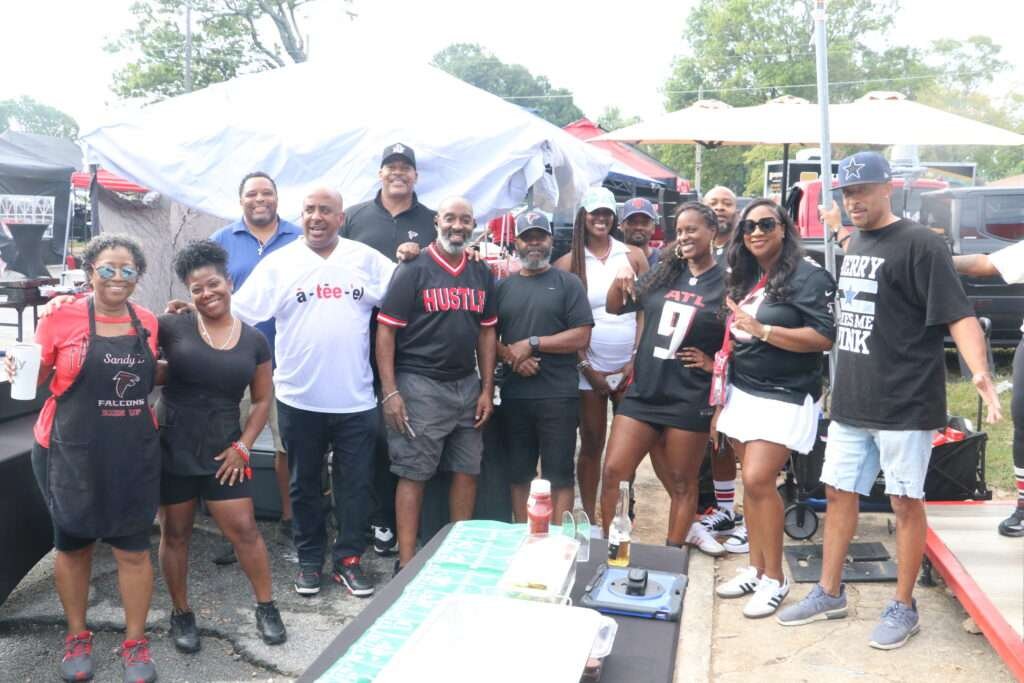
Atlanta Falcons fans turn tailgating into a weekly ritual at Mercedes-Benz Stadium, blending food, music, and fellowship into one of the NFL’s most vibrant traditions.
By Milton Kirby | Atlanta, GA | September 8, 2025
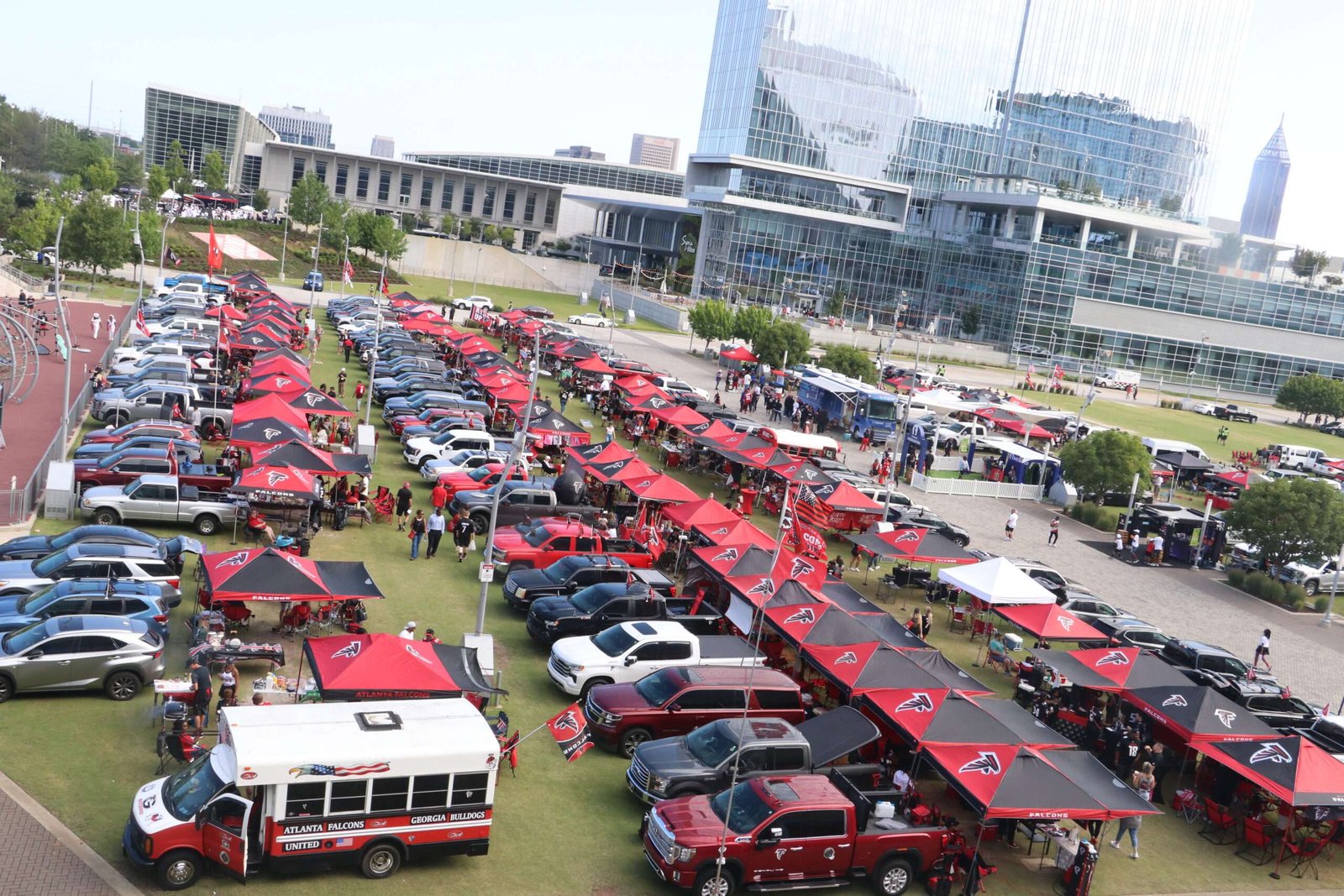
Long before the coin toss and the first kick-off inside Mercedes-Benz Stadium (MBS), Falcons fans have already claimed their sanctuary. For many in the city, tailgating isn’t just a pastime — it’s a ritual.
When the stadium opened its Home Depot Backyard in 2019, Harry Hynekamp, vice president of fan experience for AMB Sports and Entertainment, put it plainly: “We want to be known throughout the NFL as the toughest place for an opponent to come and play.” That toughness starts outside, where thousands gather in red and black.
The Roots of Tailgating
It’s a tradition that transcends time and space, uniting Falcons fans in a unique bond of camaraderie and shared passion. The American Tailgate Association traces the first gathering back to 1861 at the Battle of Bull Run, where civilians hauled food and booze to the sidelines. A gentler origin credits Yale football in the early 1900s, when fans traveling by bus and train arrived early with baskets and grills. Either way, the tradition has grown into something much bigger — a cultural force, especially in the South.
A Religion in the A
In Atlanta, tailgating is not just a pre-game ritual, it’s a celebration of the Falcons spirit. By 6:00 a.m., the lots are alive with the sizzle of ribs and the aroma of chicken wings. Fans eagerly line up outside the Home Depot Backyard, ready for a day of music, drumlines, cheerleaders, Freddie Falcon, and giveaways. The atmosphere is charged with excitement, as fans of all ages come together for a day of fun and football.
Stories from the Lots
On Sunday, September 7, before the Falcons’ 23-20 season-opening loss to the Tampa Bay Buccaneers, fans from all walks of life made their way to the Backyard and the designated lots surrounding the MBS. Corrie M. and her mother, Ivey L., came up from Eastman to cheer cousin Michael Pinnix as he suited up for the first time in a Falcons jersey.
Enjoying the tailgate
AD, with the Lights Out Tailgators, have been posted up 15 years strong. “It’s about family, food, and fun,” he said.
Reggie Watson, a season ticket holder for 34 years, helps lead the Tailgators 4 Lyfe crew, a group of 50 regulars who run their tailgate like a small business, collecting dues and organizing off-season events. “We are here for each other and the fun of it all.”
For others, it’s about innovation. Bryant Barnes rolled in with EventBox ATL, a tricked-out 20-foot shipping container transformed into a luxury lounge with TVs, a rooftop bar, karaoke station, and Wi-Fi, cell phone charging stations — big enough for 50 people. “We’re taking tailgating to the next level,” he said.
My first tailgate.
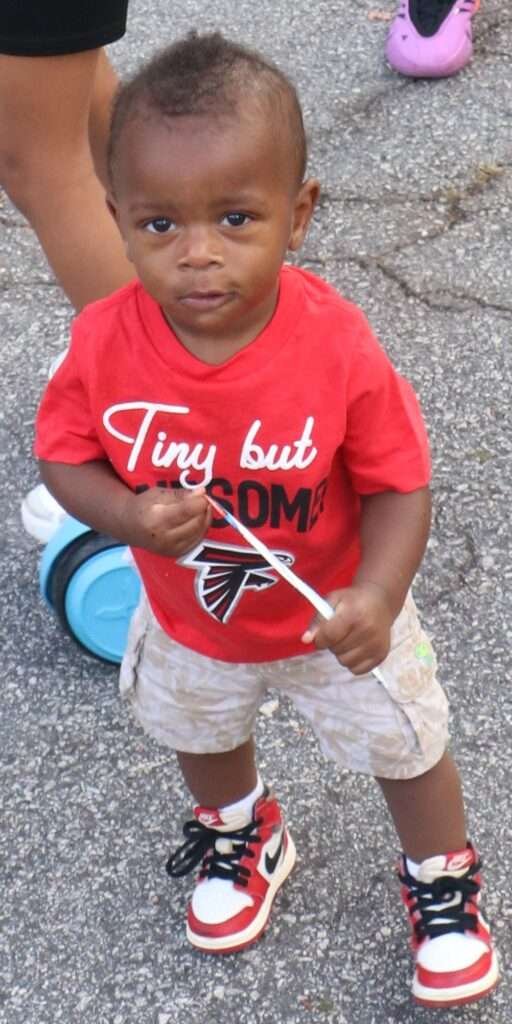
Small businesses thrive, too. Kisha, owner of Bartender To You, sets up her mobile bar at every home game. Randy, a barber from Mableton, has been tailgating for three years. Byron proudly introduced his toddler son to the family tradition this season.
Food, Faith, and Falcons
What makes tailgating in Atlanta unique is the mix: charcoal-grilled chicken, ribs, cold beer, whiskey, tequila shots, lounge chairs, DJ jamming, and even axe-throwing contests. It’s folding chairs sinking into the dirt, kids learning the Dirty Bird dance. It’s family. It’s a fellowship, a melting pot of Southern food, community pride, and Dirty Birds loyalty.
For Falcons fans, the tailgate is as essential as kickoff. And whether the Falcons win or fall short, the gospel keeps getting preached outside MBS every Sunday: the church of tailgate is alive and well.
Please consider supporting open, independent journalism – no contribution is too small!
Decatur’s Brian Norman Jr. extends Top Rank deal, defending his WBO welterweight title against Devin Haney in Riyadh after knockouts in San Diego and Tokyo cemented his rise.
By Milton Kirby | Las Vegas, NV | September 6, 2025
Brian “The Assassin II” Norman Jr. has just signed a new multi-year deal with Top Rank. At only 24, the undefeated welterweight champ is betting on loyalty, staying with the promoter who believed in him from day one.
And now, the stage is set. On Nov. 22, halfway across the world in Riyadh, Saudi Arabia, Norman will defend his WBO crown against none other than Devin “The Dream” Haney.
“This is just the start,” Norman said. “Top Rank believed in me, and I’m building with the home team.”
From Decatur to the desert lights
Folks around Decatur remember Norman as a teenager already packing dynamite in both fists. He turned pro at 17, often fighting in small Mexican rings to stay busy. By 22-0, he caught Top Rank’s eye and inked a deal in 2022.
The rise hasn’t been smooth. In 2024, he walked straight into San Diego and silenced Giovani Santillan’s crowd with a 10th-round stoppage. That win earned him the WBO interim title, which was later upgraded to full champion when Terence Crawford stepped aside.
A hand injury benched him for the rest of that year, but Norman came roaring back. First, a March 2025 knockout of Derrieck Cuevas. Then, a June masterpiece in Tokyo — a left hook that left Jin Sasaki flat on the canvas and fans gasping. Knockout of the Year? No doubt.
A team effort
Behind Norman is a circle that has remained steady from the beginning: his father, Brian Sr.; adviser Adrian Clark; Jolene Mizzone; and veteran matchmakers Brad Goodman and Bruce Trampler.
Clark put it plain: “It’s been a total team effort. We’re proud to keep pushing forward with Top Rank.”
The fight ahead
With 28 wins, 22 by knockout, Norman now faces his biggest test in Devin Haney — a technician known for his slick defense and ring IQ. Riyadh will host the clash, but back home in Decatur, fans will be watching every punch. From the quiet gyms off Candler Road to the bright lights overseas, Brian Norman Jr. carries Atlanta pride with him. This next fight is more than a title defense. It’s a chance to prove he belongs among the legends.
BronzeLens Film Festival celebrated 16 years with award-winning films, heartfelt tributes, Deidre McDonald’s retirement, and standout screenings of The Rhythm & The Blues and Rap Dixon.
By Milton Kirby | Atlanta, GA | September 2, 2025
The 16th Annual BronzeLens Film Festival wrapped with triumph and tenderness, spotlighting bold new works while also marking a transition in leadership. Nearly 100 films were submitted and screened at the historic Tara Theatre, with the festival’s grand awards ceremony staged at the Ray Charles Performing Arts Center on Morehouse College’s campus.
A bittersweet note came when Deidre McDonald, the founding Artistic Director, announced her retirement. For 16 years, McDonald has been the guiding force behind BronzeLens, helping the festival grow into an Academy Award®-qualifying event in the Short Film category and a key cultural institution celebrating stories by creators of color.
Winners and Honors
This year’s winners showcased the wide-ranging creativity of filmmakers across genres:
Dance Videos: Cut Me Summa Dat Noise
Best Music Video: FREEDOM
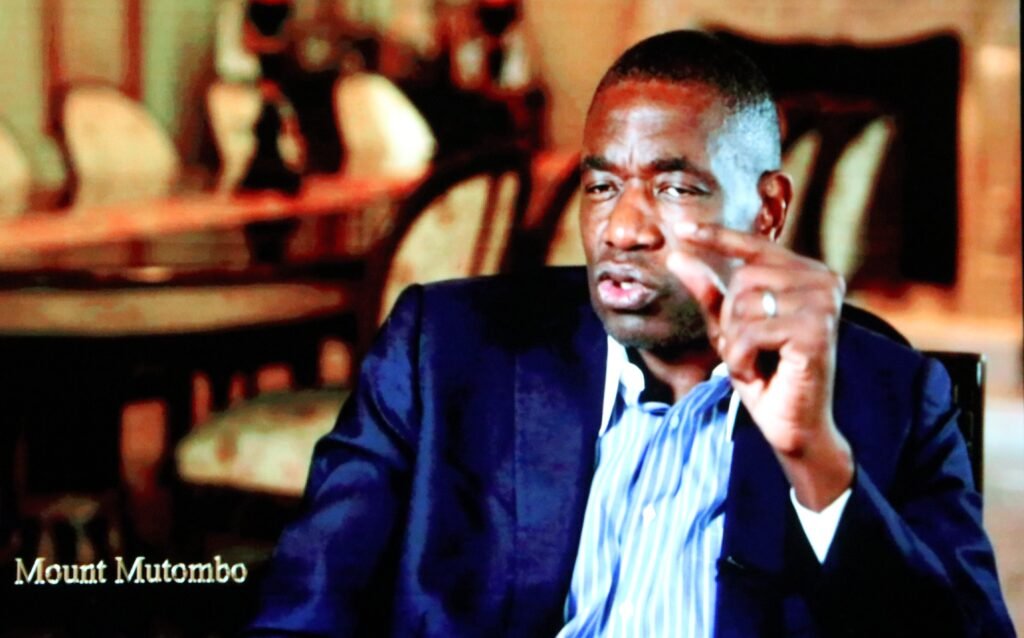
Best Documentary: Mount Mutombo
Best Short Documentary: Exodus
Best Feature: Color Book
Best Student Film: Jean & I
Best Web Series: Hogtown / Ainsi Va Manu
Short Films: ADO
Best of Festival: Color Book
Best Actor: Will Catlette (Color Book)
Best Actress: Jennifer Lewis (Color Book)
The Andrew Young Cinema and Social Justice Award: Following Harry
Dikembe Mutombo -Best Documentary: Mount Mutombo
The feature Color Book emerged as the night’s biggest winner, sweeping top honors including Best Feature, Best of Festival, and both acting awards.
Two Standout Screenings
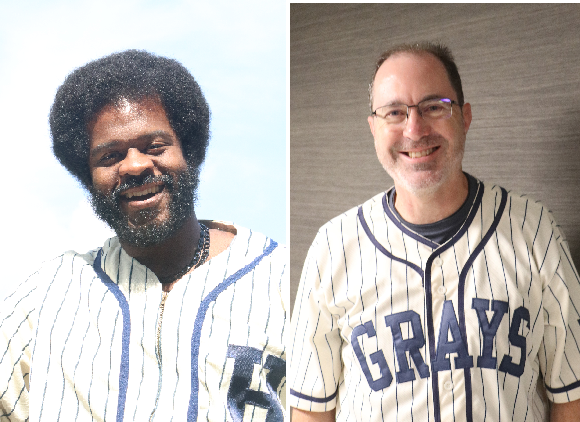
Of the many films presented, two stood out to me personally: The Rhythm & The Blues and Rap Dixon: Beyond Baseball.
The Rhythm & The Blues, directed by Darryl Pitts, tells the story of guitarist Eddie Taylor, a blues genius whose career was strained by exploitation, family tensions, and cultural appropriation. Leon Robinson’s portrayal of Taylor was both riveting and tender, anchoring a story that has been described as “powerful” and “necessary.” Pitts, who independently financed the project, praised Robinson’s ability to make difficult characters lovable, adding a layer of humanity to a tale about legacy and artistic ownership.
Rap Dixon: Beyond Baseball shed light on one of the Negro Leagues’ greatest yet least remembered outfielders. Dixon’s career from 1922 to 1937 was marked by brilliance, but racism and segregation obscured his legacy. The film’s archival depth and expert commentary from historians like Leslie Heaphy and Lawrence D. Hogan gave Dixon’s story long-overdue recognition. SABR’s Ted Knorr called Dixon “a true five-tool player,” advocating for his Hall of Fame inclusion. Viewers described the documentary as moving and a correction to baseball’s historical record.
Looking Ahead
As the festival closed, anticipation already began for the next edition. Submissions for the 2026 BronzeLens Film Festival open October 15, 2025, promising another year of powerful storytelling, cinematic excellence, and cultural celebration.
From the Tara Theatre screenings to the Morehouse awards stage, this Sweet Sixteen edition re-confirmed BronzeLens’ place as one of the nation’s premier showcases for films by and about people of color—an event where artistry, history, and community converge.
“Blacks who claim respectability and allow that mirage to keep them quiet and from being actors in the necessary drama needed to change an oppressive society are instruments of continued oppression.” Black Robes White Justice: Why Our Legal System Doesn’t Work for Blacks by Former New York Supreme Court Justice Bruce Wright.
America has always been a land of contradictions. Mansions rise beside tent cities. Private jets glide over food deserts. Wall Street celebrates record profits while Main Street collapses under debt.
And increasingly, that contradiction lives within Black America itself. While millions of African Americans still struggle to make ends meet—sometimes working two jobs, juggling rent and medicine, fighting to keep the lights on—others, especially our most visible athletes and entertainers, flaunt a level of excess that mimics the worst of a greedy and corrupt white America.
They strut their buffoonery before the cameras, dancing the modern jig for applause. They make it rain in strip clubs while their communities drown in poverty. They drape themselves in overpriced designer clothing spun by the descendants of colonizers, flaunt accessories stitched by exploited hands in foreign sweatshops, and fasten diamond chains around their necks that echo the very iron shackles our ancestors wore during more than four hundred years of bondage.
These are not signs of liberation. They are the trappings of dark royalty—crowns of vanity instead of crowns of vision, thrones built on ego instead of service, castles built for self instead of community.
This obsession with excess did not happen in a vacuum. As film historian Donald Bogle outlined in his classic book Toms, Coons, Mulattoes, Mammies, and Bucks, Hollywood long confined Black performers to degrading roles: the buffoonish “coon,” the hypersexual “buck,” the docile “tom.” These caricatures entertained white audiences while ensuring that Black visibility never translated into Black power.
Fast-forward a century, and the stage has changed—but the performance often looks familiar. Today, far too many rappers, ballplayers, and influencers don’t need burnt cork or minstrel makeup. They willingly step into roles of spectacle, celebrating reckless spending, self-destruction, and bringing shame to the sacrifices and spilled blood of our ancestors.
At the root of it is their illusion of inclusion in white America. Too many believe that sitting at the table with whiteness, wearing their brands, copying their excess, and basking in their temporary approval means we’ve “made it.” But this is not freedom. It is a dependency dressed up in designer labels. It is a desperate chase for white acceptance in a system that has never truly accepted us. It is Black America still allowing whites to define what is beautiful and acceptable.
Yes, athletes earn their contracts. Yes, entertainers reap their royalties. But let’s speak the truth: just because you can purchase in excess doesn’t mean you should.
Because while someone spends $50,000 spraying dollar bills on a nightclub floor, children in their hometowns go to bed hungry. While one star throws a multi-million-dollar birthday party or destination wedding to enrich the colonizers even more, elders in their former cities and towns choose between prescriptions and groceries. While another flaunts cars worth more than houses, entire blocks in our neighborhoods sit boarded up, waiting for investment that never comes until whites decide to move in.
These are not crowns of liberation; they are crowns of mimicry. They replicate the greed of those who once enslaved us and mock the dignity of those still struggling to survive. They leave us stuck in the illusion—confusing visibility with power, mistaking consumption for progress, believing that validation from white America is the same as freedom.
Our ancestors did not fight and die through slavery, Jim Crow, redlining, and gentrification so we could step back into caricatured roles in designer labels and gold-plated chains. They dreamed of freedom, justice, and self-determination. We are the beneficiaries of their suffering and are neck-deep in their sacrifices and the blood they spilled for us.
The real crown is investing in schools that educate, not prisons that incarcerate. The real throne is leadership rooted in service, not ego. The real castle is a community where no child goes hungry, no elder is forgotten, and no youth is left without opportunity.
We already have examples of what that kind of royalty looks like.
Madam C.J. Walker, the first Black woman millionaire in America, didn’t just build an empire for herself—she created jobs and training programs for thousands of Black women. Berry Gordy used Motown not just to make music but to build pride, dignity, and opportunity for generations of Black artists. Now, many in the rap world glorify violence, misogyny, and pure ignorance through their lyrics.
NBA star LeBron James opened the “I Promise” School in Akron, Ohio, proving that true legacy is measured in students, not sneakers.
And billionaire investor Robert F. Smith stunned the world at Morehouse College in 2019 when he pledged to pay off the entire student debt of the graduating class—some 400 young Black men. The price tag? Roughly $34 million. But the value? Priceless. With one act, Smith erased years of financial bondage, freeing those graduates to pursue careers and dreams without the crushing weight of debt. That gift was more than charity—it was liberation.
And here’s the challenge: if one man could liberate 400 young men with $34 million, imagine what 100 rappers, athletes, and entertainers—each earning millions a year—could do if they pooled just 10% of their earnings. They could wipe out debt for entire generations. They could rebuild neighborhoods, create hospitals, fund Black-owned schools, and guarantee scholarships for thousands. Instead of “making it rain” in strip clubs, they could make it reign—in justice, opportunity, and legacy.
History will not remember what you wore, who iced out their neck the most or who spent the most in a nightclub. History will remember who built legacies that lasted. Who turned their blessings into bridges. Who broke the chains of excess instead of buying them.
Dr. King once said, “Everybody can be great because anybody can serve. You only need a heart full of grace, a soul generated by love.”
That is true royalty. That is the measure of a people who have overcome.
Because the truest royalty is not in what you wear, but in what you build.
And let us never forget – just because you can doesn’t mean you should.
Trump’s education law cuts Pell Grants, tightening rules and shrinking awards. HBCUs and low-income students brace for higher hurdles as oversight battles shift to states.
By Milton Kirby | Washington, DC | September 2, 2025
On the Fourth of July, as fireworks lit the sky, President Trump signed a sweeping education bill that could dim the futures of millions of American students. Buried in its pages are changes to the Pell Grant program — a 50-year lifeline for students from low-income families.
Every year, more than seven million students rely on Pell Grants to help cover tuition, housing, books, and food. For many, Pell is the difference between walking onto a college campus or walking away from the dream of higher education. Now, with cuts enacted, that dream is under threat — and no group feels the pressure more than the nation’s historically Black colleges and universities (HBCUs).
What the Law Changes
The new law rewrites parts of Pell eligibility starting July 1, 2026. Some changes expand access; others tighten the belt.
Aid overlap: Students who receive other grants — state aid, institutional scholarships, or private awards — that fully cover the cost of attendance will lose Pell eligibility. That means “full-ride” athletes, many of them from low-income families, will miss out on support for everyday living costs.
Income and assets:Students with a Student Aid Index (SAI) double the maximum Pell award will also be cut off. Supporters call it a fairness tweak; critics see it as punishing students whose families look wealthier on paper than they really are.
Foreign income counts: Families with income abroad will see it added into Pell calculations.
Family protections return: Small businesses, family farms, and now family fisheries are again shielded from aid calculations, undoing an earlier change that penalized them.
At the same time, Pell eligibility expands to cover very-short-term training programs — eight to fifteen weeks long — giving students a path to credentials in high-demand trades. But without data reporting or accountability built into the law, some fear shady operators will swoop in to grab federal money without delivering real value.
The Cut That Hurts Most
The law sets the stage for a $9 billion reduction in Pell funding. Beginning with the 2026–27 academic year, the maximum grant will fall from $7,395 to $5,710. Students must complete 30 credit hours annually — 15 a semester — to receive the full award. Those who attend part-time, often working parents or adult learners, will receive smaller grants or none at all.
Community colleges could be hit hardest. Many of their students juggle jobs, childcare, and school. Twelve credits a semester has long been considered full-time. Now, under the new rule, it won’t be enough.
“Students who can’t carry a full load will be shut out entirely,” warned one higher-ed advocate.
HBCUs on the Front Lines
For HBCUs, where Pell recipients make up the majority of students, the stakes could not be higher.
Tuskegee University President Mark A. Brown told senators that Pell cuts would force students to borrow more — or not enroll at all. “Today, Pell Grants cover only 31 percent of average public college costs, compared to 79 percent in 1975,” he said. “Cutting further puts college out of reach for millions.”
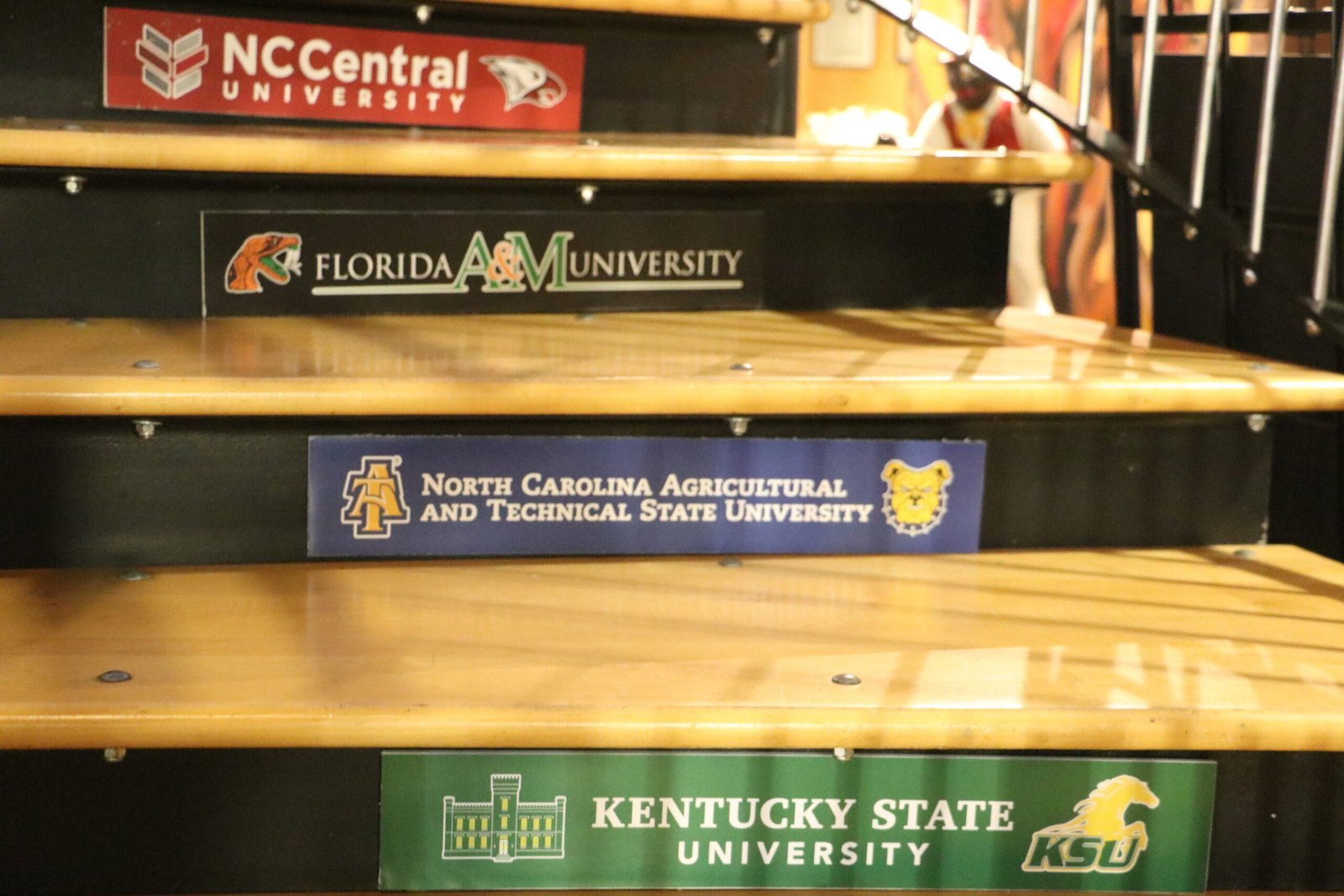
The warning comes as HBCUs face another blow: more than $140 million in federal grants have been canceled since March, including awards for research and scholarships at Hampton, Howard, Tennessee State, Florida A&M, and Morehouse. For campuses already under-resourced, this one-two punch — canceled research dollars and shrinking Pell support — threatens both institutional stability and student opportunity.
“Pell cuts would be devastating,” said Lodriguez V. Murray of the United Negro College Fund. “Instead of cutting, we should be doubling Pell. Lawmakers who wrote this bill are out of touch with reality.”
The Bigger Picture
Pell is not just a number in the federal budget. It is woven into the stories of first-generation students who show up at campuses with more hope than savings. Roughly 61 percent of recipients come from families earning less than $30,000. About 20 percent are parents themselves.
At community colleges, Pell helps single mothers cover daycare while finishing nursing degrees. At HBCUs, Pell has opened doors for generations of Black students locked out of wealth-building opportunities by systemic racism. Since its creation, Pell has supported more than 80 million low-income families.
Cutting the program now, analysts say, is a step backward. Katherine Meyer at Brookings called it a “retreat from the federal role in higher education” that will leave states and families scrambling. “Without robust federal funding, the end result will be fewer opportunities for the lowest-income students.”
Stopgaps and Shortfalls
To keep the program afloat, lawmakers added $10.5 billion in mandatory funding for FY2026. But this is a temporary patch. Because Pell is funded through a mix of annual appropriations and mandatory money, shortfalls happen regularly. Analysts argue the only real fix is to move Pell entirely to the mandatory side of the budget, with automatic adjustments based on enrollment. Until then, the program will lurch from one funding crisis to the next.
Signed Into Law — What Comes Next
On July 1, the Senate narrowly passed the reconciliation package — with Vice President J.D. Vance casting the tie-breaking vote. The House approved the Senate’s version two days later, and President Trump signed it into law on July 4.
That means the Pell changes are now part of law. The next battles will focus on implementation and oversight. The Department of Education faces a tight deadline to enforce the new eligibility rules by 2026. With staffing cuts underway, states may have to step in with stronger consumer protections to ensure quality outcomes, especially for fast-track training programs.
Meanwhile, advocates are preparing the next front: pushing future Congresses to restore or expand Pell. Already, Democrats and higher-ed groups are drafting proposals to revisit the maximum award and eligibility definitions in the next budget cycle. Civil rights groups are also weighing legal challenges, arguing that the changes disproportionately harm Black, Latino, and low-income students.
In other words, the law may have passed — but the debate over Pell’s future is far from over.
Why It Matters
For half a century, Pell Grants have embodied America’s promise: that college should be within reach for anyone willing to work for it. Cuts now would betray that promise, slamming shut doors of opportunity just when the country needs more trained workers, more teachers, more nurses, more innovators.
And for HBCUs — institutions born in struggle and sustained by faith in education’s power to transform lives — the stakes are even higher. Pell is not just financial aid. It is survival.
Please consider supporting open, independent journalism – no contribution is too small!
Sixty-four percent of Americans say racism is widespread—yet most oppose new civil rights laws, revealing a gap between recognition and real commitment to racial equity.
Data from a new Gallup poll that asks respondents’ views on racism finds some common ground between Black and white Americans — except when it comes to addressing the problem.
It’s the kind of polling data that gets a “water is wet” side-eye from Black folks. But the results of a recent Gallup poll reveal that when asked whether racism against Black people is “widespread,” nearly two-thirds of Americans now say yes.
Sixty-four percent, to be precise — the same record-high number Gallup recorded in 2021, in the summer of the so-called racial reckoning after George Floyd’s murder. But if Americans think racism is so pervasive, what do they want to do about it?
It turns out, not much.
The Vanishing Appetite for Civil Rights Laws
In our current whitelash reality of Project 2025 and anti-DEI crusades, when even acknowledging racial inequities has become a liability for grade schools and colleges, less than half of America believes the country needs new civil rights laws to reduce discrimination. That’s down 15 points from 2020 after Floyd’s murder.
Stark differences between white and Black Americans show up in the poll results. Nearly 75% of Black adults want new civil rights protections, while just 40% of white adults say new ones are needed.
Gallup has been asking the question “Do you think racism against Black people is or is not widespread in the U.S.?” since 2008. Back then, almost 60% of U.S. adults agreed racism was widespread. By the following year, when hope and change put Barack Obama in the White House as the nation’s first Black president, only 51% said racism was widespread.
By 2015, when a white cop in Ferguson, Missouri, gunned down Michael Brown, an unarmed Black teenager — igniting a wave of protests and turbocharging the Black Lives Matter movement — 60% of Americans said racism was widespread. Since then, the survey results have barely dipped.
Black Americans continue to experience the country differently from other racial groups. Eight in 10 Black adults told Gallup they believe racism is widespread, compared with 61% of white adults and 64% of Hispanic adults.
And when asked about everyday situations — at work, in stores, at the doctor’s office, on the street — whether or not Black folks experience racism is a matter of debate for white America.
Black People and Reality
Seventy-seven percent of Black adults say they are treated less fairly than white people in encounters with police; 59% say the same about how they’re treated in healthcare and around the office. By contrast, just three in 10 white adults say they see Black people treated unfairly on the job.
When it comes to concrete opportunities, the divide between Black folks and everyone else continues. Fifty-five percent of all Americans say Black people have as good a chance to get a job they’re qualified for as white people, and 56% say the same about housing. Those numbers are basically unchanged since 2021, but far below where they stood in the 1990s and early 2000s, when roughly 70% of Americans were far more likely to believe equality had been achieved.
Meanwhile, white adults remain about twice as likely as Black adults to believe job and housing opportunities are equal
Civil Rights, But Make it Relative
Even as most Americans say racism is everywhere, most also say civil rights for Black people have improved in their lifetimes. Sixty-eight percent believe things are “somewhat” or “greatly” better. But optimism is waning
In 2011, at the height of the Obama years, nearly 9 in 10 respondents said Black civil rights had advanced. That sank to 59% in 2020, after George Floyd’s death. Now, 73% of whites say civil rights for Black people have improved, while only 53% of Black people agree.
So what does the data point — that 64% of people who believe racism exists — really tell us? That polls don’t magically solve racism. That Americans can acknowledge anti-Blackness exists without actually having to confront it. That progress hasn’t erased bias in workplaces, hospitals, or during interactions with police.
And that Black folks live in reality, while white communities toggle between recognition and denial.
Please consider supporting open, independent journalism – no contribution is too small!
Tips for dealing with rising home insurance premiums
By Kerri Anne Renzulli | August 31, 2025
Living in an oceanfront condo on Florida’s Space Coast was Jim McGuigan’s retirement dream, so 12 years ago, he and his wife, Debbie, sold their family home in Orlando and moved to Cocoa Beach. But earlier this year, the couple packed up and moved back inland.
Behind that was insurance. Premiums for the high-rise where they owned a unit had tripled in recent years; that increase, along with repairs necessary to maintain coverage, drove their condo association fees up 141 percent over the same period. The prospect of even higher insurance-related costs prompted the McGuigans’ return to Central Florida, where they’ll spend $4,760 a year less in insurance and fees. “When we bought the condo, I didn’t think I was ever going to move again,” says Jim 66. “But insurance and other things have made the cost of living there too much.”
The McGuigans joined millions of Americans who, in recent years, have been forced to deal with home insurance premium increases and fewer choices as more carriers exit high-risk areas and decline to renew policies.
From 2021 to 2024, premiums rose an average of 24 percent in the U.S. and were higher in 95 percent of ZIP codes, reports the Consumer Federation of America (CFA). While Floridians pay the highest average annual premiums, at $9,462, non-coastal states like Arizona, Illinois, and Pennsylvania saw premiums grow by 44 percent or more. Thanks largely to these increases, nearly 1 in 7 owner-occupied U.S. homes are uninsured, estimates LendingTree. And other homeowners are likely struggling: A Federal Reserve Bank of Dallas study found that mortgage delinquencies increase 8 percent in the year following a typical price hike.
Because mortgage and home equity lenders require insurance, paying these premiums is nonnegotiable for most homeowners. But the following strategies can help reduce how much of your money insurance consumes.
REVIEW COVERAGE
Along with raising your deductible — a standard way to lower premiums — check that your various coverage amounts don’t leave you overinsured. You may be able to tailor your policy’s default limits to reflect just what you have, says Alyssa Bourgeoris, an indedpendent broker with the Marsh McLennan Agency in Metairie, Louisiana. You can try this with other structures coverage, which protects things like fences and detached garages, or with your contents coverage. Before making the change, however, weigh the consequences. “Dropping personal property coverage from 75 percent of your dwelling limit to 25 percent might only save $100 a year,” says Peter O’Keefe, an independent broker with Connor, Alexander and Sullivan in San Francisco. “Do you really want to give up that much coverage to save less than $10 a month?
CHECK THE MARKET
“If you feel like you’re getting a bad deal, shop around,” says Michael DeLong, a research and advocacy associate with CFA. Annual rates from different insurers can vary by $1,000 or more for identical coverage, NerdWallet found. Many insurers make it easy to get a quick quote: Visit their website and plug in some basic information. You can use sites like Insure.com, Policygenius or The Zebra to see offers from multiple carriers simultaneously. Also, your state insurance department may provide rate comparison tools.
If you get a nonrenewal notice from your carrier, start shopping around at once since many states require only 30 days’ notice. “Ask the insurer the reason for the nonrenewal and see if you can make any improvements or changes to keep your insurance,” says Amy Bach, executive director of United Policyholders, a consumer advocacy organization.
GET PROFESSIONAL HELP
Independent insurance agents and brokers can do the legwork of finding better coverage for you; they have access to policies and pricing information from multiple insurance companies, unlike captive agents who represent a single firm. “They can vouch for an insurance company that you may have never heard of,” Bach says. Ask how the broker or agent is compensated so you understand up front any potential biases. Visit trustedchoice.com to find more than 250,000 U.S. independent agents.
WIDEN YOUR SEARCH
If you can’t find good options through regular channels, consider state-created insurers of last resort, like California’s FAIR Plan (for fire insurance) or Louisiana Citizens.
Should one of those not be available, you might even consider non-admitted carriers, which don’t have state insurance licensing and lack guarantees that claims will be paid if they go belly-up. Non-admitted carriers may be riskier, but they must meet state requirements, and many are affiliated with traditional insurers. Mortgage lenders will OK them if they meet their financial standards, typically based on ratings—which are publicly available—from companies such as A.M. Best, De-motech or Standard & Poor’s. Don’t go with a non-admitted carrier unless you research its finances and work with a reputable broker, advises United Policyholders.
LOOK FOR DISCOUNTS
Ask your insurer about any price breaks it offers. Retirees can get up to 10 percent off with some insurers, since they spend more time at home, making them likelier to spot issues quickly. Other insurers offer lower rates to people in specific occupations, like the military or members of certain credit unions or professional associations. Opting for paperless statements and setting up automatic payments may also shave a bit off your premium, as can living in a gated community.
STRENGTHEN YOUR HOME
Improvements that make your home more resistant to risk, like storm shutters, a fire-resistant roof or a reinforced roof, could reduce your premium and give you more insurance carrier options, DeLong says. In some states, insurers are even required to offer discounts to homeowners who show proof they’ve added such features. Homeowners with security systems save between 2 and 15 percent—$100 less on average, according to Policygenius. Before making any upgrades, check that your insurer will reward the change and that it meets the carrier’s requirements.
Your state insurance department may provide grants or other assistance to help offset certain improvement costs, DeLong says. Alabama, for instance, offers homeowners grants of up to $10,000 for roof fortification in select counties.
IMPROVE YOUR CREDIT SCORE
In most states, insurers can set your rates and decline to renew your policy based on your credit history and scores, DeLong says. Rightly or wrongly, homeowners with poor credit scores are viewed as less reliable and so pay higher premiums than those with good scores—as much as 102 percent more, based on data from Policygenius. To help boost your score, make on-time payments, chip away at credit card balances and review your credit report for errors.
SELF-INSURE
Dropping supplemental coverage—like flood or earthquake insurance—or ditching home insurance altogether could save you thousands in the short run but puts your biggest asset at risk. “Without insurance, it’s entirely on you if something goes wrong,” says Dale Porfilio, chief insurance officer for the Insurance Information Institute. Anyone considering this option should have a financial plan for replacing possessions and obtaining housing in the event of a total loss. This may mean setting up a large emergency fund, deciding which assets to sell in a worst-case scenario or sacrificing retirement money. For most, even 20 years of investing saved premiums won’t equal the six-figure fund needed to rebuild entirely. If you have a mortgage on your property and drop coverage, your lender will make you pay for force-placed insurance, which is usually more expensive and protects only the lender’s financial interest, not yours.
CHANGE YOUR SITUATION
If home insurance squeezes your budget so tightly that you’re cutting or charging necessary purchases and constantly dipping into savings, you may no longer be able to afford to live where you do, says Sheryl Hanshaw, who heads the county-run Greenville Financial Empowerment Center in South Carolina. Contact your lender, advises Bruce McClary of the nonprofit National Foundation for Credit Counseling (NFCC). The lender may be able to lower your monthly payments—at least temporarily—though you’ll typically pay more interest and fees over time.
If that isn’t possible, consider selling your home and moving to a place with lower insurance costs, Hanshaw says. But also assess whether, after the change, you’d be better off financially and whether you’d lose what’s important to you, like proximity to your support network. For free advice about your mortgage, find a nonprofit financial counselor via NFCC’s website at nfcc.org, or go to answers.hud.gov/housingcounseling to connect with a local HUD housing counseling agency.
Kerri Anne Renzullihas worked at CNBC and News-week, Money and Financial Planning magazines.
Please consider supporting open, independent journalism – no contribution is too small!
Skin cancer can appear in unexpected ways, beyond the classic mole warning signs. Learn how to spot “ugly ducklings,” reduce risks, and protect yourself with timely checks
The disease can show up in unexpected ways on your body. Here’s what to look for
By Abby Alten Schwartz | August 31, 2025
CAN I SHOW you one more thing?”
I was at the dermatologist’s office for my semiannual skin check, and he’d just finished the exam. But something was still gnawing at me.
“I have this tiny rough spot on the bridge of my nose. If I scrub it off, it bleeds,” I said.
He looked at it under the magnifying light.
“It could be precancerous. Let’s freeze it and see if it comes back,” he said, spraying it with liquid nitrogen. It did come back, twice, so I made an appointment for a biopsy. I felt only a pinch of the needle numbing the area before the doctor shaved off a thin layer of skin for testing.
A week later he called with the results: squamous cell carcinoma in situ. In situ meant it had not spread past the top layer, but because this early-stage cancer could become invasive, my doctor recommended Mohs surgery to ensure all of it was removed. The following week I had the procedure.
What Is Mohs Surgery? ALSO KNOWN as Mohs micrographic surgery, this procedure—performed under local anesthesia with the patient awake—is successful up to 99 percent of the time for untreated skin cancer (94 percent for reoccurring cancers) and produces minimal scarring. The surgeon removes a thin layer of tissue and, while you wait, examines it under a microscope. The process is repeated until the tissue shows clean margins (no cancer cells remain).
SEE SOMETHING, SAY SOMETHING
My father died of stage 4 melanoma when he was 76, so I take skin cancer seriously. Yet even though I was religious about getting annual exams, it turns out that wasn’t enough. On top of dermatology exams every year (or more frequently, based on your history), monthly self-checks at home are important, says Karen Stolman, M.D., a board-certified dermatologist with Park City Dermatology in Utah and a spokesperson for the Skin Cancer Foundation.
“You’re just looking for something that’s new or unexpected or a change that you don’t think is right for your skin,” Stolman explains. “You don’t have to know what you’re looking at or diagnose it.”
When I began seeing a dermatologist in my early 40s, I was skeptical I’d notice any new moles or marks. But by paying attention, I’ve become familiar with the landscape of my skin. I’m learning that skin cancer (and precancer) can take on a different texture or appearance than the classic signs people are usually told to watch out for.
LOOK FOR THE UGLY DUCKLINGS
Dermatologists have done a pretty good job educating the public about malignant melanoma, says Mix J. Charles, M.D., a board-certified dermatologist and chairman of the department of dermatology at Duly Health and Care in Hinsdale, Illinois. One of the deadliest forms of skin cancer, melanoma often begins as a brown or black mole that becomes larger or irregular. When you google “warning signs of skin cancer,” what you’ll typically get are the ABCDE’s of melanoma:
Asymmetry: Two halves that don’t match
Border: Irregular, scalloped or poorly defined edges
Color: Multiple colors or shades
Diameter: The size of a pencil eraser (can start smaller)
Evolving: Changes in size, shape, color or presentation (itching, bleeding, crusty, raised)
While these signs are important, the two most common types of skin cancer—basal cell carcinoma and squamous cell carcinoma—typically present in other ways, including:
A reddish irritated area or open sore that persists (may crust, bleed or ooze)
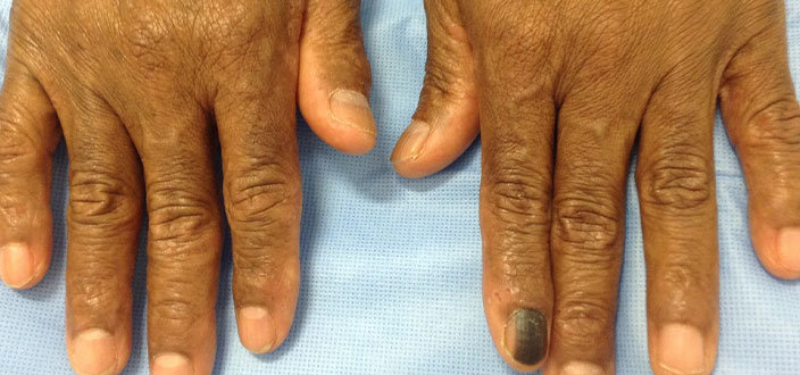
A pearly bump or nodule (clear or pink; may be pigmented in people of color)
A small pink or elevated growth (crusted indentation in center, raised edges, may bleed)
A scar-like area (often with poorly defined borders)
A wart-like growth (may crust or bleed)
The precancers that dermatologists find daily, called actinic kera-toses, start out pink or red and scaly, “and they’re typically where we’ve had the most sun,” Stolman says.
A good takeaway is to look for the “ugly duckling,” says Kelly Nelson, M.D., a board-certified dermatologist and professor of dermatology at the University of Texas MD Anderson Cancer Center in Houston. “If you have one thing on your skin that is looking or behaving in a way that’s different, that one thing should probably be evaluated by a doctor,” she explains.
Though skin cancer occurs most often in people with fair complexions, Nelson says it can strike anyone, even in patients with very dark skin. Because of misperception that people of color don’t develop skin cancer, they – and their physicians – may not be on the lookout. As a result, skin cancer is often diagnosed at later stage in patients of color. (Several brands of sunscreen – such as Black Girl Sunscreen, Bold Brightening Moisturizer and EltaMD UV Clear – that are now available can protect people with darker skin without leaving a dull white coating.)
PREPARE FOR YOUR NEXT CHECKUP NOW
Skin cancer is of increasing concern as we age. Stolman says today’s precancer may be from sun damage 10 to 20 years ago, but it can also build over time with each exposure. In addition, “with age, our immune system becomes less capable of protecting us from all forms of cancer, including skin cancer.”
Staying on top of your risk positions you to take advantage of breakthrough skin cancer treatments. In February 2024, the Food and Drug Administration approved Amtagvi (lifileucel), the first cellular therapy for advanced melanoma. It follows a number of recent breakthroughs on this form of skin cancer, which accounts for the majority of fatalities from the disease.
I keep a list on my phone of suspicious spots to ask about at my next checkup. If something new appears that I’m especially worried about, I’ll make an appointment right away. It doesn’t hurt to take a photo of anything that looks odd so you can track how it changes over time.
If you don’t already have a dermatologist, it can be a long wait for an opening. Try elsewhere if a practice can’t see you within three months. You can also ask your primary care provider to take an initial look and help with a referral or next steps.
A Dose of Prevention
If you’ve had multiple precancerous or cancerous spots in one area (especially on sun-exposed parts), several therapies can help prevent future cancers. These “field treatments” are intended only for actinic keratoses or superficial skin cancers (early basal cell and squamous cell carcinomas affecting the top layer of skin).
Fluorouracil (5-FU), a topical chemotherapy cream, is applied once or twice a day for several weeks to target cancer cells near the skin’s surface. The treated skin can become red and sensitive until it heals.
Photodynamic therapy (PDT) uses a topical light-sensitive drug that is absorbed into precancerous cells. A special light activates the drug and destroys them. The therapy usually needs to be repeated every Ito 5 years.
Additional therapies for sun damage include fractional laser therapy as well as carbon dioxide laser and chemical peels, which may be less effective.
Abby Alten Schwartz has reported on health and relationships for Wired, Salon and other publications.
Please consider supporting open, independent journalism – no contribution is too small!
The 2025 Jerry Malloy Negro League Conference in Louisville celebrated Black baseball history with films, panels, and a grave marker dedication, while addressing future challenges of diversity and memory.
By Milton Kirby | Louisville, KY | August 31, 2025
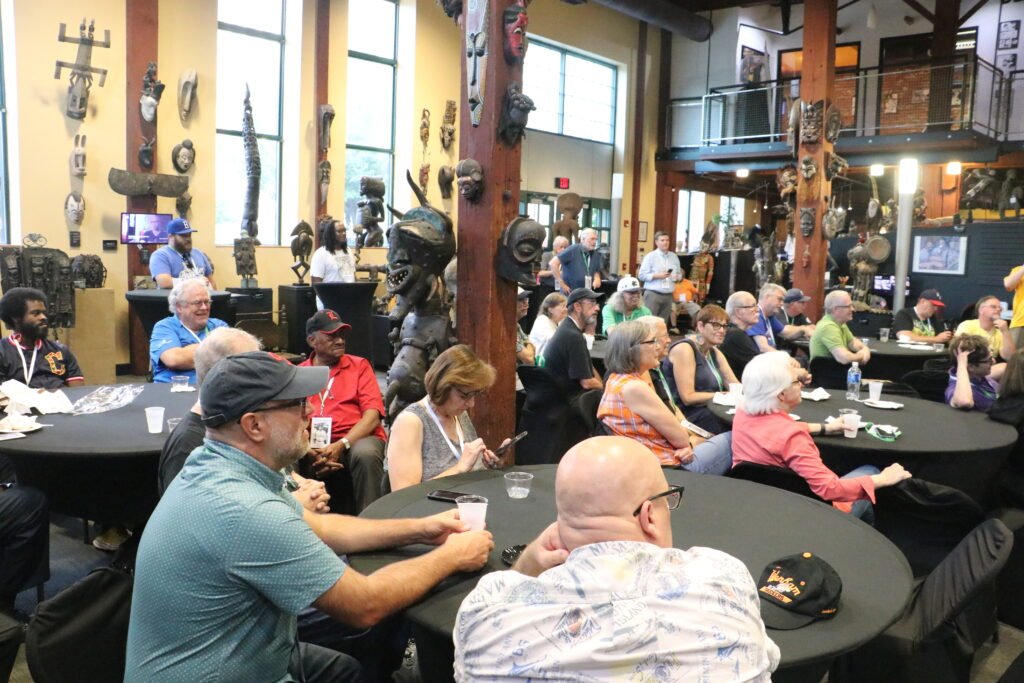
The Society for American Baseball Research (SABR) brought its annual Jerry Malloy Negro League Conference (JMNLC) to Louisville, Kentucky, August 7–9, filling the Galt House Hotel with scholars, historians, fans, and community leaders devoted to preserving the legacy of Black baseball.
This year’s gathering highlighted the cultural and historical depth of the Negro Leagues. Attendees viewed the premiere of I Forgot to Tell You About: The Story of the Cleveland Buckeyes, followed by a panel with former All-Star Kenny Lofton, filmmaker Evelyn Pollard-Gregory, and authors Wayne Pearsall and Vince Guerrieri. The weekend also featured poet Dorian Hairston, a Louisville Baseball History Panel with Harry Rothgerber and Anne Jewell, and a film screening on Black baseball in Nashville.
Historians Gather @ History Museum
Participants enjoyed a tour of the Louisville Slugger Museum & Factory, a reception at the Roots 101 African American Museum, and a Louisville Bats game at Slugger Field. Presenters included longtime researchers such as James Brunson III, Larry McGill, Gary Gillette, Keith Wood, and others who continue to shed light on overlooked chapters of African American baseball.
Honoring Sammy Hughes
The conference closed with a powerful moment on Sunday, August 10, when SABR’s Pee Wee Reese Chapter, working with the Louisville Bats and Louisville Slugger Museum, placed a long-awaited grave marker for Negro Leagues great Sammy Hughes at Louisville Cemetery. Known as “Sammy T,” Hughes was a six-time All-Star second baseman who played with 17 Hall of Fame players (Roy Campanella, Biz Mackey, Mule Suttles, Willie Wells, Josh Gibson, Buck Leonard, Cool Papa Bell, Ray Brown, Ray Dandridge, Turkey Stearnes, Leon Day, Martin Dihigo, Willie Foster, Judy Johnson, Satchel Paige, Hilton Smith, and Jud Wilson), and captured a 1939 Negro National League title with the Baltimore Elite Giants. After his death in 1981, Hughes had lain in an unmarked grave for 44 years.
Dorian Hairston (L) – Chris Jensen (R) JMNLC Speakers
History and Mission
Since its founding in 1998, the Jerry Malloy Negro League Conference has been the only national symposium devoted exclusively to Black baseball history. Named for journalist and historian Jerry Malloy (1946–2000), the event reflects the mission of SABR’s Negro Leagues Committee, founded in 1971, to encourage research into the Negro Leagues, pre-Negro League baseball, and the broader African American impact on the game.
Founders such as Ted Knorr, Dick Clark, Larry Lester, Leslie Heaphy, and Malloy himself envisioned a forum where scholarship, storytelling, and community could meet. Their vision still guides today’s gatherings, with annual presentations, trivia contests, youth scholarships, library grants, and the ongoing Negro Leagues Baseball Grave Marker Project, which has provided headstones for more than 30 forgotten players.
The Future: Carrying the Flame
This year’s conference not only honored history but also raised questions about the future. Organizers acknowledged the challenge of drawing more diverse participants and sustaining momentum at a time when diversity initiatives are under political attack.
“The Malloy is the place where connections are made, and ideas are born,” said committee co-chair Todd Peterson. “Good trouble always has, and always will be, made here.”
Fellow co-chair James Brunson added, “The conference bridges past and present. Nothing is foreign, forbidden, or impossible with this group.”
Looking ahead, leaders emphasized Larry Lester’s “Three R’s” — Recognition, Respect, Redemption— as guiding principles for expanding the conference’s reach while ensuring that the painful history of baseball’s color line remains central to public memory.
In the words of one participant, the Malloy is not simply about baseball statistics or forgotten box scores, but about resisting historical amnesia, confronting injustice, and keeping alive the stories of the players who laid the groundwork for integration and equity in sport.
As Peterson concluded: “We are the keepers of the flame. We must be the bulwark against attempts to whitewash the past.”
Please consider supporting open, independent journalism – no contribution is too small!
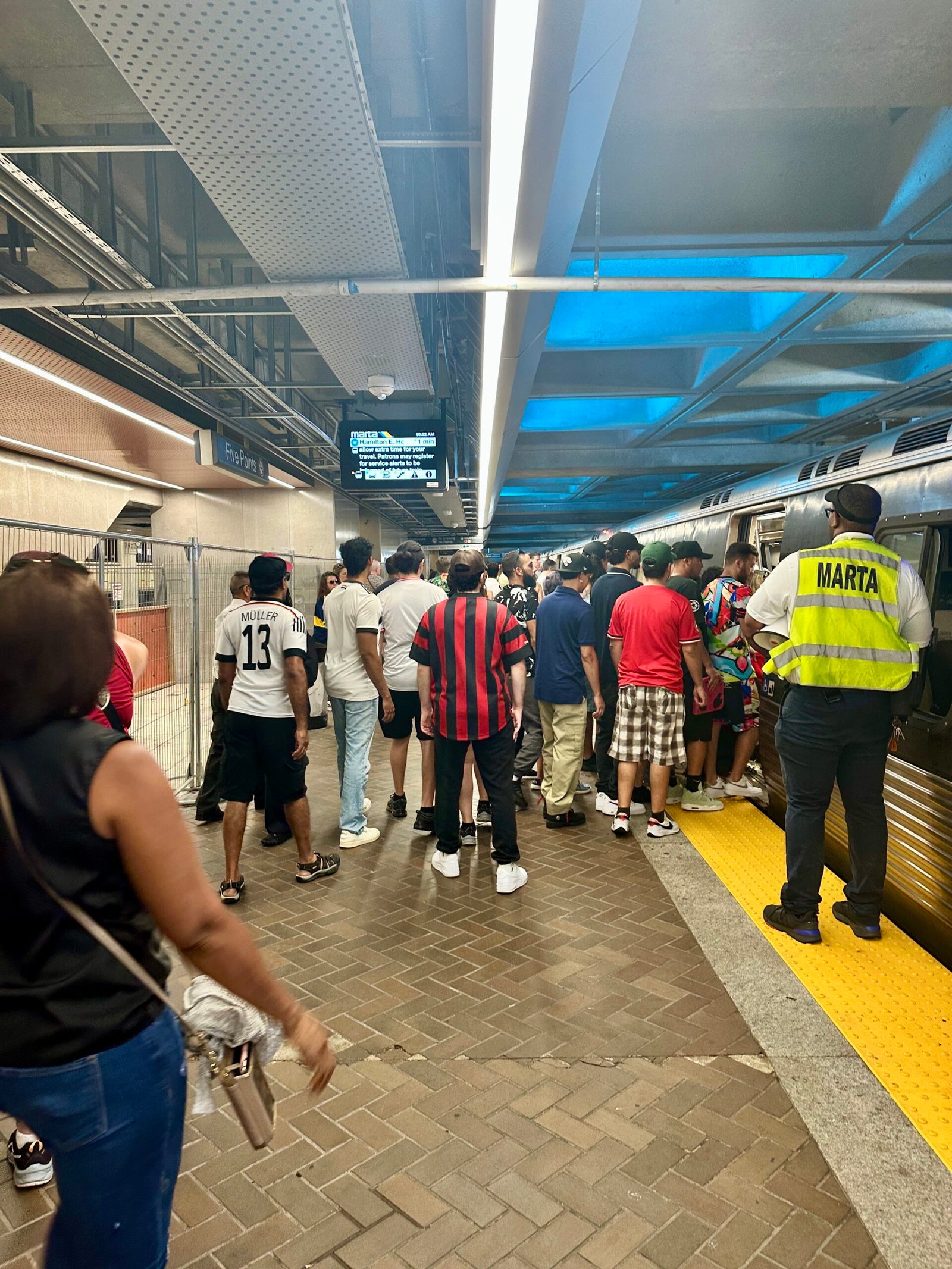
MARTA’s Transit Ambassadors return this Labor Day, guiding riders through busy stations and events. Born during Super Bowl 2019, the program now prepares Atlanta for the 2026 World Cup.
By Milton Kirby | Atlanta, GA | August 27, 2025
As Labor Day weekend approaches, MARTA is once again deploying its Transit Ambassadors across the rail and bus system to help guide travelers through one of Atlanta’s busiest holiday weekends. The program, which began in the lead-up to Super Bowl LIII in 2019, has grown into a cornerstone of MARTA’s customer service strategy.
The Transit Ambassador Program was born out of necessity during Atlanta’s hosting duties for the Super Bowl. With more than half a million fans navigating the city, MARTA saw an opportunity to reimagine how it welcomed riders. Staff members from across the Authority stepped into stations to offer directions, assist with Breeze cards, and provide a human connection that technology alone could not deliver. This personal touch, often missing in large transit systems, has been a key to the program’s success.
Since its inception, Transit Ambassadors have been a fixture at major events. They have guided fans during international soccer tournaments, eased congestion at concerts in State Farm Arena and Mercedes-Benz Stadium, and offered reassurance to new riders during peak travel times.
“This is one of the few programs where you’ll see someone from the executive office standing next to a customer at a faregate, walking them through how to tap in,” said Jon Gordon, MARTA’s Director of Customer Engagement. “It’s a shared effort that reflects our commitment to the rider experience.”
The program stands out because it is powered by MARTA employees themselves. From finance and administration to operations and communications, staffers volunteer for shifts to serve as Ambassadors. They are equipped to troubleshoot faregate issues, guide customers through transfers, and provide quick fixes when ticket vending machines malfunction. In some cases, Ambassadors even carry complimentary tickets to keep riders moving during bottlenecks.
During the recent safety briefing at Chamblee Station, I experienced my own confusion as well as that among riders when no attendants or Ambassadors were on hand to assist. In such situations, attendants and Ambassadors play a crucial role in solving problems, guiding riders through safety procedures, providing reassurance, and ensuring a smooth flow of operations.
Although MARTA showcased its Real-Time Crime Center and Emergency Operations Center — complete with motorcycles, an armored vehicle, and drones — the lack of direct rider support left some passengers struggling at faregates and ticket vending machines.
As I wrote in The Truth Seekers Journal’s coverage of that event, MARTA is generally a safe and reliable system. Still, moments like this remind us that a missing attendant or Ambassador can leave first-time or casual riders with the impression of poor operating standards.
MARTA officials have said the long-term goal is to expand Ambassador coverage beyond major events, precisely to avoid gaps like these.
Rider feedback has helped refine the program. A recently introduced internal app allows Ambassadors to check in at stations, log issues in real time, and coordinate responses more effectively. The combination of technology and human interaction has not only made Atlanta’s transit system more accessible, but also reassured riders that their concerns are being addressed in real time.
Looking ahead, MARTA is considering expanding the program beyond special events. Plans are underway to provide Ambassador coverage during daily peak hours, ensuring regular commuters benefit from the same level of personal assistance as travelers heading to major sporting events or concerts. This expansion aims to fill the gaps in rider support and enhance the overall transit experience.
The timing is crucial. In less than a year, Atlanta will host matches for the 2026 FIFA World Cup, an event expected to draw hundreds of thousands of international visitors. MARTA leadership sees the Ambassador program as central to its readiness plan.
“This is about more than just moving people,” Gordon said. “It’s about making them feel welcome, confident, and connected to the city.”
This Labor Day, MARTA Ambassadors will be on the ground once again — in stations, at faregates, and on platforms — helping riders reach their destinations smoothly. It is a reminder that Atlanta’s transit system is not just about trains and buses, but about the people who power them.
Chit Chat Atlanta Tours launches Labor Day with immersive Black history, Civil Rights, and cultural experiences, offering visitors a powerful way to discover the soul of Atlanta.
By Milton Kirby | Atlanta, GA | August 27, 2025
This Labor Day, Atlanta visitors and residents will have a new way to experience the city’s legacy of resilience, creativity, and pride. Chit Chat Atlanta Tours, a Black woman-owned cultural tourism company, officially launches September 1 with a lineup of immersive experiences spotlighting the city’s Black history, Civil Rights heritage, and modern cultural excellence.
The company, founded by veteran public relations professional and cultural storyteller Carla Morrison, promises more than sightseeing. Through carefully curated routes, guests will walk the streets where Dr. Martin Luther King Jr. once preached, hear the stories of Atlanta’s trailblazers, and taste the flavors of Black-owned restaurants shaping today’s culture.
“Our mission is to preserve legacy, educate all generations, and spotlight the rich culture of Atlanta’s Black community,” said Morrison. “Whether it’s a family reunion, corporate group, or school trip, our tours are soul-stirring journeys designed to honor the past while celebrating the present.”
A Journey Through Atlanta’s Soul
The tours weave together landmarks and hidden gems across the city. Stops include Ebenezer Baptist Church, the King Center for Nonviolent Social Change, Sweet Auburn Avenue, the APEX Museum, Castleberry Hill, Trap City Café, Patchwerk Studios, the Black Music & Entertainment Walk of Fame, and Tyler Perry Studios.
Each experience blends education with entertainment, giving participants “a little bit of trap, a little bit of truth, and a whole lot of Atlanta pride.”
Signature Experiences
Black History & Civil Rights Tour (2–4 hours): Visits Ebenezer, the MLK Historic Site, Sweet Auburn, SCLC, Big Bethel AME, and historic Black-owned businesses.
Reality ATL Restaurant Tour: A culinary journey highlighting Black-owned restaurants and chefs defining the city’s food scene.
The ATL Remix Tour: Designed for tourists interested in music, film, and fame, mixing history with Atlanta’s cultural flair.
HBCU Campus Tour: Explores Atlanta’s Historically Black Colleges and Universities and their enduring impact.
Peachtree Street Tour: Examines Atlanta’s main artery with its blend of business, culture, and contradictions.
Custom Group Tours: Tailored for schools, churches, DEI retreats, and special events.
Tours start at $75 per person, with private and custom packages available. Year-round bookings are expected to peak during Black History Month, Juneteenth, and the summer reunion season.
A Cultural Legacy Reimagined
By blending storytelling, history, and cultural immersion, Chit Chat Atlanta Tours positions itself as more than a tourism venture—it’s a living classroom and cultural celebration. The company is part of a growing movement in Atlanta to recenter the city’s narrative around the voices that built it.
For bookings or more information, visit www.ChitChatCommunications.biz, follow @ChitChatAtlantaTours on Instagram, or call (404) 319-2130.
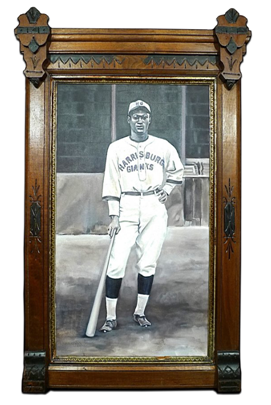
Negro Leagues star Rap Dixon, a five-tool outfielder from Harrisburg, earned Hall of Fame-worthy praise from legends like Oscar Charleston and dominated globally.
By Ted Knorr & Chris Rainey | Harrisburg, PA | Updated August 22, 2025
On December 12, 2018, at the Negro League Baseball Museum in Kansas City, Missouri, Museum President Bob Kendrick, with historian Jay Caldwell, announced the Negro League Centennial Team. The team was a key part of the Museum’s celebration in 2020 of the 100th anniversary of the founding of the Negro Leagues. The team of 30 players, a manager, and an owner was to honor the greatest Negro League players of all-time. Of the 19 position players on the team, only one was not already enshrined in the National Baseball Hall of Fame in Cooperstown, New York — Herbert Alphonso “Rap” Dixon.
Further affirmation of Rap Dixon’s greatness was provided 70 years earlier when in 1949, the greatest of all Negro League outfielders, Oscar Charleston, was asked by a reporter from the Philadelphia Evening Bulletin for his all-time Negro League lineup, Charleston, whose career began before the Negro Leagues were organized, and ended several years after their demise as a major league, offered his team. In the outfield, he placed future Hall of Famers Martin Dihigo in left and Cristobal Torriente in right … between that pair, at his old position of center field, he inserted Rap Dixon. High praise indeed for a lesser-known player among the pantheon of Negro League stars.
A 6-foot-1, 185-pound dynamo who batted and threw right-handed, and played all three outfield positions, Dixon was a classic five-tool player: hitting for both power and average, running, fielding, and throwing. He also had a knack for performing well on the big stage. During his 16-year career, he was a key player on great teams in the Negro Leagues as well as in offseason leagues and a tour of Japan.
Herbert Alphonso Dixon was born on September 15, 1902, in Kingston, Georgia, about 56 miles northwest of Atlanta. He was the first of John and Rosa Goodwin Dixon’s five children. Herbert and his younger brother Paul (also a future Negro League outfielder) developed their rudimentary baseball talents in Georgia’s rural farm country.
Photo courtesy of Phillip Dewey – Rap Dixon
Just before the First World War, Rosa’s brother Oliver P. Goodwin accepted a position in Steelton, Pennsylvania, as pastor of the First Baptist Church. Steelton lies along the Susquehanna River south of the state capital of Harrisburg. Shortly thereafter, additional Dixon and Goodwin families, including John and Rosa Dixon, headed north for greener pastures, joining approximately 1.6 million African Americans opting to leave the South as part of the Great Migration.
The Dixon and Goodwin families settled on Adams Street near Uncle Oliver’s church. Just down the street was the Hygienic School for Colored Children, where Herbert began formal education. He graduated from eighth grade on May 23, 1919, before matriculating at Steelton High School. Herbert’s extracurriculars, in addition to baseball, included boxing, football, and playing the trumpet in the school band. In addition, Herbert worked part-time in the steel mill once he was old enough. According to Chappie Gardner: “[Dixon] got his wonderful strength of arms and shoulder from throwing pig iron billets at the crane operators in the steel mills.”
Herbert Dixon completed only two years of high school. Purportedly, Dixon’s schooling ended, and his “career in baseball started one day when his high school science teacher announced that the class was going to dissect a cat. Dixon, feeling squeamish, exited quickly and went straight to a sporting goods store; with the money he had earned working weekends at the Bethlehem Steel Company, he purchased a glove and bat, took a train to Atlantic City, and joined the Bacharach Giants.” Neither Seamheads.com nor Baseball-Reference.com lists him playing any games with the Giants that year.
By 1919, Dixon became a regular with Steelton’s semipro Keystone Giants. On May 31, the Harrisburg Telegraph announced that “Dixon, the Giants new shortstop, played fast ball and made two healthy swats” in an 8-3 victory over the Middletown White Sox. Dixon usually batted leadoff and was one of the team’s stars, even at age 16.
Perhaps the biggest game for young Herbert with Steelton came on July 16, 1921, at Harrisburg’s Island Park, when they took on the best of the local semipro clubs — Colonel W. Strothers’ Harrisburg Giants. The upstart Steelton club held a 9-4 lead into the bottom of the eighth inning before the more polished Harrisburg team rallied and eventually won the game in the 10th. Dixon played shortstop, batted third, and had two hits in the loss.
Herbert Dixon was briefly with the Keystone Giants in early May 1922 before Colonel Strothers recruited him. Dixon’s debut with Harrisburg occurred on May 20 against the powerful Hilldale Club when he stroked one hit in three at-bats with a run and a ribbie in a 5-3 loss. By mid-June, Dixon was the Harrisburg center fielder. When the veteran fly hawk, Jess Barbour, returned to the lineup, Dixon mainly played right field. Over the summer, he continuously upped his place in the batting order from eighth to fourth. The 1922 season ended on an unhappy note for Harrisburg as they lost their city title in a nine-game series against the fast Motive Power semipro team.
As the 1923 season dawned, Colonel Strothers struggled to find talent for his independent team competing against 14 teams in two leagues. These difficulties were eased when E.B. Lamar of the New York Bacharach Giants joined Harrisburg’s administrative team and brought with him several outstanding players, including outfielder Fats Jenkins, second baseman Dick Jackson, and pitchers Harold Treadwell and Nip Winters. In addition, Strothers brought in William Pettus of the Richmond Giants to anchor the infield at first and to manage the team.
By early 1923, Dixon’s nickname began to appear in print. There are two suggestions as to its origin. One supposes it was derived from the Rappahannock River, which flows through Virginia. How this relates to him is unclear. Sportswriter Chester L. Washington offered a more plausible suggestion: that it grew out of Dixon’s hitting ability while still in high school.
Washington claimed, “Rap hits the old apple with the same degree of force that made William Tell famous.”
The Giants’ primary opponent in 1923 was again the local Motive Power team. John Brackenridge, Motive Power’s manager, threw down the gauntlet in the offseason saying he had “signed the same aggregation of stars that annexed the City championship from Strothers’ Harrisburg Giants.” Unlike 1922, where the Giants got off to a slow start losing 11 of their first 17 contests, the 1923 Harrisburg team captured a dozen victories in their initial 17 games. They faced Ben Taylor’s Washington Potomacs nine times and emerged with six wins.
Dixon started the season slowly at the plate before being sidelined most of July with an undisclosed illness. It was a harbinger of the future for Dixon, who would be haunted by injury and illness during his career. He had powerful arms, but author James Riley called attention to his spindly legs. Riley also suggests that drinking was an issue with Dixon, especially later in his career.
The season culminated, as it had the previous year, with a series against Motive Power. The Giants dropped the opener, 7-4, on the Island Park field. Dixon’s bat led the team to an 8-3 victory in the second game. The remainder of the series was dominated by Giant’s pitcher Nip Winters, who captured three complete-game wins.
During the offseason, the Giants joined the ECL and signed Oscar Charleston to guide the team. Charleston arrived in Harrisburg on March 3, 1924. Immediately, he and Strothers began building a ballclub that Charleston thought could be a dark-horse contender. Retained were outfielders Dixon, Jenkins, and Barbour, and five others. Charleston brought four pitchers with him from the Indianapolis ABCs. Other fresh faces included first baseman Edgar Wesley from the Detroit Stars and pitcher Slim Branham. The new manager gushed about the potential he saw. “We got the stuff, boy, we got the stuff.”
The season began on April 19 with a non-league contest versus the York White Roses, featuring Del Bissonette. The Giants lost a close encounter, 3-1, and Dixon appeared as a defensive replacement for Dick Jackson, the second baseman. Charleston started in right field. Dixon saw little action early in the season as Jackson held down right field. At 21, Rap was the youngest member of the team and may not have won Charleston’s favor yet.
Dixon’s chance to impress came in early June in New York against the Lincoln Giants at the Catholic Protectory Grounds. In a doubleheader victory, he supplied five hits off a quartet of hurlers. By late June, Dixon had cemented his place in right field, joining Jenkins (left) and Charleston (center).
The trio was soon dubbed the “million-dollar outfield” and played together through the 1927 season. Combined, they posted a stellar .351 batting average (898-for-2559) in their time together. The trio is one of only 12 outfield groups that played four or more years together while featuring a future Hall of Famer. Local sportswriter Wellington “Welly” Jones said, “There is no better outfield than Dixon, Charleston, and Jenkins.”
While Dixon maintained his hold on the right-field spot, he hit only .259 in ECL action. His first ECL home run came on July 15 off Brooklyn’s Pud Flournoy. Jenkins batted .336, and Charleston dominated league pitching with 15 home runs and a .405 average. A revolving door at third base and a struggling pitching staff doomed the Giants to a 30-31 mark.
The following season, 1925, was the Harrisburg Giants’ high-water mark. Charleston captured his second consecutive triple crown (.427/20/97 in a 73-game ECL season). Jenkins hit .317 and scored 82 runs, while Dixon made his presence known, hitting .352/8/53. The team finished second (48-24-1, .664) behind Hilldale. The outfield trio was honored with both Charleston and Dixon being named first team All-East, and Jenkins as an honorable mention in left.
That fall, Dixon accepted an invitation from Hilldale’s Biz Mackey and joined the Philadelphia Royal Giants in the California Winter League. The team won the season’s second half with an overall record of 24-15-3. Dixon batted just .271 and usually was in the bottom of the order. He struck four hits as the Royal Giants swept the White King Soapsters in a three-game postseason battle.
The Royal Giants remained in the West after the Winter League season, playing local semipro squads and PCL teams. Dixon hit well in these exhibitions, although the most significant impression his bat made was on the head of Portland catcher Frank Tobin. In a game on March 19, Dixon swung and missed but knocked Tobin unconscious. The team wrapped up their stay in California in early April.
His fine 1925 season made Dixon a star. New York Giants manager John “Muggsy” McGraw told the press that winter that, “If that boy Dixon was not so black, I could make a Cuban out of him and the National League would have another star to talk about. He is, without question, one of the greatest outfielders in the United States.” Despite the glowing praise, Colonel Strothers listened to offers from Rube Foster that might have sent Dixon to Chicago.
In the 1926 season, Dixon again put up nice stats, .323/6/40, while playing 47 of the 49 league games. Charleston’s numbers dipped dramatically, and John Beckwith led the team with a .330 average. Perhaps it was his off-year or maybe the pitching staff’s 5.00 ERA, but, as his biographer Jeremy Beer notes, Charleston “increasingly edged into hotheadedness as the year dragged on.” The manager’s attitude rubbed off on his players. Dixon tried to fight an umpire in Baltimore. Shortstop Rev Cannady went further by slugging an umpire in the jaw. The team finished fourth in the ECL at 27-22.
When the ECL season ended, Dixon again joined Mackey in California. He joined a spectacular lineup featuring holdovers Mackey and Bullet Joe Rogan, plus Turkey Stearnes, Willie Wells, and Andy Cooper. After a decent (9-8) first half, the Royal Giants added Bill Foster. The team caught fire, winning 13 of 14 second-half decisions to capture the playoff qualifying title. In the playoffs, they split four games but failed to capture the official league title when the deciding fifth game with Shell Oil was never played.
Dixon batted .349 — third in the league behind Stearnes (.387) and Shell’s Bob Jones (.361) while leading the league in games and doubles. He finished second on the team (and league) in hits to Stearnes. As in the previous winter, he was the team’s left fielder.
After the season, Philadelphia Royal Giants owner/promoter Lonnie Goodwin desired to take the squad on a tour of Japan, Korea, and the Hawaiian Islands. With the core of his team under contract to Negro League teams such plans were not without controversy. Ownership threatened a five-year suspension on any Negro Leaguers who failed to show for spring training. Of the 14 players on the Winter League team only five risked the potential punishment — Mackey, Cooper, Dixon, Frank Duncan, and Neal Pullen.
On March 9, Goodwin and his team set sail on the La Plata Maru to Yokohama, Japan. The touring Royal Giants were not the same team that had participated in the California Winter League, but they remained a formidable unit. They arrived in Japan on March 29 to begin a 27-game schedule (22 games in Japan; 5 in Korea).
The major-league tour of Japan in 1934, featuring Babe Ruth, was highly influential in the birth of the Nippon Professional Baseball League. Writers also credit the two earlier Negro League tours for creating a love for the game in Japan. In his study of Ruth’s tour, Robert K. Fitts notes that the “Negro Leaguers conducted themselves far better than their white counterparts.” Years of barnstorming had taught them not to embarrass an opponent with antics or running up the score.
The tour opened on April 1 in Tokyo against the Keio University’s Mita Club, which five years earlier had defeated the Herb Hunter All-Stars, 9-3. The Mita Club fell, 2-0, to Cooper, and then Mackey beat them, 10-6, the following day. No box score exists for the opener, but Dixon went three for three with a double, a walk, and a sac fly in the second game. He followed that performance with a five-for-five day (including a triple and double) in cavernous Koshien Stadium.
The Japanese fans were in awe of Dixon’s bat, speed, and throwing arm. Dixon’s eighth consecutive hit was a mere appetizer for his next feat. Koshien Stadium had been built in 1924 with a left-center-field gap that measured 128 meters (420 feet). No native batter had hit or cleared the fence, but on April 6, Dixon smashed a ball that ricocheted off the wall for a triple. Dixon next wowed the fans at Jingu Stadium on April 28 after a 14-0 win. He stood at home plate and threw balls on target to players in the left-field seats.
After Emperor Hirohito commemorated the Japanese tour of Dixon and his mates by presenting them with a trophy, the team headed for Korea. Dixon pitched the May 19 game in present-day Daegu, picking up the victory, 14-2. From there, the team traveled to Honolulu, where they played for two weeks before heading back to the mainland. The threatened lengthy suspension had been reduced to approximately two weeks by ECL President Isaac Nutter.
Dixon finally returned to Harrisburg on July 22. Things were vastly different with the Giants as Oscar Charleston was being dealt to the Hilldale club, and John Beckwith was the manager. Charleston’s departure fell through, and he took the field with Dixon against a Brooklyn Royal Giants team rattled from an auto accident en route to the game.
Brooklyn’s late arrival and a rain shower held the game to just four-and-a-half innings with Harrisburg on top, 8-7. Dixon had a hit and scored a run while batting in the seventh spot and playing his traditional right field. Harrisburg had finished the first half with a 25-20 mark. They were 0-3 in the second half before the victory over Brooklyn. With their million-dollar outfield again intact, the team finished second and posted a 13-8 record after Dixon’s return. Dixon hit .282 in 21 league games.
Dixon returned to the California League that winter, but circumstances were far different than the previous year. A second Black team was entered, called the Cleveland Stars, with a roster that included Dixon’s former Royal Giants teammates Stearnes, Newt Allen, Crush Holloway, and Wells. In addition, Commissioner Landis had imposed restrictions on major leaguers playing in the circuit.
Besides the newly minted Stars, the Royal Giants’ main competition came from Pirrone’s All-Stars. Anchored by Babe Herman and Bob Meusel, Pirrone’s squad beat Dixon’s team early in the campaign, but then Herman and Meusel stopped play to comply with Landis’s edict. After their departure, the All-Stars faded, and the Royal Giants ran away with the title.
After his shortened season with Harrisburg, Dixon exploded in California. His .380 batting average was second in the league behind teammate Jess Hubbard (.442). He exhibited power with a league-leading six doubles and three triples in just 79 at-bats. His five home runs were second to Stearnes’ seven.
Dixon played with the Cleveland Giants in California in 1928-29. His .360 average was only sixth on the team. After a winter in Cuba, Dixon returned to California in 1930-31 with the Royal Giants. In five seasons on the coast, he batted .326 (156-479) and had 21 home runs.
Citing poor attendance, Colonel Strothers disbanded his Harrisburg team in March 1928. Dixon signed with the Baltimore Black Sox and turned in two of the finest seasons ever seen in baseball. In 1928, he posted a line of .398/13/58. They were nearly Triple Crown numbers had teammate Jud Wilson not hit .399 (.0006 points separated them). He also led the circuit with 34 walks. Using modern statistics, he posted an OPS of 1.180 and an OPS+ of 190.
The following year found the team in the American Negro League, where they captured the flag in both halves and posted a league (ANL) best 55-25 mark. In 76 games, Dixon produced even better numbers: .415/16/92. His OPS rose to 1.204 and his OPS+ to 191. Dixon’s marvelous season was jeopardized in July when he was beaned in a game with the Homestead Grays. He fearlessly returned to the lineup the next day and proceeded to rap out 14 consecutive league hits during the week. The streak started against the Grays and culminated on July 28 when he collected eight hits in a doubleheader versus Hilldale. The major-league record for consecutive hits is 12.. Including two walks against the Grays, he had 16 consecutive on-base appearances, which is bested only by Piggy Ward’s 17 in 1893.
Dixon did not go west in the offseason, opting instead to play in Cuba with Almendares. He displayed his power and speed, leading the league in stolen bases (19) and the team with five home runs. (Mule Suttles led the league with seven.)
Dixon entered the 1930 season as a 27-year-old, with his prime years ahead of him. Rather than improving on the two impressive seasons, he tailed off and found himself packing bags to go from team to team. He opened 1930 with the Black Sox and played the first Negro League games at Yankee Stadium in a doubleheader versus the Lincoln Giants on July 5.
Dixon had a reputation for saving his best for big occasions. He opened the scoring in the first game with a home run in the first inning off Bill Holland, but the Giants prevailed easily, 13-4. In the second game, Dixon again homered in the first, then added an inside-the-park blow to deep left-center in the third as Baltimore won, 5-3.
There were 15 Black ballclubs in 1930: nine in the NNL and six Eastern Independent teams. The competition between the two leagues led to players jumping from one circuit to the other. Dixon was one of three big names (with Suttles and Jenkins) to leave the Black Sox as he skipped to the NNL Chicago American Giants. He hit .305 with eight home runs in 49 games for Baltimore and Chicago.
Dixon opened the 1931 season playing left field for the Hilldale club that featured Mackey and Martin Dihigo. He struggled to a .226 average in 44 games before joining the Black Sox late in the season. In 1932, he reunited with manager Oscar Charleston with the Pittsburgh Crawfords. He wowed the fans at Greenlee Field on May 28 with a single and double, two stolen bases, and four runs scored in a 13-4 win over Birmingham. The Crawfords featured 20-year-old catcher Josh Gibson, whose eight home runs took the team title over Dixon’s seven home runs.
Dixon married Rosa (aka Rose) Yarbrough in August 1931 in Richmond, Virginia. The couple was divorced in October 1934, also in Richmond. The decree listed desertion as the cause and noted that Rap had not contested the proceedings. Dixon’s death certificate shows a second wife, Edith Dixon.
Dixon joined the independent Philadelphia Stars in 1933 and came out slugging. He hit a robust .360, finishing second on the team to Jud Wilson (.376). The Stars finished out of contention with a 22-13 mark. Fans rewarded Dixon with a spot on the East roster in the first East-West All-Star game. While the East squad lost 11-7, Dixon had a strong game, going 1-for-3 with a walk, sacrifice fly, and stolen base against Bill Foster.
In November 1933, Dixon joined Josh Gibson and league players on a boat trip to San Juan, Puerto Rico. The players formed a team that the Pittsburgh Courier called the Ramirez Stars. Following the Puerto Rican season, Dixon and Gibson joined the Concordia team from Venezuela. Dr. Leyton Revel and Luis Munoz list Dixon with 21 at-bats with Concordia. It has often been suggested that Dixon injured his back badly during the winter of 1933-34. Concordia played in four series, one of them going nine games, so it appears (from his limited at-bats) that Dixon was injured while with this team. We can further pinpoint the timing by noting that the Philadelphia Tribune reported a trade offer of Cool Papa Bell for Dixon in early February 1934. News of a serious injury had presumably not made its way back to the States by that time.
In the spring of 1934, the Philadelphia Stars released Dixon while he was in the hospital. Was he being treated for the back injury that plagued him the remainder of his life? Dixon’s numbers when he returned to action from 1934-37 indicate a severe downturn. He batted .272 in those seasons, 50 points below his career average.
The Baltimore Black Sox entered the NNL for the second half of the 1934 campaign, and Dixon served as their player/manager. Confident in his recovery, he used himself as a utilityman, even playing third base in a win over the Homestead Grays. That was one of just three wins the team earned. As a manager, he won praise for his work with the young, unknown players, including rookie Leon Day. Dixon’s reputation was rewarded with a spot on the East roster in the All-Star Game. He replaced Vic Harris midgame and went 1-for-2 in the East’s classic win, 1-0.
The following year the Brooklyn Eagles’ Ben Taylor invited Dixon to training camp in Gadsden, Alabama. Soon after his arrival, Dixon was referred to a dentist who discovered four infected molars. Once they were removed, Dixon’s health improved remarkably, and he showed flashes of his athletic talent.
Dixon split the season with Brooklyn and the New York Cubans, batting .301. The Cubans were the second-half champions and faced the Crawfords in the championship. In the spotlight for the final time in his career, Dixon responded by leading all hitters with a .421 average and 1.079 OPS, but was on the losing side.
He joined the Grays in 1936, then finished with a few games with the Crawfords in 1937. He joined the all-star contingent, often labeled the Ciudad Trujillo team, which captured the crown in the Denver Post tournament that August. He played sparingly in the games, quite possibly managing the team. Upon leaving that team, the 35-year-old returned home to Steelton. Dixon took a job with Bethlehem Steel, then in the 1940s, he took a job with the county. Later, he operated a pool hall in Steelton.
While his professional days were over, Rap Dixon still played with Harrisburg area semipros. But mostly he dreamed of bringing the NNL back to Harrisburg. To that end, he became a great advocate for the game in his area, throwing his support and reputation behind numerous efforts to keep the sport alive during the Depression and ensuing war years. This included managing an American Legion team in 1940 and an integrated semipro team.
In 1943 Dixon made an unsuccessful run as a Republican nominee for constable. After the election defeat and a burglary at his pool hall, he left Steelton for greener pastures in Detroit, supposedly for a job coaching a baseball team. A heart attack hospitalized him on July 18, followed by his death on July 20. His body was returned to Harrisburg for funeral services that were attended by his parents, two brothers, a sister, and other family and friends. On June 8, 2007, a citizen’s group dedicated a fitting grave marker in the Midland Cemetery where he had been laid to rest. The Orioles sent Paul Blair and Curt Motton to honor the former Baltimore Black Sox.
Sources
Unless otherwise cited, Rap Dixon’s baseball statistics were compiled by SABR members Gary Ashwill and Kevin Johnson and are available at Seamheads.com. Extensive use of the Harrisburg newspapers provided background. Ancestry.com provided extensive family background information, complemented by 10 years of research and family interviews conducted by Ted Knorr.
Howard University President Ben Vinson III will step down on August 31 after less than two years. Former President Wayne Frederick returns as interim leader during the transition.
By Milton Kirby | Washington, D.C. | August 22, 2025
Howard University announced Friday that President Ben Vinson III will step down on August 31, less than two years into his tenure as the school’s 18th president. His departure comes just days into the start of the fall semester at the historically Black university in Washington, D.C.
Vinson, who assumed office in September 2023, said in a statement that he intends to spend more time with his family while continuing his research.
“Over the course of my tenure as president, I have worked with unwavering commitment to advance the strategic vision I believe best serves the future of this institution, including in the areas of AI, data science and analytics, and global and diasporic engagement,” Vinson said. “My foremost priority has always been the well-being and success of this community, and I remain committed to ensuring a smooth and constructive transition.”
The university’s Board of Trustees praised Vinson’s leadership while announcing that Wayne A. I. Frederick, the school’s former president, will come out of retirement to serve as interim president beginning September 1.
Courtesy Howard University – President Ben Vinson
“On behalf of the Howard University Board of Trustees, we extend our sincere gratitude to Dr. Vinson for his service and leadership,” said board chair Leslie D. Hale. “Given our focus and commitment, the board has selected an interim president who is uniquely equipped to serve the university during this time of transition.”
Frederick previously served as Howard’s 17th president from 2014 to 2023, a period marked by record fundraising, campus modernization, and expansion of student support services. His deep ties to Howard include three degrees from the university. The board said his return would ensure “stability, continuity, and continued progress” as Howard undergoes a nationwide search for its 19th president.
Vinson’s departure is one of the shortest presidencies in the school’s 158-year history. The university did not provide a reason beyond his personal statement, but the change comes as Howard faces several challenges. Recent reporting by the student newspaper, The Hilltop, highlighted frustrations over student account billing errors and limited housing availability. Meanwhile, federal funding battles have placed Howard under financial pressure, with recent attempts to cut the university’s congressional appropriation by tens of millions of dollars. These challenges have put a strain on the university’s leadership and resources.
At the same time, Howard has celebrated historic achievements. In February, the university became the first HBCU to earn Carnegie’s coveted Research One classification, a prestigious designation that reflects its significant growth in research spending and doctoral programs. Enrollment has also surged, topping nearly 15,000 students last fall—up from fewer than 10,000 in 2019.
Despite the sudden leadership transition, Howard officials stressed that the university’s mission remains firm. “Together with our community, we are unwavering in our commitment to build on the university’s positive momentum and accelerate its upward trajectory,” Hale said. This reassurance underscores the continuity of Howard’s values and goals.
Frederick will serve until a permanent successor is selected following a nationwide search.
The Negro National League’s first game on May 2, 1920, marked a historic turning point for Black baseball, led by visionary founder Rube Foster.
By Milton Kirby | Atlanta, GA | Updated August 22, 2025
On May 2, 1920, thousands gathered at Washington Park in Indianapolis, Indiana. They came to witness a moment that would change baseball forever. That day, the Negro National League (NNL) played its first official game. The Indianapolis ABCs beat the Chicago American Giants 4 to 2. Between 6,000 and 8,000 fans filled the stands, making history together.
The man behind it all was Andrew “Rube” Foster. A former star pitcher and manager, Foster dreamed of a league for Black players. At the time, Black athletes were banned from white baseball leagues due to segregation. Foster wanted to give them a stage of their own. His goal was simple but powerful: create a profession for Black players that paid well and made the race proud.
Earlier that year, Foster met with team owners at a YMCA in Kansas City. Together, they formed the Negro National League. Foster boldly declared, “We are the ship, all else the sea.” He became the league’s first president.
The NNL began with eight teams: the Chicago American Giants, Chicago Giants, Indianapolis ABCs, Cuban Stars, Detroit Stars, Dayton Marcos, St. Louis Giants, and the Kansas City Monarchs. While other Negro Leagues had been attempted in the past, none had lasted. Foster made sure this league was different. He worked 15-hour days and even loaned his own money to keep teams going. He shifted players between teams to keep games exciting and fair. He believed in excellence and often reminded players always to be ready, because integration would come one day.
The energy at that first game was electric. Though the American Giants lost, they would later become league champions. And the game itself lit a fire in Black communities across the country. Baseball was the favorite sport of the day. Just like football and basketball are now, Black baseball was the heart of the community. People gathered on weekends to cheer for their local teams in small towns and big cities. The game was easy to play and cheap to set up. All you needed was a bat, a ball, and some open land.
Negro League games were full of energy, speed, and flair. Stars like Satchel Paige wowed crowds with their talent and showmanship. Paige, a tall and confident pitcher, sometimes made his outfield sit down while he struck out batters. “Cool Papa” Bell, one of the fastest men in the sport, could steal two bases on one pitch. Josh Gibson, known as the “Black Babe Ruth,” hit home runs over 575 feet. Oscar Charleston, called the “Black Ty Cobb,” thrilled fans with speed and power.
But life in the Negro Leagues wasn’t easy. Players faced racism daily. They couldn’t eat in most restaurants or stay in white-owned hotels. Some slept on the bus for days. Ted Radcliffe once said, “We didn’t get a chance sometimes to take a bath for 3 or 4 days because they wouldn’t let us.”
Still, the league brought people together. By the 1940s, Black-owned ballparks were places of pride and celebration. Owners gave back to the community, raising money for civil rights causes and Black colleges.
Then came 1947. Jackie Robinson joined the Brooklyn Dodgers and broke the color barrier. Within five years, more than 150 players from the Negro Leagues had joined Major League Baseball. Without its stars and with fewer fans, the Negro Leagues faded away.
But what they built was lasting. The first game on May 2, 1920, wasn’t just a win for the ABCs. It was a win for Black history, sports, and the fight for equality. Rube Foster’s dream came true and paved the way for future generations.