
By Milton Kirby | Decatur, GA | January 11, 2026
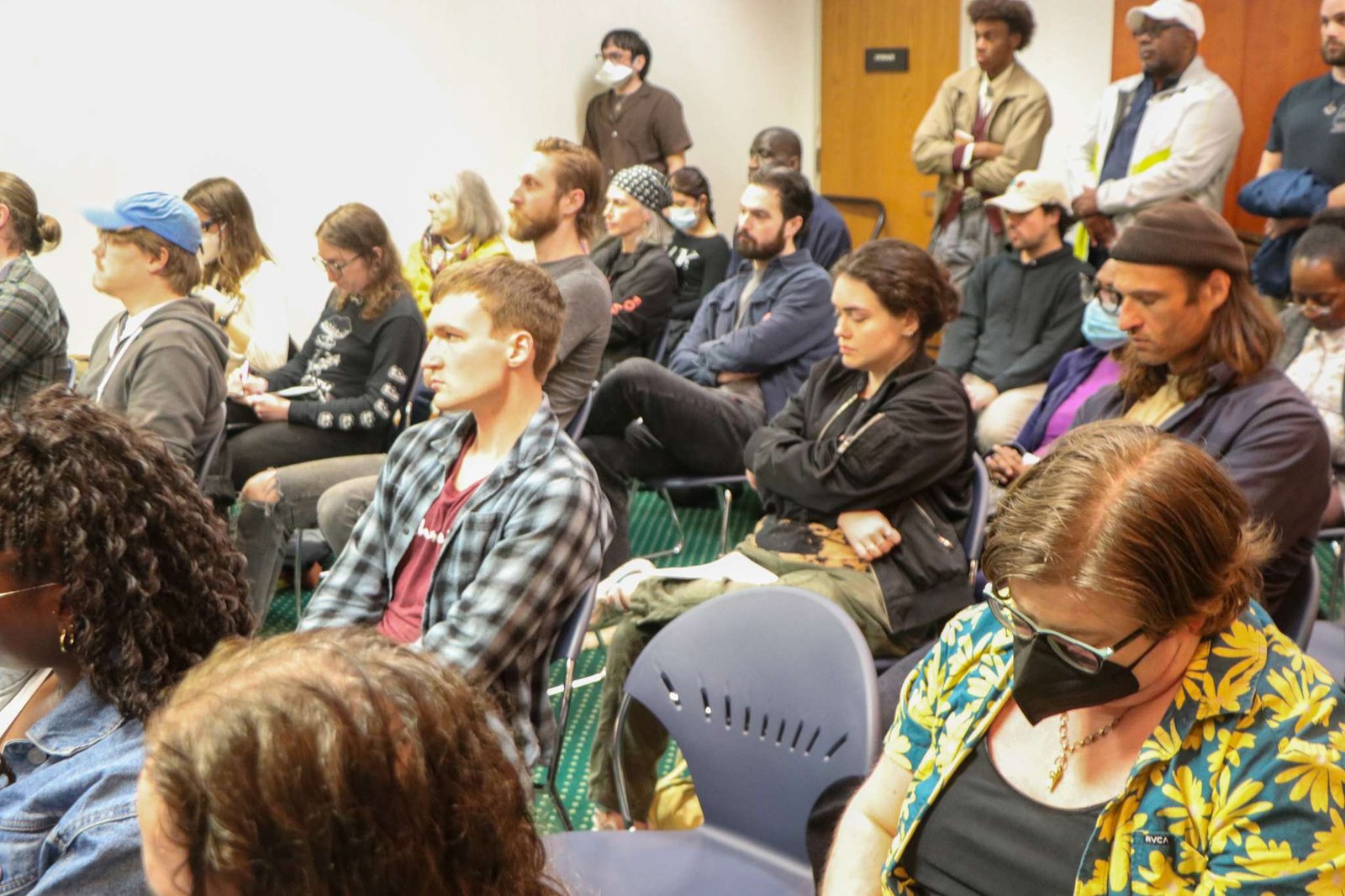
A packed community meeting at the DeKalb Covington Highway Public Library on Saturday underscored a growing resistance to large-scale data center development in DeKalb County particularly in South and East DeKalb, where residents say environmental and infrastructure burdens are already too heavy.
The town hall, organized by Renew DeKalb and led by community organizer Gina Mangham, drew residents concerned that existing zoning rules are too broad and could allow massive, industrial-style data campuses to be built dangerously close to homes, schools, and churches.
Opponents warned that while data centers are often framed as clean, quiet engines of economic growth, the lived reality can be far different for nearby neighborhoods.
“The impact to the community that people are not looking at is the real health impact to nearby residents,” Mangham told the audience, pointing to concerns over air quality, noise, light pollution, and long-term infrastructure strain.
From Homes to Servers
According to Mangham, at least one proposed data center site in DeKalb was previously slated for a residential development of roughly 305 homes. That plan was later replaced with a data center proposal a shift residents say prioritizes developer profits over community stability.
Residents repeatedly emphasized that South and East DeKalb have historically borne the brunt of landfills, industrial zoning, and environmental hazards. Many fear data centers represent the next wave of uneven development.
“This is not happening in a vacuum,” one speaker said. “Our communities are already carrying more than their fair share.”
Water, Sewer, and a Federal Consent Decree
A central theme of the meeting was water and sewer capacity — a sensitive issue in DeKalb County.
In December 2011, DeKalb entered into a federal consent decree with the Environmental Protection Agency and the Georgia Environmental Protection Division to address chronic sanitary sewer overflows. The agreement required billions in upgrades and repairs over an initial 8.5-year period, later extended due to ongoing compliance challenges.
Residents questioned how the county could responsibly approve water-intensive data centers while still working to meet those long-standing obligations.
Large data centers can consume millions of gallons of water per day, primarily for cooling systems. Speakers also raised concerns about glycol-based coolants, which are recyclable but hazardous if improperly handled.
Unanswered questions remain: How will contaminated cooling water be disposed of? Who pays for cleanup if a data campus is decommissioned decades from now?
Noise, Air, and the Grid
Beyond water, residents cited noise pollution from constant cooling fans, light pollution from 24-hour operations, and air emissions from diesel backup generators.
Studies and community reports from other states show that generator testing can release nitrogen oxides and fine particulate matter linked to asthma and cardiovascular disease. Some residents described the sound near data centers as a constant hum approaching the level of heavy lawn equipment.
Energy use is another concern. Data centers place extraordinary demands on local power grids, which can drive up residential utility bills as infrastructure upgrades are passed on to consumers.
Federal Push, Local Pushback
The meeting took place against a backdrop of aggressive federal efforts to accelerate data center construction nationwide.
In July 2025, Executive Order 14318 — “Accelerating Federal Permitting of Data Center Infrastructure” — directed federal agencies to streamline approvals, limit environmental reviews, and offer financial incentives to qualifying data center projects. The order also encourages the use of federal lands, including Brownfield and Superfund sites, for development.
Then, on December 11, 2025, President Donald Trump signed a separate executive order aimed at blocking state and local governments from restricting artificial intelligence development, arguing that fragmented regulation could weaken U.S. competitiveness.
Community leaders warn these federal moves could weaken local oversight just as neighborhoods are trying to assert their voices.
DeKalb Hits Pause
In response to mounting pressure, the DeKalb County Board of Commissioners voted in December to extend a moratorium on new data center applications until June 23, 2026.
The pause temporarily blocks approval of new permits while commissioners work on comprehensive regulations addressing buffer zones, noise, screening, water use, and energy impacts.
· Terry has publicly argued that the moratorium is about responsible, data-driven planning, not stopping economic development outright.
· He has warned about unchecked expansion, rising residential power bills, and the lack of guardrails in current zoning.
· He has framed the pause as time to “get it right,” listen to residents, and build protections.
“This is about making decisions based on data and residents’ lived experiences,” Terry said during prior board discussions, warning that unchecked expansion could raise residential power bills by as much as $20 per month.
Other commissioners echoed concerns about data centers being allowed near schools and residential areas under current zoning rules.
What’s Already Here — and What’s Proposed
DeKalb currently has two operating data centers: a 3,350-square-foot facility run by DC Blox Atlanta and an 88,000-square-foot facility owned by Lincoln Rackhouse.
More significantly, county records show an application from PCC-DeKalb for a 1 million-square-foot data center campus on roughly 95 acres along Loveless Place in Ellenwood. That proposal includes three two-story buildings and an outdoor electric substation, with a vote expected in early 2026.
Two additional sites Bouldercrest Road and International Park Drive previously received zoning certification letters indicating data centers could be allowed, though neither project has moved forward.
Lessons From Virginia
Renew DeKalb organizers also pointed to Northern Virginia, the nation’s largest data center hub, as both a cautionary tale and a roadmap.
Loudoun County now requires special exceptions for all data centers. Fairfax County has imposed strict setbacks, enclosure requirements, and transit buffers. Even in Prince William County where data centers generate tens of millions in tax revenue fierce community opposition has derailed projects.
Virginia’s generous tax exemptions for data centers, which cost the state an estimated $750 million in lost sales tax revenue in 2023, have also drawn legislative scrutiny.
A New Proposal: Sharing the Benefits
In early January, Commissioner Terry introduced a resolution proposing a “DeKalb For the People AI Tech Dividend Fund,” which would dedicate 50 percent of data center tax revenue to community investments and fiscal stability.
The plan includes funding for libraries, seniors, youth programs, environmental buffers, green infrastructure, and workforce retraining particularly for neighborhoods within three miles of a data center site.
Public hearings on zoning amendments are scheduled later this month, with final votes expected in 2026.
A Community on Record
As Saturday’s town hall made clear, many DeKalb residents are no longer willing to be silent.
Speakers repeatedly said they are not opposed to technology or economic development — but they reject what they see as sacrifice zones for an industry that consumes enormous resources while providing relatively few local jobs.

Related video
DeKalb Resident Rosalind DeKalb Resident Jan Dunaway
DeKalb Resident Terrance Brooks DeKalb Resident Jackie Malcom
Related articles
Moratorium, Monitoring, and Modernization: DeKalb’s Careful Approach to Data Centers
DeKalb CEO Lorraine Cochran Johnson’s Infrastructure and Growth Initiatives
Council for Quality Growth: Development Moratorium Extended Through 2025
Atlanta Beltline Nears 2030: Infrastructure and Innovation
Atlanta Regional Commission Sets Future Growth Priorities
Water Infrastructure Upgrades Coming to DeKalb County
Residents Push for Smart Growth in DeKalb
Truth Seekers Journal thrives because of readers like you. Join us in sustaining independent voices.