
By Milton Kirby | Atlanta, GA | August 8, 2026
This reporting was made possible thanks to a grant from Grist.
For generations, farming required knowing the land and learning the seasons.
Farmers knew when the ground was usually ready. They knew when to plant, when rain normally came, when temperatures should begin to fall and how much grass cattle could expect from a pasture.
Weather was never completely predictable. Farming has always required risk.
But Black farmers interviewed across Alabama, Mississippi, Louisiana, Georgia, North Carolina and Virginia describe something different happening now.
The old assumptions are becoming less dependable.
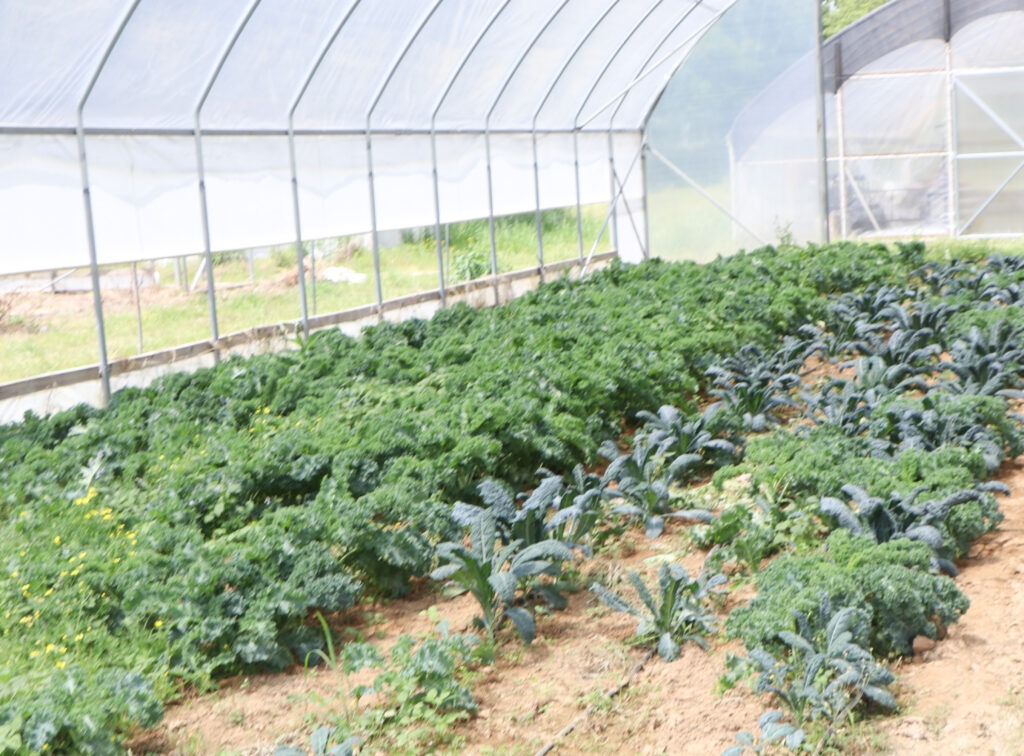
They describe warmer temperatures, shifting planting dates, drought, intense rainfall, flooding, unexpected freezes and changing growing conditions. Some have altered what they plant. Others have changed when they plant. Cattle producers are watching pastures and hay supplies more carefully. Crop farmers are investing in irrigation, drainage, high tunnels and soil conservation.
And sometimes, after making all those adjustments, they still lose the crop.
Taken together, their experiences reveal something larger than a collection of bad weather events.
The U.S. Department of Agriculture’s Southeast Climate Hub describes agriculture in the region as operating under “increasing weather variability.” The Hub identifies drought, heat stress, excessive moisture and changing pest pressures among the risks confronting Southeastern producers.
The U.S. Environmental Protection Agency similarly identifies changing temperature and precipitation patterns, changes in extreme weather and shifts in growing seasons among the evidence of a changing climate.
For the farmers visited, those scientific descriptions have practical meanings.
Climate change is a decision about whether to put seed in the ground.
It is a field planted twice.
It is a pasture without enough grass.
It is hay that has to be purchased.
It is soil washed away by heavy rain.
It is produce that never reaches market.
And for Black farmers, those pressures are landing on top of a much older struggle over land, capital and survival in American agriculture.
The Calendar Is Moving
Bobby Wilson has spent decades working in Georgia agriculture.
Long before Metro Atlanta Urban Farm took root in College Park, Wilson spent years in agricultural extension, learning how to help farmers succeed. Today, he and his wife, Margarett, are reshaping five acres into an urban agricultural campus, producing food, training families, and cultivating a new generation of growers.
The farm grows more than two dozen crops across warm and cool seasons and is Certified Naturally Grown.
Wilson has watched something fundamental change over the course of his agricultural career.
The planting calendar.
Dates farmers once regarded as relatively safe are no longer necessarily the dates they use today. Warmer conditions can tempt a farmer to plant earlier, creating the possibility of getting produce to market ahead of competitors.
But warmth in early spring does not guarantee that winter is finished.
A late cold snap can turn that advantage into a loss.
USDA says growing seasons are changing as temperatures rise. Earlier spring conditions and later first frosts can lengthen growing periods, but earlier plant development can also leave crops vulnerable when damaging cold arrives after growth has begun.
That is the contradiction farmers are learning to manage.
Dennis Dahmer Sr. has confronted it in Mississippi.
An unexpected freeze damaged sugarcane on his farm, forcing him to reconsider when he should plant.
But changing a planting date after one bad season does not eliminate the risk.
Next year may be different.
That uncertainty is becoming part of farming itself.
In New Orleans, Ashley Webb and her husband, Andres Barcelo-Sanchez, have learned a similar lesson.
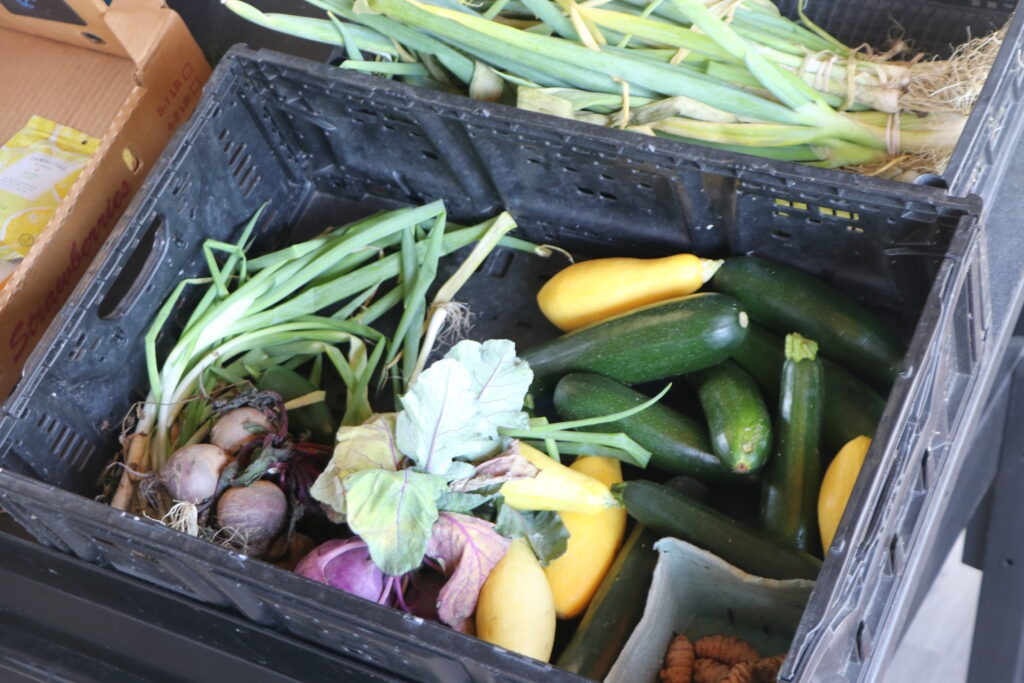
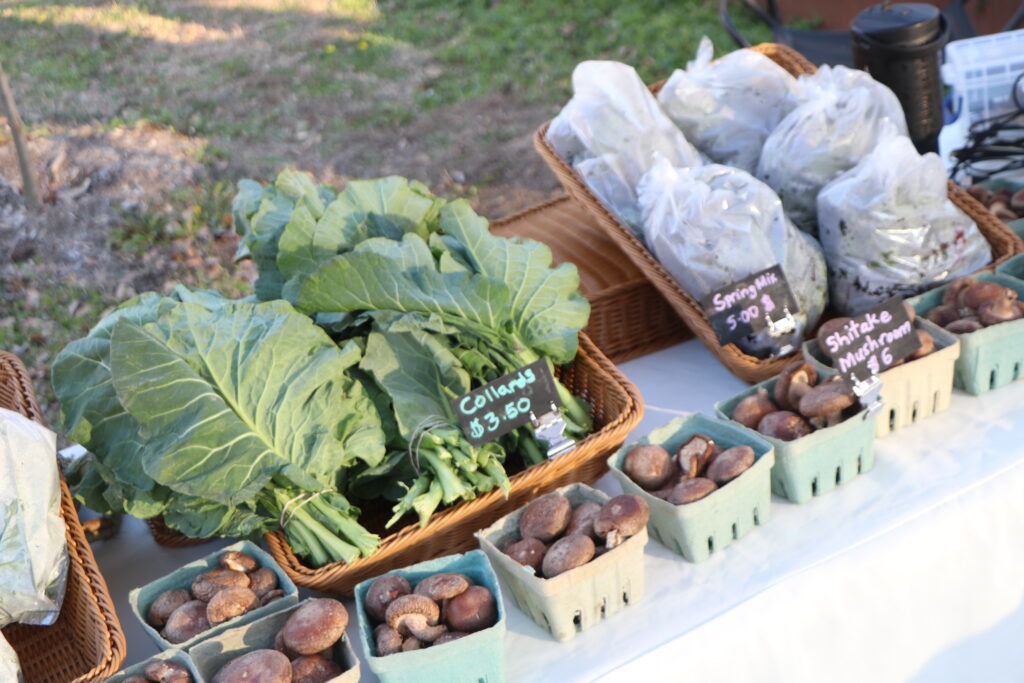
They operate Barcelo Gardens in the Ninth Ward, where what began as a community garden grew into an urban farm, farmers market and fresh-produce operation serving an area with limited access to fresh food.
Webb teaches gardening according to growing zones and seasons, but New Orleans presents another complication: the city’s heat-island effect can create conditions different from surrounding areas.
The couple also learned quickly that crops they had grown in Los Angeles did not necessarily perform the same way in Louisiana. Corn and carrots struggled. They adjusted, turning toward crops including okra, long beans, cucumbers and hot peppers.
Adaptation began with paying attention.

Too Little Water. Then Too Much.
Water may be the clearest example of the contradictions farmers described.
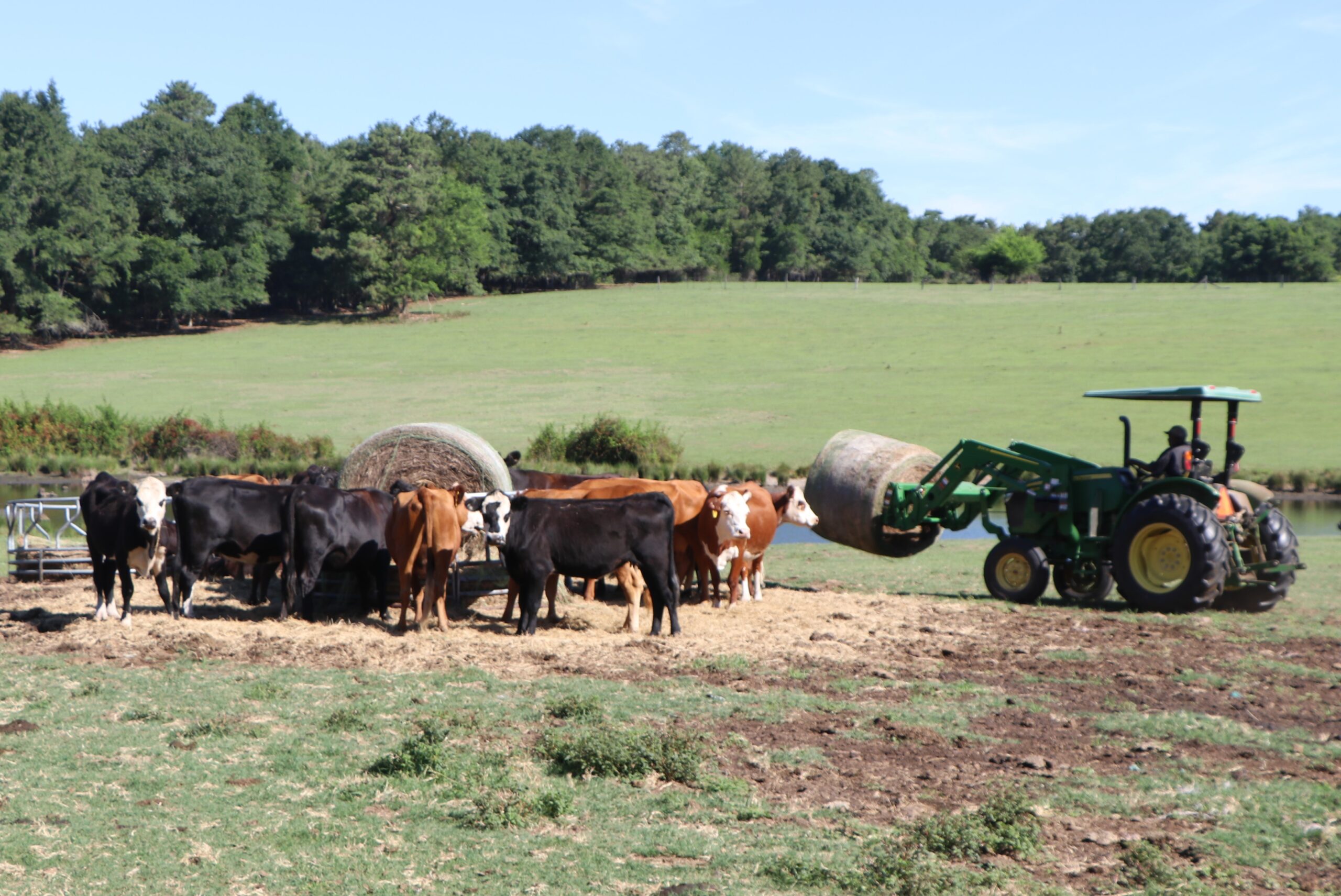
Harry McCoy raises cattle at McCoy Ranch in Pell City, Alabama.
When rainfall declines, pasture suffers.
Cattle still have to eat.
When the pasture no longer supplies enough grass, it must be replaced with purchased feed or hay, turning a weather problem into an economic one.
Anson County, North Carolina, cattle farmer Keith Crawford understands that equation.
Crawford raises Black Angus and Hereford-cross cattle. He has watched the availability and cost of hay become a critical issue for livestock producers.
Crawford cuts hay and watches weather forecasts closely because producing feed requires its own set of weather calculations. Hay needs the right window for cutting, drying and baling. Rain arriving at the wrong time can damage what a farmer has already spent time and money producing.
Crawford described neighboring cattle producers selling animals when hay became difficult or too expensive to obtain.
For a cattle farmer, drought doesn’t just strike once. It can strike two or even three times. It begins with shrinking ponds and water sources, leaving livestock without reliable drinking water. Then it hits again when pastures wither, forcing farmers to buy hay or feed at inflated prices and driving up the cost of keeping cattle alive. By the time the third blow lands, through reduced weight and lower market value, the damage is already deep.
USDA’s Southeast Climate Hub notes that climate conditions can weaken both pasture and feed resources, pushing feed costs higher. Heat stress can also reduce livestock productivity.
Shawn Harris, a cattle farmer in Rockmart, Georgia, has built a sophisticated underground maze of pipes to keep water flowing to his herd when the pond runs low, a climate adaptation strategy born from necessity.
But several hundred miles away, other farmers are confronting the opposite problem.
Too much water.
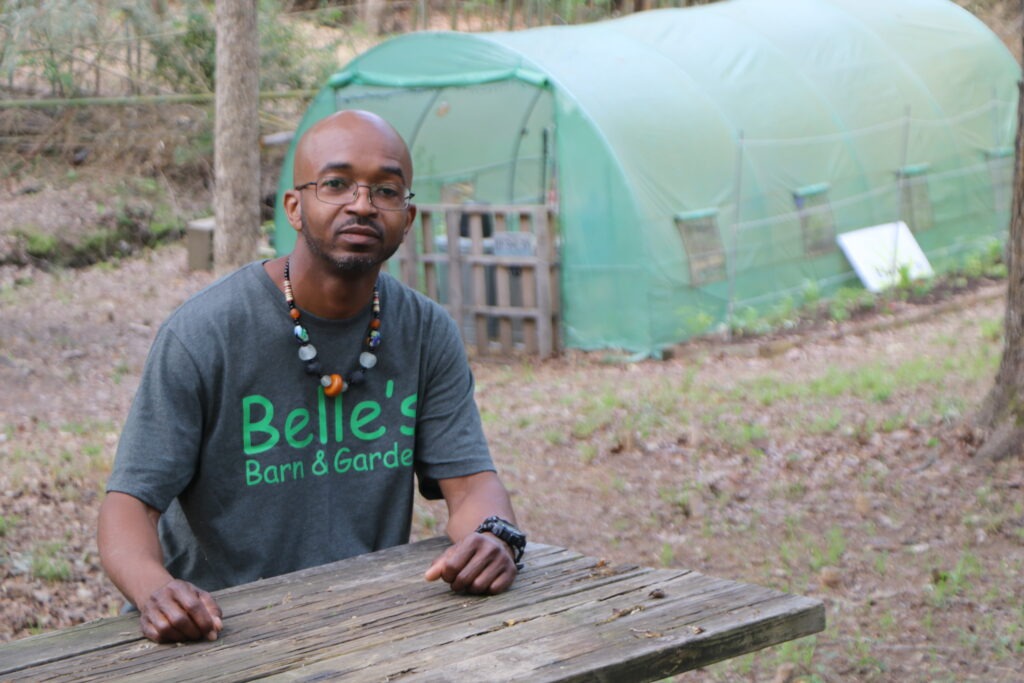
At Belle’s Barn & Garden in Mississippi, the Rev. D’Andre Miles described periods of dry conditions followed by intense rainfall.
When large amounts of rain fall quickly, the water does not always soak gently into the soil.
It moves.
And when it moves, soil can move with it.
Miles’ approach is to work with the landscape. Vegetation around vulnerable areas can slow water and help hold soil in place rather than leaving the ground exposed.
That philosophy reflects Belle’s broader approach to agriculture: working with natural systems instead of constantly trying to overpower them.
Jesse Buie of Ole Brook Organics in Brookhaven, Mississippi, has also had to think carefully about water.
Buie has more than three decades of farming experience and grows certified organic vegetables, melons, ginger, turmeric, wheatgrass and microgreens.
Heavy rain can saturate growing areas and threaten crops.
His response has included changing how growing areas are configured so water can move more effectively through the farm.
USDA’s research helps explain how both stories can be true at once.
The Southeast can experience substantial rainfall and still suffer drought. Rainfall variability, heat and increased water loss through evaporation and plants can produce dry conditions, while rainfall concentrated into fewer, heavier events can create flooding and runoff.
For farmers, the question is not simply how much rain falls.
It is when it falls, where it falls and how quickly it arrives.

When One Planting Becomes Two
Few interviews illustrate the economics of climate risk more clearly than Kara Boyd’s.
Boyd Farms operates about 1,500 acres across three farms in Virginia, giving this investigation a view of climate pressures on a substantially larger Black farming operation.
Boyd described having to replant roughly 200 to 300 acres after conditions contributed to poor germination.
Consider what that means economically.
The farmer pays for seed.
The farmer pays for fuel.
The farmer pays for equipment.
The farmer pays for labor.
The crop goes into the ground.
Then enough of it fails to emerge.
The farmer starts again.
But the second planting does not merely repeat the first expense. It also begins later, potentially shortening the crop’s growing window and affecting eventual yield.
Crop insurance can soften the loss.
It does not necessarily erase it.
USDA’s Southeast Climate Hub says changes in the timing and amount of precipitation can contribute to short-term crop failures and longer-term declines in production. Higher temperatures can also reduce yields, while climate variability can expose crops to damaging temperature fluctuations.
Boyd’s experience turns those scientific findings into a balance-sheet problem.
A failed planting has a price.
The Same Storm Does Not Mean the Same Loss
Boyd’s operation also exposes one of the central questions in this investigation.
Climate does not distinguish between a Black farmer and a white farmer.
But farmers do not encounter climate risk with equal resources.
A large operation may have more acreage over which to spread costs, greater access to equipment, stronger cash flow and more ability to absorb a failed field.
For a small farmer, one failed crop can represent a much larger percentage of annual production.
Boyd described that difference vividly, saying an event that feels like a relatively small storm to a large operation can feel like a hurricane and an earthquake to a smaller Black farmer.
That is where a climate story becomes an economic story.
And where an economic story becomes a story about history.
A Crisis Built on an Older Loss
Black farmers did not enter today’s climate challenges on equal footing.
In 1920, USDA recorded more than 925,000 Black farm operators, representing roughly 14 percent of the nation’s farmers.
What followed was one of the most dramatic agricultural declines in American history.
Over subsequent generations, Black farmers lost millions of acres of farmland while the number of Black farmers fell sharply.
A USDA historical review, Black Farmers in America, 1865-2000, documents the racial discrimination and social and institutional barriers that restricted Black farmers’ ability to acquire land, operate independently and retain farms.
Discriminatory lending was part of that history.
So were foreclosures, unequal access to agricultural institutions and land passed between generations without clear title.
The consequences of that history remain part of today’s agricultural landscape. In a 2026 policy resolution, the National Black Caucus of State Legislators noted that Black farmers held more than 16 million acres of farmland in 1910, but just 4.7 million acres by 2017, a loss of more than 70 percent of Black-owned agricultural land.
The resolution identifies discriminatory lending, unequal access to credit and crop insurance, exclusion from grant opportunities and inequities in agricultural subsidies and assistance as continuing barriers facing Black farmers. NBCSL called on Congress, state legislatures and USDA to expand access to grants and loans, strengthen civil rights enforcement, provide legal assistance to protect inherited farmland and invest in food infrastructure and markets that can help Black producers remain economically viable.
Heirs’ property remains part of the discussion today.
When land passes to multiple descendants without a will or clear title, ownership can become fragmented. That can make property vulnerable and complicate efforts to borrow against the land or participate in programs requiring proof of control.
But Boyd cautions against making heirs’ property the entire story.
From her perspective, access to capital, participation in federal crop insurance and the ability to navigate agricultural programs can be equally important, if not more important, to the survival of Black farms.
Her argument adds an important complication.
The problem is not simply whether Black families own land.
It is whether they possess the financial tools needed to keep farming it.
Who Can Afford to Adapt?
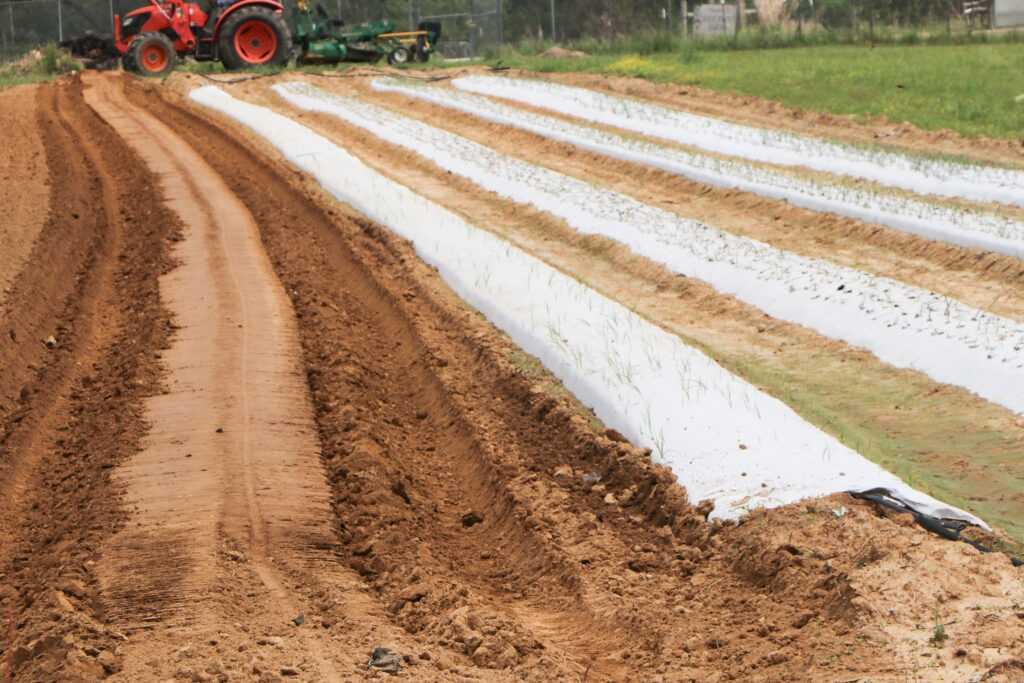
Dennis Dahmer knows irrigation could help protect crops during dry periods.
But knowing what would help and being able to justify the investment are different things.
For a farmer working a relatively small number of acres, a major irrigation system may never generate enough additional farm income to recover its cost.
For a producer farming hundreds or thousands of acres, the same investment can produce an entirely different calculation.
That exposes one of the most important climate-justice questions raised by this reporting.
Adaptation costs money.
Irrigation costs money.
Wells cost money.
High tunnels cost money.
Drainage costs money.
Replacing seed costs money.
Buying hay costs money.
Even participation in crop insurance requires farmers to understand the system, maintain records, meet reporting requirements and pay premiums.
Boyd said those requirements can become barriers for smaller producers unfamiliar with federal crop insurance or reluctant to enter a system they may not trust.
That distrust did not emerge from nowhere.
It exists against the historical record of discrimination Black farmers experienced within American agricultural institutions.
Learning to Work the System
Dr. Cindy Ayers-Elliott has taken a different approach.
At Foot Print Farms in Jackson, Mississippi, Ayers-Elliott operates a 68-acre farm producing specialty crops, vegetables and livestock while using agriculture as a tool for community and economic development.
Her farm trains young people and adults.
It also works with USDA and the Natural Resources Conservation Service.
Ayers-Elliott believes farmers must learn how the system works.
That means obtaining a USDA farm number, understanding conservation programs, keeping records and identifying resources that can help pay for infrastructure or improve production.
Her farm uses adaptation and conservation tools that include irrigation and protected growing. But her larger contribution may be education.
A federal program is of little value to a farmer who does not know it exists, does not understand the paperwork or cannot determine whether the farm qualifies.
That gap between the existence of assistance and the ability to access it remains one of the central policy questions raised by this investigation.
One proposal before Congress attempts to address some of those structural barriers.
The Black Farmers and Socially Disadvantaged Farmers Increased Market Share Act, introduced in the U.S. House by the late Georgia Rep. David Scott and other lawmakers, would create a USDA grant program supporting food hubs designed to increase market access for socially disadvantaged farmers and ranchers. The legislation would authorize $100 million for the program in fiscal year 2026, with grants available for infrastructure, processing, storage, transportation, equipment and marketing. Recipients would not be required to provide federal matching funds.
The bill would also direct USDA to prioritize purchases from socially disadvantaged producers for domestic food assistance programs and strengthen accountability for discrimination and other civil rights violations within the department.
The legislation does not solve the climate problem confronting farmers. But it speaks directly to another question raised repeatedly during this reporting: whether farmers already absorbing greater weather risk will have the capital, markets, infrastructure and institutional support necessary to adapt.
Building Resilience From the Ground Up
The farmers interviewed are not waiting passively for someone to rescue them.
They are experimenting.
They are adapting.
And in many cases, the techniques they are using mirror practices recommended by USDA.
At Metro Atlanta Urban Farm, Wilson emphasizes the soil itself.
Cover crops, compost and organic matter help restore nutrients and improve the ground rather than simply extracting from it season after season.
At Belle’s Barn & Garden, Miles emphasizes natural systems and protecting the landscape.
At Ole Brook Organics, Buie adapts drainage and production methods to conditions on his particular farm.
At Foot Print Farms, Ayers-Elliott combines infrastructure, conservation and education.
Ricky Davis, founder of Sowing Seeds Farms in Bessemer, Alabama, incorporates water conservation, controlled growing systems and agricultural education into the operation.
The operation was established not simply to grow food but to create a community gathering place for farmers and entrepreneurs, promote economic development and teach healthier and more sustainable ways of living.
USDA identifies many of the same approaches, including cover crops, conservation tillage, efficient irrigation, improved soil-water retention, erosion control and water-management infrastructure.
The important lesson is that adaptation is not one machine, one crop or one federal program.
It is local.
What works on one farm may not work five miles away.
Boyd sees that even across her own acreage. Rain can fall on one section of a farm while missing another.
A county line cannot tell a farmer whether enough rain fell on a particular field.
The land itself decides.
When Farming Is the Paycheck
At Fountain Heights Farms in the Birmingham area, climate risk carries another dimension.
Farming is not supplemental income.
It is the livelihood.
That distinction matters.
Many small farmers maintain outside employment because the farm alone cannot consistently support the household. Fountain Heights does not have that secondary income cushion.
A lost crop is therefore not merely a disappointing harvest.
It is lost household income.
The operation also exists within a larger community food system, making affordability and access part of the farm’s mission.
That means climate pressure can travel beyond the property line.
When a community farm produces less food, the people depending on that farm can feel the loss too.
Climate Change Does Not Stop at the Farm Gate
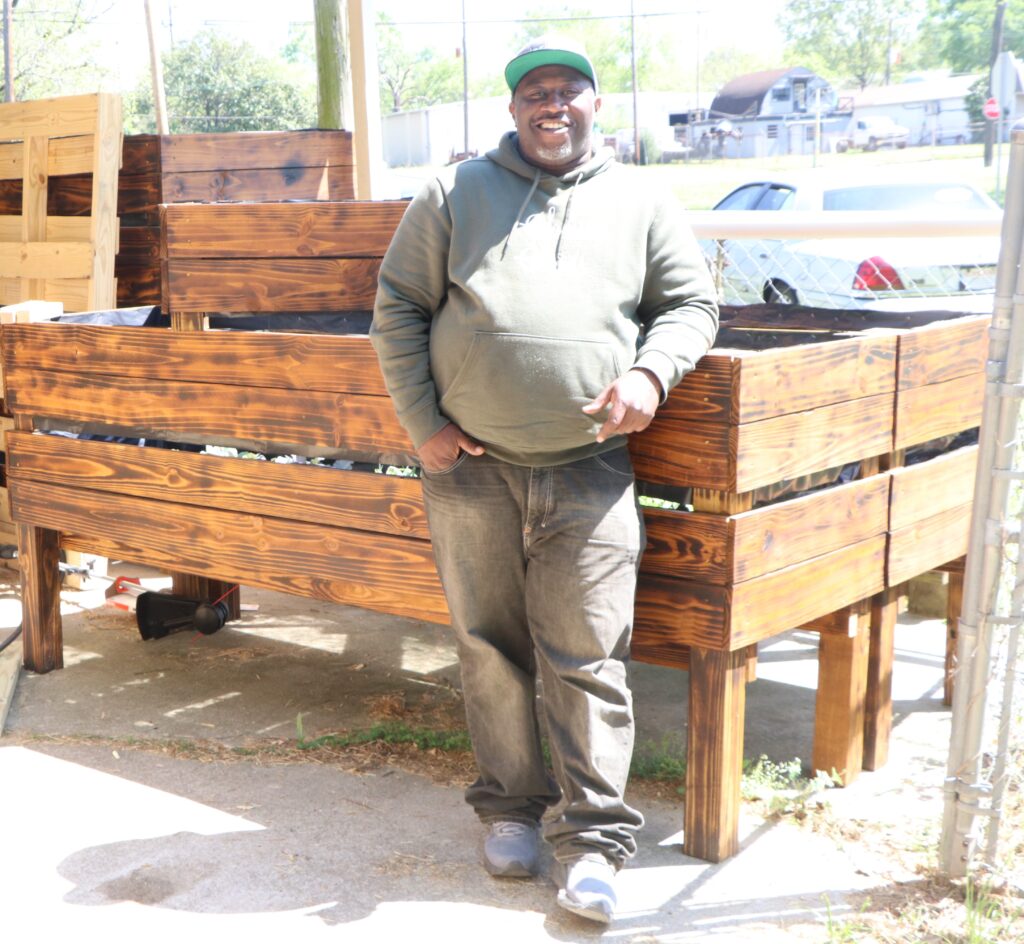
Barcelo Gardens demonstrates that connection particularly clearly.
Webb and Barcelo-Sanchez began growing food after realizing their Ninth Ward neighborhood lacked convenient access to fresh produce.
Their garden eventually grew into a market that also obtains food from other producers.
Among them is Jubilee Justice, a Black-led agricultural organization based near Alexandria, Louisiana, that works on sustainable farming practices.

That creates a chain.
A farmer loses a crop.
A market has less produce.
A neighborhood already lacking grocery options has fewer sources of fresh food.
The climate event may happen in a field miles away.
Its consequences arrive in the city.
The same principle applies elsewhere in this investigation.
Metro Atlanta Urban Farm teaches families how to produce food.
Foot Print Farms trains future farmers and entrepreneurs.
Sowing Seeds combines food production with community education.
Fountain Heights works to keep food available and affordable.
These operations are more than businesses occupying acreage.
They are pieces of community infrastructure.
Protecting the farm can therefore mean protecting more than the farmer.
Science Catches Up With What Farmers See
The experiences documented across these farms are consistent with risks identified by the USDA Southeast Climate Hub.
When I described the farmers’ observations to Dr. Mac Callaham Jr., director of the Hub, including warmer conditions, changing growing seasons, flooding and precipitation problems, his initial response was direct.
“Yeah, absolutely.”
Callaham pointed specifically to shifting growing seasons, variability in precipitation and increasing temperatures among the issues agricultural producers are confronting.
His program’s public materials go further.
The Southeast Climate Hub says farmers and land managers are dealing with drought, heat stress, excessive moisture, changing pest pressures and increasing weather variability.
Its crop research warns that changes in temperature and the timing and amount of precipitation can affect yields and contribute to crop failure.
Its livestock research identifies heat stress and changes in pasture and feed resources as risks to producers.
Its growing-season research describes earlier spring conditions, later frosts and the possibility that earlier plant development can leave crops exposed to damaging cold.
The science does not mean every failed crop, flooded field or expensive roll of hay can individually be blamed on climate change.
Weather still varies naturally.
But taken across regions and over time, the conditions farmers described fit a larger pattern agricultural scientists are already studying.
Callaham also acknowledged that the language surrounding the federal government’s work has changed.
He said his program previously focused more explicitly on climate literacy and climate education, but priorities shift between presidential administrations.
The current emphasis, he said, remains on helping farmers, forest landowners and grazing-land managers improve productivity and resilience to risk.
The terminology may change.
The farmer still has to plant.
Mother Nature Has the Final Say
Kara Boyd summed up the limits of adaptation in a few words.
“We’re trying to adapt to Mother Nature,” she said. “But she has the final say.”
That may be the central truth running through every farm visited.
Farmers can move planting dates.
They can build high tunnels.
They can improve drainage.
They can install irrigation.
They can rebuild soil.
They can capture rainwater.
They can buy crop insurance.
They can change crops.
They can study forecasts.
They can learn government programs.
But none of those decisions gives them control over the weather.
For Black farmers, the question is not whether they know how to adapt.
They have been adapting for generations.
The harder question is how many additional costs, failed plantings, droughts, floods, freezes and changing seasons a farmer can absorb before adaptation is no longer enough.
Across the South, the farmers interviewed are still planting.
Still raising cattle.
Still rebuilding soil.
Still feeding communities.
Still teaching the next generation.
But they are doing so while some of the seasonal assumptions inherited from previous generations become less dependable.
Climate change is altering the conditions under which they farm.
History has shaped the resources they have available to respond.
The future of Black farming may depend on whether the institutions surrounding these farmers can adapt as quickly as the farmers themselves already have.
Support open, independent journalism. Your contribution helps us tell the stories that matter most.