Milton Kirby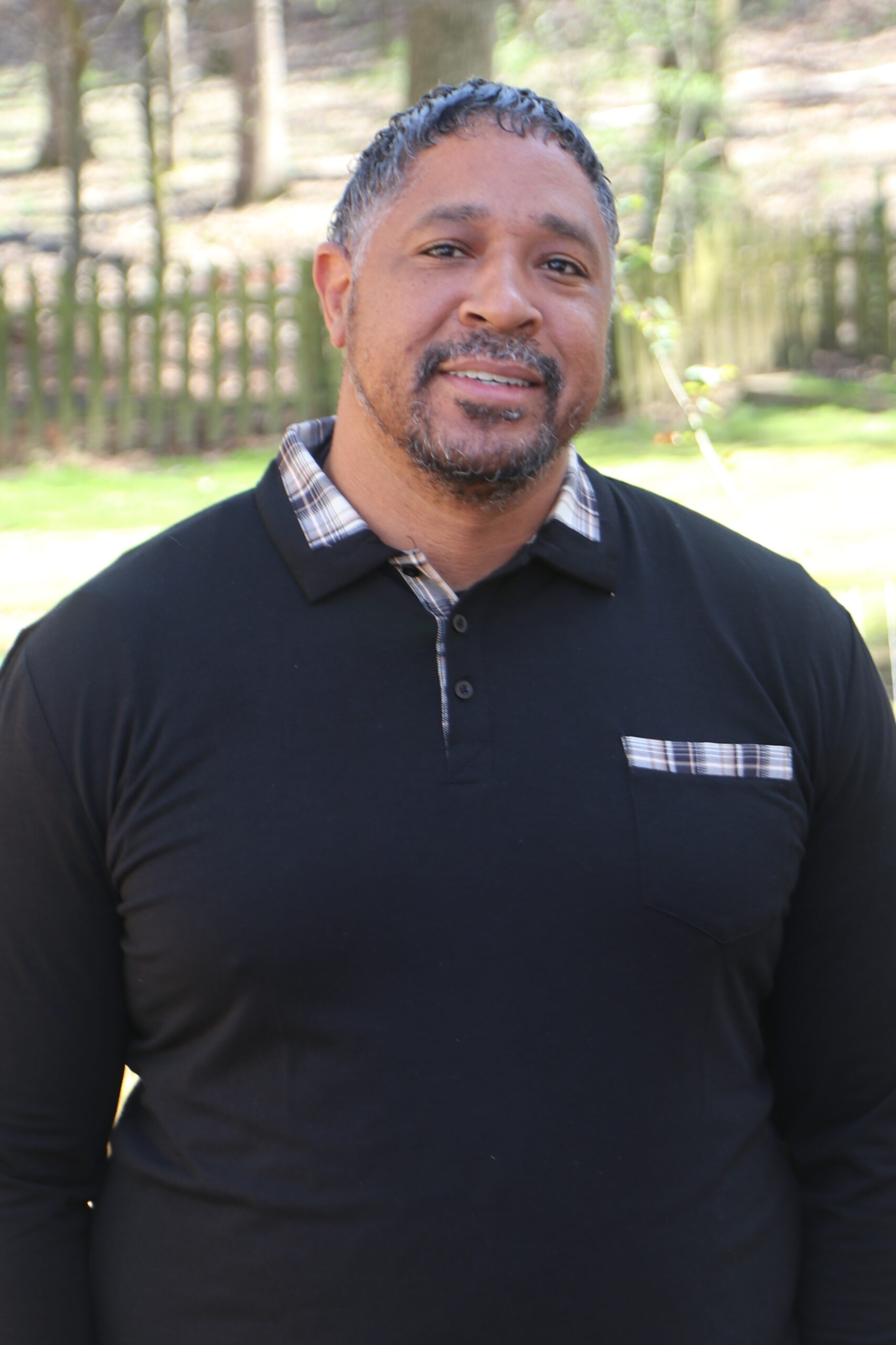
By Milton Kirby | Truth Seekers Journal | Artist Profiles Series
THE SON WHO BECAME THE STORYTELLER:
Preserving the Legacy of Lu Vason
When Anton sat down with Valeria Howard Cunningham, the widow of Bill Pickett Invitational Rodeo (BPIR) founder Lu Vason, he didn’t just find a client he found a responsibility. Valeria had spent a decade trying to capture Lu’s lightning in a bottle, trying to honor the first love of her life and the cultural institution he built. She needed someone who could carry that weight with care.
She didn’t choose a historian, a journalist, or a seasoned biographer.
She chose Anton Cunningham, a man whose connection to the story was not academic, but spiritual. A man whose own life had been shaped by loss, reinvention, and the search for purpose. A man who understood, in his bones, what it means to carry a legacy forward.
Anton didn’t set out to become a writer. His journey began on basketball courts in Pasadena, California, where he grew up before earning a scholarship to Georgia Southwestern in Americus. What was supposed to be a practical decision, a scholarship his parents encouraged him to take, became the beginning of a new life. Georgia opened him up. Atlanta shaped him. The Atlanta University Center (AUC), the fraternity culture, the energy of Black excellence all around him – it showed him a different version of success, one rooted in community and ambition.
“Every one of our stories is somebody else’s medicine,” Anton says, reflecting on the process. “I was reading about Lu’s early days in Louisiana and his grandmother, and I thought, Man, that’s my grandma. I was reading about his struggles, and I was reading about myself.”
Before he ever touched a manuscript, Anton spent two decades in the fitness industry training clients, managing teams, and listening to people’s stories. “Sometimes those sessions were therapy,” he says. “People weren’t just trying to lose weight. They were trying to find strength, clarity, confidence.” Those conversations planted the seeds of something he didn’t yet recognize: a calling to help people tell their stories.
After twenty years, Anton stepped away from fitness and into entrepreneurship. He launched a marketing agency, learned digital advertising, and eventually founded KAJA Publishing – a company dedicated to helping people turn their lived experiences into books. “We’re all walking miracles,” he says. “But because it’s our story, we push it to the back.”
He began writing his first book, studying the craft by listening to Stephen King, James Patterson, and others talk about storytelling. “They all said the same thing,” Anton recalls. “Tell your story so people can understand it. Don’t worry about being perfect, be honest.”
Then came the conversation that changed everything.
Valeria told Anton she had been trying to write Lu’s story for nearly a decade. She had promised him she would preserve his legacy, but the emotional weight of the task had become overwhelming. Anton asked to see what she had written. He drafted the first chapter. Then the second. And as he reread his own words, he felt something he hadn’t expected: this feels right.
When Valeria read those early pages and told him she loved them, it gave him confidence. But the deeper confirmation came from the story itself. As he wrote, Anton came across a quote from Lu that stopped him cold:
“Everybody has a story — what’s yours?”
It was the same message Anton had already written on his own website before he ever touched the manuscript. “It was like God tapped me on the shoulder,” he says. “This is your assignment.”
Writing Under the Western Skies became more than a project.
It became a mirror.
The early chapters about Lu’s childhood in Louisiana reminded Anton of his own family roots in Albany, Georgia, the heat, the dirt roads, the sound of insects at night, the wisdom of grandparents who shaped entire generations. “I was reading about him,” Anton says, “but I was also reading about myself.”
The parallels deepened when Anton reached the parts of Lu’s life marked by loss and reinvention. Lu had endured heartbreak, the death of his mother, and moments of profound uncertainty before finding his purpose in the rodeo. Anton understood that journey intimately. A year and a half earlier, he had lost his own mother – the person whose love had anchored him since childhood. Soon after, a long‑term relationship ended. “I had to find who I was again,” he says. “I had to sit still, get quiet, and really understand myself.”
Writing Lu’s story became part of that healing.
It gave him structure.
It gave him purpose.
It gave him a way back to himself.
As Anton wrote, he also began to see the rodeo through new eyes. He traveled to BPIR events in Atlanta, Fort Worth, Baltimore, and D.C., watching the crowds, meeting the competitors, and witnessing the unique energy each city brought. He recognized faces from the manuscript, connected names to stories, and saw firsthand how the rodeo had become a cultural institution – a place where history, identity, and community converged.
“This was one man’s dream,” he says. “But look at how many lives it touches. Look at how many people it inspires. That’s legacy.”
That legacy came full circle when Anton’s father, Ronnie Cunningham, stepped into the room during our interview. Ronnie introduced himself with quiet pride:
“I’m Ronnie Cunningham. Anton is my second of four sons.”
He had read Anton’s book.
He loved it.
And then he said something that revealed just how far Anton had come:
“He’s my publisher. I’m working on my fourth book with him now.”
A father who once guided his son was now trusting that same son to guide his voice into the world.
A generational exchange.
A legacy expanding.
Anton’s gift as a storyteller isn’t limited to the page. It shows up in everyday life, in the way he listens, the way he observes, and the way he follows the threads of history that others overlook. During a recent trip to Charleston, he found himself surrounded by people carrying names with deep historical weight: Middleton. Ravenel. Names tied to plantations, to slavery, to centuries of intertwined Black and white lineage.
He asked questions. He listened. He connected dots. And suddenly, strangers at a bar were leaning in, drawn into a conversation about ancestry, identity, and the stories we inherit without even realizing it. “I’m a publisher,” he told them. “I write books. I’m fascinated by stories like this.”
That moment — spontaneous, unplanned, electric — captured exactly who Anton is.
A man who sees stories where others see silence.
A man who asks questions that bring people together.
A man who believes that truth, even when complicated, can be a bridge.
It’s the same instinct that guided him through Under the Western Skies.
The same instinct that fuels his publishing work.
The same instinct that makes him a cultural steward in his own right.
Because for Anton, stories aren’t just entertainment.
They are maps.
They are medicine.
They are the threads that connect us across generations, across histories, across the lines we didn’t draw but still carry.
And that is why Valeria Howard Cunningham chose him.
Not because he was the most experienced writer.
Not because he had the longest résumé.
But because he understood the assignment in his spirit.
He understood that preserving Lu Vason’s story wasn’t just about documenting the past.
It was about honoring a legacy, healing through purpose, and ensuring that the cultural institution Lu built — the Bill Pickett Invitational Rodeo — continues to inspire future generations.
Anton Cunningham didn’t just write a book. He answered a calling. And in doing so, he became the storyteller his father, Valeria, and the BPIR community didn’t even know they were waiting for.
To get your copy Under the Western Skies: Luv Vason: Dreamer to Visionary, Visionary to Pioneer
Related video
Anton Cunningham in His Own Words
Related articles