Florita Bell Griffin, Ph.D.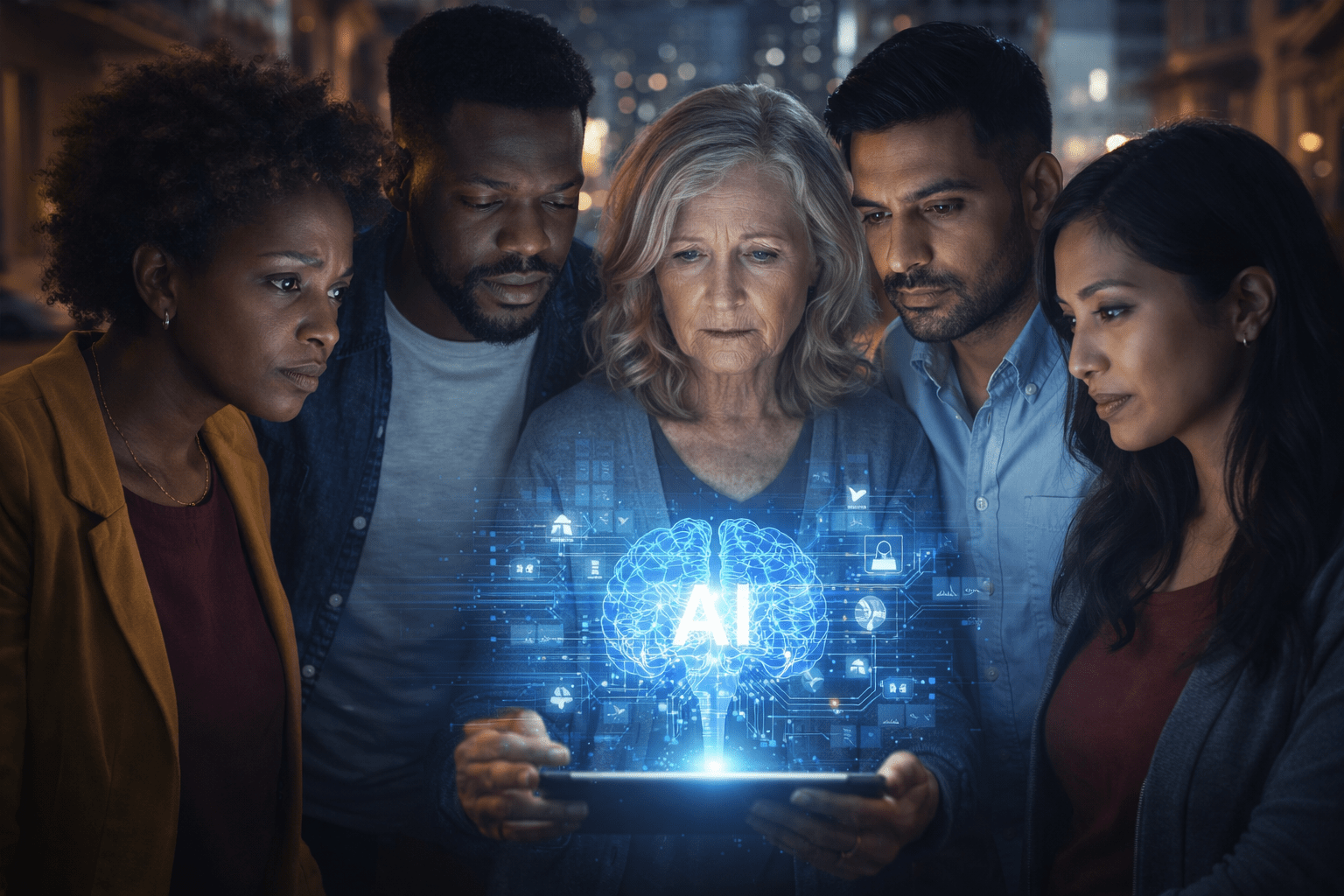
By Florita Bell Griffin, Ph.D. | Houston, TX | May 5, 2026
Artificial intelligence has moved out of the research lab and into ordinary life with astonishing speed. A few years ago, many people heard about AI as a distant force tied to tech companies, robotics, or science fiction. Today, it sits inside search engines, customer service chats, writing tools, medical systems, hiring platforms, banking alerts, fraud detection, navigation apps, classrooms, and the devices people carry in their hands every day. The shift feels sudden because, for many families and workers, it arrived quietly. One day it sounded experimental. The next day it was shaping decisions, filtering information, and influencing the pace of daily life.
That change matters because AI is larger than a new app or a passing technology trend. It is a new layer of digital power. It affects how information is delivered, how choices are framed, how people are evaluated, and how institutions move. For everyday people, the issue reaches far beyond whether a tool can answer a question or generate an image. The deeper issue is how this technology changes the conditions under which people work, learn, communicate, trust, and make sense of the world around them.
One reason AI feels confusing is that it carries two stories at once. The first story is convenience. AI can save time, summarize large amounts of information, help with writing, support research, assist with scheduling, translate language, and make digital systems easier to use. For a busy parent, a student, a small business owner, or an elderly person trying to navigate services, that ease can feel valuable. The second story is influence. AI also decides what gets surfaced first, which patterns get flagged, which applications receive attention, which voices sound more authoritative, and which people get pushed toward approval or denial. Convenience draws people in. Influence changes the landscape around them.
That is why everyday people need a clearer understanding of what AI actually does. At its core, AI is a system trained to identify patterns, produce outputs, and support or automate forms of judgment. In plain language, it takes in data, looks for relationships inside that data, and generates a response based on what it has learned. Sometimes that response is useful and efficient. Sometimes it carries error, distortion, or bias with a polished tone that makes the answer sound stronger than it is. For the average person, the most important reality is simple: AI can be helpful, persuasive, fast, and wrong all at the same time.
This is where the public conversation often loses people. Many discussions about AI swing between extreme excitement and extreme fear. That leaves ordinary readers with more noise than clarity. A better approach begins with the human stakes. People want to know whether AI will affect their jobs, their children’s education, their privacy, their finances, their health care, and their ability to tell what is real. Those questions are reasonable. They are also the right questions. AI becomes meaningful when it is tied to the real conditions of life.
In the workplace, AI is already changing expectations. Employers can use AI to screen resumes, draft communications, analyze productivity, summarize meetings, monitor patterns, and reduce routine tasks. For some workers, that brings relief. For others, it brings pressure. Jobs can shift before people have time to adapt. Skills that took years to build can lose value if leaders decide software can complete part of the same task faster. At the same time, people who learn how to work alongside AI may gain an advantage. This creates a new divide between those who can understand and direct these tools and those who remain subject to decisions shaped by them. The gap will carry consequences for income, confidence, and opportunity.
In education, AI opens another major question. Students can now use AI to brainstorm, summarize, draft, solve, explain, and simulate. That can support learning when used with discipline and guidance. It can also weaken attention, reduce original thought, and make it harder to know whether a student understands the material or simply knows how to prompt a machine. For parents and teachers, the challenge reaches beyond rule enforcement. The deeper challenge is preserving human development in an environment where machines can imitate fluency. A child still needs to think, wrestle, read deeply, and form judgment. Speed alone cannot replace that process.
Trust is another area where the AI shift becomes personal. People already live inside an information environment crowded with edited images, generated text, synthetic voices, and algorithmically shaped feeds. AI increases the scale and sophistication of that environment. It becomes easier to produce content that looks polished, credible, and emotionally targeted. As a result, public life becomes harder to navigate. Citizens need stronger habits of discernment. Families need stronger conversations about what they consume. Communities need stronger expectations around transparency and accountability. In an AI-shaped world, truth remains vital, though truth may require more effort to recognize and protect.
Health care, banking, insurance, transportation, and government services also feel the pull of AI. These systems often present themselves as neutral and efficient, yet they rely on data, assumptions, and design choices made by human institutions. When AI enters these spaces, people can benefit from faster processing and earlier pattern detection. They can also face decisions that feel distant, opaque, or difficult to challenge. An automated system may influence which claim receives attention, which transaction gets flagged, or which patient receives a particular level of priority. For everyday people, the key issue is fairness joined with legibility. People deserve to understand when AI is shaping a major decision and how human review remains part of the process.
So, what should people understand right now? First, AI is already here in practical ways that touch ordinary life. Second, it is powerful because it scales decisions, patterns, and outputs quickly. Third, it carries strengths and weaknesses together. Fourth, the people who understand its role will be better positioned to respond wisely than the people who treat it as background noise. Knowledge matters here because silence leaves room for dependency without awareness.
The healthiest response is neither panic nor surrender. It is public literacy. Everyday people do not need advanced engineering knowledge to ask strong questions. They can ask what data a system uses, who benefits from its design, where human oversight enters the process, how errors get corrected, and what rights remain with the individual. They can teach children that fluent language is different from wisdom. They can remind institutions that speed and scale carry responsibility. They can insist that technology serve human life rather than quietly rearrange it without public understanding.
The AI shift is real, and it is unfolding in full view. This moment calls for clarity more than hype, seriousness more than spectacle, and public understanding more than passive adoption. For everyday people, the goal is larger than learning a new tool. The goal is learning how to live with a powerful technology while holding onto judgment, dignity, and the ability to recognize what matters most.
© 2026 Truth Seekers Journal. Published with permission from the author. All rights reserved.
Support open, independent journalism—your contribution helps us tell the stories that matter most.