Barn Raiser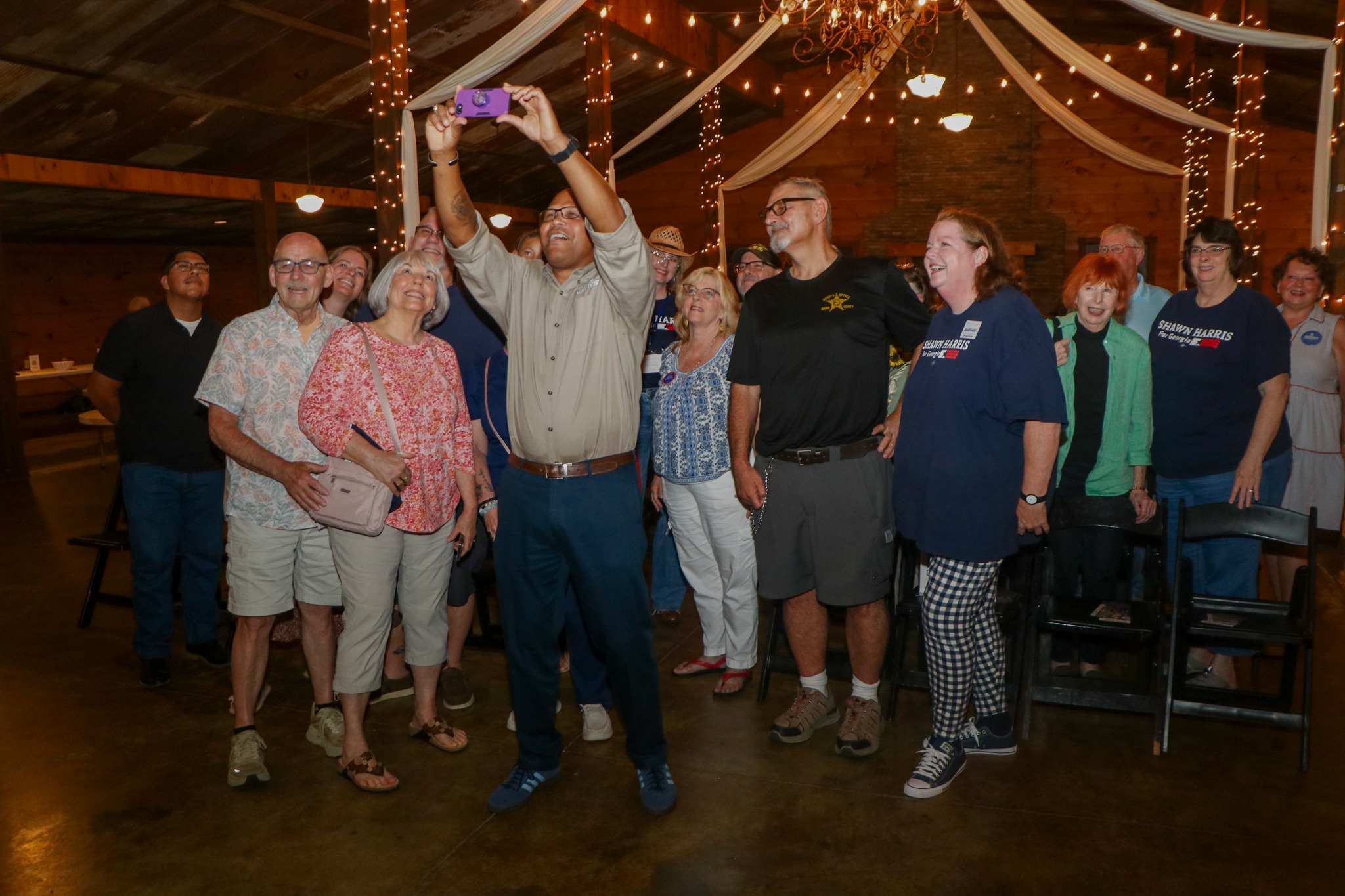
“This story was originally published by Barn Raiser, your independent source for rural and small town news.”
Gap narrows in a district once held by Marjorie Taylor Greene
By Barn Raiser | August 29, 2026
Lori and Scott Jordan were leaving the Kroger in Dallas, Georgia, on a rainy Tuesday afternoon. They were among the rare people willing to stop and talk politics while others hurried to their cars.
“I got plenty to say,” says Lori. They’ve seen the price of everything go up recently. “The sign right there tells a lot of it. $4.09,” says Scott, pointing to a nearby gas sign. “[The president’s] on TV saying it’s less than $2 per gallon.”
The Jordans, a white, middle-aged couple, say they are voting for Shawn Harris, a Black retired brigadier general running as a Democrat for Congress in Georgia’s sprawling 14th Congressional District. The couple frequently finished each other’s sentences while explaining that in the last two years, Scott, 63, who uses a pacemaker, lost his federal health coverage. After the One Big Beautiful Bill rolled back tax credits and imposed new requirements to the Affordable Care Act in 2025, their adult children no longer have access to health insurance, including their daughter, a recent cancer survivor.
“She doesn’t have insurance now,” Lori says quietly.
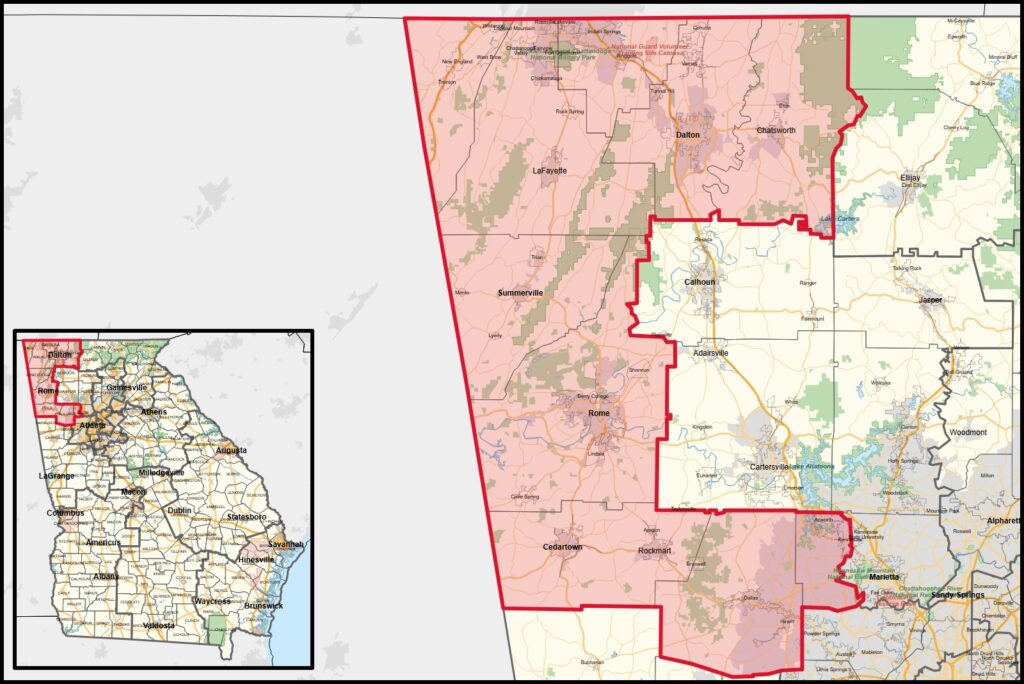
Dallas, a town of 15,000 more than 30 miles northwest of Atlanta, is the county seat of Paulding County, one of the most competitive parts of a congressional district that spans roughly 3,000 square miles along the northwest corner of Georgia’s state line. In previous years, the district held national attention because of its firebrand Republican representative Marjorie Taylor Greene.
Greene rose to power in 2020, riding a wave of extreme right-wing reaction during the pandemic, during which she compared vaccine requirements to the yellow stars that Nazis forced Jews to wear during the Holocaust. Her unabashed promotion of Donald Trump’s false claims of a rigged 2020 election, QAnon conspiracy theories and Christian Nationalist views enabled her rapid ascent as a central figure of the MAGA movement.
Yet Greene’s subsequent fall from grace in the Republican party has marked one of the more astonishing political reversals in recent memory. By 2025, tensions that emerged between Trump and Greene had turned into a full-blown rift as Greene criticized Trump for his opposition to the Epstein Files Transparency Act and ignoring an “America first” agenda with military interventions in Venezuela and Iran. In November 2025, Greene announced her decision to resign from Congress, leaving power up for grabs in her Georgia seat.
In a March special election to complete Greene’s unexpired term, Democrat Shawn Harris finished first in a crowded field of 17 candidates, 12 of them Republicans, receiving 37% of the vote. Republican Clay Fuller finished second with 35%.
In the April runoff, Fuller, who is white, defeated Harris, with 56% of the vote to Harris’s 44%, a difference of just over 15,000 votes. In Paulding County, population 191,000, Harris lost by just 273 votes, garnering 49.9% of the vote, a dramatic 9-point improvement over his previous run.
Both men subsequently secured their parties’ nominations for the November election (Fuller also received Trump’s endorsement), setting up another Harris-Fuller contest, this time for a full two-year term.
The result could carry implications beyond northwest Georgia. In 2024, Harris challenged Greene and lost decisively, receiving just 36% of the vote. Harris’s 44% in the April runoff could either represent evidence of an electorate becoming more receptive to him or the ceiling for a well-funded Democrat in one of Georgia’s most Republican congressional districts.
At a time when Democrats nationally are searching for ways to compete outside major cities and suburbs, Harris is testing whether biography, small-dollar fundraising, local organizing and a deliberate appeal to independents and Republicans can overcome a district’s deeply established partisan identity.
Soldier, farmer and candidate
For Harris, a retired brigadier general and cattle farmer, places like Paulding may determine whether his latest campaign for Congress ends differently from the ones before it.
He is attempting something Democrats have been unable to accomplish in this deeply Republican corner of Georgia: win a seat in Congress. And he’s attempting it as a Black man in an 88% white district without an ounce of support from the Democratic Congressional Campaign Committee (DCCC).
This time, however, his numbers show his effort is about more than making a statement.
Harris’s appeal to northwest Georgia voters begins with his biography.
He grew up on his family’s farm in southwest Georgia. After high school, he enlisted in the U.S. Marine Corps. He later earned a degree in agribusiness from Tuskegee University, where he met his wife, Karla. He transitioned to the U.S. Army, serving as a combat infantry commander in Afghanistan and rising to the rank of brigadier general before retiring. Today, Harris and his wife operate a first-generation grass-fed cattle farm near Rockmart, 50 miles northwest of Atlanta.
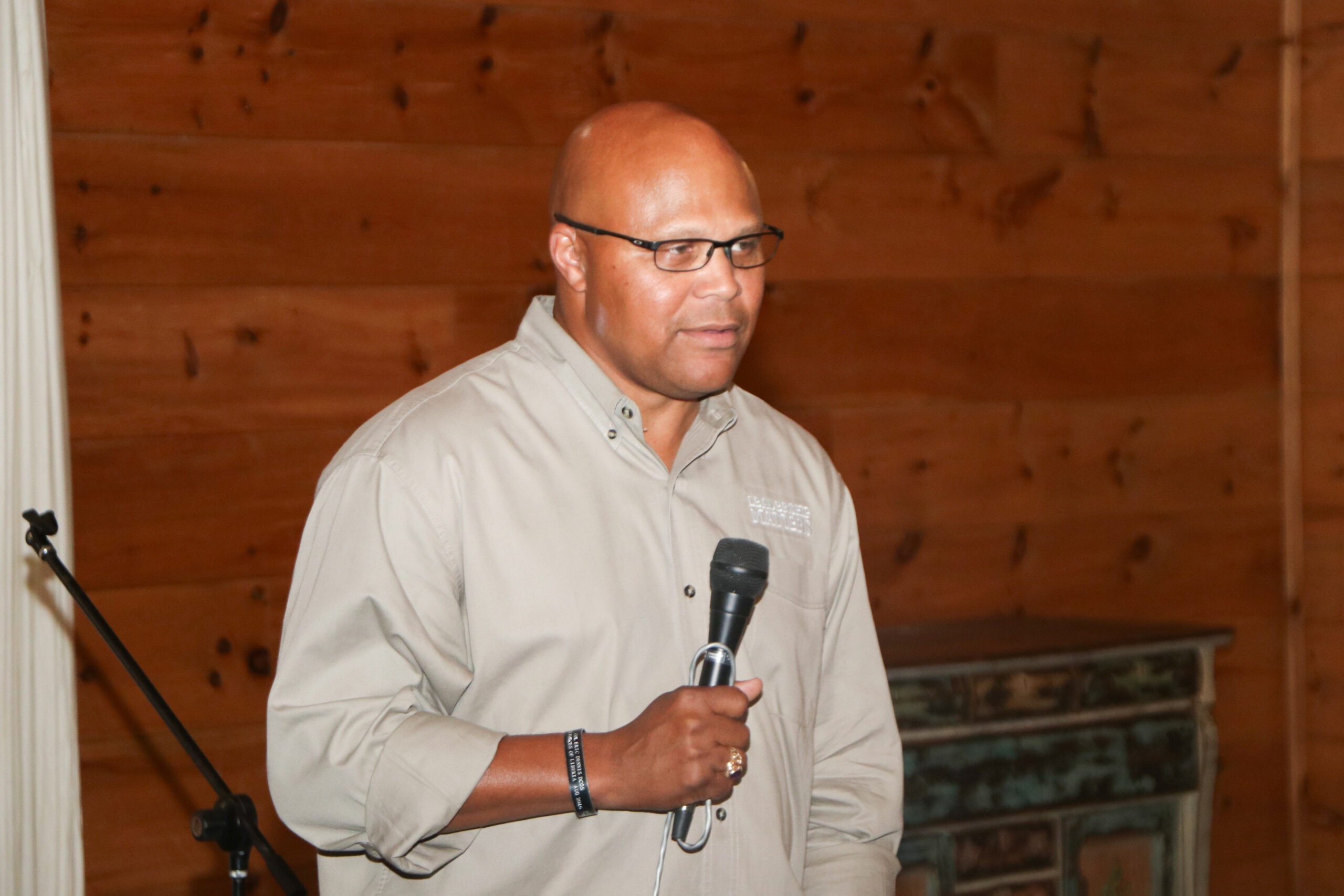
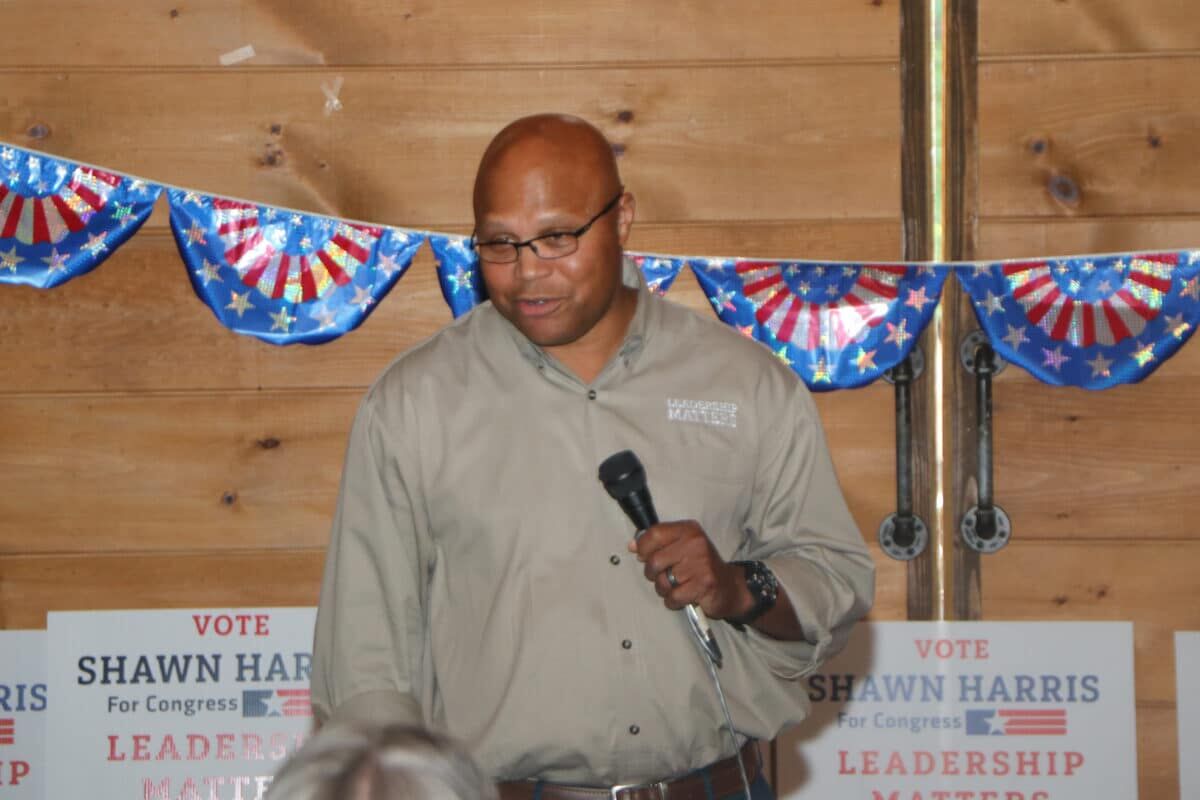
Speaking before voters in rural Chatsworth in July, Harris presented himself as a politician focused on constituent service.
“When I get to D.C., my focus is one hundred percent you, your kids and your grandkids,” Harris told the audience. “I don’t need to be seen on TV. I’m not looking to be some celebrity.”
For at least one voter in Chatsworth, that message strikes a chord. Peggy Hobgood voted for Trump 3 times.
“Just seems like this time, I hate to say this, that man’s all about putting his name on a building or a boat or a dollar bill,” Hobgood says. “We don’t need a president like that and we don’t need another one falling in behind him either. I just hate to see people, older people who worked their whole lives and they’ve got nothing.” But Hobgood says she has no plans to vote again because “it’s crooked everywhere.”
Harris calls himself a moderate, “common sense” Democrat and argues that his path to Congress requires a coalition of Democrats, independents and Republicans. He is running on bread-and-butter issues such as better roads, more mental health services, more health clinics, lower grocery prices, expanded broadband and a fully-funded farm bill. Fuller, his opponent, is an attorney who also serves in the Air National Guard. Fuller grew up in north Georgia and was the district attorney for a four-county circuit in northwest Georgia, according to his campaign website. Appointed by Trump as a White House Fellow during the president’s first term, he identifies himself as a Christian conservative who defends the unborn. He espouses America First policies including tougher immigration enforcement and mass deportation.
Donald Trump carried the 14th District by roughly 37 percentage points in 2024. But the president’s polling numbers have sunk to new lows. Democratic candidates across the country are tapping into the economic hardship voters are facing from arbitrary on-and-off tariffs and an unprovoked war on Iran driving up prices while Republicans respond with cries of communism.
Harris sees his campaign’s role in a larger Georgia political landscape where many key races are in play.
Democrat Keisha Lance Bottoms, the former mayor of Atlanta, is in a statistical tie with billionaire newcomer Rick Jackson for the open governor’s seat, according to Georgia-based pollster InsiderAdvantage, WABE public radio reports. Jackson announced last week that he has allocated $87 million in advertising against Lance Bottoms, who has less than $1 million on hand. The same poll also showed Sen. Jon Ossoff, the Democratic incumbent, 7 points ahead of his challenger Mike Collins. Both candidates are multimillionaires, according to the Atlanta Journal Constitution.
“If Jon Ossoff is still our senator, and Keisha Lance Bottoms is our governor, she just made history,” Harris tells Barn Raiser. “And then everybody else below me gets elected, all the way down to the lowest level you can come up with, and I lose, that is still a win.”
Measuring rural support
Harris Campaign Communications Representative Lauren Boone tells Barn Raiser that support is already developing across rural Northwest Georgia.
Boone points to local volunteers, donors, people placing yard signs and residents attending events. The campaign says its volunteer operation extends throughout the district and includes people from rural and agricultural communities.
Boone also claims that campaign canvassing from the special and runoff elections indicated Harris received support from 65% of independents and 20% of Republicans.
Georgia does not register voters by political party, making crossover voting difficult to determine from election returns alone, so the campaign’s numbers do not prove Harris won 20% of Republican voters. But they reveal what Harris’s campaign believes its own voter contacts are telling it, and they help explain the campaign’s strategy.
An analysis of the election results offers some insights, though. In more Democratic-leaning parts of the district, Harris was able to hold his own, garnering between 43% and 58% of the vote.
But the numbers change considerably farther into the district’s Republican strongholds. In those areas, support for Harris ran between 24% and 36%, far behind Fuller.
Perhaps most strikingly, Harris received only 31% of the vote in Polk County, where he lives and farms.
Those results show both the opportunity and the problem facing his campaign. Harris has demonstrated significant competitiveness in portions of the district, while a substantial Republican wall remains elsewhere.
Can Harris really win over Republicans?
The narrow margin in a Republican stronghold like Paulding does not mean that Paulding has suddenly become Democratic, nor does it establish that large numbers of Republicans crossed over to Harris.
It does demonstrate something more limited, but important: in at least one populous part of this overwhelmingly rural and Republican district, Harris was able to make the race essentially even.
For Democrats looking nationally at whether deeply Republican territory can still be contested, Harris does not necessarily have to turn every red county blue. Neither does he have to persuade most Republicans to vote Democratic. He just needs enough of them, combined with Democrats and independents, to change the arithmetic in counties where Republican margins have traditionally been overwhelming.
Rural Georgians feeling the economic pain of the Trump administration’s policies combined with inaction by a Republican-led Congress might just tip the scale.
Paulding County offers a glimpse of what that would look like.
An $8 million question
Harris has demonstrated an extraordinary ability to raise money without party support.
Federal Election Commission (FEC) records show his campaign raised approximately $8.1 million from April 2025 through June 30, 2026, four times more than his opponent.
Nearly all came from individual contributions. About $6.22 million of Harris’s individual contributions were reported as unitemized.
Communications Representative Boone says the average contribution is $22.02, although that figure cannot be independently verified by FEC reports. Fewer than 50 contributors have donated more than $3,000. Harris reported no candidate loans and no contributions from party committees.
Campaign records show that Harris hired a Massachusetts campaign consultant called Campaign Industries, founded by a veteran election campaign organizer Mac D’Alessandro and a veteran union organizer John Hennelly. It offers candidates complete campaign services from creating strategy to hiring, firing and managing field staff.
The Harris campaign has dedicated more than $3.2 million to digital fundraising and social media, which explains, in part, the high number of small donors.
Boone says the campaign maintains a small staff, with four regular staffers and several part-time consultants and support staff, allowing it to devote resources to direct voter contact.
“We are very focused on our field program, door knocking, phone calling, town halls, etc. throughout the district,” she says. “Our amazing volunteer corps has played a big part in allowing this model to work so successfully.”
Less than $1 million was spent on campaign staff during the 12-month period, according to Boone. The remainder went toward fundraising, voter contact and persuasion through field operations, social media and paid media.
Boone says that in addition to nearly 200 active volunteers inside the district, the campaign has more than 500 nationwide. Some of those volunteers, she says, are expected to travel to northwest Georgia during the closing days of the campaign. For a congressional candidate receiving no DCCC support, the nationwide volunteer network presents an unusual contrast.
Republican Clayton Fuller’s financial operation looks considerably different.
Through June 30, Fuller reported approximately $1.85 million in receipts and $1.78 million in spending. About $1.08 million came from individuals, with his top donors contributing tens of thousands each and another $305,481 from other political committees. Fuller also loaned his campaign $450,000.
The Republican PAC Conservatives for American Excellence has spent nearly $500,000 opposing Harris. Additionally, more than $2.7 million in dark money is backing Fuller.
Fuller’s donor list includes the American Israel Public Affairs Committee (AIPAC), the Koch Foundation, MAGA, Inc., Lockheed Martin and WinRed. His PAC donor list is more than 100 organizations long and totals an estimated $305,000. (By comparison, four PACs have donated just under $14,000 to Harris.)
Fuller has also spent the majority of his funds on media buys and digital strategy. His campaign consultant is Wiregrass Strategies, a firm run by Brandon Phillips, manager of Donald Trump’s 2016 Georgia presidential campaign. There is little indication of major expenditures on field staff in his FEC report. His campaign did not respond to requests for interviews.
The contrast shows Harris is attempting to finance a competitive campaign largely through individual contributions and an enormous small-dollar fundraising operation.
Fuller, on the other hand, is benefiting from a different financial ecosystem, including candidate financing, PAC contributions, major donors and outside spending.
A test bigger than GA-14
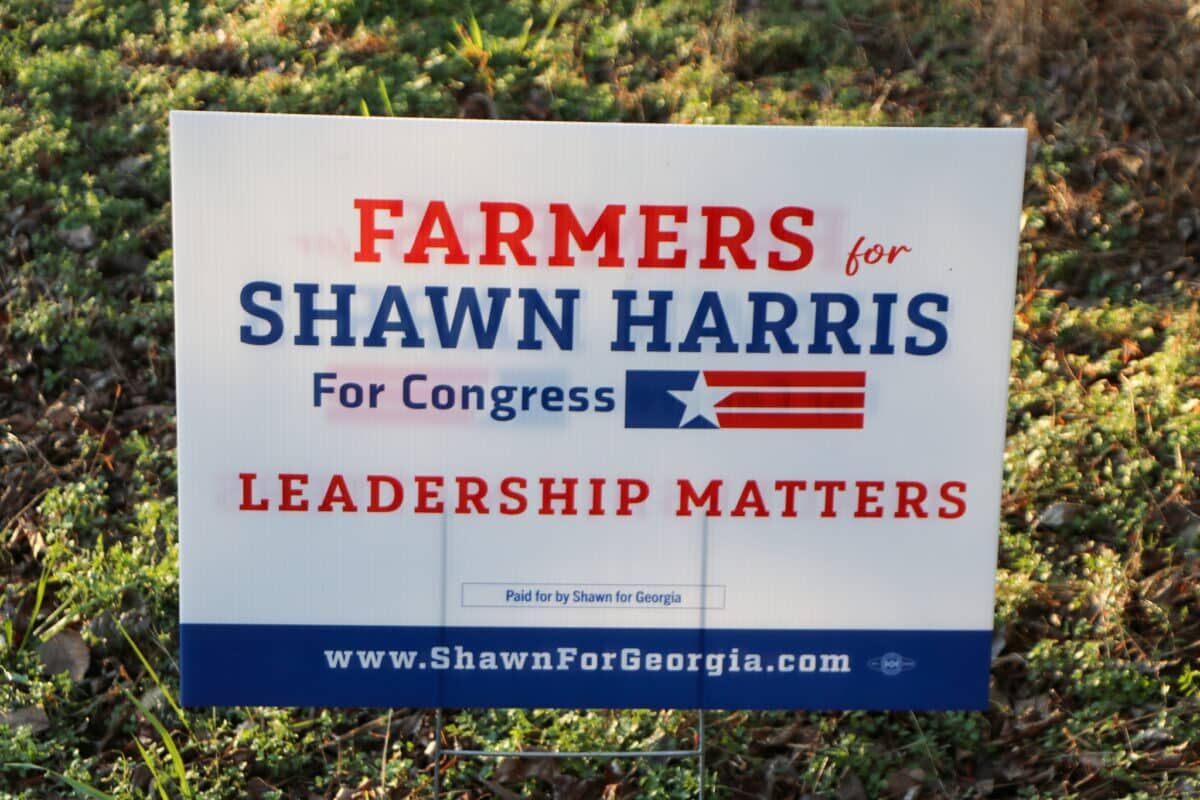
Harris frequently tells audiences that “leadership matters.” For him, the phrase extends beyond winning an election.
“Leadership means you know when to get the hell out of the way, so somebody else can get in the seats,” Harris told an audience in July.
He has also framed leadership as something extending beyond himself, talking about helping elect other candidates and building political participation throughout the ticket.
His campaign expenditures show he means it. Not only is the Harris campaign not receiving funds from the Democratic Party, he is donating to them. Federal filings show the Harris campaign donating more than $27,000 to Georgia’s state Democratic party and multiple county Democratic parties in the district for event sponsorships and more.
Georgia’s 14th District is becoming a test of something larger: Can a Black Democrat compete in deep-red rural and white America without waiting for the national party to decide the race is winnable?
Harris is betting millions of dollars, hundreds of volunteers and yet another campaign that the answer is yes.


 Milton Kirby