Milton Kirby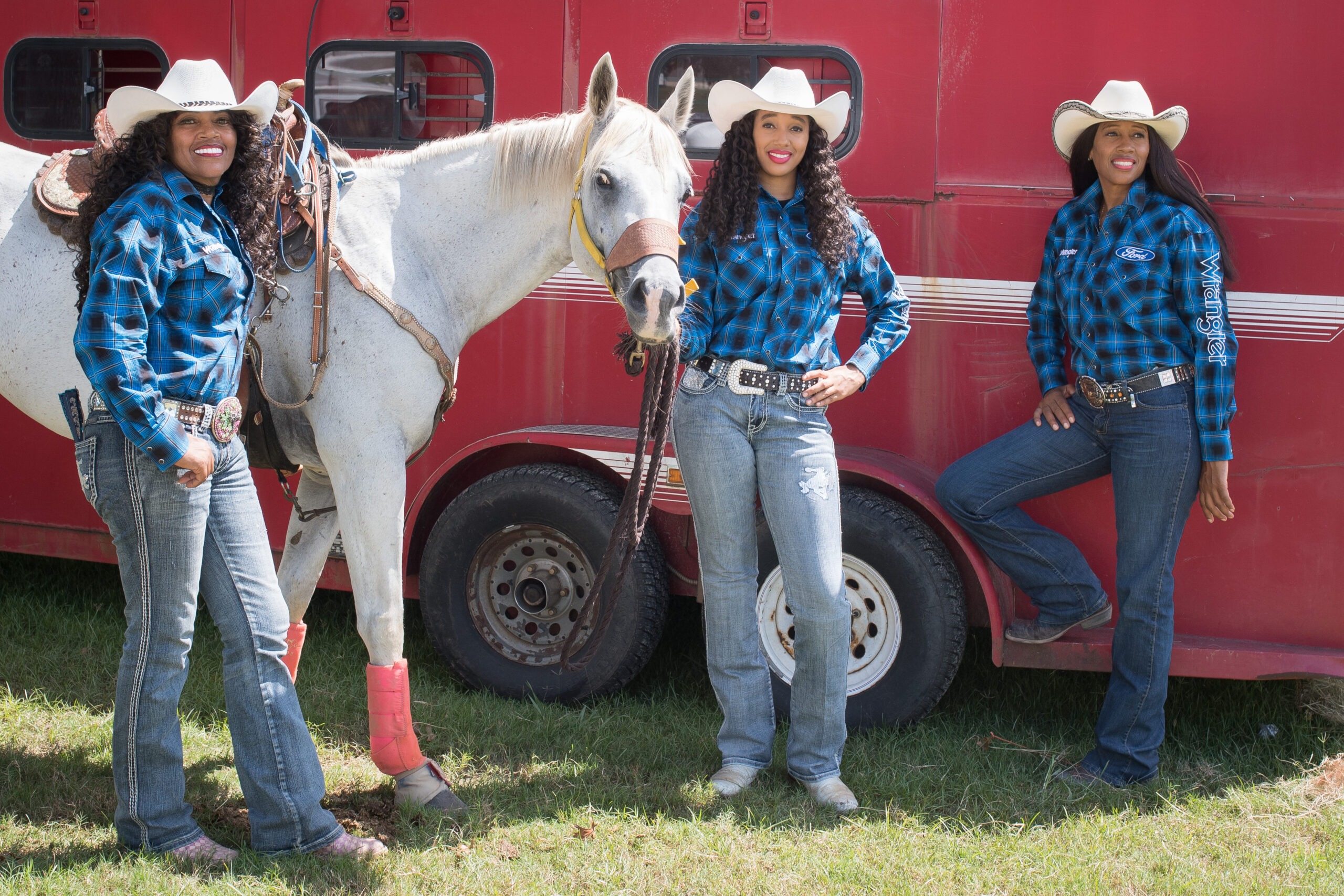
An unexpected encounter with the Bill Pickett Invitational Rodeo became a photographic journey connecting Black Western heritage, family, and civil rights
By Milton Kirby | Atlanta, GA | October 13, 2026
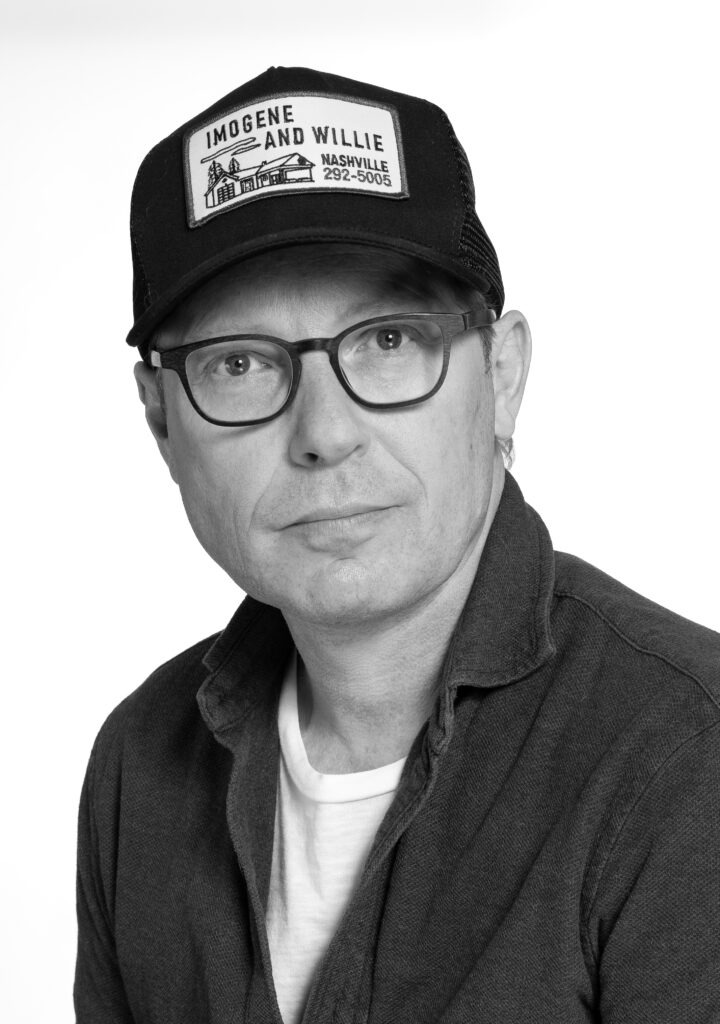
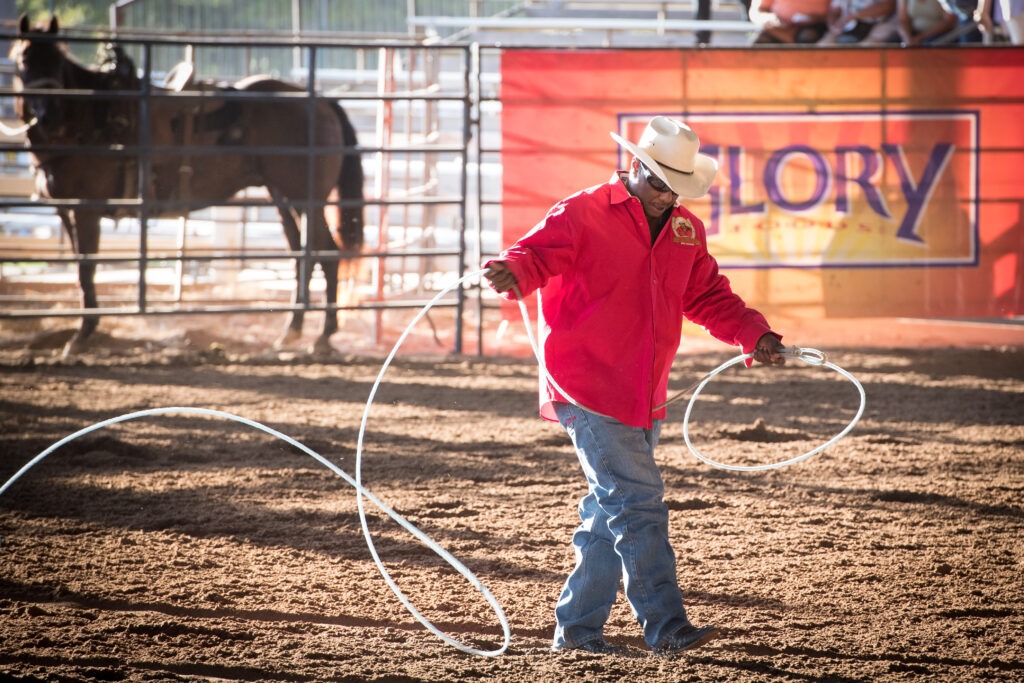
In 2012, French photographer Cyril Bailleul arrived at a rodeo outside Atlanta expecting to see the cowboys he had known from American movies.
Instead, he discovered a part of American history he never knew existed.
His mother-in-law had surprised him with tickets to the Bill Pickett Invitational Rodeo (BPIR). Bailleul had been fascinated by American culture since his first visit to the United States in 2007. He wanted to experience the motels, drive-in theaters, and cowboys he had seen on screen.
But when he and his family approached the rodeo arena, something immediately caught his attention.
The crowd was overwhelmingly African American.
In a written statement accompanying his upcoming photography exhibition in France, Bailleul recalled that he had not known Black cowboys existed.
What began as a family outing became a journey of discovery that has continued for more than a decade.
This October, Bailleul’s exhibition, In the Footsteps of Bill Pickett – American Cowgirls & Cowboys, will be presented at Château de Pontécoulant in Normandy as part of Equidays, a regional celebration of horses and equestrian culture.
The exhibition introduces French audiences to the people, traditions, and overlooked history of Black cowboys and cowgirls in America.
Discovering the Cowboys Hollywood Overlooked
During an October 12 interview with The Truth Seekers Journal, Bailleul recalled that his first rodeo experience was unlike anything he expected.
Instead of finding only rugged competitors and dangerous sporting events, he encountered families, children, and a welcoming community.
Spectators sitting nearby explained the rules of the competition.
He enjoyed the rodeo but left wanting to know more about the people and the history behind it.
As he began researching, Bailleul learned that Black cowboys had played an important role in developing the American West.
Historians commonly estimate that roughly one in four cowboys working the cattle trails after the Civil War was African American. Many were formerly enslaved people who found opportunities working with horses and cattle.
Yet Hollywood Westerns largely excluded Black cowboys, helping create an image of the American frontier that failed to reflect its diversity.
That omission helped inspire the founding of the Bill Pickett Invitational Rodeo in 1984.
Established by the late Lu Vason, BPIR was created to celebrate the contributions of Black cowboys and cowgirls and provide a national platform for African American rodeo competitors.
Today, under the leadership of Valeria Howard Cunningham, the rodeo continues that mission while emphasizing families, education, and community engagement.
For Bailleul, BPIR represents something much larger than competition.
Portraits Tell a Different Story
Unlike many rodeo photographers, Bailleul does not concentrate primarily on bucking bulls, racing horses, or dramatic action inside the arena.
He prefers portraits.
During our interview, I asked why so much of his photography focuses on the people surrounding the competition rather than the sporting events themselves.
Bailleul explained that he enjoys watching the action but finds greater meaning in conversations, personal details, and moments before and after the competition.
He walks around the rodeo grounds observing people, their clothing, expressions, and interactions.
Sometimes he asks someone to remain exactly where they are while he captures a photograph.
His approach reveals the pride, dignity, and personal connections that help define the rodeo community.
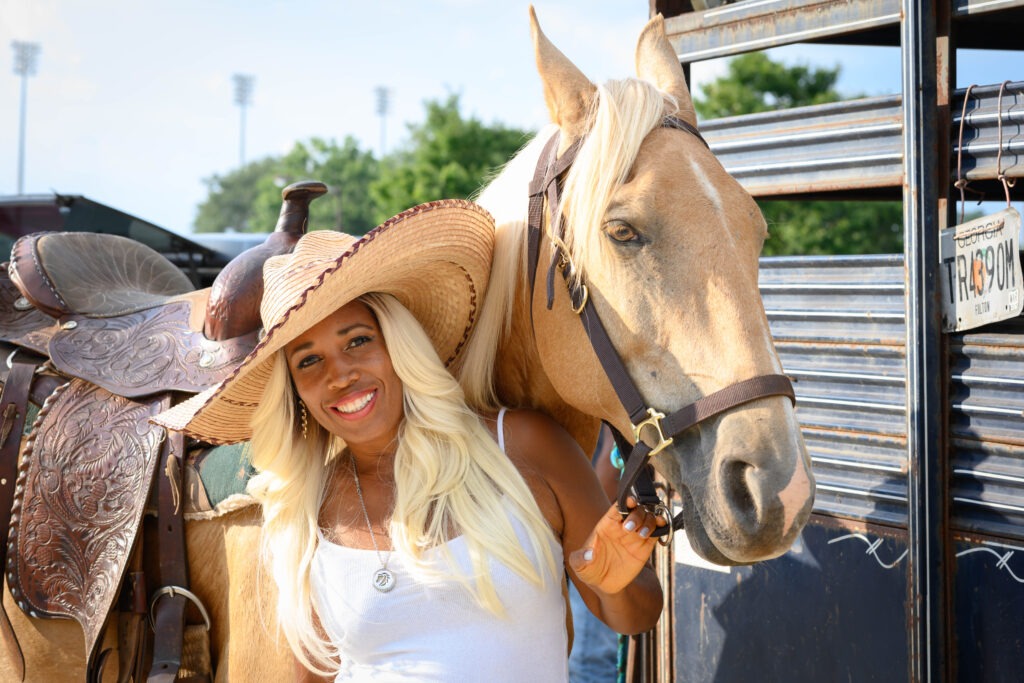
One photograph he particularly values show three generations of cowgirls: a grandmother, mother, and daughter.
The image captures more than a family resemblance. It reflects how Black Western traditions are passed from one generation to another.
Bailleul’s relationships with rodeo participants have also deepened over time. He returns with prints for people he previously photographed and looks forward to reconnecting with familiar faces.
For him, the project is as much about friendships and learning as it is about creating photographs.
History Within History
Bailleul’s photographs of Black cowboys and cowgirls have previously appeared at cultural and equestrian venues in Normandy.
In September and October 2020, his work was exhibited at the Pôle International du Cheval Longines in Deauville, during the period of the American Film Festival.
In 2021, his photographs were presented at Château de Thury-Harcourt as part of Equidays Calvados.
Now, in 2026, Equidays is again bringing his work to French audiences, this time at Château de Pontécoulant in southern Calvados, near Suisse Normande.
The setting holds special meaning for Bailleul. The château’s history dates to the 14th century, placing photographs of African American Western heritage inside a centuries-old French landmark.
In his exhibition statement, Bailleul describes the opportunity as displaying “History within History.”
The setting creates an unexpected meeting between European heritage and a chapter of American history that many visitors may know little about.
Bailleul has deliberately chosen not to identify his subjects as Black in the exhibition’s title. He wants visitors to experience something similar to his own discovery in Atlanta.
They arrive expecting American cowboys. The photographs invite them to reconsider what that image means.
From Rodeo Heritage to Civil Rights
The exhibition also includes photographs connecting Black Western traditions with contemporary civic participation.
On January 4, 2021, Bailleul photographed riders associated with the Atlanta Saddle Club during the Ride for Change demonstration encouraging participation in Georgia’s U.S. Senate runoff elections.
The riders traveled from the Georgia Capitol toward the National Center for Civil and Human Rights.
Two photographs from that event hold particular meaning for Bailleul.
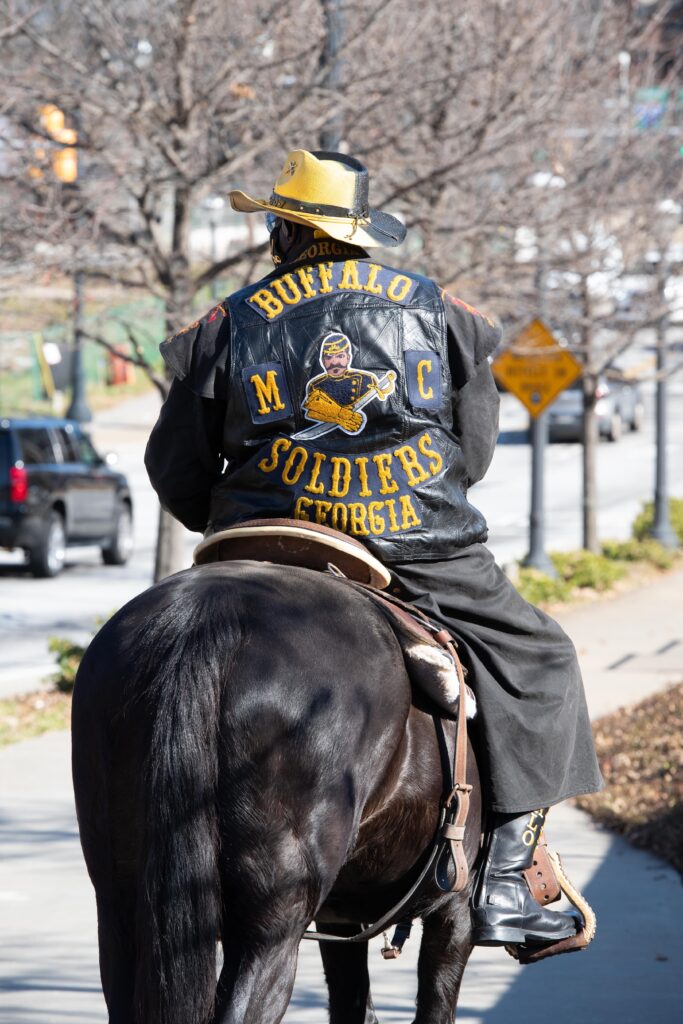
One depicts a Buffalo Soldier, recalling the African American soldiers who served in the U.S. Army after the Civil War.
Displayed in the château’s armory, the photograph connects military service, the expansion of the American West, and the struggle for equal citizenship.
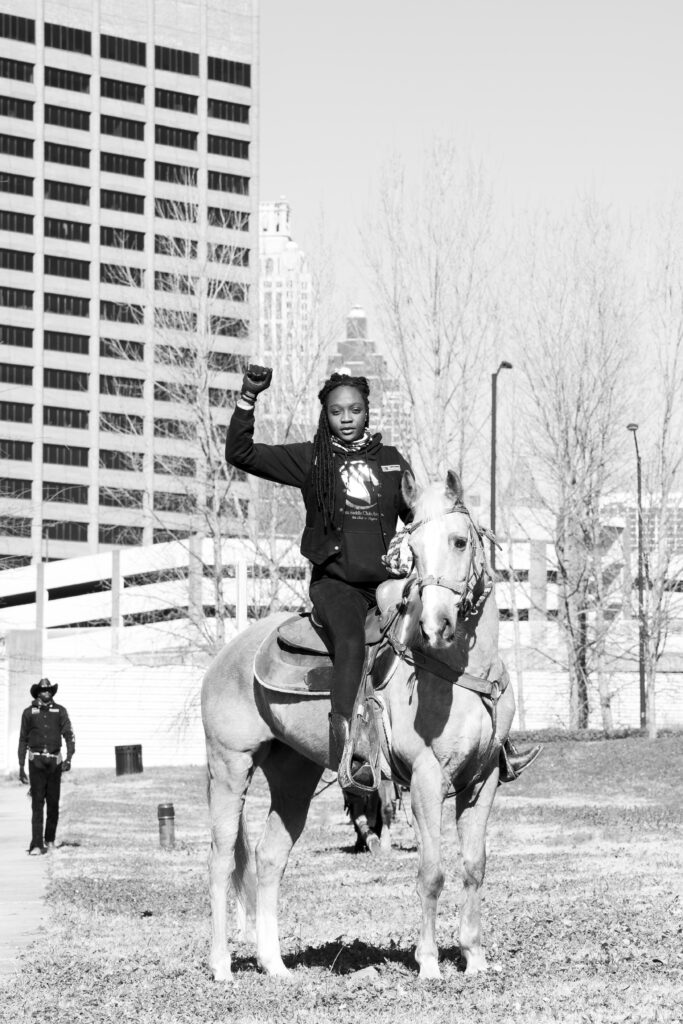
Another photograph features a young woman named Deja, raising her fist while seated on horseback near the Georgia Capitol.
Her image closes the exhibition in the château’s Blue Room.
For Bailleul, Deja represents a younger generation committed to education, activism, and social change.
She also represents the important role women play in a culture often portrayed as predominantly male.
Together, the photographs show that Black Western heritage is not confined to the past. It remains connected to contemporary American life.
Photography as a Bridge Between Cultures
Bailleul’s interest in cultural understanding extends far beyond the rodeo.
His professional experiences have included photography associated with UNESCO and work in Senegal, Mali, Burkina Faso, and other countries.
Those travels helped shape his appreciation for the ways history, identity, and culture intersect.
During our interview, he repeatedly emphasized the importance of approaching unfamiliar communities with curiosity and respect.
He hopes his photographs will encourage visitors to learn more about Black cowboys, challenge their assumptions, and perhaps experience a rodeo themselves.
That philosophy also explains why he continues returning to BPIR.
He hopes eventually to follow the rodeo to additional American cities, photograph more participants, and document new aspects of their lives.
But his greatest interest remains the people he encounters and the relationships that develop.
A Journey Dedicated to His Father
There is a personal story behind the exhibition’s historical message.
Bailleul’s father often told him there was no such thing as chance.
Yet the photographer’s journey has been filled with unexpected encounters.
His marriage connected him to an American family. A gift from his mother-in-law introduced him to the Bill Pickett Invitational Rodeo. His curiosity led him to learn about Black Western history and build lasting friendships.
Now those experiences have brought his photographs to a centuries-old château in Normandy.
Bailleul has dedicated the exhibition to his father.
For a photographer who once searched for the cowboys he remembered from Hollywood, the journey has revealed something far more meaningful.
The American West was never the story of one group of people.
And through Bailleul’s photographs, another part of that history is finding its way into view.
Exhibition Information
In the Footsteps of Bill Pickett – American Cowgirls & Cowboys
Château de Pontécoulant, Calvados, Normandy, France
October 17, 18, 20 and 21, 2026
2:30–5:30 p.m. | Free admission
Presented during Equidays 2026.
Truth Seekers Journal thrives because of readers like you. Join us in sustaining independent voices.

 Ted Knorr