Milton Kirby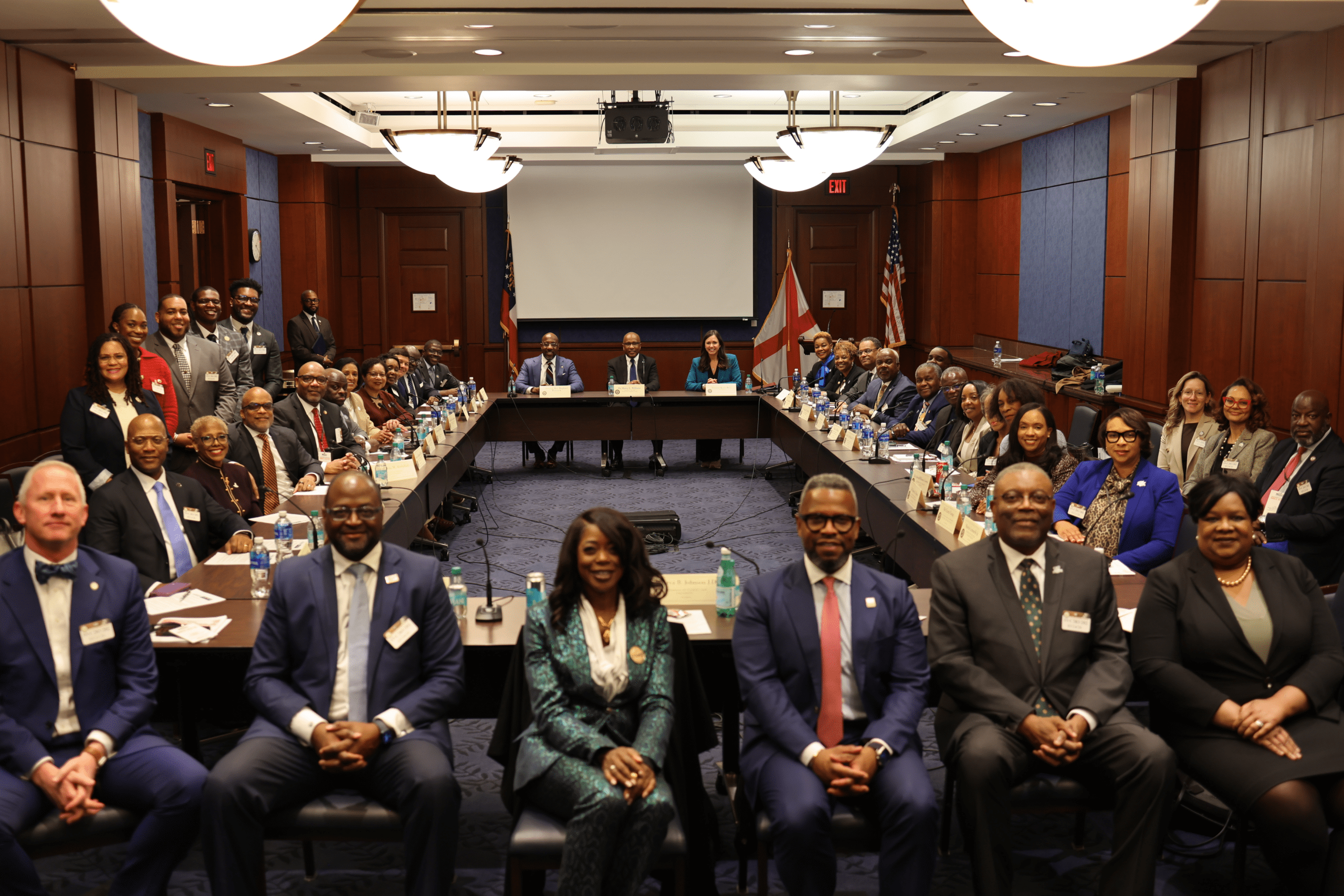
By Milton Kirby | Washington, D.C. | March 26, 2026
A new bipartisan effort in the U.S. Senate could reshape how Historically Black Colleges and Universities (HBCUs) access federal research funding, addressing long-standing barriers that have limited their participation in major grant programs.
Senators Raphael Warnock and Katie Britt have introduced the HBCU Research Capacity Act, legislation designed to simplify and centralize access to federal grant opportunities for HBCUs.
At the core of the proposal is the creation of a federally coordinated online clearinghouse a single platform where HBCUs can identify, track, and apply for research and development funding opportunities, particularly in STEM fields. The bill would also require the U.S. Department of Education to provide guidance, best practices, and ongoing updates to institutions nationwide.
Addressing Structural Gaps in Research Funding
For decades, federal research dollars have been concentrated among a relatively small group of institutions, leaving many HBCUs despite their academic output and cultural impact at a disadvantage.
“HBCUs are incubators of diverse excellence,” Warnock said, noting that the legislation is intended to “make securing federal dollars… that much easier.”
Britt echoed that sentiment, describing the bill as a “commonsense” solution grounded in firsthand experience with the challenges HBCUs face.
The issue is not new, but the approach is notable. Rather than creating new funding streams, the legislation focuses on access recognizing that many institutions struggle not with eligibility, but with navigating a fragmented and complex federal grant system.
HBCU Leaders Push for Change
To support the bill’s introduction, the senators convened more than 30 HBCU presidents in Washington for a roundtable discussion. Leaders from institutions including Fort Valley State University and Albany State University participated, emphasizing the need for a more transparent and coordinated funding process.
Their message was consistent: opportunity exists, but access remains uneven.
Dr. Harry L. Williams, president and CEO of the Thurgood Marshall College Fund, described the legislation as a “major step” toward expanding the nation’s research ecosystem by fully integrating HBCUs into it.
Similarly, the United Negro College Fund praised the bill while cautioning that broader reforms will still be needed to ensure equitable participation across all HBCUs including those that may never achieve top-tier research classifications but play a critical role in the academic pipeline.
A Broader Strategy for Research Equity
The proposed clearinghouse would be supported by dedicated personnel within the Department of Education and include regular reporting to Congress, along with updates to participating institutions.
The bill builds on earlier efforts led by Warnock, including legislation encouraging pathways for HBCUs to achieve “R1” status the highest classification for research activity in higher education. Notably, Howard University recently achieved that designation, signaling what advocates say is possible with sustained investment and support.
The legislation also aligns with broader federal initiatives, including funding streams established under the CHIPS and Science Act, which included provisions to support Minority Serving Institutions in accessing federal research dollars.
What Comes Next
If passed, the HBCU Research Capacity Act would amend Title III of the Higher Education Act of 1965, formalizing the federal government’s role in coordinating research opportunities for HBCUs.
For institutions that have historically done more with less, the bill represents a potential shift not just in funding, but in how opportunity is structured.
As policymakers and educators continue to debate the future of higher education, one question remains central: how to ensure that talent wherever it is found has a clear path to resources.
This legislation suggests one answer: make the system easier to see, and easier to access.