15 Small Steps, Big Impact: How You Can Help the Planet

Protect the planet with 15 simple tips—from reducing plastic and food waste to conserving energy and water—that make eco-friendly living easy and impactful every day.

By Milton Kirby | Atlanta, GA | April 29, 2025

You don’t have to be a scientist or activist to make a difference. Protecting the environment can start with small, everyday choices. Here are 15 easy and impactful steps you can take to help protect the planet:


1. Switch to a Reusable Water Bottle

Using a reusable water bottle helps reduce plastic waste, conserves energy and water used in production, and limits harmful emissions from transporting single-use plastic bottles around the world.

2. Don’t Always Preheat the Oven

Unless you’re baking, many dishes don’t need a preheated oven. Skipping preheating saves up to 20% of energy and reduces unnecessary strain on your home’s power usage.

3. Use LED Bulbs Instead of Incandescent

LED light bulbs use up to 80% less energy, last longer, and provide the same brightness. Turning off lights when you leave a room boosts your energy savings.

4. Unplug Devices When Not in Use

Electronics continue drawing power when plugged in, even if turned off. Unplugging or using a power strip helps eliminate phantom energy waste and lowers your monthly electric bill.

5. Buy Household Staples in Bulk

Purchasing items like soap, rice, and pasta in bulk reduces plastic and cardboard waste. It also cuts energy used in packaging and transportation, making it better for the planet.

6. Run Full Loads in Your Machines

Only run your dishwasher or washing machine when they’re full. Scraping plates instead of rinsing also saves water, energy, and time while keeping your kitchen efficient and eco-friendly.

7. Use Safer, Non-Toxic Cleaners

Choose green-certified or homemade cleaners using baking soda and vinegar. These reduce indoor air pollution, are safer for your family, and limit chemical runoff into soil and water systems.

8. Cut Down on Food Waste

Plan meals, store food correctly, and use leftovers. Americans waste about a pound of food per person daily. Reducing waste saves money and decreases landfill methane emissions.

9. Cook More Efficiently

Match your pan to the burner size and use lids—a small pan on a large burner wastes over 40% of heat. Lids cut cooking time and energy use.

10. Always Bring Reusable Grocery Bags

Reusable bags can replace hundreds or thousands of plastic ones over time. Leave a few in your car or bag so you’re never without one at the store.

11. Recycle Paper and Cardboard

Recycling saves trees, water, and energy while lowering greenhouse gas emissions. In 2019, the U.S. landfilled over 60 million tons of paper. Do your part to reverse that trend.

12. Compost What You Can

Food scraps, leaves, coffee grounds, and newspapers can all be composted. Composting reduces landfill waste, enriches soil naturally, and lowers emissions from organic materials that would otherwise rot.

13. Choose Laptops Over Desktops

Laptops use about 80% less electricity than desktop computers. Their energy-efficient design makes them a more intelligent choice when upgrading your tech or setting up a home workspace.

14. Reduce Idling in Your Vehicle

Turn off your engine if parked for more than a minute. Reducing idling saves fuel, lowers emissions, and helps fight climate change by improving air quality and efficiency.

15. Conserve Water at Home

Fix leaks, shorten showers, and turn off taps when brushing. Conserving water helps protect groundwater, save energy, and maintain healthier ecosystems for wildlife and future generations.

2025 New Orleans Jazz & Heritage Festival Delivers Hot Music and Even Hotter Vibes

The 2025 New Orleans Jazz & Heritage Festival blended hot music, rich traditions, and global flavors across a sunlit, unforgettable first weekend.


By Milton Kirby | New Orleans, LA | April 28, 2025

The 2025 New Orleans Jazz & Heritage Festival opened on Thursday, April 24. Excitement filled the air as crowds poured into the Fair Grounds. The sounds of jazz, soul, and rock echoed across the city.

The first weekend wrapped up on Sunday, April 27. It ended with a bang. Big-name artists and local legends took the stage. Performers included the Dave Matthews Band, HAIM, Burna Boy, and The Revivalists.

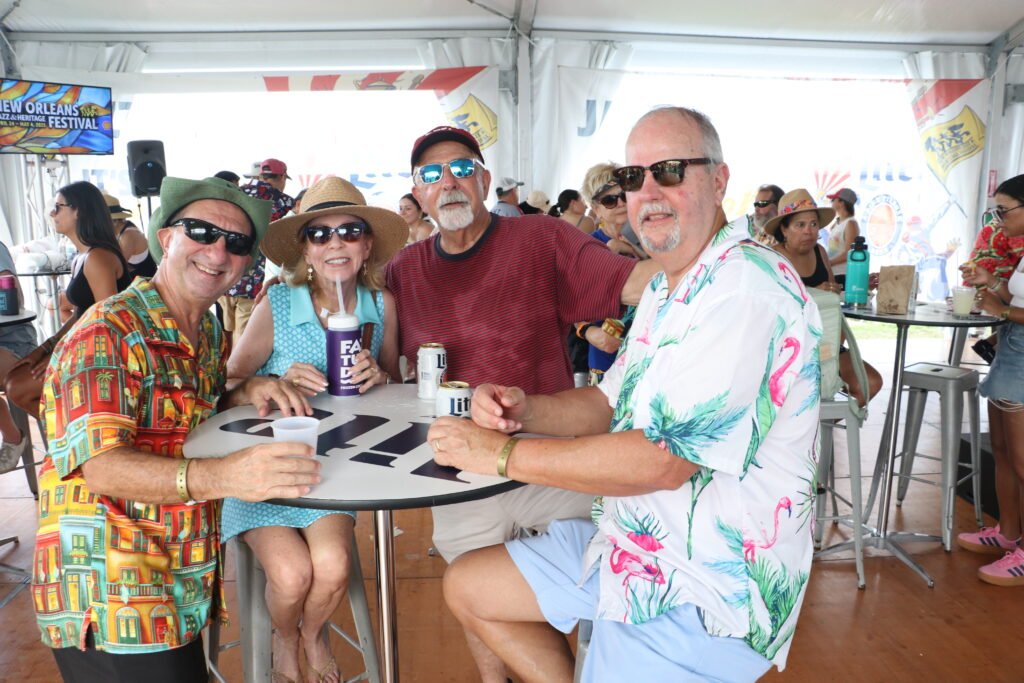
By Milton Kirby – Randi & Phillip M, enjoying the music

Fans also enjoyed Cyril Neville, known as The Uptown Ruler. James Bay, The Soul Rebels, and Tab Benoit kept the energy high—the Branford Marsalis Quartet wowed jazz lovers with their smooth sounds.

Gospel music filled the air as Bishop Paul S. Morton and The Greater Sound Choir of Greater St. Stephen FGBC performed. Their voices lifted spirits and brought many to tears.

Guitar wizard Eric Gales lit up the stage. Jake Shimabukuro amazed crowds with his ukulele skills. C.J. Chenier & the Red Hot Louisiana Band got everyone dancing.

There was something for everyone. Boyfriend brought flair and fun. Hans Williams kept things mellow with his soft melodies. Big Freedia joined the New Orleans Gospel Soul Children for a lively show.

Local bands like the New Orleans Nightcrawlers and the Judith Owen Big Band kept the hometown pride strong. Steve Riley & the Mamou Playboys brought the sounds of Cajun country.

Jazz fans enjoyed an exceptional performance by the Louis Armstrong Hot 5 and 7 Centennial, featuring Nicholas Payton and Dr. Michael White.

The festival celebrated world music too. Etran de L’Aïr of Niger and RAM of Haiti performed, showcasing global sounds.

Big Chief Monk Boudreaux & The Golden Eagles honored the Mardi Gras Indian traditions. People Museum added a new indie-pop flavor.

Tributes were also part of the weekend. Paul Varisco & the Milestones honored the late Luther Kent. Trickbag, featuring Jonathon “Boogie” Long, joined the tribute.

Legendary guitarist Bill Frisell teamed up with Brian Blade and Thomas Morgan. Their set was soulful and moving. Tuba Skinny and Charlie Gabriel and Friends closed out smaller stages with traditional jazz favorites.

Everywhere you looked, music filled the air. From the opening bell at 11:00am to the last note at 7:00pm, there was a tune for every soul.

By Milton Kirby – Friends gathering for a good time

There truly was something for everyone. Young, old, and even the unborn were part of the celebration. Many expectant mothers could be seen walking from stage to stage, enjoying the sunshine and music.

The temperature on the festival grounds reached 86 degrees. But the music was even hotter. Fans danced, sang, and celebrated despite the heat.

Kids had their own place to play and learn. The children’s venue offered music, crafts, and storytelling. Parents relaxed nearby, knowing their little ones were entertained.

Food was a major highlight. More than 60 vendors were set up in nine different areas. The smells of gumbo, jambalaya, and crawfish pies filled the air.

Cultural blending happened everywhere. Music, dance, and food from around the world came together. It was an authentic New Orleans experience.

The festival grounds were alive with color. People wore hats, beads, and colorful shirts. Some brought umbrellas, not for rain, but to twirl and dance with.

Artisans sold handmade jewelry, paintings, and crafts. Every corner offered a new surprise.

You could hear musicians practicing or playing small sets even when moving between stages. Every inch of the festival vibrated with life.

The spirit of New Orleans was strong. Smiles were everywhere. Strangers became friends. Families reconnected.

Security and volunteers kept things safe and fun. Water stations were easy to find. Medical tents stayed ready but mostly handed out sunscreen and water.

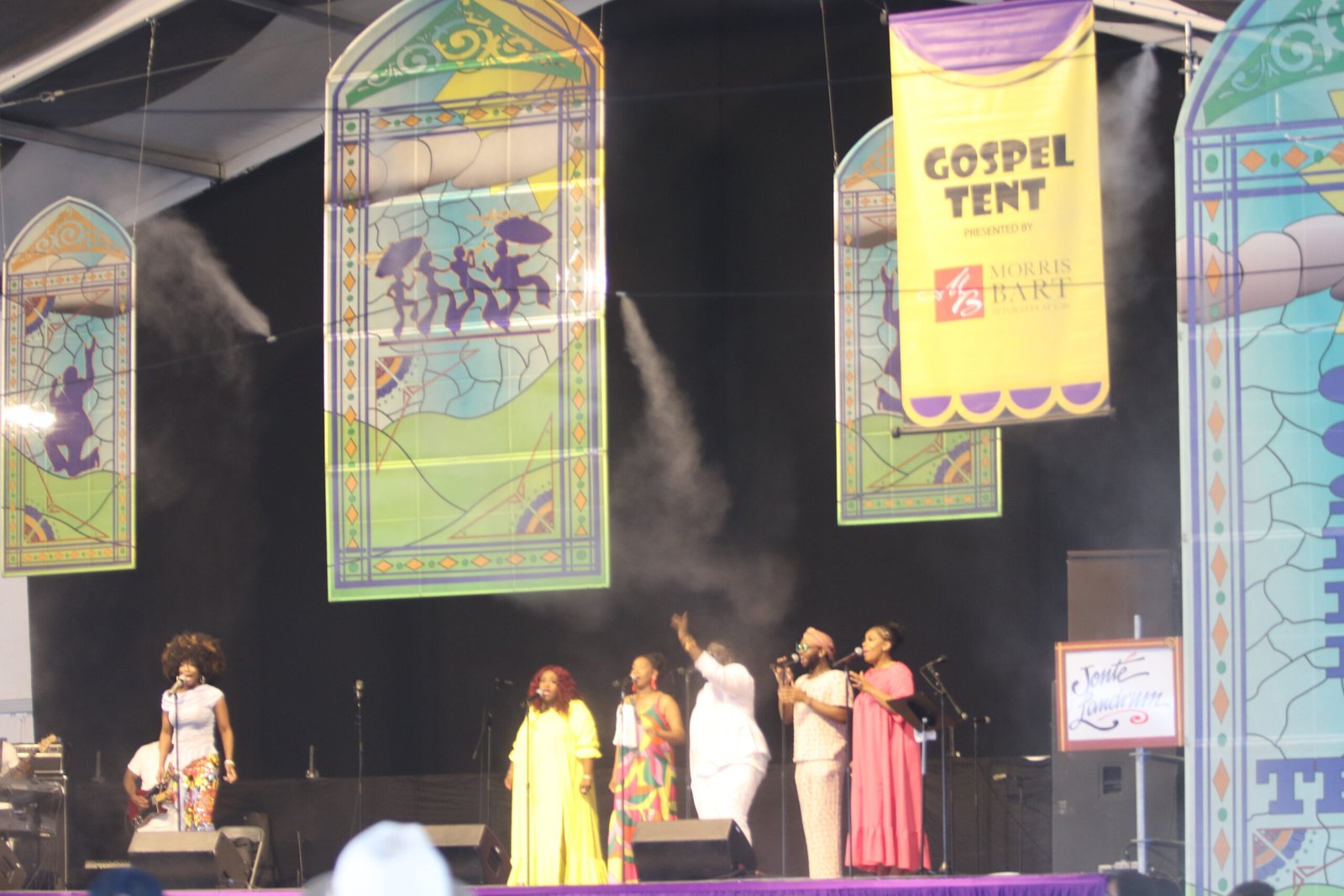
By Milton Kirby – New Orleans Jazz Festival

The Jazz Fest isn’t just about music. It’s about culture, community, and celebration.

Tommy and Elizabeth of Fair Hope, AL, return to the festival year after year for the music, the food, and the march.

For others, Jazz Fest is a long-time tradition. Tori McKenny of Boston, who has New Orleans roots, has been coming for 30 years.

“It’s not just about the music,” McKenny said. “It’s about meeting old friends, making new ones, and blending two worlds. This festival is home for me.”

Festival organizers made sure everyone felt welcome. Maps and event guides were available. Volunteers guided guests to stages, food areas, and art villages.

Families with kids found shady areas to rest. Grandparents shared memories while little ones danced. Teens enjoyed discovering new bands and posting their experiences online.

Vendors offered tastes from every corner of Louisiana. Crawfish étouffée, shrimp po’boys, beignets, and sno-balls were just a few of the favorites.

“The food alone is worth the trip,” said Julie Sanders of Houston. “I’m eating my way through every booth.”

The blend of cultures was more than just food and music. Dance groups from across the globe performed throughout the grounds. African drum circles, Cajun dancers, and Caribbean steel drum bands gave nonstop shows.

Workshops taught traditional crafts. Guests could learn to weave baskets, make Mardi Gras masks, and carve wooden instruments.

Jazz Fest shows the world that New Orleans is still one of the greatest cultural cities.

As the final notes drifted into the night, everyone knew the magic would last. Memories were made. Songs were shared. And hearts were full.

The 2025 New Orleans Jazz & Heritage Festival once again is proving why it remains one of the most beloved events in the world.

With great food, hot music, and happy crowds, this first weekend no one will soon forget.

In New Orleans, the music never stops. And neither does the joy.

More music, more food, and excitement are on tap for next weekend.

Please consider supporting open, independent journalism – no contribution is too small!

Celebrating the Soul of New Orleans: Why the 2025 Jazz & Heritage Festival Is a Must-Experience Event

New Orleans Jazz Fest returns April 25–May 4 with 650+ performances, local cuisine, parades, and deep cultural roots—celebrating music, heritage, and community impact.

By Milton Kirby | New Orleans, LA | April 16, 2025

When the New Orleans Jazz & Heritage Festival returns next week, it will bring with it more than just music—it will revive a legacy. Since its modest beginnings in 1970, Jazz Fest has blossomed into one of the world’s premier cultural celebrations. What started with only 350 attendees in Congo Square now welcomes more than 450,000 guests from across the globe. And in 2025, it promises to be bigger, bolder, and more meaningful than ever.

A Festival Born of Heritage

Jazz Fest was conceived by legendary jazz impresario George Wein, who the New Orleans Hotel Motel Association recruited to create an event to spotlight the city’s immense cultural wealth. The vision became a reality with the formation of the New Orleans Jazz & Heritage Foundation. Its inaugural lineup in 1970 would be jaw-dropping by today’s standards: Mahalia Jackson, Duke Ellington, Fats Domino, Pete Fountain, and the Preservation Hall Brass Band, igniting a tradition of showcasing musical legends alongside local talent.

One unforgettable moment from that first year? Mahalia Jackson and Duke Ellington spontaneously joined a brass band second line—an unplanned celebration that captured the spirit of New Orleans and set the tone for decades to come.

A Gala That Kicks Things Off with Purpose

The celebration begins with the Jazz & Heritage Gala on April 23 at 7 PM CDT. This dazzling pre-festival affair sets the stage for the weeks ahead, uniting musicians, artists, and patrons for a night of live music, fine cuisine, and joyful dancing. But it’s more than glitz—it’s a fundraiser with purpose. Proceeds from the gala support year-round initiatives like the Don “Moose” Jamison Heritage School of Music, which provides over 250 children with free music lessons, and Community Partnership Grants that total over $2 million annually.

Two Weekends of Music, Culture, and Community

Running across two weekends—April 25–27 and May 1–4—Jazz Fest offers 650 performances across 14 stages, with over 650 performances scheduled for 2025. Whether you’re in front of the Acura Main Stage for headliners like Lil Wayne with The Roots, or soaking in gospel harmonies under the tent, each day promises its own kind of magic.

Beyond music, expect 45 second line parades, 20 pow-wow dances, and an electric energy in the air that can only be described as uniquely New Orleans.

Eat Like a Local: The Food Scene

At Jazz Fest, the music feeds the soul—but the food? It feeds everything else. With over 70 food vendors (all local, no chains allowed), culinary treasures abound. Don’t leave without trying the iconic Crawfish Monica, Crawfish Bread, Cochon de Lait, or a refreshing Mango Freeze. New for 2025: the first-ever vegan booth, ensuring there’s truly something for everyone.

You can explore full vendor lists and food guides at nojazzfest.com/food.

For the Locals: Special Pricing in 2025

In a major win for Louisiana residents, 2025 brings an all-new ticket pricing structure. While early-bird packages have sold out, all single-day tickets—both advance and at the gate—are now discounted for buyers with a Louisiana ZIP code-linked credit card.

“Locals Thursday” continues to be a favorite, but now, every day of Jazz Fest comes with a bit of hometown love.

Getting Around & What to Bring

Held at the Fair Grounds Race Course in the Gentilly neighborhood, navigating the crowds requires a little strategy. The best bet is the RTA Bus System—just $9 for a 3-day pass. The 91 Jackson-Esplanade drops riders a short walk from the gates. Bike shares are also encouraged, though parking spots fill quickly.

As for gear, pack light but smart: collapsible chairs, blankets, factory-sealed water, and sunscreen are highly recommended. Keep in mind: Jazz Fest is cashless, but on-site exchange booths are available. And don’t forget to wear something festive, especially the limited edition BayouWear—a favorite tradition that combines fashion with flair.

Where the Party Goes After Dark

Though the main festival shuts down at 7 PM, the rhythm of New Orleans doesn’t. After parties and music events ignite the city well into the night.

  • Preservation Hall – Though under renovation, their nightly shows continue at the nearby Toulouse Theater, keeping traditional jazz alive and accessible.
  • Tipitina’s – An Uptown institution once home to Professor Longhair, now owned by the band Galactic, and still one of the city’s most legendary stages.
  • Kermit’s Treme’ Mother-in-Law Lounge – A cozy Tremé venue where the drinks are strong, the music is live, and the vibe is pure joy.
  • Maple Leaf Bar is Oak Street’s pride. This funky venue hosts jam bands, brass groups, and soul-filled nights almost every evening.
  • Snug Harbor – A Marigny gem that doubles as a jazz club and bistro, perfect for music lovers seeking a more intimate scene after the crowds.

And let’s not forget Frenchmen Street, where music spills out of open doors and the city’s spirit takes over the night.

The Cultural & Economic Impact

Jazz Fest is more than just a music festival—it’s a cultural engine. With an estimated $300 million annual economic impact, it fuels local hotels, restaurants, transit systems, and small businesses. It also amplifies the voices of local artisans and musicians, who rely on this exposure for their livelihood.

The Foundation’s programs reach beyond festival grounds. From free music instruction to grants supporting Black Masking Indians, brass bands, and folkloric arts, Jazz Fest is a year-round force for good.

Why You Should Go

Jazz Fest draws visitors from all 50 states and dozens of countries. Whether you’re coming from Brooklyn, Berlin, or Baton Rouge, you’ll find yourself swept into a celebration that’s as much about people as it is about performance.

With an immersive blend of heritage, food, community, and creativity, the New Orleans Jazz & Heritage Festival is not just a bucket-list event—it’s a pilgrimage—a reminder that music connects us, that culture sustains us, and that New Orleans is still one of the most vibrant cities in the world.

There’s no other festival in the world like Jazz Fest. It’s not about pyrotechnics or pop gimmicks. It’s about culture, authenticity, and joy. Whether you’re dancing to brass bands under a blazing sun, sharing a po’boy with a stranger, or letting your kid beat on a conga in the Kids Tent, Jazz Fest is a full-body, full-heart experience.

It is New Orleans—raw, resilient, and radiant.

For More Information:

General Festival information:  https://www.nojazzfest.com/

Ticket Info & Discounts: www.nojazzfest.com/tickets

Transit Tips: https://www.norta.com/

Full Food Lineup: https://www.nojazzfest.com/food/

Calvin Smyre Honored with Education Conference Center at Morehouse School of Medicine

​Morehouse School of Medicine honors Calvin Smyre’s 51-year public service by dedicating the Calvin Smyre Education Conference Center during its 50th anniversary.


By Milton Kirby | Atlanta, GA | April 3, 2025

The longest-serving member of the Georgia House of Representatives, Calvin Smyre, received a lasting tribute to his decades of public service on Thursday, as Morehouse School of Medicine (MSM) dedicated a new education building in his name.

The ribbon-cutting ceremony for the Calvin Smyre Education Conference Center (CSECC) was led by Georgia Governor Brian Kemp and Atlanta Mayor Andre Dickens. The event marked a highlight in MSM’s 50th anniversary celebration at the Georgia State Capitol and symbolized the institution’s ongoing commitment to health equity and diversity.

Photo by Milton Kirby Calvin Smyre

Smyre, a former state representative elected in 1974 and a key figure in Georgia politics, has long championed MSM since its inception. In his remarks, he recalled helping secure the institution’s initial $1 million in state funding, emphasizing the power of partnerships between government and education.

“This building is a permanent reminder of what vision, leadership, and dedication can achieve,” said Smyre, who also serves as Trustee Emeritus for the medical school and sits on several philanthropic and educational boards, including the Fort Valley State College Foundation and Piedmont HealthCare in Columbus.

Dr. Valerie Montgomery Rice, President and CEO of MSM, served as emcee for the celebration. “Health equity is not a political term,” she said. “It’s about giving people what they need, when they need it, and in the amount they need to reach their best health outcomes.”

The CSECC, located on MSM’s campus at 720 Westview Drive SW, features an auditorium, conference and event rooms, study areas, and state-of-the-art technology to support the school’s growing academic and community initiatives. The building is designed to be multifunctional, with spaces that can transition from lecture halls to fine dining areas and networking hubs.

Arthur R. Collins, Chairman of MSM’s Board of Trustees, reflected on Smyre’s legacy: “We are not just honoring a legacy, we are not just honoring a life, we are not just honoring his spirit, —we are investing in what comes next.”

The day’s events were a part of MSM’s broader 50th anniversary celebration. Founded to diversify Georgia’s healthcare workforce, MSM remains one of the nation’s only historically Black medical schools. Since becoming independent in 1981, the school has graduated over 3,300 students, nearly 60% of whom continue to serve in Georgia.

Photo by Milton Kirby Andre Dickens

With the support of lawmakers like Smyre, the school plans to expand its graduating class to 225 students in the coming years. Morehouse School of Medicine Dean Joseph Tyndall and several state legislators also praised MSM’s enduring impact during the ceremony.

As the nation debates diversity, equity, and inclusion policies, MSM leaders say the school’s mission remains unwavering. “Trust is the foundation of the patient-provider relationship,” said Montgomery Rice. “And diversity in healthcare strengthens that trust.”

For Calvin Smyre, the new center stands not only as a personal honor but as a beacon for future generations. His life’s work—from the Georgia House floor to the boardrooms of educational institutions—continues to shape Georgia’s legacy of leadership, service, and social justice.

Big Job Cuts Hit the CDC, Causing Worry Across the Country

The Trump administration cut 2,400 CDC jobs as part of a wider HHS downsizing, raising fears about public health readiness amid disease outbreaks and staffing losses.


By Milton Kirby | Atlanta, GA | April 2, 2025

On Tuesday, the Trump administration fired thousands of health workers, many of whom worked at the Centers for Disease Control and Prevention, also known as the CDC. These job cuts are part of a bigger plan to shrink the Department of Health and Human Services, or HHS.

About 2,400 people at the CDC lost their jobs, nearly one in five workers. Across HHS, around 10,000 jobs are being cut. Officials say the total number could reach 20,000 with layoffs and buyouts.

President Trump and billionaire Elon Musk support these cuts. They say the goal is to make the government smaller and faster. Health Secretary Robert F. Kennedy Jr. says the system is too big and slow. He wants to move people from several agencies into one new group called the Administration for a Healthy America, or AHA. It’s not clear yet who will be moved into AHA.

But many people are worried. Experts say the cuts could harm the U.S.’s ability to fight disease and handle health emergencies. Some of the people who were fired worked in cancer research, disease control, and drug safety. They were leaders in their fields. Now, they’re gone.

Photo by Milton Kirby

The timing is also concerning. The CDC has a $9.2 billion budget and is already dealing with big problems. That includes rising cases of tuberculosis, bird flu, and a large measles outbreak in West Texas. The Texas outbreak has caused more measles cases than the U.S. had all last year.

Since February, many CDC workers—especially newer and temporary ones—have already been let go. Critics say the agency is now too weak to respond to a large disease outbreak. “The challenges for these individuals to do their jobs on a daily basis must be enormous,” said Jason Schwartz, a health expert at Yale. “The future of CDC is under threat, by any measure.”

One important leader who left earlier was Dr. Leandris Liburd. She is a Black woman who led the CDC’s Office of Health Equity. She worked on issues like women’s health and making sure all communities get fair health care. She started in 2020 and helped address the high number of COVID-19 deaths in Black, Latino, and Native American communities.

Dr. Liburd’s name appeared earlier this year on a “DEI Watchlist.” This list was created by a conservative group called the American Accountability Foundation and named Black and Latino federal workers who support diversity and fairness. Liburd’s photo and title were listed as a “target” on the group’s website.

Many CDC workers found out they were fired when they were locked out of their email. Some bosses had to ask their teams, “Did you get fired?” Others heard the news from the media.

On Tuesday morning, hundreds of workers lined up outside HHS buildings. Some waited more than an hour to find out if they still had jobs. Acting CDC Director Susan Monarez and a few people in her office were not fired—at least for now.

CDC Chief of Staff Matt Buzzelli sent a message to workers, saying he knows this is a hard time. He pointed them to tools like a severance calculator and a guide for laid-off workers. He also reminded them of the employee help program but said wait times are long.

Health leaders outside the CDC are sounding the alarm. Richard Besser, a former CDC leader, said he is very worried. “When there’s a health emergency, you need people who know what to do,” he said. He added that strong leadership is more important than ever in times like this.

Tom Frieden, another former CDC director, called the cuts “a recipe for disaster.” He now leads a group that works to stop heart disease and fight outbreaks. He said ending programs like tobacco control only helps big tobacco companies.

Now, many are asking: Will the U.S. be ready when the next health crisis hits? So far, things don’t look good.

Trump Orders Purge of Black History from Smithsonian, Targets African American Museum

The executive order is chillingly titled “Restoring Truth and Sanity to American History.” It declares that the Smithsonian, once a symbol of “American excellence,” has become tainted by narratives that portray “American and Western values as inherently harmful and oppressive.”

BLACKPRESSUSA NEWSWIRE — The executive order is chillingly titled “Restoring Truth and Sanity to American History.” It declares that the Smithsonian, once a symbol of “American excellence,” has become tainted by narratives that portray “American and Western values as inherently harmful and oppressive.”

By Stacy M. Brown | Chicago, IL | March 29, 2025

Even the most cynical observers knew this day would come.

Since Donald Trump returned to the White House in January, the dog whistle has become a bullhorn. The whitewashing of American history is no longer implied—it’s spelled out in ink, signed into law, and backed by a government that is now openly in the grip of white supremacist power. In his latest executive order, President Trump has targeted the Smithsonian Institution and the National Museum of African American History and Culture, calling for the erasure of what he deems “divisive race-centered ideology.” He has directed Vice President JD Vance to eliminate these so-called “divisive” elements from the Smithsonian’s 21 museums, educational and research centers, and even the National Zoo. The executive order is chillingly titled “Restoring Truth and Sanity to American History.” It declares that the Smithsonian, once a symbol of “American excellence,” has become tainted by narratives that portray “American and Western values as inherently harmful and oppressive.” “Museums in our Nation’s capital should be places where individuals go to learn—not to be subjected to ideological indoctrination or divisive narratives that distort our shared history,” the order states.

Photo by Alan Karchmer

The directive goes further, instructing Vance, along with Vince Haley, Assistant to the President for Domestic Policy, and Lindsey Halligan, Special Assistant to the President, to work with Congress to block all federal appropriations for Smithsonian exhibitions or programs that “degrade shared American values, divide Americans based on race, or promote programs or ideologies inconsistent with Federal law and policy.” The order also aims at the American Women’s History Museum, demanding that no future appropriations “recognize men as women in any respect,” and calls for new citizen members to be appointed to the Smithsonian Board of Regents—individuals committed to enforcing the president’s vision. This is not an isolated move. Since returning to office, Trump has issued a barrage of executive orders aimed at dismantling every vestige of diversity, equity, and inclusion across the federal government. He terminated all DEI programs, calling them “illegal and immoral discrimination.” The National Endowment for the Arts Challenge America initiative—long dedicated to uplifting historically underserved communities—has been gutted. The Pentagon’s website erased the stories of Navajo Code Talkers. A “Black Lives Matter” mural in the heart of Washington, D.C., was demolished. Perhaps most brazenly, the Department of Defense Education Activity banned Black History Month observances at military base schools and ordered the removal of any book or material that mentions slavery, the civil rights movement, or the treatment of Native Americans.

Now, the National Museum of African American History and Culture—which opened to national fanfare in 2016—is in the crosshairs. “In an almost surprising fashion, the Smithsonian has been outside of the bounds of political wrangling,” said Samuel Redman, a history professor and director of the public history program at the University of Massachusetts at Amherst. “It’s not as though there hasn’t been political influence … but just in terms of overall funding and support for the Smithsonian, it’s been remarkably consistent.” That consistency has now been shattered. Trump’s executive order doesn’t just attack the museum—it hints at restoring what many hoped America had buried: Confederate monuments, white supremacist names on federal buildings, and the reinstallation of statues that were taken down during the country’s reckoning after the murder of George Floyd.

What the president calls “shared American values” is beginning to resemble a national doctrine rooted in erasure and oppression. The Smithsonian Institution, the world’s largest museum, education, and research complex—was founded on increasing and diffusing knowledge. Established by Congress with funds left by James Smithson, a British scientist, the institution spans 21 museums and the National Zoo, with 11 of the museums located along the National Mall in Washington, D.C. Now, it faces its greatest threat yet—not from budget cuts or neglect, but from a government determined to rewrite history at the expense of truth. The stakes have never been clearer as the country watches these moves unfold. The battle over American history isn’t theoretical. It’s happening now, in plain sight, with executive orders, political enforcers, and the full weight of the federal government behind it. “This is about power,” said a Smithsonian staffer who asked not to be named out of fear of retribution. “They’re not hiding it anymore.”

Atlanta Jazz Festival 2025: A Free Memorial Day Celebration of Music, Art, and Culture

Celebrate Memorial Day Weekend at the Atlanta Jazz Festival 2025, a free, three-day outdoor event in Piedmont Park. Enjoy world-class jazz, visual art, and cultural experiences. Highlights include Robert Glasper, Baby Rose, and The Jazz Spot VIP area. Visit atljazzfest.com for the full lineup and event details.


By Milton Kirby | Atlanta, GA | March 29, 2025

Get ready for one of the country’s premier free jazz festivals, returning to Atlanta this spring. The Atlanta Jazz Festival, produced by the City of Atlanta Mayor’s Office of Cultural Affairs, kicks off in April and culminates Memorial Day weekend with a vibrant, three-day outdoor celebration in Piedmont Park. Featuring world-class jazz artists, the festival honors jazz’s deep roots in African American culture while spotlighting its global influence. It is a can’t-miss event for music lovers, families, and cultural enthusiasts alike. 

Kickoff Event: Friday Night Pre-Festival Concert

May 23, 2025 | 8 PM | Atlanta Symphony Hall

Start your festival weekend with a powerful prelude featuring five-time Grammy winner Robert Glasper. His groundbreaking Black Radio series revolutionized modern jazz by blending jazz, hip-hop, R&B, and film scoring. His genre-defying work has earned an Emmy and a Peabody Award and has led to collaborations with legends like Kendrick Lamar, Jill Scott, and Erykah Badu.

Joining Glasper is Grammy-nominated singer Baby Rose, known for her rich, smoky voice and emotionally raw ballads. Her music explores heartbreak, healing, and self-reflection, resonating with listeners from all walks of life. Together, Glasper and Rose promise a night of genre-blending brilliance that sets the tone for an unforgettable weekend.

Celebrating Jazz Through Art

Every year, the Atlanta Jazz Festival commissions a visual artist to design the festival’s official artwork, featured on posters and merchandise. The 2025 artists are selected based on their ability to reflect jazz’s influence through visual media—from painting and photography to mixed media and digital design.

In addition to the honor, the selected artist receives a free prime location at the festival, complete with a tent, tables, and chairs to showcase and sell their work. This initiative highlights the synergy between music and visual art while supporting local and emerging talent. 

A Cultural Legacy

More than just a concert series, the Atlanta Jazz Festival is a cultural institution. It aims to educate, inspire, and entertain a wide audience—from lifelong jazz aficionados to curious newcomers and young musicians. Rooted in jazz’s rich African American heritage, the festival serves as both a tribute to the past and a celebration of the genre’s ongoing evolution.

Visitors will experience performances by international stars and local talents, spanning classic, contemporary, and experimental styles. The festival fosters cross-generational dialogue through music and brings the community together in shared celebration.

The 2025 Lineup

Day 1              Saturday | May 24, 2025

1 PM – Khari Cabral & Jiva

3 PM – Aneesa Strings           

5 PM – Takuya Kuroda          

7 PM – Marsha Ambrosius    

 9 PM – Derrick Hodge

Day 2              Sunday | May 25, 2025

1 PM – Kenny Banks Jr.         

3 PM – Jarrod Lawson

5 PM – Ravi Coltrane

7 PM – Andromeda Turre

9 PM – Russell Gunn & Blackhawk Quartet

Day 3              Monday | May 26, 2025

1 PM – Brandon Woody

3 PM – Tyreek Mcdole

5 PM – Charles McPherson

7 PM – Dianne Reeves

9 PM – Joe Gransden and his Big Band

The Jazz Spot: Elevated Viewing Experience

For attendees seeking an upgraded experience, The Jazz Spot offers premium seating in shaded private tents. Located on a scenic hill overlooking Piedmont Park’s meadow and main stage, it provides the perfect setting for relaxing while enjoying top-tier performances.

The Jazz Spot is available for private rental or individual purchase and is ideal for groups, corporate outings, or anyone looking to enjoy the festival in comfort and style.

Getting There Made Easy

Piedmont Park is centrally located and easily accessible by bike, train, or car. To ensure a smooth arrival, here are the best ways to get to the festival:

By Bike or Scooter:

  • Enter via Park Drive Bridge (off Monroe Drive), 10th Street & Charles Allen, or Piedmont Ave at 12th or 14th Streets.
  • Use the free bike valet near Park Tavern (10th Street entrance)
  • Scooter parking is available across from the bike valet. Note: bikes and scooters must be walked through the park and cannot enter festival grounds.
  •  

By MARTA (Train):

  • The Midtown and Arts Center stations are a short walk to Piedmont Park, making MARTA a fast and eco-friendly option.

By Car:

  • Parking is limited. Reserve your space in advance via SpotHero to secure convenient, discounted parking near the park. Visit the Atlanta Jazz Festival SpotHero page to book your spot.

A Weekend to Remember

The Atlanta Jazz Festival continues its tradition of excellence, uniting music, art, and community in the heart of the city. Whether you’re dancing under the stars, discovering new artists, shopping at local vendor booths, or soaking up the sun with family and friends, this event has something for everyone.

Mark your calendars and get ready to experience the rhythm, creativity, and spirit of jazz—all for free. For festival updates, artist lineups, and event details, visit https://atljazzfest.com/.

Silent Strength: Extraordinary Women in the Margins of History

Learn about the remarkable stories of 20 trailblazing women who broke barriers in science, art, aviation, and more, shaping history and inspiring future generations with their courage and determination.


By Milton Kirby | Atlanta, GA | March 23, 2025

As Women’s History Month comes to a close, the Truth Seekers Journal is proud to highlight a remarkable group of lesser-known women who have made extraordinary contributions to our world.

Women have long been the backbone of progress in this nation—and across the globe—often driving change, innovation, and justice without receiving the recognition they deserve. In this special feature, we aim to shine a light on these unsung sheroes whose legacies have shaped history, even if their names are not widely known.

Whether this is your first time learning about them or a welcomed reminder, we hope these stories inspire reflection, admiration, and continued curiosity.

We also invite you to join the celebration: share the names and stories of extraordinary women who have impacted your life or community. Scroll to the end of the article and add your tribute in the comments section—let’s continue writing women’s history together.

1. Alice Augusta Ball (1892–1916)

Alice Augusta Ball was a pioneering African American chemist whose groundbreaking work in the early 20th century provided the first effective treatment for leprosy. Born in Seattle, Ball earned dual bachelor’s degrees in pharmaceutical chemistry and pharmacy before becoming the first woman and first African American to earn a master’s degree from the University of Hawaii. At just 23, she developed the “Ball Method,” which chemically modified chaulmoogra oil to make it injectable and more easily absorbed by the body. This treatment brought hope to thousands suffering from Hansen’s disease until the 1940s.

Tragically, Ball died before she could publish her findings, and her work was initially credited to a male colleague. It wasn’t until years later that Dr. Harry Hollmann acknowledged her contributions publicly. Today, she is recognized as a chemist far ahead of her time—likely the first African American published in the Journal of the American Chemical Society. Her legacy is honored with plaques, a university medal, and a day named in her honor in Hawaii.


2. Faith Ringgold (1930–2024)

Faith Ringgold was a visionary African American artist and author known for fusing quilting with storytelling to explore themes of race, gender, and civil rights. Born in Harlem, Ringgold was deeply influenced by the Harlem Renaissance and earned both her bachelor’s and master’s degrees from City College of New York. Initially trained as a painter, she later embraced multimedia, becoming best known for her story quilts, which gave voice to Black American experiences through textiles.

Ringgold was a bold advocate for Black artists, often challenging museums on their exclusionary practices. Her art resides in major institutions like the Guggenheim and the Met. She also authored and illustrated children’s books, using them to instill pride and cultural knowledge in young readers. Ringgold’s vibrant art and tireless activism transformed American visual culture and elevated fiber arts to a powerful political medium.


3. Bessie Stringfield (1911–1993)

Known as the “Motorcycle Queen of Miami,” Bessie Stringfield shattered stereotypes by becoming a solo long-distance motorcyclist in the 1930s and 1940s. Born in Jamaica and raised in the United States, she learned to ride a motorcycle at 16 and set off on eight solo trips across the country, navigating racism and sexism along the way. She often disguised herself as a man and slept on her bike when motels denied her entry due to her race.

During World War II, she served as a civilian dispatch rider for the U.S. Army, completing rigorous military training. Stringfield later became a nurse and founded a motorcycle club in Florida. A fearless trailblazer, she was inducted into the Motorcycle Hall of Fame in 2002. Her legacy lives on in every rider who defies expectations to chase their passion.


4. Dr. Marie Maynard Daly (1921–2003)

Marie Maynard Daly was the first African American woman in the United States to earn a Ph.D. in chemistry, achieving the milestone at Columbia University in 1947. Her groundbreaking research helped identify the link between high blood pressure and clogged arteries, contributing vital insights into cardiovascular health. She also conducted key studies on proteins and cellular chemistry.

Born in Queens, New York, Daly was inspired by her scientist father and the book Microbe Hunters. She later became a dedicated mentor, establishing programs to support minority students in STEM. Daly’s brilliance opened doors not only in science but in higher education, leaving a legacy of intellectual excellence and equity in science.


5. Dr. Valerie L. Thomas (b. 1943)

Valerie Thomas is a physicist, inventor, and former NASA scientist best known for inventing the illusion transmitter, a device that laid the groundwork for modern 3D imaging. Despite facing racial and gender barriers, she graduated with a degree in physics from Morgan State University in 1964 and joined NASA shortly thereafter.

At NASA, she helped develop satellite image-processing systems, including for the Landsat program, and led projects that monitored global crop health. In 1980, she patented the illusion transmitter. Her work continues to influence visual technology in science and entertainment. Thomas is a trailblazer in tech innovation, proving the power of Black women in STEM.


6. Bessie Coleman (1892–1926)

Bessie Coleman soared beyond the barriers of race and gender to become the first African American and Native American woman to earn a pilot’s license. Born to a family of sharecroppers in Texas, Coleman worked in cotton fields and saved money while attending beauty school in Chicago. When no American flight school would accept her, she learned French and traveled to Paris, where she earned her license from the Fédération Aéronautique Internationale in 1921.

Returning to the U.S. as a media sensation, Coleman performed daring aerial stunts at air shows and inspired African Americans to pursue aviation. Nicknamed “Queen Bess,” she dreamed of opening a flight school for Black students. Though her life was tragically cut short in a plane crash at age 34, her courage and ambition blazed a trail for future generations of aviators. Today, aviation schools, streets, and scholarships bear her name in tribute.


7. Willa Brown (1906–1992)

Willa Brown was a dynamic aviator, civil rights activist, and educator who broke barriers in both aviation and politics. In 1938, she became the first African American woman in the U.S. to earn a commercial pilot’s license. A Chicago-based teacher turned pilot, she later co-founded the Coffey School of Aeronautics with Cornelius Coffey. Their school trained hundreds of Black aviators, including over 200 Tuskegee Airmen and instructors.

Brown also made history as the first Black woman to run for U.S. Congress (Illinois, 1946) and as the first African American officer in the Civil Air Patrol. Through advocacy and leadership, she helped integrate military flight training programs. Brown’s work helped change the face of aviation and demonstrated the power of community-based education and activism in reshaping opportunity.


8. Ann Lowe (1898–1981)

Ann Lowe was a trailblazing African American fashion designer whose exquisite gowns graced America’s high society for over five decades. Born in Alabama to a lineage of dressmakers, Lowe learned the craft from her mother and grandmother. After attending design school in New York—where she was segregated from her classmates—she opened her own salons and became the go-to designer for the nation’s wealthiest families.

Lowe’s most famous creation was Jacqueline Bouvier’s wedding gown for her 1953 marriage to John F. Kennedy. Though her name was omitted from news reports at the time, Lowe’s legacy has since been reclaimed. Despite being underpaid and often uncredited, her work exemplified couture elegance and artistic precision. As the first Black woman to own a salon on Madison Avenue, Lowe left a lasting mark on American fashion.


9. Betye Saar (b. 1926)

Betye Saar is a groundbreaking visual artist whose assemblages challenge racist stereotypes and elevate personal and ancestral memory into fine art. Born in Los Angeles, Saar studied design at UCLA and began her artistic journey with printmaking. After seeing an exhibition of Joseph Cornell’s work in 1967, she shifted toward assemblage, using found objects to explore themes of Black identity, spirituality, and empowerment.

Her 1972 piece The Liberation of Aunt Jemima transformed a derogatory “mammy” caricature into a revolutionary symbol, wielding a rifle and a grenade. Saar’s art became central to the Black Arts Movement and Black feminist art, and her work remains in major museums like the MoMA and the Los Angeles County Museum of Art. With her evocative storytelling and fierce reclamation of imagery, Saar continues to influence generations of artists.


10. Henrietta Lacks (1920–1951)

Henrietta Lacks was a young mother whose cancer cells, taken without her knowledge or consent, became one of the most important tools in modern medicine. Born in Virginia and treated for cervical cancer at Johns Hopkins in 1951, her biopsied cells—later known as HeLa cells—were the first human cells to reproduce indefinitely in the lab. Her cells fueled scientific breakthroughs including the polio vaccine, cancer treatments, and even space research.

Lacks died at 31, unaware of the vast scientific impact her cells would have. Her family only learned of the HeLa cells’ existence decades later. The ethical questions surrounding her case sparked national conversations about medical consent and patients’ rights. Today, Lacks is honored globally, her legacy a reminder of the Black body’s historical exploitation—and its immeasurable contributions to science.


11. Claudette Colvin (b. 1939)

At just 15 years old, Claudette Colvin refused to give up her seat to a white passenger on a segregated bus in Montgomery, Alabama—nine months before Rosa Parks made history with a similar act. On March 2, 1955, Colvin was arrested for her defiance. Though young and pregnant at the time, she went on to become a key plaintiff in Browder v. Gayle, the landmark Supreme Court case that struck down bus segregation laws in Alabama.

Colvin’s story was initially suppressed by civil rights leaders concerned with respectability politics, but her courage was undeniable. In recent years, her contributions have received long-overdue recognition. A retired nurse’s aide, she remains a living symbol of youthful defiance and the power of ordinary people to spark extraordinary change.


12. Barbara Hillary (1931–2019)

Barbara Hillary shattered expectations and made history as the first known Black woman to reach both the North and South Poles—after surviving cancer twice and taking up exploration in her 70s. Born and raised in Harlem, she worked as a nurse for 55 years and earned degrees in gerontology. After surviving lung cancer, which reduced her lung capacity, she was inspired to travel to the Arctic and began training in cross-country skiing and survival skills.

In 2007, at age 75, she reached the North Pole. Four years later, at 79, she stood on the South Pole. Her bold spirit defied stereotypes about age, race, and physical ability. Later in life, she became an advocate for environmental justice and climate awareness. Barbara Hillary’s legacy is a powerful reminder that it’s never too late to dream, explore, and inspire.


13. MaVynee Betsch (“The Beach Lady”) (1935–2005)

MaVynee Betsch, affectionately known as “The Beach Lady,” was a classically trained opera singer who gave up her wealth to become an environmental activist and fierce protector of American Beach—a historic African American beach community in Florida. Born into one of the South’s most prominent Black families, Betsch studied at Oberlin Conservatory and performed opera in Europe for over a decade.

After a cancer diagnosis in the 1970s, she redirected her life toward preserving the legacy and environment of American Beach, founded by her grandfather, Abraham Lincoln Lewis. Betsch gave away her entire fortune to environmental causes and became a fixture on the beach, educating visitors about its cultural and ecological significance. Her passion, eccentric style, and unwavering dedication earned her posthumous recognition as a humanitarian and environmental hero.


14. Maggie Lena Walker (1864–1934)

Maggie Lena Walker was a visionary businesswoman and activist who became the first African American woman to charter and serve as president of a bank in the United States. Born in Richmond, Virginia, during the Reconstruction era, Walker rose from modest beginnings to lead the Independent Order of St. Luke, a Black fraternal organization that provided social services and financial support to African Americans.

In 1903, she founded the St. Luke Penny Savings Bank to empower the Black community through financial independence. Under her leadership, the bank enabled hundreds of Black families to buy homes. Walker was also a champion of education, women’s rights, and racial justice. Despite becoming paralyzed later in life, she continued her activism from a wheelchair. Her legacy endures as a model of resilience, leadership, and Black economic empowerment.


15. Octavia Butler (1947–2006)

Octavia E. Butler revolutionized science fiction by centering Black protagonists and tackling themes of race, gender, power, and survival in futuristic worlds. Born in Pasadena, California, Butler battled dyslexia and social isolation as a child but found refuge in books and writing. She earned a degree from Pasadena City College and studied at UCLA before attending the Clarion Science Fiction Writers’ Workshop, where she launched her career.

Her novels—including Kindred, Parable of the Sower, and the Patternist series—blended speculative fiction with social critique, laying the foundation for Afrofuturism. Butler became the first African American woman to gain prominence in sci-fi and the first sci-fi writer to win a MacArthur “Genius” Grant. Her haunting, prophetic narratives continue to resonate, offering both warning and hope about the future. Octavia Butler didn’t just write herself into science fiction—she transformed the genre.


16. Fannie Lou Hamer (1917–1977)

Fannie Lou Hamer was a fearless civil rights leader whose voice—both literal and symbolic—galvanized a movement for racial and economic justice in the Jim Crow South. Born the 20th child of Mississippi sharecroppers, Hamer began picking cotton at age six and left school by 12 to support her family. She spent decades toiling on plantations, where she also served as a timekeeper due to her literacy—an early sign of her leadership.

In 1962, after being fired for trying to register to vote, Hamer became an organizer for the Student Non-Violent Coordinating Committee (SNCC). Her outspokenness and moral clarity brought national attention, especially when she co-founded the Mississippi Freedom Democratic Party (MFDP) to challenge the all-white state delegation at the 1964 Democratic National Convention. Her televised testimony detailing voter suppression and police brutality—delivered with unflinching honesty—shocked the nation.

Though denied political representation, Hamer continued to fight for justice through grassroots economics. She launched the Freedom Farm Cooperative and a “pig bank” to help Black families achieve food and land security. Despite constant physical threats and health complications from a forced hysterectomy, she never stopped advocating. Before her death in 1977, she helped found the National Women’s Political Caucus. Nearly five decades later, she was awarded the Presidential Medal of Freedom posthumously. Her words still echo today: “I’m sick and tired of being sick and tired.”


17. Miriam Benjamin (1861–1947)

Miriam Benjamin was a trailblazing inventor and educator who became the second African American woman in U.S. history to receive a patent. Born in Charleston, South Carolina, in 1861, Benjamin moved with her family to Boston where she attended the Girl’s High School, graduating in 1881. She began her professional life as a schoolteacher in Jacksonville, Florida, and later pursued studies at Howard University Medical School and earned legal training—eventually working as a government clerk in Washington, D.C.

In 1888, Benjamin secured a patent for her invention, the Gong and Signal Chair for Hotels. Her innovation allowed guests to discreetly summon attendants by pressing a button, triggering a bell and raising a visible signal behind the chair. Designed to reduce the need for waitstaff, the chair emphasized comfort and quiet, making it an attractive feature for hotels and government buildings. Benjamin even lobbied for its use in the U.S. House of Representatives, where a similar system was later installed. Her concept directly influenced the modern airplane call button and helped revolutionize customer service signaling.

Benjamin’s multifaceted career—as an inventor, teacher, medical student, and aspiring lawyer—reflected both her brilliance and resilience in the face of social and institutional barriers. Though her name is not widely known today, her contributions remain embedded in the very technology we still use.


18. Zora Neale Hurston (1891–1960)

Zora Neale Hurston was a literary icon and pioneering anthropologist whose work gave voice to the richness of Black Southern culture. Born in Notasulga, Alabama, and raised in the all-Black town of Eatonville, Florida, Hurston was shaped by her vibrant community and the oral traditions that flourished there. After earning her associate’s degree at Howard University—where she co-founded the school newspaper—Hurston won a scholarship to Barnard College. There, she became the first Black student and studied under famed anthropologist Franz Boas.

Hurston traveled extensively through the American South and the Caribbean, documenting folklore, spiritual practices, and oral histories of Black communities. Her anthropological work informed her fiction, which was rooted in authentic dialect and rich cultural detail. Her most celebrated novel, Their Eyes Were Watching God (1937), tells the story of Janie Crawford, a Black woman seeking autonomy and self-realization—defying both literary norms and societal expectations.

Though Hurston struggled financially throughout her life and died in relative obscurity, her legacy was revived by Black feminist writers like Alice Walker in the 1970s. Today, she is recognized as one of the foremost American writers of the 20th century, with a body of work that continues to influence literature, anthropology, and cultural studies. Zora Neale Hurston captured the soul of Black life—and ensured it would never be forgotten.


19. Mae Carol Jemison (b. 1956)

Mae Carol Jemison made history in 1992 as the first Black woman to travel into space, serving as a mission specialist aboard the Space Shuttle Endeavour. A true polymath—physician, engineer, dancer, and educator—Jemison shattered stereotypes and redefined what was possible for women in science and technology.

Born in Decatur, Alabama, and raised in Chicago, Jemison was a curious child who loved science and aspired to reach the stars. She entered Stanford University at just 16 years old, earning degrees in chemical engineering and African and African-American studies. She went on to receive her medical degree from Cornell University and worked with the Peace Corps in Liberia and Sierra Leone, providing medical care, managing health systems, and contributing to vaccine research with the CDC.

Inspired by the space flights of Sally Ride and Guion Bluford, Jemison applied to NASA in 1985 and was accepted in 1987. Her mission aboard Endeavour in 1992 included conducting bone cell research in microgravity. Jemison brought cultural symbols with her into orbit, including a West African statuette and a flag from the Alpha Kappa Alpha sorority, celebrating both science and heritage.

After leaving NASA in 1993, Jemison founded her own technology consulting firm and launched the 100 Year Starship project—an ambitious initiative to make interstellar travel possible within the next century. She also became an advocate for STEM education, especially for girls and students of color, and authored several children’s books. A lifelong dancer, Jemison even appeared in an episode of Star Trek: The Next Generation, fulfilling a dream inspired by Nichelle Nichols’ role as Lieutenant Uhura.

With multiple honorary doctorates and inductions into both the National Women’s Hall of Fame and the International Space Hall of Fame, Mae Jemison remains a powerful symbol of Black excellence, curiosity, and the limitless reach of human potential.


20. Dr. Mildred Fay Jefferson (1926–2010)

Dr. Mildred Fay Jefferson broke barriers in medicine and public advocacy, becoming the first African American woman to graduate from Harvard Medical School in 1951. She also became the first woman to graduate from Harvard in surgery, the first woman employed as a general surgeon at Boston University Medical Center, and the first woman admitted to the prestigious Boston Surgical Society.

Born in Pittsburg, Texas, Jefferson was a gifted student, entering college at 15 and eventually earning degrees from Texas College and Tufts University before making history at Harvard. Her medical expertise and commanding intellect made her a pioneer in surgery during an era when both her race and gender presented steep obstacles.

In the 1970s, Jefferson became a prominent figure in the right-to-life movement. She co-founded the Massachusetts Citizens for Life (MCFL) and later the Right to Life Crusade, Inc., serving as its founding president. Her articulate opposition to abortion rights earned her national attention, and she served as a board member and delegate to the National Right to Life Committee (NRTLC). Throughout her life, she was known for fusing her medical knowledge with passionate public advocacy, often speaking out on moral and ethical dimensions of healthcare.

Dr. Jefferson’s legacy is complex, encompassing groundbreaking medical achievements and decades of activism. Whether in the operating room or on the national stage, she defied expectations and left a lasting imprint on American medicine and political discourse.


The Florida Keys

Stretching off the southern coast of Florida, the Florida Keys are a remarkable chain of tropical islands and coral cays that boast a unique blend of natural beauty, cultural heritage, and storied history.

By Milton Kirby | Atlanta, GA | March 3, 2025

Stretching off the southern coast of Florida, the Florida Keys are a remarkable chain of tropical islands and coral cays that boast a unique blend of natural beauty, cultural heritage, and storied history.

These islands, formed from ancient coral reefs and limestone deposits, are a living record of marine evolution. They feature vibrant coral reefs—the only living coral barrier reef in the continental United States—and a rich, diverse ecosystem that includes rare species such as the endangered Key deer.

From Key Largo, approximately 65 miles south of Miami, to Key West and beyond, there are roughly 1,700 islands, though only about 30 are inhabited. A group of islands in a chain or cluster in a body of water, such as an ocean, like the Florida Keys, is also known as an archipelago.

This vast expanse of land is more than just a popular vacation destination. It’s a dynamic natural laboratory where the interplay of geological forces, marine biology, and climate change is on full display. The formation of the Keys, derived from the Spanish word cayo meaning “small island,” hints at their modest beginnings even as they have grown into a region celebrated for its ecological diversity, beauty, and vacation serenity.

The Florida Keys have long been a crossroads of cultures. Influences from Spanish explorers, Bahamian settlers, and American pioneers have left an indelible mark on the area. Maritime trade, shipwrecks, and even pirate legends, music, oral history, and popular beliefs have woven together a narrative that continues to inspire literature, art, and local traditions. Engineering feats such as the Overseas Highway—connecting the islands via 42 bridges. The bridges were built on the remnants of a railroad that operated from 1912 until 1935, when a hurricane destroyed it.

At the southern tip of the Keys lies Key West, the southernmost city in the continental United States. Known for its unique mix of history, natural beauty, and cultural diversity, Key West offers a glimpse into a laid-back lifestyle where morning joggers, dog walkers, and cyclists take in the fresh air along historic streets. The island is also a treasure trove of natural attractions, including national wildlife refuges, a national marine sanctuary, and state parks brimming with terrestrial and marine wildlife.

The Southernmost Point Buoy is an anchored concrete buoy in Key West that claims to mark the southernmost point in the continental United States—though it is neither the true southernmost point of the continental US nor of Key West. The city established it as a tourist attraction on September 10, 1983.

Photo by Milton Kirby

The buoy, mile marker 0, and the beginning of US Highway 1 (Route 1) are popular destinations for motorcycle enthusiasts. While the views from Miami to Key West can be breathtaking, the typical highway traffic during peak drive time can be annoying. In the summer months, it can be a potential overheating nightmare.

Key West’s allure is enriched by its famous residents and landmarks. Ernest Hemingway’s legacy lives on at his house-turned-museum at 907 Whitehead St., where annual Hemingway Days celebrate his life and work. The island has also been home to literary giants like Judy Blume and Tennessee Williams and political figures such as Harry S. Truman, who preferred the island’s agreeable climate during his winter retreats. Visitors can tour the Little White House at 111 Front St.—a former winter residence for Truman that now functions as a museum with botanical gardens.

The island’s eclectic charm includes sites like the iconic Octagon House at 712 Eaton St., affectionately known as “The Calvin Klein House,” and the Robert Frost Cottage at 410 Caroline St., designated a Literary Landmark in 1995. Key West International Airport, located at 3491 South Roosevelt Boulevard, serves as a gateway to this vibrant locale.

In addition to Key West, the Lower Keys offer an equally enchanting experience. Islands such as Summerland Key, Big Torch and Little Torch Keys, Cudjoe Key, Sugarloaf Key, and Big Coppitt Key form an oasis where protected sanctuaries, mangrove islets, and shallow sandy lagoons await discovery. The uninhabited Saddlebunch Keys, with their network of lagoons and mangrove islands, provide a memorable backdrop for boat or paddle craft excursions, especially at sunset.

Not to be overlooked is Stock Island, the hub of the Florida Keys’ commercial shrimping industry. Here, the rustic authenticity of colorful marinas, art studios, and waterfront bars is enhanced by the sight of shrimp boats offloading sweet pink shrimp—a nod to the island’s seafaring roots. Stock Island’s marinas serve as headquarters for world-class charter fishing captains and attract dedicated anglers. At the same time, its thriving resorts and artistic community capture the region’s creative, working-class spirit.

From its geological origins and vibrant underwater ecosystems to its storied history and cultural landmarks, the Florida Keys embody a multifaceted character that captivates residents and visitors alike. More than just a tropical getaway, this unique archipelago celebrates nature, history, and the enduring human spirit.

Fulton County: An Economic, Cultural, and Educational Hub for Georgia


By Milton Kirby | Atlanta, GA | February 19, 2025

According to Board of Commissioners Chairman Robb Pitts in his annual State of the County address, Fulton County continues to thrive as a cornerstone of Georgia’s economy, education, and cultural life. Delivered on February 18, 2025, the address highlighted the county’s impressive achievements across various sectors and outlined a bold vision for the future.

Photo by Milton Kirby Robb Pitts

A Leader in Education and Workforce Development

Home to 1.2 million residents, Fulton County serves as an educational hub, with 136,000 students enrolled in Fulton County Schools and Atlanta Public Schools. Additionally, 120,000 students attend higher education institutions, including the county’s renowned Historically Black Colleges and Universities (HBCUs) such as Spelman College, Morehouse College, Morris Brown College, Interdenominational Theological Center Morehouse School of Medicine, and Clark Atlanta University.

Another accolade in education is that Dr. Mike Looney, Superintendent for Fulton County Schools, was named Georgia’s Superintendent of the Year for 2025, an honor bestowed by the Georgia School Boards Association and the Georgia School Superintendents Association.

Economic Powerhouse and Business Hub

Fulton County continues to be the economic engine of metro Atlanta. One-third of all wages paid in the metropolitan area are earned in Fulton County. According to Site Selection Magazine, the county also boasts the highest concentration of Fortune 500 companies in the nation, ranking fourth among U.S. counties. Delta Airlines, Georgia’s largest employer, is headquartered in the county.

The county’s economic strength extends to the arts, Georgia’s most significant public contributor to cultural programs. With over 200 parks, nature preserves, and walking trails, Fulton County provides a high quality of life for residents and visitors alike.

Sports, Culture, and Global Events

Fulton County is home to Atlanta’s professional sports teams, including the Hawks (NBA), Atlanta Dream (WNBA), Atlanta Falcons (NFL), United (MLS), and the Atlanta Fire (professional cricket). Additionally, there are ongoing efforts to bring a professional hockey franchise to the area.

The county will play a significant role on the global stage, hosting eight matches during the 2026 FIFA World Cup.

In November 2024, media worldwide reported on Fulton County’s elections from the newly constructed, state-of-the-art Elections Center, which consolidated all election activities under one roof. Secretary of State Brad Raffensperger praised the county for conducting a flawless election.

Investments in Infrastructure and Public Services

Fulton County has made significant strides in infrastructure, particularly in water and sewer management. The recently completed $350 million Big Creek Water Treatment Facility represents one of the most significant infrastructure projects in county history, and an additional $500 million facility is planned for the City of South Fulton.

Healthcare access is also improving, with the launch of the Fulton County Health and Human Services Campus in Alpharetta, which provides public health, behavioral health, senior services, and developmental disability support. A similar facility is in the planning stages for South Fulton. Additionally, a Mental Health Crisis Center opened on Metropolitan Parkway in October 2024, a collaboration between Fulton County, the State of Georgia, and Grady Hospital.

Advertisement

Cybersecurity and Government Resilience

One year after a cyberattack by the international crime ring LockBit, Fulton County has emerged stronger and more secure. Despite the attack shutting down government systems, county officials developed alternative solutions to maintain essential services. No ransom payments were made to the crime ring.

The attack on Fulton County and others prompted new legislation that now prevents the use of taxpayer funds to pay ransoms to cybercriminals, serving as a deterrent for future attacks.

A Vision for Continued Growth

The State of the County event was hosted by the Council for Quality Growth, an advocacy organization that represents the interests of developers, contractors, engineers, planners, and other stakeholders in metro Atlanta’s growth and development. Chairman Pitts reaffirmed the county’s commitment to fostering economic prosperity while ensuring the well-being of all residents.

As Fulton County continues to expand and innovate, its status as Georgia’s economic, cultural, and educational hub remains unchallenged, setting a standard for progress in the region and beyond.


Exit mobile version