Atlanta Turns Infrastructure into Canvas with New Public Mural in Mechanicsville

Atlanta unveils “Wild Seed, Wild Flower” mural in Mechanicsville, highlighting community, culture, and public art investment ahead of the 2026 FIFA World Cup.

By Milton Kirby | Atlanta, GA  | April 21, 2026

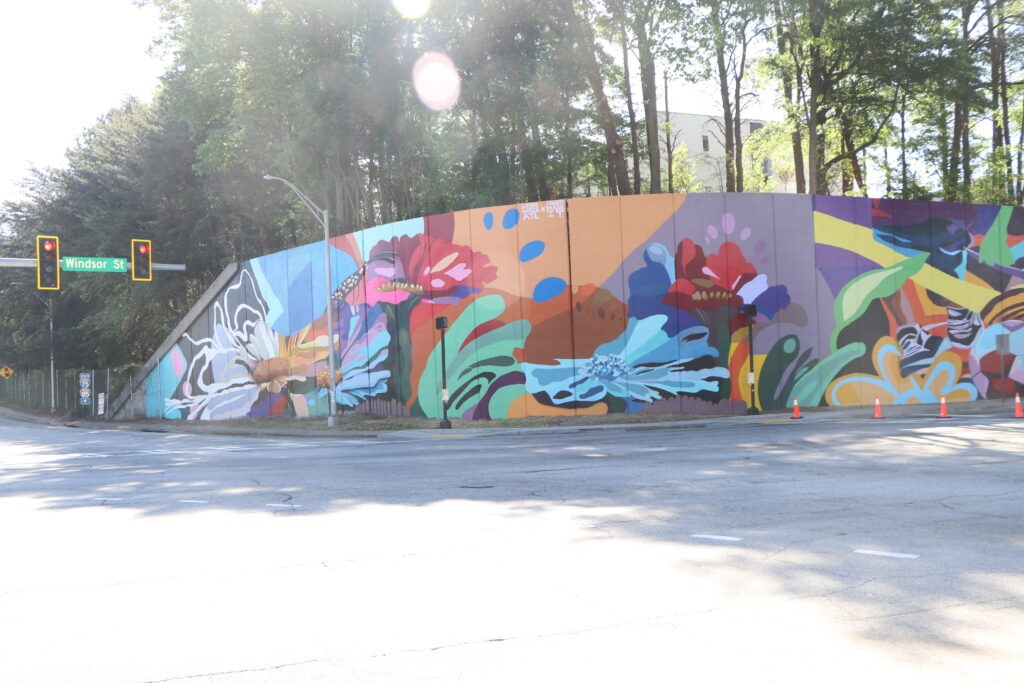
The sun hadn’t quite decided what kind of day it wanted to be. On one side of the retaining wall, warmth. On the other, a stubborn chill that clung to jackets and fingertips. But even in that cold pocket of Windsor and Rawson, the mural behind us radiated its own heat, a 10,000‑square‑foot pulse of color, care, and community.

Mechanicsville has seen its share of seasons. Some harsh. Some hopeful. But on this morning, as neighbors, artists, city leaders, and children gathered at the foot of a seen and unseen wall, the neighborhood felt like it was stepping into a new chapter. It was painted in over 100 colors and more than 800 spray cans, but rooted in something older, deeper, and already alive.

“Murals aren’t just nice because they look nice,” said Adriane Jefferson, Executive Director of the Mayor’s Office of Cultural Affairs. “They’re absolutely necessary.”
She wasn’t talking about beautification. She was talking about story, the kind that lives in a community long before a ribbon is cut.

And that’s the truth of Wild Seed, Wild Flower: it didn’t arrive to make Mechanicsville beautiful. It arrived to reflect the beauty that was already here.


A Wall That Needed a Story

Councilmember Jason Dozier spoke like a man standing in his own living room.
“Welcome to my home community of Mechanicsville,” he said, and the crowd answered with warmth.

He told the story of the “big A wall,”  a massive, weathered stretch of concrete that residents passed daily, often with frustration. A wall that collected graffiti, grime, and the weight of being overlooked. A wall that sat beneath new rapid housing units, beneath the Beacon at Melody, beneath the quiet resilience of people rebuilding their lives.

Mechanicsville Mural by artist Charity Hamidullah – Photo by Milton Kirby

Dozier remembered telling the administration early on: We’ve got to do something about this wall.

And in that moment, you could feel the neighborhood nodding with him. Because every community has a wall like that — a place that holds the memory of what hasn’t yet changed.

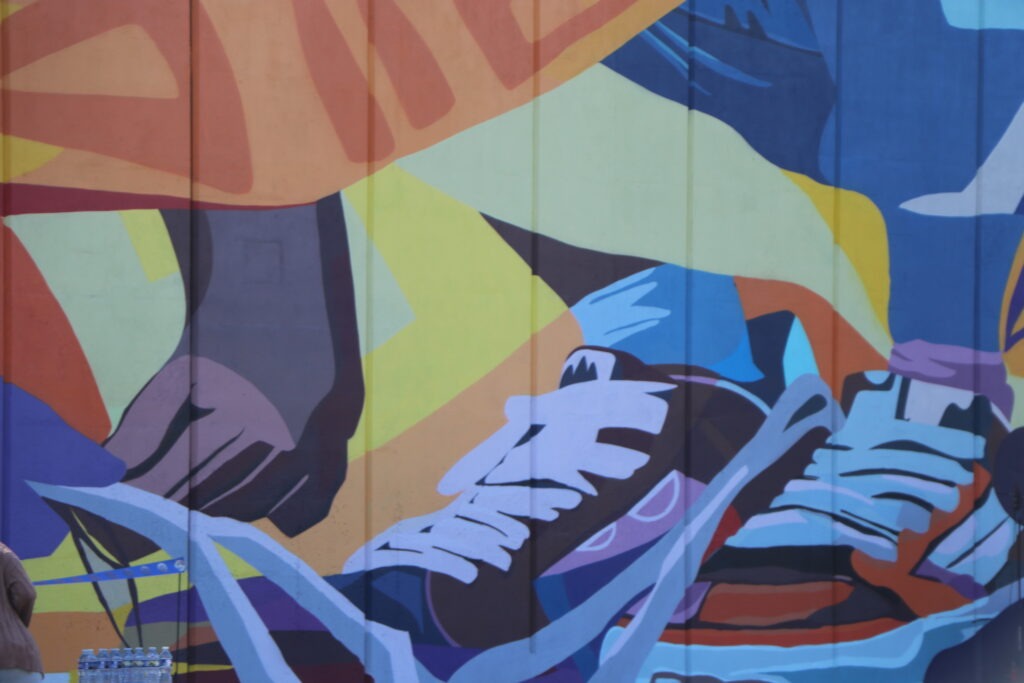
But now, that same wall holds a child tying someone else’s shoe while tying their own — a gesture Mayor Andre Dickens interpreted as a symbol of Atlanta itself:
Helping others while helping ourselves.
Growing together.
A group project.


Art as Infrastructure, Art as Home

Mayor Dickens spoke about infrastructure, not the kind marked by orange cones and jackhammers, but the kind that shapes how a city feels.

“People are seeing these murals,” he said. “You’re seeing the social and artistic infrastructure that resonates with our emotions and our love of the city.”

It’s rare to hear a mayor talk about art with that kind of clarity. But in Atlanta, public art has long been a civic language. From Maynard Jackson to today, artists have been treated not as accessories to city life, but as partners in shaping it.

And this mural, the largest of the ten commissioned for the Bridges, Tunnels, and Walls program, stands as a testament to that partnership.


The Immigrant Who Helped Atlanta See Itself

When Monica Campana, co‑founder and executive director of Living Walls, stepped to the mic, she brought the story full circle.

She came to Atlanta in 2007 as an immigrant from Peru.
She founded Living Walls in 2010.
And she learned quickly that public art was the most democratic, accessible, and empowering way to claim space in a city.

“Public art made me feel like my voice mattered,” she said.
It made her feel seen.
It made Atlanta feel like home.

And then she said something that stayed with me long after the speeches ended:

“This mural is a love letter to Atlanta.”

A love letter written by artists from New Orleans, New York, Greece, Iran, Eritrea, Italy, Puerto Rico, Colombia, Peru,  and Atlanta itself.
A global chorus painting a local truth.


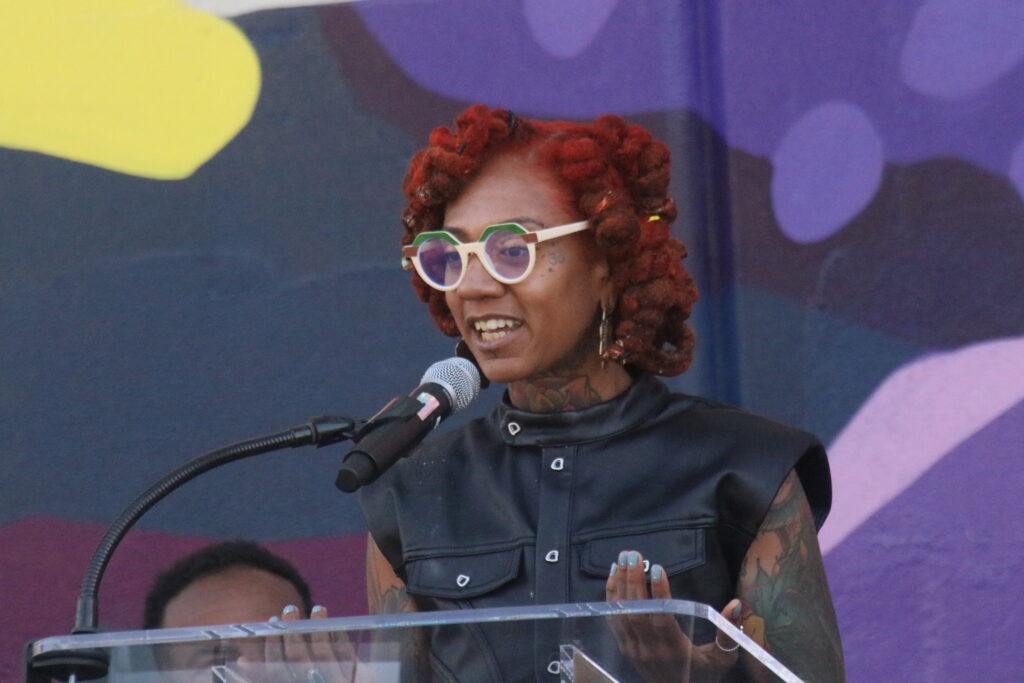
Charity Hamidullah – Photo by Milton Kirby

The Artist Who Saw God in Mechanicsville

When lead artist Charity Hamidullah spoke, the ceremony shifted.
Her voice carried something tender, something spiritual.

She talked about seeing children at the Dunbar Center — chalk on their hands, creativity in their eyes.
She talked about seeing God’s creativity in the neighborhood.
She talked about communities tying each other’s shoes, lifting each other up, dancing in harmony.

“This wall is just a mirror,” she said.
A mirror of Mechanicsville.
A mirror of Pittsburgh.
A mirror of South Downtown and Castleberry Hill.
A mirror of every place where people have survived, created, and loved each other through change.

Soccer Ball – Mechanicsville – Photo by Milton Kirby

Yes, the mural was created ahead of the World Cup.
Yes, the world will see it.
But Charity reminded us of the deeper truth:

“This community has been beautiful for a very long time.”

The mural didn’t create that beauty.
It simply made it impossible to ignore.


Mechanicsville Mural – Photo by Milton Kirby

A Wildflower That Will Keep Spreading

When the ribbon was finally cut, the crowd pressed forward — neighbors, artists, city staff, children, elders.
People touched the wall.
People took photos.
People lingered.

And in that lingering, you could feel something growing.

Wildflowers don’t bloom because someone is watching.
They bloom because the soil is ready.

Mechanicsville was ready.

This mural — this wild seed — will keep spreading. Not because of the World Cup.
Not because of the cameras.
But because the community it reflects has been blooming all along.

And now, the city has a wall that tells the truth.

Related articles

Atlanta Marks Major Housing Milestone with Opening of The Beacon at Cooper Street

Atlanta Launches Human Rights Plan Ahead of 2026 FIFA World Cup

City of Atlanta Launches ATL BIZ: New Platform Set to Simplify Permits, Taxes, and Payments Services

City Leaders Help Atlantans Start Fresh at Justice Fair

Atlanta Pauses Construction for Fourth of July, Ramps Up FIFA World Cup Prep

Truth Seekers Journal thrives because of readers like you. Join us in sustaining independent voices.


Inside the Bill Pickett Invitational Rodeo — Part 5

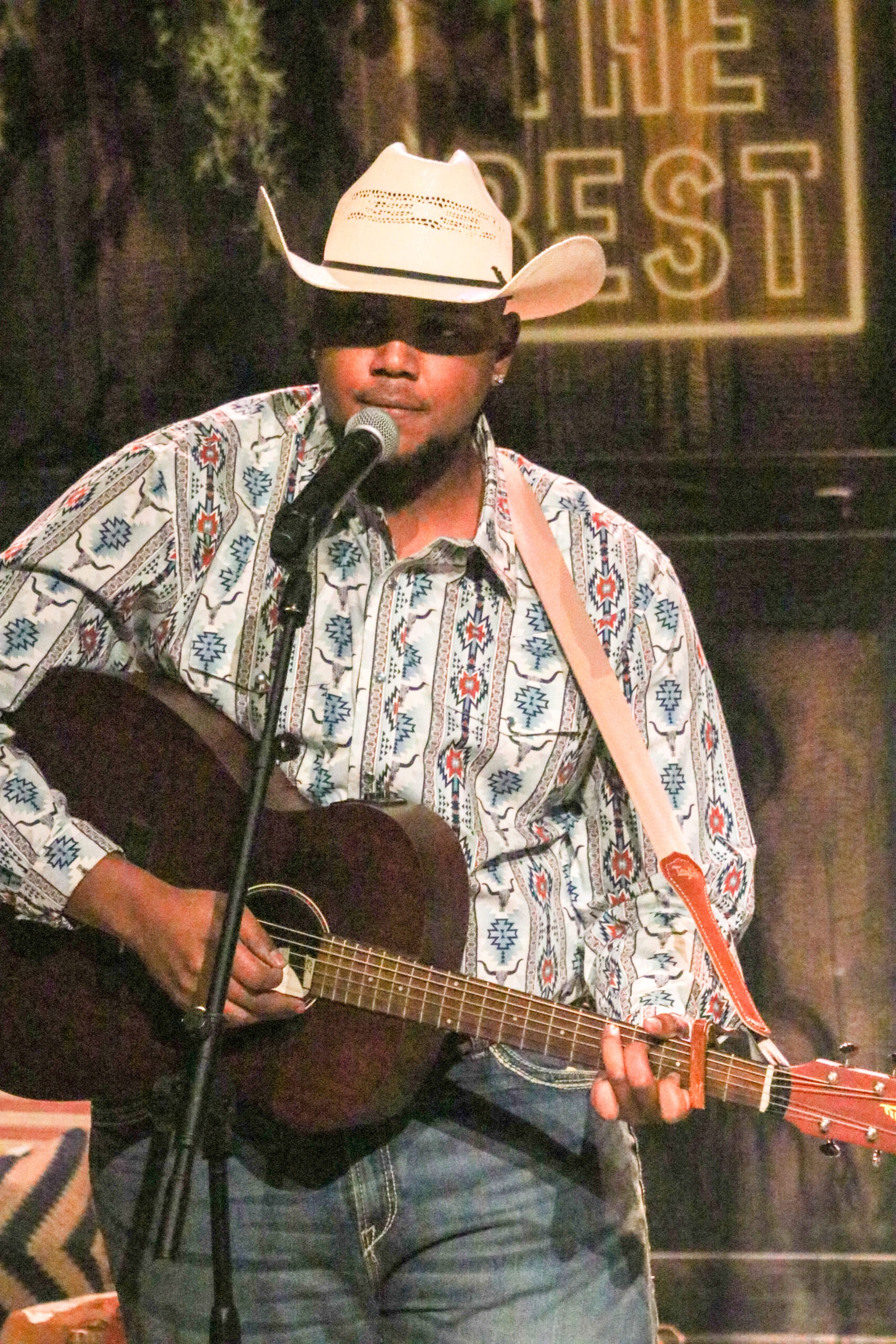
Nathaniel “Mr. Bowleggs” Dansby’s Soul Country journey reclaims Black roots in country music, blending faith, legacy, and storytelling into a timeless cultural revival.

Nathaniel “Mr. Bowleggs” Dansby Reclaims the Roots of Country Music

By Milton Kirby | Atlanta, GA | April 6, 2026

Nathaniel Dansby’s journey into Soul Country began long before he stepped onto a stage. Long before he became “Mr. Bowleggs,” the rising force who fought his way from third place to champion of the Soul Country Music Star (SCMS) competition, he was simply a boy in a crowded Alabama home—one of six children raised in a family where music wasn’t a hobby. It was a mandate.

“We were kind of like the Jackson 5,” he said with a grin. “We got our tail whooped if we didn’t stay in the room and practice until we perfected it.”

Under the strict but loving guidance of his mother, Dansby began singing at age three. By five, he was performing publicly with his siblings as The Little Gospel Wonders, carrying harmonies from church revivals to community gatherings across Alexander City. His mother saw something in him early, something she named out loud.

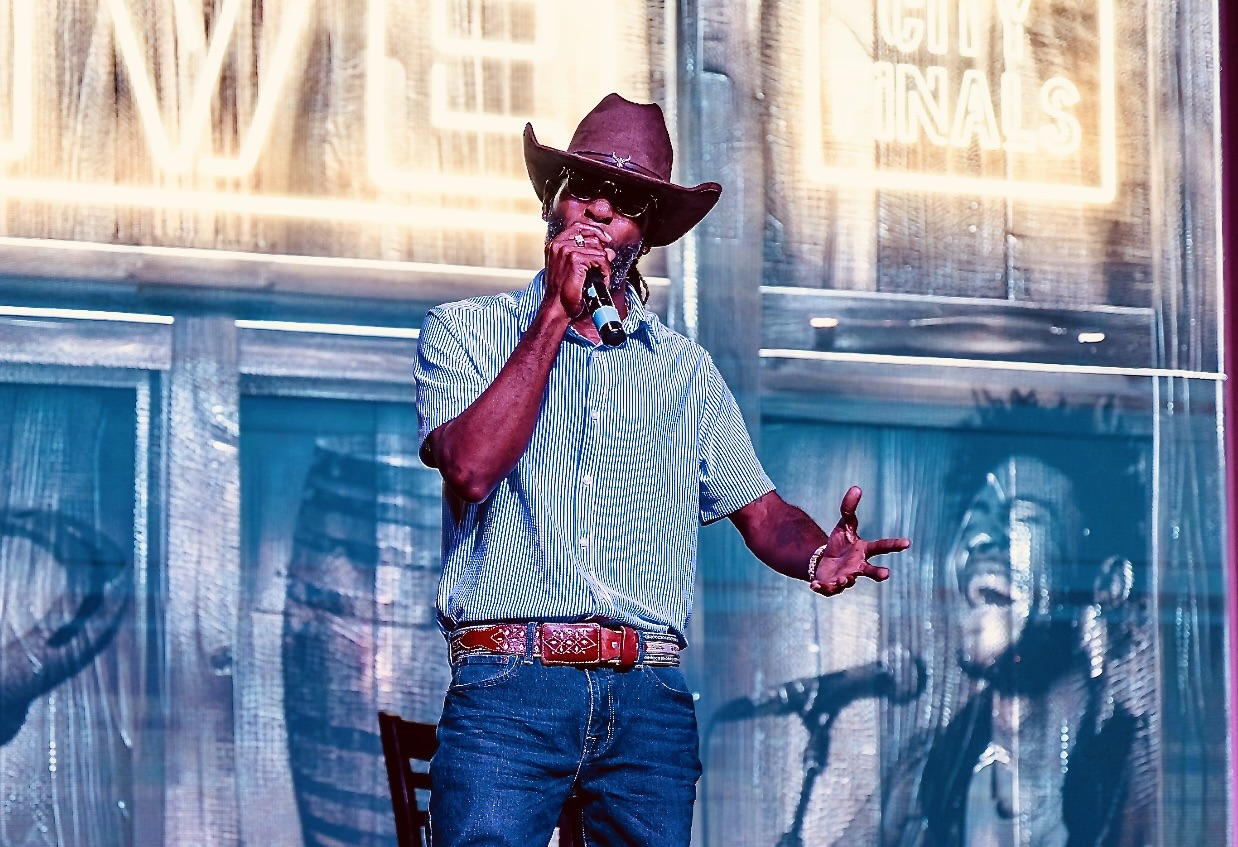
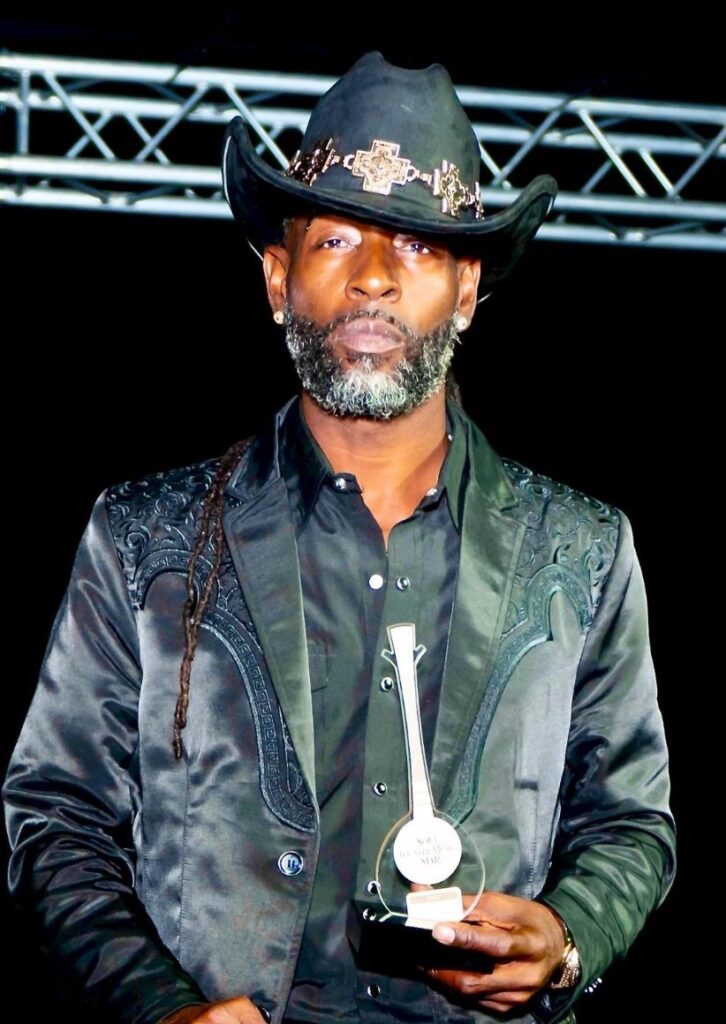
Nathaniel Dansby – Courtesy Photo

“My mom told me, ‘Nate, you’re my special child,’” he said. “I lost her in 1998, but I still hear her voice. Before I entered this competition, she came to me and said, ‘Hey, you got it. You’re a winner.’ I had to give it my all because I had that confirmation.”

Her belief became the quiet engine behind his reinvention, heartbreak, and eventual triumph.


A Calling, Not a Career

Dansby doesn’t describe music as a profession. He calls it a calling—one shaped by faith, family, and a desire to give people something real.

“I don’t want to create music just for now,” he said. “I want it to last forever.”

That spiritual grounding shapes not only how he sings, but why he sings. His mission is simple: to give people hope, to make them feel something, and to create music that outlives him.


Finding Country and Finding Himself

Country music was not always part of Dansby’s plan. After years rooted in gospel and R&B, he began singing country music about seven years ago. What started as a new direction quickly became something deeper, something that felt like home.

“I never thought in a million years I’d be singing country,” he said. “But it fits my heart.”

Country music offered him something the other genres didn’t: a place where storytelling, vulnerability, and emotional clarity mattered more than vocal gymnastics.

“Country music is a story. It’s life. I want people to see what I’m singing about.”

Rickey Davis Scott the musician and cultural historian and Soul Country Music Star judge —puts it plainly:

“The history of country music… it’s all from us. From the banjo in South Africa to the rhythms that shaped Hank Williams. Black artists aren’t new to country—we’re the architects.”


Season One: The Third Place Finisher Who Refused to Quit

Dansby’s first appearance on the SCMS stage didn’t end in victory — in fact, he didn’t even make it to the top two. He finished third at the Atlanta regional competition in Season One. The placement stung, not because he expected an easy win, but because he knew he hadn’t yet shown the fullness of who he could be. “I thought, ‘I’m good, I got this,’” he admitted. “But I didn’t. I wasn’t prepared.”

Scott remembers it clearly.

“He went up there and sang R&B,” Scott said. “He didn’t know the country lyrics, the catalog, the tradition. The voice was there, but the identity wasn’t activated yet.”

The crowd loved him.
The judges didn’t.
And Dansby felt the sting.

But he didn’t quit.

“It taught me to give everything—my pain, my soul—because if people can’t feel it, there’s no point.”


The Transformation

After Season One, Dansby went to work.

He studied country music intentionally, the artists, the phrasing, the emotional truth‑telling that defines the genre. He learned to sing country, not imitate it.

“He’d come to me talking about songs he heard on the radio,” Scott said. “That’s when I knew he was embracing the culture, not just the sound.”

Dansby became, in his own words, a musical chameleon, able to shift between genres without losing himself.

“I realized the only thing stopping me was me.”


Season Two: The Redemption and the Crown

When Dansby returned for Season Two, he wasn’t the same artist who had finished third the year before. He came back humble, focused, and prepared—determined not to repeat the mistakes of his first run.

He was grounded.
Focused.
Present.

“I wanted to give everything in my soul so people could feel it,” he said.

And they did.

This time, he didn’t just advance, he dominated. Dansby won the Atlanta regional competition, earning his place on the national stage in Hollywood. And when he stepped into that spotlight, he delivered the performance of his life.

He killed it.
The festival crowd loved him.
And the judges felt what they hadn’t felt before: a fully realized Soul Country artist.

When his name was called as the Season Two national winner, the room erupted. The man who once doubted whether he belonged in country music had now proven himself at the highest level.

“Going to LA showed me I belonged,” he said. “It showed me I could stand with anybody.”

Now, with a potential 2026 tour with the Bill Pickett Invitational Rodeo (BPIR) on the horizon, Dansby returns to the national spotlight not as a newcomer, but as a contender—sharpened, seasoned, and ready for whatever comes next.

“It was the greatest feeling of my life,” he said. “I’ve never felt anything like it.”


 “I want to leave my footprint in the sand. I want people to say, ‘He was here, and he’s here to stay.’”


A Performer Driven by Connection

On stage, Dansby doesn’t perform to the audience, he performs with them.

He describes entering a “zone,” where the goal is not perfection but impact. Whether through clapping, movement, or quiet attention, he looks for signs that the audience feels the music.

“That connection fuels me,” he said. “It turns each song into a shared experience.”


The Cultural Weight of Soul Country

To understand Dansby’s rise, you have to understand the movement behind him.

Soul Country Music Star is not just a talent competition—it is a cultural restoration. A reclamation of a musical tradition whose roots are Black, Southern, rural, and deeply African.

“We’re creative people,” Scott said. “Everything the world loves—we created. Country music is no different.”

Dansby is part of that reclamation—a living reminder of what was lost, and what is returning.


BPIR: The Cultural Homecoming

The Bill Pickett Invitational Rodeo—the nation’s oldest Black rodeo—has become a proving ground for Soul Country artists. It is where Black audiences show up early, buy tickets, buy merch, and support their own.

“It’s a blessing to the people,” Dansby said. “That’s what excites me most—connecting with them.”

Scott sees BPIR as a cultural anchor.

“It’s not just a rodeo,” he said. “It’s a community. It’s a place where our artists can be embraced without running away from their own people.”


The Duet the World Is Waiting For

Dansby and fellow Soul Country artist Kirk Jay have been discussing a duet—a collaboration both artists believe could be a defining moment for the genre.

Dansby says the contrast in their vocal styles is what makes the idea so powerful.

“When we finally record it, it’s going to be something special,” he said.

Scott agrees.

“Two Black men in country, both with powerhouse voices—that’s rare. That’s history.”


A Legacy in the Sand

At 43, Dansby sees his career not as a late start, but as a divine timeline.

He wants his music to be evergreen.
He wants his story to inspire.
He wants his children—and the world—to know that anything is possible.

“I want to leave my footprint in the sand,” he said. “I want people to say, ‘He was here, and he’s here to stay.’”

As “Mr. Bowleggs” continues his ascent, he carries Alexander City, The Little Gospel Wonders, and the full weight of Soul Country’s rebirth with him—proving that the soul of country music has always been right where it started: in the heart.

Country Roots, Diverse Beats: Celebrating the Rich Tapestry of Soul in Country Music.

Agricenter International Showplace Theater – 7777 Walnut Grove Rd, Memphis, TN 38120

Agricenter International Showplace Arena – 105 Germantown Parkway, Cordova, TN 38018

Bill Pickett Invitational Rodeo

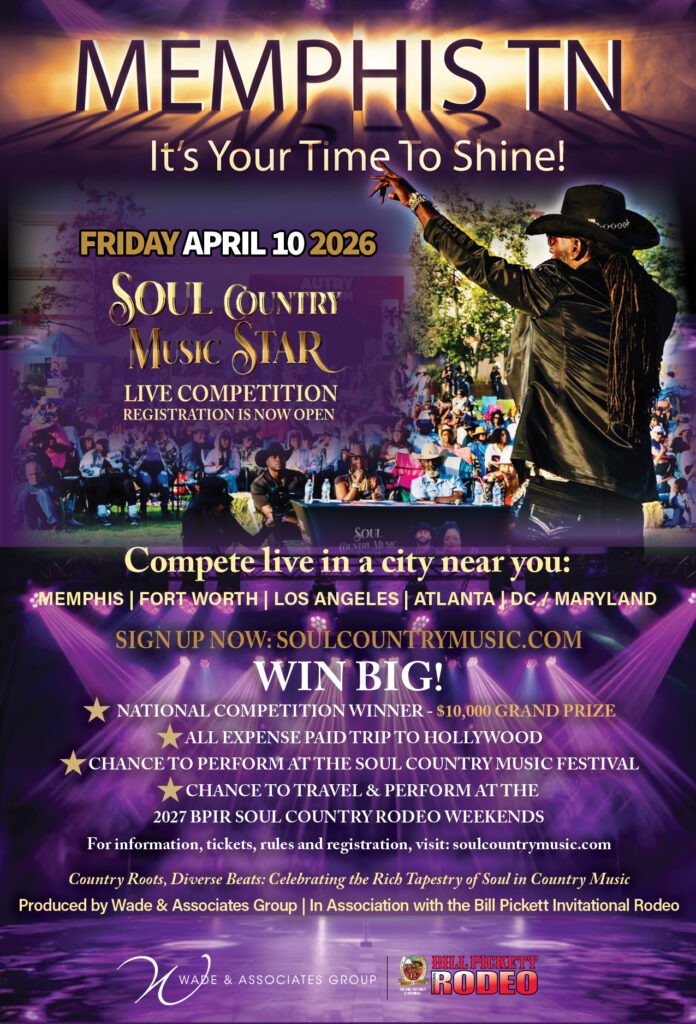
Rodeo for Kidz Sake – Friday, April 10, 2026 | 10:00am

Music Competition – Friday, April 10, 2026 | Doors open 7:00pm Competition 8:00pm

BPIR Rodeo – Saturday, April 11, 2026 | 1:30 pm or 7:30 pm


Event Tickets and additional information


Upcoming in the TSJ series – Inside the Bill Pickett Invitational Rodeo

— Rodeo for Kids’ Sake and the Next Generation

Truth Seekers Journal thrives because of readers like you. Join us in sustaining independent voices.

Obama Foundation Partners with After School Matters to Launch Youth Programs at Presidential Center

Milton Kirby | Chicago, IL | April 4, 2026

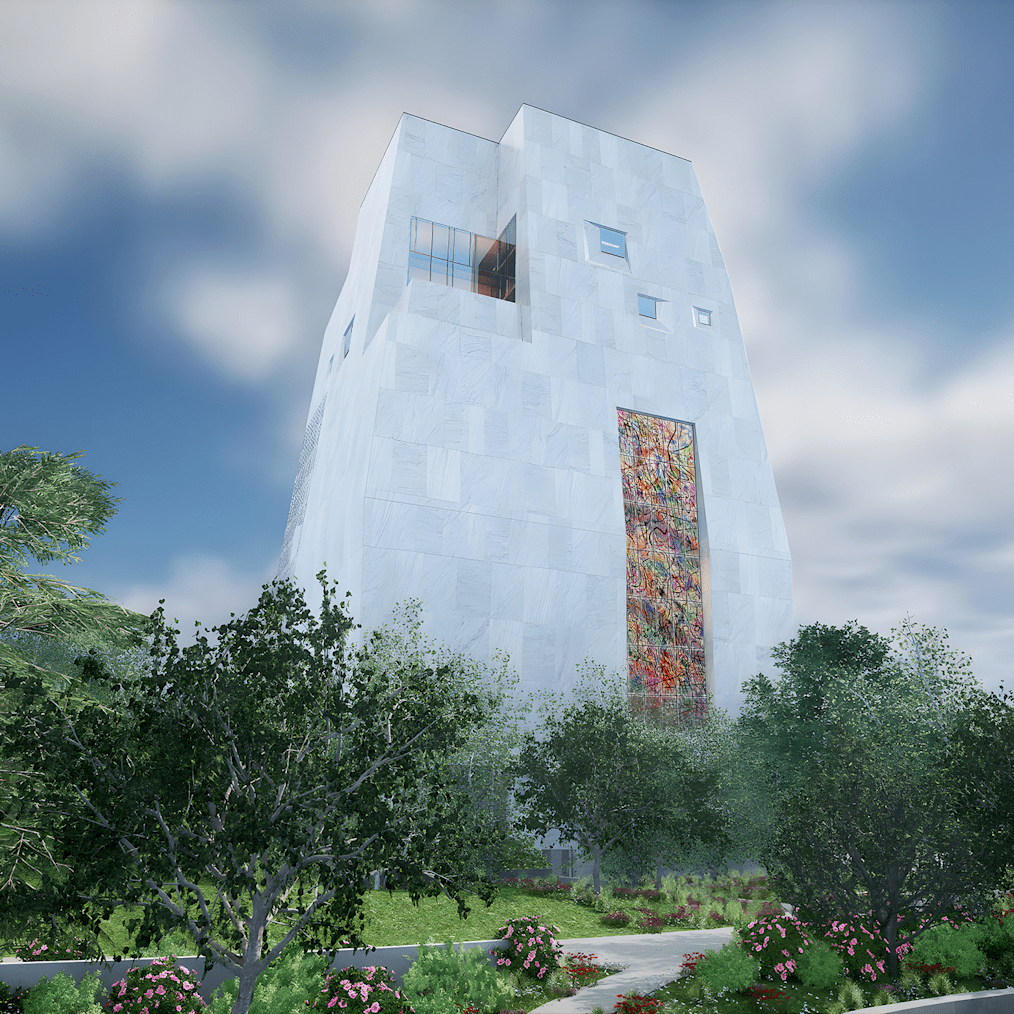
The Obama Foundation has announced a major youth programming partnership with After School Matters, positioning Chicago teens at the center of its mission as the Obama Presidential Center prepares to open this summer.

The partnership will bring paid, hands-on programs to teens across Chicago’s South Side, marking a significant investment in youth development, workforce readiness, and community engagement. The initiative will operate through the Center’s Teen Action Lab, a dedicated space designed to empower young people with practical skills, mentorship, and leadership opportunities.

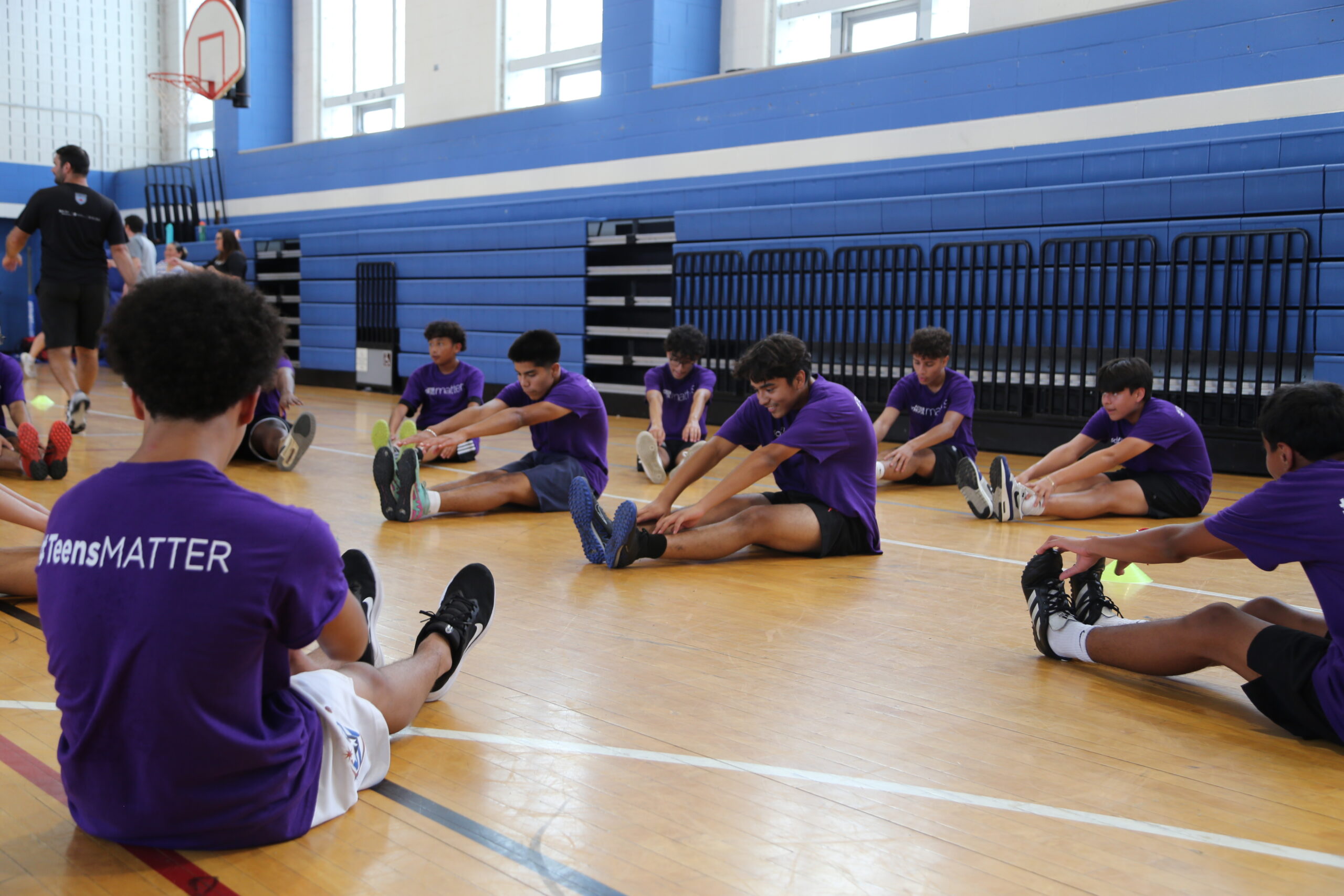
According to the Foundation, the programs will launch in July with two initial offerings: Basketball, Health & Wellness and Volleyball, Health & Wellness. Both programs will take place at Home Court, a key facility on the Presidential Center campus, and are open to high school students ages 14 to 18 from South Shore, Woodlawn, and Washington Park.

Participants will not only gain access to structured athletic programming, but also receive stipends—an important feature that reflects a broader commitment to valuing teens’ time, effort, and growth.

“This is about more than sports,” said Valerie Jarrett, CEO of the Obama Foundation, in the official announcement. “It’s about building skills, strengthening communities, and inspiring the next generation of changemakers.”

The collaboration signals a deeper alignment between two organizations with long-standing commitments to youth empowerment. For more than 35 years, After School Matters has provided Chicago teens with access to after-school and summer programs spanning the arts, STEM, communications, and leadership development. Its project-based model, led by industry professionals, has reached hundreds of thousands of young people across the city.

Mary Ellen Caron, CEO of After School Matters, emphasized the broader impact of the partnership, noting that programs like these create safe, welcoming spaces where teens can grow both personally and professionally.

“Sports can be a gateway,” Caron said. “They build confidence, create connection, and open doors to mentorship and opportunity that extend far beyond the court.”

The Teen Action Lab is expected to expand over time, with additional programming and partnerships already in development. Organizations such as My Brother’s Keeper Alliance, Girls Opportunity Alliance, Chicago Public Schools, the Chicago Park District, the Chicago Public Library, and Laureus USA are all expected to contribute to a growing ecosystem of youth-focused initiatives at the Center.

The announcement underscores the broader vision behind the Obama Presidential Center—not just as a museum or tourist destination, but as a living civic space rooted in community impact. Located on Chicago’s South Side, the Center aims to generate economic opportunity while serving as a hub for education, leadership, and public engagement.

For teens in surrounding neighborhoods, the opportunity is immediate and tangible: paid programs, skill-building experiences, and direct access to mentorship—all within a space designed to reflect their potential.

Applications for the Teen Action Lab programs are now open, with limited spots available. Interested students must complete a Program Interest Form and participate in an interview process.

As the Obama Presidential Center prepares to open its doors, this partnership offers an early glimpse into how the campus intends to function—not just as a symbol of history, but as an active investment in the future.

Related articles

Obama Presidential Center to Open June 19 with Four-Day Celebration on Chicago’s South Side

ARTIST PROFILE:  Theodis Ealey

By Milton Kirby | Truth Seekers Journal | Artist Profiles Series

Roots in Duncan Plantation, Raised in Natchez

The story of Theodis Ealey begins in 1947 at Duncan Plantation in Mississippi, where the red clay roads carried music long before they carried cars. He grew up in Natchez, just off Highway 61, the legendary Blues Highway and directly across from Miss Willie Mae’s Juke Joint.

“I would just sit on the steps and listen to the sounds coming from there,” he once recalled.

Those sounds — raw, unfiltered, alive — became the blueprint for his life.

Today, a monument in Sibley, Mississippi honors the Ealey family as one of the most musically gifted to emerge from the region. Brothers Theodis, YZ, and Melwyn first performed together in the early 1960s as YZ Ealey and the Merry Makers, while their older brother David “Bubba” Ealey also carved out his own recording career.

In the Ealey household, music wasn’t pastime. It was inheritance.


A Guitar at Four, a Stage at Fourteen

Theodis first picked up a guitar at age four, taught by his brother YZ. By fourteen, he was playing bass at his first paid gig at Natchez’s Horseshoe Circle nightclub.

A year later, he switched to guitar and joined Eugene Butler & the Rocking Royals, sharpening his craft across the local circuit.

As one of eleven children, music became both identity and escape — a way to imagine a world beyond Mississippi’s fields and factory lines.


Air Force, Oakland, Atlanta — But Always Mississippi

The U.S. Air Force carried him far from home, first to Hawaii for six years, then to Oakland, California. Everywhere he went, he brought what he calls the “Mississippi Juke Joint Spirit.”

Eventually, he settled in Atlanta, where he still resides.

Along the way, he played with blues and soul giants whose names anchor American music history:

  • Little Milton
  • Johnny Clyde Copeland
  • Richard “Dimples” Fields
  • Charles Brown

These collaborations helped him forge a sound that blends blues, funk, soul, country, and rock into something unmistakably his own.


The Voice Behind the Guitar

Photo by Milton Kirby Theodis Ealey

By 1991, Atlanta‑based Ichiban Records recognized that Ealey was more than a virtuoso guitarist. They signed him, launching a six‑year run that produced four successful albums and introduced audiences to Theodis the artist, charismatic, confident, and deeply connected to adult listeners who heard their own stories in his songs.


“Stand Up In It” — The Billboard Breakthrough

When Ichiban closed, Ealey didn’t slow down. He founded IFGAM Records — “I Feel Good About Myself” — and released It’s A Real Good Thang.

Then came the project that changed everything: Stand Up In It (2004).

The title track became a cultural phenomenon:

  • #1 on Billboard’s Hot R&B/Hip-Hop Singles Sales Chart for five consecutive weeks
  • Top 5 on Billboard’s Blues Album Chart
  • A rare crossover into R&B/Hip-Hop territory

Intended for “grown folks,” the song exploded nationwide, earning him two JACKIE Awards and cementing his place in Southern Soul history. Women across the country claimed the anthem as their own.

The album also featured “Mississippi Delta,” penned by Bruce Billips a tribute to the land that shaped him.


Awards and Recognition

Ealey’s honors reflect both longevity and impact:

  • Bay Area Male Vocalist Top Star Award (1994)
  • Mo’ Better Blues Male Artist of the Year (Atlanta, 1997)
  • Jus’ Blues Best Blues & Soul Man Song of the Year (2007) for “Francine”
  • Jus’ Blues Lowell Folsom Legends Award (2006, 2008)

His 2006 album I’m The Man You Need and later live releases reaffirmed what fans already knew, no studio can fully contain Theodis Ealey.

To understand him, you have to see him live.


From Juke Joints to Hollywood

Ealey’s stage magnetism opened doors beyond music. His film and television appearances include:

  • A Kiss to Die For
  • Miss Evers’ Boys
  • The Fighting Temptations
  • Daddy’s Little Girls

He also appeared in stage productions and national commercials, always carrying that same juke joint authenticity.


Reinvention Without Losing Roots

In 2009, fans craving the live Ealey experience got exactly what they wanted — raw, magnetic, juke joint blues. Singles like “The Old Man’s Story (MBFDD)” and “Slow Grindin‘” showcased his staying power.

His later project, You and I, Together” featuring Lacee, revealed a more romantic, sensual side of the Bluesman Lover.

Through it all, he remained grounded and married to Linda Abraham Ealey and committed to the craft that shaped his life.


Legacy of a Bluesman

Theodis Ealey is more than a charting artist. He is a bridge — from Duncan Plantation to Billboard charts, from Miss Willie Mae’s Juke Joint to Hollywood screens.

He represents a strain of Southern Soul that is bold, unfiltered, humorous, sensual, and rooted in lived experience.

The monument in Sibley tells the story of a gifted musical family.
The stages across America tell the rest. Wherever Theodis Ealey plugs in his guitar, the Mississippi Juke Joint Spirit still travels with him.

Related video

Theodis Ealey in His Own Words

Related articles

Artist Profile: Anton Cunningham

Artist Profile: Sonny Hill

Artist Profile:  Yovel Riches

Artist Profile: Lisa Maydwell

Artist Profile: 1 Way Street

Artist Profile: Ntumba

Support open, independent journalism—your contribution helps us tell the stories that matter most.

Inside the Bill Pickett Invitational Rodeo — Part 4

Kirk Jay rises from The Voice to Soul Country leader, using BPIR platform to elevate Black country artists and reclaim a powerful musical legacy.

Kirk Jay and the Rise of Soul Country: How a Small‑Town Singer Became the Voice of a Cultural Return

By Milton Kirby | Atlanta, GA | March 28, 2026

When Kirk Jay steps onto the dirt floor of a Bill Pickett Invitational Rodeo arena, the crowd doesn’t just hear a singer they witness a movement taking shape. The Alabama‑born artist, who first captured national attention with a third‑place finish on Season 15 of NBC’s The Voice, has become the face of a growing cultural reclamation: Black artists returning to a genre they helped create.

In 2025, Jay toured with the Bill Pickett Invitational Rodeo (BPIR) and served as a judge for the Soul Country Music Star competition. This year, he returns as the Show Host for Season 3 — a full‑circle moment for the platform’s first champion and winner of its $10,000 grand prize.

“I think Soul Country Music Star gave me a name,” he said. “It’s paving the way for Black country artists like me to get out there and showcase our talent. And I’m having fun. I’m building relationships, gaining fans, and growing as an artist.”

Now a central figure in both Soul Country Music Star and BPIR, Jay has become more than a performer. He is, in many ways, proof of concept. Jay said. “It helped elevate what I do and put it in front of people who needed to hear it.”


A Country Childhood in Bay Minette

Jay is quick to correct anyone who tries to claim him as a Mobile native. “I’m from Bay Minette,” he said with pride. “A lot of people say Mobile, but I spent most of my time in this little town called Bay Minette.”

His roots run deep in the red clay of South Alabama. His parents were devoted fans of old‑school country Ronnie Milsap, Mariah, Night Train and the soundtrack of his childhood blended gospel harmonies with country storytelling.

“We’re no gimmick,” he said. “My family is country. We fish, we ride, we do all the country stuff. This is our lifestyle.”

Jay’s musical journey began in church, where he taught himself piano by ear. After services, he would slip back into the sanctuary, turn to the piano, and mimic what he heard the musicians play. He never learned to read music. Even today, every song begins with a melody — a hum, a chord progression, a feeling — long before any lyrics appear.

“Producers get mad at me,” he laughed. “They say, ‘Why you always start with melody?’ But that’s just how God gave it to me.”


Finding His Voice and His Calling

Jay discovered his vocal gift in the ninth grade after winning a school talent show. That moment sparked a journey that took him across Alabama, Georgia, and Texas, performing at open mics and learning how audiences responded to his sound.

Photo courtesy BPIR – Kirk Jay

His breakout moment on The Voice came with his rendition of “In Case You Didn’t Know,” a cover delivered with such sincerity that many fans assumed it was his original. “That’s marketing,” he said with a grin. “You sing it like it was meant for you.”

For Jay, country music is not an act, it’s inheritance.

“Country music belongs to us, and nobody does it like us,” he said. “Nobody brings that feeling, that soul… like we do. We are the roots. We are the fire. We are the history.”


The Soul Country Connection

Jay’s introduction to Soul Country Music Star came through his first manager, who urged him to audition. After researching the platform, he realized he had found something rare: a space intentionally built for Black country artists.

“I said, ‘Man, this could take me to another level,’” he recalled. “And it did.”

Winning the competition opened doors not just for him, but for the movement itself. His success demonstrated that Soul Country Music Star could identify, elevate, and launch Black country talent on a national scale.

His authenticity resonates deeply with fans, especially young listeners who see themselves reflected in his journey. Many reach out with collaboration requests, concert inquiries, and messages of inspiration.


Growing Through the Rodeo

Performing at BPIR events has sharpened Jay’s artistry. Rodeo arenas are loud, cavernous, and unpredictable. Thousands of fans fill the stands, and the acoustics shift with every stomp of a boot.

“You really got to know yourself as an artist,” he said. “It’s a big platform. You have to study your craft and stay consistent.”

The rodeo crowds have embraced him, and he credits BPIR with expanding his audience, boosting his music sales, and deepening his connection to the culture that raised him.

Jay now has more than 87,000 Instagram followers many of them young Black fans who see in him a version of themselves they’ve never seen on a country stage.


Reclaiming a Sound That Started With Us

Jay speaks openly about the erasure of Black contributions to country music and the urgency of reclaiming that history.

“Country music belongs to us,” he said. “Nobody brings the soul, the feeling, the heart like we do. We’ve been pushed out, but it’s slowly evolving. We’re coming back.”

He sees Soul Country Music Star and BPIR as essential to that restoration.

“I don’t want Black country artists to feel dismissed. We matter. Our sound matters. What we bring is special. We can’t stop doing it. We have to make our mark.”


Inspiring the Next Generation

When asked about youth events like the upcoming “For Kids Sake Rodeo” in Memphis, Jay lit up at the idea of children seeing a Black country artist up close.

“It’s a chance for kids to see our culture,” he said. “Nobody getting hurt, nobody getting shot just doing what we love. Country stuff.”

Even though he isn’t scheduled to perform at that event, the concept resonated deeply. “That’s another step for our youth,” he said. “We’re training up the next generation.”


A Partnership With History

Jay’s partnership with BPIR marked a turning point in his career. Performing for thousands in packed arenas pushed him to grow as a professional and as a cultural ambassador.

“Those stages are big platforms,” he said. “Inside those rodeos, it’s sometimes hard to hear… but the fans reach out being inspired by the approach and delivery.”

His role has since expanded from performer to judge and host, helping Soul Country Music Star scout the next generation of talent. His mission is clear: ensuring that Black culture is no longer erased or sidelined from the genre it helped create.


The Soul Country Music Star Anthem

Jay is currently working on the Soul Country Music Star Anthem, written by Michelle R. Johnson. When he first read the lyrics — “We are the roots, we are the sound, we are the history…” — he felt tears forming before he reached the ten‑second mark.

“I know when a song is a hit,” he said. “This anthem is going to be powerful.”

He hopes to finish it before the first rodeo date of the season.


A Vision Bigger Than Music

As the interview wound down, Jay shared a vision that extends far beyond stages and spotlights.

“I love Bill Pickett Rodeo. I love Soul Country Music Star,” he said. “I want to keep traveling and building relationships until we are heard, respected, and seen. Until we come together as one big family.”

His dream is a world where artists respect each other’s gifts, where racism loses its grip, and where traditions Black cowboys, Black country artists, Soul Country, BPIR — are passed down to future generations.

“Life is so short,” he said. “Let’s fly. Let’s love one another. Let’s take care of our families and pass this down to our kids so the tradition lives on forever.”


A Movement, Not a Moment

As Soul Country Music Star enters its next season and BPIR continues its national tour, Jay remains focused on growth, connection, and purpose. “I just want to keep building, keep traveling, keep being heard,” he said. His vision extends beyond music toward unity, recognition, and cultural preservation.

“We’ve got to come together,” he said. “Respect each other’s gift and let the tradition live on.”

Because Kirk Jay isn’t just a singer.
He’s a bridge between past and future, between erasure and recognition, between what country music became and what it was always meant to be.
And as Soul Country Music Star rises, he stands at the center of a cultural return that’s only just beginning.

Country Roots, Diverse Beats: Celebrating the Rich Tapestry of Soul in Country Music.

Agricenter International Showplace Theater – 7777 Walnut Grove Rd, Memphis, TN

Bill Pickett Invitational Rodeo

Music Competition – Friday, April 10, 2026 | 7:00 pm 8:00 pm Competition

 BPIR Rodeo – Saturday, April 11, 2026 | 1:30 pm or 7:30 pm


Event Tickets and additional information


Upcoming in the TSJ series – Inside the Bill Pickett Invitational Rodeo

— Nathaniel Dansby (Mr. Bowleggs) : The Sound of Country Soul at the Rodeo
— Rodeo for Kids’ Sake and the Next Generation

Related articles

Inside the Bill Pickett Invitational Rodeo — Part 3

Inside the Bill Pickett Invitational Rodeo — Part 2

Inside the Bill Pickett Invitational Rodeo — Part 1

Bill Pickett Invitational Rodeo Names 2025 Champions After a Year of Grow and New Partnerships and a Powerful Legacy

Bill Pickett Invitational Rodeo National Finals Nominated for USA TODAY’s Best Rodeo Award

Bill Pickett Invitational Rodeo Celebrates 40 Years of Tradition and Excellence

Martin Luther King, Jr. African-American Rodeo of Champions Thrills Denver Audience

Truth Seekers Journal thrives because of readers like you. Join us in sustaining independent voices.
ARTIST PROFILE: Anton Cunningham

By Milton Kirby | Truth Seekers Journal | Artist Profiles Series

THE SON WHO BECAME THE STORYTELLER:

Preserving the Legacy of Lu Vason

When Anton sat down with Valeria Howard Cunningham, the widow of Bill Pickett Invitational Rodeo (BPIR) founder Lu Vason, he didn’t just find a client he found a responsibility. Valeria had spent a decade trying to capture Lu’s lightning in a bottle, trying to honor the first love of her life and the cultural institution he built. She needed someone who could carry that weight with care.

She didn’t choose a historian, a journalist, or a seasoned biographer.
She chose Anton Cunningham, a man whose connection to the story was not academic, but spiritual. A man whose own life had been shaped by loss, reinvention, and the search for purpose. A man who understood, in his bones, what it means to carry a legacy forward.

Anton didn’t set out to become a writer. His journey began on basketball courts in Pasadena, California, where he grew up before earning a scholarship to Georgia Southwestern in Americus. What was supposed to be a practical decision, a scholarship his parents encouraged him to take, became the beginning of a new life. Georgia opened him up. Atlanta shaped him. The Atlanta University Center (AUC), the fraternity culture, the energy of Black excellence all around him – it showed him a different version of success, one rooted in community and ambition.

“Every one of our stories is somebody else’s medicine,” Anton says, reflecting on the process. “I was reading about Lu’s early days in Louisiana and his grandmother, and I thought, Man, that’s my grandma. I was reading about his struggles, and I was reading about myself.”

Before he ever touched a manuscript, Anton spent two decades in the fitness industry training clients, managing teams, and listening to people’s stories. “Sometimes those sessions were therapy,” he says. “People weren’t just trying to lose weight. They were trying to find strength, clarity, confidence.” Those conversations planted the seeds of something he didn’t yet recognize: a calling to help people tell their stories.

After twenty years, Anton stepped away from fitness and into entrepreneurship. He launched a marketing agency, learned digital advertising, and eventually founded KAJA Publishing – a company dedicated to helping people turn their lived experiences into books. “We’re all walking miracles,” he says. “But because it’s our story, we push it to the back.”

He began writing his first book, studying the craft by listening to Stephen King, James Patterson, and others talk about storytelling. “They all said the same thing,” Anton recalls. “Tell your story so people can understand it. Don’t worry about being perfect, be honest.”

Then came the conversation that changed everything.

Valeria told Anton she had been trying to write Lu’s story for nearly a decade. She had promised him she would preserve his legacy, but the emotional weight of the task had become overwhelming. Anton asked to see what she had written. He drafted the first chapter. Then the second. And as he reread his own words, he felt something he hadn’t expected: this feels right.

When Valeria read those early pages and told him she loved them, it gave him confidence. But the deeper confirmation came from the story itself. As he wrote, Anton came across a quote from Lu that stopped him cold:

“Everybody has a story — what’s yours?”

It was the same message Anton had already written on his own website before he ever touched the manuscript. “It was like God tapped me on the shoulder,” he says. “This is your assignment.”

Writing Under the Western Skies became more than a project.
It became a mirror.

The early chapters about Lu’s childhood in Louisiana reminded Anton of his own family roots in Albany, Georgia, the heat, the dirt roads, the sound of insects at night, the wisdom of grandparents who shaped entire generations. “I was reading about him,” Anton says, “but I was also reading about myself.”

The parallels deepened when Anton reached the parts of Lu’s life marked by loss and reinvention. Lu had endured heartbreak, the death of his mother, and moments of profound uncertainty before finding his purpose in the rodeo. Anton understood that journey intimately. A year and a half earlier, he had lost his own mother – the person whose love had anchored him since childhood. Soon after, a long‑term relationship ended. “I had to find who I was again,” he says. “I had to sit still, get quiet, and really understand myself.”

Writing Lu’s story became part of that healing.
It gave him structure.
It gave him purpose.
It gave him a way back to himself.

As Anton wrote, he also began to see the rodeo through new eyes. He traveled to BPIR events in Atlanta, Fort Worth, Baltimore, and D.C., watching the crowds, meeting the competitors, and witnessing the unique energy each city brought. He recognized faces from the manuscript, connected names to stories, and saw firsthand how the rodeo had become a cultural institution – a place where history, identity, and community converged.

“This was one man’s dream,” he says. “But look at how many lives it touches. Look at how many people it inspires. That’s legacy.”

That legacy came full circle when Anton’s father, Ronnie Cunningham, stepped into the room during our interview. Ronnie introduced himself with quiet pride:

“I’m Ronnie Cunningham. Anton is my second of four sons.”

He had read Anton’s book.
He loved it.
And then he said something that revealed just how far Anton had come:

“He’s my publisher. I’m working on my fourth book with him now.”

A father who once guided his son was now trusting that same son to guide his voice into the world.
A generational exchange.
A legacy expanding.

Anton’s gift as a storyteller isn’t limited to the page. It shows up in everyday life, in the way he listens, the way he observes, and the way he follows the threads of history that others overlook. During a recent trip to Charleston, he found himself surrounded by people carrying names with deep historical weight: Middleton. Ravenel. Names tied to plantations, to slavery, to centuries of intertwined Black and white lineage.

He asked questions. He listened. He connected dots. And suddenly, strangers at a bar were leaning in, drawn into a conversation about ancestry, identity, and the stories we inherit without even realizing it. “I’m a publisher,” he told them. “I write books. I’m fascinated by stories like this.”

That moment — spontaneous, unplanned, electric — captured exactly who Anton is.
A man who sees stories where others see silence.
A man who asks questions that bring people together.
A man who believes that truth, even when complicated, can be a bridge.

It’s the same instinct that guided him through Under the Western Skies.
The same instinct that fuels his publishing work.
The same instinct that makes him a cultural steward in his own right.

Because for Anton, stories aren’t just entertainment.
They are maps.
They are medicine.
They are the threads that connect us across generations, across histories, across the lines we didn’t draw but still carry.

And that is why Valeria Howard Cunningham chose him.

Not because he was the most experienced writer.
Not because he had the longest résumé.
But because he understood the assignment in his spirit.

He understood that preserving Lu Vason’s story wasn’t just about documenting the past.
It was about honoring a legacy, healing through purpose, and ensuring that the cultural institution Lu built — the Bill Pickett Invitational Rodeo — continues to inspire future generations.

Anton Cunningham didn’t just write a book. He answered a calling. And in doing so, he became the storyteller his father, Valeria, and the BPIR community didn’t even know they were waiting for.

To get your copy           Under the Western Skies: Luv Vason: Dreamer to Visionary, Visionary to Pioneer

Related video

Anton Cunningham in His Own Words

Related articles

Sonny Hill in Her Own Words

Artist Profile:  Yovel Riches

Artist Profile: Lisa Maydwell

Artist Profile: 1 Way Street

Artist Profile: Ntumba

Inside the Bill Pickett Invitational Rodeo — Part 3

Howard Johnson, BPIR head judge, shapes Soul Country by listening for authenticity, guiding emerging artists, and preserving Black musical and Western cultural traditions.

The Judge Who Hears What Others Miss: Howard Johnson and the Soul of Soul Country Music Star

By Milton Kirby | Atlanta, GA | March 24, 2026

At the Bill Pickett Invitational Rodeo, where heritage and innovation ride side by side, Howard Johnson is more than a judge, he is a careful listener, weighing not just sound, but story, spirit, and the deeper truth behind each performance.

Photo courtesy of BPIR

To most rodeo fans, he is the steady presence behind the judges’ table.
But Johnson’s story stretches far beyond the arena dirt.

Long before he was evaluating rising artists, Johnson was lending his voice to the soundtrack of Black cinema, performing three of the male singing voices in the iconic The Five Heartbeats.

“Three quarters of the building don’t know my other life besides being a cowboy,” he said with a laugh. “I’ve been blessed, truly.” Blessed and shaped by a lifetime of music, history, and a deep sense of responsibility to the next generation.


What Soul Country Really Means

When asked what he looks for in a Soul Country Music Star, Johnson’s answer is immediate.

“It’s right in the title – the soul and the country,” he said. “I don’t want anybody who sounds like Charley Pride or Vince Gill or Garth Brooks. I want someone who sounds like us.”

For Johnson, “us” is not a genre. It is a cultural fingerprint, an instinctive blend of gospel, blues, R&B, and lived Black experience.

He points to Ray Charles, Al Green, and the gospel quartets of his youth as proof that the line between soul and country has always been thin.

“Take an early Al Green song, remove the B3 organ, add a steel pedal, you’ve basically got country,” he said. “We’ve always been there.”


Hearing What Others Miss

Johnson doesn’t just judge talent; he listens for what others overlook.

Two artists, now winners of consecutive seasons, stand as proof of that instinct: Kirk Jay and Nathaniel Dansby.

Kirk Jay, the Season One (2024) winner, impressed Johnson with his writing and presence.
“He’s an incredible writer,” Johnson said. “He had the playing, the soul, and that youthful enthusiasm.”

Nathaniel Dansby, who would go on to win Season Two (2025), took a very different path.

In his first audition, other judges scored him low. Johnson was stunned.

“I asked them, ‘What are you listening for?’ Because I heard something special,” he said. “I had him in the 90s. Others had him under 50.”

Dansby nearly walked away from music after that moment.

When he returned the following year — frustrated but determined — Johnson pulled him aside.

“Don’t quit,” he told him. “Come back.”

He did — and delivered a performance that ultimately led to his Season Two victory.

“Your encouragement is what brought me back,” Dansby later told him.

Moments like that define Johnson’s approach.

“You’re dealing with people in the infancy of their talent,” he said. “Who am I to tear that down?”

He is not just judging talent; he is helping it find its footing.


A Childhood That Shaped a Judge

Johnson’s reluctance to crush a dream comes from a painful memory.

At nine years old, singing in a Miami church, he was told he was “too Black.”

He cried the entire ride home. His father, enraged, attempted to turn the car around with a gun in hand. His mother stopped him.

“That moment never left me,” Johnson said. “It shaped how I treat people who are just starting.”

It is why he refuses to judge with cruelty.
It is why he listens for possibility, not perfection.


Photo courtesy of BPIR – Howard Johnson

From Mailman Dreams to a No. 1 Hit

Johnson’s own career began by accident.

At 19, he had taken the civil service exam and planned to become a mailman. Singing was something he expected to do only in church.

But a dare from a friend changed everything.

In a Miami park, he hit a high note from Earth, Wind & Fire’s “Mighty Mighty” that he didn’t know he had.

Two weeks later, he was discovered. Six months later, he had a No. 1 pop hit – So Fine.

“I wasn’t supposed to be singing secular music,” he said. “But that moment changed my life.”


The Blueprint and the Power of the Audience

Johnson believes the music industry’s secrets are not secrets at all.

“The easiest thing to write is a hit song,” he said. “There are thousands of hit records before you. Look at the blueprint.”

Marketing, distribution, radio, and visibility the formulas already exist. But in Johnson’s view, the real power has always rested with the audience. “The people pick the hits,” he said.

For artists coming through Soul Country Music Star, that truth matters. It means success is not reserved for those with industry access alone, but for those who can connect.


The BPIR as Cultural Restoration

Johnson sees the Bill Pickett Invitational Rodeo as more than entertainment. It is a living archive of Black Western history.

He speaks of the origins of the word “cowboy,” born from white ranchers refusing to call Black cattle hands “men.” He speaks of language, history, and identity and how those stories shape the present.

“There are a lot of knowledgeable people around this rodeo,” he said. “It’s a family.”

Through the BPIR, Johnson found not just a platform, but a deeper connection to a history that continues to unfold.


AI, Creativity, and What Machines Can’t Touch

Johnson is clear-eyed about artificial intelligence. He uses it for business planning, but not for music.

“There’s an emotional element AI will always miss,” he said. “Some of the AI music is incredible, but the human part is missing.” He believes that for artists grounded in truth, songwriting will endure.


A Call for Investment in Black Institutions

Johnson’s critique of corporate America is direct.

Black consumers are among the top spenders in major industries, yet those same companies rarely invest in Black communities or cultural institutions.

“Have you ever seen a Nike center in a Black community?” he asked. “Why hasn’t someone said, ‘Let’s invest in something like the Bill Pickett Foundation?’”

He points to the rodeo’s community work; hospital visits, youth programs, and cultural education as deserving of broader support.


No More Single Leaders, Only Collective Power

When asked whether Black America needs another singular leader, Johnson shook his head. “No, we don’t,” he said. “We need us.” He warns against movements built around one figure, pointing to history as a reminder of how fragile that model can be. But collective movement, he believes, is different. When people move together, the impact is lasting.


A Legacy That Cannot Be Contained

Johnson’s pride in Black innovation is boundless.

He speaks of breakthroughs in sports, science, and culture contributions often overlooked, yet foundational.

“They have a reason to be afraid,” he said. “Anything we touch sports, science, whatever, they have to change the rules.”

From Tiger Woods to Stephen Curry, he sees a pattern: excellence that reshapes the landscape.


The Conversation Ends, but the Work Continues

As the interview concluded, Johnson apologized for talking so much.

But his words were not digressions, they were direction.

“It shows what the umbrella could be,” he said. “What I bring to it. How I make the selections I make.” In his voice in his history, his convictions, and his belief in Black artistry lies the heartbeat of Soul Country Music Star itself.


Country Roots, Diverse Beats: Celebrating the Rich Tapestry of Soul in Country Music.

Agricenter International Showplace Theater – 7777 Walnut Grove Rd, Memphis, TN

Bill Pickett Invitational Rodeo

Music Competition – Friday, April 10, 2026 | 7:00 pm 8:00 pm Competition

 BPIR Rodeo – Saturday, April 11, 2026 | 1:30 pm or 7:30 pm


Event Tickets and additional information


Upcoming in the TSJ series – Inside the Bill Pickett Invitational Rodeo

— Kirk Jay: The Sound of Country Soul at the Rodeo
— Nathaniel Dansby (Mr. Bowleggs) : The Sound of Country Soul at the Rodeo
— Rodeo for Kids’ Sake and the Next Generation

Related articles

Inside the Bill Pickett Invitational Rodeo — Part 2

Inside the Bill Pickett Invitational Rodeo — Part 1

Bill Pickett Invitational Rodeo Names 2025 Champions After a Year of Grow and New Partnerships and a Powerful Legacy

Bill Pickett Invitational Rodeo National Finals Nominated for USA TODAY’s Best Rodeo Award

Bill Pickett Invitational Rodeo Celebrates 40 Years of Tradition and Excellence

Martin Luther King, Jr. African-American Rodeo of Champions Thrills Denver Audience

Truth Seekers Journal thrives because of readers like you. Join us in sustaining independent voices.

Inside the National Center for Civil and Human Rights: A Journey Through Truth, Memory, and Reckoning with America’s Past

Atlanta’s Civil and Human Rights Center offers a powerful journey through America’s past, confronting injustice, honoring resilience, and challenging visitors to reflect and act

By Milton Kirby | Atlanta, GA | March 22, 2026

Two white women stood still, silent, and visibly shaken.

They had just stepped out of the “Broken Promises: Reconstruction” exhibit at the National Center for Civil and Human Rights. What they had seen—lynchings, merciless beatings, and the systematic unraveling of freedom—had left them searching for words.

That moment captures the power of the Center—a place where history is not simply displayed, but felt.

“Does history remind those who would try to erase it of their sordid past?” the exhibit seems to ask. For many who walk through these doors, the answer is a sobering yes.


Broken Promises and the Legacy of Reconstruction

Inside, visitors encounter a sweeping narrative of American history—one that refuses to look away from its darkest chapters.

The “Broken Promises” gallery examines Reconstruction, a period when newly freed Black Americans briefly gained political and social ground before those freedoms were violently stripped away. The exhibit forces visitors to confront a recurring pattern in American history: progress followed by backlash. Progress followed by backlash… Progress followed by backlash…

Photo by Milton Kirby – Freedom Riders Mugshots

From walls lined with mugshots of jailed Freedom Riders to the intimate, handwritten sermons in A Committed Life: The Morehouse College Dr. Martin Luther King, Jr. Collection, the Center functions as both a treasure trove of artifacts and a mirror to the soul of a nation.

In “A Committed Life,” Dr. King emerges not just as an icon, but as a man navigating pressure, faith, and responsibility with unwavering conviction.


A Modern Expansion for Ancient Truths

Following a $58 million renovation completed in late 2025, the Center expanded by 24,000 square feet, adding two new wings and six galleries including the Norfolk Southern-sponsored “Freedom Room.”

The goal is clear: engage a new generation through immersive, interactive learning.

But while the building is new, the stories remain raw. The expansion deepens the exploration of the “machinery of Jim Crow” and the resilience of those who dismantled it.


Mary Turner: A Story the Nation Tried to Forget

Perhaps no exhibit is more gut-wrenching than the memorial to Mary Turner.

In 1918, a white mob in Brooks County, Georgia, murdered 21-year-old Turner, a Black woman eight months pregnant after she threatened to seek justice following the lynching of her husband.

The brutality is difficult to comprehend. Turner was hung by her ankles, set on fire, mutilated, and shot hundreds of times. Her unborn baby was cut from her body and killed. Her killers were never punished.

While the Equal Justice Initiative records at least 4,075 Black Americans lynched in the South between 1877 and 1950, Turner’s death remains a singular wound.

Her death became a national flashpoint. It helped galvanize anti-lynching activism and build support for federal legislation. The Emmett Till Antilynching Act was signed into law by President Joe Biden on March 29, 2022. This historic legislation officially made lynching a federal hate crime in the United States, punishable by up to 30 years in prison. It passed the House on February 28, 2022, and the Senate on March 7, 2022 more than 100 years after Mary Turner’s gruesome death.

Even today, the tension remains. A memorial plaque erected in 2010 was riddled with bullets within a year. A simple steel cross now stands in its place—a quiet testament to a broken promise.


Confronting the Legacy

The Center’s impact is often measured in silence.

One visitor, a woman in her thirties who asked to remain anonymous, described feeling “mortified” when reflecting on the actions of her ancestors. She said the experience has changed how she moves through the world—choosing to step away from conversations where racism surfaces.

The Center does not assign guilt. But it does demand reflection.


Reclaiming History Through Art

In Reclaiming History, the Center highlights Black Southern artists from the 1980s who carried the spirit of the Civil Rights Movement into a new era.

Through paint, sculpture, and mixed media, they confronted police brutality, voter suppression, and the lingering weight of Jim Crow.

Some works speak plainly. Others whisper through abstraction. All are rooted in resilience.

The message is clear: art is not just witness, it is catalyst.


Beyond the Museum Walls

The Center is not static. It is a living institution.

Programs like Truth on the Rocks, Cup of Truth, and Reel Truth transform the space into a forum for dialogue, culture, and community:

  • Truth on the Rocks blends nightlife with history through music, cocktails, and after-hours access
  • Cup of Truth creates intimate conversations with artists and community leaders
  • Reel Truth uses film to explore overlooked stories and spark discussion
Photo by Milton Kirby – Center for Civil and Human Rights

A New Era of Partnership and Access

In 2025, Norfolk Southern pledged $500,000 to support the Center’s expansion, reinforcing its role as a national hub for civil and human rights education.

To expand access, the Center is also participating in Bank of America’s Museums on Us program, offering free admission on the first full weekend of each month to eligible cardholders.


A Space for Reflection—and Accountability

The National Center for Civil and Human Rights is more than a museum.

It is a mirror.
It is a memory.
It is a movement.
It is where history refuses to be erased.
It is where truth lives.


Why It Matters Now

At a time when debates over how history is taught continue to intensify, the Center stands as a counterpoint.

It insists that history cannot be erased without consequence.

It reminds visitors that the past is not distant—it is embedded in the present.

And it challenges each person who walks through its doors to leave not just informed—but transformed.

Truth Seekers Journal thrives because of readers like you. Join us in sustaining independent voices.
Inside the Bill Pickett Invitational Rodeo — Part 2

Bill Pickett Rodeo leader Margo Wade-LaDrew launches Soul Country Music Stars, creating national opportunities for Black country artists and reshaping the genre’s cultural narrative.

THE ARCHITECT OF SOUL COUNTRY MUSIC STAR

How Margo Wade‑LaDrew Helped Reimagine the Black West

By Milton Kirby | Atlanta, GA| March 17, 2026

When cable technician Shannon Whitaker stepped into Margo Wade‑LaDrew’s living room in Baldwin Hills, California he didn’t pause for the television or the equipment he’d come to repair. His eyes locked onto a jacket draped across a chair, unmistakably embroidered with the crest of the Bill Pickett Invitational Rodeo.

“I went when I was nine,” he said, suddenly grinning like a child. He was forty‑eight now. The memory had lived inside him for nearly four decades.

Moments like this follow Margo everywhere. They are reminders — unplanned, unscripted of the cultural force she has helped shape. For nearly thirty years, she has been one of the quiet architects behind the Bill Pickett Invitational Rodeo (BPIR), the nation’s only touring Black rodeo association and the spiritual home of Black Western culture. And in recent years, she has become the visionary behind its newest cultural branch: Soul Country Music Star, a platform designed to restore Black presence in a genre Black people helped create.

To understand how she arrived here at the intersection of rodeo, music, fashion, philanthropy, and cultural preservation you have to start long before the arena lights, long before the crowds, long before the sound of a banjo or the thunder of hooves.

You have to start in Richmond, Virginia.


Photo courtesy BPIR – Margo Wade-LeDrew

A Childhood of Work and Responsibility

Born in 1961, Margo Wade grew up in a household shaped by both love and hardship. When she was twelve, her mother began cycling in and out of hospitals with schizophrenia. The responsibility of raising two younger brothers fell to Margo and her sister while their father worked long hours to keep the family afloat.

“I’ve worked all my life,” she says, not as complaint but as fact.

By fourteen, she had a job in a Richmond hospital. By ten, she had already been knocking on doors selling flower seeds and Christmas cards. She didn’t know it then, but she was learning the skills that would define her adult life: how to connect with people, how to read a room, how to sell, and how to build trust.

Her first dream was to become a flight attendant. But life had other plans — plans that would take her into the heart of Black beauty culture, Black media, and eventually, Black Western history.


The Black Institutions That Formed Her

In her twenties, Margo entered the beauty industry, modeling in Richmond before moving to Chicago then the epicenter of Black haircare. She worked temp jobs until she landed at Johnson Publishing Company, the powerhouse behind Ebony and Jet. There, she became a merchandiser, then a sales rep, then a national sales manager.

Johnson Publishing didn’t outsource creativity. They held internal think tanks where Black professionals brainstormed campaigns, promotions, and strategies. It was a training ground in cultural authorship a place where Black people shaped how Black people were seen.

From there, she moved through World of Curls, Dark & Lovely, Magic Shave, Bronner Brothers — a constellation of Black-owned companies that defined Black aesthetics for generations. She learned event planning, sponsorships, branding, and community outreach. She learned how to build programs from scratch.

And then she stepped into the NAACP Image Awards, where she wrote her first bid for services without ever having written one before and won. For six years, she helped produce one of the most important cultural events in Black America.

She didn’t know it yet, but all of this was preparing her for the moment she would walk into the Burbank Equestrian Center in 1996 and see something that would change her life.


The Revelation: Discovering Black Cowboys

She had gone to volunteer for a friend. She expected a community event. She did not expect to see Black cowboys and cowgirls — not in California, not in the 1990s, not in a world where Westerns had erased them.

“I had never seen Black cowboys before,” she says. “I didn’t even know there was a traveling Black rodeo.”

The Bill Pickett Invitational Rodeo was celebrating its tenth anniversary that year. Founded by promoter Lou Vason in 1984, it was the first and only touring Black rodeo in the country. It had been built from scratch, city by city, without internet, without mainstream support, without recognition.

Margo was stunned. She was also hooked.

When her friend left for a job at BET, she asked Margo and another colleague to take over her role. They didn’t know rodeo culture. They didn’t know sponsorship strategy for Western sports. They didn’t know the logistics of animals, arenas, or ticketing.

But they learned. And Margo stayed.

For the next twenty years, she worked alongside Lou Vason, traveling from city to city, counting tickets in hotel rooms until 3 a.m., building relationships with cowboys, cowgirls, families, and communities. She watched the rodeo grow from a grassroots operation into a cultural institution.

And she watched Lou a legendary Black music promoter tie entertainment to the rodeo because he understood something essential: Black people would come for the culture, not just the competition.

That insight would later become the seed of Soul Country Music Star.

Sidebar – What Is Soul Country Music?

Soul Country Music, as envisioned through the Bill Pickett Invitational Rodeo’s Soul Country Music Star competition, blends the storytelling structure of country music with the emotional force, vocal texture, and lived experience long rooted in Black musical traditions. The concept pushes back against the narrow way country music has often been marketed and remembered. It creates room for artists who may sound country, soul, gospel, blues, or genre-crossing, but who still carry the themes of struggle, family, faith, place, love, and resilience that define country storytelling. For Margo Wade-LaDrew, the idea is not about inventing something new from scratch. It is about naming, elevating, and investing in a tradition that has always existed.


The Leadership Era: Black Women Take the Reins

When Lou Vason became ill in the early 2010s, his wife, Valeria Howard Vason, began traveling more, learning the books, the logistics, the operations. When Lou passed in 2015, she stepped fully into leadership becoming the first Black woman to run a national rodeo.

Margo became her right hand.

Together, they modernized the organization:

  • expanded the tour
  • secured major sponsors
  • built the BPIR Foundation
  • created grant programs
  • partnered with Crown Royal, Toyota
  • brought BPIR to television for the first time in 2021
  • returned to Fort Worth’s historic Cowtown Coliseum
  • grew the Fort Worth stop to ten sold‑out performances
  • became Hollywood’s go‑to rodeo for authenticity

They did all this with a tiny staff. No salaries for leadership. No corporate infrastructure. Just commitment, cross‑training, and a belief that the rodeo mattered.

And then came the idea Margo had been carrying for a decade.


The Birth of Soul Country Music Star

For years, Margo had watched Black country artists show up at BPIR with guitars in hand, hoping for a chance to perform. They had no platform. No industry support. No place to belong.

She and her husband, Lawrence LeDrew, talked often about creating something for them — a showcase, a competition, a cultural home.

After Lou’s passing, she kept bringing it up.

Finally, Valeria said, “Stop talking about it and just do it.”

And she did.

In June 2024, during BPIR’s 40th anniversary, Soul Country Music Star launched. It was a tribute to Lou Vason’s entertainment legacy, to Valeria’s belief in the idea, and to the artists who had been waiting for a door to open.

The program quickly grew:

  • 60–70 artists have come through
  • six finalists per city
  • two winners so far
  • $10,000 prize
  • winners travel with the rodeo
  • artists perform halftime and pre‑show
  • BPIR promotes their music
  • artists sell merch at the rodeo
  • mentorship in branding, booking, and performance

Suddenly, the world was paying attention to Black country music. Soul Country Music Star was no longer a niche idea it was part of a national cultural moment.

Photo courtesy BPIR – Soul Country Music Star

The Cultural Lineage: Restoring What Was Always Ours

Margo is clear about the history:

  • The banjo is African.
  • The harmonica was central to early Black country and blues.
  • DeFord Bailey was the first Black star of the Grand Ole Opry — and they hid his race.
  • Linda Martell was the first commercially successful Black female country artist — and the industry pushed her out.
  • Charley Pride broke barriers but was treated as an exception.
  • Ray Charles reshaped country music by adding soul.

“Country music is ours,” she says. “We’ve always been there.”

Soul Country Music Stars is not a novelty. It is a restoration.


The Rodeo as a Cultural Homeplace

Ask Margo why BPIR matters, and she won’t talk about prize money or logistics. She’ll talk about:

  • the seven‑year‑old boy who whispered, “I see Black cowboys”
  • the woman who begged for tickets with a childhood photo
  • the families who plan reunions around the rodeo
  • the fourth and fifth generation children growing up in the stands
  • the music, the clowns, the announcers, the rope tricks
  • Howard Johnson singing Lift Every Voice in the dirt
  • the Black flag flying beside the American flag

BPIR is a place where Black people see themselves — past, present, and future.


The Legacy She Wants to Leave

When asked what she wants future generations to remember, Margo doesn’t hesitate.

“That the Bill Pickett Invitational Rodeo cared,” she says. “That we opened doors. That we loved our community enough to keep going.”

She wants BPIR in museums. She wants the traveling museum to become permanent. She wants the documentary finished. She wants the nighttime drama about a Black family running a rodeo to be televised.

And she wants The Greatest Show on Dirt — the story of BPIR — on the big screen.

She has already begun the work.


A Cultural Architect for the Next Generation

Margo Wade‑LaDrew’s life is a blueprint of Black cultural stewardship:

  • a childhood of responsibility
  • a career in Black-owned institutions
  • two decades shaping the rodeo under Lou Vason
  • a leadership era defined by Black women
  • a foundation built on grants, scholarships, and community
  • a music platform restoring Black country’s rightful place
  • a commitment to legacy, memory, and cultural truth

She is not simply preserving history. She is expanding it.

And somewhere in Greater Los Angeles, California, cable technician Shannon Whitaker is telling someone about the day he walked into a house, saw a jacket, and remembered the first time he saw a Black cowboy. That is the legacy she is building — one memory at a time.


Country Roots, Diverse Beats: Celebrating the Rich Tapestry of Soul in Country Music.

Agricenter International Showplace Theater – 7777 Walnut Grove Rd, Memphis, TN

Bill Pickett Invitational Rodeo

Music Competition – Friday, April 10, 2026 | 7:00 pm 8:00 pm Competition

 BPIR Rodeo – Saturday, April 11, 2026 | 1:30 pm or 7:30 pm


Event Tickets and additional information


Upcoming in the TSJ series – Inside the Bill Pickett Invitational Rodeo

Part 3 — Kirk Jay: The Sound of Country Soul at the Rodeo
Part 4 — Nathaniel Dansby (Mr. Bowleggs) : The Sound of Country Soul at the Rodeo
Part 5 — Rodeo for Kids’ Sake and the Next Generation

Related articles

Inside the Bill Pickett Invitational Rodeo — Part 1

Bill Pickett Invitational Rodeo Names 2025 Champions After a Year of Grow and New Partnerships and a Powerful Legacy

Bill Pickett Invitational Rodeo National Finals Nominated for USA TODAY’s Best Rodeo Award

Bill Pickett Invitational Rodeo Celebrates 40 Years of Tradition and Excellence

Martin Luther King, Jr. African-American Rodeo of Champions Thrills Denver Audience

Truth Seekers Journal thrives because of readers like you. Join us in sustaining independent voices.
Exit mobile version