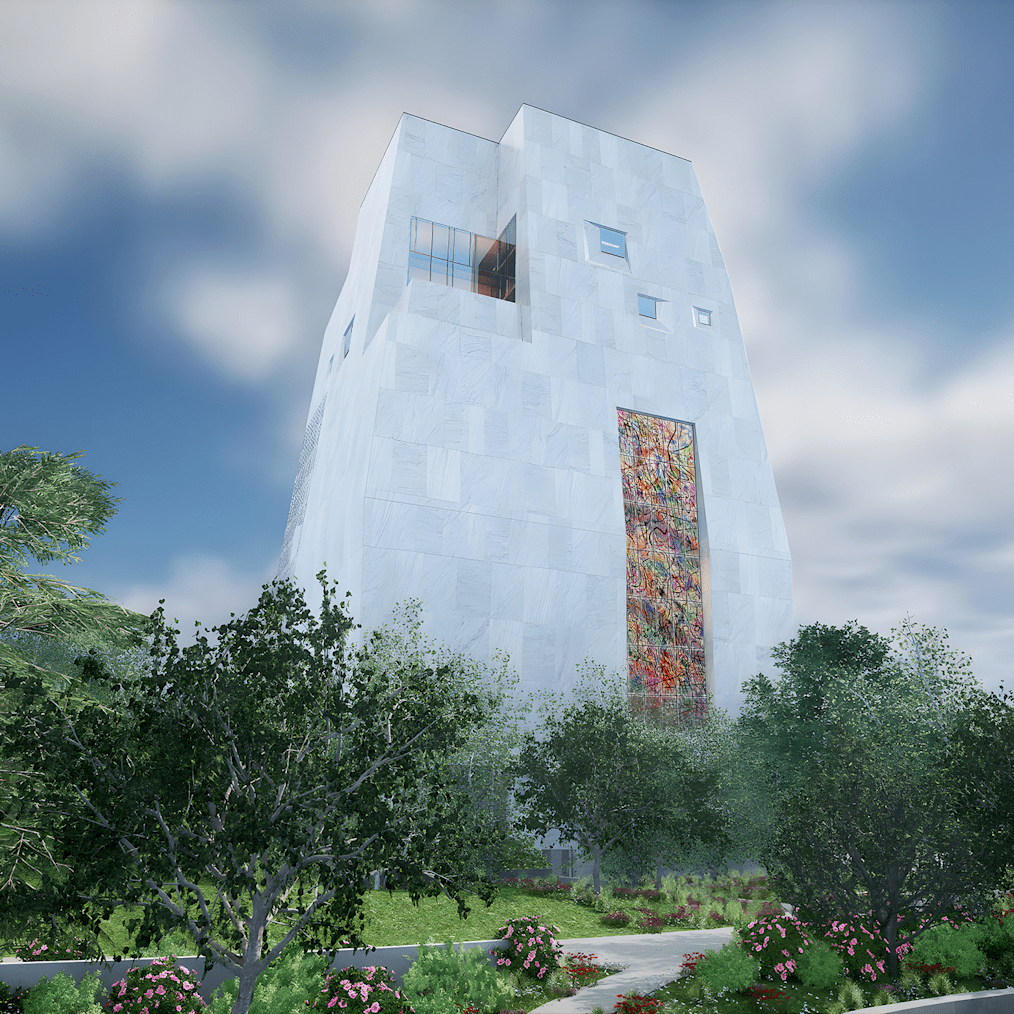
The WNBA will become the first professional sports league to host events at the Obama Presidential Center during 2026 All-Star Weekend, highlighting youth leadership, civic engagement, and community impact.
By Milton Kirby | Chicago, IL | July 9, 2026
The Women’s National Basketball Association will make history later this month as the first professional sports league to host official events at the newly opened Obama Presidential Center, bringing one of basketball’s biggest weekends to one of America’s newest civic institutions.
The announcement, made jointly by the WNBA and The Obama Foundation, places several marquee events from AT&T WNBA All-Star 2026 at the Center’s Home Court athletic facility on Chicago’s South Side. Beyond basketball, the partnership reflects a shared commitment to leadership, education, and community engagement.
For the Obama Presidential Center, it marks another milestone less than a month after opening its doors to the public. For the WNBA, it reinforces a growing emphasis on using the league’s national platform to inspire young people and strengthen communities beyond the game.
A Historic Partnership
“Hosting AT&T WNBA All-Star events at the Obama Presidential Center is a true honor and reflects our commitment to creating connection through basketball and engaging communities in meaningful ways,” WNBA Commissioner Cathy Engelbert said.
“We’re excited to bring together the WNBA family and the greater Chicago community to create memorable experiences at this historic new venue.”
Valerie Jarrett, Chief Executive Officer of The Obama Foundation, said the partnership reflects the mission behind the Center.
“We are thrilled to welcome the WNBA as our first professional sports league hosted at the Obama Presidential Center,” Jarrett said. “At the Center, we believe sports have the power to bring people together and create meaningful opportunities to build the next generation of leaders.”
Their comments underscore a common goal shared by both organizations: using sports as a catalyst for leadership, learning, and civic participation.
More Than a Presidential Library
Located on 19.3 acres in historic Jackson Park, the Obama Presidential Center was envisioned by former President Barack Obama and former First Lady Michelle Obama as more than a place to preserve history.
Instead of functioning solely as a traditional presidential library, the campus was designed as a living institution where visitors are encouraged to explore public service, civic engagement, leadership, and community action.
Since opening earlier this summer, the Center has hosted educational programs, cultural events, and community gatherings that encourage people of all ages to become active participants in improving their neighborhoods and communities.
The arrival of the WNBA continues that vision by demonstrating how athletics can serve as another pathway to leadership, teamwork, and civic responsibility.
Home Court Becomes Center Stage
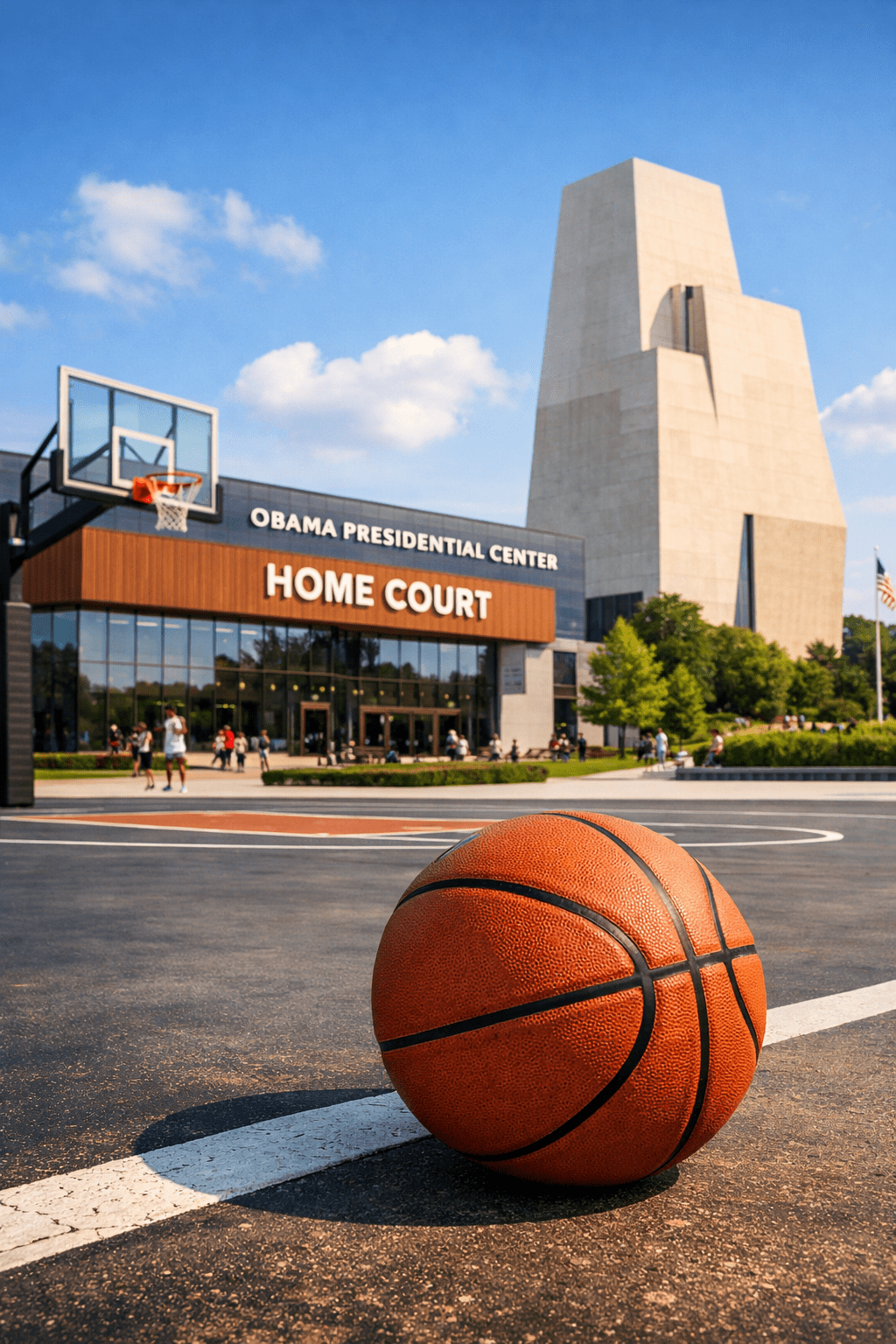
Most of the July 24 activities will take place inside Home Court, the Center’s 60,000-square-foot athletic facility.
Designed as a year-round community resource, Home Court includes a WNBA-regulation basketball court along with flexible spaces dedicated to youth programming, wellness initiatives, leadership development, and neighborhood events.
Its design makes it an ideal setting for the league’s expanding focus on community impact beyond competition.
A Full Day of All-Star Activities
The Obama Presidential Center will host several signature events on Friday, July 24.
The day begins with AT&T WNBA All-Star Media Day and Practice, marking the first time an official WNBA All-Star practice will be held at a venue dedicated to civic engagement and youth leadership.
The Center will also host the third annual WNBA Changemaker Day, bringing together the league’s Changemaker partners, including Ally, AT&T, AWS, CarMax, Deloitte, Google, and Nike. The initiative will be presented in collaboration with the Chicago Sky, Chicago Public Schools, and the Girls Opportunity Alliance, an initiative of The Obama Foundation.
Young athletes will also participate in Jr. WNBA Day, a full day of basketball instruction, leadership workshops, STEM activities, vision board creation, and other programming designed to inspire girls through sports, education, and personal development.
Additional details regarding Changemaker Day and other community activations are expected to be announced in the coming weeks.
Chicago Takes Center Stage
The Obama Presidential Center represents one stop during a weekend that will place Chicago at the center of the basketball world.
The State Farm WNBA 3-Point Contest and Kia WNBA Shooting Stars competition will be held Friday evening at Wintrust Arena, home of the Chicago Sky.
The 2026 AT&T WNBA All-Star Game follows on Saturday, July 25, at the United Center.
Together, the events will showcase several of Chicago’s most recognizable venues while bringing thousands of visitors to neighborhoods throughout the city.
Continuing the Obamas’ Vision
The announcement builds upon the Obama Presidential Center’s mission of becoming an active gathering place rather than simply a destination for historical exhibits.
Throughout planning and construction, Barack and Michelle Obama emphasized that the Center would be a place where ordinary people could find inspiration to lead, organize, and strengthen their communities. That philosophy remains evident in the Center’s educational programming, public events, and partnerships.
Welcoming the WNBA as the first professional sports league to host official events on the campus represents another step toward fulfilling that vision.
For the league, the partnership reflects its continued commitment to expanding opportunities for young women while using basketball as a vehicle for education, leadership, and social impact.
For the Obama Presidential Center, it signals that the campus is already emerging as a national destination where sports, culture, education, and civic engagement intersect.
As thousands of fans gather in Chicago for All-Star Weekend, the Center’s first major partnership with a professional sports league may ultimately be remembered not only for the basketball played there, but for the next generation of leaders it seeks to inspire.
Truth Seekers Journal thrives because of readers like you. Join us in sustaining independent voices.
This week’s Shadow Ball focuses on my June 18-20 trip to Memphis for the 26th Society for American Baseball Research (SABR) Jerry Malloy Negro League Conference. Since its founding in 1998, this conference has remained the highlight of my baseball year. This year was no exception. In fact, it was one of the very best.
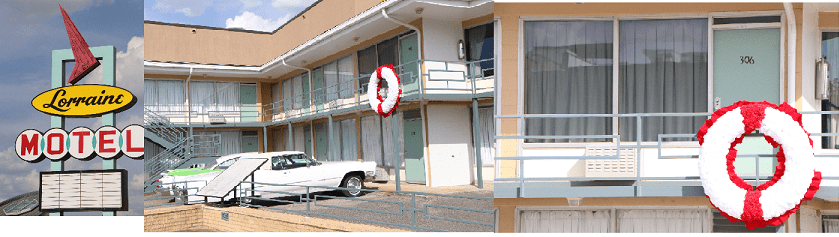
My Memphis experience began moments after stepping off the Amtrak train on June 18. I chose to walk the mile and a quarter to the conference hotel rather than call a cab or Uber. As anyone who has traveled to Memphis by train knows, one of the first historic landmarks encountered is the National Civil Rights Museum, housed at the former Lorraine Motel, where the Rev. Dr. Martin Luther King Jr. was assassinated in 1968.
Lorraine Motel Room 306 Where Dr Martin Luther King was assassinated – Photo by Milton Kirby
Dr. King had traveled to Memphis to support 1,300 Black sanitation workers who were striking after years of dangerous working conditions, poverty-level wages, and the city’s refusal to recognize their union. It was for such a noble cause that he met his death on April 4, 1968, while standing on the Lorraine Motel balcony.
As the familiar façade emerged through the Memphis morning mist, I stopped my walk and sat quietly in prayer for several minutes, reflecting on the events of that tragic day. It was a powerful reminder that history often feels much closer when standing where it happened.
By the time I arrived at the hotel, the conference’s opening session was already underway. The Educational Forum traditionally begins each Jerry Malloy Negro League Conference by bringing together visiting researchers and local educators to discuss ways of integrating the study of the Negro Leagues into K-12 and higher education history curricula. Anyone who teaches or lectures on Negro League history, regardless of the audience, can always find valuable ideas and techniques during these sessions.
After lunch, attendees boarded an inspiring bus tour of several civil rights and baseball sites that echoed the emotions of my morning walk through downtown Memphis. Stops included the Lorraine Motel, Mason Temple, where Dr. King delivered his final speech, “I’ve Been to the Mountaintop,” Martin Stadium, business locations associated with Memphis baseball entrepreneurs, and finally Clayborn Temple, headquarters of the 1968 sanitation workers’ strike and the birthplace of the “I AM A MAN” movement.
The greatest surprise came at Clayborn Temple, where attendees learned that the church’s damaged condition was not simply the result of age. Much of the destruction was caused by a devastating arson fire in March 2025. It served as a sobering reminder that preserving history remains an ongoing responsibility. As Robert Frost wrote, “Miles to go before we sleep.”
Later that afternoon, we watched the outstanding 1996 documentary Black Diamonds Blues City, which beautifully captured the intersection of community, race relations, politics, music, and Negro League baseball in Memphis. Following dinner, conference attendees gathered for a meet-and-greet at the Ernest Withers Photography Museum in the heart of Beale Street. My morning walk, the documentary, and the evening stroll through Beale Street together created a fitting foundation for the next two days of the conference.
Friday featured the centerpiece of every Jerry Malloy Negro League Conference. Nine Negro League researchers presented their latest work during a series of thirty-minute presentations covering subjects that ranged from player biographies and race relations to home run research, ballpark histories, and even poetry.
One of the highlights was a moving panel discussion featuring family members of Negro League greats Frank Duncan Jr., Frank Duncan III, Johnny Wright, and Larry Brown. Their personal stories reminded us that Negro League history is more than statistics and championships. It is also about families preserving the memories of remarkable men whose contributions deserve continued recognition.
After a full day of intellectual stimulation, attendees enjoyed an evening picnic before heading to AutoZone Park to watch the Memphis Redbirds, providing the perfect close to another memorable conference day.
My own contribution this year was a presentation examining Rap Dixon’s season in Japan, along with announcing the results of our annual attendee poll identifying the next ten Negro League players, managers, and pioneers who deserve induction into the National Baseball Hall of Fame.
The top ten vote-getters, all of whom have deserved induction for many years, were Cannonball Dick Redding, Rap Dixon, Vic Harris, Dick Lundy, Newt Allen, John Donaldson, Grant Johnson, George Scales, John Beckwith, and Candy Jim Taylor. An additional 36 candidates also received votes.
Inspired by everything we experienced in Memphis, SABR’s Negro League Committee should continue advocating for justice in Cooperstown. Why not begin by inducting these ten deserving players, managers, and pioneers when Negro League candidates become eligible again in December 2027?
The conference concluded Saturday with nine additional research presentations, the always-entertaining baseball Significa contest, and the annual awards banquet.
As I reflect on this year’s conference, I keep returning to the lessons Memphis teaches.
From slavery to the Civil Rights Movement, America’s racial history is on full display throughout the city. Yet Memphis also reminds visitors that the work of preserving history is never complete.
The same can be said of Cooperstown.
Throughout the National Baseball Hall of Fame, visitors find Negro League history woven into exhibits on nearly every floor, in countless displays, and throughout the museum. Yet the Hall of Fame plaque gallery tells a different story. There, 137 players whose Major League careers began during baseball’s segregation era have plaques, while only 28 Negro League players and executives have been inducted over the past two decades.
Just as there remains important work to be done in our society, there is also important work to be done in Cooperstown.
The Hall of Fame has an opportunity to continue correcting baseball’s historical record. It should begin by seriously considering the recommendation that emerged from this year’s conference and electing Redding, Dixon, Harris, Lundy, Allen, Donaldson, Johnson, Scales, Beckwith, and Taylor when Negro League candidates are next considered in December 2027.
Last Week’s Shadow Ball Significa Question of the Week
What Negro League pennant-winning team played its home games at Dick Kent’s Ballyard?
The answer is the St. Louis Stars, who won the Negro National League pennants in 1928, 1930, and 1931 while playing their home games at Stars Park, also known as Dick Kent’s Ballyard.
No one submitted the correct answer.
This Week’s Shadow Ball Significa Question of the Week
When was the last year that any Negro League players were inducted into the National Baseball Hall of Fame? Please identify at least one player inducted that year.
Shadow Ball 3904 N. Druid Hills Road, Suite 179 Decatur, GA 30033
About the Author
Ted Knorr
Ted Knorr is a respected Negro League baseball historian, a longtime member of SABR’s Negro Leagues Committee, and the founder of the Jerry Malloy Negro League Conference. He has also organized numerous Negro League Commemorative Nights throughout central Pennsylvania.
Beyond his research and organizational work, Ted is a sought-after speaker at sporting events, community programs, family gatherings, and educational forums, where he brings Negro League history to life. His deep knowledge of the players, teams, and the cultural significance of Black baseball has made him a trusted voice for audiences seeking to better understand the enduring legacy of the Negro Leagues.
Please consider supporting open, independent journalism, no contribution is too small!
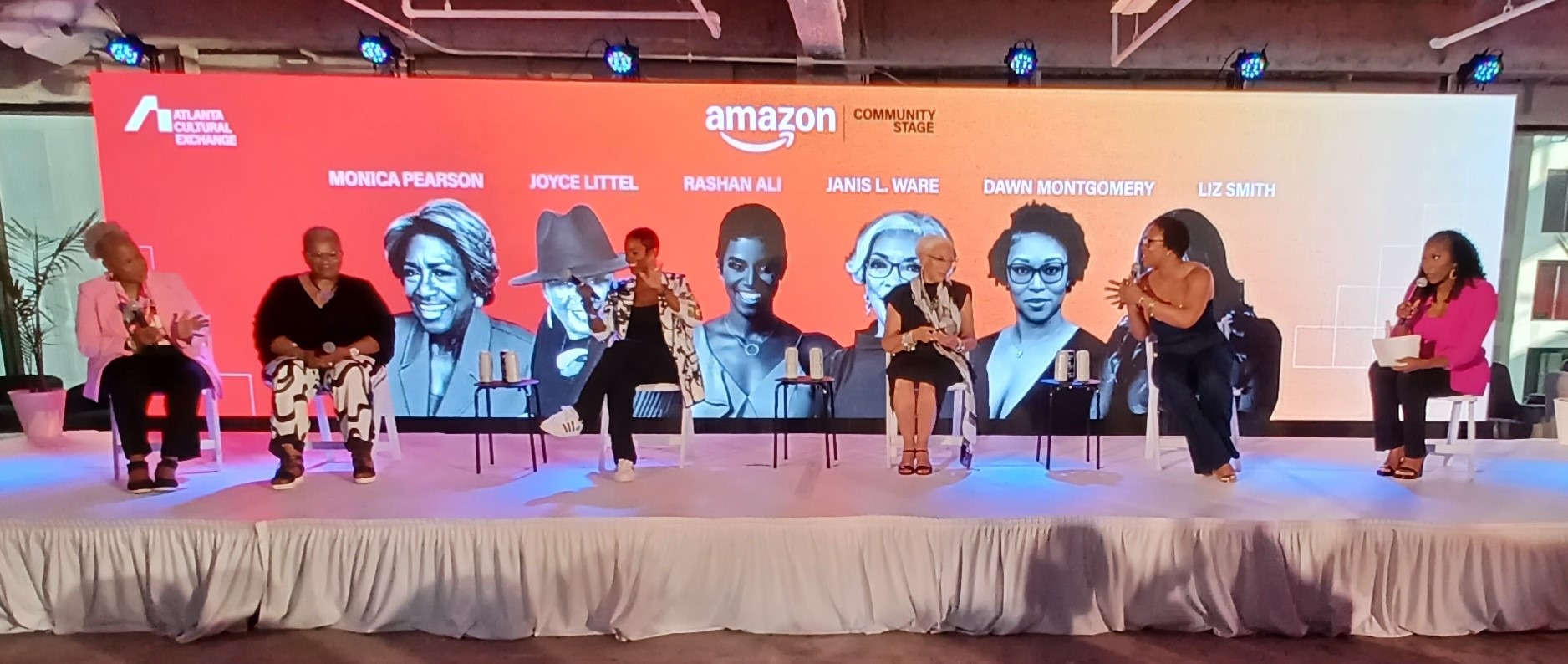
Atlanta’s most influential Black women in television, radio, print, and digital media reflected on leadership, legacy, and mentorship during the “Unapologetally Influential” panel discussion.
The Women Who Built Atlanta’s Black Media Legacy
By Milton Kirby | Atlanta, GA | July 7, 2026
Atlanta’s rise as the nation’s capital of Black culture did not happen by chance. While the city’s influence is often measured through politics, business, music, film, and professional sports, another force quietly helped shape its identity for generations: Black women in media.
Long before podcasts, livestreams, and social media influencers, pioneering women walked into television stations, radio studios, and newspaper offices where few people looked like them and even fewer expected them to succeed. They earned the public’s trust one broadcast, one headline, and one interview at a time. In doing so, they helped transform not only Atlanta’s media landscape but also the way an entire city saw itself.
That extraordinary legacy came into focus during the Atlanta Cultural Exchange’s “Unapologetically Influential” panel discussion, a gathering that celebrated the women whose careers helped define Atlanta’s media culture while inspiring those who will carry it into the future.
The panel brought together legendary broadcaster Monica Kaufman Pearson, veteran radio personality Joyce Littel, multimedia journalist Rashan Ali, Atlanta Voice Publisher Janis L. Ware, media strategist and journalist Dawn Montgomery, and award-winning broadcaster Liz Smith, who served as moderator.
Although each woman followed a different professional path, together they represented more than two centuries of journalism, broadcasting, publishing, entrepreneurship, and community leadership.
The conversation quickly became about something much larger than careers.
It became a conversation about legacy.
Building Atlanta’s Media Legacy
Throughout the afternoon, panelists reflected on how dramatically Atlanta has changed during their careers.
Today’s Atlanta is home to nationally recognized news organizations, influential Black-owned media companies, syndicated radio personalities, digital content creators, filmmakers, and cultural commentators whose work reaches audiences across the country.
But those opportunities were built by pioneers who entered an industry where few opportunities existed for women, particularly Black women.
Rather than focusing on personal accomplishments, the discussion repeatedly returned to a common theme: every generation has a responsibility to leave the profession stronger than it found it.
Atlanta’s Media Trailblazers
Monica Kaufman Pearson – Broke barriers in 1975 as the first woman and first African American to anchor the evening news at WSB-TV, becoming one of Georgia’s most trusted journalists over a 37-year career.
Jocelyn Dorsey – One of Atlanta television’s pioneering Black journalists whose work helped open newsroom doors for future generations while setting a standard for public affairs reporting and community engagement.
Joyce Littel – A respected Atlanta radio personality whose decades behind the microphone have informed, entertained, and mentored aspiring broadcasters.
Janis L. Ware – Publisher of The Atlanta Voice, preserving one of the nation’s historic Black-owned newspapers while leading its transformation into the digital age and championing community development throughout Atlanta.
Rashan Ali – A multimedia journalist whose career spans sports broadcasting, television, radio, acting, and digital media, reflecting the versatility of today’s media professionals.
Dawn Montgomery – A journalist, strategist, and cultural commentator whose work demonstrates the expanding role of storytelling across journalism, marketing, podcasting, and social commentary.
Liz Smith – An award-winning multimedia journalist and executive producer representing Atlanta’s next generation of influential media leadership across radio, television, streaming, and live events.
Jovita Moore – Remembered as one of Atlanta’s most beloved television anchors, whose professionalism, compassion, and community commitment inspired viewers and young journalists alike.
Remembering Those Who Opened the Door
One of the afternoon’s most meaningful moments came when Monica Kaufman Pearson reminded the audience that history is never created by one person alone.
She acknowledged veteran journalist Jocelyn Dorsey as the first Black news anchor in the Atlanta television market, recognizing one of the women whose groundbreaking work helped expand opportunities for those who followed.
It was a fitting reminder that Atlanta’s media story has always been one of shared progress rather than individual achievement.
The recognition also underscored an important truth often overlooked in conversations about success: every trailblazer once followed another pioneer.
“When I Started, I Didn’t See Black Anchors”
Following the panel discussion, The Truth Seekers Journal spoke with Pearson about the remarkable gathering of women whose careers collectively span nearly every chapter of modern Black media in Atlanta.
Reflecting on the beginning of her own career, Pearson recalled entering an industry where representation was almost nonexistent.
“When I started, I didn’t see Black anchors,” she said.
Rather than accepting those limitations, she chose to become the example she never had.
In 1975, Pearson made history when she became the first woman and the first African American to anchor the evening news at WSB-TV, beginning a remarkable 37-year career that would earn the trust of viewers throughout Georgia.
Her success demonstrated that excellence has the power to change institutions.
Knowing When to Go
Pearson also shared one of the most profound lessons she learned during her decades behind the anchor desk.
“Know when to go.”
The audience grew quiet.
Her advice was not about retirement.
It was about leadership.
Pearson explained that truly effective leaders understand that their responsibility extends beyond personal success. They must also create opportunities for those who follow.
By recognizing when it was time to leave the anchor desk, Pearson helped create space for another respected journalist to become a familiar face in Atlanta homes.
That opportunity allowed viewers to embrace the late Emmy Award-winning anchor Jovita Moore, whose warmth, professionalism, and deep commitment to community made her one of Atlanta’s most beloved broadcasters before her passing in 2021.
Pearson’s lesson extended far beyond journalism.
Leadership is measured not only by the barriers we break, but by the doors we leave open for others.
Every Platform, One Purpose
Although their careers developed in different decades and across different media, each panelist illustrated how journalism continues evolving while remaining grounded in the same core values.
Joyce Littel built one of Atlanta’s most respected careers in radio, using her voice to entertain audiences while encouraging and mentoring young broadcasters.
Janis L. Ware demonstrated that community journalism remains one of democracy’s most important institutions. Under her leadership, The Atlanta Voice has successfully evolved from a traditional newspaper into a modern multimedia news organization while remaining deeply rooted in serving Atlanta’s Black community. Her work in affordable housing, economic development, healthcare, and civic leadership reflects the belief that publishers should help strengthen the communities they cover.
Rashan Ali showed how modern journalists successfully move between television, sports broadcasting, acting, podcasting, and digital media without sacrificing credibility. Her career reflects the versatility demanded of today’s media professionals.
Dawn Montgomery offered another example of journalism’s evolution. Her career has crossed modeling, sports journalism, marketing, strategic communications, podcasting, and cultural commentary. Throughout those transitions, she has remained committed to authentic storytelling and using media as a vehicle for meaningful conversation.
Moderating the discussion was Liz Smith, whose own career represents the next chapter of Atlanta media. As an executive producer, radio personality, television host, and multimedia journalist, Smith embodies an industry where storytellers increasingly move seamlessly across radio, television, streaming platforms, podcasts, and live events.
Together, the women demonstrated that while technology changes, the mission of journalism remains remarkably consistent.
Serve the audience.
Tell the truth.
Earn trust.
More Than Media Personalities
One of the strongest themes to emerge from the discussion was that influence is not measured solely by ratings, readership, or followers.
Each woman described careers deeply connected to community service, mentorship, nonprofit leadership, civic engagement, and advocacy.
Their influence extends well beyond the newsroom.
Collectively, they have served on nonprofit boards, supported educational initiatives, championed healthcare awareness, mentored aspiring journalists, promoted economic development, strengthened neighborhoods, and used their platforms to elevate voices often overlooked by mainstream media.
For these women, journalism has never been simply a profession.
It has been public service.
The Legacy Reached Beyond the Stage
The conversation resonated just as strongly among those seated in the audience.
As attendees gathered following the discussion, many reflected on lessons that reached beyond media careers.
Taylor Dunn summed up the afternoon simply.
“It was an amazing panel, and I really enjoyed it.”
For Atlanta licensed esthetician Tasha, one lesson stood above all the others.
“Know when it’s time to go. Know when it’s your time to leave.”
Moments earlier, Pearson had offered nearly identical advice while describing her own career.
For Tasha, the message applied as much to business and life as it did to broadcasting.
Great leaders do not simply achieve success.
They prepare others to succeed after them.
A Legacy Still Being Written
Looking across the stage, it became clear that this was far more than another panel discussion.
These were not simply accomplished broadcasters, publishers, radio personalities, journalists, and media strategists.
They were women who helped shape how Atlanta tells its own story.
Individually, each forged a unique path through television, newspapers, radio, and digital media.
Collectively, they built something much larger than themselves.
They helped establish Atlanta as one of America’s most influential centers of Black journalism and media excellence.
The applause that filled the room at the close of “Unapologetically Influential” was not merely recognition of distinguished careers.
It was gratitude for doors opened.
Barriers broken.
Communities served.
And generations inspired.
As Atlanta’s media landscape continues to evolve, the technology will change. New platforms will emerge. Different voices will capture public attention.
But the standard established by these pioneering women remains unchanged.
Tell the truth.
Serve the community.
And never forget to leave the door open for the woman coming behind you.
Truth Seekers Journal thrives because of readers like you. Join us in sustaining independent voices.
The Obama Presidential Center opens on Chicago’s South Side, combining community investment, civic engagement, education, and opportunity while reflecting Barack and Michelle Obama’s enduring legacy.
By Milton Kirby | Chicago, IL | June 21, 2026
When the Obama Presidential Center opened on Chicago’s South Side during Juneteenth weekend, it marked more than the completion of a landmark building. It represented the culmination of a vision nearly a decade in the making, an investment of nearly $850 million in a historically underserved community, and a statement about the future Barack and Michelle Obama hope to help shape.
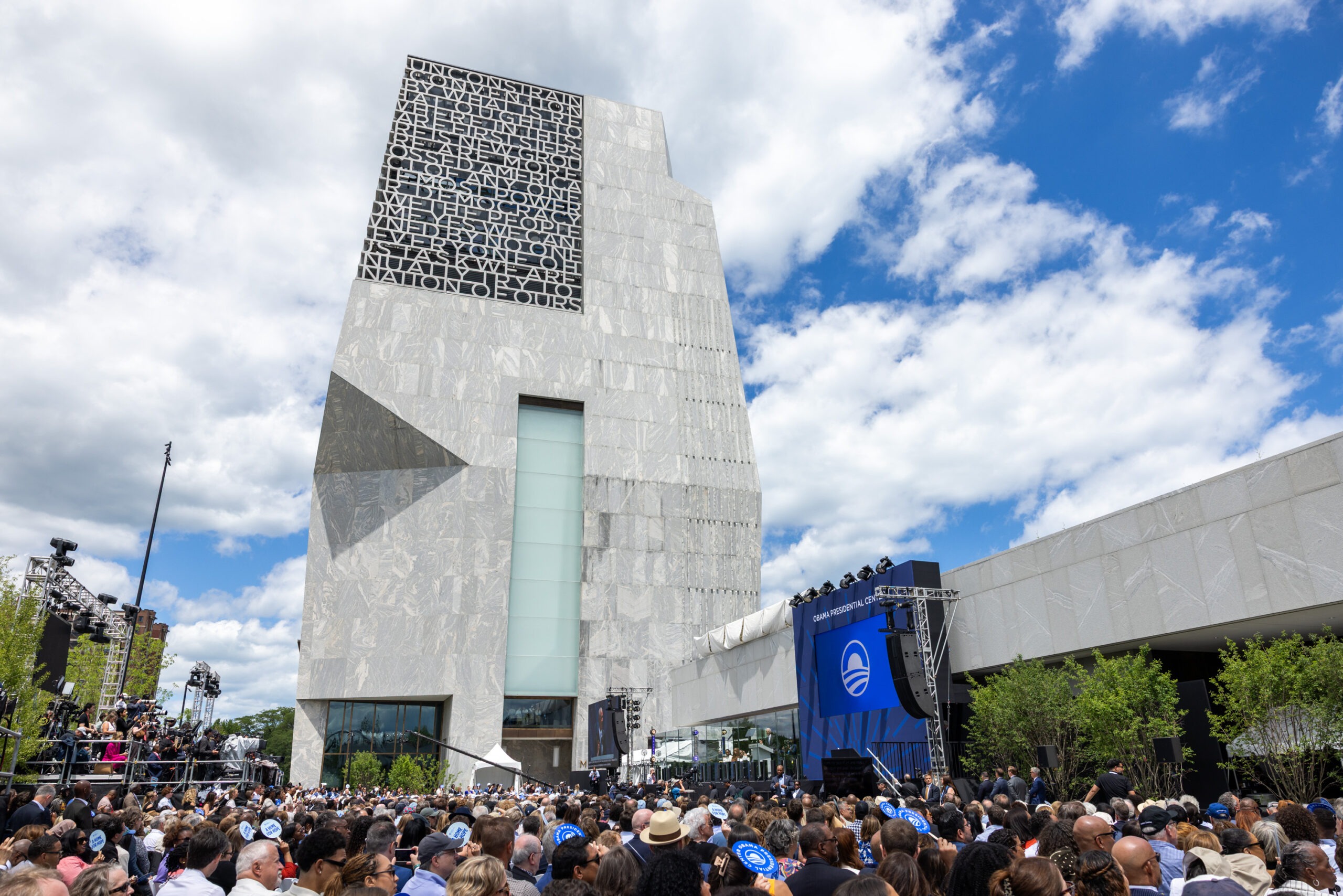
On a bright June morning, thousands gathered at John Lewis Plaza for the Grand Opening Ceremony. Families, community leaders, students, artists, and visitors from across the nation filled the campus that now stands just miles from where Michelle Obama grew up and where Barack Obama began his career as a community organizer.
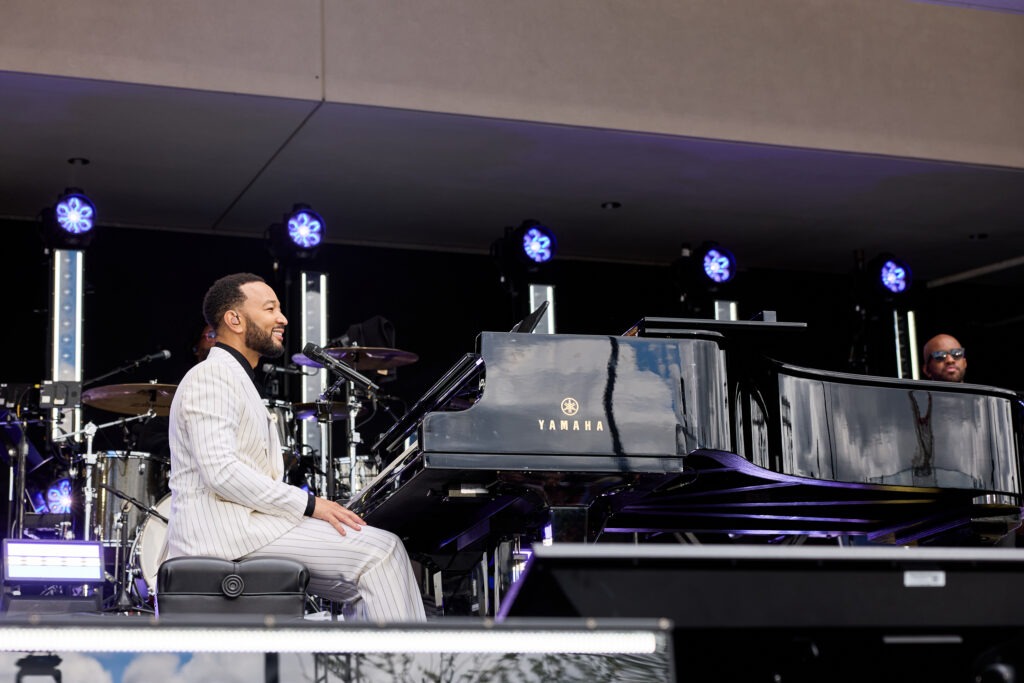
John Legend Grand Opening Dedication Ceremony at The Obama Presidential Center in Chicago, IL, on June 18, 2026 – Photo courtesy Obama Foundation
The celebration featured performances from an all-star lineup that included The Roots, Bruce Springsteen, Christina Aguilera, Common, Jennifer Hudson, John Legend, Stevie Wonder, Marc Anthony, Tems, Bono, The Edge, and Eddie Vedder. Yet beneath the music and festivities was a deeper story, one rooted in place, purpose, and possibility.
“This Grand Opening ceremony will be unlike any other, filled with music, performances, and hope,” said Obama Foundation CEO Valerie Jarrett. “We hope to inspire people everywhere to believe in their power to bring change home.”
The Obamas could have built their presidential center almost anywhere. Instead, they chose Chicago’s South Side, a community that shaped both their personal and professional lives. That decision became the defining theme of opening weekend.
A Homecoming with Purpose
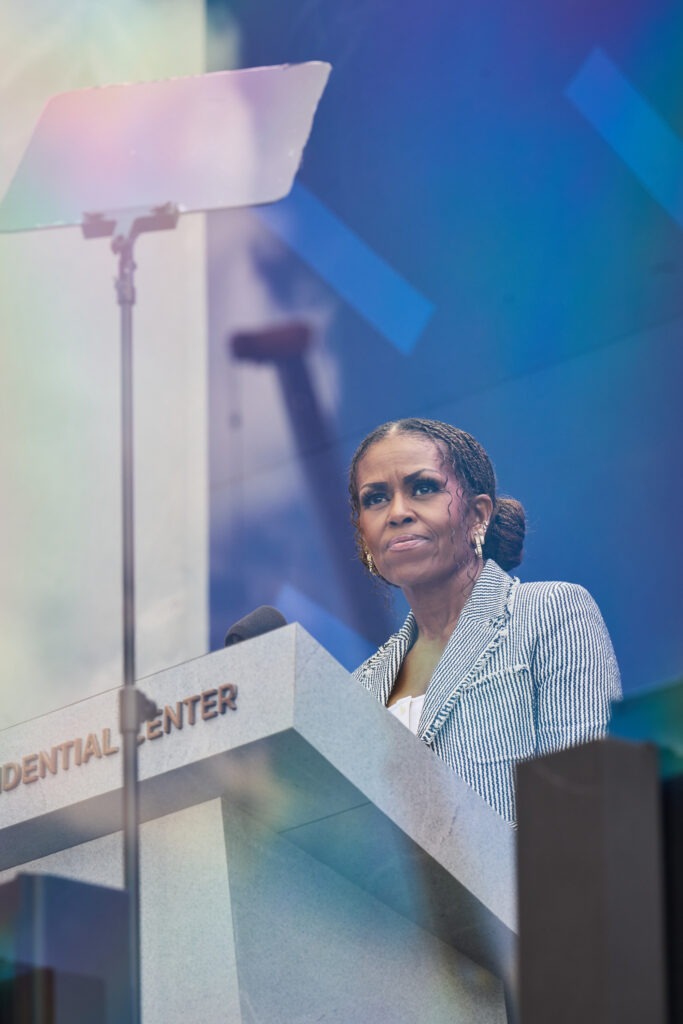
For Michelle Obama, the South Side is more than a location. It is home.
Michelle Obama – Photo courtesy Obama Foundation
Growing up in Chicago during the 1970s, she watched neighborhoods change as investment shifted elsewhere. She remembers communities where families maintained their homes, children played outside, and neighbors gathered for block parties. Over time, she also witnessed businesses close, public amenities disappear, and opportunities move away.
“You could slowly see the slow deterioration of the entire South Side,” she recalled during an opening-week interview. “Stores that were closing down. The park programs just kind of went away. You just slowly noticed that the stuff wasn’t there anymore.”
As she grew older and traveled throughout the city, she noticed that many of Chicago’s major investments seemed concentrated downtown, far from neighborhoods like the one where she was raised.
That history made the opening of the Center especially meaningful.
“When something like this opens and there really is nothing else like this, and you decide to make an investment in a community like this, an $850 million investment, that says something,” Michelle Obama said. “That says you count.”
For Barack Obama, the South Side is where he learned that meaningful change often begins at the community level, one conversation, one neighborhood meeting, and one relationship at a time.
“This is a big investment,” he said. “It can potentially help anchor and catalyze economic development and opportunities for communities that oftentimes have been left behind.”
Investment and Opportunity
The Center’s opening comes amid ongoing conversations about economic development, housing affordability, and neighborhood change.
Obama acknowledged that major investments can bring challenges alongside opportunities. Increased tourism, rising property values, and growing interest from developers often raise concerns about displacement and gentrification.
“Nobody’s figured out this solution perfectly,” Obama said. “The question is always: Are we making sure that the people who are already there can get a piece of that rising tide?”
Foundation leaders have emphasized workforce development, internships, fellowships, local hiring, vendor partnerships, and community engagement as key components of the Center’s long-term strategy.
The goal, Obama said, is to ensure that existing residents benefit from the opportunities the Center creates.
That focus on inclusion and access was visible throughout opening weekend.
A Library for the Next Generation
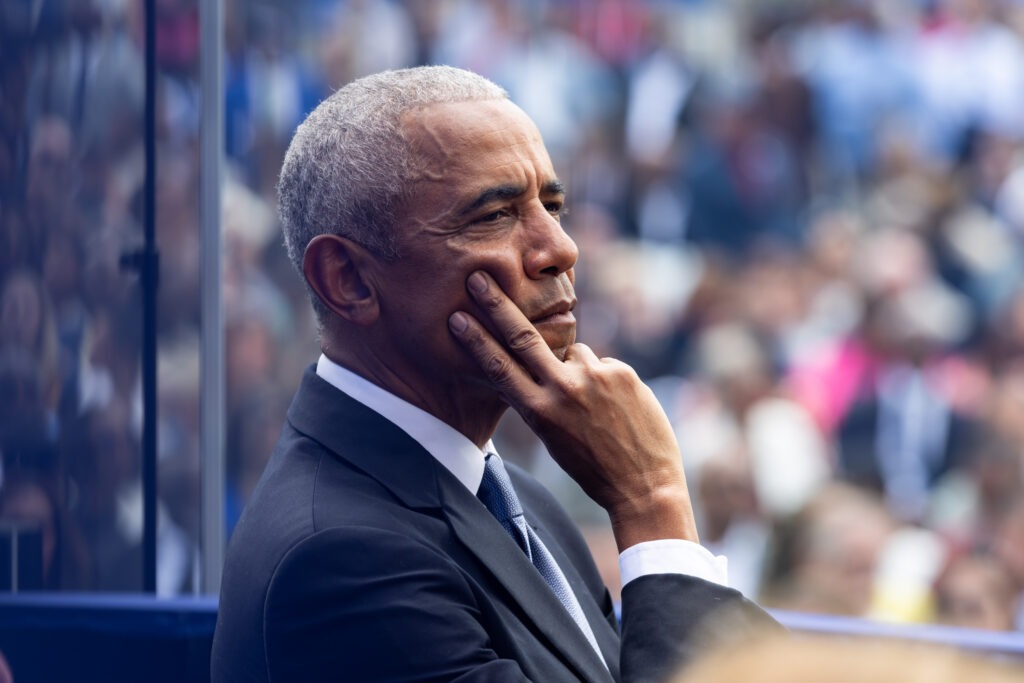
President Barack Obama – Photo courtesy Obama Foundation
The morning after the dedication ceremony, the Center opened its doors to the public on Juneteenth.
The first major event was not a formal speech or ribbon cutting.
It was story time.
Twenty-five students from William H. Ray Elementary School arrived at the new Chicago Public Library branch inside the Center, unaware they were about to receive a surprise visit.
At 10:15 a.m., Barack and Michelle Obama entered the reading room and began reading Maurice Sendak’s classic children’s book, “Where the Wild Things Are.”
“Are you telling stories up in here?” President Obama asked as the children burst into laughter.
For nearly half an hour, the former president and first lady acted out scenes from the book, joked with students, answered questions, and encouraged a love of reading.
“This is your library,” President Obama told the children. “This is going to be your spot.”
The setting itself reflected that commitment. The library includes a 70-foot mural by artist Aliza Nisenbaum and a reading room containing 3,000 books personally selected by the Obamas.
The event captured one of the Center’s core goals: inspiring young people to see themselves as future leaders, creators, and changemakers.
Meeting the First Visitors
Later that morning, the Obamas welcomed the first 100 visitors entering the museum.
Families posed for photographs, exchanged handshakes, and shared brief moments with the former first couple beneath Mark Bradford’s towering artwork inspired by Carl Sandburg’s famous description of Chicago as the “City of the Big Shoulders.”
A young boy received a high-five from the former president. A baby placed a sticker on Michelle Obama’s blouse. Parents smiled through tears as they introduced their children to the couple.
The encounters were unscripted and personal.
More importantly, they reinforced a message repeated throughout the weekend: this place belongs to everyone.
A Campus Alive with Community
By June 20, the Center was operating at near capacity.
Visitors filled the campus from morning until evening. More than 1,700 guests toured the museum while thousands more participated in outdoor performances, educational activities, and community programs.
Nick Cave’s Soundsuits animated John Lewis Plaza. Mariachi Herencia de Mexico performed. Children participated in art projects, story times, sports clinics, and writing workshops. Families explored gardens, public spaces, exhibits, and community programming designed to engage visitors of all ages.
The atmosphere felt less like the opening of a traditional presidential library and more like a neighborhood festival.
That distinction was intentional.
A Living Legacy
As opening weekend unfolded, it became increasingly clear that the Obama Presidential Center is not designed to function as a conventional presidential library.
Rather than focusing solely on preserving documents and artifacts, the Center seeks to encourage civic participation, leadership development, community engagement, and public service.
Throughout interviews and public appearances, the Obamas repeatedly emphasized that they want visitors to leave inspired not simply by what happened during a presidency, but by what they themselves can accomplish.
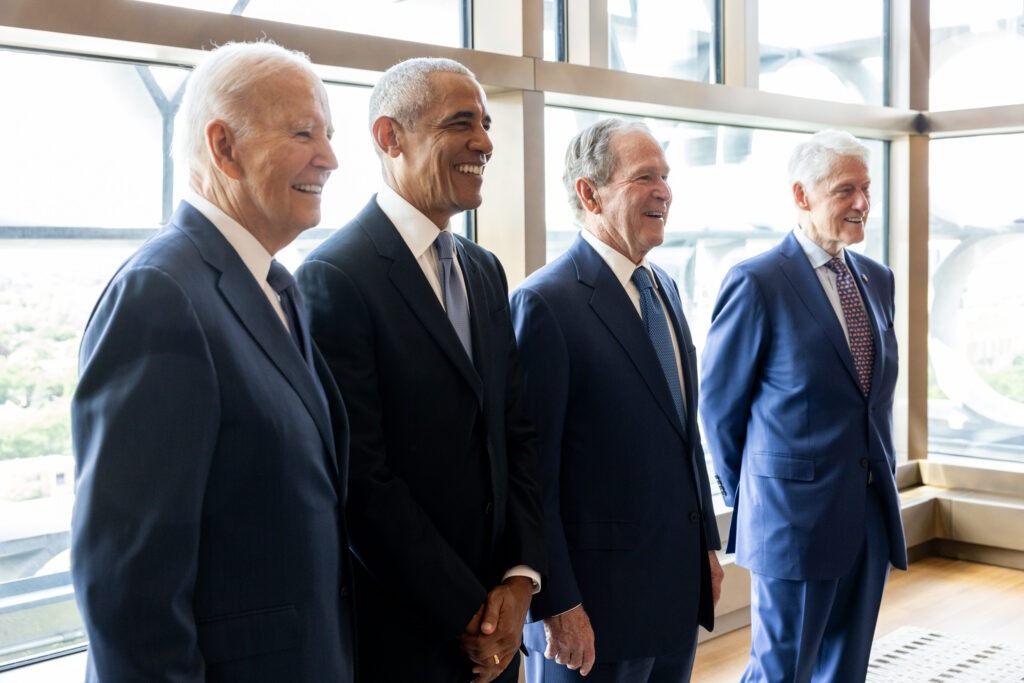
Presidents Joe, Biden Barack, Georg Bush & Bill Clinton – Photo courtesy Obama Foundation
That vision can be seen throughout the campus. It is reflected in the youth musicians who performed alongside Eddie Vedder. It is reflected in the internships, fellowships, and educational opportunities being developed through the Foundation. It is reflected in a library designed for children, public spaces built for gathering, and exhibits that encourage participation rather than observation.
Michelle Obama has described the South Side as home. Barack Obama has spoken about creating opportunities for people who have too often been left out of major investments.
Together, those ideas form the foundation of the Center’s mission.
In the end, the opening of the Obama Presidential Center was not about nostalgia. It was about possibility.
If traditional presidential libraries primarily look backward, this institution looks forward. If they preserve history, this one also seeks to shape it. If they celebrate a presidency, this one challenges visitors to consider their own role in strengthening communities and democracy.
The Obamas have often suggested that their ultimate legacy will not be measured solely by what they accomplished while in office, but by the opportunities they help create for others. Opening weekend offered a glimpse of that vision in action.
On Chicago’s South Side, where Michelle Robinson once rode her bicycle through neighborhood streets and Barack Obama once knocked on doors as a young organizer, a new chapter has begun.
Not a monument to what was.
But an invitation to what could be.
Truth Seekers Journal thrives because of readers like you. Join us in sustaining independent voices.
This column exists for only one purpose: that is to answer your questions on Negro League baseball history. To that end, we need your help … if you are reading this column, enjoy it, want it to continue, and do not already know everything about Negro League history … then please submit a question on any aspect of Negro League history. Your questions are the lifeblood of Shadow Ball—they shape where we go next … players, teams, events, and more – and, in so doing, you will direct where this column goes moving forward. Your participation is important and appreciated. The very existence of this column depends on you. Submit your questions to shadowball@truthseekersjournal.com.
Curious George Atkins, Aurora, IL, posed the following question to Shadow Ball: “Why is the Negro League Baseball Museum in Kansas City?”
It’s a deceptively simple question. Negro League history sprawls across dozens of cities, each with legitimate claims to significance. So why Kansas City? To answer that, we must first consider the alternatives — and then the extraordinary convergence of people, place, and timing that made Kansas City the only choice:
Chicago had the strongest historical case, as it was the home of Rube Foster, the chief organizer of the Negro National League, its first league President, and the face of Negro League baseball as a player, manager, administrator, and entrepreneur for the preceding two decades in Black baseball. Chicago also had two teams in that first season, and, with the 4th-largest urban Black population in the country in 1920, was a major destination in the early stages of the Great (African American) Migration, which brought millions of Black families from the South to eastern, Midwestern, and far-western urban centers. Lastly, the Chicago American Giants won the initial pennant in that first season.
Other cities with teams in that first season of Negro National League baseball included Saint Louis, Detroit, and Indianapolis,, all of whom, like Chicago, had strong Black baseball histories prior to the formation of the league. Indianapolis had another historical point – the first game in Negro National League history took place there on May 2nd, 1920.
Another possible site could have been Ashland, KY, where several Negro League reunions took place in the decade prior to the opening of the Negro League Baseball Museum. In addition to the reunions, a substantial number of artifacts were collected and ended up in Cooperstown. But Ashland was a sentimental center, not a historical or demographic one.
My preference for my birthplace, Pittsburgh, is shaped by the presence of two of the greatest franchises in Negro League history and by the fact that more Negro League baseball games were played in Pennsylvania than in any other state in the union. Two other eastern megalopolises – New York and Philadelphia (which, along with Chicago, represented the three largest Black populations in the country) – had solid pedigrees in the history of the Negro Leagues and can be seen to have defensible cases, but …
In the end, the correct decision was made to place the NLBM in Kansas City due to a confluence of inarguable facts, talent, and civic leadership:
• The Negro National League was founded on February 13, 1920, in the Paseo YMCA in Kansas City
• A fortuitous gathering of local leadership came together, including Buck O’Neil, Alfred Surratt, Larry Lester, Phil Dixon, and Horace Peterson, all of whom lived and worked in Kansas City
• The 18th & Vine redevelopment project, which included the Paseo YMCA, provided a ready civic partner, with several prominent KC mayors seeing value.
• Kansas City’s Black civic and business community backed the project early.
• There is no evidence that Chicago, Pittsburgh, or any other historically significant Negro League city ever submitted a proposal or was approached.
• Eventually, such serendipity in the Paseo neighborhood continued when, almost four years after the Negro Baseball League Museum had opened its doors in one room in the neighborhood, Ken Burns’ nine-part documentary – Baseball – debuted on PBS. It made Buck O’Neil a star and opened interest and access to capital. Burns’ documentary did for the Negro League Baseball Museum what Eyes on the Prize did for civil rights memory — it created a national audience hungry for the stories the museum was uniquely positioned to tell.
• The NLBM is currently poised for another expansion project. While still in fundraising for the $30 million project that includes tripling exhibition space in a newly rehabilitated Paseo YMCA Building; creating the Buck O’Neil Education and Research Center; building a new majority Black-owned hotel and new residential construction. According to the February 16, 2026, press release, the project could be completed by late 2028.
Last week’s Shadowball Significa Question of the Week: What Negro League pitcher, who participated in the Negro National League playoff in 1935, had a son who won two World Series games several decades later? Name this father/son pair. With no correct answer submitted, I am going to provide this answer and move on. Luis Tiant Sr, was a participant in the 1935 Negro League playoff, and his son starred in the 1967 World Series.
The Shadowball Significa Question of the Week: What Negro League pennant-winning team played their home games at Dick Kent’s Ballyard? Send your answer and any comments on the Negro Leagues to shadowball@truthseekersjournal.com or Shadow Ball, 3904 N Druid Hills Rd, Ste 179, Decatur, GA 30033
Ted Knorr
Ted Knorr
Ted Knorr is a respected Negro League baseball historian, a longtime member of the Society for American Baseball Research’s Negro League Committee, and the founder of the Jerry Malloy Negro League Conference as well as several Negro League Commemorative Nights in central Pennsylvania.
Beyond his research and organizing work, Ted is frequently invited to speak at sporting events, community programs, family gatherings, and educational forums, where he brings Negro League history to life. His deep knowledge of the players, teams, and the cultural impact of Black baseball has made him a trusted voice for audiences seeking to understand the legacy and significance of the Negro Leagues.
Please consider supporting open, independent journalism – no contribution is too small!
The Obama Foundation has announced new named spaces at the Obama Presidential Center honoring Jane Addams, John Gardner, Eunice Kennedy Shriver, and Paul Farmer.
By Milton Kirby | Chicago, IL | May 29, 2026
As the opening of the Obama Presidential Center approaches, the Obama Foundation has announced a new group of named spaces honoring historic figures whose lives and work inspired generations of Americans to pursue civic engagement, social justice, and public service.
The announcement adds four new tributes to a growing list of exhibits, galleries, courtyards, and public gathering spaces throughout the campus, which opens to the public on June 19.
Foundation leaders say the named spaces reflect a central theme of the Obama Presidential Center: that meaningful change is driven not by a single individual, but by countless people who choose to participate in shaping their communities and the nation.
“President and Mrs. Obama’s story is only possible through the collective action and contributions of people who made their voices heard,” said Valerie Jarrett, CEO of the Obama Foundation. “These honorees each inspired the next generation to see what’s possible and become the newest authors in an ongoing story of progress.”
The latest spaces recognize leaders whose influence stretched across social reform, public health, disability rights, civic participation, and grassroots activism.
Among the newly announced spaces is the Toward A More Perfect Union Exhibit, named in honor of social reformer and Nobel Peace Prize recipient Jane Addams. Located on the museum’s second level, the exhibit will explore the nation’s ongoing pursuit of democratic progress through stories and artifacts from historic labor, civil rights, and social justice movements. The exhibit also highlights Addams’ work advancing labor protections, advocating for immigrants, and improving conditions for vulnerable children through Chicago’s famed Hull House settlement.
Another museum feature, the Yes We Can Exhibit, honors John W. Gardner, the former Secretary of Health, Education, and Welfare whose advocacy for citizen engagement and lifelong learning influenced generations of public servants. The exhibit will capture the grassroots energy of Barack Obama’s 2008 presidential campaign through film, campaign memorabilia, and displays recognizing the volunteers who helped build the movement.
The Obama Foundation also announced the Eunice Kennedy Shriver Lobby at Home Court, the Center’s athletic and youth programming facility. The space honors the founder of the Special Olympics, whose work expanded opportunities and inclusion for people with intellectual disabilities around the world. Visitors entering the facility will encounter a welcoming public space designed to support youth engagement, recreation, and community programming.
A fourth newly named space, the Paul Farmer Special Exhibitions Gallery, recognizes the late physician and global health advocate whose work transformed health care delivery in underserved communities worldwide. Farmer, co-founder of Partners In Health, spent decades championing the idea that quality health care is a fundamental human right. The gallery will host rotating exhibitions designed to deepen visitor engagement with contemporary issues and social challenges.
The new announcements join an extensive roster of previously revealed spaces honoring influential figures from American history, civil rights, politics, science, and public service.
Among them are the John Lewis Plaza, Harriet Tubman Courtyard, Ida B. Wells Program Room, Eleanor Roosevelt Fruit and Vegetable Garden, Sojourner Truth Program Room, Hadiya Pendleton Atrium, Harold Washington Overlook, and the Nancy Pelosi Garden Pavilion. Other spaces recognize trailblazers including Mae Jemison, Timuel Black, Marian Robinson, Herman Petty, Reginald F. Lewis, and Elie Wiesel.
Together, the names create a tapestry of individuals whose work reflects many of the themes central to the Obamas’ public lives: civic participation, community leadership, inclusion, education, health equity, and democratic engagement.
The Obama Presidential Center is being developed on Chicago’s South Side, where Barack Obama began his career as a community organizer. Beyond serving as a presidential library and museum destination, Foundation leaders have emphasized that the Center is intended to function as a civic campus focused on leadership development, public engagement, and community connection.
The naming of these spaces reinforces that vision by linking visitors to stories of people who challenged injustice, expanded opportunity, and encouraged others to become active participants in public life.
When the Center opens June 19, visitors will encounter more than exhibits documenting a presidency. They will also encounter a broader story about the individuals and movements that helped shape modern America and continue to inspire future generations to make a difference.
This column exists for only one purpose; that is to answer your questions on Negro League baseball history. To that end, I need your help … if you are reading this column and enjoy it and want it to continue and you do not already know everything about Negro League history … then please submit a question on any aspect of Negro League history. Your questions are the lifeblood of Shadow Ball—they shape where we go next … players, teams, events, and more – and, in so doing, you will direct where this column goes moving forward. Your participation is important and appreciated. The very existence of this column depends on you. Submit your questions to shadowball@truthseekersjournal.com.
Last week’s Shadow ball Significa Question of the Week: What Negro League pitcher, who participated in the Negro National League playoff in 1935, had a son who won two World Series games several decades later. Name this father/son pair. With no correct answer submitted; I am going to let this question ride for another week. Who is this father/son duo? Send your answer and any comments on the Negro Leagues to shadowball@truthseekersjournal.com or Shadow Ball, 3904 N Druid Hills Rd, Ste 179, Decatur, GA 30033
Ted Knorr
Ted Knorr is a respected Negro League baseball historian, a longtime member of the Society for American Baseball Research’s Negro League Committee, and the founder of the Jerry Malloy Negro League Conference as well as several Negro League Commemorative Nights in central Pennsylvania.
Beyond his research and organizing work, Ted is frequently invited to speak at sporting events, community programs, family gatherings, and educational forums, where he brings Negro League history to life. His deep knowledge of the players, teams, and cultural impact of Black baseball has made him a trusted voice for audiences who want to understand the legacy and significance of the Negro Leagues.
Support open, independent journalism. Your contribution helps us tell the stories that matter most.
The Obama Foundation announced a free June 18 watch party on Chicago’s Midway Plaisance for the Obama Presidential Center grand opening ceremony.
By Milton Kirby | Chicago, IL | May 19, 2026
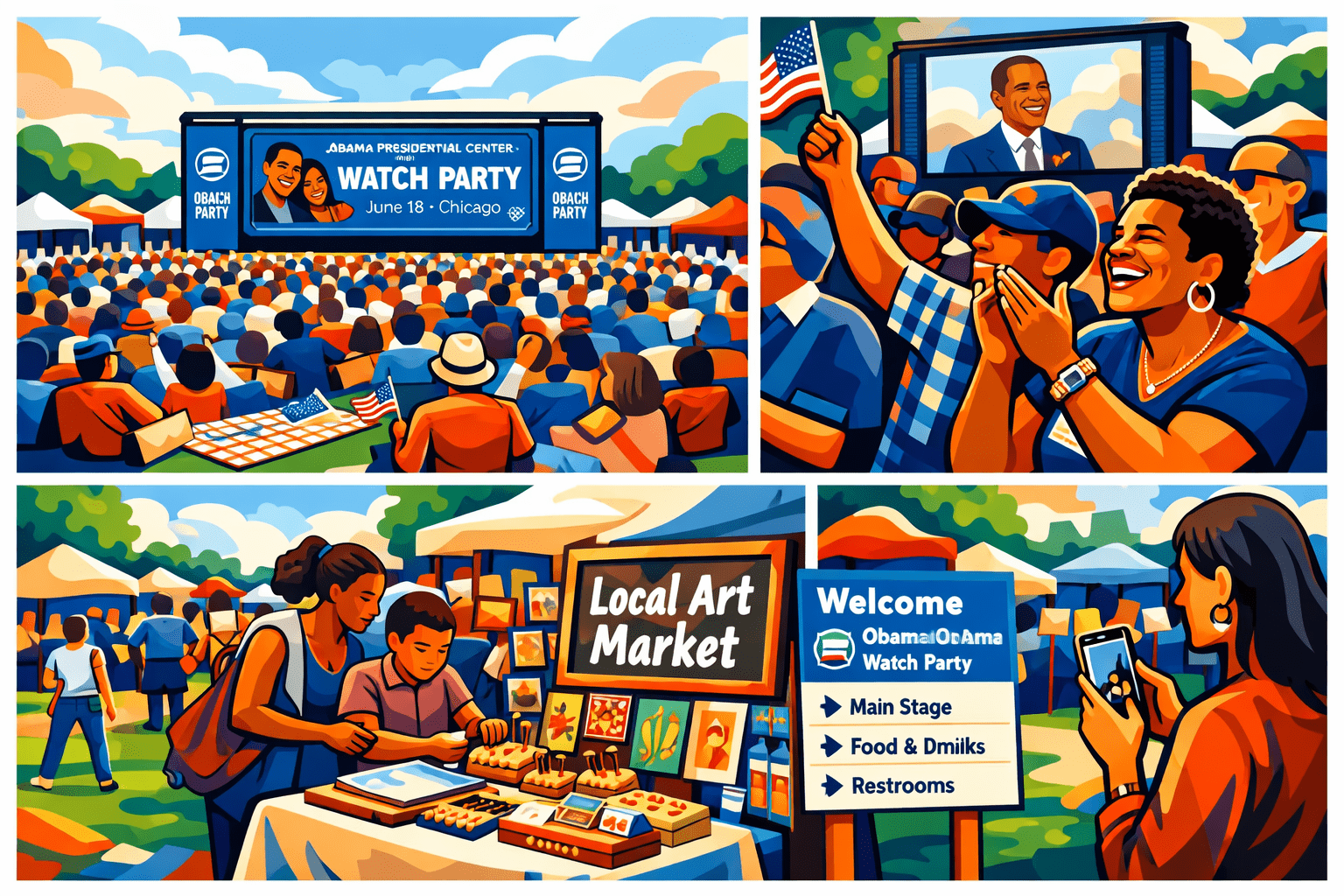
The Obama Foundation announced Tuesday that a free public watch party for the grand opening ceremony of the Obama Presidential Center will be held June 18 on Chicago’s historic Midway Plaisance, inviting residents and visitors to celebrate what organizers describe as a landmark moment for the city’s South Side.
The official watch party will feature a livestream of the Center’s Grand Opening Ceremony in a “picnic-style atmosphere,” along with an art market showcasing local vendors and community organizations.
“This is an historic day for Chicago’s South Side as we welcome the world into our neighborhood,” said Valerie Jarrett in a statement released Tuesday. “We are excited to share this celebration with our extraordinary community and city, who are such an integral part of President and Mrs. Obama’s story, and where they will always call home.”
According to the Foundation, attendees interested in joining the free event must submit a ticket request form through the Foundation’s website by May 26. Requests may include up to 4 tickets, though organizers emphasized that submitting a form does not guarantee admission due to limited space.
The watch party will open at 9 a.m. with a live DJ and pre-ceremony activities ahead of the 11 a.m. Grand Opening Ceremony. Organizers said the event will include accessible viewing areas and ADA-compliant restroom facilities.
The Foundation encourages attendees to use public transportation through the Chicago Transit Authority and Metra systems, as parking will not be available on site.
The June 18 ceremony will officially dedicate the Obama Presidential Center campus through performances, storytelling, and presentations centered on civic engagement and community leadership. The Foundation said the event will feature “global icons” and highlight its broader mission to inspire and connect communities worldwide.
The Center itself officially opens to the public on June 19. While museum tickets for opening weekend have already sold out, the remainder of the campus will remain free and open to visitors.
Located on Chicago’s South Side, the Obama Presidential Center has been envisioned as more than a traditional presidential library. Foundation leaders have described it as a civic and cultural hub designed to encourage community engagement, leadership development, and public participation.
The Foundation also announced that celebratory programming surrounding the opening will continue throughout the weekend.
Sponsors supporting the Grand Opening Ceremony and weekend events include GCM Grosvenor, Abbott, ITW, and Northern Trust.
Bill Pickett Invitational Rodeo in Memphis showcases Black cowboy culture, Soul Country music, youth programs, and community legacy in a powerful, immersive weekend experience.
More Than a Rodeo: Inside the Enduring Legacy of the Bill Pickett Invitational Rodeo
By Milton Kirby | Atlanta, GA | May 18, 2026
There are stories we tell, and then there are stories we inherit. The Bill Pickett Invitational Rodeo (BPIR) is both. It is an enduring institution, a cultural archive, a family reunion, and a proving ground stitched together by memory, muscle, and music. Over the course of this series, I have walked the dirt, listened to the voices, watched the riders, and felt the pulse of a tradition that refuses to fade. What began as an attempt to document a rodeo became something far deeper, a journey into a tradition that continues to evolve.
The BPIR is not simply an event. It is a record of who we are, who we’ve been, and who we’re becoming. And as this chapter closes, another one opens, a road that leads from Memphis to Los Angeles, where the Soul Country Music Star National Champion will be crowned at the Soul Country Music Festival. But before we get there, we must return to the ground beneath our boots, because that is where it all begins.
I. The Rodeo That Became a Record of Us
Every rodeo has its own rhythm, but the Bill Pickett Invitational Rodeo has a heartbeat. It beats in the laughter of children seeing a horse for the first time. It beats in the confidence of champion riders who carry decades of history in their posture. It beats in the music, the dust, the hoofbeats, and the voices that echo across the arena.
When I arrived in Memphis, I expected a show. What I found was a community, a village built on heritage, discipline, and joy. As I wrote in my field notes, “A great rodeo doesn’t just happen. It’s built piece by piece, decision by decision, tradition by tradition.”
“It begins with the land beneath your boots and ends with the people who carry the tradition forward.”
Memphis, with its perfect dirt and perfect energy, became the lens through which the entire BPIR experience came into focus.
II. Bill Pickett’s Enduring Shadow
To understand the significance of the BPIR, you first have to understand the man whose name stands above the arena gates. Bill Pickett was more than a cowboy. He was an innovator, a showman, and a cultural force. His technique, bulldogging known now as Steer Wrestling, changed rodeo forever. His daring athleticism eventually earned him national recognition and a place among the legends of the Wild West.
His presence changed the way America saw Black cowboys, even when America tried not to see them at all.
But what struck me most over the course of this series is not how often Pickett’s name is spoken. It is how deeply his spirit is lived. The BPIR does not treat him as a relic. It treats him as a foundation.
His influence is not a statue or a plaque. It is the confidence of a Pee Wee rider gripping the reins. It is the precision of a champion entering the chute. It is the courage of a bullfighter stepping between danger and safety. It is the music of Soul Country Music Star artists reclaiming a sound that has always been theirs.
Bill Pickett is not remembered at the BPIR.
He is embodied.
III. The Stewardship of Valeria Howard Cunningham
Valeria Howard Cunningham – Photo by Milton Kirby
Founded in 1984 by the late Lu Vason, the rodeo was created not only to showcase Black rodeo talent, but to reclaim historical visibility for Black Western culture itself.
“At the time, Black cowboys remained largely invisible in mainstream rodeo, even though historians estimate they made up nearly one in four working cowboys in the late 19th century.”
Vason saw both the absence and the opportunity. What he built became far more than a single event.
Every enduring tradition needs a steward, someone who understands the weight of history and the necessity of evolution. For the BPIR, that steward is Valeria Howard Cunningham, Producer and CEO.
For more than four decades, the BPIR has grown into the nation’s longest running Black owned touring rodeo association, introducing generations of children to rodeo culture while creating a national gathering place rooted in heritage, competition, education, and celebration.
Valeria’s gift is balance. She protects the heritage while opening the door to the future.
Under her guidance, the BPIR has remained rooted in tradition while embracing new cultural expressions. She has preserved the Lu Vason vision without freezing it in time. She has expanded the rodeo’s reach, deepened its cultural footprint, and ensured that every stop, from Memphis to Los Angeles, carries the same intentionality, extending the BPIR’s presence into community spaces through education, outreach, and engagement.
Valeria understands something essential:
A tradition that refuses to evolve becomes a museum.
A tradition that evolves with integrity becomes a force.
The BPIR has become something larger than sport.
IV. More Than Competition
Spend enough time around the BPIR, whether in Memphis, Atlanta, or Upper Marlboro, and you begin to realize that the rodeo itself is only part of the experience. Yes, there are champions. There are bronc riders, steer wrestlers, barrel racers, bull riders, team ropers and Pee Wee competitors stepping nervously into the arena dirt for the first time.
But surrounding the competition is something larger: a traveling city of culture and community that recreates itself at every stop on the tour.
In Memphis, that ecosystem unfolded across the Agricenter grounds just as vividly as it had in Atlanta and Upper Marlboro. Food vendors sent familiar aromas drifting through the air. Families browsed apparel booths and handcrafted merchandise. Music floated between events. Children wove through crowds dressed in boots, fringe, denim, and cowboy hats, the same joyful choreography I’ve seen repeat itself city after city.
The atmosphere is always the same blend: part sporting event, part family reunion, part cultural festival. People do not come only to watch. They come to reconnect. Again and again, conversations return to memory.
Parents talk about attending the rodeo as children themselves. Grandparents introduce grandchildren to traditions they hope will outlive them. Old friends reunite beside arena rails. Riders greet former competitors like extended family.
What stands out most, no matter the city, is how deeply the rodeo lives inside people’s personal histories. For many families, the BPIR is not an occasional attraction. It is an annual tradition woven into the rhythm of life itself.
BPIR brings sparkles to the eyes of kids in Memphis, TN – photo by Milton Kirby
V. “For Kidz Sake” and the Power of Representation
Perhaps nowhere is the BPIR’s cultural mission more visible than during the “For Kidz Sake” rodeo program.
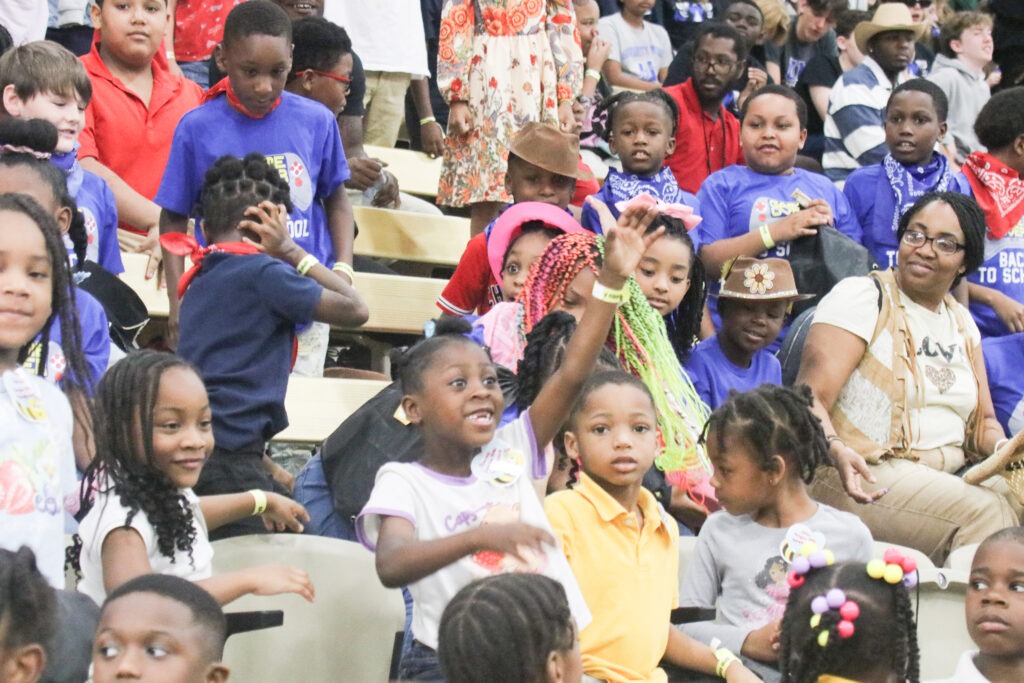
On Friday morning in Memphis, more than 4,000 children filled the arena. Some had never attended a rodeo before. Some had never touched a horse. Many were encountering the history of Black cowboys for the first time. But inside the arena, history stopped feeling distant. It became visible.
Children watched riders who looked like them compete with confidence and skill. They learned about horsemanship, agriculture, discipline, and Western heritage. They laughed, pointed, cheered, danced and asked questions.
Most importantly, they saw themselves reflected in the tradition. Representation is often discussed in abstract political language. At the BPIR, it felt tangible.
A child watching a Black cowboy ride into the arena is not simply watching entertainment. They are witnessing possibility.
That may be one of the rodeo’s greatest forms of cultural preservation: not simply remembering the past, but making sure the next generation can imagine themselves inside the future.
VI. The Dirt Matters
One of the most unexpected lessons of the series came from something most spectators never think about: the dirt itself.
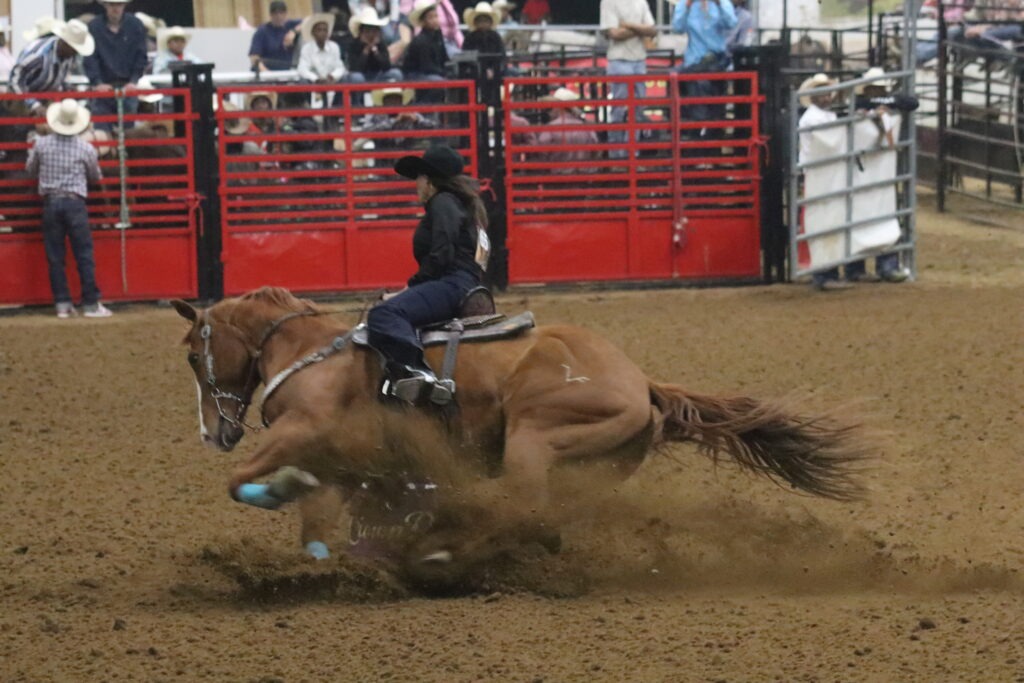
Champion rider Tim Walker explained it beside the Memphis arena rail with the seriousness of a craftsman discussing tools. Proper rodeo dirt matters.
“Too dry, and it becomes dangerous. Too slick, and horses or riders can lose footing. Proper moisture and texture help animals turn, stop, and run safely while giving competitors confidence beneath their boots.”
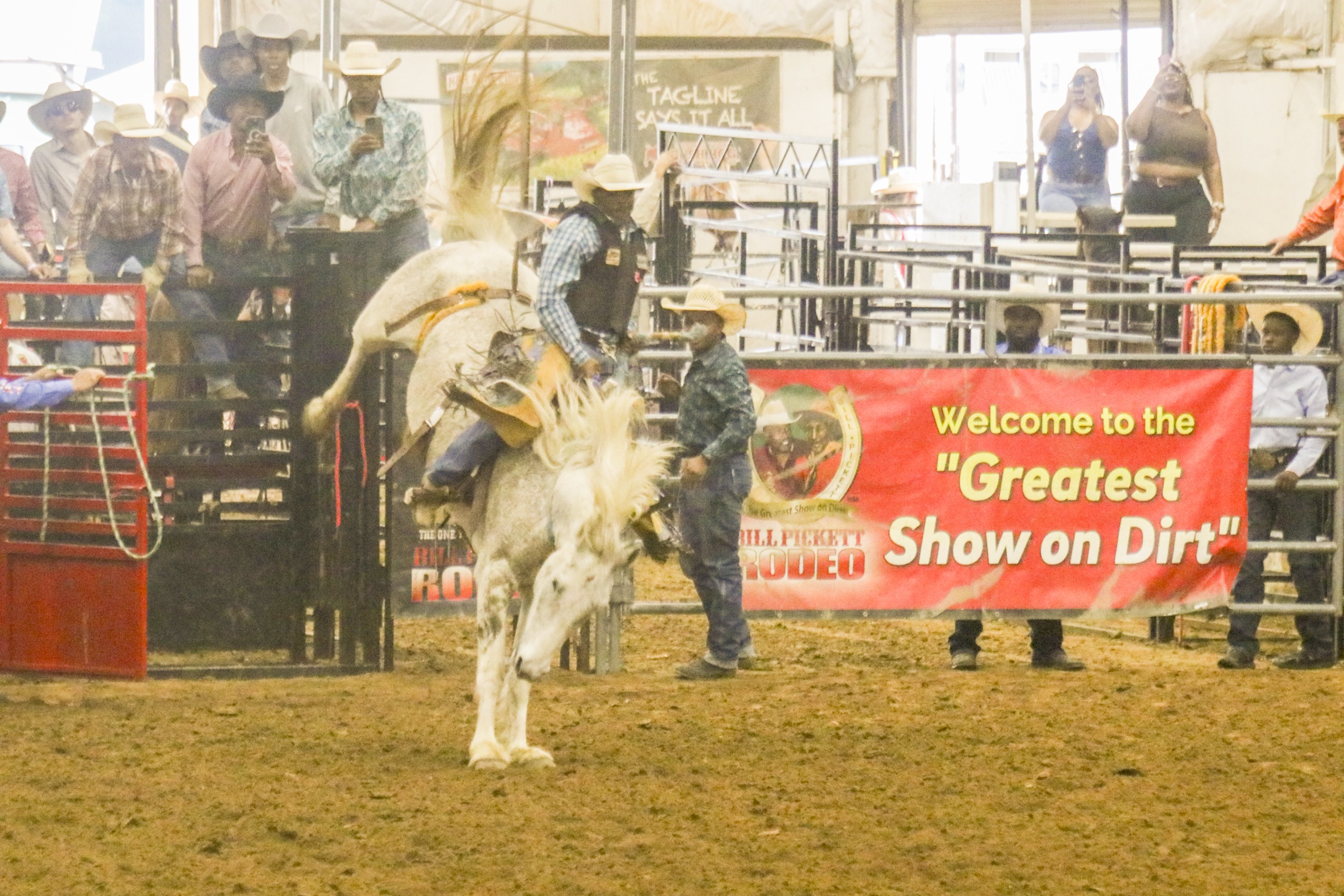
Barrel racing – Photo by Milton Kirby
Until that moment, dirt had seemed incidental.
Instead, it revealed itself as foundational.
That realization became symbolic of the BPIR itself.
Much of what makes the rodeo work happens quietly beneath the surface.
The labor.
The planning.
The preparation.
The mentorship.
The institutional memory.
Like the arena dirt, those invisible layers support everything above them.
VII. The Guardians: Bullfighters and Barrelmen
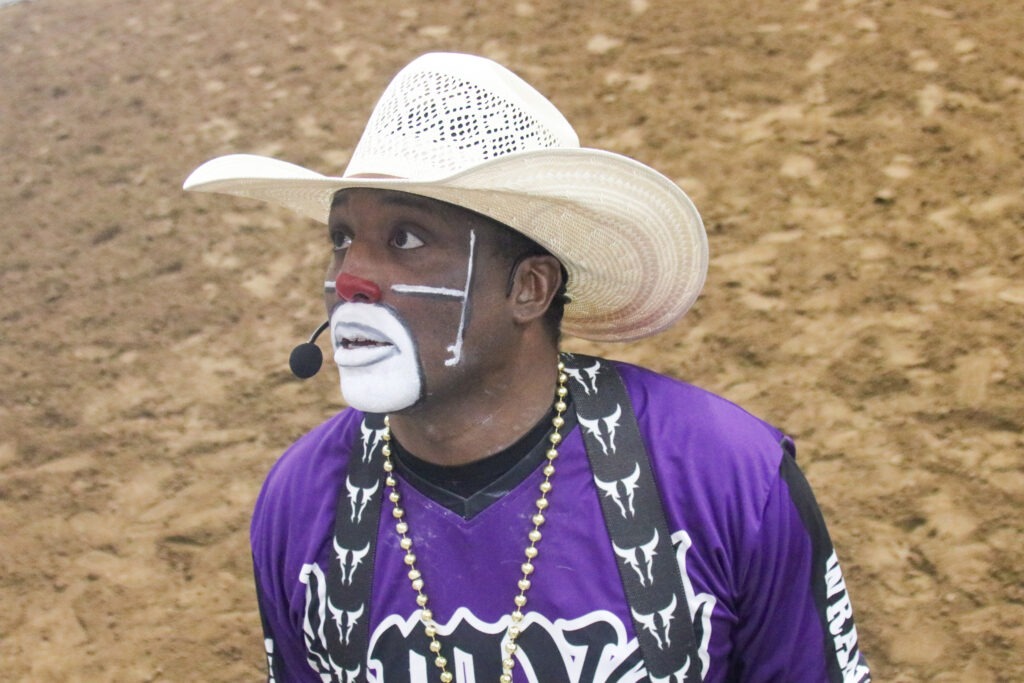
That same principle applies to another group often overlooked by casual fans: the rodeo clowns, barrel men, and bullfighters.
Their role combines athleticism, timing, courage, and instinct.
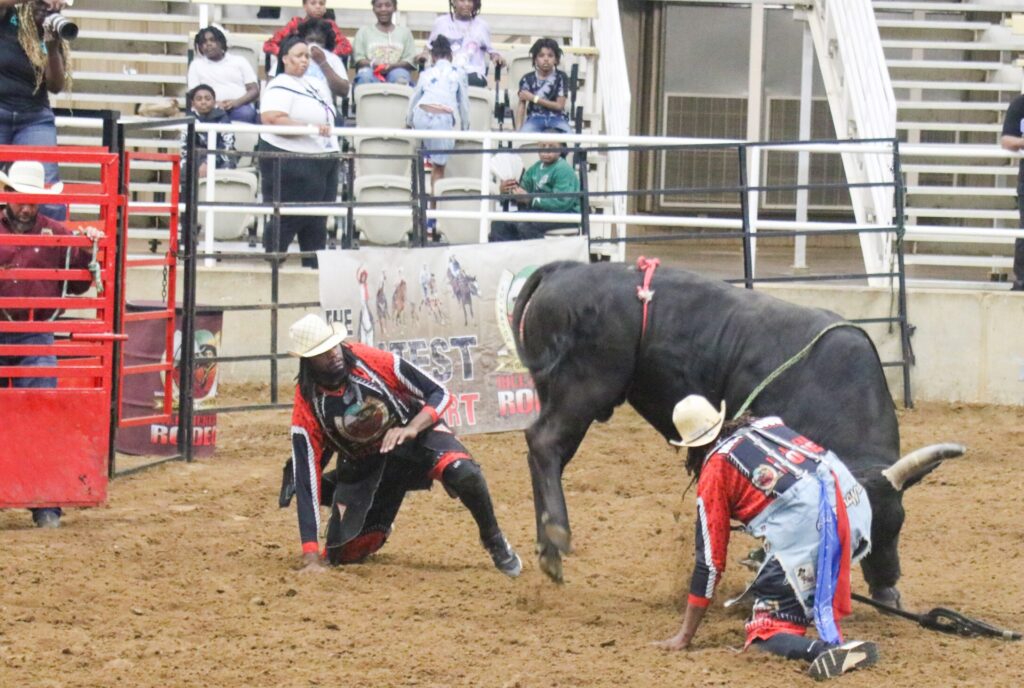
Bullfighter’s protecting a dismounted rider – photo by Milton Kirby
“Their work is not just theatrical. It is tactical.”
Historically, rodeo clowns began primarily as entertainers. But as bull riding evolved into one of rodeo’s most dangerous events, their responsibilities transformed into something far more serious.
Today’s bullfighters routinely place themselves between riders and charging bulls, protecting competitors during the most dangerous seconds after a fall.
At the BPIR, their presence carries additional historical significance.
According to Valeria Howard Cunningham, BPIR became the first, and remains the only, traveling Black owned rodeo to feature professional arena entertainers.
Even within rodeo culture, representation matters.
The BPIR’s commitment to visibility extends beyond champions and headliners. It includes the workers, performers, and protectors whose contributions are often forgotten yet are essential to the show itself.
BPIR professional entertainer engages the audience – photo by Milton Kirby
Every role matters inside the arena. That truth mirrors the larger BPIR experience.
VIII. The Cultural Evolution: Soul Country Music Star
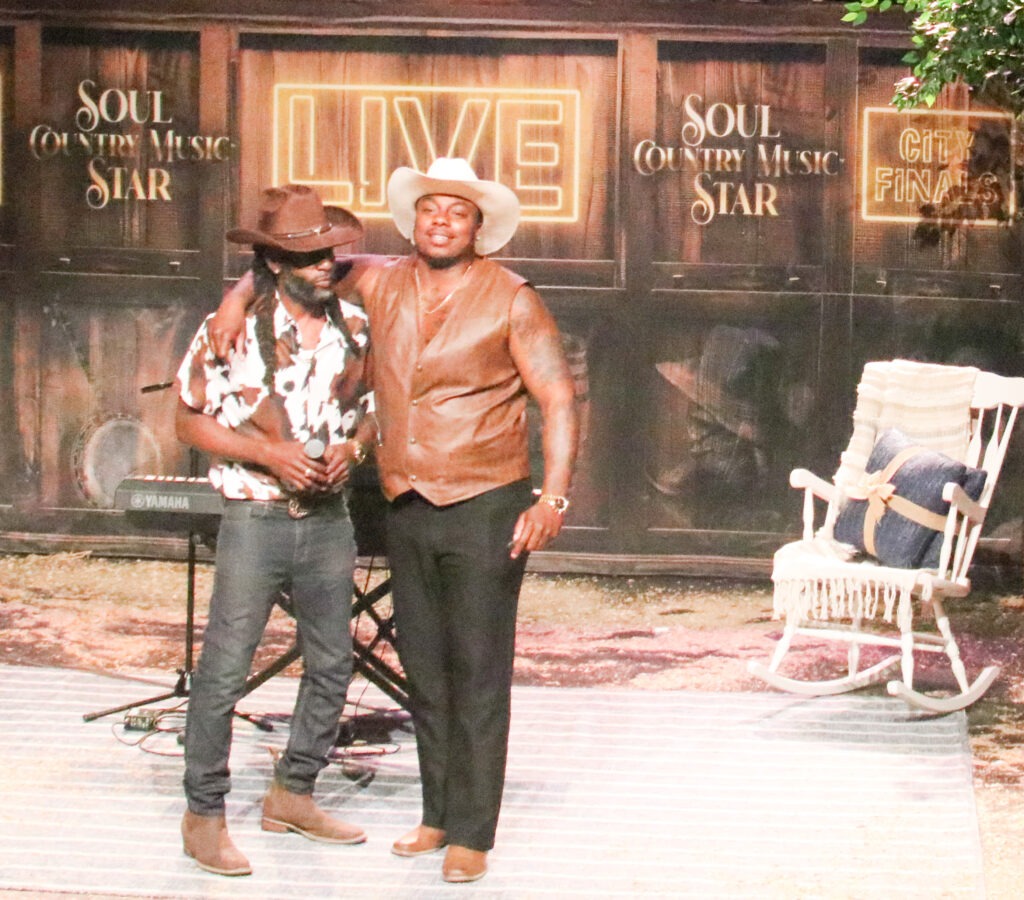
One of the most powerful evolutions under Valeria’s leadership is the integration of Soul Country Music Star, a showcase that blends Black country artistry with the rodeo’s vibrant atmosphere.
“It wasn’t an add on. It was a natural extension of the culture BPIR has always celebrated.”
Black country music is not new. It is foundational. It is lineage. It is the sound of migration, resilience, and rural memory. The Soul Country Music Star competition does not introduce something foreign to the rodeo; it reveals something that has always been there.
In Memphis, the artists brought grit, melody, and storytelling that echoed the same themes the rodeo embodies: resilience, heritage, and pride. Their performances were not intermissions. They were continuations, another expression of who we are.
The competition itself has also become a reflection of perseverance and artistic growth. Season One elevated Kirk Jay to the national spotlight, while Season Two crowned Nathaniel “Mr. Bow Leggs” Dansby, whose journey embodied the resilience celebrated throughout the BPIR itself.
Dansby did not win during the competition’s inaugural season. Instead, he returned. He refined his craft, sharpened his stage presence, and continued building his connection with audiences across the BPIR tour before emerging as the Season Two champion.
That reality speaks to the depth of talent within Soul Country Music Star. The difference between winning and not winning often has less to do with ability than timing, growth, and the simple fact that only one artist can ultimately claim the title each season.
Like the rodeo itself, the competition rewards endurance as much as talent.
IX. The Road to Los Angeles: Crowning the Soul Country Music Star National Champion
And now, the road leads west.
After traveling city to city alongside the Bill Pickett Invitational Rodeo, the Soul Country Music Star competition will arrive in Los Angeles in October, where one artist will be crowned the National Champion at the Soul Country Music Finals and Festival.
But the journey to Los Angeles has never been only about winning.
Over the course of the season, these artists have performed in rodeo arenas, clubs, theaters, and community spaces filled with audiences who understand the culture they carry. They have traveled long hours between cities, performed night after night, and learned how to connect not only through talent, but through storytelling, authenticity, and resilience.
Like the riders inside the arena, they have had to earn every moment.
Some arrived with polished voices. Others grew stronger with every performance. Some learned how to command a crowd for the first time. Others discovered that the competition was pushing them beyond music into something more personal: confidence, identity, and purpose.
That evolution may be the real story of Soul Country Music Star.
Nathaniel “Bow Leggs” Dansby & Kirk Jay – Photo by Milton Kirby
The competition has become more than a showcase for emerging Black country artists. It has become a space where artists reconnect with a musical tradition that has always belonged to them, even when history and the industry often failed to acknowledge it.
When that journey reaches its final stage in Los Angeles, the crowning of the National Champion will celebrate more than a single performance. It will honor the artists, histories, and cultural influences that helped shape country music long before many of those contributions were fully recognized.
And while one artist will leave Los Angeles with the title, the larger story will continue long after the competition ends.
Because what Soul Country Music Star is building, much like the BPIR itself, is not simply entertainment.
It is visibility. It is opportunity. It is cultural continuity carried forward by a new generation.
Los Angeles is not the end of the road.
It is the beginning of the next chapter.
X. Closing: What the Dirt Remembers
When the last rider leaves the arena and the dust settles, the dirt tells the story.
“It holds the hoofprints of bulls and horses.
It holds the footprints of Pee Wee riders and champions.”
It holds the echoes of children cheering, families laughing, and communities gathering.
It holds the legacy of Bill Pickett and the vision of those who carry his name forward.
The greatest show on dirt is not just a rodeo.
It is a cultural inheritance.
A record carried across generations.
A celebration of who we are and who we’re becoming.
The Bill Pickett Invitational Rodeo is not preserving a dead past. It is shaping the future in real time.
The road ahead will carry that legacy even further as the BPIR and SCMS seasons continue toward two major championship moments celebrating the future of Black rodeo and Soul Country music culture.
In September, the BPIR National Finals will bring top competitors from across the tour to Upper Marlboro, Maryland, where riders will compete for championship titles, prize money, trophy saddles, and honors recognizing excellence throughout the season.
Then, in October, in Los Angeles, regional competition winners from across the country will gather for the Soul Country Music Star National Finals and Music Festival, competing for the national title, $10,000 in cash and prizes, and the opportunity to tour with the BPIR during the 2027 season.
Together, these events represent more than championship weekends. They reflect a growing movement rooted in heritage, resilience, fellowship, visibility, and the next generation carrying these traditions forward.
And as I close this series, what has stood out most throughout this reporting process is how deeply the rodeo remains embedded in people’s memories, the way families organize reunions around it, the way generations return year after year, and the way even a single image, jacket, or song can reopen memories decades later.
That kind of cultural continuity is rare.
And it deserves to be documented with care.
When I began this series, I believed I was covering a rodeo.
What I found instead was an enduring institution built on resilience, creativity, family, and cultural inheritance.
More than anything else, I found evidence that this tradition continues to grow, not as a memory, but as a living force being carried into the future.
The Obama Foundation announced the Nancy Pelosi Garden Pavilion at the Obama Presidential Center, honoring Pelosi’s historic leadership ahead of the Center’s June 2026 opening.
By Milton Kirby | Chicago, IL | May 12, 2026
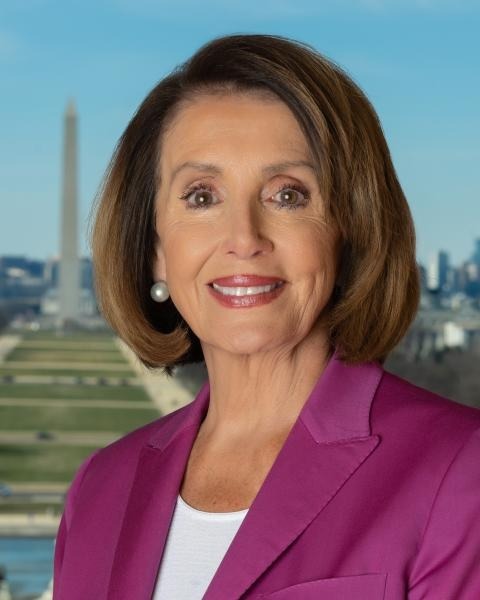
The Obama Foundation announced Tuesday that the Garden Pavilion at the forthcoming Obama Presidential Center will be named in honor of Nancy Pelosi, recognizing the historic legacy of the first woman to serve as Speaker of the House and her decades-long influence on American public life.
The announcement is part of a broader unveiling of named spaces throughout the Center honoring civil rights leaders, educators, activists, and public servants whose work helped shape American democracy and civic engagement.
Located along the eastern edge of the Center’s Fruit & Vegetable Garden, the Nancy Pelosi Garden Pavilion will include a garden classroom, workroom, and public restrooms designed to support community programming and public gathering spaces. The pavilion was made possible through a gift from philanthropist and business leader Ron Conway.
Former President Barack Obama praised Pelosi’s role in shaping major legislative victories during his administration, including passage of the Affordable Care Act.
“For almost four decades, Nancy Pelosi served the American people and worked to make our country better,” Obama said. “No one was more skilled at bringing people together and getting legislation passed – and I will always be grateful for her support of the Affordable Care Act.”
Obama said the pavilion will serve not only as a tribute to Pelosi’s leadership, but also as an inspiration for future generations to engage in public service and civic life.
Conway, whose donation funded the pavilion, described the Obama-Pelosi partnership as one of the most consequential political relationships in modern American history.
“In our nation’s entire history, no President and Speaker of the House got more done for our country working together than President Barack Obama and Speaker Nancy Pelosi,” Conway said.
Valerie Jarrett said Pelosi’s career reflects the broader mission of the Presidential Center to encourage civic participation and leadership across generations.
“Nancy Pelosi is one of the foremost leaders of our time,” Jarrett said. “She showed people of any party or background the power of increased involvement of women in our democracy.”
Honoring Leaders Across the Campus
The Pelosi Pavilion is one of several named spaces announced as the Obama Presidential Center prepares for its June 19, 2026 public opening.
Among the newly announced spaces is the Democracy 101 Exhibit honoring Timuel Black, the longtime Chicago educator and civil rights activist who fought segregation in schools and housing.
The Center’s auditorium will bear the name of Holocaust survivor and Nobel laureate Elie Wiesel through support from philanthropists Penny Pritzker and Dr. Bryan Traubert. Foundation leaders said the auditorium will host speakers, performances, and public discussions inspired by the arts and humanities traditions of the Obama White House.
The Fruit & Vegetable Garden itself will honor former First Lady Eleanor Roosevelt, recognizing her advocacy for civil rights and her creation of the White House Victory Garden during World War II.
Other named spaces include the John W. Rogers Jr. Exhibition Gallery honoring the founder of Ariel Investments, the “Imagine Your Impact” exhibit honoring astronaut Mae Jemison, and the Harold Washington Overlook commemorating Chicago’s first Black mayor, Harold Washington.
A Civic Campus Beyond a Museum
Located on Chicago’s South Side near Jackson Park, the Obama Presidential Center is designed as more than a traditional presidential museum. Foundation leaders describe it as a civic campus intended to bring together culture, community, education, and public engagement.
The Foundation said the named spaces are meant to honor what President Obama has often called the “giants” on whose shoulders future generations stand.
“These tributes remind every visitor that they, too, have the power to leave a lasting mark on the world,” the Foundation said.
The Obama Presidential Center officially opens to the public on June 19, 2026, with exhibitions, gardens, educational programming, and community gathering spaces aimed at inspiring the next generation of civic leaders.
This column exists for only one purpose; that is to answer your questions on Negro League baseball history. To that end, I need your help … if you are reading this column and enjoy it and want it to continue and you do not already know everything about Negro League history … then please submit a question on any aspect of Negro League history. Your questions are the lifeblood of Shadow Ball—they shape where we go next … players, teams, events, and more – and, in so doing, you will direct where this column goes moving forward. Your participation is important and appreciated. The very existence of this column depends on you. Submit your questions to shadowball@truthseekersjournal.com.
Maria Rayburn of Salisbury, NC, posed the following question for me this week: who were the best catchers of the Negro Leagues?
Well, Maria – three are in the Hall of Fame – Josh Gibson, inducted 1972; Biz Mackey, 2006 and Lou Santop, 2006. They are the three best in that order. Roy Campanella, himself with nine years in the Negro Leagues before beginning a Hall of Fame career in the National League also needs to be named as he is arguably the second-best Negro League catcher. The interesting aspect of this answer is the next group. For me (as found in the 42 for ’21 poll) I think Quincey Trouppe, Double Duty Radcliffe, Bruce Petway, Larry Brown and Frank Duncen, Jr., deserve further consideration from the National Baseball Hall of Fame. With Campanella already in for National League play I would like to see at least three of that quintet in and all five given strong consideration.
Last week’s Shadowball Significa Question of the Week: Seven players have appeared in both a Negro League East-West Classic and a National League/American League All Star game, six of them have been inducted in the Baseball Hall of Fame. Name the 7th who is not inducted? … Kevin D. Johnson, of Broken Arrow, OK, was the first to correctly name Jim Gilliam, who appeared in the 1948 East-West Classic representing the Baltimore Elite Giants and the AL/NL All Star game in both 1956, as a Brooklyn Dodger, and 1959, as a Los Angeles Dodger. The other six appearing in both All-Star games include: Ernie Banks, Roy Campanella, Larry Doby, Minnie Minoso, Jackie Robinson, and Satchel Paige.
The Shadowball Significa Question of the Week: What Negro League pitcher, who participated in the Negro National League playoff in 1935, had a son who won two World Series games several decades later. Name this father/son pair. Send your answer and any comments on the Negro Leagues to shadowball@truthseekersjournal.com or Shadow Ball, 3904 N Druid Hills Rd, Ste 179, Decatur, GA 30033
Ted Knorr
Ted Knorr is a respected Negro League baseball historian, a longtime member of the Society for American Baseball Research’s Negro League Committee, and the founder of the Jerry Malloy Negro League Conference as well as several Negro League Commemorative Nights in central Pennsylvania.
Beyond his research and organizing work, Ted is frequently invited to speak at sporting events, community programs, family gatherings, and educational forums, where he brings Negro League history to life. His deep knowledge of the players, teams, and cultural impact of Black baseball has made him a trusted voice for audiences who want to understand the legacy and significance of the Negro Leagues.
Support open, independent journalism—your contribution helps us tell the stories that matter most.
Charlotte Mayor Vi Lyles announces a June 30 resignation months after reelection, citing family priorities and closing a historic five‑term tenure as the city’s first Black female mayor.
By Milton Kirby | Charlotte, NC | May 11, 2026
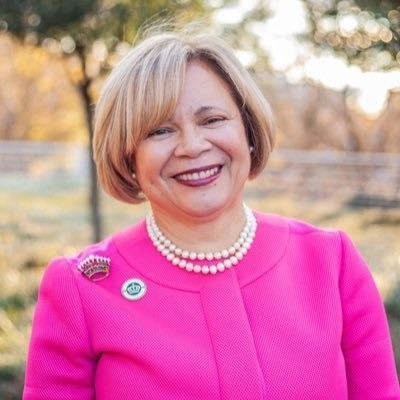
Vi Lyles, the first Black woman ever elected mayor of Charlotte, will resign from office effective June 30, ending a historic political career that helped reshape leadership in one of America’s fastest‑growing cities.
The announcement comes only months after Lyles won reelection in 2025 by a wide margin a victory she celebrated as a mandate to continue expanding affordable housing, improving public safety, and investing in infrastructure. In July 2025, she told supporters, “Charlotte is a city of opportunity… there is still work to do and I’m ready to keep doing it.”
But on May 7, 2026, Lyles said her priorities had shifted.
“Serving as Charlotte’s mayor has been the honor of my life,” she said. “Now, it is time for the next phase of my life, to spend more time with my grandchildren and for someone new to lead us forward.”
Her resignation closes a remarkable public service career spanning more than three decades — one that began long before she stepped into the mayor’s office.
A Historic Rise: The 2017 Breakthrough
For many Charlotte residents, Lyles’ defining moment came on Election Day 2017.
That year, she defeated Republican City Council member Kenny Smith to become Charlotte’s first African American female mayor a milestone that carried deep symbolic weight in a Southern city still grappling with issues of race, growth, and representation.
Her victory came just one year after the 2016 police shooting of Keith Lamont Scott, an event that sparked days of protest and placed Charlotte under national scrutiny. Against that backdrop, Lyles’ election represented both continuity and change a veteran administrator promising stability while breaking one of the city’s highest political barriers.
In her 2017 victory speech, she told supporters:
“You’ve proven that we are a city of opportunity and inclusiveness. You’ve proven a woman whose father didn’t graduate from high school can become this city’s first female African American mayor.”
It was a moment that signaled a new era in Charlotte politics.
A Tenure Defined by Growth, Equity, and Infrastructure
During her five terms, Charlotte experienced rapid population growth, major corporate relocations, and significant public investment. Lyles championed:
Affordable housing initiatives
Public transit expansion, including a voter‑approved sales tax for infrastructure
Racial equity programs
Violence prevention and public safety reforms
Fiscal stability and long‑term planning
She frequently described Charlotte as “a city of opportunity,” a theme that shaped her policy agenda and her public messaging.
“I am very proud of my record as mayor,” she said, “but I also firmly believe that true leadership includes knowing when it is time to let the next generation of leaders take over.”
A Sudden Transition and a City at a Crossroads
Under North Carolina law, the Charlotte City Council will appoint an interim mayor to serve the remainder of Lyles’ term. The appointee must be a Democrat and reside within Charlotte city limits, but does not have to be a current council member.
The process could trigger a broader reshuffling of city leadership. If a sitting council member is appointed mayor, the council must also fill that vacant seat.
Political speculation has already intensified:
Former Mayor Jennifer Roberts has publicly stated she feels “called” to serve as interim mayor and pledged not to run in 2027.
Councilmember Dante Anderson has urged the council to consider an outsider familiar with city government rather than selecting one of its own members.
At least five current council members are rumored to be considering mayoral campaigns in 2027.
Anderson, who grew up in Charlotte public housing, said she is not seeking the interim appointment but believes the city should choose someone who can “keep the seat warm” without influencing the 2027 race.
“There has already been some politics in play during this term,” she said.
Lyles, for her part, said she does not plan to endorse a successor immediately.
“As in all things politics, I am sure there will be speculation as to why I am making this decision now,” she said. “Simply put, I am going to spend time with my grandchildren.”
A Legacy That Will Shape Charlotte for Decades
At 73, Vi Lyles leaves office as one of the most consequential figures in modern Charlotte politics – a leader whose rise reflected the city’s changing demographics and whose tenure helped define its trajectory during a period of extraordinary growth.
Her imprint is visible across the city: in new housing developments, expanded transit plans, strengthened fiscal policy, and a renewed focus on equity.
And her 2017 breakthrough remains a defining moment in Charlotte’s civic identity – a reminder of what representation can mean in a city still evolving.
As Charlotte prepares for a new chapter, Lyles’ legacy endures: a symbol of opportunity, a steward of growth, and a leader who believed deeply in the city she served.
Truth Seekers Journal thrives because of readers like you. Join us in sustaining independent voices.
Tickets for the Obama Presidential Center Museum go on sale May 6, offering timed entry, immersive exhibits, and high demand dates through November in Chicago.
By Milton Kirby | Atlanta, GA | May 5, 2026
Tickets for the highly anticipated museum at the Obama Presidential Center will go on sale Wednesday, May 6, marking a major milestone ahead of the center’s public opening later this summer.
The ticket release offers the public its first opportunity to secure entry into the museum dedicated to the legacy of former President Barack Obama and former First Lady Michelle Obama. Located in Chicago, the center is designed to explore themes of democracy, civic engagement, and the broader cultural impact of the Obama presidency.
Museum admission will include access to four levels of exhibits, featuring immersive storytelling and historical artifacts. Visitors will also be able to step inside a full-scale replica of the Oval Office and visit the Sky Room, which offers panoramic views of the surrounding campus and city skyline.
According to organizers, tickets will be available beginning at 9 a.m. Central Time through obama.org. Due to expected demand, a virtual queue system will be in place to manage traffic. Visitors who enter the queue will have their place held in line as they wait to access the ticketing platform.
Tickets will be sold on a timed-entry basis, with available visit dates spanning from June 19 through November 30. Officials warn that weekend and summer dates are likely to sell out quickly and recommend that prospective visitors prepare alternative dates.
Once tickets are selected, customers will have a 10-minute window to complete their purchase. Each transaction will be limited to a maximum of nine tickets.
Pricing will range from $15 to $30, with special provisions for Illinois residents. Free admission days will be offered on select Tuesdays, with eligibility verified through zip code entry during checkout.
The opening of the museum represents a significant cultural and civic addition to Chicago, drawing national attention as one of the few presidential centers located within a major urban park setting. The project has been closely followed since its announcement, reflecting both the historic significance of the Obama presidency and the broader mission to inspire future generations of leaders.
Additional details and ticketing information are available through the official Obama Presidential Center website.
State leaders, national figures, and community members gathered beneath the gold dome of the Georgia State Capitol on May 1 to honor the life and legacy of longtime Congressman David Scott, a pioneering lawmaker whose decades of service reshaped Georgia politics and national agricultural policy.
The ceremony, held in the Capitol Rotunda, featured remarks from Atlanta Mayor Andre Dickens and U.S. Representative Maxine Waters, both of whom reflected on Scott’s rise from humble beginnings to the heights of congressional leadership.
Dickens emphasized that Scott’s early life shaped his approach to public service. He noted that Scott’s connection to everyday people remained central throughout his career, from his time in the Georgia General Assembly to his tenure in Congress.
Scott, who represented Georgia’s 13th Congressional District since 2003, died on April 22, 2026, at the age of 80. His passing marked the loss of one of Georgia’s most enduring political figures and created a vacancy in the closely divided U.S. House of Representatives. A special election will be scheduled under Georgia law to fill the remainder of his term.
Historic Firsts and Legislative Impact
Scott made history as the first African American to chair the House Agriculture Committee, serving from 2021 to 2023. His leadership helped direct federal attention and funding toward farmers, rural communities, and historically Black land-grant institutions.
Among his notable achievements was securing $80 million in the 2018 Farm Bill for scholarships at 19 historically Black colleges and universities with agricultural programs. He also played key roles in housing assistance programs, veterans’ benefits, and financial protections for homeowners.
House Minority Leader Hakeem Jeffries described Scott as a “trailblazer” who served his district with dedication and integrity, emphasizing his commitment to delivering results for Georgia families.
From Rural Roots to National Leadership
Born in 1945 in Aynor, South Carolina during the Jim Crow era, Scott’s early life was marked by frequent moves and hard work. He later graduated from Florida A&M University and earned an MBA from the University of Pennsylvania’s Wharton School.
After launching an advertising business in Atlanta, Scott entered politics, first working on Andrew Young’s congressional campaign before winning election to the Georgia House in 1974 and the Georgia Senate in 1982.
His rise to Congress in 2002 was supported by prominent figures, including civil rights leader Andrew Young and baseball legend Hank Aaron, reflecting the broad coalition behind his political ascent.
A Career of Service and Advocacy
Throughout his career, Scott focused heavily on constituent services, hosting job fairs that connected thousands to employment and health events that expanded access to screenings and care. He also secured hundreds of millions in federal funding for transportation and community development projects across metro Atlanta.
On foreign policy, Scott supported NATO alliances and international cooperation, while domestically he advocated for food access, education funding, and economic stability for working families.
News of his passing was first shared during a Congressional Black Caucus meeting by Chair Yvette Clarke. Flags at the White House were lowered to half-staff in his honor.
A Legacy That Endures
Scott’s death comes amid broader national conversations about aging leadership in Congress, as he was among several lawmakers over 80 still serving. Despite facing calls to step aside in recent years, he remained committed to his role, often stating that he was focused on “doing the people’s work.”
He is survived by his wife, Alfredia Scott, their two daughters, and grandchildren.
As Georgia prepares for a special election and reflects on his decades of service, Scott’s legacy remains defined by his historic leadership, policy achievements, and unwavering connection to the communities he served.
Era
Position
Key Focus
1975–1982
Georgia State Representative
Gun safety and “Peachcare” children’s health.
1983–2002
Georgia State Senator
Environmental protection and school prayer.
2003–2026
U.S. Representative
Agriculture, HBCUs, and Veteran affairs.
2021–2023
Chairman, House Ag Committee
First African American to hold the post.
Truth Seekers Journal thrives because of readers like you. Join us in sustaining independent voices.
This column exists for only one purpose; that is to answer your questions on Negro League baseball history. To that end, I need your help … if you are reading this column and enjoy it and want it to continue and you do not already know everything about Negro League history … then please submit a question on any aspect of Negro League history. Your questions are the lifeblood of Shadow Ball—they shape where we go next … players, teams, events, and more – and, in so doing, you will direct where this column goes moving forward. Your participation is important and appreciated. The very existence of this column depends on you. Submit your questions to shadowball@truthseekersjournal.com.
Freddie Oliver of McKeesport, PA, posed the following question for me this week: who were the best umpires in the Negro Leagues?
Not sure I am qualified to rank ‘em but after Rube Foster’s decision to hire Black umpires in 1923 they enjoyed just over three decades of excellent arbitrating with just as many complaints as umpires come to expect. I will briefly mention three of the Men in Blue that serve to bookend both the history of the Negro Leagues and the legacy of African American umpires in Black Baseball.
W.W. “Billy” Donaldson
Billy Donaldson was the quiet architect of Negro League umpiring professionalism. When Rube Foster decided in 1923 that Black umpires should call Black baseball, Donaldson was one of the first men he trusted. He worked with a calm, deliberate style — never rushed, never rattled — and players respected him because he respected the game. Donaldson helped establish the standards that would guide the leagues for decades: crisp signals, firm control, and a sense that the umpire was part of the game’s dignity. His name does not ring out like the stars he officiated, but the league’s stability in its early years owes much to him. Donaldson officiated in two East-West Classics in 1936 and 1937.
Bert Gholston
Bert Gholston was the steady hand beside Donaldson, a man whose reputation rested on consistency. He was not flashy, and he did not need to be. Gholston worked some of the most heated games of the 1920s and ’30s, and he did it with a temperament that players trusted. He was the umpire who kept arguments from becoming brawls, who could defuse a dugout with a look, who understood that the best umpires are remembered not for their calls but for their control. Gholston helped give the Negro National League its backbone during years when the league’s survival depended on professionalism. Gholston worked well into the 40s. In 1923 he debuted with Donaldson as part of the Negro National League’s first all‑Black umpiring crew.
Bob Motley
Bob Motley brought a sense of theater to the Negro Leagues, but it was never empty showmanship — it was authority earned the hard way. A Marine who survived the Battle of Okinawa returned home with a presence that players felt the moment he stepped on the field. Motley called games in the Negro American League’s final years, working All‑Star contests and barnstorming tours with the same crisp mechanics and booming voice. He understood that the umpire’s job was to keep the game honest, and he did it with flair, humor, and absolute command. When the leagues faded, he became their great storyteller, carrying the memory of Monarchs, Grays, and Crawfords into the 21st century. Motley worked at least three East-West Classics. Often called the “last surviving Negro League umpire.” Mr. Motley passed away in 2017.
All three of these umpires – the Alpha’s Donaldson & Gholston and the Omega Motley – do indeed bookend Negro League history. All three received votes in an ongoing poll – the 42 for ’21 poll – of Negro League fans, researchers, writers, artists, collectors, historians, and students. Donaldson and Gholston finished tied for 115th among 154 players and personages considered in the poll. Bob Motley, more current, finished tied for 42nd.
Other noteworthy umpires include former players such as Oscar Charleston, Bullet Rogan, Mule Stuttle, Phil Cockrell, and Hurley McNair. Veteran arbiters like Fred McGreary and Virgil Bluett, each of whom worked a dozen East-West Classics or fabled legends like Jacob Francis, who performed in the 1885 New York State League, and is considered the earliest Black umpire in an otherwise White professional league. The National Baseball Hall of Fame is very much behind in terms of inducting Negro League players and managers; I wonder if they could find room for one of these competent umpires?
Last week’s Shadowball Significa Question of the Week went unanswered: What feared slugger was the first to hit a home run in a Negro League East-West Classic? The Classic was the official name of the Negro League All Star game. None of my readers produced George “Mule” Suttles who took Sam Streeter to the upper deck in the 4th inning of the initial Negro League All Star game in 1934.
The Shadowball Significa Question of the Week: Seven players have appeared in both a Negro League East-West Classic and a National League/American League All Star game, six of them have been inducted in the Baseball Hall of Fame. Name the 7th who is not inducted? Send your answer and any comments on the Negro Leagues to shadowball@truthseekersjournal.com or Shadow Ball, 3904 N Druid Hills Rd, Ste 179, Decatur, GA 30033
Ted Knorr
Ted Knorr is a respected Negro League baseball historian, a longtime member of the Society for American Baseball Research’s Negro League Committee, and the founder of the Jerry Malloy Negro League Conference as well as several Negro League Commemorative Nights in central Pennsylvania.
Beyond his research and organizing work, Ted is frequently invited to speak at sporting events, community programs, family gatherings, and educational forums, where he brings Negro League history to life. His deep knowledge of the players, teams, and cultural impact of Black baseball has made him a trusted voice for audiences who want to understand the legacy and significance of the Negro Leagues.
Support open, independent journalism—your contribution helps us tell the stories that matter most.
… this column exists for only one purpose and that is to answer your questions on Negro League baseball history. To that end, I need your help … if you are reading this column and enjoy it and want it to continue and you don’t already know everything about Negro League history … then please submit a question on any aspect of Negro League history. Your questions are the lifeblood of Shadow Ball—they shape where we go next.
– players, teams, events, and more – and, in so doing, you will direct where this column goes moving forward. Your participation is important and appreciated. The very existence of this column depends on you. Submit your questions to shadowball@truthseekersjournal.com.
Last week’s The Shadowball Significa Question of the Week: Who was the first African American pitcher to toss a no-hitter in Major League baseball? Sounds like a straightforward question but due to the peculiar history of Negro League baseball it is not so straight. Turns out there are three answers that I find acceptable: very acceptable. Let’s take a look at them in order.
On May 12, 1955, New York Giant right hander Sam Jones became the first African American to toss a Major League no hitter when he held the Pittsburgh Pirates hitless in a 4-0 victory. Shadowball favorite Will Clark nailed this one just half a day after it was posted.
Sam Jones had a solid big-league career. In addition to the no hitter, Jones had several other distinctions. Him & Quincey Trouppe formed the first African American battery in the American League. Jones was the runner-up to Early Wynn for the 1959 Cy Young award and tops in the NL. Sam Jones career strikeouts per 9 innings (7.5) was higher than all Major League pitchers with as many or more innings pitched than he had when he pitched his last game on October 3, 1964 (i.e. more than the Big Train, Rapid Robert Feller, Rube Waddell, Dazzy Vance and everyone else in MLB history).
Shadowball reader Matt Garvey offered some info that led me to an answer I had not considered but should have. He mentioned that Bill Gatewood had several no hitters. That got me to take a look at Gatewood. Negro League historian Phil S. Dixon offers that Gatewood may have authored as many as twenty no hitters at various levels of competition throughout his career. Phil has found documentation on six of them. One of them occurred on June 6, 1921, and, since December 16, 2020,when MLB designated 7 specific Negro Leagues (including the Negro National League in 1921) as Major. So, the first Major League no hitter by an African American was thrown by big Bill Gatewood in 1921, the second season of “Major” Negro League baseball.
I have one more possibly correct answer in mind – Charles Leander “Bumpus” Jones who, in his major league debut, took the ball for the Cincinnati Reds against the Pittsburgh Pirates 0n October 15, 1892. Ol’ Bumpus went on to be the only pitcher to toss a big league no hitter in first game in the majors. It also was the last game pitched from a pitcher’s box, instead of a mound, 50 feet way from home. It also, if local newspaper sources (as well as early family census records) are accurate he was the first Major League pitcher of African descent. He was referred to as mulatto in the census and colored in local newspaper articles.
If you are keeping score here is a list of select Major League baseball no hitters pitched by African Americans:
#1 10/15/1892 Bumpus Jones National League
#2 O6/06/1921 Bill Gatewood Negro National League
#3-21 numerous pitchers, including Satchel Paige, Hilton Smith, Leon Day, and a combined no no by Jose Mendez and Bullet Joe Rogan.
#22 05/12/1955 Sam Jones National League
Ol’ Sam Jones went to his grave thinking he was the first.
The Shadowball Significa Question of the Week: What feared slugger was the first to hit a home run in a Negro League East-West Classic? The Classic was the official name of the Negro League All Star game. Send your answer and any comments on the Negro Leagues to shadowball@truthseekersjournal.com or Shadow Ball, 3904 N Druid Hills Rd, Ste 179, Decatur, GA 30033
Ted Knorr
Ted Knorr is a Negro League baseball historian, longtime member of the Society for American Baseball Research’s Negro League Committee, and founder of the Jerry Malloy Negro League Conference and several local Negro League Commemorative Nights in central Pennsylvania.
Support open, independent journalism—your contribution helps us tell the stories that matter most.