Farm Credit Mid-America Opens 2026 Scholarship Applications for Future Agriculture Leaders

Farm Credit Mid-America opens 2026 scholarship applications, offering up to $5,000 for students pursuing agriculture and rural community careers. Deadlines approach in January.

By Milton Kirby | Atlanta, GA | January 15, 2026

College-bound students with a passion for agriculture and rural communities have a new opportunity to invest in their futures. Farm Credit Mid-America has opened applications for its 2026 scholarship programs, continuing a decade-long commitment to developing the next generation of agricultural leaders.

Each year, Farm Credit Mid-America awards scholarships to students who demonstrate strong academics, leadership, and community involvement. Over the past ten years, the organization has invested more than $2 million to support students pursuing careers that strengthen agriculture and rural communities across its service region.

Two Scholarship Paths for Students

Farm Credit Mid-America offers two distinct scholarship programs tailored to different student pathways.

The Farm Credit Mid-America Scholars program provides $5,000 in financial assistance over two years to rising college students majoring in agriculture. Beyond financial support, scholars gain exposure to Farm Credit Mid-America through career exploration, leadership development, and professional networking opportunities. Applications for the 2026 school year will be accepted from January 7 through January 31, 2026.

The Customer Scholarship awards $1,500 in financial support to students pursuing agricultural or rural community-related careers. Applicants must be a child or grandchild of a Farm Credit Mid-America customer and may attend an accredited two- or four-year college, university, vocational, or trade school. Applications are open October 1, 2025 through January 15, 2026, with award notifications expected in April 2026.

Eligibility and Application Details

Scholarships are available to students majoring in agriculture or pursuing careers connected to agriculture and rural communities. The online application process takes approximately 10–30 minutes and must be completed in one sitting. Applicants to the Scholars program must upload a résumé and a letter of recommendation. Only online applications will be accepted.

Students may apply for multiple Farm Credit Mid-America scholarships but may receive only one per school year. All scholarship funds will be awarded by August 2026 for the fall semester. Team members and directors of Farm Credit Mid-America, as well as their children, are not eligible. For students committed to shaping the future of agriculture, the scholarships offer both financial support and a pathway to leadership in rural America.

Related articles

A Farmer, a General, a Democrat: Shawn Harris Enters Georgia’s 14th District Race

Thank you for reading The Truth Seekers Journal. Subscribe, share, and support independent community journalism.

Morehouse and Spelman Glee Clubs Deliver Three-Night Christmas Masterpiece

Morehouse and Spelman’s Glee Clubs delivered a powerful three-night Christmas concert series, blending tradition, harmony, and history in one of Atlanta’s most beloved holiday celebrations.

By Milton Kirby | Atlanta, GA | December 8, 2025

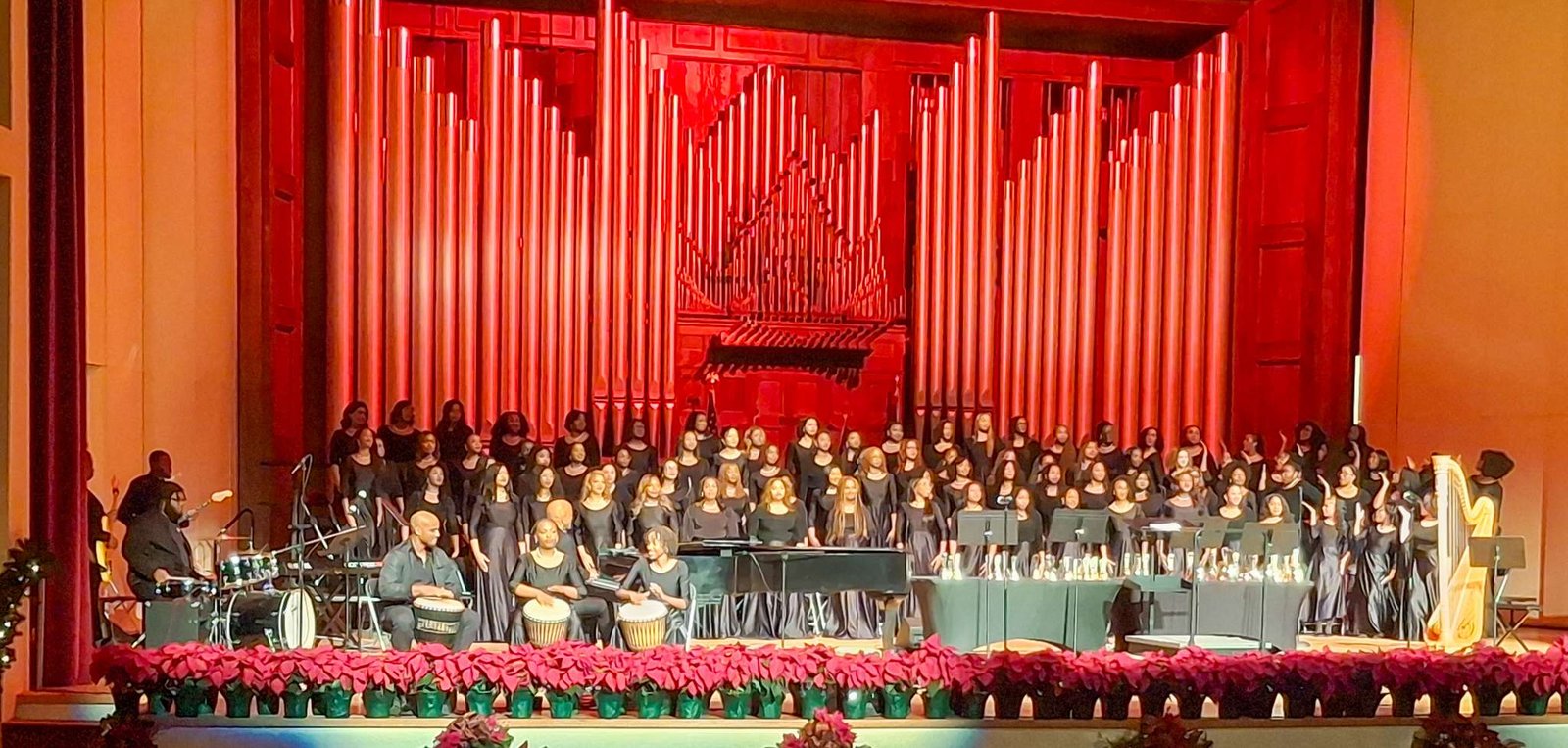
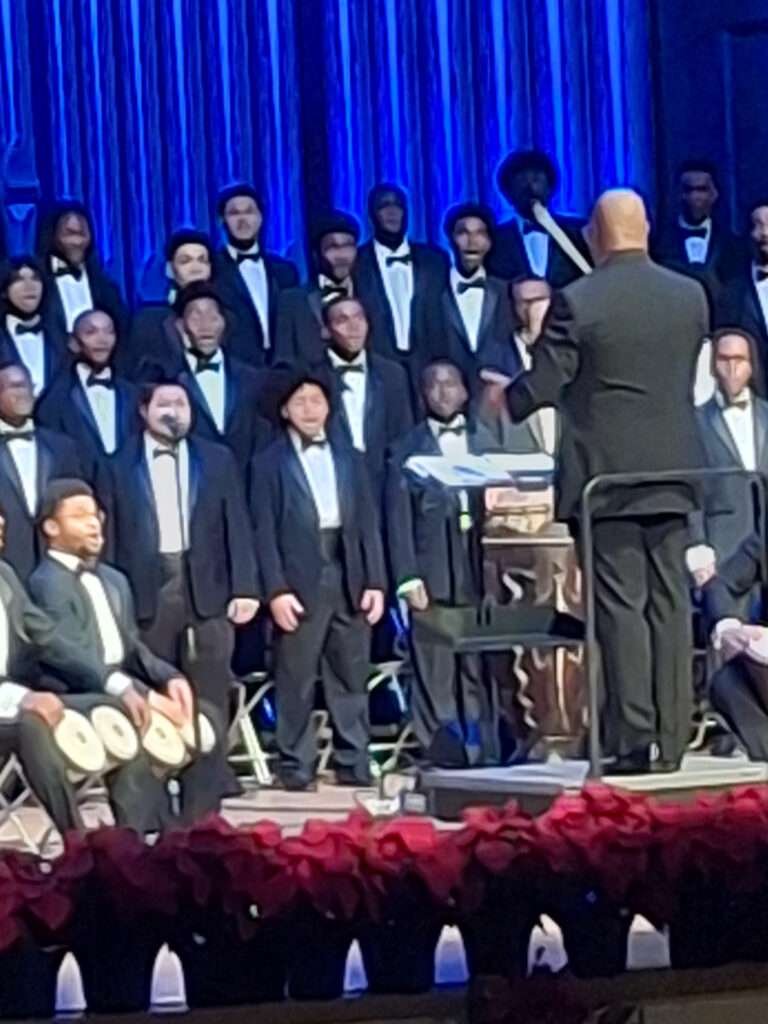
The holiday season opened in grand fashion this weekend as the Morehouse College Glee Club and the Spelman College Glee Club delivered three unforgettable nights of music, unity, and tradition. The concerts were held Friday through Sunday, December 5–7, and drew capacity crowds to two of Atlanta’s most cherished campus chapels.

Friday and Sunday performances were held at the Martin Luther King Jr. International Chapel at Morehouse College. Saturday’s concert took place at Sisters Chapel on the campus of Spelman College. Each night offered a stirring reminder of why this joint Christmas Carol Concert remains one of the most treasured holiday traditions in Atlanta.

TSJ attended the Friday night performance, where the Glee Clubs played to a full house inside the MLK International Chapel.


A Tradition of Excellence

The Morehouse College Glee Club directed by Dr. David Morrow with organist Dr. Joyce F. Johnson, and the Spelman College Glee Club, directed by Dr. Kevin Johnson, performed a rich blend of sacred, classical, traditional, and contemporary holiday selections.

Audiences were treated to familiar favorites, including:
Silent Night, Sir Christëmas, The Savior’s Birth, The First Noel, Joy to the World, This Christmas, O Come, All Ye Faithful, and Go Tell It on the Mountain.

The choirs also performed lesser-known works that were just as stirring and melodic, showcasing the depth of their repertoire and their ability to breathe new life into both classic and contemporary choral literature.


Spelman’s Legacy of Global Sisterhood

For over 100 years, the Spelman College Glee Club has upheld a standard of musical excellence shaped by harmony, discipline, and pride. With approximately 50 members from various academic disciplines, the ensemble performs most major campus events and maintains a repertoire that spans world cultures, commissioned works, and music of the African diaspora.

Under the leadership of Dr. Kevin Johnson, the Glee Club has performed across the U.S. and around the world. Highlights include concerts at the White House, Lincoln Center’s Avery Fisher Hall, Faneuil Hall in Boston, the National Museum of American History, and international tours to Brazil, Canada, Italy, and Portugal.

Membership requires a rigorous audition process evaluating tonal memory, pitch matching, vocal quality, and musicianship. Yet beyond the music, the Spelman Glee Club represents community. It is a space where sisterhood, pride, and excellence converge.


Morehouse’s Global Brotherhood in Song

The Morehouse College Glee Club has captivated audiences for more than a century. Their performances have graced presidential inaugurations, Super Bowls, the 1996 Olympics, and homegoing services for national figures including President Jimmy Carter and Dr. Martin Luther King Jr., a Morehouse alumnus.

Morehouse Glee Club Performs

Dr. Morrow says the Glee Club is more than a performance ensemble. It is a reflection of Morehouse identity and brotherhood.

It’s remembering that you are part of a community,” Morrow said. “You are more than a member of the Glee Club. You are family. You are part of something great.

Their musical résumé spans continents, with tours throughout Africa, the Caribbean, Europe, and every corner of the United States. The Glee Club has performed with cultural icons such as Aretha Franklin, Jessye Norman, Denyce Graves, Take 6, Stevie Wonder, and Jennifer Hudson. They are also featured on soundtracks to Spike Lee films and major national broadcasts.

The Glee Club is deeply tied to historical and cultural leadership. Alumni include Senator Raphael Warnock, Spike Lee, Samuel L. Jackson, and legendary figures such as Mayor Maynard Jackson and Herman Cain.


A Shared Holiday Tradition

Morehouse and Spelman have long united their voices for this Christmas tradition. Together, they carry an intergenerational message: music is a cultural bridge. Music preserves history. And music, especially during the holiday season, binds community.

Judge Sugarmon, speaking to the educational significance of the Glee Clubs, underscored the moment:
At a time when DEI is being denied, we must educate our children about our history. It is what made this country what it is.

And as the music filled the chapels each night, that message rang clear—this tradition belongs to the people, to the campuses, and to the broader community that has embraced it for nearly a century.


A Look Toward the 100th Year

This year marked the 99th Annual Christmas Carol Concert, one of the longest-running holiday traditions in Atlanta. Both colleges promised that the upcoming centennial celebration will be even more spectacular, with expanded performances and special guests.

The joy, reverence, and unity felt this weekend offered a glimpse of what that milestone will hold.

When Morehouse sings and Spelman answers, a century of HBCU excellence fills the room — and the world listens.

Related articles

Morehouse Picks Alumnus and National Scholar to Write Its Next Chapter

Arthur M. Blank Family Foundation Commits $50 Million to Atlanta’s HBCUs

President Biden Delivers Commencement Address at Morehouse College

Truth Seekers Journal thrives because of readers like you. Join us in sustaining independent voices.

Warnock, Ossoff Announce $300 Million to Close Georgia’s Digital Divide

Georgia will receive over $300 million in federal BEAD funding to expand broadband, helping close the digital divide and bringing high-speed internet to unserved rural communities.

By Milton Kirby | Atlanta, GA | December 2, 2025

Georgia is set to receive more than $300 million in new federal funding to expand high-speed internet access across the state, marking one of the largest broadband investments in Georgia history.

U.S. Senators Raphael WarnockandJon Ossoff announced the funding Monday in Washington, secured through the Bipartisan Infrastructure Law’s Broadband Equity, Access, and Deployment (BEAD) Program. The money will be distributed through the Georgia Technology Authority (GTA) to local contractors to build out new fiber networks in communities that still lack reliable service.

State leaders estimate that 15% of Georgians still do not have dependable broadband — a barrier that affects families, students, farmers, and small businesses across rural and underserved counties.


A Major Push Toward Full Connectivity

Senator Warnock said the investment moves Georgia closer than ever to 100% statewide broadband coverage.

“This federal investment means life gets easier for hundreds of thousands of Georgians,” Senator Warnock said. “You need a broadband connection to do just about anything. You can’t even farm without a broadband connection.”

Warnock also criticized delays by the Trump Administration in releasing federal broadband dollars earlier this year, saying he will continue pressing for all remaining BEAD funds to be released quickly.

Senator Ossoff called the funding “a major next step” for Georgia families and businesses.

“Our historic bipartisan infrastructure law continues to deliver for Georgia,” he said. “This is about ensuring every Georgia family and business has high-speed internet.”


Where the Money Will Go

Under the BEAD program, the new $300 million will be used to:

  • Build fiber broadband in unserved rural counties
  • Upgrade outdated networks in underserved areas
  • Expand affordable access programs aimed at low-income households
  • Support construction jobs and local contracting across the state

The Georgia Technology Authority will allocate funds to providers capable of installing fiber in areas where service is slow, unreliable, or non-existent.


A Long Legislative Trail to Today’s Funding

Senator Warnock has made broadband expansion a signature priority:

  • In 2024, he toured OFS Fitel in Norcross with former Commerce Secretary Gina Raimondo to highlight Georgia’s role in fiber manufacturing.
  • He urged the FCC to expand theE-Rate program to allow Wi-Fi hotspot lending by schools and libraries.
  • In 2022, he hosted then-FCC Chair Jessica Rosenworcel in Jackson County to spotlight rural internet needs.
  • Alongside Senator Luján, he pushed for strong federal rules to prevent digital discrimination by internet providers.

Senators Warnock and Ossoff also announced $1.3 billion in BEAD funding for Georgia in 2023. In May 2025, both senators demanded the Trump Administration release the delayed BEAD funds—setting the stage for this week’s announcement.


Why This Matters for Rural and Urban Georgia

The expansion is expected to help:

  • Farmers who depend on broadband for precision agriculture
  • Students completing homework and online learning
  • Small businesses that rely on digital payments and online tools
  • Seniors using telehealth services

For many counties, especially in South Georgia and parts of Appalachia, fiber broadband is still years away without federal help.

Monday’s announcement marks one of the strongest steps yet toward closing that gap.

No contribution is too small. Support us today and help keep truth accessible for all.

Bowie State’s Future Brightens with Major Philanthropic Boost from MacKenzie Scott

By Milton Kirby | Prince George’s County, MD | November 14, 2025

Bowie State University has received the largest single donation in its 160-year history — a $50 million unrestricted gift from philanthropist and author MacKenzie Scott. The announcement marks a major moment for Maryland’s oldest historically Black university and one of the fastest-growing institutions in the state.

The gift follows Scott’s earlier $25 million donation to Bowie State in 2020, bringing her total investment to the university to $75 million. Leaders say the unrestricted nature of the gift gives Bowie State the flexibility to expand scholarships, strengthen academic programs, and build long-term financial stability.

President Aminta Breaux said she was moved to tears when she learned of the gift. “I was truly at a loss for words… I was overjoyed. I was so overcome,” she said. Breaux noted that many of the university’s students are high-need, and the donation will significantly close financial gaps for those who require the most support.

MacKenzie Scott – Courtesy Vogue

“This gift has the ability to touch so many lives,” Breaux said. “Higher education is the pathway to upward social mobility for our students.”

Brent Swinton, Bowie State’s vice president for philanthropic engagement, called the donation “transformational,” saying it will inspire additional donors and help fuel new opportunities across the university.

Scott, who has given more than $1.7 billion to higher education and nonprofit organizations in recent years, has made large investments in several historically Black colleges and universities nationwide. Her support places Bowie State among a select group of institutions experiencing major increases in private philanthropy.

Bowie State is already in a period of growth, offering more than 30 undergraduate majors, over 21 master’s programs, 18 specialty certificates and three doctoral degrees in fields ranging from cybersecurity and nursing to business, education and STEM.

University officials say they plan to direct a large share of the funds toward student scholarships, faculty development, research expansion and new academic initiatives. Additional details are expected as planning continues.

The gift also increases the university’s ability to make long-term investments that strengthen the student experience — including campus modernization projects, expanded support services and new industry partnerships.

A deeper look at Bowie State’s long history shows why this moment carries such meaning for the institution.

Bowie State’s roots trace back to January 9, 1865, when an organization known as the Baltimore Association for the Moral and Educational Improvement of the Colored People opened a school inside the African Baptist Church at Calvert and Saratoga streets. The association, formed by 46 businessmen, lawyers, clergymen and Quakers, was committed to educating Maryland’s newly emancipated Black citizens.

One of its strongest advocates, Joseph M. Cushing, openly criticized the state for refusing to fund education for Black residents, predicting that Maryland would someday be forced by public opinion to do so. The first school—known as School No. 1—offered basic education courses. Teacher-training classes were added in 1866, and by 1867 the institution expanded with support from the Freedmen’s Bureau and Quaker donors.

The state took control of the school in 1908, renaming it Normal School No. 3. A move to Bowie soon followed, with Maryland purchasing a 187-acre tract of farmland to establish a new campus that opened in 1911. Don Speed Smith Goodloe became the first Black principal to lead the school.

Through the 1920s and 1930s, the curriculum continued to grow, transitioning from the Maryland Normal and Industrial School at Bowie to the Maryland Teachers College at Bowie in 1938. Liberal arts programs were added throughout the 1960s, and the state officially renamed the school Bowie State College in 1963.

Graduate education began in 1969 with the creation of the Master of Education program. Bowie State continued its rise through the 1970s and 1980s, and in 1988 the institution transitioned to Bowie State University. On the same day, it became part of the newly formed University System of Maryland.

The university gained national attention for its work in science, technology, engineering and mathematics. In 1995, Bowie State won an 11-year, $27 million NASA/NSF award, becoming one of just six national Model Institutions for Excellence in STEM.

Today, Bowie State ranks among the nation’s leading comprehensive universities, preparing students to thrive in a rapidly changing, highly technological world. The new $50 million gift strengthens that mission, linking a 160-year legacy of resilience with a future defined by opportunity and innovation.

With expanded scholarships, stronger academic programs and broader research capacity, Bowie State is positioned to open doors for generations of students who will carry the institution’s legacy forward.

Related articles

MacKenzie Scott Gift to Howard University

MacKenzie Scott Gift to NC A&T State University

MacKenzie Scott Gift to Alabama State University

MacKenzie Scott Gift to Prairie View A&M University

MacKenzie Scott Gift to Philander Smith University

Please consider supporting open, independent journalism – no contribution is too small!

Philander Smith University Receives Historic $19 Million Gift from MacKenzie Scott

Philander Smith University received a record $19 million unrestricted gift from philanthropist MacKenzie Scott, boosting scholarships, campus upgrades, student success efforts, and long-term HBCU sustainability.

By Milton Kirby | Little Rock, AR | November 14, 2025

Philander Smith University (PSU) has received an unrestricted $19 million gift from philanthropist MacKenzie Scott. It is the largest single donation in the university’s 147-year history. University leaders say the contribution strengthens academic programs, student support, and long-term planning for the historic Little Rock HBCU.

A Gift with Full Flexibility

The donation is unrestricted, giving the university freedom to direct funds where they are most needed. That flexibility allows PSU to respond quickly to student needs, expand programs, and improve facilities without donor-imposed limits.

A Historic Institution with a Unique Mission

Founded in 1877, Philander Smith University is a small, private, historically Black liberal arts institution related to the United Methodist Church. It offers four undergraduate degrees — the Bachelor of Arts, Bachelor of Science, Bachelor of Business Administration, and Bachelor of Social Work — along with a Master of Business Administration (MBA).

The university’s mission is to graduate academically accomplished students who are grounded as advocates for social justice and committed to changing the world for the better.

PSU is also the only United Negro College Fund member institution in Arkansas, serving students of all backgrounds regardless of race, religion, sex, national origin, or ethnicity.

Leadership Responds

President and CEO Dr. Maurice D. Gipson said the contribution marks a major step forward.

“This gift is a resounding vote of confidence in our mission and our momentum,” Dr. Gipson said.
“It positions us to invest boldly in student success, facilities enhancement, and programs that prepare the next generation of Philander Smith leaders.”

MacKenzie Scott – Courtesy Vogue

Why This Gift Matters

HBCUs often operate with smaller endowments and historic funding inequities. Rising costs and enrollment shifts have increased pressure on many campuses. PSU leaders say the unrestricted gift will support scholarships, strengthen the endowment, and modernize facilities — areas essential for long-term growth.

Research shows that large, flexible donations like Scott’s can boost retention, expand academic offerings, and stabilize financial planning at HBCUs.

Scott’s Growing Impact on HBCUs

Since 2020, Scott has reduced her Amazon stake by 42 percent, selling or donating about 58 million shares. She is still worth more than $35 billion today, even after donating more than $19 billion through her philanthropic platform, Yield Giving. Created in 2022, Yield Giving supports thousands of organizations focused on education, equity, disaster recovery, and community advancement.

Her focus on large, unrestricted gifts has made her one of the most influential philanthropic partners for historically under-resourced institutions.

Scott’s donation to Philander Smith continues her record of large contributions to historically Black colleges and universities. Over the past five years, she has made significant gifts to institutions such as Prairie View A&M University, Bowie State University, North Carolina A&T University, and others.

These gifts have helped HBCUs build endowments, expand programs, and stabilize campuses that operate with far fewer financial resources than many predominantly white institutions.

Looking Forward

For Philander Smith University, the $19 million donation is more than a financial boost. It represents trust in the school’s mission, momentum for new initiatives, and an opportunity to deepen its impact on Little Rock and the region.

The gift provides stability and room for growth as PSU prepares the next generation of students and community leaders.


Related articles

MacKenzie Scott Gift to Howard University

MacKenzie Scott Gift to NC A&T State University

MacKenzie Scott Gift to Alabama State University

MacKenzie Scott Gift to Prairie View A&M University

MacKenzie Scott Gift to Bowie State University

Please consider supporting open, independent journalism – no contribution is too small!

North Carolina A&T Endowment to Top $300 Million After MacKenzie Scott’s Landmark Gift

MacKenzie Scott gives North Carolina A&T a historic $63 million gift, boosting its research goals, student success, and endowment as the university advances toward national R1 status.

By Milton Kirby | Greensboro, NC | November 14, 2025

North Carolina Agricultural and Technical State University has received the largest single gift in its 134-year history — a record-setting $63 million investment from philanthropist and author MacKenzie Scott.

The announcement marks a major moment for the nation’s largest HBCU. It also deepens Scott’s relationship with the university, following her $45 million gift in 2020, which brought her total support to $108 million.

MacKenzie Scott – Courtesy Vogue

Chancellor James R. Martin II said the latest contribution demonstrates Scott’s trust in A&T’s mission and growing national prominence.

“No investor in higher education history has had such a broad and transformational impact across so many universities,” Martin said. “North Carolina A&T is deeply grateful for Ms. Scott’s reaffirmed belief in our mission and for the example she sets in placing trust in institutions like ours to drive generational change through education, discovery and innovation.”


A National Leader Rooted in History and Excellence

North Carolina A&T stands as one of the nation’s most dynamic universities — a land-grant research institution, a cultural pillar, and America’s largest HBCU for seven consecutive years. It is also the #1 producer of degrees awarded to African Americans in North Carolina and the leading HBCU STEM institution in the country.

The university’s diverse and global community includes students from across the nation and six continents, upheld by a tradition of excellence and alumni who hold influential roles in government, industry, and academia.

Photo by Milton Kirby – NC A&T – Murphy Hall

A&T’s achievements include:

  • 66 patents issued from faculty and student research
  • A growing number of spin-off and start-up companies
  • The top public HBCU business school in the country
  • National recognition for engineering, agriculture, and science excellence

In recent years, the university has experienced rapid expansion. Enrollment surpassed 15,000 students in Fall 2025, and A&T opened major new facilities, including the $90 million Engineering Research and Innovation Center and a new 450-bed residence hall. Four new academic centers of excellence also debuted in the past year.

This foundation of growth sets the stage for Scott’s latest gift — and what it will help the university achieve next.


Fueling A&T’s Path to Research Leadership

Scott’s investment aligns directly with Preeminence 2030: North Carolina A&T Blueprint, the university’s strategic plan guiding its push toward the Research 1 (R1) Carnegie Classification — the highest level of research activity in the country.

The funding strengthens A&T’s capacity in key areas where it already leads, including:

  • Engineering
  • Agriculture and environmental sciences
  • Life and health sciences
  • Data science
  • Artificial intelligence

“This is an investment in A&T’s capacity to solve society’s most pressing challenges,” Martin said. “It will accelerate our momentum as a research and innovation powerhouse, ensuring that A&T continues to lead at the intersection of technology, human progress and social transformation.”


Supporting Students, Expanding Research, and Strengthening Generational Wealth

Because the gift is unrestricted, A&T can deploy resources where they will have the most impact — from bolstering student success and faculty recruitment to advancing interdisciplinary research.

The timing is pivotal. A&T’s endowment exceeded more than $202 million as of June 2024, the largest among all public HBCUs and one of the fastest-growing university endowments in the Southeast. Only a decade earlier, the figure stood below $60 million.

With Scott’s latest investment, the university’s endowment is projected to surpass $300 million, bolstering long-term stability and supporting competitive research portfolios, scholarships, and expanded federal and industry partnerships.

Board of Trustees Chair Gina L. Loften ’90 said Scott’s investment will have a lasting impact.

“On behalf of the North Carolina A&T Board of Trustees, I extend our deepest gratitude to Ms. Scott for her extraordinary gift,” Loften said. “This transformative investment will strengthen our capacity to fulfill A&T’s mission of exemplary teaching, innovative research, and service that lifts communities.”

Related articles

MacKenzie Scott Gift to Howard University

MacKenzie Scott Gift to Alabama State University

MacKenzie Scott Gift to Prairie View A&M University

MacKenzie Scott Gift to Bowie State University

MacKenzie Scott Gift to Philander Smith University

North Carolina A&T Reaches Historic Enrollment

Please consider supporting open, independent journalism – no contribution is too small!

Prairie View A&M Celebrates Transformational Philanthropy from MacKenzie Scott

Prairie View A&M University receives a record $63 million gift from MacKenzie Scott, boosting scholarships, research, and long-term growth in one of the largest HBCU donations ever.

By Milton Kirby | Prairie View, TX | November 14, 2025

A Record-Breaking Moment for PVAMU

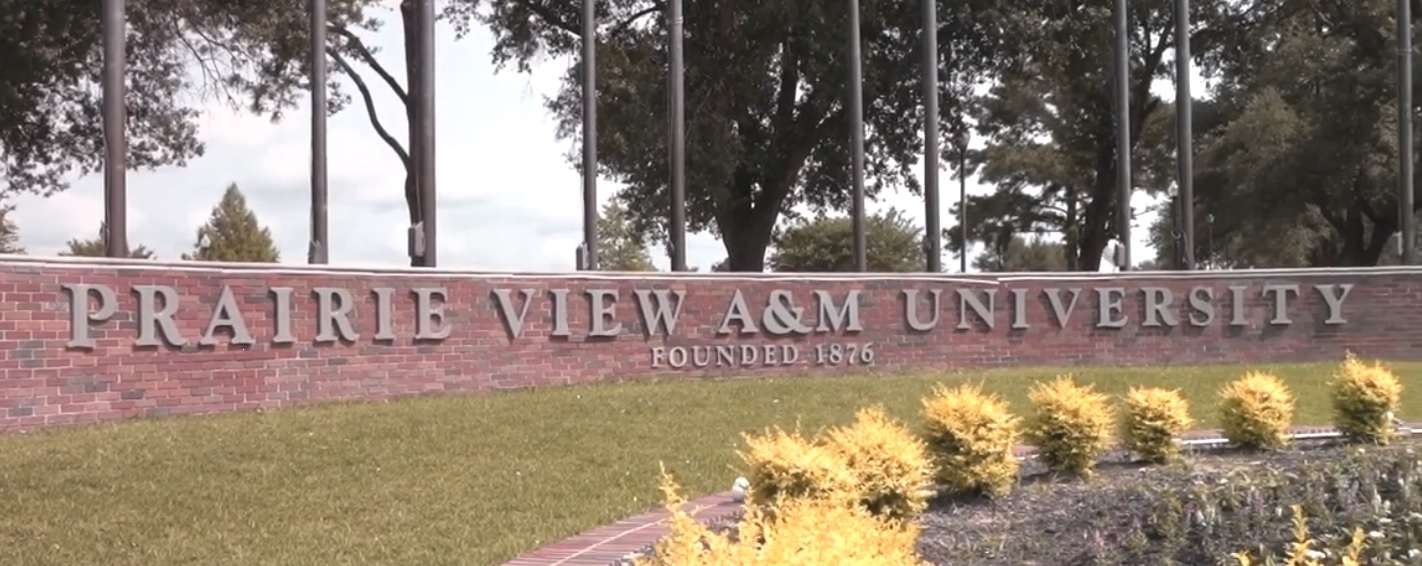
Prairie View A&M University has received the largest single gift in its 149-year history — a $63 million unrestricted donation from philanthropist and author MacKenzie Scott.

The university announced the news on Thursday, calling the investment a powerful vote of confidence in Prairie View’s mission, leadership, and rising research profile.

This new gift comes five years after Scott’s earlier $50 million donation. Together, her support now totals $113 million, marking one of the most significant philanthropic commitments ever made to a Historically Black College or University.

MacKenzie Scott – Courtesy Vogue

A Boost for Students, Research, and the Future

President Tomikia P. LeGrande said the gift is “defining and affirming,” and will accelerate the university’s long-range plan, Journey to Eminence: 2035.

The university plans to expand:

  • Scholarships and student support services
  • Faculty research and innovation in areas like artificial intelligence, cybersecurity, agriculture, public health, and space science
  • Endowment growth, giving PVAMU long-term financial strength

The timing aligns with a major milestone — PVAMU’s largest-ever enrollment of 10,106 students.

Why Unrestricted Funding Matters

Scott’s giving style sets her apart: she allows universities to decide how best to use the funds. PVAMU leaders say that flexibility is crucial for sustained excellence, especially as many HBCUs continue working to close long-standing funding gaps.

A Rising Star Among Public HBCUs

Prairie View A&M, part of the Texas A&M University System, has sharpened its focus on high-impact research in recent years.

University officials say the gift will:

  • Help strengthen PVAMU’s position as a national research institution
  • Expand opportunities for first-generation and low-income students
  • Support community and workforce development across Texas

What Comes Next

President LeGrande said the gift is not only a celebration but a call to action:
This investment amplifies the power and promise of a Prairie View education.”

To honor that promise, PVAMU plans to track and report measurable outcomes tied to student success, faculty advancement, and research impact.

With one of the largest philanthropic boosts in HBCU history, Prairie View A&M now enters a new chapter — one marked by momentum, vision, and opportunity.

Related articles

MacKenzie Scott Gift to Howard University

MacKenzie Scott Gift to NC A&T State University

MacKenzie Scott Gift to Alabama State University

MacKenzie Scott Gift to Bowie State University

MacKenzie Scott Gift to Philander Smith University

Please consider supporting open, independent journalism – no contribution is too small!

Howard University’s Path Forward: MacKenzie Scott’s $80 Million Gift Accelerates a Legacy of Excellence

Howard University receives a historic $80 million gift from philanthropist MacKenzie Scott, strengthening its research leadership, medical innovation, and mission of truth, service, and opportunity.

By Milton Kirby | Washington, D.C. | November 3, 2025

A Legacy Rooted in Truth and Service

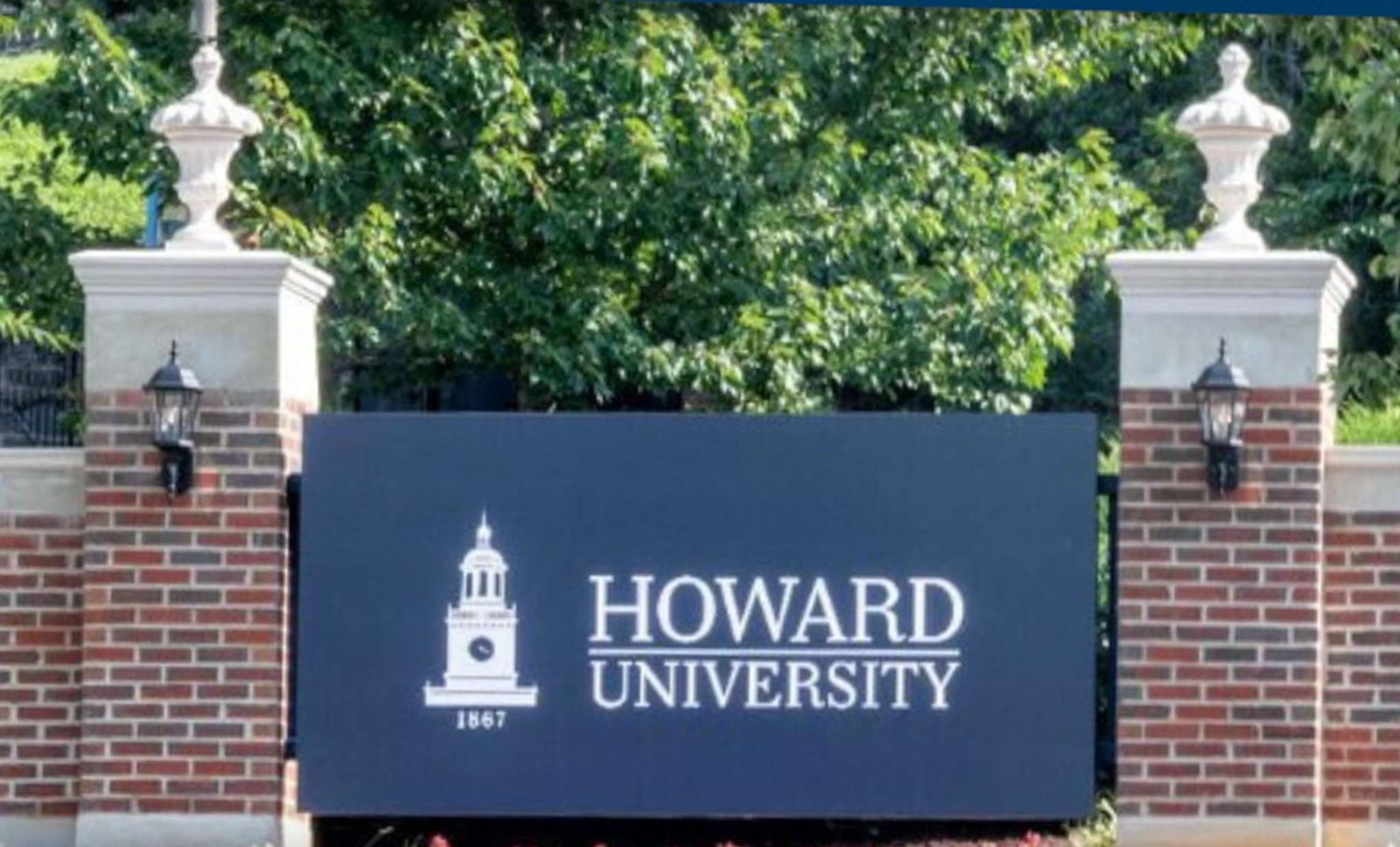
Founded in 1867, Howard University has shaped generations of scholars, leaders, and visionaries. Across 14 schools and colleges offering 143 degree programs, the institution continues to embody its motto — Veritas et Utilitas, Truth and Service. With more than 14,000 students, the University remains one of the nation’s most important engines of opportunity, research, and social mobility.

Howard’s historic role in American life is reflected in its remarkable roster of honorees and scholars: one Schwarzman Scholar, three Marshall Scholars, four Rhodes Scholars, 12 Truman Scholars, 25 Pickering Fellows, and more than 165 Fulbright recipients. The university also produces more on-campus African American Ph.D. recipients than any other institution in the country.

A Leader in Research and STEM

Howard’s nationwide impact is perhaps most visible in the sciences.
The National Science Foundation ranks the university as the top producer of African-American undergraduates who later earn science and engineering doctoral degrees.

Howard is also home to nationally recognized programs in business, social work, communications, and engineering. It is consistently ranked as the No. 1 HBCU for undergraduate programs in business, computer science, economics, engineering, psychology, and — at the graduate level — criminal law, constitutional law, dispute resolution, health care law, trial advocacy, economics, English, fine arts, history, political science, and speech pathology.

The Howard University School of Law, a national advocate for justice for more than 150 years, ranks No. 1 among HBCUs and recently placed No. 13 in the nation for graduates working at leading law firms.

A Historic Gift from MacKenzie Scott

Howard University has received one of the largest philanthropic gifts in its 154-year history: an $80 million investment from MacKenzie Scott. Combined with Scott’s earlier gifts of $40 million in 2020 and $12 million in 2023, her total contributions to Howard now reach $132 million.

MacKenzie Scott – Courtesy Vogue

The latest gift is unrestricted — a powerful vote of confidence in Howard’s ability to allocate resources where they will have the greatest impact. It arrives at a time when the university is accelerating its research efforts, expanding campus infrastructure, and strengthening academic programs.

This year, the Carnegie Foundation and American Council on Education designated Howard as an R1 research institution, placing it among the nation’s elite universities with the highest levels of research activity. Forbes, LinkedIn, and U.S. News & World Report similarly named Howard the nation’s top HBCU, with several programs ranked best-in-class across the country.

Transforming Medical Education and Innovation

Of the $80 million gift, $17 million is earmarked for the Howard University College of Medicine — a global leader in training physicians who serve medically underserved communities in the U.S. and abroad.

The funds will support the development of a new Academic Medical Center, a transformative project aligned with the innovation center Scott funded through her 2023 gift. This interdisciplinary hub — shared by the College of Medicine and the College of Engineering and Architecture — allows students to work at the cutting edge of health technology, exploring ways to improve patient outcomes and expand scientific frontiers.

Howard’s Health Sciences division, which includes the Colleges of Dentistry, Pharmacy, and Nursing and Allied Health Sciences, continues to serve as a national leader in studying health disparities and producing women surgeons, pharmacists, and allied health professionals.

Impact on Social Mobility and Opportunity

Howard’s mission to uplift economically challenged students is not just aspirational — it is measurable.

• U.S. News named Howard the top institution in the Washington, D.C. area for social mobility.
• Carnegie and ACE recognized Howard as an Opportunity College and University – High Access and High Earnings, highlighting its success in serving Pell-eligible and underrepresented students.
• Among Research One universities, Howard ranked highest in “access,” reflecting its commitment to enrolling students from diverse economic and ethnic backgrounds.
• Eight years after graduation, Howard alumni earn the highest median income among all HBCUs.

Scott’s gift will strengthen these outcomes, funding both immediate needs and long-term initiatives.

Investing in the Future: Facilities, Research, and Stability

The University will direct part of the gift toward new construction and renovation projects essential to R1-level research — including work in artificial intelligence, automation, public health, and scientific discovery.

Howard is also building modern living, learning, and commercial spaces designed to attract top students across the country, including Black men whose enrollment numbers have lagged nationally.

A portion of Scott’s gift will also support a reserve fund to safeguard the university during federal funding delays and government shutdowns — a serious challenge for the nation’s only Congressionally-chartered HBCU.

A Relationship Rooted in Mentorship and Legacy

MacKenzie Scott’s bond with Howard is deeply personal — shaped by her mentor and Howard alumna, Nobel laureate Toni Morrison (B.A. ’53, DHL ’95).

Morrison, who later taught at Princeton, served as Scott’s senior thesis adviser. Their relationship extended far beyond the classroom. Morrison encouraged her writing, helped her find professional footing, and offered the kind of mentorship that leaves an imprint for life.

The two exchanged letters for years. In one, Scott thanked Morrison for “criticism and encouragement, therapy and breathing lessons.” Morrison once described Scott’s writing as technically sophisticated and assured — a prediction validated when Scott later won the American Book Award.

Morrison also played a pivotal role in Scott’s life trajectory, providing a reference that helped her secure a position at the investment management firm where she met Jeff Bezos.

Today, Scott’s philanthropy reflects the lessons she learned from Morrison: that one can shape the world in many different ways, and that talent — wherever found — deserves nurturing.

Part of Scott’s 2020 gift created the Toni Morrison Endowed Chair in Arts and Humanities, ensuring Morrison’s legacy continues at her alma mater.

A Gift That Honors the Past and Builds the Next 150 Years

For more than a century and a half, Howard University has been a national force for scholarship, justice, and leadership. As the university celebrates 154 years, it stands on the cusp of an even more ambitious future — one shaped by new research facilities, deeper community impact, and an unwavering commitment to preparing students to change the world.

MacKenzie Scott’s $80 million gift not only honors Howard’s past — it helps secure a future as glorious as the generations that came before.

Related articles

MacKenzie Scott Gift to NC A&T State University

MacKenzie Scott Gift to Alabama State University

MacKenzie Scott Gift to Prairie View A&M University

MacKenzie Scott Gift to Bowie State University

MacKenzie Scott Gift to Philander Smith University

Please consider supporting open, independent journalism – no contribution is too small!

MacKenzie Scott: A Philanthropy of the Spirit in an Age of Abandonment

By Stacy M. Brown | Black Press USA Senior National Correspondent

There are moments in history when a single act of generosity reveals the moral decay of an entire nation. MacKenzie Scott’s $38 million gift to Alabama State University, the largest in its 158-year history, is such a moment. It is not merely a financial transaction, nor the casual benevolence of the wealthy. It is a moral indictment against a society that has grown indifferent to the suffering of its Black citizens, against a government that starves their schools, and against a class of newly rich who have forgotten the communal obligations of success.

Dr. Quinton T. Ross Jr., the university’s president, called it a defining moment for Alabama State, and indeed it is. His words ring with the gratitude of those who have built excellence in the face of deprivation. “Ms. Scott’s generosity affirms Alabama State University’s reputation as a catalyst for excellence and innovation in higher education,” he said. But her act is more than affirmation. It is a resurrection, and a call to remember that Black institutions remain the crucibles of America’s moral and intellectual power. In recent weeks, Scott has dispersed her fortune with quiet conviction. Seventy million to the United Negro College Fund to strengthen endowments across thirty-seven member schools; sixty-three million to Morgan State University, her second gift to that campus in less than five years; and one hundred and one million combined to Morgan State and the University of Maryland Eastern Shore in a span of days.

Her giving, unshackled by stipulations or vanity, stands in luminous contrast to an era defined by greed and indifference. The plutocracy that dominates modern life often extracts from the many to enrich the few. Scott reverses that equation. She does not donate to dominate. She gives to repair. Her wealth, born of corporate conquest, has become the instrument of restoration. It stands as a redemption, perhaps, of what that very system has broken. One cannot ignore the symbolism of her actions. At a time when the federal government withholds support from historically Black institutions, when affirmative action has been dismantled, and when diversity programs are vilified, a white woman from the highest ranks of privilege has become the single most consistent benefactor of Black education in the nation. It is as though she has seen, from her rarefied vantage point, what America refuses to see: that the progress of its Black citizens is not a charity, but the measure of its own civilization.

Yet even as she gives, others remain silent. The silence of Black wealth resounds across the land. It is a silence that mocks the very principles of uplift once preached from our pulpits and classrooms. Attorney Benjamin Crump’s call to the wealthy—“If you’ve been blessed, you got to pass the blessing on”—echoes unanswered. The great sons and daughters of our race who have ascended to fortune, those who built empires on the faith of our people, turn their eyes away from the institutions that birthed them. They forget the hands that lifted them from obscurity. They forget that their wealth is not solely their own, but part of the moral economy of a people who have suffered together and triumphed together. The Black Press, like the HBCUs, stands as an unbroken monument to endurance. It has spoken truth through lynchings, wars, and betrayals. Yet it now faces extinction not from white suppression alone, but from the neglect of its own. “If the Black Press falls,” Crump warned, “so does the record of our struggle, our triumph, and our faith.”

Scott’s philanthropy, then, is not simply about money. It is about memory. The moral memory of a nation that has forgotten the debt it owes to those it once enslaved and now ignores. In her giving, she restores something elemental, the belief that one’s prosperity is meaningless if it does not lift others. W.E.B. Du Bois wrote of the “double consciousness” that afflicts the Negro in America, the struggle to see oneself through the eyes of a world that despises you. Today, the irony is reversed. America must learn to see itself through the eyes of those it has wronged. MacKenzie Scott, for all her privilege, seems to have glimpsed that truth. She gives the impression that she has looked into the soul of the republic and found it wanting.

Her actions do not absolve the sins of this nation. They reveal them. And in revealing them, they offer a path, not of atonement, but of accountability. For every dollar she gives to rebuild a school, there are a thousand more that others with power might give but will not. One woman has chosen conscience over complacency. The question that remains is whether the rest of America—Black and white alike—will choose to follow her example or remain comfortable in the quiet decay of its own moral poverty.

Related articles

Arthur M. Blank Family Foundation Commits $50 Million to Atlanta’s HBCUs

MacKenzie Scott Gift to Howard University

MacKenzie Scott Gift to NC A&T State University

MacKenzie Scott Gift to Prairie View A&M University

MacKenzie Scott Gift to Bowie State University

MacKenzie Scott Gift to Philander Smith University

Please consider supporting open, independent journalism – no contribution is too small!

The Tau Pi Omega Chapter of Alpha Kappa Alpha Sorority, Incorporated Empowers Families to Build Generational Stability Featuring Financial Expert Jini Thornton

The Tau Pi Omega Chapter of Alpha Kappa Alpha Sorority, Incorporated hosts “The Power of Our Legacy” on October 25, featuring Jini Thornton’s practical roadmap for financial clarity, organization, and generational wealth transfer.

By Milton Kirby | Stone Mountain, GA | October 22, 2025

The Tau Pi Omega Chapter of Alpha Kappa Alpha Sorority, Incorporated is gearing up for a day-long workshop this Saturday designed to help families take control of their future through intentional planning and organization.

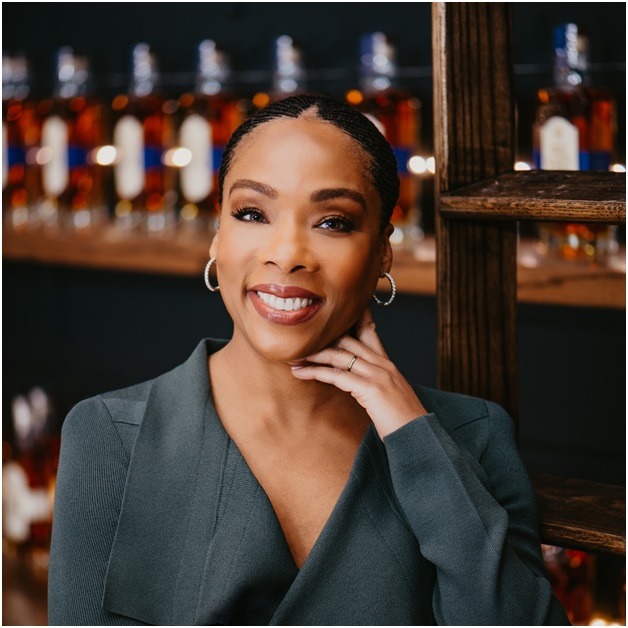
The program, “The Power of Our Legacy (Planning today for tomorrow’s success),” will feature nationally syndicated financial empowerment guru and Certified Public Accountant (CPA) Jini Thornton, whose mission is to make legacy planning simple, approachable, and life changing.

Courtesy – Jini Thornton

“This workshop is about making legacy planning simple,” Thornton told The Truth Seekers Journal in an interview Tuesday. “People focus on wills and trusts, and that’s important. But so much of legacy work has nothing to do with documents. It’s the roadmap—what people need to know and where to find it.”

Thornton said the goal is to help families move from overwhelmed to organized. “When someone gets sick or passes away, who cares if you have documents no one can find?” she said. “Organization is the game-changer.”


The message: organize your life so your love shows up on time

Thornton previewed the workshop’s agenda, which will walk participants through practical, no-cost actions:

  • Build a “legacy dream team.” Choose people who can carry out real responsibilities, not just relatives by default.
  • Name who’s in charge and clearly define the roles.
  • List key contacts. Accountant, realtor, insurance agent, benefits and HR at work, even the handyman.
  • Document workplace details families often overlook: manager’s name, close co-workers, and benefit elections.

When Thornton’s mother passed away, she said, the entire process ran smoothly because everything was already organized. “I knew who did her taxes. I knew the realtor she wanted to handle the sale of her home. I even knew her handyman,” she recalled. “That clarity gave me space to grieve instead of spending months searching.”

She also stressed that the workshop will empower attendees with simple, immediate steps: designating Payable-on-Death (POD) and Transfer-on-Death (TOD) beneficiaries on accounts, and updating life insurance and retirement plans. “You don’t need a lawyer or money to start doing this,” she said. “You just need intention.”


Normalizing the hard conversations

Thornton said part of the work is cultural. “For good historical reasons, we learned to hide things,” she said. “But we’ve taken hiding too far. Your loved ones don’t need to know your checking or savings account balances—they need to know where you bank.”

She wants families to bring these discussions into the open before a crisis. “Death is hard,” she said. “Don’t rob your family of the time to be present and grieve by forcing them to search for months.”


Legacy Life Organizer

The Legacy Life Organizer

Saturday’s workshop will also introduce participants to Thornton’s comprehensive workbook, the Legacy Life Organizer, a tool that provides prompts, checklists, and conversation starters for managing critical information. It’s meant for both individuals and those helping parents or grandparents get organized. A purchase link for the guide will be made available after the event.


Practice what you preach

Thornton’s own company, Envision Business Management Group, embodies the same discipline and organization she advocates. With a staff of 12, she leverages professional networks and trusted partners to maintain efficiency and confidentiality for her clients.

“Jini practices what she preaches.” Her firm relies heavily on reputable consultants and payroll companies to manage transactions and data securely. “Any of my clients who have employees,” Thornton said, “we ensure every person is paid on time, every time, by leveraging payroll services. It keeps operations smooth, protects client privacy, and makes sure employees are taken care of.”

Envision operates as a true fiduciary for its clients. “All of their revenue is collected by us,” Thornton explained. “We handle the payments, the bills, the reporting — everything. That way, clients can focus on what they do best while knowing their finances are protected.”


Trusted by the best

When asked if she could share the names of any clients, Thornton was cautious — but did mention one. “I’ve worked with Ludacris for many years,” she said. “We earned each other’s trust a long time ago, and he remains one of our thriving clients today.”

Thornton is quick to deflect credit for his financial success. “I don’t take credit for anyone’s accomplishments,” she said. “But I do know our firm provides road maps and feedback that have helped our clients make excellent financial decisions.”


Intentional wealth transfer in Black communities

For Thornton, legacy planning is deeply personal. Adopted by a single mother in 1969, she grew up in a home that valued independence and preparation. “My mom was committed to empowerment,” she said. “When she passed, everything was in order. I didn’t have to chase paperwork — she left me space to grieve.”

That experience drives her message today. “We work so hard,” she said. “We must be intentional about transferring what we have — no matter how much it is. You don’t have to be Oprah to have something to transfer.”


Sidebar: What Attendees Will Do This Saturday

  • Create a Legacy Dream Team with clear roles and backups
  • Compile a master contact list (tax preparer, realtor, insurance, HR, trusted trades)
  • Record workplace details (manager, HR contact, benefits)
  • Set POD/TOD designations on accounts
  • Update beneficiaries on life insurance and retirement plans
  • Centralize all key information in one secure place

Sidebar: Conversation Starters at Home

  • “If something happened, who should we call first at work?”
  • “Which bank and branch do you use?”
  • “Who handled the last insurance claim?”
  • “Who’s your tax preparer or Certified Public Accountant?”
  • “Who should be in charge, and why?”

October 25, 2025 

11:00am – 1:30pm

Antioch AME Church

765 S. Hairston Rd Stone Mountain, GA 30088

Click to Register

Related articles

How to Avoid Credit Card Late Fees

20 Million Predatory Loans Drained Over $2.4 Billion From Consumers

Please consider supporting open, independent journalism – no contribution is too small!

Exit mobile version