Tougaloo College Faces Threats After Jasmine Crockett’s Commencement Speech

Black Information Network | May 9, 2025

Tougaloo College officials are investigating “concerning calls” to the school after Rep. Jasmine Crockett (D) delivered a commencement address during which she criticized President Donald Trump.

In a letter sent to the school community on Monday (May 5), Tougaloo College President Donzell Lee addressed threats to campus following Crockett’s keynote address on Sunday (May 4), per WAPT.

“Appropriate actions have been taken,” Lee said, noting school officials weren’t taking “concerning calls” lightly. “Contact has been made with law enforcement authorities to ensure that safety protocols are in place, if needed.”

Crockett was invited to deliver Sunday’s commencement speech by fellow Democrat and Tougaloo graduate Rep. Bennie Thompson.

During her address, Crockett acknowledged Anne Moody and Memphis Norman, Tougaloo students who played pivotal roles in the 1963 Woolworth’s sit-in in Jackson, before taking aim at Trump.

“Sadly enough, in the year of our Lord 2025, sitting in these very classrooms is just as much of a protest as Anne and Memphis pulling up to Woolworths in 1963,” Crockett said. “It’s the paradox and parallels for me. … As I stand here in this safe space, still only one of the few places that an institution can invite me to speak.”

“To think about the fact that people have to be fearful of having a sitting member of Congress to come and address their graduates, tells us that we still got a lot of work to do,” the Texas Democrat continued. “The president of the United States having a temper tantrum that strips funding because I’m Black and I’m proud should not be something that we are dealing with in 2025.”

Crockett also pointed out how Tougaloo’s campus served as a safe space in the 1960s for civil rights leaders like Medgar EversFannie Lou Hamer, and Dr. Martin Luther King Jr.

“The work done by so many like Bennie (Thompson), Medgar (Evers) and Fannie Lou Hamer are under attack,” she said. “Instead of calling us the ‘N word,’ they use racist epithets and suggest that we’re ghetto, or unqualified or diversity hires, even though we’re all, more oftentimes than not, more educated and qualified than they are. I have news for you. These attacks are not new because Jim Crow never died. He just lied (sic) in wait.”

Thompson said he stands in solidarity with Tougaloo and Crockett amid threats to the school.

“It is unfortunate that a day of celebration at Tougaloo College was met with attempts by extremists to overshadow the moment and intimidate those in attendance,” Thompson said in a statement. “Their threats, aimed at undermining Congresswoman Jasmine Crockett’s powerful commencement address, failed. The Tougaloo community remains proud, strong and unmoved.”

In a post on X, Crockett also spoke out against the threats.

“No low is too low for MAGA… now explain to me why an institution would be receiving threats because of the commencement speech that I GAVE,” Crockett tweeted. “This type of behavior is why I’m constantly having to be protected & I understand that truth telling in this country; sadly, is a dangerous business, but college students don’t deserve this.”

Please consider supporting open, independent journalism – no contribution is too small!

Let Us Make Man Gala Awards Scholarships, Honors Advocates for Justice, and Youth Empowerment

Let Us Make Man awarded scholarships to 50 students and honored five advocates during its 2025 Gala, celebrating Black leadership, education, and community empowerment


By Milton Kirby | Atlanta, GA | May 2, 2025

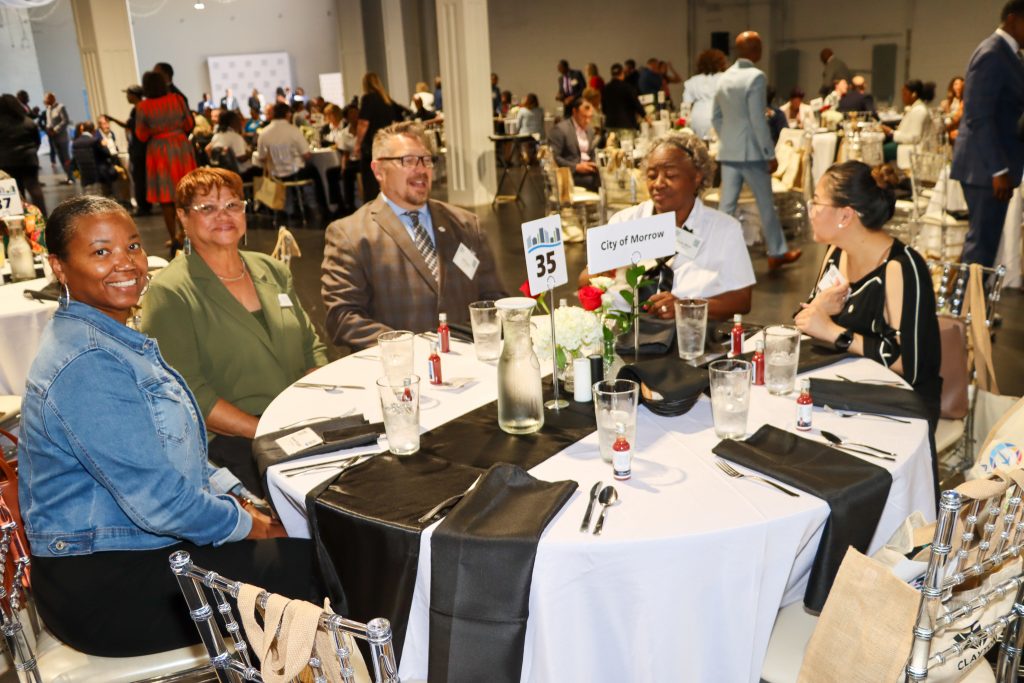
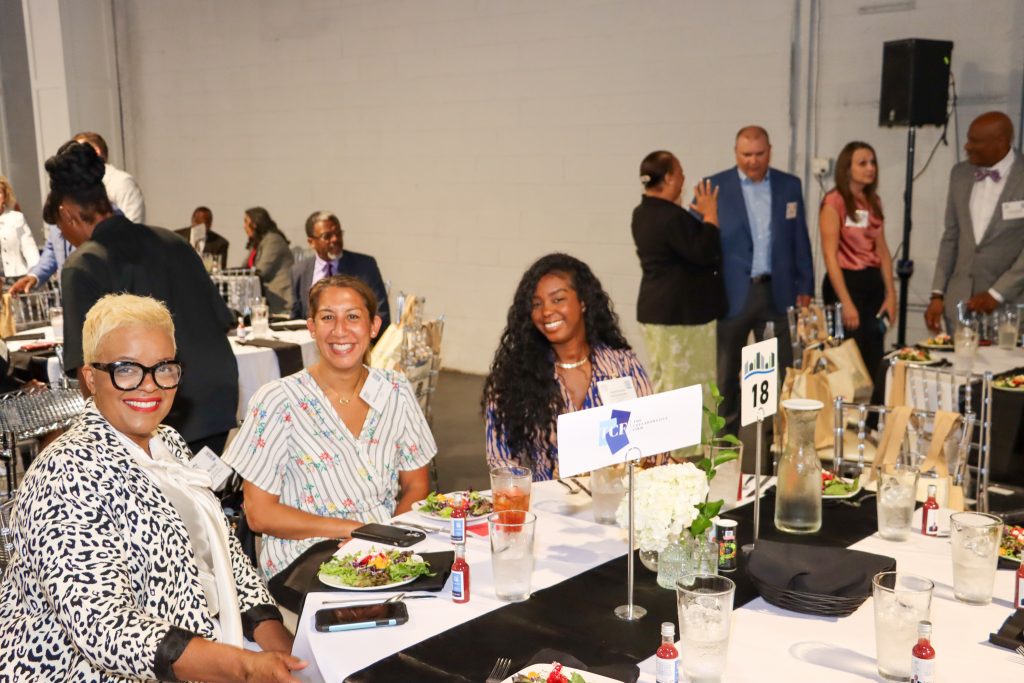
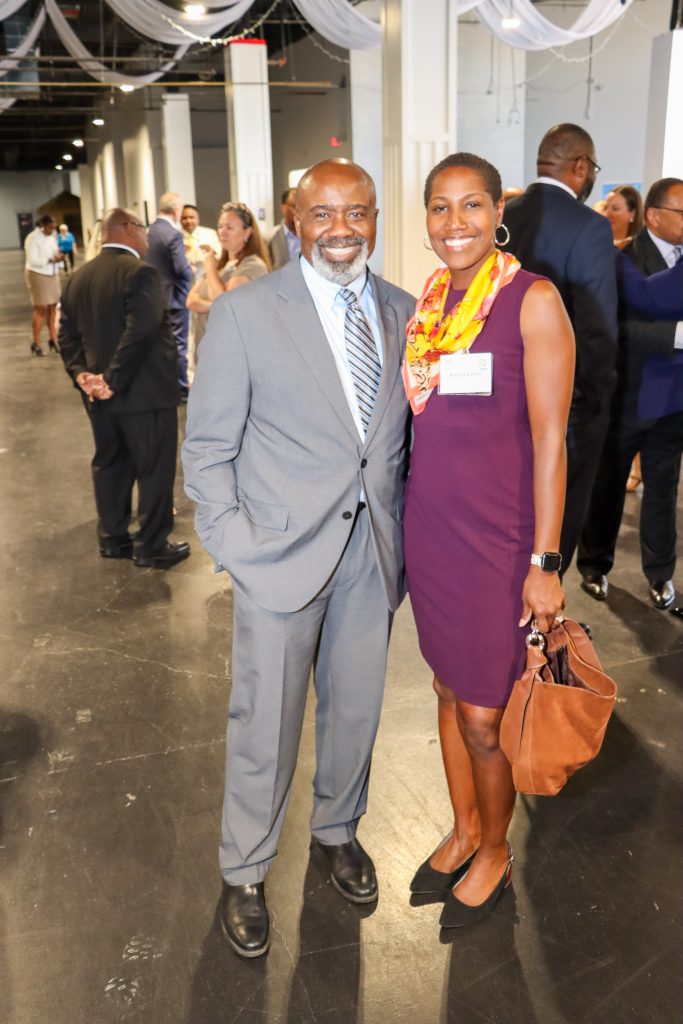
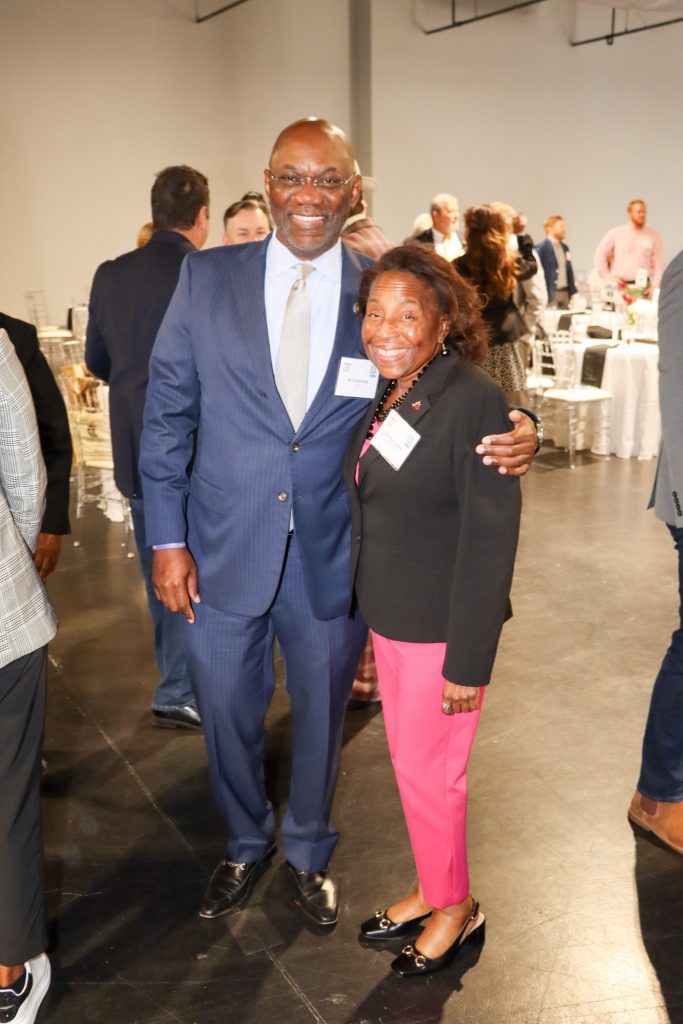
Let Us Make Man (LUMM) hosted its annual Scholarship & Awards Gala on Thursday, May 1, 2025, to celebrate achievement, legacy, and promise. The black-tie affair honored nearly 50 promising young men and women with tuition and book scholarships while recognizing three seasoned community leaders and two emerging activists for their impactful work in social justice and community advancement.

Held at the Morrow Center in Morrow, Georgia, the Gala was the latest milestone in LUMM’s long-standing mission to uplift and equip Black youth with the tools to thrive.

This year, LUMM awarded 30 tuition scholarships and 28 book scholarships to students who plan to study fields ranging from mechanical engineering and business to law, nursing, and medicine. Each recipient embodies the vision, mission, and values that have guided LUMM since its inception in 2006.

Scholarship & Awards Gala photo gallery                 Scholarship & Awards Gala video link

By Milton Kirby – LUMM Scholarship Recipients

A Legacy Rooted in Purpose

Let Us Make Man seeds were planted in the summer of 2006 when attorney Mawuli Mel Davis hosted a high school basketball team from Rota, Spain. That visit led to a powerful discussion event titled “Building Boyz to Men,” where local Black men spoke about manhood in America with the team. Inspired by the evening, activist and former Atlanta City Councilman Derrick Boazman proposed forming a broader effort to engage and mentor Black youth.

Later that fall, Boazman gathered nine men from diverse backgrounds—law, education, ministry, business, and culture—who all shared a deep sense of responsibility to save and support young Black men. From that gathering, LUMM was born.

The founding ten members of LUMM include:

  • Derrick Boazman – Community Leader
  • Mawuli Mel Davis – Attorney at Law
  • Doug Evans – Forensic Scientist
  • A. B. Jihad – Entrepreneur
  • Kwame Lazarus – Cultural Griot
  • Minister Ray Muhammad – Minister
  • Pastor Derrick Rice – Pastor
  • Keene Walker – Educator
  • Dr. Mike Weaver – Educator
  • Kweku Webb – Financial Planner

Their first major event, The Gathering to Reclaim Black Manhood, took place in February 2007 at Atlanta Technical College, attracting over 700 participants. Unlike traditional conferences, The Gathering provided structured, research-based training sessions for attendees to take back to their communities. Workshops focused on law, education, mentoring, and spiritual growth. The tradition of honoring community leaders also began that year, with notable figures like Rev. C.T. Vivian and Stedman Graham in attendance.

Over the years, LUMM events have expanded across Georgia, with gatherings at institutions such as Savannah State, Paine College, Fort Valley State, and Columbus State University—each year engaging hundreds of attendees in leadership, economics, family unity, and youth empowerment workshops.

Honoring a Lifelong Advocate

Among this year’s honorees was Lawren Wilson, a rising senior majoring in political science at Clark Atlanta University. She received the Vincent D. Fort Scholarship, named in memory of the late Georgia State Senator (1956–2024), a staunch advocate for civil rights, economic justice, and educational access.

Senator Fort served Georgia’s 39th District from 1996 to 2017 and was nationally recognized for authoring the Georgia Fair Lending Act in 2002—one of the strongest anti-predatory lending laws in the country. A longtime supporter of LUMM, Fort’s legacy continues through this scholarship, awarded to students who demonstrate a strong commitment to justice and community service.

Celebrating Vision, Justice, and Cultural Preservation

In addition to student scholarships, LUMM recognized several trailblazers whose work exemplifies leadership, justice, and community empowerment:

Business Visionary Leader Award: Cortez A. Carter

  • Carter, Executive Vice President of Hyde Park Hospitality, has spent over 30 years shaping aviation, banking, and real estate industries. As a certified International Airport Professional and experienced pilot, Carter has led development efforts at major U.S. airports, championing minority business growth and infrastructure innovation.

Champion for Justice Award: The Hon. Debra E. Deberry

  • Deberry, Clerk of the Superior Court of DeKalb County since 2011, has spent more than 25 years in public service. Managing a department of over 100 employees and a $7 million budget, she has been a force in judicial reform and community engagement. Deberry’s impact has been felt across the legal system, from jury oversight to juvenile advocacy.

C.T. Vivian Medal of Freedom: Dr. Georgianne Thomas

  • A filmmaker, educator, and activist, Dr. Thomas is best known as the executive producer of Foot Soldiers: Class of 1964, an award-winning documentary chronicling Black women’s role in the civil rights movement. Her career has spanned acting, international diplomacy, and authorship, rooted in her passion for justice and storytelling.

Rising Stars: Young Warriors in Action

LUMM also honored two dynamic youth leaders with its Young Warrior Award:

Kannette King

  • A passionate advocate for mental health, education equity, and youth development, King is quickly emerging as a leading voice in her generation. Her work inside and outside the classroom shapes future movements and mentors her peers to rise in leadership.

Daxton Pettus

  • As a high school student in Decatur, Pettus led efforts to remove a Confederate monument and install a historical marker honoring Dr. Martin Luther King Jr. Now a student at Morehouse College; he continues to blend activism with academics to build a more just and equitable society.

A Movement That Endures

As Let Us Make Man prepares for its next chapter, the Gala served as a reminder and a call to action. From scholarships to awards, each honor represents the collective power of Black leadership, unity, and vision.

Eighteen years after its founding, LUMM continues to train, uplift, and inspire—affirming the belief that when we invest in young minds and honor our elders, we make not just men, but leaders.

Please consider supporting open, independent journalism – no contribution is too small!

Black Golfers, the Masters, and the Economic Power of Augusta National

The 2025 Masters highlighted golf’s evolving legacy—spotlighting Black pioneers, Augusta’s exclusivity, and a $140M economic impact—while diversity efforts continue to reshape the sport.


By Milton Kirby | Atlanta, GA | April 18, 2025

As the 89th Masters Tournament concluded Sunday, April 13, 2025, the storylines that emerged weren’t just about the iconic green jacket or record-breaking putts. Behind the meticulously groomed fairways of Augusta National Golf Club lies a deeper story—one that speaks to the history of exclusivity, the slow march toward diversity, and the staggering economic footprint of one of America’s most prestigious sporting events.


Black Golfers in America: Progress and Persistence

Golf in the United States is still largely dominated by white players, but Black athletes have made important strides—though the road remains steep. As of 2024, about 3% of the 28.1 million on-course golfers in the U.S. were Black, totaling roughly 843,000 players. This marks a decline from 1.1 million Black golfers in 2015, highlighting ongoing struggles with access, affordability, and representation.

Despite these challenges, a number of Black golfers have not only made it to the PGA Tour but also achieved remarkable success:

  1. Charlie Sifford became the first African American to earn a PGA Tour card in 1961, later winning two events and earning a place in the World Golf Hall of Fame.
  2. Pete Brown was the first Black golfer to win a PGA Tour event in 1964.
  3. Lee Elder made history in 1975 as the first Black player to compete in the Masters Tournament.
  4. Calvin Peete, known for his accuracy, won 12 PGA Tour events, including the 1985 Players Championship.
  5. Jim Thorpe secured three PGA Tour wins and 13 on the Champions Tour.

Modern Black golfers continue to carry the torch:

  • Tiger Woods, with 82 PGA Tour wins and 15 majors, remains one of the most dominant and influential golfers of all time.
  • Harold Varner III made history as the first Black golfer to advance to the PGA Tour via the Web.com Tour.
  • Joseph Bramlett became the first Black player to graduate from PGA Tour Q-School since Tiger.
  • Cameron Champ, a rising star, is known for his long drives and advocacy for racial equity in the sport.
  • Cheyenne Woods, Tiger’s niece, has competed on the LPGA Tour and earned international victories.

Organizations like the Advocates Professional Golf Association (APGA) Tour are also working to provide competitive platforms for aspiring Black professionals, seeking to increase diversity at golf’s highest levels.

Tiger Woods is presented with his Green Jacket by the Tournament chairman Hootie Johnson after Woods’ 3rd victory in the US Masters Golf Tournament at the Augusta National Golf Club in Georgia on 14th April 2002. (Photo by Leonard Kamsler/Popperfoto via Getty Images)© GETTY

Inside Augusta National: Membership and Milestones

Perhaps no course is more symbolic of golf’s complex relationship with race than Augusta National Golf Club, home of the Masters since its debut in 1934. Known for its tightly guarded membership and tradition-heavy culture, the club did not admit its first Black member—Ron Townsend, a television executive—until 1990. This move came amid national pressure after a similar exclusion scandal at Alabama’s Shoal Creek Club drew widespread backlash.

Since then, Augusta has added other Black members, including Condoleezza Rice, who also broke barriers as one of the club’s first two female members in 2012, and former NFL great Lynn Swann. The exact number of Black members today remains confidential, in line with Augusta’s longstanding policy of secrecy. Still, reports suggest several African Americans now hold roles in membership and business operations.

Augusta’s exclusivity persists: membership is by invitation only, with estimated initiation fees between $100,000 and $300,000, and annual dues under $30,000. The club typically hosts around 300 members, often referred to as “green jackets.”


Masters Champions: Legends of the Tournament

In its 89-year history, only a few players have won the Masters multiple times—a rare achievement that cements their place in golf legend.

  • Jack Nicklaus leads with 6 victories (1963, 1965, 1966, 1972, 1975, 1986).
  • Tiger Woods, the most dominant Black golfer in history, has won 5 times (1997, 2001, 2002, 2005, 2019).
  • Arnold Palmer claimed 4 wins (1958, 1960, 1962, 1964).

Tiger Woods’ historic 1997 win not only redefined the sport but also symbolized a new chapter in its racial history. His enduring legacy continues to inspire young golfers of color across the globe.

The 2025 Masters added yet another chapter to the tournament’s historic legacy when Rory McIlroy won after a dramatic sudden-death playoff against Justin Rose. With the victory, McIlroy became the sixth player—and the first European—to complete the modern career Grand Slam, doing so on his 11th attempt. His long-awaited triumph underscored the global prestige of the Masters and highlighted how the event continues to shape the narratives of golf’s greatest champions.

By Milton Kirby East Lake Golf Course Atlanta, GA – Location of Ryder Cup 1963

The Masters and Georgia’s Economy: A Championship Boost

The Masters isn’t just a sporting event—it’s an economic juggernaut. Held each April, the tournament injects between $120 million and $140 million into Augusta’s local economy. From luxury rentals to booming restaurant business, the city transforms into a hub of global commerce during Masters Week.

Across Georgia, golf drives even larger gains. In 2022, the industry generated a $5.3 billion statewide economic impact, supporting over 55,000 jobs and contributing $2.7 billion in wages.

Hospitality rates spike dramatically during the tournament:

  • Hotel rates surge up to 800%, averaging $500 per night.
  • Local hotels generate about $26 million in revenue.
  • Short-term rentals average $5,300 per week, with some homeowners earning up to $28,000, often enough to pay a year’s mortgage.

Transportation sees a bump too. Augusta Regional Airport handles over 2,100 private flights during Masters Week—more than five times its normal daily volume.

And then there’s merchandise. Augusta National’s iconic shop generates an estimated $50 million in sales annually during the event, with items like Masters-themed gnomes becoming collector’s favorites.


The Legacy and the Future

Despite Augusta National’s secretive culture and its late adoption of inclusive practices, the club and the Masters remain fixtures in American sport and business. But the story of Black golfers—past, present, and future—is still being written.

The legacy of exclusion still casts a long shadow. Yet with champions like Tiger Woods, pioneers like Charlie Sifford and Lee Elder, and grassroots efforts like the APGA Tour pushing for change, the fairways are slowly becoming more welcoming.

Golf, like America, is a work in progress—full of tradition, potential, and the constant challenge to do better.

AARP’S Vision For Aging

AARP urges a national aging plan as states adopt strategies to support older adults with health care, housing, caregiving, and financial security amid rising senior populations.

America needs a plan to help its older citizens—and soon

By Jo Ann Jenkins, CEO

Most Americans understand the importance of planning to secure their economic futures and advance directives to prepare for their health care as they age. But for too long, there has been no federal action plan to protect our nation’s growing older population.

By 2030, 1 in 5 Americans will be 65 or older. Yet many government policies and programs have not addressed the unique needs of the aging population.

Photo Courtesy of Jo Ann Jenkins, CEO

AARP has a plan to help change that.

The good news is that a growing number of states are developing and adopting comprehensive plans to support their aging population. AARP has been deeply involved in supporting those efforts. About half the states have implemented, developed or initiated multiyear strategies, commonly known as multisector plans for aging (MPAs). Although state MPAs vary in scope—and in their goals and target populations—they all encourage collaboration among governments, private entities and people.

Yet there is no comparable national plan. The federal government has recently taken steps toward developing such a strategy. The Older Americans Act reauthorization of 2020 set up an Interagency Coordinating Committee on Healthy Aging and Age-Friendly Communities (ICC). The committee issued a Strategic Framework for a National Plan on Aging in May.

Among other things, the report focused on age-friendly communities, housing, increased access to long-term support and better health care services, especially for people with low incomes. To get input from older Americans, the ICC holds listening sessions across the country. AARP helps organize these discussions, which kicked off in Washington, D.C., in May.

AARP wants to play a more critical role in this process. We recently released our own vision for a national plan on aging—part of our Aging Well in America Initiative.

AARP’s report emphasizes four goals that can help guide efforts to establish a national plan, along with the policies for implementing those goals.

  • Promote healthy living and access to affordable, high-quality health care.
  • Support family caregivers and affordable, high-quality longterm care with dignity, independence and security.
  • Provide ample opportunities to achieve financial security.
  • Create age-friendly, livable communities that enable people to age in place.

AARP will continue to work with states and expand our own initiatives that have helped make our communities more livable for older residents and have fostered better aging policies at the local and state level. We’re committed to the development of a national plan on aging that will enable all people to maintain good health, build financial resilience and remain in their homes and communities as they age.

With the population aging at a rate never seen in history, it’s time for policymakers, government officials and organizations involved in aging to seize the opportunity to address the needs of older Americans now and into the future.

U.S. measles cases surpass 700 with outbreaks in six states. Here’s what to know

U.S. measles cases have surpassed 700 in 2025, driven by outbreaks in Texas and other undervaccinated areas, with three deaths and CDC response efforts underway.


By Devi Shastri |AP Health Writer | April 14, 2025

The number of U.S. measles cases topped 700 as of last week, as Indiana joined the growing list of states with active outbreaks, Texas tallied dozens of new cases, and a third measles-related death was made public.

Health Secretary Robert F. Kennedy Jr. claimed in a televised Cabinet meeting Thursday that measles cases were plateauing nationally, but the virus continues to spread mostly in people who are unvaccinated, and the U.S. Centers for Disease Control and Prevention redeployed a team to west Texas.

The United States has more than double the number of measles cases it saw in all of 2024, and Texas is reporting the majority of them, with 541 as of last week’s updated count.

Texas’ cases include two unvaccinated elementary school-age children who died from measles-related illnesses near the epicenter of the outbreak in rural west Texas, which led Kennedy to visit the community this month. The third person who died was an adult in New Mexico who also was not vaccinated.

Other states with active outbreaks — defined as having three or more cases — include New Mexico, Indiana, Kansas, Ohio and Oklahoma.

The multistate outbreak confirms health experts’ fears that the virus will take hold in other U.S. communities with low vaccination rates and that the spread could stretch on for a year. The World Health Organization has said cases in Mexico are linked to the Texas outbreak.

Measles is caused by a highly contagious virus that’s airborne and spreads easily when an infected person breathes, sneezes or coughs. It is preventable through vaccines, and had been considered eliminated from the U.S. in 2000.

Here’s what else you need to know about measles in the U.S.

Photo Annie Rice Associated Press

Texas and New Mexico

Texas’ outbreak began in late January. State health officials said Friday that there were 36 new cases of measles since Tuesday, bringing the total to 541 across 22 counties — most of them in west Texas. A total of 56 Texans have been hospitalized throughout the outbreak.

Of the confirmed cases, state health officials estimated Friday that about 5% are actively infectious.

Sixty-five percent of Texas’ cases are in Gaines County, population 22,892, where the virus started spreading in a close-knit, undervaccinated Mennonite community. The county has logged 355 cases since late January — just over 1% of the county’s residents.

The latest death in Texas was that of an 8-year-old child. Health officials in Texas said the child did not have underlying health conditions and died of “what the child’s doctor described as measles pulmonary failure.” A 6-year-old died of measles in Texas in late February.

New Mexico announced two new cases Friday, bringing the state’s total to 58. State health officials say the cases are linked to Texas’ outbreak based on genetic testing. Most are in Lea County, where two people have been hospitalized, two are in Eddy County and one is in Chaves County.

New Mexico reported its first measles-related death in an adult on March 6.

Kansas

Kansas has 32 cases in eight counties in the southwest part of the state, health officials announced Wednesday. Two of the counties, Finney and Ford, are new on the list and are major population centers in that part of the state. Haskell County has the most with eight cases, Stevens County has seven, Kiowa County has six, and the rest have five or fewer.

The state’s first reported case, identified in Stevens County on March 13, is linked to the Texas and New Mexico outbreaks based on genetic testing, a state health department spokesperson said. But health officials have not determined how the person was exposed.

Oklahoma

Cases in Oklahoma increased by two Friday to 12 total: nine confirmed and three probable cases. The first two probable cases were “associated” with the west Texas and New Mexico outbreaks, the state health department said.

A health department spokesperson said measles exposures were confirmed in Tulsa and Rogers counties, but wouldn’t say which counties had cases.

Ohio

The Ohio Department of Health confirmed 20 measles cases in the state as of Thursday: 11 in Ashtabula County near Cleveland, seven in Knox County and one each in Allen and Holmes counties.

Ohio is not including nonresidents in its count, a state health department spokesperson told the Associated Press. The Knox County outbreak in east-central Ohio has infected 14 people, according to a news release from the county health department, but seven of them do not live in Ohio. In 2022, a measles outbreak in central Ohio sickened 85.

The outbreak in Ashtabula County started with an unvaccinated adult who had interacted with someone who had traveled internationally.

Indiana

Indiana confirmed six connected cases of measles in Allen County in the northeast part of the state; four are unvaccinated minors and two are adults whose vaccination status is unknown.

The cases have no known link to other outbreaks, the Allen County Department of Health said Wednesday. The first case was confirmed April 7.

Elsewhere

Measles cases also have been reported in Alaska, Arkansas, California, Colorado, Florida, Georgia, Hawaii, Kentucky, Maryland, Michigan, Minnesota, New Jersey, New York, Pennsylvania, Rhode Island, Tennessee, Vermont and Washington.

The U.S. Centers for Disease Control and Prevention defines an outbreak as three or more related cases. The agency counted seven clusters that qualified as outbreaks in 2025 as of Friday.

In the U.S., cases and outbreaks are frequently traced to someone who caught the disease abroad. It can then spread, especially in communities with low vaccination rates. In 2019, the U.S. saw 1,274 cases. So far in 2025, the CDC’s count is 712.

Is a measles booster necessary?

The best way to avoid measles is to get the measles, mumps and rubella (MMR) vaccine. The first shot is recommended for children between 12 and 15 months old and the second between 4 and 6 years old.

People at high risk for infection who got the shots many years ago may want to consider getting a booster if they live in an area with an outbreak, said Scott Weaver with the Global Virus Network, an international coalition. Those may include family members living with someone who has measles or those especially vulnerable to respiratory diseases because of underlying medical conditions.

Adults with “presumptive evidence of immunity” generally don’t need measles shots now, the CDC said. Criteria include written documentation of adequate vaccination earlier in life, lab confirmation of past infection or having been born before 1957, when most people were likely to be infected naturally.

A doctor can order a lab test called an MMR titer to check your levels of measles antibodies, but experts don’t always recommend it and health insurance plans may not cover it.

Getting another MMR shot is harmless if there are concerns about waning immunity, the CDC says.

People who have documentation of having received a live measles vaccine in the 1960s don’t need to be revaccinated, but people who were immunized before 1968 with an ineffective measles vaccine made from “killed” virus should be revaccinated with at least one dose, the agency said. That also includes people who don’t know which type they got.

What are the symptoms?

Measles first infects the respiratory tract, then spreads throughout the body, causing a high fever, runny nose, cough, red, watery eyes and a rash.

The rash generally appears three to five days after the first symptoms, beginning as flat red spots on the face and then spreading downward to the neck, trunk, arms, legs and feet. When the rash appears, the fever may spike over 104 degrees, according to the CDC.

Most kids will recover from measles, but infection can lead to dangerous complications such as pneumonia, blindness, brain swelling and death.

How can you treat measles?

There’s no specific treatment for measles, so doctors generally try to alleviate symptoms, prevent complications and keep patients comfortable.

Why do vaccination rates matter?

In communities with high vaccination rates — above 95% — diseases like measles have a harder time spreading through communities. This is called herd immunity.

But childhood vaccination rates have declined nationwide since the COVID-19 pandemic, and more parents are claiming religious or personal conscience waivers to exempt their kids from required shots.

The U.S. saw a rise in measles cases in 2024, including an outbreak in Chicago that sickened more than 60.

Shastri writes for the Associated Press. AP writer Laura Ungar contributed to this report.

Speak Your Truth: Enter the 2025 Fighting Words Poetry Contest

The Fighting Words Poetry Contest invites K–12 students worldwide to respond to global issues through poetry. Cash prizes, publication, and impact await.


By Milton Kirby | Atlanta, GA | April 6, 2025

The Pulitzer Center is proud to announce the Eighth Annual Fighting Words Poetry Contest! This contest allows students to respond to the world around them through poetry.

Poetry can help us understand current events by turning facts into feelings and headlines into human stories. It connects global issues to our personal experiences, helping us see how we are all linked. The Fighting Words Poetry Contest invites students to use poetry to explore important topics and raise their voices. Through creative writing, students can reflect on what’s happening in the world and share how these events affect their lives and communities.

Fighting Words Contest

Who Can Enter:

The contest is open to all students in grades K–12 worldwide. Students can write in any language. Bilingual or multilingual poems are welcome! Judges will be fluent in English and Spanish.

Prizes:

  • 1st Place: $300 and publication on the Pulitzer Center website
  • 2nd Place: $200 and publication
  • 3rd Place: $100 and publication
  • Finalists: $75 and publication

Deadline:

All entries are due by Sunday, May 11, 2025, at 11:59 PM EDT.

How to Enter:

Go to the Pulitzer Center website. Choose a story from the “Suggested Stories” tab. Write a poem of any style or length. Your poem must include lines from the story you chose. Start your poem with an epigraph that says:

With lines from “STORY TITLE” by JOURNALIST NAME, a Pulitzer Center reporting project.

Upload your poem as a text file using the entry form. You may also upload an optional audio or video of yourself performing the poem.

Important:

You must include a teacher contact with your entry. This person will help with communication if your poem is selected. You may list a guardian if you are homeschooled or not in school.

Judging:

The poems evaluation criteria will be:

  1. Writing quality – Is the poem well-crafted and emotional?
  2. Use of Pulitzer Center story – Are the quoted lines used effectively? Does the poem respond to the story’s themes?
  3. Perspective and respect – Is the poem thoughtful and respectful of its subject? 

Questions? Email: education@pulitzercenter.org

CLICK HERE TO ENTER THE CONTEST

Now’s your chance to turn powerful stories into powerful poetry. Enter the Fighting Words Poetry Contest today and make your voice heard!

Calvin Smyre Honored with Education Conference Center at Morehouse School of Medicine

​Morehouse School of Medicine honors Calvin Smyre’s 51-year public service by dedicating the Calvin Smyre Education Conference Center during its 50th anniversary.


By Milton Kirby | Atlanta, GA | April 3, 2025

The longest-serving member of the Georgia House of Representatives, Calvin Smyre, received a lasting tribute to his decades of public service on Thursday, as Morehouse School of Medicine (MSM) dedicated a new education building in his name.

The ribbon-cutting ceremony for the Calvin Smyre Education Conference Center (CSECC) was led by Georgia Governor Brian Kemp and Atlanta Mayor Andre Dickens. The event marked a highlight in MSM’s 50th anniversary celebration at the Georgia State Capitol and symbolized the institution’s ongoing commitment to health equity and diversity.

Photo by Milton Kirby Calvin Smyre

Smyre, a former state representative elected in 1974 and a key figure in Georgia politics, has long championed MSM since its inception. In his remarks, he recalled helping secure the institution’s initial $1 million in state funding, emphasizing the power of partnerships between government and education.

“This building is a permanent reminder of what vision, leadership, and dedication can achieve,” said Smyre, who also serves as Trustee Emeritus for the medical school and sits on several philanthropic and educational boards, including the Fort Valley State College Foundation and Piedmont HealthCare in Columbus.

Dr. Valerie Montgomery Rice, President and CEO of MSM, served as emcee for the celebration. “Health equity is not a political term,” she said. “It’s about giving people what they need, when they need it, and in the amount they need to reach their best health outcomes.”

The CSECC, located on MSM’s campus at 720 Westview Drive SW, features an auditorium, conference and event rooms, study areas, and state-of-the-art technology to support the school’s growing academic and community initiatives. The building is designed to be multifunctional, with spaces that can transition from lecture halls to fine dining areas and networking hubs.

Arthur R. Collins, Chairman of MSM’s Board of Trustees, reflected on Smyre’s legacy: “We are not just honoring a legacy, we are not just honoring a life, we are not just honoring his spirit, —we are investing in what comes next.”

The day’s events were a part of MSM’s broader 50th anniversary celebration. Founded to diversify Georgia’s healthcare workforce, MSM remains one of the nation’s only historically Black medical schools. Since becoming independent in 1981, the school has graduated over 3,300 students, nearly 60% of whom continue to serve in Georgia.

Photo by Milton Kirby Andre Dickens

With the support of lawmakers like Smyre, the school plans to expand its graduating class to 225 students in the coming years. Morehouse School of Medicine Dean Joseph Tyndall and several state legislators also praised MSM’s enduring impact during the ceremony.

As the nation debates diversity, equity, and inclusion policies, MSM leaders say the school’s mission remains unwavering. “Trust is the foundation of the patient-provider relationship,” said Montgomery Rice. “And diversity in healthcare strengthens that trust.”

For Calvin Smyre, the new center stands not only as a personal honor but as a beacon for future generations. His life’s work—from the Georgia House floor to the boardrooms of educational institutions—continues to shape Georgia’s legacy of leadership, service, and social justice.

Silent Strength: Extraordinary Women in the Margins of History

Learn about the remarkable stories of 20 trailblazing women who broke barriers in science, art, aviation, and more, shaping history and inspiring future generations with their courage and determination.


By Milton Kirby | Atlanta, GA | March 23, 2025

As Women’s History Month comes to a close, the Truth Seekers Journal is proud to highlight a remarkable group of lesser-known women who have made extraordinary contributions to our world.

Women have long been the backbone of progress in this nation—and across the globe—often driving change, innovation, and justice without receiving the recognition they deserve. In this special feature, we aim to shine a light on these unsung sheroes whose legacies have shaped history, even if their names are not widely known.

Whether this is your first time learning about them or a welcomed reminder, we hope these stories inspire reflection, admiration, and continued curiosity.

We also invite you to join the celebration: share the names and stories of extraordinary women who have impacted your life or community. Scroll to the end of the article and add your tribute in the comments section—let’s continue writing women’s history together.

1. Alice Augusta Ball (1892–1916)

Alice Augusta Ball was a pioneering African American chemist whose groundbreaking work in the early 20th century provided the first effective treatment for leprosy. Born in Seattle, Ball earned dual bachelor’s degrees in pharmaceutical chemistry and pharmacy before becoming the first woman and first African American to earn a master’s degree from the University of Hawaii. At just 23, she developed the “Ball Method,” which chemically modified chaulmoogra oil to make it injectable and more easily absorbed by the body. This treatment brought hope to thousands suffering from Hansen’s disease until the 1940s.

Tragically, Ball died before she could publish her findings, and her work was initially credited to a male colleague. It wasn’t until years later that Dr. Harry Hollmann acknowledged her contributions publicly. Today, she is recognized as a chemist far ahead of her time—likely the first African American published in the Journal of the American Chemical Society. Her legacy is honored with plaques, a university medal, and a day named in her honor in Hawaii.


2. Faith Ringgold (1930–2024)

Faith Ringgold was a visionary African American artist and author known for fusing quilting with storytelling to explore themes of race, gender, and civil rights. Born in Harlem, Ringgold was deeply influenced by the Harlem Renaissance and earned both her bachelor’s and master’s degrees from City College of New York. Initially trained as a painter, she later embraced multimedia, becoming best known for her story quilts, which gave voice to Black American experiences through textiles.

Ringgold was a bold advocate for Black artists, often challenging museums on their exclusionary practices. Her art resides in major institutions like the Guggenheim and the Met. She also authored and illustrated children’s books, using them to instill pride and cultural knowledge in young readers. Ringgold’s vibrant art and tireless activism transformed American visual culture and elevated fiber arts to a powerful political medium.


3. Bessie Stringfield (1911–1993)

Known as the “Motorcycle Queen of Miami,” Bessie Stringfield shattered stereotypes by becoming a solo long-distance motorcyclist in the 1930s and 1940s. Born in Jamaica and raised in the United States, she learned to ride a motorcycle at 16 and set off on eight solo trips across the country, navigating racism and sexism along the way. She often disguised herself as a man and slept on her bike when motels denied her entry due to her race.

During World War II, she served as a civilian dispatch rider for the U.S. Army, completing rigorous military training. Stringfield later became a nurse and founded a motorcycle club in Florida. A fearless trailblazer, she was inducted into the Motorcycle Hall of Fame in 2002. Her legacy lives on in every rider who defies expectations to chase their passion.


4. Dr. Marie Maynard Daly (1921–2003)

Marie Maynard Daly was the first African American woman in the United States to earn a Ph.D. in chemistry, achieving the milestone at Columbia University in 1947. Her groundbreaking research helped identify the link between high blood pressure and clogged arteries, contributing vital insights into cardiovascular health. She also conducted key studies on proteins and cellular chemistry.

Born in Queens, New York, Daly was inspired by her scientist father and the book Microbe Hunters. She later became a dedicated mentor, establishing programs to support minority students in STEM. Daly’s brilliance opened doors not only in science but in higher education, leaving a legacy of intellectual excellence and equity in science.


5. Dr. Valerie L. Thomas (b. 1943)

Valerie Thomas is a physicist, inventor, and former NASA scientist best known for inventing the illusion transmitter, a device that laid the groundwork for modern 3D imaging. Despite facing racial and gender barriers, she graduated with a degree in physics from Morgan State University in 1964 and joined NASA shortly thereafter.

At NASA, she helped develop satellite image-processing systems, including for the Landsat program, and led projects that monitored global crop health. In 1980, she patented the illusion transmitter. Her work continues to influence visual technology in science and entertainment. Thomas is a trailblazer in tech innovation, proving the power of Black women in STEM.


6. Bessie Coleman (1892–1926)

Bessie Coleman soared beyond the barriers of race and gender to become the first African American and Native American woman to earn a pilot’s license. Born to a family of sharecroppers in Texas, Coleman worked in cotton fields and saved money while attending beauty school in Chicago. When no American flight school would accept her, she learned French and traveled to Paris, where she earned her license from the Fédération Aéronautique Internationale in 1921.

Returning to the U.S. as a media sensation, Coleman performed daring aerial stunts at air shows and inspired African Americans to pursue aviation. Nicknamed “Queen Bess,” she dreamed of opening a flight school for Black students. Though her life was tragically cut short in a plane crash at age 34, her courage and ambition blazed a trail for future generations of aviators. Today, aviation schools, streets, and scholarships bear her name in tribute.


7. Willa Brown (1906–1992)

Willa Brown was a dynamic aviator, civil rights activist, and educator who broke barriers in both aviation and politics. In 1938, she became the first African American woman in the U.S. to earn a commercial pilot’s license. A Chicago-based teacher turned pilot, she later co-founded the Coffey School of Aeronautics with Cornelius Coffey. Their school trained hundreds of Black aviators, including over 200 Tuskegee Airmen and instructors.

Brown also made history as the first Black woman to run for U.S. Congress (Illinois, 1946) and as the first African American officer in the Civil Air Patrol. Through advocacy and leadership, she helped integrate military flight training programs. Brown’s work helped change the face of aviation and demonstrated the power of community-based education and activism in reshaping opportunity.


8. Ann Lowe (1898–1981)

Ann Lowe was a trailblazing African American fashion designer whose exquisite gowns graced America’s high society for over five decades. Born in Alabama to a lineage of dressmakers, Lowe learned the craft from her mother and grandmother. After attending design school in New York—where she was segregated from her classmates—she opened her own salons and became the go-to designer for the nation’s wealthiest families.

Lowe’s most famous creation was Jacqueline Bouvier’s wedding gown for her 1953 marriage to John F. Kennedy. Though her name was omitted from news reports at the time, Lowe’s legacy has since been reclaimed. Despite being underpaid and often uncredited, her work exemplified couture elegance and artistic precision. As the first Black woman to own a salon on Madison Avenue, Lowe left a lasting mark on American fashion.


9. Betye Saar (b. 1926)

Betye Saar is a groundbreaking visual artist whose assemblages challenge racist stereotypes and elevate personal and ancestral memory into fine art. Born in Los Angeles, Saar studied design at UCLA and began her artistic journey with printmaking. After seeing an exhibition of Joseph Cornell’s work in 1967, she shifted toward assemblage, using found objects to explore themes of Black identity, spirituality, and empowerment.

Her 1972 piece The Liberation of Aunt Jemima transformed a derogatory “mammy” caricature into a revolutionary symbol, wielding a rifle and a grenade. Saar’s art became central to the Black Arts Movement and Black feminist art, and her work remains in major museums like the MoMA and the Los Angeles County Museum of Art. With her evocative storytelling and fierce reclamation of imagery, Saar continues to influence generations of artists.


10. Henrietta Lacks (1920–1951)

Henrietta Lacks was a young mother whose cancer cells, taken without her knowledge or consent, became one of the most important tools in modern medicine. Born in Virginia and treated for cervical cancer at Johns Hopkins in 1951, her biopsied cells—later known as HeLa cells—were the first human cells to reproduce indefinitely in the lab. Her cells fueled scientific breakthroughs including the polio vaccine, cancer treatments, and even space research.

Lacks died at 31, unaware of the vast scientific impact her cells would have. Her family only learned of the HeLa cells’ existence decades later. The ethical questions surrounding her case sparked national conversations about medical consent and patients’ rights. Today, Lacks is honored globally, her legacy a reminder of the Black body’s historical exploitation—and its immeasurable contributions to science.


11. Claudette Colvin (b. 1939)

At just 15 years old, Claudette Colvin refused to give up her seat to a white passenger on a segregated bus in Montgomery, Alabama—nine months before Rosa Parks made history with a similar act. On March 2, 1955, Colvin was arrested for her defiance. Though young and pregnant at the time, she went on to become a key plaintiff in Browder v. Gayle, the landmark Supreme Court case that struck down bus segregation laws in Alabama.

Colvin’s story was initially suppressed by civil rights leaders concerned with respectability politics, but her courage was undeniable. In recent years, her contributions have received long-overdue recognition. A retired nurse’s aide, she remains a living symbol of youthful defiance and the power of ordinary people to spark extraordinary change.


12. Barbara Hillary (1931–2019)

Barbara Hillary shattered expectations and made history as the first known Black woman to reach both the North and South Poles—after surviving cancer twice and taking up exploration in her 70s. Born and raised in Harlem, she worked as a nurse for 55 years and earned degrees in gerontology. After surviving lung cancer, which reduced her lung capacity, she was inspired to travel to the Arctic and began training in cross-country skiing and survival skills.

In 2007, at age 75, she reached the North Pole. Four years later, at 79, she stood on the South Pole. Her bold spirit defied stereotypes about age, race, and physical ability. Later in life, she became an advocate for environmental justice and climate awareness. Barbara Hillary’s legacy is a powerful reminder that it’s never too late to dream, explore, and inspire.


13. MaVynee Betsch (“The Beach Lady”) (1935–2005)

MaVynee Betsch, affectionately known as “The Beach Lady,” was a classically trained opera singer who gave up her wealth to become an environmental activist and fierce protector of American Beach—a historic African American beach community in Florida. Born into one of the South’s most prominent Black families, Betsch studied at Oberlin Conservatory and performed opera in Europe for over a decade.

After a cancer diagnosis in the 1970s, she redirected her life toward preserving the legacy and environment of American Beach, founded by her grandfather, Abraham Lincoln Lewis. Betsch gave away her entire fortune to environmental causes and became a fixture on the beach, educating visitors about its cultural and ecological significance. Her passion, eccentric style, and unwavering dedication earned her posthumous recognition as a humanitarian and environmental hero.


14. Maggie Lena Walker (1864–1934)

Maggie Lena Walker was a visionary businesswoman and activist who became the first African American woman to charter and serve as president of a bank in the United States. Born in Richmond, Virginia, during the Reconstruction era, Walker rose from modest beginnings to lead the Independent Order of St. Luke, a Black fraternal organization that provided social services and financial support to African Americans.

In 1903, she founded the St. Luke Penny Savings Bank to empower the Black community through financial independence. Under her leadership, the bank enabled hundreds of Black families to buy homes. Walker was also a champion of education, women’s rights, and racial justice. Despite becoming paralyzed later in life, she continued her activism from a wheelchair. Her legacy endures as a model of resilience, leadership, and Black economic empowerment.


15. Octavia Butler (1947–2006)

Octavia E. Butler revolutionized science fiction by centering Black protagonists and tackling themes of race, gender, power, and survival in futuristic worlds. Born in Pasadena, California, Butler battled dyslexia and social isolation as a child but found refuge in books and writing. She earned a degree from Pasadena City College and studied at UCLA before attending the Clarion Science Fiction Writers’ Workshop, where she launched her career.

Her novels—including Kindred, Parable of the Sower, and the Patternist series—blended speculative fiction with social critique, laying the foundation for Afrofuturism. Butler became the first African American woman to gain prominence in sci-fi and the first sci-fi writer to win a MacArthur “Genius” Grant. Her haunting, prophetic narratives continue to resonate, offering both warning and hope about the future. Octavia Butler didn’t just write herself into science fiction—she transformed the genre.


16. Fannie Lou Hamer (1917–1977)

Fannie Lou Hamer was a fearless civil rights leader whose voice—both literal and symbolic—galvanized a movement for racial and economic justice in the Jim Crow South. Born the 20th child of Mississippi sharecroppers, Hamer began picking cotton at age six and left school by 12 to support her family. She spent decades toiling on plantations, where she also served as a timekeeper due to her literacy—an early sign of her leadership.

In 1962, after being fired for trying to register to vote, Hamer became an organizer for the Student Non-Violent Coordinating Committee (SNCC). Her outspokenness and moral clarity brought national attention, especially when she co-founded the Mississippi Freedom Democratic Party (MFDP) to challenge the all-white state delegation at the 1964 Democratic National Convention. Her televised testimony detailing voter suppression and police brutality—delivered with unflinching honesty—shocked the nation.

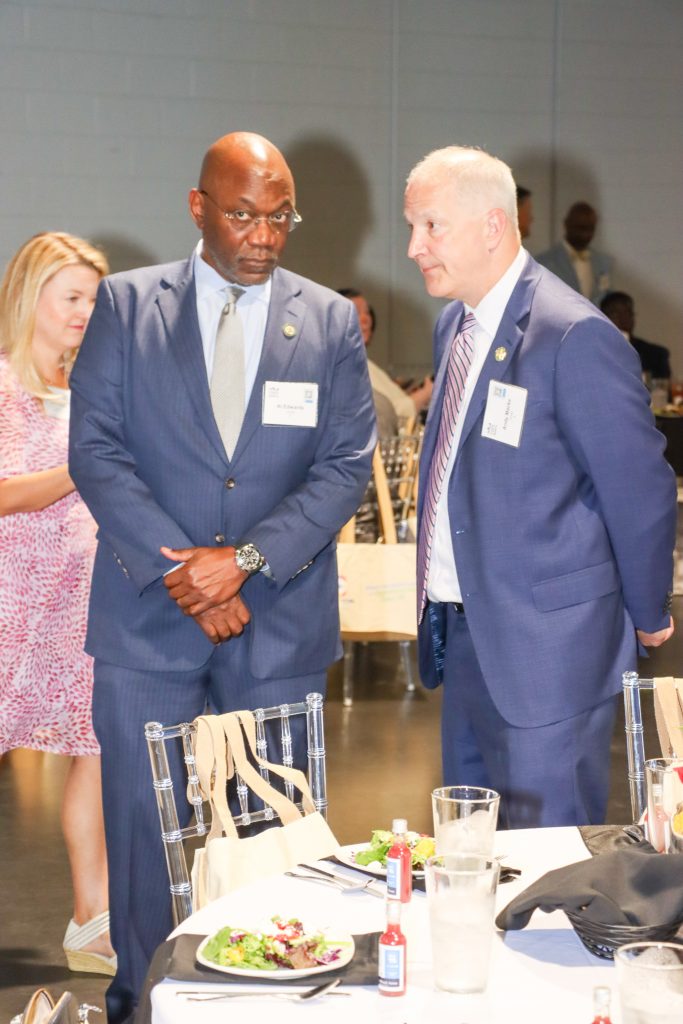
Though denied political representation, Hamer continued to fight for justice through grassroots economics. She launched the Freedom Farm Cooperative and a “pig bank” to help Black families achieve food and land security. Despite constant physical threats and health complications from a forced hysterectomy, she never stopped advocating. Before her death in 1977, she helped found the National Women’s Political Caucus. Nearly five decades later, she was awarded the Presidential Medal of Freedom posthumously. Her words still echo today: “I’m sick and tired of being sick and tired.”


17. Miriam Benjamin (1861–1947)

Miriam Benjamin was a trailblazing inventor and educator who became the second African American woman in U.S. history to receive a patent. Born in Charleston, South Carolina, in 1861, Benjamin moved with her family to Boston where she attended the Girl’s High School, graduating in 1881. She began her professional life as a schoolteacher in Jacksonville, Florida, and later pursued studies at Howard University Medical School and earned legal training—eventually working as a government clerk in Washington, D.C.

In 1888, Benjamin secured a patent for her invention, the Gong and Signal Chair for Hotels. Her innovation allowed guests to discreetly summon attendants by pressing a button, triggering a bell and raising a visible signal behind the chair. Designed to reduce the need for waitstaff, the chair emphasized comfort and quiet, making it an attractive feature for hotels and government buildings. Benjamin even lobbied for its use in the U.S. House of Representatives, where a similar system was later installed. Her concept directly influenced the modern airplane call button and helped revolutionize customer service signaling.

Benjamin’s multifaceted career—as an inventor, teacher, medical student, and aspiring lawyer—reflected both her brilliance and resilience in the face of social and institutional barriers. Though her name is not widely known today, her contributions remain embedded in the very technology we still use.


18. Zora Neale Hurston (1891–1960)

Zora Neale Hurston was a literary icon and pioneering anthropologist whose work gave voice to the richness of Black Southern culture. Born in Notasulga, Alabama, and raised in the all-Black town of Eatonville, Florida, Hurston was shaped by her vibrant community and the oral traditions that flourished there. After earning her associate’s degree at Howard University—where she co-founded the school newspaper—Hurston won a scholarship to Barnard College. There, she became the first Black student and studied under famed anthropologist Franz Boas.

Hurston traveled extensively through the American South and the Caribbean, documenting folklore, spiritual practices, and oral histories of Black communities. Her anthropological work informed her fiction, which was rooted in authentic dialect and rich cultural detail. Her most celebrated novel, Their Eyes Were Watching God (1937), tells the story of Janie Crawford, a Black woman seeking autonomy and self-realization—defying both literary norms and societal expectations.

Though Hurston struggled financially throughout her life and died in relative obscurity, her legacy was revived by Black feminist writers like Alice Walker in the 1970s. Today, she is recognized as one of the foremost American writers of the 20th century, with a body of work that continues to influence literature, anthropology, and cultural studies. Zora Neale Hurston captured the soul of Black life—and ensured it would never be forgotten.


19. Mae Carol Jemison (b. 1956)

Mae Carol Jemison made history in 1992 as the first Black woman to travel into space, serving as a mission specialist aboard the Space Shuttle Endeavour. A true polymath—physician, engineer, dancer, and educator—Jemison shattered stereotypes and redefined what was possible for women in science and technology.

Born in Decatur, Alabama, and raised in Chicago, Jemison was a curious child who loved science and aspired to reach the stars. She entered Stanford University at just 16 years old, earning degrees in chemical engineering and African and African-American studies. She went on to receive her medical degree from Cornell University and worked with the Peace Corps in Liberia and Sierra Leone, providing medical care, managing health systems, and contributing to vaccine research with the CDC.

Inspired by the space flights of Sally Ride and Guion Bluford, Jemison applied to NASA in 1985 and was accepted in 1987. Her mission aboard Endeavour in 1992 included conducting bone cell research in microgravity. Jemison brought cultural symbols with her into orbit, including a West African statuette and a flag from the Alpha Kappa Alpha sorority, celebrating both science and heritage.

After leaving NASA in 1993, Jemison founded her own technology consulting firm and launched the 100 Year Starship project—an ambitious initiative to make interstellar travel possible within the next century. She also became an advocate for STEM education, especially for girls and students of color, and authored several children’s books. A lifelong dancer, Jemison even appeared in an episode of Star Trek: The Next Generation, fulfilling a dream inspired by Nichelle Nichols’ role as Lieutenant Uhura.

With multiple honorary doctorates and inductions into both the National Women’s Hall of Fame and the International Space Hall of Fame, Mae Jemison remains a powerful symbol of Black excellence, curiosity, and the limitless reach of human potential.


20. Dr. Mildred Fay Jefferson (1926–2010)

Dr. Mildred Fay Jefferson broke barriers in medicine and public advocacy, becoming the first African American woman to graduate from Harvard Medical School in 1951. She also became the first woman to graduate from Harvard in surgery, the first woman employed as a general surgeon at Boston University Medical Center, and the first woman admitted to the prestigious Boston Surgical Society.

Born in Pittsburg, Texas, Jefferson was a gifted student, entering college at 15 and eventually earning degrees from Texas College and Tufts University before making history at Harvard. Her medical expertise and commanding intellect made her a pioneer in surgery during an era when both her race and gender presented steep obstacles.

In the 1970s, Jefferson became a prominent figure in the right-to-life movement. She co-founded the Massachusetts Citizens for Life (MCFL) and later the Right to Life Crusade, Inc., serving as its founding president. Her articulate opposition to abortion rights earned her national attention, and she served as a board member and delegate to the National Right to Life Committee (NRTLC). Throughout her life, she was known for fusing her medical knowledge with passionate public advocacy, often speaking out on moral and ethical dimensions of healthcare.

Dr. Jefferson’s legacy is complex, encompassing groundbreaking medical achievements and decades of activism. Whether in the operating room or on the national stage, she defied expectations and left a lasting imprint on American medicine and political discourse.

Dr. Bobbie J. Little – A Teacher First

Dr. Bobbie Jeanne Little: A Lifetime of Service and Education Discover the inspiring story of Dr. Bobbie Jeanne Little, a dedicated educator and advocate for youth and families, with a 45-year career in education and community service.


By Milton Kirby | Wadesboro, NC | March 17, 2025

Rarely do individuals discover their passion and calling early enough to allow it to be a part of their lifelong journey, but Dr. Bobbie Little did.

It is not often that the things, people, and places that I write about include my own personal experiences, thoughts, and emotions. This piece is different. Dr. Little is my sister. I remember vividly, as if it were yesterday, when she walked, no, she marched down the aisle with the kind of glee that you might see in the eyes of a six-year-old on Christmas morning to marry one of my five brothers in 1977.

Photo by Milton Kirby – Bobbie Little

Some years later, their ways parted. Even to this day, she remains a sister to the rest of us, and more importantly, she continues to be a thoughtful, generous, and caring daughter to my 94-year-old mother.

Over the years Bobbie and I have monitored each other’s careers, ups and downs, successes and failures. But somehow, along the way I lost track of some of her accomplishments. Could it be because my own work started to take more of my time and energy? Did I become a less concerned and loving brother? Or maybe, my subscription to the Anson Record expired and I did not notice for several years.

There has to be an explanation. Let’s hope that the journey we are taking today will help us discover some of her accomplishments and accolades, which I lost track of.
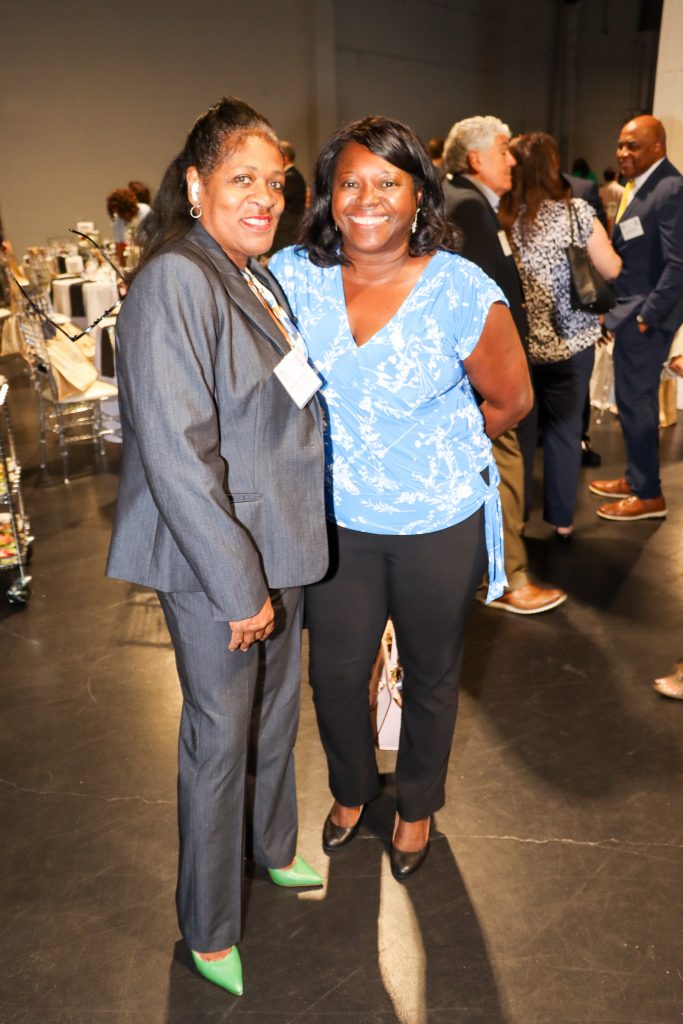
In my collection of memorabilia, I found the following: Thursday, April 9, 1987, from the Anson Record and The Messenger and Intelligencer, Bobbie Little Kirby Outstanding Young Woman of America For 1986. She was selected in recognition of her outstanding ability, accomplishments, and service to the community. Wednesday, July 31, 1996, Kirby will be the assistant principal in Mt. Gilead. Bobbie Little Kirby accepted a position with the Montgomery County School System at the West Middle School. In 2003, Leadership Anson graduated a new class; Bobbie was one of the 12 graduates of the seventh Leadership Anson class. Saturday, September 13, 2003, The National Association of University Women Wadesboro Branch, Honors Bobbie Jeanne Little as Woman of the Year 2003. This was an exceptionally special occasion as I joined her sister Georgia and her nieces in delivering our own tributes to Bobbie at this momentous occasion. Wednesday, May 26, 2004, Bobbie Little earns an education doctorate. Her dissertation, “Factors Relating to the Achievement Gap In Selected North Carolina Rural Elementary Schools.”
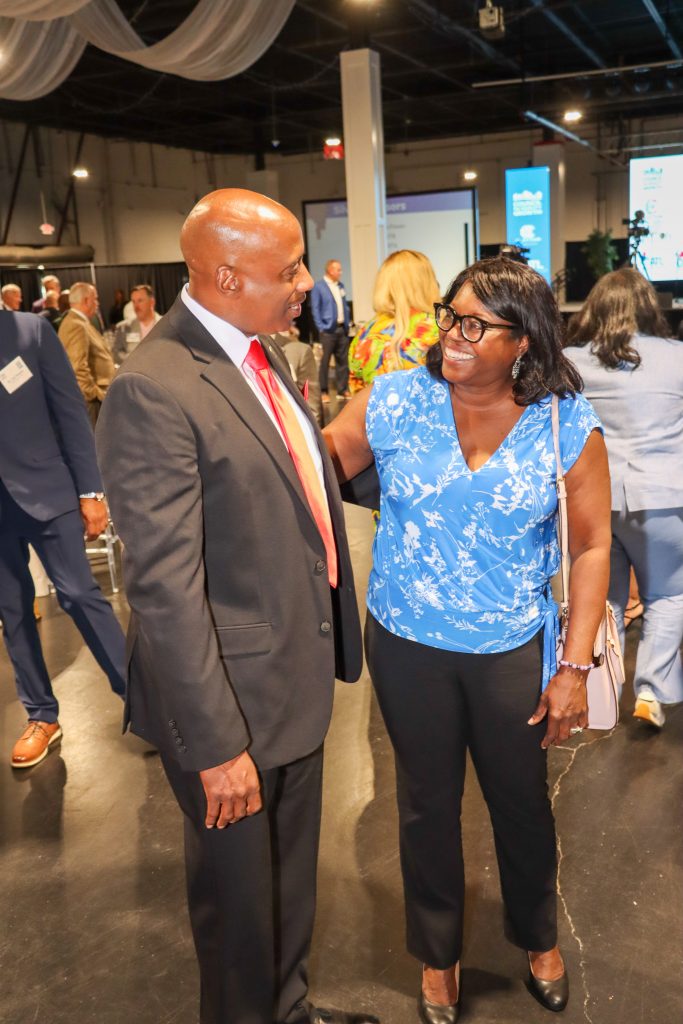
I frequently hear people say of someone else and, from time to time, themselves that they got “emotional.” I am still unclear on what that means. As someone who has lived more than half of my life, I am not embarrassed to say that as I worked on this piece, tears constantly dripped from my eyes. Each tear represented a time that Bobbie made me or someone else laugh or feel encouraged and cared for.

Dr. Little’s interest in the betterment of others showed through practically everything she touched, including her doctorate dissertation. She was concerned about student achievement in elementary schools in Anson County. She researched the problem and has worked tirelessly to remedy the achievement gaps.
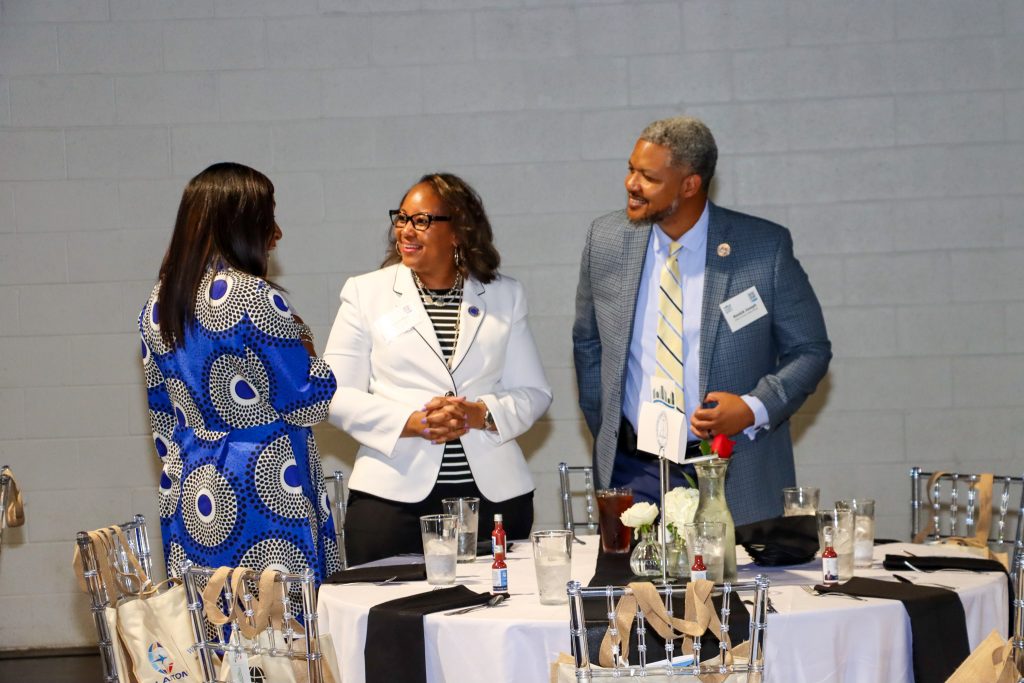
When you read Dr. Little’s official bio, you see the following: “Dr. Bobbie Jeanne Little is the daughter of the late Richard and Esther Rorie Little of Wadesboro, NC, and was born and raised in the Ruby Orchards area of Lilesville, NC. She has served 45 years as an educator and advocator for youth and families. She began her educational career as a Reading Tutor at McRae School in Morven, NC and then as a bus driver and teacher assistant at T.W. Bennett Elementary School in Lilesville, NC. Furthering her studies, as she worked, she would earn a certification enabling her to serve as a teacher and assistant principal in Anson County Schools. She served as principal in Montgomery County and Wake County. Later, she was Director of Education for the Central Region of North Carolina’s Department of Juvenile Justice and Delinquency Prevention, she retired after 33 years of service to the State of NC.”

After retiring from the State of North Carolina, she began a new career as a college professor and clinical supervisor of student teachers in the Department of Education at Shaw University. She worked there for 10.5 years. While working at Shaw University, she also served as an adjunct professor at the University of North Carolina at Pembroke, supervising student teachers. At opportune times, Dr. Little taught at Richmond Community College, South Piedmont Community College, and Wake Technical Community Colleges as an evening adjunct faculty member.  Even though she has had an illustrious career and decades of service, she has agreed to return to Shaw University in the Fall of 2025.”

The view of Dr. Little, as she is known and called by most of her colleagues, is something like this. She is known for developing phenomenal relationships with parents and empowering them to be actively involved in their children’s education. One of her philosophies can be summed up as “For Children’s Sake.” While teaching in public schools, she often taught students who were not the highest academic achievers. However, overall, her students showed significant growth from the beginning of the year to the end of the year. When asked about this, she attributes much of this success to building relationships and communication between parents and stakeholders.

She truly believes that more learning will occur when students know that educators care about and believe in them. She believes that relationships built on compassion and trust will produce massive positive outcomes for all. While she was a classroom teacher, her firm and fair classroom management and leadership skills were recognized by her colleagues. She was encouraged to begin her studies in school administration.

Dr. Little did not go to college directly out of high school. She raised a daughter who eventually followed in her footsteps into education; she cared for both of her ailing parents until their subsequent passing. No, Bobbie’s educational journey was not typical, but the way countless others have achieved their educational success.

Mr. Michael Freeman – Retired superintendent Anson County, NC schools

As fate would have it, she worked during the day and attended college classes at night and on the weekends. She earned her Bachelor’s and Master’s in Education degrees from the University of North Carolina at Pembroke, her Education Specialist (Ed.S.), and Doctor of Education (Ed.D.) degrees from the University of North Carolina at Charlotte, and continuing education credit hours from the University of North Carolina at Chapel Hill through Principal Executive Programs.

Bobbie considers herself “a teacher first” in whatever capacity she serves. In her 40-plus years of service, she has received numerous honors and awards, including All-State School Board recognition for outstanding service to the education of North Carolina’s Children. Her fellow board members nominated her to serve on the North Carolina School Board Association’s Legislative Committee. She was appointed as Commissioner of the North Carolina Principal Fellows Program in 2024.

Dr. Little has also found time to serve on the boards of the State Employee Credit Union, Anson Regional Medical Services, Anson County Zoning Board, Anson County 4-H Youth Promises, Closing the Achievement Advisory Board, and Anson County Juvenile Crime Prevention Council. She is serving her fourth term on the Anson County School Board, where she has served as chairman and vice chairman.

On March 30, 2012, Dr. Little became the first African American and first female in Anson County to receive the North Carolina Order of the Long Leaf Pine Award for service from Governor Beverly Purdue. Since its creation in 1963, the Long Leaf Pine Award has been presented to honor persons with a proven record of service to the State of North Carolina or some other notable achievement and to others as a gesture of friendship and goodwill. Upon being named to The Order of the Long Leaf Pine, the honoree receives a certificate by which the Governor confers upon the recipient “…the rank of Ambassador Extraordinary privileged to enjoy fully all rights granted to members of this exalted order.

Bobbie has been recognized and honored by the North Carolina School Board Association, H.O.L.L.A. (Community Impact Award), National Association of University Women (NAUW) for service from the branch, sectional, and national levels, Governor’s Volunteer Award, and churches in the community. She is a member of Anson Women’s League, Linkon Chapter #564 Order of the Eastern Star, PHA, Lifetime Member of NAACP, and Golden Life Member of Union County Alumnae Chapter, Delta Sigma Theta Sorority, Inc.

Christina Rose former student of Dr. Little

In her spare time, she enjoys reading, fitness walking, traveling, and golf. When she is faced with challenging tasks, she finds solace on the golf course and fitness walking. She is a member of the Ladies Professional Golf Association-Amateurs, Sandhills and Charlotte Chapters, Carolina Golf Association, and the Seven Lakes Women’s Golf Association.

She does motivational speaking for programs serving youth during summer programs and other times. 

Did I mention that Bobbie has a forgiving heart of gold? In 1977, Bobbie bestowed upon me the honor of capturing her wedding day on film. I borrowed a large format camera from the high school photography instructor. I had only used the box-shaped Mamiya once before. I managed to find all the angles and did not miss a special moment during the wedding ceremony.  I soon ran out of film. Then I pulled out my Petri 35mm for the reminder of the ceremony. When the film was developed, I did not have one picture on the large format camera, I had loaded the film incorrectly. I did manage to get a few good shots with my Petri. I was forgiven.

It has been said that “imitation is the sincerest form of flattery.” Bobbie’s daughter watched her life journey and decided follow and imitate. Kimelon, is a graduate of UNC-Pembroke and UNC-Chapel Hill. She received certifications from Pfeiffer University and Gardner Webb University. She is employed by the Wake County Public School System in the Curriculum, Instruction, and Assessment Department serving over 40 elementary schools. She is pursuing doctoral studies currently.  Prior to this position, she taught in Anson, Durham, and Wake County Public Schools.

Webster defines a “living legend” as a person who is famous while still living for doing something extremely well.

Webster defines “famous” as widely known, honored for achievement, excellent, or first-rate.

Dr. Bobbie J. Little, my sister and a teacher first.

“Justice Denied: Supreme Court Declares Black Americans Have No Rights”

The Dred Scott v. Sandford case, culminating in a Supreme Court ruling on March 6, 1857, denied freedom to Dred Scott and ruled African Americans could not be U.S. citizens. This decision invalidated the Missouri Compromise and intensified national tensions over slavery, fueling the path to the Civil War and inspiring the abolitionist movement.


By Milton Kirby | Atlanta, GA | March 6, 2025

One of the most significant legal battles in American history unfolded in St. Louis’ Old Courthouse, where Dred Scott and his wife, Harriet, fought for their freedom from enslavement. The landmark Supreme Court decision in Dred Scott v. Sandford (1857) not only denied their freedom but also ruled that African Americans could not be U.S. citizens and that Congress had no authority to prohibit slavery in federal territories. This ruling invalidated the Missouri Compromise of 1820 and pushed the nation closer to the Civil War.

Dred Scott’s Journey to the Courtroom

Dred Scott was born into enslavement in Virginia around 1799 and later moved with his enslavers, the Blow family, to St. Louis in 1830. Financial difficulties forced the Blows to sell Scott to Dr. John Emerson, a military surgeon. Scott accompanied Emerson to free territories—Illinois and the Wisconsin Territory—where slavery was prohibited under the Missouri Compromise.

During this time, Scott married Harriet Robinson, who was also enslaved. The couple had two daughters, Eliza and Lizzie. After Dr. Emerson died in 1843, his widow, Irene Emerson, continued to profit from their forced labor, hiring them out to other families.

Courtesy – Britannica – Dred Scott

In 1846, Scott took legal action, suing Irene Emerson for his freedom. The case, filed in the Old Courthouse, was based on the legal precedent that an enslaved person who had lived in a free territory was entitled to freedom. With the support of abolitionist allies and financial backing from the Blow family, Scott embarked on an eleven-year legal battle that would reach the highest Court in the land.

The Supreme Court’s Ruling and Its Fallout

On March 6, 1857, the U.S. Supreme Court ruled 7-2 against Scott. The Court, led by Chief Justice Roger B. Taney, declared that African Americans, whether free or enslaved, could not be U.S. citizens and therefore had no right to sue in Federal Court. Moreover, the ruling struck down the Missouri Compromise, stating that Congress had no power to prohibit slavery in U.S. territories.

The Collection of the Supreme Court of the United States (Artist: George P.A. Healy)

Taney actually freed the enslaved people that he had inherited; however, he believed that the Federal government had no right to limit slavery. He mistakenly thought he could save the Union when he ruled that the Framers of the Constitution believed enslaved people were so inferior that they possessed no legal rights.

Chief Justice Taney held the Missouri Compromise unconstitutional, claiming that as property, enslaved people were protected under Article V.  In addition to this unpopular opinion, Taney became even more disliked when he challenged President Lincoln’s constitutional authority to apply certain emergency measures during the Civil War. Lincoln saw him as an enemy and even defied one of Taney’s judicial decisions. Despite his critics, Taney served until he died on October 12, 1864, at the age of 87, after being Chief Justice for 28 years.

This decision deepened the nation’s divide over slavery, further fueling tensions that would lead to the Civil War. Though Scott lost his case, his courage in seeking justice contributed to the broader movement for abolition.

The Missouri Compromise and Its Repeal

Scott’s case directly challenged the Missouri Compromise (also known as the Compromise of 1820) which was, Federal legislation of the United States that balanced northern states’ desires to prevent slavery in the country with those of southern states to expand it. It admitted Missouri as a slave state and Maine as a free state and declared a policy of prohibiting slavery in the remaining Louisiana Purchase lands north of the 36th parallel. The 16th United States Congress passed the legislation on March 3, 1820, and President James Monroe signed it into law on March 6, 1820.

The Missouri Compromise was a critical effort to prevent the nation from fracturing over slavery, but it was repealed in 1854 by the Kansas-Nebraska Act, which allowed territories to decide the issue of slavery through popular sovereignty. The Supreme Court’s ruling in Dred Scott v. Sandford further dismantled any legal barriers to slavery’s expansion, emboldening pro-slavery factions and enraging abolitionists.

Legacy of the Dred Scott Case

Though the Supreme Court denied Scott’s plea for freedom, his case became a turning point in American history. The ruling heightened national tensions and galvanized anti-slavery forces, accelerating the path to the American Civil War. In 1857, Scott and his family were eventually freed by Taylor Blow, a member of his original enslaver’s family. Tragically, Scott died just a year later.

Dred and Harriet Scott’s determination to fight for their freedom stands as a testament to the resilience of those who resisted enslavement. Their struggle helped shape the national debate over slavery and ultimately contributed to the Union’s commitment to ending the institution once and for all.

The Union won the American Civil War. The war effectively ended in April 1865 when Confederate General Robert E. Lee surrendered his troops to Union General Ulysses S. Grant at Appomattox Court House in Virginia.

Exit mobile version