One Woman’s Story: Living Abroad with Purpose, Allyn Wall’s Path from the U.S. to Guam

Allyn Wall’s journey from Japan to Guam reveals how culture, purpose, and community shaped her leadership and inspired a global business rooted in service.


By Milton Kirby | Atlanta, GA | May 27, 2025

Allyn Wall’s journey from the U.S. mainland to Japan, and now Guam, is shaped by courage, culture, and community.

Wall left the United States with a dream — to teach abroad and serve military-connected students. That dream took her to Japan first, where she discovered a society built on discipline, precision, and deep respect. “Japan taught me how to move with intention,” she said. Learning the language and embracing the culture helped her thrive both professionally and personally.

In Japan, she quickly learned that the workplace was structured and hierarchical. Meetings followed a strict rhythm. Silence carried weight. “You have to read the room,” she said, “and adjust without losing yourself.”

Photo Courtesy Allyn Wall

After Japan, Wall moved to Guam. Though still a U.S. territory, Guam has a rhythm of its own. The pace is slower. People focus more on relationships than rigid rules. It was the perfect place for Wall to continue her global mission while pivoting her business, Digital Glo Consulting. “Guam gave me breathing room to grow,” she said.

Each place brought new lessons. In Japan, she built connections through consistency and respect. In Guam, she found community through service and presence. “You earn your place in Guam,” she explained. “It’s not automatic.”

Wall’s work across different cultures sharpened her adaptability, empathy, and relationship-building skills. She became a cultural bridge, connecting people and ideas across continents. Whether leading teams in Guam, consulting in the U.S., or expanding business ideas in Japan, Wall listens before she leads it is a way to always ensure that she respects the local way before taking the lead.

The professional worlds she’s lived in all differ. “Japan is exacting,” she said. “Guam is loyal and intimate. The U.S. mainland is fast and high-pressure.” But she carries pieces of each. “I balance structure with soul.”

Wall has also faced challenges. Language barriers in Japan. Resource limitations in Guam. But each obstacle made her stronger and more creative. “You learn to lead with heart and think on your feet,” she said.

Through it all, Wall stays focused on her long-term vision. She wants to expand globally, with Guam as her base, and future plans to grow into Ghana and other communities ready for innovation and digital transformation.

Her advice to others: “Respect the culture. Listen deeply. And always bring value.”

After years of navigating different systems, Wall knows her purpose. She helps people connect across borders, cultures, and industries. “Every day,” she said, “I’m constantly interpreting, comparing, translating the languages, and connecting dots between worlds.”

While Japan has seen an influx of foreign workers in recent years — growing its foreign resident population from 2.1 million in 2014 to 3.77 million by 2024 — Guam has experienced a gradual population decline. From 2010 to 2020, the island’s population fell by more than 5,500 residents. In 2023, the net migration rate was -10.9 per 1,000 people. Wall’s decision to grow her business and invest in Guam’s tight-knit community is a bold and meaningful commitment.
As an American, Wall was uniquely positioned to live and work in both places. Guam, a U.S. territory, allows Americans to move freely without a visa, and jobs are typical in military, education, and tourism. In contrast, Japan attracts Americans for teaching, IT, and business roles. But beyond the job titles, Wall found that what mattered most was how each place shaped her leadership — Japan taught her precision and discipline, while Guam nurtured community and creativity.

Wall’s social life has not suffered; to the contrary, she found circles of friends in the two different cities in Japan where she lived and the one city in Guam. She stated that because many of the friends made in Japan and Guam have since moved to other parts of the world, her friendships and potential business partnerships are truly global.

Her earnings are significantly higher than would be in mainland United States, but suggests that anyone considering moving, working and or living abroad do some thorough research.

Please consider supporting open, independent journalism – no contribution is too small!

The Future Works Here: ICRA 2025 Highlights Robotics Jobs and Education

ICRA 2025 in Atlanta broke records and barriers, featuring lifelike humanoids, art-powered robotics, and global tech leaders pushing the field into the future.


By Milton Kirby | Atlanta, GA | May 27, 2025

The 2025 IEEE International Conference on Robotics and Automation (ICRA 2025) concluded on May 23, following a week of groundbreaking research, dazzling robot demonstrations, and global collaboration. Hosted in Atlanta’s Georgia World Congress Center, this year’s ICRA was the largest in the event’s history, drawing more than 7,000 participants, 141 exhibitors, and hundreds of educational institutions and tech companies from around the world.

Organized by the IEEE Robotics and Automation Society, ICRA is recognized as the world’s premier robotics event. It combines academic research, industrial innovation, and community networking to explore how robots are shaping our world today—and what’s coming next.

Hands-On with the Future: Robots Take Center Stage

The exhibition floor at ICRA 2025 transformed into a living showcase of tomorrow’s technology. Spanning 235,000 square feet, it buzzed with live demonstrations of cutting-edge robots—from lifelike humanoids to four-legged machines designed for rescue, research, and even barista work.

Boston Dynamics drew a steady crowd with its agile quadruped robot, Spot. Measuring approximately 43 inches long and weighing 72 pounds, Spot is already being utilized in industries such as power generation, petroleum, and pet food manufacturing. At ICRA, Spot wowed attendees by navigating around obstacles, self-correcting after falls, and showcasing its ability to operate independently. It charges itself, re-routes when paths are blocked, and carries up to 14 kilograms of custom equipment. With more than 1,500 Spots already in the field, the robot’s user-friendly interface and powerful API make it ideal for hazardous inspections and industrial monitoring.

Unitree’s G1 humanoid robots also made headlines. These compact androids, standing 52 inches tall and weighing 77 pounds (including their battery), mimic the structure of a human body—complete with a head, torso, rotating arms, elbows, wrists, fingers, and legs with hip, knee, and ankle joints. The units even wore shoes for their performance. In a playful yet impressive demonstration, two G1s donned boxing gloves and engaged in a mock match, reacting to punches and showcasing their ability to regain balance after being hit. With approximately two hours of battery life and an AI-driven control system, the G1 demonstrated just how close humanoid robots are to mastering complex, real-world movements.

Nearby, Rainbow Robotics of South Korea showcased its RB-Y1 humanoid platform. This research-friendly bot features multiple control options, including a joystick, VR headset, and master arm system. The company also introduced a Mecanum Wheel System for 360-degree movement in tight spaces. RB-Y1 has already attracted users from top institutions, including MIT, UC Berkeley, Georgia Tech, and the University of Washington. Its flexible software development kit (SDK) enables researchers to tailor the robot for AI projects by utilizing grippers, LiDAR, and IMUs. Rainbow’s exhibit, supported by its US subsidiary in Chicago, reinforced the company’s growing global presence.

The MAB Honey Badger team returned with their latest version of a rugged quadruped robot: the HB4.0. Developed over nearly a decade, this legged robot has been field-tested in challenging environments and is now being deployed by customers for real-world applications. Designed for durability and agility, the Honey Badger is built to navigate rugged terrain where wheels and tracks fail.

On the more delightful side of robotics, Artly AI presented its Barista Bot, built not just to serve coffee but to do it with craftsmanship. Using deep learning and imitation-based training, Artly’s robots learn directly from human baristas. They recognize tools, follow quality checks at each brewing step, and produce consistently perfect drinks. The bots can be bought for $80,000 or leased starting at $2,650 per month. Artly’s mission isn’t to replace human baristas—but to honor and preserve the fine art of coffee-making, bringing café-quality service to airports, malls, and workplaces.

The exhibition area also featured The Gecko, a robot named for its sticky-footed namesake. With specialized grip pads and adaptive gait, The Gecko is designed for wall and pipe inspections, particularly in environments that are hazardous or difficult for humans to access. Its unique ability to navigate vertical or irregular surfaces has made it a favorite among research teams focused on infrastructure monitoring and maintenance.

Altogether, ICRA 2025’s exhibition floor was more than a tech showcase—it was a window into a world where robots not only support human work but do so with agility, precision, and even a touch of personality.

Where Arts and Engineering Meet

ICRA 2025 didn’t just showcase technology—it celebrated creativity. The growing “Arts in Robotics” program provided a unique perspective on how machines and art intersect. From choreography to sculpture and painting to costume design, the fusion of expression and engineering is redefining what robots can do.

This year’s events included live performances, juried art sessions, and workshops exploring motion planning in dance, haptics in clothing, and other related topics. It’s part of a larger trend: using robots not just as tools but as partners in human expression.

Powered by People: Global Collaboration and Education

ICRA 2025 featured over 2,000 paper presentations across 24 tracks, along with plenary talks and 52 keynote sessions. The conference also included workshops on robot ethics, robotics in Africa, and undergraduate education. Satellite conferences around the globe allowed remote participation, making this the most inclusive ICRA yet.

Top schools from around the world were well-represented. Gabrielle Madison says, “The A. James Clark School of Engineering of the University of Maryland (CSE) is a great place to get graduate engineering degrees in robotics.  Our graduate engineering programs are run in conjunction with the nationally recognized Maryland Robotics Center.”

The CSE offers a Graduate Certificate in Engineering program in Robotics, which can be completed in as little as two years. The certificate credit can be applied to a Master of Engineering degree.

Graduates of the program have been placed in jobs such as software developer, robotics operator, sales engineer, robotics engineer, electrical maintenance engineer, process engineer and machine learning specialist. Some of their top student employers have included Accenture, Cognizant Technology Solutions, the US Department of Defense, H-Tech Engineers, Infosys Ltd., Naval Air Systems Command, Raytheon, and the US Navy.

Networking groups like Black in Robotics, LatinX in Robotics, and Queer in Robotics held events to strengthen community and inclusion in the field.

Jobs, Automation, and the Road Ahead

As robotics continues to advance, it brings both opportunity and disruption. According to the World Economic Forum, while 85 million jobs may be displaced by automation by 2025, 97 million new ones could emerge—if workers can reskill. McKinsey estimates that 375 million workers may need to change careers by 2030.

The robotics industry is expected to reach $73 billion globally by 2029. In the US, jobs for robotics engineers are projected to grow by 3.3% over the next decade, with thousands of new roles across fields.

Industries driving this growth include:

  • Manufacturing: Cobots are speeding up assembly lines.
  • Healthcare: Robots assist in surgery and elder care.
  • Logistics: Autonomous bots are transforming warehouses.
  • Aerospace & Defense: Drones and robotic suits are under development.
  • Agriculture: Robots help with planting, sorting, and packaging.

Top careers in robotics include:

  • Robotics Engineer – $95,300/year
  • Software Developer (Robotics) – $122,386/year
  • Electromechanical Technician – $76,543/year
  • AI Specialist – $101,428/year

Educational paths range from two-year associate degrees for technicians to master’s programs for advanced engineers. Bootcamps and certifications also offer fast-track options for those entering the field.

Robotics Replacing the “Three Ds”

Many robots are now being used to take over jobs that are dull, dirty, or dangerous—reducing risks and improving productivity. Tasks such as bomb disposal, sewer inspections, and repetitive factory work are increasingly being handled by machines. A fourth “D” often added is “Dear”—jobs that are simply too expensive when done by humans.

Still, jobs that require emotional intelligence, creativity, and complex decision-making—such as those of teachers or therapists—remain less likely to be automated.

Looking Ahead

The energy at ICRA 2025 was electric. The blend of technical innovation, artistic collaboration, and career development made it a must-attend event for anyone in the robotics field.

Next year’s ICRA conference will take place in Vienna, Austria, from June 1 to 5, 2026. If this year was any sign, the future of robotics is not only bright—it’s inclusive, expressive, and globally connected.

Please consider supporting open, independent journalism – no contribution is too small!

Morehouse Picks Alumnus and National Scholar to Write Its Next Chapter

Morehouse College names Dr. F. DuBois Bowman as its 13th president, honoring a distinguished alumnus, scientist, and leader committed to equity and excellence.


By Milton Kirby | Atlanta, GA | May 17, 2025

Morehouse College has chosen Dr. F. DuBois Bowman as its next president. He will become the 13th president of the college on July 15, 2025. Dr. Bowman is a 1992 graduate of Morehouse and currently serves as dean of the University of Michigan School of Public Health.

The decision comes after a national search to replace outgoing president Dr. David A. Thomas, who will step down in June.

Dr. Bowman is widely known for his work in public health and biostatistics. He is a member of the National Academy of Medicine and a fellow of the American Statistical Association and the American Association for the Advancement of Science.

Willie Woods, chairman of the Morehouse Board of Trustees, praised Dr. Bowman’s leadership and deep connection to the college.

“Dr. Bowman’s record of visionary leadership, his deep commitment to academic excellence, and his lifelong dedication to Morehouse make him the ideal choice,” said Woods.

Dr. Bowman’s research has helped improve understanding of diseases like Parkinson’s, Alzheimer’s, and schizophrenia. He has also studied how the environment can affect brain development in young people. His work has led to more personalized treatments and helped shape national public health strategies.

He oversees over 1,300 students and $100 million in research funding at the University of Michigan. He has led programs on gun violence, health equity, and pandemic response. He is also known for building a strong, inclusive, forward-thinking academic culture.

Returning to Morehouse is deeply personal for Dr. Bowman. He is a two-time Morehouse parent and has long mentored Morehouse and Spelman College students. In 2019, he received Morehouse’s highest alumni award, the Bennie Trailblazer Award.

“Returning to Morehouse as its 13th president is the honor of a lifetime,” said Dr. Bowman. “This institution shaped who I am—instilling a commitment to excellence, justice, and impact.”

His appointment comes at a key moment for Morehouse. The college was recently named a Research College & University (RCU) and an Opportunity College & University (OCU) in the 2025 Carnegie Classifications. These honors recognize Morehouse’s growing role in research and its strong support for students from underrepresented backgrounds.

Before leading Michigan’s public health school, Dr. Bowman held roles at Columbia University and Emory University. He earned his master’s in biostatistics from the University of Michigan and a Ph.D. from the University of North Carolina at Chapel Hill.

Dr. Bowman is married to Cynthia Bowman, a Spelman College, Georgia Tech, and Northwestern University graduate. They have four children, including two sons who attend or recently graduated from Morehouse.

Please consider supporting open, independent journalism – no contribution is too small!

This post contains affiliate links, which means a small commission may be earned if a purchase is made through them, at no extra cost to you.

Tougaloo College Faces Threats After Jasmine Crockett’s Commencement Speech

Black Information Network | May 9, 2025

Tougaloo College officials are investigating “concerning calls” to the school after Rep. Jasmine Crockett (D) delivered a commencement address during which she criticized President Donald Trump.

In a letter sent to the school community on Monday (May 5), Tougaloo College President Donzell Lee addressed threats to campus following Crockett’s keynote address on Sunday (May 4), per WAPT.

“Appropriate actions have been taken,” Lee said, noting school officials weren’t taking “concerning calls” lightly. “Contact has been made with law enforcement authorities to ensure that safety protocols are in place, if needed.”

Crockett was invited to deliver Sunday’s commencement speech by fellow Democrat and Tougaloo graduate Rep. Bennie Thompson.

During her address, Crockett acknowledged Anne Moody and Memphis Norman, Tougaloo students who played pivotal roles in the 1963 Woolworth’s sit-in in Jackson, before taking aim at Trump.

“Sadly enough, in the year of our Lord 2025, sitting in these very classrooms is just as much of a protest as Anne and Memphis pulling up to Woolworths in 1963,” Crockett said. “It’s the paradox and parallels for me. … As I stand here in this safe space, still only one of the few places that an institution can invite me to speak.”

“To think about the fact that people have to be fearful of having a sitting member of Congress to come and address their graduates, tells us that we still got a lot of work to do,” the Texas Democrat continued. “The president of the United States having a temper tantrum that strips funding because I’m Black and I’m proud should not be something that we are dealing with in 2025.”

Crockett also pointed out how Tougaloo’s campus served as a safe space in the 1960s for civil rights leaders like Medgar EversFannie Lou Hamer, and Dr. Martin Luther King Jr.

“The work done by so many like Bennie (Thompson), Medgar (Evers) and Fannie Lou Hamer are under attack,” she said. “Instead of calling us the ‘N word,’ they use racist epithets and suggest that we’re ghetto, or unqualified or diversity hires, even though we’re all, more oftentimes than not, more educated and qualified than they are. I have news for you. These attacks are not new because Jim Crow never died. He just lied (sic) in wait.”

Thompson said he stands in solidarity with Tougaloo and Crockett amid threats to the school.

“It is unfortunate that a day of celebration at Tougaloo College was met with attempts by extremists to overshadow the moment and intimidate those in attendance,” Thompson said in a statement. “Their threats, aimed at undermining Congresswoman Jasmine Crockett’s powerful commencement address, failed. The Tougaloo community remains proud, strong and unmoved.”

In a post on X, Crockett also spoke out against the threats.

“No low is too low for MAGA… now explain to me why an institution would be receiving threats because of the commencement speech that I GAVE,” Crockett tweeted. “This type of behavior is why I’m constantly having to be protected & I understand that truth telling in this country; sadly, is a dangerous business, but college students don’t deserve this.”

Please consider supporting open, independent journalism – no contribution is too small!

Let Us Make Man Gala Awards Scholarships, Honors Advocates for Justice, and Youth Empowerment

Let Us Make Man awarded scholarships to 50 students and honored five advocates during its 2025 Gala, celebrating Black leadership, education, and community empowerment


By Milton Kirby | Atlanta, GA | May 2, 2025

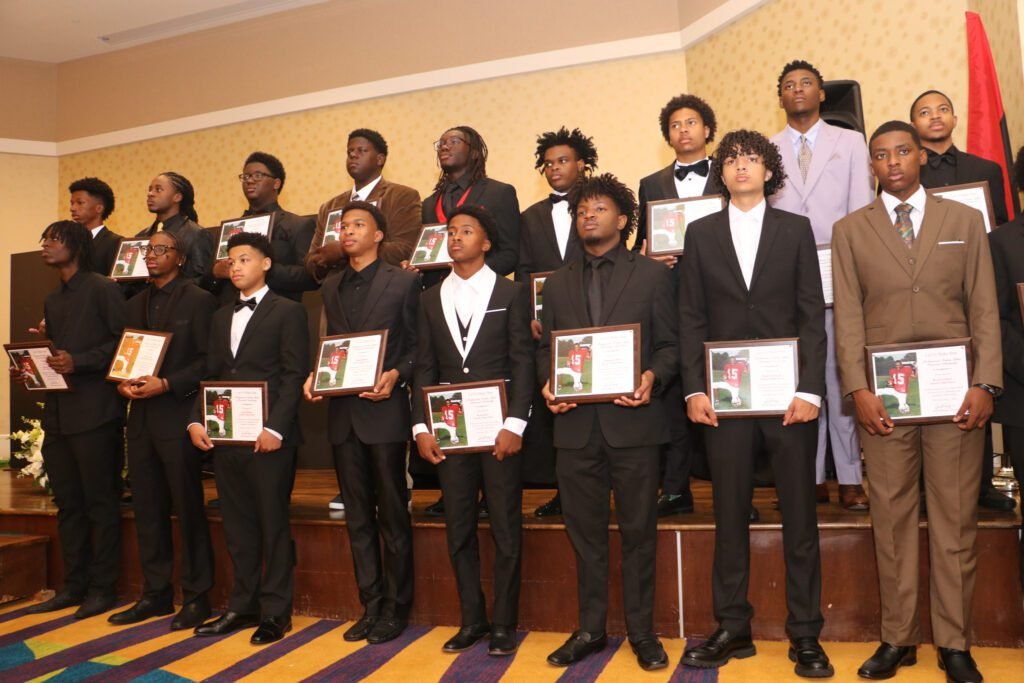
Let Us Make Man (LUMM) hosted its annual Scholarship & Awards Gala on Thursday, May 1, 2025, to celebrate achievement, legacy, and promise. The black-tie affair honored nearly 50 promising young men and women with tuition and book scholarships while recognizing three seasoned community leaders and two emerging activists for their impactful work in social justice and community advancement.

Held at the Morrow Center in Morrow, Georgia, the Gala was the latest milestone in LUMM’s long-standing mission to uplift and equip Black youth with the tools to thrive.

This year, LUMM awarded 30 tuition scholarships and 28 book scholarships to students who plan to study fields ranging from mechanical engineering and business to law, nursing, and medicine. Each recipient embodies the vision, mission, and values that have guided LUMM since its inception in 2006.

Scholarship & Awards Gala photo gallery                 Scholarship & Awards Gala video link

By Milton Kirby – LUMM Scholarship Recipients

A Legacy Rooted in Purpose

Let Us Make Man seeds were planted in the summer of 2006 when attorney Mawuli Mel Davis hosted a high school basketball team from Rota, Spain. That visit led to a powerful discussion event titled “Building Boyz to Men,” where local Black men spoke about manhood in America with the team. Inspired by the evening, activist and former Atlanta City Councilman Derrick Boazman proposed forming a broader effort to engage and mentor Black youth.

Later that fall, Boazman gathered nine men from diverse backgrounds—law, education, ministry, business, and culture—who all shared a deep sense of responsibility to save and support young Black men. From that gathering, LUMM was born.

The founding ten members of LUMM include:

  • Derrick Boazman – Community Leader
  • Mawuli Mel Davis – Attorney at Law
  • Doug Evans – Forensic Scientist
  • A. B. Jihad – Entrepreneur
  • Kwame Lazarus – Cultural Griot
  • Minister Ray Muhammad – Minister
  • Pastor Derrick Rice – Pastor
  • Keene Walker – Educator
  • Dr. Mike Weaver – Educator
  • Kweku Webb – Financial Planner

Their first major event, The Gathering to Reclaim Black Manhood, took place in February 2007 at Atlanta Technical College, attracting over 700 participants. Unlike traditional conferences, The Gathering provided structured, research-based training sessions for attendees to take back to their communities. Workshops focused on law, education, mentoring, and spiritual growth. The tradition of honoring community leaders also began that year, with notable figures like Rev. C.T. Vivian and Stedman Graham in attendance.

Over the years, LUMM events have expanded across Georgia, with gatherings at institutions such as Savannah State, Paine College, Fort Valley State, and Columbus State University—each year engaging hundreds of attendees in leadership, economics, family unity, and youth empowerment workshops.

Honoring a Lifelong Advocate

Among this year’s honorees was Lawren Wilson, a rising senior majoring in political science at Clark Atlanta University. She received the Vincent D. Fort Scholarship, named in memory of the late Georgia State Senator (1956–2024), a staunch advocate for civil rights, economic justice, and educational access.

Senator Fort served Georgia’s 39th District from 1996 to 2017 and was nationally recognized for authoring the Georgia Fair Lending Act in 2002—one of the strongest anti-predatory lending laws in the country. A longtime supporter of LUMM, Fort’s legacy continues through this scholarship, awarded to students who demonstrate a strong commitment to justice and community service.

Celebrating Vision, Justice, and Cultural Preservation

In addition to student scholarships, LUMM recognized several trailblazers whose work exemplifies leadership, justice, and community empowerment:

Business Visionary Leader Award: Cortez A. Carter

  • Carter, Executive Vice President of Hyde Park Hospitality, has spent over 30 years shaping aviation, banking, and real estate industries. As a certified International Airport Professional and experienced pilot, Carter has led development efforts at major U.S. airports, championing minority business growth and infrastructure innovation.

Champion for Justice Award: The Hon. Debra E. Deberry

  • Deberry, Clerk of the Superior Court of DeKalb County since 2011, has spent more than 25 years in public service. Managing a department of over 100 employees and a $7 million budget, she has been a force in judicial reform and community engagement. Deberry’s impact has been felt across the legal system, from jury oversight to juvenile advocacy.

C.T. Vivian Medal of Freedom: Dr. Georgianne Thomas

  • A filmmaker, educator, and activist, Dr. Thomas is best known as the executive producer of Foot Soldiers: Class of 1964, an award-winning documentary chronicling Black women’s role in the civil rights movement. Her career has spanned acting, international diplomacy, and authorship, rooted in her passion for justice and storytelling.

Rising Stars: Young Warriors in Action

LUMM also honored two dynamic youth leaders with its Young Warrior Award:

Kannette King

  • A passionate advocate for mental health, education equity, and youth development, King is quickly emerging as a leading voice in her generation. Her work inside and outside the classroom shapes future movements and mentors her peers to rise in leadership.

Daxton Pettus

  • As a high school student in Decatur, Pettus led efforts to remove a Confederate monument and install a historical marker honoring Dr. Martin Luther King Jr. Now a student at Morehouse College; he continues to blend activism with academics to build a more just and equitable society.

A Movement That Endures

As Let Us Make Man prepares for its next chapter, the Gala served as a reminder and a call to action. From scholarships to awards, each honor represents the collective power of Black leadership, unity, and vision.

Eighteen years after its founding, LUMM continues to train, uplift, and inspire—affirming the belief that when we invest in young minds and honor our elders, we make not just men, but leaders.

Please consider supporting open, independent journalism – no contribution is too small!

Black Golfers, the Masters, and the Economic Power of Augusta National

The 2025 Masters highlighted golf’s evolving legacy—spotlighting Black pioneers, Augusta’s exclusivity, and a $140M economic impact—while diversity efforts continue to reshape the sport.


By Milton Kirby | Atlanta, GA | April 18, 2025

As the 89th Masters Tournament concluded Sunday, April 13, 2025, the storylines that emerged weren’t just about the iconic green jacket or record-breaking putts. Behind the meticulously groomed fairways of Augusta National Golf Club lies a deeper story—one that speaks to the history of exclusivity, the slow march toward diversity, and the staggering economic footprint of one of America’s most prestigious sporting events.


Black Golfers in America: Progress and Persistence

Golf in the United States is still largely dominated by white players, but Black athletes have made important strides—though the road remains steep. As of 2024, about 3% of the 28.1 million on-course golfers in the U.S. were Black, totaling roughly 843,000 players. This marks a decline from 1.1 million Black golfers in 2015, highlighting ongoing struggles with access, affordability, and representation.

Despite these challenges, a number of Black golfers have not only made it to the PGA Tour but also achieved remarkable success:

  1. Charlie Sifford became the first African American to earn a PGA Tour card in 1961, later winning two events and earning a place in the World Golf Hall of Fame.
  2. Pete Brown was the first Black golfer to win a PGA Tour event in 1964.
  3. Lee Elder made history in 1975 as the first Black player to compete in the Masters Tournament.
  4. Calvin Peete, known for his accuracy, won 12 PGA Tour events, including the 1985 Players Championship.
  5. Jim Thorpe secured three PGA Tour wins and 13 on the Champions Tour.

Modern Black golfers continue to carry the torch:

  • Tiger Woods, with 82 PGA Tour wins and 15 majors, remains one of the most dominant and influential golfers of all time.
  • Harold Varner III made history as the first Black golfer to advance to the PGA Tour via the Web.com Tour.
  • Joseph Bramlett became the first Black player to graduate from PGA Tour Q-School since Tiger.
  • Cameron Champ, a rising star, is known for his long drives and advocacy for racial equity in the sport.
  • Cheyenne Woods, Tiger’s niece, has competed on the LPGA Tour and earned international victories.

Organizations like the Advocates Professional Golf Association (APGA) Tour are also working to provide competitive platforms for aspiring Black professionals, seeking to increase diversity at golf’s highest levels.

Tiger Woods is presented with his Green Jacket by the Tournament chairman Hootie Johnson after Woods’ 3rd victory in the US Masters Golf Tournament at the Augusta National Golf Club in Georgia on 14th April 2002. (Photo by Leonard Kamsler/Popperfoto via Getty Images)© GETTY

Inside Augusta National: Membership and Milestones

Perhaps no course is more symbolic of golf’s complex relationship with race than Augusta National Golf Club, home of the Masters since its debut in 1934. Known for its tightly guarded membership and tradition-heavy culture, the club did not admit its first Black member—Ron Townsend, a television executive—until 1990. This move came amid national pressure after a similar exclusion scandal at Alabama’s Shoal Creek Club drew widespread backlash.

Since then, Augusta has added other Black members, including Condoleezza Rice, who also broke barriers as one of the club’s first two female members in 2012, and former NFL great Lynn Swann. The exact number of Black members today remains confidential, in line with Augusta’s longstanding policy of secrecy. Still, reports suggest several African Americans now hold roles in membership and business operations.

Augusta’s exclusivity persists: membership is by invitation only, with estimated initiation fees between $100,000 and $300,000, and annual dues under $30,000. The club typically hosts around 300 members, often referred to as “green jackets.”


Masters Champions: Legends of the Tournament

In its 89-year history, only a few players have won the Masters multiple times—a rare achievement that cements their place in golf legend.

  • Jack Nicklaus leads with 6 victories (1963, 1965, 1966, 1972, 1975, 1986).
  • Tiger Woods, the most dominant Black golfer in history, has won 5 times (1997, 2001, 2002, 2005, 2019).
  • Arnold Palmer claimed 4 wins (1958, 1960, 1962, 1964).

Tiger Woods’ historic 1997 win not only redefined the sport but also symbolized a new chapter in its racial history. His enduring legacy continues to inspire young golfers of color across the globe.

The 2025 Masters added yet another chapter to the tournament’s historic legacy when Rory McIlroy won after a dramatic sudden-death playoff against Justin Rose. With the victory, McIlroy became the sixth player—and the first European—to complete the modern career Grand Slam, doing so on his 11th attempt. His long-awaited triumph underscored the global prestige of the Masters and highlighted how the event continues to shape the narratives of golf’s greatest champions.

By Milton Kirby East Lake Golf Course Atlanta, GA – Location of Ryder Cup 1963

The Masters and Georgia’s Economy: A Championship Boost

The Masters isn’t just a sporting event—it’s an economic juggernaut. Held each April, the tournament injects between $120 million and $140 million into Augusta’s local economy. From luxury rentals to booming restaurant business, the city transforms into a hub of global commerce during Masters Week.

Across Georgia, golf drives even larger gains. In 2022, the industry generated a $5.3 billion statewide economic impact, supporting over 55,000 jobs and contributing $2.7 billion in wages.

Hospitality rates spike dramatically during the tournament:

  • Hotel rates surge up to 800%, averaging $500 per night.
  • Local hotels generate about $26 million in revenue.
  • Short-term rentals average $5,300 per week, with some homeowners earning up to $28,000, often enough to pay a year’s mortgage.

Transportation sees a bump too. Augusta Regional Airport handles over 2,100 private flights during Masters Week—more than five times its normal daily volume.

And then there’s merchandise. Augusta National’s iconic shop generates an estimated $50 million in sales annually during the event, with items like Masters-themed gnomes becoming collector’s favorites.


The Legacy and the Future

Despite Augusta National’s secretive culture and its late adoption of inclusive practices, the club and the Masters remain fixtures in American sport and business. But the story of Black golfers—past, present, and future—is still being written.

The legacy of exclusion still casts a long shadow. Yet with champions like Tiger Woods, pioneers like Charlie Sifford and Lee Elder, and grassroots efforts like the APGA Tour pushing for change, the fairways are slowly becoming more welcoming.

Golf, like America, is a work in progress—full of tradition, potential, and the constant challenge to do better.

AARP’S Vision For Aging

AARP urges a national aging plan as states adopt strategies to support older adults with health care, housing, caregiving, and financial security amid rising senior populations.

America needs a plan to help its older citizens—and soon

By Jo Ann Jenkins, CEO

Most Americans understand the importance of planning to secure their economic futures and advance directives to prepare for their health care as they age. But for too long, there has been no federal action plan to protect our nation’s growing older population.

By 2030, 1 in 5 Americans will be 65 or older. Yet many government policies and programs have not addressed the unique needs of the aging population.

Photo Courtesy of Jo Ann Jenkins, CEO

AARP has a plan to help change that.

The good news is that a growing number of states are developing and adopting comprehensive plans to support their aging population. AARP has been deeply involved in supporting those efforts. About half the states have implemented, developed or initiated multiyear strategies, commonly known as multisector plans for aging (MPAs). Although state MPAs vary in scope—and in their goals and target populations—they all encourage collaboration among governments, private entities and people.

Yet there is no comparable national plan. The federal government has recently taken steps toward developing such a strategy. The Older Americans Act reauthorization of 2020 set up an Interagency Coordinating Committee on Healthy Aging and Age-Friendly Communities (ICC). The committee issued a Strategic Framework for a National Plan on Aging in May.

Among other things, the report focused on age-friendly communities, housing, increased access to long-term support and better health care services, especially for people with low incomes. To get input from older Americans, the ICC holds listening sessions across the country. AARP helps organize these discussions, which kicked off in Washington, D.C., in May.

AARP wants to play a more critical role in this process. We recently released our own vision for a national plan on aging—part of our Aging Well in America Initiative.

AARP’s report emphasizes four goals that can help guide efforts to establish a national plan, along with the policies for implementing those goals.

  • Promote healthy living and access to affordable, high-quality health care.
  • Support family caregivers and affordable, high-quality longterm care with dignity, independence and security.
  • Provide ample opportunities to achieve financial security.
  • Create age-friendly, livable communities that enable people to age in place.

AARP will continue to work with states and expand our own initiatives that have helped make our communities more livable for older residents and have fostered better aging policies at the local and state level. We’re committed to the development of a national plan on aging that will enable all people to maintain good health, build financial resilience and remain in their homes and communities as they age.

With the population aging at a rate never seen in history, it’s time for policymakers, government officials and organizations involved in aging to seize the opportunity to address the needs of older Americans now and into the future.

U.S. measles cases surpass 700 with outbreaks in six states. Here’s what to know

U.S. measles cases have surpassed 700 in 2025, driven by outbreaks in Texas and other undervaccinated areas, with three deaths and CDC response efforts underway.


By Devi Shastri |AP Health Writer | April 14, 2025

The number of U.S. measles cases topped 700 as of last week, as Indiana joined the growing list of states with active outbreaks, Texas tallied dozens of new cases, and a third measles-related death was made public.

Health Secretary Robert F. Kennedy Jr. claimed in a televised Cabinet meeting Thursday that measles cases were plateauing nationally, but the virus continues to spread mostly in people who are unvaccinated, and the U.S. Centers for Disease Control and Prevention redeployed a team to west Texas.

The United States has more than double the number of measles cases it saw in all of 2024, and Texas is reporting the majority of them, with 541 as of last week’s updated count.

Texas’ cases include two unvaccinated elementary school-age children who died from measles-related illnesses near the epicenter of the outbreak in rural west Texas, which led Kennedy to visit the community this month. The third person who died was an adult in New Mexico who also was not vaccinated.

Other states with active outbreaks — defined as having three or more cases — include New Mexico, Indiana, Kansas, Ohio and Oklahoma.

The multistate outbreak confirms health experts’ fears that the virus will take hold in other U.S. communities with low vaccination rates and that the spread could stretch on for a year. The World Health Organization has said cases in Mexico are linked to the Texas outbreak.

Measles is caused by a highly contagious virus that’s airborne and spreads easily when an infected person breathes, sneezes or coughs. It is preventable through vaccines, and had been considered eliminated from the U.S. in 2000.

Here’s what else you need to know about measles in the U.S.

Photo Annie Rice Associated Press

Texas and New Mexico

Texas’ outbreak began in late January. State health officials said Friday that there were 36 new cases of measles since Tuesday, bringing the total to 541 across 22 counties — most of them in west Texas. A total of 56 Texans have been hospitalized throughout the outbreak.

Of the confirmed cases, state health officials estimated Friday that about 5% are actively infectious.

Sixty-five percent of Texas’ cases are in Gaines County, population 22,892, where the virus started spreading in a close-knit, undervaccinated Mennonite community. The county has logged 355 cases since late January — just over 1% of the county’s residents.

The latest death in Texas was that of an 8-year-old child. Health officials in Texas said the child did not have underlying health conditions and died of “what the child’s doctor described as measles pulmonary failure.” A 6-year-old died of measles in Texas in late February.

New Mexico announced two new cases Friday, bringing the state’s total to 58. State health officials say the cases are linked to Texas’ outbreak based on genetic testing. Most are in Lea County, where two people have been hospitalized, two are in Eddy County and one is in Chaves County.

New Mexico reported its first measles-related death in an adult on March 6.

Kansas

Kansas has 32 cases in eight counties in the southwest part of the state, health officials announced Wednesday. Two of the counties, Finney and Ford, are new on the list and are major population centers in that part of the state. Haskell County has the most with eight cases, Stevens County has seven, Kiowa County has six, and the rest have five or fewer.

The state’s first reported case, identified in Stevens County on March 13, is linked to the Texas and New Mexico outbreaks based on genetic testing, a state health department spokesperson said. But health officials have not determined how the person was exposed.

Oklahoma

Cases in Oklahoma increased by two Friday to 12 total: nine confirmed and three probable cases. The first two probable cases were “associated” with the west Texas and New Mexico outbreaks, the state health department said.

A health department spokesperson said measles exposures were confirmed in Tulsa and Rogers counties, but wouldn’t say which counties had cases.

Ohio

The Ohio Department of Health confirmed 20 measles cases in the state as of Thursday: 11 in Ashtabula County near Cleveland, seven in Knox County and one each in Allen and Holmes counties.

Ohio is not including nonresidents in its count, a state health department spokesperson told the Associated Press. The Knox County outbreak in east-central Ohio has infected 14 people, according to a news release from the county health department, but seven of them do not live in Ohio. In 2022, a measles outbreak in central Ohio sickened 85.

The outbreak in Ashtabula County started with an unvaccinated adult who had interacted with someone who had traveled internationally.

Indiana

Indiana confirmed six connected cases of measles in Allen County in the northeast part of the state; four are unvaccinated minors and two are adults whose vaccination status is unknown.

The cases have no known link to other outbreaks, the Allen County Department of Health said Wednesday. The first case was confirmed April 7.

Elsewhere

Measles cases also have been reported in Alaska, Arkansas, California, Colorado, Florida, Georgia, Hawaii, Kentucky, Maryland, Michigan, Minnesota, New Jersey, New York, Pennsylvania, Rhode Island, Tennessee, Vermont and Washington.

The U.S. Centers for Disease Control and Prevention defines an outbreak as three or more related cases. The agency counted seven clusters that qualified as outbreaks in 2025 as of Friday.

In the U.S., cases and outbreaks are frequently traced to someone who caught the disease abroad. It can then spread, especially in communities with low vaccination rates. In 2019, the U.S. saw 1,274 cases. So far in 2025, the CDC’s count is 712.

Is a measles booster necessary?

The best way to avoid measles is to get the measles, mumps and rubella (MMR) vaccine. The first shot is recommended for children between 12 and 15 months old and the second between 4 and 6 years old.

People at high risk for infection who got the shots many years ago may want to consider getting a booster if they live in an area with an outbreak, said Scott Weaver with the Global Virus Network, an international coalition. Those may include family members living with someone who has measles or those especially vulnerable to respiratory diseases because of underlying medical conditions.

Adults with “presumptive evidence of immunity” generally don’t need measles shots now, the CDC said. Criteria include written documentation of adequate vaccination earlier in life, lab confirmation of past infection or having been born before 1957, when most people were likely to be infected naturally.

A doctor can order a lab test called an MMR titer to check your levels of measles antibodies, but experts don’t always recommend it and health insurance plans may not cover it.

Getting another MMR shot is harmless if there are concerns about waning immunity, the CDC says.

People who have documentation of having received a live measles vaccine in the 1960s don’t need to be revaccinated, but people who were immunized before 1968 with an ineffective measles vaccine made from “killed” virus should be revaccinated with at least one dose, the agency said. That also includes people who don’t know which type they got.

What are the symptoms?

Measles first infects the respiratory tract, then spreads throughout the body, causing a high fever, runny nose, cough, red, watery eyes and a rash.

The rash generally appears three to five days after the first symptoms, beginning as flat red spots on the face and then spreading downward to the neck, trunk, arms, legs and feet. When the rash appears, the fever may spike over 104 degrees, according to the CDC.

Most kids will recover from measles, but infection can lead to dangerous complications such as pneumonia, blindness, brain swelling and death.

How can you treat measles?

There’s no specific treatment for measles, so doctors generally try to alleviate symptoms, prevent complications and keep patients comfortable.

Why do vaccination rates matter?

In communities with high vaccination rates — above 95% — diseases like measles have a harder time spreading through communities. This is called herd immunity.

But childhood vaccination rates have declined nationwide since the COVID-19 pandemic, and more parents are claiming religious or personal conscience waivers to exempt their kids from required shots.

The U.S. saw a rise in measles cases in 2024, including an outbreak in Chicago that sickened more than 60.

Shastri writes for the Associated Press. AP writer Laura Ungar contributed to this report.

Speak Your Truth: Enter the 2025 Fighting Words Poetry Contest

The Fighting Words Poetry Contest invites K–12 students worldwide to respond to global issues through poetry. Cash prizes, publication, and impact await.


By Milton Kirby | Atlanta, GA | April 6, 2025

The Pulitzer Center is proud to announce the Eighth Annual Fighting Words Poetry Contest! This contest allows students to respond to the world around them through poetry.

Poetry can help us understand current events by turning facts into feelings and headlines into human stories. It connects global issues to our personal experiences, helping us see how we are all linked. The Fighting Words Poetry Contest invites students to use poetry to explore important topics and raise their voices. Through creative writing, students can reflect on what’s happening in the world and share how these events affect their lives and communities.

Fighting Words Contest

Who Can Enter:

The contest is open to all students in grades K–12 worldwide. Students can write in any language. Bilingual or multilingual poems are welcome! Judges will be fluent in English and Spanish.

Prizes:

  • 1st Place: $300 and publication on the Pulitzer Center website
  • 2nd Place: $200 and publication
  • 3rd Place: $100 and publication
  • Finalists: $75 and publication

Deadline:

All entries are due by Sunday, May 11, 2025, at 11:59 PM EDT.

How to Enter:

Go to the Pulitzer Center website. Choose a story from the “Suggested Stories” tab. Write a poem of any style or length. Your poem must include lines from the story you chose. Start your poem with an epigraph that says:

With lines from “STORY TITLE” by JOURNALIST NAME, a Pulitzer Center reporting project.

Upload your poem as a text file using the entry form. You may also upload an optional audio or video of yourself performing the poem.

Important:

You must include a teacher contact with your entry. This person will help with communication if your poem is selected. You may list a guardian if you are homeschooled or not in school.

Judging:

The poems evaluation criteria will be:

  1. Writing quality – Is the poem well-crafted and emotional?
  2. Use of Pulitzer Center story – Are the quoted lines used effectively? Does the poem respond to the story’s themes?
  3. Perspective and respect – Is the poem thoughtful and respectful of its subject? 

Questions? Email: education@pulitzercenter.org

CLICK HERE TO ENTER THE CONTEST

Now’s your chance to turn powerful stories into powerful poetry. Enter the Fighting Words Poetry Contest today and make your voice heard!

Calvin Smyre Honored with Education Conference Center at Morehouse School of Medicine

​Morehouse School of Medicine honors Calvin Smyre’s 51-year public service by dedicating the Calvin Smyre Education Conference Center during its 50th anniversary.


By Milton Kirby | Atlanta, GA | April 3, 2025

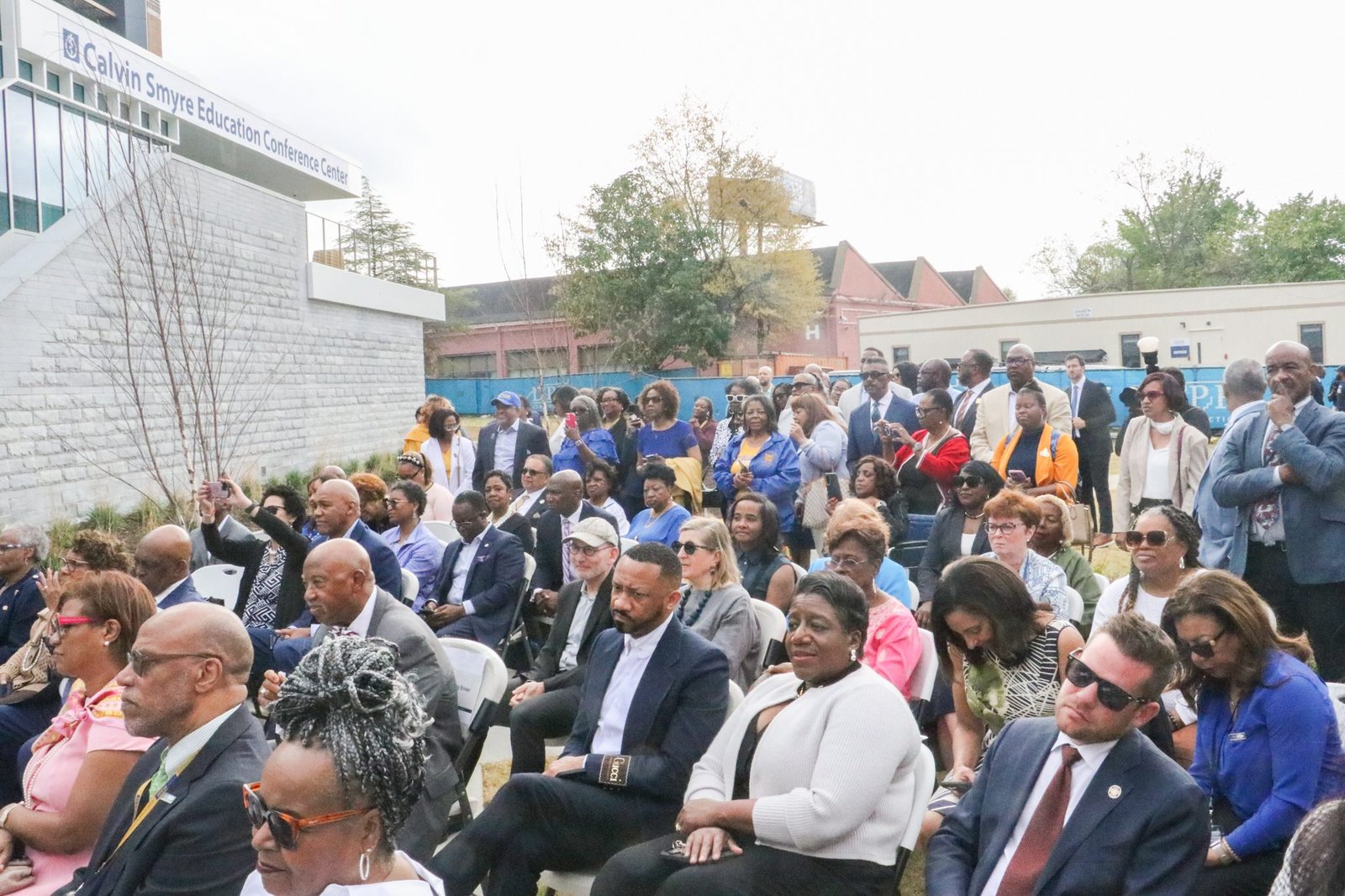
The longest-serving member of the Georgia House of Representatives, Calvin Smyre, received a lasting tribute to his decades of public service on Thursday, as Morehouse School of Medicine (MSM) dedicated a new education building in his name.

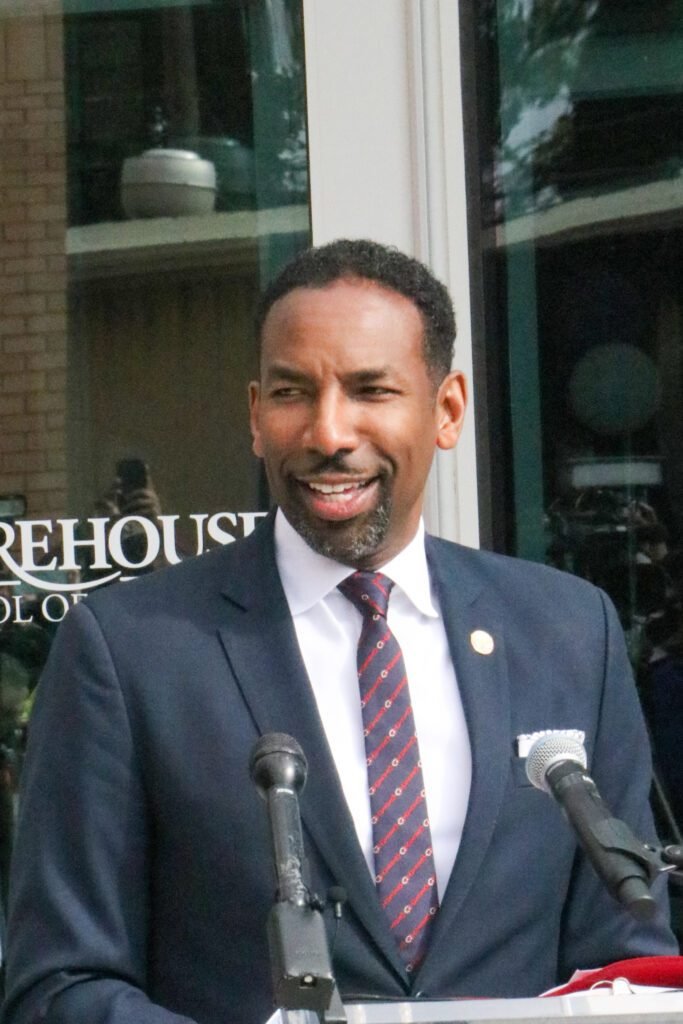
The ribbon-cutting ceremony for the Calvin Smyre Education Conference Center (CSECC) was led by Georgia Governor Brian Kemp and Atlanta Mayor Andre Dickens. The event marked a highlight in MSM’s 50th anniversary celebration at the Georgia State Capitol and symbolized the institution’s ongoing commitment to health equity and diversity.

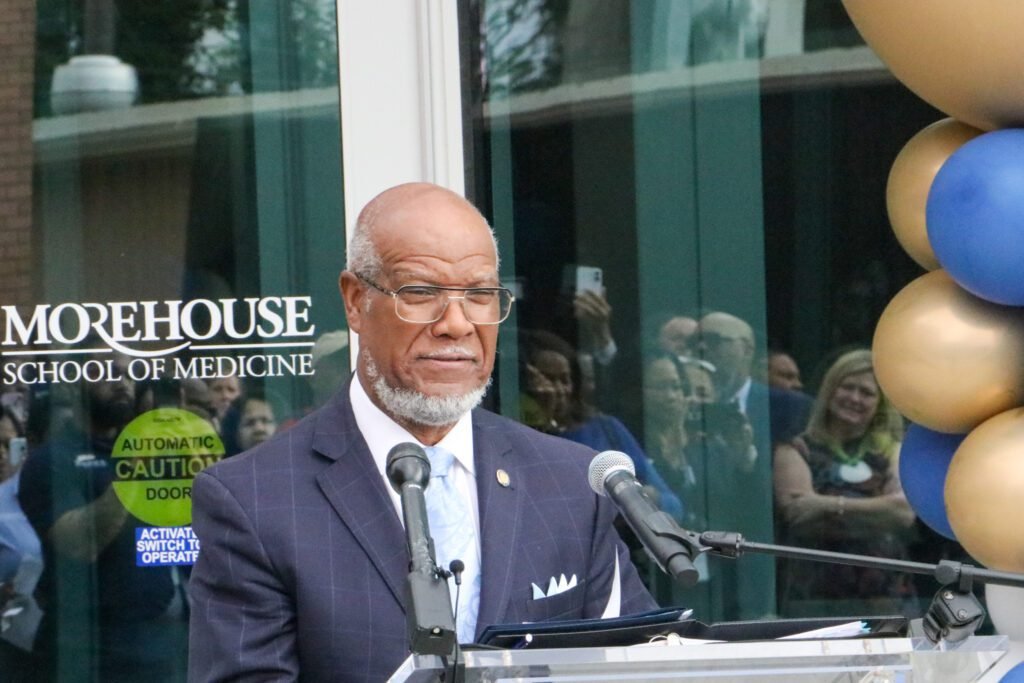
Photo by Milton Kirby Calvin Smyre

Smyre, a former state representative elected in 1974 and a key figure in Georgia politics, has long championed MSM since its inception. In his remarks, he recalled helping secure the institution’s initial $1 million in state funding, emphasizing the power of partnerships between government and education.

“This building is a permanent reminder of what vision, leadership, and dedication can achieve,” said Smyre, who also serves as Trustee Emeritus for the medical school and sits on several philanthropic and educational boards, including the Fort Valley State College Foundation and Piedmont HealthCare in Columbus.

Dr. Valerie Montgomery Rice, President and CEO of MSM, served as emcee for the celebration. “Health equity is not a political term,” she said. “It’s about giving people what they need, when they need it, and in the amount they need to reach their best health outcomes.”

The CSECC, located on MSM’s campus at 720 Westview Drive SW, features an auditorium, conference and event rooms, study areas, and state-of-the-art technology to support the school’s growing academic and community initiatives. The building is designed to be multifunctional, with spaces that can transition from lecture halls to fine dining areas and networking hubs.

Arthur R. Collins, Chairman of MSM’s Board of Trustees, reflected on Smyre’s legacy: “We are not just honoring a legacy, we are not just honoring a life, we are not just honoring his spirit, —we are investing in what comes next.”

The day’s events were a part of MSM’s broader 50th anniversary celebration. Founded to diversify Georgia’s healthcare workforce, MSM remains one of the nation’s only historically Black medical schools. Since becoming independent in 1981, the school has graduated over 3,300 students, nearly 60% of whom continue to serve in Georgia.

Photo by Milton Kirby Andre Dickens

With the support of lawmakers like Smyre, the school plans to expand its graduating class to 225 students in the coming years. Morehouse School of Medicine Dean Joseph Tyndall and several state legislators also praised MSM’s enduring impact during the ceremony.

As the nation debates diversity, equity, and inclusion policies, MSM leaders say the school’s mission remains unwavering. “Trust is the foundation of the patient-provider relationship,” said Montgomery Rice. “And diversity in healthcare strengthens that trust.”

For Calvin Smyre, the new center stands not only as a personal honor but as a beacon for future generations. His life’s work—from the Georgia House floor to the boardrooms of educational institutions—continues to shape Georgia’s legacy of leadership, service, and social justice.

Exit mobile version