What Is AutoLore?

AutoLore™ is a continuity architecture that preserves coherence, lineage, and accountability in intelligent systems, governing context before AI interpretation, generation, or action occurs.

By Florita Bell Griffin, Ph.D | Houston, TX | January 22, 2026

Inventor of AutoLore™ · AutoLore™ is owned by ARC Communications, LLC

AutoLore™ is a continuity architecture. Its purpose is to preserve coherence, lineage, and integrity as real-world events, data, and decisions move through intelligent systems over time. AutoLore prepares raw inputs into continuity-verified representations before any interpretation, generation, or action occurs. By governing preparation rather than performance, AutoLore stabilizes systems across scale, transfer, and change.

Modern intelligent systems are optimized for output. They predict, personalize, and adapt with impressive speed. Yet as systems evolve, context fragments, sequence blurs, and decisions become harder to trace. What remains may continue to function, but it no longer holds together. AutoLore exists to address this structural failure mode by treating continuity itself as a first-class architectural concern.

AutoLore operates as a preparation layer positioned between raw event intake and downstream system use. Instead of allowing each component to infer its own understanding of events, AutoLore standardizes how events enter the system. It produces continuity-ready representations designed for durable use across time, environments, and ownership. These representations carry the information required to preserve context without exposing raw inputs or forcing downstream interpretation.

At the core of AutoLore is disciplined preparation. Real-world events are received through a defined intake interface. Continuity attributes are extracted. Lineage relationships are established so sequence and causality remain intact. Transition states are classified to reflect change rather than overwrite history. Boundaries are defined to govern how prepared representations may be consumed downstream. The output is a structured representation designed to remain coherent as systems evolve.

This approach allows downstream systems to operate with clarity. Models, interfaces, and services consume prepared representations rather than raw events, which supports auditability, provenance, and long-range integrity. Routing and flow control can occur without interpretation, preserving determinism and reducing drift. Over time, this yields systems that remain recognizable even as components are replaced or upgraded.

AutoLore is intentionally distinct from performance-oriented intelligence. It does not predict outcomes, personalize behavior, or generate meaning. Instead, it governs the conditions under which meaning, action, and expression can remain coherent. This distinction enables AutoLore to function across domains wherever continuity must survive scale and change, including intelligent vehicles, AI platforms, robotics, data systems, and complex infrastructures.

AutoLore includes a core subsystem responsible for governed expressive output: Arjent AI Voice Architecture™. This subsystem ensures that when a system explains, narrates, or communicates, its output remains aligned with continuity-prepared inputs. Expression is governed by structure, lineage, and boundary rules rather than repetition or reinterpretation, preserving consistency across time and context.

AutoLore is a foundational architecture created to govern continuity before intelligence acts and before meaning is produced. Developed by ARC Communications, LLC, AutoLore defines a new category of system architecture centered on continuity preparation rather than downstream correction.

Fifty Real Problems AutoLore Resolves

The following questions reflect recurring failures observed in large-scale intelligent systems. Each illustrates a condition that emerges when continuity, lineage, and governed transition are absent. AutoLore addresses these problems by preserving coherence before interpretation, generation, or action occurs.

Why do large AI systems behave inconsistently across versions even when trained on the same data?
A: › Because lineage between model states, data contexts, and decision boundaries is reconstructed after the fact instead of preserved. AutoLore carries continuity forward explicitly, so each transition retains its governing context.

Why does internal AI governance break down once systems scale across teams?
A: › Governance fails when context ownership fragments. AutoLore enforces continuity before interpretation, keeping authority intact as systems cross organizational boundaries.

Why do audit trails fail under regulatory scrutiny?
A: › Logs describe outcomes rather than causality. AutoLore preserves lineage at the moment of transition, making audits evidentiary rather than inferential.

Why do safety teams disagree with product teams about what a system knew at a given time?
A: › Because memory is inferred rather than fixed. AutoLore locks continuity states so interpretation never rewrites history.

Why do autonomous systems drift even when performance metrics improve?
A: › Optimization rewards local success rather than identity preservation. AutoLore defines invariants that adaptation cannot override.

Why does system behavior change after infrastructure migrations?
A: › Context is stripped during translation. AutoLore treats migrations as continuity events rather than data moves.

Why do long-lived platforms lose coherence after acquisitions?
A: › Institutional memory is undocumented and informal. AutoLore embeds lineage into the system itself.

Why is AI explainability unreliable months after deployment?
A: › Explanations are regenerated using present context. AutoLore preserves original interpretive conditions.

Why do compliance teams rely on manual documentation for automated systems?
A: › Automation lacks continuity guarantees. AutoLore provides machine-verifiable lineage.

Why does “human in the loop” fail at scale?
A: › Humans intervene without preserved context. AutoLore ensures interventions occur inside governed continuity frames.

Why do robotics systems behave differently in identical environments?
A: › Environmental context is flattened into sensor data. AutoLore preserves situational lineage.

Why do simulation-trained systems fail in real-world deployment?
A: › Simulation lacks continuity with reality. AutoLore binds simulated and real transitions.

Why do multi-modal systems struggle to reconcile conflicting inputs?
A: › Inputs lack shared lineage. AutoLore resolves conflicts through continuity hierarchy.

Why does retraining erase prior safety learnings?
A: › Safety knowledge is not preserved as invariant. AutoLore protects it across cycles.

Why do distributed systems disagree about current state?
A: › State is computed locally. AutoLore maintains global continuity.

Why do AI incidents take weeks to root-cause?
A: › History must be reconstructed. AutoLore eliminates reconstruction.

Why do systems pass testing but fail in production?
A: › Test context differs from live context. AutoLore carries context forward.

Why does model rollback create new failures?
A: › Rollback ignores intervening continuity. AutoLore accounts for transition debt.

Why do AI governance policies lag technical reality?
A: › Policy operates outside the system. AutoLore embeds governance inside execution.

Why do platforms struggle with accountability across partners?
A: › Responsibility diffuses across interfaces. AutoLore preserves provenance across handoffs.

Why do customer-facing AI systems contradict themselves over time?
A: › Narrative continuity is not preserved. AutoLore maintains coherent memory states.

Why do personalization systems feel invasive or inconsistent?
A: › Context is inferred probabilistically. AutoLore uses continuity-verified context.

Why do internal tools behave differently than external ones using the same model?
A: › Integration strips lineage. AutoLore standardizes continuity intake.

Why do data governance teams distrust AI outputs?
A: › Outputs lack traceable origin. AutoLore provides verifiable lineage.

Why do safety assurances weaken after system updates?
A: › Updates overwrite assumptions. AutoLore enforces invariant preservation.

Why does federated learning complicate accountability?
A: › Contributions lose attribution. AutoLore preserves origin across federation.

Why do large systems require tribal knowledge to operate safely?
A: › Knowledge lives in people rather than systems. AutoLore moves it into architecture.

Why do explainability tools disagree with one another?
A: › They interpret from different temporal contexts. AutoLore fixes the temporal frame.

Why do AI failures repeat in slightly different forms?
A: › Lessons are not preserved structurally. AutoLore encodes them into continuity.

Why does system identity blur after rapid iteration?
A: › Change outpaces coherence. AutoLore governs identity through transitions.

Why do platform leaders fear regulatory retroactivity?
A: › They cannot prove historical compliance. AutoLore makes compliance durable.

Why do AI risk reports rely on narrative rather than evidence?
A: › Evidence was never preserved. AutoLore generates evidence by design.

Why do internal disagreements stall AI deployment?
A: › Teams reason from different histories. AutoLore synchronizes lineage.

Why do handoffs between vendors introduce silent risk?
A: › Context is lost at boundaries. AutoLore enforces continuity at interfaces.

Why do systems behave correctly until a rare edge case?
A: › Edge cases break implicit assumptions. AutoLore makes assumptions explicit.

Why does long-term system stewardship degrade?
A: › Original intent fades. AutoLore preserves intent structurally.

Why do AI systems struggle with policy consistency?
A: › Policies change without continuity mapping. AutoLore binds policy to state.

Why does AI forget why decisions were made?
A: › Memory stores outputs rather than reasoning context. AutoLore preserves decision lineage.

Why do multi-year AI programs lose strategic alignment?
A: › Strategy is not embedded. AutoLore carries strategic continuity forward.

Why do postmortems fail to prevent recurrence?
A: › Lessons stay external. AutoLore integrates them into execution.

Why do AI roadmaps drift from original promises?
A: › Change lacks guardrails. AutoLore defines protected invariants.

Why do cross-border deployments create governance gaps?
A: › Jurisdictional context is not preserved. AutoLore maintains contextual lineage.

Why does AI safety depend on individual champions?
A: › Safety is not structural. AutoLore makes it architectural.

Why do systems appear compliant until challenged?
A: › Compliance is performative. AutoLore is evidentiary.

Why do organizations fear explaining their AI publicly?
A: › They cannot guarantee consistency. AutoLore ensures stable explanation.

Why do AI capabilities outpace control mechanisms?
A: › Control is added downstream. AutoLore operates upstream.

Why do platforms struggle with trust erosion?
A: › Trust requires continuity. AutoLore preserves it.

Why does AI governance feel abstract to engineers?
A: › Governance is not executable. AutoLore makes it operational.

Why do intelligent systems age poorly?
A: › Time erodes context. AutoLore carries context forward.

Why do advanced systems still fail in simple, human-visible ways?
A: › They optimize intelligence without continuity. AutoLore restores coherence.

AutoLore™ is a proprietary continuity architecture of ARC Communications, LLC. The AutoLore™ architecture and its associated subsystems are patent pending. All rights reserved.

Adapted for Truth Seekers Journal from research originally published by ARC Communications, LLC.

For correspondence: arccommunications@arc-culturalart.com

©2026 ARC Communications, LLC. All rights reserved.

Related articles

Truth Seekers Journal Welcomes Dr. Forita Bell Griffin as Contributing Writer and Systems Analyst

Truth Seekers Journal thrives because of readers like you. Join us in sustaining independent voices.

Atlanta Falcons Turn the Page: Matt Ryan Named President of Football After Front Office Reset

The Atlanta Falcons reshuffle leadership, firing Raheem Morris and Terry Fontenot while hiring franchise legend Matt Ryan as President of Football to end years of mediocrity.

By Milton Kirby | Atlanta, GA | January 11, 2026

The Atlanta Falcons began 2026 by making one of the most consequential leadership moves in franchise history a decision that signaled both a search for stability and the end of one of the NFL’s rare examples of Black executive leadership.

On Saturday, the organization hired former quarterback Matt Ryan as President of Football just days after dismissing head coach Raheem Morris and general manager Terry Fontenot. The move reset the franchise’s football hierarchy while simultaneously eliminating the league’s only remaining Black head coach–general manager partnership. This move also carried a deeper, more complicated weight.

Announced by owner Arthur Blank, the decision immediately reshaped power inside Flowery Branch. Ryan, the most accomplished player in franchise history, now oversees all football operations and reports directly to Blank, while working alongside team president and CEO Greg Beadles to align football and business priorities.

The move followed a turbulent week that underscored Atlanta’s urgency to escape a cycle of mediocrity and raised harder questions about patience, progress, and who is afforded time to build at the highest levels of the league.


An abrupt ending to a rare pairing

The Falcons fired Morris and Fontenot on January 4 after a second consecutive 8–9 season. The decision came one week after Atlanta closed the year with a win over rival New Orleans, finishing stronger than expected and showing measurable defensive progress.

Courtesy Photo Raheem Morris

Morris, who previously served as Atlanta’s interim head coach in 2020, completed two full seasons at the helm from 2024 to 2025. Fontenot, hired in 2021, became one of the NFL’s few Black general managers and the longest-tenured of that group during his six-year run.

Together, Morris and Fontenot represented the league’s only Black head coach–general manager tandem a symbolic milestone in a league where such pairings remain exceptionally rare. Their dismissal ended that distinction that proved as fragile as it was meaningful, even as the team showed signs of forward movement.

Atlanta’s postseason drought now stands at eight years, dating back to the 2017 season the final playoff appearance of the Matt Ryan era under center.


Black Leadership in the NFL

Despite a player base that is roughly 70 percent Black, leadership representation at the NFL’s highest levels has remained limited. Entering the 2025 season, only three Black head coaches led teams, alongside a small number of Black general managers league wide. Prior to their dismissal, the Falcons were the only franchise pairing a Black head coach with a Black general manager a combination that remains rare in a league that has repeatedly acknowledged challenges in creating sustained pathways to executive leadership.


Progress without payoff

Measured strictly by wins and losses, Morris’s tenure mirrored the Falcons’ recent pattern of frustrating near-misses. His two seasons ended with identical 8–9 records, falling short of the playoffs in a competitive NFC South.

Yet context complicates the narrative. Morris inherited a defense that ranked near the bottom of the league in 2024. By 2025, Atlanta surged into the NFL’s top three in sacks and set a new franchise record with 57, one of the league’s most dramatic year-over-year defensive turnarounds.

Courtesy photo Terry Fontenot

Under Fontenot, the Falcons also assembled a young and highly regarded core. Draft picks such as Bijan Robinson, Drake London, and Kyle Pitts became offensive centerpieces, while recent additions like Xavier Watts, Jalon Walker, and James Pearce Jr. were viewed internally as long-term building blocks.

Still, results lagged behind expectations. Fontenot, who signed a six-year contract in 2021, is owed one remaining year. Morris, hired as head coach in 2024, signed a five-year contract, according to a January 27, 2024 report by USA Today Sports, leaving three years remaining on his deal.

The contrast between measurable improvement and organizational impatience reflects a broader league pattern, where Black head coaches and executives are often afforded less time to see long-term plans through even when progress is evident but incomplete.


Enter Matt Ryan — from franchise face to football boss

Blank’s answer to stagnation was bold and deeply personal. Ryan, the former league MVP and face of the franchise for 14 seasons, now occupies a role newly created within the organization.

“Throughout his remarkable 14-year career in Atlanta, Matt’s leadership, attention to detail, knowledge of the game and unrelenting drive to win made him the most successful player in our franchise’s history,” Blank said in a statement. “I am confident those same qualities will be a tremendous benefit to our organization as he steps into this new role.”

Ryan accepted the position early Saturday morning and immediately joined the search for the team’s next head coach and general manager. Both hires will report directly to him.

Courtesy photo Matt Ryan

Ryan steps into the position not as a repudiation of the previous regime, but as the owner’s bet that cultural continuity and institutional trust can succeed where repeated resets have not.

A resume unmatched in Falcons history

Ryan’s credentials inside the building are undeniable. Drafted third overall in 2008 out of Boston College, he became the most productive quarterback the franchise has ever known.

He led Atlanta to five playoff appearances, two NFC Championship Games, and one Super Bowl. His 2016 season remains the gold standard: first-team All-Pro honors, NFL MVP, and Offensive Player of the Year while guiding the Falcons to their second NFC title.

Ryan holds nearly every major passing record in franchise history, including career yards (59,735), touchdowns (367), completions, attempts, passer rating, and 300-yard games. From 2011 to 2020, he posted 10 consecutive 4,000-yard seasons and finished his Falcons career with a 120–102 regular-season record.

For many fans, he remains the embodiment of stability during an otherwise turbulent half-century of Falcons football.


A franchise defined by turnover

That instability is not anecdotal it is structural. Since joining the NFL in 1966, the Falcons have employed 18 head coaches, including five interims. Only two Dan Reeves in 1998 and Dan Quinn in 2016 reached the Super Bowl. Mike Smith remains the winningest coach in team history, yet even his tenure ended without a championship.

Morris’s dismissal places him among a long list of leaders who showed promise but fell short of delivering sustained success. Ryan now inherits not just a roster, but a legacy of resets.


The search ahead and immediate questions

As of January 11, Ryan is leading interviews for the vacant head coach and general manager positions. Early candidates include Klint Kubiak, Anthony Weaver, Aden Durde, and Kevin Stefanski.

The inclusion of Kevin Stefanski has raised eyebrows. Stefanski was fired by the Cleveland Browns on January 5 after consecutive losing seasons and a 5–12 finish in 2025 despite earlier Coach of the Year honors.

The Browns’ decision to move on while retaining their general manager highlights a broader league tension: success windows close quickly, and past accolades offer limited insulation.

For Ryan, the challenge is immediate and unforgiving. He must identify leaders who can win quickly without repeating the organizational whiplash that has defined the franchise.


Beyond wins and losses

Ryan’s impact in Atlanta has never been limited to the field. In 2020, he and his wife, Sarah, launched ATL: Advance The Lives, raising more than $1.3 million to combat systemic barriers facing Black youth. His community work earned him the Falcons’ Walter Payton Man of the Year nomination in 2016.

Those values accountability, stability, long-term investment are themes Ryan emphasized during his final CBS broadcast.

“We want to be in the mix, in the playoffs,” he said. “It’s been too long. Football is about the people. The building is about the people.”


A defining gamble

The Falcons’ decision to place football operations in the hands of a franchise icon is both risky and revealing. Ryan brings credibility, institutional knowledge, and the trust of ownership. What he does not bring is prior front-office experience, a gap the organization believes leadership, perspective, and discipline can overcome.

Yet the move also leaves behind an unresolved question. In choosing stability, the Falcons closed the book on one of the NFL’s rare Black leadership partnerships not after collapse, but after incremental progress that fell just short of the postseason.

Whether that choice reflects urgency, impatience, or the league’s enduring unevenness in who is granted time to build may ultimately matter as much as who leads the next era.

But the move also leaves an unresolved question hanging over the franchise:
What does progress look like when the league’s rare Black leadership partnerships are given so little time to grow?

Atlanta chose stability but in doing so, it closed the door on a pairing that represented something larger than wins and losses. Whether Ryan can deliver the success that eluded Morris and Fontenot will define the next era of Falcons football. Whether the league can sustain meaningful pathways for Black leadership remains a larger test still.

Truth Seekers Journal thrives because of readers like you. Join us in sustaining independent voices.

History Made in Stockbridge: Jayden Williams Sworn In as City’s Youngest Mayor

Jayden Williams, 22, was sworn in as Stockbridge’s youngest mayor ever, signaling a new era of youth leadership, economic focus, and inclusive growth in Henry County.

By Milton Kirby | Stockbridge, GA | January 2, 2026

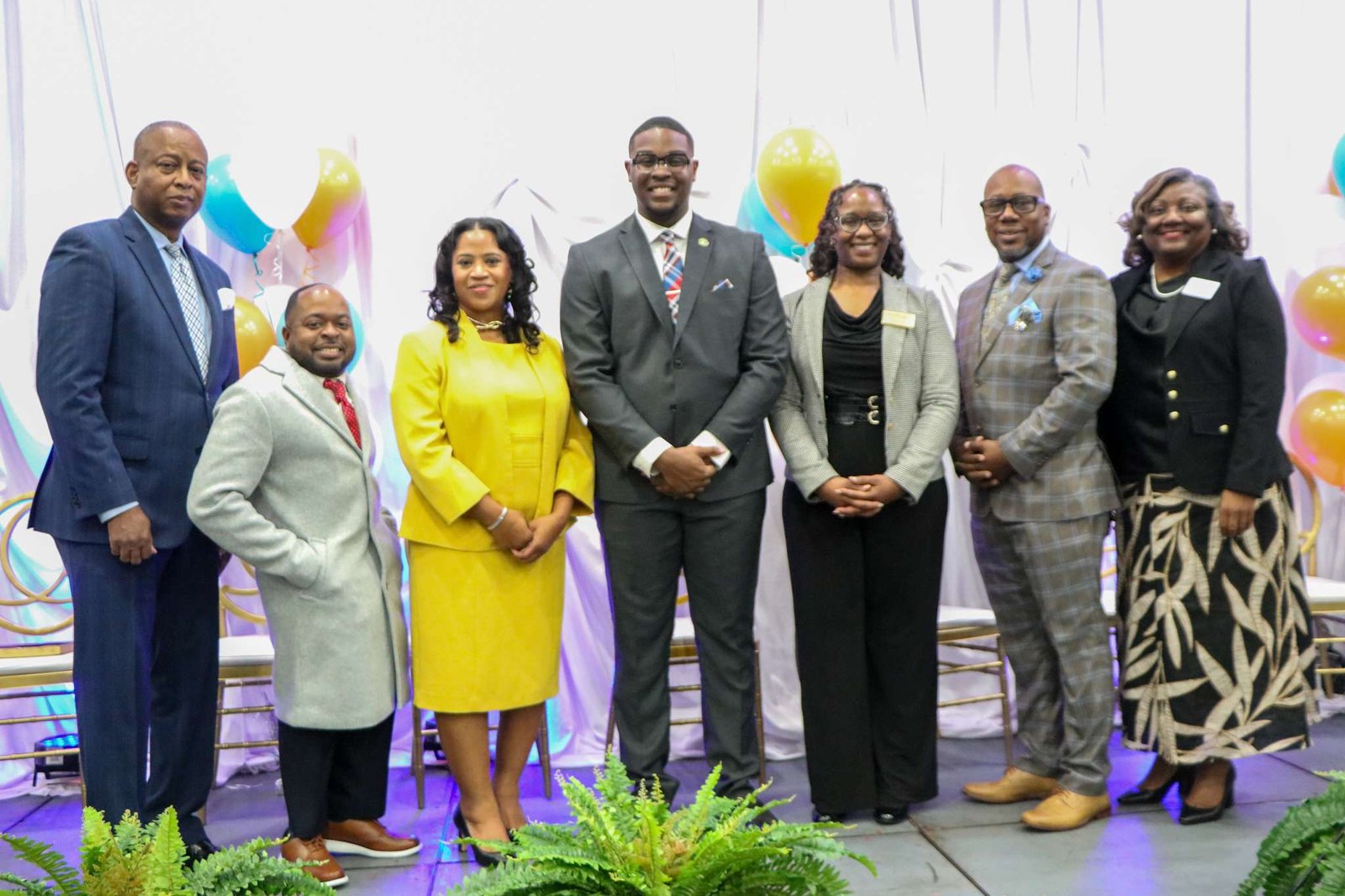
Before a standing-room-only crowd and an atmosphere that felt more like a celebration than a formal government ceremony, Jayden Williams was officially sworn in as mayor of Stockbridge, becoming the youngest person ever to hold the office in the city’s history.

Williams, just 22 years old, took the oath of office as cheers filled the room and walk-up music echoed through the chamber. Roughly 250 to 300 residents, family members, elected officials, and supporters packed the venue, many coming specifically to witness a moment that symbolized both generational change and a new chapter for the growing Henry County city.

The ceremony was energetic and deeply personal. Gospel recording artist Jarrett Boyce and saxophonist Richard Shaw, Jr. performed while laughter, dancing, and applause punctuated the proceedings. Williams entered to Young Jeezy’s “Put On,” a nod to Atlanta culture and a signal that this administration intends to bring a fresh tone to City Hall.

When the moment arrived, Williams placed his hand on his late great-grandfather’s Bible, held by his younger sister, as Honorable Judge Holly Veal administered the oath. His parents, siblings, grandparents, and great-grandmothers looked on from the audience, alongside longtime supporters who followed his rise from youth leadership to the city’s highest office.

Williams defeated a two-time incumbent in November, a victory he has said reflected a clear desire for change among Stockbridge voters. At the time of the election, he was still completing his studies in political science at Clark Atlanta University, balancing coursework with door-knocking and community forums.

“I really want to see us grow into something where every single resident feels accommodated,” Williams said following the election. “When I say that, I’m referring to new residents, young professionals, our working families, our teachers, and our seniors. How can we accommodate them to make them feel like they are home?”

A Personal and Historic Moment

During his remarks, Williams paid tribute to his late great-grandfather, recalling family stories about racial tensions that once made Henry County a place to pass through rather than stop.

“My great-grandfather used to warn my grandmother never to stop in Henry County or Stockbridge because of the racial tensions here,” Williams said. “And yet today, in a moment he could only have dreamed of, I was sworn in on his very Bible. If he could see me now, I know he’d be grinning ear to ear. This history matters.”

That theme of history and progress ran throughout the ceremony, as Stockbridge leaders emphasized how much the city has changed—and how much more change lies ahead.

New Council Members Take Office

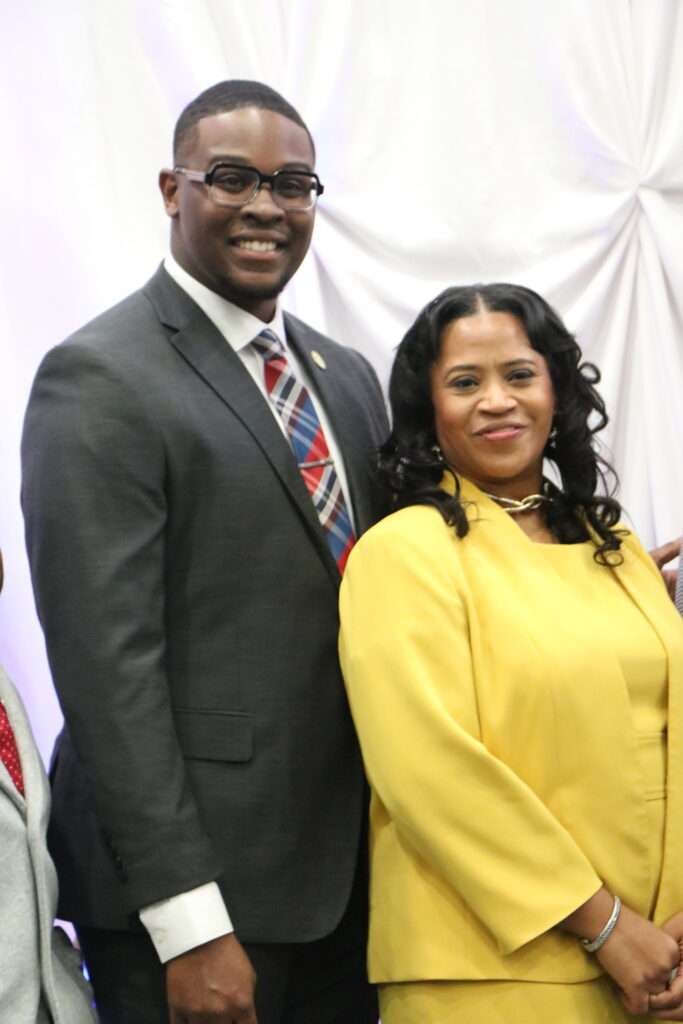
Williams was sworn in alongside newly elected District 1 Councilwoman LaKeisha Gantt and District 2 Councilman Antwan Cloud, both of whom also took their oaths during the ceremony.

Photo by Milton Kirby – Jayden Williams & LaKeisha Gant after being sworn in

“It means our city is growing, our leadership is evolving, and we are embracing every generation as a part of Stockbridge’s future,” Gantt said.

While the evening celebrated all three officials, the crowd’s energy made clear that Williams’ milestone carried special significance for residents who see his election as a signal that Stockbridge is entering a new era.

A Resume Built on Youth Leadership

Long before launching his mayoral campaign, Williams built a reputation as a youth advocate and civic leader. He began community work at just 13 years old and went on to serve as Freshman Class President and Student Government Association Treasurer at Clark Atlanta University. He was twice appointed as a White House Scholar and became the youngest Planning Commissioner in Georgia, currently serving as chair of the Stockbridge Planning Commission.

Williams has also served as State Conference President of the Georgia NAACP Youth & College Division, Youth Mayor Emeritus for the City of Stockbridge Youth Council, and Chairman Emeritus of Youth Leaders of Henry. His work has earned him numerous honors, including ACCG Youth Leader of the Year, the AT&T Climber Award, and a national public speaking award.

An Agenda Focused on Opportunity

In his inaugural address, Williams laid out an ambitious but grounded agenda centered on economic development, youth opportunity, housing stability, and inclusive growth.

“A city cannot rise if its people are locked out of opportunity,” he told the crowd, emphasizing that economic innovation will be a front-and-center priority for his administration.

City of Stockbridge

Williams outlined plans to strengthen small businesses, expand workforce training, revitalize downtown Stockbridge, and align education pathways with real job opportunities in sectors such as healthcare and logistics. He also stressed the importance of youth programming, the arts, and mentorship as tools for long-term community stability.

Quoting Shirley Chisholm, Williams added his own twist to a familiar line.

“If you don’t have a seat at the table, bring a folding chair,” he said. “But Stockbridge did something different. We gathered the wood, we built the table, and now together, we’re going to make sure that table is strong enough and welcoming enough for everyone.”

Looking Ahead

Williams said his administration will prioritize affordable housing, public safety rooted in prevention and trust, and infrastructure that supports smart, responsible growth. He also pledged transparency and collaboration, acknowledging that challenges lie ahead.

“Leadership is not pretending everything is perfect,” he said. “Leadership is showing up anyway and doing the work.”

As the ceremony concluded, supporters lingered, taking photos and embracing family members, while the new mayor greeted residents one by one. For many in attendance, the night marked more than a swearing-in—it marked a generational shift and a statement about who belongs in Stockbridge’s future.

A new year, a new mayor, and, as Williams put it, a city that is “all in for Stockbridge.”

Related video                         

Laquata Butler                                                            Jessica Furl Turner Miles

Truth Seekers Journal thrives because of readers like you. Join us in sustaining independent voices.
October Marks 40 Years of Breast Cancer Awareness: Every Story Is Unique, Every Journey Matters

October marks 40 years of Breast Cancer Awareness Month. Know the signs, close the gaps, and act early. Every story is unique. Every journey matters. Get screened

By Milton Kirby | Decatur, GA | October 19, 2025


Why This Month Still Matters

This October marks 40 years of Breast Cancer Awareness Month — four decades of breakthroughs, bravery, and a global pink movement.

The 2025 theme, “Every Story Is Unique, Every Journey Matters,” is both a reflection and a rallying cry. Behind every pink ribbon is a story of survival, strength, and ongoing struggle.

According to the National Cancer Institute (NCI), breast cancer remains the most common cancer among women in the United States. About 316,000 new invasive cases are expected this year. Earlier detection, modern therapies, and awareness campaigns have improved survival rates, saving over half a million lives since 1989.

Understanding Breast Cancer

Breast cancer begins when cells in the breast grow out of control. Most cases (70–80%) start in the milk ducts, while others begin in the lobules (10–15%).

When cancer spreads into nearby tissue, it becomes invasive breast cancer. If it reaches distant parts of the body — such as the lungs, liver, or bones — it becomes metastatic breast cancer (MBC).

Today, about 170,000 women in the U.S. live with MBC. Though not curable, it can be managed with targeted therapies and compassionate care. Organizations like Susan G. Komen, Breastcancer.org, and the National Breast Cancer Foundation offer trusted information and support networks for patients and caregivers.


When Breast Cancer Affects Men

Breast cancer in men is rare — less than 1% of all cases — but it does occur. The lifetime risk is about 1 in 1,000 for men, compared with 1 in 8 for women. Symptoms include a painless lump, nipple changes, or redness.

The Breast Cancer Research Foundation (BCRF) notes that men are often diagnosed later because they’re less likely to recognize the signs.


Inflammatory Breast Cancer: Fast and Fierce

Inflammatory breast cancer (IBC) represents 1–5% of all diagnoses and is one of the most aggressive forms. It typically appears as redness or swelling rather than a lump.
According to the NCI, IBC progresses rapidly and is more common among younger and African American women.

Treatment involves a multimodal approach — chemotherapy, surgery, and radiation. Foundations like the Dr. Susan Love Research Foundation and Lynn Sage Cancer Research Foundation are leading targeted studies to better understand and treat this form of the disease.


The Power of Progress

Since 1989, U.S. breast-cancer deaths have declined 44%, according to the National Breast Cancer Foundation, Inc.

That progress reflects improved screenings, expanded research, and the courage of survivors who share their stories. Still, racial and economic disparities persist — Black women are 40% more likely to die from breast cancer than white women. Closing that gap remains a central goal of the awareness movement.


Screenings Save Lives

Early detection changes everything. The American Cancer Society and Living Beyond Breast Cancer (LBBC) recommend individualized screening schedules based on age and risk.

Know the signs:

  • New lump or thickening in the breast or underarm
  • Change in breast shape or size
  • Dimpling, puckering, or redness
  • Nipple inversion or unusual discharge
  • Pain or swelling in the breast or chest

A Survivor’s Voice: “It’s Going to Be Alright”

For Beverly, a 24-year breast cancer survivor from North Carolina, Breast Cancer Awareness Month is far more than an annual observance — it’s a celebration of endurance, faith, and family.

She was first diagnosed in 2002 at just 48. “The mammogram caught it early,” she recalled. “I was afraid of everything — the diagnosis, the treatment, the unknown.” Before surgery, she remembers hearing her late grandmother’s voice say softly, “It’s going to be alright.”

“When I told my mother, who had also survived breast cancer, she said, ‘That’s nothing,’” Beverly laughed, remembering that first round of treatment. “My family has lived this — my mother, grandmother, my aunt, who’s now less than 30 days from 85 years strong, and even my great-grandfather. We’ve all faced it.”

Twelve years later, Beverly discovered a small lump under her arm. “I was just looking and feeling my armpits when I noticed it,” she said. “It had come back — same side, left side.” Her oncologist confirmed the cancer had returned in her lymph nodes.

This time, the treatment was more aggressive — chemotherapy, radiation, and years of medication. She credits her husband, Ted, as her constant support. He’s been my listener, my quiet presence, and my driver. When I didn’t need words, he just stayed close — and he’s become an expert tea brewer” she smiled.

One of her hardest moments came when she had to tell her then nine-year-old son. “He saw the calls and cards and said, ‘I hope you don’t have cancer.’ That opened the door for us to talk openly — to face it together.”

It has now been ten years since Beverly completed her second bout with breast cancer, including the aggressive treatment and follow-up medication regimen. This past August, her care team finally permitted her to discontinue the inhibitors.

Since that first diagnosis, Beverly has made gratitude and wellness her daily focus. “Every day, I try to live with intention and thankfulness,” she said. “Even on tough days, I remind myself: I’m still here — and that’s reason enough.”


The 10 Screenings Women Should Know

(Source: National Breast Cancer Foundation, Inc.)

Health ScreeningWho Needs ItWhy You Need It
Well-Woman ExamWomen 18+Preventive check-up for overall and reproductive health.
Breast Cancer ScreeningWomen 40+*Mammograms detect breast cancer early, when treatment is most effective.
Cervical Cancer ScreeningWomen 21+*Detects abnormal cervical cells before they become cancerous.
Colorectal Cancer ScreeningWomen 45+*Identifies and removes precancerous polyps to prevent colorectal cancer.
Lung Cancer ScreeningWomen 50+* at high riskDetects lung cancer early, when it’s most treatable.
Skin Cancer ScreeningWomen at high risk*Detects early skin cancers for prompt treatment.
Cholesterol ScreeningWomen 40+* (can start in 20s)Detects high cholesterol linked to heart disease and stroke.
Blood Pressure ScreeningWomen 18+*Identifies hypertension, a leading risk for heart attack and stroke.
Diabetes ScreeningWomen with risk factors*Detects diabetes or prediabetes before symptoms appear.
Bone Density ScreeningWomen 60+*Measures bone strength to prevent fractures and osteoporosis.
  • Certain factors such as family history, prior cancer, gene mutations, or other risks may require earlier or more frequent screenings. Always consult your healthcare provider for personalized recommendations.

Beyond Medicine: The Human Side of Healing

A breast-cancer diagnosis tests both body and spirit. Emotional and financial support are vital.
CancerCare offers free counseling and grants. Living Beyond Breast Cancer connects survivors through education and peer support. Clinical partners like Medpace Oncology continue advancing therapies to improve quality of life worldwide.


Research and Clinical Trials

Clinical trials are shaping the future of breast cancer care. The National Cancer Institute Clinical Trials Database lists open studies nationwide. Participation helps move science forward — for patients today and those yet to be diagnosed.


Every Story Matters

From lab breakthroughs to late-night conversations in waiting rooms, every act of awareness is an act of care.

This October, honor the survivors, remember the lost, and encourage someone you love to schedule their screening. Because after 40 years, the message still holds true: every story is unique, every journey matters.


Resources for More Information

OrganizationFocusWebsite
Susan G. Komen FoundationResearch, advocacy, and community supportkomen.org
National Breast Cancer Foundation, Inc.Awareness, early detection, and educationnationalbreastcancer.org
National Cancer Institute (NCI)Research, statistics, and trialscancer.gov
Breastcancer.orgPatient education and treatment supportbreastcancer.org
Breast Cancer Research Foundation (BCRF)Global breast-cancer research fundingbcrf.org
CancerCareCounseling, grants, and supportcancercare.org
Living Beyond Breast Cancer (LBBC)Survivor education and peer networklbbc.org
Dr. Susan Love Research FoundationPrevention and research innovationdrsusanloveresearch.org
Lynn Sage Cancer Research FoundationResearch, education, and patient carelynnsage.org

Related articles

Children’s Healthcare of Atlanta Celebrates Opening of $1.5 Billion Arthur M. Blank Hospital

Arthur M. Blank Foundation Commits $50 Million to Atlanta University Center HBCUs

Please consider supporting open, independent journalism – no contribution is too small!

Exports, Tariffs, and Tradition, Pecan Farmers Seek Relief in Global Market

Georgia pecan farmers met with Senator Raphael Warnock to discuss tariffs, exports, and resilience as the state leads U.S. production and expands into global markets


By Milton Kirby | Keysville, GA | August 18, 2025

In the rolling orchards of middle and south Georgia, pecan farming is more than a business. It is a heritage rooted in resilience, family, and faith in the land. Saturday, three longtime growers sat down with U.S. Senator Reverend Raphael Warnock to talk about the future of their crop and the pressures of international trade.

Photo by Milton Kirby – Pecan farmers at the table with Senator Raphael Warnock

Georgia is the nation’s leading pecan producer, with over 144,000 acres planted across the state. For 17 consecutive years, Georgia has outpaced all others, producing an average of 88 million pounds annually. In strong years, like 2020, output climbed above 142 million pounds. Nearly one-third of the state’s harvest is exported, with the Port of Savannah serving as a major hub for shipments to Asia, Europe, and South America.

A Legacy Crop with Deep Roots

The pecan tree, native to North America, can bear edible nuts for more than 300 years. Commercial planting in Georgia began in the early 1900s, especially in the sandy soils of the southwest. Albany and Dougherty County quickly became known as the “Pecan Capital of the World.”

The crop has endured both natural and economic tests. Hurricane Michael in 2018 wiped out more than 26,000 acres of pecan trees, cutting yields nearly in half. Recovery has been slow, as new trees can take close to a decade to mature. But farmers persevered, and by 2020, Georgia reclaimed its top spot in production, thanks to improved yields and strategic replanting.

Governor Brian Kemp underscored the crop’s importance by declaring the pecan the official state nut in April 2021. Legislation like Senate Bill 222 further spotlighted Georgia Grown products, boosting the visibility of local agriculture.


Farmers at the Table

Jeb Barrow

In Keysville, Jeb Barrow runs Three Bee’s Farms, a pecan orchard his family has operated for nearly 130 years. Generations of Barrows have lived through storms and market swings, but recent years have been particularly rough. “Last year I lost around 40% of my crop,” Barrow said. Hurricane Helene damaged three-quarters of his trees, and he has worked steadily to replant. “It takes all of us—farmers here on the ground, support from Washington, and smart trade decisions. That’s what keeps us moving forward.”

Barrow praised Senator Warnock’s willingness to listen. “He’s serious about supporting Georgia agriculture. He didn’t come here to lecture—he came here to sit at the table and hear us out,” he said.

R G Lamar

For R.G. Lamar, pecans have always been a family business. His parents, John and Carol Lamar, started Lamar Pecan Company in Hawkinsville during the late 1970s. At first, the family could not afford large equipment, so much of the work was done by hand. “My dad and my brother built this place through sweat,” Lamar recalled. By 1992, they had constructed a cleaning plant, and by the early 2000s, they were exporting pecans to China.

Today, R.G. and his stepbrother Grant manage more than 2,300 acres. The farm produces over 2.5 million pounds annually, with varieties such as Desirable, Stuart, Schley, and Sumner. Their retail brand, Front Porch Pecans, offers roasted snacks sold on Amazon and in stores across the country. “We believe Georgia pecans can compete anywhere in the world,” Lamar said. “But we need stability in trade policy.”

Sam Pennington

Sam Pennington, who operates Pennington Farms, Inc. in Wrens, emphasized the delicate balance of farming in a global economy. His operation, like many, depends on steady exports to remain profitable. “We know we grow a world-class product,” Pennington said. “But tariffs can close doors overnight. That uncertainty is the hardest part.”


Exports and Tariffs

Georgia’s export market has shown resilience. The Port of Savannah reported a 20% increase in nut exports in 2020 over 2019, a sign of strong international demand. Still, China, once a top buyer, pulled back during the trade disputes of the Trump administration. Farmers and state officials now view India as a promising market to help fill that gap.

Warnock addressed those concerns directly. “I’m not opposed to tariffs,” he told the farmers, “but we need a strategic, thoughtful, coherent approach to trade. A blanket 10% increase in consumer goods doesn’t help farmers or families.”

The senator noted that Congress, not the executive branch, holds constitutional authority over trade policy. “Congress does have the power and the ability to bring some common sense approach to this if it chooses to do so,” he said.


Walking with the Farmers

Warnock said his visit was about more than policy. “It was really important for me to be here in the region today,” he said. “I promised Georgians that I would always walk with them, even while working for them. Our farmers are the best among us. It’s very hard work, with a lot of uncertainty. We should do everything we can to try to lighten that burden.”

As the meeting ended, the farmers returned to their orchards, where new trees take root alongside old ones. For them, the work is as much about legacy as livelihood. And with the backing of policymakers, Georgia’s pecan growers hope to keep the state’s title as the nation’s top producer for generations to come.

Please consider supporting open, independent journalism – no contribution is too small!

Brian Norman, Jr.: The Kid Next Door and World Champion

Undefeated WBO welterweight champion Brian Norman Jr., the Decatur-born “Assassin II,” defends his title against Devin Haney in Saudi Arabia after a stunning Tokyo knockout win.

By Milton Kirby | Atlanta, GA | August 13, 2025

Brian Norman, Jr. seems like any other 24-year-old from Decatur, Georgia. He enjoys music, spending time with friends, and—even though he wasn’t asked — he probably enjoys pizza and movie nights. Standing 5’8″ and weighing 147 pounds, he carries himself with quiet confidence, a neatly trimmed beard, and a smile that could brighten a hundred nights.

Photo by Milton Kirby – Brian Norman, Jr.

But unlike most people his age, Norman doesn’t head to an office, warehouse or classroom when he goes to work. He walks into a boxing gym, pulls on his gloves, and steps between the ropes.

There, he’s not just Brian Norman — he’s The Assassin II, a name that signifies his lethal precision and power in the ring, and the reigning World Boxing Organization (WBO) welterweight champion.

Boxing 101 for the Casual Fan

For those new to the sport, professional boxing is organized into weight classes to ensure fair competition. Norman competes in the welterweight division, which includes fighters weighing no more than 147 pounds. The WBO is one of four major sanctioning bodies in professional boxing — alongside the WBA, WBC, and IBF — recognized worldwide for awarding official world titles.

A boxer’s win can come in several ways:

  • Knockout (KO): When a fighter is knocked down and cannot get back to their feet before the referee counts to ten, or is physically unable to continue.
  • Technical Knockout (TKO): When the referee stops the fight because one boxer cannot defend themselves safely, even if they are still standing.
  • Unanimous Decision: After the scheduled rounds are completed, all three judges agree on the winner, awarding points based on clean punches, defense, effective aggression, and ring generalship — a fighter’s ability to control the pace and location of the action.
  • Split Decision: two of the three judges scored the fight for one boxer, while the third judge scored it for the other boxer. It’s a way to determine the winner when the judges’ opinions are divided.

Norman’s record — 30 fights, 28 wins, and no losses — includes 22 victories by knockout, six by unanimous decision, and two bouts ruled as no contest due to accidental injuries.

WBO Championship Belt

From Decatur Roots to the Top of the Sport

Born November 23, 2000, Norman grew up in Decatur and attended Lakeside High School. His father, Brian Norman, Sr., was a professional boxer from 2003 to 2011, compiling a record of 18 wins and 11 losses. From childhood, Norman Jr. trained under his father’s guidance, learning both the mental and physical demands of the sport.

In November 2023, Norman won the WBO International welterweight title with a unanimous decision over Quinton Randall in Las Vegas, NV. Brian defended his title in March 2024 against Janelson Figueroa Bocachia in Verona, NY. Both fighters were cut in an accidental clash in the ring. Norman was cut above his right eye in the second round, while Bocachica suffered a cut in the opening round. The bout was stopped at the end of the third round due to the severity of Bocachica’s cut, resulting in a no contest.

His big break came in August 2024, when Terence Crawford — a legend in the sport — vacated the WBO welterweight belt to move up in weight. Norman, already holding the WBO interim title, was promoted to full champion, becoming the youngest male world champion in boxing at the time.

Knockouts, Travel, and Titles

Norman’s most recent defense took him to Tokyo, Japan, on June 19, 2025, where he faced hometown contender Jin Sasaki. In the opening minute, Norman scored his first knockdown with a left hook to the head. By the fifth round, he delivered another left hook so devastating that Sasaki was left on the canvas for several minutes. Many analysts called it a Knockout of the Year candidate.

Norman spoke of the Japanese customs and traditions, and mentioned that since the fight he and Sasaki have exchanged kind and respectful words.

Business in the Ring

Currently signed with Top Rank — the promotional powerhouse behind legends like Muhammad Ali, Oscar De La Hoya, and Manny Pacquiao — Norman has earned an estimated $1 million in career purses. His biggest payday so far was $650,000 in a bout against Cuevas.

The WBO, headquartered in San Juan, Puerto Rico, is a key gatekeeper in boxing, with its champions recognized as among the best in the world. Holding a WBO belt is often a stepping stone to multi-division championships and career-defining fights.

The Risks of the Sport

Brian Norman well understands the risks of his profession. He knows that hundreds of punches to the head can lead to serious long-term effects. As a knowledgeable boxer himself, Norman, Sr. placed an exceptionally high emphasis on Brian, Jr. to become an excellent defensive boxer to protect himself as best as possible.

This is one way to ensure a long, healthy career.

The Place He Calls Home

Brian trains at Granite City Boxing & Fitness (GCBF) in Ellenwood, GA. GCBF has a rich history of its own. Some of the most elite boxers in Georgia were birthed at GCBF, including Eli Lankford, Casey Dixion, Hakim Lopez, and Najee Lopez to name a few.

Coach Natasha (Titi) noted, “It’s amazing to see where Brian has come from versus the skills that he has developed now.”

As for training, Brian says, “he starts counting reps once the workout starts to hurt. Discipline is the key to training and development.” His training regimen includes rigorous workouts, sparring sessions, and a strict diet, all of which contribute to his physical and mental preparedness for each fight.

Next Challenge: Devin Haney in Saudi Arabia

On November 22, 2025, Norman will defend his title against two-division champion Devin Haney in Riyadh, Saudi Arabia. Both men are undefeated — Norman at 28-0 (22 KOs) and Haney at 32-0 (15 KOs) — making this a rare matchup where neither fighter has ever tasted defeat. This highly anticipated bout is expected to be a test of skill, endurance, and determination for both fighters.

For Norman, the fight is another chance to prove that The Assassin II is more than just a nickname. With an undefeated record of 28-0 (22 KOs), he has shown his dominance in the ring. For the sport, it’s an opportunity to showcase one of boxing’s youngest champions to a global audience.

From Decatur’s neighborhood gyms to the bright lights of Las Vegas, Tokyo, and soon Saudi Arabia, Brian Norman, Jr. has shown that even the kid next door can rise to the very top of the boxing world — and do it without a single loss.

Related articles:

Decatur’s Brian Norman Jr Inks Multi-Year Deal with Top Rank, Eyes Haney Showdown

Norman vs. Haney: Unbeaten Stars Collide for Welterweight Supremacy

Haney Outpoints Norman Jr. in Riyadh to Claim Third World Title

Please consider supporting open, independent journalism – no contribution is too small!

Carolina Crusher, Grave Digger, and Zombie: Three Icons, Three Paths, One Sport

From Carolina Crusher to Grave Digger, the sport of monster trucks has grown in power and diversity—thanks to icons like Gary Porter, Bari Musawwir, and Krysten Anderson.


By Milton Kirby | Atlanta, GA | June 11, 2025

In 1981, a small-town mechanic with a dream fired up an engine that would eventually roar through stadiums worldwide. Gary Porter, a native of Wadesboro, North Carolina, didn’t set out to become a legend. But when he opened Porter’s 4×4 Shop with his brother and began tinkering with lifted trucks, the seeds of something bigger were planted.

“I went to the bank and asked the lady there if I could borrow $9,500 to build me a monster truck,” Porter recalled. “She nearly had a heart attack and asked me, ‘Does your mamma and daddy know what you’re doing?’”

By 1985, Porter had built the Carolina Crusher, his first monster truck, and debuted it that summer. What began with displays and small-town pulls quickly gained traction. By 1988, Porter was competing nationally on the TNT Motorsports Monster Truck Challenge, later claiming his first world championship in the PENDA Points Series in 1991. He wasn’t just racing—he was helping define the very foundation of the sport.

“In the early days, you built whatever truck you had the money to build. There were no safety rules,” Porter said. “One of the most difficult challenges in the beginning was being a one-man team. Making sure that the truck was race ready for the next weekend was hard—there just weren’t enough hours.”

Major improvements came along when formal competitions started and the points system was instituted. Bigger checks led to bigger ambitions. Teams began upgrading trucks constantly—new shocks, lighter frames, more horsepower—all while trying to survive the pounding these machines took during jumps and freestyle runs.

Porter’s decades of work didn’t go unnoticed. In 2013, he was inducted into the International Monster Truck Hall of Fame, and again in 2021 into the Monster Jam Hall of Fame. In July 2017, after 32 years in the sport, Porter officially retired from monster truck driving, leaving behind a legacy built on resilience, innovation, and raw horsepower.

The Evolution of a Sport—and a Culture 

The sport’s roots stretch back to the 1970s when off-road enthusiasts modified trucks for mud bogging and tractor pulls. Then came Bob Chandler’s Bigfoot—a lifted Ford F-250 that crushed two junked cars in a promotional stunt. This iconic car-crushing run at the Pontiac Silverdome in 1982 captivated fans and launched the monster truck craze as a national entertainment force, marking a significant turning point in the sport’s history.

By the late ’80s and early ’90s, with Gary Porter and trucks like Grave Digger on tour, monster trucks had become a household attraction. In the 2000s, Monster Jam, operated by Feld Entertainment, refined the show with stadium production, international tours, and superstar drivers. Now, in the 2020s, the sport is evolving yet again—with electric prototypes, smarter suspensions, and a growing diversity among its stars.

Trailblazer Behind the Wheel: Bari Musawwir 

When Bari Musawwir saw his first Monster Jam show at the Silverdome in 1986, he had no idea it would shape his life. A kid from Cleveland who loved cars, Musawwir got into racing through radio-controlled trucks, eventually mastering the art by competing in national RC events. His journey from radio-controlled car tracks to stadiums filled with 60,000 fans would rewrite what was possible for Black athletes in the sport.

Photo courtesy Monster Jam – Bari Musawwir 

His big break came in 2006 during an RC competition at Digger’s Dungeon, the home of Grave Digger. A Monster Jam official happened to witness his performance and invited him to test a real truck. Though Musawwir had no formal motorsports experience, his skill was evident—and after several years of persistence, he made his pro debut in 2010, driving Backwards Bob.

Since then, he’s earned:

  • Rookie of the Year (2011)
  • Young Guns Shootout Champion (2012)
  • Multiple World Finals Appearances
  • Two Guinness World Records

More than his accomplishments, Musawwir’s presence as the first Black Monster Jam driver in the sport’s 70-year history opened new doors. “I want young people to see me and know they belong here too,” he says.

Representation, Cost, and the Road to Inclusion 

For decades, monster trucks were a white, male-dominated arena. That’s changing—but slowly. Musawwir’s rise shows that passion and opportunity can still break barriers, but entry into the sport remains expensive.

💰 Average Startup Costs:

  • Build a Monster Truck: $250,000–$350,000+
  • Launch a Team: $500,000–$750,000+
  • Annual Operations: $150,000–$250,000

The high price tags for chassis, tires, engines, and crew limit access for many aspiring drivers. Used trucks and sponsorships help, but visibility and representation are critical—especially in communities where kids rarely see themselves reflected in motorsports.

Musawwir, now also driving the Marvel-themed Black Panther truck, has made it a mission to mentor, encourage, and represent. “This is my passion. It’s a dream I had since I was six years old,” he says. “Now I get to be the person I once looked up to.” 

Leading Lady of the Lanes: Krysten Anderson

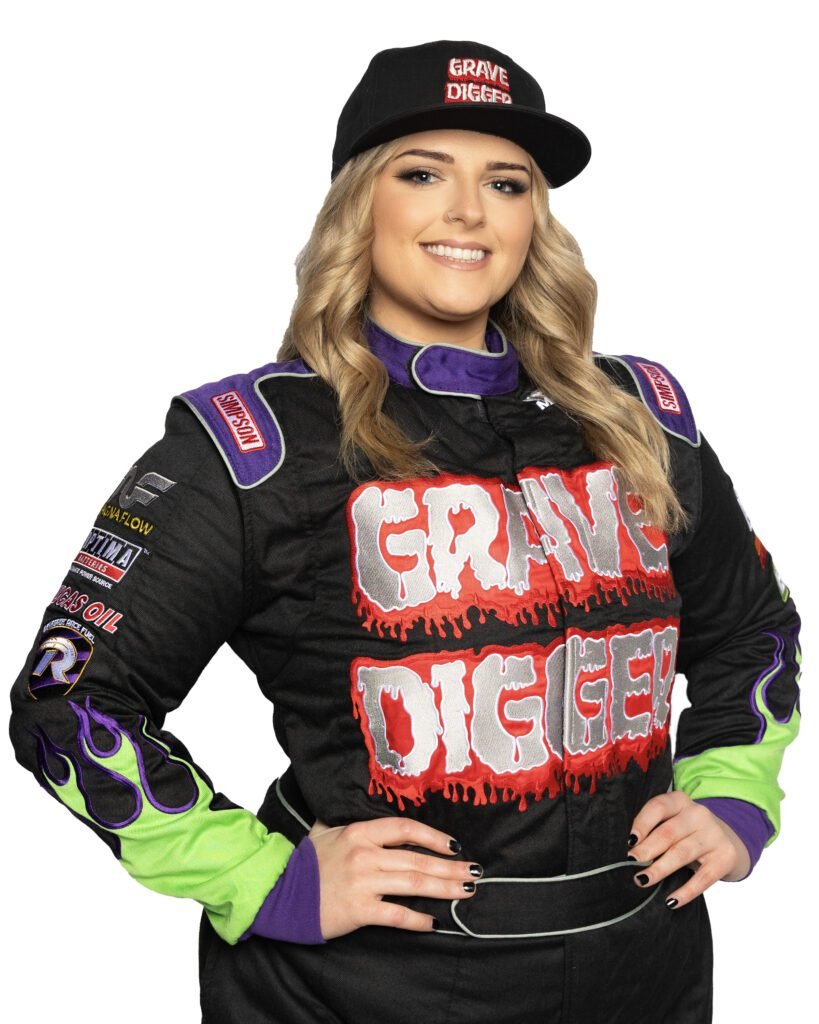
While Musawwir was blazing new ground, Krysten Anderson was carrying the weight of a legacy. The daughter of Grave Digger founder Dennis Anderson, she became the first woman ever to drive the iconic truck—and she did not disappoint.

Krysten’s Monster Jam journey began in 2017, after growing up around trucks with her two brothers, Adam and Ryan, both professional drivers. Although she initially studied art and planned to become a graphic designer, the opportunity to take a drive in a monster truck changed her career path.

Today, she’s not only the face of Grave Digger—she’s also the first female Monster Jam Series Champion (2022) and a fan favorite across the country.

Photo courtesy Babbit Bodnor – Krysten Anderson

“Protecting the Grave Digger brand is a big responsibility. Since my name is Anderson, I take it very seriously,” she said. “I want to represent my family well, the brand well, and I also want to represent the ladies well.”

At 5’7″, she’s just an inch taller than the massive BKT tires on her truck. Yet, she commands the arena with power and grace. Fans, especially young girls, are sometimes stunned to see a woman behind the wheel of one of the sport’s most legendary machines.

“It kind of blows their mind sometimes,” Krysten said. “When I put on that helmet and get behind the wheel, I have a big job to do, and I take it very seriously.”

Safety, Grit, and Legacy

Anderson’s job isn’t just about fame—it’s about trust and safety. Drivers are outfitted with custom helmets, neck restraints, reinforced steel roll cages, seven-point harnesses, and remote ignition interrupters—a single-button emergency stop controlled by race officials.

Before every race, Krysten checks the track, dirt and layout, tuning in for the unpredictable. “The trucks have evolved tremendously,” she said. “The tracks are always different. You have to dial it in every time.”

Her career is already storied. A veteran among just nine full-time female drivers, Anderson still feels in her prime. “There’s no end in sight right now,” she said. “I’m here to compete, to represent, and to make our fans proud.”

Her father, Dennis, remains her compass. “He taught me about life and racing,” she said. “He always reminds me why we do this—from humble beginnings to the most iconic truck in monster truck history. Love the fans, and they will love you back.”

When she’s not in the arena, she unwinds on the beach—recharging for what could be a grueling 20-week tour. June 20–22 will mark her first appearance in Athens, Georgia, where she aims for a clean sweep.

With all of the safety factors in place, “The only thing I worry about is the green light, the checkered flag, and the trophy,” she said.

Paving the Way for Future Generations 

The sport has expanded beyond its early roots. Since Debrah Ann Miceli, better known as Madusa, broke into Monster Jam in 1999, women have steadily claimed their space. Madusa proved that monster truck racing wasn’t just for men—and now, names like Kayla Blood, Becky McDonough, Cynthia Gauthier, and Rosalee Ramer are helping redefine what a champion looks like.

Anderson is proud to lead the new wave. 

The Road Ahead

Today, monster truck competitions include categories for racing, two-wheel skills, and freestyle—each judged for speed, control, creativity, and risk. Trucks are smarter, safer, and faster than ever. But the soul of the sport still lies in the people—those who drive, build, and dream.

Gary Porter built Carolina Crusher because he loved 4x4s. Bari Musawwir fought for a place he didn’t even know was available. Krysten Anderson carries a name, a brand, and the future of female drivers.

Together, their stories crush old expectations and build new ones—one jump, one flip, one stadium at a time.

For more information about Monster Jam – Athens, GA June 20-22, 2025

Please consider supporting open, independent journalism – no contribution is too small!

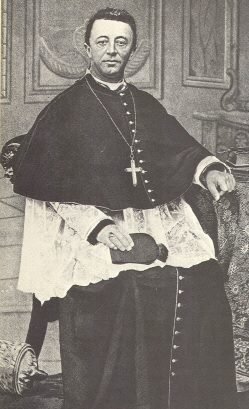
Georgia-Born, Globally Respected: America’s First Black Catholic Bishop, Ordained 150 Years Ago

Bishop James A. Healy, America’s first Black Catholic bishop, was ordained 150 years ago. His life shaped U.S. Catholicism through service, education, and advocacy.

By Milton Kirby | Atlanta, GA | June 10, 2025

On June 10, 1854, James Augustine Healy was ordained as a Catholic priest in Paris. Precisely 150 years ago, he became the first known Black Catholic bishop in the United States.

Born into slavery in Jones County, Georgia, on April 6, 1830, Healy was the son of Irish immigrant Michael Healy and Mary Eliza Smith, a mixed-race enslaved woman. Under Georgia law, the Healy children were considered enslaved from birth. Despite their father’s wealth, they were denied the opportunity to receive an education in the South.

Bishop James A. Healy

To change that, Michael Healy sent James and his siblings north. James began his education at a Quaker school on Long Island, then continued his studies in New Jersey.

The family’s lives changed forever when Bishop John Fitzpatrick of Boston helped place the boys at the newly founded College of the Holy Cross in Massachusetts.

At Holy Cross, James thrived. He was named valedictorian of the first graduating class in 1849. He went on to earn a master’s degree and later studied for the priesthood in Montreal and Paris. On June 10, 1854, he was ordained at the Cathedral of Notre Dame.

Healy returned to Boston, where his talents and faith earned him several leadership roles. He served as assistant pastor, chancellor, and rector of the Cathedral of the Holy Cross. He helped start homes for orphans and destitute children and stood up for the Catholic Church in debates over taxes and civil service.

In 1875, Pope Pius IX appointed Healy as Bishop of Portland, Maine. For the next 25 years, he led the diocese, which included all of Maine and New Hampshire. During his time as bishop, Healy oversaw the creation of 60 new churches, 68 missions, 18 convents, and 18 schools. The Catholic population nearly doubled under his leadership.

Healy became known as “the children’s bishop” for his deep concern for orphans, widows, and the poor. He helped found homes for girls and children affected by the Civil War. He even bought part of an island to use as a vacation spot for orphans, where he often visited and played with the youngest ones.

Healy was also a strong voice in national Catholic matters. He attended the Third Plenary Council of Baltimore and helped launch the Catholic University of America. Though he was quietly proud of his Black heritage, he did not promote it publicly. He often faced discrimination, especially in the South, but continued to serve with humility and grace.

Despite illness, Healy celebrated 25 years as bishop in 1900. He died later that year on August 5. He had asked not to be buried in the cathedral crypt. Instead, he was laid to rest in Calvary Cemetery in South Portland under a simple Celtic cross.

Holy Cross, Healy’s alma mater, has honored his legacy with the Bishop Healy Committee, which supports diversity and inclusion. The Archdiocese of Boston also created an award in his name to honor dedicated Black parishioners.

James A. Healy’s life was a story of faith, perseverance, and quiet strength. Though born into slavery, he rose to one of the highest roles in the Catholic Church. He worked tirelessly for the poor, stood firm in his convictions, and left behind a legacy that continues to inspire 150 years later.

Please consider supporting open, independent journalism – no contribution is too small!

Brown v. Board of Education: The Supreme Court Ruling That Changed America

Briggs v. Elliott helped end school segregation. Discover the personal sacrifice of the Briggs family in the landmark Brown v. Board decision.


By Milton Kirby | Atlanta, GA | May 31, 2025

On May 17, 1954, the United States Supreme Court issued a landmark decision that would forever alter the course of American history. In a unanimous ruling, the Court declared that racial segregation in public schools was unconstitutional, bringing an end to the legal foundation of the “separate but equal” doctrine that had stood for nearly 60 years since Plessy v. Ferguson.

The case, officially titled Brown v. Board of Education of Topeka, was one of the most significant legal victories of the Civil Rights Movement. It addressed whether separating children in public schools based on race violated the Equal Protection Clause of the Fourteenth Amendment. Chief Justice Earl Warren delivered the opinion of the Court, stating clearly:

Separate educational facilities are inherently unequal.

This decision did more than desegregate schools. It marked a pivotal moment in the nation’s struggle for racial justice and paved the way for future civil rights legislation, including the landmark Civil Rights Act of 1964.

A Case that Began in Topeka—and Beyond

Although the case was named after Oliver Brown, a Black parent in Topeka, Kansas, it represented a group of lawsuits from across the country. Brown had tried to enroll his daughter in a nearby white elementary school. Brown and other parents sued the Topeka Board of Education when she was denied.

But Topeka was not alone. Brown v. Board was a consolidation of five separate cases from different states:

  1. Brown v. Board of Education of Topeka, Kansas
  2. Briggs v. Elliott – South Carolina
  3. Davis v. County School Board of Prince Edward County – Virginia
  4. Gebhart v. Belton – Delaware
  5. Bolling v. Sharpe – Washington, D.C.

South Carolina’s Briggs v. Elliott was the earliest filed and arguably the most courageous. It originated in Clarendon County, where Black parents, led by Rev. J.A. DeLaine, challenged the appalling disparities between Black and white schools. At the time, Black children in Clarendon County attended schools with no buses, crumbling buildings, outdated books, and underpaid teachers, despite tax dollars funding white schools at nearly ten times the rate.

When their petitions for equal resources were ignored, the case became a direct challenge to segregation. The lead plaintiff was Harry Briggs, a gas station attendant, and the defendant was R.W. Elliott, chairman of the county’s school board.

According to Nate Briggs, son of Harry Briggs, Sr., “participation in the case took a terrible toll on the family. So much so, that Harry Briggs, Sr. had to move his family away from Summerton, South Carolina, for their safety and to find steady work. The personal cost of standing up for justice was high—but it was a sacrifice that helped move the nation forward.”

Though the federal Court ruled against them, one judge, J. Waties Waring, issued a powerful dissent, calling segregation inherently unequal. His words laid the intellectual groundwork for what would soon become national law.

The Man Who Argued the Case: Thurgood Marshall

Thurgood Marshall, the brilliant attorney who served as chief counsel for the NAACP Legal Defense and Educational Fund, stood at the center of this legal battle. Marshall, who was 45 during the Brown arguments, had already established a reputation for himself by fighting segregation in cases such as Sweatt v. Painter and Smith v. Allwright.

Marshall was born on July 2, 1908, in Baltimore, Maryland. After being denied admission to the University of Maryland Law School due to segregation, he attended Howard University School of Law, where he graduated first in his class. By the time of Brown, he had already argued numerous cases before the Supreme Court and would go on to argue a total of 32 cases, winning 29.

His victory in Brown was more than a professional achievement. It was a decisive blow against legalized racism, and it positioned him to become the first African American U.S. Supreme Court Justice in 1967.

After the Ruling: Resistance and Reform

While the decision was celebrated across much of the country, its implementation was met with fierce resistance, especially in the South. Some states openly defied the ruling. Others delayed desegregation through legal maneuvers or token compliance.

Recognizing the challenge, the Court issued a follow-up decision in Brown II on May 31, 1955, instructing states to carry out desegregation “with all deliberate speed.” Still, progress was slow. Many Black students and families continued to face threats, intimidation, and legal battles in the years that followed.

Despite the resistance, the decision in Brown v. Board became a moral and legal cornerstone of the Civil Rights Movement. It led to increased momentum for equality, energized grassroots activism, and showed that the highest Court in the land was willing to challenge systemic racism.

Legacy

Today, more than 70 years later, Brown v. Board of Education remains a symbol of hope, courage, and constitutional justice. It reminds us of the power of the law to correct injustice—and the power of ordinary people, like the Briggs family and Rev. DeLaine, to change the course of a nation.

The decision did not eradicate racism or inequality, but it signaled that the Constitution could be a tool for progress. It also proved that when legal strategy, moral clarity, and community courage come together, history can be rewritten.

Brown v. Board was not just a court case. It was a national awakening…

Please consider supporting open, independent journalism – no contribution is too small!

The Aging Power of Sugar


Want to speed up the aging process and damage your long-term health? Have we got just the thing for you!

By Jeanne Dorin McDowell

Aging is a one-way street, and we all travel down its path. But what if you could do one thing today that would slow your body’s aging process?

You can. You can stop eating sugar.

“Sugar is a primary driver of the aging reaction,” says neuroendocrinologist Robert Lustig M. D., professor emeritus of pediatrics and a member of the Institute of Health Policy Studies at the University of California San Francisco. “The more sugar you eat, the quicker the aging will occur. As you get older your cells go downhill, but if you consume a lot of sugar, they go downhill seven times faster.”

Let’s repeat the statistic: Eating a lot of sugar causes your body to age at seven times its natural rate.

We all know that sugar is bad for your teeth and your waistline and that it plays a role in the development of diabetes. But that’s just the beginning of the story. In a study published last July, researchers at UCSF looked at 342 middle-aged women and found the cells, tissues and overall systems of those who followed a diet low in added sugar were biologically younger than their actual age. But for each additional gram of added sugar people ate each day, they were about seven days older than their biological age — regardless of how healthy their diet was otherwise.

“We knew that high levels of added sugars are linked to worsen metabolic health and early disease, possibly more than any other dietary factor,” Elissa Epel, vice chair in the department of Psychiatry and Behavioral Sciences at USCF and co-author of the JAMA Network Open study, said in the statement. “Now we know that accelerated epigenetic aging is underlying this relationship, and that this is likely one of the many ways that excessive sugar intake limits healthy longevity.”

“Epigenetic aging” refers to how your body ages based on external factors beyond just the calendar and the natural occurrences that come with it. Stress, pollution a lack of exercise and poor diet are all factors in the epigenetic aging. But added sugar may be the unique among these factors, an aging superpower. And the less you have of it in your life, the better.

What is added sugar?

The sugars that occur naturally in fruits. vegetables grains and dairy are essential to a healthy diet, providing energy and acting as a delivery service for thousands of nutrients in these foods. Indeed, they’ve been found to reduce the risk of chronic diseases such as diabetes, heart disease and even some cancers. 

Added sugars, on the other hand, are the compounds that humans put into their food — from spoonful of sugar in your coffee to the factory-made sweeteners manufacturers add to processed foods to increase flavor and extend its shelf life. These are the sugars that are harmful and accelerate aging. On Food labels they are often the ingredients ending in “ose,” such high-fructose corn syrup, sucrose, dextrose and maltose, among others.

“Natural” sweeteners can have the same age promoting effects: Cane sugar is almost entirely sucrose. Agave is mostly fructose.

Fructose maybe more harmful than any other sugar molecules because it is primarily metabolized by the liver, where it is readily converted into fat, in excessive amounts, it leads to increase fat accumulation and scarring in the liver. Manufacturers are now required to document added sugars on food labels, so there’s an obvious tip-off if the product contains harmful sugar.

Think of added sugars the way you think of alcohol: The extent of damage to your body is proportionate to the amount you consume, what scientist call “dose dependent.” Every gram of sugar interacts with your body in some way, Lustig says, but it’s the cumulative impact that portends the most damage and drives accelerated aging.

What sugar really does to your body

When sugar molecules bind to proteins and lipids in the body, they form harmful compounds called advanced glycation end products (AGEs). These AGEs accumulate in the tissues, reducing their plasticity and flexibility, increasing inflammation, and creating oxidative stress in cells — all of which produce diseases, says Monica Serra, a health scientist administrator for the National Institute on Aging. In blood vessels and arteries, they can increase the risk of heart disease or strokes. In the kidneys, they can contribute to insulin resistance, and in the skin, they can deplete collagen and add to the appearance of aging. 

“They affect every tissue in a negative way and a cross your entire lifespan, which is why we try to emphasize healthy habits in childhood,” says Serra. “By the time you get older, you see the impact of these dietary choices, at a time when you have less resilience.”

This is where fructose does its worse damage, says Lustig. “Every time glucose or fructose binds with a protein, you get an oxygen radical. If your body is making radicals faster than you can quench them, your cells undergo damage, and they eventually die.  Fructose makes the reaction occur seven times faster and generates 100 times the number of oxygen radicals as glucose. Every time this process occurs, you age faster.”

How Sugar Ages You

Sugar places increased burden on an already aging body, says Dorothy Chiu, a postdoctoral scholar at the UCSF Osher Center for Integrative Health and coauthor of The UCSF study. Getting older puts us at greater risk for disease she says, but “sugar is the. icing on the cake.” Here’s what sugar can do:

Raise dementia risk. Excessive amounts of sugar can increase inflammation and weaken the blood-brain barrier, which can trigger cognitive decline. Serra says. In one study, researchers found that in older adults (average age 79), consuming more sugar may double the risk of developing dementia later in life. “People at the highest risk got 32 percent of their calories from sugar versus the low group consuming only 17 percent of calories from sugar,” says Puja Agarwal, assistant professor of internal medicine at the Rush Alzheimer’s Disease Center at Rush University Medical Center and lead author of the study. ”This study tells us consuming higher sugar or calories from sugar may impact risk for dementia.”

Where Added Sugar Lurks

Much of the sugar we east doesn’t come from ice cream and cake. It comes from everyday foods that we don’t associate with sweetness. Here’s a (partial) list of sneaky sugar sources, according to the Centers for Disease Control and Prevention.

     Condiments                                    Sauces                                                 Flavored yogurt

(such as ketchup & salad dressings) (pasta sauces & barbecue sauce) (especially low-fat yogurt)

                                    Granola,                                                        Nut butters

                        (instant oatmeal, & breakfast cereals)                       (such as peanut butter)           

Make your belly bigger. When you eat excessive sugar, your liver metabolizes the fructose compound and converts it into fat, which accumulates in the liver. You gain weight when your liver stores excess fat instead of burning it off as energy. Fat accumulation can lead to higher cholesterol insulin resistance and cardiovascular disease.

Hamper your nutritional status. As we get older, our need for calories declines so to maintain the same body weight we need to eat less says Alice H. Lichtenstein, senior scientist at the Jean Mayer USDA Human Nutrition Research Center on Aging at Tufts University. “Consuming a diet high in sugar makes it challenging to also include enough healthy foods so that we balance calorie needs and meet our nutrients needs.”

Damage your liver. High sugar intake, especially fructose, can lead to nonalcoholic fatty liver disease, which is an excessive amount of fat in the liver that is associated with an increased risk of developing liver cancer.

Increase your risk of heart disease. Added sugar can elevate your blood pressure, promote chronic inflammation and increase levels of triglycerides, a type of fat that builds up in the bloodstream and increases your risk of heart disease. Excessive sugar intake damages the arteries and puts stress on the heart. 

Up your diabetes risk. Sugar causes rampant spikes and blood sugar levels, which can contribute to insulin is resistance, a precursor to type 2 diabetes, and drives other major chronic diseases in older adults. In addition to aging and stress, sugar “can wreak havoc on insulin sensitivity and through various pathways accelerate aging in the body‘s systems.” Says UCSF’s Epel. ”This is one of the most important metrics of health and aging.”

Worsen menopause symptoms. Postmenopausal women are more vulnerable to the effects of sugar because they have lower levels of estrogen and progesterone and become more insulin resistant. Some studies show that high sugar levels are also associated with more hot flashes in menopausal women. It may be because they cause spikes in blood sugar and dramatic drops. “It’s reasonable to conclude that reducing sugar may help reduce hot flashes for some individuals, but it has not been tested, Epel adds.

Promote tooth loss. Sugar can foster bacterial growth in the mouth, which in turn, can produce acid that erodes the enamel on your teeth, causing cavities. Excess sugar can also lead to inflammation of the gums, leading to gum recession and tooth loss. 

Bottom line: The occasional sugar indulgence isn’t harmful, but “be selective and only indulge when the option is your favorite.” Lichtenstein says. So yes, have the slice of birthday cake. But don’t have a party every day, OK?

Please consider supporting open, independent journalism – no contribution is too small!

This post contains affiliate links, which means a small commission may be earned if a purchase is made through them, at no extra cost to you.

Exit mobile version