Shadow Ball: Learning More About Negro League History

January 13, 2026

Dear Shadow Ball: I have a question about Negro League stats being entered into the Major League Baseball record book. It is my understanding that in 1969 four pro leagues’ records, in addition to the American and National Leagues, were entered into the record book. Were the Negro Leagues considered at that time by the committee and rejected, or were they completely ignored or overlooked (and we had to wait 50+ years for it to finally happen)?
Chris Hansen, Ogden, Utah

 … this column exists for only one purpose and that is to answer your questions on Negro League baseball history. To that end, I need your help … if you are reading this column and enjoy it and want it to continue and you don’t already know everything about Negro League history … then please submit a question on any aspect of Negro League history. Your questions are the lifeblood of Shadow Ball—they shape where we go next.

 – players, teams, events, and more – and, in so doing, you will direct where this column goes moving forward. Your participation is important and appreciated. The very existence of this column depends on you. Submit your questions to shadowball@truthseekersjournal.com.

Dear Chris: I happen to know the answer to that question very well. On July 1, 2017, at the 47th annual convention of the Society for American Baseball Research (SABR) in New York City, I had the opportunity to pose that very question to two men who knew the subject as well as anyone alive: John Thorn, Major League Baseball’s Official Historian, and David Neft, the driving force behind the 1969 Macmillan Baseball Encyclopedia. Neft was in the room in 1969 when MLB’s Special Baseball Records Committee (SBRC) designated six professional leagues — the National League, American League, Players League, Federal League, American Association, and Union Association — as “major.”

Both Thorn and Neft welcomed questions from the audience, and asking mine was one of the principal reasons I attended SABR 47. When my turn came, I asked: “Did the Special Baseball Records Committee consider, at all, the Negro Leagues to be a Major League?” Thorn answered immediately — exactly as I expected — with a single word: “No.” Both men then expanded on the criteria the SBRC used in 1969, and why the Negro Leagues were not even discussed. (If interested the Q & A occurs at the 47:32 point in this mp3 SABR47-David_Neft-John_Thorn-Baseball_Records_Cmte.mp3 | Powered by Box and lasts about three minutes. If you have time the hour-long conversation between Thorn & Neft is well worth the listen) Years later, Neft told The Ringer: “The one thing that I am absolutely certain about is that there never was any SBRC discussion about treating the Negro Leagues as major leagues.” Major League Baseball itself confirmed this in its December 16, 2020 press release announcing the elevation of seven Negro Leagues to Major League status: “It is MLB’s view that the Committee’s 1969 omission of the Negro Leagues from consideration was clearly an error that demands today’s designation.”

In short: The Negro Leagues were not rejected in 1969 — they were ignored. This was before Robert Peterson’s seminal Only the Ball Was White (1970), before SABR’s Negro Leagues Committee (1971), and before the sustained scholarly work that finally brought the Negro Leagues into proper historical focus. On December 16, 2020, MLB corrected that omission by recognizing seven Negro Leagues as Major: Negro National League I, Eastern Colored League, American Negro League, East West League, Negro Southern League, Negro National League II, and the Negro American League.

Last week’s Shadow Ball Significa question Who was the last surviving Atlanta Black Crackers player?
Answer: Dr. Leslie Heaphy of Canton, OH, nailed it — Red Moore. Moore also led the franchise in career batting average, walks, and sacrifice flies. Born and died in Atlanta.

The Shadow Ball Significa Question of the Week: Which Negro League team introduced night baseball five years before Major League Baseball adopted it?

Ted Knorr

Ted Knorr is a Negro League baseball historian, longtime member of the Society for American Baseball Research’s Negro League Committee, and founder of the Jerry Malloy Negro League Conference and several local Negro League Commemorative Nights in central Pennsylvania. You can send questions for Knorr on Negro League topics as well as your answers to the week’s Significa question to  shadowball@truthseekersjournal.com or Shadow Ball, 3904 N Druid Hills Rd, Ste 179, Decatur, GA 30033

Support open, independent journalism—your contribution helps us tell the stories that matter most.

Atlanta Falcons Turn the Page: Matt Ryan Named President of Football After Front Office Reset

The Atlanta Falcons reshuffle leadership, firing Raheem Morris and Terry Fontenot while hiring franchise legend Matt Ryan as President of Football to end years of mediocrity.

By Milton Kirby | Atlanta, GA | January 11, 2026

The Atlanta Falcons began 2026 by making one of the most consequential leadership moves in franchise history a decision that signaled both a search for stability and the end of one of the NFL’s rare examples of Black executive leadership.

On Saturday, the organization hired former quarterback Matt Ryan as President of Football just days after dismissing head coach Raheem Morris and general manager Terry Fontenot. The move reset the franchise’s football hierarchy while simultaneously eliminating the league’s only remaining Black head coach–general manager partnership. This move also carried a deeper, more complicated weight.

Announced by owner Arthur Blank, the decision immediately reshaped power inside Flowery Branch. Ryan, the most accomplished player in franchise history, now oversees all football operations and reports directly to Blank, while working alongside team president and CEO Greg Beadles to align football and business priorities.

The move followed a turbulent week that underscored Atlanta’s urgency to escape a cycle of mediocrity and raised harder questions about patience, progress, and who is afforded time to build at the highest levels of the league.


An abrupt ending to a rare pairing

The Falcons fired Morris and Fontenot on January 4 after a second consecutive 8–9 season. The decision came one week after Atlanta closed the year with a win over rival New Orleans, finishing stronger than expected and showing measurable defensive progress.

Courtesy Photo Raheem Morris

Morris, who previously served as Atlanta’s interim head coach in 2020, completed two full seasons at the helm from 2024 to 2025. Fontenot, hired in 2021, became one of the NFL’s few Black general managers and the longest-tenured of that group during his six-year run.

Together, Morris and Fontenot represented the league’s only Black head coach–general manager tandem a symbolic milestone in a league where such pairings remain exceptionally rare. Their dismissal ended that distinction that proved as fragile as it was meaningful, even as the team showed signs of forward movement.

Atlanta’s postseason drought now stands at eight years, dating back to the 2017 season the final playoff appearance of the Matt Ryan era under center.


Black Leadership in the NFL

Despite a player base that is roughly 70 percent Black, leadership representation at the NFL’s highest levels has remained limited. Entering the 2025 season, only three Black head coaches led teams, alongside a small number of Black general managers league wide. Prior to their dismissal, the Falcons were the only franchise pairing a Black head coach with a Black general manager a combination that remains rare in a league that has repeatedly acknowledged challenges in creating sustained pathways to executive leadership.


Progress without payoff

Measured strictly by wins and losses, Morris’s tenure mirrored the Falcons’ recent pattern of frustrating near-misses. His two seasons ended with identical 8–9 records, falling short of the playoffs in a competitive NFC South.

Yet context complicates the narrative. Morris inherited a defense that ranked near the bottom of the league in 2024. By 2025, Atlanta surged into the NFL’s top three in sacks and set a new franchise record with 57, one of the league’s most dramatic year-over-year defensive turnarounds.

Courtesy photo Terry Fontenot

Under Fontenot, the Falcons also assembled a young and highly regarded core. Draft picks such as Bijan Robinson, Drake London, and Kyle Pitts became offensive centerpieces, while recent additions like Xavier Watts, Jalon Walker, and James Pearce Jr. were viewed internally as long-term building blocks.

Still, results lagged behind expectations. Fontenot, who signed a six-year contract in 2021, is owed one remaining year. Morris, hired as head coach in 2024, signed a five-year contract, according to a January 27, 2024 report by USA Today Sports, leaving three years remaining on his deal.

The contrast between measurable improvement and organizational impatience reflects a broader league pattern, where Black head coaches and executives are often afforded less time to see long-term plans through even when progress is evident but incomplete.


Enter Matt Ryan — from franchise face to football boss

Blank’s answer to stagnation was bold and deeply personal. Ryan, the former league MVP and face of the franchise for 14 seasons, now occupies a role newly created within the organization.

“Throughout his remarkable 14-year career in Atlanta, Matt’s leadership, attention to detail, knowledge of the game and unrelenting drive to win made him the most successful player in our franchise’s history,” Blank said in a statement. “I am confident those same qualities will be a tremendous benefit to our organization as he steps into this new role.”

Ryan accepted the position early Saturday morning and immediately joined the search for the team’s next head coach and general manager. Both hires will report directly to him.

Courtesy photo Matt Ryan

Ryan steps into the position not as a repudiation of the previous regime, but as the owner’s bet that cultural continuity and institutional trust can succeed where repeated resets have not.

A resume unmatched in Falcons history

Ryan’s credentials inside the building are undeniable. Drafted third overall in 2008 out of Boston College, he became the most productive quarterback the franchise has ever known.

He led Atlanta to five playoff appearances, two NFC Championship Games, and one Super Bowl. His 2016 season remains the gold standard: first-team All-Pro honors, NFL MVP, and Offensive Player of the Year while guiding the Falcons to their second NFC title.

Ryan holds nearly every major passing record in franchise history, including career yards (59,735), touchdowns (367), completions, attempts, passer rating, and 300-yard games. From 2011 to 2020, he posted 10 consecutive 4,000-yard seasons and finished his Falcons career with a 120–102 regular-season record.

For many fans, he remains the embodiment of stability during an otherwise turbulent half-century of Falcons football.


A franchise defined by turnover

That instability is not anecdotal it is structural. Since joining the NFL in 1966, the Falcons have employed 18 head coaches, including five interims. Only two Dan Reeves in 1998 and Dan Quinn in 2016 reached the Super Bowl. Mike Smith remains the winningest coach in team history, yet even his tenure ended without a championship.

Morris’s dismissal places him among a long list of leaders who showed promise but fell short of delivering sustained success. Ryan now inherits not just a roster, but a legacy of resets.


The search ahead and immediate questions

As of January 11, Ryan is leading interviews for the vacant head coach and general manager positions. Early candidates include Klint Kubiak, Anthony Weaver, Aden Durde, and Kevin Stefanski.

The inclusion of Kevin Stefanski has raised eyebrows. Stefanski was fired by the Cleveland Browns on January 5 after consecutive losing seasons and a 5–12 finish in 2025 despite earlier Coach of the Year honors.

The Browns’ decision to move on while retaining their general manager highlights a broader league tension: success windows close quickly, and past accolades offer limited insulation.

For Ryan, the challenge is immediate and unforgiving. He must identify leaders who can win quickly without repeating the organizational whiplash that has defined the franchise.


Beyond wins and losses

Ryan’s impact in Atlanta has never been limited to the field. In 2020, he and his wife, Sarah, launched ATL: Advance The Lives, raising more than $1.3 million to combat systemic barriers facing Black youth. His community work earned him the Falcons’ Walter Payton Man of the Year nomination in 2016.

Those values accountability, stability, long-term investment are themes Ryan emphasized during his final CBS broadcast.

“We want to be in the mix, in the playoffs,” he said. “It’s been too long. Football is about the people. The building is about the people.”


A defining gamble

The Falcons’ decision to place football operations in the hands of a franchise icon is both risky and revealing. Ryan brings credibility, institutional knowledge, and the trust of ownership. What he does not bring is prior front-office experience, a gap the organization believes leadership, perspective, and discipline can overcome.

Yet the move also leaves behind an unresolved question. In choosing stability, the Falcons closed the book on one of the NFL’s rare Black leadership partnerships not after collapse, but after incremental progress that fell just short of the postseason.

Whether that choice reflects urgency, impatience, or the league’s enduring unevenness in who is granted time to build may ultimately matter as much as who leads the next era.

But the move also leaves an unresolved question hanging over the franchise:
What does progress look like when the league’s rare Black leadership partnerships are given so little time to grow?

Atlanta chose stability but in doing so, it closed the door on a pairing that represented something larger than wins and losses. Whether Ryan can deliver the success that eluded Morris and Fontenot will define the next era of Falcons football. Whether the league can sustain meaningful pathways for Black leadership remains a larger test still.

Truth Seekers Journal thrives because of readers like you. Join us in sustaining independent voices.

Shadow Ball: Learning More About Negro League History

December 23, 2025

Dear Shadow Ball: What pitcher holds the Negro League record for most inning pitched?

Mick Kolb, York, PA.

Dear Mick:  My go to source for such questions is Seamheads Negro League Database. The leader in innings pitched in that database is Cannonball Dick Redding (2,334 innings over 26 years). This total includes games in the Negro Leagues plus Cuba, the Florida Winter Hotel League, and games versus minor and major league teams. Limiting the view, as your question does, to Negro League games only sent me to a different source – mlb.com. Since May 2024, Negro League statistics are now included on that site. To interpret and compile innings pitched, I turned to Tom Thress, President, Retrosheet, who informed me that Willie Foster (with 1,521 innings) leads all pitchers in total innings pitched in major Negro League games.

Last week’s Shadow Ball Significa question – Who was the first African American signed to a contract by the Boston Red Sox organization? For the 2nd week in a row, Will Clark, Hackensack, NJ, smacks one of my hanging curves over the fence … dodging my reach for a Pumpsie Green – who, in 1959, was the first African-American to play for the Boston Red Sox –   answer he kept his focus on 1950 and offered Piper Davis which is correct. Unfortunately, Piper never got the call to come to Fenway.

The Shadow Ball Significa Question of the Week: Who was the last surviving Atlanta Black Crackers player? Here is a clue for you to keep from going down a rabbit hole – this player was born and died in Atlanta.

Ted Knorr

Ted Knorr is a Negro League baseball historian, longtime member of the Society for American Baseball Research’s Negro League Committee, and founder of the Jerry Malloy Negro League Conference and several local Negro League Commemorative Nights in central Pennsylvania. You can send questions for Knorr on Negro League topics as well as your answers to the week’s Significa question to  shadowball@truthseekersjournal.com or Shadowball, 3904 N Druid Hills Rd, Ste 179, Decatur, GA 30033

Support open, independent journalism—your contribution helps us tell the stories that matter most.

The Billion-Dollar Settlement: How 23XI and Front Row Forced NASCAR’s Hand

NASCAR’s Dec. 11 settlement with 23XI and Front Row delivered evergreen charters, reshaped team power, and raised franchise values after a high-stakes antitrust trial.

By Milton Kirby | Charlotte, NC | December 16, 2025

On Dec. 11, 2025, NASCAR, 23XI Racing, and Front Row Motorsports announced a settlement that ended a federal antitrust trial in Charlotte and changed the sport’s business future in a way team owners have chased for years: a form of “evergreen” charter, meaning charters no longer live under the constant threat of expiration on NASCAR’s timeline.

That one phrase, tucked into the joint statement, explains why so many people in the garage called it a generational moment. For nearly a decade, NASCAR’s charter system has worked like a license: valuable, but still dependent on renewal and still shaped by a single power center. Now, the settlement commits NASCAR to issuing an amendment to existing charter holders that includes a form of evergreen charters “subject to mutual agreement,” while keeping the financial terms confidential.

The agreement closed a fight that started long before a jury ever sat down. It began with years of tense negotiations over revenue, governance, and the basic question of whether NASCAR’s top teams were true partners in the sport’s growth—or simply contractors expected to accept whatever terms came from Daytona. When 23XI and Front Row refused to sign what many described as a last-chance charter offer, the dispute moved from boardrooms to federal court. The trial then forced NASCAR to defend its business model in public, under oath, and with internal documents entering the record.

The end result was a settlement that likely moved hundreds of millions of dollars in risk off NASCAR’s balance sheet, while shifting long-term leverage toward teams that have argued for years they were carrying too much cost and too little certainty.

How much money was really at stake

Even though the settlement check is confidential, the trial record put hard numbers in the air.

In sworn testimony, economist Edward Snyder calculated damages of $364.7 million for 23XI and Front Row combined, with $215.8 million attributed to 23XI and $148.9 million to Front Row. He also testified that chartered teams were underpaid by $1.06 billion from 2021 to 2024 based on his model of what a more competitive revenue structure would have produced.

Those figures matter for two reasons.

First, they created a credible worst-case scenario for NASCAR in front of a jury: not just a one-time verdict, but a verdict that could have been trebled under antitrust law if willful conduct was found, plus legal fees, plus the reputational hit of being labeled a monopoly in a high-profile sports trial. The public reporting around the case consistently treated the potential exposure as massive, even if no one can state a precise final “billion-dollar” number without the verdict itself.

Second, they gave team owners a plain-language measure of what they have argued privately for years: the teams’ slice of the sport’s major revenue streams has not matched the costs teams shoulder to compete at the Cup level.

Snyder’s work also gave the jury a comparison point. His analysis contrasted NASCAR’s revenue share to Formula 1, which he said shares roughly 45% with teams compared to NASCAR’s 25% in his estimate, though NASCAR disputed the comparison.

The settlement did not publicly publish a new percentage split. But it did something that can be just as powerful in business: it changed the legal status of the core asset.

The “evergreen” charter as the real prize

If you strip away the headlines and focus on incentives, the evergreen charter is the settlement’s crown jewel.

Charters are the sport’s version of a franchise slot. They are tied to guaranteed entry (for the chartered field) and a share of certain revenue. Before this deal, the charter system still ran on renewal cycles and the reality that NASCAR, as the sanctioning body, held final power over the contract terms.

Under the settlement, NASCAR committed publicly to issuing an amendment that includes evergreen charters. That changes how owners, sponsors, lenders, and potential investors can value a team.

A team that “owns” a long-term, stable charter is different from a team that “rents” participation under a contract that can be rewritten. Evergreen status moves a NASCAR Cup team closer to a modern franchise model, where the slot itself is a durable asset and where the owner can plan in decades, not contract windows.

That is why even teams that never joined the lawsuit still benefit on paper the morning after the settlement: their charters immediately look more secure.

What the trial exposed

The lawsuit was not simply about money. It was also about control: who controls the schedule, who controls the rulebook, who controls the terms of participation, and what happens to a team that refuses to sign.

During the trial, the public learned more about NASCAR’s contingency planning and negotiation posture than it had seen in years. One of the most talked-about examples was the so-called “Project Gold Codes” deck—described in coverage as a contingency plan for operating the sport if teams boycotted or if NASCAR had to take more of the competition in-house.

From a legal standpoint, the existence of a contingency plan is not shocking. Big businesses plan for crises. What made it explosive in this context was how it fit into the teams’ narrative: that NASCAR was prepared to outlast resistance, pressure holdouts, and keep racing under alternative structures.

That is the kind of evidence that can change settlement posture fast, because it can shape how a jury views intent and leverage.

Why NASCAR settled

In its joint statement, NASCAR framed the settlement as “long-term stability” and “meaningful growth,” and emphasized that fans would continue to enjoy uninterrupted access to racing.

But the business reason is simpler: NASCAR settled because trials are unpredictable, and antitrust risk is the kind of risk corporate leaders try to cap early.

The longer the case stayed in open court, the more internal emails, negotiation notes, and executive testimony could become public. Even if NASCAR believed it had a strong defense, it still faced a jury, still faced a judge managing a slow-moving trial, and still faced the possibility that a single bad day of testimony could shift momentum.

A settlement, by contrast, lets NASCAR do three things at once:

  1. Limit legal exposure without a precedent-setting verdict.
  2. Protect business relationships tied to media rights, sponsors, and manufacturers.
  3. Move the sport into 2026 with a new story: unity and stability.

NASCAR even pointed directly to 2026 in the statement, noting the season begins with the Daytona 500 on Feb. 15, 2026.

How all teams may benefit

Even with confidential financial terms, the settlement creates clear, shared benefits for chartered teams:

More valuable charters

Evergreen status increases the durability of the charter asset. When an asset becomes more durable, it becomes easier to finance, easier to insure, and easier to sell. It can also make it easier for teams to bring in outside investment without giving up control.

More stable sponsor pitches

Sponsors want certainty. “We might not have a charter next cycle” is not a strong pitch. “We are a permanent, chartered franchise” is.

A clearer future for succession

Some NASCAR teams are family businesses. Others are now part of larger ownership groups. In both cases, long-term value matters. A system that looks more like a franchise model helps owners plan beyond one contract.

More leverage for the next negotiation

The settlement shows that NASCAR will compromise when the risk becomes real. Owners will remember that the next time they negotiate over costs, rules, and revenue streams.

Why the biggest teams didn’t sue

One of the most important questions our readers will asked is: why didn’t Hendrick Motorsports, Team Penske, Joe Gibbs Racing, RFK Racing, Richard Childress Racing, and other established powers lead the charge?

There are several grounded reasons—none of which require assuming cowardice or disloyalty.

They had more to lose in the short term

Big teams often have the deepest sponsor networks and the most integrated technical pipelines. A long court fight risks disruption: sponsor uncertainty, manufacturer tension, and internal distraction.

They already had influence inside the system

The largest teams often have stronger informal influence—relationships, history, access—than newer teams. That influence can translate into deals, exceptions, or quiet wins that never make headlines.

They may have preferred private pressure

Not every power fight happens in public. Some teams may have believed the better play was to support charter changes behind closed doors while letting 23XI and Front Row take the legal risk.

Newer ownership groups had a different risk profile

23XI is backed by Michael Jordan’s brand power and business confidence, plus Denny Hamlin’s racing credibility. Front Row, led by Bob Jenkins, has years in the sport and a willingness to fight for an economic model that keeps mid-tier teams alive. In a system where many owners felt forced to sign, these two groups were positioned to push back harder.

What the future looks like

The settlement does not solve every tension. NASCAR still controls the rulebook, the officiating, and the schedule. But it does change the conversation from “take it or leave it” to “we need agreement.”

The sport now enters 2026 with a headline race date already set: the Daytona 500 on Feb. 15, 2026. That matters because NASCAR can sell 2026 as a fresh start: new season, new stability, and a newly reinforced charter structure.

It also means the next fights will likely be quieter and more technical—about how “subject to mutual agreement” is defined in practice, what governance mechanisms exist behind the scenes, and how new revenue streams are shared as NASCAR expands internationally and experiments with new event formats.

One more reality is worth naming: the sport’s center of gravity has shifted. NASCAR may still be the sanctioning body, but the teams now have a stronger claim to being stakeholders with equity that cannot be dismissed as temporary.

That is why this settlement will be remembered less for the confidential dollar amount—and more for the one change that can reshape the garage for decades: evergreen charters.


The Tale of the Tape: The Ask vs. The Get

The Ask (Trial Testimony)

  • $364.7 million in damages for 23XI and Front Row combined (expert testimony).
  • Claim that teams were underpaid $1.06 billion from 2021–2024 (expert testimony).
  •  

The Get (Settlement Announcement)

  • NASCAR will issue a charter amendment including a form of evergreen charters, subject to mutual agreement.
  • Financial terms are confidential.

Related articles

23XI, NASCAR and Front Row Strike Deal to Strengthen Team Equity and Gro

Michael Jordan’s 23XI Racing Scores Major Win in NASCAR Antitrust Fight

History is Made: Bubba Wallace Becomes the First Black NASCAR Driver to Win on the Indianapolis Oval

Support open, independent journalism—your contribution helps us tell the stories that matter most.

Bulldogs Rise: South Carolina State Completes Epic Comeback in Atlanta

By Milton Kirby | Atlanta, GA | December 13, 2025

On a crisp December afternoon inside Mercedes-Benz Stadium, South Carolina State and Prairie View A&M delivered a game that will live far beyond the final score. What began as a one-sided first half evolved into the longest and most dramatic finish in Celebration Bowl history, culminating in a four-overtime thriller that crowned the Bulldogs as the 2025 HBCU National Champions.

South Carolina State’s 40–38 victory over Prairie View A&M was not simply a football game. It was a statement of resilience, tradition, and the enduring power of Historically Black Colleges and Universities to command the national stage—on the field, in the stands, and across Black culture.

More Than a Bowl Game

Since its inaugural kickoff in 2015, the Celebration Bowl has occupied a unique space in college athletics. It is the de facto HBCU national championship, pitting the champions of the Mid-Eastern Athletic Conference (MEAC) and the Southwestern Athletic Conference (SWAC) against one another in a winner-take-all clash.

But the game’s significance extends well beyond X’s and O’s.

Each December, Atlanta becomes a gathering place for alumni caravans, marching bands, fraternities and sororities, entrepreneurs, families, and generations of fans who understand that HBCU football is inseparable from Black history and community pride. Tailgates turn into reunions. Halftime becomes a concert. The stadium transforms into a cultural archive.

The 2025 edition honored that legacy—and then raised the bar.

A Decade of Tradition

Over its first ten seasons, the Celebration Bowl has charted the evolution of modern HBCU football.

North Carolina A&T dominated the early years, winning four titles between 2015 and 2019. Grambling State and Florida A&M added their names to the roll of champions. North Carolina Central captured a memorable overtime win in 2022. Jackson State’s rise under Deion Sanders brought unprecedented national visibility, culminating in a decisive 2024 victory.

South Carolina State entered that history twice before—an upset of Jackson State in 2021 and now, in 2025, a triumph that may never be matched for drama.

Prairie View’s Long Road to Atlanta

For Prairie View A&M, simply reaching the Celebration Bowl marked a milestone decades in the making.

The Panthers earned their first-ever appearance by winning the 2025 SWAC Championship, edging Jackson State 23–21 on December 6 in Jackson, Mississippi. It was a disciplined, defense-driven performance that capped a 10–3 season and announced Prairie View’s arrival on the national HBCU stage.

Under head coach Tremaine Jackson, Prairie View played with composure throughout the season, winning close games late and building confidence with each passing week. For alumni, the trip to Atlanta represented validation—proof that the program belonged among the elite of Black college football.

South Carolina State’s Surge

South Carolina State arrived with momentum of a different kind.

The Bulldogs finished the regular season 9–3 and closed the year with seven straight wins, securing the MEAC championship and its automatic bid to the Celebration Bowl. Their late-season run was defined by steady defense, improved quarterback play, and a growing belief that the team had yet to play its best football.

Head coach Chennis Berry, already a proven winner at the Division II level, guided the Bulldogs with a steady hand. His teams had a reputation for discipline and poise—traits that would be tested to their limits in Atlanta.

A First Half Gone Wrong

For much of the opening half, Prairie View looked poised to write a storybook ending.

The Panthers jumped out to a commanding lead, exploiting defensive lapses and capitalizing on early momentum. By halftime, Prairie View held a 21-point advantage, and South Carolina State faced long odds against a confident opponent that had controlled the tempo.

Then adversity struck again.

Starting quarterback William Atkins IV was sidelined, forcing South Carolina State to turn to backup Ryan Stubblefield—a move that would redefine the game and the season.

The Comeback Begins

Stubblefield entered with little fanfare but played with composure well beyond his role. He steadied the offense, made smart reads, and slowly chipped away at Prairie View’s lead.

As the Bulldogs mounted their comeback, the atmosphere inside Mercedes-Benz Stadium shifted. What had been a partisan Prairie View crowd grew tense. South Carolina State fans found their voices. Bands traded musical blows. Every possession carried weight.
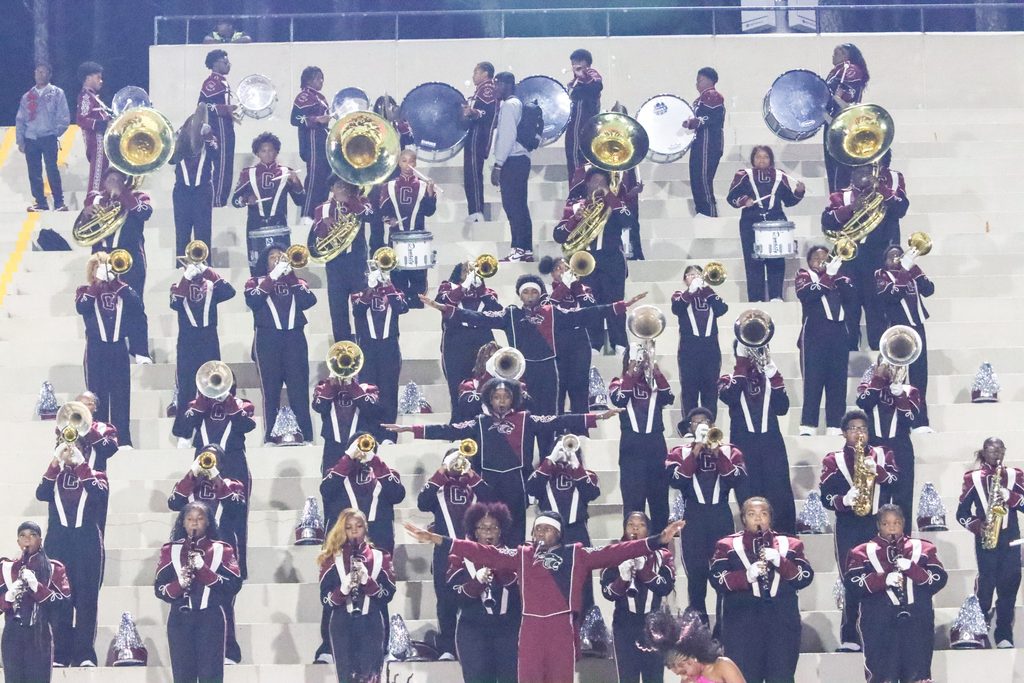
By the end of regulation, the Bulldogs had erased the deficit and forced overtime—an achievement that alone would have been remarkable.

What followed was unprecedented.

Four Overtimes of Resolve

The 2025 Celebration Bowl became the longest game in the event’s history, stretching into a fourth overtime that tested endurance, execution, and nerves.
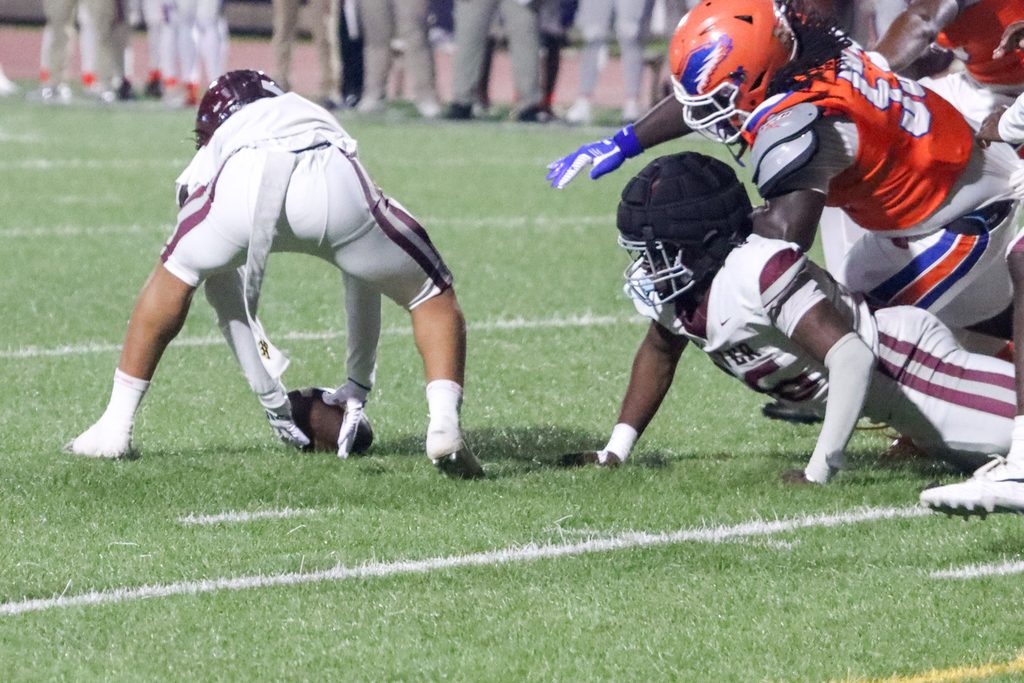
Both teams traded scores. Defensive stands were met with clutch conversions. Each overtime period heightened the drama, drawing the crowd deeper into the spectacle.
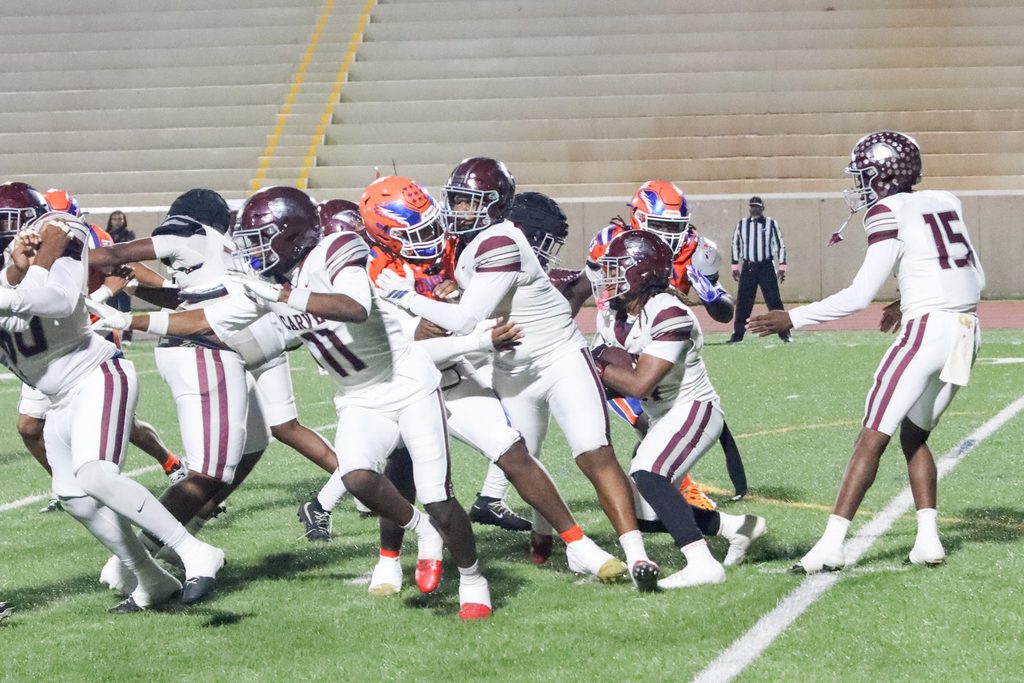
In the fourth overtime, with everything on the line, South Carolina State elected to go for two. Stubblefield delivered a strike to Tyler Smith, sealing a 40–38 victory that instantly entered HBCU lore.

The comeback—down 21 points at halftime—stands as the largest in Celebration Bowl history.

A Defining Win

The win marked South Carolina State’s second Celebration Bowl title, adding to their 2021 championship and cementing the program’s place among the modern HBCU elite.

For Coach Berry, it was another national championship moment in a career defined by winning at multiple levels. For Stubblefield, it was the performance of a lifetime—234 passing yards and leadership under extraordinary pressure.

For the Bulldogs, it was validation.

The Culture on Full Display

Yet, even as the final score was recorded, the true power of the Celebration Bowl remained visible all around the stadium.

Marching bands delivered halftime performances that rivaled any professional show. Alumni waved school flags with pride. Families posed for photos beneath banners celebrating Black excellence. Vendors, entrepreneurs, and artists turned the concourses into a marketplace of culture.

This is what separates the Celebration Bowl from every other postseason game.

It is not merely an endpoint to a season. It is a living showcase of history, resilience, and joy—an affirmation that HBCUs continue to produce excellence on their own terms.

A Rivalry Renewed

The MEAC-SWAC rivalry remains the heartbeat of the Celebration Bowl. Over the past decade, momentum has swung back and forth, with each conference staking its claim to supremacy.

Prairie View’s appearance reinforced the SWAC’s depth and competitiveness. South Carolina State’s victory reaffirmed the MEAC’s ability to rise on the biggest stage.

Together, they delivered a game worthy of the platform.

Why 2025 Will Be Remembered

The 2025 Celebration Bowl will be remembered not only for its statistics—four overtimes, a 21-point comeback, a championship-winning conversion—but for what it represented.

It was a reminder that HBCU football remains one of the sport’s most compelling theaters. That legacy programs still matter. That new contenders can rise. And that when given the stage, Black college football delivers unforgettable moments.

In Atlanta, beneath a closed roof and surrounded by open hearts, South Carolina State and Prairie View A&M gave the Celebration Bowl its defining chapter.

And the celebration, as always, extended far beyond the final whistle.

Related video

Celebration Bowl Game Results Prediction

Related articles

MacKenzie Scott Gift to Howard University

MacKenzie Scott Gift to NC A&T State University

MacKenzie Scott Gift to Alabama State University

MacKenzie Scott Gift to Prairie View A&M University

MacKenzie Scott Gift to Philander Smith University

Truth Seekers Journal thrives because of readers like you. Join us in sustaining independent voices

23XI, NASCAR and Front Row Strike Deal to Strengthen Team Equity and Growth

NASCAR, 23XI Racing and Front Row Motorsports reach a landmark settlement creating long-term stability, stronger team equity, and a unified path forward ahead of the 2026 season.

By Milton Kirby | Charlotte, NC | December 11, 2025

NASCAR, 23XI Racing and Front Row Motorsports have reached a sweeping settlement that leaders across the sport are calling a turning point. The agreement ends months of tension, restores unity inside the garage, and sets new terms meant to give teams stability for years ahead.

The announcement came Wednesday in a joint statement. All three parties said the resolution protects the future of the sport, strengthens the charter system and positions NASCAR for “meaningful growth” in a more competitive environment.

Officials also stressed that the settlement creates a fairer economic structure. It also keeps the focus on fans as the sport prepares for its 78th season.

A Foundation for Long-Term Growth

As part of the settlement, NASCAR will issue a formal amendment to charter holders. It will include updated terms and a version of “evergreen” charters — a major point of negotiation for teams seeking permanent value and long-term ownership security.

Financial terms remain confidential. But all sides say the result creates a level playing field and enhances the model for team participation.

In their joint statement, NASCAR and the teams said the goal was simple: protect the sport’s foundation while opening doors for new investment, stronger sponsorships, and a more stable competitive field.

They also thanked U.S. District Judge Kenneth Bell and mediator Jeffrey Mishkin, along with the jury involved in the process, acknowledging the complexity of the negotiations.

Michael Jordan: “This was about progress”

Michael Jordan, co-owner of 23XI Racing, said the lawsuit was never about conflict. It was about modernizing a system built for a different era.

“From the beginning, this lawsuit was about progress,” Jordan said. “It was about making sure our sport evolves in a way that supports everyone: teams, drivers, partners, employees and fans.”

Jordan said the new framework gives teams a stronger voice and a real chance to build equity over time.

“I’m excited to watch our teams get back on the track and compete hard in 2026,” he added.

Denny Hamlin: “Worth fighting for”

For Denny Hamlin, the agreement reflects both personal history and professional commitment.

“I’ve cared deeply about the sport of NASCAR my entire life,” Hamlin said. “Racing is all I’ve ever known, and this sport shaped who I am.”

Hamlin said the decision to challenge the existing structure was difficult, but necessary.

“We believed it was worth fighting for a stronger and more sustainable future for everyone in the industry,” he said. “Our commitment to the fans and to the entire NASCAR community has never been stronger.”

Front Row’s Bob Jenkins: “Real confidence in where we’re headed”

Front Row Motorsports owner Bob Jenkins said the settlement strengthens the garage as a whole.

“I love this sport, and it was clear we needed a system that treated our teams, drivers and sponsors fairly,” Jenkins said.

He believes the new terms will finally allow teams to build true long-term value, something owners have sought since the charter system began in 2016.

“I’m excited for the road ahead — for the people in the garage, the folks in the stands and everyone who loves this sport,” he said.

Curtis Polk: “Significant progress toward the Four Pillars”

Curtis Polk, 23XI co-owner and a member of the Team Negotiating Committee, pointed to the framework teams have long advocated for — known as the Four Pillars.

Those pillars include:

  • Sustainability for teams
  • Equity and long-term value
  • Transparency in NASCAR’s financial systems
  • Stronger governance and collaboration

Polk said the settlement delivers “significant progress” and aligns NASCAR and teams around shared goals for growth.

Jim France: “A brighter future”

NASCAR CEO and Chairman Jim France said the agreement safeguards what fans value most — competitive racing, strong teams and the stability required to shape the next generation of the sport.

“This outcome gives all parties the flexibility and confidence to continue delivering unforgettable racing moments for our fans,” France said.

He called the charter system “invaluable” since its creation in 2016, and said the new agreement strengthens it even further.

“We are excited to return the collective focus of our sport, teams and race tracks toward an incredible 78th season that begins with the Daytona 500 on Sunday, Feb. 15, 2026,” he added.

A Historic Moment for the Sport

The settlement marks the end of a turbulent chapter but also the beginning of a new era. For the first time, teams appear poised to gain lasting ownership security. NASCAR, in turn, preserves the competitive structure that drives the sport’s popularity.

Both sides now shift their attention back to the track — and to a 2026 season that is already shaping up to be one of the most anticipated in years.

Related articles

Michael Jordan’s 23XI Racing Scores Major Win in NASCAR Antitrust Fight

History is Made: Bubba Wallace Becomes the First Black NASCAR Driver to Win on the Indianapolis Oval

Support open, independent journalism—your contribution helps us tell the stories that matter most.

Shadow Ball: Learning More About Negro League History

Dear Shadow Ball: Which team was the best in the history of the Negro Leagues? Coach Al Davis, Rensselaer, NY.

Dear Al: I will answer your inquiry from two perspectives – franchise history and single season.

BEST CAREER BODY OF WORK – Of 142 franchises listed in the Seamheads Negro League Database, these three on display below are clearly the best in Negro League history.

                                                W        L        %         RSg     RAg    Series/Pennants/HoFers         

Homestead Grays                   1047    575    .645        6.4       4.7       3      9        16

Kansas City Monarchs            1378   830 .624    5.6       4.2       2     10       15

Chicago American Giants       1562 1326    .541         4.9       4.6       2      6         16

The categories above are Wins, Losses, Winning Percentage, Runs Scored per game, Runs Allowed per game, World Series won, Pennants won, and Hall of Famers on team’s roster over the years. Eight separate categories and, as indicated in bold, all eight categories found one of these three franchises at the top. Given Homestead had the best winning percentage, margin of victory, World Series titles, number of Hall of Famers and was 2nd to KC in pennants, the Homestead Grays nose out the Monarchs for the all-time top spot.

BEST SEASON – With only one season instead of 37 years (in the case of the Chicago American Giants) to inspect the differences in greatness between various annual league champions becomes more difficult and less defensible as an opinion. Nonetheless, the show must go on. I found 49 pennant winners in the Seamheads database … which I further reduced by eliminating World Series losers, teams demonstrably worse than other teams in a given season, removing duplicate franchise representatives leaving reducing to less than ten before finally, listing the below three teams as the three best:

W   L     %       RSg     RAg    Hall of Famers           

1943 Homestead Grays          82-26 .759     7.4      4.1         6

1929 Kansas City Monarchs   65-17 .793     6.8       3.7         3

1925 Hilldale Daisies             58-21 .734      6.3       4.4         3

Among teams not making the cut were the 1920 Chicago American Giants, 1928-1931 St Louis Stars, 1932-36 Pittsburgh Crawfords, 1945 Cleveland Buckeyes, 1946 Newark Eagles as well as other Grays & Monarchs teams.

This, in the end, I found the Homestead Grays the best franchise and the 1943 Grays as the best team.

Last week’s Shadow Ball Significa question Last issue’s question was intended to be tricky. What Georgia native struck the initial home run by an African American in Yankee Stadium? I hoped to induce a quick “Josh Gibson” from a few early entrants banking on Gibson’s pre-eminent status as a Georgia native and as a legendary home run hitter. Alas, I couldn’t get that knuckler past Will Clark, Hackensack, NJ, who correctly posted the pride of Kingston, Georgia, Rap Dixon as the slugger who on July 5, 1930 in his first at bat in the House that Ruth built changed the name to the House that Dixon rehabbed with a 1st inning round tripper. Congrats Will!

The Shadow Ball Significa Question of the Week: Who was the first African American signed to a contract by the Boston Red Sox organization?

Ted Knorr

Ted Knorr is a Negro League baseball historian, longtime member of the Society for American Baseball Research’s Negro League Committee, and founder of the Jerry Malloy Negro League Conference and several local Negro League Commemorative Nights in central Pennsylvania. You can send questions for Knorr on Negro League topics as well as your answers to the week’s Significa question to  shadowball@truthseekersjournal.com or Shadow Ball, 3904 N Druid Hills Rd, Ste 179, Decatur, GA 30033

Support open, independent journalism—your contribution helps us tell the stories that matter most.

Georgia Breaks Alabama Curse, Wins 2025 SEC Championship in Dominant 28–7 Victory

Georgia crushed Alabama 28–7 to win the 2025 SEC Championship, ending years of title-game losses to the Tide and securing a strong College Football Playoff position.

By Milton Kirby | Atlanta, GA | December 7, 2025

The Georgia Bulldogs finally broke through.
After four straight SEC Championship losses to Alabama — and years of heartbreak inside Mercedes-Benz Stadium — Georgia ended both streaks Saturday with a commanding 28–7 win over the Crimson Tide in the 2025 SEC Championship Game.

The victory not only secures Georgia’s sixth SEC title but also strengthens their bid for a first-round bye in the College Football Playoff. Both teams entered the matchup widely expected to make the postseason field.

Early Defense, Special Teams Set the Tone

Georgia (11-1, 7-1 SEC) took the opening kickoff and immediately leaned on its physical identity. The Bulldogs’ defense smothered Alabama early, and special teams delivered the spark that shifted the game.

A blocked Alabama punt in the first quarter set up short field position, allowing Roderick Robinson II to punch in the game’s opening touchdown. Minutes later, Georgia intercepted a Tide pass, stopping Alabama’s attempt to regain momentum.

Bulldog Offense Finds Its Rhythm

In the second quarter, Georgia extended its lead when Dillon Bell hauled in a touchdown reception, putting the Bulldogs up two scores.
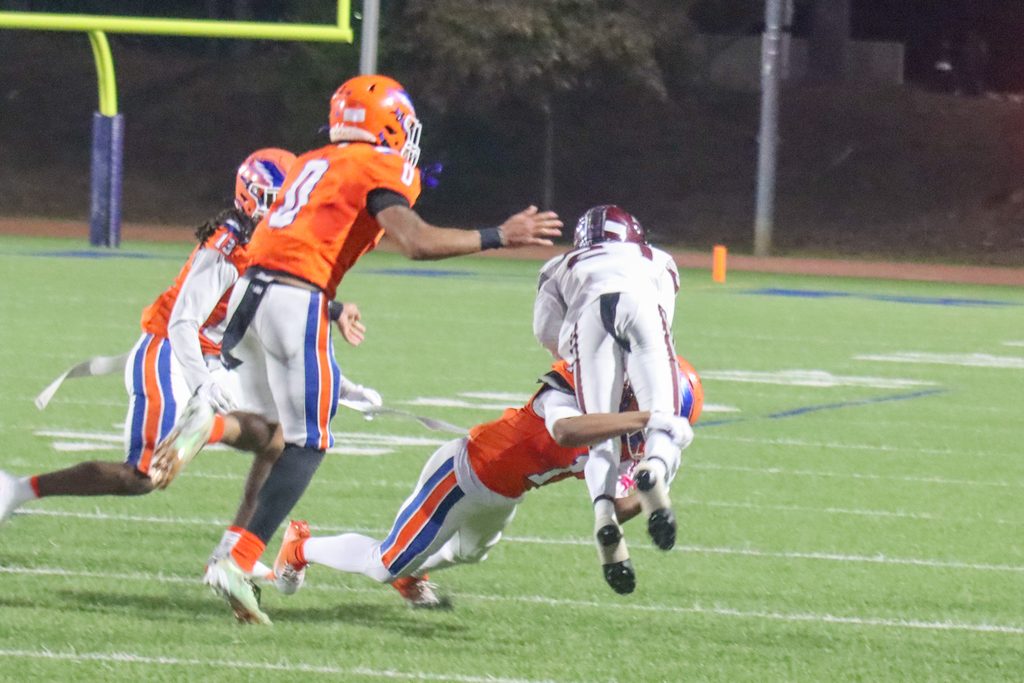
The domination continued after halftime. Nate Frazier broke free on a nine-yard touchdown run with 10 minutes remaining in the third quarter, stretching the Georgia lead to 21–0.

Alabama Strikes Back — Briefly

Alabama (10-2, 7-1 SEC), battling injuries and missing several key players listed as questionable pre-game — including running back Jam Miller and tight ends Josh Cuevas and Danny Lewis Jr. — finally responded with a touchdown to cut the deficit to 21–7.

But Georgia answered immediately. Zachariah Branch, who had been questionable entering the game, helped anchor the defense, and the Bulldogs’ offense kept rolling. Zachariah Branch capped another scoring drive with a 13-yard touchdown reception, pushing the score to 28–7 and sealing the championship.

Breaking the Curse

With the win, Georgia snapped a years-long streak of SEC Championship losses to Alabama and ended its losing streak to the Tide inside Mercedes-Benz Stadium. The Bulldogs — long haunted by Alabama in high-stakes moments — delivered one of the most complete title-game performances in program history.

FanFare, Festivities, and a Weekend Takeover of Atlanta

The SEC Championship once again turned downtown Atlanta into the center of the college football universe. Mercedes-Benz Stadium hosted the SEC’s title matchup for the ninth consecutive year. This marked the fifth championship meeting between Georgia and Alabama, with both teams appearing in the game roughly a dozen times each.

Phote by Milton Kirby – SEC Fansville

Thousands of fans packed the Georgia World Congress Center for the two-day Dr Pepper SEC FanFare on December 5-6. The free event included interactive games, merchandise vendors, live SEC Network shows, ESPN’s College GameDay broadcast, and a Saturday concert headlined by Ludacris.
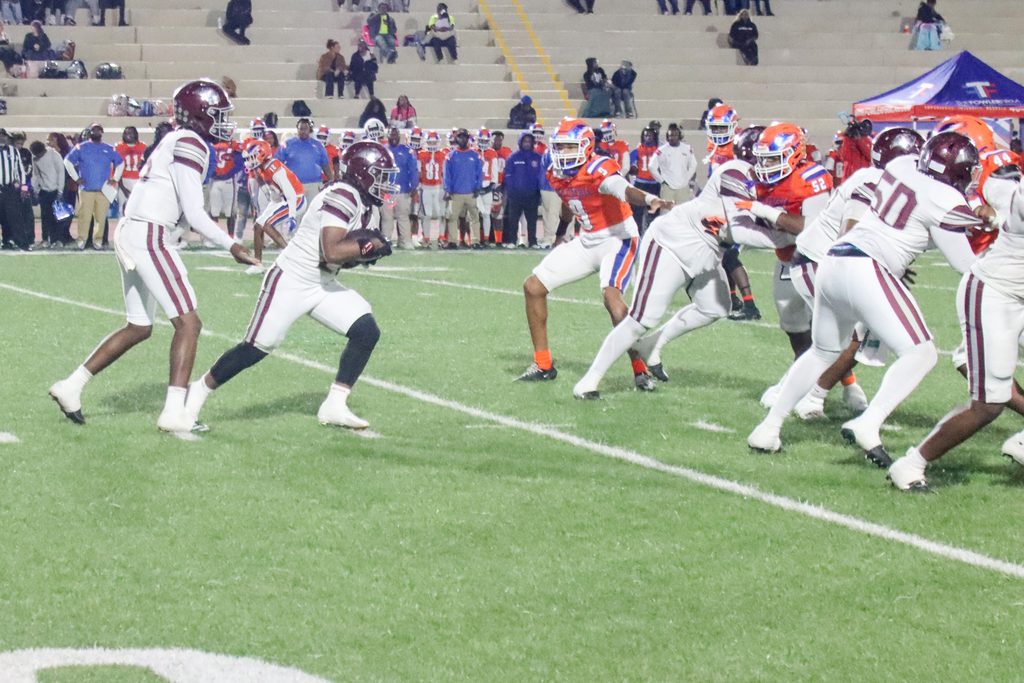
Each school also held a pregame pep rally in Hall C on Saturday afternoon, with fans filling the space before heading into the stadium.
Mobile-Only Tickets

As part of updated stadium procedures, all tickets for the championship were fully digital. Fans were urged to download tickets to their mobile wallets in advance and review instructions at www.secsports.social/mobile.

Georgia’s performance ensured the stadium stayed red — and loud — for hours after the final whistle.

With the win, the Bulldogs leave Atlanta not only as SEC champions, but with the satisfaction of finally shutting the door on a long Alabama-shaped shadow.

Related video

SEC fans come far & near

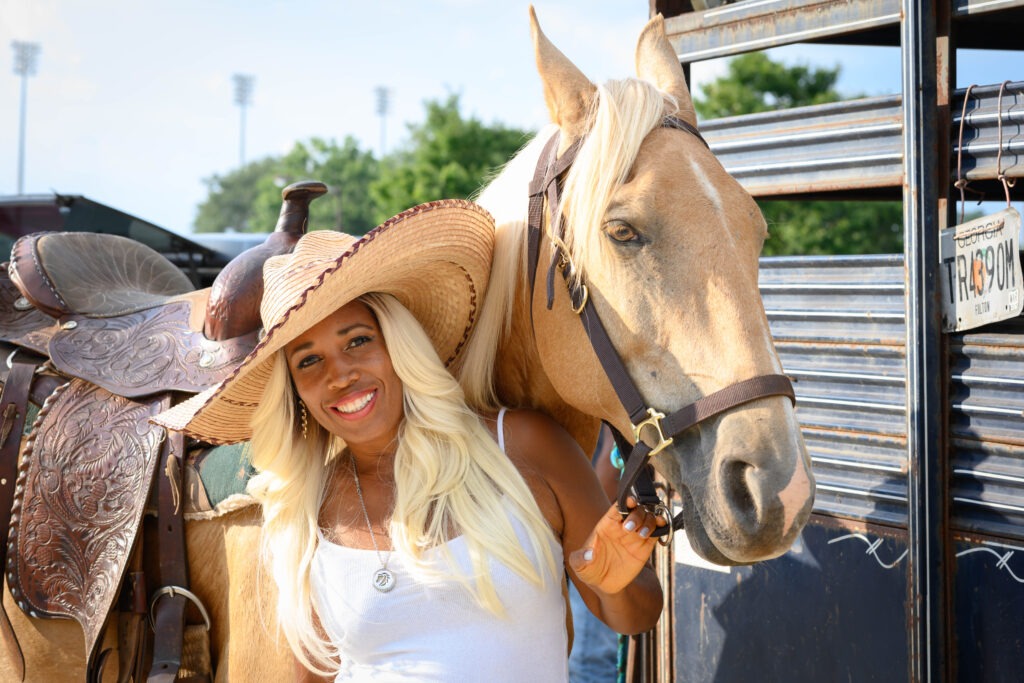
Bill Pickett Invitational Rodeo Names 2025 Champions After a Year of Grow and New Partnerships and a Powerful Legacy

The Bill Pickett Invitational Rodeo closed its 41st season with packed arenas, rising music stars, bold fashion moments, and championship performances celebrating Black cowboy and cowgirl heritage nationwide.

By Milton Kirby | Denver, CO | November 25, 2025

The Bill Pickett Invitational Rodeo ended its 41st season the same way it started—with packed crowds, big moments, and a whole lot of love for the culture that keeps this tradition alive.

Photo by Milton Kirby -BPIR – Upper Marlboro, MD

BPIR President and CEO Valeria Howard-Cunningham expressed deep gratitude, highlighting how the event celebrates the history, family bonds, and the resilience of Black cowboys and cowgirls who keep this culture alive.

The 2025 tour stretched from Denver to Memphis, moved west through Oakland and Los Angeles, circled back to Atlanta, and touched down four times in historic Cowtown Coliseum in Fort Worth. The year closed in the DC/Upper Marlboro area, where the National Championship Finals brought out longtime supporters and new fans who wanted to witness the sport’s brightest stars.

A New Era in Country Music

A cultural shift is happening inside BPIR. The Soul Country Music Star partnership is giving Black country artists a stage they have long been denied. The Soul Country Rodeo Weekend brought immense talent and explosive energy, and the season ended in Burbank with the first-ever Soul Country Music Star Festival. When the dust settled, Atlanta’s Nathaniel Dansby walked away with the 2025 title.

Rodeo Meets Runway

Houston also saw something new when BPIR teamed up with SP5DER for the Sweet Tooth Rodeo. It was a mix of bucking bulls and bold fashion, and the arena looked more like a runway than a dirt floor. Fans are still talking about it.

Photo by Milton Kirby – BPIR – Upper Marlboro, MD

The Champions Who Left Nothing Behind

The athletes are the heartbeat of BPIR. Riders young and old brought fire to every arena this season. Championship titles went to:

Lamarr Hankins in Ranch Bronc.

Haley Mason in Ladies Breakaway.

Harrel Williams Jr in Junior Breakaway.

Tony Aska in Bull Dogging.

Devon Johnson and Montrel Gilder in Team Roping.

Travoris Zeno in Bull Riding.

And a rising generation—Kinley Adair, Rylen Wilburd, Paris Wilburd—claimed their own victories.

Montrel Gilder earned All Around Cowboy. Paris Wilburd took All Around Cowgirl. The future looks strong.

Photo by Milton Kirby – BPIR – Upper Marlboro, MD

Looking ahead

BPIR’s 42nd season is already shaping up with rodeos scheduled across the country, including dates in Fort Worth, Memphis, Atlanta, and Upper Marlboro, to keep the momentum going into 2026.BPIR’s 42nd season is already taking shape, and the movement rolls on with rodeos planned nationwide:

February 14     Fort Worth, TX (1:30 PM & 7:30 PM)

April 10           Memphis, TN (10:00 AM Rodeo for Kidz Sake)

April 11           Memphis, TN (1:30 PM & 7:30 PM)

April 17           Atlanta/Conyers, GA (Rodeo for Kidz Sake, Time TBD)

April 18           Atlanta/Conyers, GA (12:00 Noon & 7:30 PM)

May 16            Fort Worth, TX (1:30 PM & 7:30 PM)

June 20            Fort Worth, TX (1:30 PM & 7:30 PM)

July 11             Oakland, CA (2:30 PM)

July 12             Oakland, CA (2:30 PM)

July 18             Los Angeles, CA (7:00 PM)

July 19             Los Angeles, CA (3:30 PM)

August 1         Conyers, GA (7:30 PM)

August 2         Conyers, GA (3:30 PM)

August 15       Fort Worth, TX (1:30 PM & 7:30 PM)

September 18  Upper Marlboro, MD (10:00 AM & 7:30 PM)

September 19  Upper Marlboro, MD (1:30 PM & 7:30 PM)

October 17      Fort Worth, TX (1:30 PM & 7:30 PM)

Howard-Cunningham closed the season with a message of love and appreciation, emphasizing BPIR’s role in building unity and shared purpose, inspiring ongoing support for the movement into 2026.

Related articles

Bill Pickett Invitational Rodeo National Finals Nominated for USA TODAY’s Best Rodeo Award

Bill Pickett Invitational Rodeo Celebrates 40 Years of Tradition and Excellence

Martin Luther King, Jr. African-American Rodeo of Champions Thrills Denver Audience

Please consider supporting open, independent journalism – no contribution is too small!

SHADOW BALL: Learning More About Negro League History

Dear Shadow Ball: I have a feeling that I am going to learn some things. Is third baseman Judy Johnson (a 1975 Hall of Fame inductee) a male or female? David Nivens, parts unknown … I should note that Mr. Nivens has supplied two questions thus far and I very much appreciate both … this column exists for only one purpose and that is to answer your questions on Negro League baseball history. To that end, I need your help … if you are reading this column and enjoy it and want it to continue and you don’t already know everything about Negro League history … then please submit a question on any aspect of Negro League history.

 – players, teams, events, and more – Your questions are the lifeblood of Shadow Ball—they shape where we go next. Your participation is important and appreciated. Submit your questions to shadowball@truthseekersjournal.com.

Dear David: I have a feeling that I am going to learn some things also. Judy Johnson, like Dolly King, Connie Johnson, Bunny Downs, Bonnie Serrell, Beverly Boanes and Judy Gans, was very much a man. All these fellows were Negro League baseball players. William Julius Johnson was nicknamed “Judy” due to a resemblance to another player with that nickname – “Judy.” Why that player, Robert Edward Gans, was called “Judy” is a question for another day when I figure it out.

Last week’s Shadow Ball Significa question What was the name of Atlanta’s most prolific franchise (in terms of years in the league) in the Negro Leagues? Since this question has stood unanswered for a month, I am going to provide the answer – the Atlanta Black Crackers.

The Atlanta Black Crackers were founded in 1919 as the Atlanta Cubs and lasted, active most years, until their demise in 1943. They were members of the Negro Southern League, later the Negro American League and played as an independent. They never won a pennant.

The Shadow Ball Significa Question of the Week: What Georgia native was the first African American to hit a home run in Yankee Stadium?

Ted Knorr

Ted Knorr is a Negro League baseball historian, longtime member of the Society for American Baseball Research’s Negro League Committee, and founder of the Jerry Malloy Negro League Conference and several local Negro League Commemorative Nights in central Pennsylvania. You can send questions for Knorr on Negro League topics as well as your answers to the week’s Significa question to  shadowball@truthseekersjournal.com or Shadow Ball, 3904 N Druid Hills Rd, Ste 179, Decatur, GA 30033

Please consider supporting open, independent journalism – no contribution is too small!

Exit mobile version