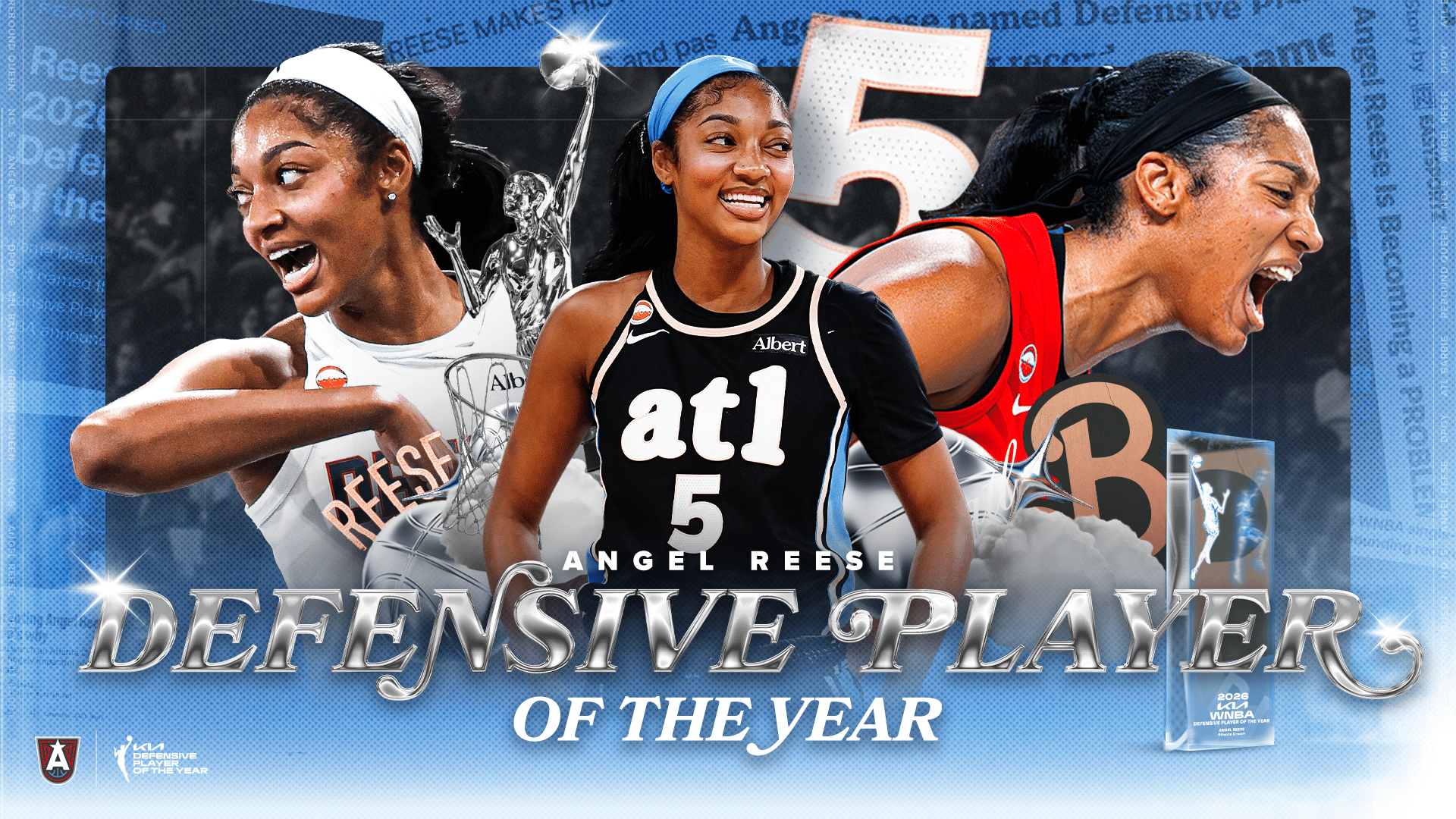
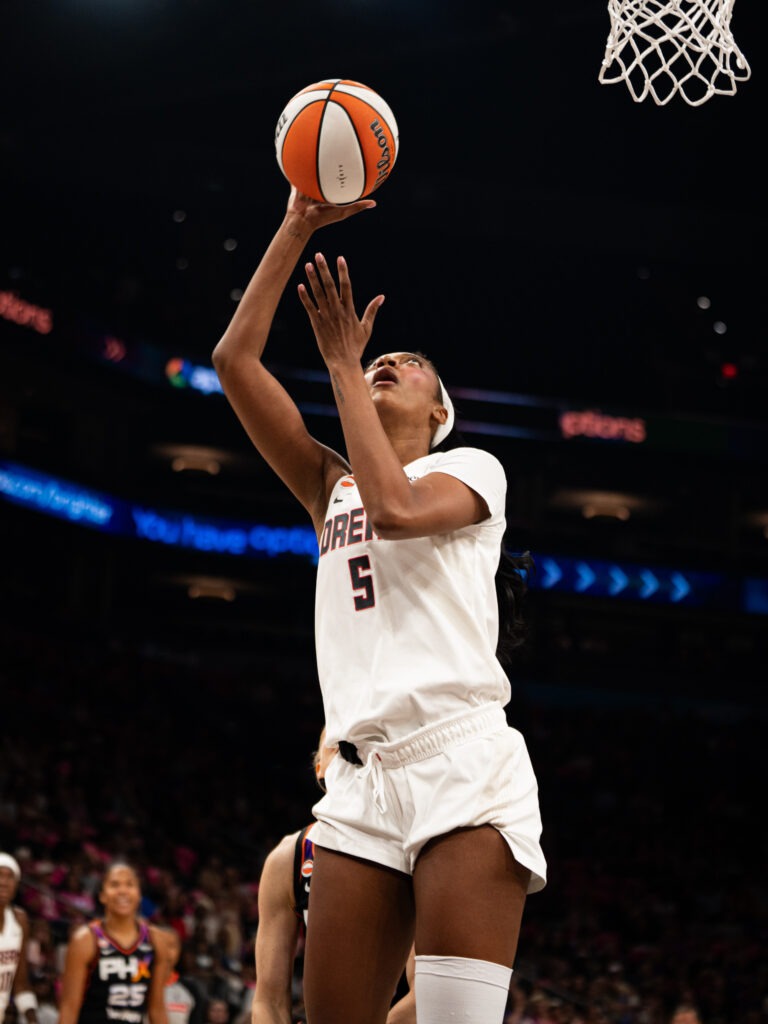
Angel Reese becomes the first Atlanta Dream player named WNBA Defensive Player of the Year after a historic season defined by defense and record-setting rebounding.
By Milton Kirby | Atlanta, GA | October 1, 2026
Atlanta Dream forward Angel Reese said it before the regular season was over.
“The Defensive Player of the Year is in Atlanta!”
On Thursday, the league made it official.
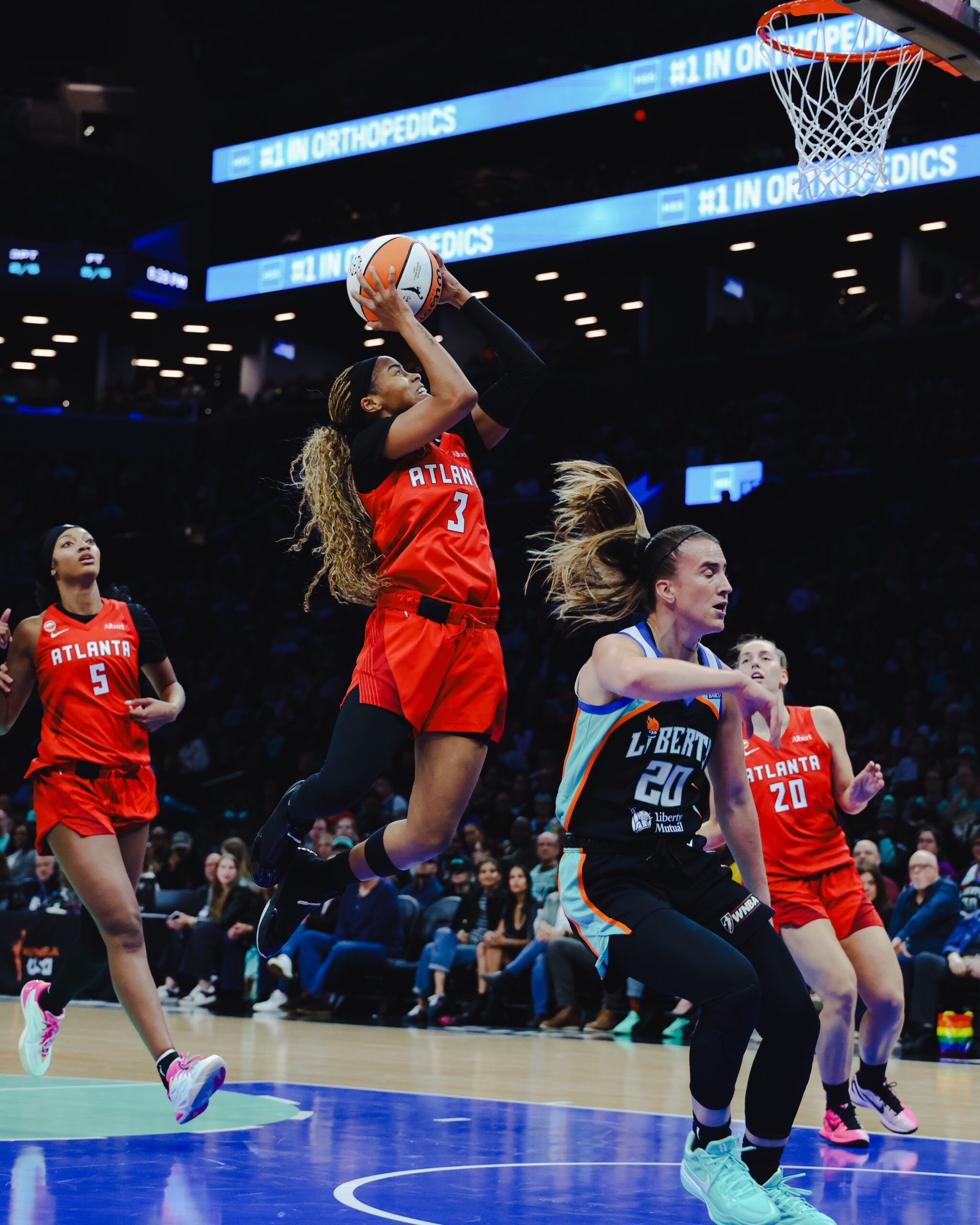
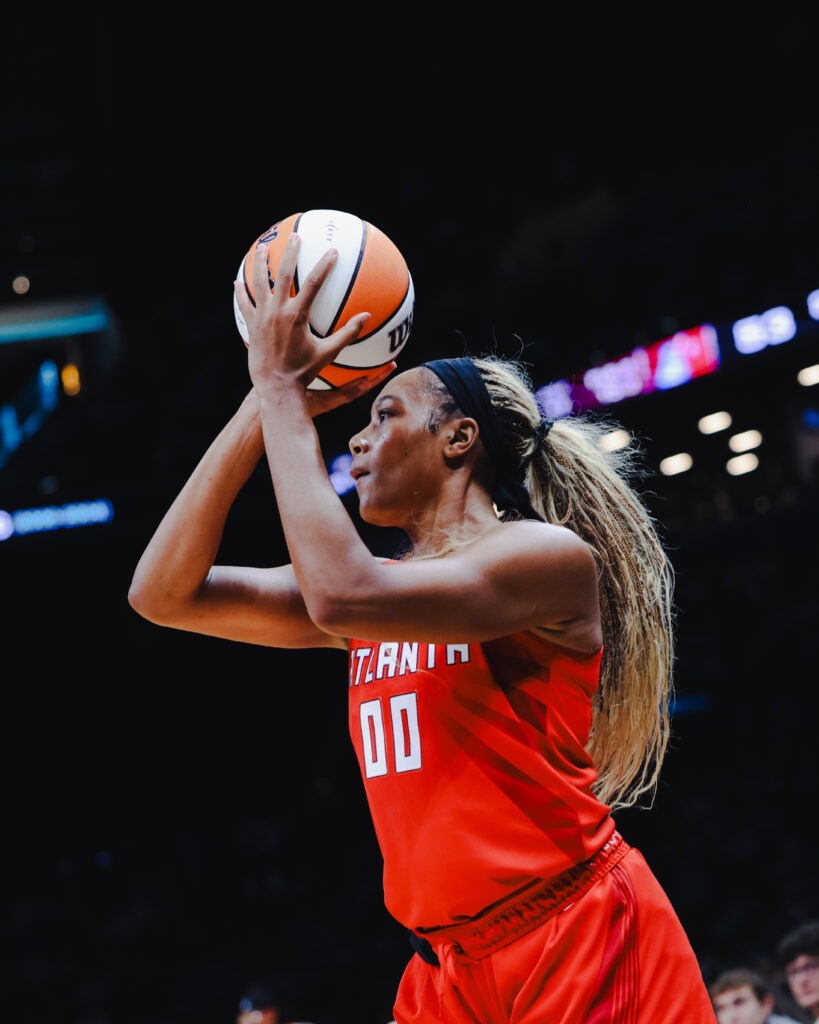
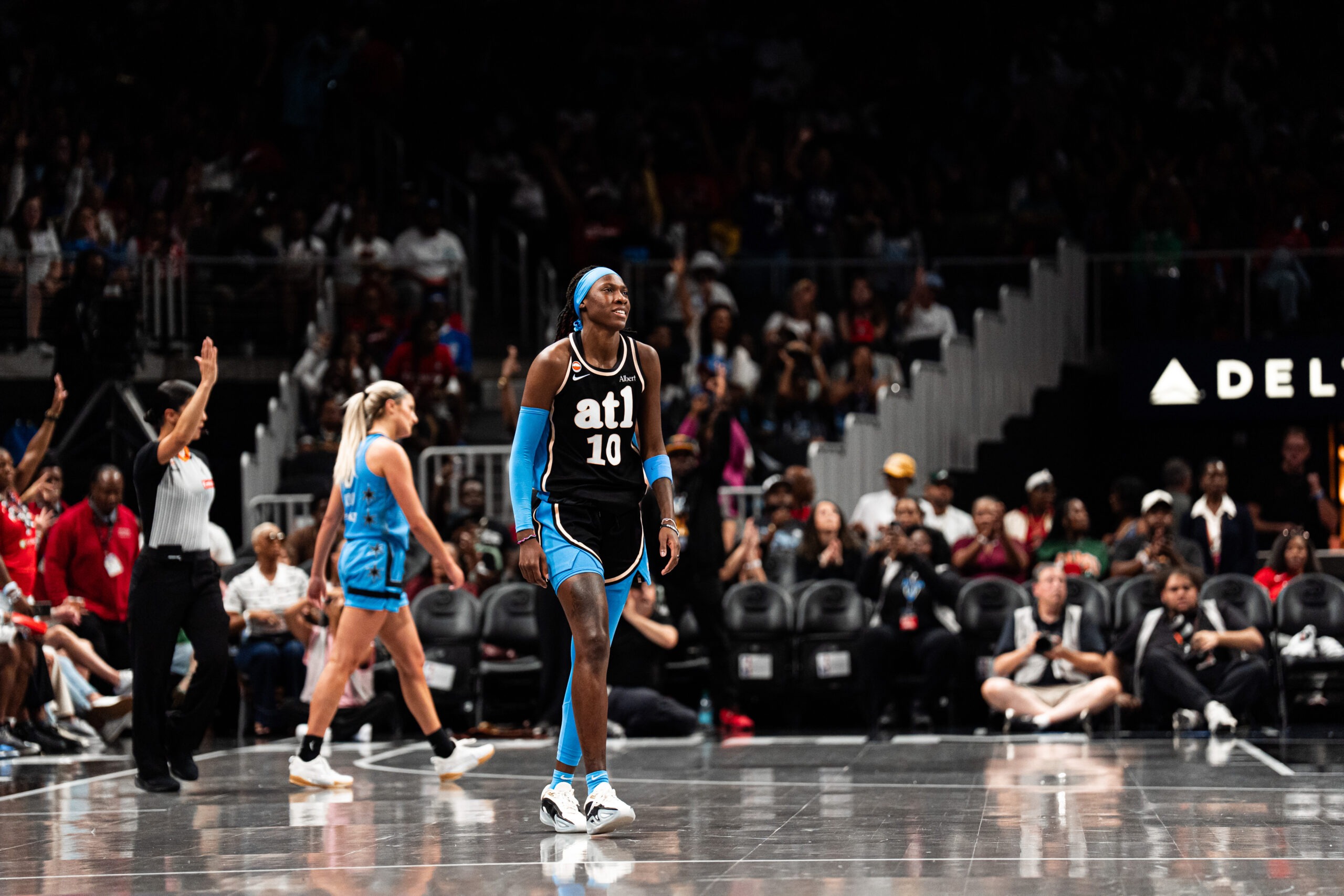
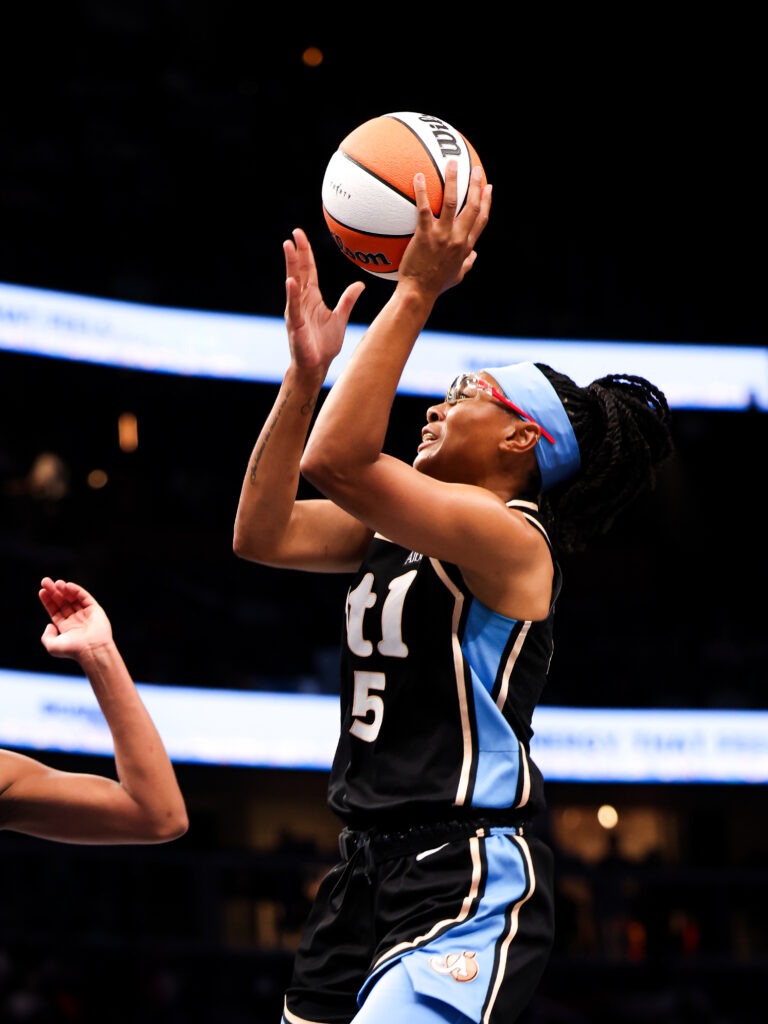
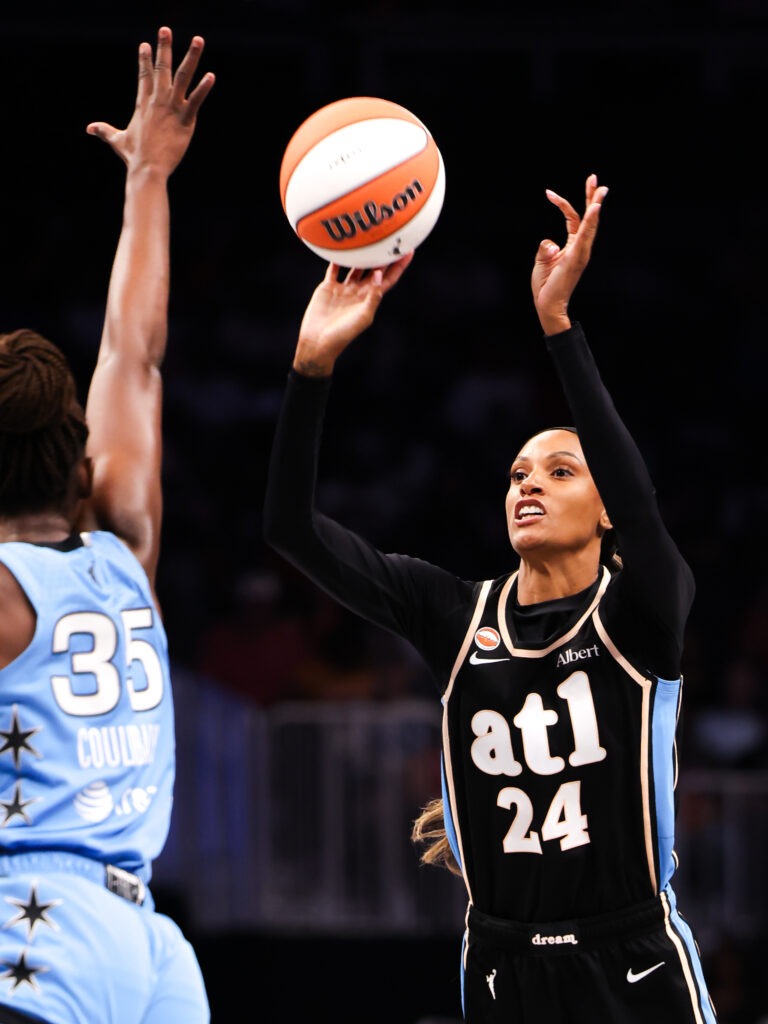
Reese has been named the 2026 Kia WNBA Defensive Player of the Year, becoming the first player in Atlanta Dream history to earn the league’s top individual defensive honor.
The award caps a historic first season in Atlanta for Reese, who helped anchor one of the WNBA’s most disruptive defensive units while putting together one of the most productive rebounding seasons the league has seen.
Reese received 46 of 74 votes from a national panel of sportswriters and broadcasters. Golden State Valkyries forward Gabby Williams finished second with 20 votes.
But when Reese received the trophy, she quickly turned the attention toward two of her teammates.
“I have the trophy, but I definitely want Jordin and Rhyne to sign it because I think they deserve it just as much as I do,” Reese said, referring to Jordin Canada and Rhyne Howard. “I’m grateful for Atlanta, I’m grateful for my teammates and my coaches and all the supporting staff that supports us.”
Her reaction reflected the collective nature of Atlanta’s defense.
Reese, Canada and Howard gave the Dream three high-level defensive playmakers capable of pressuring ballhandlers, disrupting passing lanes, switching across positions and creating turnovers.
Reese’s individual impact, however, was difficult to overlook.
She finished the regular season first in the WNBA in Defensive Win Shares at 3.39 and ranked among the league leaders in several other defensive categories.
Atlanta allowed 7.9 fewer points per 100 possessions with Reese on the floor than when she was off it, the largest defensive on-off differential among Dream rotation players.
Reese also averaged 1.8 steals per game, ranking third in the WNBA.
But some of her most important defensive work occurred after opponents missed.
Reese’s ability to end possessions became one of the defining elements of her season.
She averaged 7.3 defensive rebounds per game, ranking fourth in the league, and helped Atlanta limit opponents to a WNBA-low 9.5 second-chance points per game.
Her performance on the defensive glass was part of a record-setting rebounding season.
Reese became the first player in WNBA history to collect 500 rebounds in a single season. She finished with 521 total rebounds and set league records for total rebounds and offensive rebounds.
She also established a WNBA single-game record when she grabbed 26 rebounds against the Los Angeles Sparks in August.
Rebounding was hardly her only contribution.
Reese finished the regular season averaging a career-high 16.4 points and a league-leading 12.1 rebounds per game. She also set a WNBA record with 32 double-doubles.
Those numbers earned Reese WNBA Peak Performer honors as the league’s leading rebounder. She was selected to her third consecutive WNBA All-Star Game and became the first player in Dream history to earn Eastern Conference Player of the Week honors in three consecutive weeks.
The Defensive Player of the Year award, however, carries particular significance for a Dream franchise that entered the WNBA in 2008.
No Atlanta player had won it before.
Reese changed that in her first season with the organization.
She did it while playing alongside Canada and Howard, whose pressure and activity helped establish defense as a defining part of Atlanta’s identity.
The Dream finished the regular season 30-14, tying the franchise record for victories and earning the No. 4 seed in the WNBA playoffs.
For Reese, the individual recognition provides another milestone in a season already filled with them.
But her first reaction to receiving the trophy may say as much about Atlanta’s defensive success as the statistics themselves.
The trophy belongs to Reese.
One of the first things she wanted to do with it was have Canada and Howard sign it.
For a player whose individual honor grew out of Atlanta’s collective defensive identity, it is a fitting way to mark the first Defensive Player of the Year award in Dream history.
And Reese made clear that she does not consider the award an ending.
“This is just the beginning.”
Support open, independent journalism. Your contribution helps us tell the stories that matter most.
Atlanta Dream defense forced 23 turnovers and a postseason-record 16 steals in a 92-77 Game 1 playoff victory over the Washington Mystics.
By Milton Kirby | Atlanta, GA | September 28, 2026
For much of the first half Sunday, the Atlanta Dream did not look like the team that had surged into the WNBA playoffs with home-court advantage.
Shots were not falling. Washington was finding open looks. Atlanta fell behind by double digits.
Then the Dream turned to the part of its game that did not require the ball to go through the basket.
Defense
Atlanta forced 23 turnovers, recorded a franchise postseason-high 16 steals and overcame an 11-point deficit to defeat the Washington Mystics 92-77 at State Farm Arena in Game 1 of their best-of-three first-round playoff series.
“A good way to start the series, but we know we have to get another win,” Dream head coach Karl Smesko said. “That’s what we plan to do.”
The victory gave Atlanta a 1-0 series lead heading into Game 2 Wednesday in Washington and improved the Dream’s all-time postseason record against the Mystics to 7-4.
Rhyne Howard led Atlanta with 26 points and five steals. Allisha Gray added 22 points, while Angel Reese recorded 13 points and 12 rebounds in her playoff debut.
DeWanna Bonner scored 13 points off the bench, and Jordin Canada finished with 10 points and 10 assists.
But the numbers that told the story were 23 and 27.
Atlanta forced Washington into 23 turnovers and converted those mistakes into 27 points.
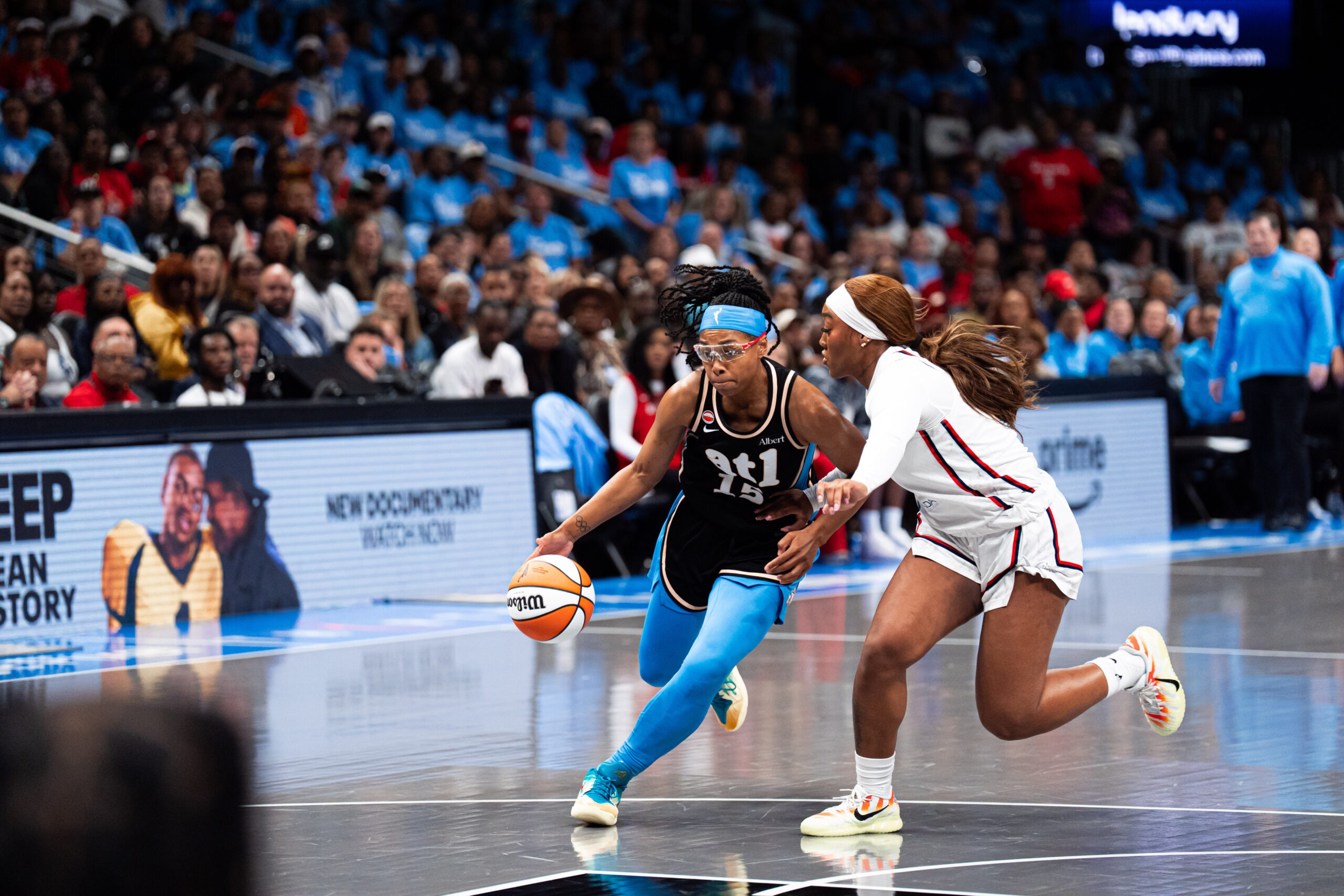
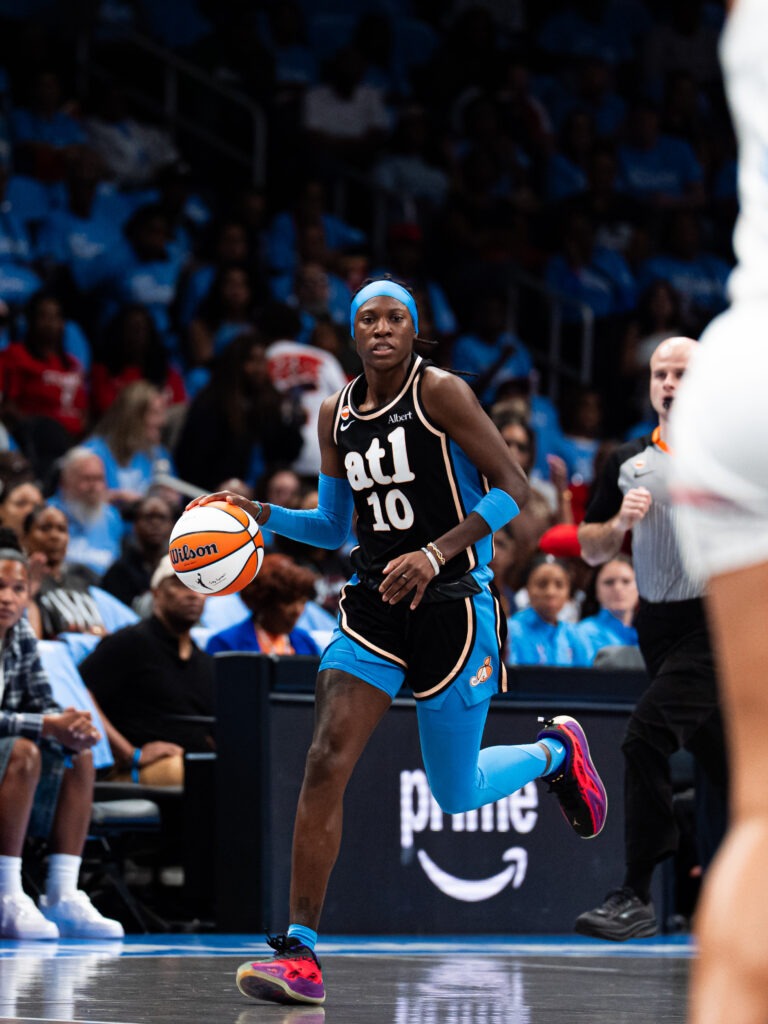
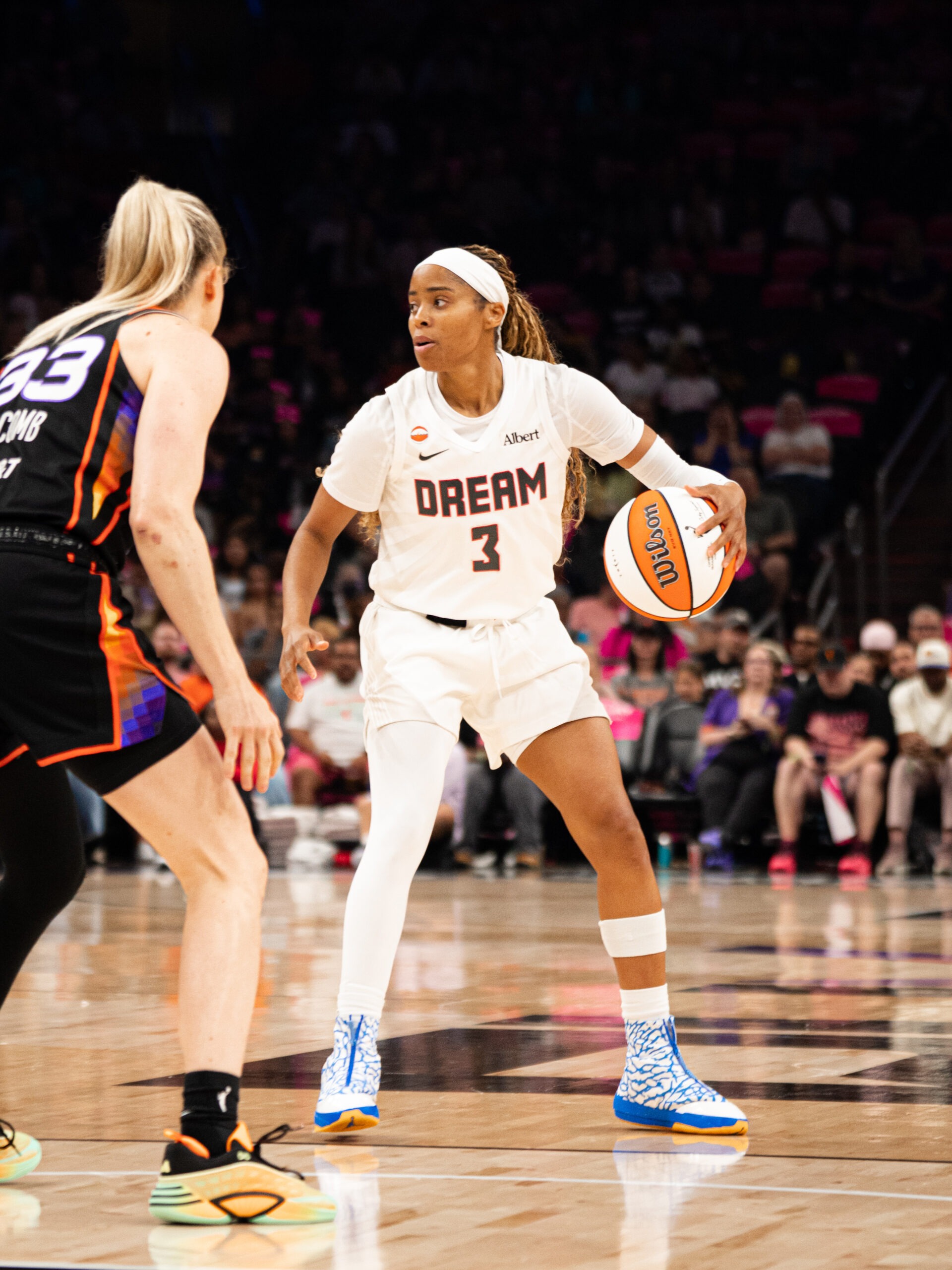
Howard dribbles up court – courtesy photo
Those extra possessions helped the Dream overcome a difficult start.
Atlanta missed nine of its first 10 shots and trailed 14-5 with 5:14 remaining in the first quarter. Washington eventually pushed its advantage to 11 before the Dream began working its way back into the game.
“We realized that they were getting too many easy looks,” Howard said. “We didn’t show up with the aggressiveness that we’ve had the last four games before this.”
Atlanta recovered enough to cut Washington’s lead to 26-21 by the end of the first quarter but still trailed by five at halftime.
Reese and Gray combined to shoot 4-of-22 during the first half, leaving Atlanta searching for another way to change the game.
It found it on defense.
The Dream opened the third quarter with seven unanswered points to take a 43-41 lead.
Then Bonner helped change the energy of the game.
The veteran forward scored 11 of her 13 points during the third quarter as Atlanta turned a halftime deficit into control of the game. Bonner’s ninth point of the night also pushed her past 1,300 career postseason points.
“She made so many big plays for us, and the enthusiasm she played with, the joy of playing basketball, was huge for us,” Smesko said.
Atlanta kept coming
Gray’s layup pushed the lead to 10. Reese completed a three-point play to make it 61-48, and Gray followed with a jumper in the lane as Atlanta took control.
By the end of the third quarter, the Dream led 65-53.
Washington made just three of 15 shots during the period. Six Mystics turnovers became 14 Atlanta points.
“We let them get comfortable offensively,” Washington guard Sonia Citron said. “We let some of our discipline slip. Once they get going, it’s really hard to stop them.”
Smesko gave Washington another challenge early in the fourth quarter when he put Reese and rookie center Madina Okot on the floor together, a combination Atlanta rarely used during the regular season.
Okot responded immediately.
She scored on a layup assisted by Reese, then made a steal and found Howard for a 3-pointer that extended Atlanta’s lead to 70-53.
“We hoped she would be an X-factor for us,” Smesko said.
Okot finished with four points, five rebounds, a steal and a block in her first postseason appearance. Reese, Okot and Isobel Borlase all made their WNBA playoff debuts Sunday.
Washington, however, was not finished.
The Mystics took better care of the basketball as the fourth quarter progressed, forcing Atlanta to operate more frequently in the half court. The Dream’s offense again began to slow, and Washington cut what had been a 17-point Atlanta lead to 81-74 with 3:26 remaining.
Smesko called timeout.
He returned with Canada, Reese, Bonner, Gray and Howard.
This time Atlanta closed the door.
Reese grabbed an offensive rebound to keep one possession alive. Canada extended it again with a steal. Gray completed the sequence with a three-point play that restored Atlanta’s lead to 10 with 2:41 remaining.
Bonner stopped Washington’s next possession with a defensive rebound, drew a foul and made both free throws to extend the lead to 86-74 with 2:29 left.
The threat was over
Atlanta’s 16 steals established a franchise high for a postseason game, surpassing the previous mark set in 2011. Howard’s five steals tied the Dream record for a playoff game and moved her into sixth place on the franchise’s postseason steals list.
Canada moved into fifth place on Atlanta’s postseason assists list. Her 10-point, 10-assist performance was the second playoff double-double of her career.
Reese delivered one of her own in her postseason debut, finishing with 13 points, 12 rebounds, two steals and a block.
The Dream also made Washington pay at the free-throw line, shooting 96.2 percent.
For Atlanta, the victory demonstrated how its defense can change a game even when its offense struggles.
That may become increasingly important as the postseason moves forward.
The Dream has not advanced beyond the first round of the playoffs since 2018. One more victory would change that.
But Atlanta leaves State Farm Arena knowing that the first half Sunday also offered Washington a blueprint for what the Dream cannot afford to repeat.
“We realize the next game is going to be harder than this one,” Howard said. “What we did in the first half, we can’t have again.”
The Dream has its first playoff victory.
Now it needs one more to advance.
Truth Seekers Journal thrives because of readers like you. Join us in sustaining independent voices.
Atlanta Dream wins its fifth straight, secures the No. 4 WNBA playoff seed and earns home-court advantage with an 83-65 win over New York.
By Milton Kirby | Brooklyn, NY | September 24, 2026
The Atlanta Dream will open the WNBA playoffs at home.
Atlanta secured the No. 4 seed and home-court advantage in the first round Wednesday night with an 83-65 victory over the New York Liberty at Barclays Center.
The victory was the Dream’s fifth straight and its 30th of the season, tying a franchise record and giving Atlanta consecutive 30-win seasons.
“That was an important win for us,” Dream Head Coach Karl Smesko said. “We wanted to make sure we got home-court advantage for the first round of the playoffs, and we were able to accomplish that.”
The Dream finished the regular season 30-14 and will host its first playoff game Sunday. Atlanta will face either the Indiana Fever or Washington Mystics, with the matchup and game time to be determined after Thursday’s final regular-season games.
For a team that went 15-7 at home during the regular season, securing the fourth seed gives Atlanta something potentially significant when the postseason begins: another game in front of its own crowd.
“Just being able to go home in front of our fans and put on a show, I think that little things matter in the playoffs, and that might be one of them,” forward Naz Hillmon said. “Just having that energy behind us from our fans.”
Defense Makes the Difference
Atlanta did much of the work needed to secure Wednesday’s victory before halftime.
Naz Hillmon is set for two of her 16 points – courtesy photo
The Dream held New York to seven points in the second quarter and 26 points in the first half, both season-best defensive marks for Atlanta.
Despite shooting just 39 percent in the opening half, the Dream took a 41-26 lead into halftime by forcing turnovers and creating scoring opportunities from its defense.
Atlanta forced 12 Liberty turnovers in the first half and converted them into 13 points. By the end of the game, the Dream had forced 20 turnovers, recorded 12 steals and scored 15 points off New York’s mistakes.
“We know that we’re looking forward to the playoffs, and we wanted to play our best basketball,” Hillmon said. “So, whatever that was supposed to look like, that was our focus.”
Allisha Gray led Atlanta with 24 points, four rebounds, five assists, three steals and a block. It was Gray’s 21st game this season with at least 20 points.
Hillmon finished with 16 points, four rebounds and two assists, while Jordin Canada contributed 12 points and five assists.
Rhyne Howard added eight points, four rebounds and a team-high six assists. Angel Reese finished with six points, six rebounds, three assists and three steals.
DeWanna Bonner came off the bench to contribute nine points and eight rebounds.
Atlanta also converted 86.7 percent of its free throws.
The starting lineup of Canada, Gray, Howard, Hillmon and Reese improved to 30-8.
The Playoffs Come to Atlanta
Atlanta’s first-round opponent remains unsettled.
The Dream went 2-2 against Indiana during the regular season and 1-2 against Washington. The first round of the WNBA playoffs is a best-of-three series.
Atlanta will enter that series having won five consecutive games, including back-to-back victories over New York.
More importantly, Wednesday’s victory means the Dream will begin the postseason where it wanted to be — at home.
Thirty wins.
The No. 4 seed.
A home playoff game.
And now, a chance to see how far this season can go.
Support open, independent journalism. Your contribution helps us tell the stories that matter most.
By Ted Knorr | Harrisburg, PA | September 22, 2026
… this column exists for only one purpose and that is to answer your questions on Negro League baseball history. To that end, I need your help … if you are reading this column and enjoy it and want it to continue and you don’t already know everything about Negro League history … then please submit a question on any aspect of Negro League history. Your questions are the lifeblood of Shadow Ball—they shape where we go next.
Nobody asked me but …here is a list of all Major League players that his four triples in one game:
George Strief, Philadelphia Athletics, American Association, on June 25, 1885,against the Brooklyn Grays at Washington Park, Brooklyn, NY
Bill Joyce, New York Giants,National League, on May 18, 1897,against the Pittsburgh Pirates at Exposition Park, Pittsburgh, PA.
Rap Dixon, Baltimore Black Sox, Negro National League I, on Augus6, 1930,against the Birmingham black Barons at Cramton Bowl, Montgomery, AL
Strief and Joyce had long been the only two Major League players to achieve this feat of four triples in one Major League game. However, on December 16, 2020,Baseball Commissioner Rob Manfred announced that “Major League Baseball was correcting a longtime oversight in the game’s history by officially designating seven specific Negro Leagues as ‘Major League’.”One of those seven leagues was the Negro National League I (1920-1931). Making that August 6th game officially a Major League game. Overnight two four triple games became three. The August 7th edition of the Montgomery Advertiser covered the four triple game and noted that feat. No box score has been found so the statistics will not enter into the record book, but the event cannot be excluded.
Major League baseball is just completing its 151st season and only those three players have hit four triples in one game.
There have only been about sixty instances of Major League players striking three triples in one game only three of them resulting in a 4th three bagger.
Of those sixty, 12 were by Hall of Famers: Sam Crawford, Honus Wagner, Ty Cobb, Goose Goslin, Heinie Manush, Jim Bottomley, Earle Combs, Charlie Gehringer, Joe DiMaggio, Roberto Clemente, Willie Mays, and Ernie Banks.
Only one four triple event – the one in Montgomery – occurred in the 20th century. Only one in the past 129 years.
Rap Dixon, the only Major League player with four triples in one game since 1897 has an inordinate amount of “unicornian legends.”In addition to the four triples game, he achieved a potential Major League record with 14 consecutive hits in 1929, those hits were part of another potential “modern” Major League record 16 consecutive reaches, in 1930 he hit the first homerun by an African-American in Yankee Stadium, in 1933 hestole the first base in the first Negro League All Star game, in 1934 he was the first professional manager for future Hall of Famer Leon Day, that same year he was offered straight up for Cool Papa Bell, in 1942.
Last Week’s Shadow Ball Significa Question of the Week
Q: In 1937, Monte Irvin joined the Newark Eagles under an assumed name. What was it? In 1942, Larry Doby joined the Newark Eagles under an assumed name — what was it? No one submitted either answer. Since no one has yet submitted the correct answers, I am going to let this question ride for another couple of weeks.
This Week’s Shadow Ball Significa Questions of the Week
In 1937, Monte Irvin joined the Newark Eagles under an assumed name — what was it? In 1942, Larry Doby joined the Newark Eagles under an assumed name — what was it?
Ted Knorr
Ted Knorr is a Negro League baseball historian, longtime member of the Society for American Baseball Research’s Negro League Committee, and founder of the Jerry Malloy Negro League Conference and several local Negro League Commemorative Nights in central Pennsylvania.
Beyond his research and organizing work, Ted is frequently invited to speak at sporting events, community programs, family gatherings, and educational forums, where he brings Negro League history to life. His deep knowledge of the players, teams, and cultural impact of Black baseball has made him a trusted voice for audiences who want to understand the legacy and significance of the Negro Leagues.
Send questions or Significa answers to shadowball@truthseekersjournal.com or Shadow Ball, 3904 N Druid Hills Rd, Ste 179, Decatur, GA 30033.
Support open, independent journalism, your contribution helps us tell the stories that matter most.
Atlanta Dream defeat Chicago Sky 106-81 behind Angel Reese’s historic rebounding performance, strengthening their position in a tight race for playoff home-court advantage.
By Milton Kirby | Atlanta, GA | September 20, 2026
The Atlanta Dream have already secured a place in the WNBA playoffs.
Where they will begin the postseason remains unsettled.
Atlanta used a dominant second half Saturday to defeat the Chicago Sky 106-81 in its final regular-season home game at State Farm Arena, improving to 28-14 and strengthening its position in a tightly contested race for home-court advantage.
The Dream entered the final two games of the regular season in fourth place, one-half game behind third place and one-half game ahead of fifth.
“We have to pick up some wins,” Dream Head Coach Karl Smesko said.
Atlanta will finish the regular season with back-to-back road games against the New York Liberty in Brooklyn on Monday and Wednesday.
A Different Team After Halftime
Chicago kept the game competitive through the first half.
Allisha Gray takes a jump shot (Casey Sykes)
Atlanta changed that quickly after halftime.
The Dream scored 32 points in the third quarter and carried an 83-66 lead into the fourth. Allisha Gray scored 10 points during the quarter as Atlanta began creating the separation that had been missing earlier.
“We just came out with a different energy,” Gray said. “We knew we had to punch first.”
Atlanta never gave Chicago an opportunity to recover.
Isobel Borlase helped put the game away in the fourth quarter with three consecutive 3-pointers as the Dream extended their advantage and eventually walked away with a 25-point victory.
The win completed a three-game season sweep of Chicago.
Atlanta shot 52.9 percent from the field and 50 percent from 3-point range while scoring 46 points in the paint. The Dream also received 39 points from its bench.
Five Atlanta players scored in double figures.
Reese Reaches 500
Angel Reese led the Dream with 23 points, 10 rebounds, four assists, two steals and three blocks.
The performance gave Reese her 31st double-double of the season, extending her WNBA single-season record.
It also produced another milestone.
Reese became the first player in WNBA history to collect 500 rebounds in a single season.
She entered the game with 495 rebounds and finished with 505.
The 23-point performance was Reese’s 13th game with at least 20 points this season.
Reese joined Atlanta in April after spending her first two WNBA seasons with Chicago. The Dream acquired the two-time All-Star from the Sky in exchange for Atlanta’s first-round picks in 2027 and 2028, with Atlanta also receiving second-round pick-swap rights in 2028.
Against her former team Saturday, Reese’s rebounding milestone became part of a much broader Atlanta performance.
Production Throughout the Lineup
Borlase scored a career-high 18 points and added three steals.
Gray finished with 17 points, three rebounds, three assists and three steals.
Rhyne Howard added 14 points and four assists. Her fifth made field goal of the night gave her 1,000 for her WNBA career.
Jordin Canada recorded a double-double of her own with 11 points and a game-high 10 assists. It marked Canada’s 10th game this season with at least 10 assists.
The starting combination of Canada, Gray, Howard, Naz Hillmon and Reese improved to 27-8.
Atlanta also continued to generate offense through its defense.
The Dream recorded 13 steals against Chicago, with Borlase and Gray collecting three apiece.
Those steals pushed Atlanta’s season total to 374, establishing a WNBA single-season record and surpassing the previous mark held by the 2009 Indiana Fever. The 374 total was also reported following Saturday’s game as the Dream’s new league record.
Two Games Left
Atlanta’s 106 points and collection of individual milestones made Saturday a memorable regular-season home finale.
But the larger question facing the Dream will be answered away from State Farm Arena.
The playoff berth is secure.
The positioning is not.
DeWanna Bonner – Courtesy photo (Casey Sykes)
Atlanta has two regular-season games remaining, both against New York in Brooklyn. With teams separated by narrow margins in the standings, those games could help determine whether the Dream begin the postseason at home.
Saturday demonstrated what Atlanta can look like when its offense and defense are working together.
The Dream shot better than 50 percent from the field, placed five players in double figures, received 39 points from its bench and forced enough turnovers to add another league record to the season.
Now Atlanta has to take that performance on the road.
As Smesko put it, the assignment is straightforward.
“We have to pick up some wins.”
Truth Seekers Journal thrives because of readers like you. Join us in sustaining independent voices.
… this column exists for only one purpose and that is to answer your questions on Negro League baseball history. To that end, I need your help … if you are reading this column and enjoy it and want it to continue and you don’t already know everything about Negro League history … then please submit a question on any aspect of Negro League history. Your questions are the lifeblood of Shadow Ball—they shape where we go next.
How Fast Was Cool Papa Bell?
Faster than the speed of light
Faster than Jimmie Lyons, prime v prime
He could cover 100 yards in about 10 seconds
He was, and remains, the fastest baseball player ever
Phil Durnitz of Albuquerque, New Mexico, submitted the question, and I will do my best to answer it. Only one of the multiple‑choice options can be definitively shown to be correct — but each deserves examination.
A. Faster than the speed of light
Satchel Paige was fond of telling this story about his longtime roommate, Cool Papa Bell. In John Holway’s Voices from the Great Black Baseball Leagues (1975), Paige is quoted as saying:
“That man was so fast he could turn out the light and jump in bed before the room got dark.”
Taken literally, Paige is suggesting Bell outran light itself. We’ll file that away for now — in the category of tall tales, but glorious ones.
B. Faster than Jimmie Lyons
In the same Holway interview, Bell recounts one of the stories that helped build his reputation:
“(In 1922 or ’23) Jimmie Lyons was supposed to be the fastest man in the (Negro) League(s)… Rube Foster wanted us to race… So we went out and raced, and I beat Jimmie Lyons… I just ran off from Jimmie Lyons. That’s when I got my reputation.”
Lyons was extremely fast, and beating him was no small feat. But context matters: in 1922–23 Bell was 19 or 20 years old, while Lyons was 32 or 33. It shows Bell was faster than an older Lyons — not necessarily faster than Lyons in his prime.
Bell’s interview continues with stories of scoring from first on bunts, scoring from second on fly balls, and even being “faster than Jesse Owens,” based on the oft‑repeated claim that Bell circled the bases (120 yards) in 12 seconds flat. Holway adds the famous but misleading line that Bell “scored from second on a ground ball to win the 1934 All‑Star Game, 1–0.” The ball, in fact, was hit past the infield and into the outfield for a single. Bell’s recollections are wonderful, but they are unabashed braggadocio.
C. He could run 100 yards in about 10 seconds
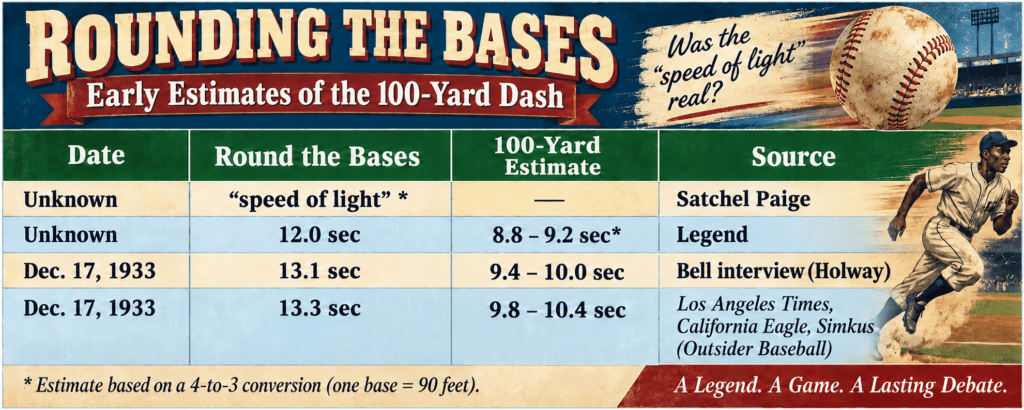
We can estimate Bell’s straight‑line speed using his recorded “round‑the‑bases” times. Four such times appear in the historical record:
Shadow Ball Player Speed
Even allowing for exaggeration, all four numbers are spectacularly fast. Paige’s story is entertaining; the 12‑second legend would still be a world record in 2026. But even the slowest verified number — 13.6 seconds, on a wet track, in December 1933, at age 30 — is extraordinary.
For comparison, the fastest Statcast‑measured modern time is Byron Buxton’s 13.85 seconds. A hand‑timed 13.6 and a fully automated 13.85 are essentially identical.
Thus, the record shows Bell was capable of roughly a 10‑second 100‑yard dash at a time when the world record stood at 9.5.
D. He was, and remains, the fastest baseball player ever
Here we enter the realm of opinion — but informed opinion. Using rate statistics from Seamheads (runs scored minus home runs, triples, and stolen bases, prorated per plate appearance), I rank the greatest Negro League speedsters as follows:
Oscar Charleston
Willard Brown
Cool Papa Bell
Bullet Rogan
Jimmie Lyons
Rap Dixon
Hurley McNair
George Shively
Turkey Stearnes
Cristóbal Torriente
Henry Milton, Sam Jethroe, and Doc Dudley would appear here as well but lack sufficient plate appearances to qualify.
Charleston and Bell stand out for combining elite speed with long careers. Bell finishing in the top three of this methodology confirms he was one of the fastest runners in Negro League history. Whether he was the fastest is debatable — Milton, Jethroe, Lyons, Shively, and several Hall of Famers could all stake a claim.
Conclusion
The correct answer is C.
Cool Papa Bell would have been a consistent 10‑flat or better 100‑yard runner at a time when the fastest sprinters in the world were posting 9.6, 9.5, and 9.4. Bell was exactly as fast as legend suggests — and unquestionably one of the fastest players ever to play the game.
Thanks to authors John Holway and Scott Simkus for their excellent work, to Satch and Cool for their stories, and to Mr. Durnitz for his question.
Last Week’s Shadow Ball Significa Question of the Week
Q: What was Atlanta’s most prolific Negro League franchise (in terms of years in the league)? A: The Atlanta Black Crackers — provided by Will Clark of Hackensack, NJ.
This Week’s Shadow Ball Significa Questions of the Week
In 1937, Monte Irvin joined the Newark Eagles under an assumed name — what was it? In 1942, Larry Doby joined the Newark Eagles under an assumed name — what was it?
Ted Knorr
Ted Knorr is a respected Negro League baseball historian, a longtime member of the Society for American Baseball Research’s Negro League Committee, and the founder of the Jerry Malloy Negro League Conference as well as several Negro League Commemorative Nights in central Pennsylvania.
Beyond his research and organizing work, Ted is frequently invited to speak at sporting events, community programs, family gatherings, and educational forums, where he brings Negro League history to life. His deep knowledge of the players, teams, and cultural impact of Black baseball has made him a trusted voice for audiences who want to understand the legacy and significance of the Negro Leagues.
Send questions or Significa answers to shadowball@truthseekersjournal.com or Shadow Ball, 3904 N Druid Hills Rd, Ste 179, Decatur, GA 30033.
Truth Seekers Journal thrives because of readers like you. Join us in sustaining independent voices.
Valeria Howard Cunningham’s Power 50 honor reflects her leadership in preserving Black Western heritage, expanding the Bill Pickett Invitational Rodeo, and creating generational opportunities through cultural stewardship.
By Milton Kirby | Washington, D.C. | September 4, 2026
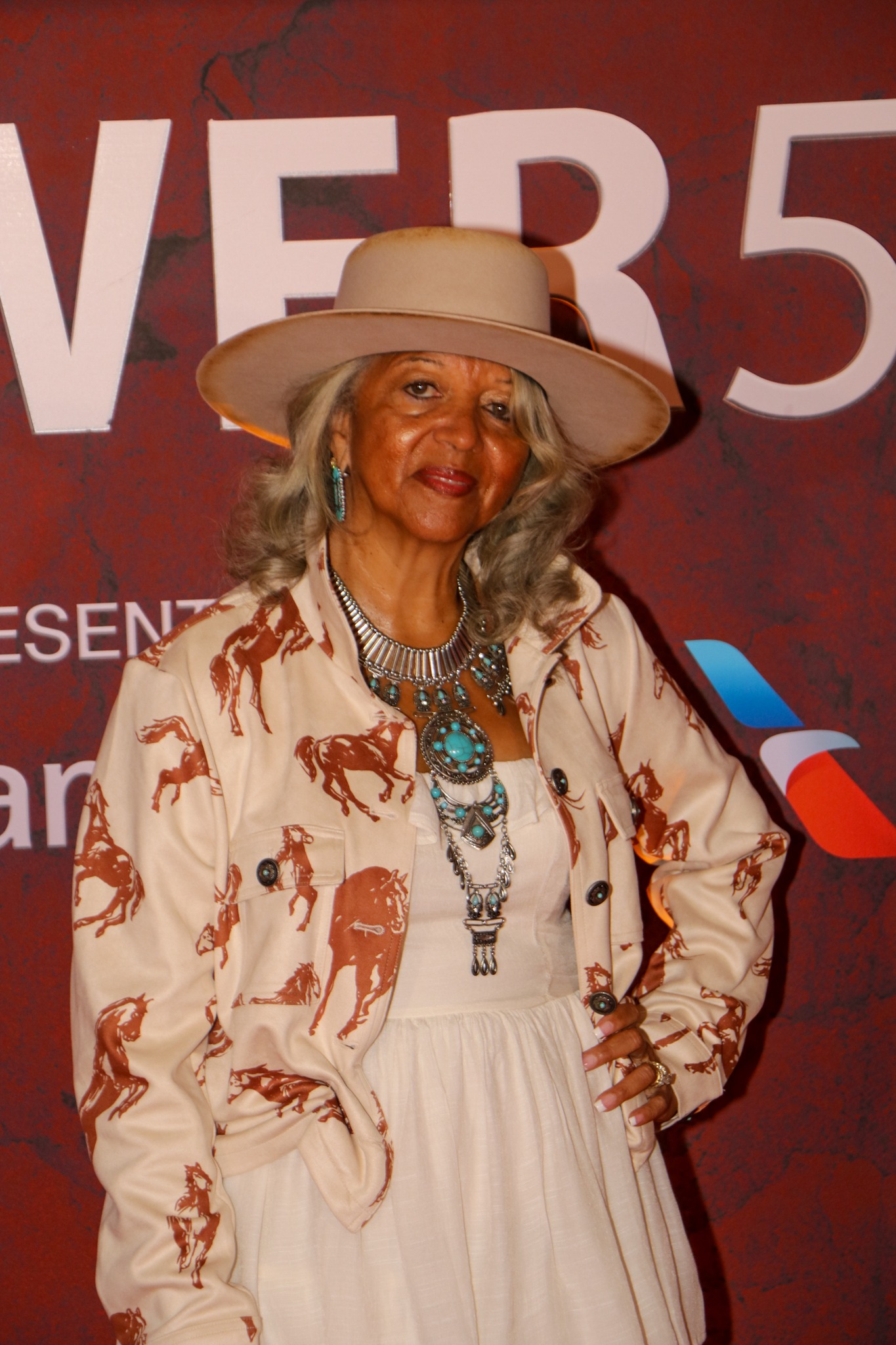
When Valeria Howard Cunningham was recognized as one of the U.S. Black Chambers, Inc. 2026 Power 50 Women of Influence, she was being honored for more than the title she holds.
For Cunningham, president and CEO of the Bill Pickett Invitational Rodeo, the recognition represented something else: responsibility.
“Being named a U.S. Black Chambers Power 50 Woman of Influence is both a tremendous honor and a humbling reminder of the responsibility that comes with leadership,” Cunningham told The Truth Seekers Journal.
That responsibility will soon bring Cunningham back to the Washington, D.C., area.
The return offers a fitting connection between recognition and responsibility: Washington celebrated Cunningham’s influence. In Upper Marlboro, audiences will see the institution she leads in motion.
That responsibility did not begin when she assumed the top leadership role.
Cunningham helped build the Bill Pickett Invitational Rodeo alongside her husband, founder Lu Vason, becoming deeply involved in both its business operations and cultural mission. After Vason’s death in 2015, she stepped into the lead role, assuming full responsibility for protecting the institution while guiding it into a new era.
She inherited the responsibility for an institution she had already helped shape.
What followed was the challenge of preserving its history, expanding its reach and ultimately defining what the organization would become under her leadership.
Taking the Reins
Vason founded the Bill Pickett Invitational Rodeo in 1984 after recognizing how rarely the contributions of Black cowboys and cowgirls were reflected in popular portrayals of the American West.
His answer was to create a rodeo where Black competitors could showcase their skills while audiences learned about a history many had never been taught.
Cunningham was part of building that vision.
She understood the business of the rodeo, its relationships and the cultural purpose behind it. But after Vason’s death, the responsibility changed.
The decisions were now hers.
So was the future.
She faced questions about whether the organization could survive the death of its founder and whether she could carry it forward.
Cunningham did more than keep it alive.
The national tour continued. Corporate and community partnerships were strengthened. Educational and cultural programming expanded. The organization developed initiatives connecting Black Western heritage with music, health, youth development and community engagement.
Today, the Bill Pickett Invitational Rodeo describes itself as the world’s only touring African American rodeo association. In 2026, it is celebrating its 42nd year while continuing to present Black cowboys and cowgirls before audiences around the country.
That transition from helping build the institution to becoming the person responsible for its direction reshaped Cunningham’s understanding of leadership.
“Success isn’t measured by the titles you hold,” Cunningham told TSJ.
Her measure is what happens because someone held the position: the lives affected, opportunities created and doors opened for others.
That philosophy helps explain why the Power 50 recognition carries significance beyond another honor for Cunningham.
Preserving History by Keeping It Alive
The U.S. Black Chambers’ Power 50 Women of Influence recognizes women whose leadership contributes to economic growth, social progress and generational impact.
Cunningham’s work touches all three, but perhaps nowhere is her influence clearer than in cultural preservation.
The American cowboy occupies an almost mythical place in the nation’s history. Yet the image created by generations of movies and television often left Black cowboys outside the frame.
They were never outside the history.
Black men worked as cowboys, ranch hands, horsemen and cattle drivers across the West after the Civil War. Their contributions helped build the cattle industry and Western communities, even as popular culture largely failed to tell their stories.
The Bill Pickett Invitational Rodeo challenges that omission every time it enters an arena.
History there is not presented behind glass.
It rides through the gate.
Young people can see Black cowboys and cowgirls competing in real time while encountering a Western history that includes people who look like them.
For Cunningham, that connection between past and future is essential.
Her work is not only about preserving history but ensuring that Black communities participate in telling it.
That means introducing another generation to the people whose contributions might otherwise disappear from public memory.
Creating Something for the Next Generation
Cunningham’s leadership has also extended well beyond the rodeo arena.
Through the Bill Pickett Invitational Rodeo Foundation, the broader mission includes scholarships, mentorship, educational programming, community engagement and youth development.
Among its programs is Rodeo for Kidz Sake, which introduces young people to Black Western history while giving them an opportunity to experience the rodeo and see Black cowboys and cowgirls in the arena.
The Foundation’s work reflects a basic principle running through Cunningham’s approach to leadership: influence has little value if it ends with the person who possesses it.
That same philosophy can be seen in the organization’s expanding cultural reach.
Under Cunningham’s leadership, BPIR has developed initiatives connecting Black Western heritage with music, including programs that create opportunities for emerging Black country artists and broaden the cultural experience surrounding the rodeo.
Health initiatives, youth programs and community partnerships have further extended the organization beyond competition.
The rodeo remains the centerpiece.
But the institution surrounding it has grown.
That growth changes how Cunningham’s Power 50 recognition can be viewed.
The honor places her among accomplished women from business, media, entertainment, finance, public service and other fields.
But Cunningham’s path is unusual.
Her platform is a rodeo.
Her classroom can be an arena.
And the history she is working to preserve includes people who helped build America but were largely absent from the version of the West generations of Americans encountered in popular culture.
That gives Cunningham’s leadership both a cultural and generational dimension.
The goal is not simply for audiences to remember Bill Pickett or Lu Vason.
It is for young people to understand that there is a history preceding them, and a place for them in the history still being written.
From Stewardship to Leadership
When Cunningham assumed full responsibility for the Bill Pickett Invitational Rodeo after Vason’s death, it would have been easy to describe her role simply as preserving her husband’s legacy.
More than a decade later, that description is incomplete.
Cunningham had already helped build the institution.
What came afterward required leadership of her own.
She had to lead competitors, families, sponsors and audiences through a transition after the death of the organization’s founder. She had to protect the history at the center of the rodeo while positioning BPIR for another generation.
She also had to decide where the organization could go next.
The continued national tour is one measure of that work.
The expansion of corporate and community partnerships is another.
So are the scholarships, mentorship programs, educational initiatives, youth development efforts and cultural programming that have widened BPIR’s influence beyond the arena.
Its ability to introduce new audiences to Black Western culture may be the most visible measure of all.
But Cunningham appears to measure her impact differently.
Not by titles.
Not simply by recognition.
But by what remains after the recognition is over.
That may explain why she described being named a Power 50 Woman of Influence as both an honor and a responsibility.
The award recognizes what she has already accomplished.
The responsibility concerns what she does next.
For Cunningham, that means continuing to tell a history too important to lose, creating opportunities for those coming behind her and ensuring that the institution she helped build is strong enough for another generation to inherit.
That work will continue Sept. 18 and 19 in Upper Marlboro, where the Bill Pickett Invitational Rodeo National Championship Finals will bring Black cowboys and cowgirls from across the country to The Show Place Arena for three performances and competition for more than $200,000 in cash and prizes.
This column exists for one reason: to answer your questions about Negro League baseball history. To fulfill that mission, we need your help.
If you read and enjoy this column, want it to continue, and haven’t already mastered every corner of Negro League history, we invite you to send us your questions. Your questions are the lifeblood of Shadow Ball—they determine where we go next—from players and teams to memorable games, historic events, and everything in between.
By submitting a question, you help shape the future direction of this column. Your participation is both important and greatly appreciated. In many ways, the continued existence of Shadow Ball depends on readers like you.
Joe Pomrenke, Harrisburg, PA posted: “I’d like to learn more about the famous 1933 East-West Classic.” Accordingly, today’s Shadowball column will endeavor to satisfy Joe’s curiosity/interest. Much of my knowledge on this subject comes from the research/writings of Lyle Spatz, Larry Lester, and Bob Lemoine. Lastly, I need to thank former APBA Game Company President Fritz Light, current President John Herson, and the late Negro League historian James A. Riley.
Major League Baseball hosted its initial all-star game on July 6, 1933, in Chicago’s Comiskey Park very much in conjunction with the 1933 Chicago World’s Fair. It was that international fair’s desire to incorporate some sort of athletic event into international exposition that sparked the imagination of Chicago Tribune Sports Editor Arch Ward. Due to his flamboyant promotional style Ward was known as ‘the Cecil B. DeMille of Sports”. In addition to the Major League Baseball All-Star game, Mr. Ward was instrumental in the creation of Golden Glove boxing (1928), the annual College All Star Football Game (1934), the initial professional World Basketball Tournament (1939), the All-American Football Conference (1946), as well as lesser events such as speed skating competitions, bowling tournaments and charity horse racing events.
The MLB game attracted a bigger crowd than the Negro League game but that was not always the case as Negro League attendance topped 40,000 on 8 separate occasions and outdrawing the Majors on several instances.
Willie Foster is the only pitcher to hurl a complete game in any all-star game on either side of the color line
Hall of Famers Babe Ruth and Mule Suttles hit the first HR in each of these inaugural events
Finally, 21 Hall of Fame players, two Hall of Fame managers, and two Hall of Fame umpires appeared in the July 6th NL/AL matchup. In contrast, only 12 Hall of Fame players (including East Manager Pop Lloyd appeared in the Negro League game underscoring my recurring theme of all Shadow ball articles – in order to properly represent the history of the National Pastime prior to 1947 the National Baseball Hall of Fame must induct more Negro League players. A good starting point would be the five Negro Leaguers that appeared in the September 10 game that have been on one or more Hall of Fame ballots and appeared in this first game: Rap Dixon, Dick Lundy, Fats Jenkins, Alex Radclif, and Vic Harris.
To finish this topic, utilizing the computer version – Baseball for Windows – of the APBA Major League Baseball Game I simulated several hundred All Star games between Major League Hall of Fame teams circa 1933 versus a team of Negro League Hall of Famers from that same era. The below line score provides some detail of a representative game that, in my imagination, took place in the afterglow of the July 6 and September 10th game. Of the 600 games that I simulated — the traditional Major League team won 301 times (50.2%) but was outscored by 72 runs over the 600-game schedule. In other words, the level of talent was identical on both sides of the color line just as I believe it actually was during baseball’s segregated era (1876-1946).
October 8, 1933
123 456 789 RHE
NeL 300 011 020 713 0 LP –William Bell
MLB 000 322 02 9 12 0 WP –Carl Hubbell
HR Gibson, NeL, Gehrig, Foxx, Klein
Attendance: 32, 634, 734 imagined
The Negro League out hit the traditional Majors 13 to 12 but left 7 baserunners on base whereas the trads left only 3
Rap Dixon threw out the Fordham Flash – Frankie Frisch – at home for the last out in the 8th.
The two squads hit for combined .262 batting average over the 600 simulated games … Babe Ruth out homered Josh Gibson 132 (34 per 154g) to 104 (27 per 154g)
Cool Papa Bell led the way with 28 steals beating out Oscar Charleston, 18, and Rap Dixon, 15.
Satchel Paige won the most games 73 and posted the highest winning percentage 55% while leading the way in shutouts 8 and strike outs 903
Readers can expect to see more use of the APBA/BBW simulator in upcoming articles.
Last Week’s Shadow Ball Significa Question of the Week
Who was Jackie Robinson’s Manager on April 15, 1947? No one offered at this query … it was Burt Shotton who led the Dodgers to pennants in ’47 and ’49.
Ted Knorr
This Week’s Shadow Ball Significa Question of the Week
What was the name of Atlanta’s most prolific franchise (in terms of years in the league) in the Negro Leagues?
Ted Knorr is a Negro League baseball historian, longtime member of the Society for American Baseball Research’s Negro League Committee, and founder of the Jerry Malloy Negro League Conference and several local Negro League Commemorative Nights in central Pennsylvania. You can send questions for Knorr on Negro League topics as well as your answers to the week’s Significa question to shadowball@truthseekersjournal.com or Shadow Ball, 3904 N Druid Hills Rd, Ste 179, Decatur, GA 30033
The Atlanta Dream is headed back to the WNBA playoffs.
Behind a career-high 31 points and 14 rebounds from Angel Reese, the Dream defeated the Phoenix Mercury 99-89 Saturday at Mortgage Matchup Center to clinch a postseason berth for the fourth consecutive season.
For Reese, it will be her first trip to the WNBA playoffs.
“It feels good to finally get here,” Reese said. “I want more than the playoffs. I want to walk away a champ and that’s why I came to Atlanta.”
The victory was Atlanta’s third straight and improved the Dream to 24-13 with seven games remaining in the regular season.
Atlanta has secured a place in the postseason, but the remaining games could determine whether the Dream opens the playoffs at home.
“You don’t want to peak too early and we are right where we want to be right now,” Reese said.
Reese Sets a Career High
Reese’s 31 points surpassed her previous career high of 27, set against Seattle in 2024.
She added 14 rebounds, four steals and two assists while recording her 25th double-double of the season and her third consecutive double-double.
Atlanta Dream – Angel Reese drills a jump shot – Dream courtesy photo
Reese has also produced at least 20 points, 10 rebounds and three steals in three consecutive games. She became the third player in WNBA history to accomplish that feat, joining A’ja Wilson and Nneka Ogwumike.
“She keeps getting better,” Dream Head Coach Karl Smesko said. “She was scoring in a multitude of ways.”
Reese was not Atlanta’s only scoring threat.
Rhyne Howard finished with 20 points, five assists, three rebounds and two steals. It was Howard’s 15th game this season with at least 20 points.
Allisha Gray scored 17 points and added five rebounds and four assists.
Jordin Canada finished with 12 points, five assists, two steals and a season-high two blocks.
Isobel Borlase contributed a career-high six assists.
Canada, Gray, Howard and Reese all scored in double figures.
Atlanta is now 24-8 with a starting lineup of Canada, Gray, Howard, Naz Hillmon and Reese.
Dream Comes Out Firing
Atlanta established control early.
The Dream built a 29-18 first-quarter lead behind six 3-pointers and eight assists.
Howard was especially aggressive from outside. All seven of her first-quarter field goal attempts came from behind the 3-point line, and she made four.
Atlanta’s defense was just as effective.
The Dream held Phoenix to 26.7% shooting in the opening quarter.
“Today the way we started, and the last two games, the way we came out, we came out with a lot of aggression on the defensive end, which got our offense going, and we were able to maintain that throughout the last two games,” Canada said.
The Dream’s 3-point shooting cooled considerably in the second quarter. Atlanta made only one of eight attempts from beyond the arc.
But the Dream found another way to score.
Atlanta attacked inside and extended its lead to 50-35 by halftime.
The Dream eventually finished with 48 points in the paint and shot 87.5% from the free-throw line.
Phoenix Erases Most of the Lead
A game that Atlanta appeared to have under control changed quickly in the third quarter.
Phoenix shot 59.1% from the field during the period and made five of seven shots from 3-point range.
With 45 seconds remaining in the quarter, the Mercury had cut Atlanta’s lead to one.
Madina Okot made two free throws to give the Dream a 71-68 advantage. Howard then ended the quarter with a bank shot that sent Atlanta into the fourth leading 73-68.
The Dream still had the lead.
Smesko, however, saw a stretch of basketball that could prove much more costly in the postseason.
He said Atlanta cannot afford another five-minute stretch like the one it had to begin the third quarter. The Dream failed to run sets correctly, did not get back on defense and allowed too many layups.
“It’s hard to play great for 40 minutes but that’s the goal,” Smesko said.
Atlanta Responds
The Dream did not allow Phoenix’s third-quarter momentum to carry into the fourth.
Atlanta opened the final period with a 6-2 run to rebuild its advantage to 79-70.
This time, Phoenix did not come back.
Atlanta maintained control through the remainder of the fourth quarter and closed out the 99-89 victory.
“It was good to see us regroup, get the win, and qualify for the playoffs,” Smesko said.
The Dream forced 16 Phoenix turnovers and turned them into 18 points. Atlanta also recorded 12 steals.
Those numbers help explain how Atlanta survived a night when Phoenix nearly erased a 15-point halftime deficit.
But Smesko’s concern about the third quarter also provides a glimpse at what comes next.
The Dream has accomplished one goal.
It has reached the playoffs.
Now Atlanta has seven regular-season games to improve its postseason position and eliminate the stretches that could turn a playoff game in the wrong direction.
The Goal Gets Bigger
For a team that has now qualified for the postseason four consecutive years, simply getting there does not have to be the final measure of success.
The Dream still has an opportunity to earn home-court advantage in the opening round.
Atlanta also enters the final portion of the regular season with Reese producing some of the best numbers of her career and Howard, Gray and Canada providing additional scoring.
The win in Phoenix demonstrated why the Dream can be dangerous.
Atlanta defended, forced turnovers, scored inside and had four starters finish in double figures.
It also demonstrated what still needs work.
A 15-point halftime lead nearly disappeared during one quarter.
Atlanta responded before it cost the Dream the game.
That response allowed the Dream to leave Phoenix with its third consecutive victory and, more importantly, a guaranteed place in the postseason.
The four-game road trip concludes Monday in Los Angeles.
The question facing Atlanta is no longer whether it will reach the playoffs.
It is what the Dream will do once it gets there.
Reese has already made clear what she wants.
“I want more than the playoffs,” Reese said. “I want to walk away a champ.”
Ninety years after Jesse Owens won four gold medals in Berlin, his triumphs and treatment at home reveal a powerful American contradiction.
On August 9, 1936, Jesse Owens completed one of the greatest performances in Olympic history. What happened before Berlin made him a champion. What happened afterward tells a larger American story.
Ninety years ago, on August 9, 1936, Jesse Owens stepped onto the track inside Berlin’s Olympic Stadium for one final race.
He had already won three gold medals.
The 100 meters.
The long jump.
The 200 meters.
Now came the 4×100-meter relay.
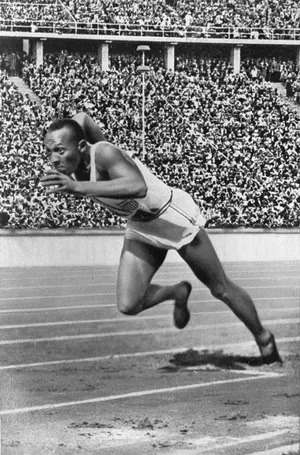
Owens joined Ralph Metcalfe, Foy Draper and Frank Wykoff on the American team. They crossed the finish line in 39.8 seconds, setting a world record and giving Owens his fourth gold medal of the 1936 Olympic Games.
Four events.
Four gold medals.
All accomplished by a 22-year-old Black American competing in Nazi Germany.
Owens became the most successful athlete of the Berlin Games and the first American track and field athlete to win four gold medals at a single Olympics. His feat would not be matched in the same four events until Carl Lewis accomplished it at the 1984 Los Angeles Olympics.
But 90 years later, Jesse Owens deserves to be remembered for more than what happened during those seven remarkable days in Berlin.
His story began in a sharecropping family in Alabama. It carried him through segregation, poverty and discrimination. It took him to Ohio State University, where he became one of the greatest college athletes in history while being denied some of the basic privileges available to his white teammates.
Then it took him to Berlin, where his performance offered a powerful answer to Adolf Hitler’s theories of racial superiority.
And finally, it brought him home to an America that celebrated his victories while still denying him equality.
That part of the story deserves remembering, too.
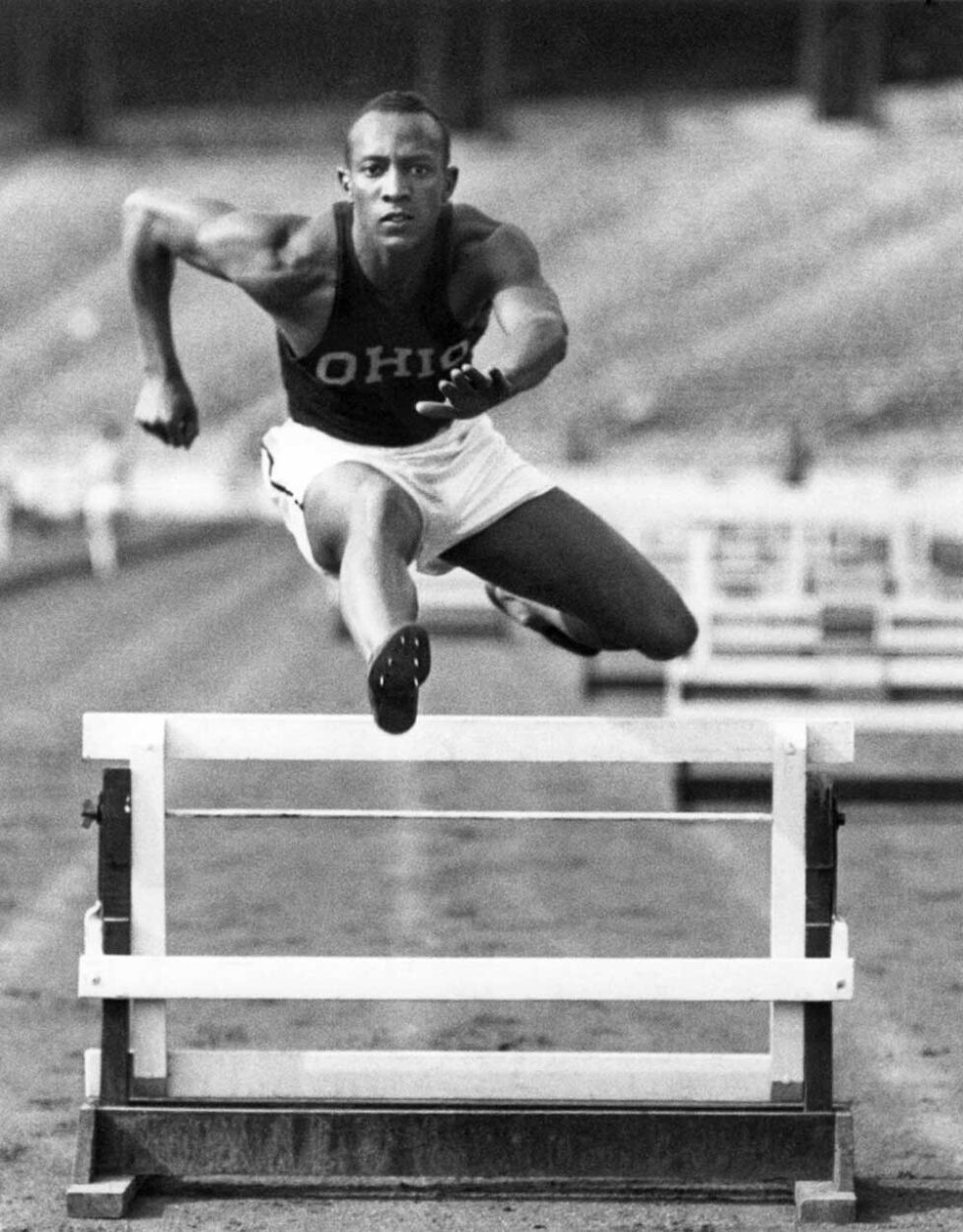
Jesse Owens – Photo courtesy of Britannica
From Alabama to Cleveland
James Cleveland Owens was born September 12, 1913, in Oakville, Alabama. He was the youngest of 10 children and the grandson of an enslaved person.
His father was a sharecropper.
When Owens was nine years old, his family moved to Cleveland, Ohio, as part of the Great Migration, the movement of millions of Black Americans out of the rural South in search of greater opportunity elsewhere.
He arrived in Cleveland known as “J.C.”
According to the familiar story, when a teacher asked his name, Owens answered “J.C.” His Southern accent led her to believe he had said “Jesse.”
The name stayed with him for the rest of his life.
So did something else that was becoming increasingly clear.
Jesse Owens could run.
Coach Charles Riley recognized the youngster’s talent and helped develop it. Because Owens worked after school, Riley allowed him to practice before school.
By high school, Owens was becoming a national sensation.
At the 1933 National High School Championships, he tied the world record in the 100-yard dash at 9.4 seconds and established a national high school record in the 220-yard dash.
Colleges noticed.
Owens eventually chose Ohio State University.
The Buckeye Bullet
At Ohio State, Owens became known as the “Buckeye Bullet.”
His performances were extraordinary.
He won eight individual NCAA championships, four in 1935 and four in 1936. During his 1936 season, Owens reportedly won all 42 events he entered.
But athletic greatness did not erase race.
Owens received no athletic scholarship. He worked several jobs to support himself and his family while attending school and training.
He operated an elevator at night. He waited tables. He worked in library stacks. He pumped gas. He also served as a page at the Ohio Statehouse.
And although he competed for Ohio State, Owens could not live on campus with white athletes.
When the team traveled, segregation followed him. He sometimes had to order food rather than eat with his teammates and stay in hotels that accepted Black guests.
The contradiction was already taking shape.
Ohio State could put Jesse Owens in its uniform.
It could depend upon his speed to win championships.
But the racial customs of the time still determined where he could sleep and eat.
Then came May 25, 1935.
Perhaps the Greatest 45 Minutes in Sports
Owens arrived at the Big Ten Championships in Ann Arbor, Michigan, with an injured back after falling down a flight of stairs.
He was not certain he could compete.
Owens reportedly persuaded his coach to let him try the 100-yard dash as a test.
He ran it in 9.4 seconds, tying the world record.
He kept going.
Over roughly the next 45 minutes, Owens set records in event after event.
He broke the world record in the long jump with a leap of 26 feet, 8 1/4 inches. He set records in the 220-yard dash and the 220-yard low hurdles.
His performances in the longer races also bettered the corresponding metric records.
His long jump world record would stand for 25 years.
What Owens accomplished that afternoon has often been described as one of the greatest single-day performances in sports history.
He had proven himself ready for the Olympic Games.
The setting awaiting him would make those Olympics unlike almost any before or since.
Berlin
The 1936 Summer Olympics opened in Berlin under the rule of Adolf Hitler and Nazi Germany.
The Nazi government intended the Games to showcase a powerful Germany before an international audience.
Race was impossible to separate from that presentation.
Nazi ideology promoted the supposed racial superiority of Aryan people while persecuting Jews and other groups the regime considered inferior.
Into that environment walked Jesse Owens.
On August 3, he won the 100 meters in 10.3 seconds.
On August 4, Owens won the long jump with a leap of 26 feet, 5 inches.
On August 5, he captured the 200 meters in 20.7 seconds.
Then, on August 9, Owens and his teammates won the 4×100-meter relay in a world-record 39.8 seconds.
Owens had entered four events.
He won four gold medals.
The symbolism was impossible to ignore.
A Black American had become the dominant athlete at an Olympic Games hosted by a regime preaching racial hierarchy.
Yet one part of the story commonly told about Berlin deserves a closer examination.
What Really Happened With Hitler?
Generations of Americans learned that Hitler personally refused to shake Jesse Owens’ hand after the Black athlete defeated Germany’s competitors.
The historical record is more complicated.
Early in the Olympics, Hitler congratulated selected winners. Olympic officials then told him he would have to greet every medalist or none of them.
Hitler chose not to greet medalists.
Owens himself later disputed the simple version of the story that Hitler had personally singled him out for a snub. He recalled Hitler waving toward him and said he waved back.
None of that changes the racial ideology of Nazi Germany or the significance of Owens’ victories.
But it does change where Owens himself placed responsibility when discussing how he had been treated.
His most pointed complaint was not about Hitler.
It was about his own president.
“It Was Our President Who Snubbed Me”
President Franklin D. Roosevelt never received Jesse Owens at the White House following his four Olympic victories.
He did not send Owens a congratulatory telegram.
And Owens remembered.
Later that year, while speaking at a Republican political event, he said:
“Hitler didn’t snub me. It was our president who snubbed me.”
Owens added that the president had not even sent him a telegram.
The statement becomes even more significant when viewed against records preserved by the National Archives.
While Owens was still competing in Berlin, Americans were already writing to Roosevelt about how the returning Olympians should be treated.
The Rev. Ernest Hall of Cleveland specifically urged Roosevelt to officially receive the successful Olympic competitors upon their return without regard to their race or color.
The White House did not do so.
Owens was not the only Black American representing the country in Berlin. Eighteen Black athletes competed for the United States during the 1936 Olympics.
None received the kind of presidential reception that might seem routine for American Olympic heroes today.
Why Roosevelt made that decision has been debated for decades.
It came during an election year. Roosevelt’s political coalition included growing numbers of Black voters in Northern cities while also relying heavily on powerful white Southern Democrats. Many of those Southern politicians defended segregation and opposed federal action on civil rights.
Those political realities are part of the historical record.
So is another fact.
The president of the United States had an opportunity to publicly receive Jesse Owens and the other Black Olympians.
People asked him to do it.
He did not.
Readers can decide for themselves what that meant.
Celebrated on Broadway, Segregated at the Hotel
America did celebrate Owens when he returned.
New York City welcomed him with a ticker-tape parade through Manhattan’s Canyon of Heroes.
Crowds cheered.
The young man from Oakville, Alabama, had returned home as one of the most famous athletes in the world.
Then came a reminder of the America to which he had returned.
A reception was held in Owens’ honor at the Waldorf-Astoria hotel.
Yet the guest of honor was reportedly not permitted to enter through the hotel’s main entrance.
Owens had to use a freight elevator to reach the reception honoring him.
The scene almost requires no commentary.
A Black man could represent the United States before the world.
He could win four Olympic gold medals.
He could stand beneath the American flag while the national anthem played.
He could receive a parade down Broadway.
But he still could not necessarily walk through the front door.
Four Gold Medals Could Not Feed a Family
Olympic fame did not make Owens wealthy.
The modern world of multimillion-dollar shoe contracts, television advertising and corporate sponsorships did not exist for athletes in 1936.
For Black athletes, opportunities were more limited still.
Owens’ competitive career also ended quickly after Berlin. After leaving a demanding European exhibition tour, he lost his amateur eligibility.
He had a wife and children to support.
So Jesse Owens worked.
Over the years, he held jobs, promoted sporting events and operated businesses. At times he participated in exhibition races against motorcycles, automobiles and even horses.
People later questioned why one of history’s greatest runners would race a horse for money.
Owens had an answer.
He had four gold medals.
But, as he explained, you could not eat them.
The remark captured another side of American sports history.
The nation could cheer a Black champion without necessarily creating a path for that champion to turn accomplishment into economic security.
More Than an Athlete
But reducing Jesse Owens’ post-Olympic life to struggle would also be incomplete.
He built another life.
Owens became a businessman, public speaker, corporate representative and advocate for young people.
His work as a playground director in Cleveland helped begin a lifelong commitment to youth. After moving to Chicago, he continued working with organizations serving young people, including the Chicago Boys’ Club.
In 1955, President Dwight D. Eisenhower enlisted Owens as a goodwill ambassador. He traveled overseas promoting sports and representing the United States.
Owens eventually became a highly sought-after speaker, addressing schools, churches, civic groups, business organizations and young people.
The man once denied equal treatment while representing America increasingly became one of America’s representatives to the world.
Official recognition eventually followed.
The White House, Four Decades Later
On August 5, 1976, President Gerald Ford presented Jesse Owens with the Presidential Medal of Freedom.
Forty years had passed since Berlin.
In 1979, Owens returned to the White House again, where President Jimmy Carter honored him as a Living Legend.
The recognition arrived late in Owens’ life.
He died from lung cancer on March 31, 1980, in Tucson, Arizona.
He was 66.
After his death, Carter remembered Owens as far more than a runner. He described him as a symbol of the struggle against tyranny, poverty and racial bigotry.
Ten years later, Owens was posthumously awarded the Congressional Gold Medal.
His name now appears on schools, roads, parks and athletic facilities.
USA Track & Field’s annual award honoring leading athletes bears the Jesse Owens name.
And the Jesse Owens Foundation continues the family’s work of helping young people develop their talents, broaden their horizons and reach their potential.
Four Gold Medals, Two Americas
It would be easy to end Jesse Owens’ story in Berlin.
Four races.
Four gold medals.
A Black athlete standing victorious in Adolf Hitler’s Germany.
That story is inspiring.
It is also incomplete.
Jesse Owens’ life asks us to remember what happened before Berlin and what happened when he returned home.
He grew up in a sharecropping family.
He became one of America’s greatest college athletes without receiving an athletic scholarship.
He represented a university whose racial customs prevented him from living with his teammates.
He represented the United States in Germany and became the greatest athlete of the Olympic Games.
He returned to a ticker-tape parade but still encountered segregation.
And despite four gold medals, the president of the country he represented never invited him to the White House.
Those are facts.
Why America could celebrate Jesse Owens abroad while denying him equality at home is a larger question.
Ninety years later, perhaps we do not need to answer it for our readers.
Perhaps Jesse Owens’ life provides enough evidence for them to answer it themselves.
On August 9, 1936, Owens crossed his final Olympic finish line and secured his fourth gold medal.
Ninety years later, we remember the speed.
We remember the records.
We remember the medals.
But we should also remember the man.
Jesse Owens did more than run against a stopwatch.
He ran through barriers that his country had placed before him.
And history is still catching up.
Support open, independent journalism. Your contribution helps us tell the stories that matter most.
This column exists for one reason: to answer your questions about Negro League baseball history. To fulfill that mission, we need your help.
If you read and enjoy this column, want it to continue, and haven’t already mastered every corner of Negro League history, we invite you to send us your questions. Your questions are the lifeblood of Shadow Ball—they determine where we go next—from players and teams to memorable games, historic events, and everything in between.
By submitting a question, you help shape the future direction of this column. Your participation is both important and greatly appreciated. In many ways, the continued existence of Shadow Ball depends on readers like you.
This week’s query is submitted by reader George Schuyler, Topeka, KS, which “Major” Negro League lasted the longest?
Let me begin with, thank you George … I very much appreciate this question, I don’t think – even I – can get this one wrong. Here are the seven leagues (and spans) designated as “major” by Major League Baseball on December 16, 2020:
LEAGUE SPAN YEARS
Negro National League 1 1920-1931 12
Eastern Colored League 1923-1928 6
American Negro League 1929 1
Negro Southern League 1932 1
East-West League 1932 1
Negro National League 2 1933-1948 16
Negro American League 1937-1948 12
The list answers the question – the 2nd Negro National League, founded by Gus Greenlee, January 1933, lasted longer than any other Major Negro League and stands behind only the National and American League (now in its 151st season) and the American League (in its 126th season) among all thirteen leagues designated as Major.
Shadow Ball Significa Questions for the past two issues
July 21 Significa “What former Memphis Red Sox player worked at the Peabody Hotel in Memphis after his retirement from baseball?” was incorrectly reported last issue as not having been answered by anyone … turns out that Kevin Johnson, Broken Arrow, OK, submitted the correct answer, Nat Rogers, just minutes after the issue dropped. Sorry about that KJOK.
July 28 Significa “What pitcher won the last Negro League World Series game?” also provided some controversy. A reader offered Wilmer Fields, as the winner, which is confirmed as such at Retrosheet Negro League game files. However, there is no box score but there as a line score showing that R.T. Walker pitched 9 innings before being relieved in the bottom of the 10thwith his team – after a four spot in the top of the 10th– up by four. Further, in Irv Goldfarb’s SABR biography of R.T. Walker he states that Walker “was awarded the victory.” My current reading of MLB rule 10.19 a, b indicates to me that Walker is the winner having pitched 9 innings and being relieved with the lead. In addition, I asked a local Minor League official scorer and he told me that he would credit the win to Walker. Finally, it turns out that the 10.19 rule that is currently in effect was not in effect in 1948 Major League Baseball let alone the Negro National or American Leagues. Prior to 1950 victories were awarded by the official scorer and usually in accordance with today’s current rules.
Ted Knorr
This Week’s Shadow Ball Significa Question of the Week
Who was Jackie Robinson’s Manager on April 15, 1947?Send your answer, along with your comments/questions about the Negro Leagues, to shadowball@truthseekersjournal.com
or mail them to:
Shadow Ball 3904 N. Druid Hills Road
Suite 179 Decatur, GA 30033
Ted Knorr is a Negro League baseball historian, longtime member of the Society for American Baseball Research’s Negro League Committee, and founder of the Jerry Malloy Negro League Conference and several local Negro League Commemorative Nights in central Pennsylvania.
Support open, independent journalism. Your contribution helps us tell the stories that matter most.
Kween Jacqueline Merrill wins the Soul Country Music Star Atlanta Regional, advancing to Los Angeles after four Black country artists compete at the Georgia International Horse Park.
Four distinct voices competed at the Georgia International Horse Park as Soul Country Music Star brought its search for emerging Black country artists at the BPIR rodeo
By Milton Kirby | Conyers, GA | August 9, 2026
Four artists entered the Soul Country Music Star Atlanta Regional carrying different sounds, stories and interpretations of what Soul country music can be.
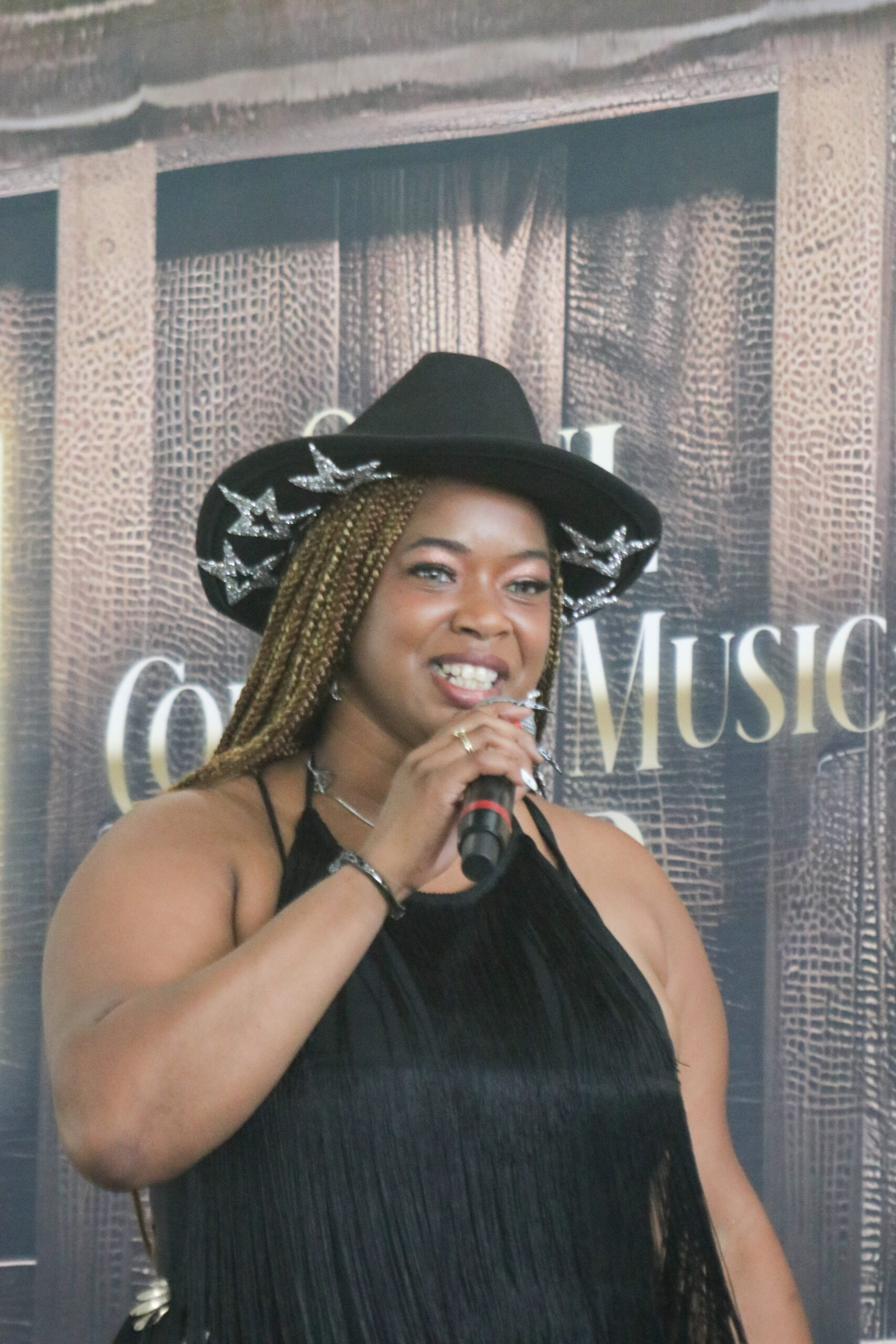
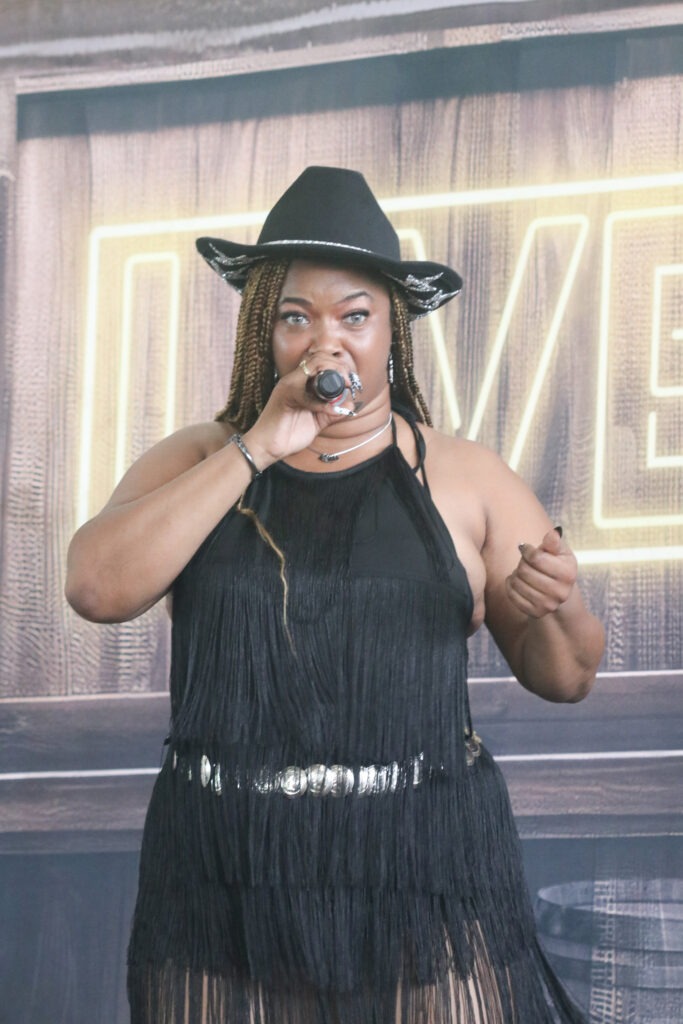
By the end of the opening round, Reggie Stacy and Kween Jacqueline Merrill remained. Each returned to the stage at the Georgia International Horse Park on August 1 to perform one final song before the judges made their decision.
Jacqueline Merrill – Photo by Milton Kirby
Merrill was named the 2026 Atlanta Regional champion, earning a place in the national finals in Los Angeles and moving one step closer to the competition’s $10,000 grand prize.
For an artist who had spoken with The Truth Seekers Journal days earlier about faith, motherhood, personal loss, health struggles and perseverance, the victory marked another chapter in a journey that began in church when she was a child.
“It feels like I listened to God and it all worked out,” Merrill said after winning.
Now, the Road from Atlanta to Hollywood belongs to her.
Four Artists, Four Different Sounds
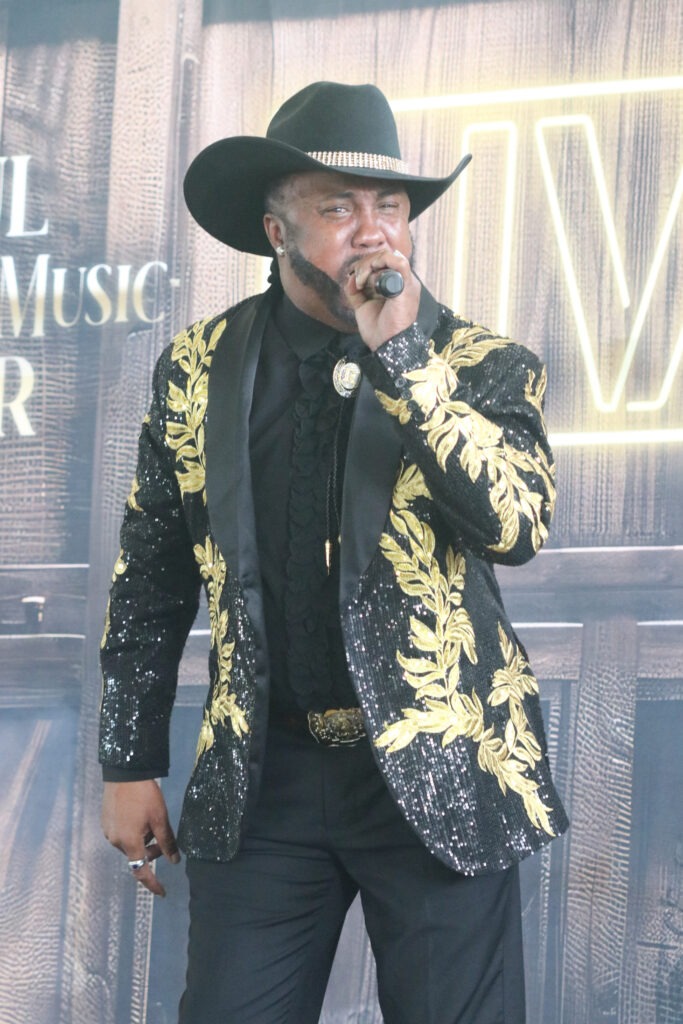
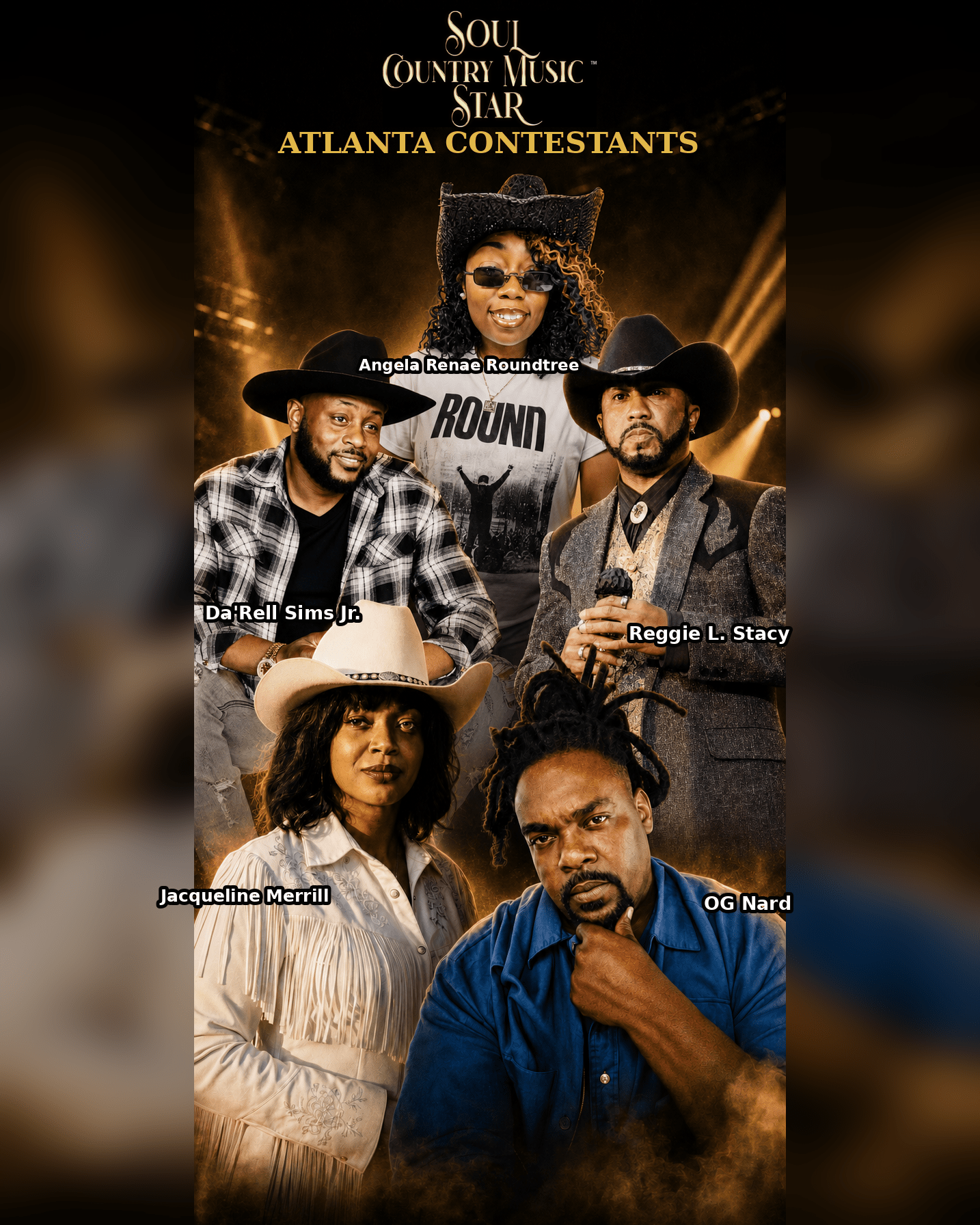
Presented as part of the Bill Pickett Invitational Rodeo’s Soul Country Rodeo Experience, the Atlanta SCMS Regional featured Angela Roundtree, Bernard “OG Nard” Stephens, Stacy and Jacqueline Merrill.
Roundtree brought gospel-rooted expression and a belief in performing with authenticity, emotion and meaning. OG Nard introduced what he calls “Trapp Kountry,” blending country storytelling, Southern Soul and contemporary urban influences. Stacy arrived with years of performance experience and an appreciation for country music shaped by artists including Charley Pride and Chris Stapleton.
Merrill brought perhaps the most difficult sound to categorize. She is a singer, songwriter, rapper, country artist and gospel performer, but she has never viewed those descriptions as competing identities. To her, they are all parts of the same artist.
Her relationship with music began in church. At five years old, she led her first song in the Church of God in Christ, and music remained part of her life through motherhood, hardship, health challenges and loss. Rather than separating those experiences from her artistry, she incorporated them into it.
In Atlanta, Merrill also performed an original song written specifically for the Bill Pickett Invitational Rodeo. Before the competition, she told TSJ what she wanted audiences to take away from her music.
“If I made you feel something,” Merrill said, “then I’ve done my job.”
On August 1, she also convinced the judges.
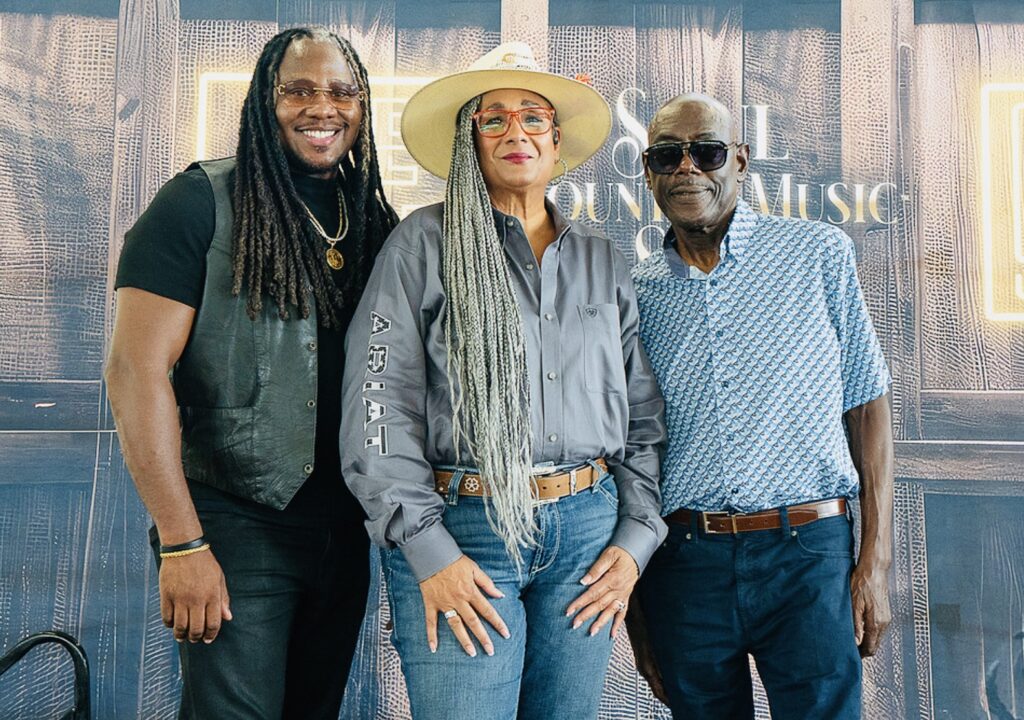
SCMS Atlanta Judges L to R Debonair DJ PNUT, Dr, Acynthia Villery & Rickey Davis Scott – Photo by Richard DuCree
Down to the Final Two
After the opening round, Stacy and Merrill performed again before three judges; Dr. Acynthia Villery, the BPIR rodeo announcer and influencer, Music Producer and Talent Scout Rickey Davis Scott and V-103FM Debonair DJ Pnut.
Their comments throughout the competition revealed that strong vocals alone were not enough. Stage presence, song selection and artistic identity also mattered, as did understanding the distinction between Southern Soul and the Soul Country sound the competition was seeking.
OG Nard, for example, was praised for his energy and ability to command attention. The judges also noted that some of his song choices leaned more toward Southern Soul and encouraged him to build a stronger connection to Soul Country.
Reggie Stacey – Photo by Milton Kirby
The critique highlighted a challenge for artists working in a musical space that is still defining itself. Soul Country does not require performers to abandon gospel, blues, Southern Soul, hip-hop or the other influences that shaped them. Instead, artists are challenged to show how those influences can live within country music while preserving the storytelling at the heart of the genre. That’s the goal.
In that context, song selection becomes more than a showcase for a performer’s voice. It becomes a statement about who the artist is.
Bringing Soul Country into the Rodeo
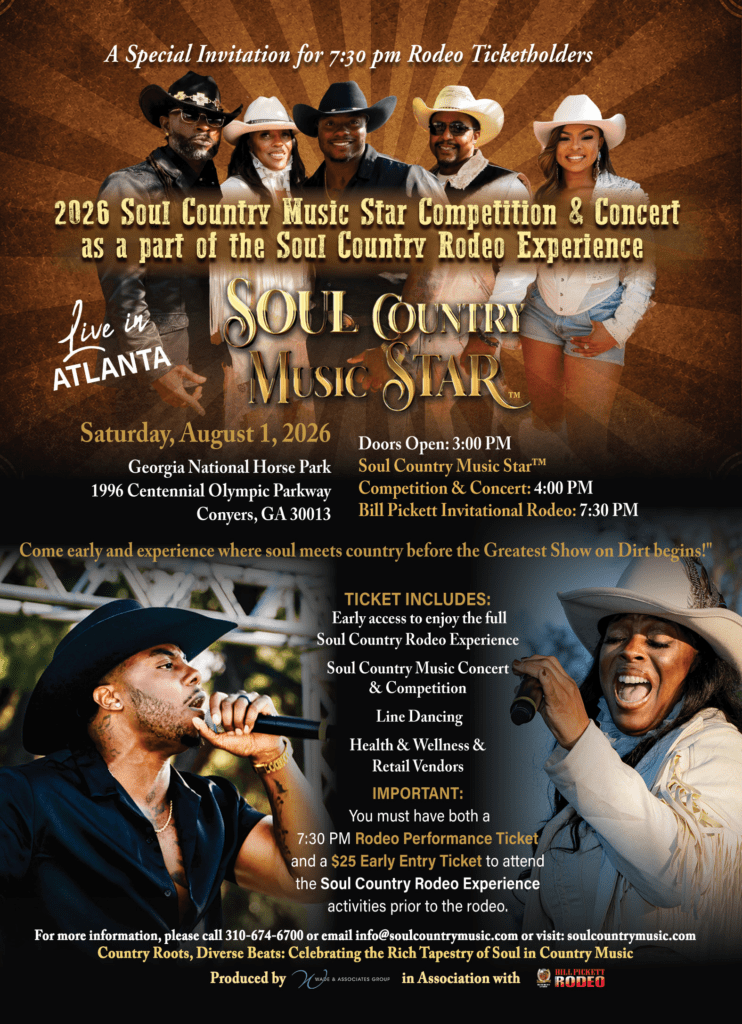
The Atlanta event marked a new approach for Soul Country Music Star and the Bill Pickett Invitational Rodeo. Margo Wade LaDrew, founder and creator of Soul Country Music Star, told the audience that the competition had traditionally been presented as a separate Friday night event. In Atlanta, organizers brought it directly into the rodeo experience.
When Wade LaDrew asked whether the audience enjoyed seeing Soul Country Music Star incorporated into the rodeo, the response came in cheers.
“This was something we wanted to try and do here at the rodeo,” she told the crowd, explaining that organizers could consider incorporating the competition into future rodeo programming.
The pairing is a natural one. For more than four decades, the Bill Pickett Invitational Rodeo has celebrated the often-overlooked history of Black cowboys and cowgirls while providing a national platform for Black Western culture. Soul Country Music Star extends that mission into music.
Black musicians have been part of country music since its earliest development, even when their contributions were overlooked or separated from the genre’s mainstream story. Although Black country artists are receiving greater visibility today, Wade LaDrew reminded the Atlanta audience that the work is not finished.
“As you know, the genre is just starting to open up, but we still have a long way to go,” she said.
Her request was straightforward: support the artists, follow them, share their music and help build the audiences their careers need to grow.
Wade LaDrew also recognized Valeria Howard Cunningham, president and CEO of the Bill Pickett Invitational Rodeo, for supporting opportunities for Black country artists. She thanked Soul Country Music Star producer Michelle Johnson, the judges, SCMS show host Kirk Jay, DJ Tiffany Guess and others who helped bring the competition into the Atlanta rodeo.
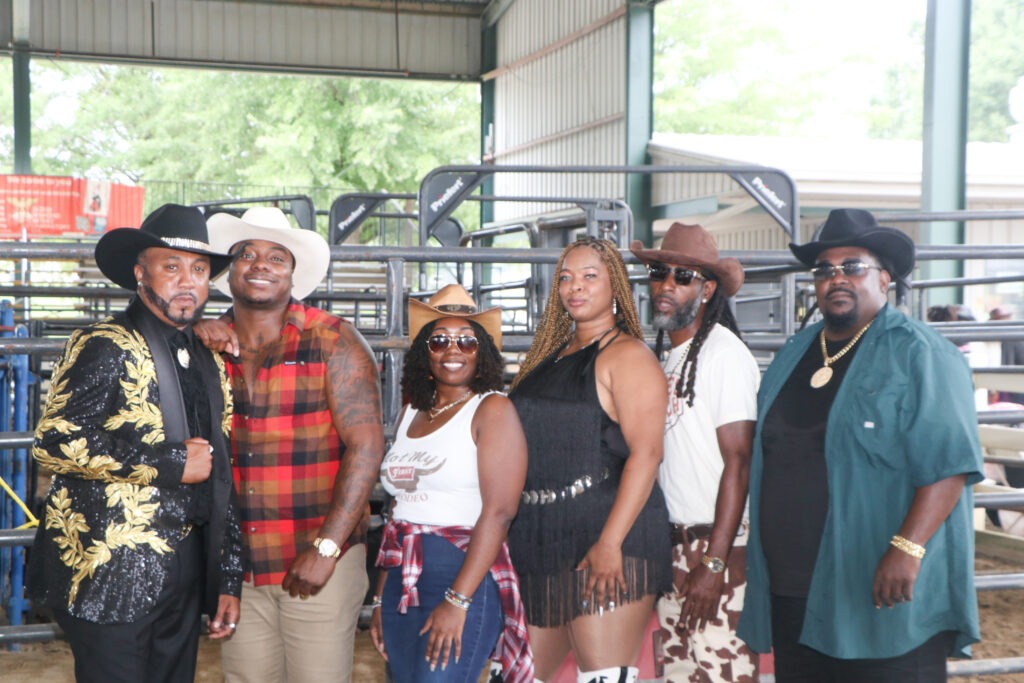
L – R – Reggie Stacey, Kirk Jay, season 1 winner, Angela Roundtree, Jacqueline Merrill, Nathaniel “Mr. Bowleggs” Dansby, season 2 winner & Bernard “OG Nard” Stephens – Photo by Milton Kirby
The Road to Hollywood
Merrill’s victory placed her alongside Brenda Guy, Dallas-Fort Worth Regional winner; Silas Reed IV, Memphis Regional winner; and Glenn Stanton, Los Angeles Regional winner.
One regional competition remains before the national finals. The Washington, D.C./Maryland Regional is scheduled for September 18 at The Show Place Arena in Upper Marlboro, Maryland.
The regional champions will then travel to Los Angeles for the Soul Country Music Festival and National Finals on October 31 and November 1, where they will compete for the $10,000 grand prize and the Soul Country Music Star national title.
Only one artist could become Atlanta’s regional champion, but something larger also happened at the Georgia International Horse Park. Four Black artists were given a stage to present four different visions of where country music can go, and another audience heard performers who might not have received the same opportunity a generation ago.
For Merrill, Atlanta was not the finish line. It was another door.
This column exists for only one purpose: that is to answer your questions on Negro League baseball history. To that end, we need your help … if you are reading this column, enjoy it, want it to continue, and do not already know everything about Negro League history … then please submit a question on any aspect of Negro League history. Your questions are the lifeblood of Shadow Ball—they shape where we go next … players, teams, events, and more – and, in so doing, you will direct where this column goes moving forward. Your participation is important and appreciated. The very existence of this column depends on you. Submit your questions to shadowball@truthseekersjournal.com.
Given the level of talent in the Negro Leagues and so few slots opened in the major leagues, why and when did the Negro League collapse? Elston Hoskins, Saint Charles, Missouri
Before getting to the “why and when” I want to recognize the astute preamble to your query which correctly notes that the available, unfettered by recognized contracts, talent of Negro League represented the greatest source of talent in the history of the game. Simultaneously, with 15 franchises in opposition to the thought of integration in this moment of time due to racism, ignorance, poor judgement or whatever rationale one wants to invent the process of bringing talent of color to the Majors was painfully slow despite a demonstrated high reward as the below illustration shows:
One would think such slow movement from the Negro Leagues would postpone, as Mr. Hoskins’ question implies, the inevitable collapse, sic, of the Negro Leagues. The reality was that Negro League baseball fans for several reasons – racial pride, quality of play, media attention (and lack thereof) – almost immediately began an exodus from a viable entertainment source and major African American business to the American and National Leagues
I think the “Why” has been covered. For me, the “When” is simultaneous with Jackie Robinson’s final exit from the Kansas City Monarch locker room in August 1945. However, with no players of color on Major League rosters in 1946 I count that year as the last where the Negro Leagues should be considered major.’. Major League itself is a little more forgiving in its definition, by edict on December 16, 2020, of Major Leagues includes the Negro National and Negro American League through 1948. The Society for American Baseball Research extends its Major league imprimatur through the 1950 season. All three of us (MLB, SABR and myself) recognize that the Negro Leagues specifically the Negro American League sputter on, descending in quality and quantity until 1960 or ’61.
Last Week’s Shadow Ball Significa Question of the Week
Which former Memphis Red Sox player worked in various roles at the Peabody Hotel after his baseball career ended? Nat Rogers, himself a veteran of over twenty years at the highest level of baseball permitted, hit .305 with an OPS+ of 111 and better than average fielding percentage and range factor in all three outfield positions, who must be considered a solid Major League outfielder. After his playing days were over, he worked in various capacities at the Peabody Hotel in Memphis and was as much a favorite with that clientele as with baseball fans. No reader submitted a guess so this week’s question, hopefully, will be a bit more inviting.
This Week’s Shadow Ball Significa Question of the Week
Ted Knorr
Which pitcher won the last “Major League” Negro League World Series game? Send your answer, along with your comments/questions about the Negro Leagues, to
The stage in Atlanta will introduce only one new regional champion, but the story of Soul Country Music Star stretches far beyond a single performance or a single city.
Across the country, artists are stepping onto stages with different voices, different life experiences, and different reasons for making music. Some are seasoned performers. Others are chasing opportunities they have spent years praying for. All share a belief that country music has room for stories that have too often gone unheard.
Three artists have already secured their places in the Soul Country Music Star Finals, scheduled for October 31 in Los Angeles. Brenda Guy earned her victory in the Fort Worth-Dallas Regional. Silas Reed captured the Memphis Regional title. Glenn Stanton advanced by winning the Los Angeles Regional. Their journeys through the competition are complete, at least for now, as they wait for the remaining regional champions to join them on the national stage.
The spotlight now turns to Atlanta.
On August 1, at the Georgia International Horse Park in Conyers, five artists will compete for the chance to become the next regional champion and earn a coveted spot in the Los Angeles finals and Festival. The competition is part of the Bill Pickett Invitational Rodeo’s Soul Country Rodeo Experience.
OG NARD, Angela Roundtree, Da’Rell Sims Jr., Reggie Stacy, and Jacqueline Merrill each bring distinct musical styles, backgrounds, and aspirations. Yet, after speaking with each of them, one thing became remarkably clear.
This competition is about far more than selecting the next winner.
It is about discovering artists who are redefining what Soul country music can be.
Some draw from gospel traditions that first shaped their voices in church pews. Others blend country with Southern soul, hip-hop, Americana, or contemporary storytelling. Some speak openly about grief, redemption, and perseverance. Others see music as a bridge connecting generations, cultures, and communities.
Together, they represent a movement that is steadily expanding both the sound and the story of country music.
As the road to Los Angeles continues, The Truth Seekers Journal spoke with three regional winners from Memphis, Dallas–Fort Worth, and Los Angeles who have already secured their places in the finals, as well as the five Atlanta regional contestants preparing for their opportunity. Their conversations reveal not only why they sing, but also what they hope their music will leave behind long after the final note fades.
More than a competition, Soul Country Music Star has become a window into the next generation of Black Soul Country artists, each carrying a unique story to the stage.
More Than a Singing Competition
For more than four decades, the Bill Pickett Invitational Rodeo (BPIR) has celebrated the often overlooked history and legacy of Black cowboys and cowgirls, preserving a chapter of the American West that many people never learned in school. Alongside the excitement of rodeo competition, the organization has steadily expanded its cultural programming to showcase the music, traditions, and creative voices that have long been part of that heritage.
One of its newest and fastest growing programs is Soul Country Music Star.
Far more than a traditional talent competition, Soul Country Music Star provides emerging performers with a national platform to showcase their artistry before live audiences while introducing new voices to one of America’s oldest musical traditions. Regional competitions are held across the country, with each winner advancing to the national finals and festival, where one artist will ultimately earn the title of Soul Country Music Star, a $10,000 cash prize and a chance to tour with the BPIR in 2027.
This year’s journey has already produced regional winners in Memphis, Dallas–Fort Worth, and Los Angeles. Atlanta will select its finalist on August 1, followed by the final regional competition on September 19 at The Show Place Arena in Upper Marlboro, Maryland. The four out of state regional winners will then travel to Los Angeles for the Soul Country Music Festival & National Finals, taking place October 31 and November 1 at the Autry Museum of the American West in Griffith Park.
The competition is also helping reshape public perceptions of country music.
For generations, Black artists have played a foundational role in the evolution of country music, from its earliest influences rooted in gospel, blues, and folk traditions to today’s expanding blend of Southern Soul, Americana, and contemporary country. Yet many of those contributions have remained underrecognized.
The artists participating in Soul Country Music Star are helping change that narrative.
Some arrive with decades of performing experience. Others are taking their first major step onto a national stage. Their musical styles differ widely, but each brings an authentic perspective shaped by family, faith, hardship, perseverance, and community.
After speaking individually with the three regional winners, and the five Atlanta Regional contestants, one theme surfaced again and again.
None of them spoke first about winning.
Instead, they spoke about purpose.
For some, music became a way to preserve family traditions. For others, it offered healing after personal loss, redemption after difficult seasons, or the freedom to express themselves without being confined by expectations. Nearly every conversation returned to faith, perseverance, and the belief that music could touch lives beyond the stage.
That may be the competition’s greatest achievement.
Before judges score a single performance, audiences are introduced to artists whose stories are every bit as compelling as the songs they perform.
The Road Already Traveled
Long before the Atlanta Regional contestants step onto the stage, three artists have already secured their places in the Soul Country Music Star Finals. Their victories came hundreds of miles apart, in different cities and before different audiences, yet their stories reveal that there is no single path to success.
Brenda Guy earned top honors in the Fort Worth-Dallas Regional by doing what she has always believed music should do: bring people together.
Her performances are rooted in connection. Whether singing before longtime country music fans or audiences experiencing Soul Country for the first time, Guy believes every performance should create a relationship between the artist and the listener. That ability to connect has become one of her greatest strengths and helped carry her to a regional championship.
In Memphis, Silas Reed took a different road.
A musician, educator, and student of Black musical history, Reed views every performance as an opportunity to preserve a legacy that stretches across generations. His appreciation for country music is grounded in research, faith, and a deep understanding of the Black artists whose influence helped shape the genre long before many of them received recognition. Rather than simply entertaining audiences, Reed hopes every performance encourages listeners to better understand the music’s history while inspiring the next generation of artists to carry that tradition forward.
Thousands of miles away in Los Angeles, Glenn Stanton emerged from a very talented pool of Soul Country artists at the California Regional with yet another perspective.
An actor, Americana artist, and storyteller, Stanton speaks openly about music as a source of healing. His songs often reflect life’s difficult seasons, reconciliation, and hope. Rather than separating country music from personal experience, Stanton embraces both, believing that authentic storytelling has the power to comfort people who may be carrying struggles of their own.
Although their musical styles differ, Guy, Reed, and Stanton share something larger than a regional title.
“Promotional Artwork Courtesy of Soul Country Music Star”
Each views music as a calling rather than simply a career.
Each spoke about faith, purpose, and service before discussing trophies or recognition.
And each now waits for October 31, when regional champions from across the country will gather in California to compete for the Soul Country Music Star national title.
Their journeys have reached the next chapter.
Atlanta’s is just beginning.
A New Stage. Five New Dreams.
When the Soul Country Music Star competition arrives in Atlanta on August 1, five artists will step onto the stage carrying very different stories, but sharing one common goal: to become the next regional champion and earn a place alongside Brenda Guy, Silas Reed, Glenn Stanton, and the other regional winners awaiting the national finals in California.
For some, the competition represents the culmination of decades spent performing before live audiences. For others, it is an opportunity to introduce audiences to a new sound or to share deeply personal stories through music. Together, they represent a cross-section of today’s Black country music landscape, where gospel harmonies, Southern Soul, Americana, traditional country, and contemporary influences exist side by side.
Their names are Bernard Stephens aka OG NARD, Angela Roundtree, Da’Rell Sims Jr., Reggie Stacy, and Jacqueline Merrill.
Over the course of several conversations with The Truth Seekers Journal, each answered the same basic questions about music, inspiration, and purpose.
None gave the same answers.
And that may be what makes this year’s Atlanta Regional one of the most compelling stops on the Road to Los Angeles.
Five Artists. Five Different Dreams.
By the time the Soul Country Music Star competition reaches Atlanta on August 1, the judges will already know what a regional champion looks like.
What they will not know is whose story will emerge next.
The five artists preparing to compete in Atlanta come from different backgrounds, different musical traditions, and different walks of life. Some have spent years performing before live audiences. Others have built loyal followings while waiting for an opportunity to introduce themselves to a larger stage.
What unites them is not a common sound.
It is a common belief that country music still has room for voices that reflect their own experiences.
OG Nard (Bernard Stephens): A Story of Redemption
For OG Nard (Bernard Stephens), music represents something larger than entertainment.
It represents another chance.
The Atlanta artist openly acknowledges that life has included difficult chapters, but he refuses to allow those experiences to define his future. Instead, they have become the foundation of his music and his desire to encourage others facing similar struggles.
OG describes his music as “Trapp Kountry,” a style that blends country storytelling with the sounds and experiences of contemporary urban life. Rather than trying to fit into someone else’s definition of country music, he has created a style that reflects where he comes from, what he has lived through, and people he hopes to reach.
His music carries a message of perseverance.
During our conversation, OG spoke repeatedly about giving back to young people, helping others avoid mistakes he has already made, and using music to demonstrate that redemption remains possible regardless of a person’s past.
For him, the Atlanta Regional is more than another performance.
It is another opportunity to prove that second chances can become new beginnings.
Angela Roundtree: Singing from the Heart
If OG’s music speaks through redemption, Angela Roundtree’s begins with authenticity.
Raised in a family where gospel music was part of everyday life, Roundtree says she has been singing for as long as she can remember. Yet despite her remarkable voice and growing audience, she remains remarkably humble, often describing herself as someone who simply wants listeners to feel what she feels.
Her songwriting rarely begins with commercial trends or radio formats.
Instead, it begins with life.
Sometimes the inspiration arrives while driving alone.
Sometimes it grows from personal experiences that eventually become songs capable of touching complete strangers.
Roundtree admits she has battled self-doubt and even describes herself as someone who occasionally gets in her own way. That honesty may be one of her greatest strengths. Rather than presenting herself as a polished celebrity, she allows audiences to see both her confidence and her vulnerability.
When she steps onto the stage in Atlanta, she is not trying to become someone else.
She is simply trying to be herself.
And for many artists, that may be the hardest performance of all.
Da’Rell Sims Jr.: Building an Atlanta Sound
While some artists spend years trying to fit comfortably inside an established genre, Da’Rell Sims Jr. is focused on creating space for something new.
He calls it Atlanta Country.
Growing up in Atlanta with family roots that stretch into rural Georgia, Sims believes country music should reflect the places and experiences that shaped him. Rather than choosing between country, hip-hop, Southern Soul, or gospel influences, he embraces all of them, creating a sound that reflects the city he calls home.
“I’m the bridge,” he said during our conversation, explaining that his music connects traditions that many people mistakenly view as separate.
For Sims, authenticity matters more than stereotypes.
He has little interest in performing a version of country music that doesn’t feel genuine. His songs are built on real experiences, real people, and real emotions. Whether writing about relationships, everyday life, or personal growth, he believes audiences recognize honesty long before they recognize polish.
That same philosophy extends beyond the stage.
An entrepreneur as well as a musician, Sims thinks about music as part of a larger vision that includes education, branding, film, television, and community impact. He has even developed music designed to help children learn reading, mathematics, history, and life skills, demonstrating that entertainment and education can exist together.
His long-term vision reaches well beyond recording songs.
He wants to build something lasting.
If Atlanta Country becomes part of the national conversation, Sims hopes it will not simply introduce audiences to another musical style. He hopes it will encourage listeners to recognize that country music continues to grow because artists are willing to bring their own communities, cultures, and experiences into the genre.
For Da’Rell Sims Jr., the Atlanta Regional represents more than a competition.
It is an opportunity to introduce audiences to a new way of thinking about country music.
Reggie Stacy: Prepared for the Moment
If Da’Rell Sims Jr. is introducing something new, Reggie Stacy is building upon a foundation that has taken decades to establish.
Long before arriving at the Soul Country Music Star competition, Stacy had already built a reputation as a polished performer. He has appeared in singing competitions across the country, performed the National Anthem at sporting events, entertained audiences in restaurants and live music venues, and earned recognition as both Country Vocalist of the Year and Country Entertainer of the Year at a major competition in Pigeon Forge, Tennessee.
Yet despite those accomplishments, he speaks less about success than preparation.
Every performance begins with prayer.
Every rehearsal is approached with purpose.
Every appearance is treated as an opportunity to represent himself, his band, and his faith with professionalism.
“It’s not on my timing,” he explained while discussing his career. “It’s on God’s time.”
That quiet confidence runs throughout his story.
Rather than measuring progress by trophies alone, Star believes every performance is another step toward the larger stage he has envisioned since childhood. He speaks openly about trusting the process, remaining patient, and continuing to improve while waiting for the next opportunity.
His musical influences reflect that same respect for tradition.
Inspired by artists including Charlie Pride and Chris Stapleton, Stacy embraces the soulful storytelling that has long defined country music while adding his own warmth and vocal style. His original song, Livin Life, celebrates the balance between hard work and enjoying the moments that make life meaningful.
As he prepares for the Atlanta Regional, Stacy is not trying to reinvent country music.
He simply wants to honor it through excellence.
For him, the greatest performance is not measured by applause alone.
It is measured by leaving the stage knowing he gave audiences everything he had.
Jacqueline Merrill: Music Without Boundaries
If there is one artist in the Atlanta Regional who refuses to be confined by labels, it is Jacqueline Merrill.
Singer.
Songwriter.
Rapper.
Performer.
Those titles describe what she does.
They do not fully explain who she is.
Merrill describes herself as an artist who refuses to be placed in a box. During our conversation, she spoke passionately about studying vocal techniques, listening carefully to the phrasing and breathing of legendary performers, and challenging herself to master different musical styles. That curiosity has made her one of the competition’s most versatile performers, comfortable moving between gospel, soul, country, and contemporary music without losing her own identity.
Her introduction to music began in church.
At just five years old, she led her first song in the Church of God in Christ, discovering both her voice and her confidence before a congregation that recognized her gift almost immediately. That early foundation continues to shape every performance today.
Faith remains at the center of everything she does.
Throughout our conversation, Merrill repeatedly described moments in her life that she believes were guided by God, from opportunities that appeared unexpectedly to doors that opened at precisely the right time. She views the Soul Country Music Star competition not as coincidence, but as confirmation that she is walking the path prepared for her.
For Merrill, Soul Country represents freedom.
Freedom to sing.
Freedom to rap.
Freedom to tell stories.
Freedom to express herself without allowing traditional genre boundaries to define her artistry.
She believes audiences should leave every performance feeling something.
Sometimes that feeling is joy.
Sometimes it is laughter.
Sometimes it is reflection.
The emotion matters less than the connection.
“If I made you feel something,” she said, “then I’ve done my job.”
That perspective has been shaped by life’s deepest challenges.
Merrill spoke openly about personal loss, health struggles, and the responsibilities of motherhood. Rather than allowing those experiences to silence her, she has transformed them into purpose. Her children remain her greatest motivation, inspiring her to keep moving forward and demonstrating through her own life that perseverance can outlast disappointment.
As she prepares for the Atlanta Regional, Merrill carries more than songs to the stage.
She carries a testimony.
One built on faith, resilience, and the belief that music has the power to change lives.
More Than Eight Voices
After conversations with three regional winners and five Atlanta Regional contestants, one conclusion became impossible to ignore.
No two artists described country music in exactly the same way.
Brenda Guy spoke about creating connections.
Silas Reed viewed every performance as an opportunity to preserve history.
Glenn Stanton found healing through storytelling.
OG embraced redemption through what he proudly calls Trapp Kountry.
Angela Roundtree sang with disarming honesty and vulnerability.
Da’Rell Sims Jr. envisioned a future shaped by Atlanta Country.
Reggie Stacy built his career on preparation, professionalism, and faith.
Jacqueline Merrill celebrated artistic freedom without boundaries.
Their musical styles differ.
Their life experiences differ.
Even their reasons for standing on stage differ.
Yet every conversation returned to the same foundation.
Family.
Faith.
Perseverance.
Purpose.
None of the artists spoke first about trophies, prize money, or recognition.
Instead, they spoke about making meaningful music, encouraging others, honoring those who came before them, and leaving audiences better than they found them.
Perhaps that is what makes Soul Country Music Star different.
The competition may crown one regional winner in Atlanta.
But before the judges make their decision, audiences will have the opportunity to hear five artists who represent five distinct visions of where Soul country music is headed.
And beyond Atlanta, three regional champions already await them in California, each carrying a different story but sharing the same dream of becoming the next Soul Country Music Star.
The Road Continues
When the lights come up in Atlanta on August 1, one performer will move one step closer to the national title.
But regardless of who advances, the competition is accomplishing something that reaches far beyond a single evening of music.
It is introducing audiences to artists whose stories challenge long-held assumptions about country music while celebrating the Black traditions that helped shape the genre from its earliest beginnings.
The Road to Los Angeles is about more than selecting a champion.
It is about discovering voices that deserve to be heard.
On October 31, another chapter in that journey will be written when regional winners from across the country gather in California for the Soul Country Music Star Finals.
By then, Atlanta will have added another name to that growing list.
Until then, the music continues.
The Road to Los Angeles
Regional Winners
Already qualified for the Soul Country Music Star Finals
Fort Worth-Dallas Regional Brenda Guy
Memphis Regional Silas Reed
Los Angeles Glenn Stanton
Upcoming Regional Competitions
Atlanta, Georgia August 1, 2026
Washington, DC/Maryland September 19, 2026 The Show Place Arena Upper Marlboro, Maryland
Soul Country Music Festival & National Finals
Saturday, October 31, 2026 Los Angeles, California
Sunday, November 1, 2026 12:00 p.m. to 6:00 p.m.
Autry Museum of the American West Griffith Park
National Finals & Soul Country Music Festival October 31-Novemebr 1 California
Eight Conversations. One Discovery.
After speaking individually with each artist, one thing became increasingly clear. Although every conversation began with music, none remained there for long. Discussions quickly turned toward faith, family, perseverance, loss, healing, service, and purpose. The artists differed in style, personality, and performance, but they shared a common belief that music should leave people better than it found them.
That may ultimately become the lasting impression of this year’s Soul Country Music Star competition. While audiences will remember the performances, they may remember the stories behind those performances even more.
The Road to Los Angeles Continues
On August 1, one more artist will earn the right to continue the Road to Los Angeles. But regardless of who advances, every performer who steps onto the Atlanta stage will bring something that cannot be measured by judges’ scores alone: a story shaped by faith, family, perseverance, and a belief that music still has the power to connect people. In the end, that may be Soul Country Music Star’s greatest accomplishment.
Support open, independent journalism. Your contribution helps us tell the stories that matter most.
Last week, I discussed the recent 25th annual Jerry Malloy Negro League Research Conference that I attended last month. This week I want to introduce readers to the ten Negro League players/managers identified by conference attendees at the conference as the worthiest of induction in the National Baseball Hall of Fame in Cooperstown. . It is my strongly held opinion that all ten and more need immediate induction in the National Baseball Hall of Fame in Cooperstown if that organization is to truly fulfill its mission as a 501 c 3 educational non-profit . Here are the top ten candidates according to attendees at this year’s Negro League Research Conference:
10th Candy Jim Taylor, Manager … Connie Mack (each candidate will feature an existing Hall of Fame comparable): Taylor is number one in Negro League history with 27 years. 2169 games, and 1042 wins (the only Negro League manager with more than 1000 Major League victories); only Vic Harris & Rube Foster won more pennants, and no Negro League manager won more World Series. He also was an all-star caliber player: hitting .295 with 11 HRs and 14 SBs for every 162 games played while achieving batter than average fielding percentage and range as a third baseman. He is listed in the Courier poll as the 7th best third baseman in Negro League history. “(each candidate will feature a quote from James A. Riley’s Biographical Encyclopedia of the Negro Baseball Leagues) He was with sixteen different teams during a forty-five-year career as player and manager that spanned virtually the entire existence of the Negro Leagues as a Major League.”
8th tie John Beckwith, 3B …Dick Allen … named to the 1952 Courier 2nd team as a utility player who played all positions during his career – including catcher and shortstop, while being a top ten masher with the bat … no Negro Leaguer, batting as often as he did. achieved a higher batting average, slugging. OPS, or OPS+ … “The right-handed pull hitter was a powerful and consistent batter whose slugging prowess was extraordinary.” In my opinion, he is the most deserving Negro League player outside of Cooperstown’ plaque room.
8th tie George Scales, 2B … Rogers Hornsby … Scales slashed .322/.427/.522 with a 149 OPS+ while exhibiting better than average metrics in both fielding percentage and range factor as a second baseman over a 20-year Major League career. “Scales was a versatile fielder who could play third base, first base, shortstop or the outfield, but was at his best at second base.”
7th Grant Johnson, SS … Luke Appling … “(In 1894) he is credited with 60 home runs and earned his nickname of “Home Rin” at that time.” He was the best “Negro League” shortstop prior to John Henry Lloyd … Baseball historian Gary Ashwill argues, “(Grant Johnson) was the best everyday player in Black baseball from 1895 to 1909.” This opinion is backed up by Seamheads database which shows Johnson’s career WAR (Seamheads.com) at the time of his retirement was exceeded among Negro Leaguers only by Hall of Famer Pete Hill.
5th tie John Donaldson, Pioneer/P … Rube Foster … (John Donaldson) won his greatest fame in the ‘10s as a star for J.L. Wilkinson’s multiracial All Nations ball club with whom he averaged almost 20 strikeouts per game.” Personally, I consider his overall career when I consider him as a Hall of Famer – entrepreneur, owner, manager, outfielder, pitcher, and Major League scout over a forty year plus career.
5th tie Newt Allen, 2b … Nellie Fox… “Considered the best second baseman during the 1920s and early 1930s, the wide-ranging, slick-fielding middle infielder had quick hands and was superb on the pivot in turning a double play.” Currently, there is no second baseman from the Negro Leagues in the Hall of Fame … Newt Allen is one of the strongest candidates to represent that position. His playing in two Negro League World Series 18 years apart is one of his more remarkable feats. Although he hit .285 over his twenty-year big-league career, it is his glove that is most worthy of the Hall. Among second baseman only Bingo DeMoss saved more runs with his glove than Allen and no one – not even DeMoss – had better a better range factor than Allen among secondbaseman playing as many games as Allen did.
4th Dick Lundy, ss … Arky Vaughan, Derek Jeter… “The best shortstop during the 1920s, Lundy bridged the time gap between John Henry Lloyd and Willie Wells.” Lundy’s WAR/162 of 5.85 is the highest among all Negro Leaguers yet to be inducted that played as many games as he did.
3rd Vic Harris, mgr … Joe McCarthy, Miller Huggins, John McGraw … quite simply there is no Major League manager, appearing in more than 500 games, with a higher winning percentage than 7-time pennant winner Vic Harris.
2nd Rap Dixon, rf … Roberto Clemente … both Dixon & Clemente wore “21” and had the best arms in their respective era … “A five-point ballplayer who did everything with style, the power-hitting outfielder was one of the better hitters during the 1920s and 1930s.” Dixon cracked 14 consecutive hits in July 1929, stroke four triple in one game in August 1930 – the only Major Leaguer to do so in the 20th century.
1st Dick Redding, p … Smokey Joe Williams … Dick Redding is in the top 5 amongst all Negro League pitchers in games, innings (#1), wins, complete games (#2 behind Joe Williams), shutouts, strikeouts, and years pitched. “One of the great pitchers of Black baseball, Dick Redding’s overpowering speed earned the big, tall right hander the nickname “Cannonball Dick …Redding was credited with 30 no-hitters against all levels of opposition.”
One note regarding John Donaldson (tied for 5th) and the top two finishers – Donaldson & Redding as pitchers and Dixon as an outfielder are the only players named to the Negro League Centennial team at the Negro League Baseball Museum in December 2018 that are not inducted in Cooperstown.
Last Week’s Shadow Ball Significa Question of the Week
When was the last year that any Negro League players were inducted into the National Baseball Hall of Fame? Please identify at least one player inducted that year. No one submitted the correct answer which follows: In 2006, 17 Negro League personages were inducted … of them 12 were players, including Frank Grant who currently is listed by the Hall as an executive. Other players inducted that year were Ray Brown, Willard Brown, Andy Cooper, Pete Hill, Biz Mackey, Jose Mendez, Louis Santop, Mule Suttles, Ben Taylor Cristobal Torriente, and Jud Wison.
This Week’s Shadow Ball Significa Question of the Week
Which former Memphis Red Sox player worked in various roles at the Peabody Hotel after his baseball career ended.?
Shadow Ball 3904 N. Druid Hills Road, Suite 179 Decatur, GA 30033
About the Author
Ted Knorr
Ted Knorr is a respected Negro League baseball historian, a longtime member of SABR’s Negro Leagues Committee, and the founder of the Jerry Malloy Negro League Conference. He has also organized numerous Negro League Commemorative Nights throughout central Pennsylvania.
Beyond his research and organizational work, Ted is a sought-after speaker at sporting events, community programs, family gatherings, and educational forums, where he brings Negro League history to life. His deep knowledge of the players, teams, and the cultural significance of Black baseball has made him a trusted voice for audiences seeking to better understand the enduring legacy of the Negro Leagues.
The WNBA will become the first professional sports league to host events at the Obama Presidential Center during 2026 All-Star Weekend, highlighting youth leadership, civic engagement, and community impact.
By Milton Kirby | Chicago, IL | July 9, 2026
The Women’s National Basketball Association will make history later this month as the first professional sports league to host official events at the newly opened Obama Presidential Center, bringing one of basketball’s biggest weekends to one of America’s newest civic institutions.
The announcement, made jointly by the WNBA and The Obama Foundation, places several marquee events from AT&T WNBA All-Star 2026 at the Center’s Home Court athletic facility on Chicago’s South Side. Beyond basketball, the partnership reflects a shared commitment to leadership, education, and community engagement.
For the Obama Presidential Center, it marks another milestone less than a month after opening its doors to the public. For the WNBA, it reinforces a growing emphasis on using the league’s national platform to inspire young people and strengthen communities beyond the game.
A Historic Partnership
“Hosting AT&T WNBA All-Star events at the Obama Presidential Center is a true honor and reflects our commitment to creating connection through basketball and engaging communities in meaningful ways,” WNBA Commissioner Cathy Engelbert said.
“We’re excited to bring together the WNBA family and the greater Chicago community to create memorable experiences at this historic new venue.”
Valerie Jarrett, Chief Executive Officer of The Obama Foundation, said the partnership reflects the mission behind the Center.
“We are thrilled to welcome the WNBA as our first professional sports league hosted at the Obama Presidential Center,” Jarrett said. “At the Center, we believe sports have the power to bring people together and create meaningful opportunities to build the next generation of leaders.”
Their comments underscore a common goal shared by both organizations: using sports as a catalyst for leadership, learning, and civic participation.
More Than a Presidential Library
Located on 19.3 acres in historic Jackson Park, the Obama Presidential Center was envisioned by former President Barack Obama and former First Lady Michelle Obama as more than a place to preserve history.
Instead of functioning solely as a traditional presidential library, the campus was designed as a living institution where visitors are encouraged to explore public service, civic engagement, leadership, and community action.
Since opening earlier this summer, the Center has hosted educational programs, cultural events, and community gatherings that encourage people of all ages to become active participants in improving their neighborhoods and communities.
The arrival of the WNBA continues that vision by demonstrating how athletics can serve as another pathway to leadership, teamwork, and civic responsibility.
Home Court Becomes Center Stage
Most of the July 24 activities will take place inside Home Court, the Center’s 60,000-square-foot athletic facility.
Designed as a year-round community resource, Home Court includes a WNBA-regulation basketball court along with flexible spaces dedicated to youth programming, wellness initiatives, leadership development, and neighborhood events.
Its design makes it an ideal setting for the league’s expanding focus on community impact beyond competition.
A Full Day of All-Star Activities
The Obama Presidential Center will host several signature events on Friday, July 24.
The day begins with AT&T WNBA All-Star Media Day and Practice, marking the first time an official WNBA All-Star practice will be held at a venue dedicated to civic engagement and youth leadership.
The Center will also host the third annual WNBA Changemaker Day, bringing together the league’s Changemaker partners, including Ally, AT&T, AWS, CarMax, Deloitte, Google, and Nike. The initiative will be presented in collaboration with the Chicago Sky, Chicago Public Schools, and the Girls Opportunity Alliance, an initiative of The Obama Foundation.
Young athletes will also participate in Jr. WNBA Day, a full day of basketball instruction, leadership workshops, STEM activities, vision board creation, and other programming designed to inspire girls through sports, education, and personal development.
Additional details regarding Changemaker Day and other community activations are expected to be announced in the coming weeks.
Chicago Takes Center Stage
The Obama Presidential Center represents one stop during a weekend that will place Chicago at the center of the basketball world.
The State Farm WNBA 3-Point Contest and Kia WNBA Shooting Stars competition will be held Friday evening at Wintrust Arena, home of the Chicago Sky.
The 2026 AT&T WNBA All-Star Game follows on Saturday, July 25, at the United Center.
Together, the events will showcase several of Chicago’s most recognizable venues while bringing thousands of visitors to neighborhoods throughout the city.
Continuing the Obamas’ Vision
The announcement builds upon the Obama Presidential Center’s mission of becoming an active gathering place rather than simply a destination for historical exhibits.
Throughout planning and construction, Barack and Michelle Obama emphasized that the Center would be a place where ordinary people could find inspiration to lead, organize, and strengthen their communities. That philosophy remains evident in the Center’s educational programming, public events, and partnerships.
Welcoming the WNBA as the first professional sports league to host official events on the campus represents another step toward fulfilling that vision.
For the league, the partnership reflects its continued commitment to expanding opportunities for young women while using basketball as a vehicle for education, leadership, and social impact.
For the Obama Presidential Center, it signals that the campus is already emerging as a national destination where sports, culture, education, and civic engagement intersect.
As thousands of fans gather in Chicago for All-Star Weekend, the Center’s first major partnership with a professional sports league may ultimately be remembered not only for the basketball played there, but for the next generation of leaders it seeks to inspire.
Truth Seekers Journal thrives because of readers like you. Join us in sustaining independent voices.