
 Milton Kirby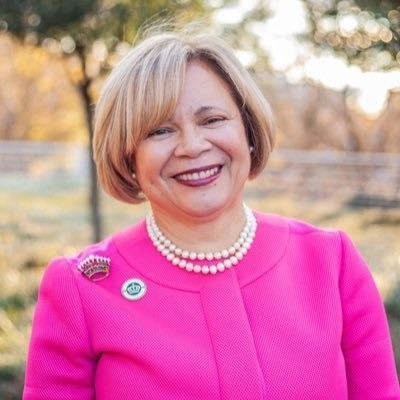
By Milton Kirby | Charlotte, NC | May 11, 2026
Vi Lyles, the first Black woman ever elected mayor of Charlotte, will resign from office effective June 30, ending a historic political career that helped reshape leadership in one of America’s fastest‑growing cities.
The announcement comes only months after Lyles won reelection in 2025 by a wide margin a victory she celebrated as a mandate to continue expanding affordable housing, improving public safety, and investing in infrastructure. In July 2025, she told supporters, “Charlotte is a city of opportunity… there is still work to do and I’m ready to keep doing it.”
But on May 7, 2026, Lyles said her priorities had shifted.
“Serving as Charlotte’s mayor has been the honor of my life,” she said. “Now, it is time for the next phase of my life, to spend more time with my grandchildren and for someone new to lead us forward.”
Her resignation closes a remarkable public service career spanning more than three decades — one that began long before she stepped into the mayor’s office.
A Historic Rise: The 2017 Breakthrough
For many Charlotte residents, Lyles’ defining moment came on Election Day 2017.
That year, she defeated Republican City Council member Kenny Smith to become Charlotte’s first African American female mayor a milestone that carried deep symbolic weight in a Southern city still grappling with issues of race, growth, and representation.
Her victory came just one year after the 2016 police shooting of Keith Lamont Scott, an event that sparked days of protest and placed Charlotte under national scrutiny. Against that backdrop, Lyles’ election represented both continuity and change a veteran administrator promising stability while breaking one of the city’s highest political barriers.
In her 2017 victory speech, she told supporters:
“You’ve proven that we are a city of opportunity and inclusiveness. You’ve proven a woman whose father didn’t graduate from high school can become this city’s first female African American mayor.”
It was a moment that signaled a new era in Charlotte politics.
A Tenure Defined by Growth, Equity, and Infrastructure
During her five terms, Charlotte experienced rapid population growth, major corporate relocations, and significant public investment. Lyles championed:
- Affordable housing initiatives
- Public transit expansion, including a voter‑approved sales tax for infrastructure
- Racial equity programs
- Violence prevention and public safety reforms
- Fiscal stability and long‑term planning
She frequently described Charlotte as “a city of opportunity,” a theme that shaped her policy agenda and her public messaging.
“I am very proud of my record as mayor,” she said, “but I also firmly believe that true leadership includes knowing when it is time to let the next generation of leaders take over.”
A Sudden Transition and a City at a Crossroads
Under North Carolina law, the Charlotte City Council will appoint an interim mayor to serve the remainder of Lyles’ term. The appointee must be a Democrat and reside within Charlotte city limits, but does not have to be a current council member.
The process could trigger a broader reshuffling of city leadership. If a sitting council member is appointed mayor, the council must also fill that vacant seat.
Political speculation has already intensified:
- Former Mayor Jennifer Roberts has publicly stated she feels “called” to serve as interim mayor and pledged not to run in 2027.
- Councilmember Dante Anderson has urged the council to consider an outsider familiar with city government rather than selecting one of its own members.
- At least five current council members are rumored to be considering mayoral campaigns in 2027.
Anderson, who grew up in Charlotte public housing, said she is not seeking the interim appointment but believes the city should choose someone who can “keep the seat warm” without influencing the 2027 race.
“There has already been some politics in play during this term,” she said.
Lyles, for her part, said she does not plan to endorse a successor immediately.
“As in all things politics, I am sure there will be speculation as to why I am making this decision now,” she said. “Simply put, I am going to spend time with my grandchildren.”
A Legacy That Will Shape Charlotte for Decades
At 73, Vi Lyles leaves office as one of the most consequential figures in modern Charlotte politics – a leader whose rise reflected the city’s changing demographics and whose tenure helped define its trajectory during a period of extraordinary growth.
Her imprint is visible across the city: in new housing developments, expanded transit plans, strengthened fiscal policy, and a renewed focus on equity.
And her 2017 breakthrough remains a defining moment in Charlotte’s civic identity – a reminder of what representation can mean in a city still evolving.
As Charlotte prepares for a new chapter, Lyles’ legacy endures: a symbol of opportunity, a steward of growth, and a leader who believed deeply in the city she served.
Truth Seekers Journal thrives because of readers like you. Join us in sustaining independent voices.


 Ted Knorr





Very informative
Thank you so much, Tess. We really appreciate you taking the time to read and share your thoughts. It means a lot to see you here and to know you’re part of this growing community. We invite you to continue reading and joining the conversation — your voice adds value.