Change Feels Different When You Remember Before

A powerful exploration of how memory reshapes our experience of change, revealing why transitions feel different across a lifetime and what continuity truly requires

By Florita Bell Griffin, Ph.D | Houston, TX | February 24, 2026

Change does not register the same way across a lifetime. Early change often feels expansive. It carries promise. It suggests possibility without cost. Later change feels heavier, not because it is unwelcome, but because it arrives with memory. People who have lived long enough do not encounter change as an isolated event. They encounter it as a comparison.

Remembering before alters perception. It introduces contrast. It reveals patterns that are invisible to those experiencing a transition for the first time. When change appears, experienced observers do not ask only whether it works. They ask what it replaces, what it disrupts, and what it quietly removes.

This difference in perception is frequently misunderstood. Caution is misread as reluctance. Questions are mistaken for resistance. In reality, remembering before expands the frame through which change is evaluated. It adds sequence to the present moment.

Earlier in life, change often arrives without consequence. Decisions are reversible. Systems are forgiving. Mistakes carry limited cost. Over time, people experience transitions that do not resolve cleanly. They witness reforms that solve one problem while creating another. They observe innovations that optimize performance while thinning trust. Memory accumulates evidence, and evidence reshapes expectation.

Consider an organization that announces a major restructuring intended to improve agility. Roles are consolidated. Reporting lines flatten. Decision-making accelerates. On paper, the model appears modern and efficient. Employees who have lived through previous restructurings respond differently than those encountering their first. They remember how similar changes once redistributed power, narrowed career paths, or increased workload without acknowledgment. They listen closely not to the promise, but to what remains unsaid. Change feels different when it carries precedent.

The same dynamic appears in technology adoption. A new platform promises simplification. Workflows unify. Communication becomes seamless. Those who remember earlier systems recognize familiar claims. They recall how previous tools increased visibility while reducing clarity. They remember the effort required to adapt when documentation lagged behind implementation. Their response is not opposition. It is contextual awareness.

Memory does not slow change. It thickens it. It forces change to account for what came before. People who remember before are sensitive to loss disguised as progress. They notice when continuity breaks quietly. They recognize when systems reset without explanation, leaving users to reconstruct meaning on their own.

This sensitivity becomes more pronounced as the pace of change accelerates. Speed compresses evaluation time. It rewards immediacy over reflection. For those with memory, speed amplifies risk. Rapid change leaves fewer opportunities to integrate learning. It reduces space for adjustment. It assumes that alignment will emerge organically, rather than being designed.

When systems dismiss this concern, they create fractures. People comply outwardly while disengaging inwardly. They adapt behavior while withholding trust. They follow instructions while questioning intent. Over time, this erodes cohesion more effectively than overt resistance ever could.

Memory also reshapes how people assess claims of inevitability. When change is framed as unavoidable, those who remember before recall alternatives that once existed. They recognize paths that were not taken. They understand that inevitability is often a narrative constructed after decisions have already been made. This awareness does not prevent change, but it alters how legitimacy is judged.

Consider a public policy shift justified through data projections and economic modeling. Targets are clear. Outcomes are forecasted. Those with long-standing community experience recall previous policies introduced with similar confidence. They remember unintended consequences that emerged years later. They ask different questions because they have witnessed the lag between implementation and impact. Change feels different when consequences have already been lived.

Systems that ignore this perspective misinterpret memory as bias. They frame lived experience as anecdotal rather than informational. In doing so, they discard a source of intelligence that could stabilize transition. Memory carries signals about second-order effects, delayed responses, and cumulative impact. When excluded, systems repeat errors they believe are new.

This is not an argument for preserving the past unchanged. It is an argument for integrating memory into motion. Change that acknowledges what came before gains legitimacy. It becomes inhabitable rather than imposed. People are more willing to move when they can see how continuity is preserved.

Change that arrives without reference to before feels extractive. It takes familiarity without replacing meaning. It demands adjustment without offering orientation. Over time, this creates fatigue that is misdiagnosed as apathy.

Those who remember before are not anchored to the past. They are anchored to coherence. They understand that progress without memory produces repetition rather than advancement. Their perspective offers calibration, not obstruction.

As intelligent systems increasingly shape how change is designed and deployed, memory becomes a critical variable. Systems that treat memory as noise will continue to move quickly while destabilizing trust. Systems that treat memory as structure gain the ability to change without fragmenting those inside them.

Change feels different when you remember before because memory reveals what change alone cannot. It exposes continuity gaps. It highlights consequences that have not yet surfaced. It insists that movement make sense across time.

This distinction determines whether change becomes something people inhabit, or something they simply endure.

© 2026 Truth Seekers Journal. Published with permission from the author. All rights reserved.

Truth Seekers Journal thrives because of readers like you. Join us in sustaining independent voices.

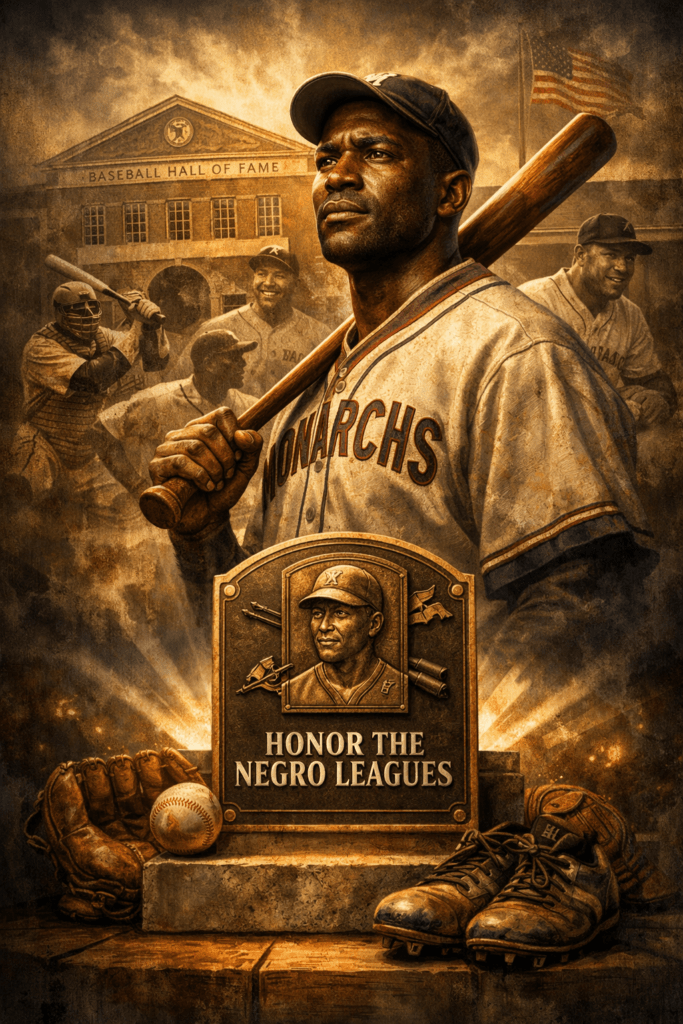
SHADOW BALL: Learning More About Negro League History

February 24, 2026

Dear Shadow Ball: “Where would you place Rap Dixon in a list of the greatest Negro League outfielders? — Al Davis, Rensselaer, NY

 … this column exists for only one purpose and that is to answer your questions on Negro League baseball history. To that end, I need your help … if you are reading this column and enjoy it and want it to continue and you don’t already know everything about Negro League history … then please submit a question on any aspect of Negro League history. Your questions are the lifeblood of Shadow Ball—they shape where we go next.

 – players, teams, events, and more – and, in so doing, you will direct where this column goes moving forward. Your participation is important and appreciated. The very existence of this column depends on you. Submit your questions to shadowball@truthseekersjournal.com.

Dear Al: As you (as well as anyone paying attention to me) knows Rap Dixon is my favorite Negro League player thus it is no surprise that I rank him at the top of the list of Hall of Fame worthy outfielders. There are seven Negro League outfielders already in and I have no quibble ranking all of them ahead of Dixon – Oscar Charleston, Turkey Stearnes, Cristobal Torriente, Pete Hill, Willard Brown, and Cool Papa Bell. Monte Irvin, the 1st put into the Hall as an outfielder, I would prefer him to be listed as a shortstop where he played 47% of his games with only 41% of his games being played as an outfielder.

After the already inducted group I support the results of several polls including SABR’s Negro League Committee, the 42 for ’21 poll, and the Negro League Centennial Team as well as opinions of both Oscar Charleston and Cool Papa Bell all of which name Rap Dixon as the next outfielder to be inducted. The 1952 Pittsburgh Courier poll offers only Clint Thomas (among eligible outfielders) ahead of Dixon. Monte Irvin prefers Wild Bill Wright over Dixon. Other outfielders deserving induction (not consideration but induction) include, both Thomas and Wright, Alejandro Oms, Fats Jenkins, Spottswood Poles, Roy Parnell, Chino Smith (with an Addie Joss waiver), and Hurley McNair. Leaving others for future consideration including Heavy Johnson, Sam Jethroe, Ted Strong, Henry Kimbro, Pancho Coimbre, and others.

In closing I must point out that since the integration of the game only six outfielders have debuted and earned induction (Mantle, Kaline, Snider, Yastrzemski, Ashburn, and Walker) that would have been permitted to play in the AL or NL prior to 1947 … and 24 outfielders have debuted/earned induction who would not have been permitted to play in either of those leagues prior … my list of recommended inductees above includes only nine, There is plenty of room in Cooperstown for Justice.

Last week’s Shadow Ball Significa question: Who took over as Commissioner of the Negro National League immediately after Rube Foster resigned in November 1926? Unlike last week where we got two correct answers; this week’s question produced none. The immediate successor to Rube Foster was Dr. G. B. Key who took over immediately after Rube Foster for the remainder of 1926.

The Shadow Ball Significa Question of the Week (submitted by Shadow Ball fan, Will Clark): The 1969 New York Mets had a player (a key one at that) whose stepfather played in the Negro Leagues. Name the player and the Negro Leaguer who was his stepfather. 

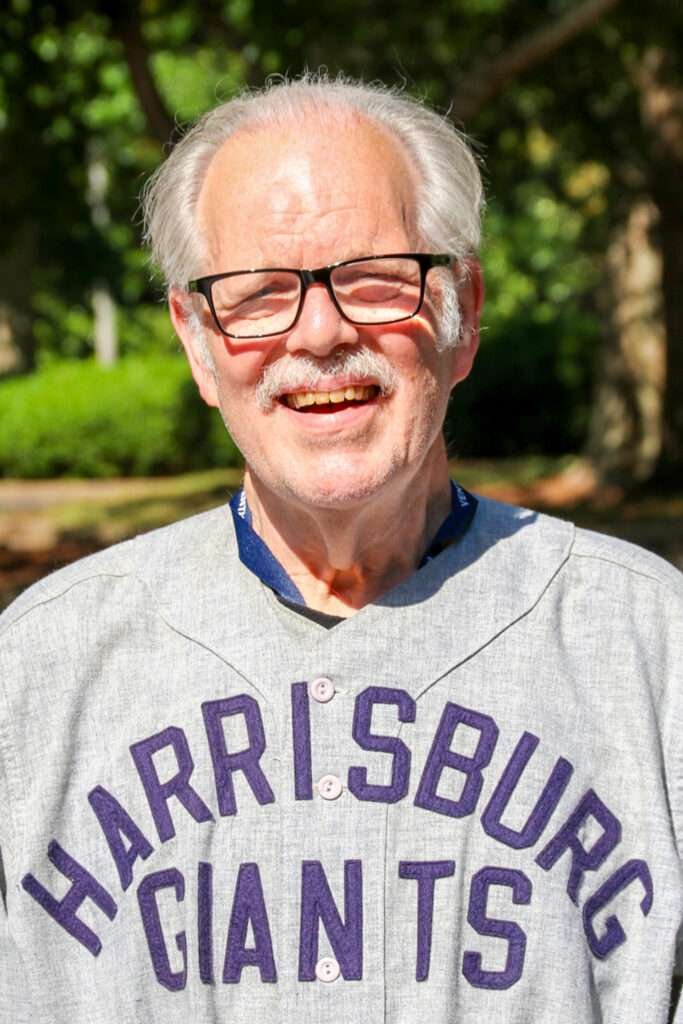
Ted Knorr

Ted Knorr is a Negro League baseball historian, longtime member of the Society for American Baseball Research’s Negro League Committee, and founder of the Jerry Malloy Negro League Conference and several local Negro League Commemorative Nights in central Pennsylvania. You can send questions for Knorr on Negro League topics as well as your answers to the week’s Significa question to  shadowball@truthseekersjournal.com or Shadow Ball, 3904 N Druid Hills Rd, Ste 179, Decatur, GA 30033

Support open, independent journalism—your contribution helps us tell the stories that matter most.

Seven Visions for Georgia: Inside the Democratic Gubernatorial Field

Seven Democrats outline competing visions for Georgia governor at the DeKalb forum, debating Medicaid expansion, childcare, wages, housing, and economic reform ahead of 2026.

Milton Kirby | Chamblee, Georgia | February 23, 2026

On a cool February evening inside the auditorium at Chamblee High School, seven Democratic candidates stepped onto the stage with one shared promise: to reshape the future of a state at a political crossroads. Their styles varied some polished, some fiery, some pastoral but the urgency in the room was unmistakable. Georgia is changing, and each candidate came prepared to argue that they are the one who understands that change best. What emerged from the forum, and from their published platforms, is a portrait of a party wrestling with both its identity and its opportunity. The candidates agree on the broad strokes expanding Medicaid, lowering the cost of living, strengthening education but diverge sharply on how bold Georgia must be to meet the moment.


A Shared Foundation: Medicaid, Wages, and Affordability

All seven candidates support expanding Medicaid. All speak about lowering the cost of living. All frame education as central to Georgia’s economic future.

But the similarities begin to diverge once the details surface.


Keisha Lance Bottoms: Crisis-Tested Leadership

Courtesy photo Keisha Lance Bottoms

Bottoms leans heavily on her executive experience as Atlanta’s mayor during COVID-19 and the 2020 protests. She describes herself as “crisis-tested.”

Her platform calls for:

  • Medicaid expansion
  • Eliminating the state income tax for teachers
  • Cracking down on corporate landlords
  • Free technical and community college

Her pitch blends practical governance with moral urgency. She frequently frames her candidacy as restoring stability in uncertain times.


Olu Brown: Values-Driven Governance

Courtesy photo Olu Brown

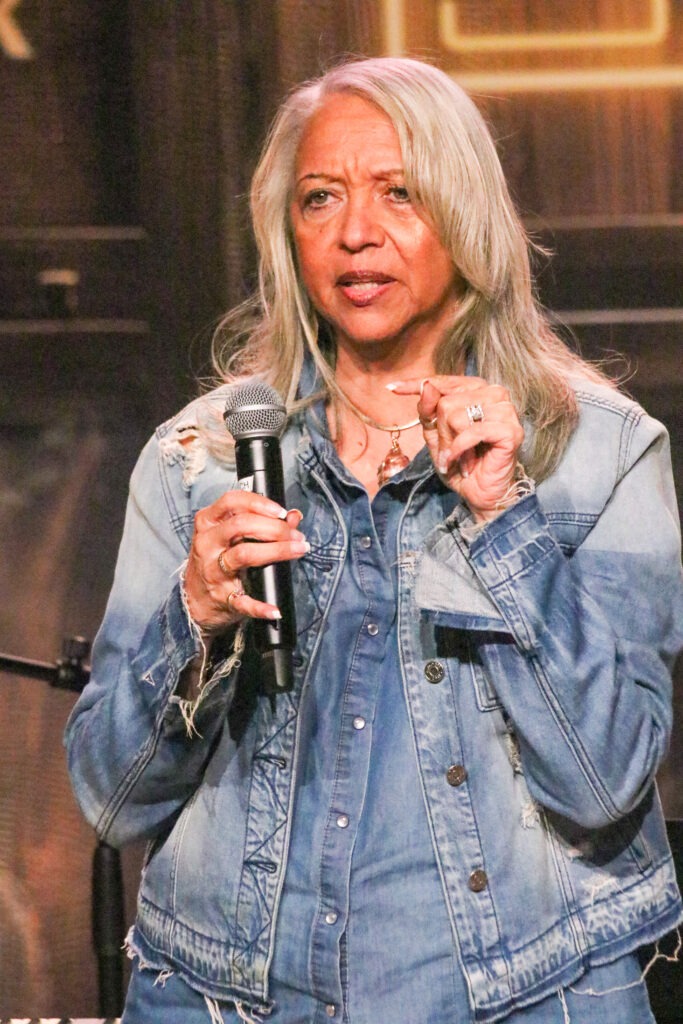
Brown, a former pastor, frames policy through faith and community values. He speaks often about compassion and responsibility.

His priorities include:

  • Healthcare access as economic stability
  • Strong reproductive rights protections
  • Raising educator wages
  • Strengthening rural outreach

At the DeKalb forum, Brown said Georgia students must be trained to “compete with the rest of the world,” not simply prepared to be citizens of Georgia.


Geoff Duncan: The Party Switch and the Moderation Case

Courtesy photo Geoff Duncan

Duncan’s candidacy is the most unconventional. A former Republican lieutenant governor, he switched parties in August 2025 and now runs as a Democrat, framing his campaign as a rejection of political extremism.

His platform emphasizes:

  • Lower childcare costs
  • Rural hospital stabilization
  • Bipartisan economic moderation
  • Lower overall cost of living

Duncan often references moral language, urging voters to reject division and rediscover a politics grounded in “love thy neighbor.”


Jason Esteves: The Education Governor

Courtesy photo Jason Esteves

Esteves officially launched his “Education Governor” platform just days before the forum.

His plan includes:

  • Universal childcare for 3- and 4-year-olds
  • Major K–12 investments
  • Medicaid expansion
  • Renter protections
  • A small business loan fund targeting Black-owned businesses

Esteves frames childcare as economic policy. In his view, if families cannot afford care, they cannot fully participate in the workforce.


Derrick Jackson: A $20 Minimum Wage

Courtesy photo Derrick Jackson

Jackson is the only candidate explicitly calling for a $20 minimum wage.

He pairs that with:

  • Tax exemptions for teachers, nurses, seniors, and veterans
  • Medicaid expansion
  • Support for Black farmers and small businesses
  • Rural hospital protection

Jackson frequently emphasizes his 42 years of leadership experience in the military and legislature. His campaign message centers on working-class uplift.


Ruwa Romman: The Progressive Disruptor

Courtesy photo Ruwa Romman

Romman offers the most explicitly progressive platform in the field.

Her proposals include:

  • Raising the minimum wage
  • Taking homes back from corporate landlords
  • Reopening rural hospitals
  • Creating a research hub to fund healthcare systems
  • Pressing pause on data centers to lower utility costs

Her campaign is rooted in organizing and structural reform. She presents herself as an outsider prepared to challenge entrenched systems.


Mike Thurmond: The Steady Hand

Courtesy photo Mike Thurmond

Thurmond’s candidacy rests on long public service and a reputation for turning around struggling institutions, from the state Labor Department to DeKalb County government.

His platform emphasizes:

  • Rethinking Georgia’s regressive sales tax structure
  • Lower grocery, rent, and healthcare costs
  • Statewide healthcare equity
  • Unity over ideology

Rather than positioning himself as the most progressive or the most moderate, Thurmond leans into competence and experience.


The Real Debate: How Bold Should Georgia Be?

The forum revealed less disagreement about direction and more disagreement about scale.

Should Georgia move incrementally or structurally?
Should reform be targeted or sweeping?
Should Democrats lean into progressive energy or moderate appeal?

Together, the seven candidates offer voters a rare thing: a competitive primary where experience, ideology, and identity collide in meaningful ways.

The question for Democrats is not whether they have options.

It is which vision best matches the Georgia they believe is emerging.


Support open, independent journalism—your contribution helps us tell the stories that matter most.

Shadow Ball: Learning More About Negro League History

February 19, 2026

Dear Shadow Ball: “Who would be “your” choice for the next three Negro League inductees for the Hall of Fame?” — Jerry Hoover, Asheboro, NC

 … this column exists for only one purpose and that is to answer your questions on Negro League baseball history. To that end, I need your help … if you are reading this column and enjoy it and want it to continue and you don’t already know everything about Negro League history … then please submit a question on any aspect of Negro League history. Your questions are the lifeblood of Shadow Ball—they shape where we go next.

 – players, teams, events, and more – and, in so doing, you will direct where this column goes moving forward. Your participation is important and appreciated. The very existence of this column depends on you. Submit your questions to shadowball@truthseekersjournal.com.

Dear Jerry: By “your” Mr. Hoover was asking about “my” choices and I have been clear for several years now – my choice for the most deserving player has been John Beckwith, multi-position slugger of the Baltimore Black Sox, Chicago American Giants, and the Harrisburg Giants. My choice among non-players is Gus Greenlee, owner Pittsburgh Crawfords, builder of Greenlee Field, one of the founders of the East-West Classic, founder of the 2nd Negro National League, and an organizer of the United States Baseball League a “historically significant but marginal” latter day Negro League. Last, my favorite Negro League player and my third answer to your question, is buried in the Township in which I live, played Major League home games on a Lancaster, PA, field where I played midget football, is outfielder Rap Dixon. All three are absolutely no brainer inductees. Since 30 to 50 additional no brainer Negro League induction candidates exist in my view — it is time for the National Baseball Hall of Fame to get busy. 

Last week’s Shadow Ball Significa question: A Hall of Fame Negro League slugger had a nephew who sang with, and co-founded, a legendary R&B vocal group of the 1940’s and 1950’s. Name that slugger. Will Clark, a reader who submitted this week’s sought slugger Buck Leonard and singer and founder of The Orioles Sonny Til his nephew. Both Leonard (1972 Baseball inductee) and Til (1995 Rock & Roll Hall of Fame inductee with other members of The Orioles) are Hall of Famers. No one got that answer correct; however, Kevin Johnson, Broken Arrow, OK, offered a different but just as compelling correct answer: slugger Mule Suttles’s nephew Warren Suttles, baritone lead, and co-founder, of The Ravens. Gotta wonder – given the strong connection between culture and baseball – if there are more “correct” answers for this one.

The Shadow Ball Significa Question of the Week (submitted by Shadow Ball fan, Kevin Johnson): Who took over as Commissioner of the Negro National League immediately after Rube Foster resigned in November 1926? Let us see how many correct answers we can get this time. 

Ted Knorr

Ted Knorr is a Negro League baseball historian, longtime member of the Society for American Baseball Research’s Negro League Committee, and founder of the Jerry Malloy Negro League Conference and several local Negro League Commemorative Nights in central Pennsylvania. You can send questions for Knorr on Negro League topics as well as your answers to the week’s Significa question to  shadowball@truthseekersjournal.com or Shadow Ball, 3904 N Druid Hills Rd, Ste 179, Decatur, GA 30033

Support open, independent journalism—your contribution helps us tell the stories that matter most.

15 Years Strong: Women of Color Honored in Brookhaven Celebration

Chit Chat Communications celebrates 15 years of honoring women of color with a powerful Women’s History Month event in Brookhaven, spotlighting leadership and legacy.

Chit Chat Communications is celebrating a milestone year

By Milton Kirby | Brookhaven, GA | February 18, 2026

The community-based media and events platform will mark 15 years of honoring women of color during its annual Women’s History Month celebration on Saturday, March 7, 2026, at 10:00 a.m. The event will be held at Brookhaven City Centre, 4001 Peachtree Road NE, Brookhaven, GA 30319.

What began as a local recognition effort has grown into a signature gathering that uplifts leadership, service, entrepreneurship, and cultural impact across metro Atlanta.

Founded and led by Carla Morrison, Chit Chat Communications has built its brand around storytelling, community connection, and elevating voices often overlooked in mainstream spaces. The annual Women’s History Month event reflects that mission.

This year’s celebration will spotlight a new class of honorees whose work spans business, education, civic engagement, health advocacy, and creative industries. Organizers say the evening is designed not only to recognize achievement but to create space for mentorship, collaboration, and intergenerational dialogue.

“For 15 years, we have intentionally created a platform that celebrates the brilliance, resilience, and leadership of women of color,” Morrison said in the release. “This event is about honoring legacy while inspiring the next generation.”

The Brookhaven celebration will feature award presentations, networking opportunities, and moments of reflection tied to the national observance of Women’s History Month. Attendees are expected to include community leaders, entrepreneurs, nonprofit executives, elected officials, and supporters from across the region.

Women’s History Month, observed each March, recognizes the vital contributions of women to American history, culture, and society. Events like this one provide a local lens on that national celebration, highlighting leaders whose impact is felt in neighborhoods, classrooms, boardrooms, and small businesses throughout metro Atlanta.

Organizers say the 15-year milestone offers a moment to look back at the dozens of women previously honored — many of whom continue to shape the region’s civic and economic landscape.

As Chit Chat Communications enters its next chapter, the organization says its commitment remains the same: amplify stories, build community, and celebrate the power of women whose leadership transforms lives.

Event details, including ticket information and honoree announcements, are available through Chit Chat Communications’ official channels.

Truth Seekers Journal thrives because of readers like you. Join us in sustaining independent voices.
Robb Pitts to Deliver 2026 State of Fulton County Address Feb. 24

Fulton County Chairman Robb Pitts will deliver the 2026 State of the County Address February 24 at The Eastern, outlining priorities, projects, and economic outlook.

By Milton Kirby | Atlanta, GA | February 18, 2026

Fulton County Chairman Robb Pitts will deliver the 2026 State of Fulton County Address next week before an audience of business and civic leaders. The annual breakfast program will take place Tuesday, February 24, from 8:00 to 10:30 a.m. at The Eastern, with more than 400 elected officials, business leaders, county staff, residents, and regional partners expected to attend.

The event is hosted by the Council for Quality Growth in partnership with Fulton County Government. This year’s State of Fulton is presented by Amazon, Develop Fulton, and the Fulton-DeKalb Hospital Authority.

Pitts’ address will highlight achievements and major projects from the past two years while outlining his priorities and vision for 2026. This will be his fifth State of the County address since becoming chairman in 2017, and his second of the current term.

A veteran public servant, Pitts previously served 13 years on the Fulton County Commission and 20 years on the Atlanta City Council. His tenure has spanned periods of rapid population growth, economic expansion, and significant infrastructure investment across the county.

Michael Paris, President and CEO of the Council for Quality Growth, said Fulton County continues to play a central role in the region’s economic strength.
“Fulton County remains a driving force in our region’s economic vitality,” Paris said. “We value our strong partnership with Fulton County and look forward to Chairman Pitts’ insights on the county’s priorities and the path ahead for its communities.”

The program will also include remarks from 2026 Council Chair Gerald McDowell, Executive Director of the ATL Airport Community Improvement Districts, and Fulton County Commissioner Bob Ellis.

Presenting sponsors will offer updates as well. Scheduled speakers include Terreta Rodgers of Amazon’s Georgia Region; Sarah-Elizabeth Langford; and Jevon Gibson.

Danny Johnson, Managing Director of the Natural Resources Department at the Atlanta Regional Commission, will provide an update on behalf of the Metropolitan North Georgia Water Planning District, offering insight into water resources and regional planning initiatives.

The Council for Quality Growth’s State of the County and Agency Series includes similar annual events across eight metro Atlanta counties and two major agencies, including MARTA and the Atlanta BeltLine. The series is designed to connect the business community with local government leadership and provide a forward-looking assessment of policy, infrastructure, and development priorities.


5 Things to Know About Robb Pitts

1. Longest‑Serving Metro Atlanta Public Official
Pitts has held elected office for more than four decades, including 20 years on the Atlanta City Council and over a decade on the Fulton County Commission.

2. Current Chairman Since 2017
He was elected Fulton County Chairman at the end of 2017 and has since led the county through major growth, infrastructure expansion, and regional coordination.

3. Champion of Economic Development
Pitts has been a key figure in strengthening Fulton’s role as the economic engine of Georgia, working closely with business, civic, and regional partners.

4. Advocate for Modernized County Services
Under his leadership, Fulton has invested in public safety, justice system improvements, health services, and major capital projects.

5. Regional Voice on Policy and Infrastructure
Pitts is a consistent presence in regional planning conversations, collaborating with agencies such as the Atlanta Regional Commission, MARTA, and the ATL Airport CIDs.

More details and registration information are available through the Council for Quality Growth’s official event page.

Related articles

Council for Quality Growth Charts 2026 Course Under New Chairman Gerald McDowell

Council for Quality Growth to Honor Tommy Holder with 2025 Four Pillar Tribute

From Blueprints to Landmarks: Holder Awarded Four Pillar Tribute for Shaping Atlanta 

Fulton County: An Economic, Cultural, and Educational Hub for Georgia

Support open, independent journalism—your contribution helps us tell the stories that matter most.

Rev. Jesse Jackson, Civil Rights Leader and Political Trailblazer, Dies at 84

Rev. Jesse Jackson, civil rights icon and presidential candidate, dies at 84, leaving a legacy of justice, hope, HBCU pride, and athlete equity reform.

By Milton Kirby | Atlanta, GA | February 17, 2026

The Rev. Jesse Jackson, a towering figure in the modern Civil Rights Movement and two‑time presidential candidate who reshaped American politics, has died at the age of 84. Jackson passed away peacefully at his home in Chicago, surrounded by family, according to his daughter Santita Jackson. The family has not released a cause of death, though Jackson publicly disclosed in 2017 that he had been battling Parkinson’s disease.

Born Jesse Louis Burns on October 8, 1941, in Greenville, South Carolina, Jackson later adopted the surname of his stepfather, Charles Henry Jackson, at age 15. From humble beginnings in the segregated South, he rose to become one of the most recognizable moral voices in America.

A graduate of North Carolina A&T State University, Jackson returned to his alma mater as commencement speaker in May 1984, just months after mounting a historic presidential campaign that energized millions. I was among the graduating seniors that day, watching him fuse faith, politics, and possibility in a message that was not simply celebratory but urgent and instructive. His words carried the cadence of a movement and the clarity of a mandate.

Jackson stood beside Martin Luther King Jr. at the Lorraine Motel in Memphis when King was assassinated in 1968. In the aftermath, he carried forward the unfinished work of economic justice, voting rights, and dignity for the poor. Through Operation PUSH (People United to Save Humanity) and later the Rainbow Coalition now the Rainbow/PUSH Coalition Jackson pressured corporations to open their boardrooms to minorities and women and demanded that public policy reflect the needs of the marginalized.

His fiery oratory and signature phrases “Keep Hope Alive” and “I Am Somebody” became rallying cries. For many young Americans watching from public housing and underfunded schools, his presidential campaigns in 1984 and 1988 signaled that national leadership was within reach. His efforts helped widen the political pathway later walked by Barack Obama and other leaders of a new generation.

Jackson’s influence extended far beyond electoral politics. Decades before today’s debates over athlete compensation, he questioned the economic structure of college sports, criticizing universities for generating millions from football and basketball programs while players many of them young Black men saw none of the revenue beyond scholarships. His argument, once controversial, laid intellectual groundwork for what would later become Name, Image, and Likeness (NIL) reforms, allowing college athletes to profit from their own brands.

On the global stage, Jackson negotiated the release of hostages abroad, including Americans held in Syria and Cuba, and engaged world leaders in diplomatic efforts rooted in human rights. His ministry blended spiritual conviction with political activism, bringing poetry and prophetic power into the public square.

U.S. Senator Raphael Warnock said, “America has lost one of its great moral voices… As a kid growing up in public housing while watching him run for President, Rev. Jesse Jackson gave me a glimpse of what is possible and taught me to say, ‘I am somebody!’”

Tributes echoed across political and generational lines. President Donald Trump called him “a force of nature like few others before him.” Al Sharpton described him as his mentor and “a movement unto himself.” Bernice King posted a photo of Jackson beside her father with the words, “Both now ancestors.”

Jackson’s life was not without controversy. He publicly acknowledged fathering a child outside his marriage, a revelation that tested his public image. Yet even amid personal trials, he remained a relentless advocate for justice.

He is survived by his wife of 64 years, Jacqueline Brown, and their five children: Santita, Jesse Jr., Jonathan, Yusef, and Jacqueline.

From Greenville to Memphis, from Chicago to Greensboro, Jesse Jackson spent more than half a century urging America to expand its moral imagination. He did not simply preach hope. He organized it. He demanded it. And for more than fifty years, he kept it alive.

Support open, independent journalism—your contribution helps us tell the stories that matter most.

ARTIST PROFILE: Sonny Hill

Sonny Hill — known as “Sunshine” — is a Christian romance writer and poet whose vivid storytelling explores mental health, purpose, redemption, and second chances for women of color. Her novels and poetry blend faith, emotional intimacy, and cinematic imagery inspired by nature, music, and lived experience.

By Milton Kirby | Truth Seekers Journal | Artist Profiles Series

Some writers tell stories.
Sonny Hill creates emotional sanctuaries.

Her friends call her “Sunshine,” and the name fits not because she is relentlessly cheerful, but because she brings light into places where many women have been taught to dim their own. Through Christian romance and poetry, Sonny writes about mental health, purpose, redemption, and second chances with a tenderness that feels like prayer and a boldness that feels like truth.

Her work is known for its vivid imagery scenes so textured and alive that readers often say they can “see the movie” as they turn the page. Her male characters are the kind of men women whisper about with a mix of longing and disbelief: supportive, emotionally present, willing to grow. Some are reformed “bad boys” who discover the discipline of monogamy; others are steady men who simply didn’t see her coming the woman who awakens a capacity for unconditional love they didn’t know they possessed. Female readers often close her books with the same refrain: “I want a love like that.”

“I always live in a romantic world,” Sonny says — not as escapism, but as intention. For her, romance is not fantasy. It is faith-filled possibility.

Sonny’s creative well runs deep.

“My inspiration comes from God, nature, music, and an overactive imagination mixed with a melancholy personality that replenishes my counselor’s pockets,” she says with a smile. She laughs easily, but she does not hide the truth: mental health is not a theme she writes about from a distance. It is a lived reality, a calling, and a form of advocacy. Her stories are not escapism they are emotional restoration.

Growing up, she heard the old saying that a person is lucky to have a few good friends. Sonny considers herself blessed with many. Their laughter, their sisterhood, and their unwavering support fuel her female protagonists. She writes women who are layered, imperfect, and deeply human women who readers across generations and cultures can recognize in themselves.

Her journey as a writer began with a moment that sounds like fiction but is entirely true. She was on vacation, relaxing on the beach, when a stranger “a goddess of a man,” she recalls approached her and asked if she wanted to go for a jog. Without hesitation or fear, she said yes. He was dark‑skinned, sculpted, and unforgettable. The encounter stayed with her, and when she returned home, she wrote a poem about it. Then another. And another. A writer was born.

“I like to write books with multigenerational themes so that every woman can identify with them,” Sonny explains.

Sonny sees the world with a kind of spiritual x‑ray vision. Nature is not just scenery to her it is metaphor, message, and muse. She notices what others overlook: the curve of a branch, the way light lands on water, the quiet dignity of a stranger’s posture. She carries her phone everywhere, jotting down impressions, overheard lines, and fleeting images that later become prose. Her imagination is not a place she visits; it is a place she lives.

She is also a dreamer in the truest sense. Sonny believes extraordinary men still exist — men who can meet the emotional depth she writes about, men who can love with intention and courage. Her novels reflect that faith. Her published works include An Artist in the Basement, Falling for the Shoemaker, Walking Into Love, and Spared. Her poetry collections, Rhythmic Revelations and The Grammar of Love, showcase her lyrical gift and her ability to translate emotion into music on the page.

“As a writer, I am always looking for stories in the smallest of things,” she says.

And she is not done dreaming. Sonny hopes to see one of her books adapted into a film a natural evolution for a writer whose scenes already unfold cinematically. When she talks about her work, the passion is unmistakable. She writes not just to entertain, but to heal, to uplift, and to remind women especially women of color that they are worthy of love that is patient, generous, and transformative.

Sunshine is more than a nickname. It is her ministry.


Where to Find Her Work

Sonny Hill’s books are available on her official website:
Her novels and poetry collections are also available on Amazon.

Related video

Sonny Hill in Her Own Words

Related articles

Artist Profile:  Yovel Riches

Artist Profile: Lisa Maydwell

Artist Profile: 1 Way Street

Artist Profile: Ntumba

Support open, independent journalism—your contribution helps us tell the stories that matter most.

Charter School Funding and Tax Relief Dominate Pre-Crossover Debate

By Milton Kirby | Atlanta, GA | February 16, 2026

With Crossover Day approaching and the legislative calendar tightening, Georgia lawmakers accelerated activity beneath the Gold Dome last week, advancing a slate of tax, education, and regulatory reform bills that are shaping the policy direction of the 2026 session.

The flurry of movement includes sweeping income tax proposals, early literacy initiatives, and structural changes to how state agencies interpret and implement Georgia law.

Tax Cut Proposals Move at Unusual Speed

Two major tax cut bills—Senate Bill 476 and Senate Bill 477—introduced just last week by Senate Appropriations Chair Blake Tillery, advanced rapidly through the Senate. The Senate Finance Committee approved both measures Tuesday, and the full Senate passed them Thursday.

SB 476, titled the Income Tax Reduction Act of 2026, would effectively eliminate the first $50,000 of taxable income for single filers and $100,000 for joint filers. The measure proposes offsetting revenue losses by phasing out corporate tax credits by 2032.

SB 477 would gradually reduce Georgia’s personal income tax rate to 3.99% by 2028.

The House is pursuing its own tax reduction path. House Bill 880, introduced by Rep. Shaw Blackmon, also aims to lower the income tax rate to 3.99% and would allow a portion of undesignated surplus funds to be used for tax relief. After carrying over from the 2025 session, HB 880 cleared the House Ways and Means Committee this week.

Blackmon is also sponsoring House Bill 1116, which received its first hearing. The proposal would authorize local governments and school systems to exempt homesteads from property taxes by shifting to local sales taxes instead. The bill includes caps on revenue growth from non-exempt properties and makes technical adjustments to education funding formulas and tax digest procedures.

Early Literacy Gains Momentum

Education policy is also advancing. Both chambers now have versions of the Georgia Early Literacy Act of 2026—House Bill 1193, sponsored by Rep. Chris Erwin, and Senate Bill 459, sponsored by Sen. Billy Hickman.

The House version passed out of committee Thursday. Both proposals would fund K–3 literacy coaches through Georgia’s education formula and require kindergarten attendance before first grade. Supporters say the measures are designed to strengthen foundational reading skills and improve long-term academic outcomes.

Charter School Infrastructure and Regulatory Reform

Companion bills—Senate Bill 498 and House Bill 1253 would establish a Georgia Charter School Facilities Authority. The authority would provide revolving loans and public financing assistance for charter school construction and renovation projects.

Meanwhile, regulatory reform efforts are advancing. House Bill 1247, the Georgia Bureaucratic Deference Elimination Act, would end “Chevron-style” judicial deference at the state level by directing courts not to automatically defer to agency interpretations of Georgia law.

Another measure, House Bill 903, sponsored by Rep. Alan Powell, passed the House this week. The bill would expand the scope of Georgia’s Administrative Procedure Act, increasing transparency and oversight across the executive branch. HB 903 now heads to the Senate Judiciary Committee.


SIDEBAR: What Is Crossover Day?

Crossover Day is one of the most important deadlines in the Georgia General Assembly’s 40-day legislative session. It marks the point—typically Day 28—when a bill must pass out of its chamber of origin to remain viable for the year.

Why It Matters

  • A House bill must pass the House by Crossover Day to be considered by the Senate.
  • A Senate bill must pass the Senate to move to the House.
  • Bills that fail to “cross over” are effectively sidelined unless revived through procedural maneuvers or attached to other legislation.

What Happens on Crossover Day

  • Lawmakers often work late into the night.
  • Floor calendars are packed with high-profile and time-sensitive bills.
  • Leadership prioritizes measures with broad support or strategic importance.
  • Controversial bills sometimes move quickly, while others stall by design.

Why It Shapes the Session

Crossover Day forces legislators to make strategic choices:

  • Which bills advance
  • Which bills die quietly
  • Which issues will define the remainder of the session

For reporters and the public, it marks a clear dividing line between early-session positioning and late-session negotiation. After Crossover Day, attention shifts to reconciliation, amendments, and final passage before Sine Die.


A Compressed Timeline

With a shorter week ahead and Crossover Day looming, lawmakers are expected to intensify debate and floor action. Measures that do not pass at least one chamber by the deadline face a steeper path forward this session. As Georgia’s 2026 legislative agenda takes shape, TSJ will continue tracking the fiscal impact, education implications, and regulatory shifts emerging from the Gold Dome.

No contribution is too small. Support us today and help keep truth accessible for all.

You Are Already Updated

By Florita Bell Griffin, Ph.D | Houston, TX | February 16, 2026

Many conversations about technology assume that relevance expires. New tools arrive, language shifts, and interfaces change, carrying with them an unspoken suggestion that those who hesitate have fallen behind. The pressure rarely appears as accusation. It appears as tone. It suggests urgency. It frames adaptation as a race rather than a process of alignment.

Yet most people who have lived long enough know this framing is incomplete. They have adapted repeatedly. They have learned new systems, new rules, new expectations, and new ways of working. What they resist is not learning. What they resist is the implication that value resets each time a tool changes.

The idea that a person must be “updated” misunderstands how human capability actually develops. People do not version themselves the way software does. They accumulate judgment. They refine intuition. They recognize patterns faster because they have seen them before in different forms. Their relevance does not come from novelty. It comes from continuity.

Technology often overlooks this distinction. It treats readiness as proximity to the newest interface rather than depth of understanding. It rewards fluency with tools over fluency with consequence. In doing so, it creates a false gap between innovation and experience, as if the two were competing forces rather than complementary ones.

Consider a workplace that introduces a new collaboration platform intended to modernize communication. The interface is intuitive. Features are robust. Younger employees adopt it quickly. Senior staff follow, but with hesitation that is often misread as resistance. In reality, they are assessing fit. They are evaluating how the platform shapes decision-making, accountability, and signal clarity. They recognize that faster communication can amplify confusion as easily as it amplifies coordination. Their pause is not a failure to update. It is an evaluation of alignment.

The same pattern appears in professional development. Training programs increasingly focus on teaching the latest tools while bypassing the reasoning that governs their use. Participants learn where to click, but not when to question. They acquire capability without orientation. Those with experience sense the imbalance immediately. They understand that tools do not determine outcomes alone. Judgment does.

Experience functions as an internal update mechanism. It integrates new information into an existing structure of understanding. When a person encounters a new system, they do not start from zero. They compare it to what they have already seen. They test its claims against prior outcomes. They notice where promises exceed reality. This is not reluctance. It is calibration.

When systems fail to recognize this, they misinterpret caution as obsolescence. They label discernment as delay. Over time, this erodes confidence on both sides. Experienced individuals feel underestimated. Systems lose access to stabilizing insight. The result is not innovation moving faster, but innovation moving with less guidance.

This dynamic becomes more pronounced as technology begins to influence not just how work is done, but how value is measured. Algorithms rank performance. Dashboards summarize contribution. Metrics become proxies for meaning. People who have spent decades understanding nuance recognize the limits immediately. They know that what matters most often appears at the edges of measurement, not at the center.

Consider a performance system that evaluates success through narrowly defined indicators. Targets are clear. Tracking is precise. Reviews become more efficient. Yet employees who understand the broader mission notice distortions. Effort shifts toward what is visible rather than what is necessary. Long-term health is traded for short-term optimization. The system rewards activity, while experience recognizes consequence.

In these moments, the idea that someone must “catch up” becomes misplaced. The individual is already operating with a richer dataset. They see second-order effects. They anticipate unintended outcomes. They understand how systems behave under stress because they have witnessed it before. Their value lies not in speed of adoption, but in stability of judgment.

Continuity explains why this matters. A person carries forward learning from past transitions into present ones. They do not require reinvention to remain relevant. They require systems that can recognize and integrate what they already bring. When technology treats experience as outdated, it severs itself from accumulated insight. When it treats experience as current, it gains resilience.

This does not mean rejecting change or privileging familiarity. It means acknowledging that adaptation does not erase what came before. A person who has navigated multiple eras of technology holds a map of how tools reshape behavior, incentives, and identity. That map remains valuable regardless of interface.

Over time, systems that ignore this reality produce predictable outcomes. Participation narrows to those who move fastest rather than those who understand most deeply. Decision-making skews toward immediacy. Errors repeat because lessons are not carried forward. Innovation continues, but its foundations weaken.

Systems that recognize people as already updated behave differently. They assume competence rather than deficiency. They invite judgment rather than compliance. They provide context alongside capability. In doing so, they unlock a form of intelligence that cannot be generated through novelty alone.

Being updated is not about mastering the newest tool. It is about remaining coherent as tools change. People who have lived long enough to recognize this are not behind. They are already operating with an internal system that has been refined through time.

The challenge for technology is not how to accelerate adoption. It is how to meet people where their experience already resides.

© 2026 Truth Seekers Journal. Published with permission from the author. All rights reserved.

Truth Seekers Journal thrives because of readers like you. Join us in sustaining independent voices.

Exit mobile version