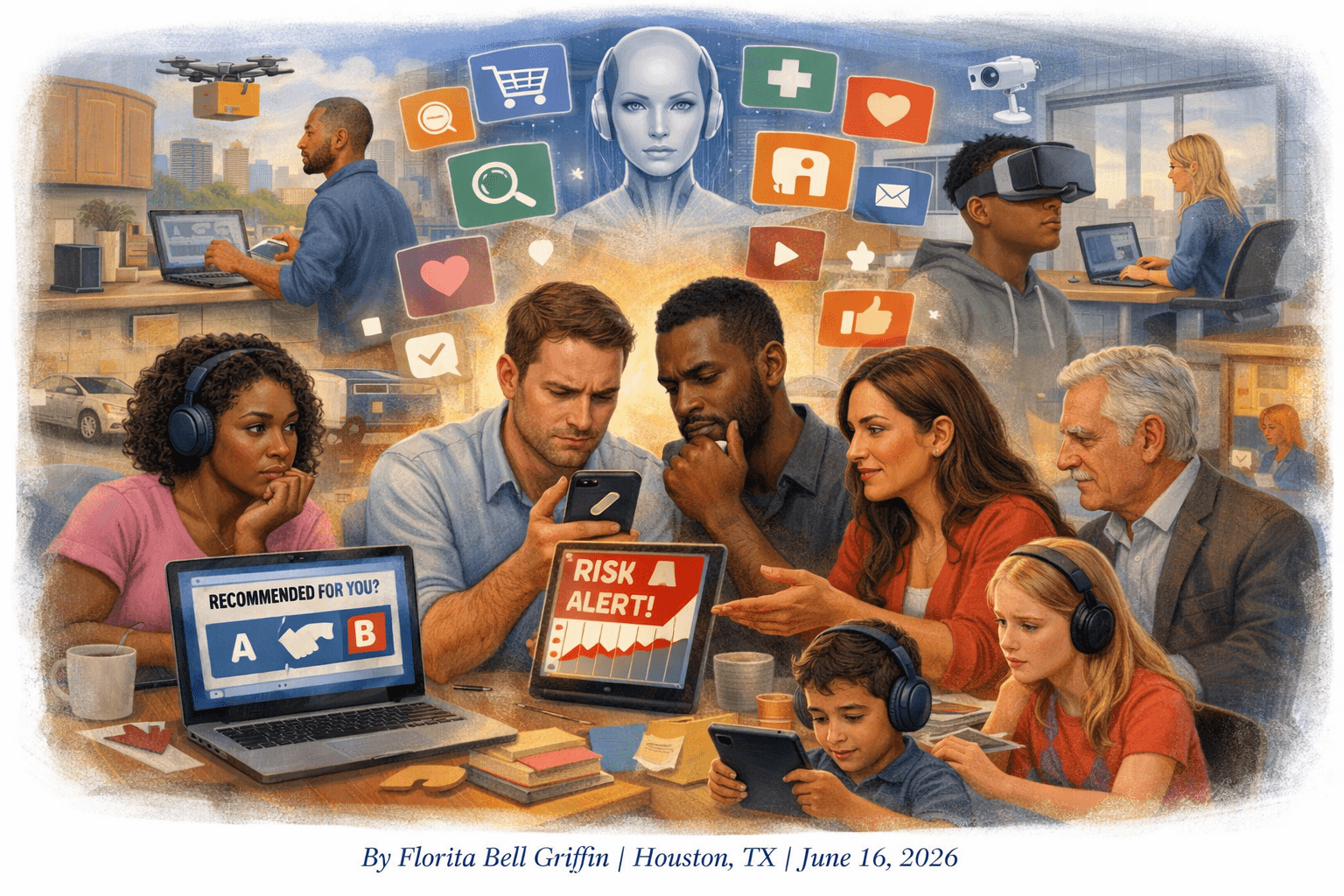
AI and Common Sense: Why Everyday People Must Stay Awake

Artificial intelligence shapes daily routines, decisions, and awareness—making common sense a vital civic skill for navigating technology’s growing influence in modern life.

By Florita Bell Griffin | Houston, TX | June 16, 2026

Artificial intelligence is moving into everyday life with a speed that many people are still trying to understand. For years, AI sounded like a distant subject, something tied to engineers, research labs, major technology companies, and futuristic machines. Today it is part of the ordinary systems people use every day. It appears in search tools, shopping platforms, banking alerts, customer service channels, school software, health systems, workplace tools, social media feeds, and digital assistants. Because of that shift, AI is no longer a subject for specialists alone. It has become part of public life, and that means everyday people need clear judgment, steady awareness, and strong common sense.

Common sense matters here because AI often arrives wrapped in ease. It feels helpful. It saves time. It offers summaries, recommendations, shortcuts, and ready-made answers. It can draft messages, suggest products, rank choices, flag unusual activity, and guide people through complex systems. Many of these uses are genuinely useful. They can reduce strain and help people handle the overload of modern life. Yet ease can also soften attention. When a system feels smooth, people may stop asking what is shaping the answer, whose interests are guiding the result, and how much influence the system is quietly exercising.

That is where staying awake becomes important. AI does more than respond. It increasingly interprets, predicts, sorts, frames, and guides. It helps decide what people see first, what receives emphasis, what appears relevant, and what fades from view. In that sense, AI is becoming part of the environment in which human judgment takes place. A person still chooses, yet the setting around that choice is being shaped more and more by systems built to influence attention and behavior.

For everyday people, this carries real consequences. A recommendation can shape a purchase. A ranking can shape an opinion. A generated summary can shape understanding. A flagged risk score can shape how an institution responds to a person. In many cases, the machine does issue the final decision. Its influence is already present upstream, organizing what gets noticed, what gets prioritized, and what seems reasonable. That kind of influence can feel invisible precisely because it blends into ordinary routines.

This is why common sense has become a civic skill in the age of AI. People need the simple wisdom to pause and ask basic questions. Where did this answer come from? Why am I seeing this recommendation? What is this system trying to optimize? Is this result serving my interests, or someone else’s? Is this output reliable, or does it only sound polished and confident? These questions are plain, human, practical questions. They do demand technical expertise. They require alertness.

One of the biggest risks in everyday life is confusing fluency with truth. AI can speak in complete sentences, polished language, and calm tones that create an impression of authority. Human beings naturally respond to confidence. A system that sounds sure of itself can feel trustworthy, even when the underlying reasoning is shallow, incomplete, or skewed. Common sense helps protect against that trap. Everyday people need the confidence to remember that a smooth answer and a sound answer are two different things.

The same issue appears in shopping, media, finance, and information. When people search online, browse products, watch videos, or scroll through content, AI is often helping organize the order of what they see. That means the system is shaping visibility itself. Some things are elevated. Some things are buried. Some things are tailored to a person’s habits, history, or likely reactions. The user still sees choices, yet the menu has already been arranged. Common sense means remembering that convenience and neutrality are two separate matters.

Work is another area where ordinary people need to stay alert. AI tools can help workers write faster, summarize meetings, handle repetitive tasks, and move through information more efficiently. That can be a real advantage. Yet these tools also change expectations. Once a system speeds up output, employers may expect more production in less time. Pace increases. Pressure increases. Monitoring may increase as well. Workers need common sense here too, because every gain in efficiency can also reshape the terms of labor, judgment, and autonomy.

Families face similar pressures. Children are growing up in environments where AI shapes search, entertainment, recommendations, and educational tools. Parents therefore need awareness about what kinds of influence are entering the home. A system that recommends the next video, suggests the next product, or answers a child’s question is also shaping perception and habit. The issue is larger than screen time. It concerns who or what is increasingly helping guide curiosity, attention, and trust inside family life.

Education raises its own questions. AI can support learning by explaining concepts, helping students organize information, and widening access to assistance. Yet real education also involves concentration, struggle, authorship, and disciplined thought. Common sense tells us that instant help carries both value and risk. A student can receive support and still lose some of the effort that deep learning requires. Teachers, parents, and students all need a grounded understanding of this tradeoff.

The broader public issue is that AI is changing decision environments. People often think of decision-making as a moment when someone chooses between options. In reality, decisions are shaped long before that final moment arrives. They are shaped by what is shown, what is hidden, what is emphasized, and how the options are framed. AI increasingly operates inside those earlier stages. That means common sense now involves awareness of the environment itself, not just the final choice.

Staying awake also means resisting passive trust. Modern life already depends heavily on digital systems, and that dependence makes it easy to slide into acceptance. A map gives directions. A feed shows content. A bank flags unusual activity. A school platform organizes assignments. A retailer suggests a product. A customer service bot answers a question. Each of these interactions may seem small on its own. Together, they create an environment where machine-guided systems are steadily shaping ordinary life. People need awareness because repeated reliance can quietly become dependence.

This does call for panic. It calls for maturity. AI can bring real benefits. It can improve access, reduce burdens, support research, strengthen logistics, and help people manage complexity. The issue is that useful tools still deserve human oversight and public seriousness. Everyday people should feel empowered to ask strong questions and keep their judgment intact. A healthy society uses advanced tools without surrendering common sense to them.

In the end, the title of this moment is larger than innovation. It is about discernment. AI is becoming part of the fabric of modern life, and that means ordinary people need more than curiosity. They need attention. They need skepticism where skepticism is earned, trust where trust is justified, and the wisdom to tell the difference. Common sense remains one of the strongest protections a society has when powerful systems begin guiding how people see, choose, and respond.

AI is here, and its influence is expanding through everyday routines that can seem harmless simply because they are familiar. That is exactly why everyday people must stay awake. The issue is deeper than technology alone. It concerns judgment, freedom, trust, and the quality of human choice in a world where machines increasingly help shape what people think they see.

© 2026 Truth Seekers Journal. Published with permission from the author. All rights reserved.

Support open, independent journalism. Your contribution helps us tell the stories that matter most.
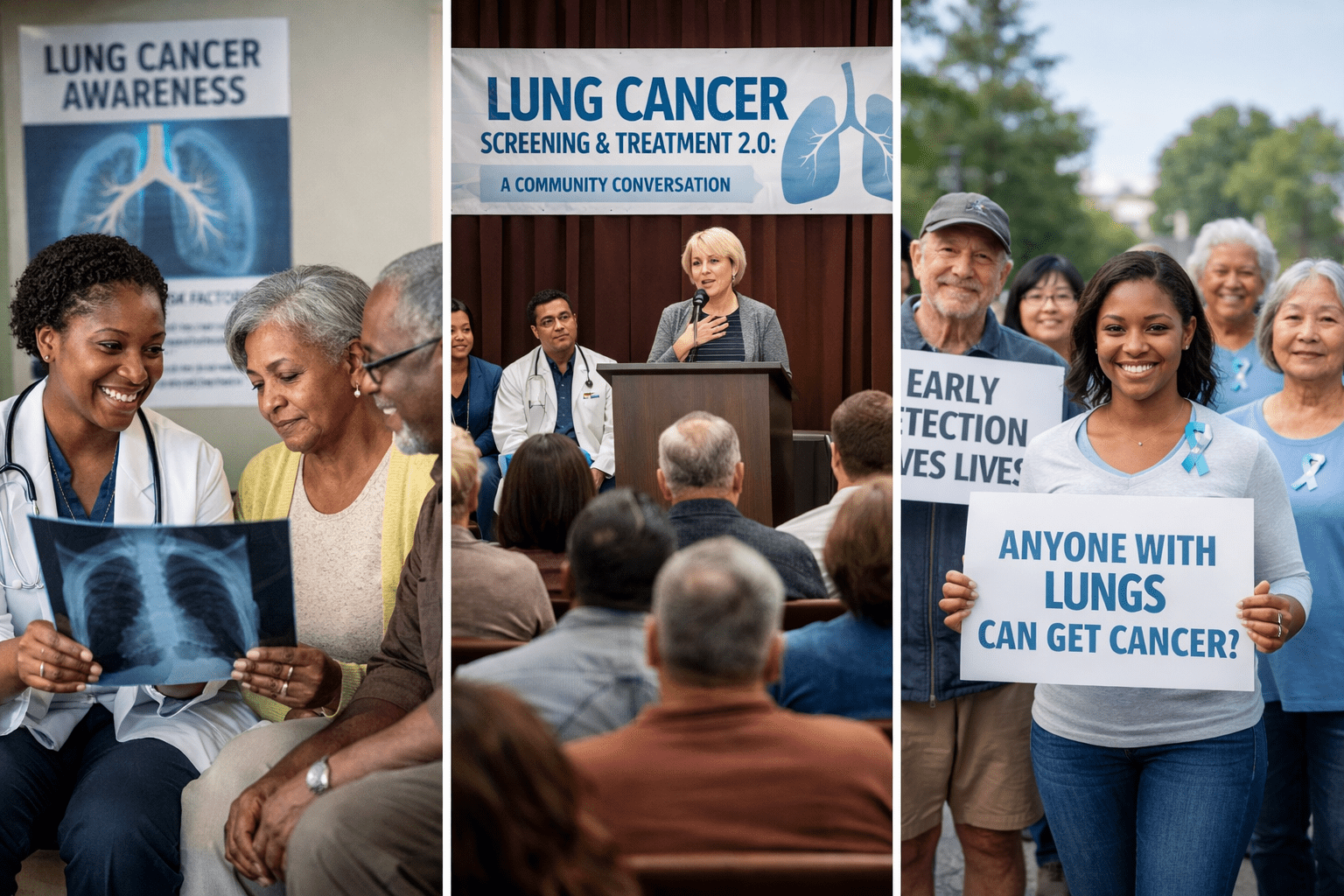
Part III – “From Awareness to Action”: Communities Confront Lung Cancer Together

The St. Louis Lung Cancer Screening to Treatment 2.0 symposium will connect residents with experts, survivors, and resources focused on early detection and care.

By Milton Kirby | St. Louis, MO | June 16, 2026

Series: Lungs, Lives, and Lessons – Part III

For many families, lung cancer conversations do not begin in a doctor’s office. They begin at home after months of unexplained coughing, fatigue, chest pain, or shortness of breath that slowly becomes impossible to ignore. Sometimes the symptoms are dismissed. Sometimes fear delays action. And sometimes people simply do not know where to begin.

Organizers behind the upcoming “Lung Cancer Screening to Treatment 2.0: A Community Conversation” symposium in St. Louis say that uncertainty is exactly what they hope to change. The June 27 event, hosted by Five Star Center, Inc. in partnership with the HEAL Collaborative and supported by Amgen, is designed to bring physicians, advocates, survivors, and residents together for one purpose: helping communities move from awareness to action.

After weeks of public education surrounding risk factors, symptoms, and stigma, organizers say the next step is empowering residents with information, support, and clear pathways toward care. Their message has remained consistent throughout planning: “Anyone with lungs can get lung cancer.”


More Than a Health Event

The symposium is intentionally structured as more than a traditional medical seminar. It is a community conversation, one designed to meet residents where they are, especially in neighborhoods where access to healthcare information and preventive services has historically been uneven.

Attendance is expected to reach 120 residents. The free event will include lunch, educational resources, survivor perspectives, interactive discussions, and opportunities for attendees to speak directly with healthcare professionals about lung cancer risks and screening eligibility.

While low-dose CT scans will not be performed onsite, clinicians will help residents determine whether they may qualify for screening and how to begin conversations with their medical providers. For many people, that first step can be life changing. Countless individuals who qualify for screening never pursue it because they do not realize they are eligible, lack consistent healthcare access, or fear what a diagnosis might reveal.


The Importance of Survivor Voices

One of the most powerful elements of the symposium may come not from physicians, but from survivors themselves. Two to three speakers are expected to share personal stories of diagnosis, treatment, fear, uncertainty, and survival.

Their voices matter because statistics alone cannot capture the emotional reality of the disease. Survivor testimony also helps dismantle one of the most persistent misconceptions surrounding lung cancer the belief that patients somehow deserve blame for their illness.

Too often, people diagnosed with lung cancer are asked whether they smoked before they are asked how they are feeling. That question can deepen shame at the very moment patients need support most. Organizers hope survivor stories will humanize the disease and encourage residents to seek medical guidance earlier rather than later.


Why Community Conversations Matter

Improving lung cancer outcomes requires more than medicine — it requires trust. Communities must feel safe enough to ask questions, discuss symptoms honestly, and pursue preventive care before emergencies develop.

That process can be especially difficult in communities that have experienced longstanding disparities in healthcare access and outcomes. St. Louis was selected intentionally because Black and Brown residents continue to face disproportionately low screening rates and lower survival outcomes tied to lung cancer. Economic barriers, insurance limitations, environmental exposure, transportation challenges, and delayed access to care all contribute to those disparities.

The symposium acknowledges that health challenges rarely exist in isolation. In addition to discussions about pulmonology care and screening eligibility, the event will include conversations about:

  • navigation support
  • medical debt
  • stigma in healthcare
  • the future role of artificial intelligence in lung cancer care

These topics matter because families often struggle with far more than the disease itself. Navigating appointments, insurance systems, treatment decisions, transportation, and financial pressures can quickly become overwhelming.


Education as Prevention

Throughout this three-part series, one theme has remained constant: early detection saves lives. Lung cancer survival rates improve dramatically when the disease is identified before it spreads. Yet many diagnoses still occur at later stages because symptoms were dismissed, misunderstood, or never evaluated.

Organizers believe education itself can become a form of prevention. Helping residents understand warning signs, risk factors, and screening conversations may encourage earlier medical attention long before symptoms become severe.

This educational focus is especially important because many people still incorrectly believe lung cancer only affects smokers. In reality, exposure to secondhand smoke, radon gas, hazardous chemicals, pollution, genetics, and occupational environments can also increase risk. Public understanding has not fully caught up with that reality, leaving many individuals unaware of their own vulnerability.


A Different Kind of Public Health Conversation

At its core, the St. Louis symposium reflects a broader shift in public health: awareness campaigns must do more than distribute information, they must create environments where people feel safe enough to engage with difficult topics honestly. That includes acknowledging fear, confronting stigma, and recognizing that many families have lost loved ones after symptoms were discovered too late.

The goal of “Lung Cancer Screening to Treatment 2.0” is not to alarm residents, but to encourage earlier conversations that could ultimately improve outcomes. For some attendees, the event may offer reassurance. For others, it may be the first step toward asking a doctor about symptoms they have ignored. And for some families, organizers hope it may ultimately help save lives.


The Conversation Continues

Across this series, the discussion surrounding lung cancer has moved from misconception, to medical understanding, to community response.
Part I challenged the stigma and silence surrounding the disease.
Part II focused on symptoms, risk factors, and the importance of early detection.
Part III brings the conversation back to the community, where awareness becomes action and education becomes empowerment.

Organizers hope residents leave the symposium understanding one thing above all else:
Lung cancer is not someone else’s issue. It is a public health issue, a community issue, and a human issue.
And conversations that begin with awareness today may help create survival stories tomorrow.


To Register

Related articles

Part I – “Anyone With Lungs”: Understanding the Hidden Realities of Lung Cancer

Part II- “Your Lungs Are Talking”: How the Respiratory System Works – and What It Tells Us

Related video

Support open, independent journalism. Your contribution helps us tell the stories that matter most.

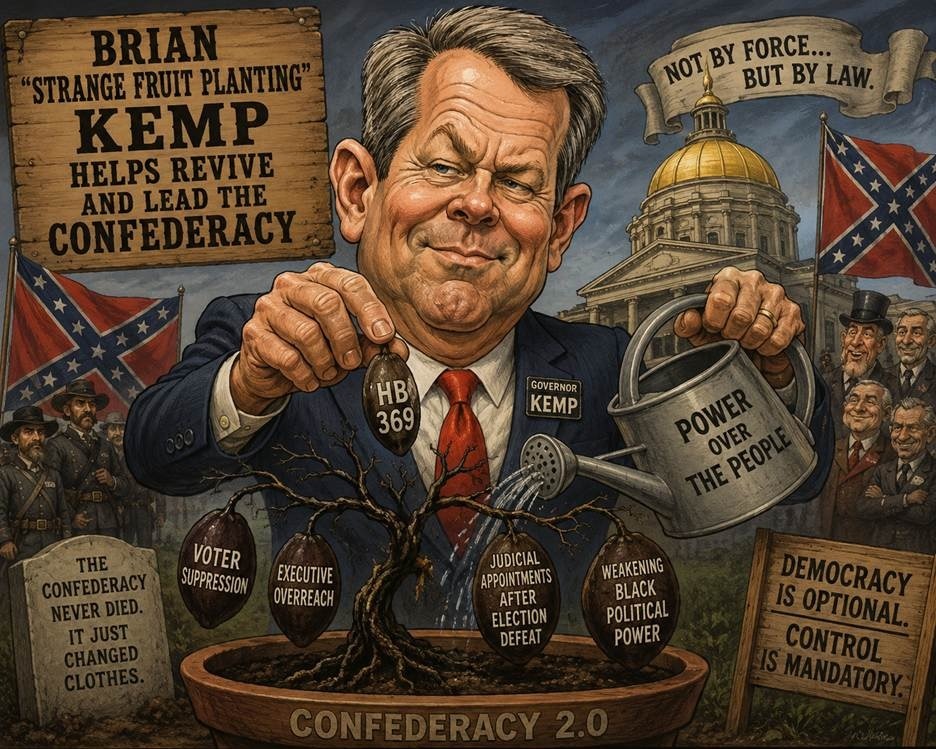
Georgia Governor Brian “Strange Fruit Planting” Kemp Helps Revive and Lead the Confederacy

A provocative opinion essay argues that recent actions by Georgia Governor Brian Kemp, including a judicial appointment and election law changes, raise concerns about voting rights, representation, and the future of democracy in Georgia.

By Lola Renegade | Atlanta, GA | June 14, 2026 |

Billie Holiday’s haunting song Strange Fruit described the bodies of Black Americans hanging from Southern trees, the gruesome harvest of a nation determined to preserve White supremacy and mediocracy at any cost. The song was never merely about lynching. It was about race and power. It was about a system willing to steal Black votes, Black labor, elect should-be-prison-bound felons to local, state, and federal government, manipulate laws, institutions, courts, customs, and public opinion to maintain control. It was about a cockroach Confederacy that refuses to die. While the trees may have changed and the methods may appear more sophisticated, many Black Georgians and other states across Ameri-KKK see familiar racist fruit still being harvested from the same ancestral poisonous roots.

Last month, Fulton County voters participated in a nonpartisan election and made a choice. Judicial newcomer Nikia Smith Sellers defeated incumbent Fulton County Superior Court Judge Paige Reese Whitaker. In a democracy, elections are intended to settle questions of representation and public service. Citizens vote. Winners win. Losers lose. The people speak, and government is expected to listen. Yet, through a series of events made possible by Georgia law, Governor Brian “Strange Fruit Planting” Kemp appointed Whitaker to the Georgia Court of Appeals after her electoral defeat. That appointment creates a vacancy on the Fulton County Superior Court before Whitaker’s elected term expires, thereby giving Kemp the authority to appoint someone to a seat that many voters believed they had already filled through the democratic process.

Legally, the governor may possess the authority to make such an appointment. That is not the issue. The deeper question is whether the spirit of democracy is being honored when the outcome of an election can effectively be altered through executive appointment. Democracy requires more than legal maneuvering. It requires legitimacy. It requires respect for the will of the people. It requires public confidence that elections matter and that the voices of voters are not diminished by procedural technicalities. These are humanistic traits the unwashed in the Confederacy do not possess.

For many Georgians, particularly Black Georgians whose ancestors bled, marched, organized, and died for the right to vote, this development raises troubling concerns. It feels less like democracy in action and more like a familiar Southern tradition of finding new mechanisms to preserve political power when democratic outcomes prove inconvenient. Throughout American history, whenever Black political participation expanded, new obstacles often emerged.  With the two-term election of a Black man, President Barack Obama, the Republicans have lost their minds. They are bound and determined that this will never happen again.

Following the Civil War came Black Codes. Following Reconstruction came Jim Crow. Following the Voting Rights Act came voter suppression efforts disguised as administrative reforms. The methods evolved, but the objective frequently remained the same: limiting the political impact of communities that challenged existing power structures.

Governor Kemp’s appointment of Whitaker does not stand in isolation. It comes amid broader debates about voting rights, representation, and political power in Georgia. Earlier this year, Kemp signed HB 369 into law, legislation that removes party labels from key local offices in Fulton, DeKalb, Gwinnett, Cobb, and Clayton counties beginning in 2028. Supporters argue the measure will reduce partisanship and encourage voters to focus on candidates rather than political affiliations. Critics, however, contend that the law selectively targets some of Georgia’s largest, most diverse, and heavily Democratic counties while leaving the remaining 154 counties untouched. To those critics, HB 369 represents more than election reform; it represents an effort to reshape the political landscape of metropolitan Atlanta and diminish the electoral influence of Black voters and communities of color whose participation has transformed Georgia politics in recent decades.

Whether one agrees with that assessment or not, many voters see a troubling pattern. When election rules are changed exclusively for counties with large Black and other communities of color populations, questions naturally emerge about whose political power is being targeted and whose interests are being protected. Viewed alongside actions such as the governor’s appointment of a white judge who had just been rejected by voters for a Black judge, many Blacks have seen this syndicated movie before. We see a government increasingly willing to use legal mechanisms to influence political outcomes after citizens have already spoken. For communities whose ancestors endured poll taxes, literacy tests, grandfather clauses, White primaries, and other barriers designed to dilute Black political power, such actions are not viewed as isolated events. They are viewed through the long shadow of history and as reminders that the struggle over who gets to participate fully in democracy is far from over.

Governor Brian “Strange Fruit Planting” Kemp is a racist and a pivotal part of the unwashed Confederacy. If Burt “Fake Elector” Jones or Rick “Just Another Old Ass Racist” Jackson ascend to the governor’s office in November, it will be more of the same.

The Confederacy lost the Civil War, but many would argue that it never surrendered its determination to preserve white privilege, patriarchy, hierarchy and control. Instead, it adapted. It exchanged uniforms and KKK hoods and sheets for suits, plantations and burning crosses for institutions, and overt racism for policies that often produce similar outcomes without using the same language. What once required violence now frequently relies on legislation (but violence is still on the table), court decisions, administrative procedures, and strategic appointments. The result is often the same: power remains concentrated in the hands of those who already possess it. The language is different. The mechanisms are different. The outcomes, however, often feel painfully familiar. After the (s)election of the felon Donald Trump to the presidency, racists are coming out of the woodworks, from under rocks, and from bottom feeding to boldly shout the once quiet parts out loud.

Black supporters of this racist governor should either hide their faces or plan strategies to take him down in a major way. It is evident that he played and used them like old tools. History teaches that every struggle for justice produces both freedom fighters and collaborators. While some answer history’s call with courage, others answer it with calculation. They see injustice, recognize it for what it is, and nevertheless choose personal advancement over collective liberation. Their reward may be temporary comfort, but history rarely remembers them kindly.

Some Blacks, of the Clarence Thomas, Candace Owens, and Tim Scott variety, will argue that Kemp is simply exercising powers granted to him under Georgia law. They are correct. However, legality and morality are not always the same thing. Throughout American history, many injustices were perfectly legal. Segregation was legal. Disenfranchisement was legal. Exclusion was legal. The question is not whether Governor Kemp had the authority to sign HB 369 or appoint a replacement judge. The question is whether these actions strengthen democracy, expand public trust, and honor the will of voters, or whether they reinforce a perception that political power increasingly supersedes popular sovereignty.

These controversies arrive at a moment when confidence in democratic institutions is already fragile. Across America, citizens are witnessing insurrectionists, election deniers and fake electors seeking office and winning as well as avoiding accountability, voting rights under attack, and growing distrust in public institutions. Many Americans fear that democratic norms are being weakened by a cabal of reprobates entrusted to protect them. Against this backdrop, actions that appear to circumvent the will of voters carry consequences that extend far beyond a single judicial appointment.

The struggle for Black political participation has always been a struggle to force America to honor its own promises. Voting rights were not freely given. Civil rights were not freely given. Equal access to public institutions was not freely given. Each advance required ordinary people to challenge extraordinary systems of resistance. Every generation has been called upon to defend democracy against forces seeking to narrow its reach. This time is no different.

The larger issue before Georgia is not merely who occupies a judicial seat in Fulton County. The larger issue is whether democratic outcomes will be respected when they produce results that powerful people do not prefer. Future generations will study moments like this. They will ask whether elected officials strengthened democratic institutions or weakened them. They will ask whether leaders honored the spirit of representative government or merely complied with its technical requirements. They will ask whether public office was used to expand democracy or to manage and contain it.

History will ultimately determine how this moment is remembered. The question is whether Georgia’s leaders are planting seeds that strengthen democracy or planting strange fruit that future generations will once again be forced to confront.

“When you see something that is not right, not fair, not just, you have a moral obligation to say something, to do something.” Civil Rights Activist and Congressman John Lewis

And do something we must. It is time to deliver a decisive deathblow and defeat to the lingering ideology of the Confederacy and consign it permanently to the ash heap of history. We must make sure that it never raises its ugly, vile head again.

Let us start with the rumblings of economic disturbances. Consider buying all of your gas at Costco, if possible.

Liberty Pull Away from Dream, 104-90, in Key Commissioner’s Cup Match

By Milton Kirby | College Park, GA| June 12, 2026

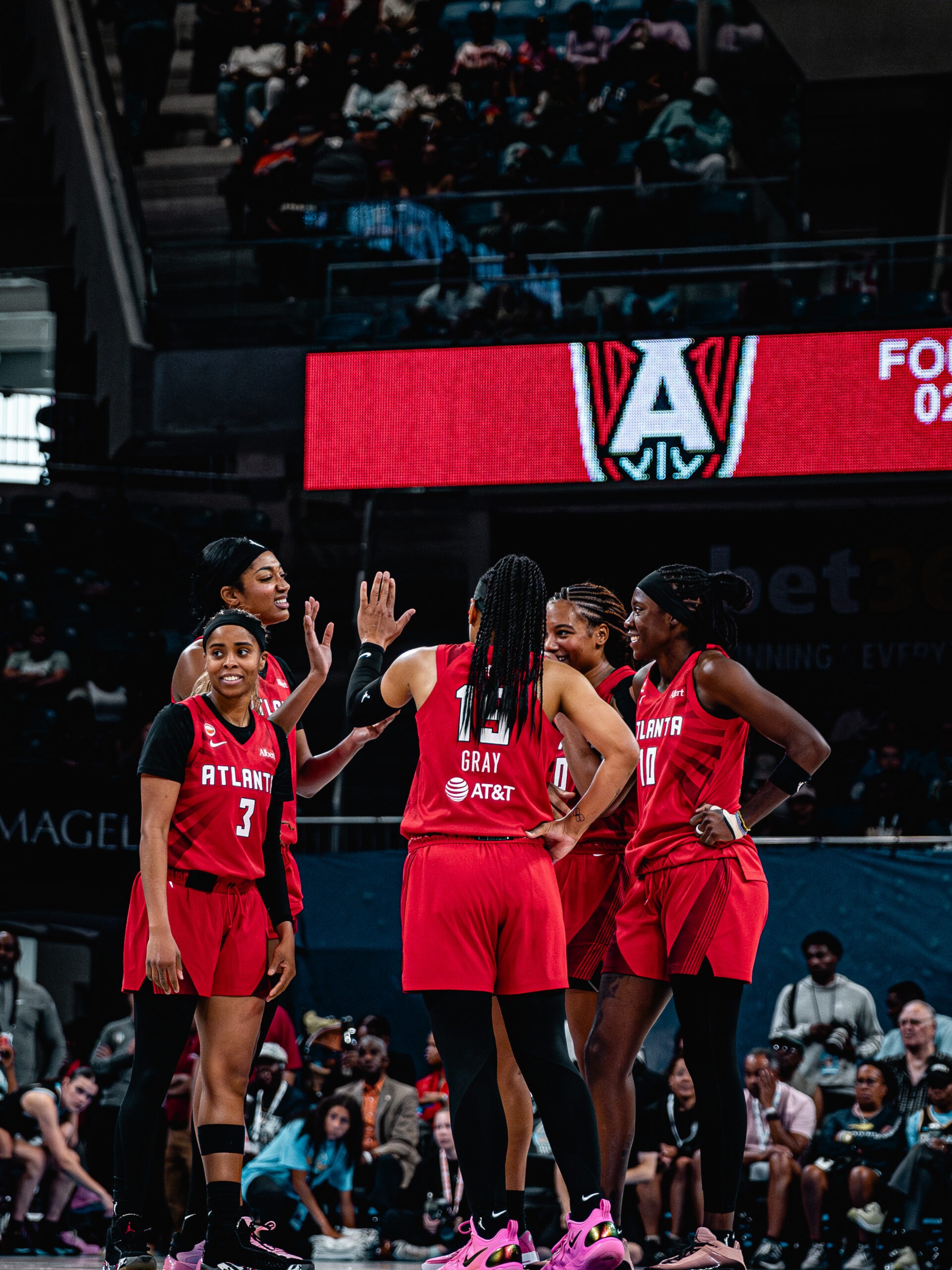
The Atlanta Dream saw Angel Reese post a season-high scoring performance and Rhyne Howard continue her climb through the franchise record book, but it was not enough to overcome the defending WNBA champions Thursday night.

The New York Liberty used a dominant shooting display and a commanding advantage on the boards to defeat the Dream 104-90 at Gateway Center Arena, dealing Atlanta a significant blow in its quest to reach the 2026 Commissioner’s Cup championship game.

The loss dropped Atlanta to 3-2 in Commissioner’s Cup play and likely ended its hopes of advancing to the June 30 final. New York improved to 4-0 in tournament competition and remains in control of its path to the championship game.

“We’re still a really good team,” Dream Head Coach Karl Smesko said. “New York’s a really good team, too.”

Rhyne Howard dribbles past Pauline Astier

Atlanta entered the game needing a victory to keep pressure on the unbeaten Liberty, but New York’s offense proved difficult to contain throughout the night.

The Liberty shot 54 percent from the field and connected on 16 of 31 three-point attempts, including several deep shots that shifted momentum at critical moments. New York also dominated the glass, outrebounding Atlanta 40-24.

“They hit every shot,” Reese said. “When you hit 50 percent from three and 50 percent from the field it makes it tougher to win.”

Despite the defeat, the night featured several milestones for Howard and a breakout scoring effort from Reese.

Howard became the youngest player in WNBA history to make 400 career three-pointers when she connected from beyond the arc in the opening quarter. The 26-year-old reached the milestone in just 146 career games, the fastest pace in league history.

Later in the game, Howard scored her 20th point of the evening to move into fourth place on the Dream’s all-time scoring list with 2,528 career points, passing franchise great Erika de Souza.

Howard finished with 24 points, four rebounds, three assists and four steals while making five three-pointers.

Reese delivered one of the strongest offensive performances of her young career, scoring a season-high 25 points while adding nine rebounds and three assists. The total marked the second-highest scoring game of her WNBA career.

Still, the standout rookie focused on the result rather than the statistics.

“I really wanted this one bad for the Commissioner’s Cup,” Reese said. “Career highs don’t matter when you lose.”

Allisha Gray added 18 points for Atlanta, while Jordin Canada contributed seven assists and two steals.

The Dream opened the second quarter with a 10-2 run and briefly took a 29-23 lead. Atlanta managed to stay within striking distance despite being heavily outrebounded in the first half.

The momentum shifted just before halftime when New York’s Marine Johannes drilled a deep three-pointer and teammate Pauline Astier followed with a remarkable 53-foot shot at the buzzer, helping the Liberty take a seven-point advantage into the locker room.

“We’d make a run, and they’re making a couple tough, tough threes, and these things start to add up,” Smesko said. “You have to try and overcome them, but at some point it becomes too much.”

  • Atlanta’s all-time record against New York fell to 25-43 overall and 13-22 at home.
  • The Dream remains 3-2 in Commissioner’s Cup play, with $11,000 raised for The King Center through the tournament.
  • Howard became the youngest player in WNBA history to reach 400 career three-pointers.
  • Reese’s 25 points established a season high and marked the second-highest scoring game of her career.
  • Howard’s 2,528 career points moved her into fourth place on the Dream’s all-time scoring list.

The Liberty effectively decided the game in the third quarter.

New York connected on six of its first eight three-point attempts in the period and used a 16-3 run to build an 80-62 lead. Satou Sabally knocked down consecutive three-pointers during the surge as Atlanta struggled to match New York’s shooting touch.

The Dream attempted one final push early in the fourth quarter.

Gray scored four quick points and a Canada steal led to what appeared to be a momentum-building three-point play opportunity for Reese. However, after a review, officials ruled Reese had committed a foul and assessed her a technical foul following the play. The basket was removed and New York’s Breanna Stewart converted a free throw to extend the Liberty’s lead.

“I felt like we were onto something,” Smesko said. “That was definitely a setback. You’ve just got to try to make another run, and we never really got to make another serious push at it.”

Breanna Stewart and Sabally led the Liberty with 19 points each. Stewart also dominated the boards with 19 rebounds.

The Dream’s starting lineup of Canada, Gray, Howard, Naz Hillmon and Reese entered the game with an 8-3 record when starting together and again showed flashes of its potential. However, Atlanta’s struggles from the free-throw line, where it converted just 15 of 27 attempts, and New York’s hot shooting proved too much to overcome.

The loss also snapped Reese’s streak of five consecutive games with at least 10 points and 10 rebounds.

Atlanta now turns its attention to Sunday’s road game against the Toronto Tempo, the final Commissioner’s Cup contest on its schedule. The Dream enters the matchup with an 8-4 overall record and still among the top teams in the WNBA despite Thursday’s setback.

  • Atlanta’s all-time record against New York fell to 25-43 overall and 13-22 at home.
  • The Dream remains 3-2 in Commissioner’s Cup play, with $11,000 raised for The King Center through the tournament.
  • Howard became the youngest player in WNBA history to reach 400 career three-pointers.
  • Reese’s 25 points established a season high and marked the second-highest scoring game of her career.
  • Howard’s 2,528 career points moved her into fourth place on the Dream’s all-time scoring list.

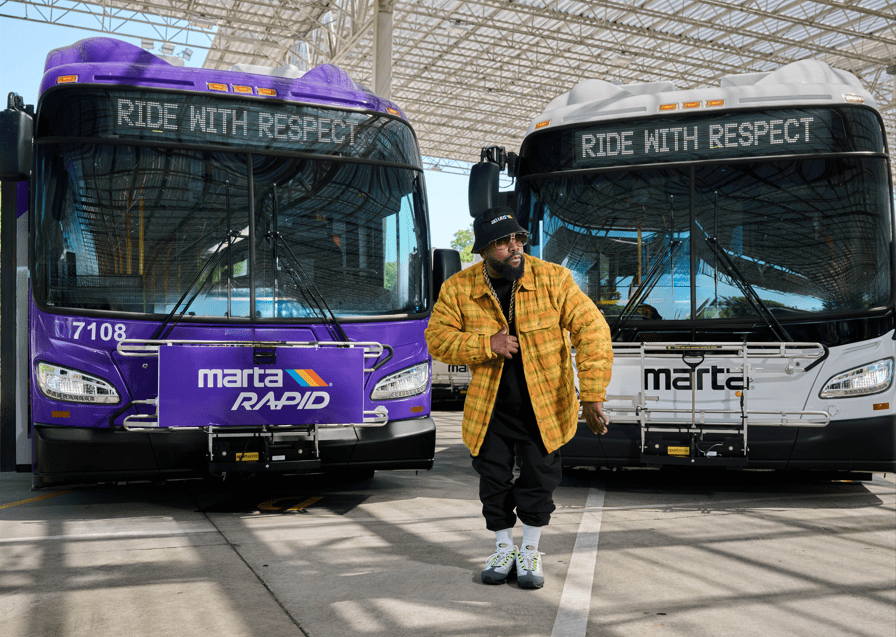
MARTA Partners With Big Boi to Launch “Let MARTA Drive” Campaign Ahead of FIFA World Cup 2026

MARTA and Atlanta music legend Big Boi launch the “Let MARTA Drive” campaign ahead of FIFA World Cup 2026 matches beginning June 15.

By Milton Kirby | Atlanta, GA | June 11, 2026

As Atlanta prepares to welcome soccer fans from around the world for FIFA World Cup 2026™, MARTA has partnered with Atlanta music icon Big Boi to encourage residents and visitors to use public transit during the global event.

The Metropolitan Atlanta Rapid Transit Authority announced Wednesday the launch of its “Let MARTA Drive” campaign, featuring the Grammy Award-winning artist, entrepreneur, philanthropist, and Rock & Roll Hall of Fame inductee.

MARTA officials say the campaign is designed to encourage riders to use the transit system to attend World Cup matches, fan festivals, concerts, and other events throughout downtown Atlanta while promoting the agency’s Ride with Respect initiative.

As one-half of the legendary hip-hop duo OutKast, Big Boi has helped shape Atlanta’s cultural identity and international reputation. MARTA leaders say his deep roots in the city make him a natural choice to help welcome visitors arriving from across the globe.

“Big Boi’s music is deeply embedded in the culture of Atlanta, making him the perfect person to help us welcome soccer fans from around the globe,” said MARTA Interim General Manager and CEO Jonathan Hunt. “We look forward to bringing his unmistakable voice directly to our riders through exclusive station announcements and digital content. This partnership is an exciting way to showcase our world-class transit network while reminding everyone to ride safely and with respect.”

Through the campaign, Big Boi will encourage riders to take MARTA to major events across downtown Atlanta, helping reduce traffic congestion and parking challenges while creating a more convenient travel experience.

“Atlanta has always been a city that moves people and sets trends,” Big Boi said. “When the world comes here, I want everyone to feel that energy without the stress. MARTA makes it easy to get downtown, to the events, and everywhere in between. I’m proud to be part of what keeps Atlanta moving and shows the world how we do it.”

Atlanta is scheduled to host multiple FIFA World Cup 2026 matches and related events beginning June 15. Officials anticipate increased demand on transportation systems as fans travel between matches, fan festivals, concerts, hotels, restaurants, and attractions throughout the city.

The campaign also highlights MARTA’s Ride with Respect initiative, which encourages passengers to treat fellow riders, MARTA employees, and public spaces with courtesy and consideration.

For longtime Atlantans, the partnership brings together two institutions closely associated with the city. MARTA has served as the region’s transit backbone for decades, while Big Boi and OutKast helped elevate Atlanta’s influence on music and popular culture around the world.

MARTA is also encouraging riders to take advantage of its Rider Tools platform, which provides trip planning assistance, real-time train and bus tracking, service alerts, route information, and accessibility resources.

With the world’s largest sporting event set to arrive in Atlanta next week, MARTA leaders hope visitors and residents alike will choose transit as they travel throughout the city.

For more information about MARTA services and rider resources, visit MARTA’s website.

Related articles

MARTA Launches “Better Breeze” Fare System, Begins Five-Week Transition Period

New Year, New MARTA: 2026 Upgrades Aim to Boost Safety, Reliability, and the Rider Experience

MARTA rolls out Big Changes with New Fare System Upgrades

MARTA Unwraps the Holidays with Free Rides, Festive Buses, and Gifts for Riders

From Tokens to Tap-to-Pay: MARTA Unveils Better Breeze

World-Class Transit for World-Class Soccer: MARTA Steps Up

MARTA rolls out Big Changes with New Fare System Upgrades

MARTA Unwraps the Holidays with Free Rides, Festive Buses, and Gifts for Riders

MARTA Rolls Out an Outkast Tribute Across Atlanta

MARTA Completes Garnett Station Platform Renovation

From Tokens to Tap-to-Pay: MARTA Unveils Better Breeze

MARTA to Close Five Points Peachtree Entrance as Next Phase of Transformation Begins

Truth Seekers Journal thrives because of readers like you. Join us in sustaining independent voices.

Atlanta Dream Grind Out 82–75 Road Win Behind Historic Night From Rhyne Howard and Angel Reese

Angel Reese and Rhyne Howard scored 17 points apiece as the Atlanta Dream defeated the Chicago Sky 82-75, improving to 3-1 in Commissioner’s Cup play.

By Milton Kirby | Chicago, IL | June 10, 2026

The Atlanta Dream leaned on their most reliable lineup and a dominant rebounding performance from Angel Reese to secure an 82–75 win over the Chicago Sky at Wintrust Arena on Monday night. The victory moves Atlanta to 8–2 when starting the combination of Jordin Canada, Allisha Gray, Rhyne Howard, Naz Hillmon, and Angel Reese, a unit that continues to define the Dream’s identity on both ends of the floor.

The win also pushes Atlanta to 31–37 all‑time against Chicago and 15–18 on the road in the series. More importantly, it lifts the Dream to 3–1 in Commissioner’s Cup play, bringing their total to $10,000 raised for The King Center, the team’s designated charity.


Rhyne Howard brings the ball down court – Courtesy photo

Howard Makes History — Again

Rhyne Howard added another milestone to her rapidly growing résumé. With her 17‑point performance, she became the youngest player in WNBA history to reach 2,500 points, 500 rebounds, 500 assists, 200 steals, and 100 blocks. Only Diana Taurasi and Maya Moore sit anywhere near that company — and Howard reached it earlier than both.

Howard’s all‑around impact showed again Monday:
17 points, 5 assists, 3 steals, and steady leadership in the fourth quarter when Atlanta needed composure.


Reese Rewrites the Record Book

Angel Reese continues to make the extraordinary look routine. She tied her season high with 17 rebounds, becoming the first player in Dream history to record back‑to‑back 17‑rebound games.

Her stat line — 17 points, 17 rebounds, 4 assists, 2 steals — marked her eighth double‑double of the season and the 57th of her career, the most double‑doubles ever recorded through a player’s first 75 WNBA games.

Reese’s presence on the glass changed the game’s tempo, especially in the fourth quarter when Atlanta outscored Chicago 25–17 to close it out.


Hillmon’s Breakout and Balanced Scoring

Naz Hillmon delivered her best offensive outing of the season, scoring 16 points on 50% shooting, including three drilled shots from 3-point range, a wrinkle that stretched Chicago’s defense and opened driving lanes for Canada and Gray.

All five Atlanta starters finished in double figures:

  • Angel Reese: 17 pts, 17 reb, 4 ast, 2 stl
  • Rhyne Howard: 17 pts, 3 reb, 5 ast, 3 stl
  • Naz Hillmon: 16 pts, 6 reb
  • Allisha Gray: 14 pts, 4 reb, 3 stl
  • Jordin Canada: 14 pts, 6 ast

The Dream also shot a blistering 93.8% from the free‑throw line (15–16), a key separator in a game that stayed tight through three quarters.


How the Game Unfolded

Atlanta opened with an 18–17 edge after the first quarter, but Chicago responded with a strong second frame to take a 42–39 halftime lead. The Dream tightened their defense in the third, holding the Sky to just 16 points, and then closed the game with their most efficient offensive quarter of the night.

Chicago’s Kahleah Copper‑replacement, Natasha Cloud, led the Sky with 18 points, while Kamilla Cardoso added 5 assists and Azurá Stevens pulled down 7 rebounds.

But Chicago couldn’t match Atlanta’s balance, physicality, or late‑game execution.


Starting Lineups

Atlanta Dream:
Jordin Canada, Allisha Gray, Rhyne Howard, Naz Hillmon, Angel Reese

Chicago Sky:
Skylar Diggins, Jacy Sheldon, Gabriela Jaquez, Azurá Stevens, Kamilla Cardoso

Atlanta played without Brionna Jones (right knee) and Amy Okonkwo (coach’s decision). Chicago was without DiJonai Carrington, Rickea Jackson, and Courtney Vandersloot.


Final Score Atlanta 82, Chicago 75 (18–17 | 21–25 | 18–16 | 25–17)


Support open, independent journalism—your contribution helps us tell the stories that matter most.

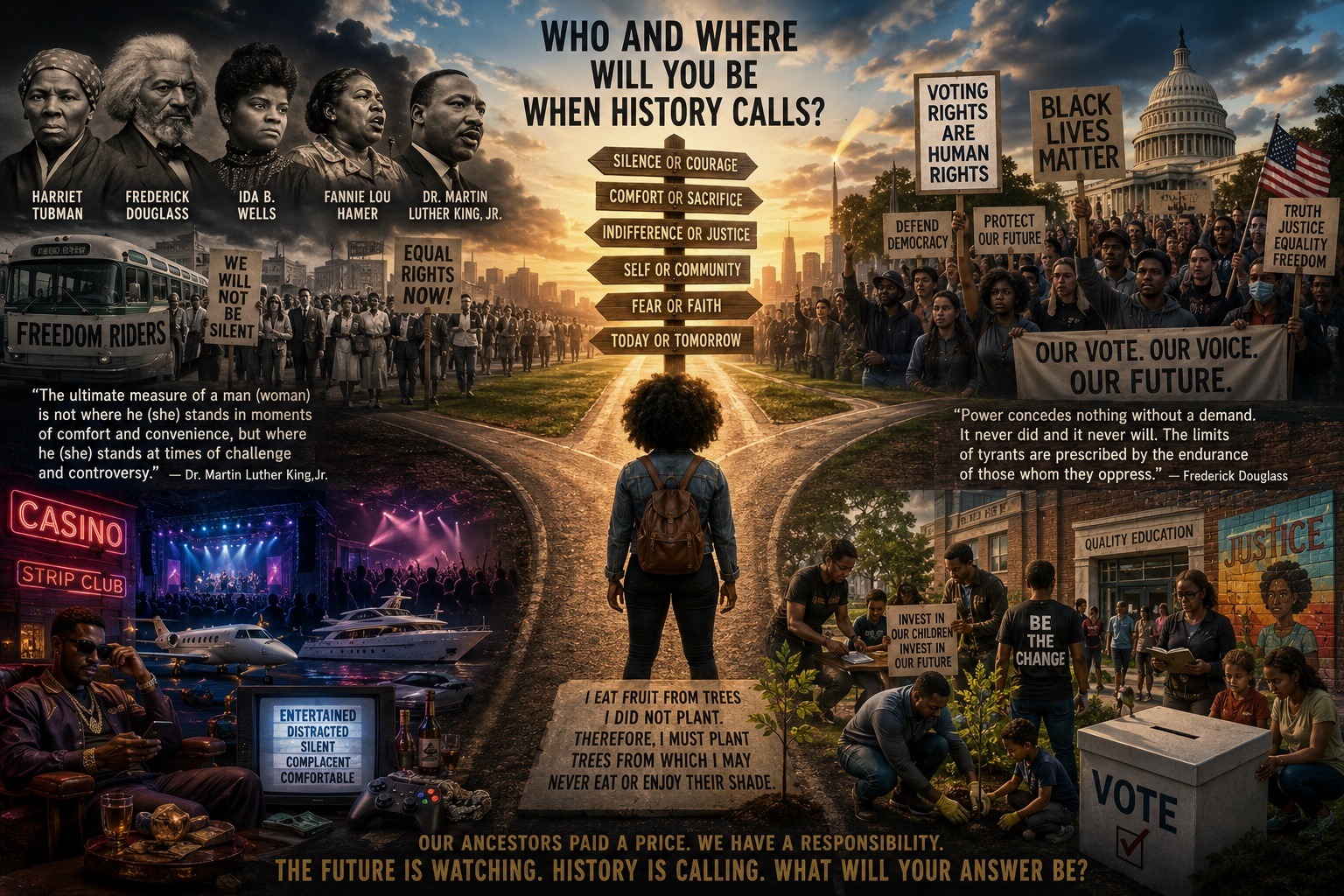
Who and Where Will You Be When History Calls?

By Lola Renegade | June 9, 2026

“The ultimate measure of a man (woman) is not where he (she) stands in moments of comfort and convenience, but where he (she) stands at times of challenge and controversy.”

 — Dr. Martin Luther King, Jr.

I watched Trevor Noah Netflix special Joy in the Trenches over the weekend. He posed a question that refuses to vacate my thoughts: Who will you be when history calls? I added “where.”

It is a simple question, yet it may be one of the most important questions any generation can answer. History is not merely a record of people, places, events, presidents, wars, elections, and legislation. History is a record of who stood up, who sat down, who spoke out, and who remained silent. Every generation eventually arrives at a moment when saying and doing nothing becomes impossible.

For people of color in America and our allies, that moment has arrived once again. Under the Trump Administration, hard-fought gains in civil rights, voting rights, diversity initiatives, economic opportunity, and equal protection are under unprecedented attack. The stakes are high and the consequences will be felt for generations. It is long past the time that each of us must decide whether to stand idly by watching and benefitting while others do all the heavy lifting. Or it is time to step up to do your part to help shape history and to deal the final deathblow to injustice in a way that this part will never need to be revisited again.

In 1961, a group of extraordinarily brave Americans – both Black and white, the Freedom Riders, boarded buses bound for the Deep South to challenge segregation and force this nation to confront its lack of conscience. Many were barely out of their teens. Some were college students. Some were clergy. Before departing, many wrote their wills and letters to loved ones, fully aware they might never return home alive.

They faced firebombs, beatings, imprisonment, and the very real possibility of death, not for personal gain, but for the promise of a more just America. They challenged segregated seats on buses, at lunch counters, and helped change the course of history. More than six decades later, the buses are different, but the destination for full equality remains the same.

Many others before us made tremendous sacrifices and answered the call and because of them, many of our lives are better.

History called Harriet Tubman, and she answered by risking her freedom and her life to lead others out of bondage. History called Ida B. Wells, and she answered by exposing the horrors of lynching when much of America preferred ignorance over truth. History called Frederick Douglass, and he answered by standing before a nation celebrating liberty and asking what the Fourth of July meant to millions who remained enslaved. History called Fannie Lou Hamer, and she answered by exposing before the nation the violence and terror inflicted upon Black citizens who dared to exercise their constitutional right to vote. History called Dr. Martin Luther King Jr., and he answered from a Birmingham jail cell, reminding America that injustice anywhere is a threat to justice everywhere and warning that the silence of good people often proves more dangerous than the actions of the openly wicked.

Every generation inherits unfinished work. Today, history is calling once again. It is calling in an era marked by fierce debates over voting rights, education, immigration, access to medical care, judicial power, economic inequality, and the future of democratic institutions. It is calling as election deniers and fake electors continue to seek and win positions of influence. It is calling as public trust in elections has eroded and facts themselves are increasingly filtered through partisan loyalties. It is calling amid debates surrounding Project 2025, presidential immunity, executive power, and the return of Donald Trump to the presidency despite felony convictions that, in previous eras, might have ended a political career. It is calling as participants in the January 6 insurrection are viewed by some as criminals and by others as patriots. It is calling as America wrestles once again with old questions about race, power, citizenship, and whose voices matter in a democracy.

Your children, grandchildren, and generations yet unborn will one day ask a question that no amount of wealth, status, influence, or self-justification will be able to avoid: Who were you, where were you, and what did you do when history called? They will not ask how many luxury vehicles, airplanes, and yachts you owned. They will not ask how many formerly colonized countries you visited, how many mansions you purchased, how many designer labels filled your closets, how many concerts or sporting events you attended, how many casinos you visited, how many strip clubs you visited, how many times you attended church as a false witness, how many violent and vulgar video games you played, how many degrading rap lyrics you wrote and produced, how many followers admired your social media accounts, or how many photographs documented your comfort and success. They will not care how much money you spent being entertained while the future of Black freedom and progress was on the line and being written around you.

They will ask where you stood. They will ask whether you defended democracy when democracy was being tested. They will ask whether you defended truth when lies became profitable. They will ask whether you defended the vulnerable when doing so was unpopular. They will ask whether you challenged injustice or accommodated it. They will ask whether you spent your resources merely pursuing comfort, consumption, and entertainment while future generations inherited the consequences of your indifference. They will ask whether you invested in education, justice, opportunity, and freedom or whether you invested only in yourself. They will ask whether your faith transformed communities or merely sustained institutions. They will ask whether you sought proximity to power or whether you spoke truth to power.

I am reminded of a simple truth: I eat fruit from trees I did not plant. I enjoy freedoms secured by sacrifices I did not make. I benefit from struggles, beatings, and deaths that I did not endure. The question before us is whether we will do the same. Will we plant trees from which we may never eat or enjoy their shade? Will we defend freedoms whose full benefits we may never see? Will we invest in a democracy that our children, grandchildren, and generations yet unborn will inherit?

Remember, “Power concedes nothing without a demand. It never did and it never will. The limits of tyrants are prescribed by the endurance of those whom they oppress.” — Frederick Douglass

Who and where will you be when history calls?

Join Communities United for Justice in the fight for freedom and full equality!  

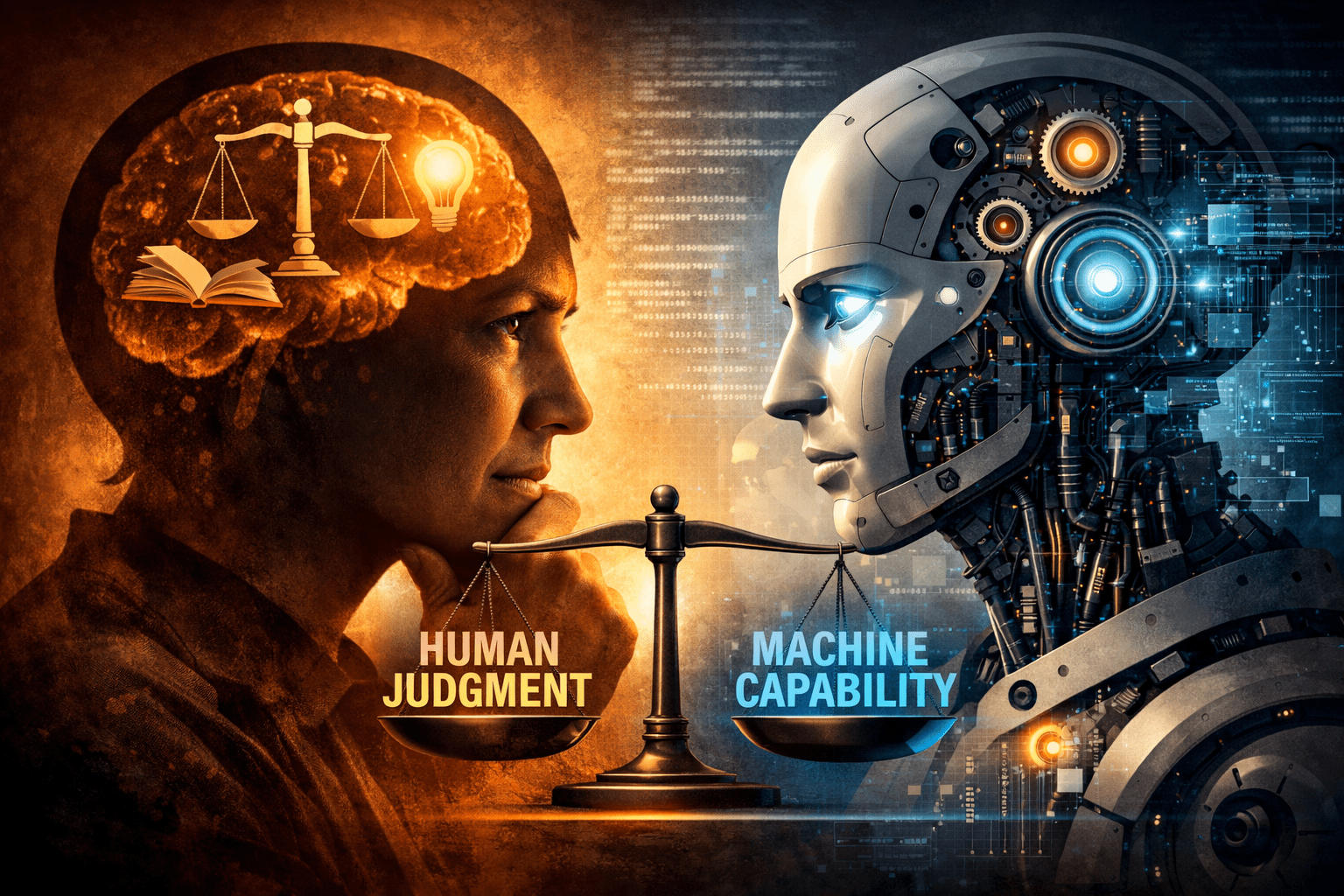
AI and Human Judgment: What People Must Protect as Machines Advance

Artificial intelligence is advancing with unusual speed, and much of the public discussion around it has focused on what machines can now do. People hear about systems that can write, summarize, translate, recommend, calculate, generate images, imitate voices, analyze patterns, and respond to questions in seconds. Those capabilities are impressive, and they continue to expand. Yet the deeper public question is not only what machines can do. The deeper question is what human beings must protect as machines become more capable, more persuasive, and more embedded in the routines of daily life. At the center of that question stands human judgment.

Human judgment is one of the most important protections people have in any age of powerful systems. It is the ability to weigh context, notice nuance, recognize moral significance, question appearances, and resist the temptation to confuse speed with wisdom. Judgment is what allows a parent to sense that a child’s problem is larger than the words being spoken. It is what allows a teacher to see the difference between fluent language and real understanding. It is what allows a doctor, pastor, employer, neighbor, or citizen to recognize that a case cannot always be reduced to data points and pattern matches alone. Machines may process information quickly, though judgment belongs to a deeper layer of human responsibility.

This matters because AI increasingly enters the spaces where judgment once rested more visibly with people. Search engines offer direct answers instead of pages of sources. Recommendation systems shape what people notice and what they ignore. Hiring systems help screen candidates. Financial systems flag behavior and assign risk. Educational tools help students produce polished responses quickly. Healthcare systems support prioritization and administrative review. Customer service platforms guide interactions through automated logic. In each setting, the machine appears to save time or improve efficiency. Those gains may be real. Yet every gain raises a deeper question. What happens when people begin to rely on machine outputs without preserving the habits of thought that allow them to evaluate those outputs wisely?

One of the greatest risks in the age of AI is the weakening of human judgment through convenience. A smooth answer feels satisfying. A quick summary feels efficient. A confident recommendation feels useful. Over time, people may begin to treat the first polished output as sufficient, even when it needs further scrutiny. That is where judgment begins to thin. Human beings can slowly lose the habit of asking where an answer came from, what it may have left out, what assumptions shaped it, and whether the result fits the lived reality of the situation. AI does not need to replace human thought entirely in order to weaken it. It only needs to make unexamined acceptance feel normal.

This concern reaches far beyond technical settings. In family life, parents and children now live in a world where machines can answer questions and generate language instantly. That can be useful, though it also changes the environment in which young minds develop. A child still needs to struggle, think, read, remember, revise, and grow through correction. Judgment matures through effort. It forms when a person learns to live with uncertainty long enough to reach clarity honestly. If every moment of confusion is met by an instant machine response, the child may gain speed while losing depth. What must be protected is not merely the child’s access to information. It is the child’s formation as a thinking and discerning human being.

The same issue appears in public life. AI-generated language, images, and audio can be persuasive, polished, and emotionally effective even when they are incomplete, misleading, or entirely false. This changes the conditions under which people exercise judgment. In earlier years, many trusted polished writing or realistic visuals as signals of credibility. That trust now requires greater caution. Human judgment becomes more important precisely because appearances are easier to manufacture. A person must now ask whether a piece of content is reliable, whether it has been confirmed, who created it, what motive may sit behind it, and whether its confidence matches its evidence. Machines advance by improving production. Human beings must advance by strengthening discernment.

The workplace offers another important example. AI can support drafting, analysis, documentation, scheduling, customer communication, and many other tasks. Used well, these systems can reduce drudgery and save time. Yet workplaces can also become environments where human judgment is subtly displaced by metrics, summaries, predictive scores, and machine-shaped assumptions. A manager may trust an automated summary without understanding what it omitted. A hiring process may narrow candidates before anyone sees the full person. A worker may feel pressure to produce at machine pace rather than think at human pace. In these conditions, judgment must be protected deliberately. Leaders still need to ask whether a recommendation makes sense in context. Workers still need room to think, question, and refine. Institutions still need to remember that accountability remains human even when assistance becomes digital.

Healthcare, finance, insurance, education, and public service all require the same caution. These are areas where decisions carry real human consequence. AI may help identify patterns, process cases, route requests, or support review. Yet no matter how sophisticated the tool becomes, the person affected by the outcome lives in a world larger than the categories a system can detect. Human judgment matters because life contains ambiguity, dignity, history, and moral weight that no automated process fully contains. A patient is more than a file. A student is more than an output. A family is more than a pattern. A citizen is more than a score. Protecting judgment means preserving the human capacity to see the person as a person.

Another reason judgment must be protected is that AI often produces fluent outputs that sound complete even when they are not. This creates a dangerous illusion. Fluency can feel like understanding. Confidence can sound like truth. Neatness can resemble wisdom. Human judgment is the faculty that interrupts that illusion. It is what asks whether the answer is adequate, whether the framing is fair, whether the conclusion is premature, and whether another perspective has been ignored. In an age of machine fluency, judgment becomes one of the last defenses against intellectual passivity.

Protecting judgment also means protecting certain human conditions that modern digital life tends to erode. Reflection matters. Pause matters. Reading beyond the summary matters. Listening with patience matters. Wrestling with a difficult question matters. Judgment does not usually emerge from speed. It grows through time, attention, memory, humility, and the willingness to remain in complexity without rushing toward the first available answer. Machines are built to optimize and accelerate. Human beings must protect the slower processes through which wisdom forms.

This does not require hostility toward technology. AI can be useful, and in many settings it already is. The task is larger than rejection or embrace. The task is governance of the human self. People must decide which responsibilities can be assisted by machines and which ones must remain rooted in human conscience, perception, and responsibility. They must decide when automation supports judgment and when it begins to replace it too easily. They must teach children, workers, institutions, and communities that there is a difference between receiving an answer and exercising judgment.

What people must protect as machines advance is therefore larger than a skill set. They must protect attention, discernment, moral seriousness, context-sensitivity, and the capacity to recognize that human life cannot be reduced to efficiency alone. They must protect the ability to say that a fluent answer is still weak, that a fast decision is still unfair, that a polished summary is still incomplete, and that a human being still deserves to be seen in full.

AI will continue to advance. Its presence in ordinary life will grow broader, faster, and more sophisticated. That reality calls for more than admiration or fear. It calls for steadiness. It calls for people who can use tools without surrendering their judgment to them. It calls for families, schools, employers, institutions, and communities that understand what is at stake. Machines may become more capable with each passing year. Human beings must become more deliberate about protecting the very capacities that make judgment possible.

© 2026 Truth Seekers Journal. Published with permission from the author. All rights reserved.

Support open, independent journalism. Your contribution helps us tell the stories that matter most.
SHADOW BALL: Learning More About Negro League History

By Ted Knorr | Harrisburg, PA | June 9, 2026

This column exists for only one purpose: that is to answer your questions on Negro League baseball history. To that end, we need your help … if you are reading this column, enjoy it, want it to continue, and do not already know everything about Negro League history … then please submit a question on any aspect of Negro League history. Your questions are the lifeblood of Shadow Ball—they shape where we go next … players, teams, events, and more – and, in so doing, you will direct where this column goes moving forward. Your participation is important and appreciated. The very existence of this column depends on you. Submit your questions to shadowball@truthseekersjournal.com.

Curious George Atkins, Aurora, IL, posed the following question to Shadow Ball: “Why is the Negro League Baseball Museum in Kansas City?”

It’s a deceptively simple question. Negro League history sprawls across dozens of cities, each with legitimate claims to significance. So why Kansas City? To answer that, we must first consider the alternatives — and then the extraordinary convergence of people, place, and timing that made Kansas City the only choice:

Chicago had the strongest historical case, as it was the home of Rube Foster, the chief organizer of the Negro National League, its first league President, and the face of Negro League baseball as a player, manager, administrator, and entrepreneur for the preceding two decades in Black baseball. Chicago also had two teams in that first season, and, with the 4th-largest urban Black population in the country in 1920, was a major destination in the early stages of the Great (African American) Migration, which brought millions of Black families from the South to eastern, Midwestern, and far-western urban centers. Lastly, the Chicago American Giants won the initial pennant in that first season.

Other cities with teams in that first season of Negro National League baseball included Saint Louis, Detroit, and Indianapolis,, all of whom, like Chicago, had strong Black baseball histories prior to the formation of the league. Indianapolis had another historical point – the first game in Negro National League history took place there on May 2nd, 1920.

Another possible site could have been Ashland, KY, where several Negro League reunions took place in the decade prior to the opening of the Negro League Baseball Museum. In addition to the reunions, a substantial number of artifacts were collected and ended up in Cooperstown. But Ashland was a sentimental center, not a historical or demographic one.

My preference for my birthplace, Pittsburgh, is shaped by the presence of two of the greatest franchises in Negro League history and by the fact that more Negro League baseball games were played in Pennsylvania than in any other state in the union. Two other eastern megalopolises – New York and Philadelphia (which, along with Chicago, represented the three largest Black populations in the country) – had solid pedigrees in the history of the Negro Leagues and can be seen to have defensible cases, but …

In the end, the correct decision was made to place the NLBM in Kansas City due to a confluence of inarguable facts, talent, and civic leadership:

•           The Negro National League was founded on February 13, 1920, in the Paseo YMCA in Kansas City

•           A fortuitous gathering of local leadership came together, including Buck O’Neil, Alfred Surratt, Larry Lester, Phil Dixon, and Horace Peterson, all of whom lived and worked in Kansas City

•           The 18th & Vine redevelopment project, which included the Paseo YMCA, provided a ready civic partner, with several prominent KC mayors seeing value.

•           Kansas City’s Black civic and business community backed the project early.

•           There is no evidence that Chicago, Pittsburgh, or any other historically significant Negro League city ever submitted a proposal or was approached.

•           Eventually, such serendipity in the Paseo neighborhood continued when, almost four years after the Negro Baseball League Museum had opened its doors in one room in the neighborhood, Ken Burns’ nine-part documentary – Baseball – debuted on PBS. It made Buck O’Neil a star and opened interest and access to capital. Burns’ documentary did for the Negro League Baseball Museum what Eyes on the Prize did for civil rights memory — it created a national audience hungry for the stories the museum was uniquely positioned to tell.

•           The NLBM is currently poised for another expansion project. While still in fundraising for the $30 million project that includes tripling exhibition space in a newly rehabilitated Paseo YMCA Building; creating the Buck O’Neil Education and Research Center; building a new majority Black-owned hotel and new residential construction. According to the February 16, 2026, press release, the project could be completed by late 2028.

Last week’s Shadowball Significa Question of the Week: What Negro League pitcher, who participated in the Negro National League playoff in 1935, had a son who won two World Series games several decades later? Name this father/son pair. With no correct answer submitted, I am going to provide this answer and move on. Luis Tiant Sr, was a participant in the 1935 Negro League playoff, and his son starred in the 1967 World Series.

The Shadowball Significa Question of the Week: What Negro League pennant-winning team played their home games at Dick Kent’s Ballyard? Send your answer and any comments on the Negro Leagues to shadowball@truthseekersjournal.com or Shadow Ball, 3904 N Druid Hills Rd, Ste 179, Decatur, GA 30033

Ted Knorr

Ted Knorr

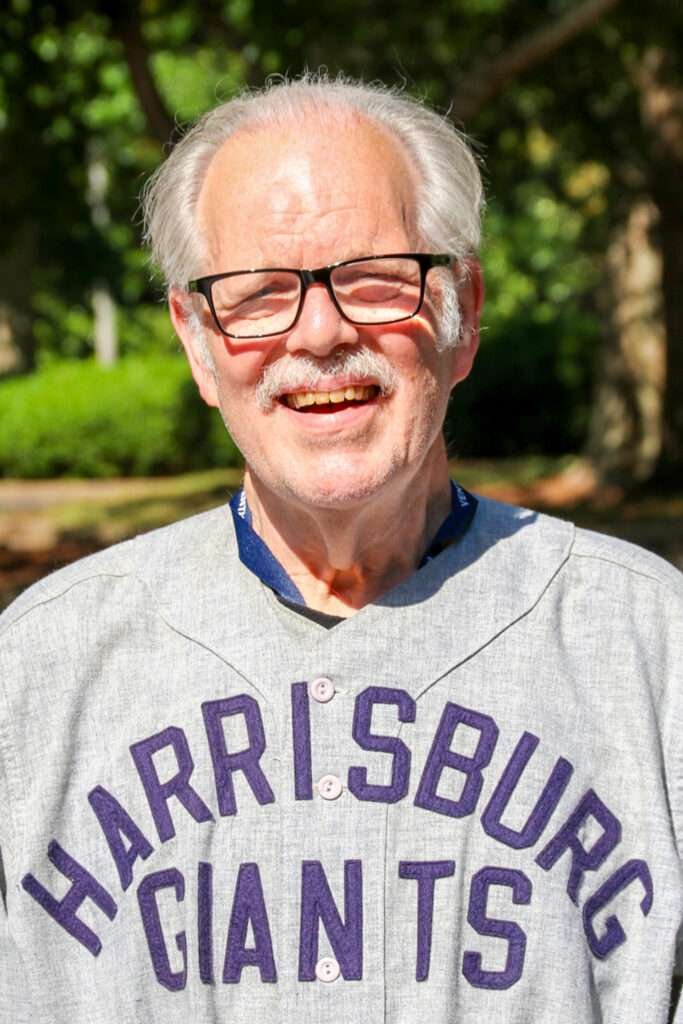
Ted Knorr is a respected Negro League baseball historian, a longtime member of the Society for American Baseball Research’s Negro League Committee, and the founder of the Jerry Malloy Negro League Conference as well as several Negro League Commemorative Nights in central Pennsylvania.

Beyond his research and organizing work, Ted is frequently invited to speak at sporting events, community programs, family gatherings, and educational forums, where he brings Negro League history to life. His deep knowledge of the players, teams, and the cultural impact of Black baseball has made him a trusted voice for audiences seeking to understand the legacy and significance of the Negro Leagues.

Please consider supporting open, independent journalism – no contribution is too small!

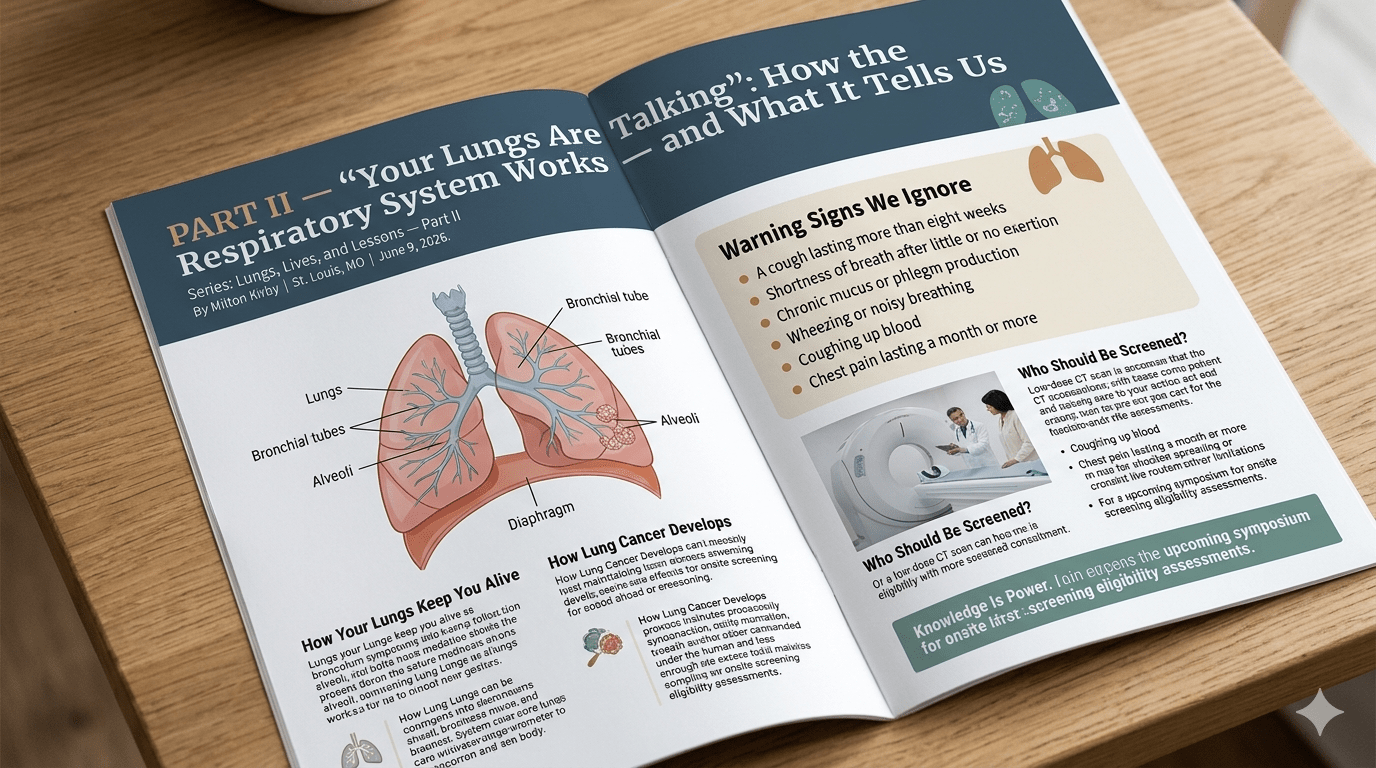
Part II – “Your Lungs Are Talking”: How the Respiratory System Works – and What It Tells Us

Learn how your lungs work, the early warning signs of lung cancer, and who should get screened. Understanding your respiratory system can save lives.

By Milton Kirby | St. Louis, MO | June 9, 2026

Series: Lungs, Lives, and Lessons – Part II

Part I of this series explored the misconceptions surrounding lung cancer, Part II turns inward, to the lungs themselves. Understanding how the respiratory system works is not just a biology lesson. It’s a form of self‑protection. When you know how your lungs function, you can recognize when something isn’t right.

How Your Lungs Keep You Alive

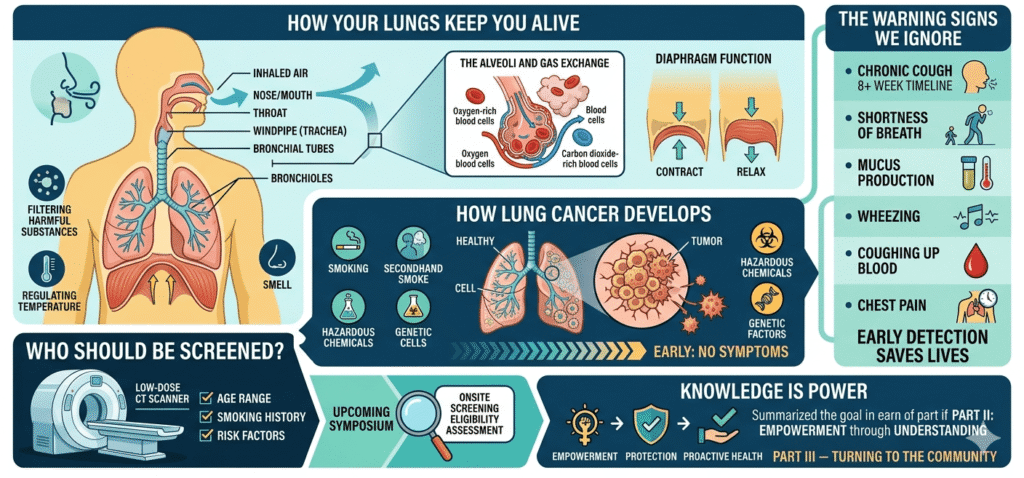
Every cell in the body needs oxygen. The lungs deliver it. When you inhale, air travels through the nose or mouth, down the throat, and into the windpipe. From there, it branches into the bronchial tubes, which divide again and again until they reach the bronchioles, tiny passageways that end in clusters of air sacs called alveoli.

Inside these microscopic sacs, oxygen enters the bloodstream while carbon dioxide leaves it. This exchange happens thousands of times a day, without conscious effort. The diaphragm, a strong muscle beneath the lungs, contracts and relaxes to pull air in and push it out.

The lungs also filter harmful substances, regulate air temperature, and support the sense of smell. They are constantly working, and constantly exposed to the outside world.

How Lung Cancer Develops

Lung cancer begins when cells in the lung mutate. These mutations can be caused by smoking, secondhand smoke, hazardous chemicals, or genetic factors. Once mutated, cells grow uncontrollably, forming tumors that damage healthy tissue and interfere with breathing.

The challenge is that early lung cancer often causes no symptoms. By the time people notice something is wrong, the disease may already be advanced.

The Warning Signs We Ignore

The body sends signals long before a crisis. But many people dismiss them as aging, allergies, or the remnants of a cold.

Warning signs include:

  • A cough lasting more than eight weeks
  • Shortness of breath after little or no exertion
  • Chronic mucus or phlegm production
  • Wheezing or noisy breathing
  • Coughing up blood
  • Chest pain lasting a month or more

These symptoms do not automatically mean lung cancer, but they do mean something is wrong. Early detection is key to successful treatment, and recognizing these signs can save lives.

Who Should Be Screened?

Low‑dose CT scans are the gold standard for early lung cancer detection. Screening is recommended for people who meet certain criteria, including age, smoking history, and risk factors. But many people who qualify have never been screened, often because they don’t know they’re eligible.

The upcoming symposium will offer onsite screening eligibility assessments, giving residents a chance to learn whether they qualify and how to access screening.

Knowledge Is Power

Part II of this series is about empowerment. When people understand how their lungs work, they can better protect them. When they know the warning signs, they can seek help sooner. And when they understand screening, they can take the first step toward early detection.

In Part III, we turn to the community and to the event bringing these lessons to life.

Related articles

Part I – “Anyone With Lungs”: Understanding the Hidden Realities of Lung Cancer

Part III – “From Awareness to Action”: Communities Confront Lung Cancer Together

Support open, independent journalism. Your contribution helps us tell the stories that matter most.

Warnock Challenges Americans to Imagine What $70 Billion Could Buy Beyond Immigration Enforcement

Sen. Raphael Warnock is challenging Americans to consider what $70 billion could fund in education, housing, health care, and food assistance.

By Milton Kirby | Washington, D.C. | June 4, 2026

How much is $70 billion?

For most Americans, the number is so large that it is difficult to comprehend. U.S. Senator Raphael Warnock is attempting to make that figure more tangible as Congress debates a Republican-backed proposal to provide an additional $70 billion in funding for Immigration and Customs Enforcement (ICE) and U.S. Customs and Border Protection (CBP).

Rather than focusing solely on the immigration debate itself, Warnock is asking Americans to consider an alternative question: What else could that money accomplish?

“The $70 billion that Senate Republicans will force through this week could fund universal pre-K for all 3-and 4-year-olds in this country for two years,” Warnock said in a statement released Thursday. “It represents the annual cost of groceries for nearly 11 million American households. Our government doesn’t suffer from a lack of resources. We suffer from a lack of imagination.”

The Georgia Democrat has emerged as one of the Senate’s most vocal critics of expanding ICE and CBP funding under the Trump administration. According to Warnock’s office, Congress approved approximately $75 billion for the agencies in July 2025. If the additional funding package passes, total funding would reach roughly $145 billion.

To illustrate the scale of the proposed spending, Warnock’s office released a series of comparisons spanning education, food security, health care, and housing.

Education and Child Care

According to the senator’s analysis, $70 billion could fund universal pre-kindergarten programs for all 3- and 4-year-old children in the United States for two years.

The same amount could provide free childcare for approximately 1.3 million children through September 2028 or cover two years of community college tuition for roughly 2.2 million students through September 2029.

Warnock’s office also estimates the funding could be used to double Pell Grants for undergraduate students, potentially expanding college affordability for millions of families.

Food Security

The comparisons extend beyond education.

The senator’s office estimates that $70 billion could cover the annual cost of groceries for approximately 10.7 million American households.

The funding could also provide free school lunches to an additional 22.7 million children through fiscal year 2029 or fund one year of Supplemental Nutrition Assistance Program (SNAP) benefits for approximately 31 million Americans.

For rural communities, the office notes the same amount could provide more than two years of direct payments to American farm producers.

Health Care Implications

Health care is another area highlighted in Warnock’s proposal.

According to the analysis, $70 billion could extend Medicaid coverage to approximately 2.2 million additional Americans through September 2029. The funding could also support an extension of Affordable Care Act premium tax credits for at least one year.

Perhaps most striking, the senator’s office estimates that the same amount would cover all annual insulin expenditures in the United States three times over.

The analysis further suggests $70 billion could address nearly one-third of Americans’ outstanding medical debt.

Housing and Homelessness

Housing affordability remains a growing concern across much of the nation, including Georgia.

Warnock’s office estimates that $70 billion could cover one year of rent for approximately 4.25 million Americans.

The same funding could provide $40,000 in down-payment assistance to every first-time homebuyer this year or support housing assistance for 2.4 million additional Americans through the Section 8 program through September 2029.

Perhaps the most ambitious comparison offered by the senator’s office is that the funding could support efforts sufficient to end homelessness nationwide for nearly eight years.

A Debate Over Priorities

The release comes as Congress continues debating immigration enforcement, border security, and federal spending priorities.

Supporters of increased ICE and CBP funding argue that additional resources are necessary to strengthen border security, enforce immigration laws, and support federal law enforcement operations.

Critics, including Warnock, contend that the proposed spending reflects misplaced priorities at a time when many Americans continue to struggle with rising housing costs, health care expenses, childcare costs, and food insecurity.

While lawmakers remain divided on the policy question, Warnock’s comparisons underscore a broader debate unfolding in Washington: not simply how much government should spend, but where those resources should be directed.

For voters trying to understand the implications of trillion-dollar budgets and billion-dollar appropriations, the senator’s challenge may be the most relevant question of all.

If $70 billion is available, what should America buy?

Support open, independent journalism. Your contribution helps us tell the stories that matter most.

What AI Means for Regular People: Power, Risk, and Daily Life

Artificial Intelligence (AI) has rapidly transitioned from a niche technical field to a fundamental pillar of modern existence. For the average person, AI represents a trifecta of power, risk, and daily reality.

By Florita Bell Griffin | Houston, TX | June 2, 2026

Artificial intelligence has become part of ordinary life before many ordinary people had time to decide how they felt about it. A few years ago, AI sounded like something reserved for engineers, giant technology companies, and futuristic debates about machines. Today, it appears in search engines, schools, workplaces, hospitals, banks, customer service systems, navigation tools, shopping platforms, and social media feeds. It helps draft emails, recommend products, flag fraud, sort resumes, summarize documents, and shape the information people see each day. The shift feels dramatic because AI arrived with unusual speed, and because its influence often enters quietly, through systems people already use.

For regular people, AI carries three large meanings at once. It represents power, because it can shape decisions and organize information at enormous scale. It represents risk, because error, bias, distortion, and overreach can move through those same systems with equal speed. And it represents a daily reality, because its effects now touch work, family life, learning, communication, trust, and access to essential services. The conversation becomes clearer when these three dimensions remain together. AI matters because power, risk, and daily life have now joined in one technology.

Power is the first part of the story. AI gives institutions and platforms a stronger ability to sort, rank, predict, recommend, and respond. In practical terms, this means a system can decide which application receives closer attention, which customer gets routed first, which product appears at the top of a page, which post reaches more people, or which pattern triggers a warning. That kind of power can look harmless when it arrives in small conveniences. A faster recommendation, a quicker answer, a cleaner summary, a more personalized feed. Yet behind those conveniences sits a larger truth. AI influences visibility, attention, and priority. It changes what people encounter first and what fades into the background.

For regular people, that matters because power over attention often becomes power over experience. A family searching for health information, a worker applying for a job, a student trying to learn, a consumer comparing financial options, or a citizen reading public news may all receive a reality shaped by systems they never see. The issue extends far beyond gadgets or novelty. AI helps structure the pathways through which people encounter knowledge, opportunity, and judgment. That is real power, even when it appears in ordinary forms.

Risk is the second part of the story, and it deserves equal seriousness. AI systems can sound polished, efficient, and highly confident while still carrying serious weaknesses. They can reflect incomplete data, flawed assumptions, inherited bias, or simple factual error. They can amplify patterns from the past in ways that feel objective, even when those patterns deserve scrutiny. They can give people a false sense of certainty because the answer arrives quickly and in smooth language. For everyday life, the danger often comes less from visible breakdown than from quiet overreliance. People begin to trust the shape of the output more than the quality of the underlying judgment.

This risk appears in many settings. In hiring, an automated process may narrow a pool of applicants before a human being looks closely. In finance, a system may flag behavior or assign risk scores based on patterns that feel distant from the person affected. In healthcare, software may support prioritization, pattern detection, or administrative sorting, which can help operations move faster while also raising concerns about fairness and transparency. In education, AI can support learning, though it can also weaken original thought if students learn to depend on instant answers rather than disciplined understanding. In each case, the issue returns to the same point. Speed and scale carry value, though speed and scale also magnify the consequences of weak judgment.

Daily life is the third part of the story, and for most people it is the most immediate. AI has entered the routines of ordinary living. People use it to write, edit, search, shop, plan, compare, ask questions, and save time. Employers use it in ways that shape expectations for workers. Schools use it in ways that shape how children learn and produce work. Platforms use it in ways that shape what families see on screens. Businesses use it in ways that shape service quality and consumer behavior. Public systems use it in ways that affect communication and access. This means AI is no longer a specialized subject for specialists alone. It has become a civic and household subject as well.

In the workplace, many regular people are already feeling the shift. AI can reduce repetition, streamline drafting, summarize meetings, analyze trends, and support customer interaction. For some workers, this brings relief and efficiency. For others, it changes the meaning of their role. Skills that once stood at the center of a job may move toward supervision, refinement, or interpretation of machine-generated work. That transition can create uncertainty, especially for workers who built value through effort, consistency, and experience in tasks that software can now assist. The real question for many people becomes how to remain valuable in an environment where machine speed influences expectations.

At home, parents and families face another layer of meaning. Children can use AI to solve, summarize, draft, and explain. That can support learning when guided wisely. It can also weaken habits of patience, concentration, and independent reasoning when used as a shortcut around real mental work. Families now need a deeper conversation about what learning means in a machine-assisted world. A polished answer does not always reflect deep understanding. Strong minds still grow through reading, reflection, practice, correction, and the gradual building of judgment. AI can assist that process, though human growth still requires effort that no machine can replace.

Trust has also become central to daily life under AI. Generated language, synthetic images, and lifelike voice outputs can move quickly through communities and appear highly persuasive. This places a heavier burden on ordinary people. They need stronger habits of verification, stronger instincts around source quality, and greater caution when emotionally charged material appears polished and immediate. The challenge is cultural as much as technical. Communities need a stronger public ethic around truth, context, and responsible sharing. In a world shaped by AI, trust becomes more valuable because appearances become easier to produce.

For regular people, the path forward begins with clarity. AI is a source of power because it shapes attention, priority, and decisions at scale. It is a source of risk because flawed outputs can move quickly and influence real lives. And it is part of daily life because it now reaches into work, family, learning, communication, and public systems. That understanding helps people respond with steadiness instead of confusion.

Regular people do not need engineering degrees to ask strong questions about AI. They can ask who designed a system, what kind of data shaped it, what incentives guide it, where human review enters, how error gets corrected, and whether a person can challenge a consequential outcome. They can teach children the difference between fluency and wisdom. They can remind employers, schools, and institutions that convenience carries responsibility. They can keep human dignity and sound judgment at the center of the discussion.

AI means many things for regular people, though its meaning becomes clearest when power, risk, and daily life are considered together. This technology is changing how people search, work, communicate, learn, choose, and trust. That change is already underway. The strongest response comes from awareness, public understanding, and the steady insistence that powerful systems serve human life with care, fairness, and respect.

© 2026 Truth Seekers Journal. Published with permission from the author. All rights reserved.

Support open, independent journalism—your contribution helps us tell the stories that matter most.

Part I – “Anyone With Lungs”: Understanding the Hidden Realities of Lung Cancer

By Milton Kirby | St. Louis, MO | June 5, 2026

Series: Lungs, Lives, and Lessons — Part I

Lung cancer is one of the deadliest diseases in America, yet many people still struggle to talk about it openly.

For decades, public understanding of lung cancer has been shaped by silence, stigma, and a persistent misconception: that only smokers get the disease. Physicians, survivors, and community health advocates preparing for a St. Louis symposium say that belief has delayed diagnoses and prevented too many people from recognizing their own risk.

As the HEAL Collaborative prepares for the June 27 community symposium, “Lung Cancer Screening to Treatment 2.0,” local partners Five Star Center, Inc. and Southside Wellness Center are helping connect residents to the conversation. The event will be held at the International Institute of St. Louis and is supported by Amgen. Together, those efforts are focused on one message above all others:

“Anyone with lungs can get lung cancer.”

It is a simple statement, but one that challenges decades of misunderstanding surrounding one of America’s most lethal diseases.

Lung cancer remains the leading cause of cancer deaths in the United States, claiming more lives each year than breast, prostate, and colon cancers combined. Yet despite its impact, awareness surrounding lung cancer risk, symptoms, and screening remains dangerously uneven, particularly in underserved communities.

Many people still believe they are not at risk.

Others delay seeking care because they fear what a diagnosis might mean.

And some never discuss symptoms at all until the disease has already advanced.

For those involved in the St. Louis symposium, changing that reality begins with changing the conversation itself.

More Than One Cause

Smoking remains the leading cause of lung cancer, accounting for approximately 90 percent of cases. But medical experts stress that smoking is not the only risk factor, and not the only story.

Exposure to radon gas, secondhand smoke, air pollution, asbestos, uranium, arsenic, cadmium, chromium, nickel, and certain petroleum products can all increase the likelihood of developing lung cancer. Genetic history can also play a role, even for individuals who have never smoked a cigarette.

In many cases, exposure may have occurred decades earlier through industrial work environments, household conditions, or long-term environmental exposure.

For some families, the danger was never fully understood at the time.

That complexity is one reason health advocates say public education remains critical.

“Anyone with lungs can get lung cancer” is not simply a slogan for the symposium. It is a direct challenge to the misconception that only one type of person develops the disease.

The reality, health advocates say, is far broader and far more personal.

The Disease That Often Hides

One of the greatest dangers of lung cancer is that symptoms frequently appear late.

By the time warning signs become impossible to ignore, the disease may already have spread beyond the lungs, making treatment more difficult and survival rates lower.

Early symptoms can also resemble ordinary health problems people routinely dismiss:

• a lingering cough
• shortness of breath
• chest tightness
• chronic mucus production
• wheezing
• unexplained chest pain
• coughing up blood

Sometimes people assume breathing difficulties are simply part of aging. Others attribute persistent coughing to allergies, smoking history, or seasonal illness.

But health advocates warn that ignoring those symptoms can carry serious consequences.

That is one reason the St. Louis symposium will focus heavily on education, awareness, and screening eligibility conversations designed to help residents better understand when medical evaluation may be necessary.

While low-dose CT screenings themselves will not be conducted onsite, health professionals will be available to help attendees understand screening eligibility and connect attendees with additional healthcare resources and follow-up pathways.

“The goal is not to frighten people,” said Rachael Jones, Regional Director of Community Outreach and Advocacy Engagement for the HEAL Collaborative. “The goal is to make people aware of the resources available to help them access screening, understand their risk, and seek treatment early if needed.”

It is to encourage earlier conversations before symptoms become life threatening.

The Weight of Stigma

Early detection results in better outcomes.

Lung cancer carries a unique stigma that many survivors and families say separates it from other major diseases.

Patients are often asked one question almost immediately after revealing their diagnosis:

“Did you smoke?”

For some families, that question can feel less like concern and more like blame.

Advocates say that stigma has real consequences. It can discourage people from seeking screening, delay medical appointments, and isolate patients emotionally during treatment.

Some individuals avoid discussing symptoms because they fear judgment.

Others incorrectly assume that if they never smoked, they are automatically safe.

The result is that misinformation and silence continue to shape public understanding of the disease.

Health advocates behind the St. Louis symposium hope to confront those misconceptions directly by creating a space where residents can ask questions openly, hear from survivors, and receive information without shame or fear.

The event is expected to bring together physicians, advocates, survivors, and approximately 150 community members for discussions focused on screening awareness, navigation support, treatment conversations, and the future of lung cancer care.

Two to three survivor speakers are also expected to participate, helping personalize a disease that statistics alone often fail to fully explain.

Why St. Louis Matters

According to the HEAL Collaborative, St. Louis was selected intentionally.

St Louis faces significant healthcare disparities

The June 27 symposium marks the collaborative’s second visit to St. Louis. At the previous event, 87 community members attended and seven were identified as eligible for lung cancer screening. Health advocates say those figures demonstrate both the value and the challenge of community outreach: every person connected to potentially life-saving information matters, yet many residents who could benefit from screening information and healthcare navigation services may still remain unreached.

Like many American cities, St. Louis continues to face significant healthcare disparities tied to access, economics, environmental exposure, and long-standing inequities in medical outcomes.

Black and Brown communities in particular often experience lower screening rates and poorer lung cancer survival outcomes.

Those disparities are part of the reason health advocates believe community-based education efforts remain so important.

Events like “Lung Cancer Screening to Treatment 2.0” are designed not only to raise awareness, but also to help close gaps in information and access before diagnoses become more severe.

The symposium will include conversations on pulmonology care, navigation support, medical debt, the role of artificial intelligence in future lung cancer treatment, and the impact stigma can have on care and outcomes.

Lunch will be provided, and organizers say the free event is intended to be welcoming, accessible, and community centered.

At its core, the symposium is built around a belief that education itself can become a form of prevention.

A Conversation That Cannot Wait

For many Americans, lung cancer remains something that happens to “other people.”

But advocates say that perception continues to cost lives.

Part I of this three-part series begins with the misconceptions because health advocates believe understanding risk is the first step toward improving outcomes.

In Part II, we will look deeper inside the lungs themselves, exploring how lung cancer develops, how symptoms are often overlooked, and why early detection can dramatically improve survival chances.

For now, the message symposium leaders hope residents carry with them is straightforward:

Lung cancer is not simply a smoker’s disease.

It is a human disease.

And it is one communities can no longer afford to ignore.

For more information HEAL Collaborative

To Register

Related articles

Part II- “Your Lungs Are Talking”: How the Respiratory System Works – and What It Tells Us

Part III – “From Awareness to Action”: Communities Confront Lung Cancer Together

Global Grub Alley to Turn Walton Street Into a World Cup Food Haven

Atlanta’s Global Grub Alley turns Walton Street into a vibrant food truck corridor for FIFA World Cup 2026™, spotlighting local flavors and small business culture.

By Milton Kirby | Atlanta, GA | May 31, 2026

When the FIFA World Cup 2026™ arrives in Atlanta, the city’s streets will serve up more than soccer fever. They’ll serve food — and plenty of it.

Showcase Atlanta and the Food Truck Association of Georgia (FTAG) have announced Global Grub Alley, a pedestrian‑only food truck corridor that will transform Walton Street into a culinary destination for every match day and the day before each game. The activation will feature 20 to 30 Atlanta‑area food trucks operating daily from 11 a.m. to 7 p.m., stretching a quarter‑mile between Centennial Olympic Park Drive and Broad Street.

The corridor, just steps from the official FIFA Fan Festival at Centennial Olympic Park, will be free and open to the public — no ticket required. Fans walking between the park and Mercedes‑Benz Stadium will pass directly through the food truck zone, creating a seamless connection between the city’s global celebration and its local flavor.

“Atlanta food trucks have been asking for this kind of moment for years,” said Kelsey Maynor, Director of Small Business Engagement for Showcase Atlanta. “Global Grub Alley puts our small business owners and our food culture on the street, next to the biggest stage in the world. You will not need a ticket to be a part of it. You will just need to be hungry.”

Atlanta will host eight World Cup matches, meaning sixteen days of Global Grub Alley activity spread across the tournament. The initiative is part of Showcase Atlanta’s broader strategy to ensure that major global events — including the 2026 World Cup and the 2028 Super Bowl — leave lasting opportunities for local entrepreneurs.

FTAG will manage vendor selection and compliance through Street Food Finder, the industry‑standard scheduling platform.

“Our members are some of the most resilient small business owners in this state,” said Montrella Rhodes, FTAG Administrator. “A truck on Walton Street in front of a global audience is a truck whose phone keeps ringing in 2027 and 2028.”

Among the early participants is Wing Kingh Food Truck, whose owner Sherman Gartrell sees the event as more than a business opportunity.

“For us, this is about bringing people together through great flavors, culture, and hospitality,” Gartrell said. “Global Grub Alley helps food truck businesses gain valuable exposure and build lasting relationships.”

Vendor applications are now open, with priority given to FTAG members. Trucks must meet Georgia permitting and compliance requirements. A full lineup will be released closer to match dates at streetfoodfinder.com/global-grub-alley.


If You Go

  • Location: Walton Street between Centennial Olympic Park Drive and Broad Street
  • Hours: 11 a.m. – 7 p.m., all match days and the day before each match
  • Cost: Free entry; pay per item at each truck
  • Accessibility: Street‑level access, portable restrooms on site
  • Transit: MARTA’s GWCC/CNN Center and Five Points stations within walking distance

Global Grub Alley promises to be more than a food event — it’s a statement of Atlanta’s identity: a city where global celebration meets local flavor, and where small businesses stand shoulder‑to‑shoulder with the world’s biggest stage.

Truth Seekers Journal thrives because of readers like you. Join us in sustaining independent voices.

Black Women Nannies and White Babies: Loving, Nurturing, and Caring for the Children Who May One Day Grow Up to Hate You Simply Because of the Color of Your Skin

By Lola Renegade | Atlanta, GA | May 30, 2026 |

A couple of days ago, while visiting the Atlanta History Center with my great niece and nephew – my proxy grandchildren –  I noticed something that stayed with me long after I left.

Everywhere I turned, I saw several Black women caring for little white children.

Some carried babies on their hips. Others pushed strollers through the museum corridors and gardens. Some held tiny white hands as curious toddlers wandered through exhibits laughing, pointing, and exploring the world with complete innocence and trust.

At first, seeing one Black nanny seemed unremarkable.

But after witnessing it again and again, I felt history pressing against and piercing my spirit. I found myself thinking, “I know this story personally.”

I recall my mother,  along with several of my aunts, and countless other Black women, worked as domestics in Mississippi during the brutal decades of Jim and Jane Crow throughout the 1950s, 1960s, and 1970s. They cared for white children whose parents were often half their age or younger, and eventually the children themselves, called them by their first names, as though these grown Black women were perpetual children themselves, undeserving of the dignity and respect automatically granted to white adults.

In the South of that era, Black women and men were rarely addressed with basic respect. White children were taught early that Black adults – even elderly Black adults – did not deserve titles such as “Miss,” “Mrs.,”  or “Mr.”

Imagine the psychological violence and trauma of that. Imagine helping to raise a child, pouring love, patience, and tenderness into their life, only to see many grow into adults who embraced the same prejudices, racial hatred, and moral corrosion that had been passed down to them for generations by grandparents, parents, institutions, and an America determined to preserve racial hierarchy.

What greater tragedy is there than witnessing a child’s humanity slowly poisoned by the very parents entrusted to nurture it?

We have Child Protective Services (CPS) to rescue children from physical abuse, neglect, and dangerous homes. But who rescues children from inherited hatred? Who intervenes when racism, bigotry, and dehumanization become family heirlooms passed from one generation to the next?

Where is CPS when a child’s conscience is being corrupted, their empathy diminished, and their humanity stolen by the very parents, grandparents, and trusted adults charged with shaping their moral character?

Shouldn’t society be equally concerned and ready to remove children from their homes when they are taught to hate, fear, and to devalue the humanity of others?

Perhaps one of the greatest tragedies of racism is not only the damage it inflicts upon its victims, but the moral injury it inflicts upon the children taught to carry it forward. Teaching a child to hate another human being, not only diminishes the humanity of the hated, but also the humanity of the hater.

It was witnessing my mother and other Black women navigate those humiliations that shaped me in ways I did not fully understand at the time. Even as a child,  I made a vow to myself: no matter how poor, hungry, or desperate I might ever become, I would never become a domestic worker for white America. In the words of singer Lou Rawls, “I’d rather drink muddy water and sleep out in a hollow log.”

The relationship between Black women and white children in America did not begin with modern-day nannies or domestic workers. Its roots stretch back into slavery itself, when kidnapped, enslaved Black women were often forced to nurse white babies from their breasts while their own children waited nearby, sometimes hungry, neglected, or handed off to others. Few images capture the emotional and moral contradictions of America more painfully than a Black mother coerced to using her body to nourish the child of those who claimed ownership over her body, her humanity.

That contradiction has echoed through generations of Black women in America. What struck me most at the museum was not simply the presence of Black nannies caring for white children. It was the realization that, despite all America’s claims about progress, its incestuous kinship to slavery still exists in painfully familiar ways.

At The Gathering Spot in Atlanta, I have met several young Black women – brilliant, highly educated, accomplished women with advanced degrees – who lost professional opportunities during the chaos, instability, and cruelty unleashed within the early months of President Donald Trump’s attack on diversity, equity, and inclusion (DEI). In fact, it is stated that more than 300,000 Black women lost their jobs within the first few months under this racist, tyrannical administration. One can safely bet that if America stated that number, double it. This nation has long suffered from a pathology of lies – sanitizing and erasing its history, minimizing its crimes, and demanding the oppressed to forget what these modern-day robber barons would rather not remember.

Some of these young women now work as nannies for affluent white families, not because they lack intelligence, ambition, or qualifications, but because survival leaves little room for pride. Mortgages and rents still have to be paid, car notes still arrive, and student loans still demand payment.

I understand that for many survival does not and cannot wait for justice. It never has and it never will. Especially, if you are waiting for justice to live in America with any chance of longevity. And so these women, extraordinarily gifted beyond measure, have found themselves stepping into one of the oldest labor roles historically assigned to Black women in America: caring for white children.

That reality forced me to think differently about one of Trump’s most infamous statements during the presidential campaign when he warned Black Americans about immigrants “taking your Black jobs.” At the time, many dismissed the statement as ignorance, racism, or political theater from the man who would soon become one of America’s most corrupt, greedy, heartless, stupid, ignorant, morally and intellectually bankrupt presidents. But perhaps there was an uncomfortable historical truth buried inside that language. Because throughout American history, some of the “Black jobs” this country has consistently reserved for Black women have involved caregiving, domestic labor, emotional labor, and service to white families.

America’s and Trump’s replacements for our best and brightest have been mediocre to less-than mediocre white men and women. Amazingly, it took Trump less than ten years to turn America into a truly “shithole country” – the very name he has given to countries of color who refuse to be exploited by him and will not bribe him, his family, colleagues, and administration.

Black women have long been expected to nurture America while America simultaneously withholds full dignity from us. And what makes this history even more painful is the emotional intimacy involved. These are not distant transactions. These women rock white babies to sleep, celebrate first words, first steps, prepare meals, read bedtime stories, soothe nightmares, wipe tears, snot, and asses.

They become trusted figures in the emotional development of children who oftentimes grow up absorbing the same racial animus and systemic biases that diminishes the very women caring for them. How do Black women continue loving the soon to be unlovable under those conditions? How do you pour tenderness into children who may, more than likely, eventually inherit a worldview that sees you as inferior, threatening, or invisible?

Perhaps the answer lies in something both heartbreaking and extraordinary about Black women in America: despite centuries of degradation, exploitation, exclusion, and disrespect, many have refused to surrender their humanity and capacity to love unconditionally.

We all know that babies are not born racist. No infant instinctively hates Black people. Hatred is learned carefully and intentionally over time. It comes through family attitudes, political rhetoric, segregated systems, coded language, media imagery, fear, silence, and societal conditioning.

For a brief and innocent season of life, many white children experience unconditional safety, affection, and nurturing through Black hands before the world begins teaching them racial hierarchy and hate.

That truth sat heavily with me as I walked through the museum with my late sister’s grandchildren, thinking about her boundless capacity to love. She was a hospital executive and registered nurse. She, too, belonged to a long line of Black women who gave of themselves freely to family, work, community, and often to a nation that rarely returned the favor. Her capacity to love the unlovable was so much greater than mine. I can count on one hand, with fingers remaining, the number of white people I can or have called “friend” in my sixty-nine years on the planet.

In the movie, The Help, I am constantly reminded of a nation that never grows tired of exploiting the labor of Black women who are still carrying America’s children and America itself on our hips and our backs.

And if this America truly is the greatest country in the world – the very best the planet has to offer – then Lord knows the world is in desperate need of a better alternative.

Truth Seekers Journal thrives because of readers like you. Join us in sustaining independent voices.

Exit mobile version