Defense Secretary Pete Hegseth removed Army Chief of Staff Gen. Randy George, accelerating a sweeping leadership shake‑up across senior military ranks in the Trump administration.
By Jennifer Jacobs, Eleanor Watson, James LaPorta | Washington, DC | April 2, 2026
Defense Secretary Pete Hegseth has asked Army Chief of Staff Gen. Randy George to step down and take immediate retirement, sources familiar with the decision told CBS News.
One of the sources said Hegseth wants someone in the role who will implement President Trump and Hegseth’s vision for the Army.
Chief Pentagon spokesperson Sean Parnell said in a statement that George “will be retiring from his position as the 41st Chief of Staff of the Army effective immediately. The Department of War is grateful for General George’s decades of service to our nation. We wish him well in his retirement.”
A senior Defense Department official told CBS News, “We are grateful for his service, but it was time for a leadership change in the Army.”
Two other Army officers were removed from their roles, according to three sources familiar with the matter: Gen. David Hodne, who led the Army’s Transformation and Training Command, and Maj. Gen. William Green, who headed the Army’s Chaplain Corps. The Washington Post was first to report on Hodne and Green’s ouster.
George previously served as the senior military assistant to Defense Secretary Lloyd Austin from 2021 to 2022, during the Biden administration, after decades of service. A career infantry officer and West Point graduate, George first served in the first Gulf War and the more recent conflicts of Iraq and Afghanistan.
The Army chief of staff typically serves a four-year term. George was nominated for the position by President Joe Biden and confirmed by the Senate in 2023, meaning he would typically have held the position until 2027.
The current vice chief of staff of the Army, Gen. Christopher LaNeve, who was formerly Hegseth’s military aide, will be acting Army chief of staff. He previously served as the commanding general of the Army’s 82nd Airborne Division from 2022 to 2023.
Parnell said LaNeve is “a battle-tested leader with decades of operational experience and is completely trusted by Secretary Hegseth to carry out the vision of this administration without fault.”
The U.S. Military Academy at West Point posted photos on social media on Thursday of George, saying he “shared experience-driven guidance with cadets preparing to lead” during a visit on March 25.
According to his biography on the Army’s website, George received his commission as an infantry officer from West Point in 1988 and deployed during Operation Desert Shield, Desert Storm, Operation Iraqi Freedom and Operation Enduring Freedom. Before serving as Army chief of staff, he was vice chief of staff of the Army from 2022 to 2023.
The ouster follows Hegseth’s X post lifting the suspension of the aircrew that flew by Kid Rock’s house in Nashville last weekend. After the Army announced the suspension of the aviators involved and an administrative review, Hegseth overruled the Army, writing on his personal X account, “No punishment. No investigation. Carry on, patriots.”
Hegseth’s decision to ask George to exit wasn’t related to the helicopter incident, one of the sources said.
Support open, independent journalism—your contribution helps us tell the stories that matter most.
Henry County highlights infrastructure growth, job creation, and public safety gains as Chairwoman Carlotta Harrell outlines a strategic vision during the 2026 State of the County.
By Milton Kirby | Stockbridge, GA | April 3, 2026
More than 400 business leaders, elected officials, and residents gathered Thursday morning as Council for Quality Growth hosted the 2026 State of Henry County address, where Chairwoman Carlotta Harrell outlined a vision grounded in resilience, growth, and strategic planning.
Held at Stockbridge Community Church, the annual event brought together a cross-section of the region’s leadership to hear how Henry County is navigating economic pressures while continuing to expand infrastructure, public safety, and economic opportunity.
“This past year tested communities across the country,” Harrell said. “But Henry County remained strong by maximizing resources, strengthening partnerships, and continuing to move forward.”
Infrastructure and Mobility Investments Accelerate
A central focus of the address was transportation, where Harrell detailed ongoing roadway improvements across key corridors, including Henry and McDonough Parkway, Burg and Dutchtown Roads, and Mill and Rock Quarry Roads. Sidewalk expansions are also underway on Fairview and Flippen Roads.
The county plans to resurface 200 roads between now and next spring through a $43.8 million investment funded in part by SPLOST. Harrell also announced plans to pursue T-SPLOST 2 in November, signaling continued reliance on voter-backed funding for long-term mobility improvements.
Technology is also playing a role. Henry County has begun using connected vehicle systems that synchronize traffic signals with emergency vehicles to improve response times—a move reflecting broader regional innovation trends.
Public Safety Gains and Service Expansion
Public safety improvements showed measurable results in 2025. Harrell reported a 17% increase in DUI and drug-related arrests, alongside declines of up to 30% in key crime categories such as vehicle theft and burglaries.
The county also expanded services through jail renovations, accountability court programs, and telehealth partnerships for non-emergency 911 calls. Henry County Fire Rescue responded to more than 41,000 service calls last year, underscoring growing demand.
Economic Development Drives Job Growth
Economic development remains a cornerstone of Henry County’s strategy. In 2025, the Henry County Development Authority helped attract 920 new jobs and $883 million in capital investment.
Major projects include a $300 million plastics recycling facility by Nexus Circular, a $40 million investment by Brava Roofing Tiles, and a $115 million cold storage facility by United States Cold Storage.
According to federal labor data, Henry County led Georgia’s largest counties in year-over-year employment growth. Workforce partnerships with local schools and Southern Crescent Technical College are helping align training with these new opportunities.
Healthcare expansion is also underway. Piedmont Henry Hospital is adding 100 beds and three new operating rooms, signaling continued population growth and healthcare demand.
Quality of Life Investments Expand Across the County
Harrell highlighted $53 million in park and recreation investments, including new amenities at North Mount Carmel Park, Bud Kelley Park, Butler’s Bridge Park, and Cochran Park.
A major highlight is the nearly completed Henry County Aquatic Center and Outdoor Water Park, expected to open this summer. The county is also expanding senior programs and community services, reflecting a broader focus on livability.
Recognizing Service and Leadership
Several individuals and organizations were honored during the event. Kaiser Permanente and Sam Baker received Henry Hero Awards, while Officer Robert Adams was recognized for lifesaving actions during a tornado response.
Additional honors included awards to Fire Rescue teams from Stations 7 and 16, and Capital Projects Director Lynn Planchon for leadership on major county initiatives.
A Regional Vision for Growth
Harrell closed her address with a focus on planning and sustainability, highlighting the county’s Unified Land Development Initiative and regional mobility strategies.
“Growth without structure is a risk, but growth with strategy is an opportunity,” she said.
Regional leaders echoed that message. Michael E. Paris, CEO of the Council for Quality Growth, praised Henry County’s long-term vision, while Atlanta Regional Commission officials provided updates on water planning and infrastructure coordination.
Sponsors including Truist and Geosam Capital Group also reinforced the importance of public-private collaboration in shaping the county’s future.
As one of eight State of the County events hosted annually by the Council, the Henry County address continues to serve as a key forum connecting business, government, and community stakeholders across metro Atlanta.
By Florita Bell Griffin, Ph.D. | Houston, TX | March 31, 2026
Familiarity is often mistaken for mastery. When people encounter a system repeatedly, learn its surface behaviors, and navigate it without friction, it can appear that understanding has been achieved. Buttons are known. Sequences are memorized. Outcomes are predictable. The system feels usable.
Understanding is something else entirely. Understanding involves knowing why a system behaves the way it does, how its parts relate, and what changes will produce which consequences. It includes awareness of limits, tradeoffs, and failure modes. Familiarity allows a person to operate within a system. Understanding allows a person to reason about it.
Modern systems encourage familiarity while quietly discouraging understanding. Interfaces are designed to be intuitive. Complexity is hidden. Automation absorbs decision-making. Users are guided toward correct outcomes without being exposed to the logic beneath them. The experience feels smooth, but the structure remains opaque.
This approach is not accidental. It reduces friction. It lowers barriers to entry. It enables scale. Yet over time, it creates a specific imbalance. People become proficient at using systems they do not truly understand. They know how to get results without knowing how those results are produced.
Consider a workplace tool that automates reporting and analysis. Users learn which inputs generate the desired outputs. Dashboards provide clarity at a glance. Decisions are made quickly. Yet few users can explain how metrics are calculated, which assumptions are embedded, or how changes upstream affect conclusions downstream. Familiarity enables action. Lack of understanding limits judgment.
The same pattern appears in consumer technology. Navigation systems provide turn-by-turn guidance. Users arrive efficiently. Over time, people lose their sense of spatial orientation. They know how to follow directions, but not how places relate. Familiarity with the tool replaces understanding of the environment. When the system fails, users feel lost in ways they did not before.
Understanding requires exposure to structure. It involves seeing connections, dependencies, and constraints. It grows through explanation, not repetition. Systems optimized for ease often remove these opportunities. They function as black boxes, delivering results while withholding rationale. This matters because familiarity breaks down under change.
When systems evolve, familiar patterns shift. Buttons move. Defaults change. Automation behaves differently. Users who rely on familiarity feel disoriented. They struggle not because they are incapable, but because they lack a mental model that explains what has changed. Understanding provides resilience. Familiarity does not.
People with long experience recognize this distinction intuitively. They have watched systems change around them. They know that knowing where to click is less important than knowing what a system is trying to do. They ask questions that go beyond usage: What does this replace? What assumptions does it carry? What happens when conditions change?
Systems that equate usability with understanding miss this signal. They interpret requests for explanation as unnecessary friction. Over time, they design away transparency in favor of smoothness. The result is a population of competent users who are increasingly dependent on stability.
This dependency becomes visible during disruption. When a system produces unexpected outcomes, users struggle to intervene meaningfully. They lack the context needed to diagnose issues or propose alternatives. Responsibility concentrates with system designers, while users are left to accept or exit.
Understanding distributes agency. It allows people to participate in shaping outcomes rather than merely consuming them. It supports informed disagreement. It enables adaptation when conditions shift. Familiarity, by contrast, encourages compliance. It works well until it doesn’t.
Consider an automated decision system used in public services. Applicants learn which inputs lead to approval. Over time, they adapt behavior to fit the system’s expectations. Yet few understand how decisions are weighted or why certain cases fail. When outcomes appear unfair, explanations are difficult to obtain. Familiarity with the process does not equate to understanding of the criteria.
The gap between familiarity and understanding widens as systems become more complex. Machine learning models, layered architectures, and interconnected platforms produce outcomes that are difficult to explain even to their creators. When systems prioritize ease of use over interpretability, this gap becomes structural.
Continuity offers a way to address this imbalance. Systems designed with continuity preserve explanatory pathways as they evolve. They expose lineage. They document rationale. They allow users to see how present behavior emerged from past decisions. Understanding becomes cumulative rather than episodic.
This does not require burdening users with unnecessary detail. It requires designing for intelligibility rather than mere convenience. It means recognizing that some users want to understand, not just operate. It means valuing explanation as a feature rather than a cost.
Familiarity creates comfort. Understanding creates confidence. Comfort allows systems to be used. Confidence allows systems to be trusted. The two are often conflated, but they serve different purposes.
As technology continues to shape decision-making across domains, this distinction becomes increasingly important. Systems that optimize solely for familiarity will continue to function smoothly while leaving users unprepared for change. Systems that support understanding build capacity over time.
Understanding does not slow progress. It stabilizes it. It allows people to move with systems rather than being carried by them. It transforms users into participants.
The future of intelligent systems will depend less on how easy they are to use and more on how well they can be understood. Familiarity may get people through the interface. Understanding is what keeps them oriented when the system inevitably changes.
By Milton Kirby | Truth Seekers Journal | Artist Profiles Series
Roots in Duncan Plantation, Raised in Natchez
The story of Theodis Ealey begins in 1947 at Duncan Plantation in Mississippi, where the red clay roads carried music long before they carried cars. He grew up in Natchez, just off Highway 61, the legendary Blues Highway and directly across from Miss Willie Mae’s Juke Joint.
“I would just sit on the steps and listen to the sounds coming from there,” he once recalled.
Those sounds — raw, unfiltered, alive — became the blueprint for his life.
Today, a monument in Sibley, Mississippi honors the Ealey family as one of the most musically gifted to emerge from the region. Brothers Theodis, YZ, and Melwyn first performed together in the early 1960s as YZ Ealey and the Merry Makers, while their older brother David “Bubba” Ealey also carved out his own recording career.
In the Ealey household, music wasn’t pastime. It was inheritance.
A Guitar at Four, a Stage at Fourteen
Theodis first picked up a guitar at age four, taught by his brother YZ. By fourteen, he was playing bass at his first paid gig at Natchez’s Horseshoe Circle nightclub.
A year later, he switched to guitar and joined Eugene Butler & the Rocking Royals, sharpening his craft across the local circuit.
As one of eleven children, music became both identity and escape — a way to imagine a world beyond Mississippi’s fields and factory lines.
Air Force, Oakland, Atlanta — But Always Mississippi
The U.S. Air Force carried him far from home, first to Hawaii for six years, then to Oakland, California. Everywhere he went, he brought what he calls the “Mississippi Juke Joint Spirit.”
Eventually, he settled in Atlanta, where he still resides.
Along the way, he played with blues and soul giants whose names anchor American music history:
Little Milton
Johnny Clyde Copeland
Richard “Dimples” Fields
Charles Brown
These collaborations helped him forge a sound that blends blues, funk, soul, country, and rock into something unmistakably his own.
The Voice Behind the Guitar
Photo by Milton Kirby Theodis Ealey
By 1991, Atlanta‑based Ichiban Records recognized that Ealey was more than a virtuoso guitarist. They signed him, launching a six‑year run that produced four successful albums and introduced audiences to Theodis the artist, charismatic, confident, and deeply connected to adult listeners who heard their own stories in his songs.
“Stand Up In It” — The Billboard Breakthrough
When Ichiban closed, Ealey didn’t slow down. He founded IFGAM Records — “I Feel Good About Myself” — and released It’s A Real Good Thang.
Then came the project that changed everything: Stand Up In It (2004).
The title track became a cultural phenomenon:
#1 on Billboard’s Hot R&B/Hip-Hop Singles Sales Chart for five consecutive weeks
Top 5 on Billboard’s Blues Album Chart
A rare crossover into R&B/Hip-Hop territory
Intended for “grown folks,” the song exploded nationwide, earning him two JACKIE Awards and cementing his place in Southern Soul history. Women across the country claimed the anthem as their own.
The album also featured “Mississippi Delta,” penned by Bruce Billips a tribute to the land that shaped him.
Awards and Recognition
Ealey’s honors reflect both longevity and impact:
Bay Area Male Vocalist Top Star Award (1994)
Mo’ Better Blues Male Artist of the Year (Atlanta, 1997)
Jus’ Blues Best Blues & Soul Man Song of the Year (2007) for “Francine”
Jus’ Blues Lowell Folsom Legends Award (2006, 2008)
His 2006 album I’m The Man You Need and later live releases reaffirmed what fans already knew, no studio can fully contain Theodis Ealey.
To understand him, you have to see him live.
From Juke Joints to Hollywood
Ealey’s stage magnetism opened doors beyond music. His film and television appearances include:
A Kiss to Die For
Miss Evers’ Boys
The Fighting Temptations
Daddy’s Little Girls
He also appeared in stage productions and national commercials, always carrying that same juke joint authenticity.
Reinvention Without Losing Roots
In 2009, fans craving the live Ealey experience got exactly what they wanted — raw, magnetic, juke joint blues. Singles like “The Old Man’s Story (MBFDD)” and “Slow Grindin‘” showcased his staying power.
His later project, “You and I, Together” featuring Lacee, revealed a more romantic, sensual side of the Bluesman Lover.
Through it all, he remained grounded and married to Linda Abraham Ealey and committed to the craft that shaped his life.
Legacy of a Bluesman
Theodis Ealey is more than a charting artist. He is a bridge — from Duncan Plantation to Billboard charts, from Miss Willie Mae’s Juke Joint to Hollywood screens.
He represents a strain of Southern Soul that is bold, unfiltered, humorous, sensual, and rooted in lived experience.
The monument in Sibley tells the story of a gifted musical family. The stages across America tell the rest. Wherever Theodis Ealey plugs in his guitar, the Mississippi Juke Joint Spirit still travels with him.
MARTA launches Better Breeze fare system, introducing tap-to-pay and account-based transit. Riders have until May 2, 2026, to transition from old Breeze cards.
By Milton Kirby | Atlanta, GA | March 29, 2026
The Metropolitan Atlanta Rapid Transit Authority (MARTA) has officially launched its long-anticipated “Better Breeze” fare payment system, marking one of the most significant upgrades to Atlanta’s public transit experience in years.
Beginning Saturday, March 28, riders across the system will enter a five-week transition period as MARTA phases in new fare technology while temporarily maintaining elements of the old system. The transition will run through May 2, 2026.
MARTA officials say the rollout is designed to modernize how customers pay for transit, offering more flexibility, faster boarding, and a more seamless rider experience.
“We are asking our valued customers to bear with us,” said MARTA General Manager and CEO Jonathan Hunt. “Short-term inconvenience will lead to long-term improvement.”
What Riders Will Experience During the Transition
During the transition period, riders will encounter a mix of old and new fare equipment, along with ongoing construction inside stations. Temporary entrances and exits may also be in place as installation continues.
Importantly, both systems will operate simultaneously giving riders time to adjust.
Customers can still use existing Breeze cards and mobile tickets at older fare gates and validators. However, old ticket vending machines have been shut down, and riders can no longer add value to older cards.
At the same time, MARTA is encouraging riders to begin shifting to the new system.
Better Breeze Faregates & Ticketing – Courtesy MARTA
New Ways to Pay
The Better Breeze system introduces several updated payment options:
Riders can purchase new Breeze cards or tickets at upgraded vending machines and Ride Stores.
A new online platform allows customers to load and manage fare digitally, with balances tied to an account rather than a physical card.
Tap-to-pay is now available using bank cards or mobile wallets at new fare gates and on buses equipped with orange validators.
The new Breeze Mobile app also launches March 28 for both Android and iOS, replacing the previous version, which is no longer supported.
Cash payments will remain available on local bus routes, though exact change is required.
Important Deadlines and Changes
While old Breeze cards can still be used during the transition, riders are encouraged to switch to the new system by May 2.
For customers with remaining balances on old cards, MARTA will offer a transfer window from May 5 through October 30, 2026. Details on how to transfer funds will be released in the coming weeks.
Reduced Fare and Mobility customers will continue to have access to their existing balances and will receive new cards directly by mail.
Better Breeze Card – Courtesy MARTA
A Shift Toward Account-Based Transit
One of the most notable changes is the move to an account-based system. Instead of storing value on a physical card, riders’ funds will now be tied to a digital account making it easier to manage balances, replace lost cards, and use multiple payment methods.
Transit officials say this shift brings MARTA in line with modern systems used in cities across the country and around the world.
Looking Ahead
As MARTA continues installation of the new system, riders are urged to pay close attention to station signage and announcements, especially when navigating temporary changes in station access.
The agency acknowledges that the transition may feel disruptive at times but emphasizes that the improvements are designed to create a faster, more convenient transit experience for the region’s growing population.
Additional information about the Better Breeze system and upcoming changes is available at MARTA’s official website.
Kirk Jay rises from The Voice to Soul Country leader, using BPIR platform to elevate Black country artists and reclaim a powerful musical legacy.
Kirk Jay and the Rise of Soul Country: How a Small‑Town Singer Became the Voice of a Cultural Return
By Milton Kirby | Atlanta, GA | March 28, 2026
When Kirk Jay steps onto the dirt floor of a Bill Pickett Invitational Rodeo arena, the crowd doesn’t just hear a singer they witness a movement taking shape. The Alabama‑born artist, who first captured national attention with a third‑place finish on Season 15 of NBC’s The Voice, has become the face of a growing cultural reclamation: Black artists returning to a genre they helped create.
In 2025, Jay toured with the Bill Pickett Invitational Rodeo (BPIR) and served as a judge for the Soul Country Music Star competition. This year, he returns as the Show Host for Season 3 — a full‑circle moment for the platform’s first champion and winner of its $10,000 grand prize.
“I think Soul Country Music Star gave me a name,” he said. “It’s paving the way for Black country artists like me to get out there and showcase our talent. And I’m having fun. I’m building relationships, gaining fans, and growing as an artist.”
Now a central figure in both Soul Country Music Star and BPIR, Jay has become more than a performer. He is, in many ways, proof of concept. Jay said. “It helped elevate what I do and put it in front of people who needed to hear it.”
A Country Childhood in Bay Minette
Jay is quick to correct anyone who tries to claim him as a Mobile native. “I’m from Bay Minette,” he said with pride. “A lot of people say Mobile, but I spent most of my time in this little town called Bay Minette.”
His roots run deep in the red clay of South Alabama. His parents were devoted fans of old‑school country Ronnie Milsap, Mariah, Night Train and the soundtrack of his childhood blended gospel harmonies with country storytelling.
“We’re no gimmick,” he said. “My family is country. We fish, we ride, we do all the country stuff. This is our lifestyle.”
Jay’s musical journey began in church, where he taught himself piano by ear. After services, he would slip back into the sanctuary, turn to the piano, and mimic what he heard the musicians play. He never learned to read music. Even today, every song begins with a melody — a hum, a chord progression, a feeling — long before any lyrics appear.
“Producers get mad at me,” he laughed. “They say, ‘Why you always start with melody?’ But that’s just how God gave it to me.”
Finding His Voice and His Calling
Jay discovered his vocal gift in the ninth grade after winning a school talent show. That moment sparked a journey that took him across Alabama, Georgia, and Texas, performing at open mics and learning how audiences responded to his sound.
Photo courtesy BPIR – Kirk Jay
His breakout moment on The Voice came with his rendition of “In Case You Didn’t Know,” a cover delivered with such sincerity that many fans assumed it was his original. “That’s marketing,” he said with a grin. “You sing it like it was meant for you.”
For Jay, country music is not an act, it’s inheritance.
“Country music belongs to us, and nobody does it like us,” he said. “Nobody brings that feeling, that soul… like we do. We are the roots. We are the fire. We are the history.”
The Soul Country Connection
Jay’s introduction to Soul Country Music Star came through his first manager, who urged him to audition. After researching the platform, he realized he had found something rare: a space intentionally built for Black country artists.
“I said, ‘Man, this could take me to another level,’” he recalled. “And it did.”
Winning the competition opened doors not just for him, but for the movement itself. His success demonstrated that Soul Country Music Star could identify, elevate, and launch Black country talent on a national scale.
His authenticity resonates deeply with fans, especially young listeners who see themselves reflected in his journey. Many reach out with collaboration requests, concert inquiries, and messages of inspiration.
Growing Through the Rodeo
Performing at BPIR events has sharpened Jay’s artistry. Rodeo arenas are loud, cavernous, and unpredictable. Thousands of fans fill the stands, and the acoustics shift with every stomp of a boot.
“You really got to know yourself as an artist,” he said. “It’s a big platform. You have to study your craft and stay consistent.”
The rodeo crowds have embraced him, and he credits BPIR with expanding his audience, boosting his music sales, and deepening his connection to the culture that raised him.
Jay now has more than 87,000 Instagram followers many of them young Black fans who see in him a version of themselves they’ve never seen on a country stage.
Reclaiming a Sound That Started With Us
Jay speaks openly about the erasure of Black contributions to country music and the urgency of reclaiming that history.
“Country music belongs to us,” he said. “Nobody brings the soul, the feeling, the heart like we do. We’ve been pushed out, but it’s slowly evolving. We’re coming back.”
He sees Soul Country Music Star and BPIR as essential to that restoration.
“I don’t want Black country artists to feel dismissed. We matter. Our sound matters. What we bring is special. We can’t stop doing it. We have to make our mark.”
Inspiring the Next Generation
When asked about youth events like the upcoming “For Kids Sake Rodeo” in Memphis, Jay lit up at the idea of children seeing a Black country artist up close.
“It’s a chance for kids to see our culture,” he said. “Nobody getting hurt, nobody getting shot just doing what we love. Country stuff.”
Even though he isn’t scheduled to perform at that event, the concept resonated deeply. “That’s another step for our youth,” he said. “We’re training up the next generation.”
A Partnership With History
Jay’s partnership with BPIR marked a turning point in his career. Performing for thousands in packed arenas pushed him to grow as a professional and as a cultural ambassador.
“Those stages are big platforms,” he said. “Inside those rodeos, it’s sometimes hard to hear… but the fans reach out being inspired by the approach and delivery.”
His role has since expanded from performer to judge and host, helping Soul Country Music Star scout the next generation of talent. His mission is clear: ensuring that Black culture is no longer erased or sidelined from the genre it helped create.
The Soul Country Music Star Anthem
Jay is currently working on the Soul Country Music Star Anthem, written by Michelle R. Johnson. When he first read the lyrics — “We are the roots, we are the sound, we are the history…” — he felt tears forming before he reached the ten‑second mark.
“I know when a song is a hit,” he said. “This anthem is going to be powerful.”
He hopes to finish it before the first rodeo date of the season.
A Vision Bigger Than Music
As the interview wound down, Jay shared a vision that extends far beyond stages and spotlights.
“I love Bill Pickett Rodeo. I love Soul Country Music Star,” he said. “I want to keep traveling and building relationships until we are heard, respected, and seen. Until we come together as one big family.”
His dream is a world where artists respect each other’s gifts, where racism loses its grip, and where traditions Black cowboys, Black country artists, Soul Country, BPIR — are passed down to future generations.
“Life is so short,” he said. “Let’s fly. Let’s love one another. Let’s take care of our families and pass this down to our kids so the tradition lives on forever.”
A Movement, Not a Moment
As Soul Country Music Star enters its next season and BPIR continues its national tour, Jay remains focused on growth, connection, and purpose. “I just want to keep building, keep traveling, keep being heard,” he said. His vision extends beyond music toward unity, recognition, and cultural preservation.
“We’ve got to come together,” he said. “Respect each other’s gift and let the tradition live on.”
Because Kirk Jay isn’t just a singer. He’s a bridge between past and future, between erasure and recognition, between what country music became and what it was always meant to be. And as Soul Country Music Star rises, he stands at the center of a cultural return that’s only just beginning.
Country Roots, Diverse Beats: Celebrating the Rich Tapestry of Soul in Country Music.
Agricenter International Showplace Theater – 7777 Walnut Grove Rd, Memphis, TN
Bill Pickett Invitational Rodeo
Music Competition – Friday, April 10, 2026 | 7:00 pm 8:00 pm Competition
BPIR Rodeo – Saturday, April 11, 2026 | 1:30 pm or 7:30 pm
Henry County leaders gather April 2 as Chairwoman Carlotta Harrell delivers State of the County, outlining growth, development priorities, and regional collaboration shaping 2026.
By Milton Kirby | Stockbridge, GA | March 28, 2026
Henry County’s business, civic, and government leaders will gather April 2 for one of the county’s most anticipated annual events the State of Henry County Address, where vision, progress, and future priorities converge.
Hosted by the Council for Quality Growth in partnership with Henry County, the event will take place at Stockbridge Community Church and is expected to draw more than 400 attendees, including elected officials, business leaders, and community stakeholders.
At the center of the program is Carlotta Harrell, who will deliver her sixth State of Henry County address. Her remarks are expected to highlight key accomplishments from the past year while outlining strategic priorities for 2026.
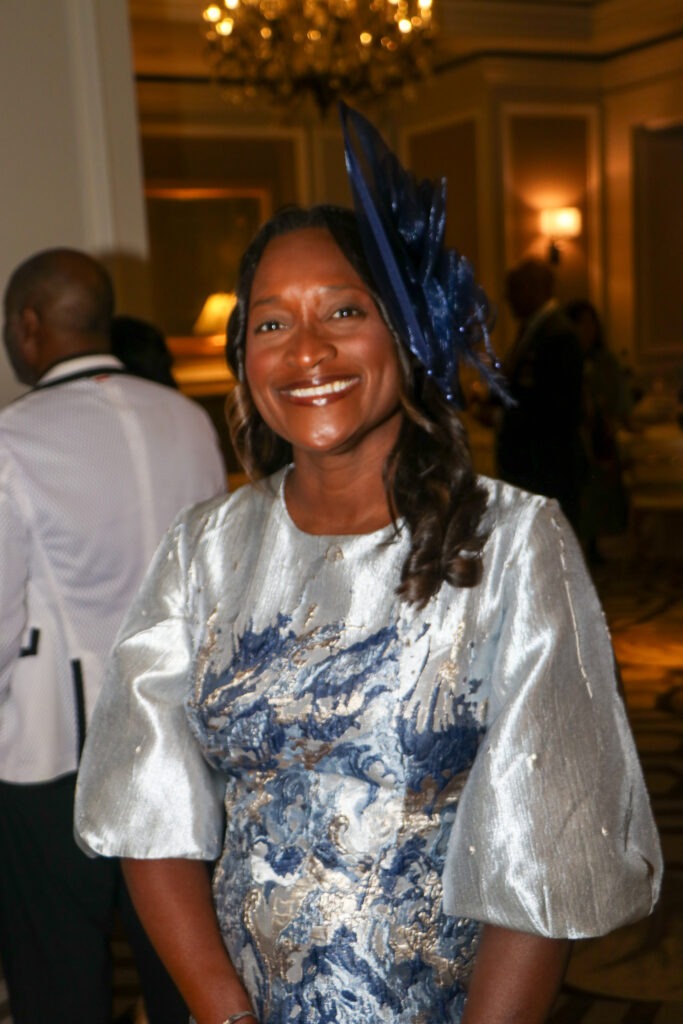
Carletta Harrell – Courtesy photo
The annual gathering serves as more than a ceremonial update. It functions as a working intersection between public policy and private investment — a space where infrastructure, economic development, and quality-of-life initiatives are aligned with the needs of a growing county.
“Under Chairwoman Harrell’s forward-thinking leadership, Henry County continues to see transformative projects come to life,” said Michael Paris, emphasizing the county’s ongoing momentum.
That sentiment was echoed by Gerald McDowell, who pointed to the county’s “thoughtful development and strategic planning” as a driver of opportunity for both businesses and residents.
A Broad Coalition of Voices
This year’s program reflects the increasingly interconnected nature of regional development. In addition to Harrell’s address, attendees will hear from leaders across healthcare, finance, infrastructure, and the judicial system.
Featured speakers include:
Mike Alexander, representing the Atlanta Regional Commission and providing an update tied to regional water planning
David Kent of Piedmont Henry Hospital
Fadzai Konteh of Truist
Patrick Brooks of Geosam Capital Group
Holly Veal
Together, these perspectives reflect the multi-sector approach now required to manage growth in metro Atlanta’s outer counties — where population increases, infrastructure demand, and economic expansion are converging at a rapid pace.
A Platform for Policy and Progress
The State of Henry County is part of a broader regional series hosted by the Council for Quality Growth, which convenes similar events across multiple counties and agencies, including MARTA and the Atlanta BeltLine.
These events are designed not only to inform but to influence — creating a feedback loop between policymakers and the business community that helps shape decisions on infrastructure, zoning, transportation, and long-term planning.
For Henry County, that dialogue is increasingly critical. Positioned along key transportation corridors and experiencing steady residential and commercial growth, the county faces both opportunity and pressure: how to expand while maintaining livability.
Looking Ahead
As Chairwoman Harrell steps to the podium, the focus will likely center on balancing that growth ensuring that new development aligns with infrastructure capacity, workforce needs, and community expectations.
For attendees, the event offers more than a speech. It is a snapshot of where Henry County stands today and a roadmap for where it intends to go next.
DeKalb County leaders united at the Georgia Capitol, advancing transportation, housing, and education priorities while elevating student voices and highlighting a powerful moment of shared leadership.
By Milton Kirby | Atlanta, GA | March 27, 2026
DeKalb County leaders arrived at the Georgia State Capitol with a clear message: unity, coordination, and results.
At this year’s DeKalb Day at the Capitol, Lorraine Cochran-Johnson addressed lawmakers, community leaders, and more than 500 students, outlining a focused legislative agenda while emphasizing collaboration across all 12 cities.
“We are showing up as one DeKalb,” Cochran-Johnson said, reinforcing a theme that echoed throughout the event.
A Unified County Approach
This year marked the largest DeKalb Day turnout in the county’s history, with elected officials, mayors, commissioners, and state legislators aligned around shared priorities.
From the House and Senate delegations to the Board of Commissioners, leaders emphasized a coordinated strategy entering the legislative session, one designed to strengthen DeKalb’s voice under the Gold Dome.
Carla Drenner highlighted the county’s diversity and strength, noting that DeKalb represents more than 100 nationalities and over 140 languages.
“It takes a village to govern,” Drenner said. “We stand with each other because we are DeKalb strong.”
Transportation, Housing, and Economic Growth
At the top of the county’s agenda: transportation.
Officials pointed to a new transit master plan aimed at improving connectivity and expanding access across the region. Cochran-Johnson emphasized that mobility is central to DeKalb’s future.
Housing affordability also emerged as a critical issue. The county is backing rental registry legislation led in part by Mary Margaret Oliver to track investor-owned properties and improve housing conditions.
Cochran-Johnson noted that more than 50% of residential property sales south of Memorial Drive since 2020 have gone to investors rather than individuals.
Public Safety and Environmental Concerns
Illegal tire dumping—an issue that continues to impact DeKalb neighborhoods—was also front and center.
County leaders called for stronger penalties and highlighted cleanup efforts, including the removal of more than 30,000 tires through a county initiative.
Education and Student Voices Take Center Stage
A defining feature of the day was the presence of more than 500 students from DeKalb County schools, many of whom participated directly in the program.
Norman Sauce III outlined priorities including school funding reform, workforce development, and expanded mental health services.
And then something small—but powerful—happened. As Taliah McPherson walked up to speak, talking about mental health and what students are really dealing with, the CEO didn’t step aside. She stayed. Right there. Holding the microphone steady so the student’s voice could carry across the room. No announcement. No attention drawn to it. Just a quiet act that said: your voice matters enough for me to support it. And in that moment, the whole idea of “leadership” shifted. It wasn’t about position. It was about presence.
The students didn’t waste that moment.
They talked about stress. About pressure. About systems that don’t always work when they need help the most.
One student said it clearly: if leaders care about students, prove it.
Fund the support. Remove the barriers. Act.
McPherson called for greater awareness and access to mental health support for students, emphasizing the need to remove stigma and expand resources.
“Mental health should be something we can talk about openly,” she said.
High school senior Gavin Brown reinforced the urgency, pointing to barriers that prevent students from receiving timely care.
“The time for discussion has passed,” Brown said. “Now is the time for action.”
A Call to Civic Engagement
Throughout the program, leaders emphasized civic participation—especially for young people.
Cochran-Johnson encouraged students to see themselves as future leaders, reminding them that leadership begins with preparation and presence.
Moving Forward as “One DeKalb”
Closing remarks reinforced a shared commitment to collaboration, with leaders pledging continued focus on infrastructure, economic development, and education.
“As elected officials, our greatest strength is in working together,” said Chakira Johnson.
“Our partnerships are strong,” Cochran-Johnson said. “And our future is strong.”
By Milton Kirby | Washington, D.C. | March 26, 2026
A new bipartisan effort in the U.S. Senate could reshape how Historically Black Colleges and Universities (HBCUs) access federal research funding, addressing long-standing barriers that have limited their participation in major grant programs.
Senators Raphael Warnock and Katie Britt have introduced the HBCU Research Capacity Act, legislation designed to simplify and centralize access to federal grant opportunities for HBCUs.
At the core of the proposal is the creation of a federally coordinated online clearinghouse a single platform where HBCUs can identify, track, and apply for research and development funding opportunities, particularly in STEM fields. The bill would also require the U.S. Department of Education to provide guidance, best practices, and ongoing updates to institutions nationwide.
Addressing Structural Gaps in Research Funding
For decades, federal research dollars have been concentrated among a relatively small group of institutions, leaving many HBCUs despite their academic output and cultural impact at a disadvantage.
“HBCUs are incubators of diverse excellence,” Warnock said, noting that the legislation is intended to “make securing federal dollars… that much easier.”
Britt echoed that sentiment, describing the bill as a “commonsense” solution grounded in firsthand experience with the challenges HBCUs face.
The issue is not new, but the approach is notable. Rather than creating new funding streams, the legislation focuses on access recognizing that many institutions struggle not with eligibility, but with navigating a fragmented and complex federal grant system.
HBCU Leaders Push for Change
To support the bill’s introduction, the senators convened more than 30 HBCU presidents in Washington for a roundtable discussion. Leaders from institutions including Fort Valley State University and Albany State University participated, emphasizing the need for a more transparent and coordinated funding process.
Their message was consistent: opportunity exists, but access remains uneven.
Dr. Harry L. Williams, president and CEO of the Thurgood Marshall College Fund, described the legislation as a “major step” toward expanding the nation’s research ecosystem by fully integrating HBCUs into it.
Similarly, the United Negro College Fund praised the bill while cautioning that broader reforms will still be needed to ensure equitable participation across all HBCUs including those that may never achieve top-tier research classifications but play a critical role in the academic pipeline.
A Broader Strategy for Research Equity
The proposed clearinghouse would be supported by dedicated personnel within the Department of Education and include regular reporting to Congress, along with updates to participating institutions.
The bill builds on earlier efforts led by Warnock, including legislation encouraging pathways for HBCUs to achieve “R1” status the highest classification for research activity in higher education. Notably, Howard University recently achieved that designation, signaling what advocates say is possible with sustained investment and support.
The legislation also aligns with broader federal initiatives, including funding streams established under the CHIPS and Science Act, which included provisions to support Minority Serving Institutions in accessing federal research dollars.
What Comes Next
If passed, the HBCU Research Capacity Act would amend Title III of the Higher Education Act of 1965, formalizing the federal government’s role in coordinating research opportunities for HBCUs.
For institutions that have historically done more with less, the bill represents a potential shift not just in funding, but in how opportunity is structured.
As policymakers and educators continue to debate the future of higher education, one question remains central: how to ensure that talent wherever it is found has a clear path to resources.
This legislation suggests one answer: make the system easier to see, and easier to access.
By Milton Kirby | Truth Seekers Journal | Artist Profiles Series
THE SON WHO BECAME THE STORYTELLER:
Preserving the Legacy of Lu Vason
When Anton sat down with Valeria Howard Cunningham, the widow of Bill Pickett Invitational Rodeo (BPIR) founder Lu Vason, he didn’t just find a client he found a responsibility. Valeria had spent a decade trying to capture Lu’s lightning in a bottle, trying to honor the first love of her life and the cultural institution he built. She needed someone who could carry that weight with care.
She didn’t choose a historian, a journalist, or a seasoned biographer. She chose Anton Cunningham, a man whose connection to the story was not academic, but spiritual. A man whose own life had been shaped by loss, reinvention, and the search for purpose. A man who understood, in his bones, what it means to carry a legacy forward.
Anton didn’t set out to become a writer. His journey began on basketball courts in Pasadena, California, where he grew up before earning a scholarship to Georgia Southwestern in Americus. What was supposed to be a practical decision, a scholarship his parents encouraged him to take, became the beginning of a new life. Georgia opened him up. Atlanta shaped him. The Atlanta University Center (AUC), the fraternity culture, the energy of Black excellence all around him – it showed him a different version of success, one rooted in community and ambition.
“Every one of our stories is somebody else’s medicine,” Anton says, reflecting on the process. “I was reading about Lu’s early days in Louisiana and his grandmother, and I thought, Man, that’s my grandma. I was reading about his struggles, and I was reading about myself.”
Before he ever touched a manuscript, Anton spent two decades in the fitness industry training clients, managing teams, and listening to people’s stories. “Sometimes those sessions were therapy,” he says. “People weren’t just trying to lose weight. They were trying to find strength, clarity, confidence.” Those conversations planted the seeds of something he didn’t yet recognize: a calling to help people tell their stories.
After twenty years, Anton stepped away from fitness and into entrepreneurship. He launched a marketing agency, learned digital advertising, and eventually founded KAJA Publishing – a company dedicated to helping people turn their lived experiences into books. “We’re all walking miracles,” he says. “But because it’s our story, we push it to the back.”
He began writing his first book, studying the craft by listening to Stephen King, James Patterson, and others talk about storytelling. “They all said the same thing,” Anton recalls. “Tell your story so people can understand it. Don’t worry about being perfect, be honest.”
Then came the conversation that changed everything.
Valeria told Anton she had been trying to write Lu’s story for nearly a decade. She had promised him she would preserve his legacy, but the emotional weight of the task had become overwhelming. Anton asked to see what she had written. He drafted the first chapter. Then the second. And as he reread his own words, he felt something he hadn’t expected: this feels right.
When Valeria read those early pages and told him she loved them, it gave him confidence. But the deeper confirmation came from the story itself. As he wrote, Anton came across a quote from Lu that stopped him cold:
“Everybody has a story — what’s yours?”
It was the same message Anton had already written on his own website before he ever touched the manuscript. “It was like God tapped me on the shoulder,” he says. “This is your assignment.”
Writing Under the Western Skies became more than a project. It became a mirror.
The early chapters about Lu’s childhood in Louisiana reminded Anton of his own family roots in Albany, Georgia, the heat, the dirt roads, the sound of insects at night, the wisdom of grandparents who shaped entire generations. “I was reading about him,” Anton says, “but I was also reading about myself.”
The parallels deepened when Anton reached the parts of Lu’s life marked by loss and reinvention. Lu had endured heartbreak, the death of his mother, and moments of profound uncertainty before finding his purpose in the rodeo. Anton understood that journey intimately. A year and a half earlier, he had lost his own mother – the person whose love had anchored him since childhood. Soon after, a long‑term relationship ended. “I had to find who I was again,” he says. “I had to sit still, get quiet, and really understand myself.”
Writing Lu’s story became part of that healing. It gave him structure. It gave him purpose. It gave him a way back to himself.
As Anton wrote, he also began to see the rodeo through new eyes. He traveled to BPIR events in Atlanta, Fort Worth, Baltimore, and D.C., watching the crowds, meeting the competitors, and witnessing the unique energy each city brought. He recognized faces from the manuscript, connected names to stories, and saw firsthand how the rodeo had become a cultural institution – a place where history, identity, and community converged.
“This was one man’s dream,” he says. “But look at how many lives it touches. Look at how many people it inspires. That’s legacy.”
That legacy came full circle when Anton’s father, Ronnie Cunningham, stepped into the room during our interview. Ronnie introduced himself with quiet pride:
“I’m Ronnie Cunningham. Anton is my second of four sons.”
He had read Anton’s book. He loved it. And then he said something that revealed just how far Anton had come:
“He’s my publisher. I’m working on my fourth book with him now.”
A father who once guided his son was now trusting that same son to guide his voice into the world. A generational exchange. A legacy expanding.
Anton’s gift as a storyteller isn’t limited to the page. It shows up in everyday life, in the way he listens, the way he observes, and the way he follows the threads of history that others overlook. During a recent trip to Charleston, he found himself surrounded by people carrying names with deep historical weight: Middleton. Ravenel. Names tied to plantations, to slavery, to centuries of intertwined Black and white lineage.
He asked questions. He listened. He connected dots. And suddenly, strangers at a bar were leaning in, drawn into a conversation about ancestry, identity, and the stories we inherit without even realizing it. “I’m a publisher,” he told them. “I write books. I’m fascinated by stories like this.”
That moment — spontaneous, unplanned, electric — captured exactly who Anton is. A man who sees stories where others see silence. A man who asks questions that bring people together. A man who believes that truth, even when complicated, can be a bridge.
It’s the same instinct that guided him through Under the Western Skies. The same instinct that fuels his publishing work. The same instinct that makes him a cultural steward in his own right.
Because for Anton, stories aren’t just entertainment. They are maps. They are medicine. They are the threads that connect us across generations, across histories, across the lines we didn’t draw but still carry.
And that is why Valeria Howard Cunningham chose him.
Not because he was the most experienced writer. Not because he had the longest résumé. But because he understood the assignment in his spirit.
He understood that preserving Lu Vason’s story wasn’t just about documenting the past. It was about honoring a legacy, healing through purpose, and ensuring that the cultural institution Lu built — the Bill Pickett Invitational Rodeo — continues to inspire future generations.
Anton Cunningham didn’t just write a book. He answered a calling. And in doing so, he became the storyteller his father, Valeria, and the BPIR community didn’t even know they were waiting for.