Emory Experts to Offer Brain Health Tips at Alzheimer’s Forum

Join Emory experts at the 28th Brain Health Forum on April 29, 2025, to learn about memory loss, dementia, and healthy aging strategies.


By Milton Kirby | Atlanta, GA | April 2, 2025

Community members interested in brain health and aging are invited to attend the 28th Brain Health Forum, hosted by the Goizueta Alzheimer’s Disease Research Center at Emory University.https://alzheimers.emory.edu/

The in-person event will take place on Tuesday, April 29, 2025, and will feature leading experts from Emory discussing the latest research on memory loss and dementia. Topics will include risk factors for cognitive decline, how to promote healthy aging, and why dementia research matters more than ever.

Organizers say the forum offers practical advice for staying mentally sharp and preventing disease. Attendees will also learn how lifestyle choices can impact long-term brain health.

“This forum is a great chance for people to hear directly from top researchers and get easy-to-follow tips on aging well,” said a spokesperson for the center.

The event is run by the Goizueta Alzheimer’s Disease Research Center at Emory. Each year, their team brings top doctors and researchers to speak. They explain brain science in ways that are easy to understand.

You’ll hear the latest news on memory loss and dementia. You’ll learn what puts people at risk. You’ll also get tips on how to stay sharp as you age.

There’s a good reason this forum matters now more than ever. Each year in the U.S., about 514,000 new cases of dementia are diagnosed in adults aged 65 and older. That number is expected to double by the year 2060.

As of 2024, about 6.9 million older Americans are living with Alzheimer’s disease. Alzheimer’s is the most common kind of dementia. It slowly damages memory, thinking, and behavior.

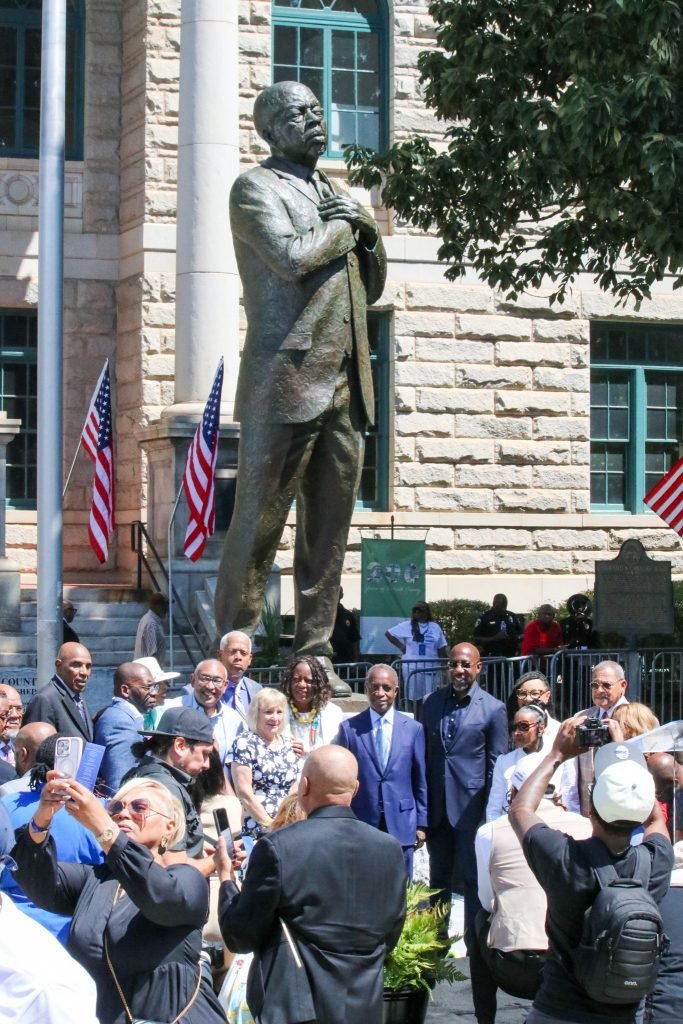
Photo by Milton Kirby

Dementia affects not only the person who has it, but also their families. People often need care for many years. That’s why learning about it now is so important.

The forum will also talk about how brain health affects different groups. Research shows that Black Americans are more likely to get dementia than white Americans.

Black adults are about 1.5 to 2 times more likely to develop Alzheimer’s disease or similar conditions. About 21% of Black adults over age 70 are living with Alzheimer’s. That’s more than double the rate in white adults the same age.

Doctors think there are several reasons for this. One reason is health problems that are more common in Black communities. These include high blood pressure and diabetes. Both can raise the risk of dementia.

Other reasons include fewer resources. Many Black Americans face barriers in education, income, and access to good healthcare. These lifelong challenges can increase dementia risk.

There is also a problem with diagnosis. Black adults are less likely to be diagnosed correctly or early. That means they may not get the help they need in time.

At the forum, speakers will talk about how to fix these problems. They’ll share steps people can take to protect their memory and thinking skills. They’ll also talk about how lifestyle choices—like exercise, sleep, and healthy food—can help your brain.

The forum will give clear advice you can use right away. Whether you’re a caregiver, a senior, or just someone who wants to learn, there’s something for everyone.

You’ll leave with new knowledge and practical tools. You’ll also learn why research is key to finding better treatments and maybe even a cure.

Brain health is for everyone. And the more you know, the more you can do to protect it.

Don’t miss this free event. Sign up today and take the first step in caring for your brain.

[Click here to register.]

Big Job Cuts Hit the CDC, Causing Worry Across the Country

The Trump administration cut 2,400 CDC jobs as part of a wider HHS downsizing, raising fears about public health readiness amid disease outbreaks and staffing losses.


By Milton Kirby | Atlanta, GA | April 2, 2025

On Tuesday, the Trump administration fired thousands of health workers, many of whom worked at the Centers for Disease Control and Prevention, also known as the CDC. These job cuts are part of a bigger plan to shrink the Department of Health and Human Services, or HHS.

About 2,400 people at the CDC lost their jobs, nearly one in five workers. Across HHS, around 10,000 jobs are being cut. Officials say the total number could reach 20,000 with layoffs and buyouts.

President Trump and billionaire Elon Musk support these cuts. They say the goal is to make the government smaller and faster. Health Secretary Robert F. Kennedy Jr. says the system is too big and slow. He wants to move people from several agencies into one new group called the Administration for a Healthy America, or AHA. It’s not clear yet who will be moved into AHA.

But many people are worried. Experts say the cuts could harm the U.S.’s ability to fight disease and handle health emergencies. Some of the people who were fired worked in cancer research, disease control, and drug safety. They were leaders in their fields. Now, they’re gone.

Photo by Milton Kirby

The timing is also concerning. The CDC has a $9.2 billion budget and is already dealing with big problems. That includes rising cases of tuberculosis, bird flu, and a large measles outbreak in West Texas. The Texas outbreak has caused more measles cases than the U.S. had all last year.

Since February, many CDC workers—especially newer and temporary ones—have already been let go. Critics say the agency is now too weak to respond to a large disease outbreak. “The challenges for these individuals to do their jobs on a daily basis must be enormous,” said Jason Schwartz, a health expert at Yale. “The future of CDC is under threat, by any measure.”

One important leader who left earlier was Dr. Leandris Liburd. She is a Black woman who led the CDC’s Office of Health Equity. She worked on issues like women’s health and making sure all communities get fair health care. She started in 2020 and helped address the high number of COVID-19 deaths in Black, Latino, and Native American communities.

Dr. Liburd’s name appeared earlier this year on a “DEI Watchlist.” This list was created by a conservative group called the American Accountability Foundation and named Black and Latino federal workers who support diversity and fairness. Liburd’s photo and title were listed as a “target” on the group’s website.

Many CDC workers found out they were fired when they were locked out of their email. Some bosses had to ask their teams, “Did you get fired?” Others heard the news from the media.

On Tuesday morning, hundreds of workers lined up outside HHS buildings. Some waited more than an hour to find out if they still had jobs. Acting CDC Director Susan Monarez and a few people in her office were not fired—at least for now.

CDC Chief of Staff Matt Buzzelli sent a message to workers, saying he knows this is a hard time. He pointed them to tools like a severance calculator and a guide for laid-off workers. He also reminded them of the employee help program but said wait times are long.

Health leaders outside the CDC are sounding the alarm. Richard Besser, a former CDC leader, said he is very worried. “When there’s a health emergency, you need people who know what to do,” he said. He added that strong leadership is more important than ever in times like this.

Tom Frieden, another former CDC director, called the cuts “a recipe for disaster.” He now leads a group that works to stop heart disease and fight outbreaks. He said ending programs like tobacco control only helps big tobacco companies.

Now, many are asking: Will the U.S. be ready when the next health crisis hits? So far, things don’t look good.

Nikema Williams Steps Down as Georgia Democratic Party Chair After Pivotal Leadership Era

Nikema Williams steps down as Georgia Democratic Party chair after historic tenure, following vote to make the position full-time and paid.

By Milton Kirby | Atlanta, GA | April 1, 2025

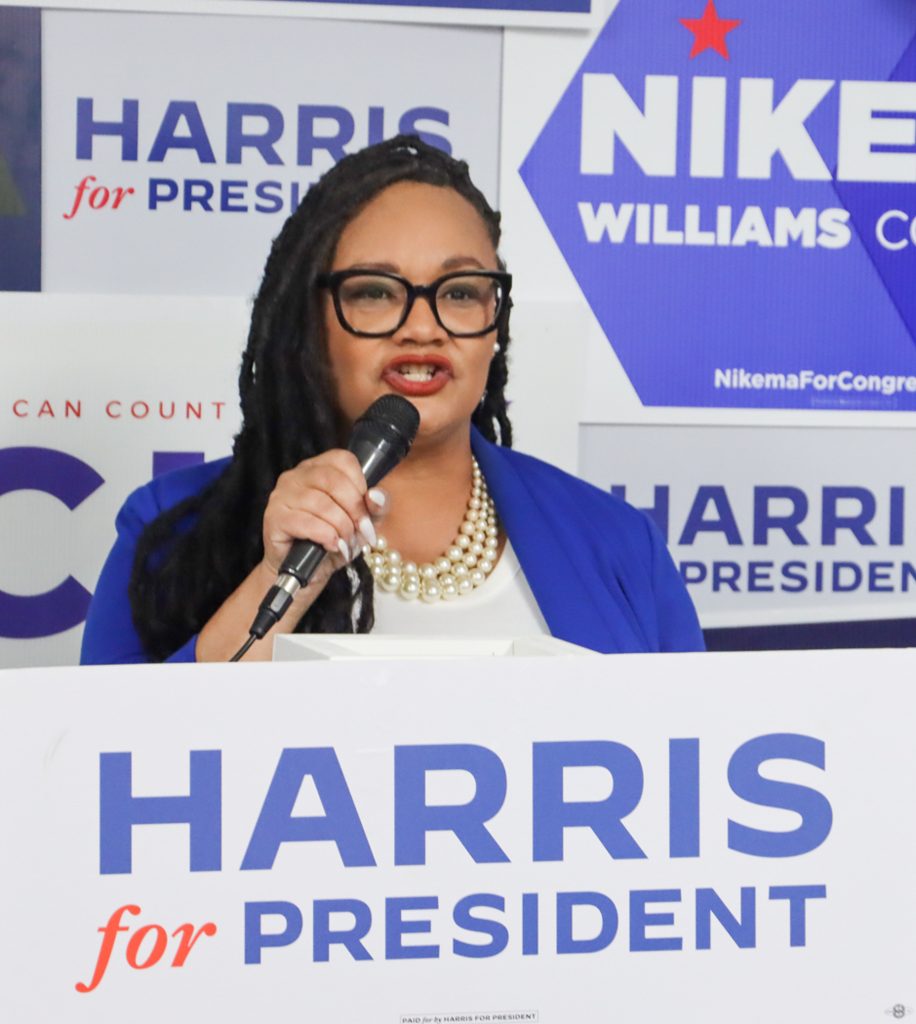
U.S. Representative Nikema Williams officially stepped down as chair of the Democratic Party of Georgia (DPG) on Monday, capping off a transformative tenure that saw the party rise to national prominence and turned the state purple. Her departure follows a vote by the party’s State Committee to make the chair position a full-time, paid role — a change Williams herself championed, even as it ultimately required her to step aside.

Williams, the first Black woman to lead the state party, served as chair since 2019, a period marked by historic Democratic victories, including flipping Georgia for Joe Biden in the 2020 presidential election and helping elect both Jon Ossoff and Raphael Warnock to the U.S. Senate.

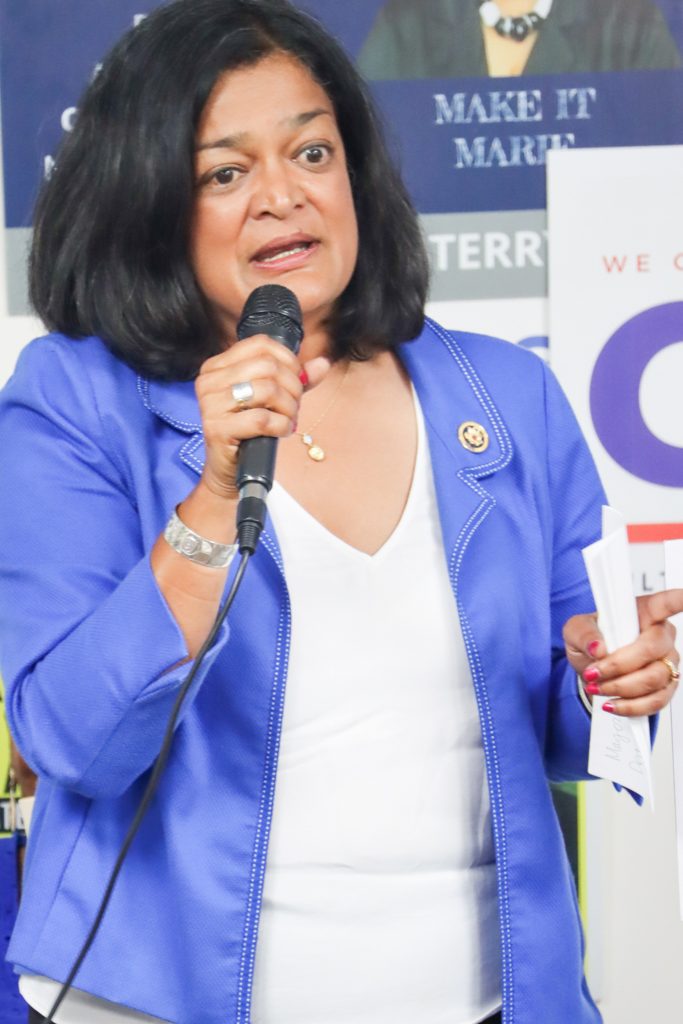
Photo by Milton Kirby Nikema Williams

In a message to party leaders Monday, Williams reflected on her time at the helm: “As the first Black woman to chair the DPG, I set out to build a party that wasn’t just reactive but proactive, not just present but powerful. That’s exactly what we did.”

While her resignation follows months of criticism from some corners of the party — particularly after Donald Trump’s 2024 win in Georgia — Williams emphasized that the transition was one she supported. “Progress demands evolution, y’all,” she wrote. “For the party to meet the moment while honoring its commitment to working people, the role of Chair cannot remain an uncompensated volunteer position.”

Williams had previously endorsed the bylaw change, noting in November that making the role full-time would expand access beyond “independently wealthy folks.” Because of House ethics rules, her position in Congress prohibits her from holding a paid role within the party, which made her exit necessary once the change was ratified.

The bylaw update passed overwhelmingly on Saturday at a State Committee meeting in Oglethorpe County, reflecting a growing consensus that the party needs a full-time leader to sustain gains and prepare for the intense electoral battles ahead. Matthew Wilson, the party’s 1st Vice Chair, will serve as interim chair while the executive committee searches for a permanent successor.

Though Williams’ exit comes after internal party tensions, many party leaders expressed gratitude and optimism. Atlanta state Sen. Jason Esteves credited her leadership with helping secure key victories. “There’s no doubt that progress has been made under her leadership,” he said.

Others, like Columbus state Sen. Ed Harbison, echoed that sentiment while acknowledging the need for a new chapter. “I think it’s about time. That’s not to take away from the great work that she did… but we need somebody that will make sure they’ve got their foot on the gas at all times,” Harbison said.

Senate Minority Leader Harold Jones emphasized that the change originated with Williams herself. “She’s the one who called for that. She encouraged the bylaw committee to make that change… because there’s so much to focus on at all times.”

Still, some internal friction preceded her departure. Following the 2024 election loss in Georgia, prominent Democrats began calling for new leadership. Among them was Sen. Jon Ossoff, who is up for reelection in 2026 and privately urged Williams to consider stepping down, citing the need for a more active fundraising operation. Ossoff’s allies did not dispute Williams’ account of the call, and both sides appear intent on keeping the focus on the party’s future.

While the exchange between Ossoff and Williams attracted media attention, both have since kept their public statements diplomatic. Party insiders suggest the priority now is unity as Democrats regroup after a disappointing 2024 cycle.

Williams supporters note that she successfully ushered in a period of unprecedented gains for Georgia Democrats, building lasting infrastructure and amplifying grassroots organizing.

In her farewell statement, Williams highlighted those achievements: “Through strategic vision, relentless organizing, and an unwavering belief in the power of our people, we turned this state into the battleground it was always meant to be… We elected both Jon Ossoff and Raphael Warnock to the U.S. Senate, sent a Democrat to the White House for the first time in 28 years, and flipped hundreds of municipal and county seats.”

She also made clear that her involvement in Georgia politics is far from over. “That work doesn’t end here — and neither do I,” she said, noting that she will continue serving on the party’s state and executive committees in addition to her role in Congress. “My work has always been about how to best serve the people… safer, healthier communities for our children, a stronger democracy, true reproductive freedom and economic opportunity for everyone–no matter their ZIP code or bank account.”

Her departure also comes on the heels of her decision to withdraw from consideration for the vice chair role at the Democratic National Committee, a move that added to speculation about her future within the party structure. Still, Williams remains a central figure in Georgia politics as the representative of the state’s 5th Congressional District — a seat once held by civil rights icon John Lewis.

As the DPG begins its search for a new leader, members of the executive committee, including Esteves, say they are looking for someone who can build on the party’s infrastructure, sustain grassroots energy, and supercharge fundraising ahead of a critical 2026 midterm cycle. “We’re going to look for someone who can focus on building infrastructure throughout the state,” Esteves said.

Party leaders hope to keep their eyes on the road ahead. As Williams put it, quoting the late Congressman Lewis: “Do not get lost in a sea of despair. Be hopeful, be optimistic. Our struggle is not the struggle of a day, a week, a month, or a year — it is the struggle of a lifetime.”

Her resignation may close a chapter in the DPG’s story, but for Nikema Williams, the work — and the fight — clearly continues.

I’m tired of being mocked and hated because I’m a conservative woman | Opinion

As a conservative woman living in Texas, I often feel like I’m living a dual reality. I’m a mom and a writer, but that’s not all. I go to church, laugh with friends and wave at my neighbors while we are walking our dogs

Progressives claim to value women, but they routinely demonize conservative women who refuse to conform to the molds that the left tries to force us into.

By Nicole Russell | USA TODAY | March 31, 2025

As a conservative woman living in Texas, I often feel like I’m living a dual reality. I’m a mom and a writer, but that’s not all. I go to church, laugh with friends and wave at my neighbors while we are walking our dogs.

At dinner, my kids and I discuss the Beatitudes, the Bill of Rights and the best and worst things that happened that day (we call them highs and lows). I love to cook, hate to clean and probably need to have a better morning routine. My life is similar to millions of other women in America.

But online, in the legacy news media and in my increasingly ugly inbox, I live in a different world. In that world, I’m portrayed − and viewed − through a singular lens: my conservative beliefs. As such, I am easy to hate, mock and scorn.

I am far from the only woman who experiences this abuse. Progressives claim to value women, but they routinely demonize conservative women who refuse to conform to the molds that the left tries to force us into. That’s not only bad for women like me and for our society, but it’s also a poor reflection of reality. Tens of millions of American women embrace traditional values and conservative ideas.

We’re also more than our politics.

If the trivializing of an accomplished woman wasn’t so disgusting, I’d laugh. Can you imagine The Post smugly diminishing a progressive woman (or man) as “radiant, blond and apple-cheeked”?

Leavitt isn’t the only conservative woman to recently receive The Post’s patronizing treatment. A profile of second lady Usha Vance began with this sentence: “Most of what we know about Usha Vance we know because her husband told us.”

Vice President JD Vance and second lady Usha Vance tour the U.S. Space Force base at Pitufik, Greenland, on March 28, 2025 Pool Photo Via Getty Images

Never mind that Vance is an accomplished lawyer who clerked for Chief Justice John Roberts on the U.S. Supreme Court. Ignore that she graduated from Yale University with a law degree and a bachelor’s degree and from Cambridge with a master’s. Brush aside that she has served on the boards of the Washington National Opera and the Cincinnati Symphony Orchestra.

We only know, according to The Post, what her husband allows her to tell us.

Another Post news story − a profile of conservative influencer Alex Clark published the day before the elections in November − is laced with opinionated and condescending observations. Clark, for example, is accused of engaging in conspiratorial thinking about the food industry, “consistent with the right’s Trump-inspired paranoia about deep-state master planning.”

Each of those profiles was written or cowritten by Voght, who worked for Mother Jones and Rolling Stone, both ultraliberal publications, before joining The Post as a politics reporter.

The disdain for conservative women isn’t confined to The Post. Recent Salon headlines have been even more pointed in their attacks, including this one: “The misogynist agenda of “MAHA moms.” Conservative aren’t just wrong, you see, they hate women, including presumably themselves.

Salon also gave us this affront to good taste ‒ “From ‘Mar-a-Lago face’ to uncanny AI art: MAGA loves ugly in submission to Trump.” The article, by senior writer Amanda Marcotte, is filled with cruel attacks on the appearance of conservative women in leadership positions, including Homeland Security Secretary Kristi Noem.

The article includes this gem: “Drag queens also embrace outlandish gender performance, but it’s to subvert rigid gender roles instead of reinforcing them. That, plus your typical drag queen knows how to make five pounds of make-up look cool instead of gross, but they won’t share their secrets with the ladies of the GOP.”

Drag queens are cool. Conservative women are gross. And that is what passes for journalism in 2025.

Tune in to ABC’s “The View” to see the progressive hosts, all women, rip on the conservative women in the Trump administration. No one is more misogynistic to conservative women than liberal women. Again, the irony would be funny if not so disgusting.

Voght and Marcotte are part of a bevy of legacy media reporters who seem to be liberals first and journalists second. That bias has destroyed the news industry’s credibility but perversely also has hurt more than helped their allies in the Democratic Party.

Conservative women are denigrated for their beliefs

For all their flaws, Democrats used to promote tolerance and inclusivity. They used to at least say they embraced women’s rights.

But tolerance apparently doesn’t extend to the many women who exercise their right to form their own beliefs and to vote for the candidates of their own choosing. In progressives’ eyes, those women, conservative women, deserve to have their accomplishments devalued and their appearance mocked.

I’m tired of being the butt of jokes and scorn because I’m a conservative woman and a mother. I’m sick of legacy media acting like women such as Leavitt, Vance and me are an anomaly.

And I’m done with seeing progressives in politics and journalism spew hate at women for embracing conservative political and social values.

Nicole Russell is a columnist at USA TODAY and a mother of four who lives in Texas. Contact her at nrussell@gannett.com and follow her on X, formerly Twitter: @russell_nm. Sign up for her weekly newsletter, The Right Track, here.

DEI Rollback Costs Target Billions and Loyalty

Target faces growing financial and reputational fallout, losing $12.4B in revenue, stock dropping $27, and facing lawsuits after reversing diversity, equity, and inclusion policies.


By Stacy M. Brown | Washington, DC | March 31, 2025

Target continues to face mounting financial and reputational fallout after reversing course on diversity, equity, and inclusion (DEI) initiatives. The retail giant has lost more than $12.4 billion in revenue, seen its stock plunge by $27.27 per share, and is grappling with multiple lawsuits linked to its shifting DEI policies. Separate but powerful actions from Black-led organizations and faith leaders have intensified pressure on the company. Rev. Jamal Bryant launched a national Target Fast, calling for continued community mobilization. Meanwhile, the National Newspaper Publishers Association (NNPA) and the NAACP initiated public education and selective buying campaigns. While distinct in approach, the collective efforts have amplified scrutiny and economic consequences for Target. “Black consumers helped build Target into a retail giant, and now they are making their voices heard,” said Benjamin F. Chavis Jr., president and CEO of the NNPA. “If corporations believe they can roll back diversity commitments without consequence, they are mistaken.”

Photo by Milton Kirby

Early data from analytics firms Placer.ai and Numerator confirms a decline in consumer support. Numerator found that Black and Hispanic households are reducing their visits to Target at the highest rates. Placer.ai reported that on the national blackout day last month, Target saw an 11 percent decline in store traffic compared to average Friday visits. Since the company’s January 24 DEI reversal, Placer.ai data shows Target’s overall foot traffic has fallen every week. In contrast, Costco has gained ground. The warehouse chain rejected a shareholder proposal to weaken its diversity programs and stayed firm in its DEI stance. Analysts say Costco’s consistency and longstanding commitment to high wages and strong employee benefits may attract consumers frustrated with Target’s retreat. Costco’s shares have outperformed those of Walmart and Target over the same period. Walmart has also seen a dip in foot traffic, though not as sharp as Target.

While grassroots boycotts are not always financially damaging in the long term, Target’s situation may prove different. “Boycotts put a ‘negative spotlight’ on the company that can have reputational consequences,” Brayden King, professor at Northwestern University’s Kellogg School of Management, told Forbes. He noted that consumer trust, closely tied to corporate reputation, plays a critical role in shopping habits. In addition to its woes, Target issued a string of recalls in 2025 involving products sold on shelves due to undeclared allergens and injury hazards. Affected items included Gerber Soothe N Chew Teething Sticks, Dorel Safety 1st Comfort Ride and Magic Squad child car seats, Nuby stroller fans, Baby Joy highchairs, Chomps beef and turkey sticks, and Pearl Milling Company pancake mix. Rev. Bryant said Target Fast has now mobilized more than 150,000 participants and persuaded over 100 Black vendors to withdraw their products from Target. He urged continued focus and unity in holding the company accountable. “It is critical that Black people can’t afford to get A.D.D; we can’t taper off and lose synergy. It’s important that people stay the course and keep amplifying our voices because it is being heard from Wall Street to Main Street,” Bryant said. He added, “No, I’m now committed and grateful.”

Photo by Milton Kirby

According to the Birmingham Times, the New Birth Baptist Church pastor recently reported that the campaign he helped launch against Target has received robust national support.

From the Times:

The fast-selective-buying campaign, which began during the Lent Season from March 5 to April 17, targets what Bryant describes as the company’s neglect of the Black community. According to Bryant, the boycott has mobilized over 150,000 participants and persuaded over 100 Black vendors to withdraw their products from Target. The movement has led to a $12 drop per share in Target’s stock and a $2 billion decrease in its overall value.

“We just hit 150 thousand people who have signed up to be part of it, with over 100 black vendors that pulled out of Target, so the momentum is going steadily,” Bryant explained.

The NAACP and the National Newspaper Publishers Association (NNPA), representing the Black Press of America, have simultaneously announced the planning and implementation of a national public education and selective buying campaign in response to Target and other corporations that have dismantled their respective Diversity, Equity, and Inclusion (DEI) commitments, programs and staffing.

“Now is the time for the Black Press of America once again to speak and publish truth to power emphatically,” NNPA Chairman Emeritus Danny Bakewell Sr. explained.

“We are the trusted voice of Black America, and we will not be silent or nonresponsive to the rapid rise of renewed Jim Crow racist policies in corporate America,” said NNPA Chairman Bobby R. Henry Sr. “The Black Press of America continues to remain on the frontline keeping our families and communities informed and engaged on all the issues that impact our quality of life.”

Trump Orders Purge of Black History from Smithsonian, Targets African American Museum

The executive order is chillingly titled “Restoring Truth and Sanity to American History.” It declares that the Smithsonian, once a symbol of “American excellence,” has become tainted by narratives that portray “American and Western values as inherently harmful and oppressive.”

BLACKPRESSUSA NEWSWIRE — The executive order is chillingly titled “Restoring Truth and Sanity to American History.” It declares that the Smithsonian, once a symbol of “American excellence,” has become tainted by narratives that portray “American and Western values as inherently harmful and oppressive.”

By Stacy M. Brown | Chicago, IL | March 29, 2025

Even the most cynical observers knew this day would come.

Since Donald Trump returned to the White House in January, the dog whistle has become a bullhorn. The whitewashing of American history is no longer implied—it’s spelled out in ink, signed into law, and backed by a government that is now openly in the grip of white supremacist power. In his latest executive order, President Trump has targeted the Smithsonian Institution and the National Museum of African American History and Culture, calling for the erasure of what he deems “divisive race-centered ideology.” He has directed Vice President JD Vance to eliminate these so-called “divisive” elements from the Smithsonian’s 21 museums, educational and research centers, and even the National Zoo. The executive order is chillingly titled “Restoring Truth and Sanity to American History.” It declares that the Smithsonian, once a symbol of “American excellence,” has become tainted by narratives that portray “American and Western values as inherently harmful and oppressive.” “Museums in our Nation’s capital should be places where individuals go to learn—not to be subjected to ideological indoctrination or divisive narratives that distort our shared history,” the order states.

Photo by Alan Karchmer

The directive goes further, instructing Vance, along with Vince Haley, Assistant to the President for Domestic Policy, and Lindsey Halligan, Special Assistant to the President, to work with Congress to block all federal appropriations for Smithsonian exhibitions or programs that “degrade shared American values, divide Americans based on race, or promote programs or ideologies inconsistent with Federal law and policy.” The order also aims at the American Women’s History Museum, demanding that no future appropriations “recognize men as women in any respect,” and calls for new citizen members to be appointed to the Smithsonian Board of Regents—individuals committed to enforcing the president’s vision. This is not an isolated move. Since returning to office, Trump has issued a barrage of executive orders aimed at dismantling every vestige of diversity, equity, and inclusion across the federal government. He terminated all DEI programs, calling them “illegal and immoral discrimination.” The National Endowment for the Arts Challenge America initiative—long dedicated to uplifting historically underserved communities—has been gutted. The Pentagon’s website erased the stories of Navajo Code Talkers. A “Black Lives Matter” mural in the heart of Washington, D.C., was demolished. Perhaps most brazenly, the Department of Defense Education Activity banned Black History Month observances at military base schools and ordered the removal of any book or material that mentions slavery, the civil rights movement, or the treatment of Native Americans.

Now, the National Museum of African American History and Culture—which opened to national fanfare in 2016—is in the crosshairs. “In an almost surprising fashion, the Smithsonian has been outside of the bounds of political wrangling,” said Samuel Redman, a history professor and director of the public history program at the University of Massachusetts at Amherst. “It’s not as though there hasn’t been political influence … but just in terms of overall funding and support for the Smithsonian, it’s been remarkably consistent.” That consistency has now been shattered. Trump’s executive order doesn’t just attack the museum—it hints at restoring what many hoped America had buried: Confederate monuments, white supremacist names on federal buildings, and the reinstallation of statues that were taken down during the country’s reckoning after the murder of George Floyd.

What the president calls “shared American values” is beginning to resemble a national doctrine rooted in erasure and oppression. The Smithsonian Institution, the world’s largest museum, education, and research complex—was founded on increasing and diffusing knowledge. Established by Congress with funds left by James Smithson, a British scientist, the institution spans 21 museums and the National Zoo, with 11 of the museums located along the National Mall in Washington, D.C. Now, it faces its greatest threat yet—not from budget cuts or neglect, but from a government determined to rewrite history at the expense of truth. The stakes have never been clearer as the country watches these moves unfold. The battle over American history isn’t theoretical. It’s happening now, in plain sight, with executive orders, political enforcers, and the full weight of the federal government behind it. “This is about power,” said a Smithsonian staffer who asked not to be named out of fear of retribution. “They’re not hiding it anymore.”

Reflecting on What is Happening Before Our Eyes

Proudly Black and faith-filled, I’m committed to justice, truth, and honoring our legacy. We are powerful, resilient, and destined to lead—giants do fall!

By Vickie Hart-Brant | March 29, 2025

Today, as I reflect on text and phone conversations with family and friends about what is happening before our eyes, I am more determined than ever to get more engaged and be the change I wish to see. The context is unclear, but I understand that sitting, talking, and texting will not affect change in this country. The erasure of Black history and culture is an assault and insult to the contributions of our ancestors and elders. Indisputably, America was built on the bLack of our ancestors. And we have every right to exist and be unhindered in our pursuits of life, liberty, justice, and prosperity as any other race of people. Why does generational wealth have to be a curse and not a blessing when spoken from the lips of Black people? It shouldn’t be! We are curators of our past, creators of our present, and influencers of our future. We have, we do, and we will continue to influence culture and the arts, math and science, the humanities, sports, and entertainment, theology, and philosophy, and well beyond words I can conjure when I think of the gifts and talents Black people share with the world every day–unabashed and with great confidence. And should I even courageously mention the theft of our culture and giftedness? The only reason we are a target of erasure is because we are anointed and powerful people. Don’t forget that…we have been to hell and back and continue to survive and thrive against all odds. Mama them taught us survival skills: “Trust in the Lord with all thine heart; and lean not unto thine own understanding; In all thy ways acknowledge him, and he shall direct thy paths.” – Proverbs 3:5-6. It worked for my grandparents, my parents and it’s working for me and my siblings. And I pray that our children and their children and generations unborn will understand there is a power higher and mightier than the President of the United States of America and Congress. So I encourage you not to faint or lose heart in doing what is right, what is just, and honorable before God and the people of God, because it is promised that you will receive generously if you endure to the end. I am confident God will get the last say because throughout scripture we are warned and admonished on the treatment of the poor, widows, orphans and children, strangers, and the foreigner. Hear me, without apology, and screaming from the rooftop, I am Black, a bonafide HBCU and meritorious PWI (predominantly white institution) educated Black woman, and I am proud of my blackness! Somebody’s gotta say it, so it might as well be me—giants do fall! So, be encouraged my sistah and my brother! Fear not, God is able to keep you from falling or failing!💜🙏🏾

Atlanta Jazz Festival 2025: A Free Memorial Day Celebration of Music, Art, and Culture

Celebrate Memorial Day Weekend at the Atlanta Jazz Festival 2025, a free, three-day outdoor event in Piedmont Park. Enjoy world-class jazz, visual art, and cultural experiences. Highlights include Robert Glasper, Baby Rose, and The Jazz Spot VIP area. Visit atljazzfest.com for the full lineup and event details.


By Milton Kirby | Atlanta, GA | March 29, 2025

Get ready for one of the country’s premier free jazz festivals, returning to Atlanta this spring. The Atlanta Jazz Festival, produced by the City of Atlanta Mayor’s Office of Cultural Affairs, kicks off in April and culminates Memorial Day weekend with a vibrant, three-day outdoor celebration in Piedmont Park. Featuring world-class jazz artists, the festival honors jazz’s deep roots in African American culture while spotlighting its global influence. It is a can’t-miss event for music lovers, families, and cultural enthusiasts alike. 

Kickoff Event: Friday Night Pre-Festival Concert

May 23, 2025 | 8 PM | Atlanta Symphony Hall

Start your festival weekend with a powerful prelude featuring five-time Grammy winner Robert Glasper. His groundbreaking Black Radio series revolutionized modern jazz by blending jazz, hip-hop, R&B, and film scoring. His genre-defying work has earned an Emmy and a Peabody Award and has led to collaborations with legends like Kendrick Lamar, Jill Scott, and Erykah Badu.

Joining Glasper is Grammy-nominated singer Baby Rose, known for her rich, smoky voice and emotionally raw ballads. Her music explores heartbreak, healing, and self-reflection, resonating with listeners from all walks of life. Together, Glasper and Rose promise a night of genre-blending brilliance that sets the tone for an unforgettable weekend.

Celebrating Jazz Through Art

Every year, the Atlanta Jazz Festival commissions a visual artist to design the festival’s official artwork, featured on posters and merchandise. The 2025 artists are selected based on their ability to reflect jazz’s influence through visual media—from painting and photography to mixed media and digital design.

In addition to the honor, the selected artist receives a free prime location at the festival, complete with a tent, tables, and chairs to showcase and sell their work. This initiative highlights the synergy between music and visual art while supporting local and emerging talent. 

A Cultural Legacy

More than just a concert series, the Atlanta Jazz Festival is a cultural institution. It aims to educate, inspire, and entertain a wide audience—from lifelong jazz aficionados to curious newcomers and young musicians. Rooted in jazz’s rich African American heritage, the festival serves as both a tribute to the past and a celebration of the genre’s ongoing evolution.

Visitors will experience performances by international stars and local talents, spanning classic, contemporary, and experimental styles. The festival fosters cross-generational dialogue through music and brings the community together in shared celebration.

The 2025 Lineup

Day 1              Saturday | May 24, 2025

1 PM – Khari Cabral & Jiva

3 PM – Aneesa Strings           

5 PM – Takuya Kuroda          

7 PM – Marsha Ambrosius    

 9 PM – Derrick Hodge

Day 2              Sunday | May 25, 2025

1 PM – Kenny Banks Jr.         

3 PM – Jarrod Lawson

5 PM – Ravi Coltrane

7 PM – Andromeda Turre

9 PM – Russell Gunn & Blackhawk Quartet

Day 3              Monday | May 26, 2025

1 PM – Brandon Woody

3 PM – Tyreek Mcdole

5 PM – Charles McPherson

7 PM – Dianne Reeves

9 PM – Joe Gransden and his Big Band

The Jazz Spot: Elevated Viewing Experience

For attendees seeking an upgraded experience, The Jazz Spot offers premium seating in shaded private tents. Located on a scenic hill overlooking Piedmont Park’s meadow and main stage, it provides the perfect setting for relaxing while enjoying top-tier performances.

The Jazz Spot is available for private rental or individual purchase and is ideal for groups, corporate outings, or anyone looking to enjoy the festival in comfort and style.

Getting There Made Easy

Piedmont Park is centrally located and easily accessible by bike, train, or car. To ensure a smooth arrival, here are the best ways to get to the festival:

By Bike or Scooter:

  • Enter via Park Drive Bridge (off Monroe Drive), 10th Street & Charles Allen, or Piedmont Ave at 12th or 14th Streets.
  • Use the free bike valet near Park Tavern (10th Street entrance)
  • Scooter parking is available across from the bike valet. Note: bikes and scooters must be walked through the park and cannot enter festival grounds.
  •  

By MARTA (Train):

  • The Midtown and Arts Center stations are a short walk to Piedmont Park, making MARTA a fast and eco-friendly option.

By Car:

  • Parking is limited. Reserve your space in advance via SpotHero to secure convenient, discounted parking near the park. Visit the Atlanta Jazz Festival SpotHero page to book your spot.

A Weekend to Remember

The Atlanta Jazz Festival continues its tradition of excellence, uniting music, art, and community in the heart of the city. Whether you’re dancing under the stars, discovering new artists, shopping at local vendor booths, or soaking up the sun with family and friends, this event has something for everyone.

Mark your calendars and get ready to experience the rhythm, creativity, and spirit of jazz—all for free. For festival updates, artist lineups, and event details, visit https://atljazzfest.com/.

Senate Votes to Overturn Overdraft Fee Cap, Undermining Key Consumer Protections

Senate repeals CFPB rule capping overdraft fees, blocking future reforms. Move favors big banks, harms low-income families, and undermines consumer protections championed by Senator Warnock.


By Milton Kirby | Atlanta, GA | March 27, 2025

In a blow to consumer advocates and working families, the U.S. Senate voted 52-48 on Thursday to repeal a landmark Consumer Financial Protection Bureau (CFPB) rule that capped overdraft fees at major banks. The rule, finalized in December 2024, aimed to rein in predatory banking practices that disproportionately affect low-income and minority communities.

The resolution now heads to the House of Representatives, where a companion bill already passed the Financial Services Committee on a 30-19 vote. Passed under the Congressional Review Act (CRA), the measure not only invalidates the CFPB regulation—it also bars future administrations from implementing any “substantially similar” protections. If the House passes the resolution, it will permanently strip away guardrails meant to shield consumers from exorbitant overdraft fees.

A Hard-Fought Reform Reversed

At the heart of the controversy is the CFPB’s now-overturned rule, which targeted financial institutions with more than $10 billion in assets. Under the regulation, large banks had three choices when it came to charging overdraft fees: impose a modest $5 fee, charge only enough to cover actual costs or losses, or treat overdraft as a loan—subject to standard lending laws and consumer disclosures.

The CFPB estimated the rule would have saved Americans up to $5 billion annually, or approximately $225 per household that incurs overdraft fees. Currently, banks charge an average of $35 per overdraft transaction.

Photo by Milton Kirby

But financial industry lobbyists—backed by Republicans and some moderate Democrats—mobilized quickly to kill the rule, arguing it would limit consumer access to overdraft services. In the hours after the rule was finalized, banks filed lawsuits, and by February, Republican leaders in Congress had introduced CRA resolutions to overturn it.

Senate Banking Committee Chair Tim Scott (R-SC), who led the effort, framed the rollback as a victory for “consumer choice,” claiming that the rule was part of President Biden’s “politically motivated ‘junk fee’ agenda” meant to distract from inflation. Yet critics argue the real beneficiaries are the banks—many of which have posted record profits from overdraft fees.

Warnock’s Fight for Fairness

Today’s vote is a bitter setback for Senator Reverend Raphael Warnock (D-GA), who has championed consumer protections since taking office. In March 2023, Warnock, alongside Senator Cory Booker (D-NJ), launched a campaign demanding accountability from the ten U.S. banks that generated the most revenue from overdraft and insufficient fund fees in 2021. The senators sent formal inquiries to institutions including JPMorgan Chase, Bank of America, Wells Fargo, Truist Bank, and PNC Bank, pressing them on how they justified such steep fees.

Photo by Milton Kirby – Truist Bank

Later that year, Senator Warnock chaired a Senate Banking Subcommittee hearing on the harmful impacts of overdraft fees. In his opening remarks, he laid bare the inequities baked into the system:

“One-third of unbanked households cite high fees as the reason they remain without a bank account. These types of fees affect people of color at a disproportionate rate. Banks with branches in predominantly Black neighborhoods charge more for overdraft services. And the customers hit hardest are often low-income, have poor credit, and are disproportionately Black and Hispanic.”

Warnock’s advocacy helped pave the way for the CFPB’s December 2024 rule, which sought to close an outdated regulatory loophole that had long exempted overdraft loans from lending laws. The rule was hailed by consumer advocates as one of the most meaningful financial protections in over a decade.

A Rare Break in the Ranks

While the Senate vote fell largely along party lines, one Republican Senator Josh Hawley of Missouri broke ranks and voted to uphold the rule. “I do not want to give big banks the ability to charge people outrageous sums of money,” he said on the Senate floor, noting that the regulation would save the average working-class household about $265 a year.

His lone vote of dissent highlights the stark contrast between political rhetoric around working families and legislative action that directly impacts their wallets.

What’s Next?

With the House poised to vote on the resolution, the future of overdraft fee protections hangs in the balance. If the CRA is passed by both chambers and signed into law, it will permanently block the CFPB from revisiting the issue, leaving consumers vulnerable to high, often unexpected, fees at a time when many families are still struggling to recover from the economic shocks of inflation and housing costs.

For Senator Warnock, the fight is far from over.

“Today’s vote puts corporate profits above working people,” Warnock said in a statement. “I will continue to advocate for financial fairness and dignity, especially for those who are too often left behind by our banking system.”

20 Million Predatory Loans Drained Over $2.4 Billion From Consumers

In 2022, predatory payday lenders drained $2.4B in fees from low-income, largely Black and Latino borrowers through high-interest, deceptive loans, Center for Responsible Lending report finds.


By Charlene Crowell | Washington, DC | March 28, 2025

New research from the Center for Responsible Lending (CRL) finds that in just one year – 2022 – cash-strapped borrowers took out over 20 million predatory loans totaling nearly $8.6 billion. The triple-digit annual percentage rates (APRs) and high costs attached to these loans – whether payday, single-payment or installment loans – drained more than $2.4 billion in fees from low-income borrowers.

CRL’s Down the Drain, report provides an update on the effects of payday lending, including online and app-based lending, that remains dominant in low-wealth, largely Black and Latino neighborhoods. Many of these lenders use misleading advertising to lure working people into a cycle of repeat borrowing and growing fees that can leave them struggling for months to repay a debt that reduces each subsequent paycheck.

Photo By Milton Kirby TitleMax Store Front

“Payday loans are designed to trap people in debt and this report shows the scale of the harm,” said report co-author Yasmin Farahi, CRL’s deputy director of state policy and senior policy counsel. “Predatory lending is a public policy choice. Congress and policymakers in states without common sense interest rate limits should enact these usury laws and the executive branch has a duty to enforce them – that is how to keep payday loan sharks at bay.”

Predatory high-cost lenders that offer loans with triple-digit APRs and high, often hidden fees, are trying to evade responsible interest rate limits that currently are in place in 20 states and the District of Columbia.

But these consumer-oriented reforms still leave 30 states where triple-digit interests rates remain legal, including Texas (662%), California (460%), Mississippi (572%), Alabama (456%), and Wisconsin (537%).

These abusive lenders often target working households and communities of color. A 2020 poll by CRL found that Black consumers were twice as likely as white consumers to live within a mile of either a payday lender or a pawnshop. The targeting of these communities can worsen longstanding racial economic disparities.

“Although payday loan fee volume declined early in the pandemic, the Down the Drain report shows a $200 million rebound from 2021 to 2022, reflecting increased strain on consumers’ finances,” said report co-author Lucia Constantine, senior researcher at CRL. “Especially considering changes in the market toward online and longer-term loans, storefront payday lenders in 2022 continued to drain a massive amount of wealth from people and communities with very little wealth.”

Among the report’s notable findings:

•             Between 2021 and 2022, payday loan fee volume increased in California by 20%, Texas by 22%,  and Florida by 17%. All are bigger percent increaes than the national fee volume experienced;

•             States where payday lenders took in highest fee volumes are: Texas at over $1.3 billion, Florida at over $252 million, California over $224 million, Mississippi at over $149 milion, and Michigan at over $78 million. Mississippi’s payday fee total, the fourth highest, is out of proportion to its population size, which is the 35th largest; and

•             In the only two states that collect and report statistics on online lending, the share of online payday lending increased from 2019 to 2022: Alaska from 55% to 57% and in California from 25% to 49%.

“As national payday lenders have continued to close storefronts across the country, the market share of online payday lending has increased. By 2019, online lending accounted 41% of single-payment payday loan volume nationally,” states the report.

“Beyond the impacts of the pandemic, the alternative financial services market has shifted online and expanded to include underregulated products like installment loans, earned wage advance, and buy now pay later”, the report continues. “Rent-a-bank’ schemes, in which a non-bank company uses an out-of-state bank offer loans that evade state usury caps, have also made payday lending more readily available even in states with legal protections.”

Exit mobile version