Georgia will receive over $300 million in federal BEAD funding to expand broadband, helping close the digital divide and bringing high-speed internet to unserved rural communities.
By Milton Kirby | Atlanta, GA | December 2, 2025
Georgia is set to receive more than $300 million in new federal funding to expand high-speed internet access across the state, marking one of the largest broadband investments in Georgia history.
U.S. Senators Raphael WarnockandJon Ossoff announced the funding Monday in Washington, secured through the Bipartisan Infrastructure Law’s Broadband Equity, Access, and Deployment (BEAD) Program. The money will be distributed through the Georgia Technology Authority (GTA) to local contractors to build out new fiber networks in communities that still lack reliable service.
State leaders estimate that 15% of Georgians still do not have dependable broadband — a barrier that affects families, students, farmers, and small businesses across rural and underserved counties.
A Major Push Toward Full Connectivity
Senator Warnock said the investment moves Georgia closer than ever to 100% statewide broadband coverage.
“This federal investment means life gets easier for hundreds of thousands of Georgians,” Senator Warnock said. “You need a broadband connection to do just about anything. You can’t even farm without a broadband connection.”
Warnock also criticized delays by the Trump Administration in releasing federal broadband dollars earlier this year, saying he will continue pressing for all remaining BEAD funds to be released quickly.
Senator Ossoff called the funding “a major next step” for Georgia families and businesses.
“Our historic bipartisan infrastructure law continues to deliver for Georgia,” he said. “This is about ensuring every Georgia family and business has high-speed internet.”
Where the Money Will Go
Under the BEAD program, the new $300 million will be used to:
Build fiber broadband in unserved rural counties
Upgrade outdated networks in underserved areas
Expand affordable access programs aimed at low-income households
Support construction jobs and local contracting across the state
The Georgia Technology Authority will allocate funds to providers capable of installing fiber in areas where service is slow, unreliable, or non-existent.
A Long Legislative Trail to Today’s Funding
Senator Warnock has made broadband expansion a signature priority:
In 2024, he toured OFS Fitel in Norcross with former Commerce Secretary Gina Raimondo to highlight Georgia’s role in fiber manufacturing.
He urged the FCC to expand theE-Rate program to allow Wi-Fi hotspot lending by schools and libraries.
In 2022, he hosted then-FCC Chair Jessica Rosenworcel in Jackson County to spotlight rural internet needs.
Alongside Senator Luján, he pushed for strong federal rules to prevent digital discrimination by internet providers.
Senators Warnock and Ossoff also announced $1.3 billion in BEAD funding for Georgia in 2023. In May 2025, both senators demanded the Trump Administration release the delayed BEAD funds—setting the stage for this week’s announcement.
Why This Matters for Rural and Urban Georgia
The expansion is expected to help:
Farmers who depend on broadband for precision agriculture
Students completing homework and online learning
Small businesses that rely on digital payments and online tools
Seniors using telehealth services
For many counties, especially in South Georgia and parts of Appalachia, fiber broadband is still years away without federal help.
Monday’s announcement marks one of the strongest steps yet toward closing that gap.
No contribution is too small. Support us today and help keep truth accessible for all.
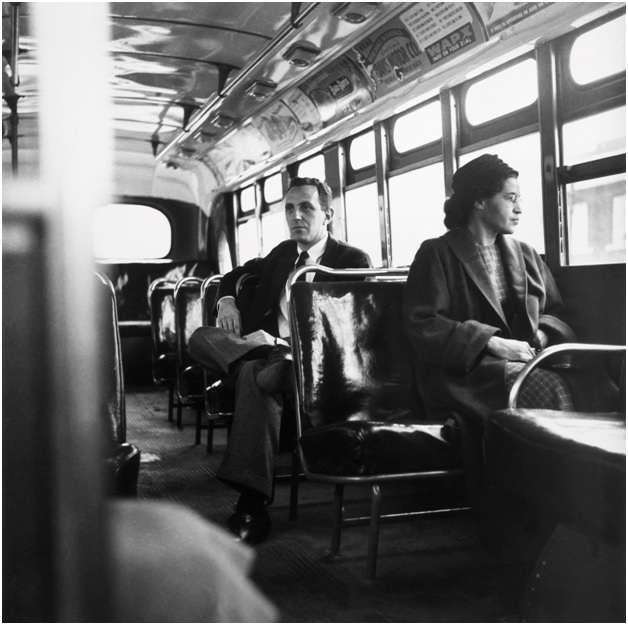
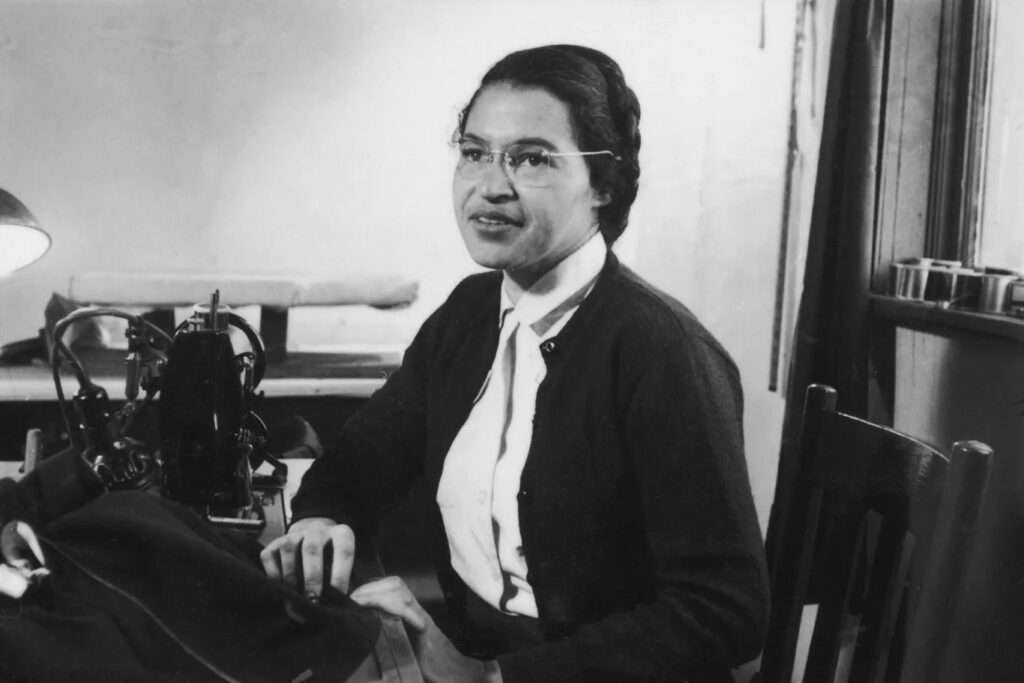
Seventy years after Rosa Parks refused to give up her seat, her quiet “no” still shows how organized, everyday courage can move a nation forward.
By Milton Kirby | Montgomery, AL | December 1, 2025
A quiet act that shook a city
Seventy years ago in Montgomery, Alabama, a soft-spoken seamstress made a choice that changed the course of American history.
On December 1, 1955, 42-year-old Rosa Louise McCauley Parks refused bus driver James F. Blake’s order to give up her seat so a white man could sit. Montgomery’s rules reserved the front rows for white riders and pushed Black passengers to the back. The middle seats, where Parks sat, were a constant battleground.
Three Black riders in her row stood up. Parks did not.
“I felt that, if I did stand up, it meant that I approved of the way I was being treated, and I did not approve,” she later said. She was not too tired from work; she was “tired of giving in.”
Police were called. Parks was arrested, fingerprinted, fined, and pushed into the machinery of Jim Crow justice. But what happened next turned one woman’s arrest into a mass movement.
The Montgomery Bus Boycott: 381 days of organized courage
Parks’ arrest hit a nerve in a city where Black riders made up about three-fourths of bus passengers but had few rights on board. For decades, drivers had ordered Black passengers to stand, even when seats were open. Many drivers carried weapons and had near-police authority on their routes.
This time, the community pushed back.
The Women’s Political Council quickly circulated tens of thousands of leaflets calling for a one-day bus boycott on the day of Parks’ trial, December 5, 1955. Black residents walked, carpooled, and paid Black taxi drivers instead of riding city buses. Courtroom benches were full. Bus seats were nearly empty.
That same evening, thousands crowded into Holt Street Baptist Church. Local ministers and organizers formed a new group, the Montgomery Improvement Association (MIA), and chose a young pastor, Dr. Martin Luther King Jr. of Dexter Avenue Baptist Church, as president.
Rosa Parks – Don Cravens – Getty Images
They voted to keep the boycott going. Day after day, for 381 days, Black residents of Montgomery walked miles to work and to school. Volunteers ran car-pool systems. Church parking lots became dispatch centers.
The city tried to break the movement. Parks lost her job as a seamstress. Her husband, Raymond, was fired as well. Leaders were arrested and threatened. A grand jury declared the boycott illegal. Still, people kept walking.
In federal court, a separate case, Browder v. Gayle, challenged bus segregation directly. In November 1956, the U.S. Supreme Court ruled that segregation on Montgomery’s buses was unconstitutional. On December 20, 1956, the court’s order took effect. Dr. King called off the boycott. The next day, Black riders boarded buses and sat wherever they chose.
A quiet “no” had turned into a landmark victory that propelled the national Civil Rights Movement.
Years of organizing before the bus ride
The popular story often begins with a tired seamstress on a December afternoon. But Parks’ courage was not sudden. It was built over years of steady, often dangerous work.
Parks joined the Montgomery chapter of the NAACP in 1943 and soon became its secretary. She attended meetings, took notes, and listened. She and her husband were active in the local Voters League, struggling to increase Black voter registration at a time when poll taxes, literacy tests, and intimidation kept almost all Black citizens from the rolls.
Parks herself tried three times to register to vote before finally succeeding in 1945.
As NAACP secretary, she helped investigate violent crimes that white authorities preferred to ignore. In 1944, she took on the case of Recy Taylor, a Black woman from Abbeville who was kidnapped and gang-raped by white men. When local juries refused to indict the attackers, Parks and other activists organized the Committee for Equal Justice for Mrs. Recy Taylor, building one of the strongest national campaigns against racial and sexual violence in that era.
She also worked for justice in the case of Jeremiah Reeves, a Black teenager accused of raping a white woman and later executed.
In the summer of 1955, just months before her arrest, Parks attended training at the Highlander Folk School in Tennessee, an interracial education center where activists studied nonviolent protest and community organizing. That experience, she later said, helped strengthen her resolve.
By the time she sat down on that bus in December 1955, Rosa Parks was not just a seamstress. She was a seasoned organizer who understood both the risk and the power of civil disobedience.
Roots of resistance: family, school, and early Jim Crow
Rosa Louise McCauley was born in Tuskegee, Alabama, on February 4, 1913. Her parents, James and Leona McCauley, separated when she was young. Rosa and her younger brother, Sylvester, were raised mainly by her mother and maternal grandparents near Montgomery.
Her grandparents were formerly enslaved people who believed fiercely in racial equality. They kept a shotgun by the door and refused to shrink from white terror. Growing up in their home, Parks learned both the fear and the pride that came with resisting injustice.
She attended the laboratory school at Alabama State College, an unusual opportunity for a Black girl in the 1920s. Later, she worked to complete her education, earning her high school diploma in 1933 at a time when only about 7% of Black Alabamians had finished high school.
During World War II, Parks worked at Maxwell Air Force Base in Montgomery. On base, the buses were integrated, and she could ride alongside white co-workers. Off base, she had to return to segregated city buses. That painful contrast, she later said, “opened her eyes” to the unnatural cruelty of Jim Crow.
In 1932, she married Raymond Parks, a barber and early NAACP activist. With his encouragement, she returned to school and deepened her activism. Their small home became a place where politics and community strategy were regular topics at the kitchen table.
The personal cost—and new beginnings in Detroit
The boycott’s success came at a high cost for Parks and her family. In addition to the firings and constant threats, she and Raymond struggled to find work in Montgomery afterward. The city that had celebrated her as a symbol elsewhere often treated her as a troublemaker at home.
In 1957, the couple moved north to Detroit, Michigan, looking for safety and opportunity. Even there, they found neighborhoods divided by race and an economy that still treated Black families unfairly. Parks continued her work quietly—speaking, organizing, and supporting local struggles against school segregation, housing discrimination, and police brutality.
From 1965 to 1988, she worked as a staff assistant for U.S. Congressman John Conyers Jr. Her desk in his Detroit office became a quiet but powerful bridge between local residents and the halls of Congress. Through this job, her influence reached into the federal government and helped shape responses to civil rights issues in the North as well as the South.
Building leaders: The Rosa and Raymond Parks Institute
In 1987, Parks co-founded the Rosa and Raymond Parks Institute for Self-Development. The institute focuses on youth leadership, voter education, and teaching civil rights history. Its “Pathways to Freedom” programs take young people on bus tours through key civil rights sites, helping them see that history is not just something in a textbook—it is written by ordinary people who refuse to accept injustice.
By then, the nation had begun to give Rosa Parks the honors her work deserved. She received the Presidential Medal of Freedom in 1996 and the Congressional Gold Medal in 1999. Textbooks called her the “mother of the modern Civil Rights Movement.” For many schoolchildren, her story became their first lesson in civil disobedience.
Inspiring new movements: from Montgomery to disability rights
Parks’ influence did not end with racial desegregation. Her example helped later generations see public transportation as a stage for justice.
In 1984, in Chicago, disability rights activists from the group ADAPT rolled their wheelchairs in front of city buses to protest the purchase of hundreds of new vehicles without wheelchair lifts. Like Parks, they were demanding the right simply to ride. Their actions helped build support for accessible transit and laid groundwork for the Americans with Disabilities Act.
Their protest echoed Parks’ lesson: organized, nonviolent disruption can force a city—and a nation—to confront who is left behind.
Final honors and a living legacy
Rosa Parks died in Detroit on October 24, 2005, at the age of 92. In death, she received an honor no woman in U.S. history had ever received before: her body lay in honor in the rotunda of the U.S. Capitol. Thousands lined up in silence to pay their respects.
Today, buses, schools, streets, and museums bear her name. But her deepest legacy lives in something smaller and harder to measure: the courage of ordinary people who refuse to “give in” when the rules are unjust.
Each year, walkers trace the short route from Dexter Avenue King Memorial Baptist Church to the Rosa Parks Museum in Montgomery. The distance is only a few city blocks. The meaning stretches across generations.
It is a reminder that one woman’s quiet “no,” backed by years of organizing and a city willing to stand with her, can bend the arc of history—and still speaks to struggles for justice today.
Utility shutoffs are surging nationwide as soaring energy costs, record debt, and collapsing financial stability push Americans into darkness—mirroring the lowest U.S. happiness levels ever recorded.
By Stacy M. Brown | Black Press USA Senior National Correspondent | November 29, 2025
America’s poorest families have long lived on the edge of darkness. Today, that edge is widening. Utility shutoffs are rising across the country as households buckle under soaring electric bills, mounting debt, and a level of financial despair that now mirrors what researchers describe as the lowest happiness rating ever recorded in the United States. The suffering is no longer hidden. It is the new face of life under the Trump administration.
“Electricity is becoming unaffordable in many parts of the country,” Mark Wolfe, executive director of the National Energy Assistance Directors Association, stated. His assessment is borne out in the data. About 14 million Americans are behind on their utility bills, with overdue balances up 32 percent since 2022. National electricity prices have risen 11 percent this year, and some states have seen increases of up to 37 percent.
In cities like New York, residential shutoffs in August were five times higher than the previous year. In Pennsylvania, more than 270,000 households have already lost electricity as average bills climbed 13 percent. Each number represents a home gone cold. A refrigerator is no longer running. Children doing homework in the dark.
Michigan tells the same story. Nearly 942,000 households are behind on their Consumers Energy or DTE bills, including 339,000 who are more than 91 days delinquent. In September alone, utilities disconnected more than 40,000 customers. “The organizations that provide energy assistance are seeing a significant increase in applications,” said Anne Armstrong of the Michigan Public Service Commission.
Even families earning far above the poverty line are now seeking help. When keeping the power on competes with groceries and rent, the question becomes how to survive another month.
The latest data on national well-being echoes the hardship. A YouGov poll conducted for MarketWatch found that only about half of Americans feel any happiness from how they use or manage their money. Thirteen percent said they do not know what would bring them financial happiness at all, a signal of deep instability. The United States ranked at its lowest position ever recorded in Gallup’s World Happiness Report, a decline researchers linked to financial strain and weakening trust in institutions nationwide.
Some states are trying to respond. In Delaware, lawmakers advanced legislation to strengthen protections for residents at risk of losing heating or cooling. The bill would prevent winter shutoffs during freezing temperatures, block cooling
Shutoffs during extreme heat, require utilities to make direct attempts to reach customers before cutting service. “Residents need long-term security and clear, consistent protections,” said Rep. Melanie Ross Levin, a Democrat and the bill’s primary sponsor.
Her colleagues added that no family should face life-threatening conditions because of one overdue bill. “Any one of us can be affected by energy insecurity,” said Rep. Rae Moore, a Democrat. “An entire family’s health shouldn’t suffer because they couldn’t afford to pay a high energy bill in the middle of summer.”
“Support open, independent journalism—your contribution helps us tell the stories that matter most.”
Uncle Nearest founders file an emergency motion to stop a possible asset sale, arguing the receiver is moving too far without letting them defend the debt itself.
By Milton Kirby | Chattanooga, TN | November 28, 2025
Control of a Billion-Dollar Brand Is Now at Stake
The future of Uncle Nearest, one of the most celebrated American whiskey brands of the last decade, now turns on a single question: who gets to decide what happens next — the founders or the federal receiver?
That tension moved into a new phase this month after founders Fawn and Keith Weaver filed an emergency motion asking a federal judge to let them defend themselves, assert counterclaims, and stop the receiver from making irreversible moves that could reshape the entire company.
At the same time, the receiver is quietly laying the groundwork for what could become one of the most watched spirits-industry sales in recent years. Those two paths now collide.
How the Receivership Started
The company entered receivership in August after Farm Credit Mid-America accused Uncle Nearest and related entities of defaulting on more than $108 million in loans.
U.S. District Judge Charles E. Atchley Jr. appointed Tennessee attorney Phillip G. Young Jr. as receiver, giving him control of the company’s operations, finances, and records — and placing a legal stay on all other litigation.
That stay meant the Weavers could not answer the lawsuit. They could not defend themselves. And they could not file counterclaims, even though they said the loan balances were based on data they dispute.
Receiver’s Expanding Role Raises New Tensions
In late October, the court entered an Agreed Order that required the receiver to file monthly reports and review financial records from affiliated Weaver entities.
Not long after that, the receiver began working with Arlington Capital Advisors, a national investment bank known for handling high-profile transactions in food and spirits.
According to filings and media reports, Arlington has already begun receiving inquiries from industry competitors looking for access to the company’s internal data.
For the founders, that signaled something deeper: a possible sale of “substantially all assets,” including the distillery, real estate, and intellectual property.
They argue that giving outside companies access to private information — during a global slump in the spirits market — could threaten the long-term value of the Uncle Nearest brand.
The Emergency Motion: A Bid to Regain a Voice
On November 24, the Weavers filed a detailed emergency motion that asks the judge to lift the litigation stay.
If granted, they would finally be allowed to:
Answer the complaint
Present defenses
File counterclaims
Challenge the validity or size of the Farm Credit debt
In the filing, they say there has been “no adjudication” of whether the loan amounts are correct or whether the debt should be reduced “in whole or in part.”
They also express alarm that the receiver is sharing “competitively sensitive” information with outside parties while exploring far-reaching strategic options.
Their message to the court is straightforward: “Do not let major decisions be made before we get a chance to defend ourselves.”
Receiver Pushes Back
On November 26, the receiver filed a response opposing the emergency motion. He argues that allowing open litigation now would:
Distract from the financial review
Harm negotiations with lenders
Complicate refinancing efforts
Disrupt any possible sale process
The receiver also says the stay is essential to stabilize the company and maintain control of the process.
In short, while the Weavers want to regain participation and slow the receiver’s momentum, the receiver believes that loosening the stay could undermine the very restructuring he is tasked with managing.
A December Deadline Looms
Judge Atchley has given Farm Credit and the receiver until December 2 to respond fully to the Weavers’ emergency motion.
After that, the court is expected to rule — either:
keeping the stay in place,
modifying it,
or allowing the Weavers to fully re-enter the litigation.
That decision will determine whether the next chapter of Uncle Nearest is shaped by its founders or by the receiver’s ongoing evaluation of refinancing and sale options.
What Happens Next
The stakes are unusually high.
Uncle Nearest reached a $1 billion valuation
just a year ago — a remarkable figure powered by its cultural resonance, aggressive marketing, and strong distribution footprint.
Now, with the spirits market cooling and lenders applying pressure, the company’s future could be decided not by brand strength but by a judge’s ruling on procedural rights.
If the stay is lifted, the Weavers regain a voice in the litigation and can challenge the debt, the numbers, and the narrative.
If it remains in place, the receiver’s next filings — including any move toward a full sale — will carry far greater weight.
Either way, December begins a new phase in a case that now mixes business, culture, valuation, and the fight for control of one of the most important Black-led spirits brands in the United States.
MARTA begins installing its new Better Breeze fare system across the region, bringing contactless payments, new Breeze cards, and upgraded faregates by spring 2026.
By Milton Kirby | Decatur, GA | November 26, 2025
MARTA riders will soon tap into a new era of transit travel. The agency has begun a major, systemwide installation of its updated fare collection system, called Better Breeze, with work continuing through spring 2026.
The upgrade will replace every Breeze card reader, faregate, ticket machine, validator, and mobile app, ensuring a more reliable and efficient payment experience for riders across metro Atlanta.
Phased Work, Station by Station
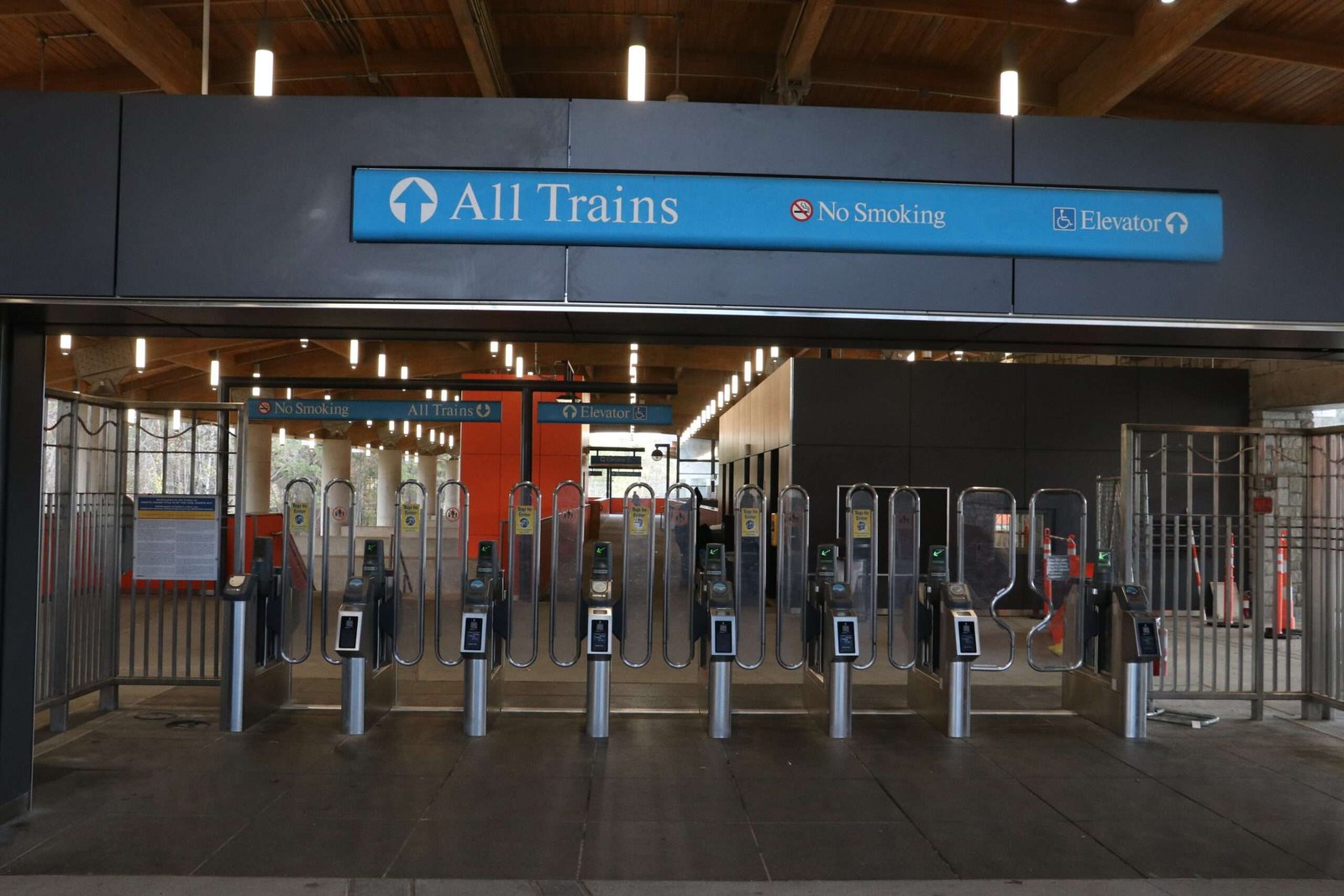
To keep stations open during the transition, MARTA is closing faregates in phases and posting clear signs inside the stations. Riders should expect detours but no service cuts.
The schedule moves across several stations from late November through early December:
West End Station – Nov. 24
Riders parking in the south lot at South faregates should follow the signs to reach the north entrance and allow extra time for their trip
.
North Springs Station – Nov. 25
West faregates near the bus loop closed. Riders should use east faregates on the opposite side of the station.
Photo by Milton Kirby – Crew Installing new faregates at Kensington Station
Kensington Station – Nov. 26
East and west faregates closed. Bus loop faregates remain open. Riders coming from the north lot should follow the signs to the bus loop. ADA riders should allow extra time.
Doraville Station – Dec. 1
South faregates are already closed. More closures begin Dec. 1. Riders must use emergency gates for entry. A valid fare is still needed to exit at the destination.
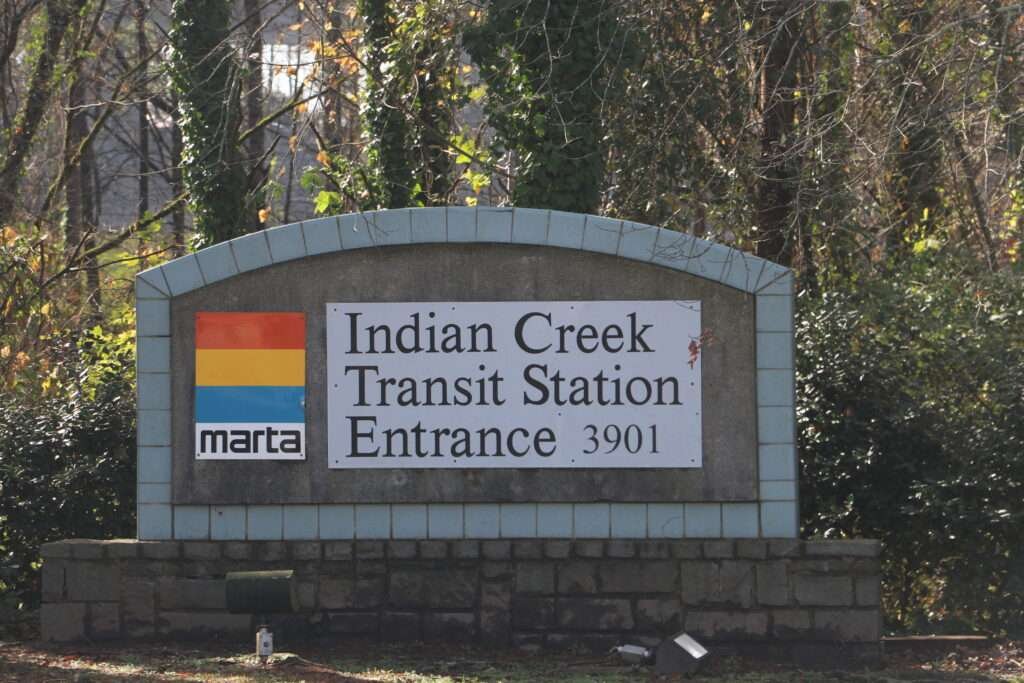
Photo by Milton Kirby – Indian Creek Entrance
Indian Creek Station – Dec. 3
East faregates at the bus loop closed. Riders must use west faregates.
Additional ongoing work continues at Dunwoody, East Point, Lindbergh Center, Ashby, and Georgia State stations. Some stations will use emergency gates during construction, and riders must have a fare to exit at their destination.
What Riders Need to Know
MARTA says customers should continue using the current Breeze card, old Breeze vending machines, and the existing mobile app. New faregates will be visible but not yet active until the final launch next spring.
The Better Breeze system will bring several major changes:
Photo by Milton Kirby – New Fare Collections Machines At Kensington
New Fare Equipment
New contactless faregates, validators, and touchscreen vending machines. The new gates are harder to tamper with, helping reduce fare evasion and improving station security.
New Ways to Pay
Open payment technology will let riders tap a bank card or mobile wallet directly on the faregate or bus farebox.
New App
The current Breeze Mobile 2.0 app will be retired. Riders will download a new Breeze app and create a virtual Breeze card in their account.
New Breeze Cards
All riders will move to account-based Breeze cards. Fare will be stored in the account rather than on the card, making replacement easier and reducing lost value.
Reduced Fare, Mobility, and Partner Agencies
Riders who use Reduced Fare or Mobility services can choose a new physical card or download the new app. They can contact MARTA by email or phone for help getting set up.
MARTA’s regional partners—including CobbLinc, Ride Gwinnett, and the ATL—will also shift to the new Better Breeze system. Transit customers will receive updates from their local providers in the coming months.
MARTA encourages riders to watch for signs inside stations, listen to announcements, and check online updates as the transition progresses, with detailed guidance on switching to new cards and apps coming closer to the April 2026 deadline.
For more information and to sign up for updates, visit MARTA
Thanksgiving blends history, food, travel, turkey pardons, football, and family traditions. The holiday’s origins, cultural shifts, and modern travel and shopping trends continue to shape its national meaning.
By Milton Kirby | Atlanta, GA | November 25, 2025
The Origins: A Feast of Survival and Alliance
Thanksgiving began long before football games, parades, or busy airports. The moment most Americans learn about—the 1621 harvest feast in Plymouth Colony—was a gathering shaped by hardship. The Pilgrims arrived in December 1620. Their first winter was cold, brutal and deadly. Only about half survived.
The Wampanoag people, led by Massasoit, chose to help the newcomers. They showed them how to plant corn, grow crops, and fish in local waters. When the Pilgrims held a harvest celebration that fall, roughly 90 Wampanoag arrived—likely after hearing gunfire and thinking the colony was under attack. Instead, they joined the feast.
For three days the groups shared food like venison, fowl, fish, stews, squash, and corn. They raced, fired muskets, and tried to communicate across two very different cultures. The uneasy peace held for decades, until the violent years of King Philip’s War.
Though not the first thanksgiving in North America—Spanish settlers in Florida held one in 1565, and Jamestown colonists in 1610—Plymouth became the story Americans chose to remember.
From Regional Tradition to National Holiday
Thanksgiving stayed mostly local for two centuries. That changed in the 1800s when writer Sarah Josepha Hale championed the holiday in her 1827 novel Northwood, describing a classic New England meal centered on roast turkey. Her influence helped popularize the menu we know today.
During the Civil War, President Abraham Lincoln proclaimed a national day of thanksgiving in 1863, hoping to unite a divided nation. In 1941, Congress fixed Thanksgiving as the fourth Thursday in November.
The Fowl History: How Turkeys Took Center Stage
Turkeys were not the star of the 1621 feast, but they became the centerpiece of the modern table because they were large, plentiful, and could feed a family. By the late 1800s, gifting turkeys to the White House became a tradition.
In 1947, farmers sent live hens to protest a government effort to discourage poultry consumption. A peace offering followed: the National Turkey Federation brought President Harry Truman a turkey. Over time, the presentation morphed into myth. Some claimed Truman “pardoned” the bird. Others pointed to an earlier story about Lincoln sparing a Christmas turkey at the request of his son Tad. But no official pardons existed until 1989, when President George H.W. Bush formally granted a turkey clemency—launching a ritual that now draws national attention every year.
Modern Traditions: Food, Travel, Football, and the Shopping Frenzy
Today’s Thanksgiving is a blend of old customs and new habits. What began as a harvest celebration is now a major cultural event shaped by food, travel, entertainment, and commerce.
The Feast
Most households serve roast turkey with dressing or stuffing, mashed potatoes, cranberry sauce, green bean casserole, and pumpkin pie. Many families add regional favorites—macaroni and cheese in the South, tamales in Latino households, or seafood in coastal communities. Some swap the turkey entirely for beef tenderloin, ham, or vegetarian dishes.
The holiday has also become a place where cultural humor shows up. Comedian Rickey Smiley often jokes about the difference between simple Thanksgiving menus and the long, elaborate spreads that show up in many Black households. On his nationally syndicated radio show, he playfully contrasts a straightforward plate of turkey, honey-baked ham, green bean casserole, pumpkin pie, and cranberry sauce with the “two-minute roll call” he remembers from his own family gatherings. He jokes that the list could include roasted turkey, two kinds of fried turkey, macaroni with white cheese, macaroni with yellow cheese, multiple greens, dressing, sweet potatoes, and desserts “too many to name.” His humor captures a real truth: every family’s Thanksgiving table reflects their culture, their region, and their own way of celebrating.
Friendsgiving gatherings have grown in popularity, offering a relaxed, potluck-style meal with a chosen family.
The Morning Rituals
Turkey Trots—charity 5Ks and community fun runs—have become a fast-growing tradition. The Macy’s Thanksgiving Day Parade remains a national favorite, with huge balloons and marching bands marking the official start of the holiday.
Gratitude and Service
Many families hold a gratitude circle, sharing something they are thankful for. Volunteers prepare meals at shelters and food banks, keeping alive the holiday’s spirit of giving.
The National Spectacle: Football and Parades
NFL games dominate the afternoon. The combination of food, family, and football is now as traditional as the turkey itself.
The Consumer Shift: Thanksgiving and Black Friday
Thanksgiving also marks the unofficial start of the holiday shopping season. Black Friday has crept earlier and earlier, with many retailers opening on Thursday evening. What was once a day of rest and reflection is now tied tightly to doorbuster sales and early holiday deals.
Travel: The Busiest Week of the Year
Thanksgiving remains the country’s biggest travel holiday. TSA expects nearly 18 million passengers during the week, and U.S. airlines plan to carry a record 31 million travelers from Nov. 21 through Dec. 1. The FAA says this will be the busiest Thanksgiving period in 15 years.
The Sunday after Thanksgiving is expected to break screening records, with more than 3 million people moving through airports in a single day.
But most people travel by car. AAA predicts about 81.8 million Americans will drive 50 miles or more—another all-time record.
Working on Thanksgiving: The Rules Depend on the State
For many workers, Thanksgiving is not guaranteed. In Wisconsin, for example, state law does not require private employers to give the day off, nor do they have to offer holiday pay. Only federal, state, and municipal workers are automatically guaranteed the day. A few New England states still restrict businesses from opening, based on laws more than 300 years old.
A Holiday With Many Meanings
Thanksgiving is celebrated in different ways across the country—some joyful, some reflective. Since 1970, many Native Americans have gathered in Plymouth for the National Day of Mourning to remember their ancestors and challenge the historical narrative that overlooks centuries of trauma and displacement.
For immigrant families, Thanksgiving is often a chance to blend cultures—mixing traditional dishes with foods that reflect their heritage.
Whether seen as a celebration, a commemoration, or a day of service, Thanksgiving continues to evolve while remaining one of America’s most meaningful and complicated holidays.
Please consider supporting open, independent journalism – no contribution is too small!
The Bill Pickett Invitational Rodeo closed its 41st season with packed arenas, rising music stars, bold fashion moments, and championship performances celebrating Black cowboy and cowgirl heritage nationwide.
By Milton Kirby | Denver, CO | November 25, 2025
The Bill Pickett Invitational Rodeo ended its 41st season the same way it started—with packed crowds, big moments, and a whole lot of love for the culture that keeps this tradition alive.
Photo by Milton Kirby -BPIR – Upper Marlboro, MD
BPIR President and CEO Valeria Howard-Cunningham expressed deep gratitude, highlighting how the event celebrates the history, family bonds, and the resilience of Black cowboys and cowgirls who keep this culture alive.
The 2025 tour stretched from Denver to Memphis, moved west through Oakland and Los Angeles, circled back to Atlanta, and touched down four times in historic Cowtown Coliseum in Fort Worth. The year closed in the DC/Upper Marlboro area, where the National Championship Finals brought out longtime supporters and new fans who wanted to witness the sport’s brightest stars.
A New Era in Country Music
A cultural shift is happening inside BPIR. The Soul Country Music Star partnership is giving Black country artists a stage they have long been denied. The Soul Country Rodeo Weekend brought immense talent and explosive energy, and the season ended in Burbank with the first-ever Soul Country Music Star Festival. When the dust settled, Atlanta’s Nathaniel Dansby walked away with the 2025 title.
Rodeo Meets Runway
Houston also saw something new when BPIR teamed up with SP5DER for the Sweet Tooth Rodeo. It was a mix of bucking bulls and bold fashion, and the arena looked more like a runway than a dirt floor. Fans are still talking about it.
Photo by Milton Kirby – BPIR – Upper Marlboro, MD
The Champions Who Left Nothing Behind
The athletes are the heartbeat of BPIR. Riders young and old brought fire to every arena this season. Championship titles went to:
Lamarr Hankins in Ranch Bronc.
Haley Mason in Ladies Breakaway.
Harrel Williams Jr in Junior Breakaway.
Tony Aska in Bull Dogging.
Devon Johnson and Montrel Gilder in Team Roping.
Travoris Zeno in Bull Riding.
And a rising generation—Kinley Adair, Rylen Wilburd, Paris Wilburd—claimed their own victories.
Montrel Gilder earned All Around Cowboy. Paris Wilburd took All Around Cowgirl. The future looks strong.
Photo by Milton Kirby – BPIR – Upper Marlboro, MD
Looking ahead
BPIR’s 42nd season is already shaping up with rodeos scheduled across the country, including dates in Fort Worth, Memphis, Atlanta, and Upper Marlboro, to keep the momentum going into 2026.BPIR’s 42nd season is already taking shape, and the movement rolls on with rodeos planned nationwide:
February 14 Fort Worth, TX (1:30 PM & 7:30 PM)
April 10 Memphis, TN (10:00 AM Rodeo for Kidz Sake)
April 11 Memphis, TN (1:30 PM & 7:30 PM)
April 17 Atlanta/Conyers, GA (Rodeo for Kidz Sake, Time TBD)
April 18 Atlanta/Conyers, GA (12:00 Noon & 7:30 PM)
May 16 Fort Worth, TX (1:30 PM & 7:30 PM)
June 20 Fort Worth, TX (1:30 PM & 7:30 PM)
July 11 Oakland, CA (2:30 PM)
July 12 Oakland, CA (2:30 PM)
July 18 Los Angeles, CA (7:00 PM)
July 19 Los Angeles, CA (3:30 PM)
August 1 Atlanta/Conyers (7:30 PM)
August 2 Atlanta/Conyers (3:30 PM)
August 15 Fort Worth, TX (1:30 PM & 7:30 PM)
September 18 Upper Marlboro, MD (10:00 AM & 7:30 PM)
September 19 Upper Marlboro, MD (1:30 PM & 7:30 PM)
October 17 Fort Worth, TX (1:30 PM & 7:30 PM)
Howard-Cunningham closed the season with a message of love and appreciation, emphasizing BPIR’s role in building unity and shared purpose, inspiring ongoing support for the movement into 2026.
Dear Shadow Ball: I have a feeling that I am going to learn some things. Is third baseman Judy Johnson (a 1975 Hall of Fame inductee) a male or female? David Nivens, parts unknown … I should note that Mr. Nivens has supplied two questions thus far and I very much appreciate both … this column exists for only one purpose and that is to answer your questions on Negro League baseball history. To that end, I need your help … if you are reading this column and enjoy it and want it to continue and you don’t already know everything about Negro League history … then please submit a question on any aspect of Negro League history.
– players, teams, events, and more – Your questions are the lifeblood of Shadow Ball—they shape where we go next. Your participation is important and appreciated. Submit your questions to shadowball@truthseekersjournal.com.
Dear David: I have a feeling that I am going to learn some things also. Judy Johnson, like Dolly King, Connie Johnson, Bunny Downs, Bonnie Serrell, Beverly Boanes and Judy Gans, was very much a man. All these fellows were Negro League baseball players. William Julius Johnson was nicknamed “Judy” due to a resemblance to another player with that nickname – “Judy.” Why that player, Robert Edward Gans, was called “Judy” is a question for another day when I figure it out.
Last week’s Shadow Ball Significa question What was the name of Atlanta’s most prolific franchise (in terms of years in the league) in the Negro Leagues? Since this question has stood unanswered for a month, I am going to provide the answer – the Atlanta Black Crackers.
The Atlanta Black Crackers were founded in 1919 as the Atlanta Cubs and lasted, active most years, until their demise in 1943. They were members of the Negro Southern League, later the Negro American League and played as an independent. They never won a pennant.
The Shadow Ball Significa Question of the Week: What Georgia native was the first African American to hit a home run in Yankee Stadium?
Ted Knorr
Ted Knorr is a Negro League baseball historian, longtime member of the Society for American Baseball Research’s Negro League Committee, and founder of the Jerry Malloy Negro League Conference and several local Negro League Commemorative Nights in central Pennsylvania. You can send questions for Knorr on Negro League topics as well as your answers to the week’s Significa question to shadowball@truthseekersjournal.com or Shadow Ball, 3904 N Druid Hills Rd, Ste 179, Decatur, GA 30033
Please consider supporting open, independent journalism – no contribution is too small!
Devin Haney becomes a three-division world champion with a disciplined win over Brian Norman Jr. in Riyadh, using a sharp jab, movement, and a Round 2 knockdown
By Milton Kirby | Riyadh, Saudi Arabia | November 23, 2025
Devin Haney added a major chapter to his legacy Saturday night in Riyadh, defeating previously unbeaten Brian Norman Jr. by unanimous decision to claim the WBO welterweight title. This victory makes Haney a three-division world champion and positions him among a select group of fighters with titles at lightweight, super lightweight, and welterweight, highlighting its importance in boxing history.
Norman came out strong in the first round landing punches that got Haney’s attention. In the second round Haney (33-0, 16 KOs) gained his composure and then controlled the tempo of fight with sharp footwork, a steady jab, and a clean knockdown in Round 2 that shifted momentum.
Judges scored it 114-113, 117-110, and 116-111. The decision brought cheers, debate, and a new wave of conversation about Haney’s style and place in boxing.
After the fight, Haney reflected on how much the moment meant. “In 2024, I lost everything. Tonight I showed I’m back, stronger than ever.”
The victory also answered doubts about whether he could thrive at 147 pounds. His last outing at a 144-pound catchweight was steady but raised questions after the knockdowns he suffered against Ryan Garcia in 2024. Against Norman, he looked composed and in control.
Norman Jr. (28-1, 22 KOs) came in with a reputation as one of the division’s most dangerous punchers. His knockout of Jin Sasaki in June was still being called one of the year’s best. Many analysts predicted the outcome before the bell: if it went long, the edge would be with Haney; if someone got stopped, it would be Norman doing the stopping.
Norman pushed forward all night. He forced exchanges, targeted the body, and tried to trap Haney on the ropes. But Haney used angles, clinches, and precise counters to slow Norman’s attack. His discipline allowed him to take control of the middle rounds and build a lead.
Round 1 saw Norman pressing with heavy shots, though Haney stayed calm behind the jab. In Round 2, Haney dropped him with a sharp right hand and opened a cut, giving him the edge.
Norman rallied in Rounds 3 and 5 with strong body work and a right hand that shook Haney. Haney responded with steady jabs, clean counters, and footwork that made Norman miss more as the rounds went on, creating a dynamic back-and-forth that kept viewers on edge.
By Round 8, Haney was in full control, landing jabs and uppercuts while Norman showed frustration. Norman tried to force the action again in Rounds 10 and 12, hoping for a late knockout, but Haney stayed disciplined and sealed the win.
The scorecards fueled the night’s biggest debate. Supporters said Haney’s clean punching and defense were decisive, while critics argued Norman’s pressure and power should have been more rewarded. Many fans questioned the wide 117-110 card, and talk of a rematch began almost immediately, keeping the discussion alive among boxing fans and analysts.
Norman voiced his frustration after the fight, saying Haney “didn’t want to fight — he wanted to survive,” echoing the view of fans who criticize Haney’s safety-first tactics. Haney’s supporters countered that neutralizing a knockout artist is part of the sport’s craft.
The night reflected a wider tension in modern boxing: technical skill versus punishing aggression. Haney’s discipline muted much of Norman’s offense, while Norman’s pressure gave the fight its edge.
Media reaction captured that divide. Yahoo Sports framed the event as part of Haney’s redemption arc. DAZN highlighted his knockdown and steady jab. Boxing News Online praised his ability to neutralize a dangerous puncher. ESPN’s Timothy Bradley Jr. said Haney answered questions about whether he could handle welterweight power. Boxing247 contrasted Norman’s promise of a “violent reality check” with Haney’s calm execution.
With the win, Haney joins a small list of fighters to win titles at lightweight, super lightweight, and welterweight. Norman, who loses for the first time, remains one of the most dangerous young contenders in the division.
Devin Haney:
“In 2024, I lost everything. Everything came crashing on me. Tonight I showed I’m back, and I’m stronger than ever.”
He added that becoming a three-division champion proved his resilience: “They doubted me, but I keep proving them wrong.”
Brian Norman Jr.:
Before the fight, he promised, “No matter what, that boy is going to sleep.”
After the loss, he said Haney’s style stopped him from fighting his fight, arguing that Haney “didn’t want to fight — he wanted to survive.”
Haney now holds titles at lightweight, super lightweight, and welterweight — a rare achievement in modern boxing. He also improved to33-0 with 16 KOs.
Norman falls to 28-1 with 22 KOs, but at only 25 years old, he remains a major threat at welterweight and a contender to watch in future matchups.
Further, the win was clear to some, controversial to others. Supporters say Haney’s clean punching, defense, and control earned the victory. Critics argue Norman’s pressure and heavier shots were undervalued.
As Riyadh’s lights dim and the dust settles, the boxing world is left debating not only the scorecards but the broader question of what defines victory in the sport: technical brilliance or punishing dominance.
Haney walked in with questions hanging over him — and walked out a three-weight world champion.
Haney’s win forces boxing to confront its eternal question: is greatness defined by dominance or by discipline? In Riyadh, the judges chose discipline.
Ntumba blends spiritual insight, heartfelt storytelling, and empowering performance to inspire young women nationwide, guiding them toward inner strength, emotional clarity, and a deeper sense of self-worth.
By Milton Kirby | Truth Seekers Journal | Artist Profiles Series
A Voice of Spirit, Strength, and Transformation
When Ntumba steps onto a stage, she carries more than a message — she embodies a presence rooted in global perspective, spiritual depth, and grounded wisdom that reaches young women wherever they are in life. Whether speaking to a packed auditorium or guiding a small workshop circle, she builds space where women can breathe, heal, and rise.
Biography: A Journey Rooted in Purpose
Born with a natural calling to uplift others, Ntumba has spent years shaping a voice that is part teacher, part storyteller, and part healer. She holds a master’s degree in spiritual professional counseling, grounding her work in both academic training and deep personal insight. This background informs her signature approach: integrating spirituality, emotional wellness, and practical tools for growth.
Her influence spans coast to coast. She has led or collaborated on empowerment programs for young women at major institutions and organizations—including New York University (NYU), the New York State Senate, Teachers College at Columbia University, and the McSilver Institute—earning a reputation for clarity, authenticity, and heartfelt connection that inspires supporters to engage with her work.
Creative Journey: From Personal Transformation to Public Impact
Every chapter of Ntumba’s career reflects intentional evolution. But her most profound shift came through what she describes as a “dark night of the soul” — a period of deep spiritual wrestling that ultimately transformed her understanding of love, identity, and personal wholeness.
From this season emerged her defining epiphany:
You can experience being love — not just “doing” loving things — through the splitting of soul from spirit.
This revelation continues to shape her writing, her curriculum, her stage presence, and the way she mentors young women navigating their own transitions.
Signature Work Spotlight: “Love Savvy Jewel”
Her popular book, Love Savvy Jewel, offers practical and spiritual guidance to women seeking clarity, joy, and groundedness in their love lives. The book’s central message mirrors her own evolution: meaningful relationships begin within. Through stories, meditations, and heartfelt lessons, she helps readers see themselves with compassion and step into relationships with confidence.
Community Connection: A Mission Rooted in Healing
nTumba’s work is not solely for the stage — it is for the world.
Her core mission is to uplift women ages 13 and older who have been shaped, and often wounded, by the messages of modern media and the visual culture surrounding youth, beauty, and identity. She challenges those narratives by:
teaching spiritual concepts that highlight inner beauty
encouraging mental and emotional resilience
creating apparel designs that celebrate the spirit
offering tools to nurture self-worth independent of appearance
Through conferences, workshops, books, clothing, and community programming, she brings women back to themselves — reminding them of the beauty they carry beyond the surface.
Quotes & Voice
“When young women learn to see their worth beyond what the world shows them, everything changes. That’s where healing begins — in the spirit.”
Ntumba & Natacha
Visual Performance
Ntumba brings her work to life through a powerful monologue performance that portrays the journeys of five women featured in her book Love Savvy Jewel. She also performs alongside artist Natacha “Cha~cha” Martin, adding movement, depth, and emotional resonance to the storytelling experience.
Future Outlook: Expanding the Vision
As her platform grows, nTumba is developing new programs that blend spiritual teaching with modern wellness practices. Her upcoming work includes:
expanded national speaking tours
new curriculum for youth empowerment
digital content designed to reach global audiences
additional books and creative projects in the spirit-centered lifestyle space
Her goal remains steady: to help women everywhere experience inner beauty, spiritual grounding, and the freedom to live authentically.
DeKalb County approved a five-year, $78 million ambulance contract that expands coverage to 600 daily unit hours and continues cutting EMS response times across all emergencies.
By Milton Kirby | Decatur, GA | November 20, 2025
DeKalb County leaders have approved a five-year, nearly $78 million contract to strengthen ambulance coverage, boost emergency medical staffing, and continue lowering EMS response times across the county.
The Board of Commissioners voted unanimously Tuesday to adopt the new contract with American Medical Response (AMR), setting a maximum value of $77,773,900 based on performance. County officials say the agreement will support long-term growth, expand coverage, and build on the measurable improvements achieved over the past year.
Daily Ambulance Coverage to Reach 600 Unit Hours
The new contract increases daily unit hours—the number of hours ambulances are staffed and in service—to 600 per day, the highest in county history. The agreement also launches several major upgrades, including:
More ambulances in service daily
Improved response-time compliance through additional units and resources
A supplemental ambulance provider during peak call times
Expansion of the Nurse Navigator program and social-services outreach
A whole-blood program for trauma care
A third ambulance deployment center
AI-based analytics to improve ambulance posting and enhance patient care
County officials said these investments will help stabilize the system, especially during peak call periods and high-demand events.
County Leaders Say the System Is Moving in the Right Direction
CEO Lorraine Cochran-Johnson said the new contract continues the county’s push to build a modern, high-performing EMS system.
“As we continue to reimagine how EMS is provided in DeKalb County, I am excited at the progress we have made and expect this contract will allow us to better serve our residents,” Cochran-Johnson said. “We will have a world-class emergency medical service.”
Fire Chief Darnell Fullum also praised the results from earlier investments and said the new agreement positions the county for long-term success.
“I am excited about the positive outcomes we’ve achieved since the beginning of the year,” Fullum said. “This contract is a roadmap for success.”
Commissioner LaDena Bolton, who chairs the Employee Relations and Public Safety (ERPS) Committee, said the final agreement reflects community concerns raised during last year’s debate over an extension.
“Earlier this year I voted against an 18-month extension with AMR to push for a competitive RFP process that would secure a long-term contract meeting the service delivery our community deserves,” Bolton said. “Tuesday’s agreement not only ensures improved emergency response, but also provides real-time support for non-emergency calls and alternative ambulatory options. Through deliberation and compromise, we have positioned DeKalb County to deliver excellence in emergency medical services for the next five years.”
Improvements in 2025: Faster Response Times and More Unit Hours
In 2025, the county implemented an AMR contract extension that included a $4.9 million subsidy to increase ambulance availability. The investment immediately raised average daily unit hours from 456 in 2024 to 583 in the third quarter of 2025—a 28 percent increase.
According to county officials:
Response times for critical emergencies, such as heart attacks, are now 23 percent lower than at the peak of the COVID-19 pandemic.
All major emergency call types recorded their fastest response times since early 2020 through September 2025.
County leaders credit the gains to more ambulances, the Nurse Navigator system, additional county-funded EMS staff, and improved deployment strategies.
Audit Showed the System Was Underfunded
In 2024, DeKalb County hired Fitch and Associates to conduct a full review of EMS operations. The assessment found that the system was underfunded and recommended an investment between $12.6 million and $16.5 million, depending on the preferred design.
Key recommendations included:
Ensuring long-term financial and operational sustainability
Improving response-time performance
Reducing hospital offload delays
Expanding unit availability during peak hours
Updating EMS unit deployment locations
County officials say these findings guided both the 2025 contract extension and the new competitive RFP process that shaped the five-year agreement approved this week.
Years of Concerns Led to System Overhaul
DeKalb has spent years working to resolve concerns about slow ambulance response times. In 2024, leaders in Brookhaven and Dunwoody raised alarms after emergencies sometimes exceeded 20 minutes—well above the 12-minute benchmark for high-priority calls. Some residents reported waits of more than 25 minutes.
Earlier issues date back to 2018, when the county negotiated staffing and reporting reforms with AMR following service-related complaints.
But by mid-2025, county reports showed major improvement. A June 2025 update documented ambulances arriving nearly three minutes faster on average than before February 2024.
What’s Next
County officials say a press conference is planned for next week to outline the implementation timeline, explain upcoming deployment changes, and discuss additional components of the AMR contract.
The new agreement takes effect in 2026 and is expected to guide the county’s emergency medical services strategy for the next five years.
DeKalb County approves Sky Harbour’s PDK expansion proposal amid debate over airport safety, runway limits, environmental impacts, and rising community concerns about operations and development.
By Milton Kirby | Chamblee, GA | November 19, 2025
When the DeKalb County Board of Commissioners voted 6–1 on Tuesday, November 18, to authorize Sky Harbour’s proposal for new hangar development at DeKalb–Peachtree Airport (PDK), the decision marked a major turning point in a years-long debate about the airport’s growth, economic footprint, and impact on surrounding neighborhoods.
The vote does not approve construction itself. Instead, it allows the Sky Harbour proposal to move forward under the county’s procurement process, clearing the way for a finalized ground lease and future site development. But inside the chambers—and in the neighborhoods ringing PDK—the decision landed with mixed emotions.
District 2 Commissioner Michelle Long Spears cast the lone “no” vote, arguing that DeKalb County should wait for the results of an ongoing air-quality and noise study before greenlighting any expansion of aviation operations.
“The District 2 office has heard from over 700 people in the area surrounding PDK Airport,” Long Spears wrote in a message to her constituents after the vote. “The vast majority of people have expressed opposition to expansion of airport operations. There has been much concern about the health effects of the noise and jet fuel emissions into the environment. We pledge to work for the health and safety of residents impacted by this decision.”
Supporters of the project, including CEO Lorraine Cochran-Johnson and Airport Director Hunter Hines, noted that the proposal falls squarely within long-established development limits and does not permit larger aircraft than those already authorized at PDK today.
What “Operations” Mean at PDK
Much of the community discussion revolves around “airport operations,” a term that can sound technical but has a straightforward meaning.
An operation is either a takeoff or a landing.
One takeoff = one operation One landing = one operation
Touch-and-go training flights count as two operations each time the wheels contact the runway and lift off again.
Why this matters:
PDK averages between 150,000 and 200,000 operations per year.
Many are training flights or flight-school activity.
Business jets represent a smaller—though more visible and louder—portion of total operations.
Sky Harbour’s project focuses specifically on based aircraft, not transient traffic, meaning it would not directly increase flight-school training or unrelated jet activity.
But residents fear that added hangars could indirectly increase operations by attracting more business aviation activity to the airport.
PDK Residents Stand in opposition to PDK development
Runway Incursions at PDK
DeKalb–Peachtree Airport also carries another distinction that shapes community concern: its record on runway incursions. Between 2021 and 2024, PDK ranked at or near the top in the United States for the number of incursions reported to the FAA, including one study that placed it first with 103 incidents. Most of these events were classified as lower-risk, meaning they did not involve an imminent collision, but the frequency underscores the challenges of a busy general aviation airport with heavy training traffic. Residents often point to these numbers when raising questions about safety, oversight, and whether adding new development on the airfield could place additional pressure on the system. Airport officials have noted that high operations volume—especially from flight schools and private pilots—contributes to this ranking, but the raw numbers remain a major point in ongoing community debates.
FAA Runway Safety Upgrades
In March 2025, the Federal Aviation Administration announced a nationwide rollout of new runway-safety technology to reduce these incidents. The Runway Incursion Device (RID), set for installation at 74 air traffic control towers, alerts controllers in real time when a runway is occupied, closed, or at risk. RID can monitor up to eight runways at once and replaces older, inconsistent systems now used across the country. Industry estimates place installation costs between $5 million and $15 million per airport, depending on integration with radar-based systems like ASDE-X or existing runway-status lights. The deployment is part of the FAA’s “Safety Call to Action,” aimed at reducing runway conflicts after a rise in national incidents. The FAA has confirmed the number of airports (74), but no published list identifying those airports could be located, and officials did not respond to requests for comment.
Environmental Impact of Newer Aircraft
Another part of the airport conversation focuses on the environmental footprint of the planes that fly in and out of PDK. Newer business aircraft generate less noise and burn less fuel than earlier generations. Manufacturers have pushed quieter engine designs, cleaner combustion technology, and more aerodynamic airframes, reducing fuel burn and carbon emissions by roughly 15 to 20 percent with each generation. Sustainable Aviation Fuels (SAF) can further cut lifecycle carbon emissions by up to 80 percent, and both Gulfstream and other jet makers now certify their newer aircraft to run on blends of SAF. While aviation remains difficult to fully decarbonize, modern engines produce fewer particulates, lower nitrogen oxide emissions, and noticeably smaller noise footprints around airports compared to the aircraft they replace. Supporters of PDK modernization say these improvements soften the environmental impact of future operations.
Understanding Repositioning Flights
One of the most misunderstood parts of business aviation is the concept of “repositioning.” A repositioning flight occurs when a jet flies without passengers or cargo so it can be in the correct location for its next trip. These non-revenue flights include “empty legs,” where an aircraft drops passengers at one airport and then must fly empty to another to collect its next set of travelers. At PDK, repositioning also happens when aircraft are based at other airports but use PDK for pickup or drop-off because of convenience or availability. Each repositioning flight counts as an “operation,” adding to both noise and emissions even though no passengers are on board. For communities around PDK, this has become a major concern because empty-leg flights increase total operations without offering any local economic benefit.
The RFP: Why a Gulfstream G650 Sets the Limit
The DeKalb County Board of Commissioners issued RFP No. 22-500625 in August 2022 for the Eastside Aviation Development project—15 to 20 acres of unimproved airfield property. One requirement in that RFP has become central to the debate: any hangar development must be designed to house aircraft no larger than a Gulfstream G650, with a wingspan of 99.7 feet and a height of 25.8 feet.
This restriction means:
PDK is not authorizing larger aircraft than those already operating there.
Runway and taxiway limitations prevent heavier or larger jets.
The Sky Harbour project cannot exceed current aircraft-size limits.
PDK’s Runways: What the Airport Can—and Cannot—Handle
DeKalb–Peachtree Airport spans 745 acres and has three runways. The primary runway, 3R/21L, measures 6,001 feet in length with a weight-bearing capacity of 75,000 pounds for dual-wheel aircraft. This capacity is below the maximum takeoff and landing weights of the G650, meaning aircraft of that class must operate with weight restrictions when using PDK. The remaining runways are shorter and primarily serve smaller general aviation aircraft.
Is There Room to Lengthen the Runway?
A recurring question among residents is whether PDK could one day extend its primary runway. The answer is effectively no. The airport is surrounded by residential, commercial, and county-owned property, with major roadways and airspace constraints preventing any practical expansion.
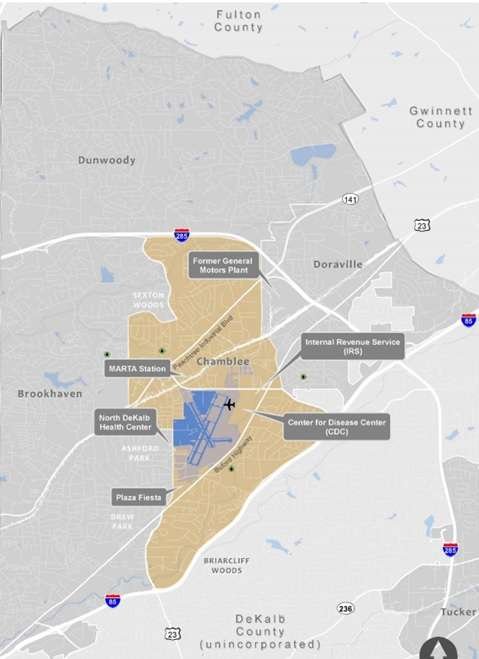
Peachtree DeKalb Airport Map
Planning Document Confirmation
Long-term expansion fears are often linked to runway length, but PDK’s own planning documents make clear that the airfield cannot grow beyond its current footprint. In the airport’s 2018 Master Plan Update, the county states plainly: “There are no plans to lengthen any runways at PDK.” This appears in Chapter 4, the Facility Requirements section, page 4-24. The document cites physical constraints, nearby roadways, and residential development as reasons why expansion is not feasible.
What the Sky Harbour Project Actually Proposes
Sky Harbour, a publicly traded aviation infrastructure company, plans to develop a Home Base Operator (HBO) campus on roughly 13 acres of PDK’s eastside property. Their development includes modern hangars built for G650-class aircraft, dedicated office and operational space, new ramp and taxiway access, additional vehicle parking, and potential fuel facilities authorized under the RFP.
Sky Harbour markets its campuses as offering:
“The shortest time to wheels-up in business aviation”
Dedicated line service for based tenants
A premium environment for corporate and private aviation users
With national locations from Miami to San Jose and Denver to Nashville, PDK represents their 20th site. CEO Tal Keinan has praised the county’s decision, calling it a “triple win” for DeKalb residents, business aviation users, and the company.
Reducing Repositioning Flights
One of the stated goals in the county’s approval of the Sky Harbour proposal is to cut repositioning flights by nearly half. Sky Harbour’s model centers on creating premium home-base hangars on the airfield, allowing aircraft that frequently use PDK to remain on-site instead of flying in from other airports. When an aircraft is based where its flights originate, there is no need for empty positioning legs to bring the jet into place. Supporters argue that this reduction in unnecessary flights would lower noise, emissions, and congestion. Critics counter that total operations may still rise if more planes choose to base at PDK, but the county’s conditions attempt to balance these effects.
Economic Impact and Jobs
The Sky Harbour project is also expected to generate substantial long-term economic benefits for DeKalb County. Structured as a 50-year ground lease, the development requires no county-funded construction or financial contribution; instead, DeKalb collects steady lease payments and related tax revenue over the life of the agreement. County officials estimate the project could generate roughly $500 million in combined revenue and taxes during the lease term, benefiting DeKalb County government, local schools, and the City of Chamblee. The development is also projected to create approximately 600 jobs, including construction roles, aviation line-service positions, maintenance work, and administrative jobs tied to aircraft operations. Supporters say the economic impact positions PDK as an even stronger hub for corporate and private aviation in metro Atlanta, with growth tied directly to based aircraft rather than transient training flights.
The Airport Authority’s Role
The DeKalb Airport Authority advises the CEO and Board of Commissioners on long-term management and planning for PDK. Its statutory purpose includes maintaining a coordinated airport system, ensuring responsible growth, maximizing public benefit, and aligning local operations with national aviation standards.
A Century of History at PDK
From Camp Gordon in World War I to Naval Air Station Atlanta in World War II, and its transition to civilian use in the late 1950s, PDK has played a major role in Georgia’s military and aviation history. Brief commercial service operated between 2017 and 2020 before being suspended due to the pandemic. Today, it is one of the busiest general aviation airports in the Southeast.
What Comes Next
Sky Harbour’s proposal moves into the negotiation and execution phase for a long-term ground lease. Construction will require FAA review, environmental assessments, and continued community engagement. With public opinion divided, the future of PDK development remains a closely watched issue in DeKalb County.
Chit Chat Atlanta Tours celebrates a breakthrough month with national and international visitors, new cultural experiences, and rising demand as the company opens bookings for the holiday season.
By Milton Kirby | Atlanta, GA | November 19, 2025
October was a breakthrough month for Chit Chat Atlanta Tours. Visitors from London, Ireland, North Carolina, California, Connecticut, Florida, Pennsylvania, and Texas spent the month exploring Atlanta’s rich history, food, and culture through the company’s signature guided experiences. The wave of national and international guests signals significant momentum for the fast-growing tour company as the holiday season approaches.
A Powerful Journey Through Black History
One of the month’s most memorable moments came during the Black History & Civil Rights Tour. Guests learned about the 1906 Atlanta Race Massacre and then met Fabian, the visual artist behind the striking mural honoring the massacre’s victims. For a group visiting from London, the encounter offered a rare, personal connection to the people who continue to preserve Atlanta’s story through art.
Holiday Bookings Now Open
With demand rising, Chit Chat Atlanta Tours is now welcoming groups, families, organizations, and solo travelers to reserve holiday experiences. Tours are available throughout:
Thanksgiving Week
Christmas and Winter Break
New Year’s Eve and New Year’s Day
The company offers options for history lovers, foodies, students, corporate groups, birthday travelers, and visitors from around the world.
Chit Chat Atlanta Tours says its mission is simple: share the stories, culture, landmarks, and hidden gems that make Atlanta one of the most influential cities in the nation.
MARTA launches its 2025 holiday season with free rides, festive bus wraps, vendor markets, surprise giveaways, and community events across Atlanta, DeKalb, and Clayton County.
By Milton Kirby | Atlanta, GA | November 19, 2025
If you’re riding MARTA this season, expect more than your usual commute. Expect music drifting through station corridors, small businesses setting up tables full of handmade goods, and a flash of color when one of MARTA’s holiday buses pulls to the curb. The agency is rolling out six weeks of holiday cheer, complete with free rides, surprise giveaways, and a few visits from Santa — the real one.
The celebration starts Thursday at West End Station, where MARTA is hosting its third annual Holiday Market + Bus Reveal. It’s become one of those events people circle on the calendar: hot cocoa, local makers, DIY craft stations, and that moment everyone leans in together waiting for the holiday buses to roll out in fresh wraps. This year’s theme — “Wrapping Up the Year” — sits across three custom buses made possible by Tulsa Welding School Atlanta, which is opening its new campus in the metro area.
MARTA Interim General Manager and CEO Jonathan Hunt said the event reflects the agency’s bigger goal: bringing people together. “From free holiday rides to local vendor markets and festive surprises, we’re excited to spread cheer across the system all season long,” he said.
And the gifts don’t stop at the station. From Nov. 21 through New Year’s Eve, anyone who happens to step onto one of the wrapped buses rides free. The buses will be moving throughout Atlanta, DeKalb, and Clayton County — bright, loud, unmistakably festive.
There’s also something special planned for Dec. 2 through Dec. 4. MARTA teams — joined by The Real Black Santa and a handful of local influencers — will pop up around the system to hand out free Breeze Cards. No schedule, no announcement. Just a little joy, delivered in the moment.
The next big stop on the holiday tour is Dec. 11 at Kensington Station. In partnership with Decide DeKalb, MARTA is hosting a customer appreciation celebration with DeKalb-based vendors, holiday karaoke, music, story time, refreshments, giveaways, and a photo booth. The holiday buses will be parked onsite so families can climb aboard, take pictures, and see the designs up close.
Six weeks, systemwide. Free rides. Markets. Santa. And plenty of chances for people to meet the community around them. MARTA is keeping the holidays accessible — and bringing the season directly to the riders who keep the system moving.
Full details are available at itsmarta.com/holidayevents
Victor Hart Sr., longtime NAACP leader and Gifford advocate, devoted his life to dignity, justice, and community progress. His decades of service transformed opportunities for generations.
By Milton Kirby | Vero Beach, FL | November 17, 2025
A Life of Service Remembered
In Gifford, the measure of a person’s life is often found in the work they leave behind. It’s written in the stories people tell, the hands a leader lifts, and the ground a man helps steady when everything around him feels like it might shake loose. That is the kind of life Victor Hart Sr. lived — steady, humble, unbending in his love for people.
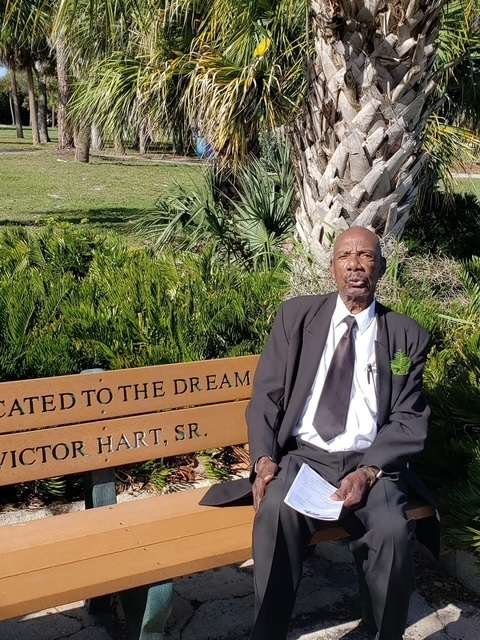
Hart, the longtime president of the Indian River County NAACP chapter, is remembered for walking with humility but speaking with a purposeful voice to provide opportunities for others. He died on November 13 at the age of 94.
From Cat Island to Gifford
Victor Hart, Sr.’s journey from his birthplace in 1931 in Old Bight Settlement on Cat Island in the Bahamas to Gifford in 1953 is a testament to his resilience and determination. He arrived in Florida with a fifth-grade education and a fruit picker’s job but quickly came to understand the hard lines of segregation in his new home.
He remembered an early trip to Orlando, when he wanted a sandwich and was told he wasn’t allowed to go through the front door.
“Well, I didn’t know there were two kinds of people,” he said. “So I just went on through that door. And I kept doing that.”
“Where I come from in the Bahamas, all people needed to know was that my name is Victor Hart,” he explained. “That’s who I was. In the Bahamas, we had lived as one.”
Challenging Barriers, Opening Doors
Those experiences pushed Hart toward a life of challenge and service. Though he did not first see himself as a civil rights figure, he later reflected, “I had never thought of myself as a civil rights worker — but I guess that’s what I’ve been doing ever since.”
Back in 1961, he recalled, “I got a crew together and I said, ‘Fellas, I don’t know what the law is all about in this country, but I’m not going to go around to the back.’”
From that determination came the Progressive Civic League in Gifford and the county’s NAACP chapter. Hart was the first to organize both.
“It was tough in those days,” he said. “You couldn’t just ride around — you had to go in groups.” Organizing offered some measure of safety and a collective voice.
Over the years, Victor Hart Sr.’s humble yet unflinching leadership was instrumental in bringing significant improvements to Gifford. His efforts led to the delivery of clean water, paved roads, streetlights, medical and community centers, the Gifford Youth Achievement Center, and the park that now bears his name.
A Father Who Lived His Values Out Loud
Hart’s public work was matched by the example he set at home.
“My father was a warrior. He was a fighter. He was a fighter to the end,” said his daughter, Vickie Hart-Brant. “My daddy was my hero. Daddy just understood so much.”
She described him as well-read and highly intellectual, noting that he kept up with the issues by reading five newspapers. Education, she said, was very important to him.
Hart instilled his values in his children. Hart-Brant remembers riding with him as he used a loudspeaker to remind people to vote. The family helped give rides to polling locations, joined parades, and took part in events to promote the community.
He taught them the art of negotiation and the importance of respecting others, regardless of their disagreement. His motto, she said, was simple: “I can disagree with you, but I don’t have to be disagreeable.”
He also insisted on integrity in his civic work. Hart-Brant recalled that he never took a penny from anyone. “My daddy financed his own work. His integrity was intact. He sacrificed to help promote and advocate for the people of Gifford. He loved the people of Gifford,” she said. “He was a God-fearing man. Faith and his family were the two most important things in his life.”
A Calming Presence in Difficult Times
County Commissioner Deryl Loar, a former sheriff, worked closely with Hart during difficult moments and witnessed his influence firsthand. Everyone called him “Chief.” “That was the respect that he commanded,” Loar said.
Hart had a calming effect on the community, even during times of racial tension. After the murder of George Floyd, when emotions and frustration ran high, Hart’s voice and presence helped steady Gifford.
“There were several instances when there could have been unrest, absent Victor Hart, Sr. calming the community,” Loar said.
A Legacy Etched Into a Park and a Community
The community’s respect and gratitude for Victor Hart, Sr.’s work were formally recognized in 2017, when Gifford Park on 43rd Avenue was renamed the Victor Hart Sr. Community Enhancement Complex. The well-attended ceremony made history: it was the first Indian River County-owned facility to be named for a person of color. This recognition is a source of pride for the entire community.
Victor Hart, Sr. Community Enhancement Complex.
The well-attended ceremony made history: it was the first Indian River County-owned facility to be named for a person of color.
The people of Gifford had long considered Hart an icon. Now there is a permanent and very visible testament to the esteem he earned through decades of work.
Tony Brown, Hart’s hand-picked successor as NAACP president, put it plainly: “When you mention an accomplishment in Gifford, you cannot get too far away from Victor Hart.”
According to County Commissioner Bob Solari, who made the motion to rename the park, “Few people have done so much for the community with so little personal benefit. He’s been working at it daily for almost 60 years.”
Today, the 39-acre Victor Hart, Sr. Community Enhancement Complex includes athletic fields, a large playground, the Gifford Aquatic Center, the Gifford Youth Achievement Center, basketball and tennis courts, a football field, a lighted Little League field, picnic pavilions with grills, restrooms, walking trails, fitness equipment, and parking areas. It operates daily from 7 a.m. until sunset and provides a safe and engaging environment for families and children.
Victor Hart Sr Community Enhancement Complex – Courtesy Indian River County
Pets, alcohol, open fires, and camping are not allowed within the park, underscoring its role as a community space focused on recreation, safety, and connection.
‘It Feels Good… Now Somebody Says Thank You’
In 2013, Hart was honored with a living memorial at Historic Macedonia Church in Gifford. At age 82, he sat on a bench engraved with his name, alongside County Commissioner Bob Solari. The bench and accompanying plaque were placed outside the church at 2800 45th Street, across from Gifford Middle School.
“It feels good; people don’t usually do anything for me,” Hart said at the time. “Now somebody says thank you; at least they let me know they appreciate me.”
For the people of Gifford, the appreciation had been there all along — in clean water, paved roads, streetlights, community centers, youth programs, and a park that carries his name. For nearly 60 years, whenever something significant changed for the better in Gifford, it was almost always the result of Victor Hart’s work.
Please consider supporting open, independent journalism – no contribution is too small!
WBO welterweight champion Brian Norman Jr. meets Devin Haney in Riyadh on Nov. 22, a high-stakes matchup between two young stars chasing legacy and supremacy.
By Milton Kirby | Riyadh, Saudi Arabia | November 17, 2025
A Rising Champion Steps Onto Boxing’s Biggest Stage
At just 24 years old, Brian Norman Jr. enters the most significant fight of his career — a November 22 welterweight showdown against former undisputed lightweight champion Devin Haney in Riyadh, Saudi Arabia.
Standing 5’8” and fighting at 147 pounds, Norman arrives as the reigning WBO world champion, unbeaten at 28-0, with one of the division’s most feared left hooks. His last two bouts turned heads worldwide, especially his June 19, 2025 demolition of Jin Sasaki in Tokyo.
In the first minute of that fight, Norman floored Sasaki with a sharp left hook. By round five, he delivered a knockout so brutal that Sasaki remained on the canvas for several minutes — a finish many analysts immediately labeled a Knockout of the Year contender.
Two undefeated champions
The Road to the WBO Throne
Norman’s ascent began with a breakthrough win in 2024, when he claimed the WBO interim title by stopping the undefeated and highly ranked Giovanni Santillan. When Terence Crawford later vacated the welterweight belt, Norman was elevated to full champion and has defended his position with steady, disciplined dominance.
Like his upcoming opponent, Norman turned professional at just 17. He fought his earliest bouts in Mexico, sharpened his technique across smaller U.S. shows, and built a highlight reel filled with stoppages. In 2022, Top Rank — the promotional home of Muhammad Ali, Manny Pacquiao, and Oscar De La Hoya — signed him, providing the platform that accelerated his rise.
Today, Norman has earned an estimated $1 million in career purses, including a $650,000 payday in his bout against Cuevas.
His record now stands at 30 fights, 28 wins, and no losses, including22 knockouts, six unanimous decision victories, and two no-contests due to accidental injuries.
The Haney Equation
Devin Haney enters the ring with his own immaculate resume: 32-0, multiple world titles across divisions, and wins over some of the sport’s most accomplished fighters. His resume includes:
Vasiliy Lomachenko
Regis Prograis
Joseph “JoJo” Diaz
Joseph Ramirez
Haney’s lone scare came against Ryan Garcia, who knocked him down multiple times. Though Haney lost that night, the bout was later ruled a no-contest after Garcia failed a drug test.
Since then, Haney has taken a cautious path — even opting for a catch-weight bout against Jose Ramirez in Times Square — but now steps into the welterweight arena with every intention of reclaiming dominance.
Styles Make Fights
Haney has openly dismissed Norman’s résumé, suggesting the young champion has not yet faced an elite lineup. But analysts see a more complicated picture.
Norman is a physical fighter on the inside, willing to lean on strength and timing to break down opponents. He sets his feet before launching power shots, particularly that devastating left hook. For Haney, the assignment will be to keep Norman off balance, force him to reset his stance, and make him walk into straight counters.
Haney’s defensive skills and ring generalship could frustrate a power puncher. Norman’s explosiveness could overwhelm a boxer who sometimes gets drawn into exchanges.
A Fight for Legacy — and Leverage
With Saudi Arabia’s growing presence in global boxing, the November 22nd card represents far more than a payday. Both fighters are in the early chapters of what could be long, defining careers. A victory here positions the winner for:
Multidivisional supremacy
Major unification bouts
Global pay-per-view standing
Seven-figure purses
But only one man leaves Riyadh with momentum, leverage, and the power to dictate what comes next.
On one side: a polished technician with championship pedigree. On the other: a young knockout artist with one of the sport’s most feared weapons.
On November 22nd, the welterweight division gets answers.